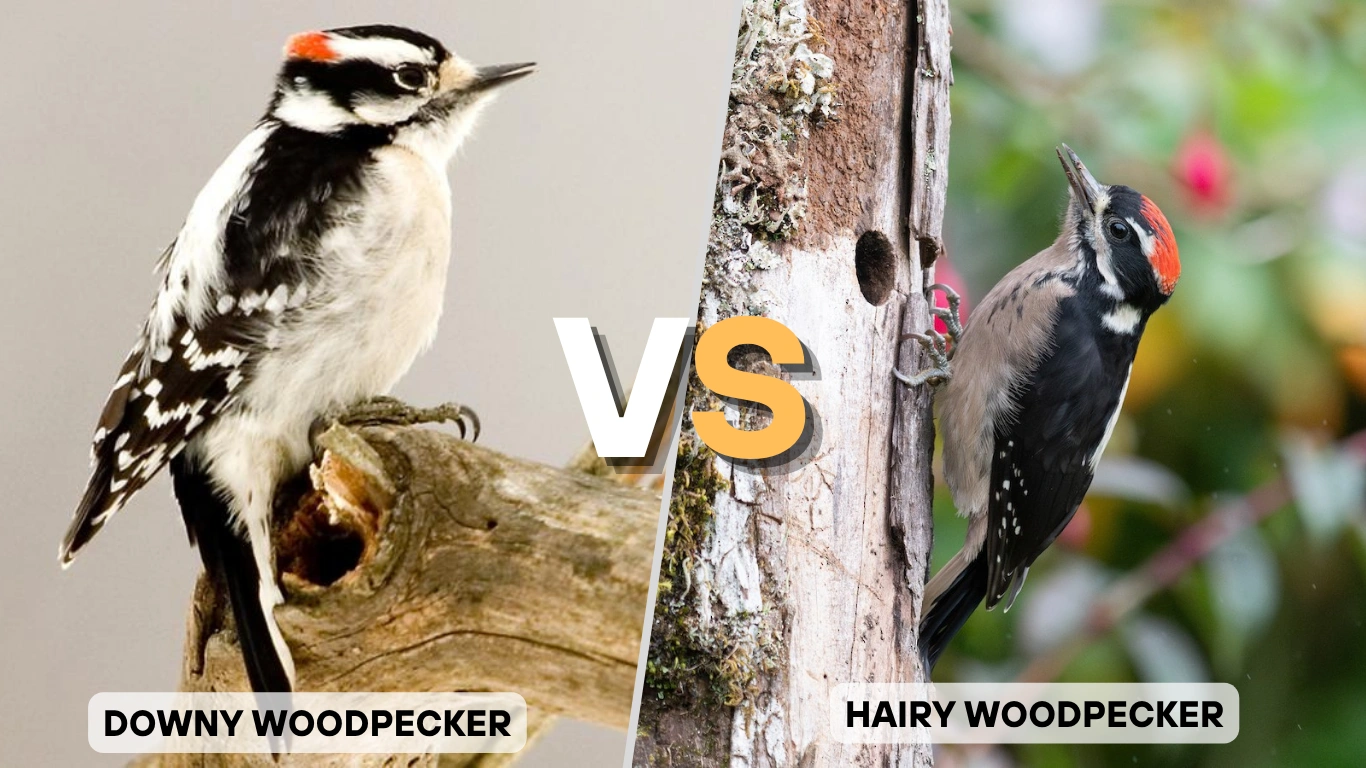
Woodpeckers are a favorite among backyard birdwatchers and forest hikers alike, but two species often cause confusion: the Hairy Woodpecker and the Downy Woodpecker. Nearly identical in pattern and coloring, these two species can be tricky to distinguish without a closer look. However, there are key differences in size, beak length, vocalizations, and behavior that make identification easier with a little practice.
In this article, you’ll learn how to confidently tell the difference between a Downy and a Hairy Woodpecker using field-friendly features and behavioral clues.
Side-by-Side Comparison Table
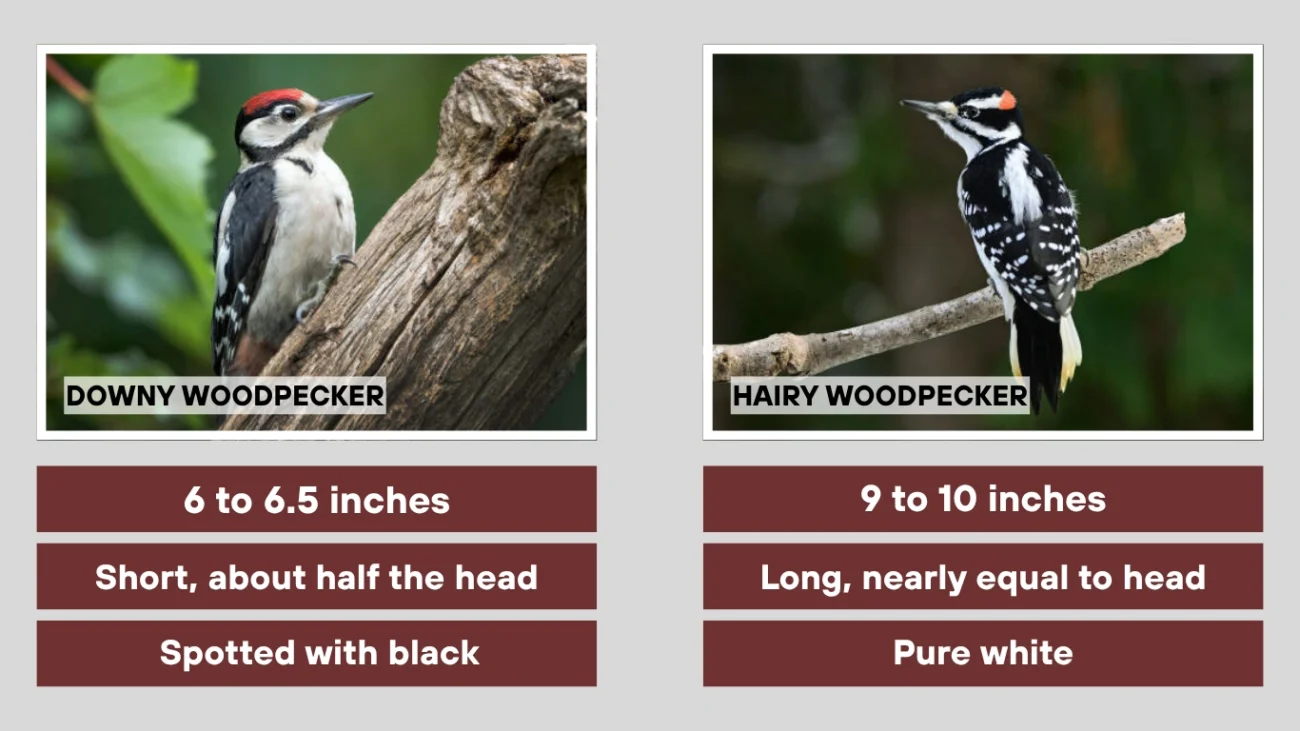
| Feature | Downy Woodpecker | Hairy Woodpecker |
| Size | 6 to 6.5 inches | 9 to 10 inches |
| Beak Length | Short, about half the head | Long, nearly equal to head |
| Outer Tail Feathers | Spotted with black | Pure white |
| Drumming Sound | Softer, slower | Louder, faster |
| Call | Soft “pik” or descending whinny | Sharp, strong “peek” call |
| Common Habitat | Suburbs, gardens, orchards | Mature forests, woodlands |
Physical Differences Between Hairy and Downy Woodpeckers
Size and Body Proportions
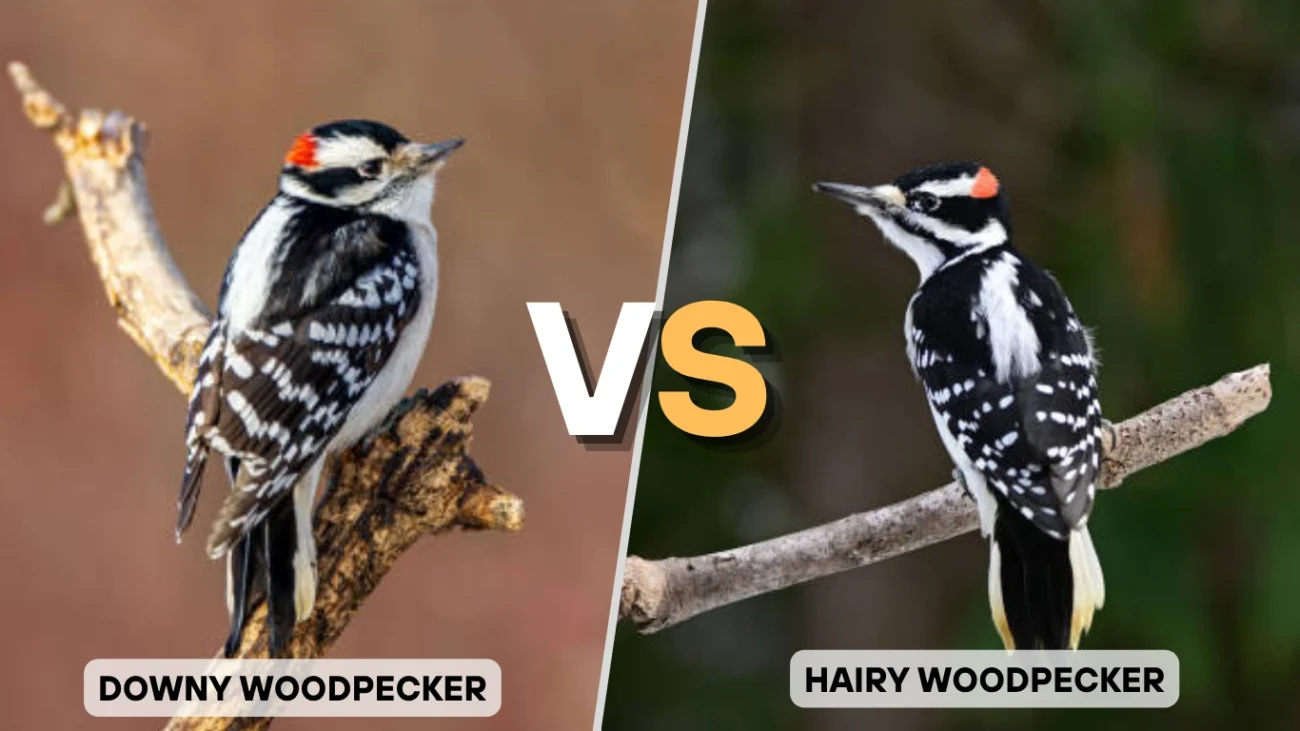
The most noticeable difference between the two species is their size. The Downy Woodpecker is the smaller of the two, measuring about 6 to 6.5 inches in length. Hairy Woodpeckers are larger, typically reaching 9 to 10 inches. However, size can be hard to judge unless both birds are seen side by side or near a known object, such as a feeder.
In general, Hairy Woodpeckers have a more robust and elongated body shape compared to the compact appearance of Downy Woodpeckers.
Beak Size
Beak length is one of the most reliable ways to tell them apart. The Downy Woodpecker has a short, stubby bill that is roughly half the length of its head. In contrast, the Hairy Woodpecker’s beak is almost as long as its head and appears more chisel-like.
When viewing from the side, if the beak looks delicate or small in proportion, it is likely a Downy. If it looks thick and strong, it’s more likely a Hairy.
Tail Feather Markings
Look at the outer tail feathers for subtle differences. Downy Woodpeckers often have small black spots on the white outer tail feathers. Hairy Woodpeckers have clean white outer tail feathers without markings. While not always visible, this can be a helpful detail when you’re close enough or have good binoculars.
Differences in Behavior and Habitat
Foraging Style
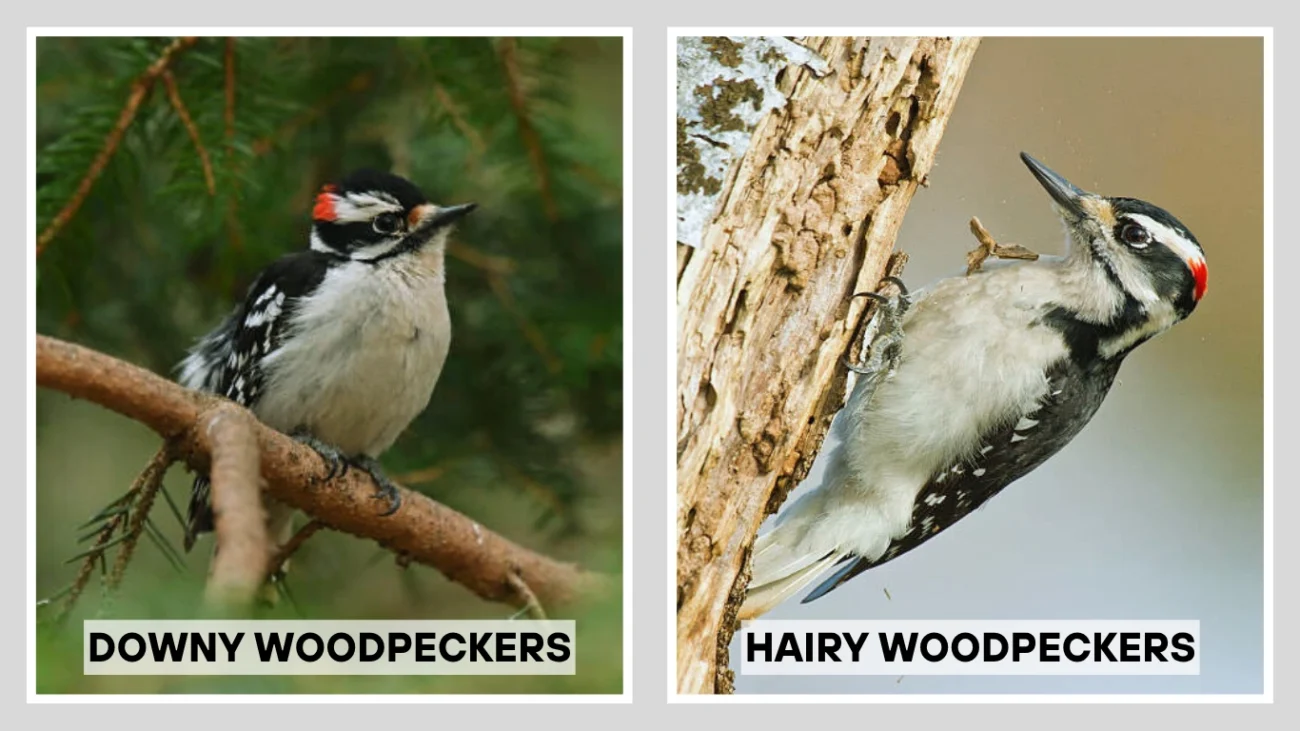
Downy Woodpeckers typically forage on small branches, shrubs, and even weed stalks. Their small size allows them to access areas that are inaccessible to larger woodpeckers. They often appear nimble and acrobatic.
Hairy Woodpeckers, being larger, usually stick to the main trunks and large limbs of trees. Their foraging behavior is more direct, and they tend to hammer forcefully into bark in search of insects.
Habitat Preferences
Both species can overlap in range and may even visit the same feeders. However, Downy Woodpeckers are more common in suburban areas, city parks, orchards, and gardens. Hairy Woodpeckers are more likely to be found in mature forests, wooded river valleys, or deep woodlands.
Differences in Vocalizations
Call Types and Sounds
The Downy Woodpecker has a softer, more musical call. Their most common vocalization is a soft “pik,” and their descending whinny call sounds cheerful and bouncing.
Hairy Woodpeckers, on the other hand, have a much sharper, more forceful call. Their loud “peek” note is clear and direct, often carrying farther in the woods. Their drumming is also louder and more powerful.
If you’re trying to identify a bird by sound alone, the Hairy’s vocalizations are usually more abrupt and commanding.
How to Identify in the Field
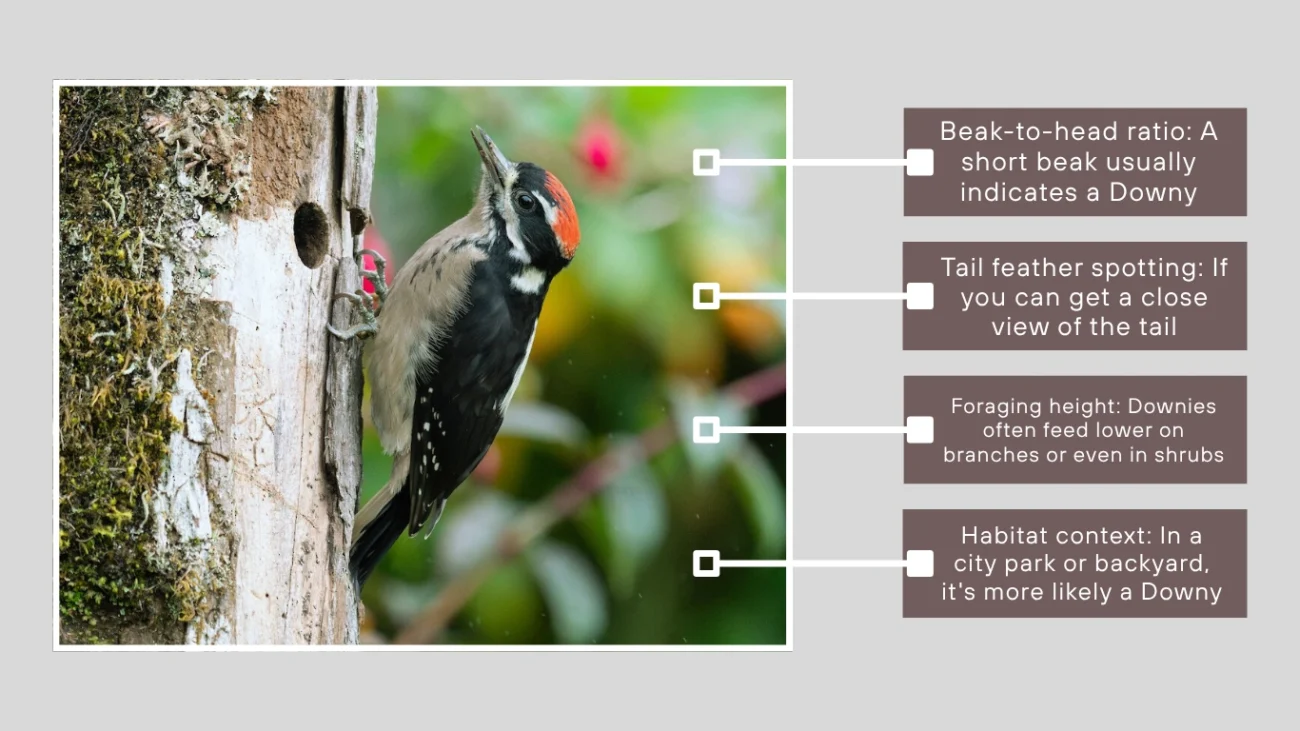
Practical Tips for Birdwatchers
If you’re observing a woodpecker and unsure which species it is, here are some tips:
- Beak-to-head ratio: A short beak usually indicates a Downy. A long, dagger-like beak suggests a Hairy.
- Tail feather spotting: If you can get a close view of the tail, check for black spots.
- Foraging height: Downies often feed lower on branches or even in shrubs, while Hairies stick to trunks and upper limbs.
- Habitat context: In a city park or backyard, it’s more likely a Downy. In a mature forest, you may be seeing a Hairy.
Over time, these small details become easier to spot with experience and familiarity.
Why Identification Matters
Understanding and Conservation
Accurate identification isn’t just for personal satisfaction—it contributes to citizen science projects like eBird and helps researchers track population trends. Hairy and Downy Woodpeckers are indicators of forest health, and changes in their populations can signal broader environmental issues.
Additionally, knowing which species frequents your area can help in creating a more supportive habitat through landscaping and feeder choices.
FAQs
Are Downy and Hairy Woodpeckers closely related?
Yes, both belong to the genus Dryobates. They share many characteristics and overlapping ranges, though they are genetically distinct species.
Can Downy and Hairy Woodpeckers be seen in the same area?
Absolutely. They often share the same regions and may even visit the same feeders or trees, especially in winter.
Do they interbreed?
No, despite their similarities and overlapping territories, there is no documented evidence of hybridization between these two species.
Which species is more common in backyards?
The Downy Woodpecker is far more likely to visit suburban feeders and backyards. Their smaller size and adaptability make them regular guests in human-altered environments.
How do I attract both species?
Provide suet, peanuts, and black oil sunflower seeds in feeders with a tail prop. Maintain dead limbs and native trees to encourage natural foraging and nesting behavior.
Conclusion
Telling the difference between a Hairy and a Downy Woodpecker may seem daunting at first, but with attention to size, beak length, vocalizations, and behavior, even beginners can master the skill. The more time you spend observing these birds, the easier it becomes to notice the subtle yet consistent features that set them apart. Whether you’re watching from a window or deep in the forest, knowing who’s who makes every sighting more meaningful.