The Red-bellied Woodpecker is one of the most striking and common woodpeckers found in the eastern United States. With its bold black-and-white back and a splash of red on the head, this bird is a favorite among backyard birdwatchers. However, telling males and females apart can be tricky without knowing what to look for.
In this article, we’ll break down the key differences between male and female Red-bellied Woodpeckers, including physical appearance, behavior, and how to confidently identify them in the wild or at your feeder.
Physical Differences Between Male and Female Red-bellied Woodpeckers

Head and Cap Coloring
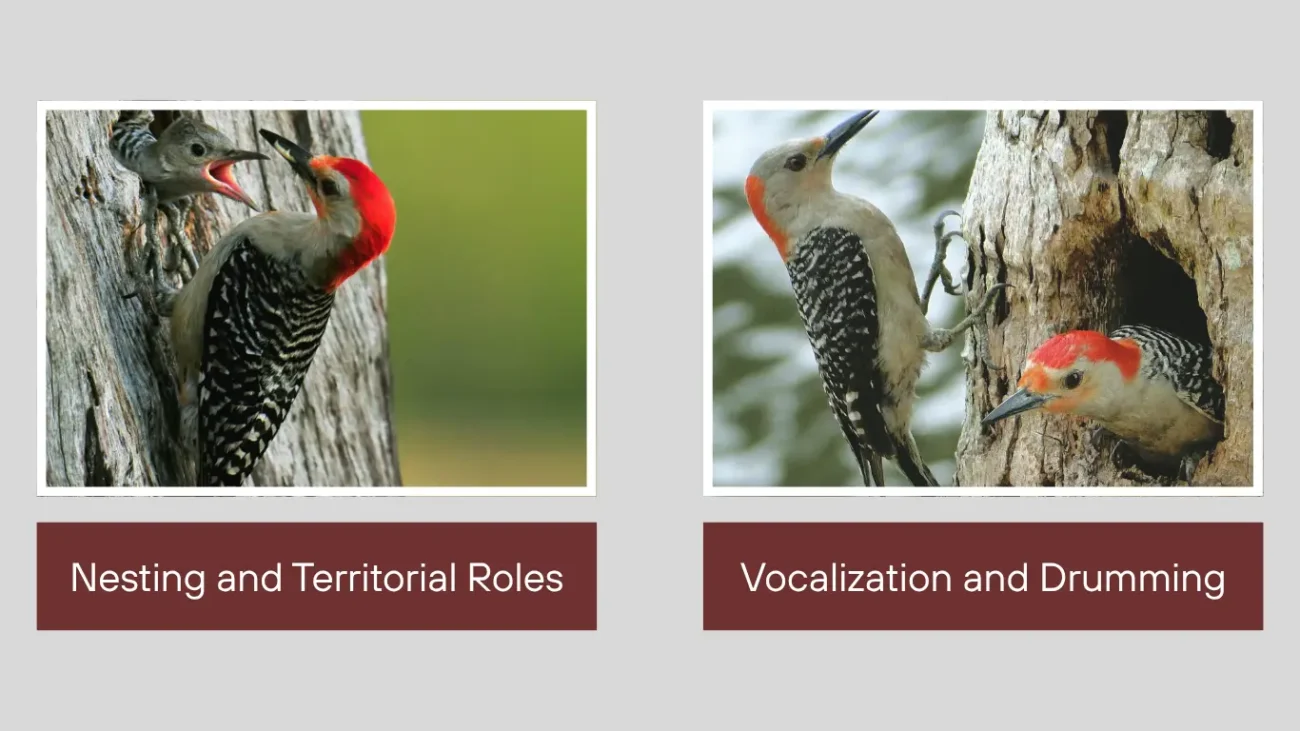
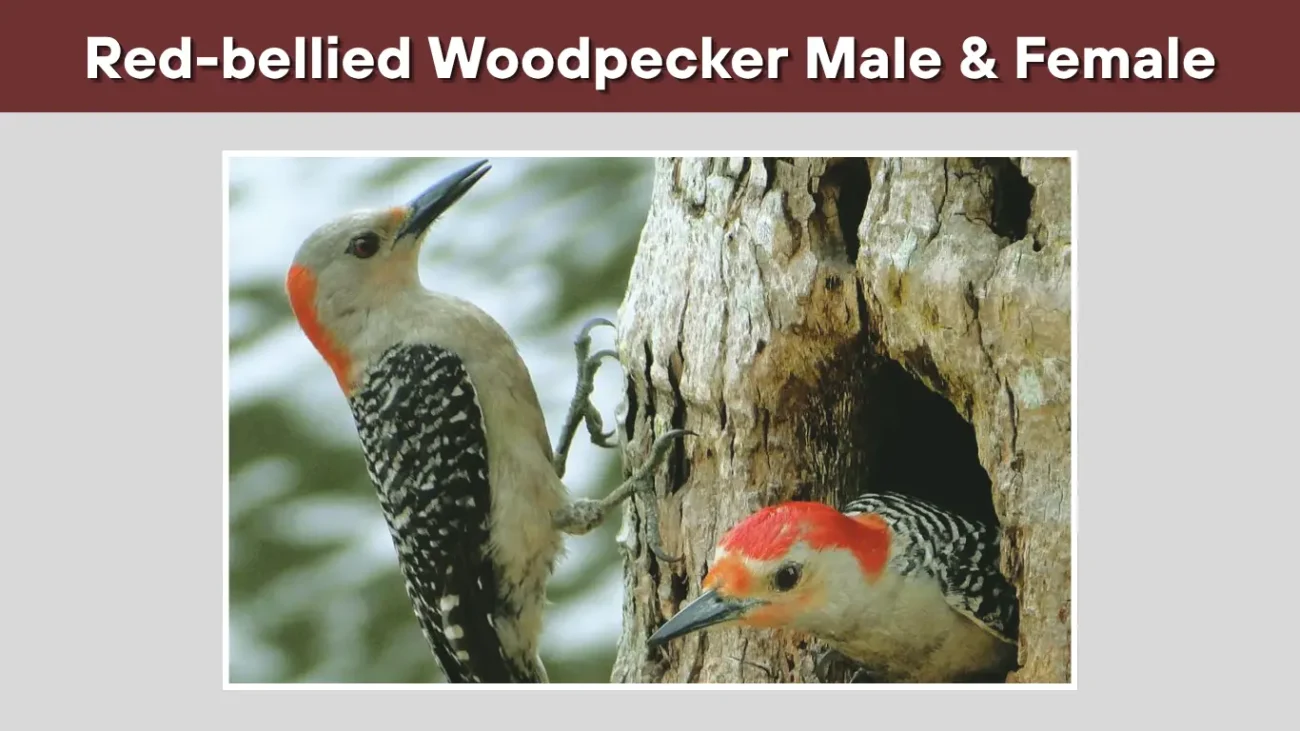
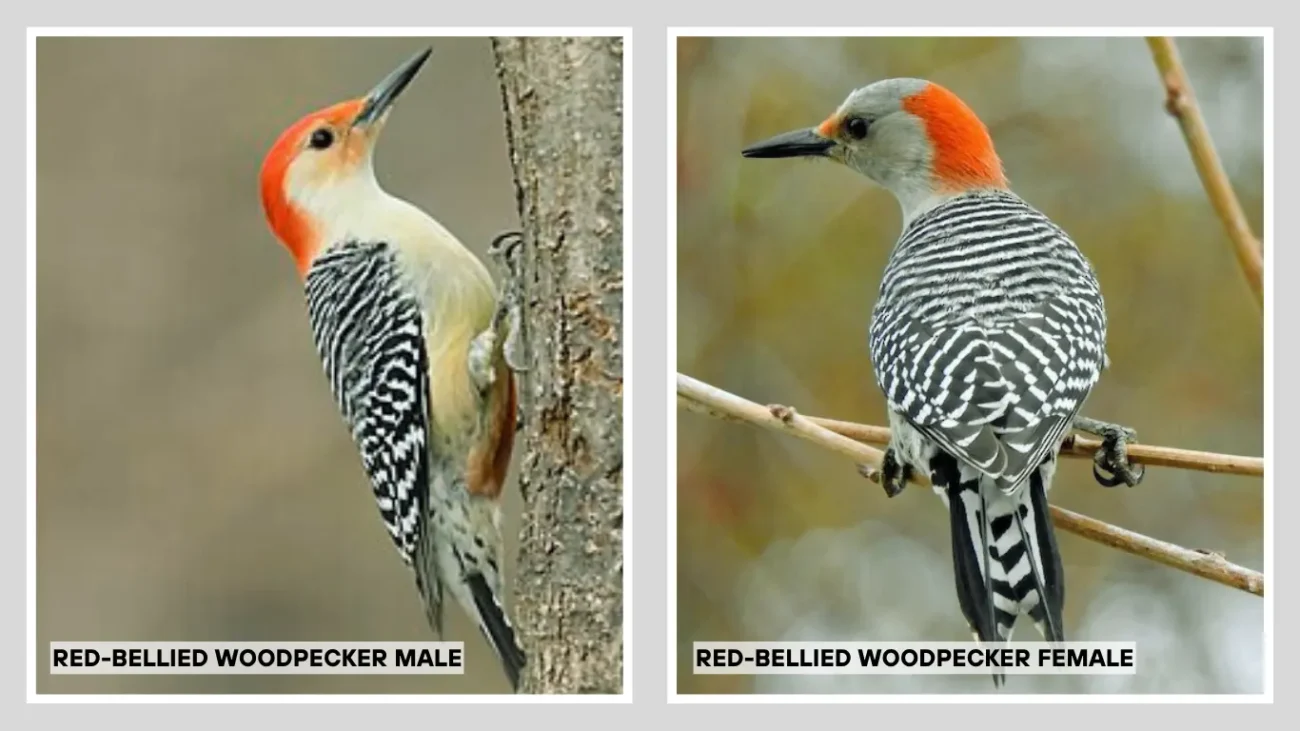
The most noticeable difference between male and female Red-bellied Woodpeckers lies in their head coloration.
- Male Red-bellied Woodpeckers have a full red cap that stretches from the base of the beak over the crown to the nape of the neck.
- Female Red-bellied Woodpeckers have red only on the nape, while the crown and forehead remain grayish.
This head pattern is often visible even from a distance and is the most reliable way to differentiate them.
Body Size and Shape
Both sexes have similar body shapes, but males tend to be slightly larger on average. This difference, however, is subtle and not typically useful unless you are observing a pair side-by-side. Their plumage—aside from the red head markings—is nearly identical, with black-and-white barred backs and pale underparts.
Comparison Table
| Feature | Male Red-bellied Woodpecker | Female Red-bellied Woodpecker |
| Head Coloring | Full red crown from beak to nape | Red nape only; gray crown and forehead |
| Body Size | Slightly larger | Slightly smaller |
| Vocalization | More frequent and louder during breeding | Less vocal, especially outside nesting |
| Nesting Behavior | Begins cavity excavation | Assists with nesting and feeding |
| Appearance in Juveniles | Juvenile males develop full red crown | Juveniles resemble females early on |
Behavioral Differences
Nesting and Territorial Roles
During nesting season, both male and female Red-bellied Woodpeckers share responsibilities, but there are subtle behavioral differences.
Males usually take the lead in excavating the nesting cavity and are more likely to initiate territorial calls or drumming when defending their area. Females assist in the excavation and are equally involved in incubation and feeding the young once the eggs hatch.
Vocalization and Drumming
Both sexes produce a loud, rolling call and a soft, churring sound. However, males are typically more vocal during the early breeding season and may drum more frequently to establish territory. Females drum as well, but usually in response or at a lower rate.
How to Identify Them at Feeders or in the Wild
Tips for Backyard Birdwatchers
If you’re lucky enough to have Red-bellied Woodpeckers visiting your feeders, spotting the red crown is your best bet for identifying the bird’s sex.
- Look closely at the head: Full red on top indicates a male, while a red nape with a gray crown suggests a female.
- Watch for pairs: When a male and female are present together, the contrast in head coloration becomes more obvious.
- Use binoculars for detail: These subtle differences may not be visible with the naked eye, especially if the bird is facing away or partially hidden.
Also, juvenile Red-bellied Woodpeckers may resemble females until they develop full adult plumage. Young birds often have a duller, patchy red crown and less vibrant back markings.
Do Males and Females Behave Differently Year-Round?
Winter Foraging and Territory
Red-bellied Woodpeckers are non-migratory and defend their feeding areas even in winter. Both males and females store food, such as acorns and nuts, in tree crevices and bark.
There’s some evidence suggesting that males may be slightly more dominant at feeders, especially in late winter when food is scarce. However, both sexes are known to aggressively protect their territory and food sources from other birds.
FAQs
Can female Red-bellied Woodpeckers have red on the head?
Yes, but only on the nape (back of the neck). The crown and forehead remain gray. A red cap extending all the way from the beak to the nape indicates a male.
Are males and females equally vocal?
Both are vocal, but males tend to call and drum more often, particularly during breeding season or when establishing territory.
Do both parents care for the young?
Yes. Both male and female Red-bellied Woodpeckers share incubation and feeding duties. The male often starts cavity excavation and may continue feeding slightly longer after the young fledge.
Do juvenile Red-bellied Woodpeckers look like males or females?
Juveniles initially resemble females, with muted red coloring that becomes more pronounced as they mature. Males will gradually develop the full red crown.
Are female Red-bellied Woodpeckers rare at feeders?
Not at all. Both sexes visit feeders equally. The difference lies in visibility—many birdwatchers simply don’t notice the gray crown and mistake females for males without close inspection.
Conclusion
Distinguishing male from female Red-bellied Woodpeckers may seem subtle at first, but with attention to head coloration and behavior, it becomes a simple and enjoyable skill. Males wear a full red crown, while females sport a red nape and gray crown. Beyond appearance, their nesting roles and vocal behavior offer additional clues.