











Crows are some of the most intelligent and adaptable birds on Earth. Found on nearly every continent, these fascinating members of the Corvus genus display a wide range of behaviors, vocalizations, and appearances—from the tool-using New Caledonian Crow to the desert-dwelling Fan-tailed Raven. In this guide, you’ll explore 23 remarkable types of crows from around the globe, highlighting their unique traits, preferred habitats, and what makes each species stand out.
1. American Crow (Corvus brachyrhynchos)

The American Crow is the most widespread and familiar crow species in North America. Known for its loud cawing, high intelligence, and social nature, it thrives in both wild and urban environments.
Identification
- Medium to large-sized bird (about 17–21 inches long)
- Entirely black body, beak, legs, and eyes
- Thick, straight bill
- Fan-shaped tail visible in flight
- Glossy feathers with a purplish or bluish sheen in sunlight
Habitat
Found throughout the continental United States and southern Canada. Prefers open fields, woodlands, farmlands, and cities. Extremely adaptable and often seen in suburban neighborhoods, parks, and highways.
Behavior
American Crows are highly social, often forming large communal roosts and foraging in flocks. They are omnivores, feeding on insects, seeds, carrion, garbage, and even small animals. Known for tool use, problem-solving, and complex vocalizations. They are also known to recognize human faces and hold grudges.
Call
A loud, harsh “caw-caw” often repeated in rhythmic series. They also produce clicks, rattles, and other complex calls used for communication within flocks.
2. Fish Crow (Corvus ossifragus)

The Fish Crow is a smaller, coastal cousin of the American Crow, often found along the eastern and southeastern U.S. It is nearly identical in appearance but distinguished by its nasal, croaky voice.
Identification
- Medium-sized (about 15–17 inches long)
- Entirely black plumage with a glossy sheen
- Slightly slimmer build and smaller bill than the American Crow
- Fan-shaped tail
- Hard to distinguish visually from American Crow
Habitat
Primarily found along coasts, riverbanks, wetlands, and urban areas in the eastern and southeastern U.S. Expanding inland along river corridors and human-altered landscapes.
Behavior
Fish Crows are social and often forage in groups. They eat fish, carrion, eggs, insects, fruit, and trash. Like other crows, they are intelligent and known to cache food. Frequently mix with American Crows but can be separated by their distinctive call.
Call
A short, nasal “uh-uh” or “nyuh-nyuh,” softer and more croaky than the American Crow’s “caw.” Vocalizations are the most reliable way to identify this species.
3. House Crow (Corvus splendens)

The House Crow is a highly adaptable, urban-loving crow native to South Asia but introduced to several parts of the world, including a few isolated sightings in the U.S., particularly in Florida.
Identification
- Medium size (about 16–17 inches long)
- Glossy black head, wings, and tail
- Pale gray neck and chest (giving a hooded appearance)
- Slender black bill
- Long, sleek body with a graceful flight
Habitat
Found near human settlements, ports, cities, and garbage dumps. In the U.S., known only from introduced populations, especially in port cities. Strongly associated with urban environments.
Behavior
Extremely intelligent and opportunistic. Feeds on scraps, garbage, insects, small animals, and even food stolen from humans. Highly vocal and often forms noisy communal roosts in cities.
Call
Loud and sharp “ka-ka-ka” or harsh caws. Often gives rapid, repeated notes and is highly vocal throughout the day.
4. Carrion Crow (Corvus corone)
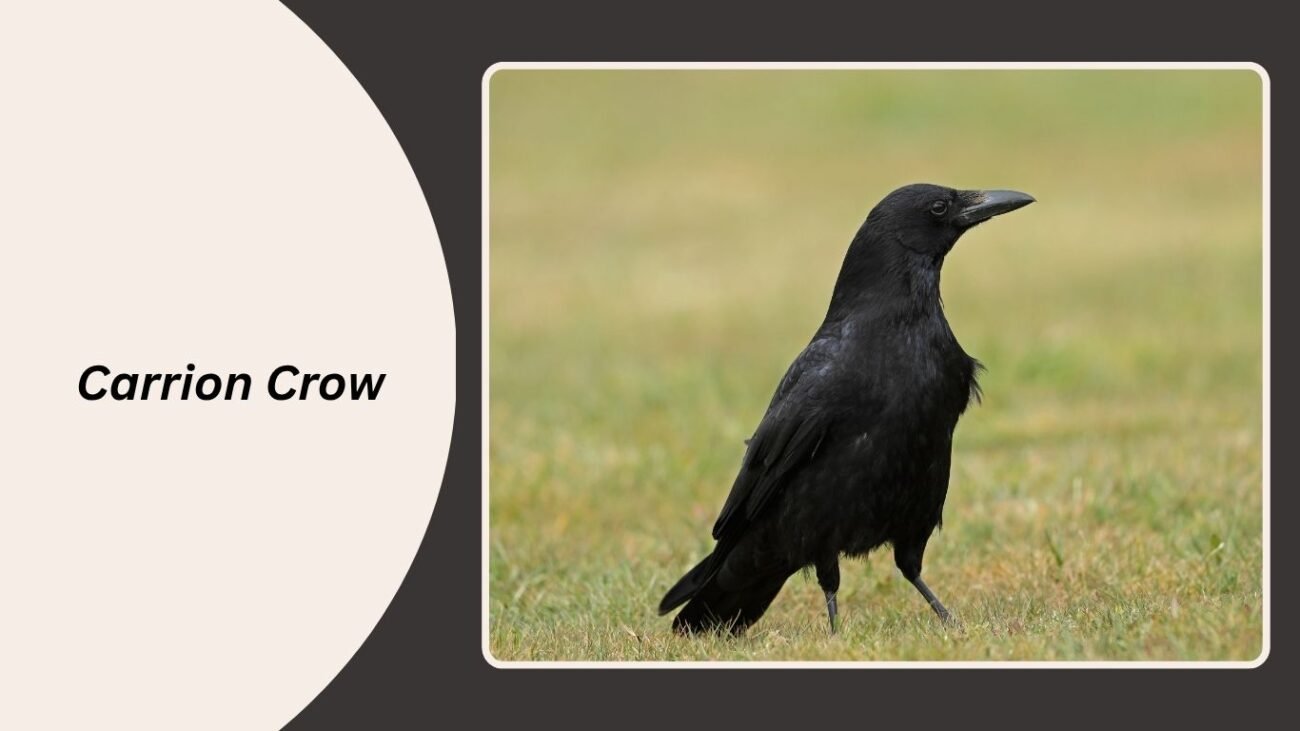
The Carrion Crow is a jet-black European crow that closely resembles the American Crow but is found primarily in western and central Europe. Occasionally reported as a vagrant or escapee in North America, it is one of the most intelligent and adaptable members of the crow family.
Identification
- Medium to large size (about 17–19 inches long)
- Entirely black plumage, including bill and legs
- Slightly heavier build and deeper voice than American Crow
- Rounded wings and fan-shaped tail
- Glossy feathers with a greenish sheen
Habitat
Open countryside, farmlands, urban parks, and woodlands. Though not native to the U.S., some individuals have been reported in zoos or as escapes from captivity.
Behavior
Highly intelligent, often solitary or in pairs, but can gather in flocks. Feeds on carrion, insects, seeds, and small animals. Can recognize individual humans and solve complex problems.
Call
A guttural and throaty “kraah” or “craw,” deeper and rougher than the American Crow’s call.
5. Hooded Crow (Corvus cornix)
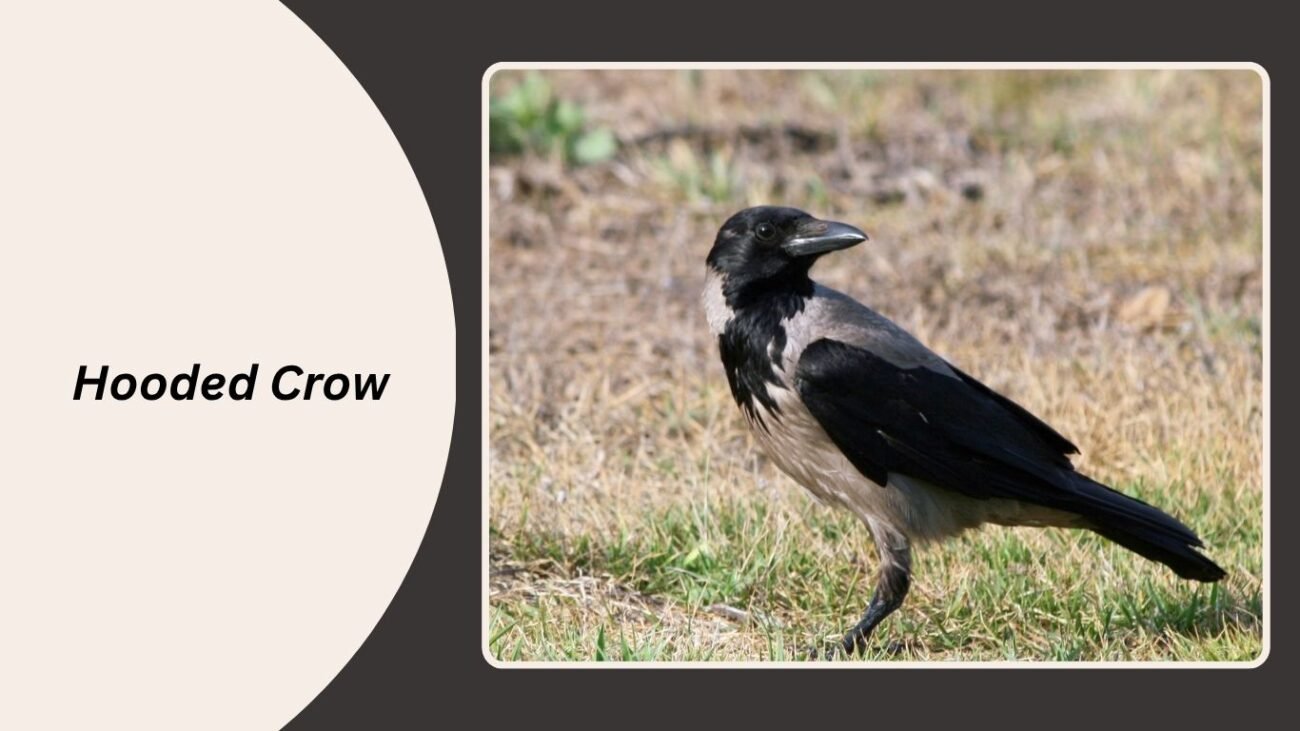
The Hooded Crow is a striking two-toned crow found across parts of Europe and western Asia. While not native to the U.S., it’s notable in global crow studies and has been kept in captivity or seen as rare vagrants.
Identification
- Medium size (about 18–20 inches long)
- Black head, wings, tail, and throat
- Pale gray body and back, giving a hooded appearance
- Strong black bill and legs
- Similar in shape to Carrion Crow
Habitat
Common in open fields, coastal areas, urban zones, and farmland across northern and eastern Europe. Sometimes hybridizes with Carrion Crow where ranges overlap.
Behavior
Smart and opportunistic, often forages alone or in pairs. Known for dropping hard-shelled food from heights to break it. Very vocal and often interacts boldly with people.
Call
A hoarse and rasping “krah-krah,” similar to other crows but rougher and more nasal.
6. Rook (Corvus frugilegus)
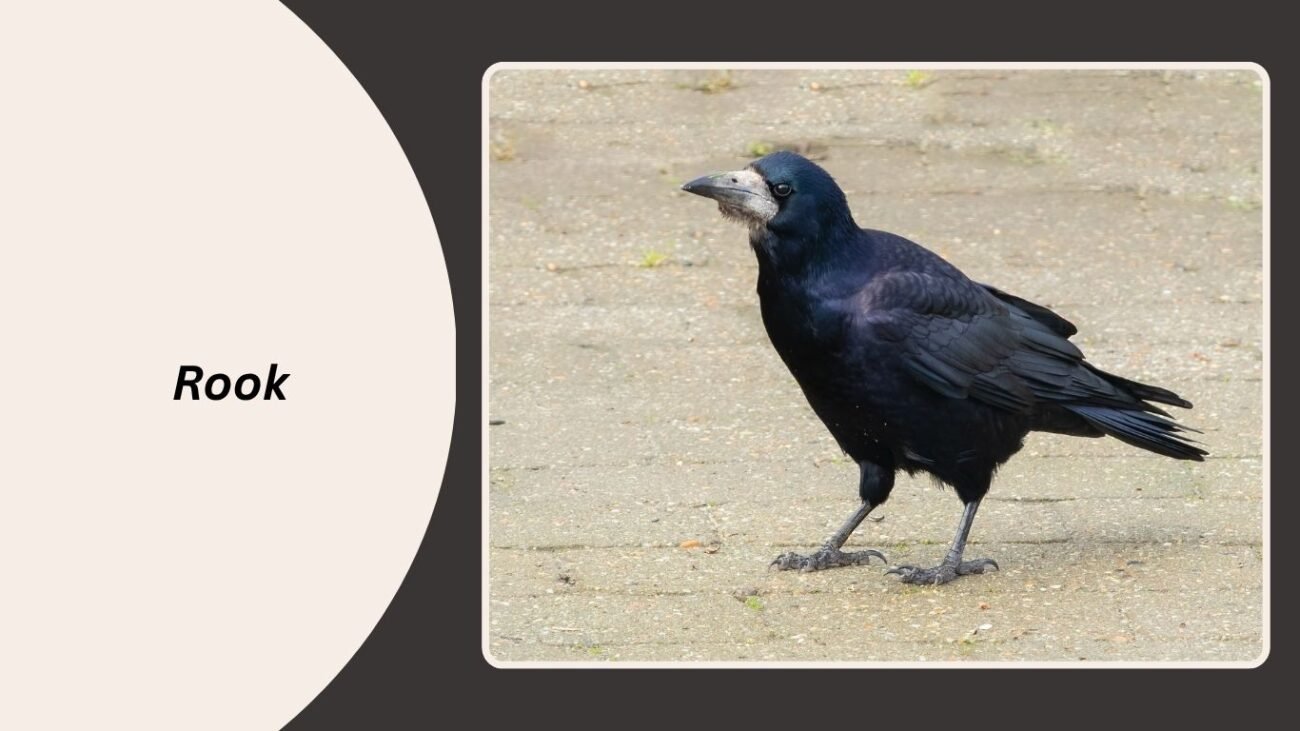
The Rook is a highly social and intelligent crow species native to Europe and Asia. It stands out among crows for its bare, pale-gray skin at the base of the bill, giving it a distinctive appearance. While not native to North America, it’s a close relative worth noting in any global crow list.
Identification
- Medium to large size (about 16–18 inches long)
- Glossy black plumage with a purplish or bluish sheen
- Adults have bare, grayish-white skin around the base of the slender bill
- Long, graduated tail and peaked crown
- Juveniles lack the bare bill patch
Habitat
Widespread across agricultural fields, meadows, and suburban areas throughout Europe and parts of Asia. Lives in colonies and prefers open landscapes with scattered trees.
Behavior
Rooks are extremely social and nest in large colonies called rookeries, often in treetops. They forage in groups, mainly on the ground, eating insects, grains, roots, carrion, and human scraps. They’re curious, vocal, and display remarkable problem-solving skills.
Call
A croaky, rising “kaah” or “kraa,” often softer and more nasal than a Carrion Crow. Rook colonies are noisy, especially in breeding season.
7. Northwestern Crow (Corvus caurinus)
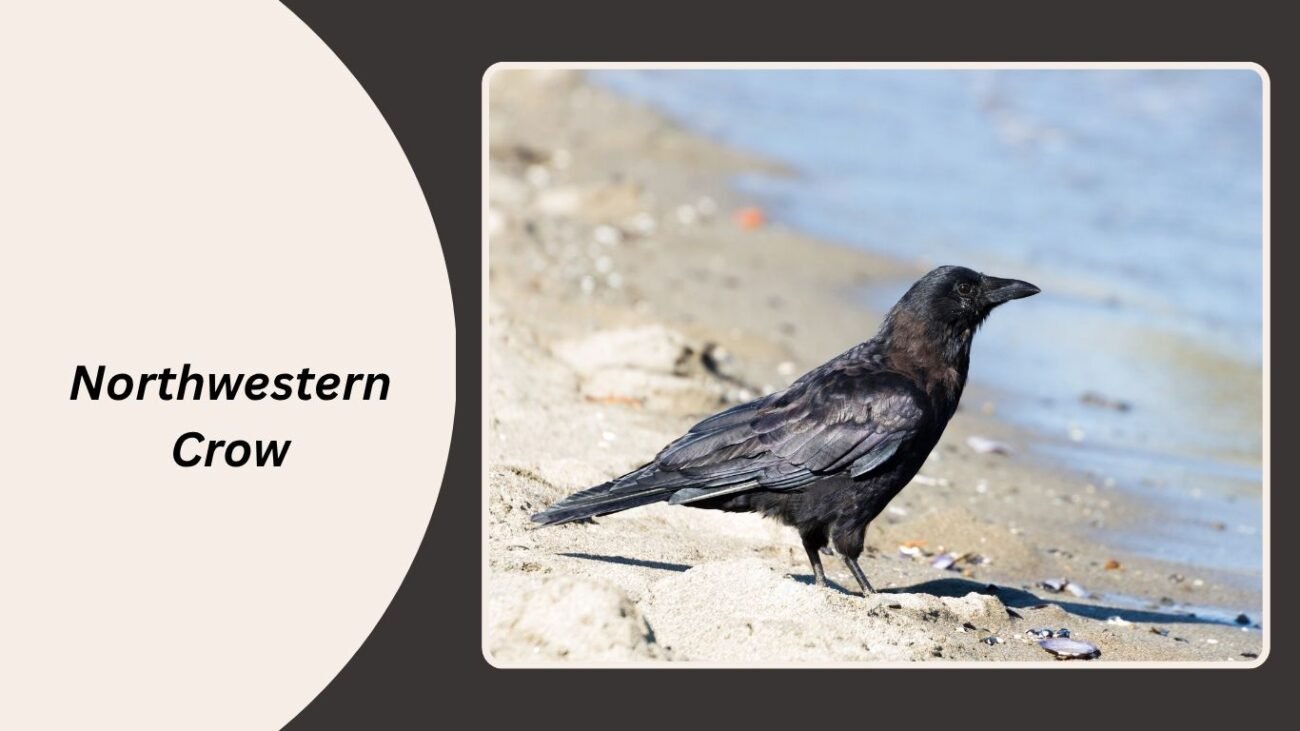
(Now generally considered a subspecies of the American Crow)
Once considered a distinct species, the Northwestern Crow is now typically grouped with the American Crow. It inhabited the Pacific Northwest coast and showed subtle differences in voice, behavior, and size.
Identification
- Slightly smaller than the American Crow (about 16 inches long)
- Entirely black plumage with a slight purple or green sheen
- Smaller bill and feet compared to American Crow
- Rounded tail and thick neck
- Nearly indistinguishable from American Crow visually
Habitat
Coastal habitats along the Pacific Northwest—rocky beaches, mudflats, estuaries, and coastal forests. Frequently seen scavenging along shorelines and around fishing harbors.
Behavior
More coastal in habit than inland American Crows. Known for flipping seaweed and debris along beaches to find food. They feed on shellfish, marine invertebrates, eggs, and garbage. They also cache food and are known for being quieter and less social than their eastern relatives.
Call
A hoarser, more nasal “caw” compared to the American Crow, often in a slower, raspier tone. This vocal difference was one of the key traits used to separate them before lumping the species.
8. Pied Crow (Corvus albus)
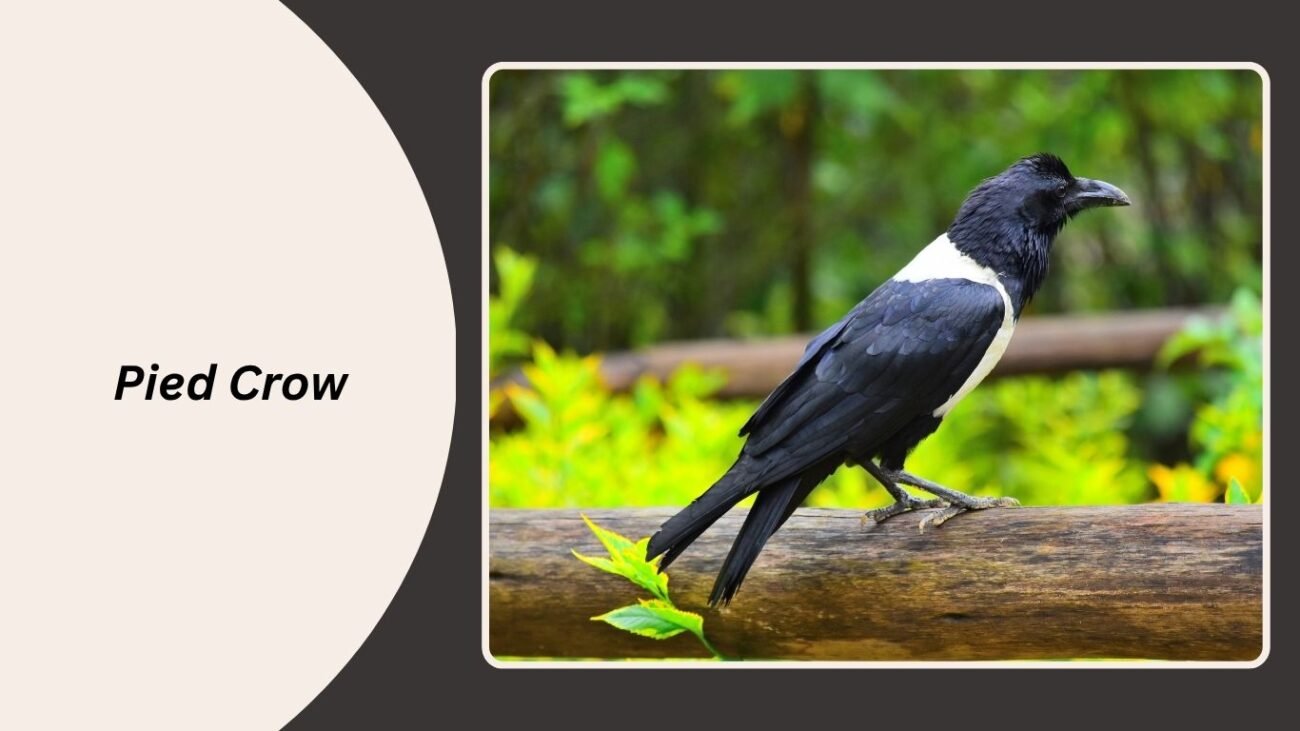
The Pied Crow is a striking black-and-white crow native to sub-Saharan Africa but occasionally observed outside its range, including rare sightings in the Americas. It’s notable for its contrasting plumage and raven-like behavior.
Identification
- Medium to large size (about 18–20 inches long)
- Black head, wings, tail, and upper breast
- Bright white chest, belly, and collar around the neck
- Long, strong black bill
- Slender body and wedge-shaped tail
Habitat
Found in a wide variety of habitats across Africa, including savannas, coastal towns, farmland, and cities. Prefers open or semi-open landscapes with access to human settlements.
Behavior
Pied Crows are bold, intelligent, and very social. They often forage in groups or pairs, feeding on carrion, insects, seeds, and scraps. Known for scavenging around towns and being unafraid of people.
Call
A loud, croaky “arrr-arr-arr” or rasping caws, often repeated in short bursts. Their vocalizations can sound more guttural than other crows.
9. Jungle Crow (Corvus macrorhynchos)
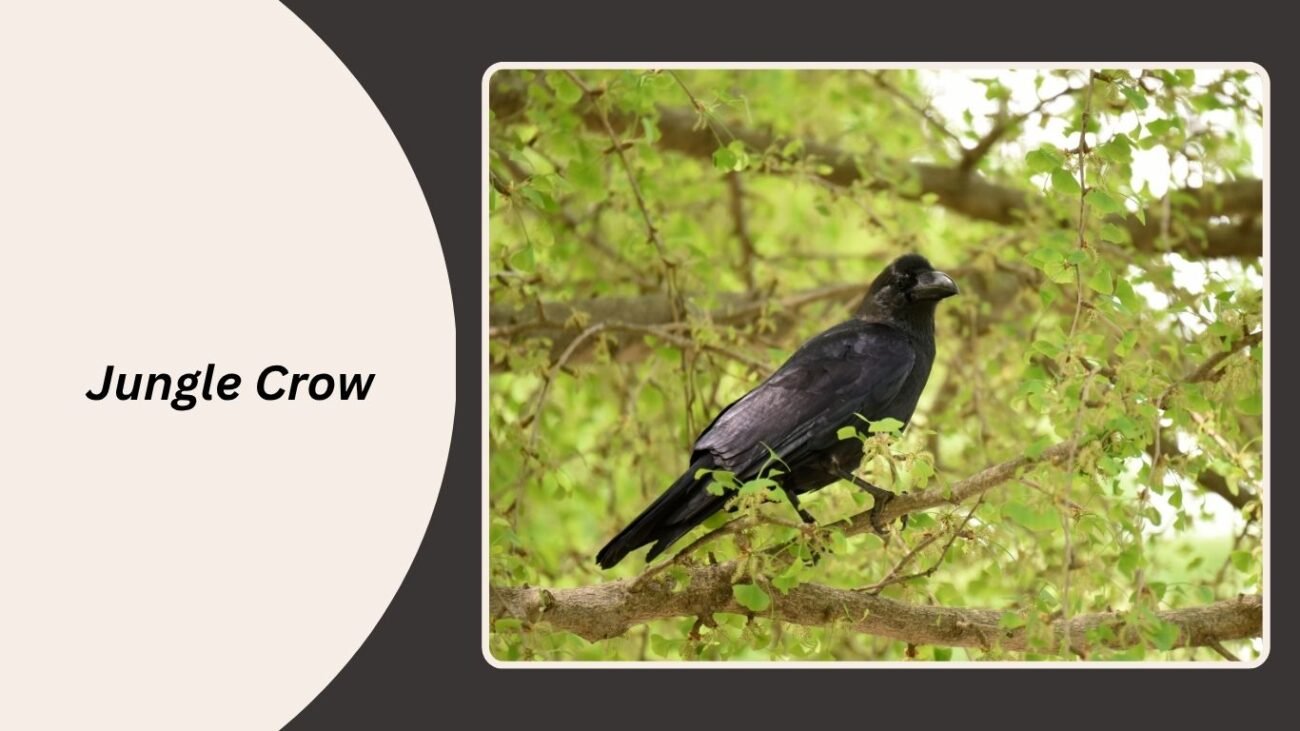
The Jungle Crow, also known as the Large-billed Crow, is widespread across South and Southeast Asia. It has a robust build and deep, throaty voice, and it thrives in both rural and urban environments.
Identification
- Large size (about 19–21 inches long)
- All black body with a thick, arched bill
- Glossy plumage with greenish-purple sheen
- Heavy-headed with a thick neck
- Slightly rounded tail and long legs
Habitat
From dense forests to bustling cities, this crow is highly adaptable. Found throughout India, Southeast Asia, and parts of East Asia. Prefers areas with human activity, garbage access, and forest edges.
Behavior
Extremely intelligent and opportunistic. Known to steal food, open containers, mimic sounds, and use tools. Forms small flocks and can be very noisy near human settlements. It is dominant over other crow species in its range.
Call
Deep, resonant caws—“kaa-kaa-kaa”—delivered slowly and with a rough tone. Vocalizations are varied, with some calls sounding like groans or rattles.
10. Large-billed Crow (Corvus macrorhynchos japonensis)
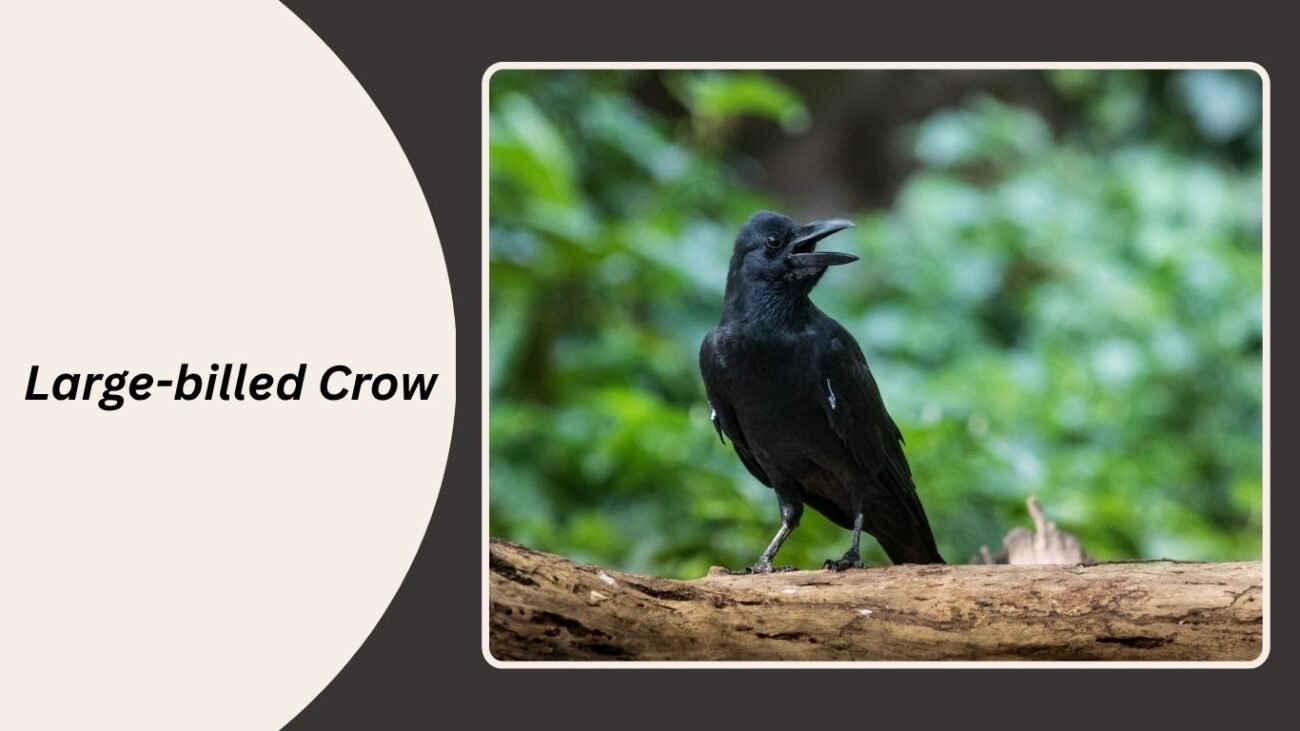
(Subspecies of Jungle Crow – East Asia)
The Large-billed Crow is a robust subspecies of the Jungle Crow, commonly found across Japan, Korea, and eastern China. It’s well-known in urban settings for its loud calls, problem-solving ability, and dominance in cityscapes.
Identification
- Large body (about 19–22 inches long)
- Bulky, arched, and thick black bill
- Jet-black plumage with subtle greenish gloss
- Rounded wings and squared tail
- Thick neck and upright posture
Habitat
Urban areas, woodlands, mountain regions, and coastlines across East Asia. Especially abundant in Japanese cities, where it nests on buildings and feeds at garbage sites.
Behavior
Highly vocal and adaptable. Known for caching food, dropping nuts on roads for cars to crack, and even crafting tools. Often aggressive at feeding sites and nests. Builds large stick nests in trees or on man-made structures.
Call
Very loud, echoing “caw-caw-caw,” often deeper and more resonant than the American Crow. Sometimes gives bizarre-sounding rattles, gurgles, or screeches.
11. Little Crow (Corvus bennetti)
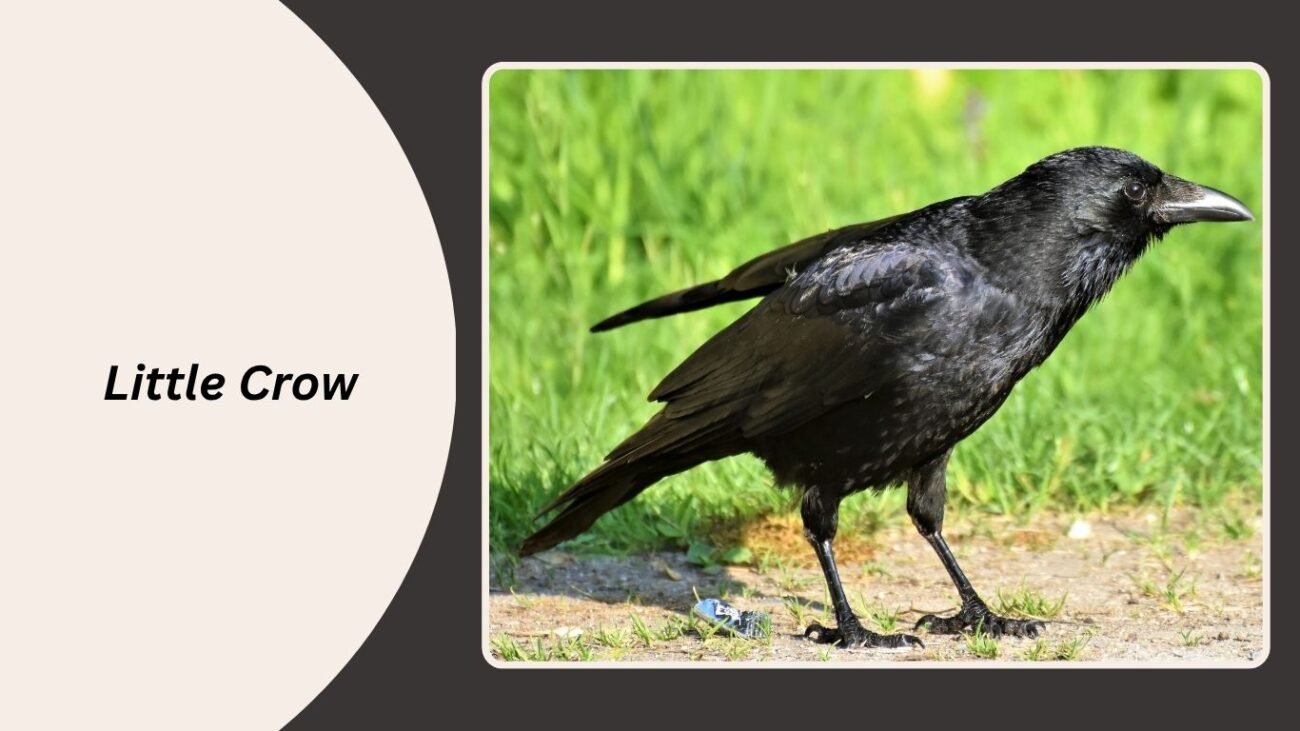
The Little Crow is a small, slender crow native to inland Australia. Unlike most other crows, it often travels in large flocks and prefers open, arid landscapes.
Identification
- Small size (about 17 inches long)
- All black body with a short, slim bill
- Glossy plumage with bluish sheen in sunlight
- Pale blue-gray eye
- More delicate and finer-featured than other Australian crows
Habitat
Inland plains, grasslands, farms, and open scrubland of Australia. Less common in urban centers and more dependent on dry, open country.
Behavior
Forms large flocks, sometimes numbering in the hundreds or thousands. Often seen feeding in plowed fields or scavenging near waterholes and roadkill. Known for soft, high-pitched calls unlike most other crows.
Call
A gentle, nasal “nuh-nuh” or high-pitched “nyuh,” quite soft and musical compared to deeper-voiced crow species. Vocalizations help distinguish it from similar Australian crows.
12. Torresian Crow (Corvus orru)
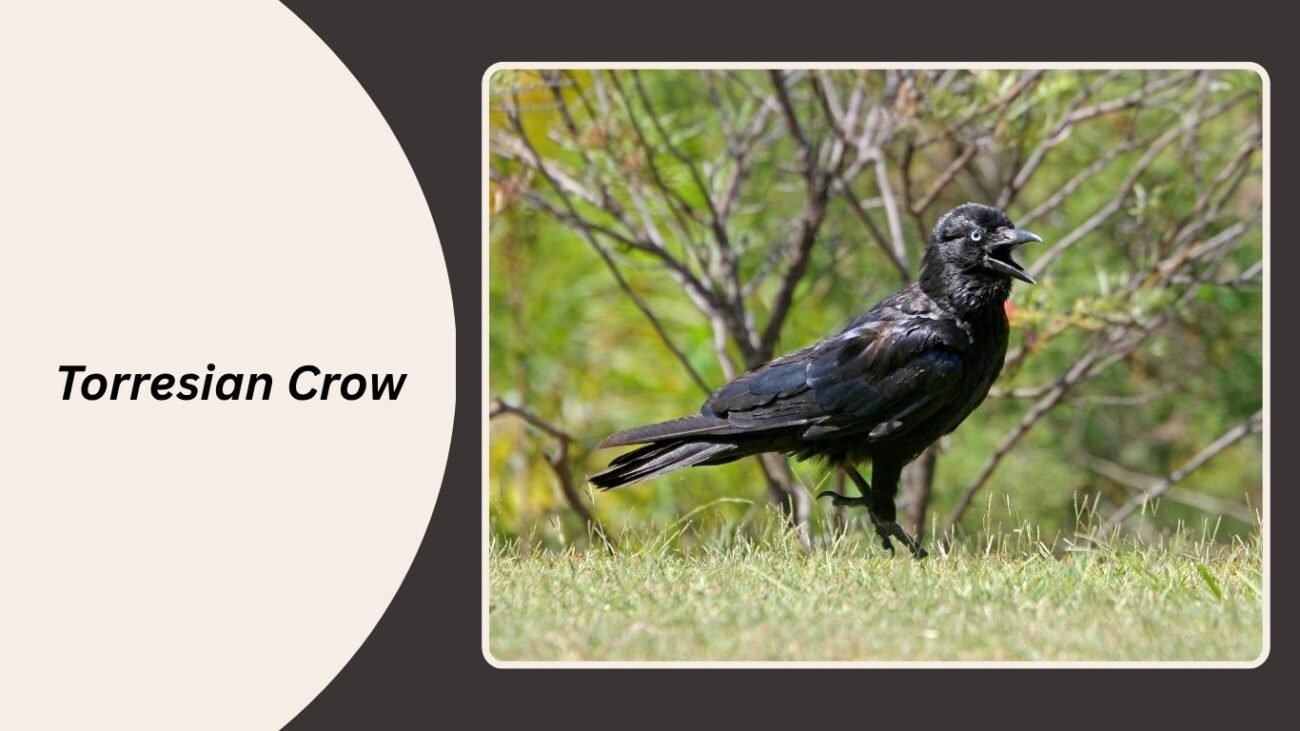
The Torresian Crow is a widespread and bold species found throughout northern and eastern Australia and parts of Papua New Guinea. It’s often seen in urban and coastal areas, where it thrives alongside human activity.
Identification
- Medium to large size (about 19 inches long)
- Entirely black body with a greenish or purplish sheen
- Distinctive white iris (adults)
- Slender but strong black bill
- Short square-shaped tail
Habitat
Common in open woodlands, coastal scrub, farmlands, and urban centers across much of Australia’s northern and eastern coasts.
Behavior
Highly intelligent and opportunistic. Often feeds on roadkill, garbage, fruit, and insects. Frequently seen foraging in pairs or small groups. It uses tools and has adapted well to suburban life, nesting in tall trees or on utility poles.
Call
Loud, nasal “uk-uk-uk” or “wha-wha-wha,” often mixed with harsh rattles and drawn-out calls. Very vocal and frequently heard in Australian suburbs.
13. Australian Raven (Corvus coronoides)
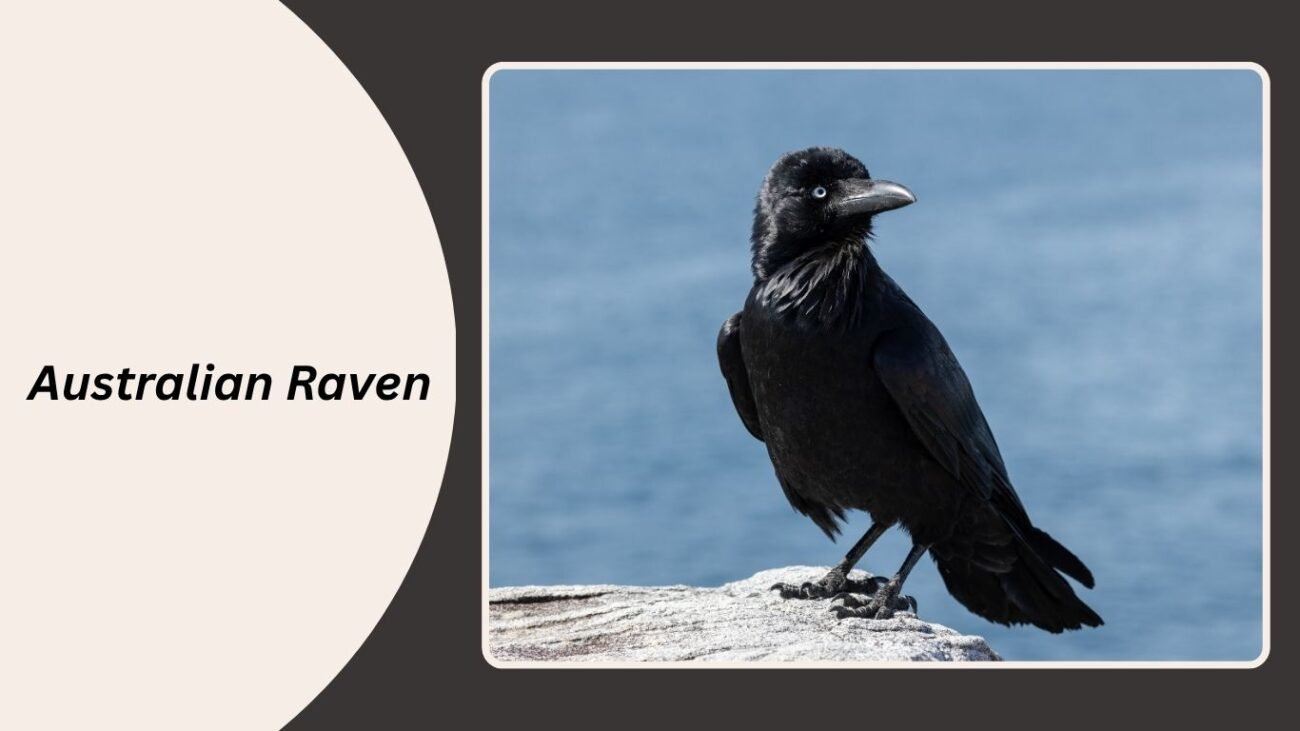
The Australian Raven is one of the largest and most iconic corvids in Australia, known for its haunting call and shaggy throat feathers. It is widespread and commonly mistaken for other similar-looking species.
Identification
- Large size (about 21–22 inches long)
- Entirely black plumage with prominent throat hackles
- Bright white eyes (adults)
- Thick black bill and strong legs
- Rounded tail and broad wings
Habitat
Found across eastern and southern Australia in woodlands, farmland, towns, and cities. More common in wetter regions compared to other local crow species.
Behavior
Solitary or in small groups, often seen scavenging, foraging on the ground, or perched high while calling. Builds large stick nests in trees. Uses complex problem-solving and is protective during nesting season.
Call
A long, descending, and mournful “aah-aah-aaaaah” with a wailing or moaning quality. Its eerie call is one of the most recognizable bird sounds in Australia.
14. New Caledonian Crow (Corvus moneduloides)
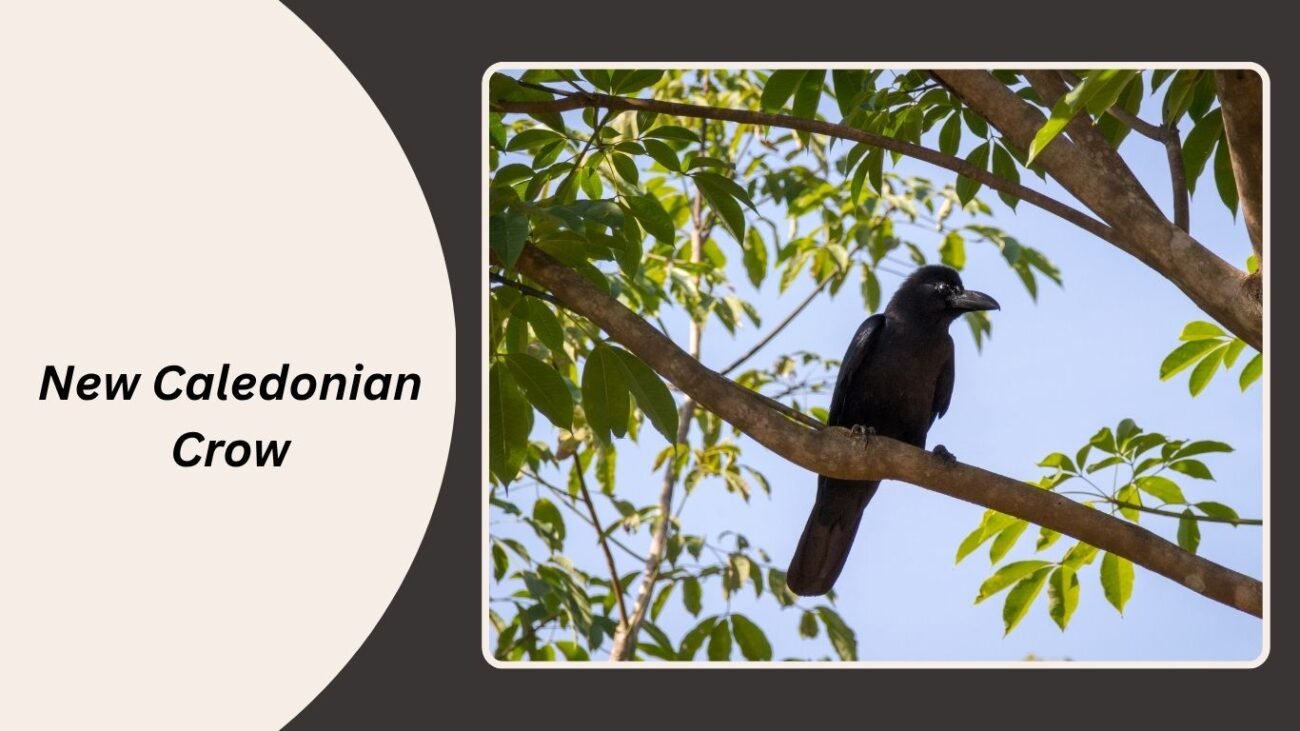
The New Caledonian Crow is one of the most intelligent birds in the world, famed for its advanced tool use. Native to the islands of New Caledonia, this species has amazed scientists with its problem-solving and crafting abilities.
Identification
- Medium size (about 16–17 inches long)
- All black body with a bluish or greenish sheen
- Slender, straight black bill
- Slightly rounded wings and tail
- Intelligent, alert expression
Habitat
Restricted to forests, plantations, and shrublands on the island of New Caledonia in the South Pacific. Prefers forested valleys and lowland woods.
Behavior
Remarkably clever—uses sticks and leaves to extract insects from bark and crevices. Observed crafting hooks and shaping tools. Usually forages alone or in pairs. Very cautious around humans but curious.
Call
A soft, nasal “waa” or “kraaa,” with some mechanical and clicking notes. Less vocal than other crows, but communicates subtly in tool-using contexts.
15. Slender-billed Crow (Corvus enca)
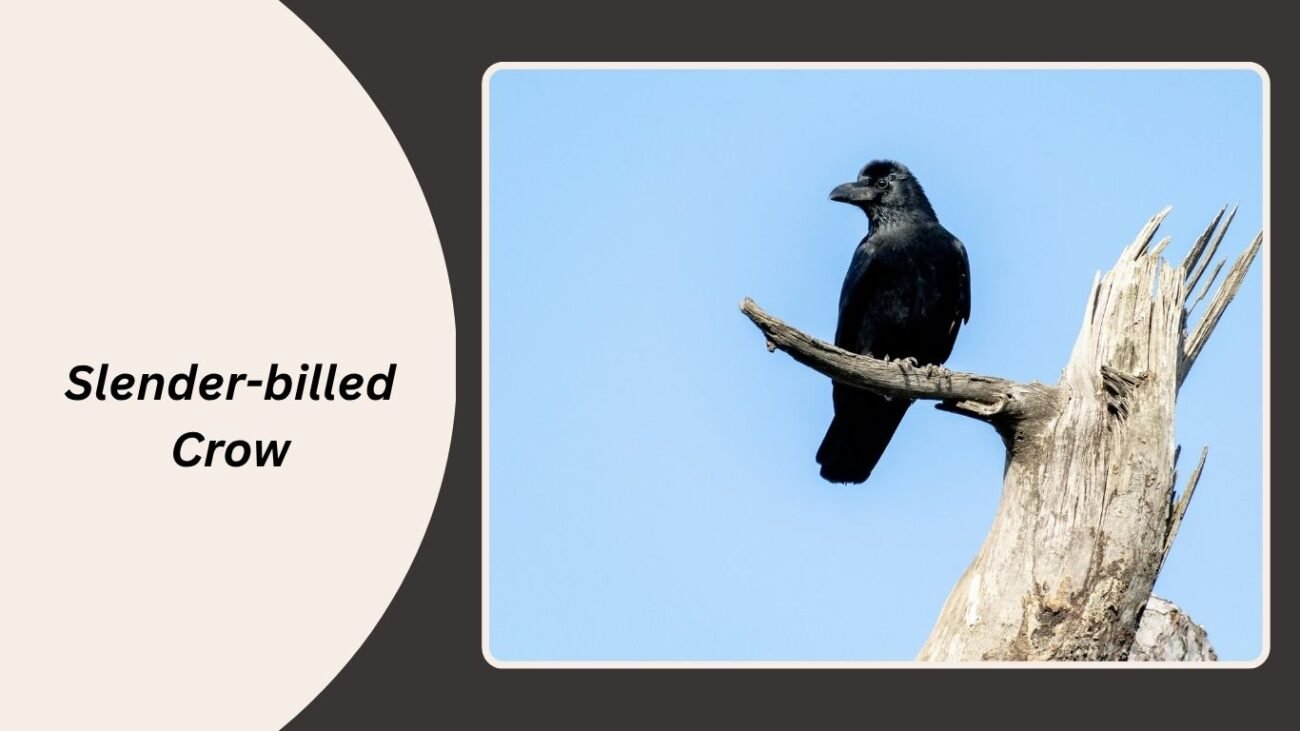
The Slender-billed Crow is a forest-dwelling species found across Southeast Asia, particularly in Indonesia, Malaysia, and the Philippines. It’s named for its thin, elongated bill and prefers tropical lowland environments.
Identification
- Medium size (about 17 inches long)
- Glossy black plumage with a greenish or purplish sheen
- Long, slender, slightly decurved black bill
- Broad wings and square tail
- Dark eyes and legs
Habitat
Primarily lowland rainforests, mangroves, and tropical woodlands. Found in Indonesia, Borneo, Sulawesi, and parts of the Philippines.
Behavior
Less social than some crows, often seen alone or in pairs. Forages for insects, fruit, and small animals. Tends to stay hidden in dense foliage and is more elusive than its urban relatives.
Call
Soft, nasal croaks or “graa” sounds—lower-pitched and more subdued than calls of other crow species. Often described as hoarse or rasping.
16. Brown-necked Raven (Corvus ruficollis)
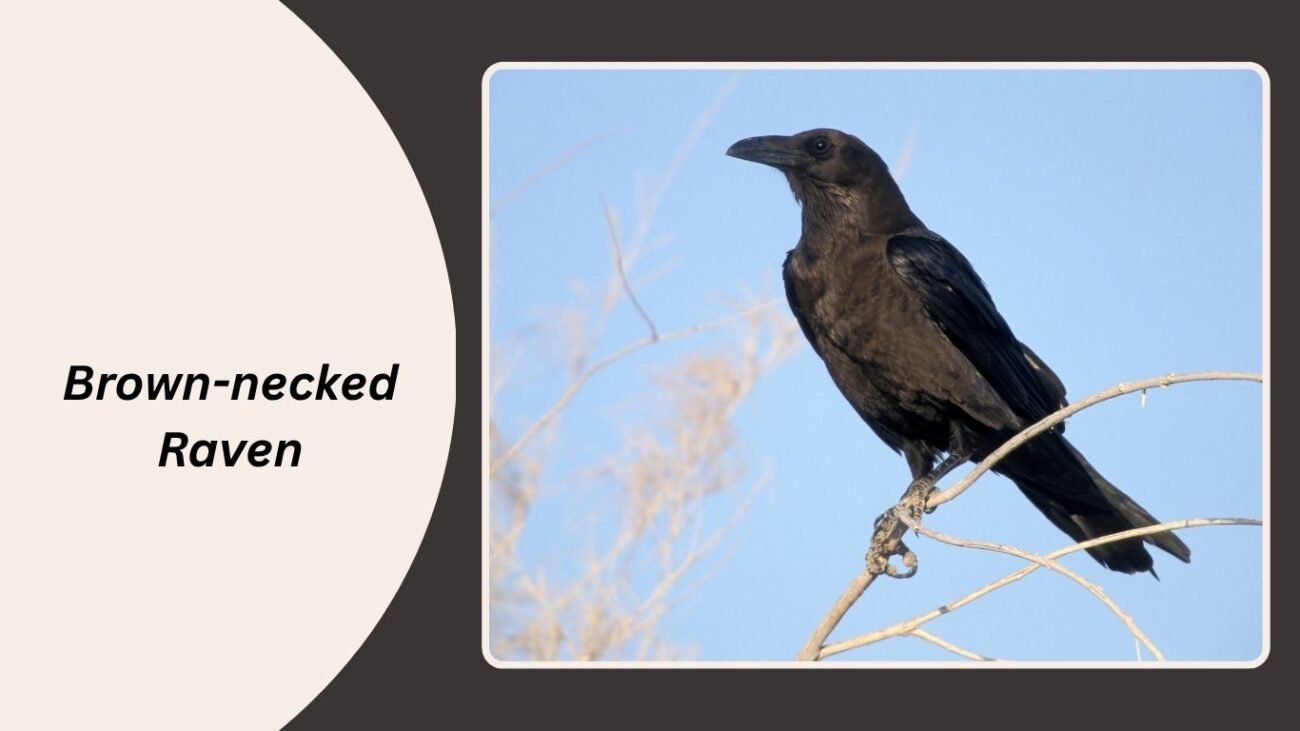
The Brown-necked Raven is a desert-adapted species found across North Africa and parts of the Middle East. It thrives in hot, arid environments and is known for its intelligence and playful behavior.
Identification
- Large size (about 20–22 inches long)
- Black body with a slight brownish or purplish sheen
- Brown or rufous tinge on the neck and upper back (especially in bright light)
- Heavy, curved black bill
- Broad wings and wedge-shaped tail
Habitat
Deserts, semi-arid plains, rocky outcrops, and scrublands from North Africa through the Arabian Peninsula and into western Asia. Common near oases and human settlements.
Behavior
Opportunistic scavenger and omnivore—feeds on carrion, insects, grains, and human refuse. Often seen soaring or gliding on thermals. Known for acrobatic flight and vocal mimicry in captivity.
Call
Harsh, deep croaks or guttural “kraa-kraa” sounds, often drawn out. May mimic other birds or sounds if exposed to them regularly.
17. Chihuahuan Raven (Corvus cryptoleucus)
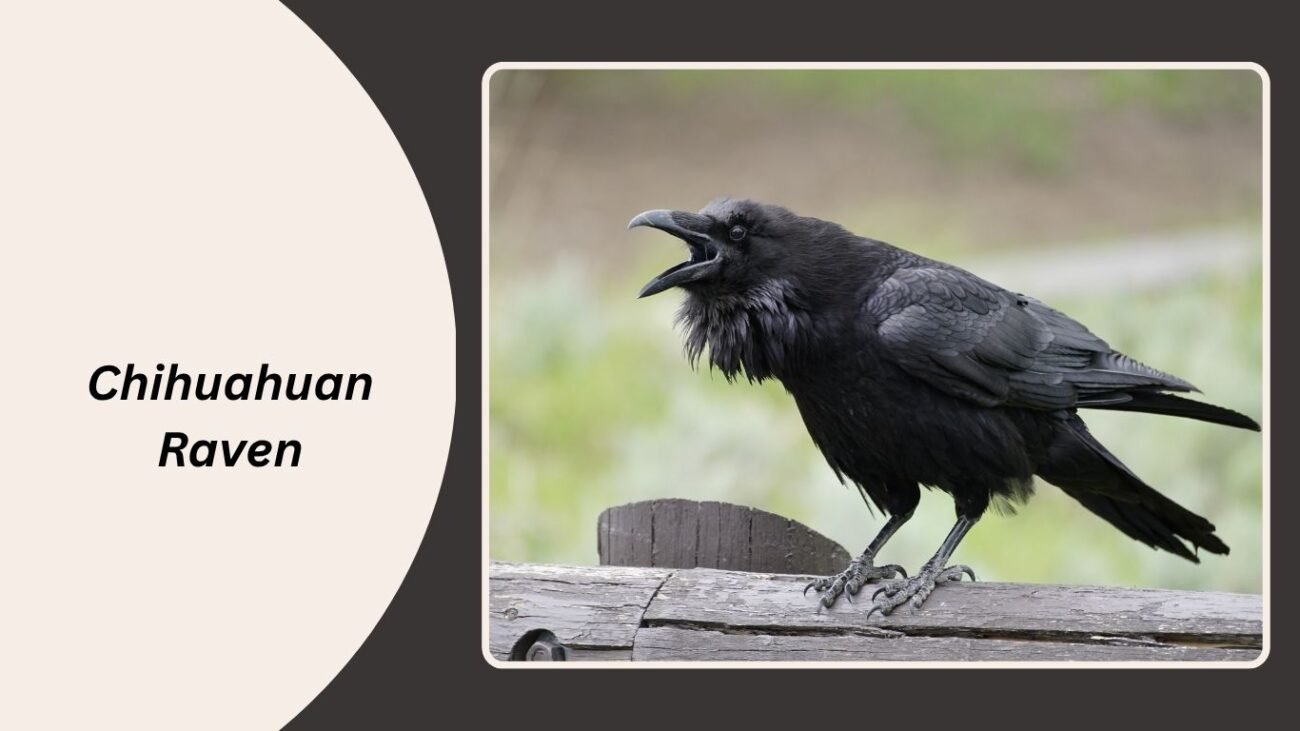
The Chihuahuan Raven is a southwestern U.S. and northern Mexico native, often mistaken for the American Crow or Common Raven. It favors open, arid landscapes and is notable for its distinct throat feathers.
Identification
- Medium to large size (about 18–20 inches long)
- Entirely black with purplish sheen
- Shorter and stouter than the Common Raven
- Slightly wedge-shaped tail
- White-based throat feathers (visible when ruffled)
Habitat
Open deserts, grasslands, shrublands, and plains of Texas, New Mexico, Arizona, and northern Mexico. Often nests on utility poles, cliffs, or low trees.
Behavior
Forms pairs or small flocks. Forages on the ground for insects, small animals, seeds, and roadkill. Often seen gliding or soaring in open skies. Adapts well to farmland and rural settlements.
Call
Hoarse, grating “graak” or “krraah,” softer and more nasal than the Common Raven’s call. Less varied in vocalizations than other crows or ravens.
18. Fan-tailed Raven (Corvus rhipidurus)
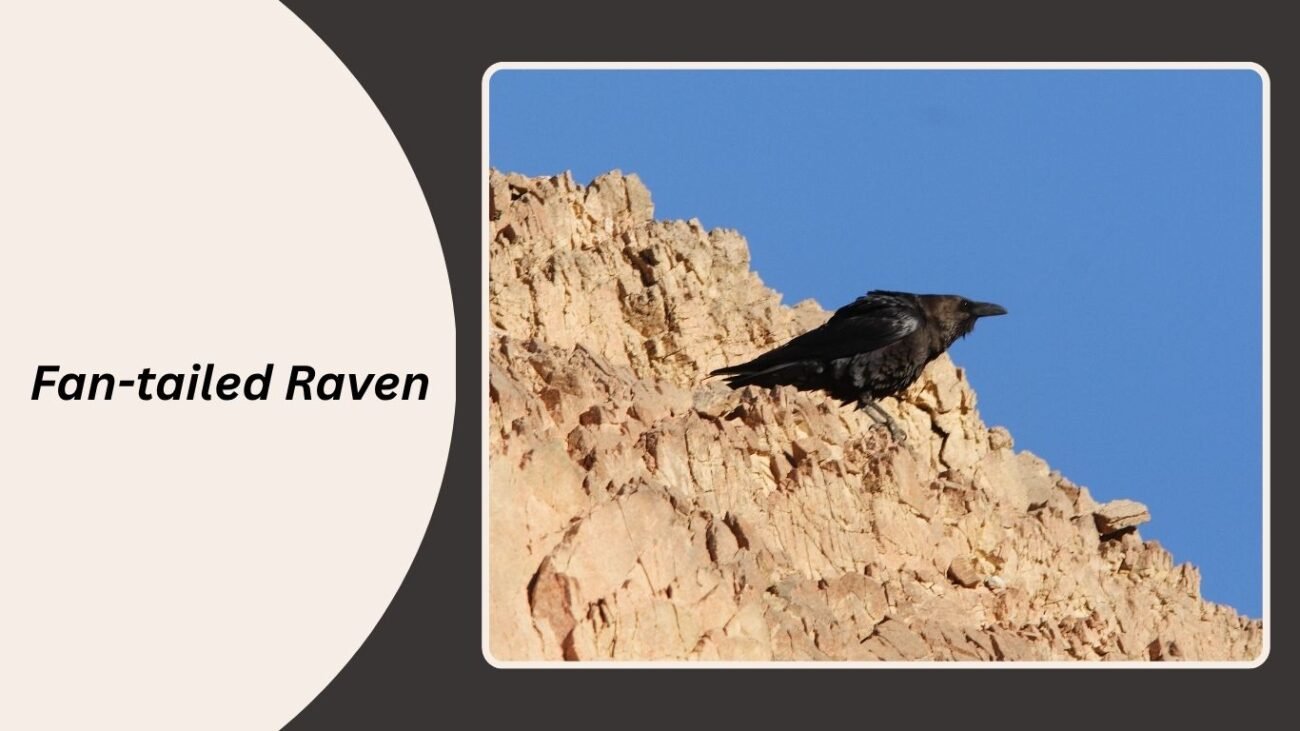
The Fan-tailed Raven is a desert specialist native to northeastern Africa and parts of the Middle East. It gets its name from its short, fan-shaped tail and is well adapted to life in hot, open environments.
Identification
- Medium size (about 17–19 inches long)
- Entirely black with a slight bluish sheen
- Very short, rounded tail that spreads like a fan in flight
- Thick, curved black bill
- Compact, stocky build
Habitat
Found in deserts, dry mountains, wadis, and rocky plateaus across northeastern Africa, the Arabian Peninsula, and parts of Sudan and Ethiopia. Often nests on cliffs or steep rock faces.
Behavior
Feeds on insects, carrion, fruit, and refuse. Often seen gliding on thermals and soaring with minimal effort. Known for its silent, graceful flight and adaptability to harsh desert conditions.
Call
A deep, croaky “kraa” or a series of hoarse rattles. Less vocal than many other ravens but still communicates through harsh, guttural sounds.
19. Cape Crow (Corvus capensis)
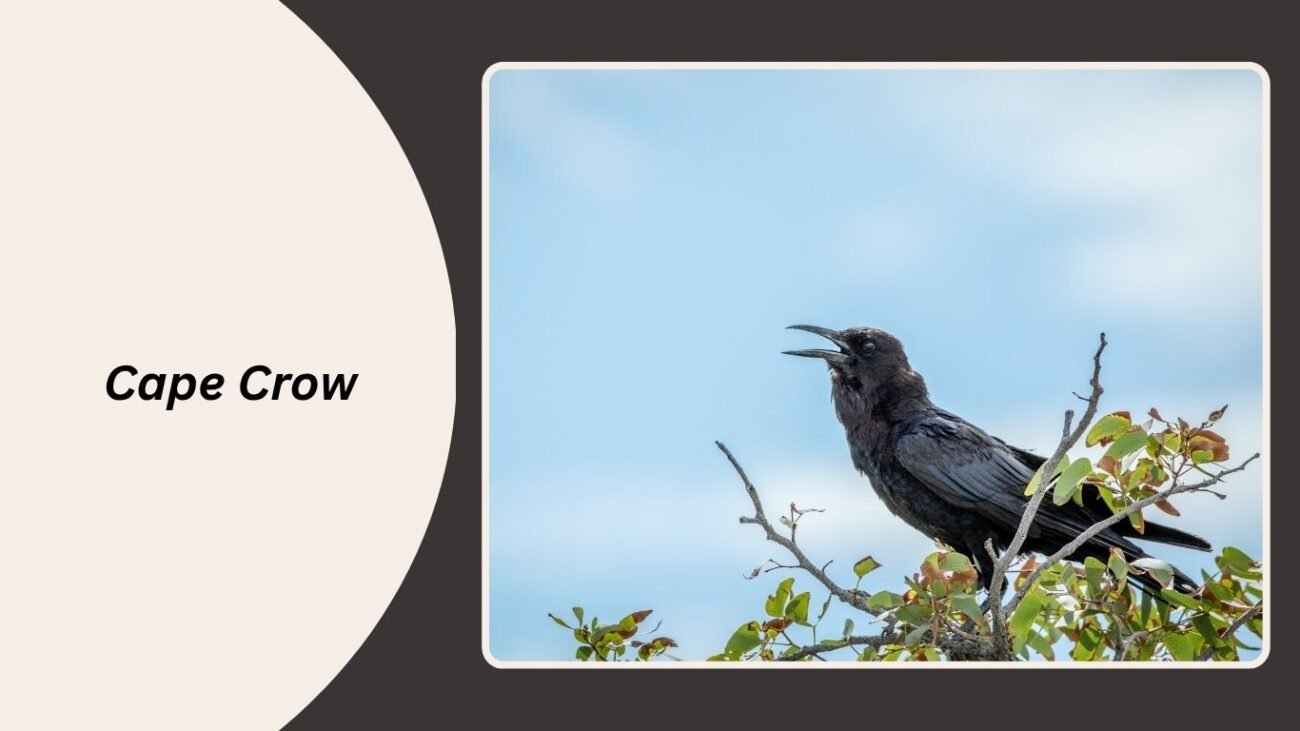
The Cape Crow, also called the Black Crow, is native to southern and eastern Africa. It’s slender and long-legged, with a higher-pitched voice than most other crows.
Identification
- Medium to large size (about 18–20 inches long)
- All black plumage with a glossy blue-purple sheen
- Long legs and slender neck
- Narrow, slightly decurved black bill
- Longer tail than many crow species
Habitat
Found in open grasslands, farmlands, and savannas across South Africa, Botswana, Zimbabwe, and Kenya. Avoids dense forests and heavily urbanized zones.
Behavior
Feeds on insects, seeds, grains, and small animals. Known to dig for food with its bill and feet. Often forages in pairs or small groups. Sometimes follows plows to catch unearthed prey.
Call
A high-pitched, nasal “kyow” or “kraa,” often repeated in short bursts. Its call is more melodic and whiny than the harsh croaks of other crows.
20. Bismarck Crow (Corvus insularis)
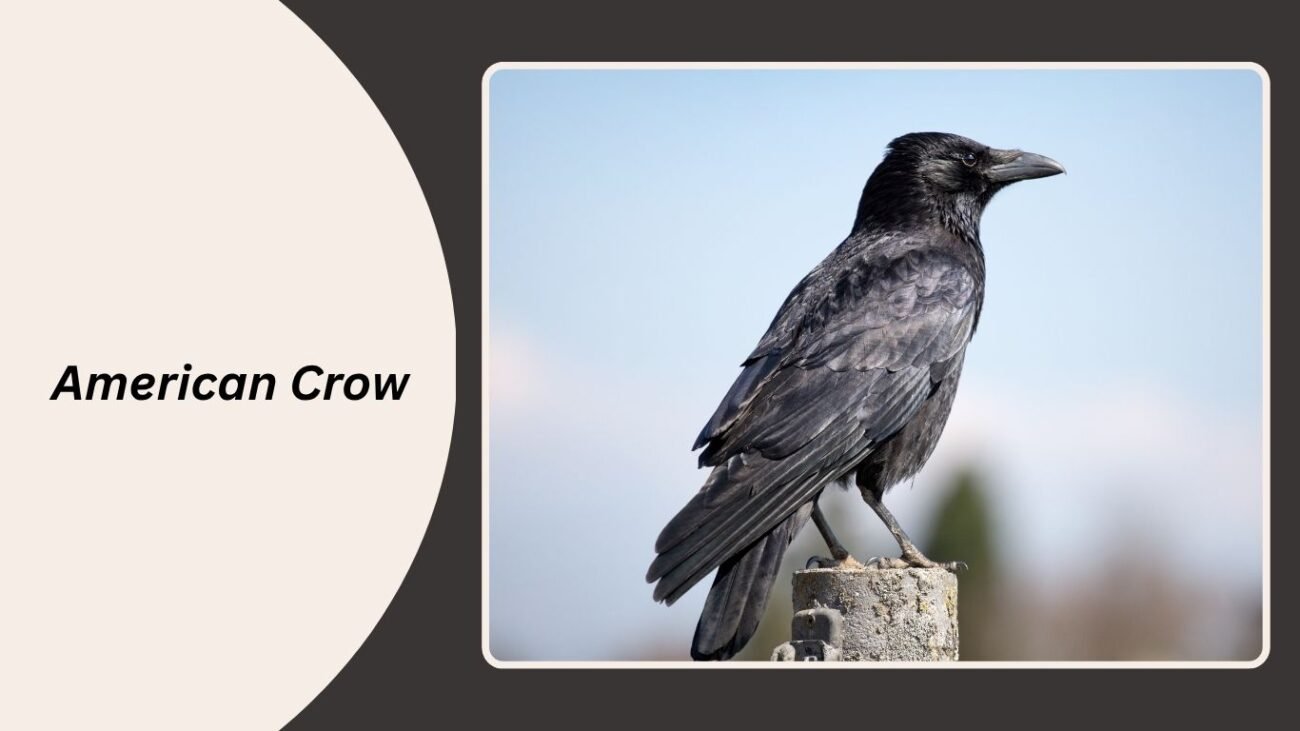
The Bismarck Crow is a lesser-known species native to the Bismarck Archipelago of Papua New Guinea. It was formerly considered a subspecies of the Torresian Crow but is now recognized as a distinct species due to vocal and genetic differences.
Identification
- Medium size (about 18 inches long)
- Entirely black with a subtle purplish or greenish gloss
- Stout black bill and dark eyes
- Similar in appearance to the Torresian Crow but slightly smaller
Habitat
Primarily found in forest edges, coconut plantations, and coastal regions of New Britain and neighboring islands in the Bismarck Archipelago.
Behavior
Omnivorous and opportunistic, feeding on fruit, insects, small animals, and human scraps. Often observed foraging in pairs or small groups. May interact closely with human communities on the islands.
Call
A nasal, grating “raa” or “whaa,” slightly softer and more drawn out than the Torresian Crow. Vocal differences were key in separating this species taxonomically.
21. Collared Crow (Corvus torquatus)
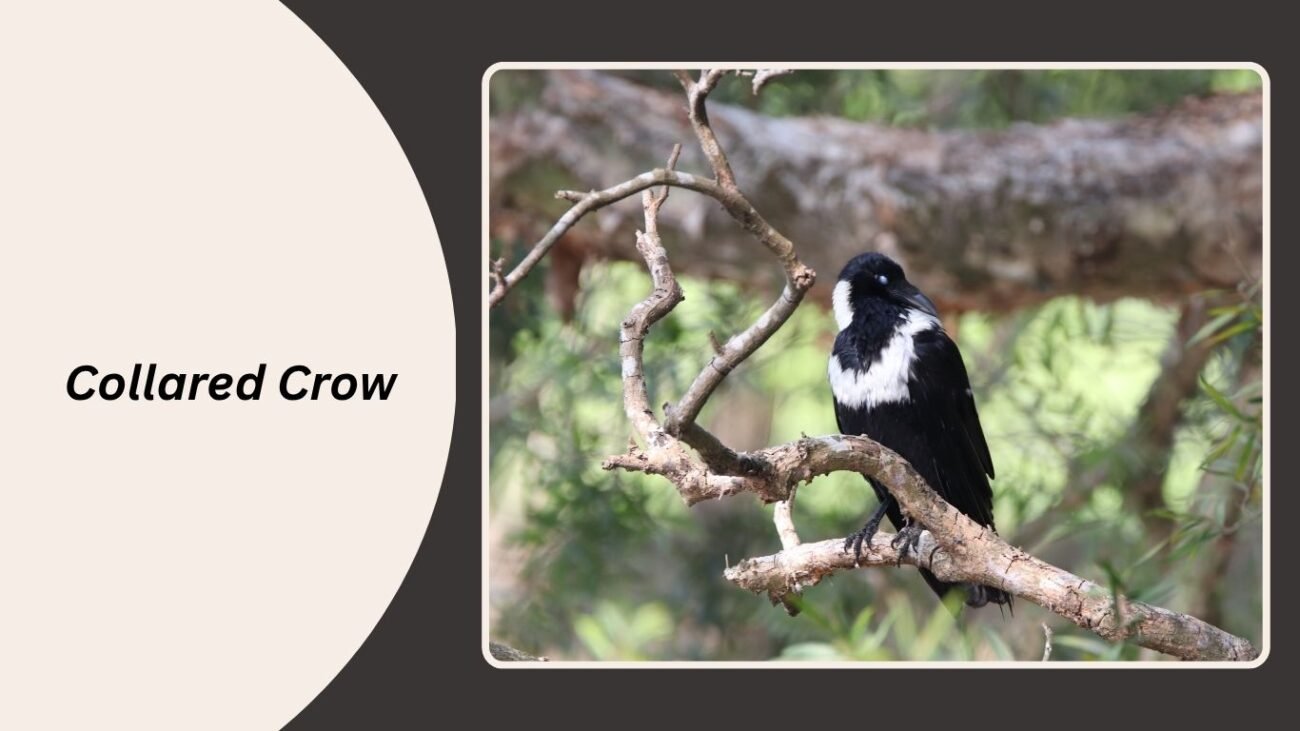
The Collared Crow is a striking black-and-white crow found in China and parts of Southeast Asia. It is easily recognized by the white collar and belly, giving it a sharp contrast rarely seen in the genus Corvus.
Identification
- Medium size (about 19 inches long)
- Black head, wings, and back
- White collar around the neck and white underparts
- Thick, black bill and black legs
- Short, square tail
Habitat
Prefers open lowland landscapes such as rice paddies, farmlands, and wetlands in central and southern China. Rarely found in heavily urbanized areas.
Behavior
Feeds mainly on insects, grains, and carrion. Often forages in open fields and along waterways. Typically shy and wary of humans compared to urban crows.
Call
A harsh, croaky “kra-kra” or deep, gurgling notes. Less vocal than other crows but still communicates with a variety of guttural sounds.
22. White-necked Raven (Corvus albicollis)
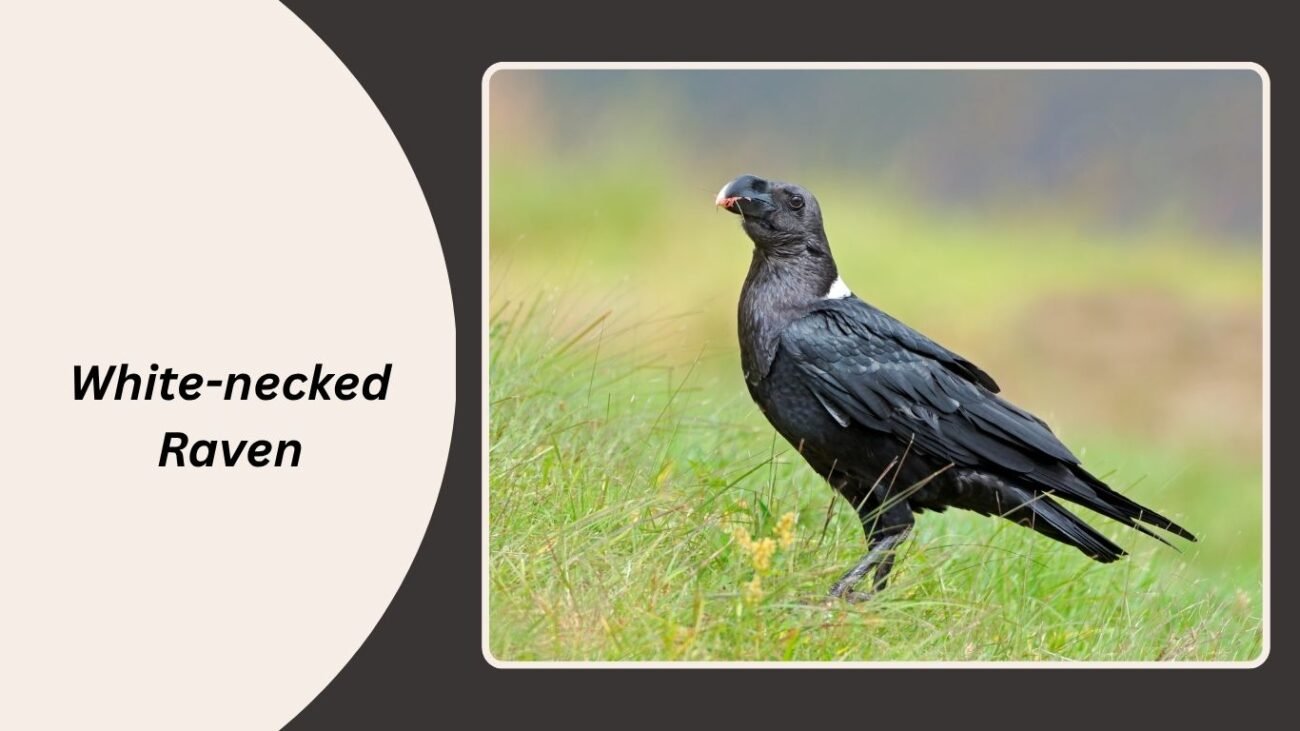
The White-necked Raven is a large, thickset corvid found in eastern and southern Africa. Despite its name, the white “neck” patch is often hidden unless viewed closely or in flight.
Identification
- Large size (about 20–24 inches long)
- Mostly black with a noticeable white patch on the back of the neck
- Massive, deep-curved bill with a pale base
- Short tail and broad wings
- Glossy feathers with bluish sheen
Habitat
Inhabits mountainous regions, rocky outcrops, cliffs, and open woodlands across eastern and southern Africa, including Ethiopia, Kenya, and South Africa.
Behavior
Highly intelligent and playful. Known to drop objects in midair and engage in aerial acrobatics. Forages on carrion, fruits, grains, and small animals. Often seen in pairs or small groups.
Call
A deep, echoing “korr” or “wok,” more resonant and hollow than other crows. Their call is distinctive and carries well in open, rocky habitats.
23. Banggai Crow (Corvus unicolor)
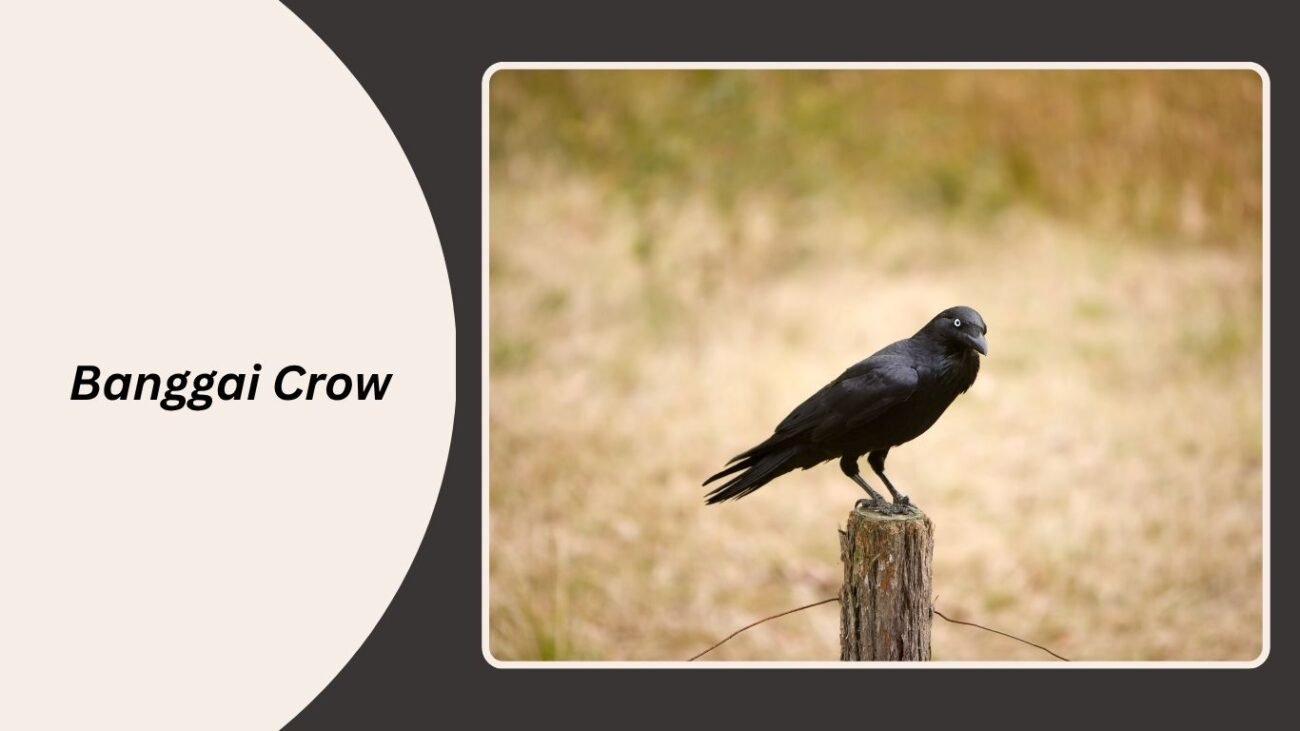
The Banggai Crow is a critically endangered and elusive species endemic to Peleng Island in Indonesia’s Banggai Archipelago. For decades, it was thought to be extinct until its rediscovery in the early 2000s.
Identification
- Medium size (about 18 inches long)
- Entirely matte black plumage
- Slender black bill and dark eyes
- Similar in shape to the Slender-billed Crow but more uniform in color
- Lack of gloss or sheen compared to most crow species
Habitat
Inhabits tropical lowland and montane forests on Peleng Island. Very limited range and small population size due to habitat loss.
Behavior
Very little is known. Believed to forage in small groups or pairs. Likely omnivorous, feeding on insects, fruits, and possibly small vertebrates.
Call
Poorly documented. Presumed to produce soft, rasping calls similar to those of related Southeast Asian crows.


