











Graceful, social, and often seen grazing in open fields, the Australian Wood Duck (Chenonetta jubata) is one of the most recognizable waterfowl across Australia. Unlike many ducks that spend much of their time on the water, this species prefers grassy areas, making it a familiar sight in urban parks, wetlands, and farmland. Known for their distinctive appearance, unique calls, and strong family bonds, Australian Wood Ducks play an important role in both natural and human-altered landscapes. This guide explores everything about them—from identification and diet to nesting habits and fascinating facts—offering a complete look at one of Australia’s most iconic birds.
What is the Australian Wood Duck?
The Australian Wood Duck (Chenonetta jubata) is a medium-sized waterfowl native to Australia and parts of Tasmania. Unlike many ducks, it spends much of its time grazing on land rather than swimming. This makes it unique among duck species, as it behaves more like a goose when feeding.
It is sometimes called the maned duck or maned goose, a name that comes from the slight mane-like feathers found on the male’s head and neck. These birds are highly adaptable, often thriving in both natural wetlands and urban environments such as golf courses, city parks, and farm paddocks.
The Australian Wood Duck is also known for its monogamous nature, forming strong lifelong pair bonds. They are commonly seen in pairs or small family groups, but they also gather in flocks, especially outside the breeding season.
Scientific Name and Taxonomy
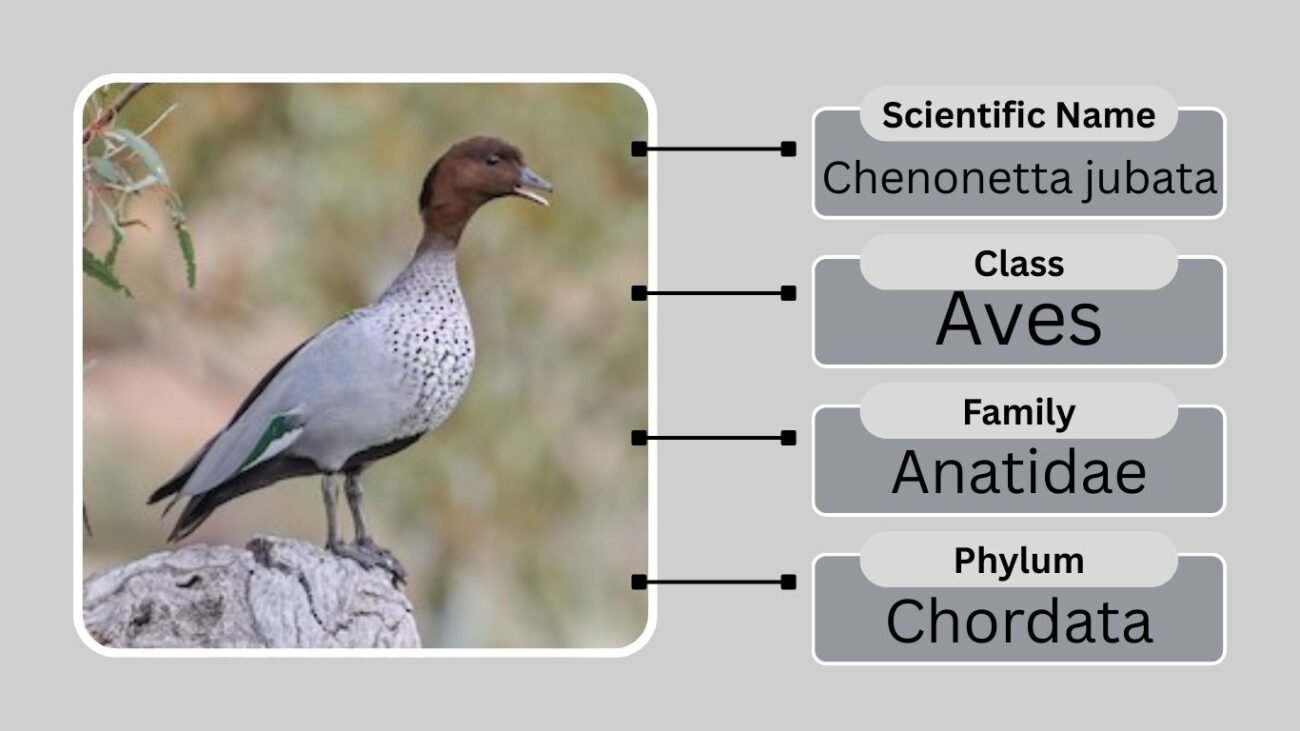
The Australian Wood Duck is scientifically named Chenonetta jubata. It belongs to the family Anatidae, which includes ducks, geese, and swans. Within this family, it is considered quite distinct and is the only living species in the genus Chenonetta.
- Kingdom: Animalia
- Phylum: Chordata
- Class: Aves
- Order: Anseriformes
- Family: Anatidae
- Genus: Chenonetta
- Species: C. jubata
Unlike other common ducks such as the Pacific Black Duck (Anas superciliosa), the Australian Wood Duck shows unique feeding habits and physical features. Its closer resemblance to geese in behavior—especially its grazing preference—has made some ornithologists compare it more with grazing geese than typical dabbling ducks.
This species’ scientific classification highlights its unique evolutionary path, setting it apart from many other waterfowl found in Australia.
Identification: Male vs Female
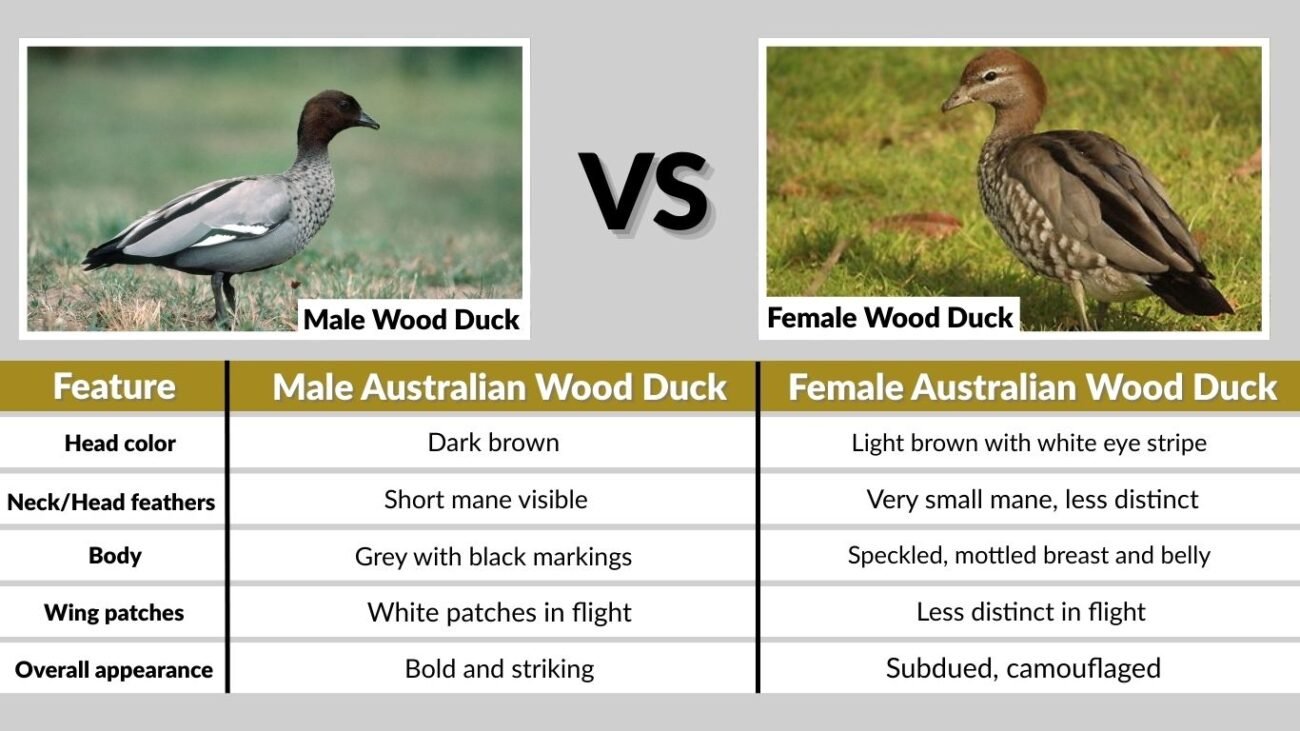
The Australian Wood Duck is easy to recognize, but telling males and females apart requires careful observation. Their plumage shows distinct differences that make identification possible even from a distance.
Male Characteristics
- Dark brown head with a short mane of feathers along the back of the neck
- Light grey body with fine black markings
- White patches on the wings visible in flight
- Generally more striking appearance compared to the female
Female Characteristics
- Lighter brown head with a distinctive white stripe running through the eye
- Mottled, speckled breast and belly
- More subdued and camouflaged plumage
- Smaller mane compared to males
Comparison Table: Male vs Female
| Feature | Male Australian Wood Duck | Female Australian Wood Duck |
| Head color | Dark brown | Light brown with white eye stripe |
| Neck/Head feathers | Short mane visible | Very small mane, less distinct |
| Body | Grey with black markings | Speckled, mottled breast and belly |
| Wing patches | White patches in flight | Less distinct in flight |
| Overall appearance | Bold and striking | Subdued, camouflaged |
Males tend to stand out with their darker head and bold plumage, while females blend better into their surroundings, which is especially helpful when nesting.
Ducklings and Life Cycle
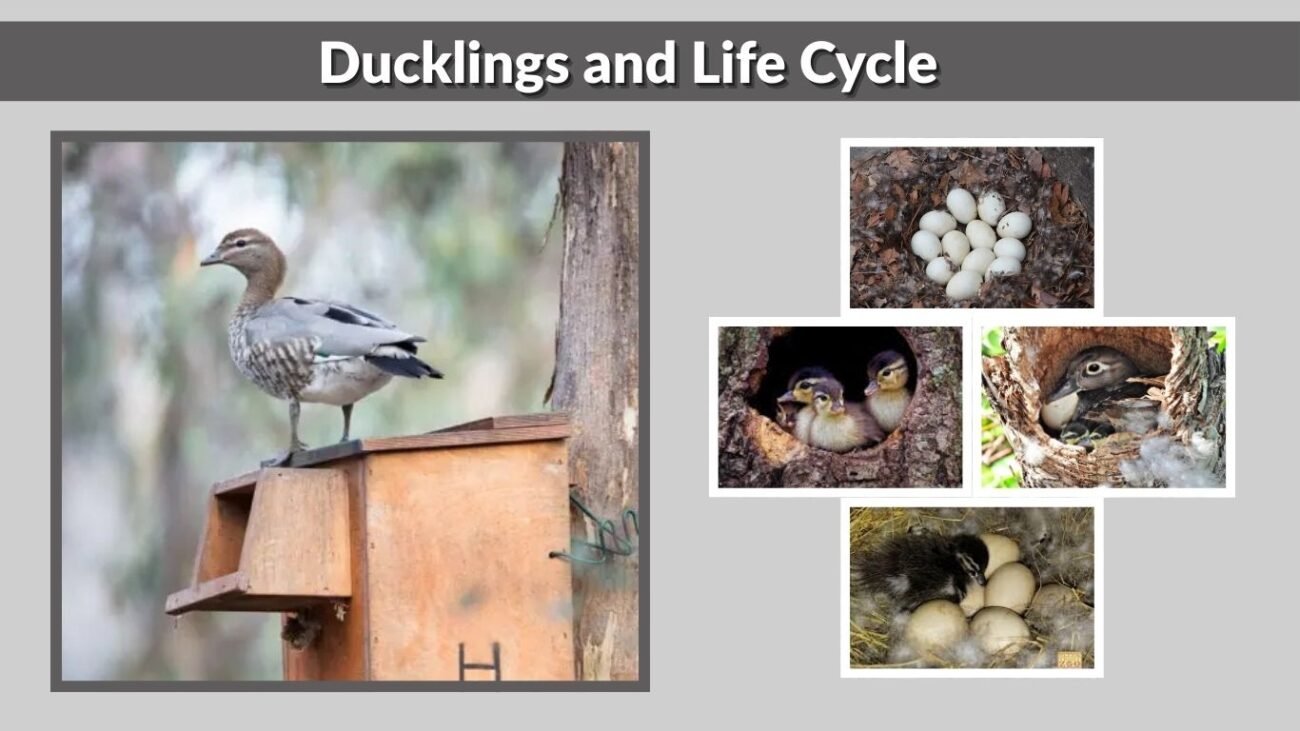
The life cycle of the Australian Wood Duck is fascinating, beginning with their adorable ducklings. Breeding typically occurs from September to November, though in favorable conditions they may nest outside this window.
Ducklings
- Newly hatched ducklings are covered in soft down with a brown-and-yellow pattern for camouflage.
- They leave the nest within a day after hatching, following their parents to water or grassy areas.
- Ducklings feed mostly on grasses and small insects, learning quickly by mimicking adult behavior.
Growth Stages
- Egg Stage: Females lay 8–12 creamy white eggs in tree hollows or nest boxes.
- Hatchlings: After about 24–30 days of incubation, the ducklings hatch.
- Juveniles: Within a few weeks, they begin to resemble smaller versions of the adults, though without the distinct male and female plumage.
- Adults: Full maturity is reached within their first year, with clear plumage differences visible between males and females.
Parents are very protective of their young, leading them from the nest to feeding grounds and defending them against potential threats. Unlike many birds, Australian Wood Ducks rely on both parents for chick-rearing, making family bonds strong and vital for survival.
Nesting Habits and Eggs
The Australian Wood Duck has unique nesting behaviors compared to many other waterfowl. Instead of nesting directly on the ground or water edges, these ducks often choose tree hollows high above the ground. When natural hollows aren’t available, they also readily use nesting boxes, making them common in urban parks and farmland.
Nesting Season
- Breeding usually takes place from spring to early summer (September to November), though timing may vary depending on rainfall and food availability.
- Pairs form strong lifelong bonds, and both male and female stay close during the nesting period.
Eggs
- Clutch size: typically 8 to 12 eggs
- Egg color: pale cream or white
- Incubation: around 24–30 days, done mostly by the female while the male keeps guard nearby
Nesting Behavior
Once the eggs hatch, ducklings leave the tree hollow by jumping to the ground—a remarkable sight considering nests can be several meters high. Parents then guide them to water or grasslands where feeding begins.
This reliance on tree hollows makes habitat conservation crucial, as loss of mature trees can directly reduce available nesting sites for the species.
Diet and Feeding Behavior
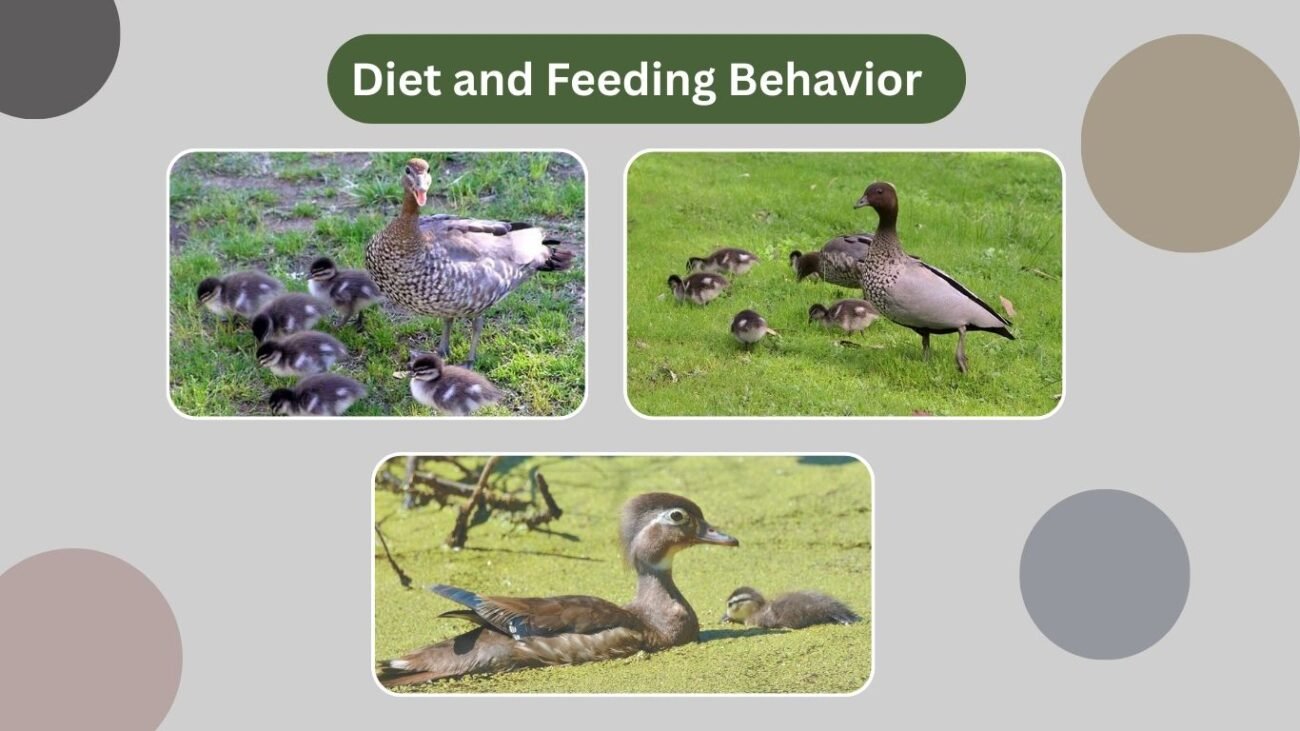
The Australian Wood Duck has a feeding style that sets it apart from many other duck species. Instead of dabbling or diving for aquatic plants, it behaves more like a goose, grazing mainly on land.
Natural Diet
- Grasses such as clover, kikuyu, and rye
- Herbs and shoots from pastures
- Seeds and small aquatic plants when near wetlands
Feeding Habits
- They prefer open grassy areas like farmland, golf courses, and parks, where they can graze in groups.
- Ducklings eat a more varied diet, including small insects and aquatic invertebrates, which provide the protein needed for growth.
- Unlike many ducks, they rarely dive or forage underwater, making them primarily terrestrial feeders.
Seasonal Diet Variation
During wetter months, they may expand their diet to include aquatic vegetation around lakes and wetlands. In drier times, they rely heavily on grasslands and farmland pastures, often feeding in flocks with other ducks and geese.
This flexible diet allows the Australian Wood Duck to thrive in both natural wetlands and urban landscapes, making it one of the most adaptable native waterfowl in Australia.
Call and Sounds
The Australian Wood Duck has a range of calls used for communication, and they differ noticeably between males and females. These vocalizations are important for keeping pairs and families together, warning of predators, and signaling during flight.
Male Calls
- Males produce a low-pitched, drawn-out “wheeze” or “gnrgnr” sound.
- Often used as a contact call to maintain communication with the female and flock.
- Can also act as a territorial display during the breeding season.
Female Calls
- Females make a higher-pitched, short “gagaga” or “gah” sound.
- This call is sharper and more frequent, especially when guiding ducklings or signaling danger.
- Used to maintain close contact with the brood.
Communication Role
- Calls help maintain pair bonds and coordinate movements while grazing.
- Alarm calls are essential in protecting ducklings, often causing the brood to freeze or hide.
- Group calls also play a role in flock cohesion when several families feed together.
The difference in pitch and style between male and female calls makes it relatively easy for birdwatchers to distinguish the sexes by sound even without a clear view.
Family and Social Behavior
The Australian Wood Duck is a highly social species with strong family bonds. Unlike many ducks that may switch partners, this species is monogamous, often forming lifelong pair bonds.
Pair Bonding
- Once paired, males and females stay together year-round.
- Males are protective, often standing guard while females incubate eggs.
- Pair loyalty contributes to higher survival rates of their offspring.
Family Life
- Both parents play an active role in raising ducklings.
- After hatching, the family remains together, moving as a unit to feeding grounds.
- Ducklings learn foraging skills by imitating adults, especially the female.
Flocking Behavior
- Outside the breeding season, Australian Wood Ducks gather in small to medium flocks, often grazing together in open grasslands.
- They are commonly seen mixing with other waterfowl, but families typically stay close to each other even in large groups.
Their cooperative social system and reliance on group living make them a familiar and well-adapted species in both wild and urban environments, strengthening their survival chances in varied landscapes.
Habitat and Distribution
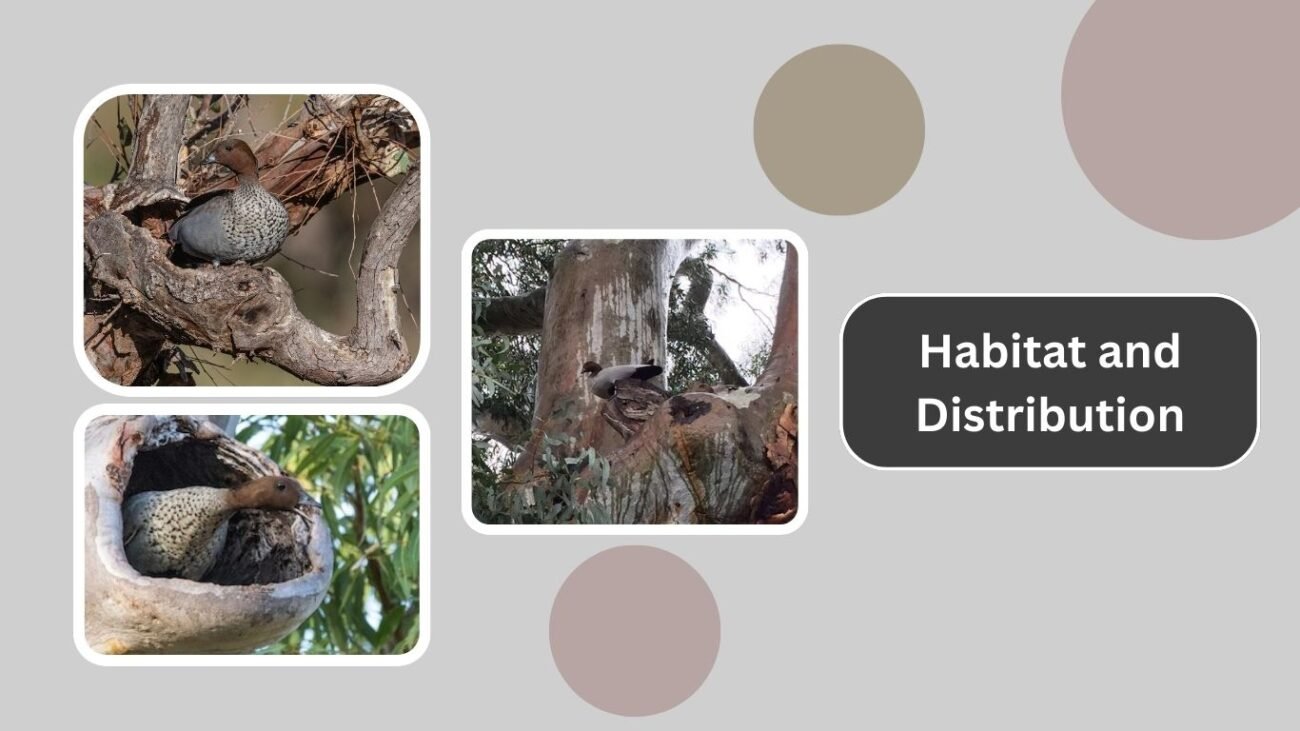
The Australian Wood Duck is widespread across Australia and parts of Tasmania, making it one of the most common and adaptable native ducks.
Natural Habitat
- Wetlands, rivers, and lakes with surrounding grassy areas
- Open woodlands and floodplains
- Grasslands near water sources
Urban and Farmland Adaptation
- Frequently seen in city parks, golf courses, and suburban wetlands
- Grazes in farmland paddocks, where it can sometimes be considered a pest due to crop feeding
- Readily adapts to nesting boxes and man-made lakes, which has helped it thrive in human-modified landscapes
Distribution Range
- Found throughout mainland Australia, except the driest desert interiors
- Common in Tasmania
- Some seasonal movement occurs, but they are largely sedentary, staying within their local range if food and water are available
This wide distribution and ability to live comfortably in both wild and urban environments have made the Australian Wood Duck one of the most visible and well-known bird species in the country.
FAQs
What is the scientific name of the Australian Wood Duck?
The scientific name of the Australian Wood Duck is Chenonetta jubata. It is the only living species in the genus Chenonetta and belongs to the family Anatidae, which also includes ducks, geese, and swans. Its unique feeding habits and nesting behaviors make it distinct from many other waterfowl in Australia.
How do you tell male and female Wood Ducks apart?
Males have a dark brown head with a small mane and a pale grey body marked with fine black spots. Females, on the other hand, have a lighter brown head with a distinct white eye stripe and a speckled breast. These differences make sex identification quite easy even at a distance.
What do Australian Wood Duck ducklings eat?
Ducklings feed mainly on tender grasses, clover, and small insects. Protein from insects helps them grow quickly in their early weeks, while grasses form the bulk of their diet. They usually forage by following their parents, learning essential feeding behaviors that prepare them for survival into adulthood.
Where do Australian Wood Ducks build their nests?
Unlike most ducks, Australian Wood Ducks usually nest in tree hollows, sometimes several meters above ground. They also use artificial nesting boxes when natural hollows aren’t available. After hatching, ducklings bravely leap from the hollow to the ground, guided by their parents to feeding areas and nearby water.
Are Australian Wood Ducks dangerous or aggressive?
Generally, Australian Wood Ducks are peaceful and not aggressive toward humans. However, during breeding season, males may become territorial and protective of their nests or ducklings. They might display warning behaviors, such as hissing or posturing, to defend their family, but they are not considered dangerous to people.


