











Known as the “flying jewels” of North America, wood ducks (Aix sponsa) are prized by hunters for their stunning plumage, fast flight, and challenging nature in the field. Unlike other waterfowl, wood ducks prefer wooded swamps, creeks, and flooded timber, making them a unique target that requires skill and strategy.
In this guide, we’ll explore everything you need to know about wood duck hunting—from regulations and scouting tips to gear, techniques, and even cooking ideas—so you can enjoy a rewarding and responsible hunting experience.
What is a Wood Duck?
The wood duck (Aix sponsa) is one of the most colorful and distinctive waterfowl species in North America. Males, known as drakes, display iridescent green crests, red eyes, and bold white markings, while females are more subdued with gray-brown plumage and a white eye-ring.
Unlike many ducks that favor large lakes or open wetlands, wood ducks thrive in wooded swamps, creeks, ponds, and flooded timber. Their preference for forested wetlands gives them their name and makes hunting them a unique challenge.
Wood ducks are fast, agile flyers, often darting through trees at speeds of up to 30 miles per hour, which requires hunters to be quick and accurate. They are early migrants, with much of the hunting season occurring in early fall when they are most active.
Understanding their appearance, behavior, and habitat is the first step to becoming a successful wood duck hunter.
Hunting Season and Regulations
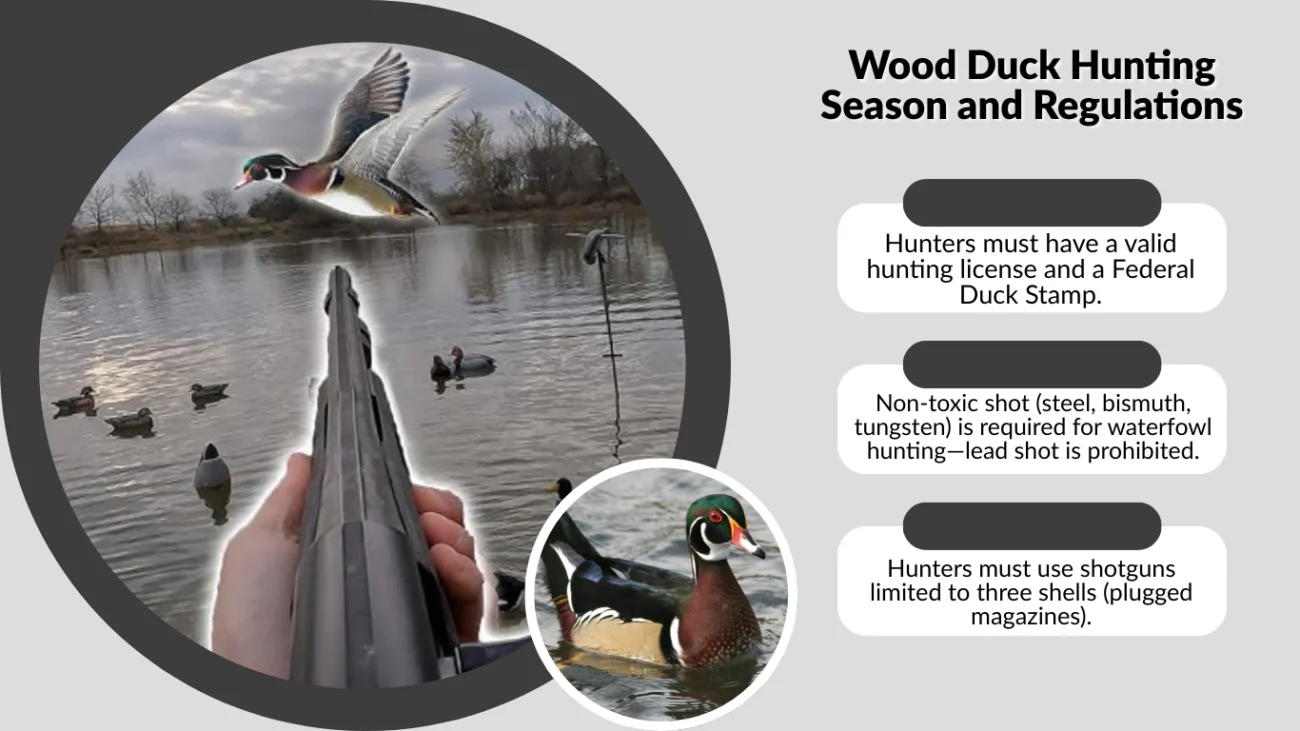
Hunting wood ducks is tightly managed to ensure healthy populations and long-term sustainability. Each year, federal and state wildlife agencies set rules that hunters must follow.
Hunting Season
- Wood duck season typically begins in early fall, often aligning with the opening of duck season.
- In many states, hunters target wood ducks during the early teal and wood duck season (September), followed by opportunities in the main waterfowl season.
Bag Limits
- Daily bag limits usually allow 2–3 wood ducks per hunter, though this can vary depending on the region.
- Possession limits are often three times the daily bag limit, meaning hunters can store more birds if hunting multiple days.
Legal Requirements
- Hunters must have a valid hunting license and a Federal Duck Stamp.
- Non-toxic shot (steel, bismuth, tungsten) is required for waterfowl hunting—lead shot is prohibited.
- Hunters must use shotguns limited to three shells (plugged magazines).
Importance of Compliance
Following these regulations not only prevents legal issues but also supports the continued success of wood duck conservation. Every responsible hunter plays a role in maintaining healthy populations for future generations.
Best Habitat for Wood Duck Hunting
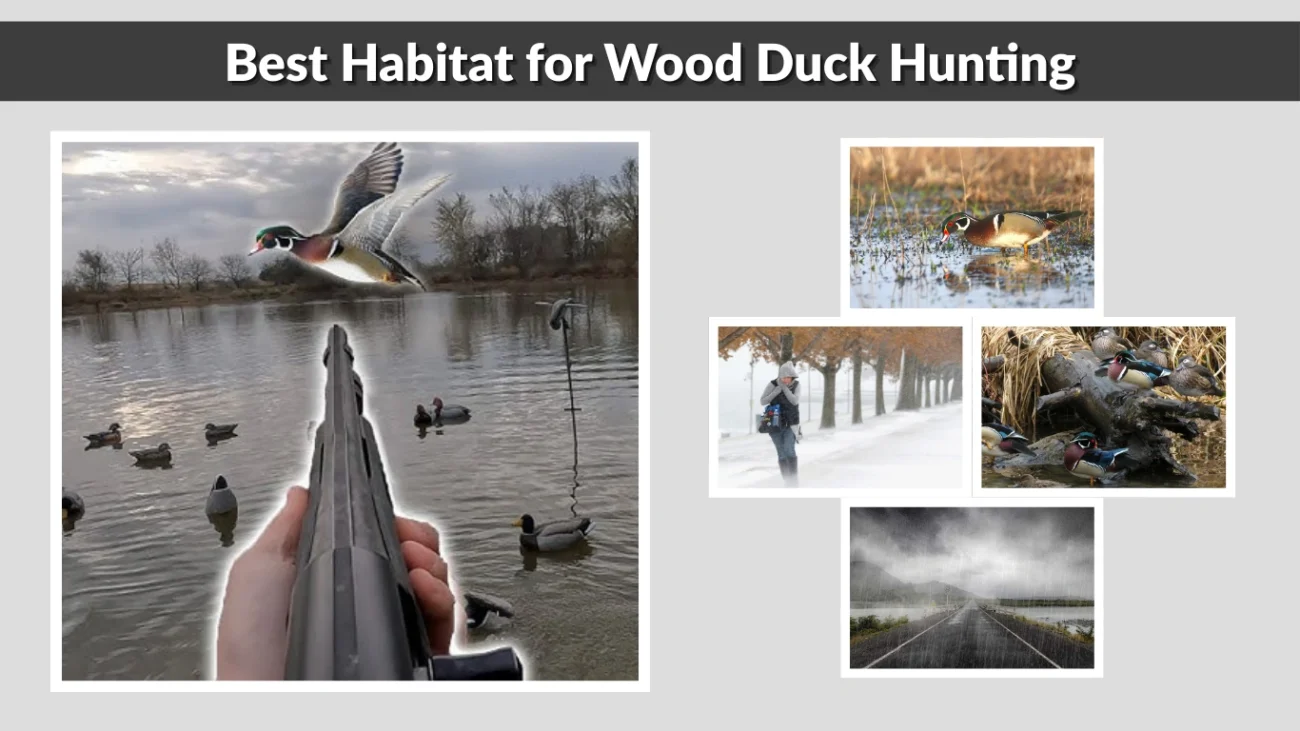
Wood ducks are often called “swamp ghosts” because they thrive in habitats that many other ducks avoid. Understanding where they live is key to hunting success.
Preferred Environments
Flooded timber and wooded swamps: Their most iconic habitat, where they feed and roost among trees.
Creeks and rivers: Especially narrow waterways where they fly low and fast.
Beaver ponds and marsh edges: Natural feeding and resting areas with abundant cover.
Morning vs. Evening Hunts
- Morning flights: At first light, wood ducks leave roosting areas and head to feeding grounds, making it the prime time for hunting.
- Evening flights: Ducks return to roosting sites near water, offering another good window of opportunity.
Weather Influence
- Overcast or rainy days often keep wood ducks active longer in the morning.
- Cold fronts and early frosts can trigger stronger flights as they move in search of food and shelter.
Targeting the right habitats during these key times greatly increases the chances of a successful hunt.
Scouting for Wood Ducks
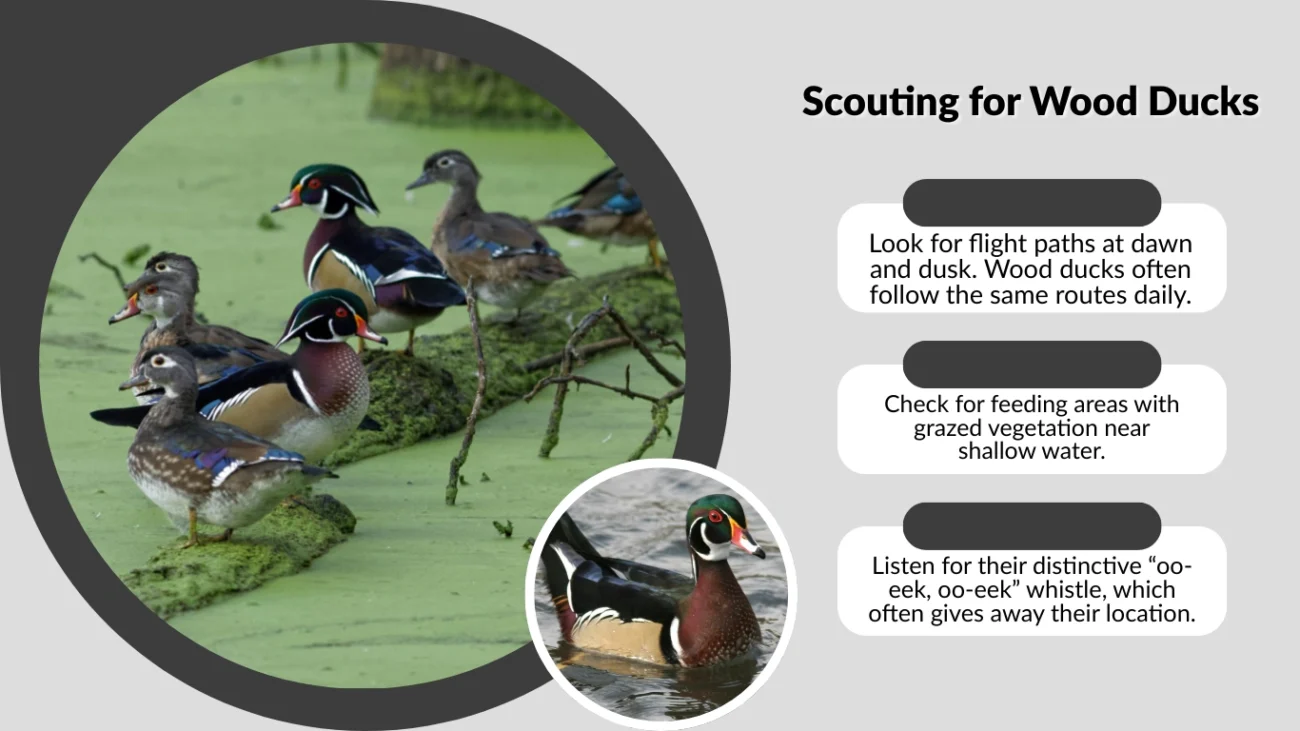
Successful wood duck hunting begins with proper scouting. Because these ducks fly quickly and favor wooded wetlands, finding their movement patterns is crucial.
Signs of Activity
- Look for flight paths at dawn and dusk. Wood ducks often follow the same routes daily.
- Check for feeding areas with grazed vegetation near shallow water.
- Listen for their distinctive “oo-eek, oo-eek” whistle, which often gives away their location.
Scouting Tips
- Spend time in likely habitats a few days before hunting season.
- Use binoculars or even trail cameras in swamps and creeks.
- Mark trees or landmarks along flight paths for accurate setup locations.
Good scouting helps reduce wasted time and increases the odds of being in the right place when birds are most active.
Hunting Gear and Equipment

Having the right equipment makes wood duck hunting more efficient and enjoyable.
Shotguns and Ammunition
- 12- or 20-gauge shotguns are ideal.
- Use #4 to #6 steel shot for clean, ethical kills at close range.
Clothing and Camouflage
- Waterproof waders are essential for flooded timber and swamps.
- Natural camouflage clothing or face masks help blend into wooded habitats.
Decoys and Calls
- While wood ducks don’t respond to decoys as strongly as mallards, a small spread of 6–12 decoys can be effective near feeding areas.
- Wood duck calls, with their high-pitched “oo-eek” sound, are best used sparingly to attract passing birds.
Other Essentials
- Headlamp for pre-dawn setup
- Game strap for carrying ducks
- Dog or retrieval pole for downed birds in water
Prepared hunters with the right gear have a much better chance of turning a quick morning flight into a successful harvest.
Wood Duck Hunting Techniques
Because wood ducks are fast flyers and prefer wooded areas, hunters need specific strategies to succeed.
Morning Flight Hunts
The most popular way to hunt wood ducks is during first light. Birds leave their roosts in wooded swamps and fly quickly to feeding grounds. Hunters must be set up before sunrise, positioned along known flight paths. Shots are often fast and close, so quick reflexes are essential.
Creek and River Hunts
Narrow waterways are natural corridors for wood ducks. Setting up along bends or fallen trees gives hunters a chance to intercept ducks as they fly low over the water. Positioning downwind of their approach helps ensure cleaner shots.
Timber and Swamp Hunting
In flooded timber or wooded swamps, concealment is critical. Hunters often tuck into tree trunks or brush to stay hidden. A small spread of decoys placed near open water pockets can coax passing ducks into range. Calling should be light, mimicking the natural whistle of wood ducks rather than over-calling.
These techniques require patience and precision but reward hunters with some of the most exciting and challenging waterfowl hunting available.
Common Challenges in Wood Duck Hunting
Wood duck hunting is exciting but comes with unique difficulties that test a hunter’s skill and patience.
Fast and Unpredictable Flight
Wood ducks are known for their swift, darting flight patterns, often weaving through trees at high speeds.
- Hunters must react quickly and lead their shots accurately to connect.
Limited Hunting Windows
- Most wood duck activity occurs at first light and just before sunset, giving hunters a short window of opportunity.
- Missing this narrow timeframe often means missing the day’s best action.
Hunting Pressure
- In popular hunting areas, wood ducks can become wary of decoys, calls, and human presence.
- Overhunted locations push them deeper into swamps and secluded waters, making access more difficult.
Weather and Habitat Changes
- Heavy rains or droughts can change water levels, forcing ducks to shift their feeding and roosting sites.
- Hunters must adapt scouting and strategies based on these changing conditions.
Despite these challenges, many hunters consider wood ducks one of the most rewarding species to pursue because of the skill and precision required.
FAQs
When is the best time of day to hunt wood ducks?
The best time to hunt wood ducks is at first light when they leave their roosts to feed. Evening hunts can also be productive as ducks return to wooded swamps and ponds. Since wood ducks are fast-moving and most active during short flight windows, timing and preparation are critical for success.
What is the best call for wood duck hunting?
Wood duck calls mimic their high-pitched “oo-eek” whistle. A wood duck whistle call works best when used sparingly to attract passing birds. Overcalling often spooks them, so hunters typically use just a few soft notes to get the ducks’ attention while relying more on good setup and location than heavy calling.
How fast do wood ducks fly?
Wood ducks are among the fastest-flying waterfowl, reaching speeds of around 30 miles per hour. Their ability to dart and weave through trees makes them a challenging target. Hunters need quick reflexes and proper lead on their shots to successfully harvest these swift, agile birds in wooded environments.
Do wood ducks decoy well?
Wood ducks are not as responsive to decoys as mallards, but they can still be influenced with a small spread near feeding areas. Six to twelve realistic decoys are usually enough. Since wood ducks often travel in pairs or small groups, subtle setups and natural concealment are more effective than large spreads.
What is the bag limit for wood ducks in the U.S.?
Bag limits for wood ducks vary by state, but most regions allow 2–3 birds per hunter per day during waterfowl season. Possession limits are usually set at triple the daily limit. It’s essential to check federal and local regulations before each hunt to stay compliant and support conservation efforts.


