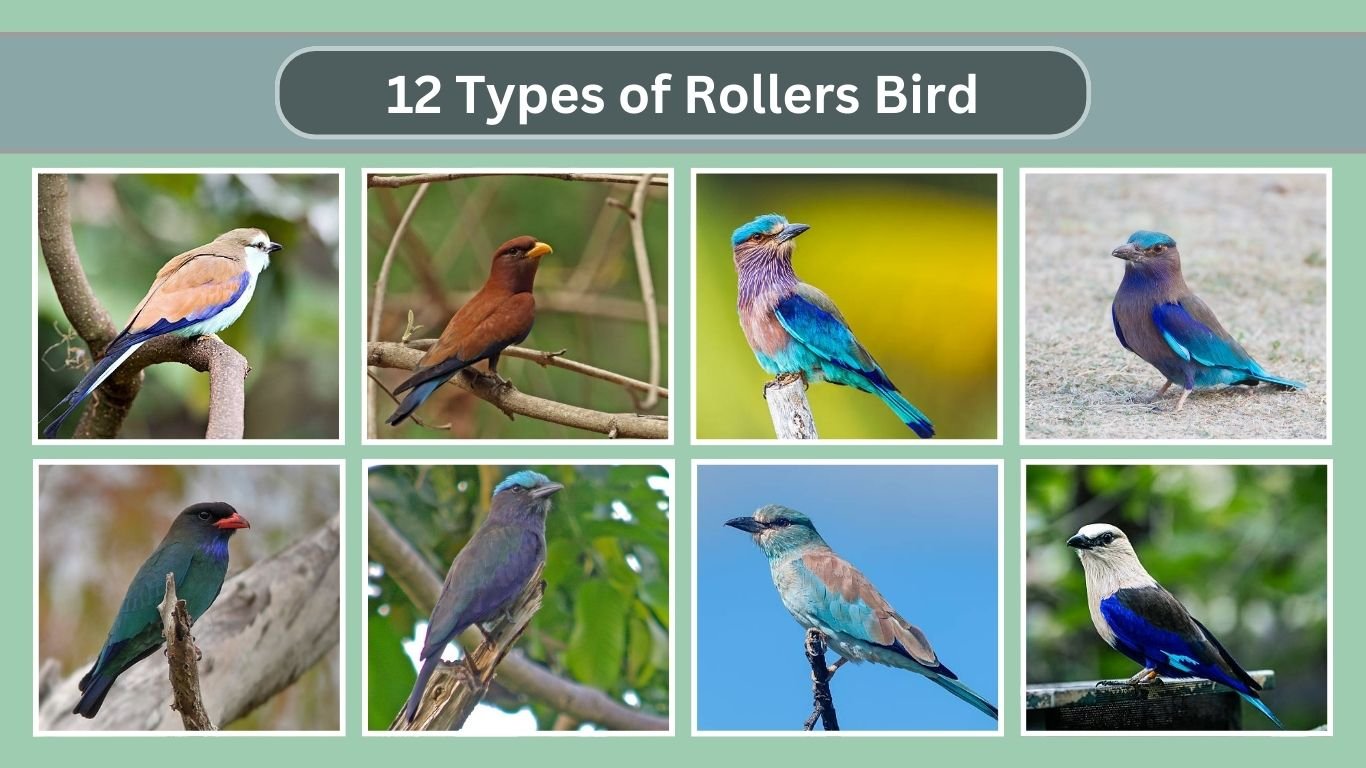
Rollers are a family of colorful, acrobatic birds found across Europe, Africa, Asia, and Australia. Known for their dazzling plumage and spectacular rolling dives in flight, these birds thrive in open habitats such as savannahs, farmland, and forest edges. In this article, we’ll explore 12 fascinating types of rollers, highlighting their unique features, habitats, diets, and behaviors that make them some of the most admired birds worldwide.
1. European Roller

The European Roller (Coracias garrulus) is a striking bird known for its vibrant blue and chestnut plumage. It is the only roller species that breeds in Europe, migrating to Africa for the winter. Its acrobatic flight displays during courtship make it a favorite sight among birdwatchers.
Identification
- Size: Around 29–32 cm in length with a wingspan of 52–58 cm
- Color: Bright turquoise-blue head, wings, and underparts with warm chestnut back
- Bill: Strong, slightly hooked, black-colored beak
- Eyes: Dark with a sharp, alert expression
- Flight: Powerful and direct, often with rolling dives
Habitat
The European Roller prefers open woodlands, farmland edges, and areas with scattered trees. It is often found in sunny, dry habitats with plenty of hunting perches such as posts or wires.
Diet
This bird feeds mainly on large insects like beetles, grasshoppers, and crickets. Occasionally, it hunts small reptiles, amphibians, and rodents, catching prey on the ground after short flights.
Behavior
European Rollers are known for their aerial displays, especially during courtship when males perform rolling dives. They are cavity nesters, often using holes in old trees or even man-made nest boxes.
Migration
This species is a long-distance migrant. It breeds in Europe and parts of western Asia, then migrates south to sub-Saharan Africa for the winter months.
2. Indian Roller

The Indian Roller (Coracias benghalensis) is one of the most colorful birds of South Asia, often seen perched on wires and trees in open areas. Known for its dazzling blue wings and aerobatic flight during the breeding season, it is also celebrated as the state bird of several Indian states.
Identification
- Size: About 30–34 cm in length with a wingspan of 65–74 cm
- Color: Bright blue wings and tail with brownish back and chestnut crown
- Bill: Strong, slightly curved, black beak
- Eyes: Medium-sized, dark, and expressive
- Flight: Spectacular rolling dives with vibrant blue flashes during flight
Habitat
The Indian Roller prefers open countryside, agricultural lands, forest edges, and roadside avenues. It thrives in areas with scattered trees and human settlements.
Diet
Its diet mainly consists of insects such as grasshoppers, beetles, and crickets. It also eats small reptiles, frogs, and sometimes small birds, swooping down quickly to capture prey.
Behavior
This bird is territorial and often performs courtship flights with impressive rolls and dives. It is commonly seen perched conspicuously, waiting to pounce on prey.
Cultural Significance
The Indian Roller holds cultural importance in India and is considered sacred in some traditions. It is admired for its beauty and aerial acrobatics, often associated with festivals and folklore.
3. Abyssinian Roller
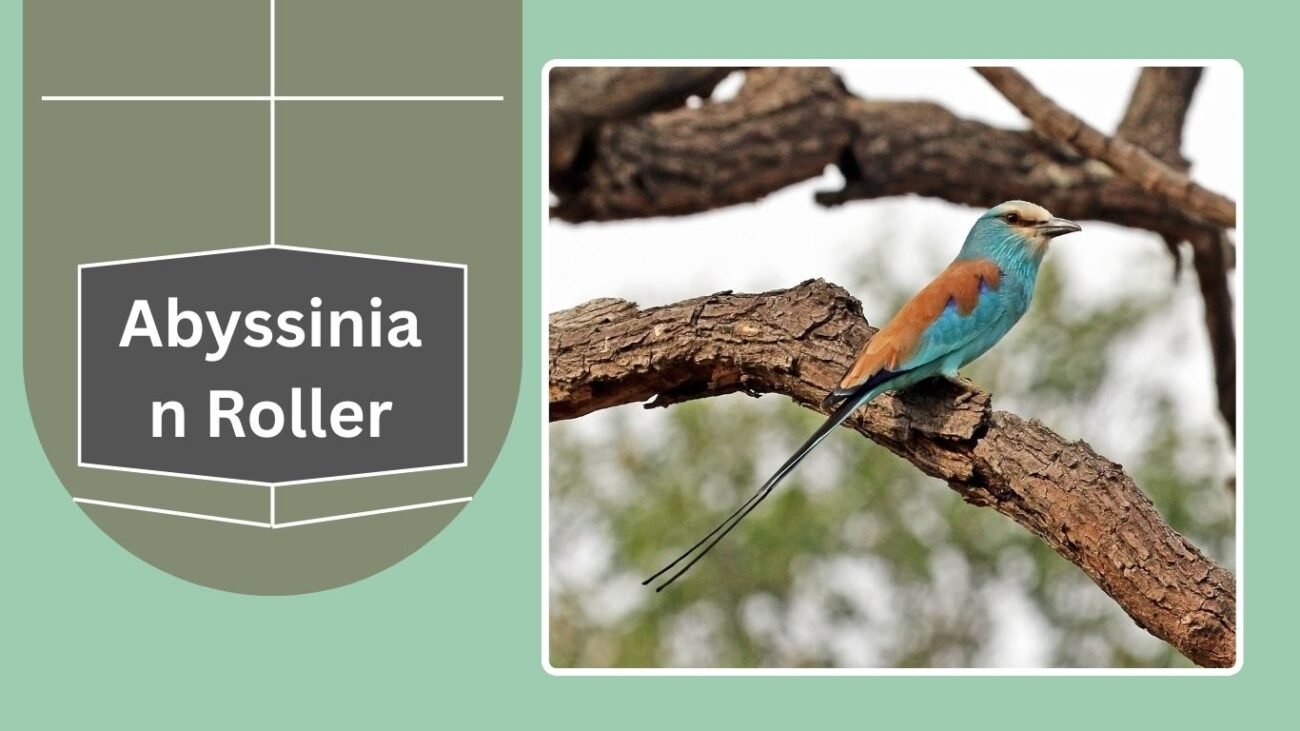
The Abyssinian Roller (Coracias abyssinicus) is a stunning bird native to Africa, recognized for its brilliant blue wings and long tail streamers. It is admired for its energetic flight displays and is often seen in open savannahs and grasslands.
Identification
- Size: Around 28–30 cm in length, with tail streamers extending up to 36 cm
- Color: Bright turquoise-blue body, deep blue wings, and a brownish back
- Tail: Long forked tail with elongated streamers
- Bill: Strong, black, slightly hooked beak
- Flight: Graceful, acrobatic with rolling dives and gliding movements
Habitat
This species prefers open savannahs, woodland edges, cultivated fields, and areas with scattered trees. It thrives in both wild and human-modified landscapes.
Diet
The Abyssinian Roller feeds mainly on large insects such as grasshoppers, beetles, and locusts. It also preys on small reptiles, amphibians, and occasionally rodents.
Behavior
Known for its dramatic aerial displays, especially during breeding, the male often performs rolling dives while calling loudly. They nest in tree cavities and sometimes use abandoned woodpecker holes.
Distribution
It is widely distributed across sub-Saharan Africa, especially in West Africa, and migrates seasonally depending on rainfall and food availability.
4. Lilac-breasted Roller
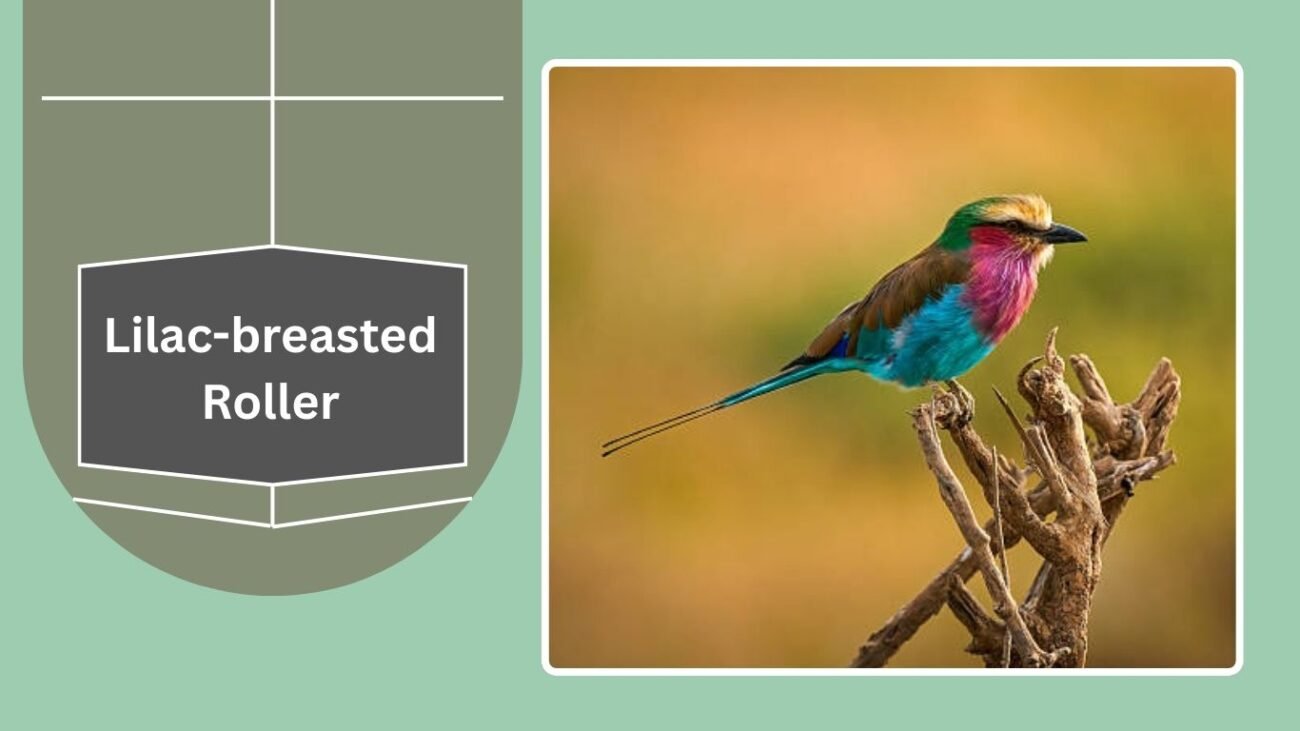
The Lilac-breasted Roller (Coracias caudatus) is one of the most photographed and admired birds in Africa, thanks to its dazzling mix of colors. With its lilac breast, turquoise belly, and bright blue wings, it is often called the “rainbow bird” of the savannah.
Identification
- Size: Around 28–30 cm in length, with tail streamers up to 36 cm
- Color: Lilac throat and breast, turquoise belly, greenish head, and vivid blue wings
- Tail: Long with elongated streamers
- Bill: Stout, black, and slightly curved
- Flight: Powerful with quick wingbeats, showing off multiple shades of blue
Habitat
The Lilac-breasted Roller prefers open savannahs, grasslands, and woodland edges. It avoids dense forests but is often seen in areas with scattered trees and bushes.
Diet
Its diet includes grasshoppers, beetles, crickets, lizards, and small rodents. It often hunts from a perch, swooping down quickly to snatch prey on the ground.
Behavior
This bird is famous for its acrobatic courtship flights, performing dramatic dives and rolls. It is also territorial and uses loud, harsh calls to defend its area.
Distribution
Found widely across sub-Saharan Africa, especially in East and Southern Africa, it is one of the iconic birds seen on African safaris.
5. Blue-bellied Roller

The Blue-bellied Roller (Coracias cyanogaster) is a striking West African bird, known for its vivid turquoise-blue belly and contrasting cream-colored head. Its bold colors and dramatic flight make it easy to spot in open habitats.
Identification
- Size: About 28–30 cm long, with a wingspan up to 66 cm
- Color: Cream or whitish head and chest with a deep turquoise-blue belly and wings
- Tail: Long with narrow streamers extending from the outer feathers
- Bill: Strong, black, and slightly hooked
- Flight: Fast and agile with bright blue flashes in the wings
Habitat
This roller inhabits open woodlands, forest edges, savannahs, and cultivated areas. It prefers regions with scattered trees for perching and nesting.
Diet
The Blue-bellied Roller feeds mainly on large insects such as grasshoppers, beetles, and crickets. It occasionally eats small reptiles, frogs, and rodents.
Behavior
It is often seen perched in pairs or small groups, keeping watch for prey. During courtship, males display rolling dives while calling loudly. They nest in tree cavities, often reusing old woodpecker or barbet holes.
Distribution
This species is found across West Africa, from Senegal and Gambia eastward to Cameroon. It is also present in parts of Central Africa.
6. Broad-billed Roller
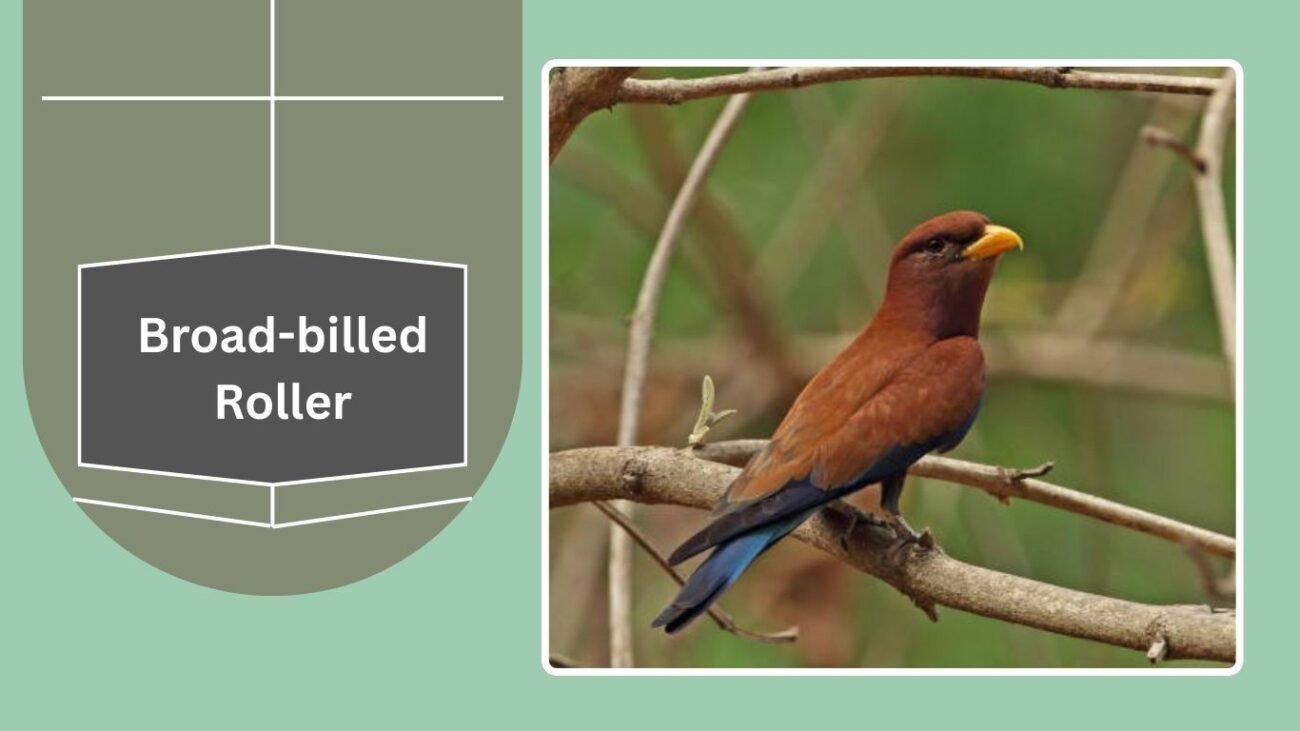
The Broad-billed Roller (Eurystomus glaucurus) is a unique member of the roller family, easily recognized by its wide bill and dark plumage with flashes of blue and purple. It is often seen in pairs or small flocks, especially during the breeding season when its flight displays are most impressive.
Identification
- Size: Around 29–31 cm in length with a robust body
- Color: Dark brown body with violet-blue underparts and bright blue wings
- Bill: Broad, thick, and bright orange-red in color
- Tail: Short and square compared to other rollers
- Flight: Rapid, with strong wingbeats and bright flashes of blue
Habitat
This species favors wooded savannahs, forest clearings, riverine forests, and cultivated lands. It requires tall trees for perching and nesting.
Diet
The Broad-billed Roller feeds mostly on large insects such as grasshoppers, locusts, and beetles. It also consumes small vertebrates like lizards and frogs when available.
Behavior
It is highly social, often gathering in flocks during migration. During the breeding season, it performs spectacular display flights with fast swoops and rolls, accompanied by loud calls.
Distribution
Found widely across sub-Saharan Africa and Madagascar, the Broad-billed Roller is a migratory species, moving seasonally depending on rainfall and food supply.
7. Purple Roller (Rufous-crowned Roller)

The Purple Roller (Coracias naevius), also known as the Rufous-crowned Roller, is the largest roller species. Unlike its brightly colored relatives, it has more subdued plumage with shades of brown, purple, and streaks of white, making it distinct yet striking in its own way.
Identification
- Size: Largest roller, about 35–40 cm in length
- Color: Dusky brown body with purple sheen, whitish streaks on the head and chest, and rufous crown
- Bill: Strong, slightly hooked, black beak
- Tail: Broad and squared-off without long streamers
- Flight: Strong and direct, less acrobatic than other rollers
Habitat
This bird prefers dry savannahs, thorn scrub, woodland edges, and semi-arid regions. It often perches on high trees, poles, or wires to watch for prey.
Diet
The Purple Roller feeds mainly on large insects, scorpions, small reptiles, and occasionally small mammals or birds. It hunts by swooping down from an exposed perch.
Behavior
Less social than other rollers, the Purple Roller is usually seen alone or in pairs. During breeding, it becomes more vocal and territorial, performing display flights with rolling dives.
Distribution
It is found across much of sub-Saharan Africa, especially in eastern and southern regions, adapting well to dry and open landscapes.
8. Racket-tailed Roller
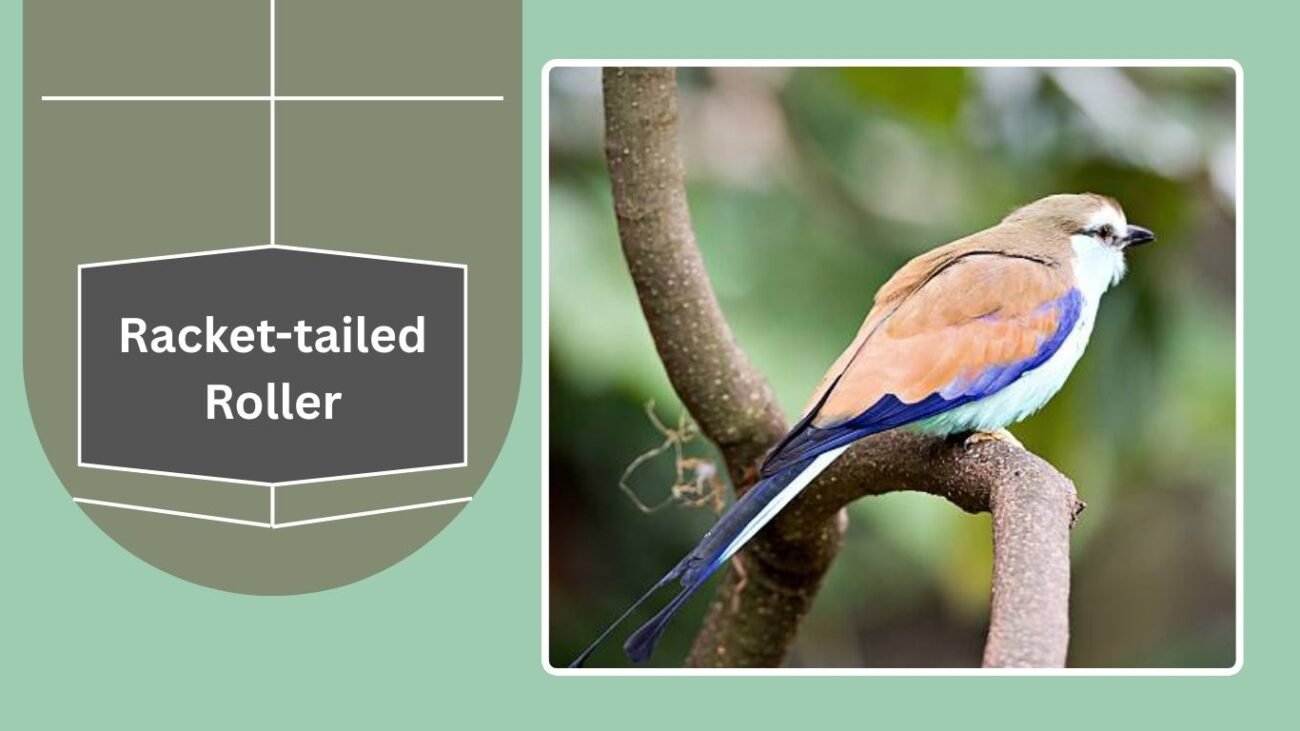
The Racket-tailed Roller (Coracias spatulatus) is a rare and localized species, instantly recognizable by its distinctive tail streamers with spatula-shaped tips. Though not as colorful as some rollers, its unique tail and swift flight make it a fascinating bird to observe.
Identification
- Size: About 28–30 cm in length, with long outer tail feathers ending in racket-like tips
- Color: Pale bluish-gray body with bright turquoise wings and a rufous-brown back
- Bill: Black, strong, and slightly hooked
- Tail: Long with unique racket-shaped streamers
- Flight: Fast, graceful, with rolling dives during displays
Habitat
This species prefers dry woodlands, mopane forests, and lightly wooded savannahs. It relies on areas with tall trees for perching and nesting.
Diet
Its diet mainly consists of insects such as grasshoppers, beetles, and crickets. It occasionally hunts small reptiles and amphibians.
Behavior
The Racket-tailed Roller is secretive compared to other rollers, often staying in pairs or small family groups. During courtship, males perform display flights, showing off their distinctive tails.
Distribution
It is found in southeastern Africa, particularly in Zambia, Mozambique, northern Botswana, and parts of Tanzania and Malawi.
9. Blue-throated Roller
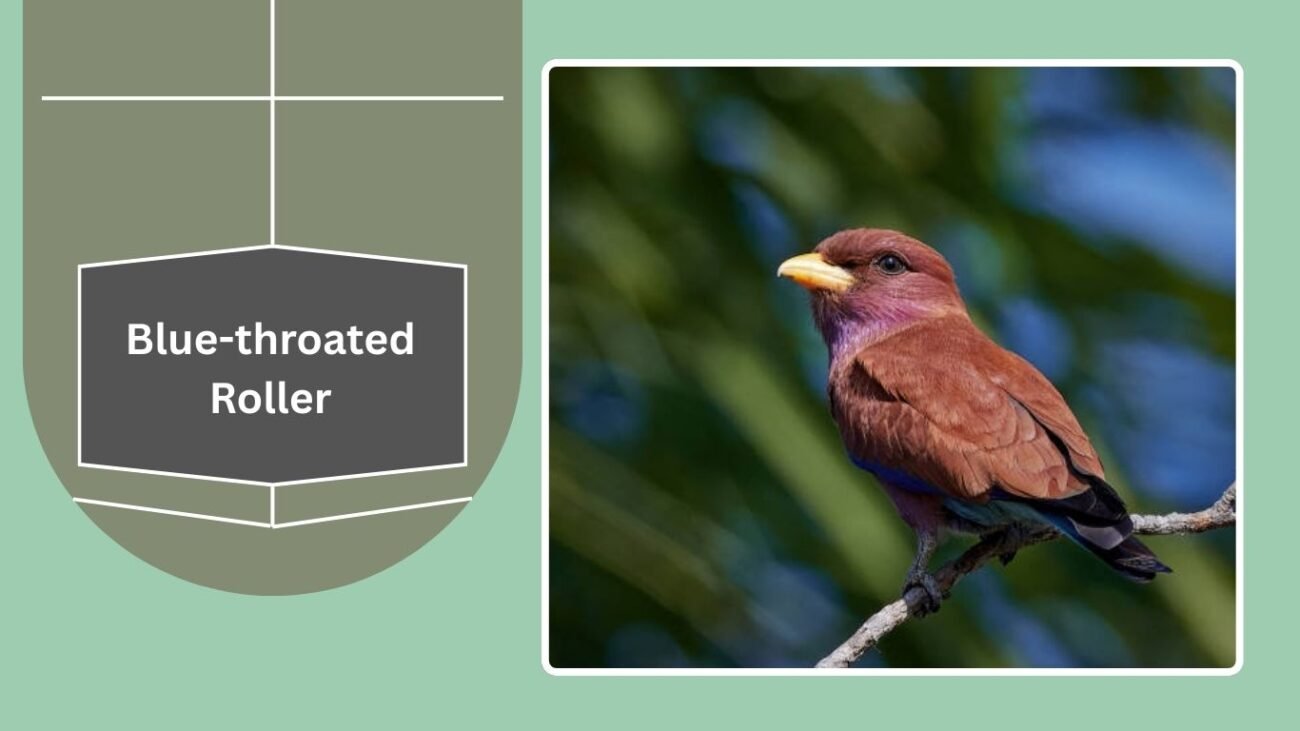
The Blue-throated Roller (Eurystomus gularis) is a beautiful bird of West and Central Africa, known for its deep blue throat and striking plumage. It is often seen perched quietly in forest clearings, then darting swiftly after flying insects.
Identification
- Size: Around 28–30 cm in length
- Color: Rich brown upperparts, deep blue throat and belly, with bright blue flight feathers
- Bill: Strong, orange-red, and slightly hooked
- Tail: Short and squared, lacking long streamers
- Flight: Fast and direct with flashes of blue during wingbeats
Habitat
The Blue-throated Roller prefers forest edges, clearings, and secondary growth areas. It also adapts well to open woodlands and cultivated lands near forests.
Diet
It primarily feeds on flying insects, especially large beetles, grasshoppers, and cicadas. It hunts from a perch, swooping down or sallying into the air to catch prey.
Behavior
This roller is often solitary or in pairs, less social than some other species. It is territorial and uses loud calls during the breeding season.
Distribution
The species is found across West and Central Africa, from Senegal and Gambia eastward through Nigeria, Cameroon, and into the Congo Basin.
10. Dollarbird

The Dollarbird (Eurystomus orientalis) is named for the distinctive round white spots on its wings, which resemble silver dollars when seen in flight. It is a migratory roller, widely distributed across Asia and Australia, often seen perched on tall trees or wires in open country.
Identification
- Size: Around 30 cm in length
- Color: Dark greenish-blue body with a glossy sheen, and striking white “dollar-shaped” spots on the wings
- Bill: Bright orange-red, sturdy, and slightly hooked
- Eyes: Large with a red eye-ring
- Flight: Strong and direct, with flashing wing spots visible in flight
Habitat
This species prefers open forests, forest edges, savannahs, and cultivated lands. It often perches in exposed spots like treetops, wires, and poles.
Diet
The Dollarbird feeds mainly on flying insects such as beetles, cicadas, and grasshoppers. It catches prey in mid-air with quick aerial sallies.
Behavior
It is known for its loud, harsh calls and spectacular aerial hunting. During breeding, it performs acrobatic flights, showing off its wing spots.
Distribution
The Dollarbird breeds across East and South Asia, from Japan and India to Southeast Asia, and migrates to northern and eastern Australia for the winter.
11. Indochinese Roller
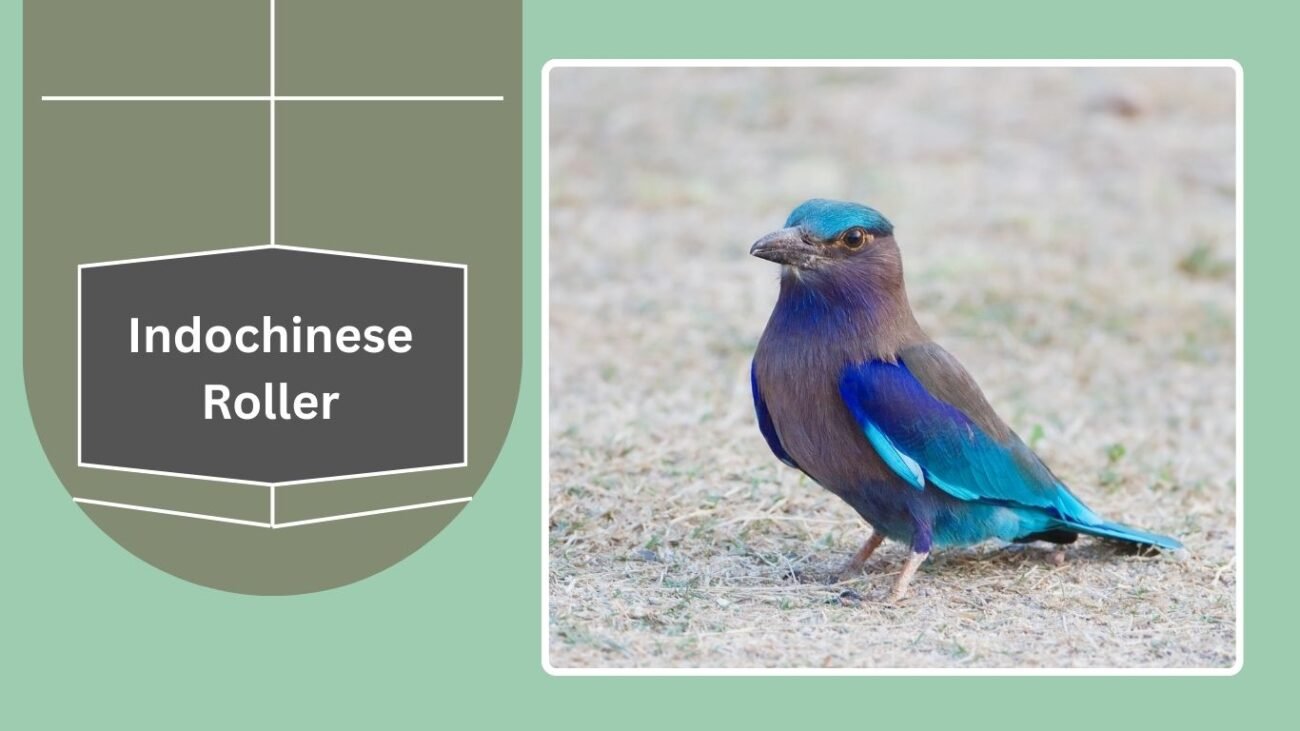
The Indochinese Roller (Coracias affinis) is a vibrant bird found in Southeast Asia, often mistaken for the Indian Roller due to its similar appearance. However, it has distinct plumage details and is a common sight in open countryside and farmlands of the Indochina region.
Identification
- Size: About 30–32 cm in length with a wingspan of nearly 65–70 cm
- Color: Bright blue wings and tail, turquoise underparts, and a brownish back with a slightly darker head
- Bill: Strong, black, and slightly hooked
- Eyes: Dark, with a sharp gaze suited for hunting
- Flight: Energetic and colorful, with bright flashes of blue during wingbeats
Habitat
The Indochinese Roller thrives in open fields, agricultural lands, forest edges, and near human settlements. It prefers areas with scattered trees or wires for perching.
Diet
Its diet consists mostly of insects such as grasshoppers, beetles, crickets, and cicadas. It occasionally hunts small reptiles and amphibians.
Behavior
This bird is territorial, performing dramatic rolling dives during breeding displays. It is commonly seen perched conspicuously before darting down to capture prey.
Distribution
It is found across Myanmar, Thailand, Laos, Cambodia, and Vietnam, with its range extending into parts of southern China.
12. Purple-winged Roller

The Purple-winged Roller (Coracias temminckii) is a rare and localized species, found only in Sulawesi and nearby islands of Indonesia. It is one of the few rollers with such a restricted range, making it a special sighting for bird enthusiasts in Southeast Asia.
Identification
- Size: Around 30 cm in length
- Color: Dark brown back and head with a purplish sheen, violet-purple wings, and blue underparts
- Bill: Strong, black, and slightly hooked
- Tail: Medium-length, straight, without long streamers
- Flight: Swift and direct with a distinct flash of purple on the wings
Habitat
This roller inhabits lowland and hill forests, often found at forest edges, clearings, and secondary growth. It prefers tall trees for perching and nesting.
Diet
Its diet consists mainly of insects such as beetles, grasshoppers, and cicadas. Occasionally, it takes small reptiles and frogs.
Behavior
The Purple-winged Roller is less conspicuous than other rollers, often seen alone or in pairs. It hunts from a perch, making quick sallies into the air to catch flying prey.
Distribution
Endemic to Sulawesi, Buton, and surrounding Indonesian islands, it is a restricted-range species and considered vulnerable due to habitat loss.