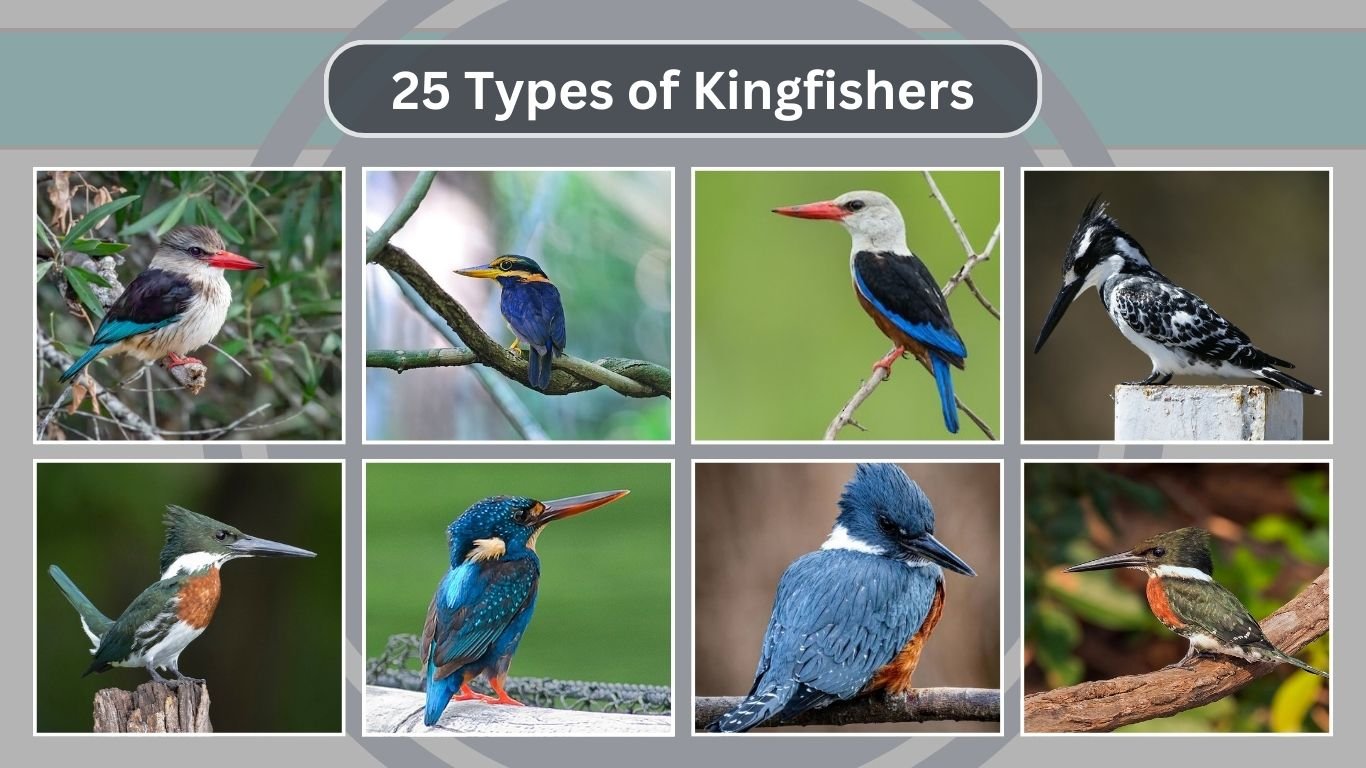
Kingfishers are among the most striking birds, known for their vibrant plumage, sharp bills, and remarkable hunting skills. Found across rivers, lakes, forests, and coastlines, these birds vary greatly in size, color, and behavior. From the tiny Oriental Dwarf Kingfisher to the mighty Laughing Kookaburra, each species has its own unique charm. Below is a detailed list of 25 fascinating types of kingfishers found worldwide.
1. Common Kingfisher (Alcedo atthis)
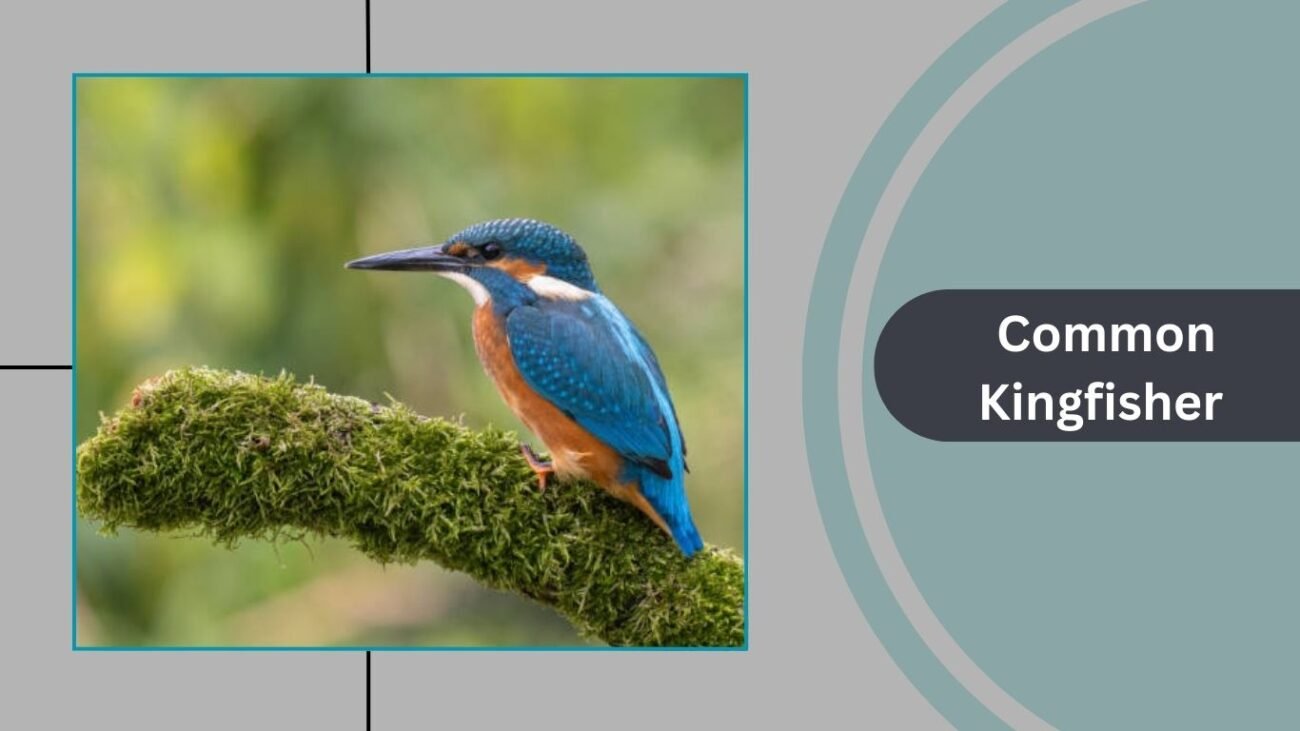
The Common Kingfisher is one of the most widely recognized species of kingfishers, admired for its brilliant blue and orange plumage. Found across Europe, Asia, and North Africa, this small bird lives near rivers, lakes, and ponds where it hunts fish with remarkable diving skills.
Identification
- Size: About 16–17 cm in length
- Plumage: Bright blue upperparts, orange underparts, and white throat patch
- Bill: Long, straight, and black, perfectly adapted for catching fish
- Eyes: Dark with excellent vision for spotting prey underwater
- Wings: Short and rounded, allowing rapid flight
Habitat
The Common Kingfisher prefers freshwater habitats such as rivers, streams, ponds, and lakes with clear water and plenty of fish. It often nests in burrows dug into riverbanks.
Diet
Its diet mainly consists of small fish, which it catches by hovering or perching above water before diving headfirst. It also eats aquatic insects, crustaceans, and small amphibians.
Behavior
This kingfisher is solitary and highly territorial, often defending stretches of riverbank from other kingfishers. It perches quietly while hunting and uses rapid, direct flight with fast wingbeats. Its sharp, high-pitched call is often heard before the bird is seen.
2. Belted Kingfisher (Megaceryle alcyon)
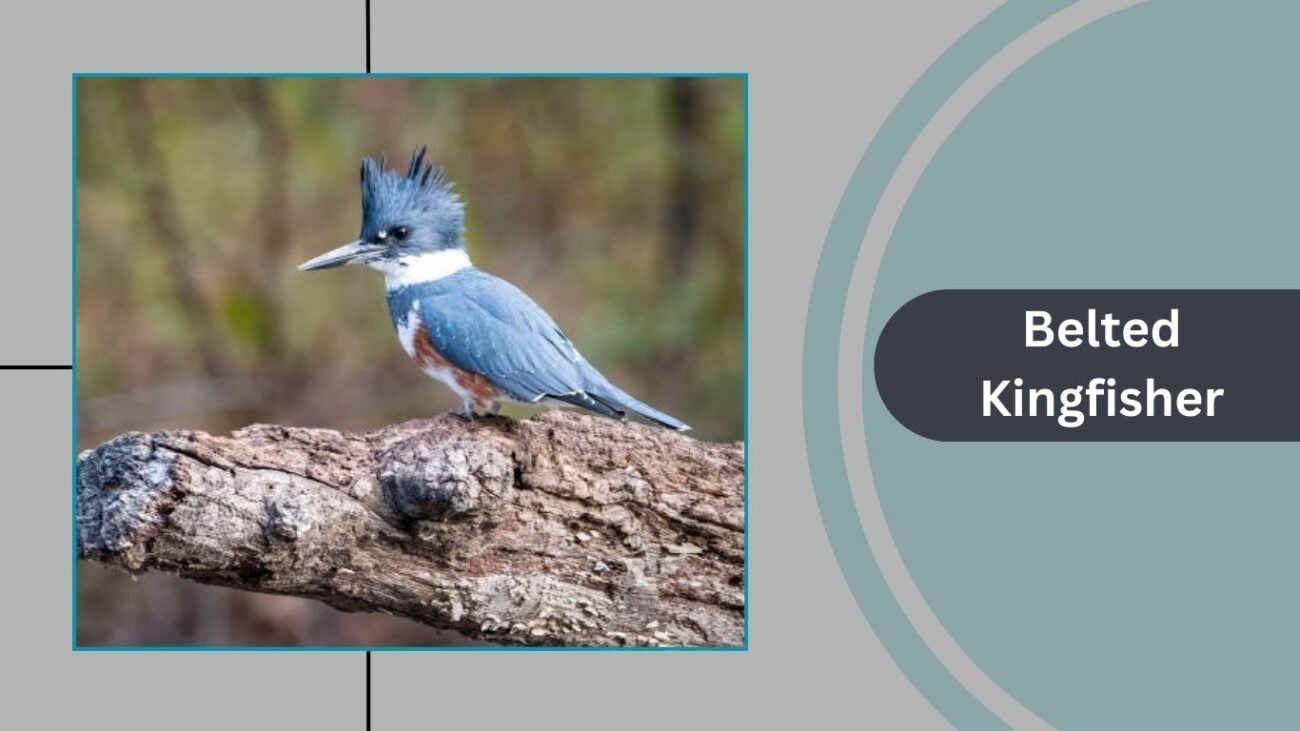
The Belted Kingfisher is a striking bird commonly found across North America. Known for its shaggy crest and loud rattling call, it is often seen perched near rivers, lakes, and coastal waters. Unlike most kingfishers, females are more colorful than males, sporting an additional rusty band across the chest.
Identification
- Size: About 28–35 cm in length
- Plumage: Slate-blue upperparts with a white collar and underparts
- Chest: Males have a single blue breast band; females have an extra rusty-colored band
- Crest: Prominent shaggy crest on the head
- Bill: Large and heavy, adapted for catching fish
Habitat
The Belted Kingfisher prefers freshwater rivers, lakes, streams, and estuaries but is also found along coastal shorelines. It nests in burrows dug into sandy banks, often near water.
Diet
Its primary food source is fish, which it captures by plunging headfirst into the water. It also eats amphibians, crustaceans, insects, and occasionally small mammals and reptiles.
Behavior
This bird is territorial and solitary, often seen flying with rapid wingbeats along waterways. It uses hovering flight to spot prey and is recognized by its loud, rattling call. The Belted Kingfisher is one of the few kingfisher species where the female is more brightly marked than the male.
3. Pied Kingfisher (Ceryle rudis)
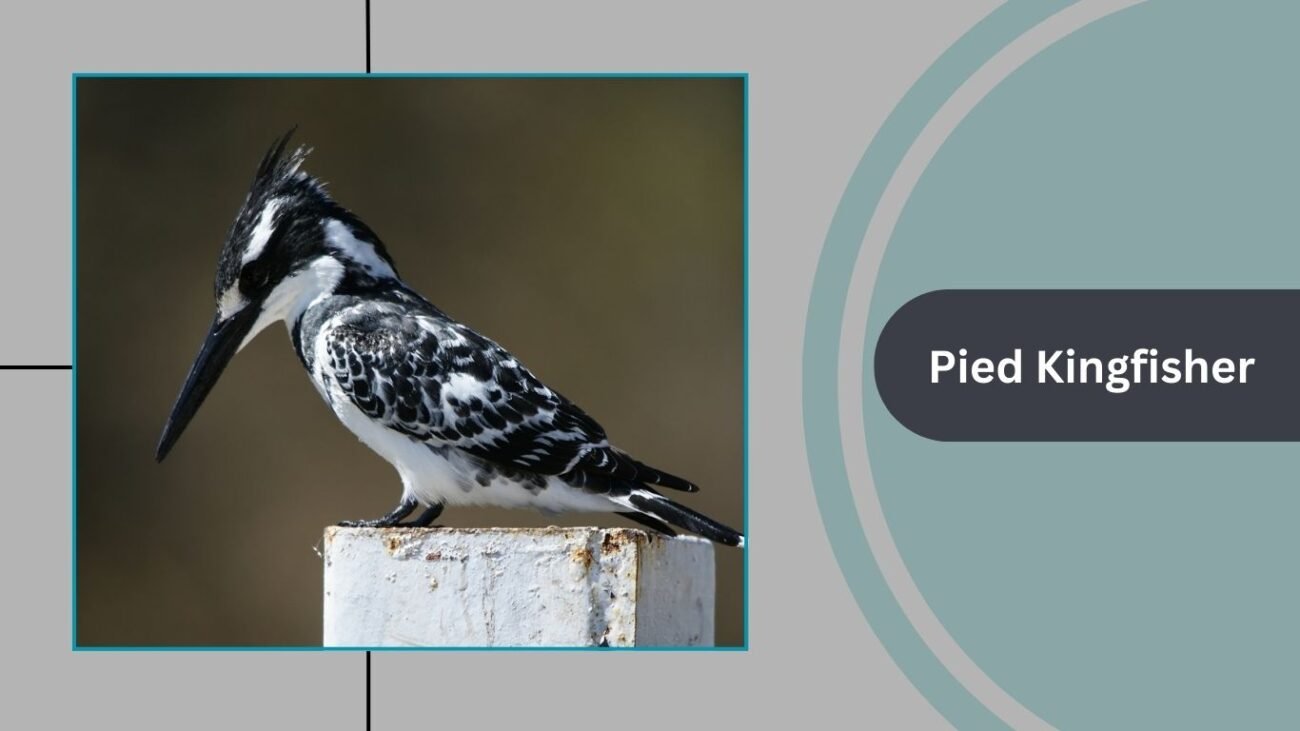
The Pied Kingfisher is one of the most distinctive and widespread kingfishers, easily recognized by its black-and-white plumage and unique hovering hunting style. It is widely found across Africa and Asia, often seen around rivers, lakes, and coastal lagoons.
Identification
- Size: About 25–30 cm in length
- Plumage: Black-and-white patterned body with a striking crest
- Breast: Males usually have a double black breast band, while females have a single incomplete band
- Bill: Long, straight, and black
- Flight: Strong and direct with rapid wingbeats
Habitat
This species inhabits freshwater lakes, rivers, estuaries, and coastal wetlands. It prefers open waters with clear visibility for hunting and can adapt well to both rural and urban water bodies.
Diet
The Pied Kingfisher primarily feeds on fish, which it catches by hovering above the water before diving. It may also eat crustaceans, aquatic insects, and small amphibians when fish are scarce.
Behavior
Unlike many kingfishers, the Pied Kingfisher often hunts in groups and is highly social. It hovers above the water while searching for prey, making it one of the few kingfisher species to use this method. It is also vocal, producing loud, sharp calls while flying.
4. Collared Kingfisher (Todiramphus chloris)
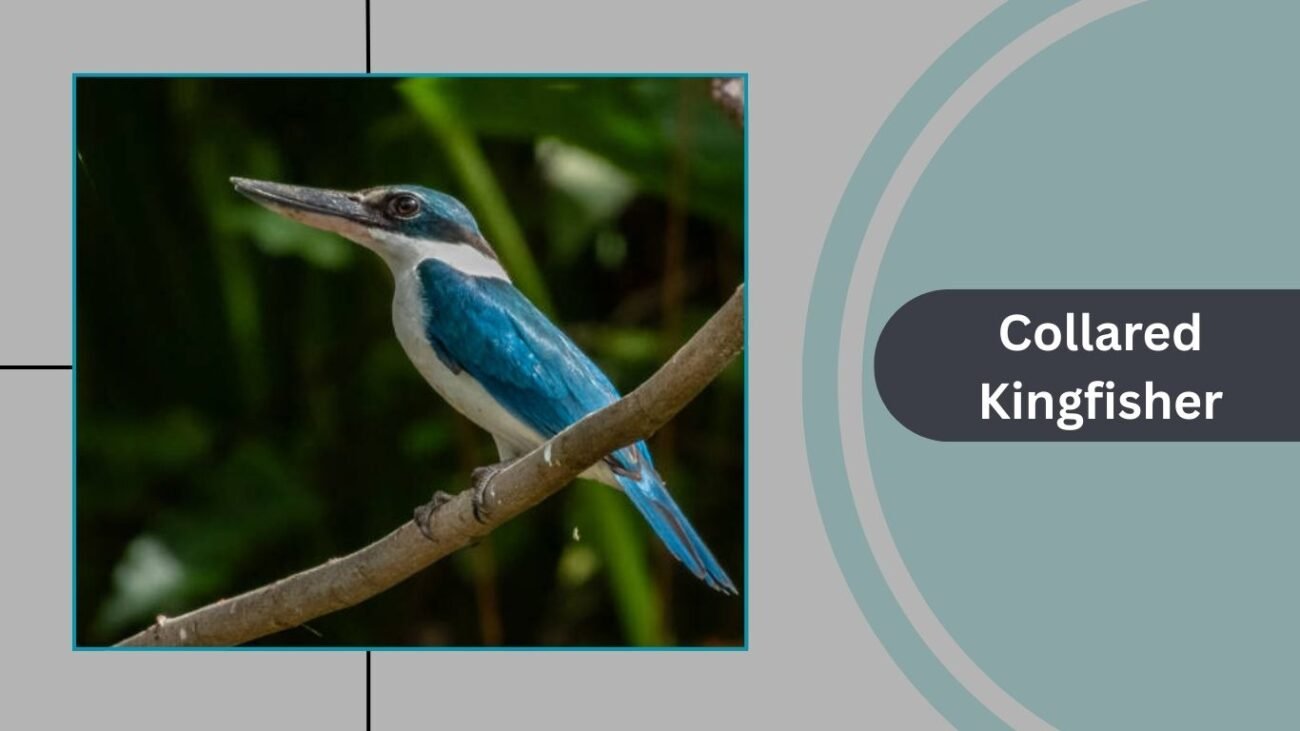
The Collared Kingfisher is a medium-sized species widely distributed across South and Southeast Asia, Australia, and Pacific islands. It is known for its vibrant turquoise-blue plumage and white collar, which gives the bird its name. Adaptable and bold, it thrives in coastal regions, mangroves, woodlands, and even gardens near water.
Identification
- Size: About 22–29 cm in length
- Plumage: Bright blue-green upperparts with a white throat, chest, and collar
- Bill: Strong and heavy, dark on top and lighter below
- Eyes: Dark, with excellent vision for spotting prey
- Tail: Short and broad, suited for quick maneuvering
Habitat
This kingfisher is commonly found along coastlines, mangrove forests, estuaries, and tidal creeks. It also inhabits inland areas such as woodlands, plantations, and open fields near water sources.
Diet
The Collared Kingfisher has a varied diet, feeding not only on fish but also on crabs, insects, frogs, small reptiles, and occasionally small birds. Its adaptability in diet helps it thrive in different environments.
Behavior
It is territorial and often perches conspicuously on branches, wires, or posts. Known for its loud, harsh calls, the Collared Kingfisher hunts by swooping down from a perch rather than hovering. It is active, aggressive, and capable of chasing away intruders from its feeding grounds.
5. Sacred Kingfisher (Todiramphus sanctus)
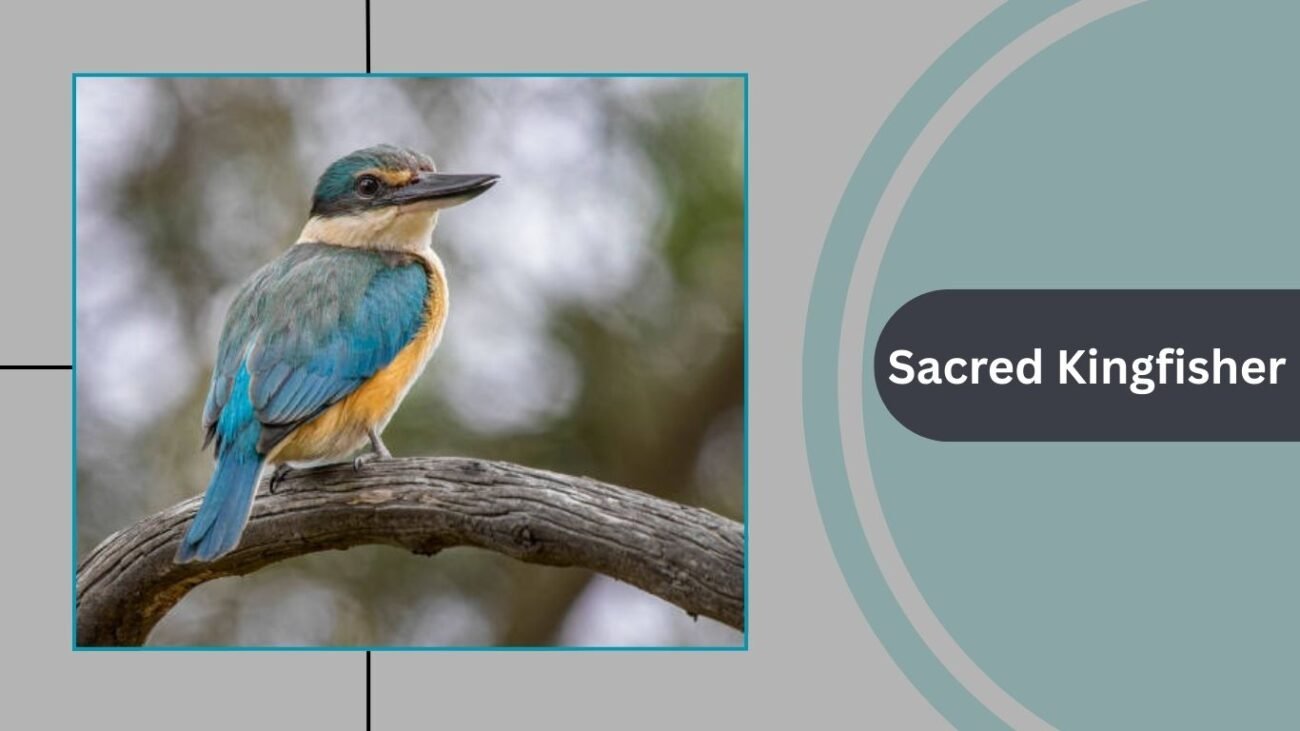
The Sacred Kingfisher is a colorful bird native to Australia, New Zealand, and many Pacific islands. It is admired for its turquoise-green plumage and golden-buff underparts. In Māori culture, this bird is considered sacred, which is how it earned its name. It is commonly seen near coastlines, rivers, and open woodlands.
Identification
- Size: Around 19–23 cm in length
- Plumage: Blue-green back and wings with buff to orange underparts
- Collar: Distinct white collar and throat
- Bill: Stout and black, suited for catching a wide range of prey
- Eyes: Dark and positioned for sharp, forward vision
Habitat
The Sacred Kingfisher inhabits coastal regions, estuaries, mangroves, open forests, and even urban parks. It adapts well to both inland and coastal habitats, often nesting in burrows dug into sandy banks or termite mounds.
Diet
Unlike many kingfishers that focus heavily on fish, the Sacred Kingfisher has a diverse diet. It feeds on insects, crustaceans, reptiles, small mammals, and occasionally fish. This adaptability allows it to survive in varying environments.
Behavior
The Sacred Kingfisher is territorial and solitary, except during breeding season. It is known for its patient hunting style, watching prey from a perch before swooping down. Its call is a harsh, repetitive “kek-kek-kek,” often heard before the bird is spotted.
6. White-throated Kingfisher (Halcyon smyrnensis)
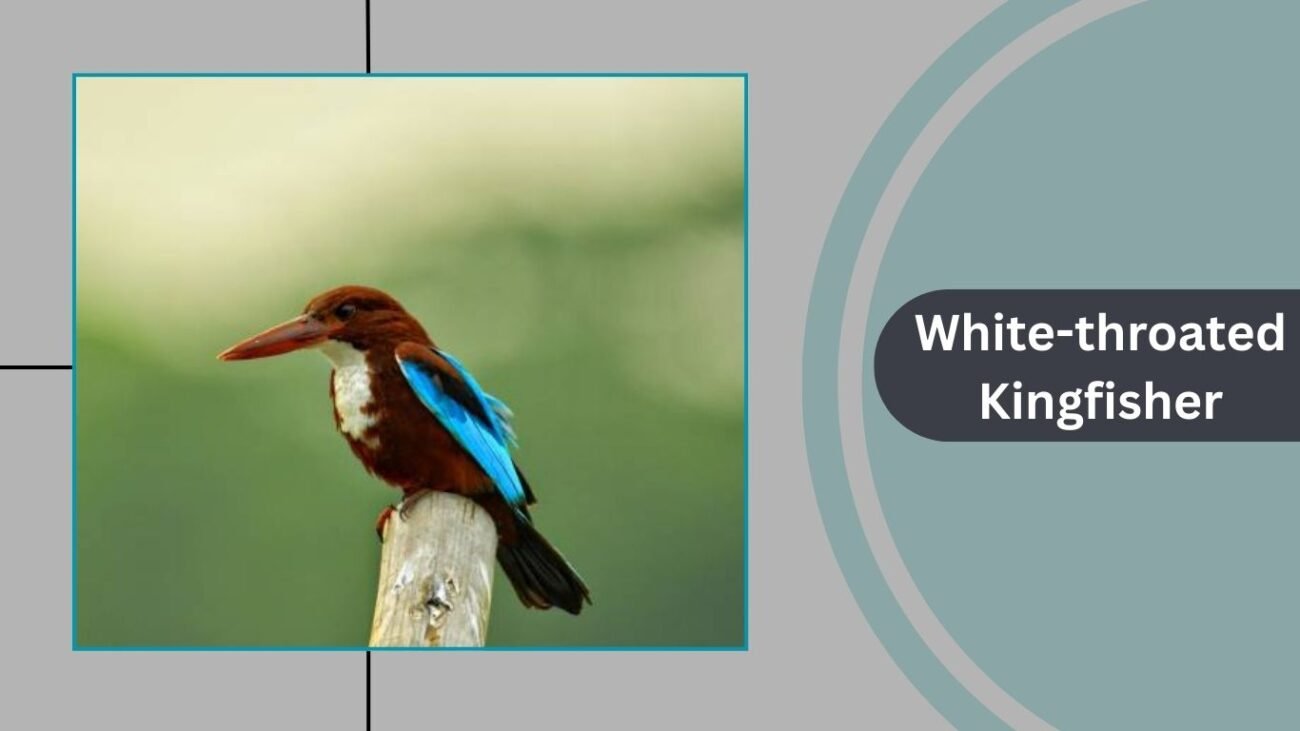
The White-throated Kingfisher, also known as the White-breasted Kingfisher, is one of the most widespread and easily recognized kingfisher species in Asia. Its vivid blue wings and back, chestnut head and underparts, and striking white throat make it stand out even from a distance. It thrives in a wide range of habitats, from wetlands to dry farmlands, and is often seen far away from water.
Identification
- Size: About 27–28 cm in length
- Plumage: Bright turquoise-blue wings and back, chestnut head and belly, and a clear white throat and chest
- Bill: Large, strong, and bright red, adapted for catching a variety of prey
- Legs: Short and red, well-suited for perching
- Eyes: Dark and sharp, aiding in accurate hunting
Habitat
This kingfisher is highly adaptable and found in wetlands, rice fields, farmlands, gardens, forest edges, and even urban areas. It does not depend strictly on water, unlike many other kingfishers, and can thrive in drier regions.
Diet
The White-throated Kingfisher has a very diverse diet, feeding on fish, amphibians, insects, lizards, small snakes, rodents, and even small birds. Its opportunistic feeding habits make it one of the most successful kingfisher species.
Behavior
It is solitary and territorial, often seen perched on wires, branches, or poles from where it dives to catch prey. Its loud, cackling call is distinctive and often heard during the breeding season. Unlike many kingfishers, it is active both near water and in dry landscapes.
7. Woodland Kingfisher (Halcyon senegalensis)
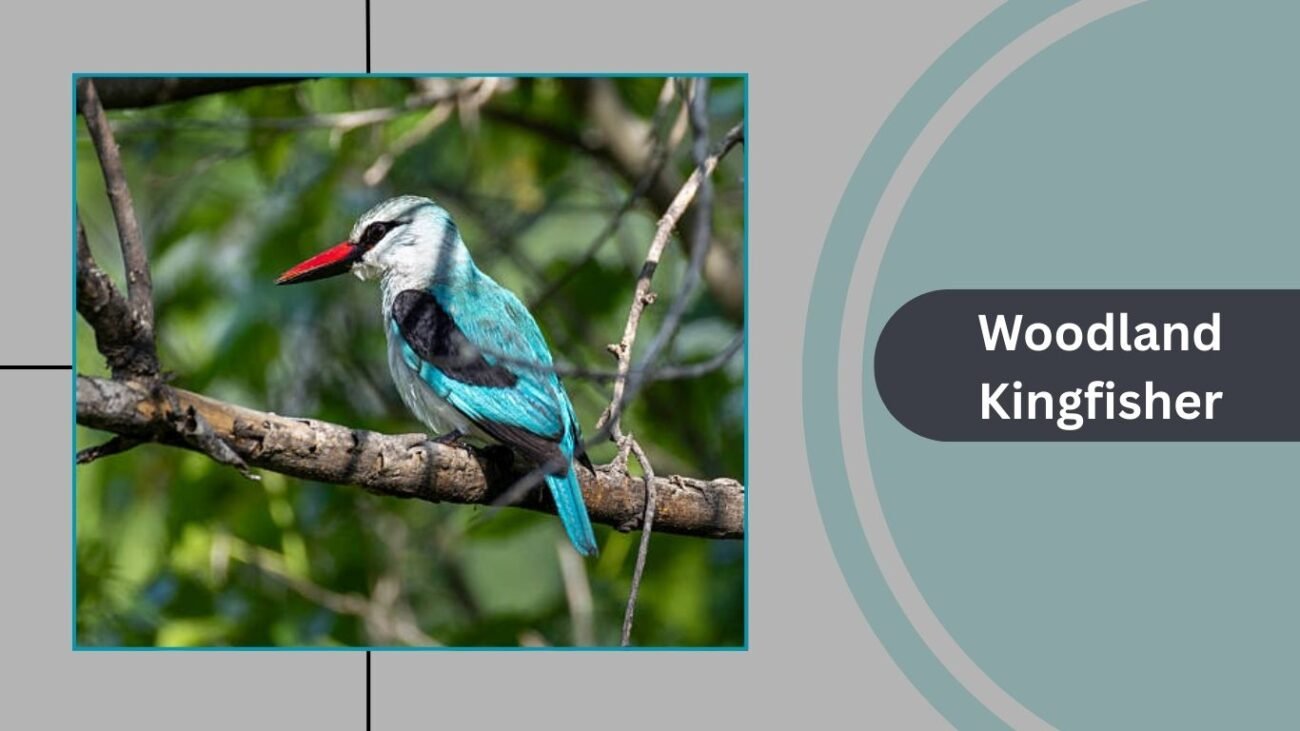
The Woodland Kingfisher is a brilliantly colored bird native to sub-Saharan Africa. With its striking turquoise-blue back, wings, and tail combined with a contrasting white belly, it is one of the most eye-catching kingfishers. Unlike many of its relatives, this species often lives away from water and is commonly found in woodlands and savannas.
Identification
- Size: Around 20–23 cm in length
- Plumage: Bright turquoise-blue upperparts, white underparts, and black wing patches
- Bill: Strong and bicolored – bright red upper mandible and black lower mandible
- Eyes: Dark with a distinctive black eye-stripe
- Flight: Fast and direct with vivid blue flashes in flight
Habitat
True to its name, the Woodland Kingfisher is commonly found in open woodlands, savannas, forest edges, and dry bushlands. It is not as closely tied to rivers or lakes as other kingfishers and often nests in tree cavities.
Diet
This kingfisher feeds mainly on insects such as grasshoppers, beetles, and locusts. It also preys on small reptiles, amphibians, and occasionally small fish if near water. Its diet shows its adaptability to both wooded and open habitats.
Behavior
The Woodland Kingfisher is known for its loud and piercing calls, often heard during the breeding season. It is territorial and aggressive, chasing away intruders from its nesting area. Unlike fish-hunting kingfishers, it hunts mostly from perches in trees, swooping down to snatch prey from the ground.
8. Blue-eared Kingfisher (Alcedo meninting)
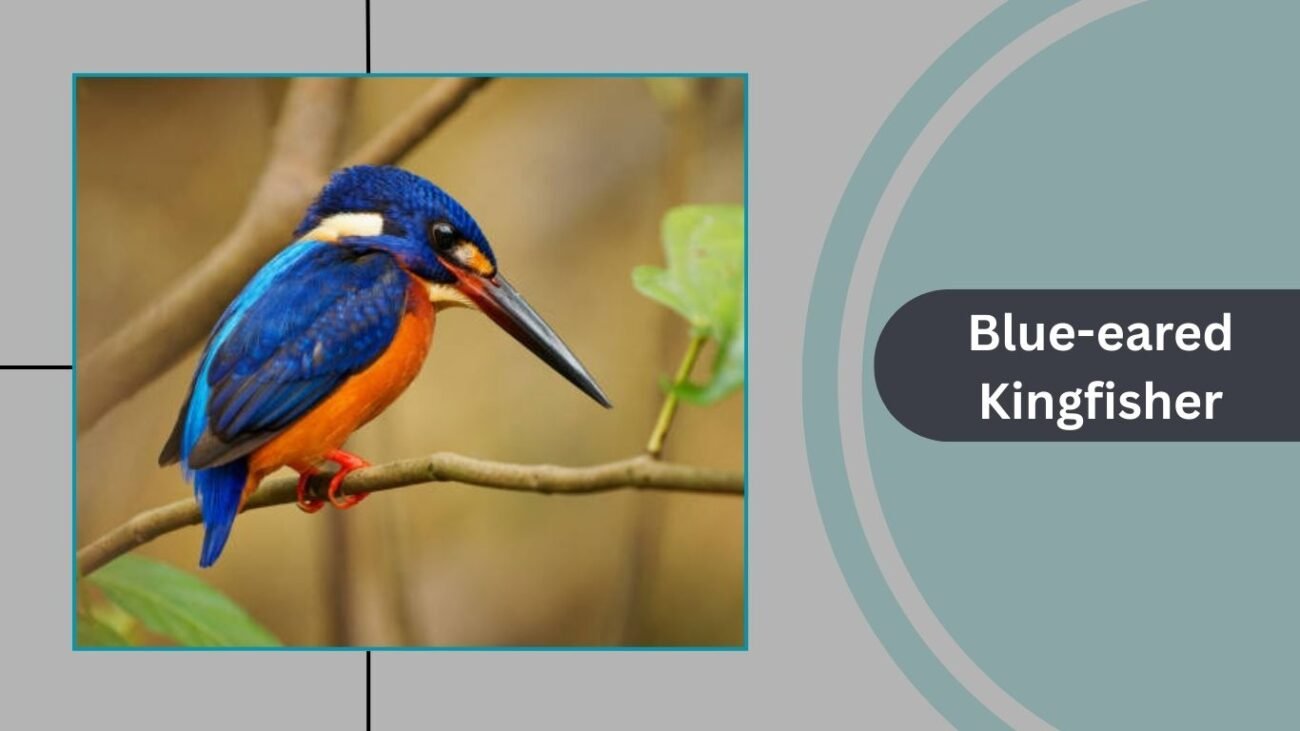
The Blue-eared Kingfisher is a dazzling small kingfisher found across South and Southeast Asia. It is closely related to the Common Kingfisher but distinguished by its deeper cobalt-blue plumage and striking orange underparts. This species is often seen near streams and rivers within dense forests, darting quickly to catch prey.
Identification
- Size: About 16 cm in length
- Plumage: Deep cobalt-blue upperparts with bright orange underparts
- Ears: Iridescent blue ear coverts, giving the bird its name
- Bill: Long, straight, and black, ideal for fishing
- Eyes: Dark, with sharp vision to spot prey underwater
Habitat
The Blue-eared Kingfisher inhabits lowland tropical forests, preferring clear, shaded streams, rivers, and ponds. It is a secretive bird, often staying in dense vegetation near water, which makes it harder to spot compared to other kingfishers.
Diet
Its diet consists mainly of small fish and aquatic insects. It perches quietly over water, then dives swiftly to catch prey. Occasionally, it may feed on small crustaceans and amphibians.
Behavior
The Blue-eared Kingfisher is shy and solitary, usually hunting from low perches close to the water. It is swift and precise in its movements, often flying low along streams. Its sharp, high-pitched call is typically heard before the bird is seen.
9. Oriental Dwarf Kingfisher (Ceyx erithaca)
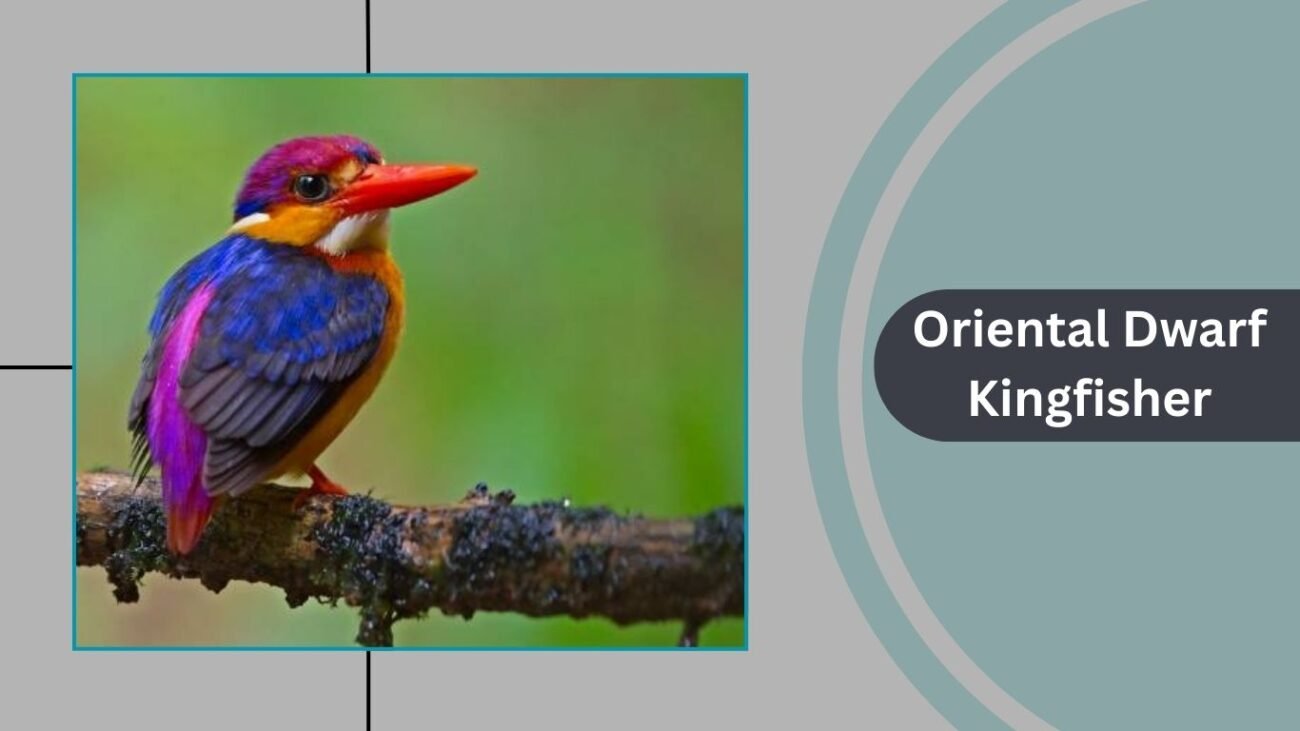
The Oriental Dwarf Kingfisher, also known as the Black-backed Kingfisher, is one of the most colorful and smallest kingfishers in Asia. Famous for its vivid plumage, it is a jewel of the rainforest, often found near shaded streams and small rivers in dense tropical forests. Despite its beauty, it is elusive and difficult to spot in the wild.
Identification
- Size: About 13–14 cm in length (one of the smallest kingfishers)
- Plumage: Bright orange underparts, violet-blue back, and black patch on the wings
- Head: Golden-orange crown and face with a purplish wash on the crown
- Bill: Long, red, and dagger-like, suited for catching small prey
- Eyes: Dark and prominent, giving it sharp vision
Habitat
This species lives in lowland tropical forests, often near shaded streams, ponds, and rivulets. It prefers dense, humid vegetation and is rarely seen in open spaces.
Diet
The Oriental Dwarf Kingfisher feeds on small fish, tadpoles, frogs, aquatic insects, crabs, and even small lizards. It hunts by perching quietly before darting quickly at prey.
Behavior
It is a shy, solitary bird that avoids open areas. Known for its speed and agility, it can dart rapidly through dense forest undergrowth. During the breeding season, it digs nest tunnels into stream banks, where it lays its eggs. Its soft, high-pitched calls are heard more often than the bird itself is seen.
10. Black-capped Kingfisher (Halcyon pileata)
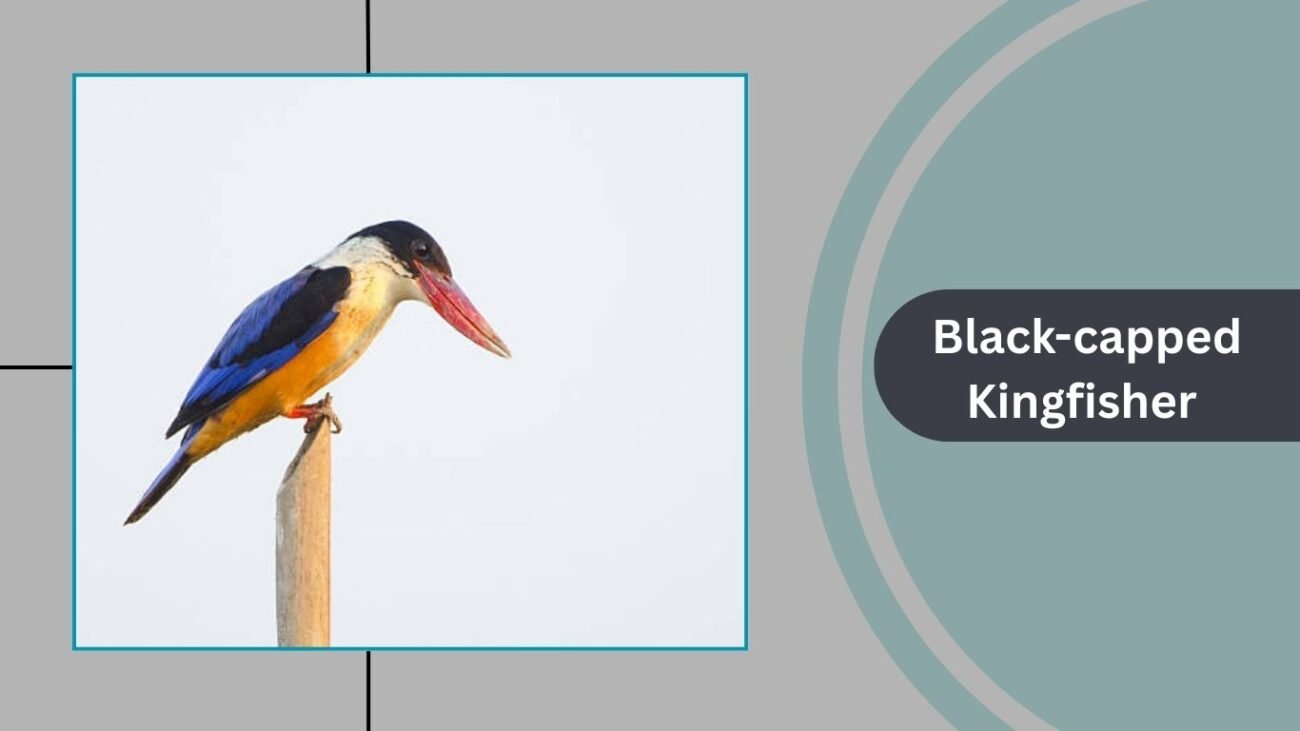
The Black-capped Kingfisher is a striking bird with bold colors and a loud, rolling call. It is widely distributed across South and Southeast Asia, extending into parts of China and the Philippines. Its vivid plumage and contrasting black cap make it one of the most distinctive kingfishers.
Identification
- Size: Around 28–30 cm in length
- Plumage: Deep blue wings and back, white throat and collar, chestnut underparts
- Head: Glossy black cap extending down to the nape
- Bill: Large, stout, and bright red
- Legs: Red, adding to its vibrant appearance
Habitat
The Black-capped Kingfisher inhabits coastal mangroves, estuaries, forest edges, riversides, and agricultural lands. It often prefers open country near wetlands but can also be seen far inland in wooded areas.
Diet
This kingfisher has a diverse diet, feeding on fish, crabs, insects, frogs, and small reptiles. It hunts by perching quietly and then swooping down with precision to seize its prey.
Behavior
The Black-capped Kingfisher is bold and active, often heard before it is seen due to its loud, rolling calls. It is territorial and aggressive, especially during the breeding season. Unlike some other kingfishers, it often flies between perches in open areas, showing flashes of its deep blue wings.
11. Azure Kingfisher (Ceyx azureus)

The Azure Kingfisher is a dazzling small bird native to Australia, New Guinea, and nearby islands. Its brilliant azure-blue feathers and contrasting rich orange underparts make it one of the most eye-catching kingfishers. It is often seen along rivers, creeks, and wetlands, perched low above the water before diving swiftly to catch prey.
Identification
- Size: About 17–19 cm in length
- Plumage: Bright azure-blue upperparts, orange underparts, and a distinctive white throat patch
- Bill: Long, slender, and black, ideal for fishing
- Eyes: Dark with excellent eyesight for spotting prey underwater
- Wings: Short and rounded, suited for fast, direct flight
Habitat
The Azure Kingfisher is closely associated with freshwater habitats such as rivers, streams, creeks, swamps, and billabongs. It prefers shaded areas with dense vegetation along the banks.
Diet
Its diet mainly consists of small fish, aquatic insects, and crustaceans. It hunts by watching quietly from a perch close to the water and then diving headfirst to seize prey.
Behavior
This species is shy and secretive, often flying low over the water and perching quietly in shaded spots. It is solitary outside of the breeding season and digs nesting burrows into riverbanks. Its call is a sharp, high-pitched whistle, often heard as it darts quickly along waterways.
12. Green Kingfisher (Chloroceryle americana)
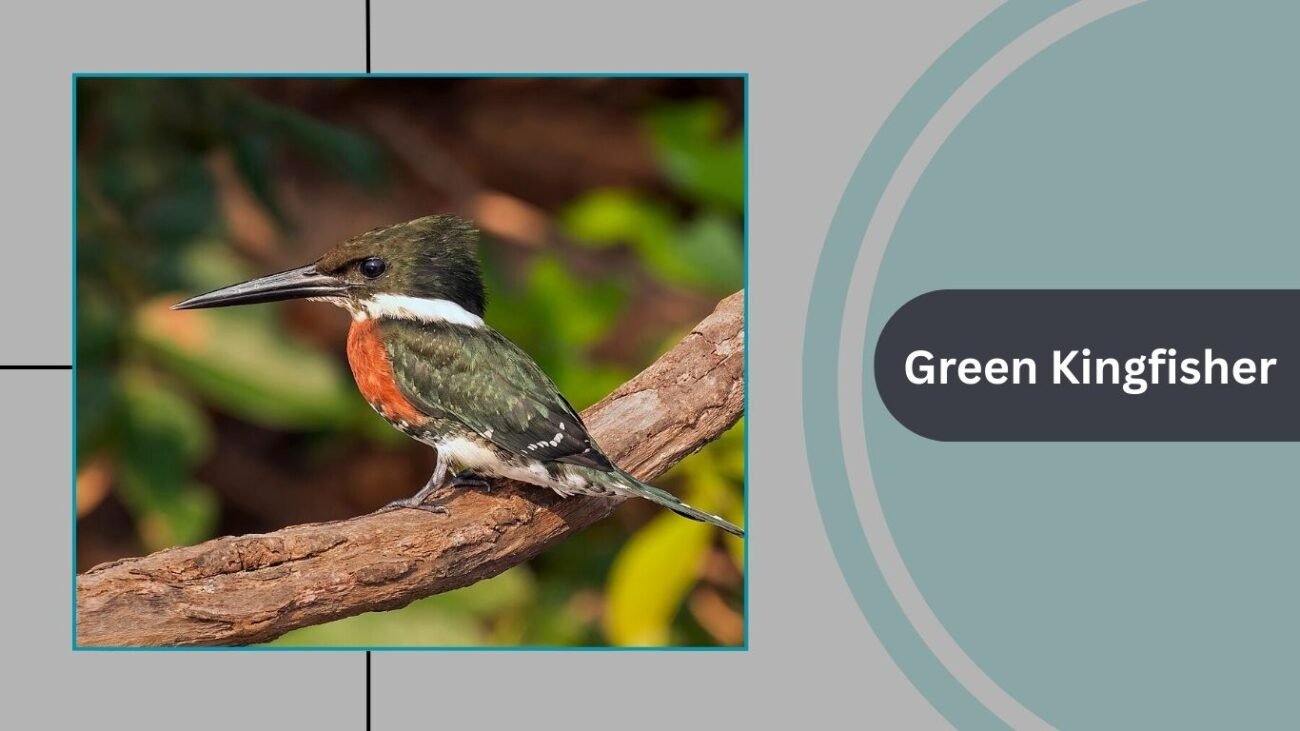
The Green Kingfisher is a small, vibrant species native to Central and South America, extending into the southern United States. With its metallic green plumage and swift hunting style, it is often seen along rivers, streams, and ponds, especially in shaded areas.
Identification
- Size: About 19–20 cm in length
- Plumage: Metallic green upperparts with white underparts
- Breast: Males have a broad chestnut band across the chest; females show green spotting instead
- Bill: Long, straight, and dark-colored, adapted for catching fish
- Wings: Short and rounded, enabling fast, direct flight
Habitat
This kingfisher inhabits rivers, streams, ponds, and mangroves, usually in shaded and quiet areas. It prefers slow-moving or still waters where small fish are abundant.
Diet
The Green Kingfisher primarily feeds on small fish, which it catches by diving from a perch close to the water. It also eats aquatic insects and small crustaceans when available.
Behavior
It is solitary and territorial, often seen perched low above the water on branches or rocks. The bird waits patiently for prey, then dives swiftly to capture it. Its call is a sharp “tik-tik-tik” sound, often heard during flight.
13. American Pygmy Kingfisher (Chloroceryle aenea)
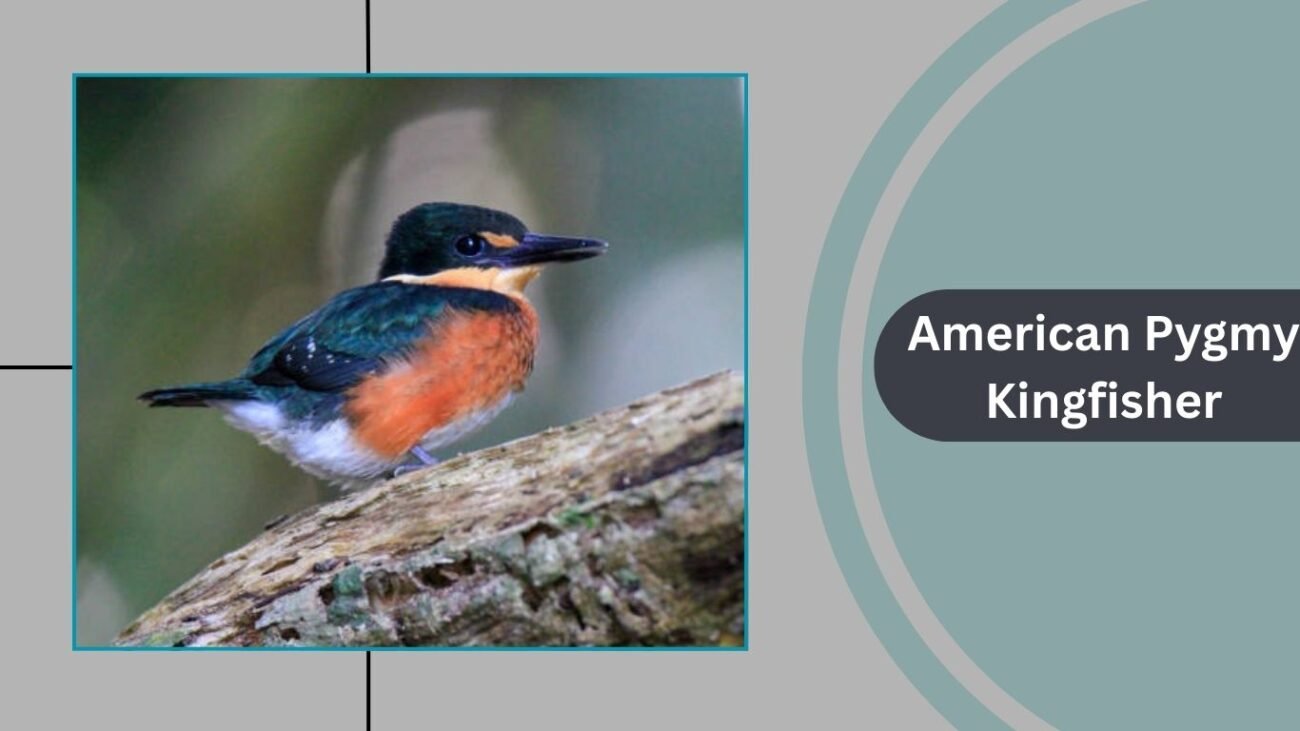
The American Pygmy Kingfisher is one of the smallest kingfishers in the Americas, known for its dazzling green and orange plumage. Found from southern Mexico through Central America into South America, it inhabits tropical lowland rivers, streams, and mangroves. Despite its bright colors, its tiny size and quiet nature make it difficult to spot.
Identification
- Size: About 13 cm in length (very small for a kingfisher)
- Plumage: Glossy green upperparts with bright orange underparts and a white collar
- Bill: Short, straight, and dark, suited for catching small prey
- Wings: Short and rounded for quick, darting flight
- Eyes: Dark, adapted for precise hunting in shaded waters
Habitat
This species prefers tropical rivers, forest streams, swamps, and mangrove-lined creeks. It often hides in dense vegetation along waterways, staying close to water at all times.
Diet
The American Pygmy Kingfisher feeds on tiny fish, aquatic insects, and small crustaceans. It hunts by perching low over water and making swift dives to grab prey.
Behavior
It is solitary and elusive, usually perching quietly in shaded areas where it blends with the surroundings. Its rapid flight is close to the water surface. The call is a sharp “tsip-tsip” sound, though it is not very vocal compared to other kingfishers.
14. Amazon Kingfisher (Chloroceryle amazona)
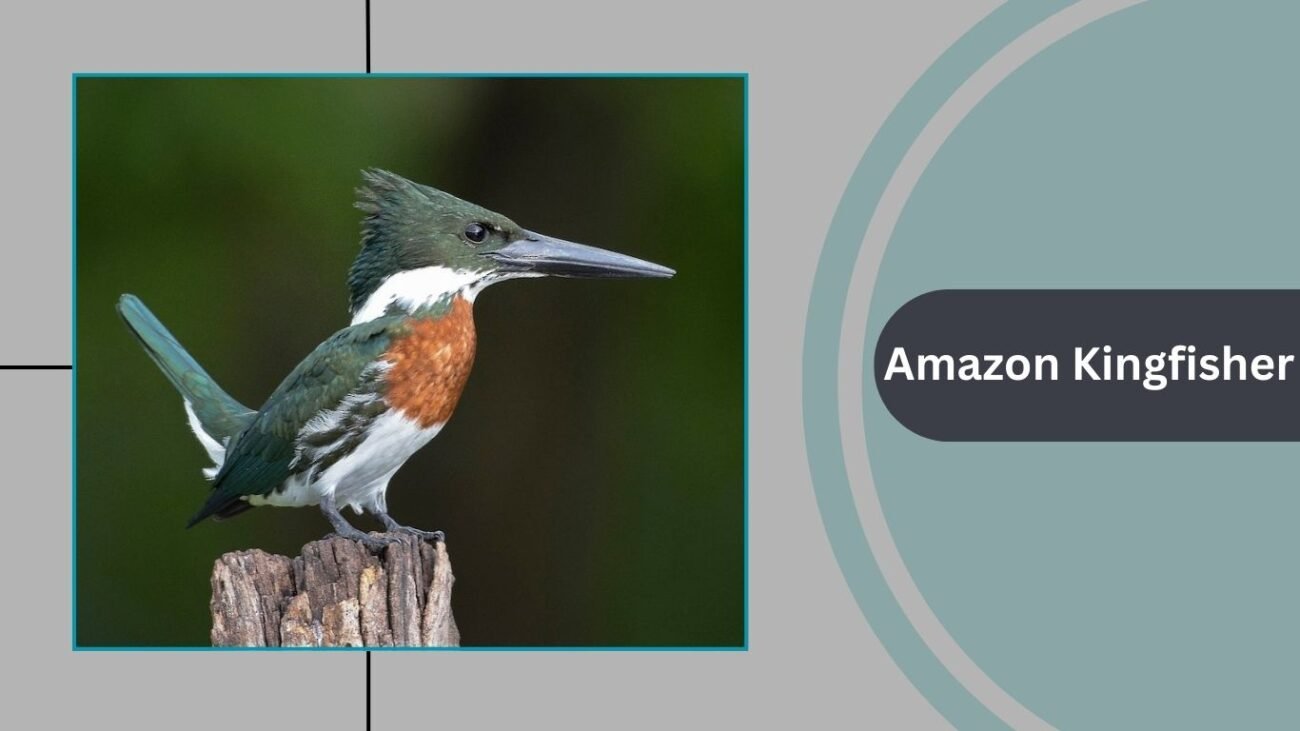
The Amazon Kingfisher is a large and powerful species widely distributed across Central and South America. Often compared to the Ringed Kingfisher, it is slightly smaller but equally impressive, with its rich green plumage and bold chestnut markings on males. It is a common sight along rivers, lakes, and wetlands in tropical regions.
Identification
- Size: About 29–30 cm in length
- Plumage: Glossy green upperparts with white underparts
- Breast: Males have a broad chestnut band across the chest, while females show green spotting instead
- Bill: Long, heavy, and dark, designed for catching larger fish
- Crest: Slightly shaggy appearance, giving it a distinctive profile
Habitat
The Amazon Kingfisher inhabits rivers, lakes, lagoons, mangroves, and marshes, especially in tropical lowlands. It prefers still or slow-moving waters with plenty of fish.
Diet
Its diet mainly consists of fish, which it catches by diving directly from a perch or hovering briefly above the water. It may also feed on crustaceans and large aquatic insects.
Behavior
This species is solitary and territorial, often perched quietly on low branches near water. Its flight is rapid and direct, usually low over rivers or streams. The Amazon Kingfisher is noisy, producing a harsh, rattling call that echoes along waterways.
15. Ringed Kingfisher (Megaceryle torquata)
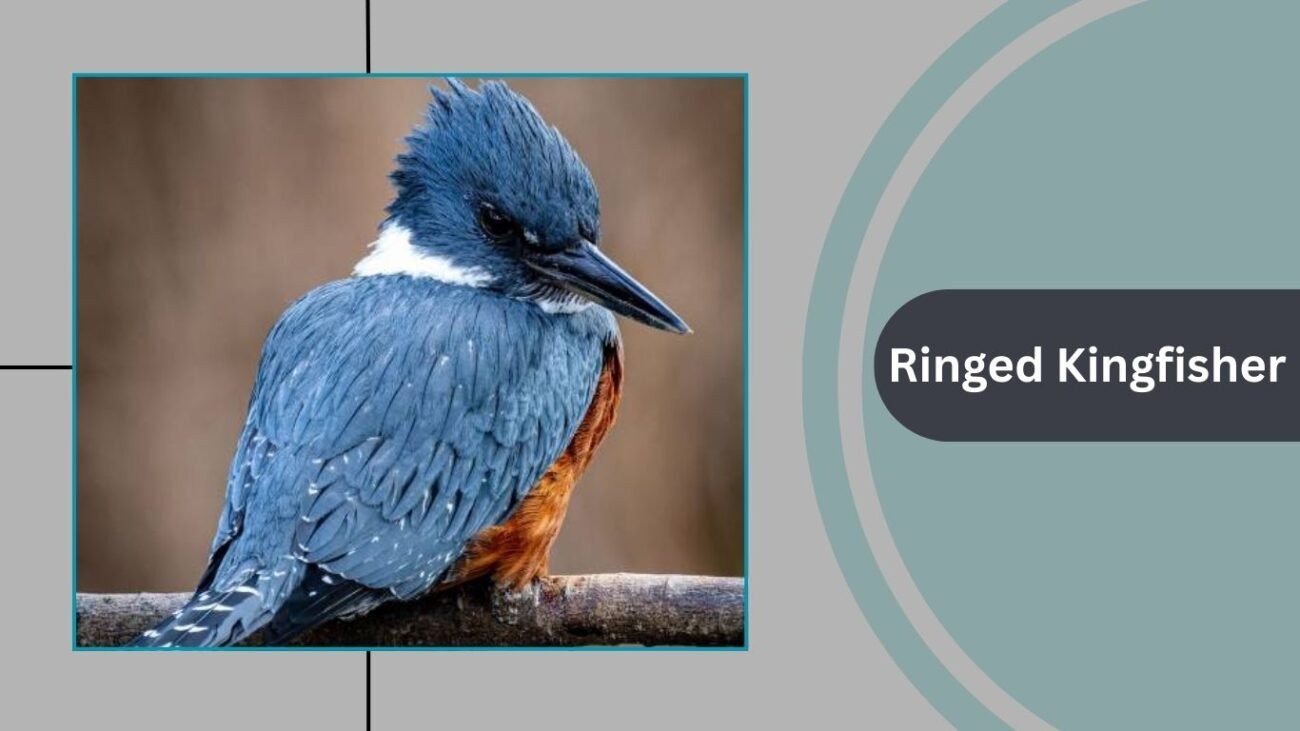
The Ringed Kingfisher is the largest kingfisher in the Americas and a powerful hunter of fish. With its bold rufous belly and loud, rattling calls, it is a dominant presence along rivers and lakes throughout Central and South America, even reaching southern Texas.
Identification
- Size: About 40–42 cm in length (largest American kingfisher)
- Plumage: Slate-blue upperparts with a broad white collar
- Breast: Rufous underparts; females show additional blue-gray band across the chest
- Bill: Very large, long, and heavy, perfectly adapted for catching big fish
- Wings: Broad and strong, enabling fast, direct flight
Habitat
This species inhabits rivers, lakes, ponds, estuaries, and coastal areas. It prefers open water bodies with high fish populations and often perches conspicuously on branches or wires above water.
Diet
The Ringed Kingfisher feeds mainly on fish, which it seizes with dramatic plunging dives. It also eats crustaceans, frogs, and occasionally small mammals.
Behavior
It is solitary and highly territorial, often chasing away other kingfishers from its hunting grounds. Its loud, rolling, rattling calls are heard frequently as it patrols riversides. The Ringed Kingfisher is a powerful flier and can be seen gliding or flying low over the water with steady wingbeats.
16. Banded Kingfisher (Lacedo pulchella)
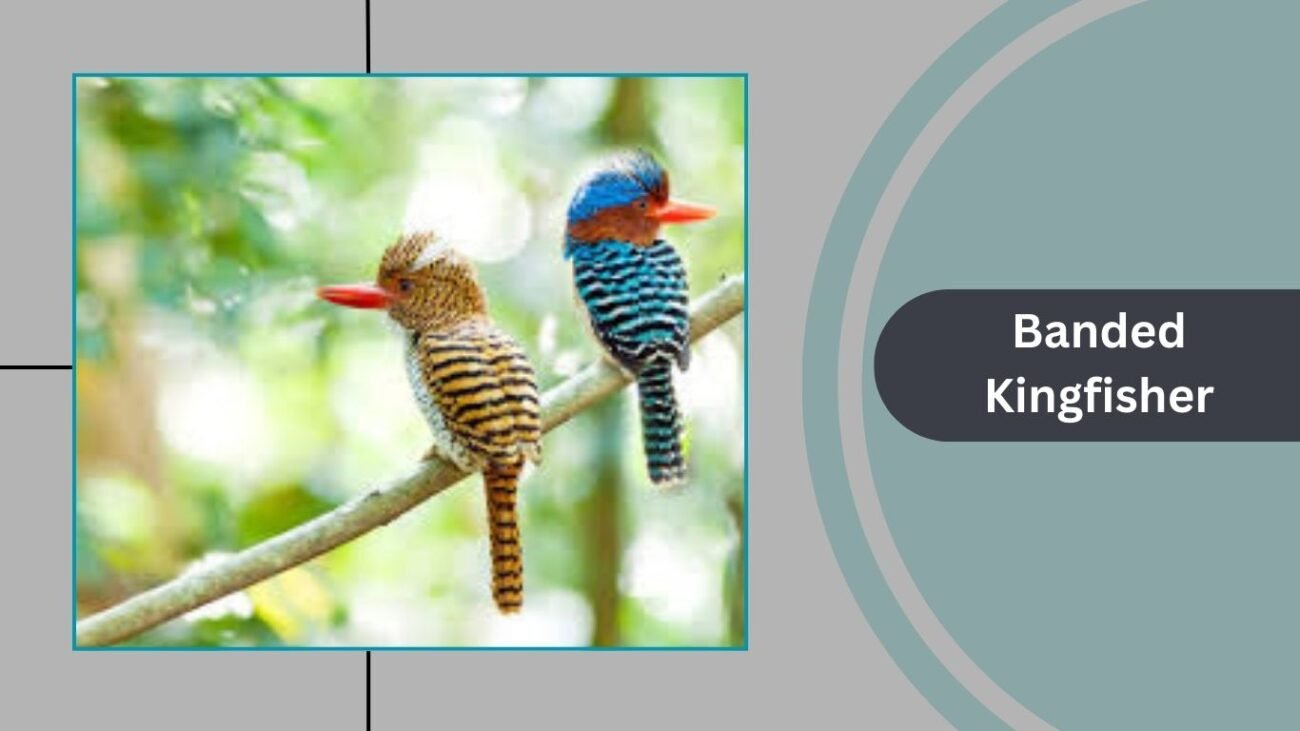
The Banded Kingfisher is a striking forest-dwelling bird native to Southeast Asia. Unlike many kingfishers, it prefers dense tropical forests rather than riversides. Males and females look very different, making this species easily recognizable in the wild.
Identification
- Size: About 20–22 cm in length
- Male: Bright blue upperparts with a black-and-blue banded crown and rufous underparts
- Female: Rufous crown with black bars, brown wings, and heavily barred underparts
- Bill: Large, stout, and red, suited for catching forest prey
- Tail: Strongly barred, especially in females
Habitat
The Banded Kingfisher inhabits dense lowland and hill forests, including evergreen and deciduous woodlands. Unlike water-dependent kingfishers, it thrives deep within forest interiors, usually far from rivers or lakes.
Diet
This species feeds mainly on insects, small reptiles, frogs, and occasionally small mammals. It hunts by perching quietly in the mid-canopy and swooping down to capture prey.
Behavior
The Banded Kingfisher is elusive and usually found alone or in pairs. Its call is a loud, whistling “whee-whee-whee,” often heard echoing through the forest. It is territorial and uses thick foliage for cover, making it harder to spot despite its colorful plumage.
17. Rufous-collared Kingfisher (Actenoides concretus)
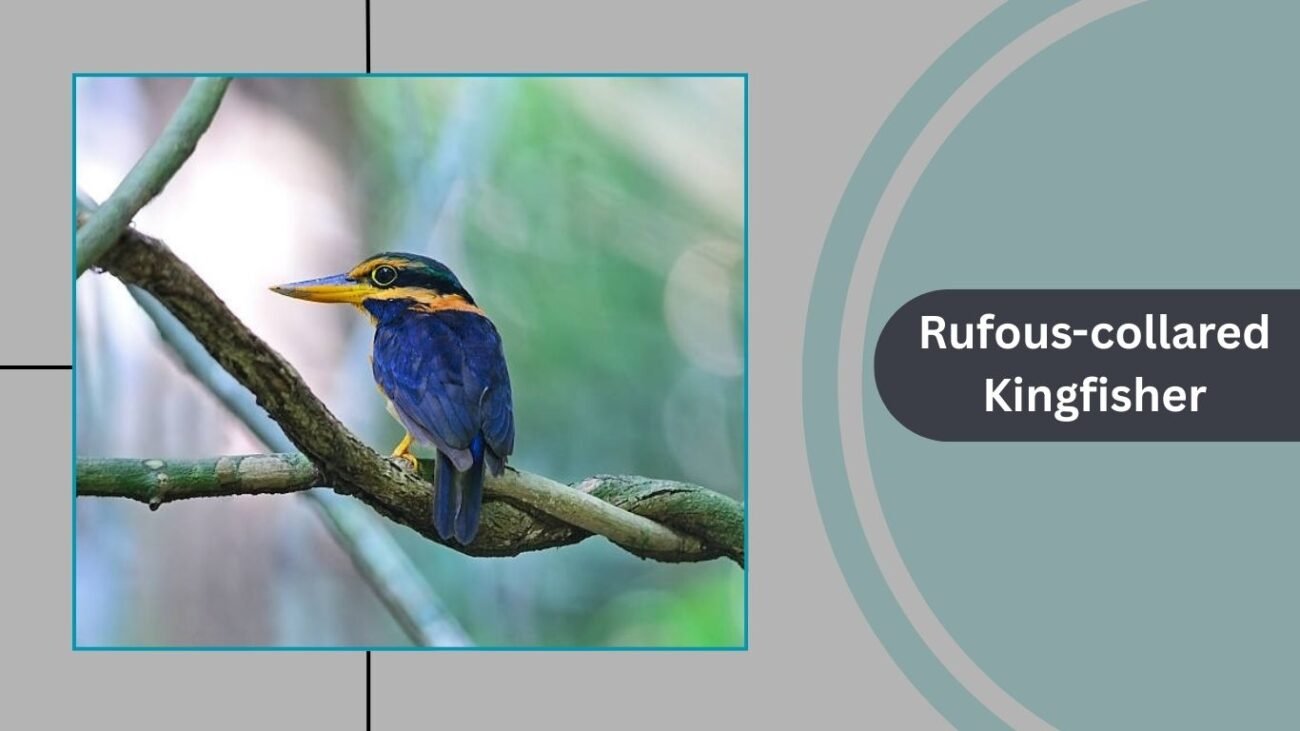
The Rufous-collared Kingfisher is a rare and brightly colored bird found in Southeast Asia’s tropical forests. It is admired for its vivid plumage and distinctive rufous-orange collar that contrasts with its greenish-blue body. Preferring dense forest interiors, it is considered elusive and uncommon in much of its range.
Identification
- Size: Around 22–25 cm in length
- Plumage: Greenish-blue back and wings, orange underparts, and a striking rufous collar around the neck
- Bill: Large, straight, and orange-yellow, well-suited for hunting forest prey
- Eyes: Dark, adapted to shaded forest habitats
- Tail: Short and bluish-green, aiding maneuverability in dense foliage
Habitat
The Rufous-collared Kingfisher inhabits lowland evergreen and hill forests across Malaysia, Thailand, Borneo, and Sumatra. It prefers dense, humid forest interiors and is rarely found near open water or human settlements.
Diet
This kingfisher feeds mainly on insects, frogs, small reptiles, and occasionally small mammals. Unlike many kingfishers, it does not rely heavily on fish due to its forest-based lifestyle.
Behavior
It is shy and solitary, usually perching quietly in the understory. Its call is a series of soft, whistling notes, often heard more than the bird is seen. The Rufous-collared Kingfisher is territorial but secretive, making sightings rare even within its known range.
18. Brown-hooded Kingfisher (Halcyon albiventris)
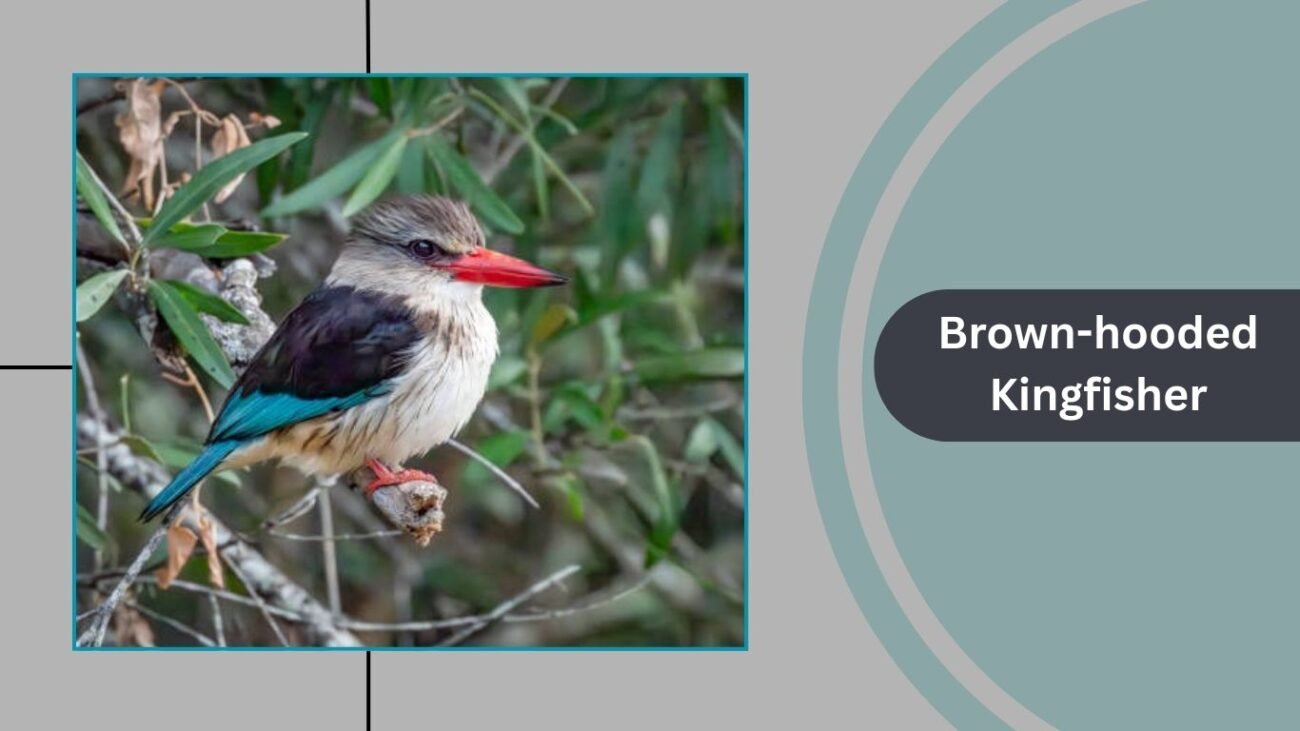
The Brown-hooded Kingfisher is a striking bird native to sub-Saharan Africa. Unlike many kingfisher species, it is not heavily dependent on water and can often be found in woodlands, savannas, and gardens far from rivers or lakes. Its brown head and vibrant blue wings make it easy to recognize.
Identification
- Size: About 22–24 cm in length
- Plumage: Brown head and chest with white underparts
- Wings: Bright blue flight feathers contrasting with darker upperparts
- Bill: Long, strong, and red, well-suited for hunting varied prey
- Eyes: Dark, providing sharp vision for terrestrial hunting
Habitat
This species inhabits open woodlands, savannas, scrublands, and gardens. While it occasionally occurs near rivers and lakes, it is more often seen in dry areas with scattered trees.
Diet
The Brown-hooded Kingfisher feeds mainly on insects, small reptiles, and amphibians. It rarely eats fish, making it quite different from water-dependent kingfishers.
Behavior
It is territorial and usually found alone or in pairs. Perching on low branches, it swoops down to snatch prey from the ground. Its call is a loud, shrill “tsee-tsee” repeated in quick succession, often given during the breeding season.
19. Grey-headed Kingfisher (Halcyon leucocephala)
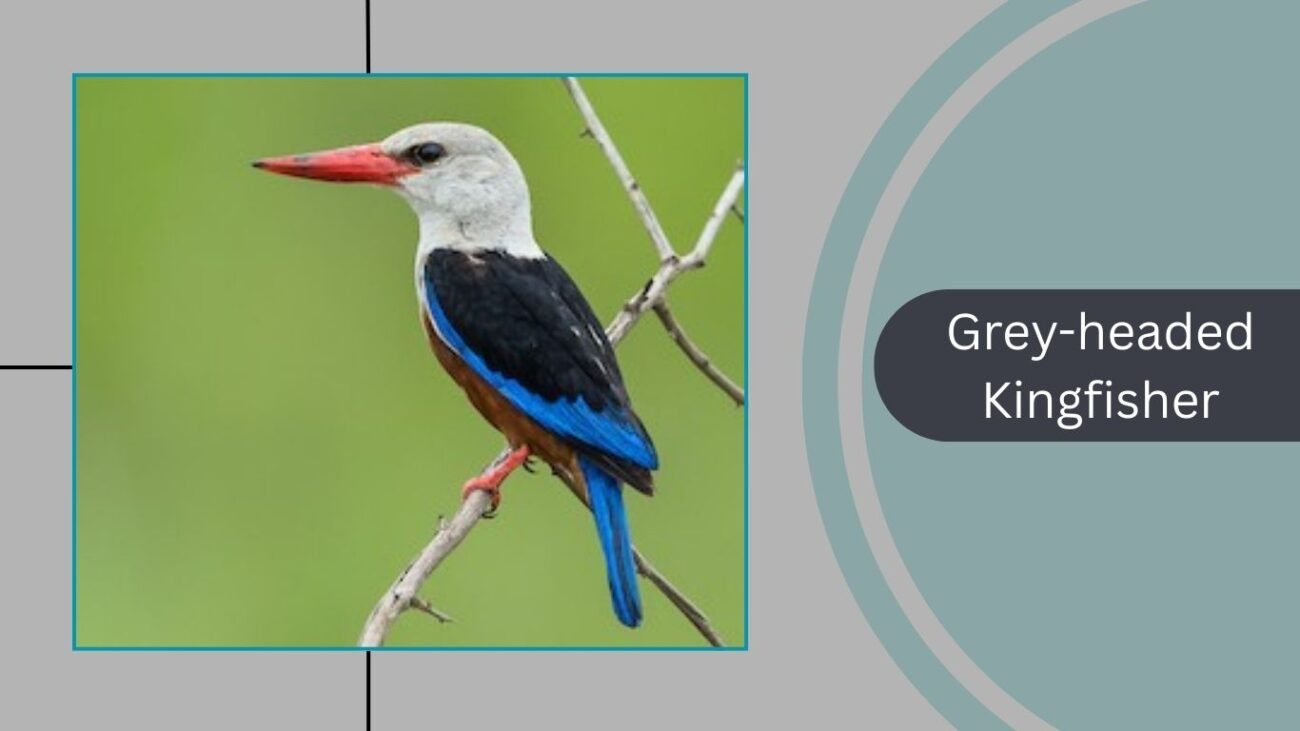
The Grey-headed Kingfisher is a colorful bird widely distributed across sub-Saharan Africa and parts of the Middle East. It is instantly recognizable by its pale grey head, chestnut underparts, and vivid blue wings and tail. Despite being a kingfisher, it is often found away from water in dry savannas and woodlands.
Identification
- Size: About 21–23 cm in length
- Plumage: Pale grey head, bright blue back and wings, chestnut underparts
- Bill: Large and red, built for seizing insects and small prey
- Tail: Vivid blue, often noticeable in flight
- Eyes: Dark, sharp, and adapted for spotting prey from perches
Habitat
This species prefers dry woodlands, savannas, bushlands, and forest edges. It is less tied to rivers or lakes than many other kingfishers and is often found far from water sources.
Diet
The Grey-headed Kingfisher feeds mainly on insects such as grasshoppers, beetles, and locusts. It also preys on small reptiles, amphibians, and occasionally rodents. Unlike many kingfishers, fish is a rare part of its diet.
Behavior
It is bold and active, often perching in open areas before swooping down to catch prey. Its call is a sharp, high-pitched “tsee-tsee-tsee,” often delivered rapidly. During breeding season, it becomes highly territorial, aggressively defending nesting sites in tree cavities.
20. Malachite Kingfisher (Corythornis cristatus)
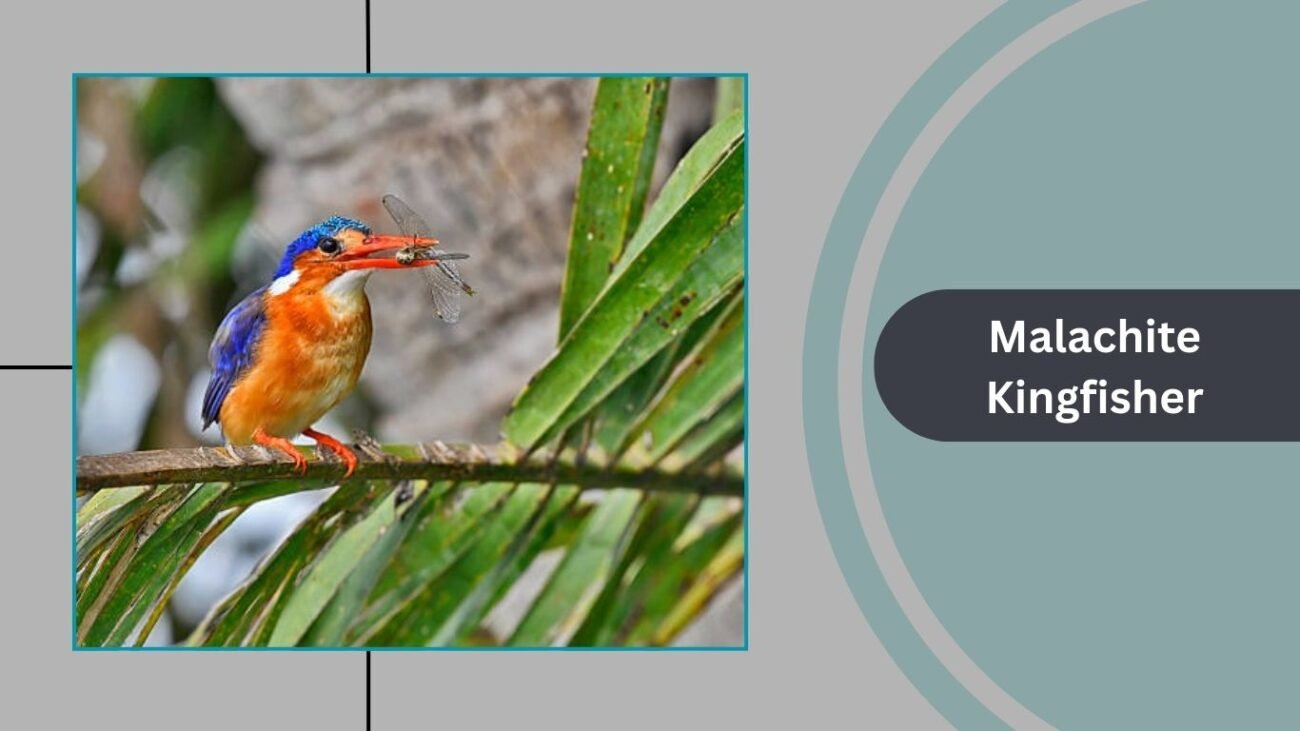
The Malachite Kingfisher is a dazzlingly beautiful bird found across much of sub-Saharan Africa. Known for its vivid iridescent blue back and crown, paired with rich orange underparts, it is a small but striking kingfisher often seen along rivers and wetlands. Despite its bright colors, its small size makes it surprisingly inconspicuous when perched among reeds.
Identification
- Size: About 13 cm in length (very small kingfisher)
- Plumage: Iridescent malachite-blue back and crest with rufous-orange underparts
- Bill: Long, slender, and red, ideal for catching tiny prey
- Eyes: Dark, set high for spotting movement in the water
- Wings: Short and rounded, suited for fast, darting flight
Habitat
The Malachite Kingfisher inhabits slow-moving rivers, lakes, marshes, swamps, and reed beds. It prefers areas with plenty of aquatic vegetation where it can perch and hunt.
Diet
This species feeds primarily on small fish, aquatic insects, and tiny crustaceans. It perches low on reeds or branches near the water, diving swiftly to grab prey.
Behavior
It is solitary and territorial, defending feeding areas along waterways. The Malachite Kingfisher has a high-pitched “tsip-tsip” call and flies low over the water in rapid, direct bursts. Despite its vibrant colors, it often blends into its surroundings, making it harder to spot.
21. Shovel-billed Kookaburra (Dacelo rex)
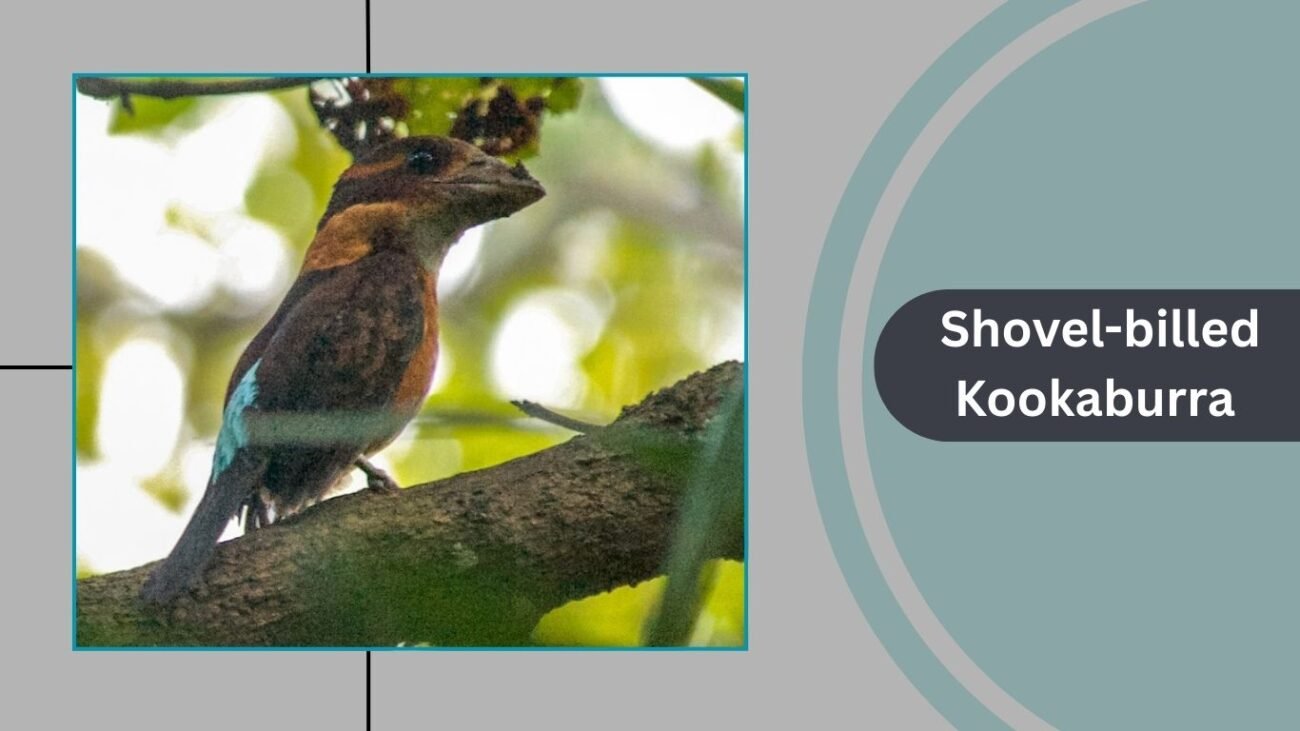
The Shovel-billed Kookaburra, also called the Shovel-billed Kingfisher, is a rare and unusual kingfisher found only in the forests of New Guinea. It is instantly recognizable for its large, broad, and flattened bill, which sets it apart from all other kingfishers. This species is secretive and poorly studied due to its elusive forest lifestyle.
Identification
- Size: About 25–29 cm in length
- Plumage: Dark brown upperparts, pale underparts, and bluish highlights on the wings and rump
- Bill: Very large, broad, and uniquely shovel-shaped, adapted for digging and catching prey
- Eyes: Dark, suited for low-light hunting in dense forest
- Tail: Short and dark, aiding maneuverability in thick foliage
Habitat
This bird inhabits lowland and hill rainforests of New Guinea. Unlike many kingfishers, it does not frequent rivers or lakes but prefers dense, shaded forest interiors.
Diet
The Shovel-billed Kookaburra feeds on earthworms, snails, beetles, and other invertebrates. Its strong, broad bill is specially adapted for digging through soil and leaf litter to find prey.
Behavior
It is extremely shy and rarely seen, often remaining hidden in the forest canopy. Unlike many kingfishers, it is not brightly colored and relies on camouflage. Its calls are low and guttural, unlike the loud laughs of other kookaburras. Very little is known about its breeding habits due to its secretive nature.
22. Spangled Kookaburra (Dacelo tyro)
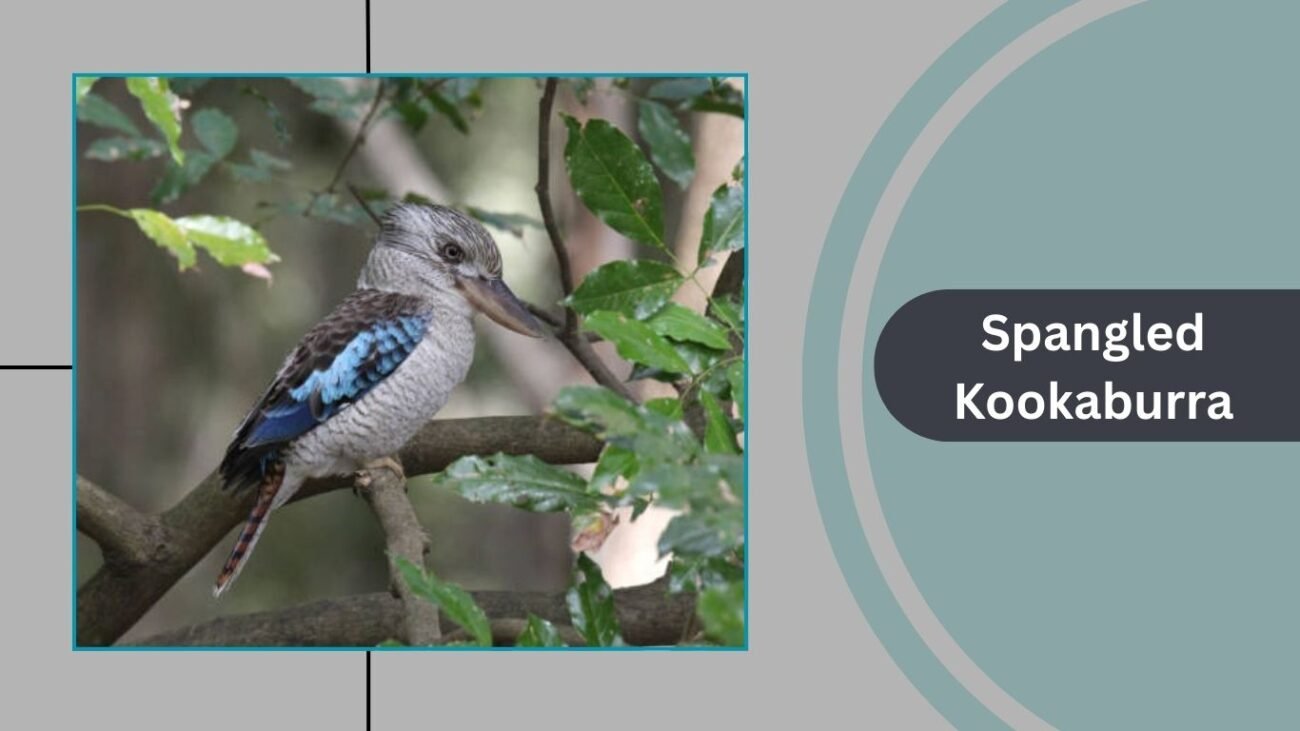
The Spangled Kookaburra is a striking and less common member of the kookaburra family, found in northern Australia and parts of southern New Guinea. Known for its bold markings and distinctive spangled (spotted) plumage, it is larger than many kingfishers and has a powerful call that resonates through open woodlands.
Identification
- Size: About 45–47 cm in length (one of the largest kingfishers)
- Plumage: Dark brown back with white spots (“spangles”), pale underparts, and a white head streaked with dark brown
- Bill: Large, strong, and black, designed for capturing robust prey
- Tail: Reddish-brown with black bars
- Eyes: Dark, giving it a fierce expression
Habitat
The Spangled Kookaburra inhabits tropical open forests, woodlands, mangroves, and savannas of northern Australia and New Guinea. It often perches on tall trees or wires while scanning for prey.
Diet
Its diet includes insects, small reptiles, amphibians, crustaceans, and even small birds and mammals. Like other kookaburras, it swoops down from a perch to seize prey with its powerful bill.
Behavior
This bird is territorial and often heard before it is seen, with a loud, harsh call that differs from the famous laughing call of the Laughing Kookaburra. It is usually found alone or in pairs and aggressively defends its feeding territory.
23. Laughing Kookaburra (Dacelo novaeguineae)
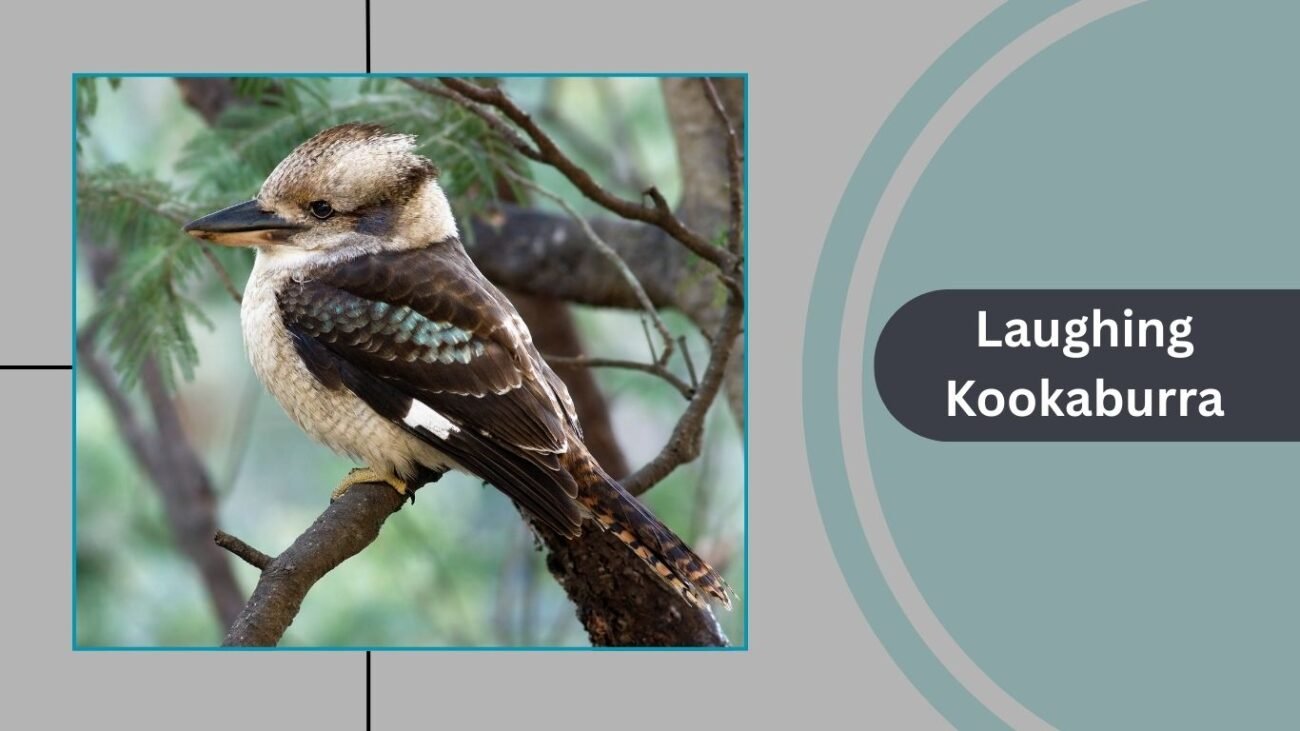
The Laughing Kookaburra is the largest and most famous member of the kingfisher family, native to eastern Australia. It is renowned for its loud, distinctive “laughing” call, which echoes through forests and suburban areas. Despite its size, it is often seen perched calmly, waiting to swoop down on prey.
Identification
- Size: About 43–45 cm in length
- Plumage: Creamy-white underparts, brown wings, and dark brown eye-stripe
- Head: Pale with dark markings, giving a bold facial pattern
- Bill: Very large, strong, and dark-colored
- Tail: Reddish-brown with black bars
Habitat
The Laughing Kookaburra thrives in eucalyptus forests, woodlands, farmlands, and even urban gardens. It adapts easily to human settlements and is often seen perched on fences, wires, and posts.
Diet
Its diet includes insects, small reptiles, amphibians, rodents, and even small birds. It rarely eats fish compared to other kingfishers. It hunts by waiting patiently on a perch before swooping down to grab prey with its powerful bill.
Behavior
This species is highly territorial and lives in family groups that help defend their territory. The famous laughing call is used for communication and territorial defense. Unlike smaller kingfishers, the Laughing Kookaburra is more of a land hunter than a water fisher.
24. Blue-banded Kingfisher (Alcedo euryzona)
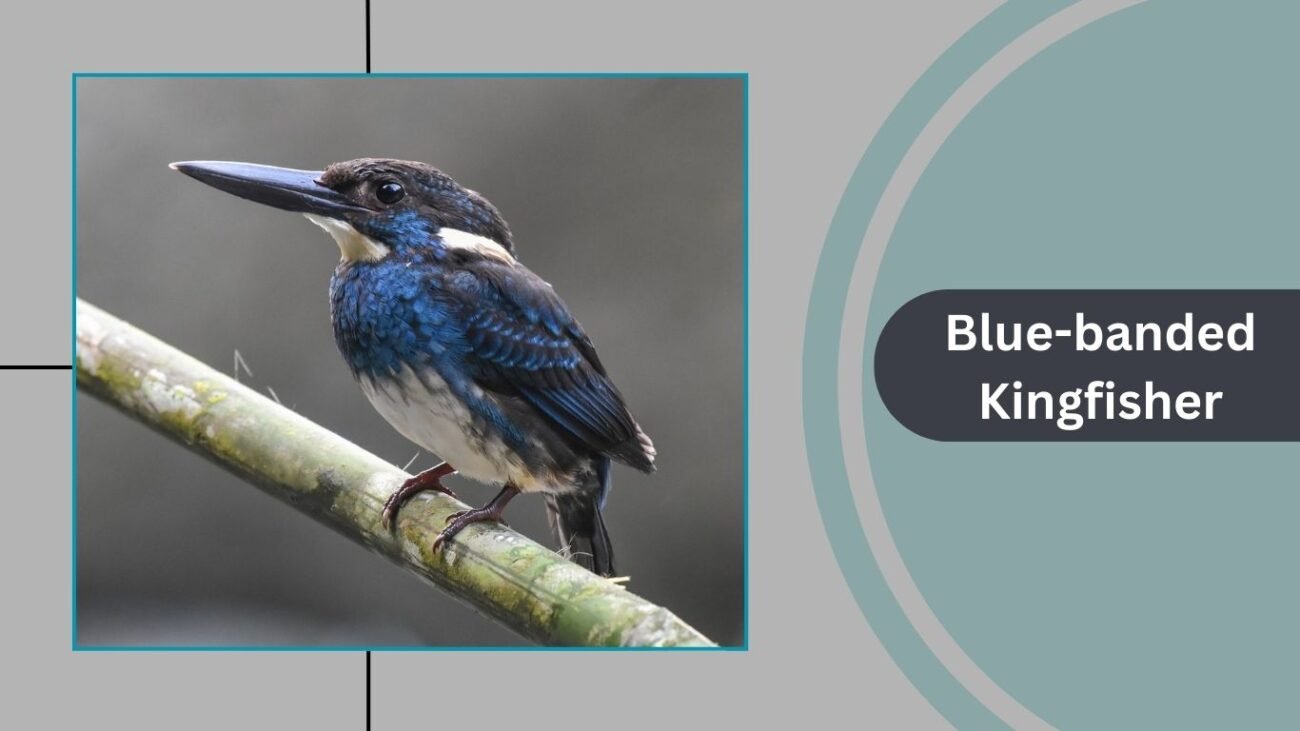
The Blue-banded Kingfisher is a rare and beautiful species native to parts of Southeast Asia, including Indonesia, Malaysia, and Thailand. It is closely related to the Common Kingfisher but can be distinguished by its unique blue breast band. Due to habitat loss and declining numbers, it is considered a vulnerable species.
Identification
- Size: About 16–18 cm in length
- Plumage: Deep blue upperparts with orange underparts
- Breast: Distinct blue band across the chest (males more prominent, females fainter or absent)
- Bill: Long, straight, and black, adapted for catching fish
- Eyes: Dark, with excellent vision for underwater hunting
Habitat
This kingfisher inhabits clear, fast-flowing forest streams, rivers, and freshwater pools in lowland and hill forests. It prefers undisturbed habitats with dense vegetation along waterways.
Diet
The Blue-banded Kingfisher feeds mainly on fish and aquatic insects. It perches quietly above water before diving swiftly to catch prey.
Behavior
It is solitary and very shy, making it difficult to observe. Its flight is fast and direct, usually close to the water’s surface. The call is a sharp, high-pitched whistle, often given when disturbed. Because of its rarity, sightings are prized by birdwatchers.
25. Indigo-banded Kingfisher (Alcedo cyanopectus)
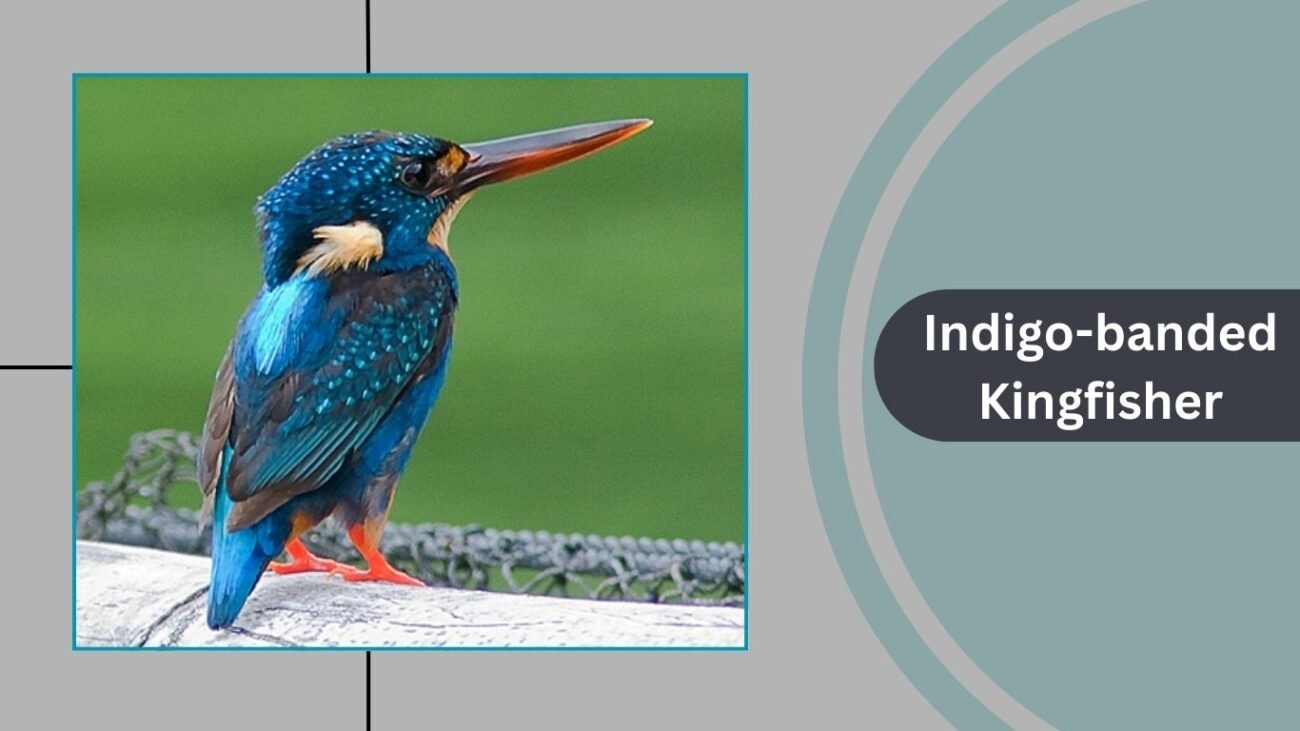
The Indigo-banded Kingfisher is a small and vividly colored species endemic to the Philippines. It is admired for its striking indigo-blue breast band and deep blue plumage, which contrast beautifully with its orange underparts. This rare and localized bird is usually found near forest streams and rivers, making it a sought-after species for birdwatchers.
Identification
- Size: About 14–15 cm in length
- Plumage: Deep blue upperparts with bright orange underparts
- Breast: Distinct indigo-blue band across the chest (a key feature of the species)
- Bill: Long, slender, and black, adapted for catching small fish
- Eyes: Dark, providing excellent precision when hunting in shaded streams
Habitat
The Indigo-banded Kingfisher inhabits clear, rocky forest streams and rivers, often in lowland and foothill forests of the Philippines. It prefers quiet, undisturbed habitats with dense cover.
Diet
Its diet mainly consists of small fish, aquatic insects, and occasionally small crustaceans. Like many kingfishers, it hunts by perching low above the water before diving headfirst to seize prey.
Behavior
This kingfisher is solitary and secretive, rarely venturing into open spaces. It has a fast, direct flight close to the water surface. Its call is a short, sharp whistle, usually heard when the bird is flushed from its perch. Due to its restricted range and habitat loss, it is considered near-threatened.