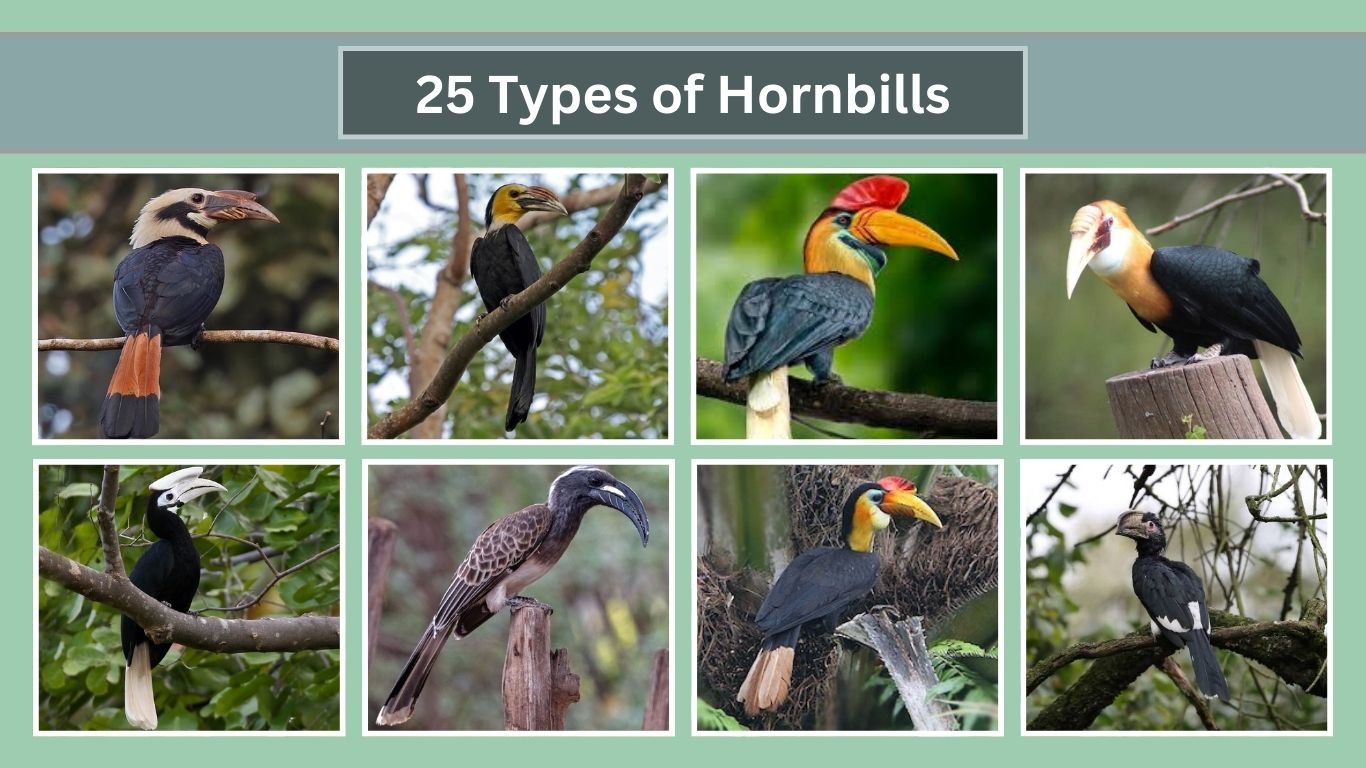
Hornbills are among the most fascinating birds, known for their large, curved bills topped with casques and their unique nesting behavior where females seal themselves inside tree cavities. Found across Africa and Asia, these birds range from the enormous ground hornbills of Africa to the rare island hornbills of the Philippines. In this article, we’ll explore 25 different hornbill species, highlighting their distinct features, habitats, and important roles in forest ecosystems.
1. Great Hornbill
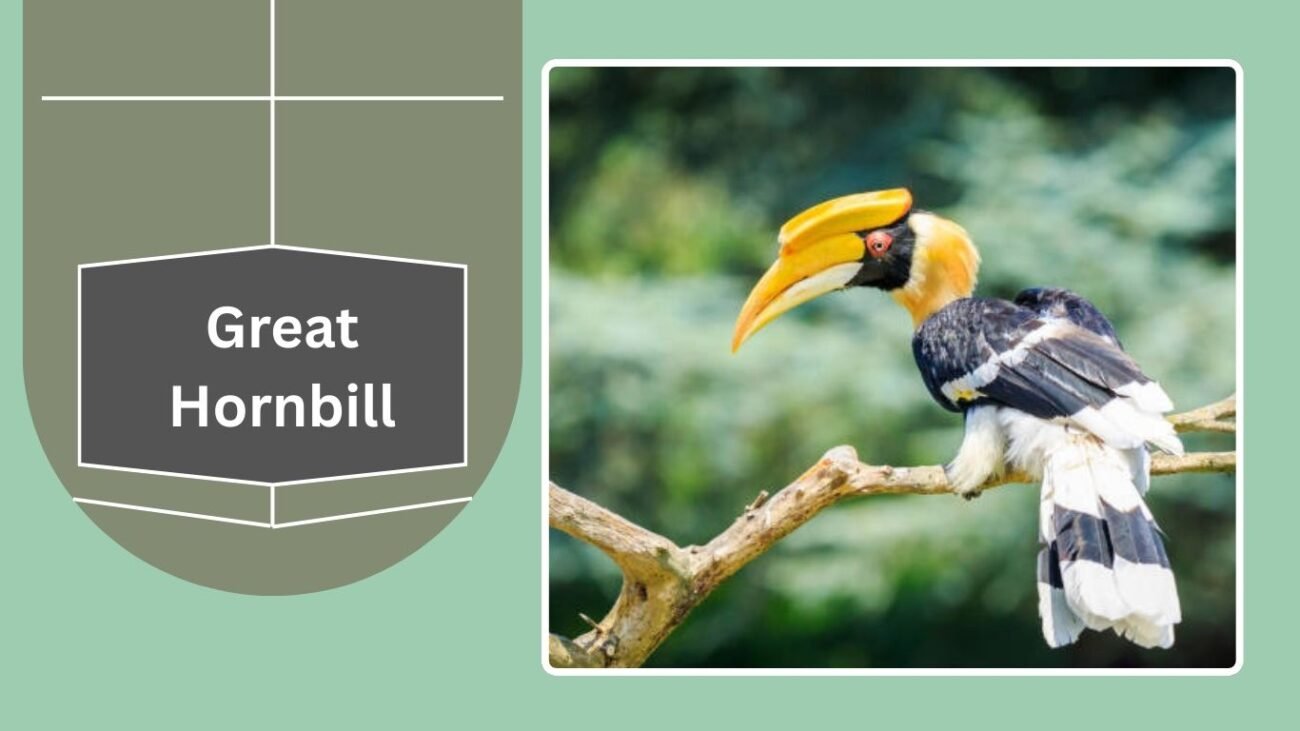
The Great Hornbill (Buceros bicornis) is one of the largest and most striking hornbill species, found mainly in the forests of India and Southeast Asia. Known for its massive yellow and black casque, it plays an important role in seed dispersal and is often regarded as a symbol of strength and grandeur in local cultures.
Identification
- Large bird, reaching up to 120 cm in length
- Prominent yellow and black casque on top of the beak
- Black wings with broad white bands
- Males usually have red eyes, while females have bluish-white eyes
Habitat
Great Hornbills thrive in dense, old-growth forests, particularly in hilly and mountainous regions. They are most often seen in tall evergreen and deciduous forests across India, Bhutan, Nepal, Myanmar, Thailand, and Malaysia.
Diet
Their diet mainly consists of fruits, especially figs, but they also eat small mammals, birds, insects, and reptiles, making them important contributors to forest ecology.
Behavior
They are known for their loud calls and impressive aerial displays. Great Hornbills are monogamous, and during breeding, the female seals herself inside a tree cavity with mud and droppings, leaving only a slit through which the male passes food.
2. Rhinoceros Hornbill
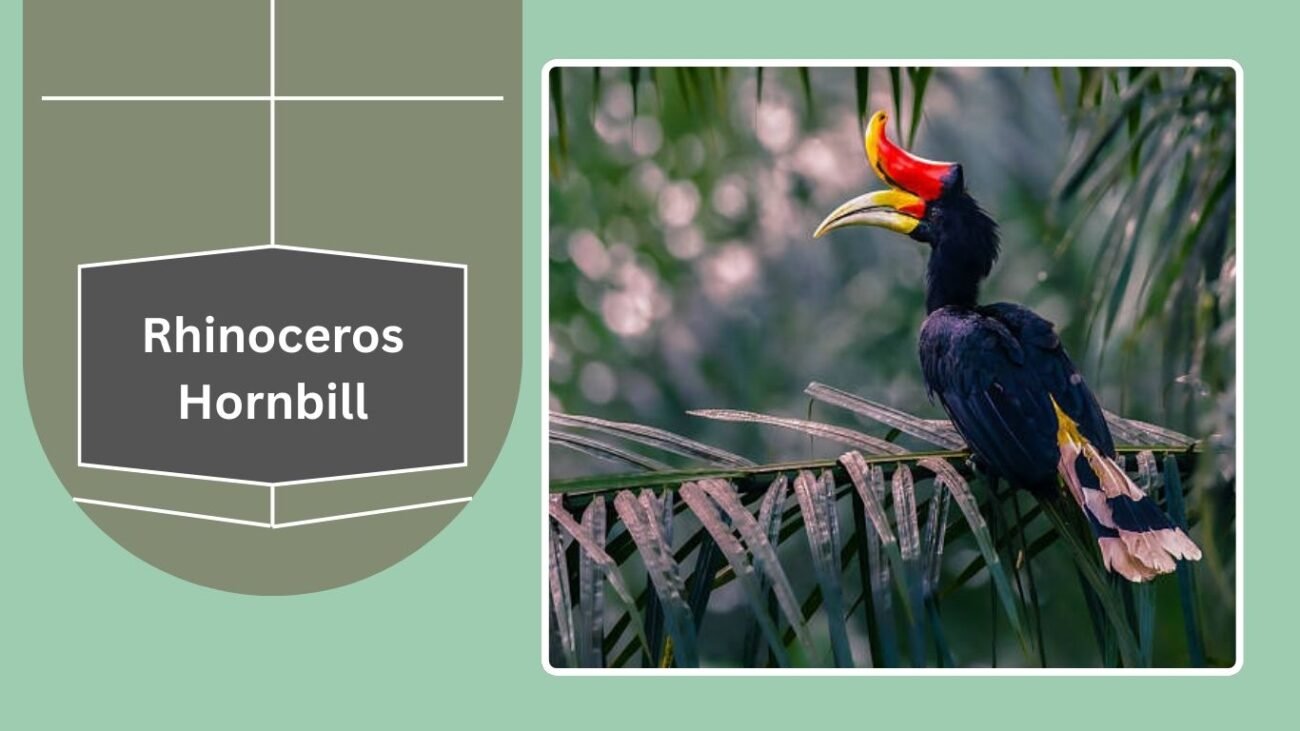
The Rhinoceros Hornbill (Buceros rhinoceros) is one of the most iconic hornbills in Southeast Asia, celebrated for its vibrant casque that curves upward like a horn. It holds deep cultural and spiritual significance for many Indigenous communities, especially in Borneo, where it is revered as a symbol of power and the spirit of the forest.
Identification
- Large size, up to 91–122 cm in length
- Bright orange to red casque resembling an upturned horn
- Black plumage with white thighs and tail, tail tipped with a broad black band
- Strong, curved yellow bill
- Both sexes look similar, but males have red eyes and females have whitish-blue eyes
Habitat
Rhinoceros Hornbills are primarily found in lowland and montane rainforests across Thailand, Malaysia, Singapore, and Indonesia, particularly Borneo and Sumatra. They prefer large, continuous tracts of tropical forest with tall emergent trees.
Diet
Their diet is largely frugivorous, with figs making up a major portion. However, they also consume insects, small reptiles, and occasionally other birds. Their fruit-eating habits make them vital seed dispersers for maintaining forest biodiversity.
Behavior
These hornbills are known for their loud, resonant calls that echo across the forest canopy. They are strong fliers and often soar gracefully between tall trees. During breeding, the female seals herself inside a tree cavity, depending on the male to supply food until the chicks are old enough to be exposed.
3. Helmeted Hornbill
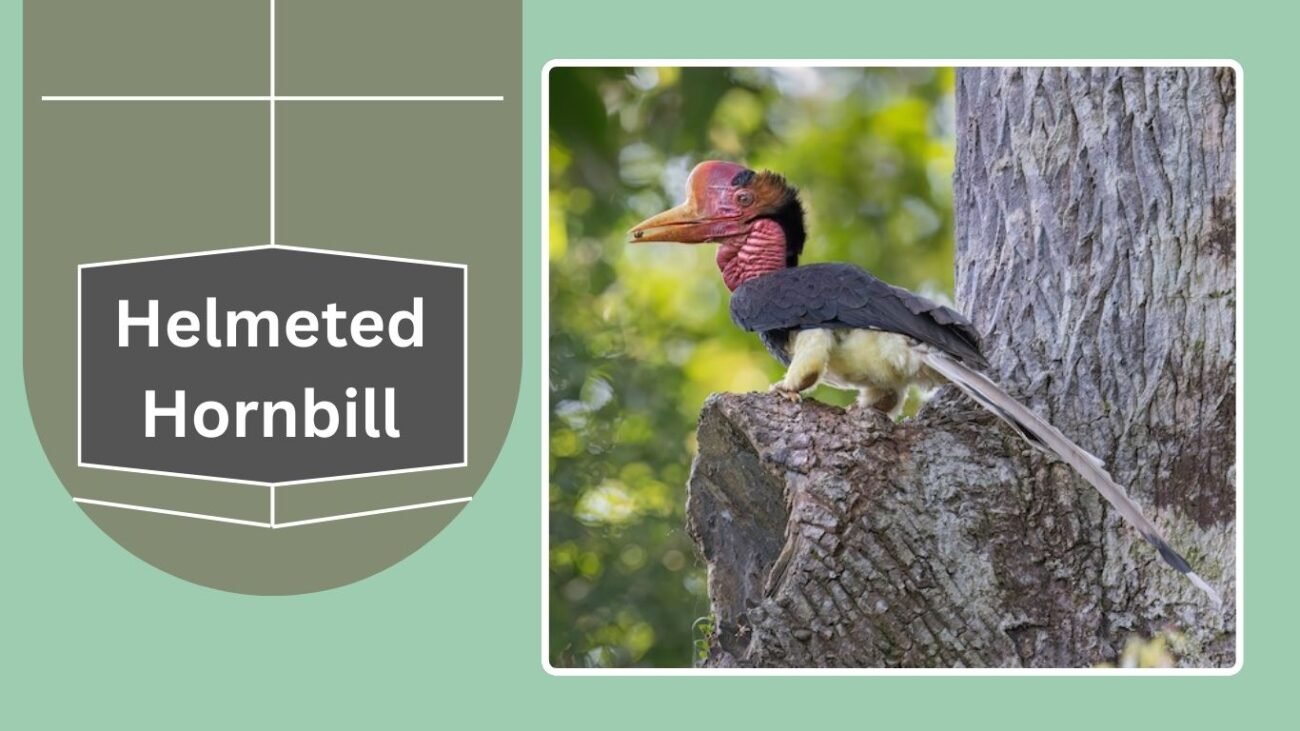
The Helmeted Hornbill (Rhinoplax vigil) is one of the most unique hornbill species, distinguished by its solid casque that is heavier and denser than in any other hornbill. This casque, called “hornbill ivory,” has tragically made the species a target for illegal hunting, leading to it being classified as critically endangered. It is a bird deeply connected to the cultural beliefs of many Indigenous groups in Southeast Asia.
Identification
- Length ranges from 110–120 cm with a long central tail feather extending up to 50 cm
- Casque is solid and reddish, unlike the hollow casques of other hornbills
- Black body with white belly and tail; tail tipped with black band
- Bare throat patch that is red in males and turquoise-blue in females
- Loud, distinctive “whooping” calls followed by a maniacal laugh-like series
Habitat
This species inhabits lowland tropical rainforests of the Malay Peninsula, Sumatra, and Borneo. It prefers mature, undisturbed forests with tall, emergent trees necessary for nesting and foraging.
Diet
Helmeted Hornbills primarily feed on figs and other fruits, but they also take small animals such as insects and reptiles. Their strong bill and casque are adapted to breaking into tough fruits.
Behavior
They are known for aerial “casque-butting” fights, where males collide mid-air with their solid casques in territorial disputes—a behavior unique to this species. The female seals herself in a tree cavity during nesting, depending on the male for food supply. Their calls are so loud and far-reaching that they can often be heard long before the bird is seen.
4. Southern Ground Hornbill
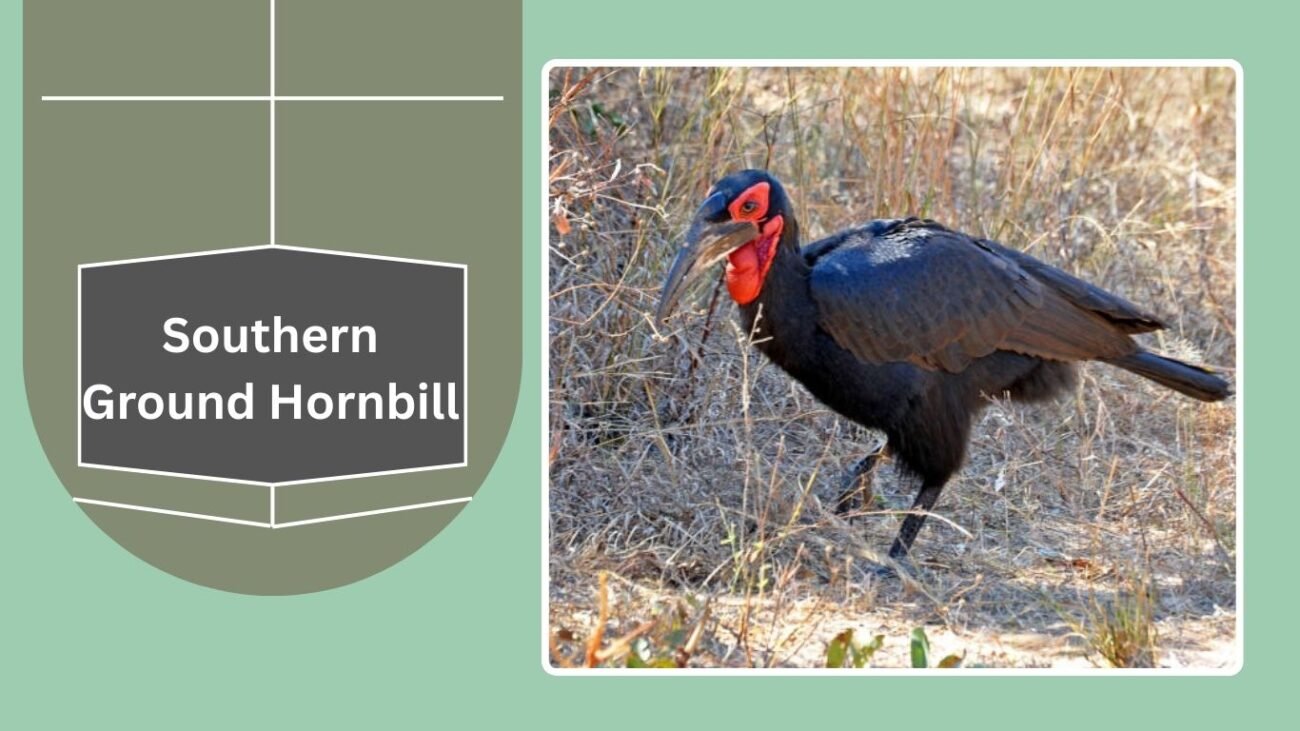
The Southern Ground Hornbill (Bucorvus leadbeateri) is the largest hornbill species and one of Africa’s most striking birds. Unlike most hornbills that live in trees, this species spends most of its time on the ground, walking across the savannas and grasslands of sub-Saharan Africa. It is easily recognized by its bold red facial skin and booming calls that can travel for miles.
Identification
- Very large, standing up to 1.2 meters tall with a wingspan reaching 2 meters
- Black plumage with vivid red throat and facial skin (yellowish in juveniles)
- Massive bill with a casque that is less pronounced than in Asian hornbills
- Long eyelashes, which are modified feathers, protect their eyes from dust while walking on the ground
Habitat
They are native to the savannas, grasslands, and woodlands of Southern and East Africa. They prefer open areas where they can forage on the ground but roost and nest in large trees or cliffs.
Diet
Southern Ground Hornbills are primarily carnivorous, feeding on reptiles, amphibians, insects, small mammals, and birds. They are skilled hunters, often stalking prey like monitor lizards and snakes.
Behavior
They live in cooperative groups, often led by a dominant breeding pair assisted by other family members. Their deep, booming calls serve as territorial signals and can be heard up to 3 miles away. Culturally, they are considered “thunderbirds” in African folklore, believed to bring rain. Sadly, they are listed as vulnerable due to habitat loss and hunting pressures.
5. Northern Ground Hornbill
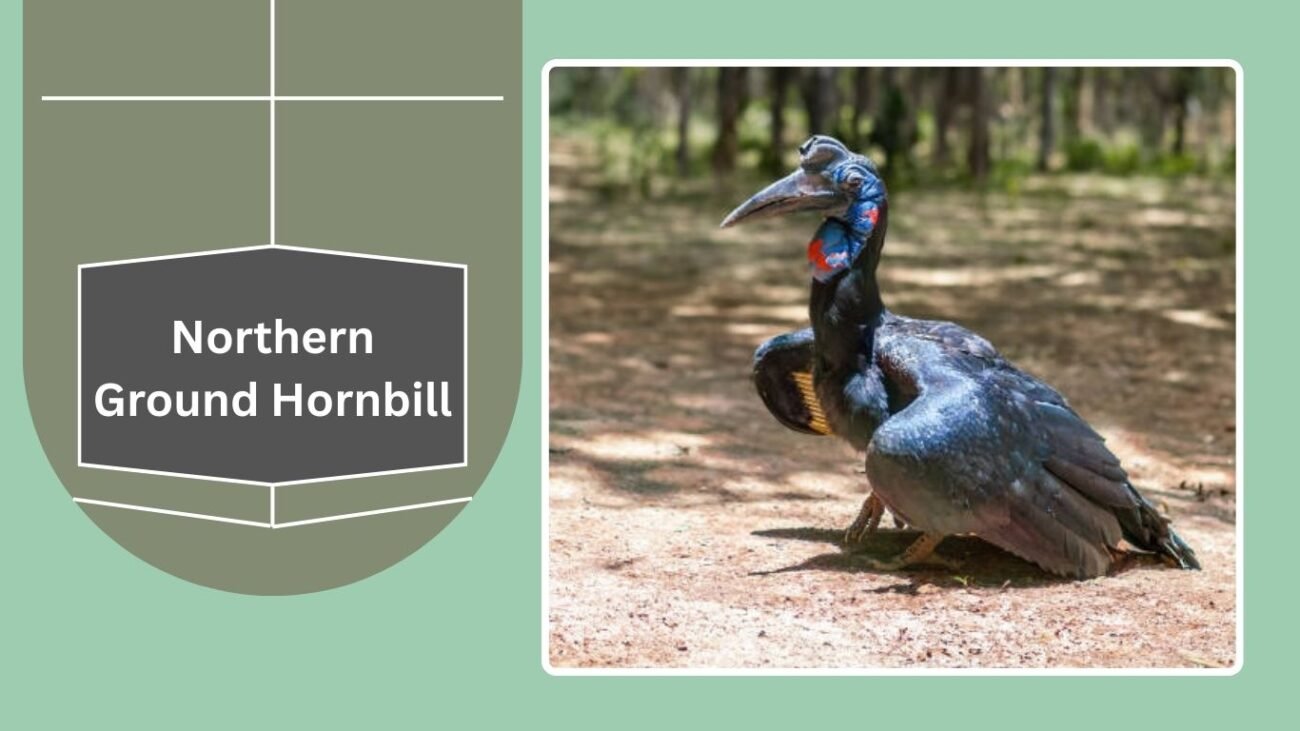
The Northern Ground Hornbill (Bucorvus abyssinicus) is a close relative of the Southern Ground Hornbill but is found further north in Africa. Known for its striking blue throat pouch in males, it is a powerful terrestrial bird that dominates open habitats. It is often considered a symbol of strength and protection in many African traditions.
Identification
- Large bird, standing about 90–100 cm tall with a wingspan close to 1.8 meters
- Glossy black plumage with white primary feathers visible in flight
- Bare facial skin and throat pouch: vivid blue in males, blue with some red in females
- Heavy, curved black bill with a small casque on top
Habitat
This hornbill inhabits dry savannas, open woodlands, and grasslands of Central and East Africa, including Ethiopia, Kenya, Uganda, and across the Sahel region. It prefers open areas with scattered trees for nesting.
Diet
Northern Ground Hornbills are mainly carnivorous, preying on reptiles, amphibians, large insects, small birds, and mammals. They are opportunistic hunters, capable of taking down venomous snakes and even small tortoises.
Behavior
They live in cooperative groups, with younger birds helping the dominant pair to raise chicks. Their calls are deep, booming sounds similar to those of the Southern Ground Hornbill, carrying over long distances. Known as guardians in some African myths, they are sometimes associated with protection against evil spirits.
6. African Grey Hornbill
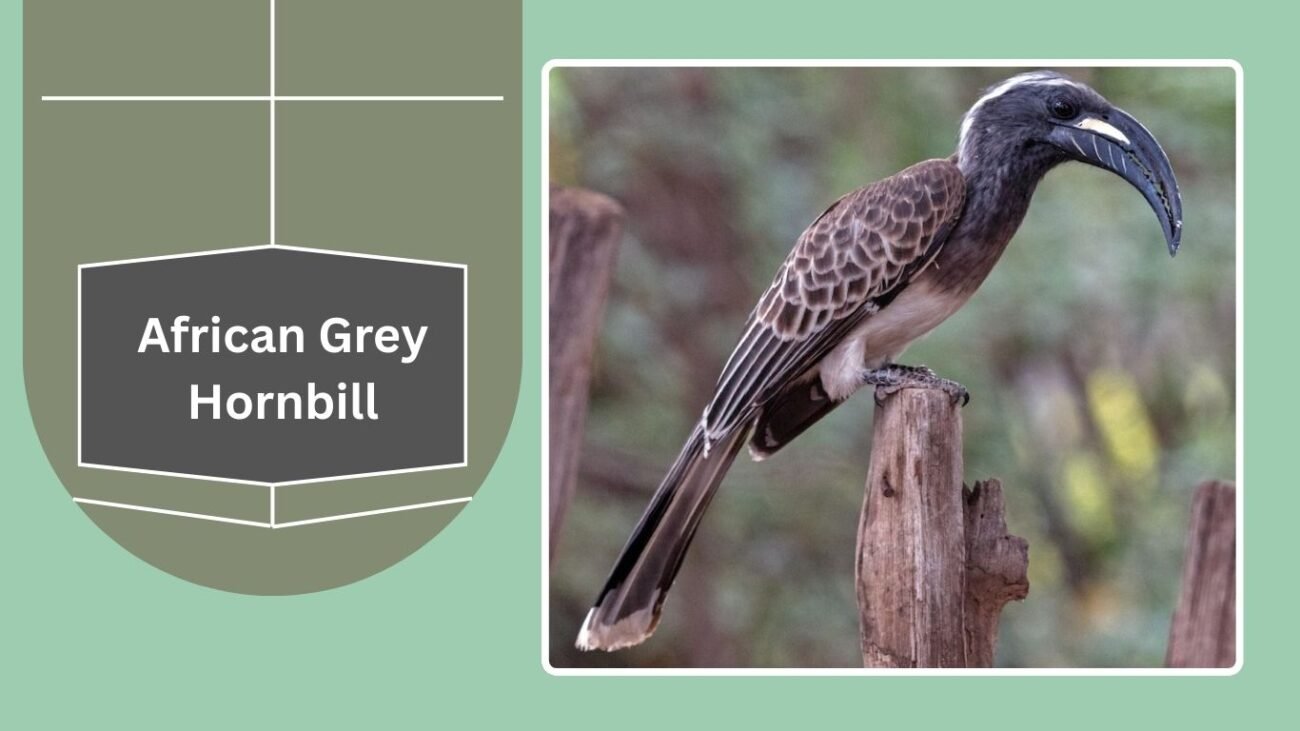
The African Grey Hornbill (Lophoceros nasutus) is one of the most widespread hornbills in Africa. Unlike the large ground hornbills, this species is medium-sized and often seen flying swiftly between trees with its distinctive long, curved bill. Its adaptability allows it to thrive in both forests and savannas, making it one of the more common hornbill species encountered across the continent.
Identification
- Medium-sized bird, about 45–50 cm in length
- Predominantly grey plumage with a lighter underbelly
- Long, slender, curved bill that is dark with a pale base; small casque present
- White stripe running along the head and neck
- Males generally larger with a heavier bill than females
Habitat
African Grey Hornbills inhabit savannas, dry forests, and open woodlands throughout sub-Saharan Africa. They are highly adaptable and can even be seen in semi-arid areas and near human settlements.
Diet
They are omnivorous, feeding on fruits, seeds, insects, and small reptiles. Their foraging often involves flying between trees to pick fruits and descending to the ground for insects and lizards.
Behavior
These hornbills are active and vocal, producing piping and whistling calls. They are often seen in pairs or small groups, especially during the breeding season. Like other hornbills, the female seals herself inside a tree cavity during nesting, relying on the male to bring food until the chicks are ready to emerge.
7. Black-and-white-casqued Hornbill
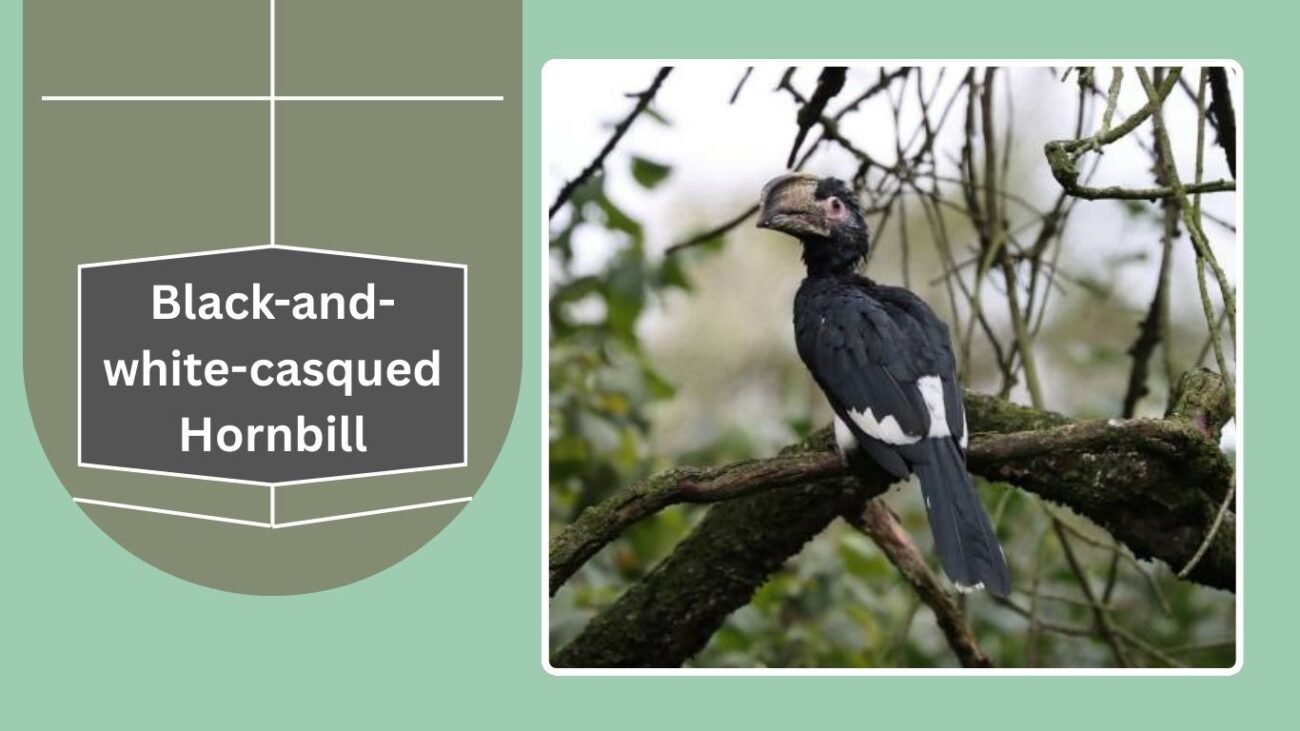
The Black-and-white-casqued Hornbill (Bycanistes subcylindricus) is a large and striking bird of African forests, easily recognized by its contrasting plumage and prominent casque. It is one of the biggest hornbills in Africa and plays a vital role in dispersing seeds across tropical ecosystems.
Identification
- Large bird, reaching 60–70 cm in length
- Distinctive black-and-white plumage: black head, back, and wings with a white belly and tail
- Massive black bill with a prominent whitish casque that arches over the upper mandible
- Males have larger casques compared to females
- Loud, cackling calls often heard before the bird is seen
Habitat
This species is mainly found in tropical and subtropical forests across Central and West Africa, including Uganda, Kenya, Democratic Republic of Congo, and surrounding regions. They prefer dense canopy forests and are often spotted high in the treetops.
Diet
Their diet is primarily frugivorous, consisting of figs and other fruits, but they also consume insects, small birds, and reptiles. They are important seed dispersers for large forest trees.
Behavior
Black-and-white-casqued Hornbills are social birds, often seen in pairs or small flocks. Their strong wingbeats create a distinctive whooshing sound as they fly. During breeding, females are sealed in tree cavities while the males provide food, a unique trait among hornbills.
8. Yellow-billed Hornbill
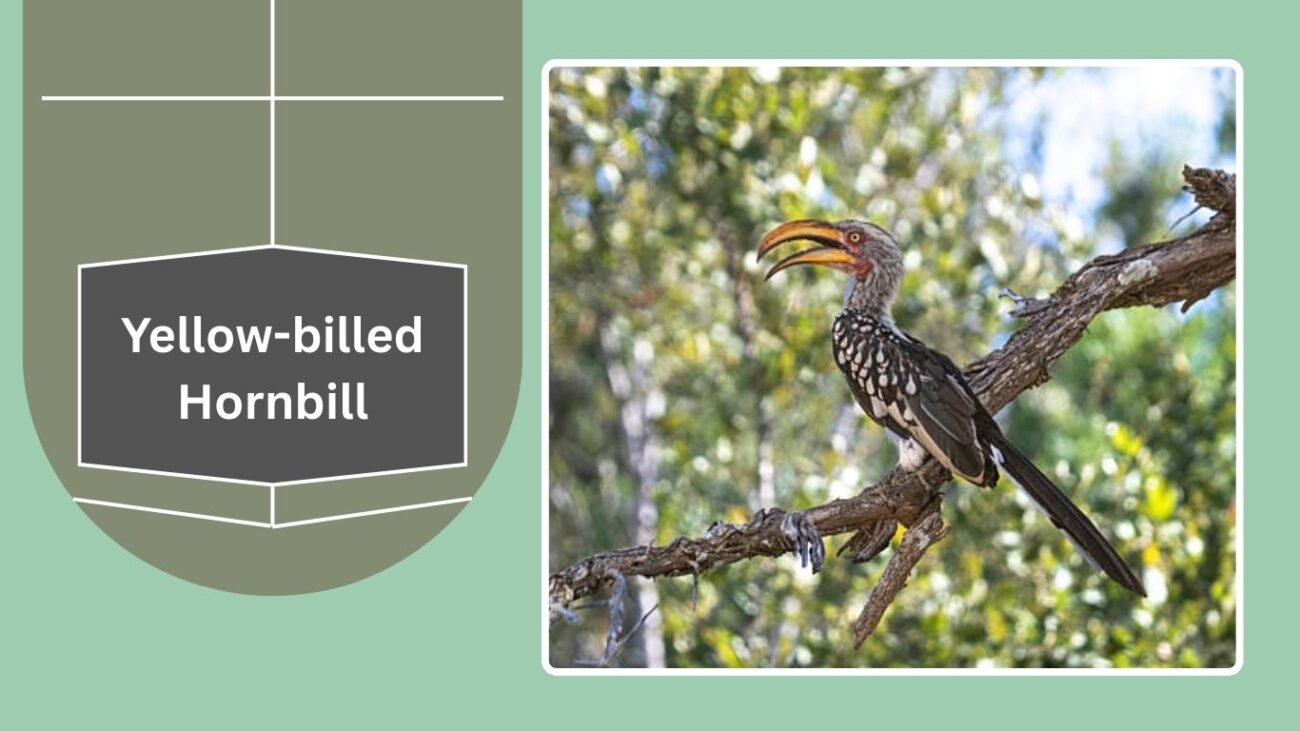
The Yellow-billed Hornbill (Tockus flavirostris / Tockus leucomelas, depending on the region) is a well-known African hornbill, easily recognized for its large, banana-shaped yellow bill. Often nicknamed the “flying banana,” it is a familiar sight in the savannas and woodlands of Southern and Eastern Africa.
Identification
- Medium-sized bird, about 48–60 cm in length
- Distinctively large yellow bill, slightly curved with no casque
- Black and white plumage with spotted wings and white belly
- Long tail with white outer feathers
- Males and females look alike, though males tend to have slightly larger bills
Habitat
Yellow-billed Hornbills thrive in dry savannas, acacia woodlands, and open scrublands across Southern Africa, including countries like Botswana, Namibia, Zimbabwe, and South Africa. They are often seen near human settlements and are well adapted to semi-arid environments.
Diet
They are omnivorous, feeding on insects, termites, beetles, grasshoppers, fruits, and seeds. During breeding, they may also take small vertebrates such as lizards.
Behavior
These hornbills are curious and often forage on the ground, sometimes following large mammals or human activity to catch disturbed insects. They are also famous for their unique nesting behavior: the female seals herself inside a tree cavity, leaving a slit through which the male passes food. Yellow-billed Hornbills are also popular in African folklore, often associated with rain and fertility.
9. Red-billed Hornbill
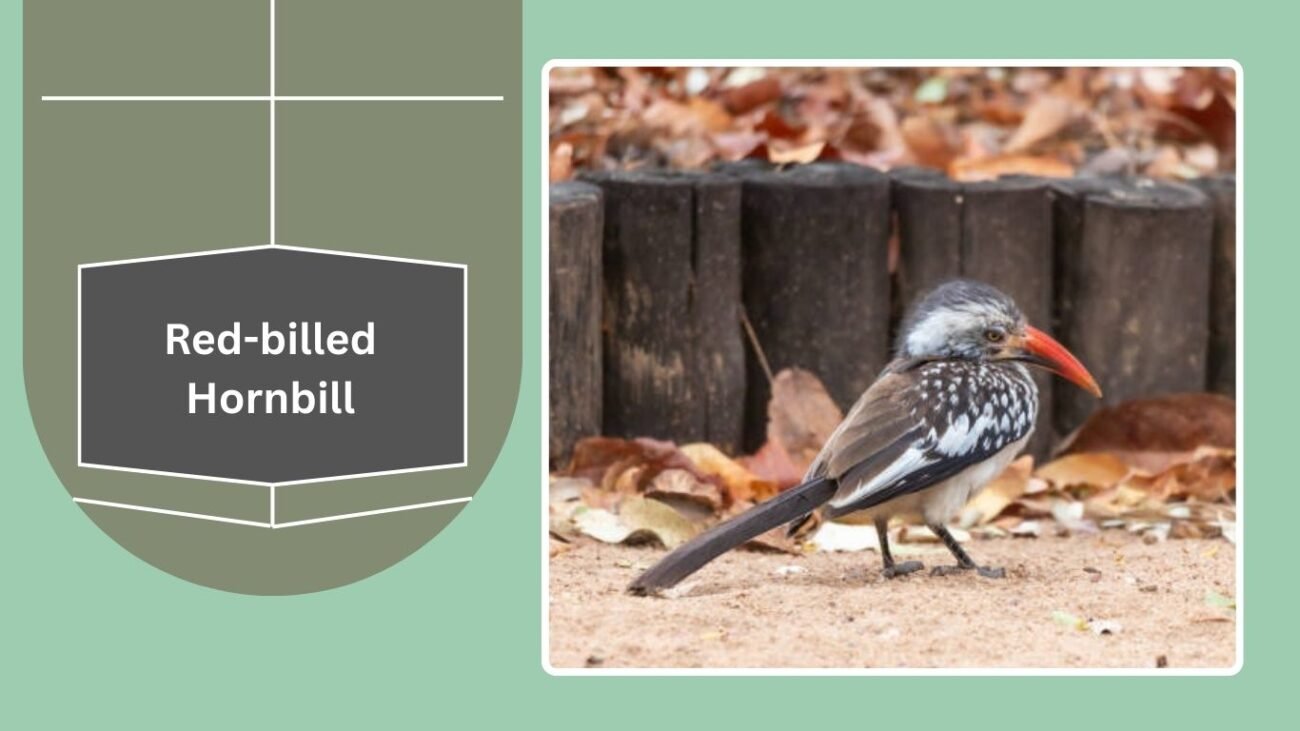
The Red-billed Hornbill (Tockus erythrorhynchus) is one of the most recognizable and widespread hornbills in Africa. With its slender red bill and lively personality, it is often seen foraging on the ground or perching in trees. This bird gained extra global attention as the inspiration for “Zazu” in Disney’s The Lion King.
Identification
- Medium-sized, around 42–50 cm in length
- Distinctive long, curved red bill without a casque
- Greyish-brown upperparts with white underparts
- White wing spots and long black tail with white outer feathers
- Males and females are similar, though males usually have slightly larger bills
Habitat
They are common across savannas, dry woodlands, and scrublands in East and Southern Africa, including Kenya, Tanzania, Botswana, Namibia, and South Africa. They are highly adaptable and often seen near villages and farmland.
Diet
Red-billed Hornbills are omnivorous, feeding on insects, grasshoppers, termites, beetles, fruits, seeds, and occasionally small reptiles. They frequently forage on the ground, walking with a distinctive bobbing motion.
Behavior
These hornbills are active and curious, often searching leaf litter and soil for insects. During breeding, the female seals herself in a tree cavity, relying on the male for food until the chicks are old enough to emerge. Their loud, clucking calls are a common sound in the African bush.
10. Malabar Pied Hornbill
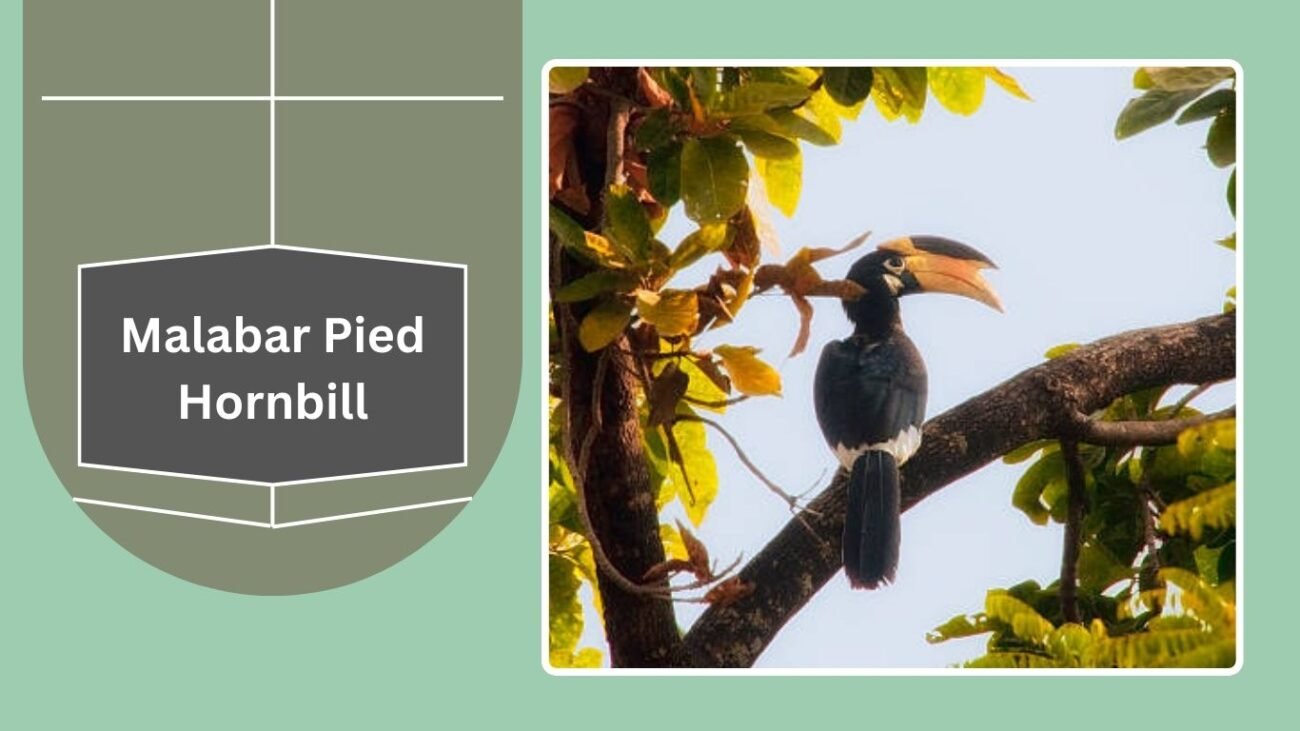
The Malabar Pied Hornbill (Anthracoceros coronatus) is a striking hornbill native to the Indian subcontinent. Known for its large casque and contrasting black-and-white plumage, it is often seen in dry forests and agricultural landscapes. This species plays a vital role in forest ecology as a major disperser of fig seeds.
Identification
- Medium to large bird, around 65–85 cm in length
- Glossy black plumage with white belly, tail tip, and wing edges
- Large yellow bill with a prominent black casque on top
- Casque is more developed in males than females
- White eyebrow stripe above the eye, adding to its distinctive look
Habitat
Malabar Pied Hornbills are found mainly in India and Sri Lanka, favoring dry deciduous forests, riverine forests, and even farmland with large fig trees. They are especially common in the Western Ghats and central Indian forests.
Diet
Their diet consists primarily of figs and other fruits, but they also feed on insects, small reptiles, and occasionally bird eggs. By dispersing seeds, they contribute to the regeneration of forest habitats.
Behavior
These hornbills are often seen in pairs or small groups. They have a loud, cackling call and strong wingbeats that make a whooshing sound in flight. Like other hornbills, the female seals herself into a tree cavity during nesting, with the male providing food until the chicks are ready to fledge.
11. Oriental Pied Hornbill
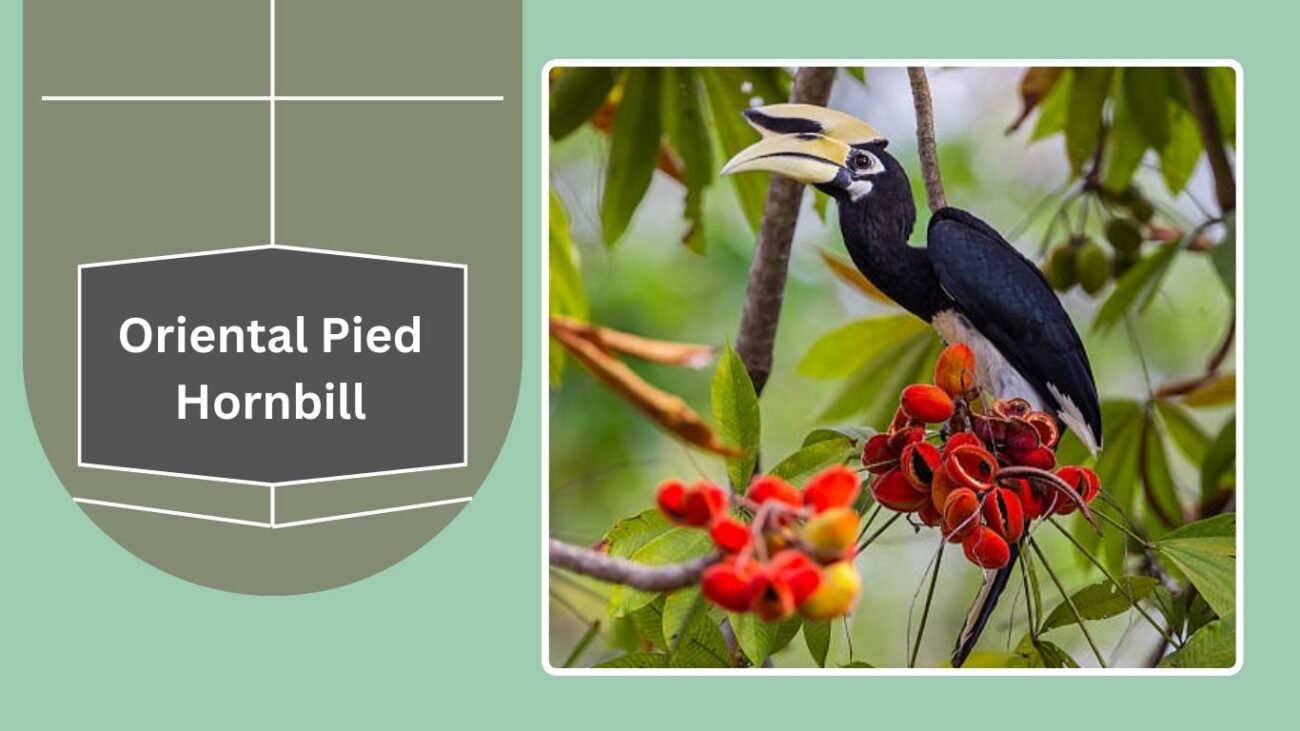
The Oriental Pied Hornbill (Anthracoceros albirostris) is one of the most adaptable and widely distributed hornbill species in Asia. Its striking appearance and tolerance to human presence make it a familiar sight in both wild forests and urban parks across its range.
Identification
- Medium-sized bird, measuring 55–70 cm in length
- Black body with white underparts, throat, and tail tips
- Large yellowish bill with a casque, often black at the base
- White patches on the wings and a distinctive white brow line
- Males have larger casques, while females are slightly smaller in size
Habitat
They inhabit a wide range of environments, including tropical and subtropical forests, mangroves, plantations, and even city parks. Their range extends across India, Nepal, Bhutan, Bangladesh, Myanmar, Thailand, Malaysia, Singapore, and parts of Indonesia.
Diet
Oriental Pied Hornbills are omnivorous, with fruits making up the bulk of their diet. They also feed on insects, lizards, and small birds. Their strong role in seed dispersal supports forest regeneration.
Behavior
This species is social and often found in pairs or small flocks. Their calls are loud and varied, including cackles, squawks, and screeches. They are strong fliers with noticeable wingbeats. During nesting, the female seals herself in a tree cavity, leaving only a slit through which the male passes food until the chicks are ready to emerge.
12. Indian Grey Hornbill
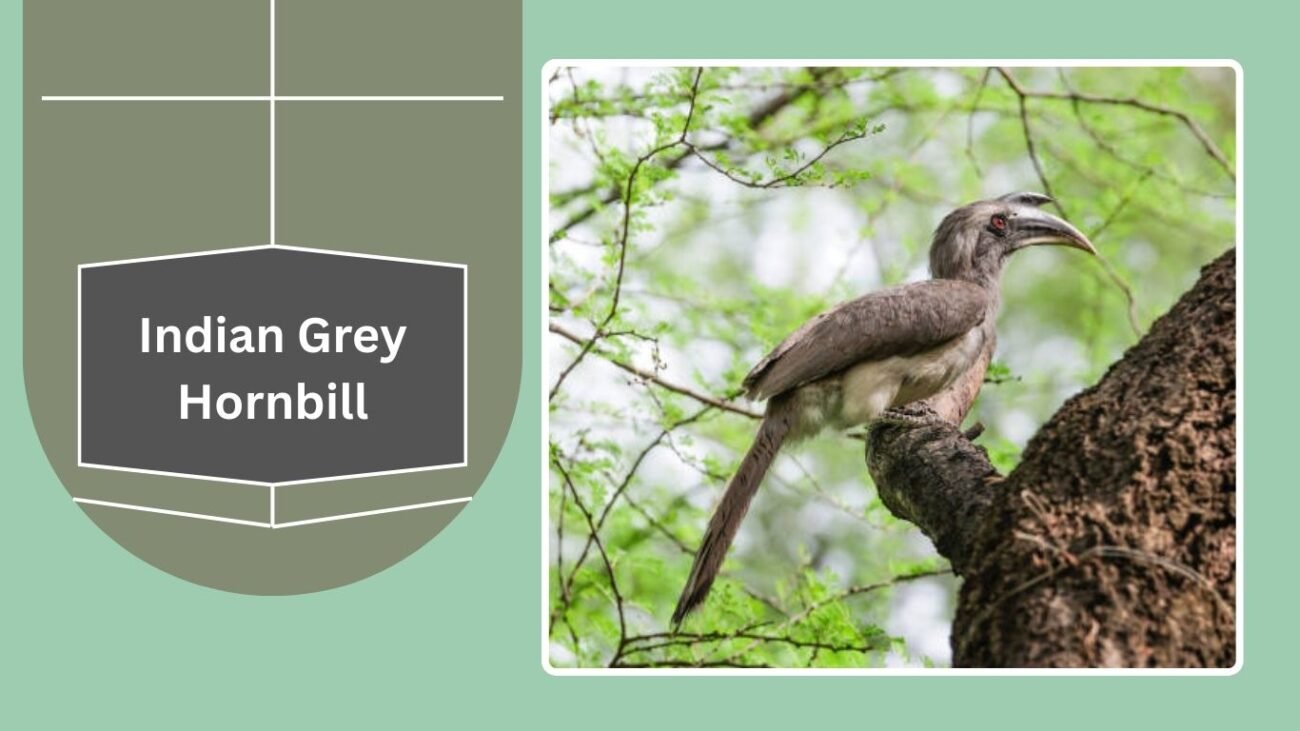
The Indian Grey Hornbill (Ocyceros birostris) is a common hornbill species across the Indian subcontinent. Unlike the colorful casqued hornbills, it has a more subdued grey appearance, making it well-camouflaged among trees. Despite its plainer look, it plays a crucial role in seed dispersal and is often spotted in both rural and urban landscapes.
Identification
- Medium-sized bird, about 55–60 cm in length
- Grey plumage with a lighter underside and pale grey throat
- Long, curved blackish-grey bill with a small casque
- White-tipped tail and conspicuous dark eye stripe
- Males generally larger with a more pronounced casque than females
Habitat
Indian Grey Hornbills are highly adaptable, inhabiting dry deciduous forests, riverine woodlands, orchards, and even city parks. They are found throughout India, Nepal, and Bangladesh, often close to human settlements.
Diet
They are primarily frugivorous, feeding on figs, berries, and other fruits, but also supplement their diet with insects, lizards, and small rodents. This combination makes them important seed dispersers in both wild and cultivated areas.
Behavior
These hornbills are often seen in pairs or small groups, flying noisily between trees with their heavy wingbeats. Their call is a loud, cackling series of notes. Like other hornbills, the female seals herself inside a tree cavity during nesting, relying on the male for food delivery until the chicks are ready to emerge.
13. White-crowned Hornbill
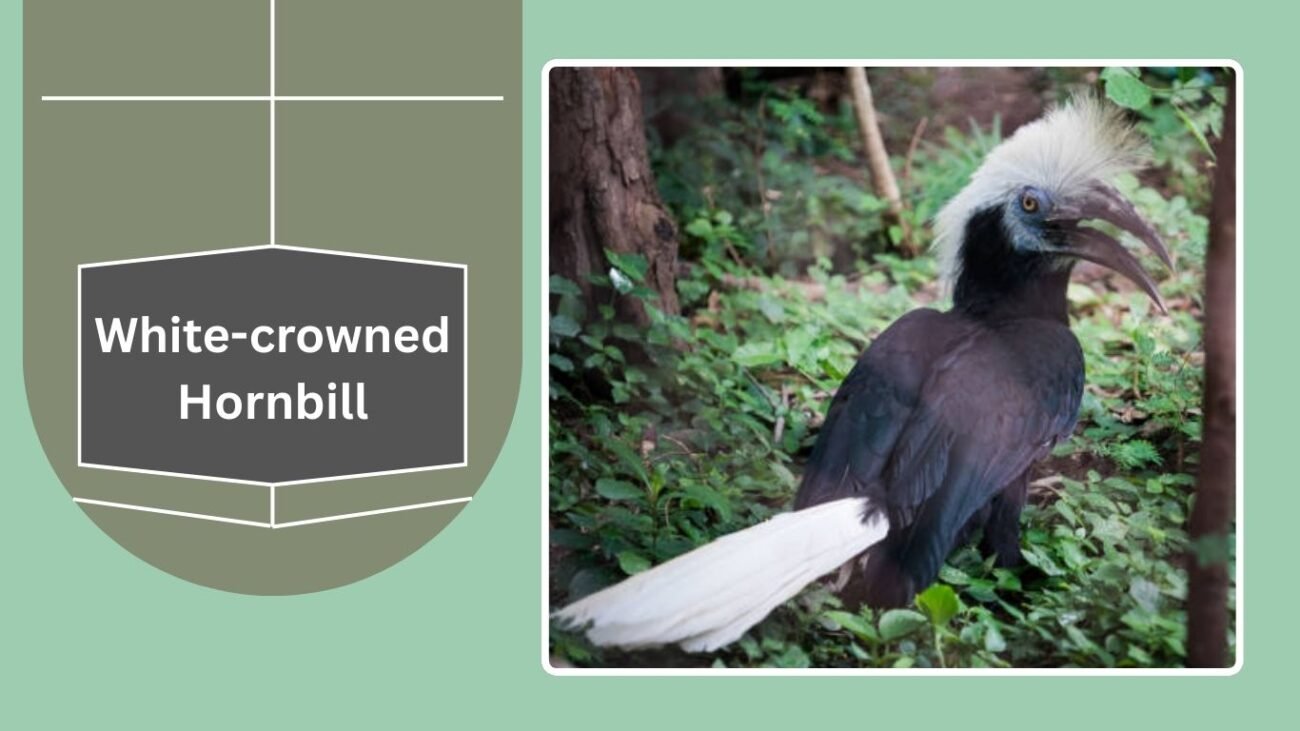
The White-crowned Hornbill (Berenicornis comatus) is a striking and rare hornbill species of Southeast Asia, easily recognized by its unique shaggy white crest. With its contrasting black-and-white plumage, it stands out in the dense tropical forests where it lives. Because of habitat destruction, this species has become vulnerable in parts of its range.
Identification
- Medium to large size, measuring 75–80 cm in length
- Distinctive long, shaggy white crest and white crown feathers
- Black body with white tail and underparts
- Yellowish to pale bill with a small casque
- Males are slightly larger than females, but both share similar plumage
Habitat
White-crowned Hornbills inhabit lowland and hill rainforests of Myanmar, Thailand, Malaysia, and Sumatra. They prefer undisturbed, mature forests with tall trees suitable for nesting.
Diet
Their diet is mixed, consisting of fruits, figs, insects, and small animals like lizards and frogs. They are important contributors to forest ecology by spreading seeds.
Behavior
These hornbills are more secretive than many others, often moving quietly through the forest canopy in pairs or small family groups. Their call is a series of loud, cackling notes. Like most hornbills, the female seals herself into a nest cavity during breeding, depending on the male to provide food until the chicks are ready to emerge.
14. Wrinkled Hornbill
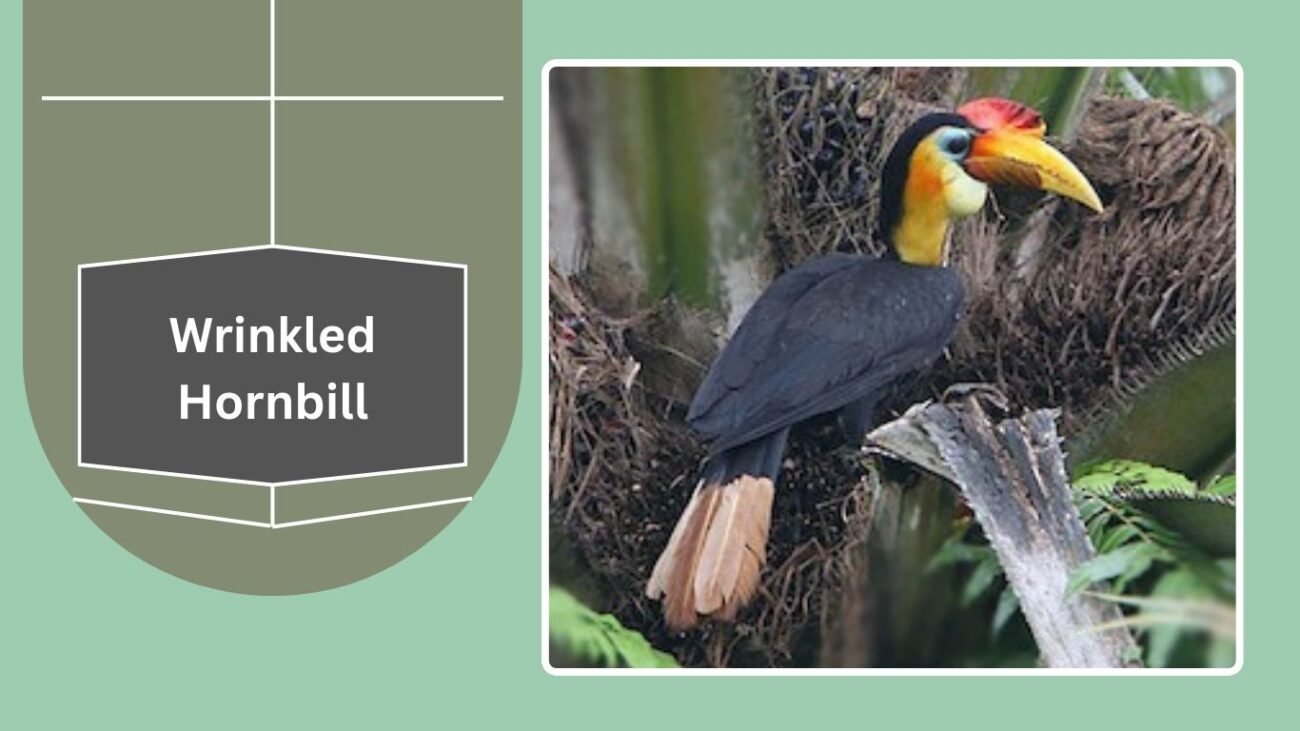
The Wrinkled Hornbill (Rhabdotorrhinus corrugatus) is a colorful and relatively rare hornbill species from Southeast Asia. Its name comes from the distinctive wrinkled casque and bill, which add to its unique appearance. Due to deforestation and habitat loss, it is classified as endangered in many parts of its range.
Identification
- Medium to large bird, measuring about 70–80 cm in length
- Glossy black body with white tail and underparts
- Large yellow bill with red and orange wrinkles on the casque
- Bare throat pouch: blue in males and yellow in females
- Striking facial features make it one of the more vividly marked hornbills
Habitat
This species inhabits tropical and subtropical lowland forests across southern Thailand, Peninsular Malaysia, Sumatra, and Borneo. They prefer mature forests with tall emergent trees for nesting and feeding.
Diet
Wrinkled Hornbills feed mainly on fruits, especially figs, but they also consume insects, small reptiles, and occasionally small mammals. Their role as seed dispersers is crucial for maintaining forest biodiversity.
Behavior
They are strong fliers, often moving in small flocks across the canopy. Their calls are harsh and loud, used to communicate while foraging. Like most hornbills, the female seals herself into a nest cavity, relying entirely on the male to provide food during incubation and chick rearing.
15. Bushy-crested Hornbill
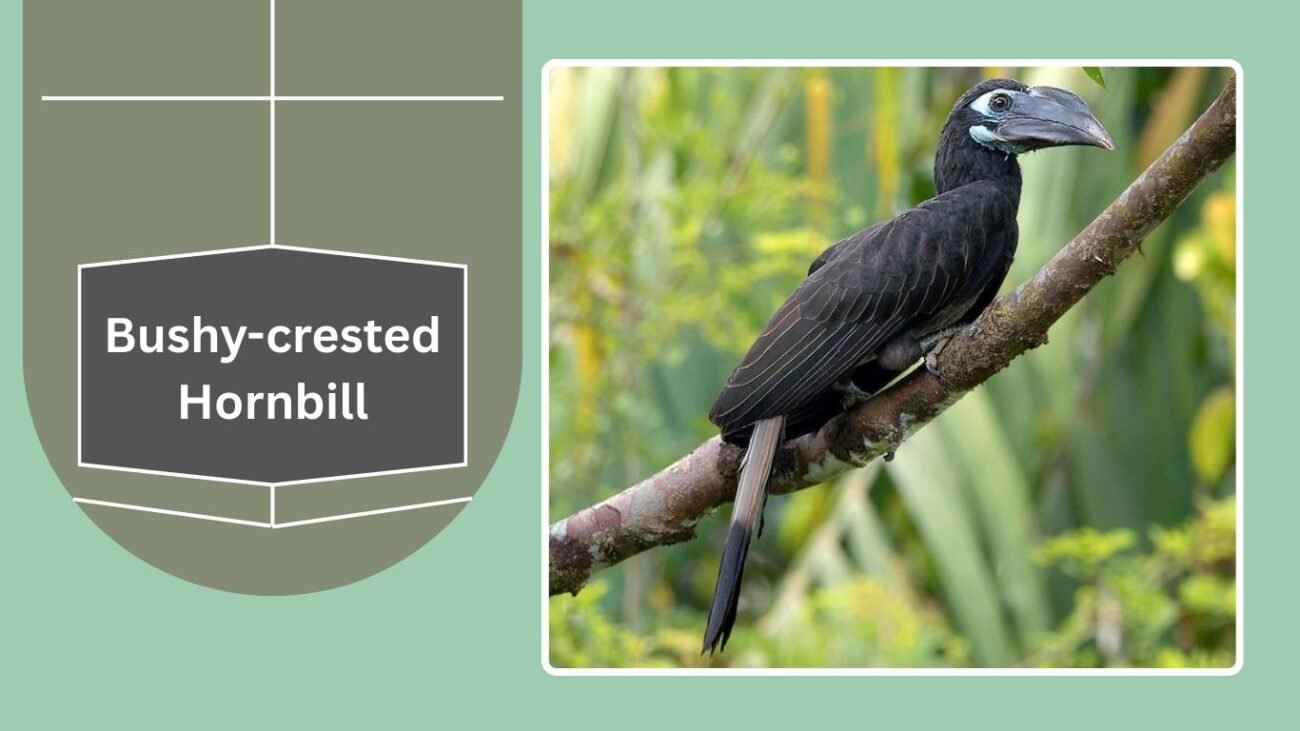
The Bushy-crested Hornbill (Anorrhinus galeritus) is a social hornbill species native to Southeast Asia. Unlike many hornbills that are often seen in pairs, this species is known for its cooperative breeding behavior and is usually found in noisy family groups.
Identification
- Medium-sized bird, about 60–65 cm in length
- Blackish plumage with a brownish tinge on the body
- Prominent bushy crest of feathers on the head, giving the species its name
- Pale yellow bill with a small casque that is less pronounced compared to larger hornbills
- Both sexes look similar, though males are slightly larger
Habitat
Bushy-crested Hornbills inhabit lowland and hill forests across Myanmar, Thailand, Malaysia, and parts of Borneo. They prefer dense, primary forests but can also be found in secondary growth.
Diet
Their diet consists mainly of fruits, particularly figs, but they also consume insects, small reptiles, and other invertebrates. Their fruit-eating habits make them valuable seed dispersers.
Behavior
These hornbills are unique for their cooperative breeding system: family groups work together to feed and protect chicks. They are noisy and active, producing a variety of calls and often flying in small flocks. Like other hornbills, females nest in sealed tree cavities, depending on group members for food during incubation.
16. Wreathed Hornbill
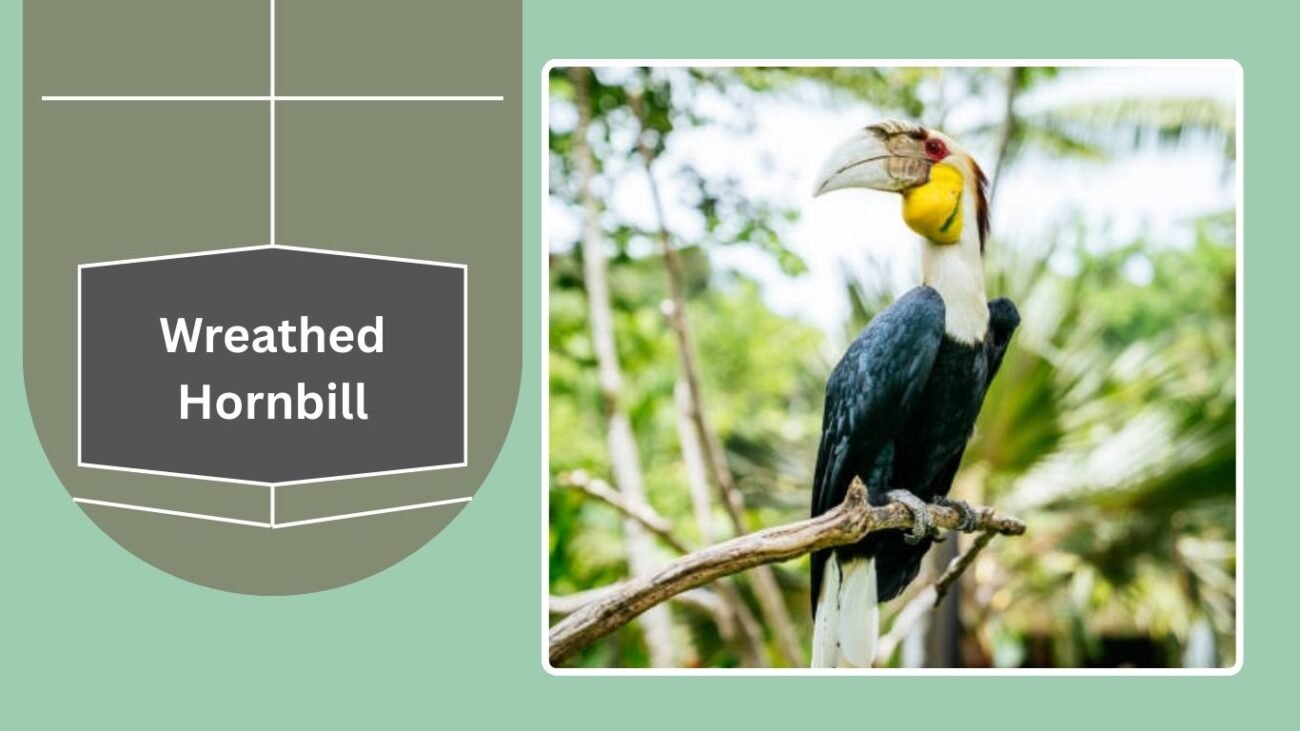
The Wreathed Hornbill (Rhyticeros undulatus) is a large and graceful hornbill native to South and Southeast Asia. It gets its name from the wreath-like ridges on the upper mandible of its bill. Known for its striking colors and strong flight, this species is an important seed disperser in tropical forests.
Identification
- Large bird, measuring 70–100 cm in length
- Glossy black plumage with white tail and underparts
- Long yellow bill with ridged markings (“wreaths”) along the upper mandible
- Bare throat pouch: blue in males, white in females
- Males generally larger with a more pronounced casque
Habitat
Wreathed Hornbills inhabit evergreen forests, hill forests, and riverine woodlands across Nepal, Bhutan, Northeast India, Myanmar, Thailand, Malaysia, and Indonesia. They prefer tall, undisturbed forests with large nesting trees.
Diet
Their diet is primarily frugivorous, with figs and other forest fruits making up the bulk. They also feed on insects, lizards, small mammals, and birds, making them vital to forest ecosystems as dispersers of large seeds.
Behavior
These hornbills are strong fliers, often traveling in small flocks across long distances to find food. Their wingbeats produce a loud, rushing sound in flight. During breeding, females are sealed inside a tree cavity, relying on the male to supply food until the chicks are ready to emerge.
17. Knobbed Hornbill
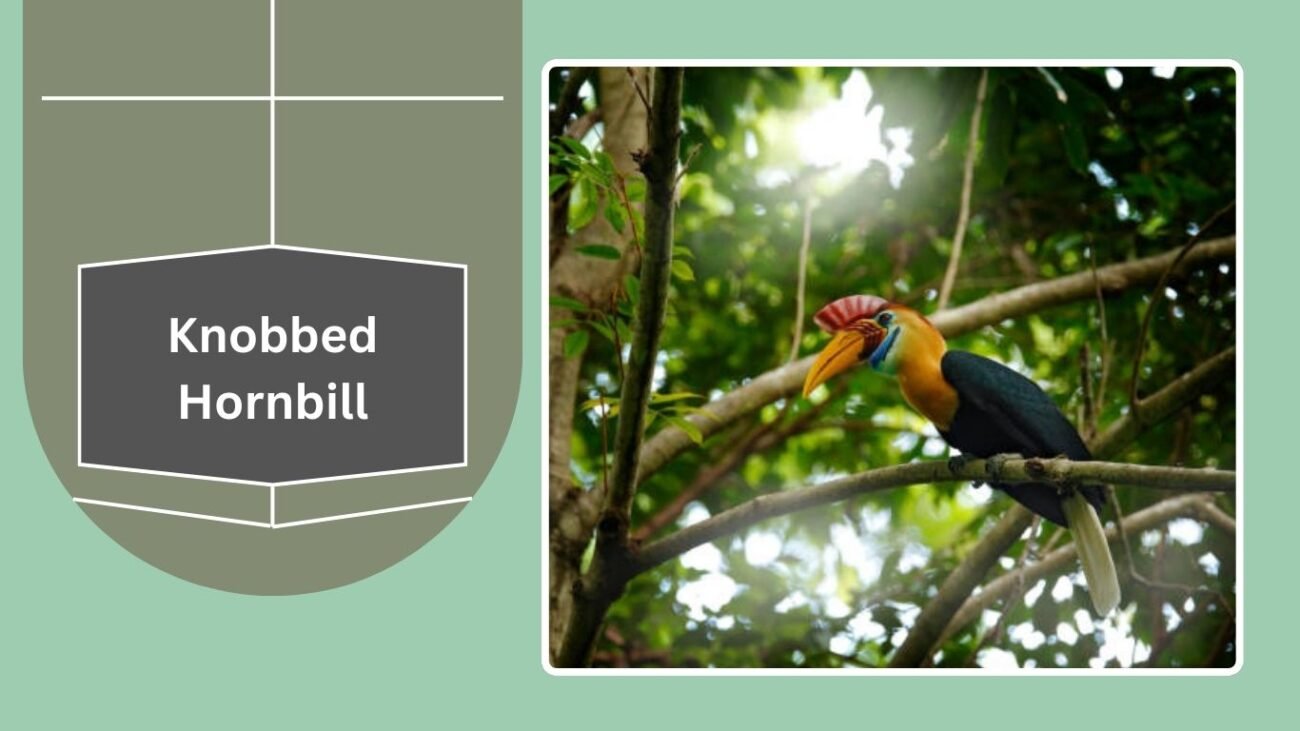
The Knobbed Hornbill (Rhyticeros cassidix), also known as the Sulawesi Wrinkled Hornbill, is an endemic species found only in Sulawesi and nearby Indonesian islands. Its most distinctive feature is the bright, reddish casque with a noticeable “knob,” which gives the bird its name.
Identification
- Large hornbill, about 80–90 cm in length
- Glossy black body with white tail tipped in black
- Large yellow bill topped with a reddish-orange casque that has a knob-like shape
- Bare throat pouch: bright blue in males and pale blue to white in females
- Males are larger with more vibrant casque colors than females
Habitat
This hornbill inhabits lowland and montane forests of Sulawesi, Buton, and nearby islands. It prefers tall, dense forests where large trees provide suitable nesting cavities.
Diet
Primarily frugivorous, feeding on figs and other forest fruits, but also eats insects, small birds, and reptiles. As with many hornbills, it is a vital seed disperser in its ecosystem.
Behavior
Knobbed Hornbills are monogamous and follow the typical hornbill nesting behavior: females are sealed in a tree cavity and depend on males for food. They are strong fliers with loud wingbeats and often travel long distances in search of fruiting trees. In local culture, they are considered symbols of fertility and prosperity.
18. Blyth’s Hornbill
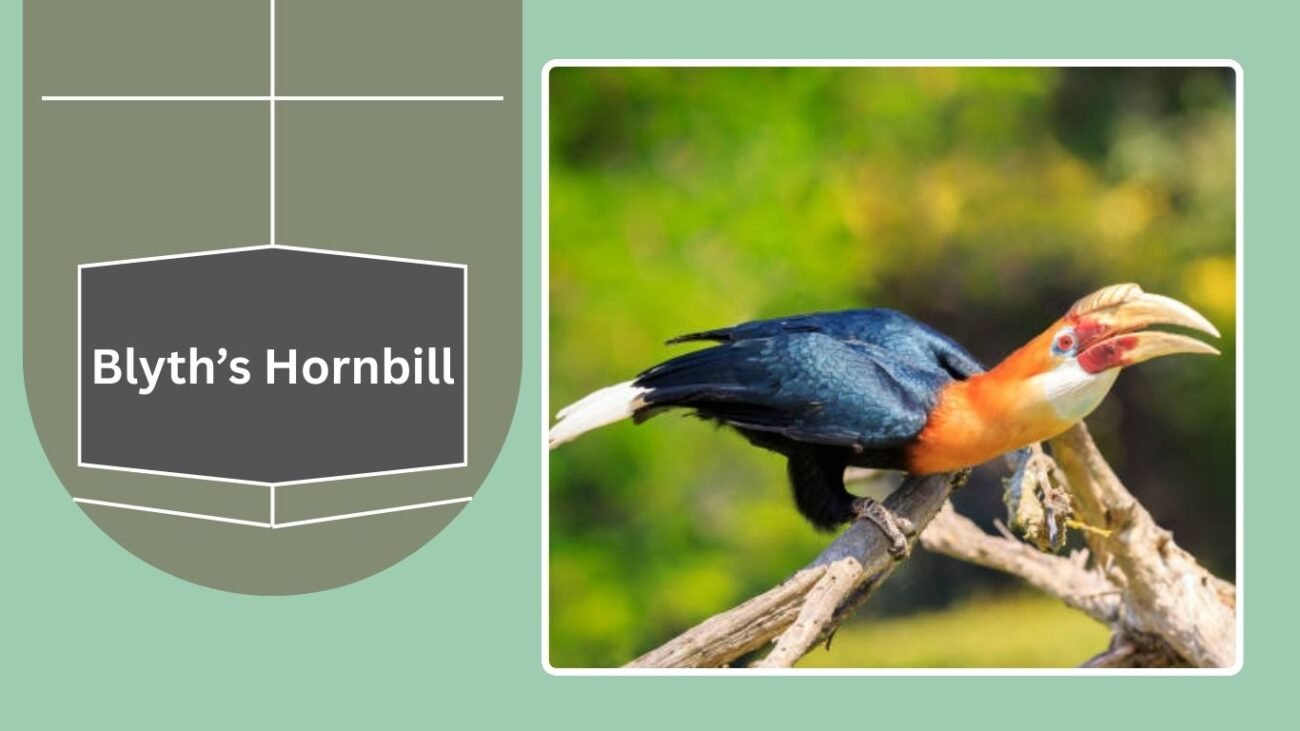
Blyth’s Hornbill (Rhyticeros plicatus), also known as the Papuan Hornbill, is a large and impressive bird native to New Guinea and nearby islands. It is named after the English zoologist Edward Blyth. This species is vital to rainforest health, as it disperses seeds of many large fruiting trees.
Identification
- Large bird, measuring 75–90 cm in length
- Glossy black plumage with white tail and undertail coverts
- Long, pale yellow bill with a casque that develops grooves with age
- Males have reddish-brown head and neck with blue throat pouch
- Females are entirely black with a white throat and blue facial skin
Habitat
Blyth’s Hornbills are found in lowland and montane rainforests of New Guinea, Bismarck Archipelago, and the Solomon Islands. They prefer tall, dense forests with mature trees suitable for nesting.
Diet
They primarily feed on figs and other fruits but also consume insects, small reptiles, and occasionally small mammals. Their fruit-heavy diet makes them critical seed dispersers for tropical forest regeneration.
Behavior
These hornbills are strong and noisy fliers, often traveling in small groups. Their wingbeats produce a characteristic rushing sound. During nesting, the female seals herself into a tree cavity, relying on the male to bring food. They are culturally significant to many Papuan tribes, often featured in traditional rituals and art.
19. Sulawesi Hornbill
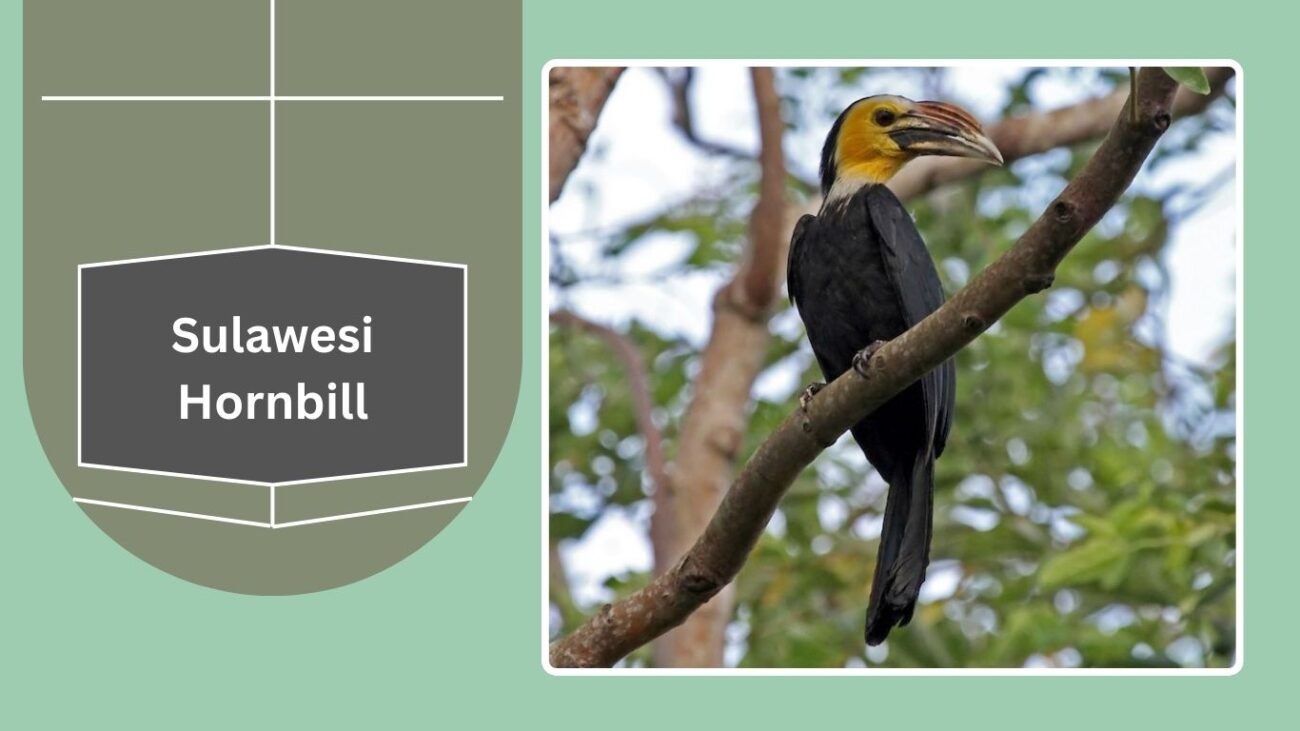
The Sulawesi Hornbill (Rhabdotorrhinus exarhatus), also called the Sulawesi Dwarf Hornbill, is an endemic species found only on Sulawesi and nearby Indonesian islands. Smaller and less conspicuous than many other hornbills, it plays an important role in the ecology of Sulawesi’s forests.
Identification
- Medium-sized bird, about 45–55 cm in length
- Black plumage with a white tail and undertail coverts
- Yellowish bill with a small casque
- Bare throat skin: blue in males and pale or bluish-white in females
- Sexual dimorphism is noticeable: males have black heads while females have rufous-brown heads and necks
Habitat
Sulawesi Hornbills inhabit lowland and montane forests, often found up to 1,500 meters above sea level. They prefer dense, humid forests but can sometimes be seen near forest edges and secondary growth.
Diet
Their diet is primarily frugivorous, relying heavily on figs and other fruiting trees. They also consume insects, small vertebrates, and other invertebrates when available.
Behavior
This species is social and often seen in pairs or small flocks. They are cooperative breeders, with non-breeding individuals helping to raise chicks. Females nest in tree cavities sealed with mud, relying on males and helpers to supply food during incubation. Because of deforestation, their population has been declining, and they are now considered vulnerable.
20. Palawan Hornbill
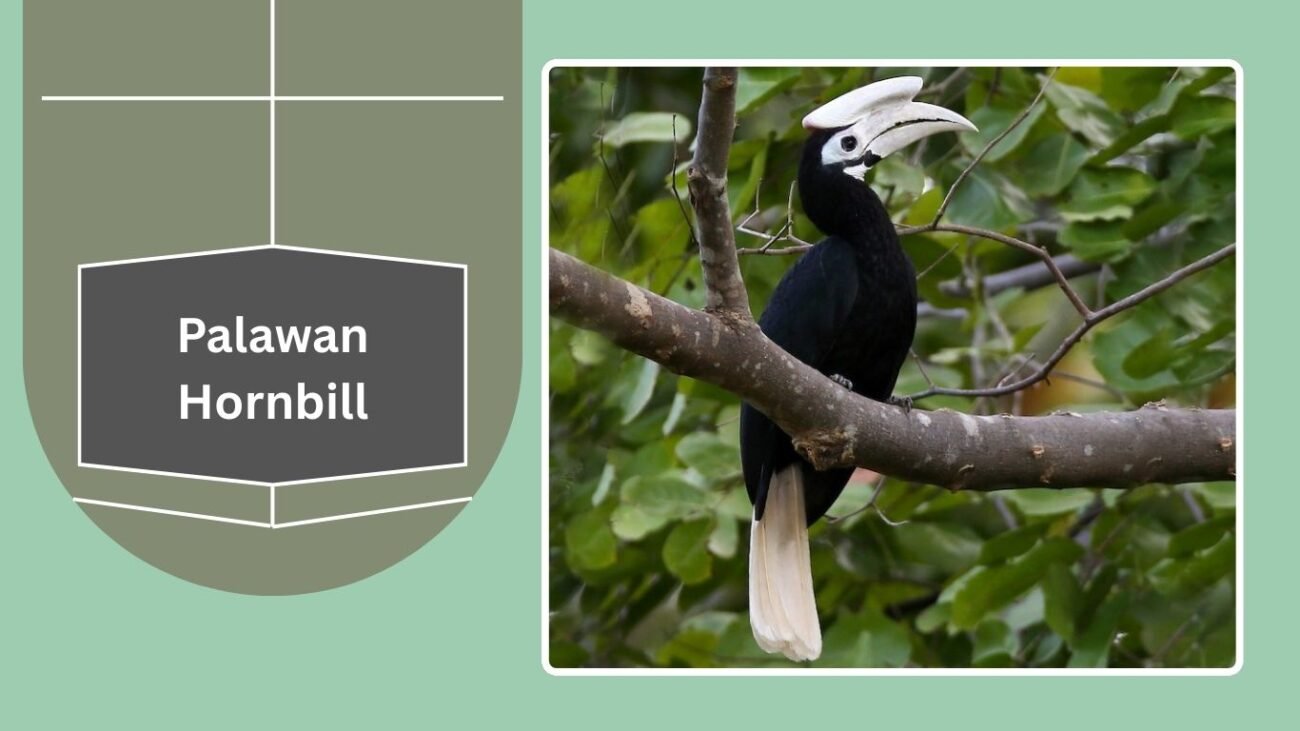
The Palawan Hornbill (Anthracoceros marchei), also known as the Talusi, is an endemic species found only on Palawan and nearby islands in the Philippines. It is a vulnerable bird due to habitat destruction and hunting, but it remains a cultural symbol of Palawan’s rich biodiversity.
Identification
- Medium-sized bird, about 70 cm in length
- Predominantly black plumage with white tail and undertail coverts
- Large pale yellow bill with a modest casque
- White throat and belly create a strong contrast with the glossy black body
- Males usually larger than females, though plumage is similar in both sexes
Habitat
The Palawan Hornbill inhabits primary and secondary forests, mangroves, and forest edges of Palawan and its satellite islands. It prefers tall trees for nesting and is often spotted flying across forest canopies or perched in fruiting trees.
Diet
It is mainly frugivorous, feeding heavily on figs and other fruiting trees. However, it also eats insects, small lizards, and other invertebrates, particularly during the breeding season.
Behavior
Palawan Hornbills are often seen in pairs or small groups, producing loud, cackling calls as they fly. During breeding, females seal themselves inside tree cavities, depending on males for food delivery. Due to habitat loss from logging and land conversion, the species is classified as Vulnerable by the IUCN.
21. Rufous-necked Hornbill
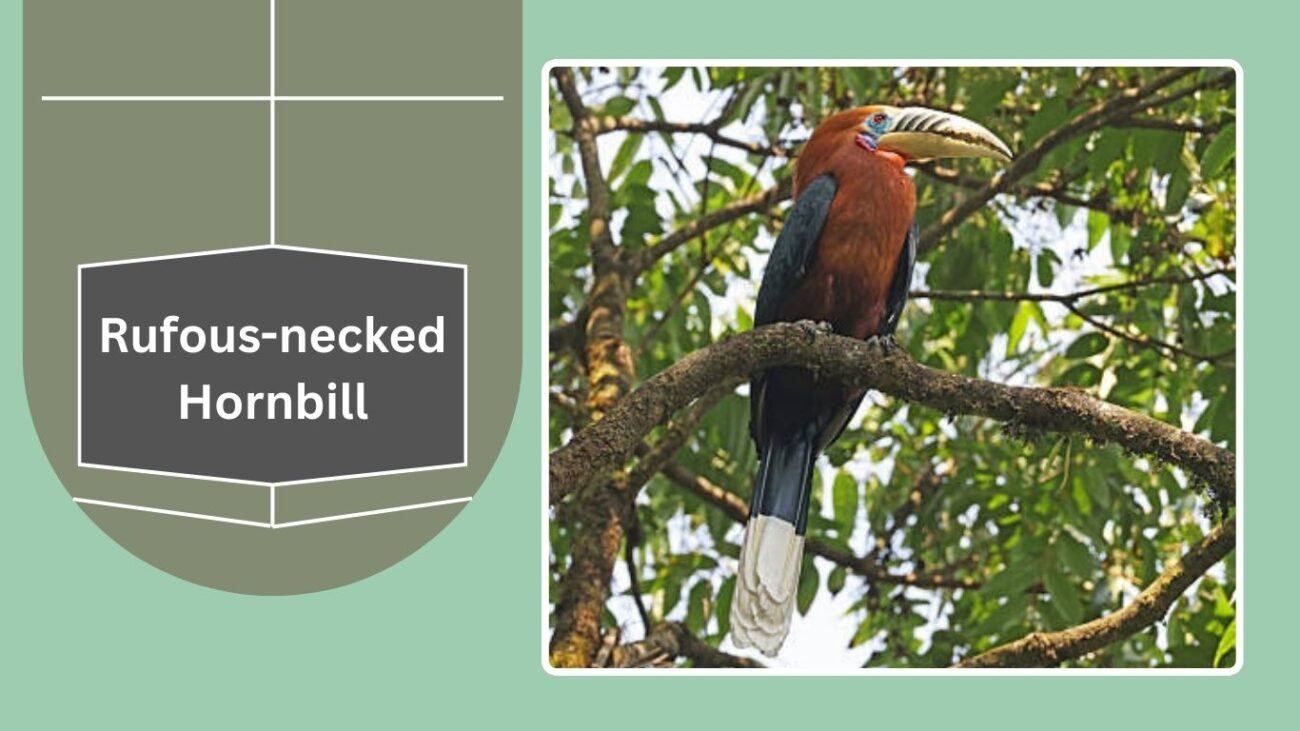
The Rufous-necked Hornbill (Aceros nipalensis) is one of the rarest and most beautiful hornbills of Asia, recognized for its striking rufous-colored head and neck. It is considered globally Vulnerable due to habitat loss and hunting. This species is culturally significant in Northeast India and is often regarded as a bird of prestige and protection.
Identification
- Large bird, measuring 95–120 cm in length
- Rufous or chestnut-colored head, neck, and underparts
- Glossy black body and wings with white tail tipped in black
- Large yellow bill with a casque, grooved in mature males
- Sexual dimorphism: males have rufous plumage, while females are mostly black with a white throat
Habitat
This hornbill inhabits evergreen and semi-evergreen forests of Northeast India, Bhutan, Myanmar, and western Thailand. They prefer dense, mature forests in hilly and mountainous regions, usually at elevations of 500–2,000 meters.
Diet
Their diet is largely frugivorous, focusing on figs and other forest fruits. They also consume insects, small reptiles, and occasionally bird eggs. Their seed dispersal role is vital for the survival of many tree species.
Behavior
Rufous-necked Hornbills are often seen flying in pairs or small groups. Their wingbeats produce a strong whooshing sound, and their calls are loud and resonant. During nesting, females remain sealed inside tree cavities, depending on males for food. They are shy and elusive, making sightings in the wild particularly special.
22. Sumba Hornbill
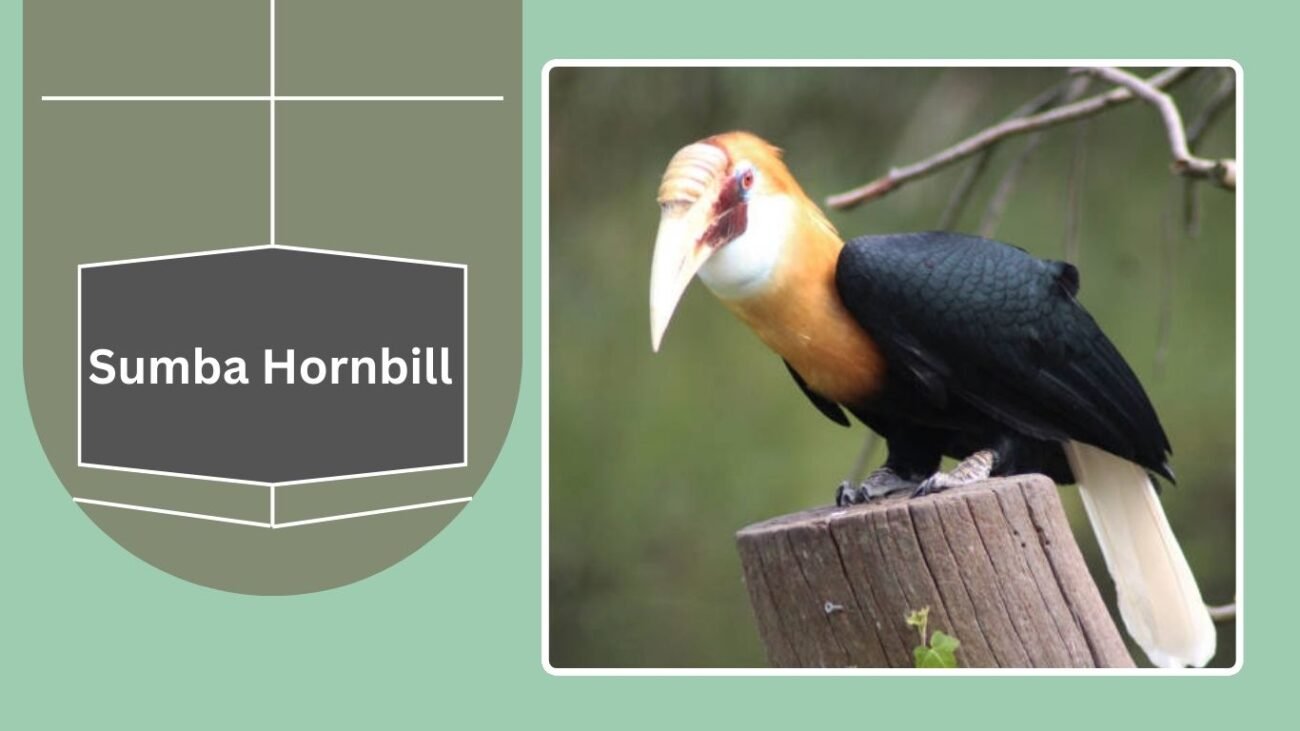
The Sumba Hornbill (Rhyticeros everetti), also known as Everett’s Hornbill, is a rare species found only on the island of Sumba in Indonesia. Its limited range makes it especially vulnerable to deforestation, and it is currently listed as Endangered.
Identification
- Medium to large bird, about 70–80 cm in length
- Glossy black plumage with white tail feathers tipped in black
- Large yellowish bill with a casque, less pronounced than in some larger hornbills
- Bare facial and throat skin is bluish in males and pale in females
- Males have rufous-colored heads and necks, while females are mostly black with a white throat
Habitat
This hornbill is endemic to Sumba Island in Indonesia. It inhabits tropical and subtropical lowland forests, particularly in areas with tall emergent trees suitable for nesting.
Diet
Sumba Hornbills feed primarily on figs and other fruits but also eat insects, small reptiles, and invertebrates. Their frugivorous habits make them important seed dispersers for maintaining the island’s forest ecosystems.
Behavior
They are social birds, usually seen in pairs or small family groups. Their wingbeats are strong and noisy, and their calls are loud, echoing across the forest canopy. Like most hornbills, the female seals herself in a nesting cavity, relying on the male to provide food until the chicks fledge.
23. Mindoro Hornbill
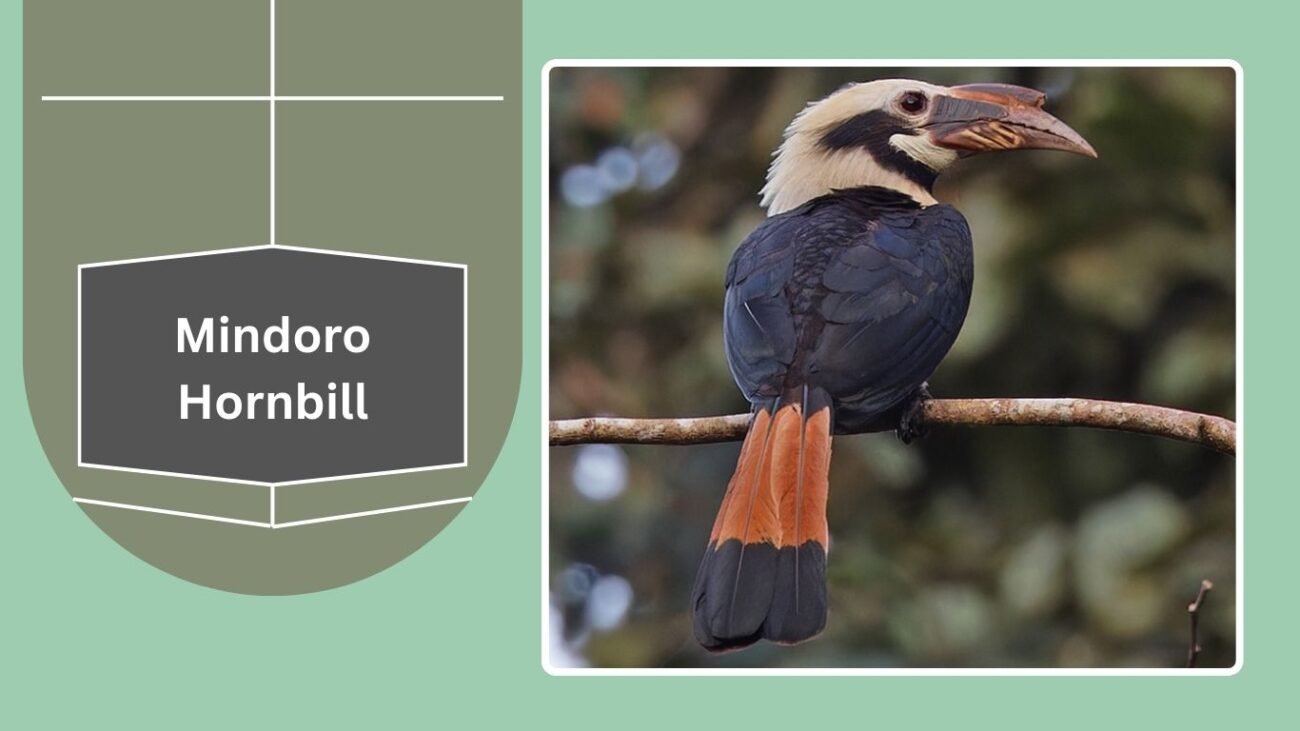
The Mindoro Hornbill (Penelopides mindorensis) is an endemic species found only on the island of Mindoro in the Philippines. Its restricted range and continuing habitat loss have made it an Endangered bird, highly dependent on forest conservation efforts for survival.
Identification
- Small to medium-sized hornbill, about 45–55 cm in length
- Black plumage on the back and wings with a white belly and tail
- Pale yellowish bill with a small casque
- Bare facial skin: bluish in both sexes
- Sexual dimorphism: males have cream-colored throats and white faces, while females are mostly black with a paler throat
Habitat
This hornbill inhabits tropical moist lowland forests of Mindoro Island. It prefers dense forest interiors with tall trees for feeding and nesting. Its survival is tightly linked to the preservation of Mindoro’s remaining forests.
Diet
The Mindoro Hornbill feeds mainly on figs and other fruits but also consumes insects, small reptiles, and invertebrates. Its feeding behavior helps maintain healthy forest ecosystems through seed dispersal.
Behavior
They are usually seen in pairs or small groups, flying between fruiting trees. Their calls are loud, nasal notes often heard before the bird is seen. Like other hornbills, females are sealed into tree cavities during nesting, relying on males to bring food until the chicks are ready to fledge.
24. Visayan Hornbill
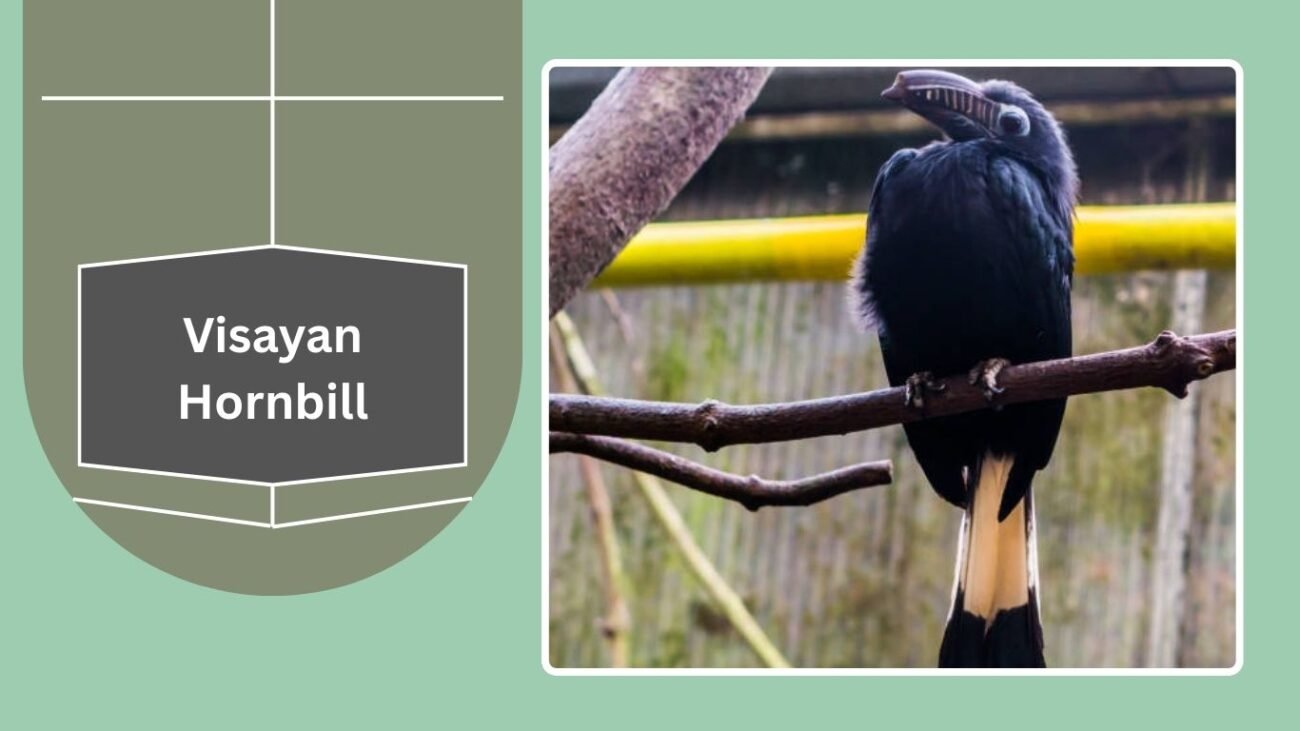
The Visayan Hornbill (Penelopides panini) is a rare and endangered hornbill found only in the Visayan Islands of the Philippines. It is highly threatened due to deforestation and hunting, with small populations surviving mainly on Negros and Panay islands.
Identification
- Small to medium-sized hornbill, about 45–55 cm in length
- Black wings and back with white underparts and tail
- Pale yellow bill with a small casque
- Bare facial skin: bluish in both sexes
- Sexual dimorphism: males have a cream-colored throat and white face, while females are mostly black with paler underparts
Habitat
This hornbill inhabits tropical lowland rainforests, particularly mature and secondary forests on the Visayan islands. It requires tall trees for nesting and is rarely seen outside forested areas.
Diet
Its diet consists mainly of figs and other fruits, but it also eats insects, small vertebrates, and other invertebrates. By dispersing seeds, it contributes significantly to forest regeneration.
Behavior
Visayan Hornbills are typically seen in pairs or small family groups, moving actively through the forest canopy. Their calls are nasal and cackling, often heard from a distance. During breeding, females remain sealed inside nest cavities, depending on males for food delivery until the chicks are ready to leave the nest.
25. Walden’s Hornbill
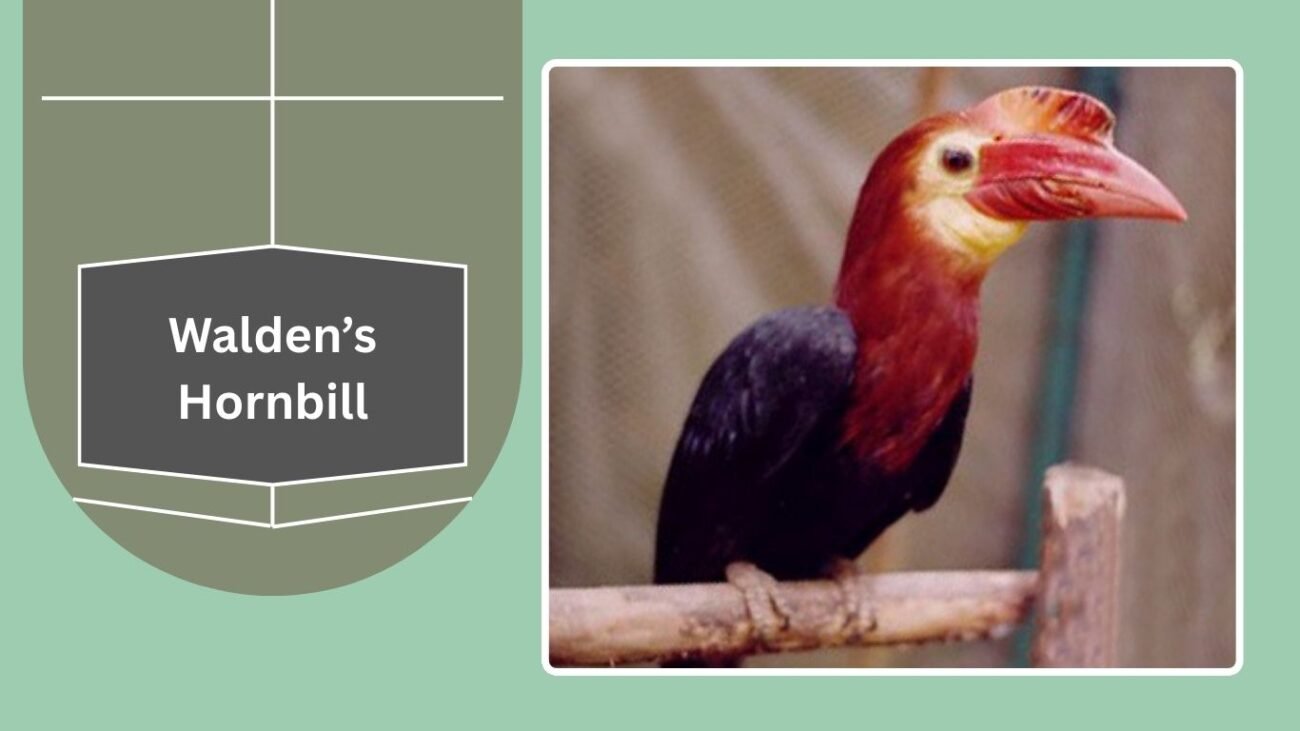
Walden’s Hornbill (Rhabdotorrhinus waldeni), also known as the Rufous-headed Hornbill or Visayan Wrinkled Hornbill, is one of the rarest and most critically endangered hornbills in the world. Endemic to the Philippines, it is found only in small populations on Negros and Panay islands.
Identification
- Large hornbill, measuring about 60–70 cm in length
- Rufous or chestnut-colored head and neck with a glossy black body
- Large yellow bill topped with a reddish casque
- Bare facial and throat skin is blue in both sexes
- Males and females differ slightly: males have more vibrant head coloration, while females appear darker overall
Habitat
Walden’s Hornbills inhabit primary lowland forests on Negros and Panay. They rely heavily on tall, mature trees for nesting and feeding, making them highly vulnerable to deforestation and logging.
Diet
They feed mainly on figs and other fruits but also consume insects, small reptiles, and invertebrates. Their fruit-based diet plays a critical role in dispersing seeds that maintain forest diversity.
Behavior
These hornbills are typically seen in pairs or small groups, flying powerfully across forest gaps. Their calls are loud and cackling. As with other hornbills, the female seals herself inside a nesting cavity during breeding, while the male provides food. Because of hunting and habitat loss, their numbers have declined drastically, and urgent conservation measures are needed to ensure their survival.