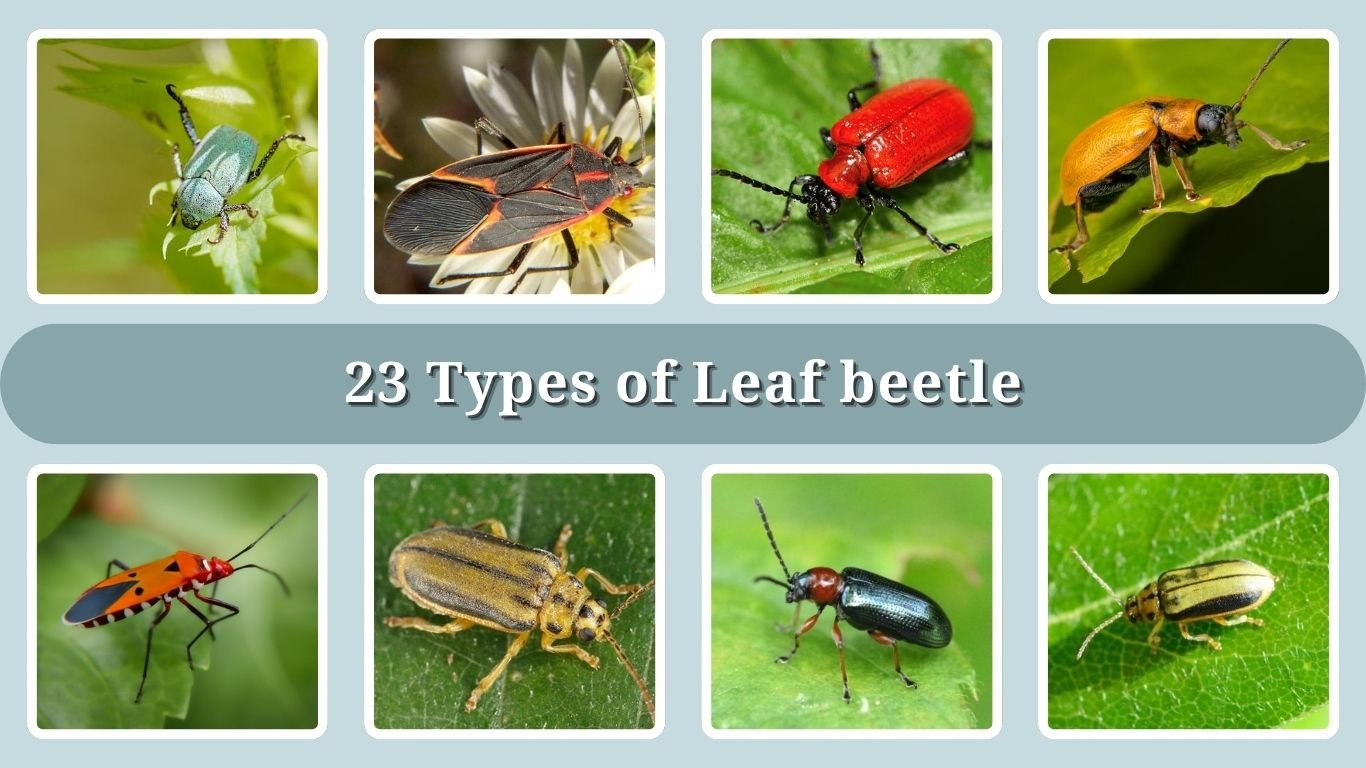
Leaf beetles are a diverse group of insects that feed on the foliage of various plants, including crops, trees, and ornamentals. With over 35,000 species worldwide, they vary widely in appearance, behavior, and impact on plants. Some are minor pests, while others can cause significant damage to agriculture and gardens. This guide highlights 23 common leaf beetle species, providing detailed information on their identification, habitat, behavior, and diet for easy recognition and management.
1. Colorado Potato Beetle
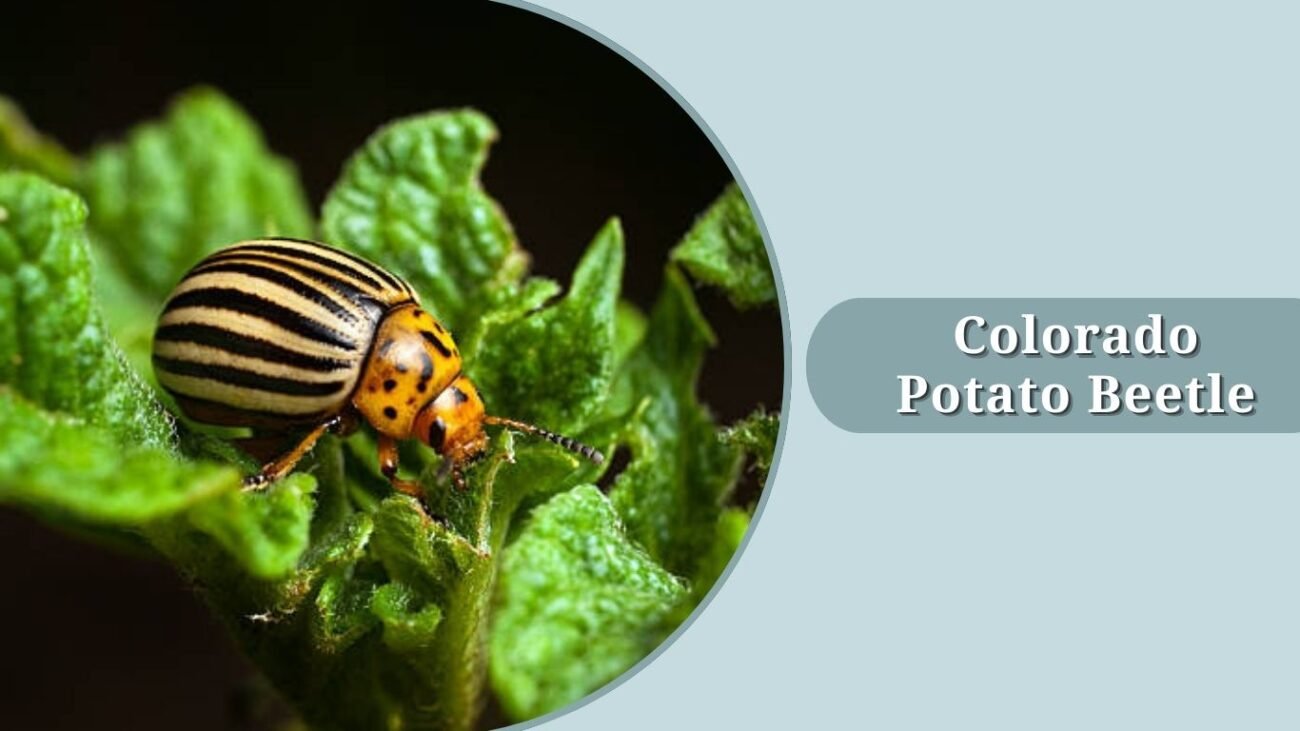
The Colorado Potato Beetle (Leptinotarsa decemlineata) is a notorious pest primarily affecting potato crops but can also feed on other plants in the nightshade family. Recognized for its striking yellow-orange body with black stripes, this beetle can cause significant damage to foliage, leading to reduced crop yields. Native to North America, it has spread globally due to its adaptability and rapid reproduction.
Identification
- Oval-shaped beetle with bright yellow-orange elytra (wing covers) featuring 10 distinct black stripes.
- Adults are about 10 mm long.
- Larvae are reddish with black spots along their sides.
- Antennae are short and slightly clubbed.
Habitat
Colorado Potato Beetles thrive in agricultural fields, especially where potatoes, tomatoes, and eggplants grow. They prefer warm climates and are commonly found across North America and Europe.
Behavior
These beetles feed voraciously on leaves, often defoliating entire plants. They reproduce rapidly, laying clusters of bright yellow eggs on the undersides of leaves. Adults overwinter in soil near crop fields and emerge in spring to restart their lifecycle.
Diet
The primary diet consists of foliage from potato plants, though they will also feed on other solanaceous crops like tomatoes, eggplants, and peppers. Both adults and larvae are leaf eaters.
2. Cereal Leaf Beetle
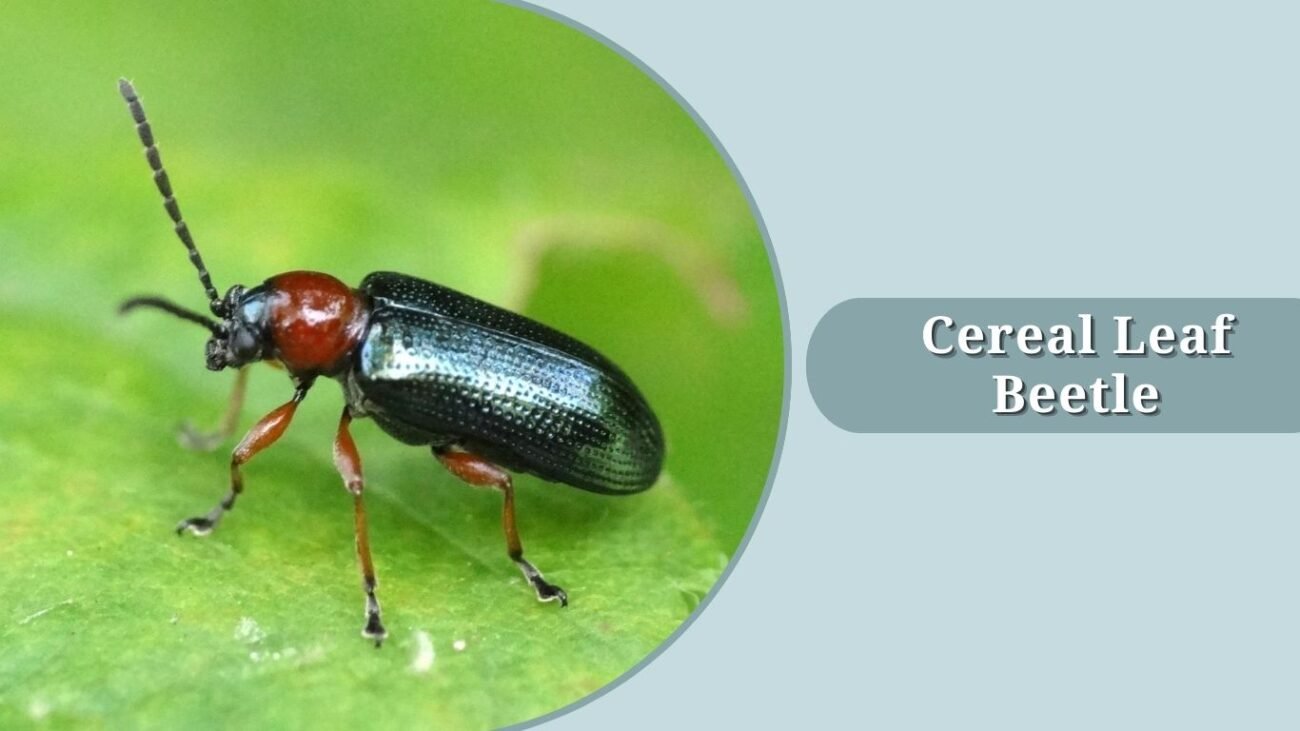
The Cereal Leaf Beetle (Oulema melanopus) is a significant pest of cereal crops such as wheat, oats, barley, and rye. Both larvae and adults feed on the leaves, causing characteristic striping damage that can reduce photosynthesis and crop yields. Originally from Europe, this beetle has become widespread in North America and continues to impact cereal production.
Identification
- Adults are slender, metallic blue-black with reddish-orange thorax.
- Approximately 6–7 mm long.
- Larvae are yellowish with a black head and often covered with a slimy, dark coating.
- Legs are short and adapted for crawling on leaves.
Habitat
Cereal Leaf Beetles prefer cereal crop fields, grasslands, and areas with abundant host plants. They are commonly found across temperate regions of North America and Europe.
Behavior
Adults feed on the upper surface of leaves, leaving narrow, parallel strips. Larvae consume leaf tissue between veins, creating a “windowpane” effect. They overwinter in soil and emerge in spring to lay eggs on young cereal plants.
Diet
They feed primarily on leaves of wheat, barley, oats, and rye. Both adults and larvae target foliage, reducing plant growth and yield.
3. Spotted Cucumber Beetle
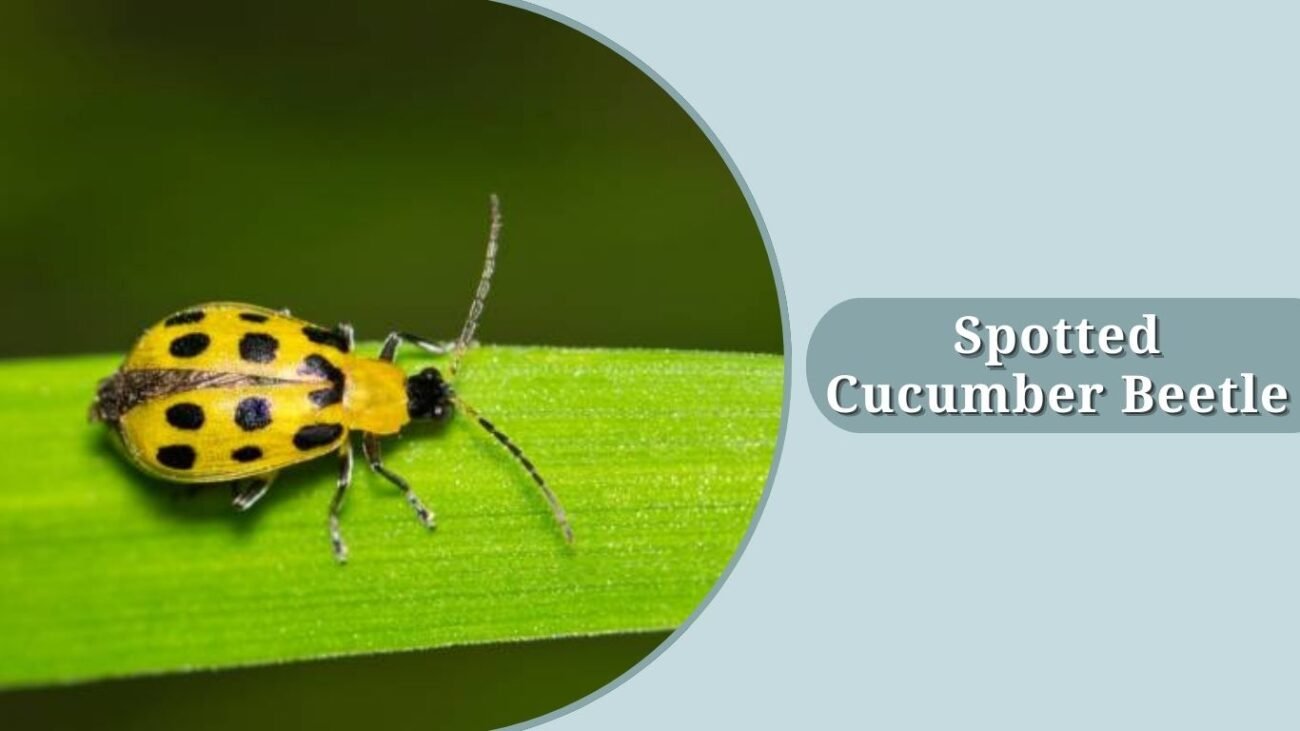
The Spotted Cucumber Beetle (Diabrotica undecimpunctata) is a common pest affecting cucumbers, melons, squash, and other cucurbit crops. It is easily recognized by its yellow-green body with 12 distinctive black spots. Both larvae and adults damage plants, though adults are notorious for spreading bacterial wilt disease in cucurbits.
Identification
- Bright yellow-green body with 12 black spots on the elytra (wing covers).
- Adults are about 6–7 mm long.
- Larvae are white, slender, and slightly curved with brown heads.
- Antennae are long and filiform (thread-like).
Habitat
Spotted Cucumber Beetles are found in gardens, fields, and farms growing cucurbits. They thrive in warm climates and are widespread across North America.
Behavior
Adults feed on leaves, flowers, and fruit, while larvae target roots and underground parts of plants. They are active during the day and tend to hide in soil or under plant debris at night. Adults can carry and transmit bacterial wilt and mosaic virus.
Diet
Adults feed on leaves, stems, flowers, and fruits of cucurbit plants. Larvae mainly feed on roots of the host plants.
4. Striped Cucumber Beetle
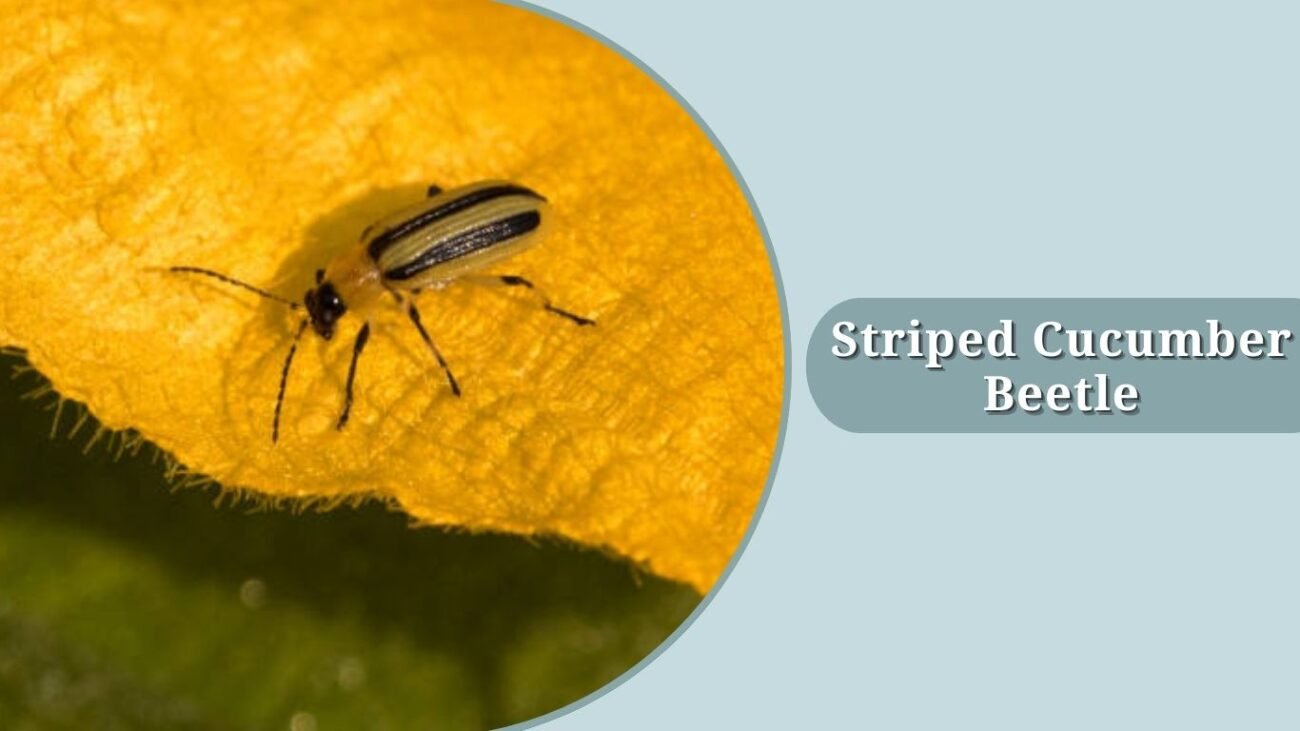
The Striped Cucumber Beetle (Acalymma vittatum) is a major pest of cucurbit crops, including cucumbers, squash, melons, and pumpkins. Easily identified by its yellow body with three black stripes running lengthwise, this beetle not only feeds on plants but also spreads bacterial wilt and mosaic viruses. It is native to North America and is especially active during the growing season.
Identification
- Yellow-green body with three longitudinal black stripes on the elytra.
- Adults are about 5–7 mm long.
- Larvae are pale, C-shaped, with brown heads and feed on roots.
- Antennae are long and segmented.
Habitat
Striped Cucumber Beetles are commonly found in fields, gardens, and farms growing cucurbits. They thrive in temperate climates and often overwinter in plant debris or soil near crop fields.
Behavior
Adults feed on leaves, stems, flowers, and fruit, creating small holes and scars. Larvae feed on roots, potentially stunting plant growth. Adults are active during the day and may migrate to new fields in search of food.
Diet
Adults consume foliage, flowers, and fruits of cucurbit plants, while larvae target the roots, affecting plant stability and growth.
5. Mexican Bean Beetle
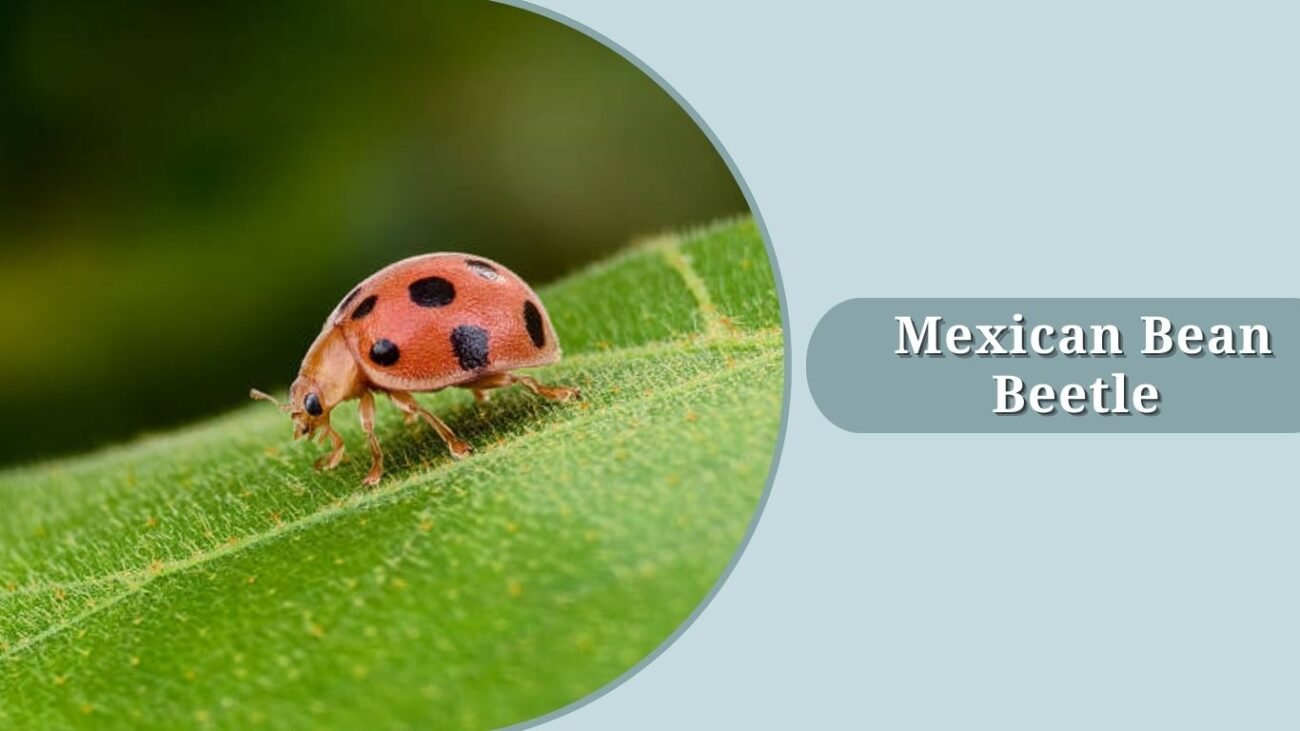
The Mexican Bean Beetle (Epilachna varivestis) is a significant pest of legumes, especially beans. Unlike most lady beetles, it is herbivorous and feeds extensively on leaves, often skeletonizing them. Native to Mexico and Central America, it has spread throughout the United States, causing damage to snap beans, lima beans, and other legumes.
Identification
- Oval-shaped, yellow to orange body with 16 black spots on the elytra.
- Adults are about 6–7 mm long.
- Larvae are yellowish-orange, covered with tiny spines, and have a flattened body.
- Antennae are short and slightly clubbed.
Habitat
Mexican Bean Beetles are commonly found in bean fields, gardens, and areas with abundant legume plants. They prefer warm climates and can be seen on the undersides of leaves.
Behavior
Both adults and larvae feed on the foliage, leaving behind a lacy or skeletonized pattern. Adults lay clusters of yellow eggs on the underside of leaves. The species can have multiple generations per growing season.
Diet
They feed primarily on beans and other leguminous plants. Both adults and larvae consume leaf tissue, severely impacting plant growth and yield.
6. Elm Leaf Beetle
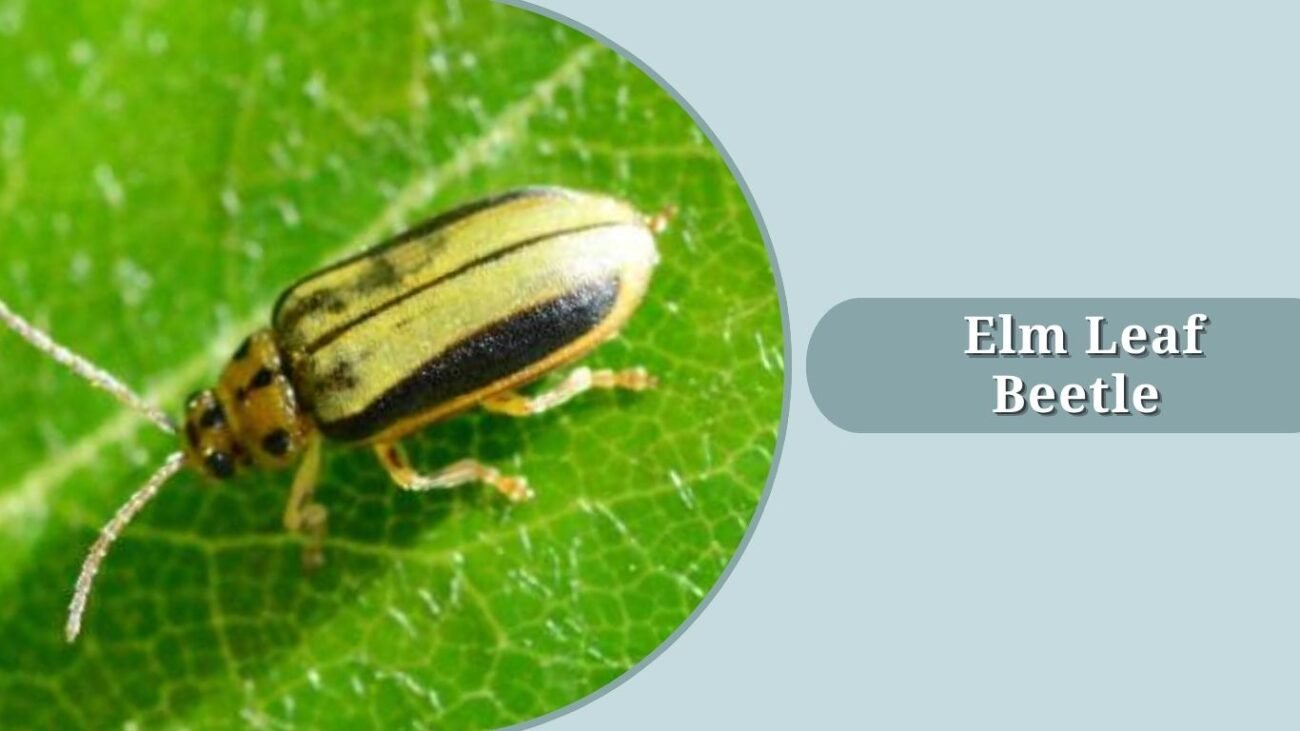
The Elm Leaf Beetle (Xanthogaleruca luteola) is a pest that primarily targets elm trees, feeding on the leaves and causing defoliation. Native to Europe, it has spread to North America and other regions. Heavy infestations can weaken trees, making them more susceptible to disease and environmental stress.
Identification
- Adults are yellow-green with four black stripes running lengthwise on the elytra.
- Approximately 6–8 mm long.
- Larvae are pale green with black heads and spiny bodies.
- Antennae are slender and filiform (thread-like).
Habitat
Elm Leaf Beetles are commonly found on elm trees in urban areas, parks, and forests. They prefer temperate climates and are often seen in large groups on foliage.
Behavior
Adults feed on the upper surface of leaves, creating a skeletonized pattern. Larvae also feed on leaf tissue, often in clusters. The beetles overwinter as adults in bark crevices or leaf litter and emerge in spring to lay eggs.
Diet
They feed primarily on elm leaves. Both larvae and adults consume leaf tissue, which can lead to significant defoliation if infestations are severe.
7. Red-shouldered Leaf Beetle

The Red-shouldered Leaf Beetle (Lema trilineata) is a colorful leaf beetle often found on various plants, particularly in gardens and fields. Its distinctive red markings on the shoulders make it easy to identify. While not as destructive as some other leaf beetles, it can still feed on foliage and flowers, occasionally causing noticeable damage.
Identification
- Bright yellow or greenish body with red markings on the thorax (“shoulders”).
- Adults are about 5–7 mm long.
- Larvae are soft-bodied, often pale yellow or green, and feed on leaves.
- Antennae are long and thread-like.
Habitat
Red-shouldered Leaf Beetles are found in gardens, meadows, and cultivated fields. They prefer areas with abundant host plants, including ornamental and crop species.
Behavior
Adults and larvae feed on leaves and sometimes flowers, creating small holes and notches. They are active during the day and tend to hide under foliage at night. Overwintering occurs in soil or plant debris.
Diet
Both adults and larvae feed on the foliage of various host plants, occasionally affecting ornamental plants and crops.
8. Alder Leaf Beetle
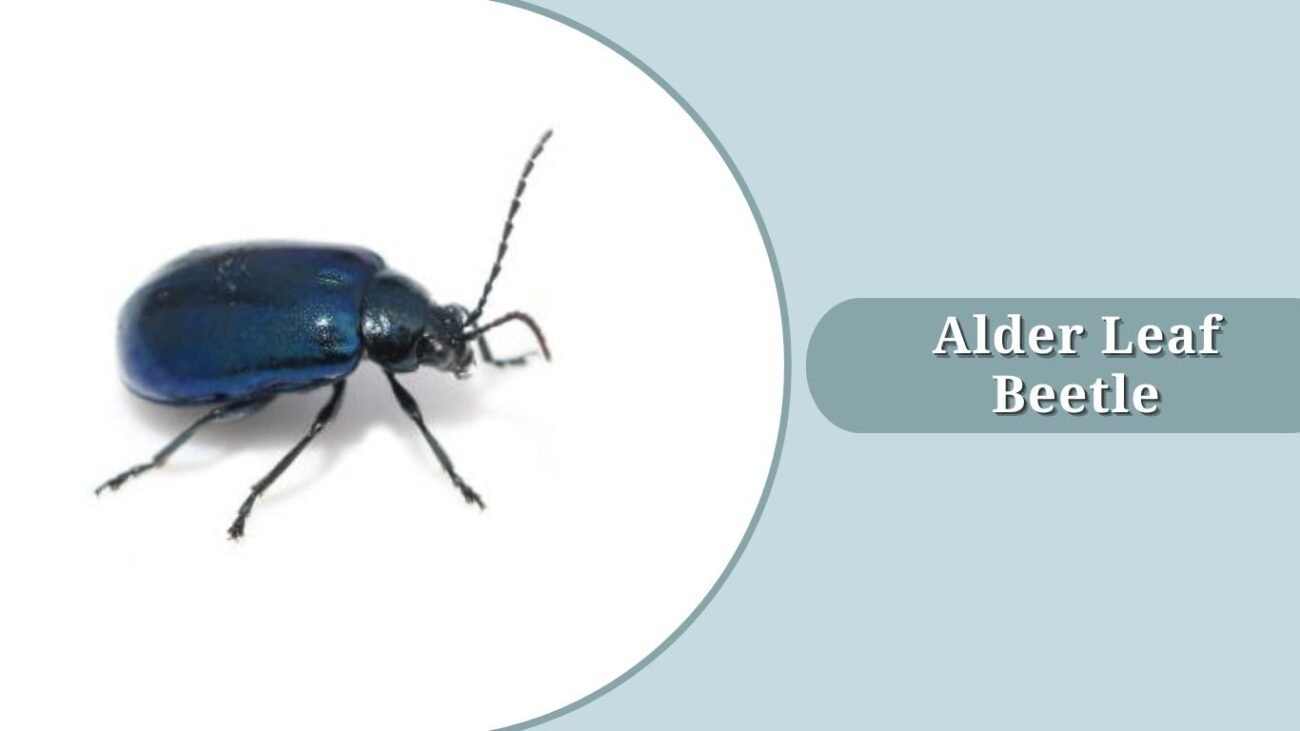
The Alder Leaf Beetle (Agelastica alni) primarily feeds on alder trees, occasionally affecting birch and hazel. This beetle is known for its bright metallic blue or green coloration and can cause significant defoliation if populations are high. Native to Europe, it has also been observed in parts of North America.
Identification
- Shiny metallic blue or green body, oval-shaped.
- Adults are about 6–8 mm long.
- Larvae are yellowish-green with a soft, segmented body.
- Antennae are short and slightly clubbed.
Habitat
Alder Leaf Beetles inhabit forests, riverbanks, and gardens with alder trees. They prefer temperate climates and are commonly found on the leaves of their host plants.
Behavior
Adults and larvae feed on leaves, often skeletonizing them. Adults lay clusters of eggs on the underside of leaves. They overwinter as adults in soil or leaf litter and emerge in spring to feed and reproduce.
Diet
They feed primarily on alder leaves, though birch and hazel are sometimes consumed. Both adults and larvae target foliage, affecting tree health when infestations are severe.
9. Rose Leaf Beetle
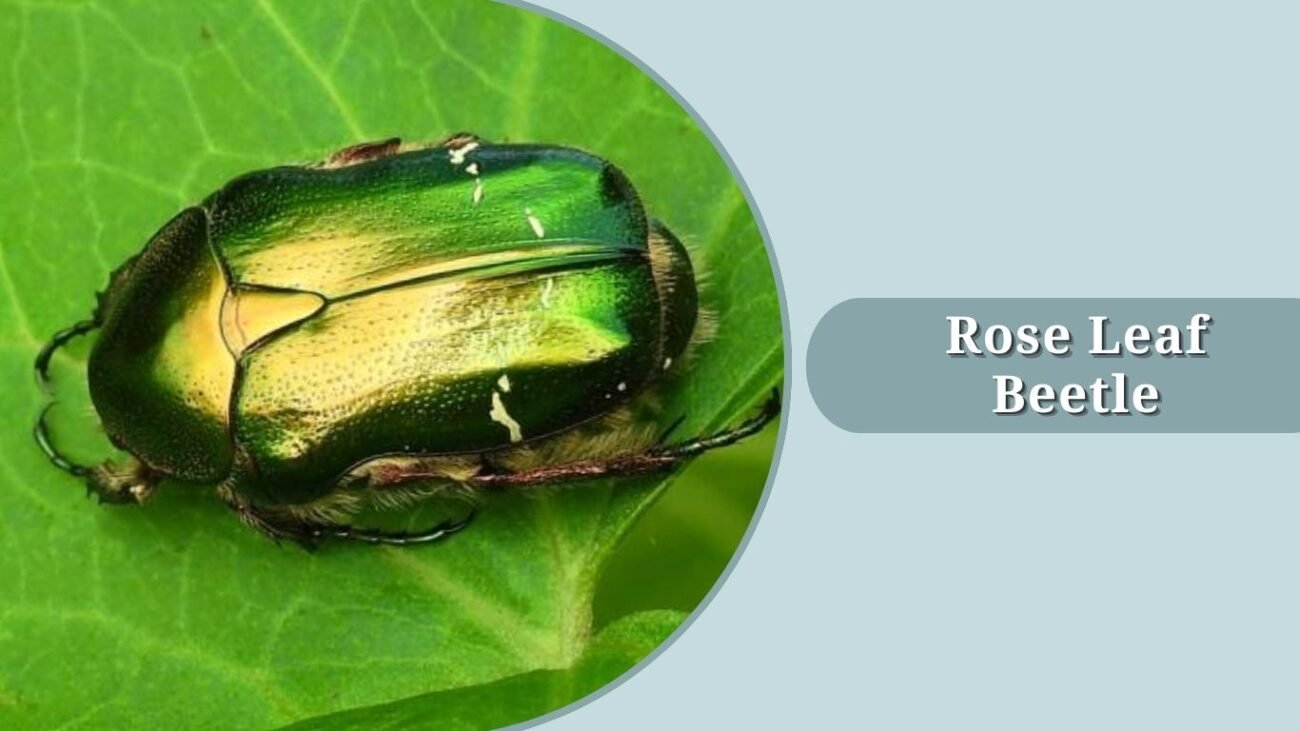
The Rose Leaf Beetle (Labidostomis lusitanica) is a leaf-feeding beetle that primarily targets rose plants. It is known for its shiny metallic green or bronze body and can cause noticeable damage to foliage, affecting the aesthetic and health of ornamental roses.
Identification
- Shiny metallic green or bronze body, oval-shaped.
- Adults are about 5–7 mm long.
- Larvae are pale green and soft-bodied, feeding on leaves.
- Antennae are relatively short and segmented.
Habitat
Rose Leaf Beetles are commonly found in gardens, parks, and areas where rose plants are abundant. They prefer temperate climates and are often spotted on the undersides of leaves.
Behavior
Adults and larvae feed on leaves, creating small holes or skeletonized patches. Adults lay eggs on leaf undersides. They overwinter in soil or plant debris and emerge in spring to continue feeding.
Diet
Both adults and larvae feed primarily on rose leaves, occasionally affecting other ornamental plants. Their feeding can reduce plant vigor and flower production.
10. Dogwood Leaf Beetle
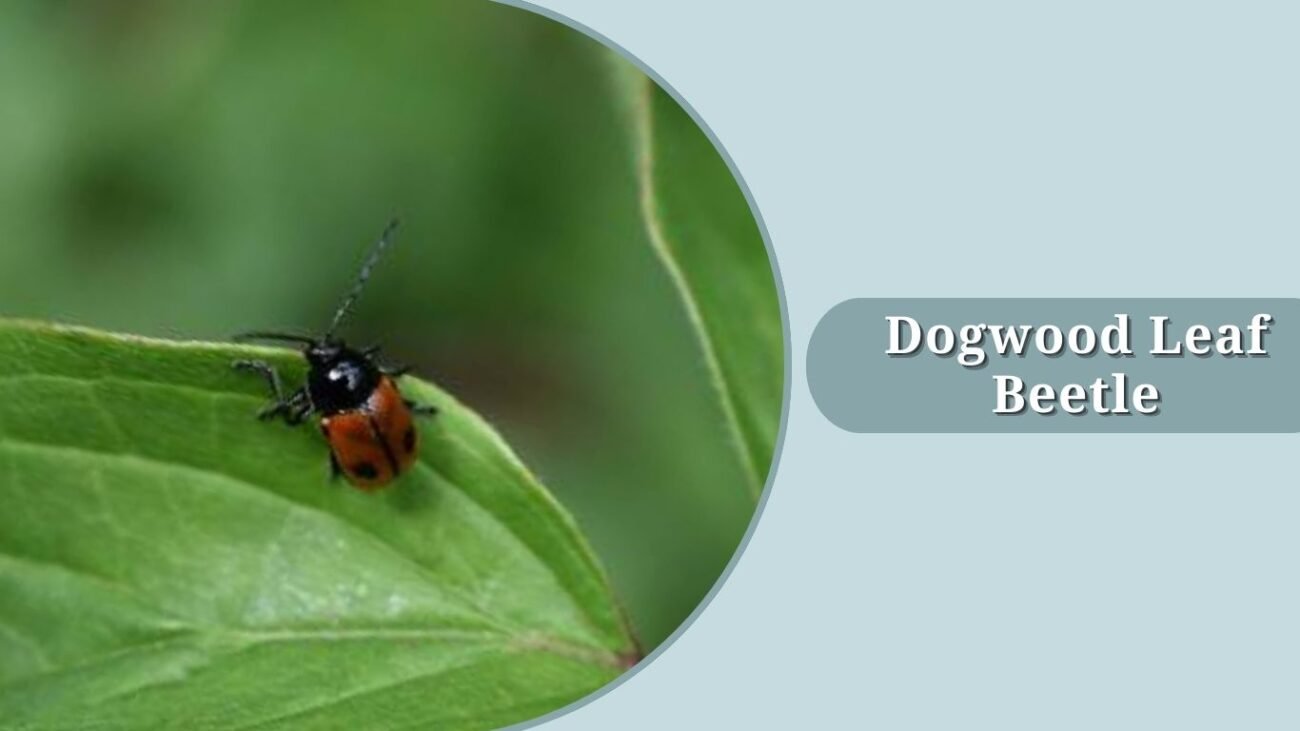
The Dogwood Leaf Beetle (Disonycha glabrata) is a leaf-feeding beetle that primarily targets dogwood trees. It is known for its black and yellow striped pattern and can cause significant defoliation during heavy infestations, affecting tree health and aesthetics.
Identification
- Black body with yellow stripes or markings on the elytra.
- Adults are about 5–7 mm long.
- Larvae are greenish, soft-bodied, and feed on leaves.
- Antennae are long and filiform (thread-like).
Habitat
Dogwood Leaf Beetles are commonly found in forests, gardens, and landscapes where dogwood trees grow. They prefer temperate climates and are often seen on leaves during the growing season.
Behavior
Both adults and larvae feed on leaves, often skeletonizing them. Adults lay eggs on the undersides of leaves. Overwintering occurs in soil or leaf litter, with adults emerging in spring to feed and reproduce.
Diet
They feed primarily on dogwood leaves. Both larvae and adults consume leaf tissue, which can reduce photosynthesis and overall tree vigor.
11. Willow Leaf Beetle

The Willow Leaf Beetle (Plagiodera versicolora) is a small beetle that feeds primarily on willow trees. It is known for its metallic blue-green color and can cause defoliation in young trees or saplings if populations are high.
Identification
- Shiny metallic blue-green body, oval-shaped.
- Adults are about 4–6 mm long.
- Larvae are yellowish or green, soft-bodied, and feed on leaves.
- Antennae are short and slightly clubbed.
Habitat
Willow Leaf Beetles are commonly found in wetlands, riverbanks, and areas with willow trees. They prefer temperate regions and are often observed on leaves during spring and summer.
Behavior
Both adults and larvae feed on leaves, often skeletonizing foliage. Adults lay eggs on the underside of leaves. They overwinter as adults in soil or plant debris and emerge in spring to continue feeding.
Diet
They feed primarily on willow leaves. Both adults and larvae consume foliage, which can stunt young trees if infestations are severe.
12. Poplar Leaf Beetle
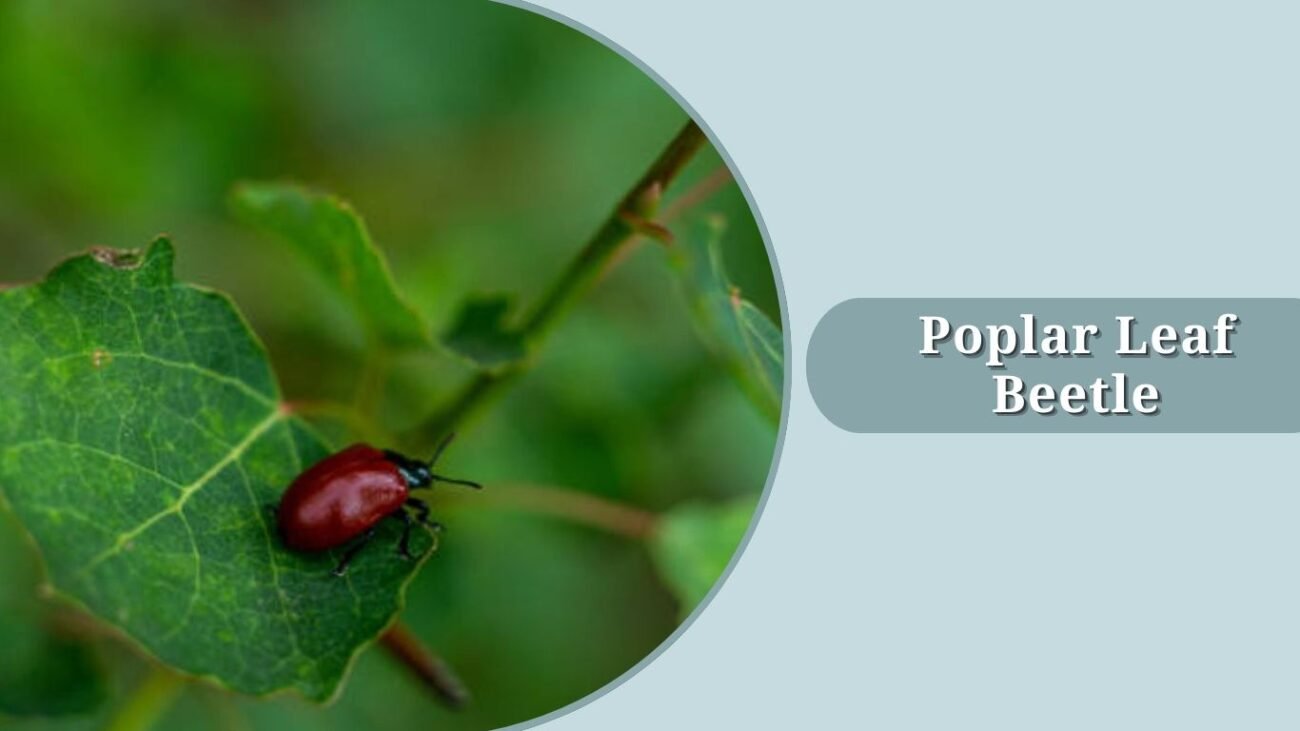
The Poplar Leaf Beetle (Chrysomela populi) is a common pest of poplar and willow trees. Known for its bright metallic green or blue coloration, this beetle can cause significant defoliation, especially in nurseries and plantations.
Identification
- Shiny metallic green or blue body, oval-shaped.
- Adults are about 6–8 mm long.
- Larvae are yellowish or green, soft-bodied, and feed on leaves.
- Antennae are relatively short and segmented.
Habitat
Poplar Leaf Beetles are found in forests, plantations, and gardens with poplar or willow trees. They prefer temperate climates and are often active on foliage during spring and summer.
Behavior
Adults and larvae feed on leaves, creating skeletonized patches. Eggs are laid on the undersides of leaves. The beetles overwinter as adults in soil or leaf litter and emerge in spring to feed and reproduce.
Diet
They feed primarily on poplar and willow leaves. Both adults and larvae target foliage, which can reduce tree growth and vigor.
13. Tobacco Flea Beetle
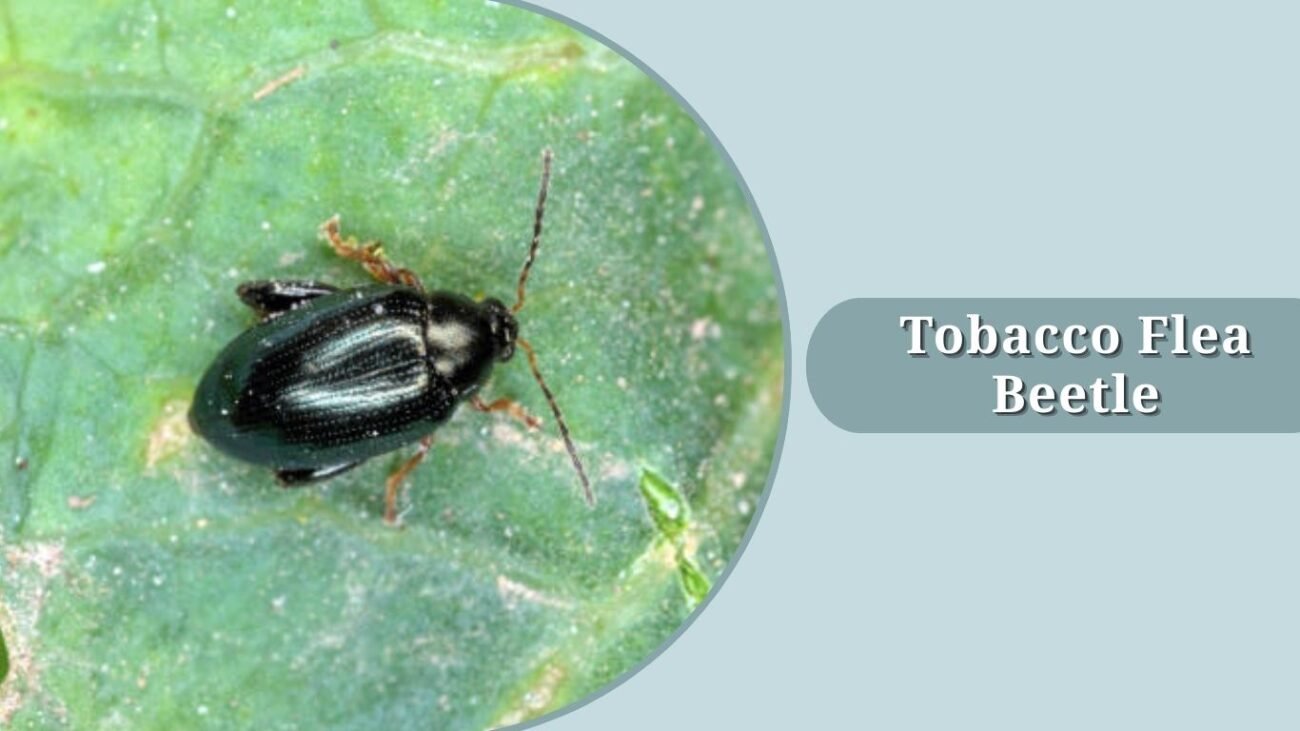
The Tobacco Flea Beetle (Epitrix hirtipennis) is a small, jumping beetle that primarily targets tobacco plants but can also feed on other solanaceous crops. It is notorious for the small “shot-hole” damage it creates on leaves, which can reduce plant health and yield.
Identification
- Small, oval, brown to black body, about 1.5–2 mm long.
- Hind legs are enlarged for jumping.
- Larvae are white, slender, and feed on roots.
- Antennae are short and filiform.
Habitat
Tobacco Flea Beetles are commonly found in tobacco fields, gardens, and areas growing related crops like potatoes and tomatoes. They prefer warm, sunny environments.
Behavior
Adults jump quickly when disturbed and feed on leaves, creating small holes. Larvae feed on roots, causing additional plant stress. Adults lay eggs in the soil near host plants.
Diet
Adults feed on foliage of tobacco and other solanaceous plants, while larvae target roots, affecting plant growth.
14. Lily Leaf Beetle
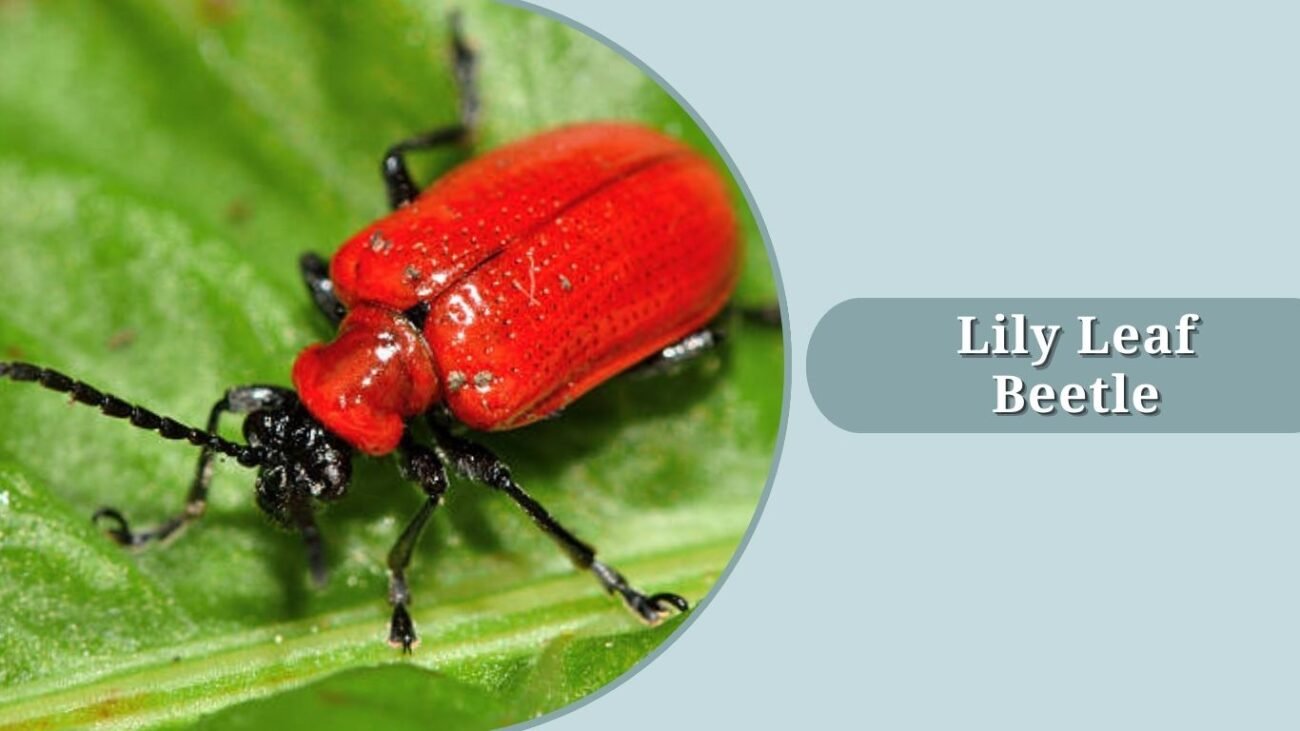
The Lily Leaf Beetle (Lilioceris lilii) is a notorious pest of lilies and related plants. Both adults and larvae feed on leaves, stems, and flowers, often causing severe defoliation and reducing the aesthetic value of ornamental plants.
Identification
- Bright red body with black legs, head, and antennae.
- Adults are about 6–9 mm long.
- Larvae are orange to brown, soft-bodied, and covered with sticky excrement.
- Antennae are relatively short and segmented.
Habitat
Lily Leaf Beetles are commonly found in gardens, parks, and areas where lilies and fritillaries are grown. They prefer temperate climates and are most active during spring and summer.
Behavior
Adults feed on leaves, stems, and flowers, while larvae consume leaf tissue, often hiding under a protective layer of excrement. Eggs are laid on the undersides of leaves. Overwintering occurs in soil or plant debris.
Diet
They feed primarily on lilies, fritillaries, and related ornamental plants. Both adults and larvae target foliage and flowers, causing extensive damage.
15. Grape Leaf Beetle
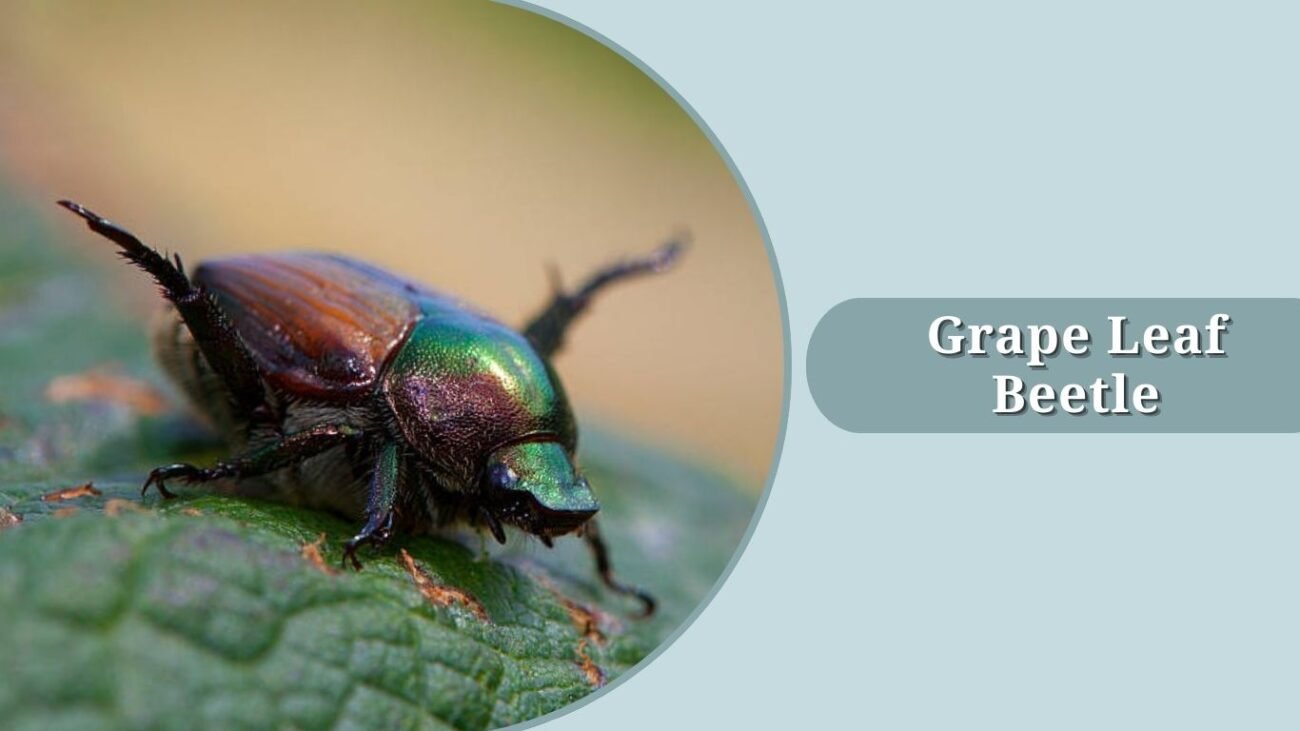
The Grape Leaf Beetle (Pelidnota punctata) primarily feeds on grapevines and related plants. Known for its shiny, reddish-brown body, this beetle can cause noticeable foliar damage, affecting grapevine growth and fruit production.
Identification
- Shiny reddish-brown or copper-colored body, oval-shaped.
- Adults are about 12–15 mm long.
- Larvae are creamy-white, soft-bodied, and feed on roots.
- Antennae are short and slightly clubbed.
Habitat
Grape Leaf Beetles are commonly found in vineyards, gardens, and areas with wild grape plants. They prefer temperate climates and are usually seen on leaves during the growing season.
Behavior
Adults feed on grapevine leaves, often skeletonizing foliage. Larvae feed on roots, which can affect plant health. Eggs are laid in the soil near host plants. Adults overwinter in soil or plant debris.
Diet
They feed primarily on grape leaves. Larvae target roots, while adults consume foliage, reducing vine vigor and potentially affecting fruit yield.
16. Elm Leaf Miner Beetle
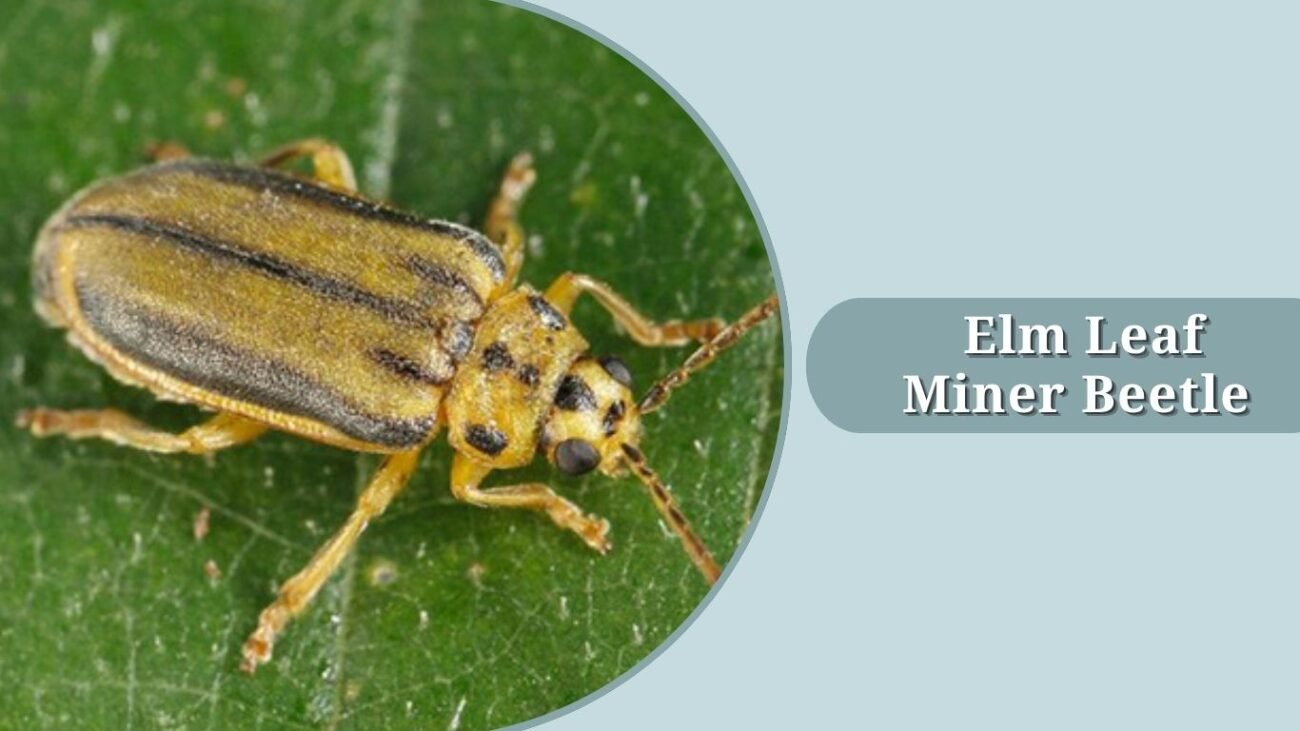
The Elm Leaf Miner Beetle (Fenusa ulmi) is a small beetle whose larvae feed internally within elm leaves, creating characteristic “mines” or tunnels. While not usually lethal to trees, heavy infestations can reduce photosynthesis and overall tree vigor.
Identification
- Adults are small, black to dark brown, about 3–5 mm long.
- Larvae are pale, legless, and live inside leaf tissue.
- Mines appear as narrow, winding tunnels on leaves.
- Antennae are short and segmented.
Habitat
Elm Leaf Miner Beetles are found in forests, parks, and urban areas with elm trees. They prefer temperate regions and are most active during spring and summer when leaves are young.
Behavior
Adults feed on leaf surfaces minimally, while larvae mine inside leaves, creating visible tunnels. Pupation occurs within the mined leaves or in the soil. Adults overwinter in bark crevices or leaf litter.
Diet
Larvae feed internally on elm leaf tissue, while adults may nibble lightly on leaf surfaces. Damage primarily affects foliage, reducing photosynthetic efficiency.
17. Ash Leaf Beetle
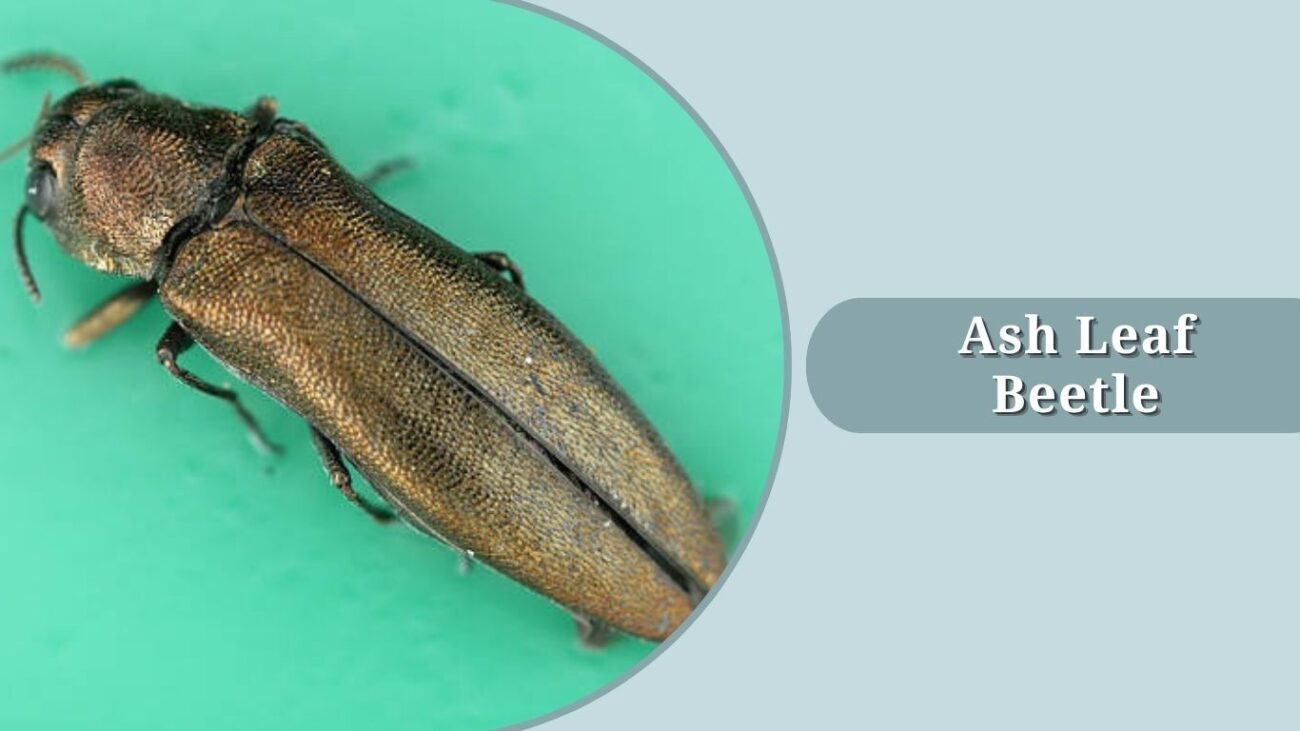
The Ash Leaf Beetle (Podontia affinis) primarily feeds on ash trees, occasionally targeting other deciduous trees. Known for its dark, metallic body, it can cause defoliation, especially in young trees or saplings, affecting growth and vigor.
Identification
- Metallic dark green or black body, oval-shaped.
- Adults are about 5–7 mm long.
- Larvae are pale green or yellowish, soft-bodied, and feed on leaves.
- Antennae are short and segmented.
Habitat
Ash Leaf Beetles are commonly found in forests, parks, and urban areas with ash trees. They prefer temperate regions and are usually seen on leaves during spring and summer.
Behavior
Both adults and larvae feed on leaves, often skeletonizing foliage. Adults lay eggs on the undersides of leaves. Beetles overwinter as adults in soil or plant debris and emerge in spring to feed and reproduce.
Diet
They feed primarily on ash leaves. Both larvae and adults target foliage, potentially reducing tree growth and overall health.
18. Bean Leaf Beetle
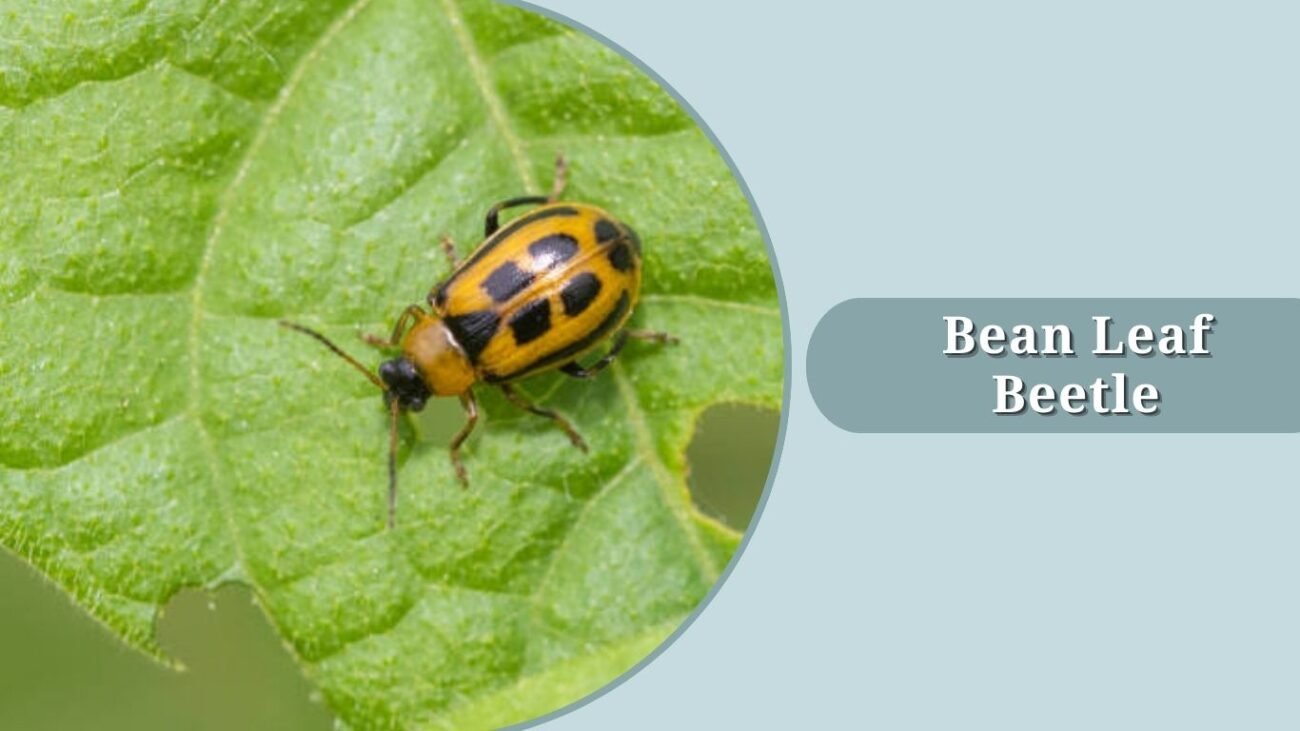
The Bean Leaf Beetle (Cerotoma trifurcata) is a common pest of legumes, particularly beans and soybeans. Both adults and larvae feed on leaves and pods, potentially reducing crop yield and quality.
Identification
- Yellow, tan, or reddish body with a black triangle behind the head and sometimes black spots on the elytra.
- Adults are about 5–7 mm long.
- Larvae are white or pale yellow, C-shaped, and feed on roots.
- Antennae are short and segmented.
Habitat
Bean Leaf Beetles are commonly found in fields, gardens, and areas growing legumes. They prefer temperate regions and are most active during the growing season.
Behavior
Adults feed on foliage and pods, creating small holes, while larvae feed on roots. Eggs are laid in the soil near host plants. Adults overwinter in soil or crop debris and emerge in spring.
Diet
Adults feed primarily on leaves and pods of beans and soybeans, while larvae consume roots, affecting plant growth and productivity.
19. Cottonwood Leaf Beetle
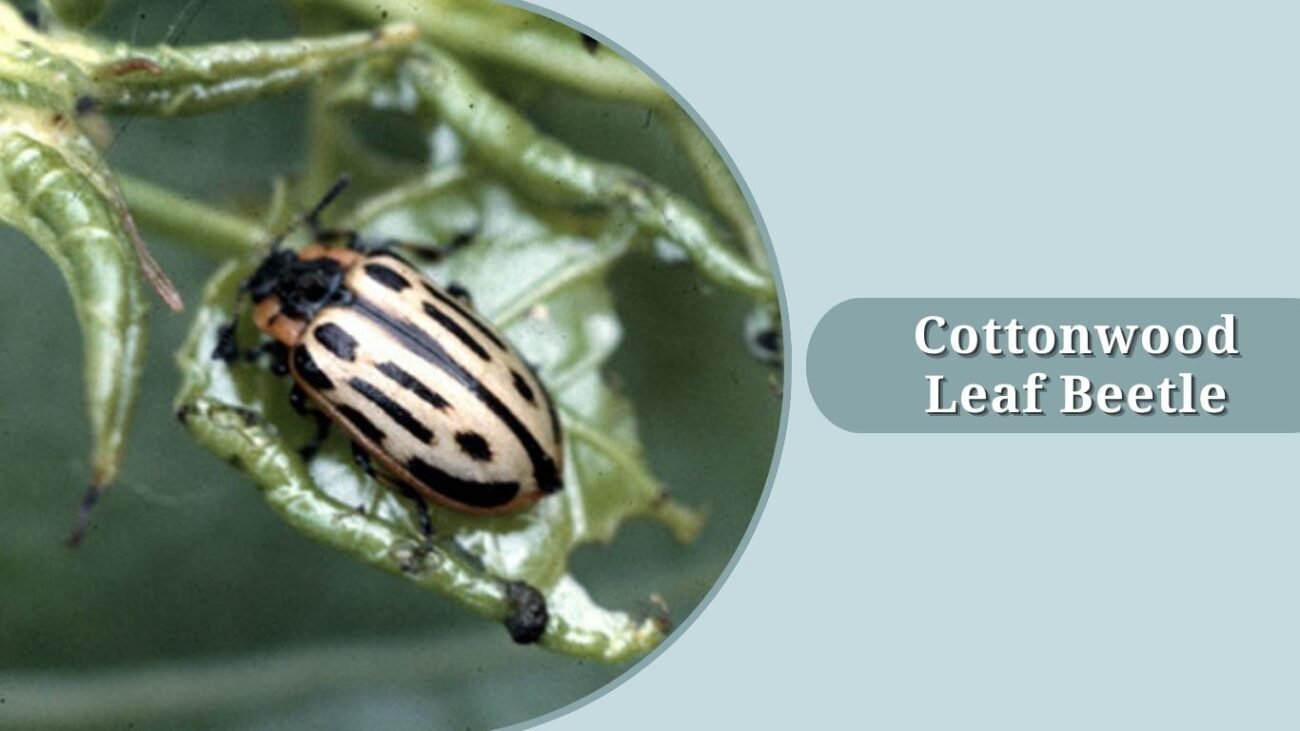
The Cottonwood Leaf Beetle (Chrysomela scripta) primarily feeds on cottonwood and related poplar species. It can cause noticeable defoliation, especially in young trees or nursery settings, affecting growth and vitality.
Identification
- Shiny metallic green or blue body with yellowish stripes or spots.
- Adults are about 6–9 mm long.
- Larvae are yellowish-green, soft-bodied, and feed on leaves.
- Antennae are relatively short and segmented.
Habitat
Cottonwood Leaf Beetles are found in forests, riverbanks, and areas with abundant cottonwood trees. They prefer temperate climates and are often active on foliage during spring and summer.
Behavior
Both adults and larvae feed on leaves, creating skeletonized patterns. Adults lay eggs on the undersides of leaves. Beetles overwinter as adults in soil or leaf litter and emerge in spring to feed and reproduce.
Diet
They feed primarily on cottonwood and related poplar leaves. Both larvae and adults consume foliage, which can reduce photosynthesis and overall tree growth.
20. Maple Leaf Beetle
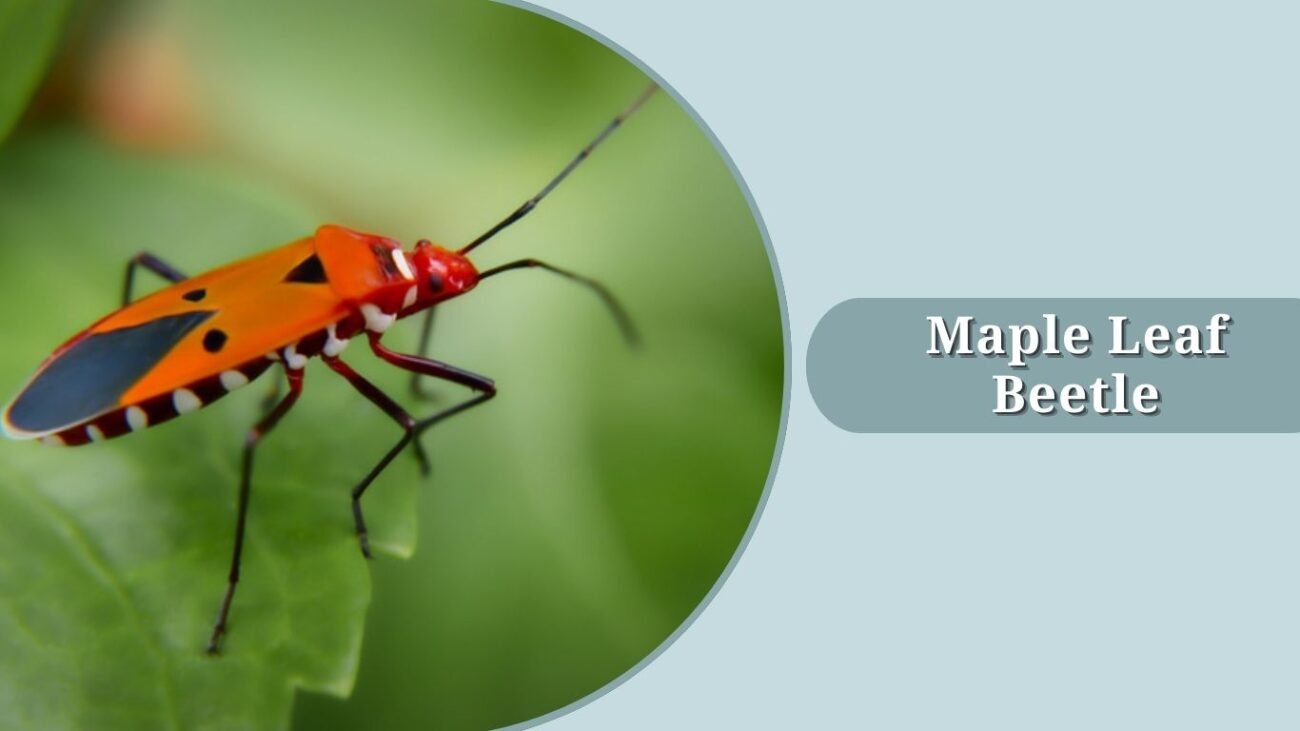
The Maple Leaf Beetle (Chrysomela scripta var. acericola) primarily targets maple trees, feeding on leaves and occasionally flowers. Infestations can cause noticeable defoliation, particularly in young trees or ornamental settings.
Identification
- Shiny metallic green or blue body, sometimes with yellowish markings.
- Adults are about 6–8 mm long.
- Larvae are pale green, soft-bodied, and feed on leaves.
- Antennae are short and segmented.
Habitat
Maple Leaf Beetles are commonly found in forests, parks, and urban areas with maple trees. They prefer temperate climates and are most active during spring and summer.
Behavior
Adults and larvae feed on foliage, often skeletonizing leaves. Eggs are laid on the undersides of leaves. Adults overwinter in soil or leaf litter and emerge in spring to feed and reproduce.
Diet
They feed primarily on maple leaves. Both adults and larvae consume leaf tissue, which can reduce photosynthesis and overall tree health.
21. Oak Leaf Beetle
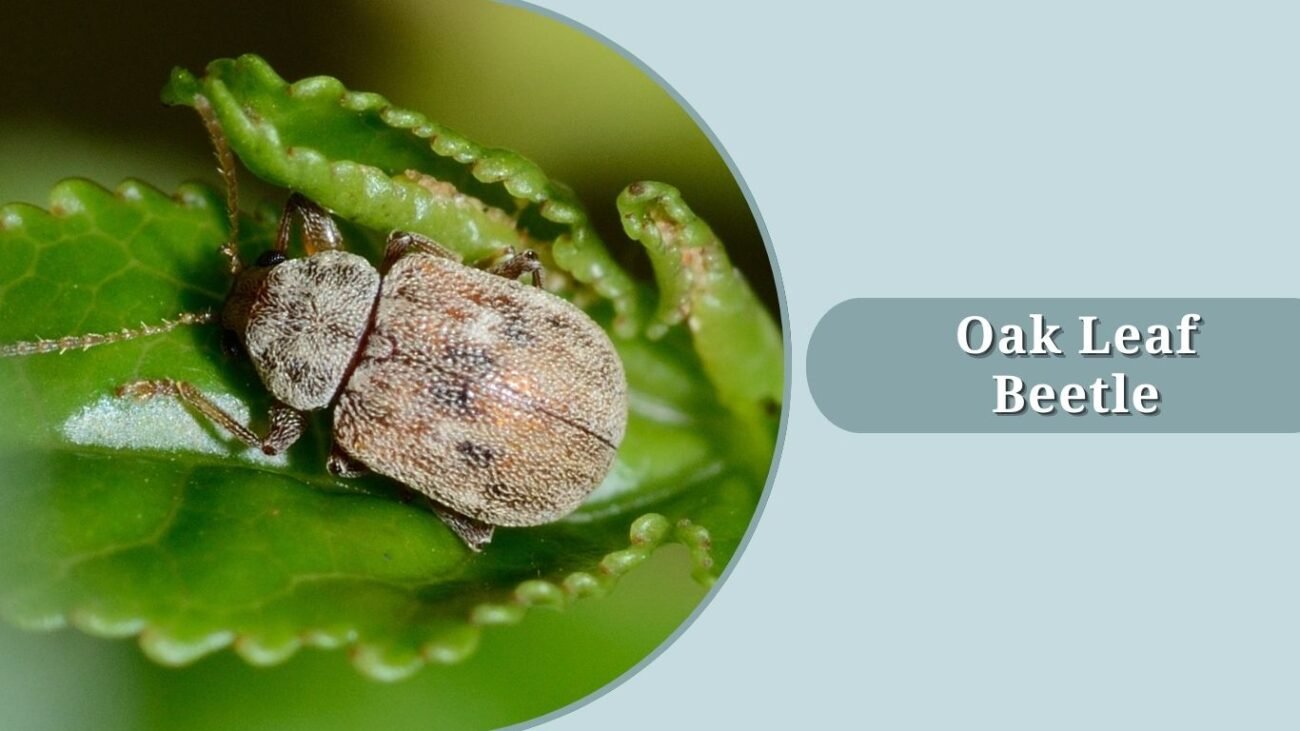
The Oak Leaf Beetle (Galerucella nymphaeae) primarily feeds on oak leaves, sometimes causing significant defoliation during heavy infestations. This beetle is common in forests, parks, and urban areas with oak trees.
Identification
- Shiny brown or black body, oval-shaped.
- Adults are about 5–7 mm long.
- Larvae are pale green or yellowish, soft-bodied, and feed on leaves.
- Antennae are short and segmented.
Habitat
Oak Leaf Beetles are found in forests, woodlands, and urban areas with oak trees. They prefer temperate climates and are active during the growing season.
Behavior
Both adults and larvae feed on leaves, often skeletonizing foliage. Eggs are laid on the undersides of leaves. Adults overwinter in soil or leaf litter and emerge in spring to feed and reproduce.
Diet
They feed primarily on oak leaves. Both larvae and adults target foliage, which can reduce photosynthesis and overall tree vigor.
22. Horse Chestnut Leaf Beetle
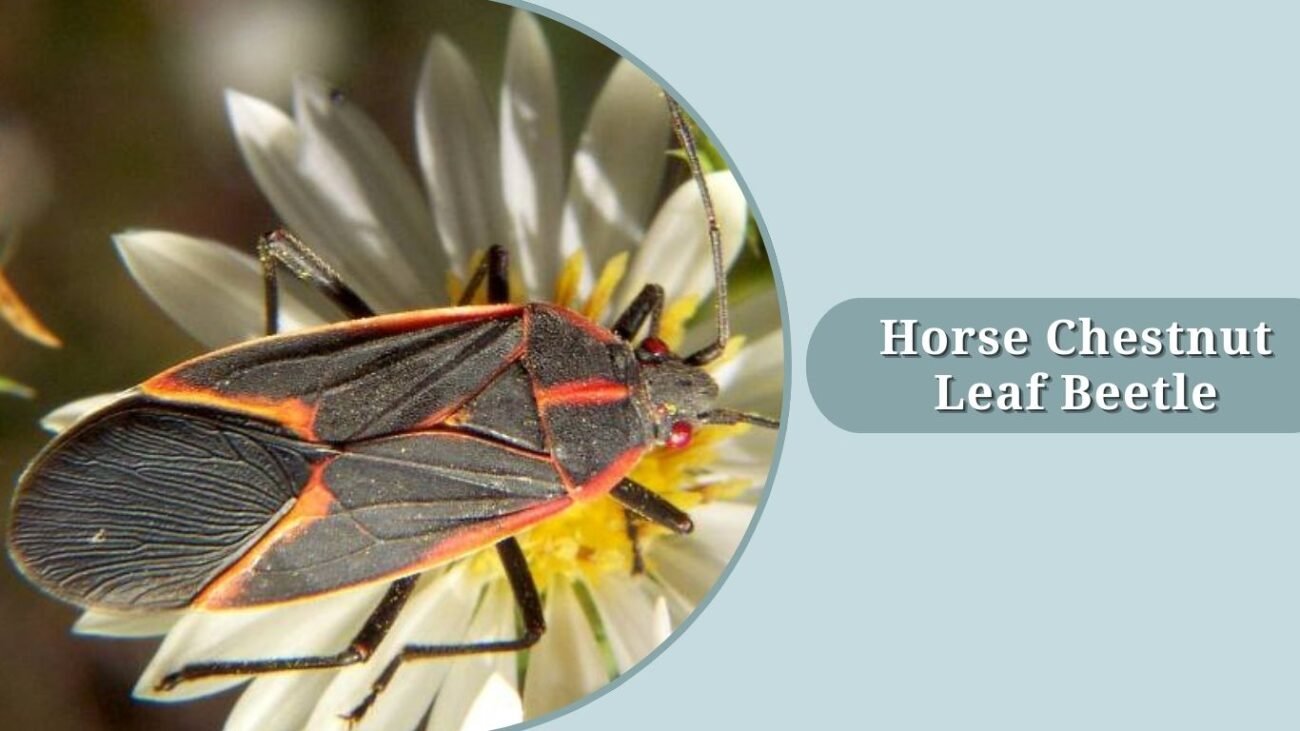
The Horse Chestnut Leaf Beetle (Corythucha aesculi) primarily feeds on horse chestnut trees, causing noticeable leaf damage. Heavy infestations can reduce tree vigor and affect the aesthetic value of ornamental plantings.
Identification
- Small, oval-shaped body, typically brown to black.
- Adults are about 3–5 mm long.
- Larvae are pale, soft-bodied, and feed on leaf tissue.
- Antennae are short and segmented.
Habitat
Horse Chestnut Leaf Beetles are commonly found in parks, gardens, and forests with horse chestnut trees. They prefer temperate climates and are most active during the growing season.
Behavior
Adults and larvae feed on leaves, often creating small holes or skeletonized areas. Eggs are laid on leaf undersides. Adults overwinter in soil or leaf litter and emerge in spring to continue feeding.
Diet
They feed primarily on horse chestnut leaves. Both adults and larvae consume foliage, which can reduce photosynthesis and overall tree health.
23. Hoplia Leaf Beetle
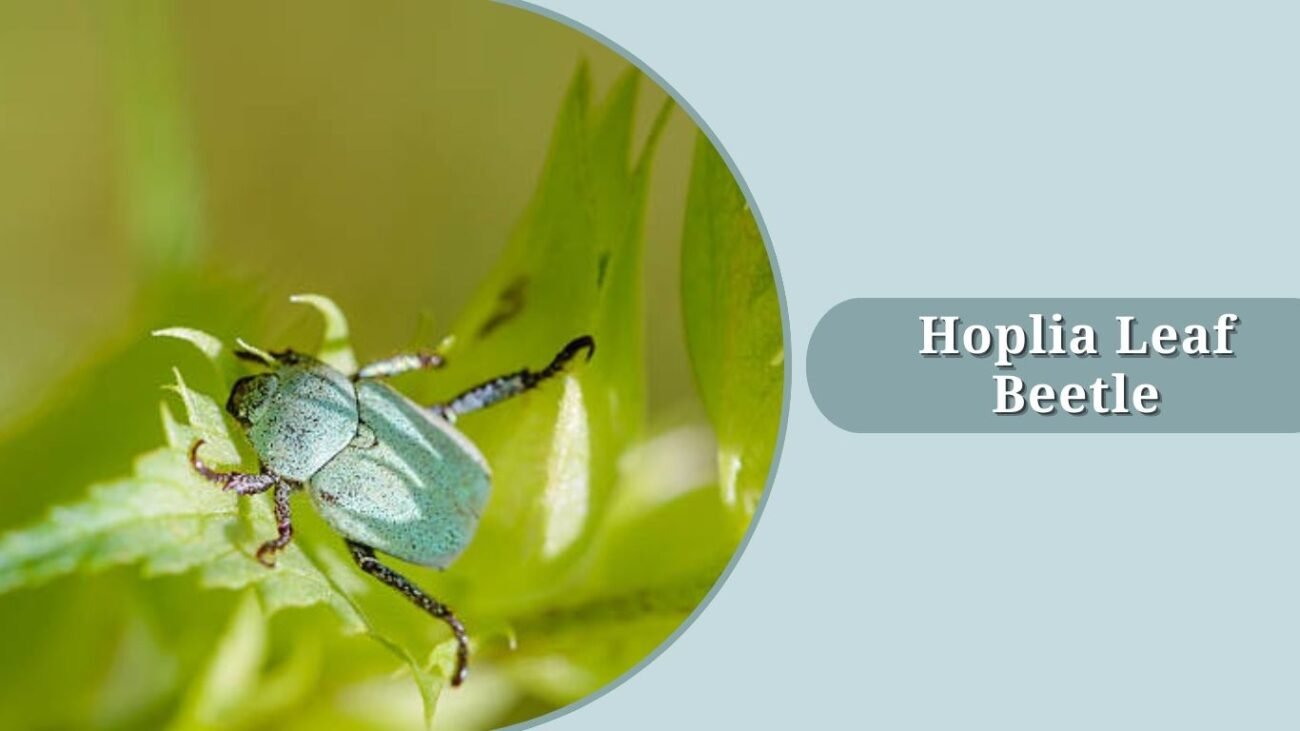
The Hoplia Leaf Beetle (Hoplia spp.) is a small beetle that feeds on a variety of plants, including grasses, ornamental flowers, and shrubs. It is known for its jumping ability and can cause minor to moderate leaf damage depending on population density.
Identification
- Small, oval-shaped body, usually brown or black with a slight metallic sheen.
- Adults are about 5–7 mm long.
- Larvae are C-shaped, white or cream-colored, and feed on roots.
- Hind legs are adapted for jumping.
Habitat
Hoplia Leaf Beetles are commonly found in gardens, meadows, and grassy areas. They prefer temperate regions and are often active during spring and summer.
Behavior
Adults feed on leaves and flowers, creating small holes or notches. Larvae feed on roots, affecting plant health. Adults can jump when disturbed, making them harder to control.
Diet
Adults feed primarily on foliage and flowers, while larvae target roots. Their feeding can affect ornamental plants, lawns, and young seedlings.