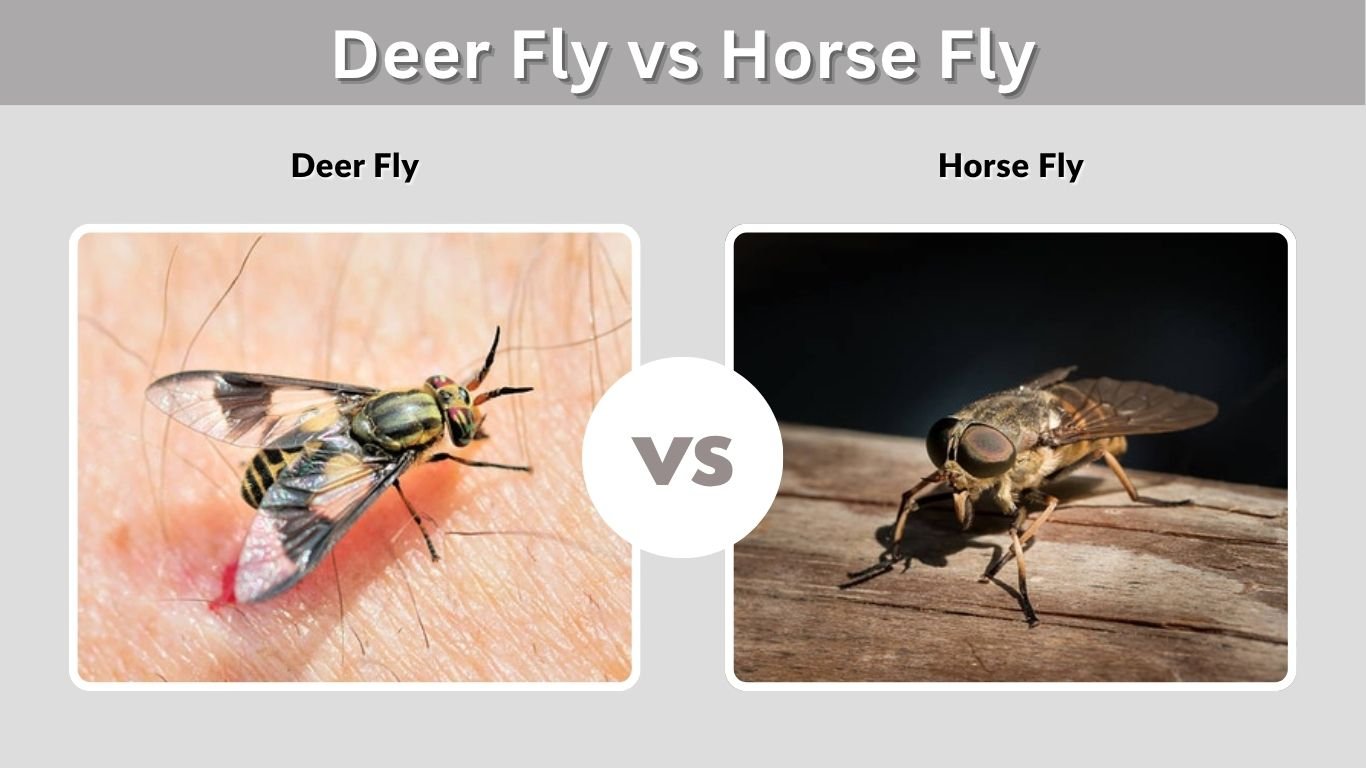
Deer flies and horse flies are closely related blood-feeding insects known for their painful bites. Deer flies are generally smaller, with patterned wings and yellow, brown or black bodies. Horse flies are larger and heavier, usually with clear or uniformly dark wings. Both are active during the day and breed around moist environments, but deer flies frequently circle the head and neck while horse flies commonly attack the legs or body of large animals.
Deer Fly vs Horse Fly: Quick Comparison
Both insects belong to the family Tabanidae. Their similar eyes, body shapes and feeding behavior can make identification difficult, but size and wing pattern provide dependable clues.
| Feature | Deer fly | Horse fly |
| Common genera | Chrysops, Silvius | Tabanus, Hybomitra |
| Typical size | 1/4–1/2 inch | 1/2–1 1/4 inches |
| Body shape | Small to medium and slender | Large, broad and heavy |
| Body color | Yellow, brown or black | Gray, brown or black |
| Wings | Dark bands or patches | Usually clear or uniformly dark |
| Eyes | Brightly colored, often spotted | Large, solid-colored or striped |
| Common target area | Head, neck and shoulders | Legs and lower body |
| Flight behavior | Circles persistently around people | Strong, direct and loud flight |
| Bite | Painful cutting bite | Larger, painful cutting bite |
| Active period | Daytime | Daytime |
The University of Kentucky Department of Entomology describes horse flies as approximately 3/4–1 1/4 inches long, while deer flies are smaller and typically have dark bands across their wings.
Physical Differences Between Deer Flies and Horse Flies
Pictures can help with identification, but individual species vary considerably. Examine the insect’s overall proportions, wings, abdomen and eyes rather than relying on color alone.
Size and Body Shape
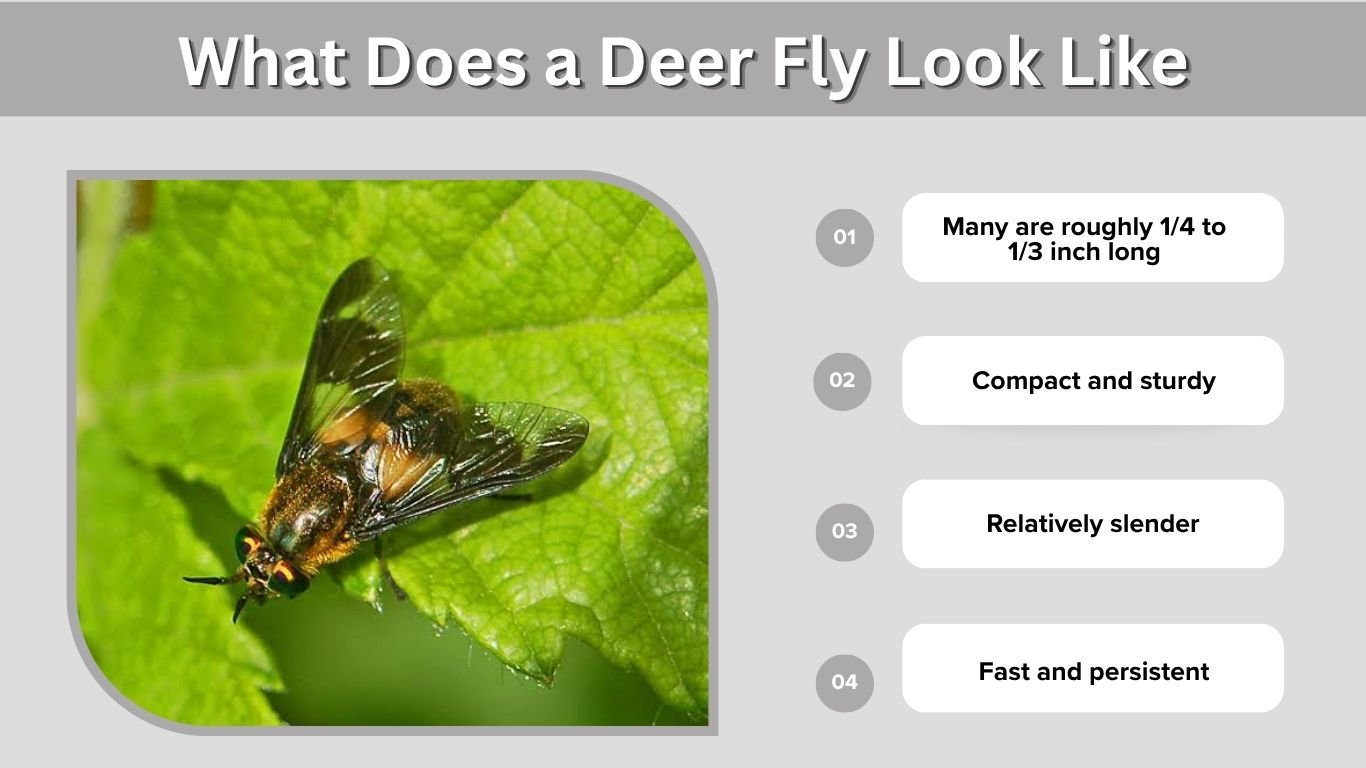
Deer flies are usually between 7 and 13 millimeters long. They are comparable to or slightly larger than house flies, with relatively narrow bodies and long-looking wings.
Horse flies commonly measure 14–30 millimeters, although some species can grow larger. They have broad heads, powerful bodies and thick abdomens. A giant black fly that is close to an inch long is more likely to be a horse fly than a deer fly.
Wings and Body Markings
A deer fly normally has transparent wings crossed by black or brown patches. These markings can form bands, triangles or irregular patterns. Its abdomen may be yellowish with dark stripes.
Horse fly wings are generally clear, smoky or evenly dark without the strongly patterned appearance. The body is commonly gray, dark brown or black, although some species have lighter markings.
Eyes and Antennae
Both insects have large compound eyes that can appear green, gold, purple or iridescent. Deer fly eyes are frequently spotted or patterned, while horse fly eyes are more commonly solid-colored or horizontally striped.
In males, the eyes nearly touch at the top of the head. Female eyes are separated by a visible space. This difference helps identify sex, and only females take blood meals.
Deer Fly Bite vs Horse Fly Bite
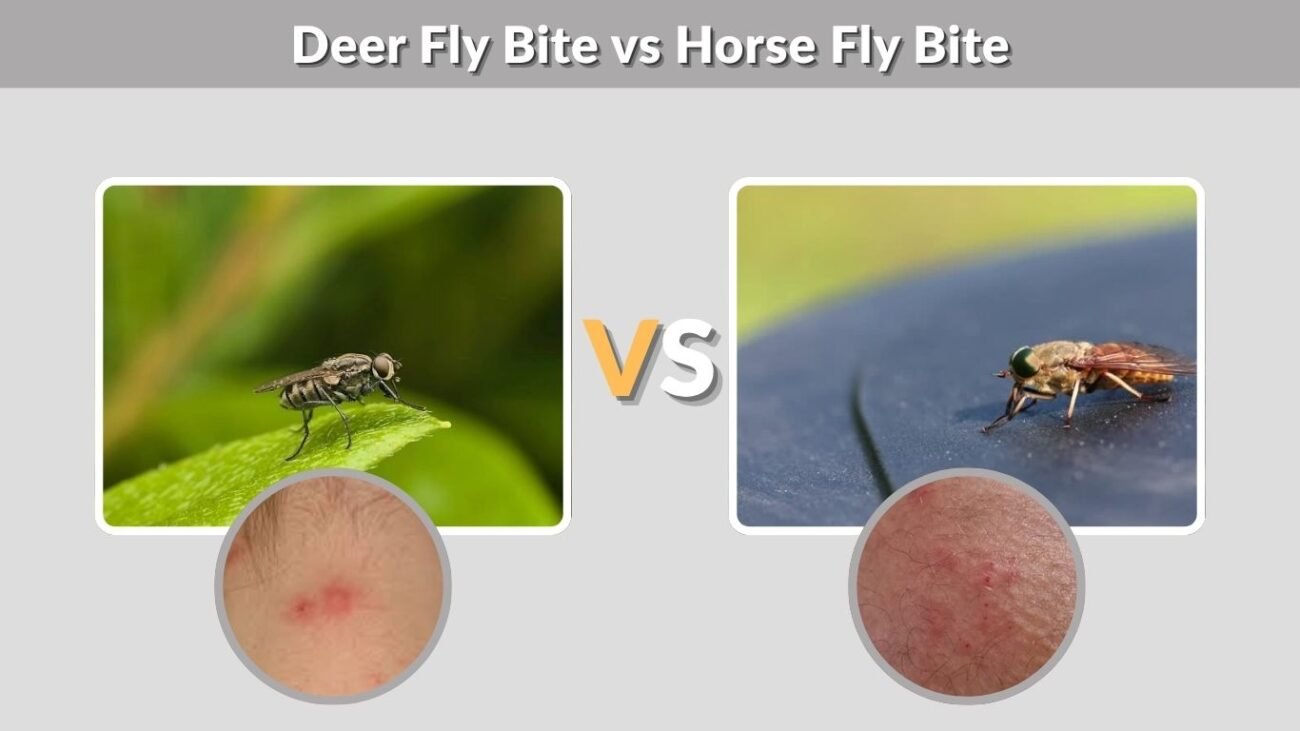
Both flies use blade-like mouthparts to cut the skin. They release saliva that delays clotting and then feed from the small pool of blood.
Bite Comparison
| Feature | Deer fly bite | Horse fly bite |
| Initial feeling | Sharp sting or cut | Strong pinch, cut or burning pain |
| Typical location | Head, neck, shoulders and arms | Legs, arms and exposed body areas |
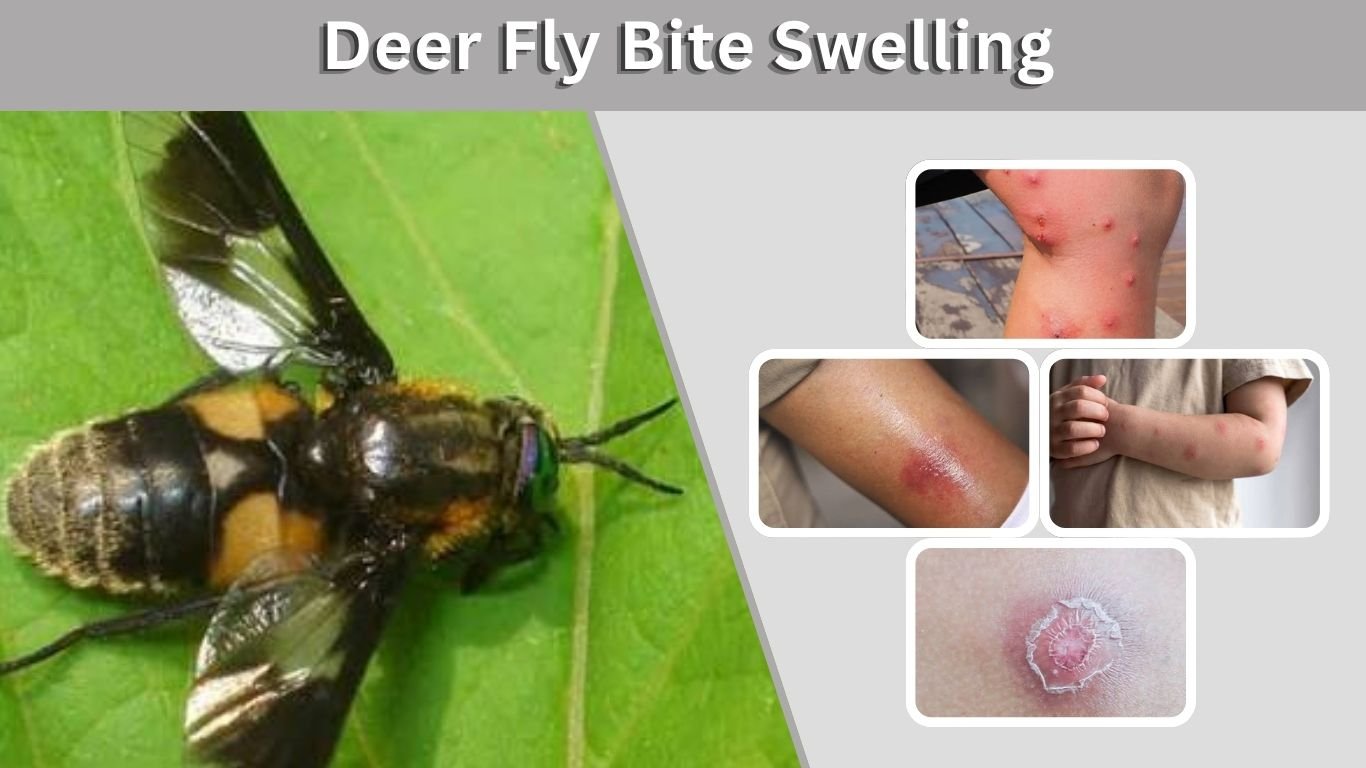
| Appearance | Red welt with a central wound | Larger welt, cut or bleeding spot |
| Bleeding | Possible | Often more noticeable |
| Swelling | Mild to substantial | Mild to substantial |
| Itching | Common | Common |
| Healing time | Usually several days | Usually several days |
| Disease concern | Rare tularemia transmission | Secondary infection is the main concern |
Bite appearance alone cannot reliably identify the fly. Skin sensitivity, bite location and scratching may affect the mark more than the insect’s exact species.
Does a Deer Fly Bite Hurt?
Yes. Deer flies do not insert a delicate feeding tube like mosquitoes. Their cutting mouthparts create an open wound, producing immediate pain. A bite may continue bleeding briefly and later develop into an itchy, swollen welt.
Does a Horse Fly Bite Hurt More?
A horse fly’s larger mouthparts may create a wider wound, so its bite can feel more forceful. However, pain varies among people and fly species. A strong reaction to deer fly saliva can be more uncomfortable than a mild horse fly bite.
Why Do Deer Flies and Horse Flies Bite?
Blood feeding is connected to reproduction. Females need protein from blood to produce eggs, while males survive on nectar and plant sugars.
How They Find a Host
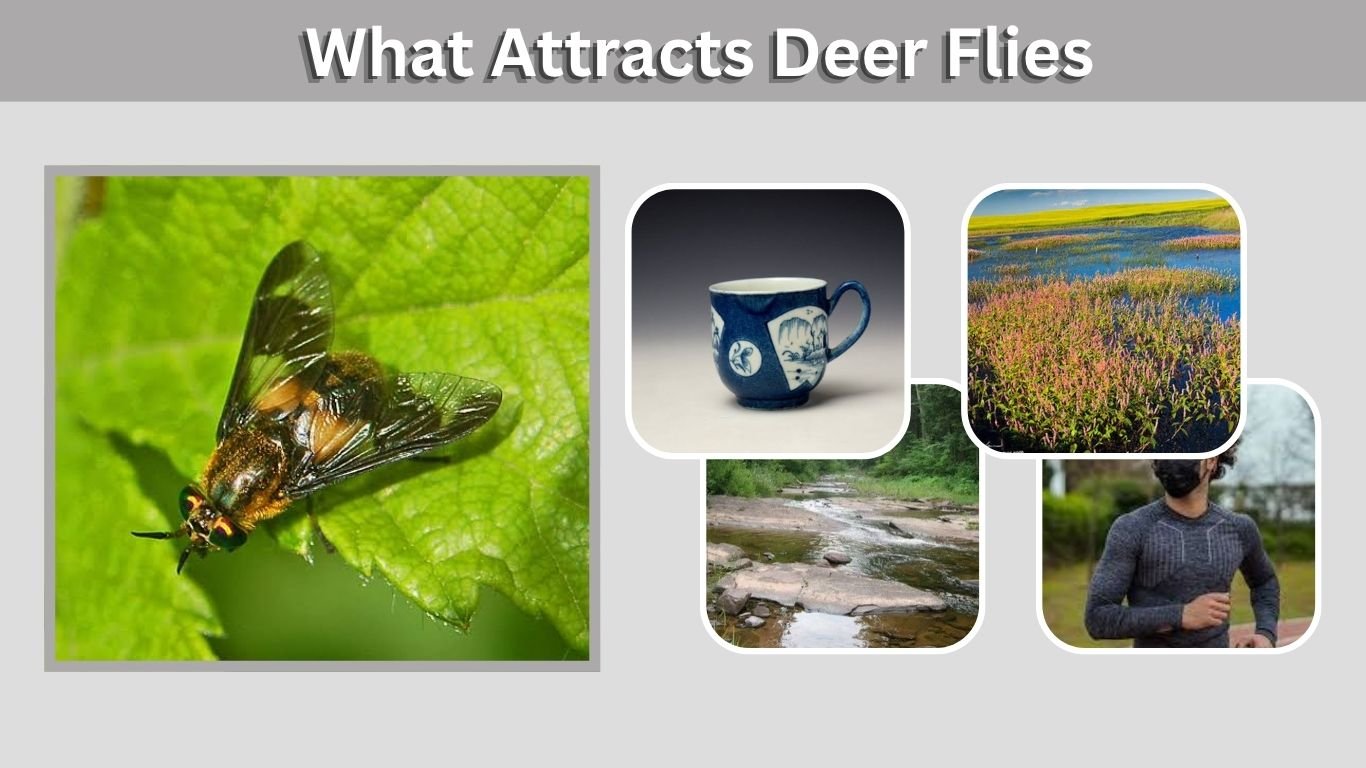
The flies respond to movement, dark shapes, carbon dioxide and other signals from warm-blooded animals. They may repeatedly circle a host before landing.
Deer flies are especially persistent around moving people and frequently target the head and upper body. Horse flies often approach large mammals and may concentrate around their legs. Both can return quickly when interrupted before completing a meal.
Habitat and Life Cycle
Deer flies and horse flies are commonly encountered near wetlands, lakes, streams, marshes and damp woodland. Adults may travel away from breeding sites in search of hosts.
Where Deer Flies Live
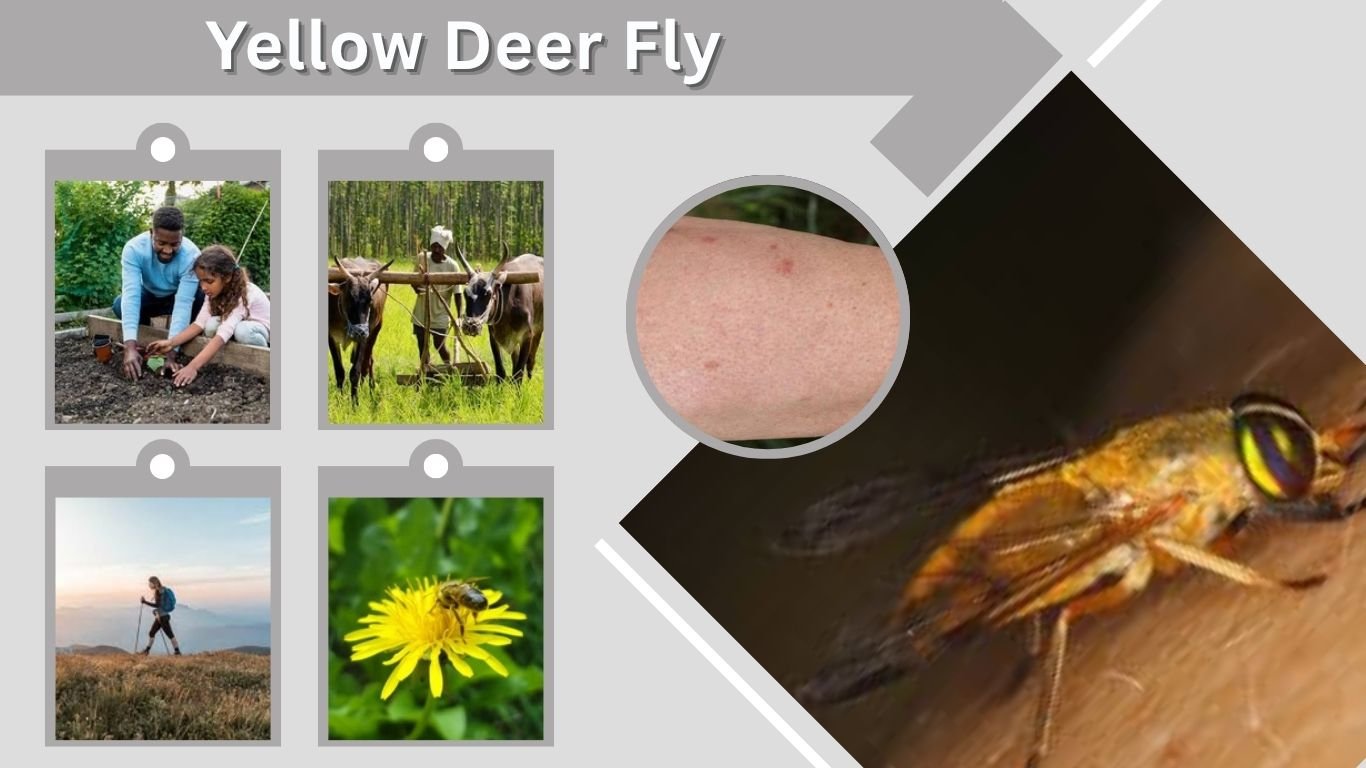
Deer flies are frequently found along woodland trails, field edges, streams and marshes. They are often active during warm, sunny weather and may follow hikers, gardeners and animals moving through their territory.
Where Horse Flies Live
Horse flies occur around pastures, farms, pond edges, river floodplains and other places containing livestock and moisture. Their strong flight allows them to search a relatively large area.
Eggs and Larvae
Females lay clusters of eggs on vegetation, stones or structures above moist soil or water. After hatching, the larvae enter mud, saturated soil or shallow water.
Most larvae prey on insects, worms and other small animals. Development may take many months, after which the larvae pupate and emerge as winged adults.
Deer Fly vs Horse Fly vs Black Fly
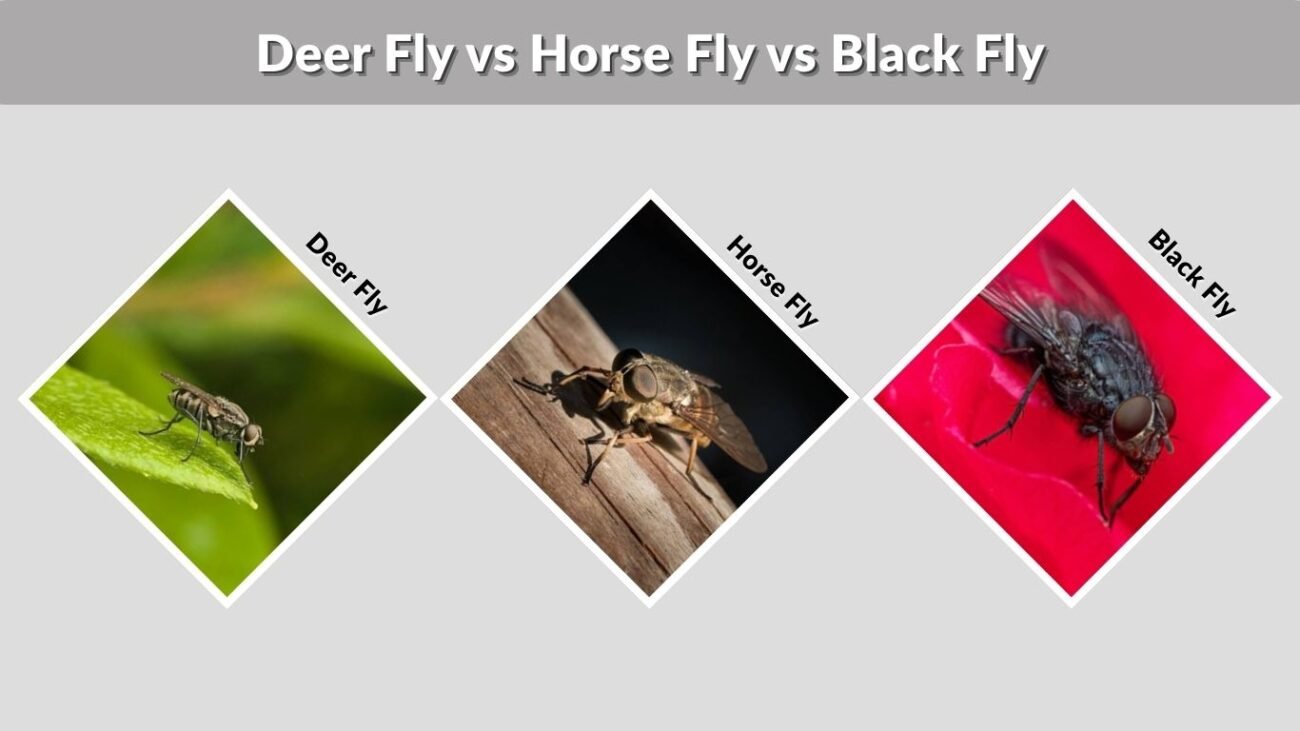
Black flies are a separate group belonging to the family Simuliidae. They are much smaller than deer flies and horse flies and may attack in large numbers.
| Feature | Deer fly | Horse fly | Black fly |
| Approximate size | 1/4–1/2 inch | 1/2–1 1/4 inches | 1/16–1/4 inch |
| Body | Slender to moderately stout | Large and heavy | Small and humpbacked |
| Wings | Dark patterns | Usually clear | Broad and clear |
| Breeding habitat | Wet soil and shallow water | Wet soil and shallow water | Flowing streams and rivers |
| Feeding pattern | Often circles the head | Often targets legs or body | May attack in groups |
| Bite mark | Painful welt | Painful cut or welt | Small red, swollen spot |
Black flies can crawl beneath loose clothing and frequently bite around the hairline, ears, neck and ankles. Their bites may cause substantial itching and swelling despite the insect’s small size.
Treating Deer Fly and Horse Fly Bites
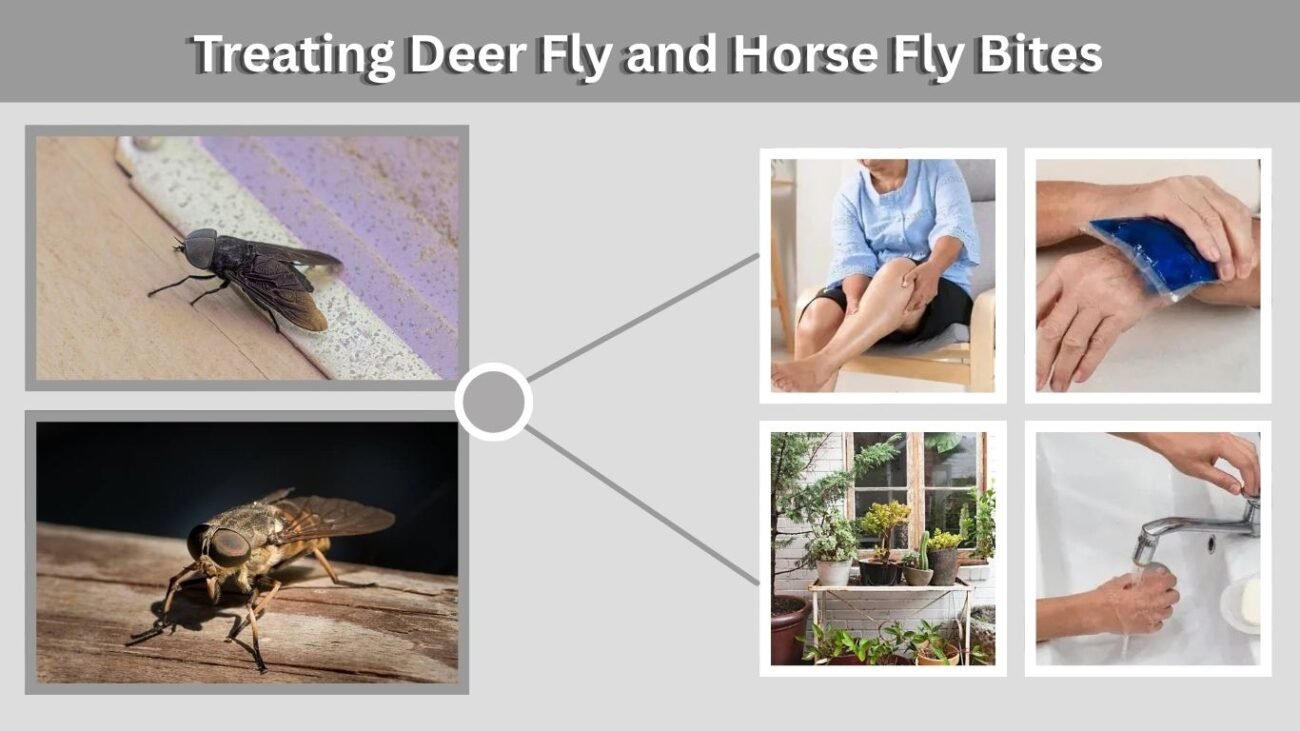
Most bites can be managed at home. Prompt cleaning is important because the insect opens the skin and scratching can introduce bacteria.
Immediate Treatment
Use the following first-aid steps:
- Move indoors or away from the flies.
- Wash the bite gently with soap and clean water.
- Apply a cold pack wrapped in cloth for 10–20 minutes.
- Elevate the affected limb if swelling develops.
- Avoid scratching, squeezing or reopening the wound.
- Cover it loosely if it may contact dirt or clothing.
An oral antihistamine may reduce itching, while a suitable pain reliever or hydrocortisone cream may help with discomfort and inflammation. Follow the label and consult a pharmacist before treating children or combining medications.
Infection Signs
Seek medical advice if redness expands, pain intensifies, the skin becomes increasingly hot, or pus appears. Red streaks, swollen lymph nodes, fever and chills can also indicate an infection requiring treatment.
Call emergency services for difficulty breathing, swelling of the face or throat, widespread hives, dizziness or fainting. These symptoms may indicate a severe allergic reaction.
Tularemia Risk
Deer flies can transmit tularemia in certain regions, although this remains uncommon. The CDC identifies infected deer fly bites as one possible route of transmission.
Contact a healthcare professional if a sore or ulcer develops at the bite site together with fever, chills or painful swollen lymph nodes. Mention the deer fly exposure and where it occurred.
How to Prevent Deer Fly and Horse Fly Bites
Completely eliminating these flies from a large outdoor property is difficult because their larvae develop across extensive wet habitats. Personal protection and targeted management usually provide better results than widespread insecticide spraying.
Protecting Yourself Outdoors
Wear long sleeves, trousers, socks and closed shoes. A hat with a protective mesh can help where deer flies repeatedly circle the head. Apply an insect repellent according to its label, but understand that horse and deer flies may be less responsive to repellents than mosquitoes.
Light-colored clothing may attract fewer flies than large, dark garments. Avoid high-activity wetland and woodland areas during warm daylight hours when possible.
Protecting Horses and Livestock
Fly sheets, masks and leg coverings can reduce exposed skin. Use veterinarian-approved repellents and reapply them as directed. Fans provide relief in barns because strong airflow makes landing difficult.
Remove wet manure, decaying vegetation and other organic material near animal shelters. However, draining natural wetlands or applying pesticides to waterways can damage wildlife and may not provide effective long-term control.
FAQs
Are deer flies and horse flies the same?
No, but they belong to the same family, Tabanidae. Deer flies are usually smaller and have patterned wings. Horse flies are larger and generally possess clear or uniformly dark wings. Females of both groups cut skin and consume blood.
Which is bigger, a deer fly or a horse fly?
Horse flies are normally larger. Many measure between 1/2 and 1 1/4 inches, while deer flies are commonly 1/4–1/2 inch long. Size ranges overlap, so wing patterns and body shape should also be examined.
Which bite is worse, a deer fly or horse fly bite?
Horse fly bites may create larger wounds because the insects have bigger mouthparts. However, either bite can be extremely painful, swollen or itchy. The severity depends on the species, bite location and individual immune reaction rather than size alone.
Do deer flies and horse flies carry diseases?
They are not major human disease vectors like mosquitoes or ticks. Deer flies can occasionally transmit tularemia in certain regions, while both flies may mechanically spread pathogens among animals. Secondary bacterial infection from an open or scratched bite is a more common concern.
How can I tell a deer fly from a horse fly?
Check the size and wings. A deer fly is usually smaller, more yellowish and has distinct dark patches across its wings. A horse fly is larger and more robust, with clear, smoky or evenly dark wings and an especially broad head.