


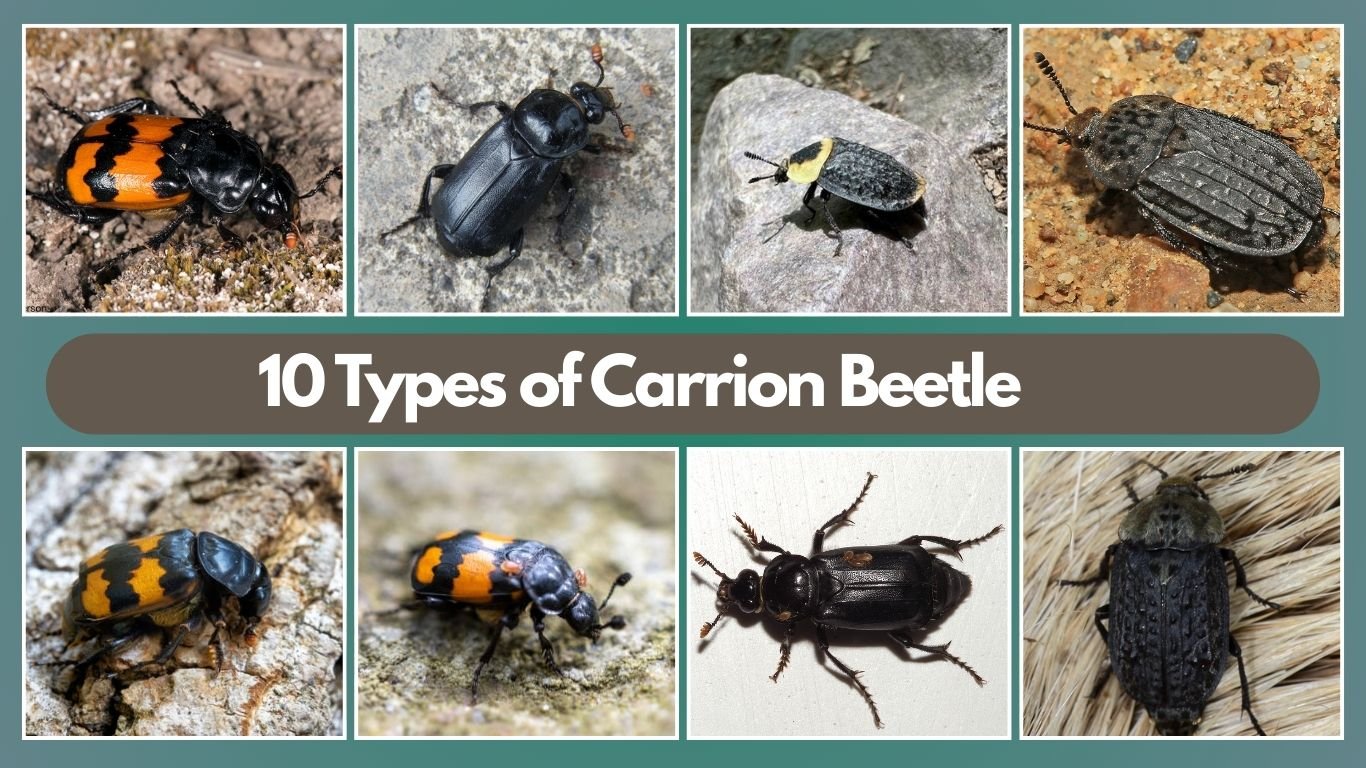
Carrion beetles are a fascinating group of insects that play a vital role in ecosystems by recycling nutrients from decaying animals. Found across the world, these beetles vary in size, color, and behavior, but all share a close relationship with carrion. Some species bury carcasses for their young, while others feed openly. Here, we explore ten types of carrion beetles, highlighting their identification, habitats, behaviors, and diets.
1. American Carrion Beetle (Necrophila americana)
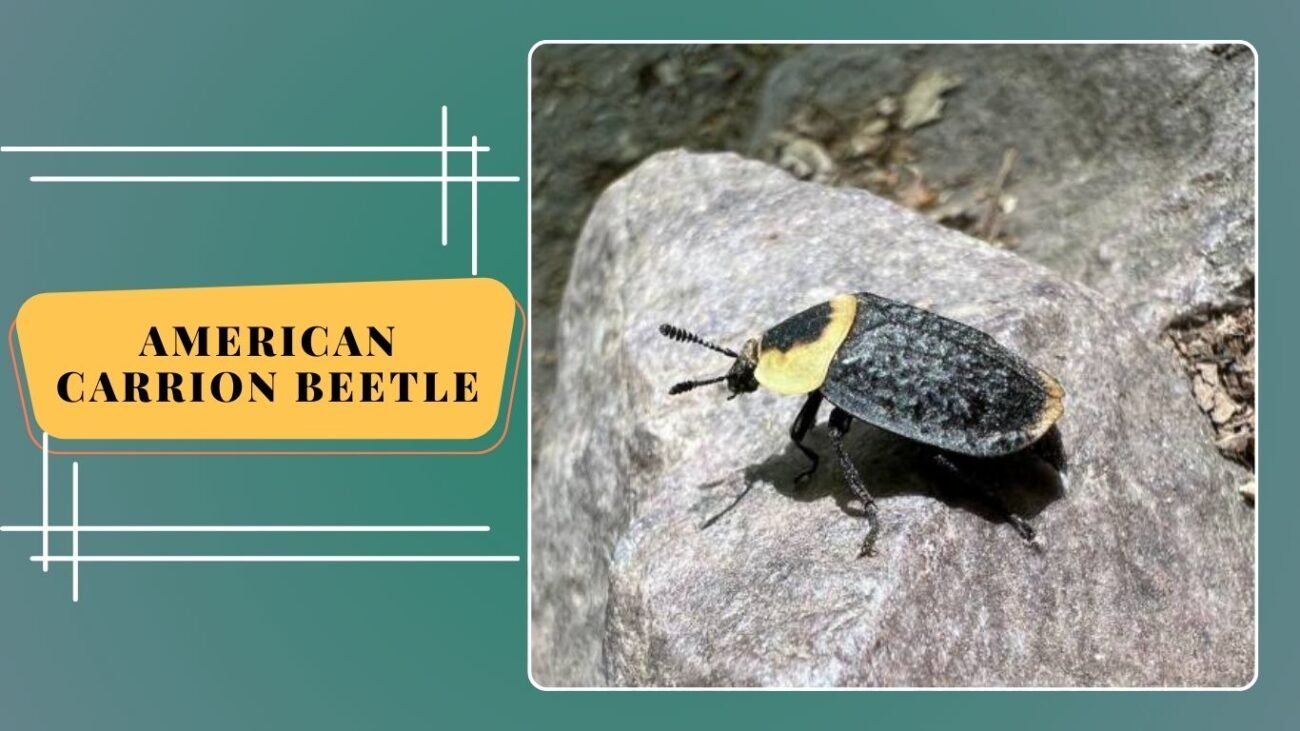
The American Carrion Beetle is a distinctive scavenger beetle found across North America. It plays a vital role in recycling nutrients by feeding on decaying animals, fungi, and even fly larvae associated with carcasses. Its striking appearance and ecological importance make it one of the most recognized carrion beetles.
Identification
- Medium-sized beetle, about 12–20 mm long
- Black body with a broad yellow pronotum (shield behind the head)
- Pronotum often has a central black spot
- Elytra (wing covers) ridged with short, fine hairs
- Strong antennae tipped with orange clubs
Habitat
The American Carrion Beetle is commonly found in forests, fields, and gardens, especially near decaying animal matter. It prefers warm, humid environments where carrion and fungi are plentiful.
Behavior
Adults are strong fliers, often arriving quickly at carcasses. They not only feed on carrion but also consume the larvae of flies, reducing maggot competition. The beetle is most active from late spring through early autumn.
Diet
This species primarily feeds on carrion, but it also eats decaying fungi and opportunistically preys on fly larvae present in carcasses. Both adults and larvae contribute to decomposition and nutrient cycling.
2. Burying Beetle (Nicrophorus vespilloides)
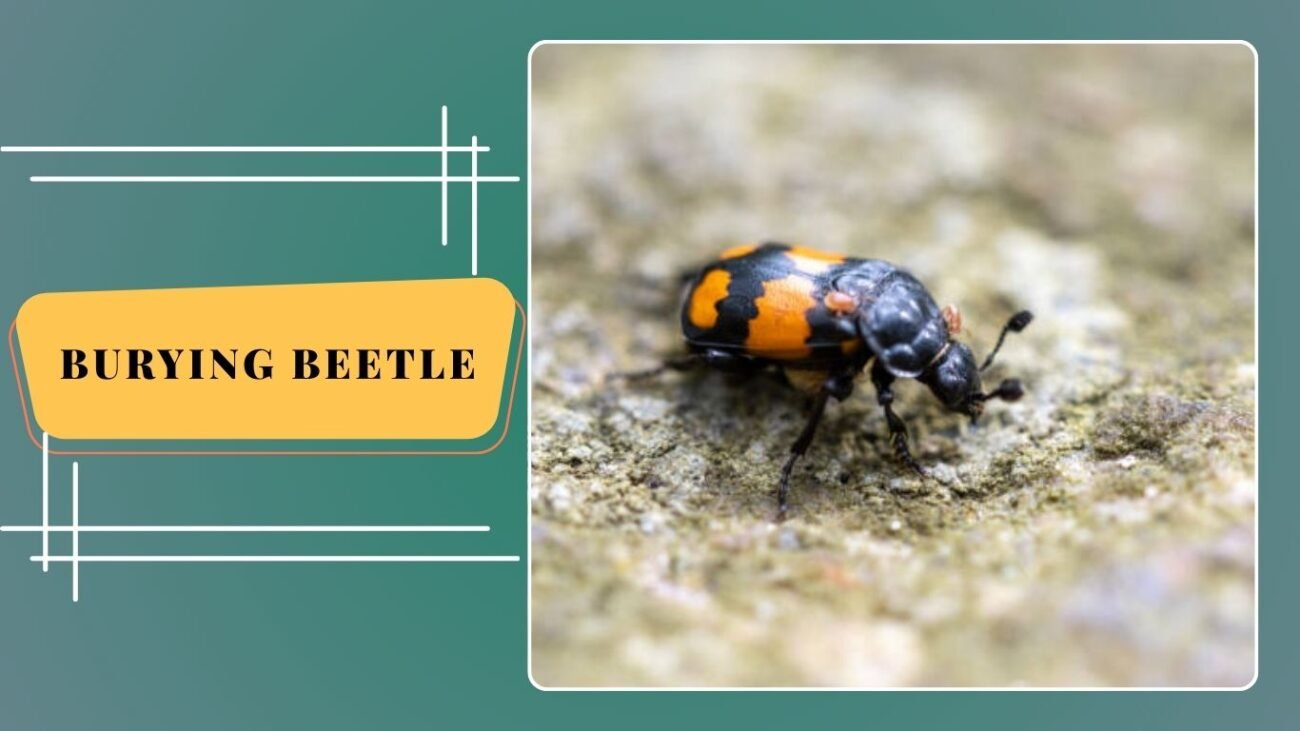
The Burying Beetle is a fascinating carrion beetle known for its unique parental care. Unlike most beetles, it buries small animal carcasses underground to provide a secure food source for its larvae, making it one of the few insects that exhibit advanced family behavior.
Identification
- Medium-sized beetle, 12–22 mm long
- Black body with distinctive orange-red markings on the elytra (wing covers)
- Clubbed antennae, partly orange in color
- Flattened body adapted for burrowing
- Strong legs with spines for digging
Habitat
Burying Beetles are commonly found in meadows, forests, grasslands, and gardens. They prefer habitats where small vertebrates (such as rodents or birds) are abundant, ensuring carrion is available for reproduction.
Behavior
This beetle is known for burying small animal carcasses, which it prepares by removing fur or feathers and coating it with secretions to slow decay. Both male and female care for the larvae, feeding them regurgitated food—a rare trait among beetles.
Diet
Adults and larvae primarily feed on carrion. In addition, adults may also consume fly larvae or other insects competing for the carcass. Their diet plays a critical role in recycling nutrients back into the soil.
3. Sexton Beetle (Nicrophorus vespillo)

The Sexton Beetle, also known as the Funerary Beetle, is a carrion beetle species renowned for its burial behavior similar to other burying beetles. It is widespread in Europe and parts of Asia, where it thrives in open countryside and woodland edges.
Identification
- Size ranges from 12–22 mm long
- Black body with two bright orange bands on each elytron (wing cover)
- Clubbed antennae with orange tips
- Slightly flattened body for digging
- Elytra do not fully cover the abdomen, leaving the tip visible
Habitat
This beetle inhabits meadows, hedgerows, grasslands, and woodland margins. It favors areas with a steady supply of small animal carcasses, often near rodent or bird populations.
Behavior
The Sexton Beetle is strongly associated with burying carcasses underground, usually of small vertebrates. It exhibits biparental care, with both male and female tending to their offspring by feeding and protecting the larvae. It is most active from late spring through summer.
Diet
Both adults and larvae feed primarily on carrion. In addition, adults may also consume competing maggots or other insects attracted to carcasses. This species is essential in reducing decomposition competition and recycling nutrients into the ecosystem.
4. Nicrophorus investigator
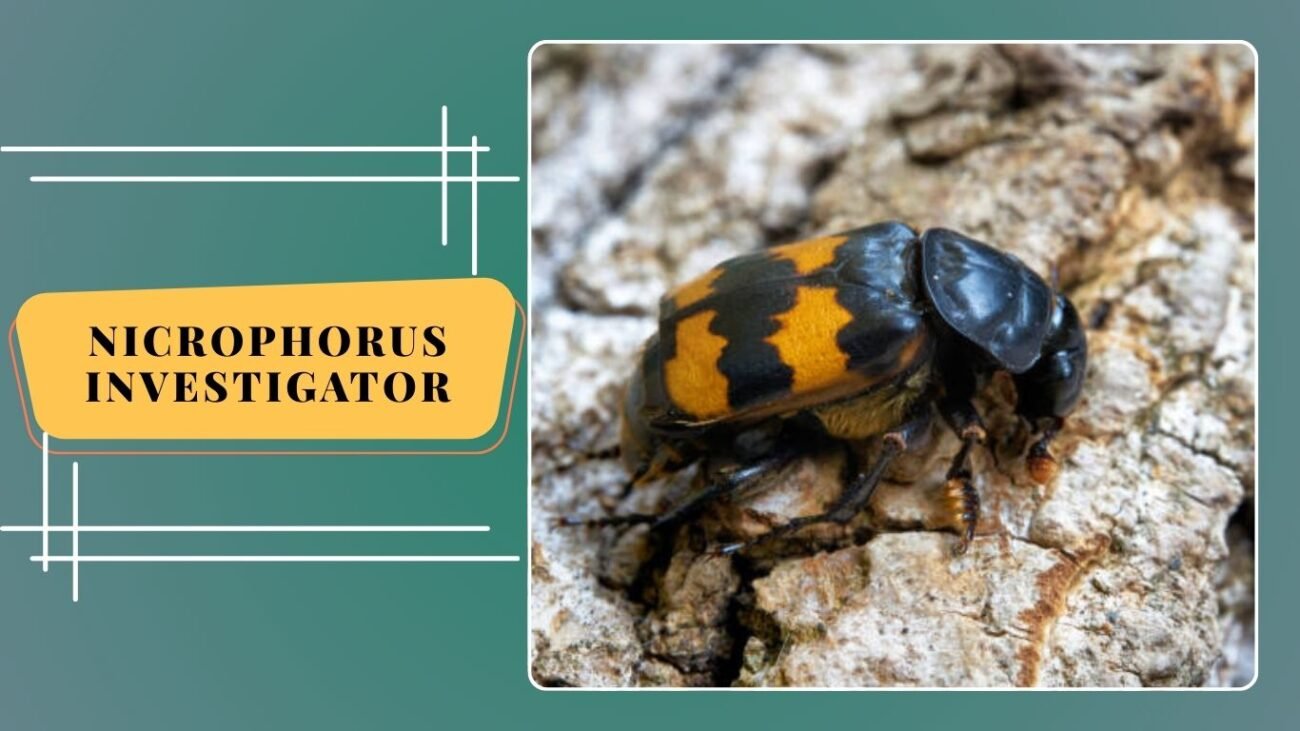
Nicrophorus investigator is a widespread carrion beetle found across Europe, Asia, and North America. Like other burying beetles, it is well known for its ability to locate carrion rapidly and bury it to serve as a food source for its developing young.
Identification
- Medium to large beetle, about 15–25 mm long
- Black body with two broad orange-red markings on each elytron (wing cover)
- Antennae are orange-tipped with distinct clubs
- Elytra shortened, leaving the last abdominal segments exposed
- Strong digging legs adapted for burrowing
Habitat
This species prefers open fields, grasslands, and woodland edges where small vertebrates are common. It is often found near rural habitats and can adapt to cooler northern climates.
Behavior
Adults are highly efficient at detecting carcasses, sometimes within hours of death. They bury small animal remains underground and prepare them for larvae by stripping fur or feathers. Both parents remain to care for the brood, feeding larvae directly with regurgitated food.
Diet
Carrion is the primary diet of both adults and larvae. Adults also opportunistically feed on maggots or other insects at carcass sites to reduce competition. This feeding strategy helps accelerate decomposition and nutrient cycling.
5. Nicrophorus orbicollis
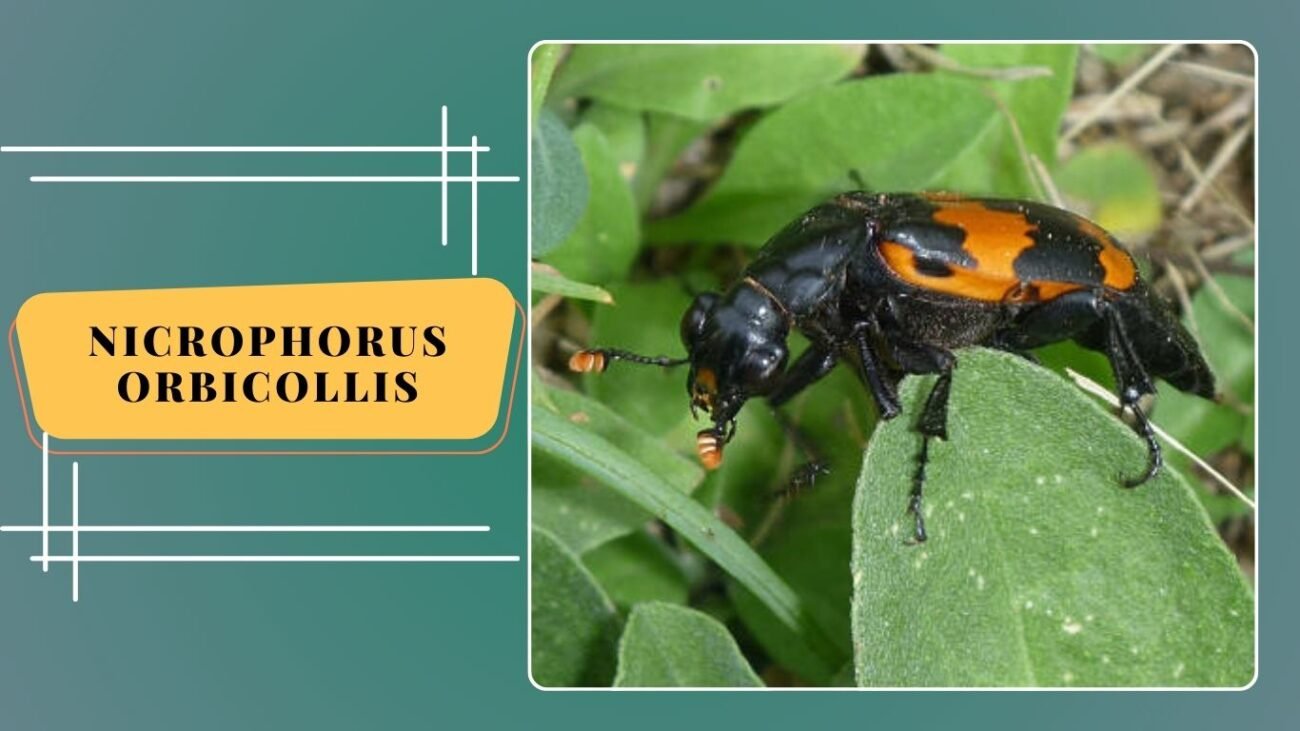
Nicrophorus orbicollis is a carrion beetle native to North America, particularly common in the eastern United States and southern Canada. It is one of the larger burying beetle species and is notable for its strong parental care, ensuring the survival of its offspring.
Identification
- Large beetle, about 20–28 mm long
- Black body with two broad orange markings on each elytron (wing cover)
- Distinctive orange-tipped, clubbed antennae
- Pronotum (shield behind the head) entirely black and rounded
- Strong legs adapted for digging and moving soil
Habitat
This species inhabits woodlands, meadows, and rural areas where small mammals and birds are abundant. It is most frequently found in moist soils, which make carcass burial easier.
Behavior
Nicrophorus orbicollis shows exceptional parental care. Mated pairs bury small animal carcasses and remain with their young, feeding larvae regurgitated food and guarding the brood chamber. This cooperative behavior is one of the most advanced forms of care among beetles.
Diet
The diet consists mainly of carrion, particularly small mammals and birds. Adults also feed on fly larvae and other insects competing for the carcass. Both adults and larvae contribute to decomposition and soil nutrient enrichment.
6. Nicrophorus tomentosus
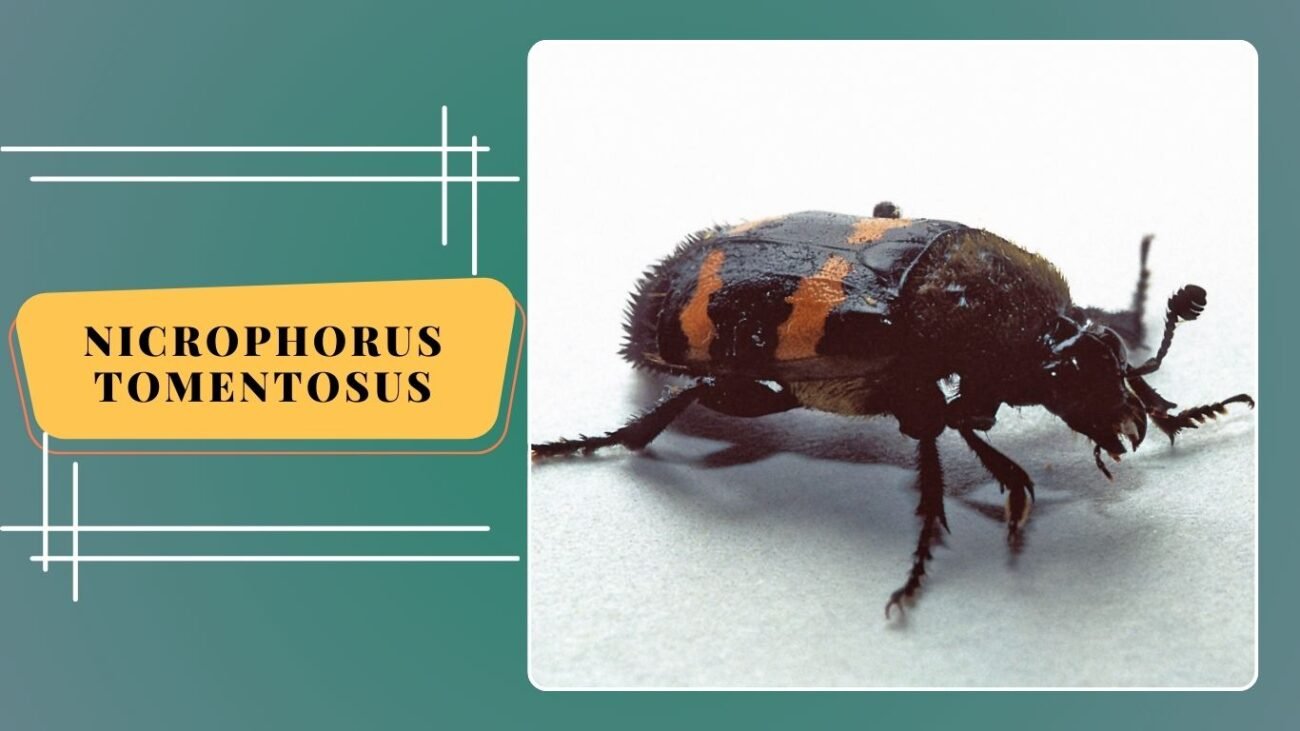
Nicrophorus tomentosus is a carrion beetle native to North America and is often distinguished from its relatives by its hairy (tomentose) appearance. It is one of the more widespread species and is most active during the warmer months of the year.
Identification
- Medium-sized beetle, about 12–20 mm long
- Black body with two bright orange bands on each elytron (wing cover)
- Elytra shortened, leaving abdominal tips exposed
- Antennae with orange clubs
- Covered with fine yellowish hairs (tomentum), giving it a dusty appearance
Habitat
This species inhabits woodlands, meadows, and grasslands, often found in areas rich in small animal populations. Unlike many other burying beetles, it prefers drier habitats and is well adapted to sandy soils.
Behavior
Nicrophorus tomentosus is active in late summer and early fall, often later in the season than other burying beetles. Adults bury small animal carcasses, sometimes several beetles cooperating in burial. Parental care is present but not as extended as in some other species.
Diet
The primary diet consists of carrion, particularly small mammals and birds. Adults and larvae feed directly on decomposing flesh, while adults may also consume maggots or competing insects at carcass sites.
7. Nicrophorus marginatus
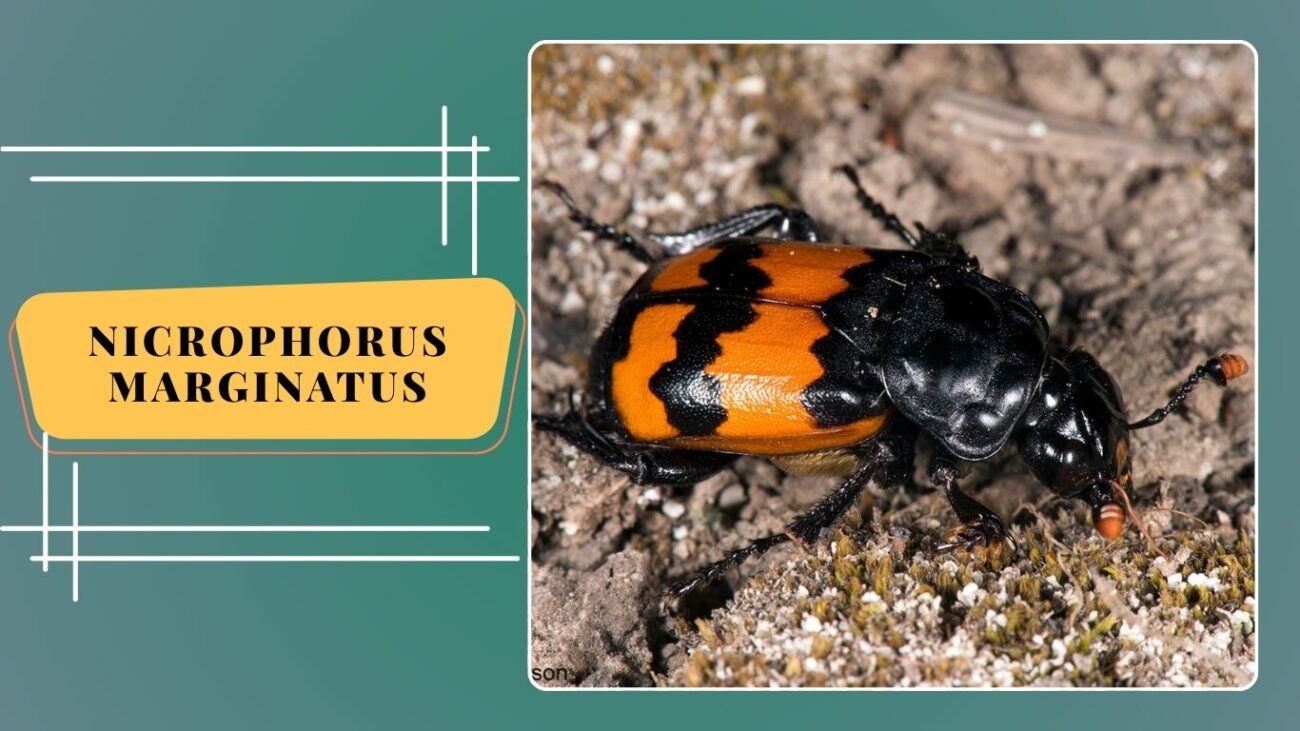
Nicrophorus marginatus is a carrion beetle widely distributed across North America. It is known for its efficiency in locating and burying carrion, often competing aggressively with other beetles for access to resources.
Identification
- Medium to large beetle, about 15–25 mm long
- Black body with two bright orange-red markings on each elytron (wing cover)
- Elytra truncated, leaving abdominal tip exposed
- Antennae with orange clubs
- Pronotum generally all black, giving a robust and glossy appearance
Habitat
This species inhabits open fields, grasslands, and forest edges. It prefers sandy or loose soil areas that make carcass burial easier. It is most active during the summer months.
Behavior
Nicrophorus marginatus is a strong flier and quickly locates carrion, often within hours. Adults work in pairs to bury small vertebrate carcasses, removing fur or feathers before covering them with soil. They exhibit parental care, with both sexes feeding and protecting their young.
Diet
Both adults and larvae feed primarily on carrion, mainly small mammals and birds. Adults may also prey on fly larvae or other insects around carcasses to reduce competition and ensure food availability for their brood.
8. Nicrophorus humator
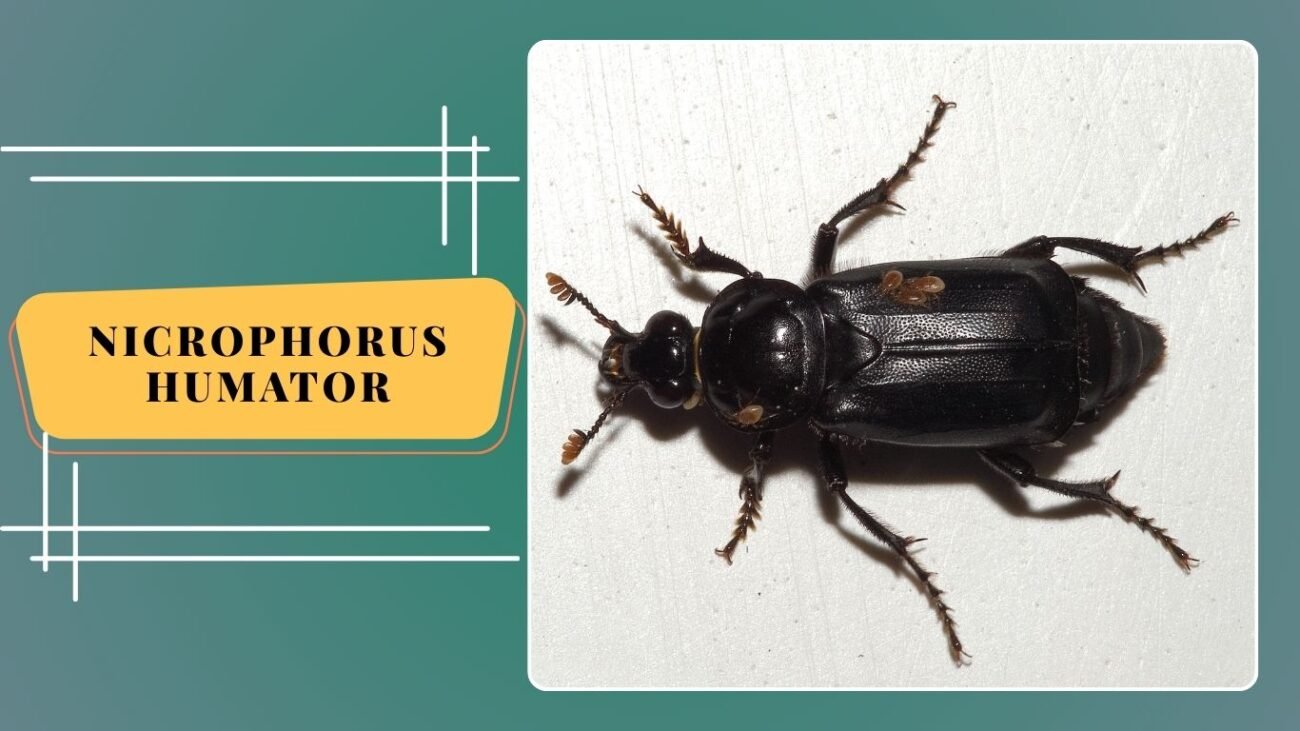
Nicrophorus humator is one of the largest and most robust carrion beetles in the genus, widely distributed across Europe and parts of Asia. Unlike many of its brightly patterned relatives, this species is entirely black, giving it a more somber appearance.
Identification
- Large beetle, about 20–40 mm long
- Entirely black body, lacking the orange markings typical of many burying beetles
- Elytra shortened, leaving the last abdominal segments exposed
- Strong, clubbed antennae (black to dark brown)
- Powerful legs adapted for digging
Habitat
This species thrives in woodlands, meadows, and rural areas, particularly where small mammals and birds are abundant. It prefers moist soils, which make burial of carcasses easier.
Behavior
Nicrophorus humator is a nocturnal species, often arriving at carcasses during the night. Like other burying beetles, it buries small vertebrate remains and provides parental care for its offspring. Both parents remain with the brood, feeding and protecting larvae until they are able to survive independently.
Diet
The diet primarily consists of carrion from small mammals and birds. Adults also feed on maggots and other insects present on carcasses, reducing competition for their larvae. This feeding behavior makes the species an important decomposer in ecosystems.
9. Thanatophilus lapponicus
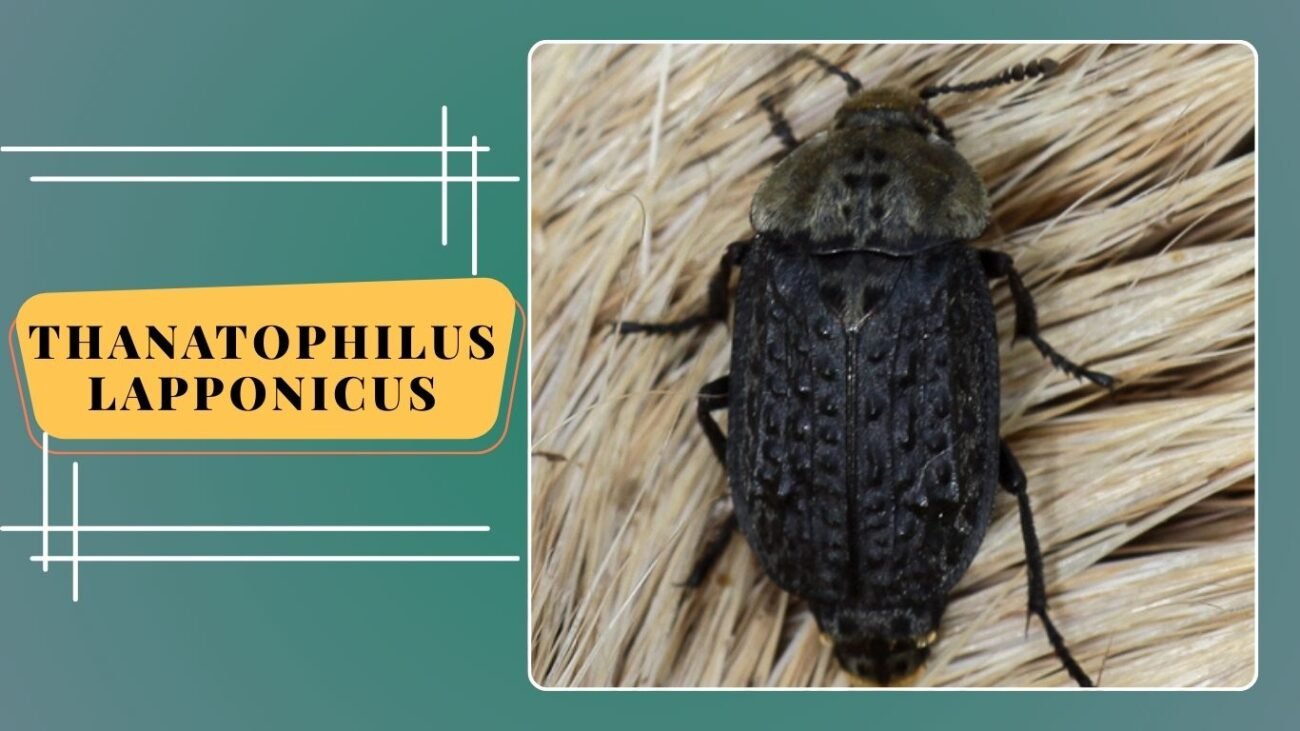
Thanatophilus lapponicus is a carrion beetle found mainly in the Northern Hemisphere, particularly in cooler regions of Europe, Asia, and North America. It belongs to the subfamily Silphinae and is often associated with open habitats where it helps decompose animal remains.
Identification
- Medium-sized beetle, about 10–14 mm long
- Body oval and slightly flattened
- Dark brown to black coloration with fine ridges on the elytra (wing covers)
- Elytra fully cover the abdomen, unlike many burying beetles
- Short antennae ending in a small club
Habitat
This species prefers open, cooler habitats such as tundra, meadows, and forest clearings. It is often found in northern and alpine environments where carrion resources are scattered.
Behavior
Thanatophilus lapponicus is primarily active during spring and summer. Adults are scavengers, frequently visiting carcasses of small animals. They do not bury carcasses like Nicrophorus species but instead feed openly on remains and lay eggs nearby.
Diet
Both adults and larvae feed directly on carrion. They play an essential role in decomposition, helping recycle nutrients into ecosystems, particularly in cooler climates where decay is slower.
10. Thanatophilus rugosus
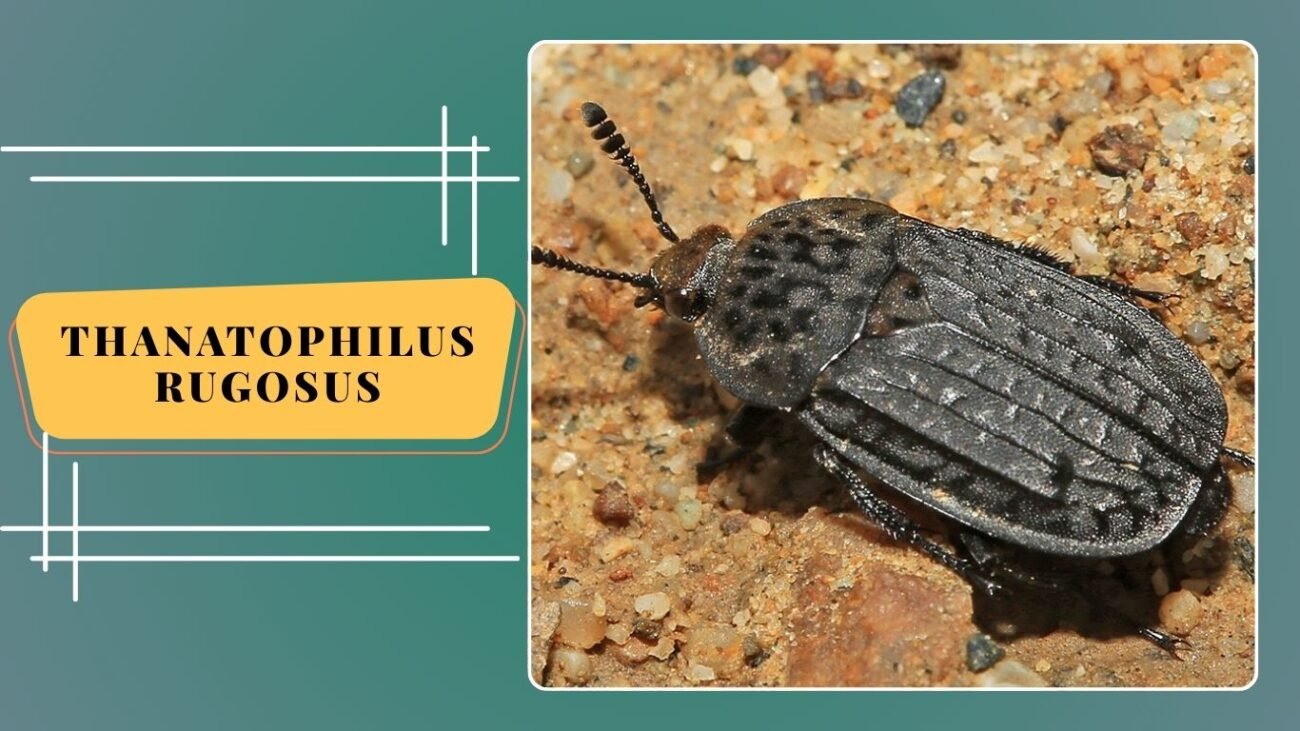
Thanatophilus rugosus is a carrion beetle species widely distributed across Europe and parts of Asia. It is a member of the Silphinae subfamily and, like other Thanatophilus species, it feeds openly on carcasses without burying them. This beetle is an important decomposer, particularly in grassland and open habitats.
Identification
- Medium-sized beetle, about 10–16 mm long
- Dark brown to black body with a rough, wrinkled (rugose) texture on the elytra
- Elytra oval and fully covering the abdomen
- Antennae short with compact clubs
- Slightly flattened body shape, adapted for moving across carcass surfaces
Habitat
This species inhabits meadows, fields, forest edges, and other open landscapes. It is especially common in drier, sandy areas where carrion is exposed.
Behavior
Thanatophilus rugosus is diurnal and often found crawling on exposed carcasses. Unlike burying beetles, it does not dig or prepare carrion for its larvae. Instead, females deposit eggs near remains, and larvae develop by directly feeding on the carrion.
Diet
Both adults and larvae feed exclusively on carrion, primarily small vertebrates such as rodents, birds, and reptiles. They are highly efficient in cleaning up carcasses and accelerating nutrient recycling in ecosystems.


