Water beetles are a diverse group of aquatic insects that play important roles in freshwater ecosystems. From predatory hunters to algae grazers and scavengers, these beetles thrive in ponds, lakes, rivers, and marshes. Each species has unique adaptations for survival, whether it’s streamlined swimming bodies, burrowing habits, or herbivorous diets. This guide explores 17 fascinating types of water beetles, highlighting their identification, habitats, behaviors, and feeding patterns.
1. Great Diving Beetle (Dytiscus marginalis)

The Great Diving Beetle is a large, powerful aquatic beetle commonly found in ponds, lakes, and slow-moving streams. Known for its excellent swimming ability and predatory nature, it plays an important role in balancing freshwater ecosystems.
Identification
- Large beetle, typically 27–35 mm long
- Oval, streamlined body adapted for swimming
- Dark greenish-black back with yellowish wing margins
- Long, flattened hind legs fringed with hairs for propulsion
- Strong mandibles used for catching prey
Habitat
Great Diving Beetles inhabit freshwater bodies such as ponds, ditches, and lakes with plenty of aquatic vegetation. They prefer still or slow-moving waters that provide shelter and hunting grounds.
Behavior
They are agile swimmers and often come to the water surface to trap air beneath their wing cases for breathing. When threatened, they can release defensive secretions. Both adults and larvae are active hunters.
Diet
The species is carnivorous, preying on aquatic invertebrates, tadpoles, and even small fish. Larvae, often called “water tigers,” are especially voracious predators.
2. Lesser Diving Beetle (Acilius sulcatus)

The Lesser Diving Beetle is a smaller but equally efficient predator compared to its larger relatives. It is commonly seen in garden ponds and shallow freshwater habitats, where it plays a role in controlling aquatic insect populations.
Identification
- Medium-sized beetle, around 15–17 mm long
- Oval, streamlined body suited for swimming
- Brown to yellowish coloration with darker markings on the back
- Males often have suction pads on their forelegs for gripping females during mating
- Hind legs flattened and fringed with hairs for propulsion
Habitat
This beetle favors shallow ponds, ditches, and marshes, often with abundant vegetation. It is frequently found in man-made garden ponds due to its adaptability.
Behavior
Lesser Diving Beetles are strong fliers and can disperse to new water sources. They surface frequently to replenish their air supply and are active hunters.
Diet
Carnivorous in nature, they feed on aquatic insects, mosquito larvae, and small invertebrates. Larvae also hunt actively and play an important role in controlling pest populations.
3. Predaceous Diving Beetle (Cybister fimbriolatus)
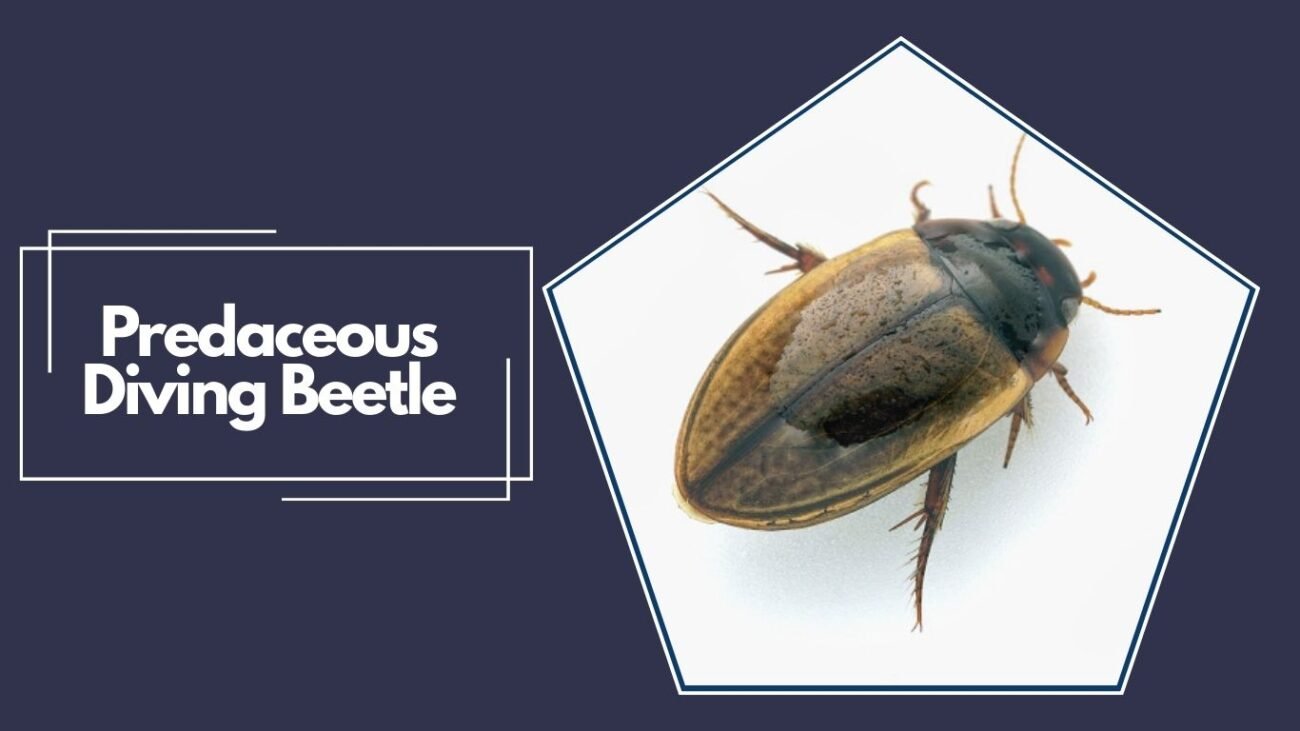
The Predaceous Diving Beetle is one of the largest aquatic beetles in North America. Known for its impressive size and hunting ability, it is a dominant predator in ponds and lakes, capable of tackling surprisingly large prey.
Identification
- Large beetle, reaching up to 40 mm in length
- Smooth, oval body with dark brown to black coloration
- Hind legs long, flattened, and fringed with hairs for swimming
- Strong, curved mandibles designed for capturing prey
- Streamlined form adapted for both swimming and flying
Habitat
This beetle inhabits ponds, marshes, and lakes, preferring still or slow-moving waters with abundant vegetation. It often rests near the bottom or hides among plants when not active.
Behavior
Predaceous Diving Beetles are powerful swimmers and active predators. They store air under their wing cases, surfacing periodically to replenish it. Adults are strong fliers and can relocate to new habitats, especially during warm, humid nights.
Diet
Both adults and larvae are voracious carnivores. They feed on aquatic insects, tadpoles, and small fish. Larvae, sometimes called “water tigers,” use their sharp jaws to inject digestive enzymes into prey before consuming it.
4. Whirligig Beetle (Gyrinus substriatus)
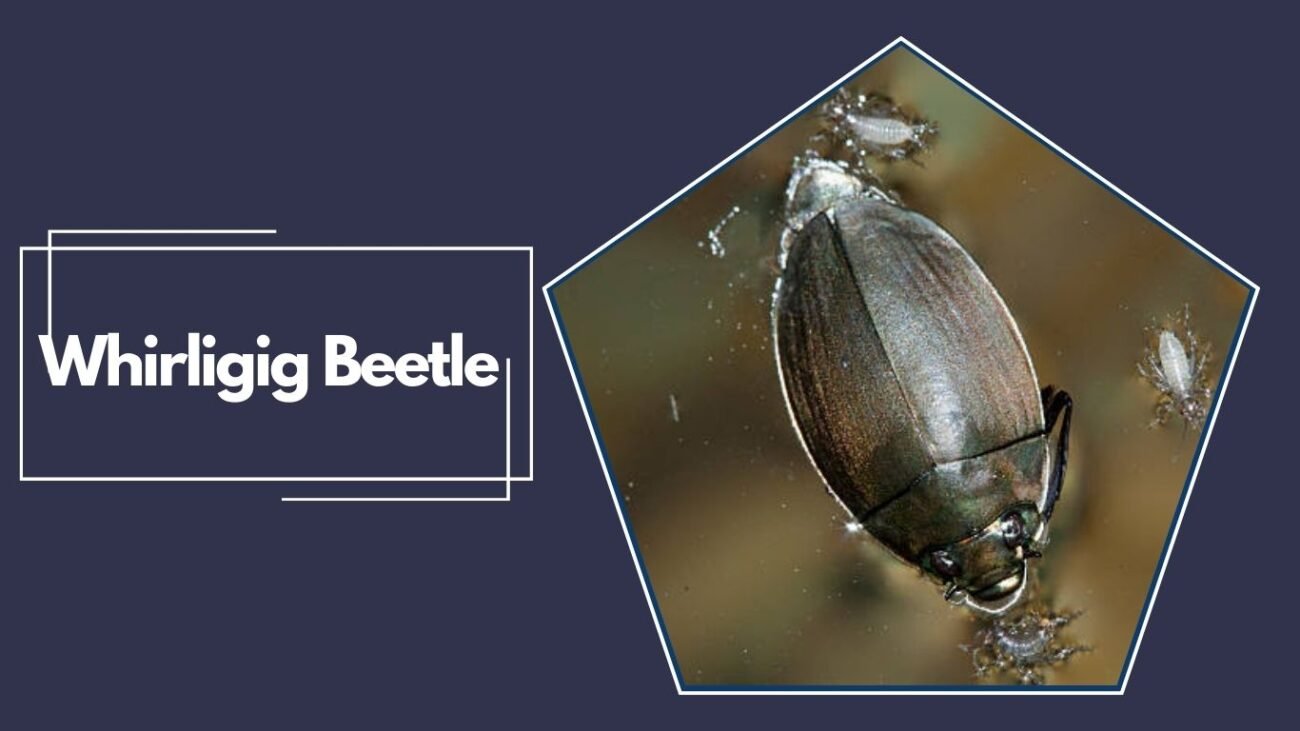
The Whirligig Beetle is a fascinating aquatic insect best known for its rapid, circling movements on the water’s surface. With unique split eyes and social swarming behavior, it is an easily recognizable species in ponds and streams.
Identification
- Small beetle, usually 4–7 mm long
- Oval, shiny black or dark metallic body
- Short, paddle-like middle and hind legs adapted for swimming
- Distinctive divided compound eyes — upper half for vision above water, lower half for vision below
- Moves rapidly in circular patterns across the water surface
Habitat
Whirligig Beetles are commonly found on the surface of ponds, lakes, and slow-flowing streams. They gather in groups, often forming large swarms that skim actively over the water.
Behavior
They are highly social and exhibit rapid, whirling swimming patterns, which confuse predators. When threatened, they can dive underwater to escape. Their unique split eyes allow them to monitor both aerial and aquatic threats simultaneously.
Diet
Omnivorous scavengers and predators, Whirligig Beetles feed on small insects that fall onto the water beetle.
5. Crawling Water Beetle (Haliplus ruficollis)
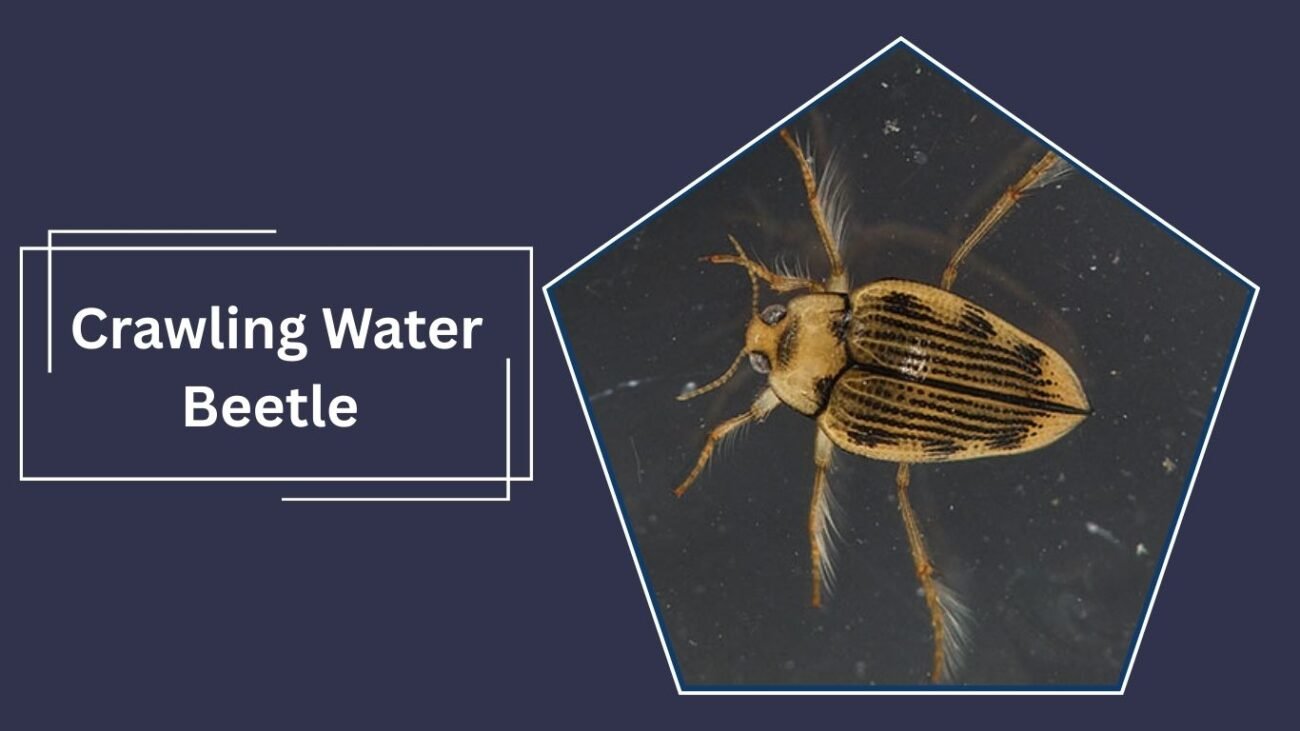
The Crawling Water Beetle is a small, plant-feeding aquatic beetle commonly found in shallow freshwater habitats. Unlike many other water beetles that are predators, this species is primarily herbivorous, making it unique among aquatic beetles.
Identification
- Small beetle, around 3–4 mm long
- Oval, compact body with yellowish to reddish-brown coloration and dark markings
- Enlarged, plate-like hind coxae (leg bases) that cover part of the abdomen — a key identifying feature
- Hind legs adapted more for crawling than for fast swimming
- Often seen clinging to plants or crawling slowly underwater
Habitat
Crawling Water Beetles live in ponds, lakes, and ditches with abundant aquatic vegetation. They prefer shallow areas with plenty of algae and plant matter for feeding.
Behavior
Unlike fast-swimming diving beetles, this species spends much of its time crawling slowly among plants. It surfaces occasionally to replenish its air supply, which is stored under its wing cases.
Diet
Mostly herbivorous, feeding on algae, diatoms, and decaying plant matter. Occasionally, they may consume small invertebrates, but plants remain their primary food source.
6. Burrowing Water Beetle (Hydrophilus triangularis)

The Burrowing Water Beetle is one of the largest aquatic beetles in North America. Unlike predaceous diving beetles, it is primarily a scavenger and herbivore, though it can occasionally act as a predator. Its size and shiny appearance make it a striking species to observe.
Identification
- Very large beetle, often 30–40 mm in length
- Oval, smooth, and shiny black body
- Long, clubbed antennae concealed beneath short palps, giving a false “snout-like” appearance
- Hind legs adapted for swimming but less streamlined than diving beetles
- Adults often appear glossy and heavy-bodied
Habitat
Burrowing Water Beetles inhabit ponds, marshes, and lakes with abundant vegetation. They prefer still or sluggish waters with soft, muddy bottoms where they can burrow and rest.
Behavior
These beetles are strong swimmers but also adept at burrowing into soft mud for shelter. They surface periodically to trap an air bubble beneath their wing cases for breathing. Adults are nocturnal and are frequently attracted to lights.
Diet
Primarily scavengers and herbivores, they feed on decaying organic matter, algae, and aquatic plants. Occasionally, they may consume small invertebrates, making them opportunistic feeders.
7. Water Scavenger Beetle (Hydrophilus piceus)
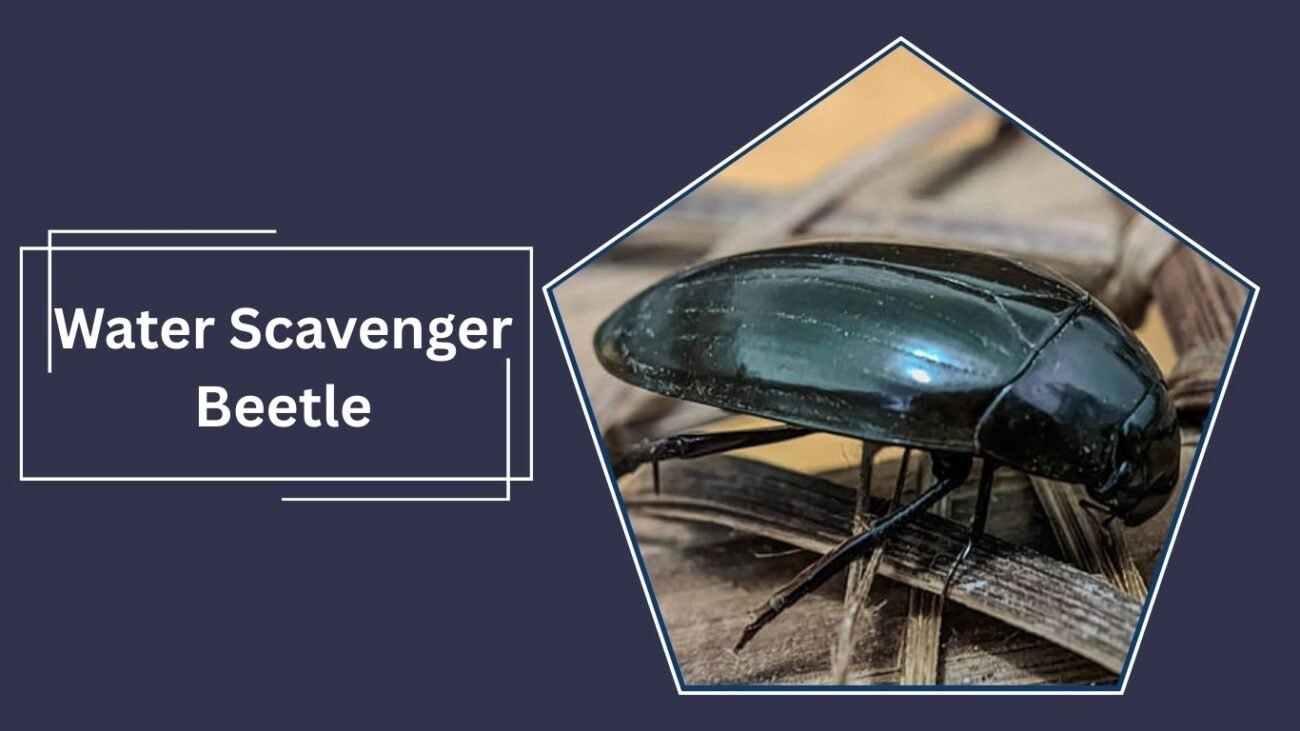
The Water Scavenger Beetle is one of the largest aquatic beetles in Europe and a close relative of the Burrowing Water Beetle. Despite its predatory appearance, it primarily feeds on decaying plant material, playing an important role in nutrient recycling in freshwater habitats.
Identification
- Very large beetle, reaching 35–50 mm in length
- Shiny, oval black body with smooth surface
- Distinct clubbed antennae hidden beneath longer palps, giving a “snout-like” look
- Hind legs well-fringed with hairs, adapted for swimming
- Adults often mistaken for predaceous diving beetles but differ in antenna structure
Habitat
This beetle inhabits ponds, lakes, and marshes, particularly in areas with dense aquatic vegetation. It thrives in still or slow-moving waters with rich organic matter.
Behavior
Water Scavenger Beetles are strong swimmers and surface to replenish air, which they trap beneath their wing cases. They can also walk on land and fly to new habitats when necessary. At night, they are often attracted to artificial lights.
Diet
Primarily detritivores and herbivores, feeding on decaying vegetation and algae. They may occasionally eat small aquatic invertebrates but are not specialized predators.
8. Long-toed Water Beetle (Dryops luridus)
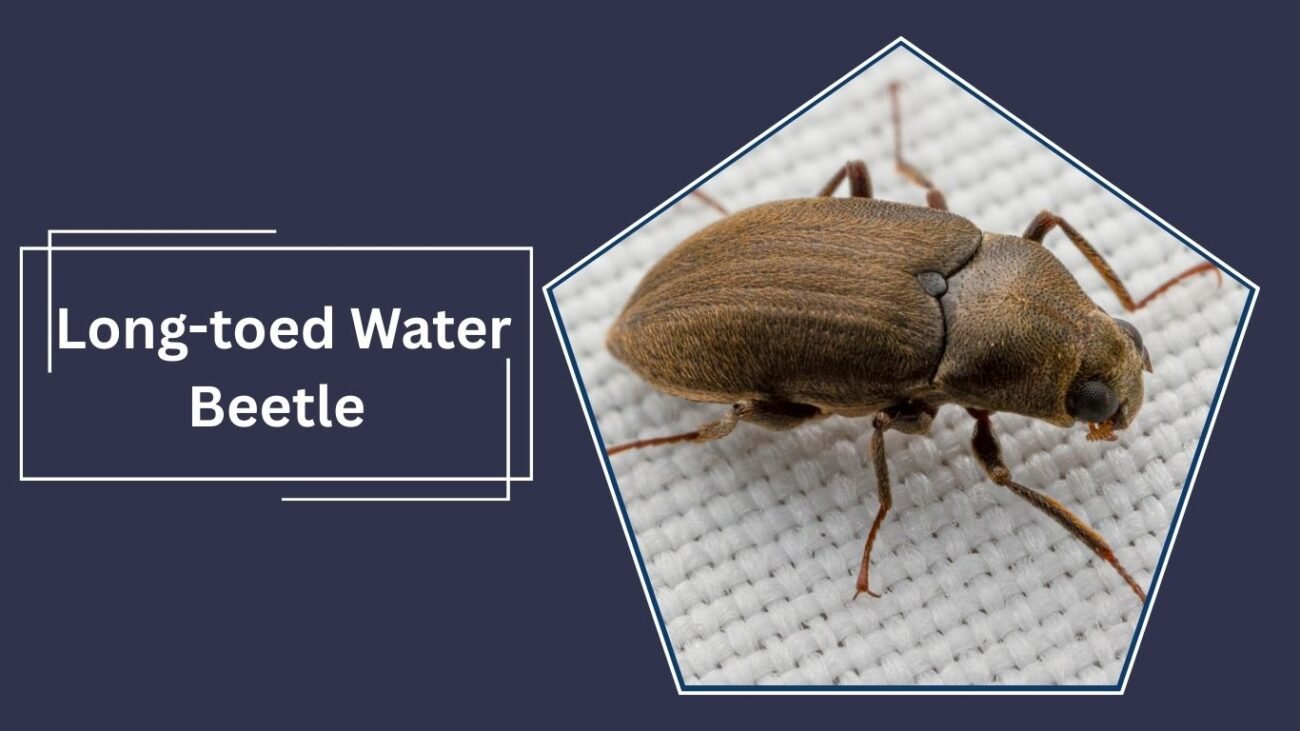
The Long-toed Water Beetle is a small, semi-aquatic species that spends much of its life clinging to submerged plants and debris. Unlike many water beetles, it is not an active swimmer but is well adapted for a life among aquatic vegetation.
Identification
- Small beetle, about 5–7 mm long
- Elongated, narrow body, usually brown to dark brown in color
- Long claws (“toes”) on the legs, adapted for gripping plants and surfaces
- Antennae short and often clubbed
- Covered with fine hairs that help trap a thin layer of air
Habitat
This species inhabits ponds, lakes, streams, and marshy areas, usually clinging to aquatic plants, stones, or submerged wood. It prefers shallow waters rich in vegetation.
Behavior
Long-toed Water Beetles are poor swimmers, relying instead on crawling and gripping surfaces. They can store air in a thin layer of hairs on their body, allowing them to stay submerged for extended periods.
Diet
They primarily feed on algae, decaying organic matter, and microorganisms found on submerged surfaces. Occasionally, they may scrape biofilm from aquatic plants.
9. Reed Beetle (Donacia semicuprea)

The Reed Beetle is a colorful aquatic leaf beetle that spends its life closely associated with emergent water plants, especially reeds. Unlike predatory diving beetles, it is strictly herbivorous and easily recognized by its metallic sheen.
Identification
- Medium-sized beetle, about 5–7 mm long
- Elongated body with metallic bronze, copper, or green coloration
- Long legs adapted for clinging to reed stems and leaves
- Antennae relatively long and slender
- Often seen resting on or feeding from aquatic plants above the waterline
Habitat
Reed Beetles inhabit ponds, lakes, rivers, and marshes with abundant reeds, sedges, and other emergent aquatic plants. They are typically found clinging to stems just above or slightly below the water surface.
Behavior
Adults are strong climbers and spend most of their time on reed stems. They can also fly between water bodies when searching for new habitats. Larvae develop underwater, where they attach to plant roots for feeding and oxygen supply.
Diet
Strictly herbivorous, feeding on reeds, sedges, and other aquatic vegetation. Larvae feed on plant roots and obtain oxygen through specialized structures that tap into plant tissues.
10. Marsh Beetle (Scirtes hemisphaericus)
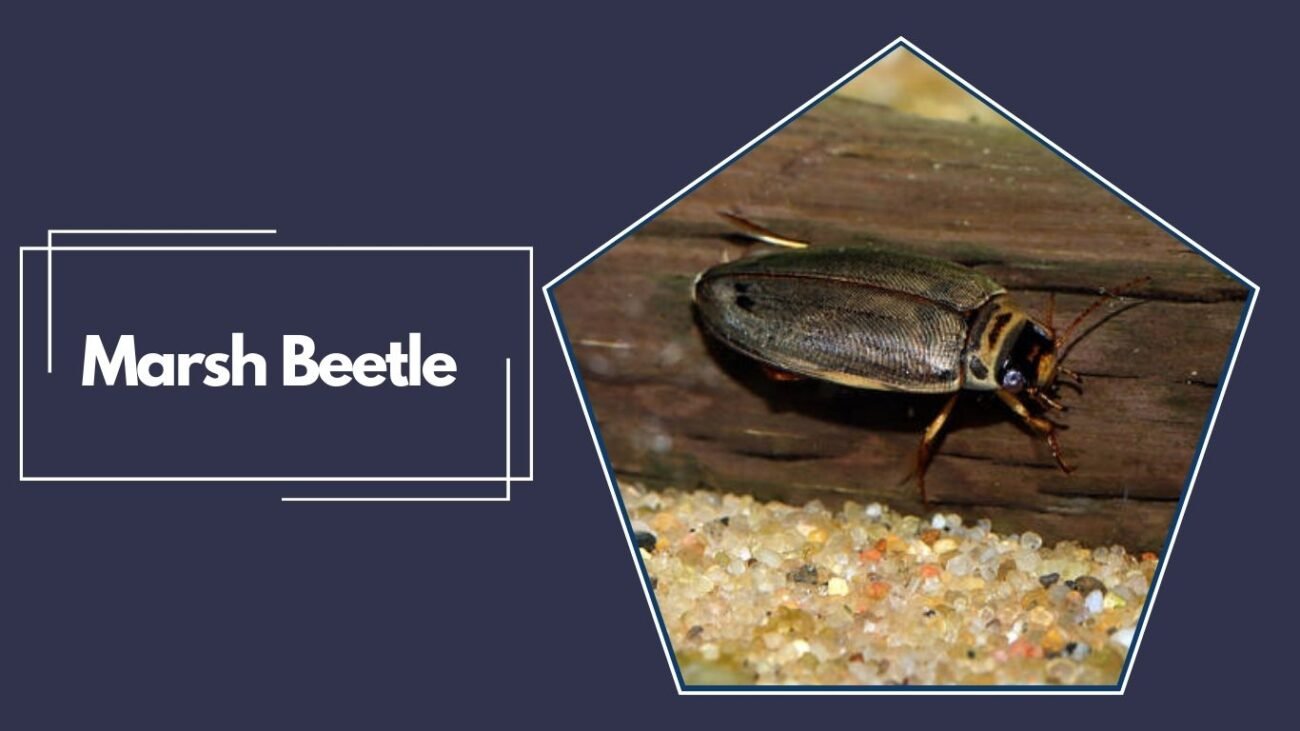
The Marsh Beetle is a small, dome-shaped aquatic beetle often found in wetlands and marshy habitats. Although aquatic in habit, it is more commonly seen clinging to vegetation at the water’s edge than swimming.
Identification
- Small beetle, around 2–3 mm long
- Compact, rounded, dome-like body
- Usually dark brown to black in coloration
- Long, thread-like antennae
- Hind legs well-adapted for jumping, resembling those of flea beetles
Habitat
Marsh Beetles inhabit wetlands, marshes, pond margins, and areas with abundant aquatic vegetation. They are often found resting on grasses, sedges, and other plants near water.
Behavior
They are weak swimmers but capable jumpers, using their hind legs to propel themselves. Adults are most active during warm months and are often attracted to lights at night. Their larvae develop in moist, decaying vegetation near water.
Diet
Adults and larvae feed on decaying organic matter and algae. They contribute to the breakdown of plant debris, playing a role in wetland nutrient recycling.
11. False Water Beetle (Noteridae family)
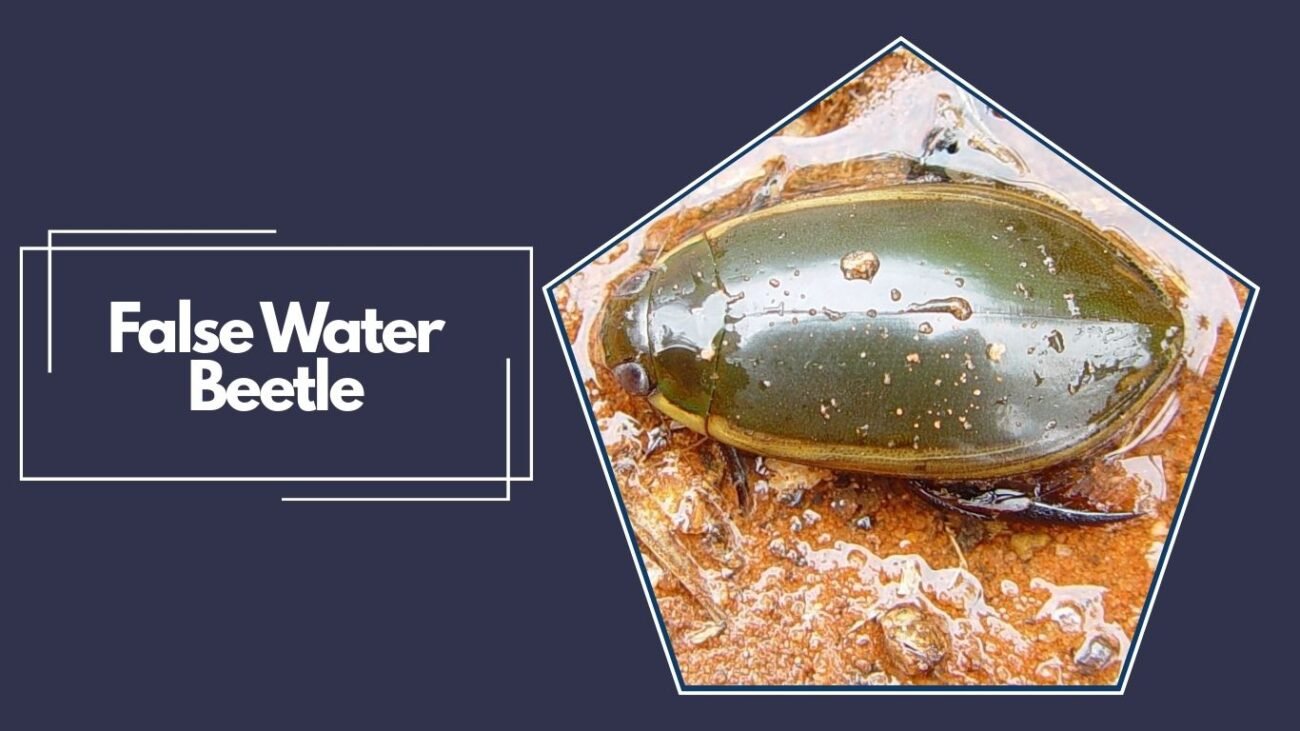
False Water Beetles are a small family of aquatic beetles that resemble diving beetles but differ in their feeding and behavior. Unlike true diving beetles, they are not fierce predators but instead feed on plant matter and detritus.
Identification
- Small beetles, typically 2–6 mm long
- Oval, smooth, and compact body, often brown to dark brown in color
- Hind legs flattened and fringed with hairs for swimming
- Antennae shorter and less conspicuous than those of diving beetles
- Can be easily mistaken for miniature diving beetles
Habitat
False Water Beetles are found in ponds, ditches, and marshes with abundant vegetation. They prefer shallow, still, or slow-moving waters where they can crawl and swim among plants.
Behavior
These beetles are active swimmers but spend much of their time crawling on submerged vegetation and debris. They surface occasionally to replenish their air supply, which they store beneath their wing cases.
Diet
Unlike predaceous diving beetles, False Water Beetles are herbivorous or detritivorous. They feed primarily on algae, decaying plants, and microorganisms, contributing to the aquatic food web as recyclers.
12. Stenus Beetle (Stenus clavicornis)

The Stenus Beetle is a slender, semi-aquatic rove beetle that lives along the edges of ponds, streams, and wetlands. It is best known for its unusual hunting method, using a unique extendable labium (lower lip) to capture prey.
Identification
- Small, slender beetle, usually 4–7 mm long
- Narrow body, dark brown to black with a slightly metallic sheen
- Short wing covers (elytra) leaving much of the abdomen exposed
- Distinctive, large eyes and long legs adapted for quick movement
- Equipped with a specialized extendable labium for prey capture
Habitat
Stenus Beetles are found at the margins of ponds, streams, marshes, and other damp environments. They prefer muddy or sandy shores where they can move quickly in search of prey.
Behavior
Unlike many aquatic beetles, Stenus species do not swim but instead run rapidly across moist soil or even skim across the water’s surface. They use their extendable labium like a harpoon to snatch small insects and springtails.
Diet
Carnivorous, feeding mainly on tiny invertebrates such as springtails, mites, and small flies. Their hunting mechanism allows them to capture fast, elusive prey with precision.
13. Shining Water Beetle (Hydrochara caraboides)
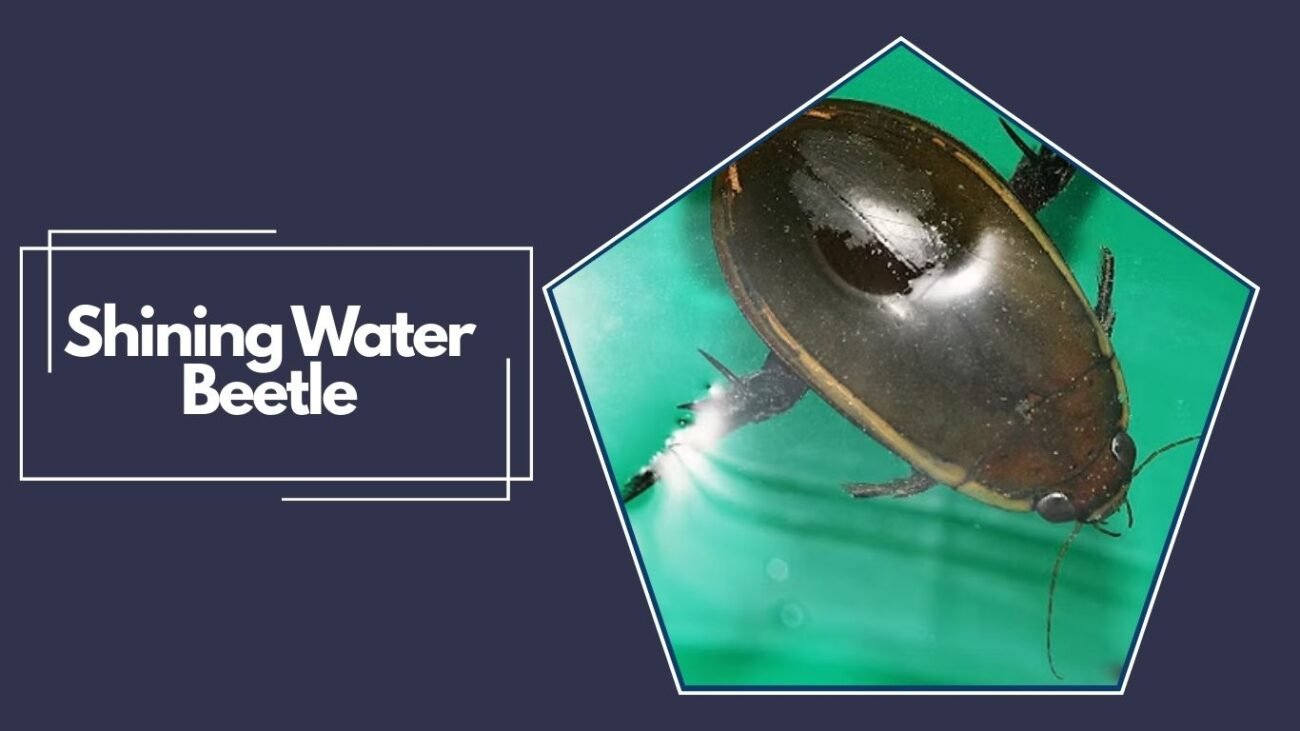
The Shining Water Beetle is a large, glossy aquatic beetle that stands out due to its bright sheen and bulky appearance. It is considered one of the largest European water beetles and is relatively rare compared to other species.
Identification
- Large beetle, typically 24–30 mm long
- Smooth, oval, and highly glossy black body
- Clubbed antennae partly hidden beneath elongated palps
- Hind legs fringed with hairs, adapted for swimming
- Easily distinguished by its shining, polished surface
Habitat
This beetle inhabits ponds, lakes, and marshes with rich aquatic vegetation. It prefers unpolluted waters with plenty of organic matter and is more often found in natural wetlands than artificial ponds.
Behavior
The Shining Water Beetle swims well but can also crawl among vegetation and debris. Like other water scavenger beetles, it surfaces to replenish an air bubble trapped beneath its wing cases. Adults are strong fliers and are sometimes attracted to lights.
Diet
Primarily scavengers, feeding on decaying vegetation and algae. They may occasionally consume small aquatic invertebrates but are largely herbivorous and detritivorous.
14. Creeping Water Beetle (Peltodytes caesus)
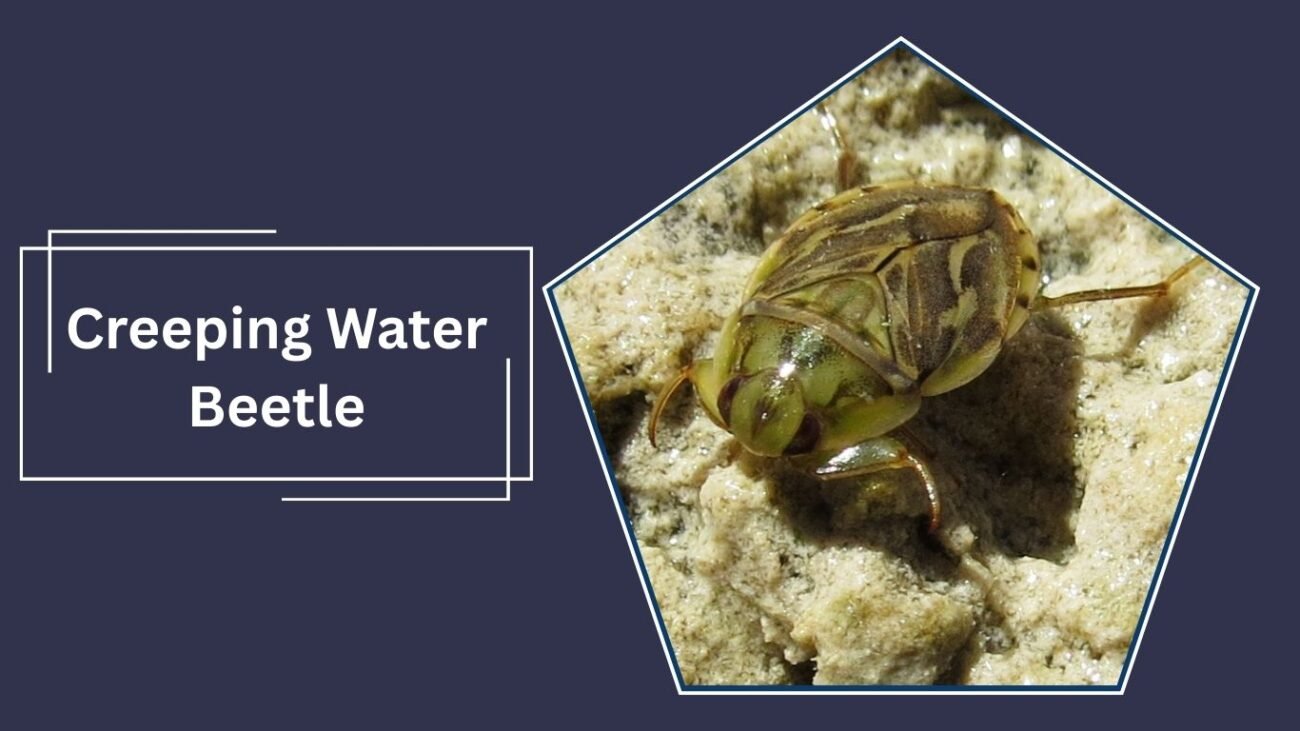
The Creeping Water Beetle is a small, plant-feeding aquatic beetle that prefers crawling among vegetation rather than active swimming. It belongs to the Haliplidae family and is closely related to the Crawling Water Beetle, sharing similar habits.
Identification
- Small beetle, around 2–3.5 mm long
- Oval body, usually yellowish to light brown with darker speckles
- Enlarged hind coxal plates (leg bases) that cover part of the abdomen — a key family trait
- Short antennae and legs designed more for crawling than fast swimming
- Moves slowly among aquatic vegetation rather than darting through water
Habitat
Creeping Water Beetles are found in ponds, lakes, ditches, and marshes, particularly in shallow areas rich in aquatic plants. They prefer calm, still waters where algae and plant matter are abundant.
Behavior
They are weak swimmers and instead crawl slowly on submerged plants and debris. Adults surface occasionally to trap air under their wing cases for breathing. They are more sedentary compared to diving beetles.
Diet
Primarily herbivorous, feeding on algae, diatoms, and plant detritus. Their larvae also graze on microscopic plant matter, making them important contributors to nutrient cycling in freshwater ecosystems.
15. Water Penny Beetle (Psephenus herricki)

The Water Penny Beetle is best known for its unusual, flattened larval stage, which resembles a tiny copper coin pressed against rocks in streams. While adults are less conspicuous, the larvae are important indicators of clean, well-oxygenated water.
Identification
- Adults are small, about 6–8 mm long
- Oval to rounded body, usually dark brown or black
- Elytra (wing covers) smooth and slightly domed
- Larvae are flat, disc-shaped, and cling tightly to submerged rocks
- Antennae short and not easily visible
Habitat
Water Penny Beetles are found in fast-flowing, well-oxygenated streams and rivers. The larvae attach firmly to submerged stones, making them resistant to strong currents. Adults may be found near the same habitats but are more mobile.
Behavior
Larvae remain attached to rocks, feeding on biofilm and algae. Adults are capable of flight and are occasionally attracted to lights at night. Their presence is often used as a biological indicator of water quality.
Diet
Larvae feed primarily on algae and biofilm scraped from rock surfaces. Adults are less well-studied but are thought to feed on plant material or not feed much at all.
16. Caddisfly-mimic Water Beetle (Lutrochus germari)
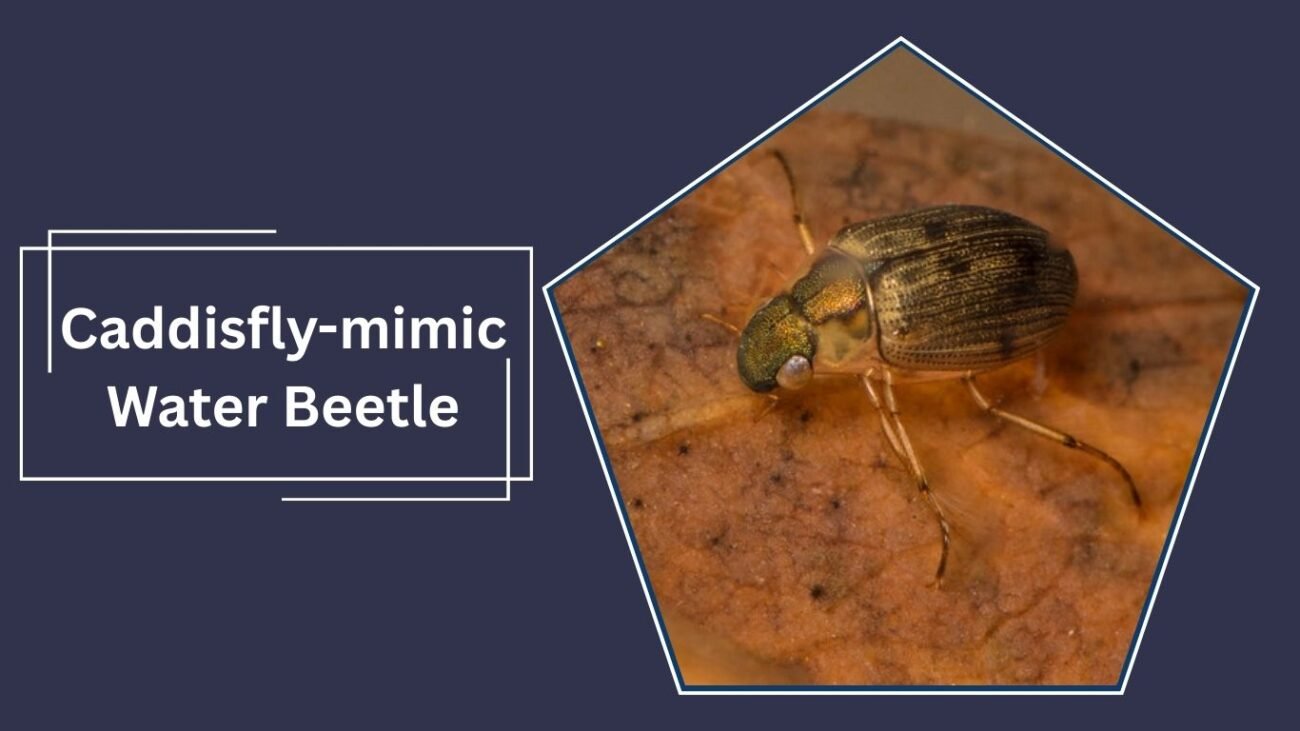
The Caddisfly-mimic Water Beetle is a rare and unusual aquatic beetle that resembles caddisflies in both appearance and lifestyle. It is part of the Lutrochidae family, a small group of water beetles not commonly encountered.
Identification
- Medium-sized beetle, around 5–7 mm long
- Elongated, somewhat cylindrical body, brown to dark brown in color
- Covered in fine hairs, giving it a velvety appearance
- Resembles a caddisfly at first glance
- Antennae fairly short and inconspicuous
Habitat
This beetle lives in clean, well-oxygenated streams and rivers, especially in areas with rocky or sandy bottoms. It is associated with habitats that also support caddisflies, contributing to its mimicry strategy.
Behavior
Adults cling to submerged rocks and debris, moving slowly and relying on camouflage for protection. They are not strong swimmers compared to diving beetles. Larvae live underwater, often concealed among stones and organic matter.
Diet
Primarily herbivorous or detritivorous, feeding on algae, biofilm, and decaying organic material. Larvae also graze on submerged surfaces, scraping off plant matter and microorganisms.
17. Mud-loving Beetle (Heterocerus fenestratus)

The Mud-loving Beetle is a semi-aquatic species commonly found along the muddy banks of rivers, ponds, and lakes. Unlike many aquatic beetles, it spends much of its life burrowing in wet soil rather than actively swimming.
Identification
- Small beetle, about 3–5 mm long
- Elongated, somewhat flattened body, usually brown to dark brown with mottled patterns
- Covered in fine hairs, which help retain moisture and sometimes trap air
- Short legs adapted for digging and burrowing in mud
- Antennae with clubbed ends, aiding in sensing food and environment
Habitat
Mud-loving Beetles inhabit the moist margins of freshwater bodies such as rivers, lakes, ponds, and marshes. They burrow into wet sand or mud where water and land meet, creating tunnels for shelter and feeding.
Behavior
They are skilled burrowers, spending most of their time digging into mud or wet soil. When disturbed, they quickly retreat into their burrows. Adults are also capable of short flights to colonize new areas.
Diet
Omnivorous, feeding on algae, decaying organic matter, and small microorganisms found in mud. By breaking down organic debris, they play a role in soil and nutrient cycling along aquatic margins.