Scale insects are small, sap-sucking pests that infest a wide variety of plants, including fruit trees, ornamentals, and greenhouse crops. They cause damage by weakening plants, reducing yields, and encouraging sooty mold growth. Found worldwide, scale insects come in both soft and armored forms, each with unique traits. Understanding their identification, habitats, behaviors, and diets is essential for effective management and maintaining plant health.
1. Cottony Cushion Scale (Icerya purchasi)

The cottony cushion scale is a destructive pest insect well-known for infesting citrus and ornamental plants. Native to Australia, it has spread worldwide, causing severe agricultural losses before natural predators like the vedalia beetle were introduced for biological control.
Identification
- Adult females covered with a distinctive white, cottony egg sac
- Body is reddish-brown, oval, and convex in shape
- Males are small, winged, and rarely seen
- Eggs are laid in long, cottony, ribbed sacs protruding from the female’s body
- Nymphs (crawlers) are small, yellowish, and mobile before settling to feed
Habitat
This insect is commonly found on the stems, twigs, and leaves of citrus trees and other host plants. It thrives in warm, humid climates and can infest both orchards and ornamental gardens.
Behaviors
Cottony cushion scales are sap-sucking pests that feed on plant phloem. They excrete honeydew, which promotes the growth of black sooty mold on plant surfaces. Females are stationary once settled, while crawlers disperse to new feeding sites.
Diet
Their diet consists entirely of plant sap, extracted from stems, leaves, and fruits. Heavy infestations weaken plants, reduce crop yields, and make them more vulnerable to disease.
2. San Jose Scale (Quadraspidiotus perniciosus)

The San Jose scale is one of the most notorious armored scale insects, originally from China but now widespread globally. It is a highly destructive pest of fruit trees and ornamental plants, capable of causing severe economic losses by weakening or even killing infested plants.
Identification
- Small, circular, grayish to black scale cover resembling an ash-like crust
- Females are wingless, immobile, and remain under their protective scale
- Males are tiny, winged, and short-lived
- Crawlers (young nymphs) are yellow and highly mobile before settling
- Infested plant tissues often show red halos around feeding spots
Habitat
San Jose scales infest the bark, branches, leaves, and fruits of a wide variety of host plants, especially apples, peaches, pears, plums, and cherries. They thrive in temperate regions and are common in commercial orchards.
Behaviors
The insect is sessile for most of its life, except in the crawler stage. Females reproduce viviparously, giving birth to live crawlers that disperse across the plant. Once settled, the scales insert their mouthparts into plant tissues and remain fixed.
Diet
San Jose scales feed exclusively on plant sap, extracted from branches, leaves, and fruits. Their feeding weakens the host, causes fruit blemishes, and in heavy infestations, can kill twigs or entire plants.
3. Brown Soft Scale (Coccus hesperidum)

The brown soft scale is a common sap-sucking pest found on a wide range of indoor and outdoor plants. It is widely distributed across tropical and subtropical regions and is especially problematic on citrus, ornamentals, and greenhouse crops.
Identification
- Oval, flat to slightly convex body, light to dark brown in color
- Adults covered with a soft, waxy coating (not a hard shell like armored scales)
- Females are wingless and immobile once settled
- Crawlers are small, yellowish, and mobile before settling
- No distinct protective scale separate from the insect’s body
Habitat
This insect colonizes leaves, stems, and twigs of citrus, ornamental shrubs, and greenhouse plants. It thrives in warm, humid environments, making it a frequent problem in greenhouses and indoor plant collections.
Behaviors
Brown soft scales are sedentary after the crawler stage. Females reproduce parthenogenetically, producing numerous crawlers without mating. They excrete large amounts of honeydew, which attracts ants and fosters the growth of black sooty mold.
Diet
Their diet consists of plant sap, drawn from leaves, young stems, and sometimes fruits. Heavy infestations can weaken plants, reduce vigor, and cause leaf drop due to nutrient loss.
4. Black Scale (Saissetia oleae)

The black scale is a serious pest of citrus, olives, and many ornamental plants. It is widespread in warm temperate and subtropical regions and is known for producing heavy honeydew deposits that lead to sooty mold problems on host plants.
Identification
- Adult females are dark brown to black, hemispherical, and dome-shaped
- Body surface often shows distinct H-shaped ridges on the back
- Females are wingless and remain attached to plant surfaces
- Crawlers are yellowish to brown and mobile before settling
- Males are extremely rare and usually absent in many populations
Habitat
Black scale insects inhabit branches, twigs, leaves, and sometimes fruits of their host plants. They are particularly common on olive trees, citrus orchards, and ornamental shrubs. Warm, dry climates favor their population growth.
Behaviors
This species is sedentary after the crawler stage. Females reproduce parthenogenetically, producing many crawlers. They excrete abundant honeydew, which attracts ants and supports the development of sooty mold fungi, further harming plant health.
Diet
The black scale feeds on phloem sap of host plants. Infestations cause yellowing of leaves, premature leaf drop, twig dieback, and reduced fruit quality. Heavy infestations can seriously weaken trees and decrease yield.
5. Hemispherical Scale (Saissetia coffeae)
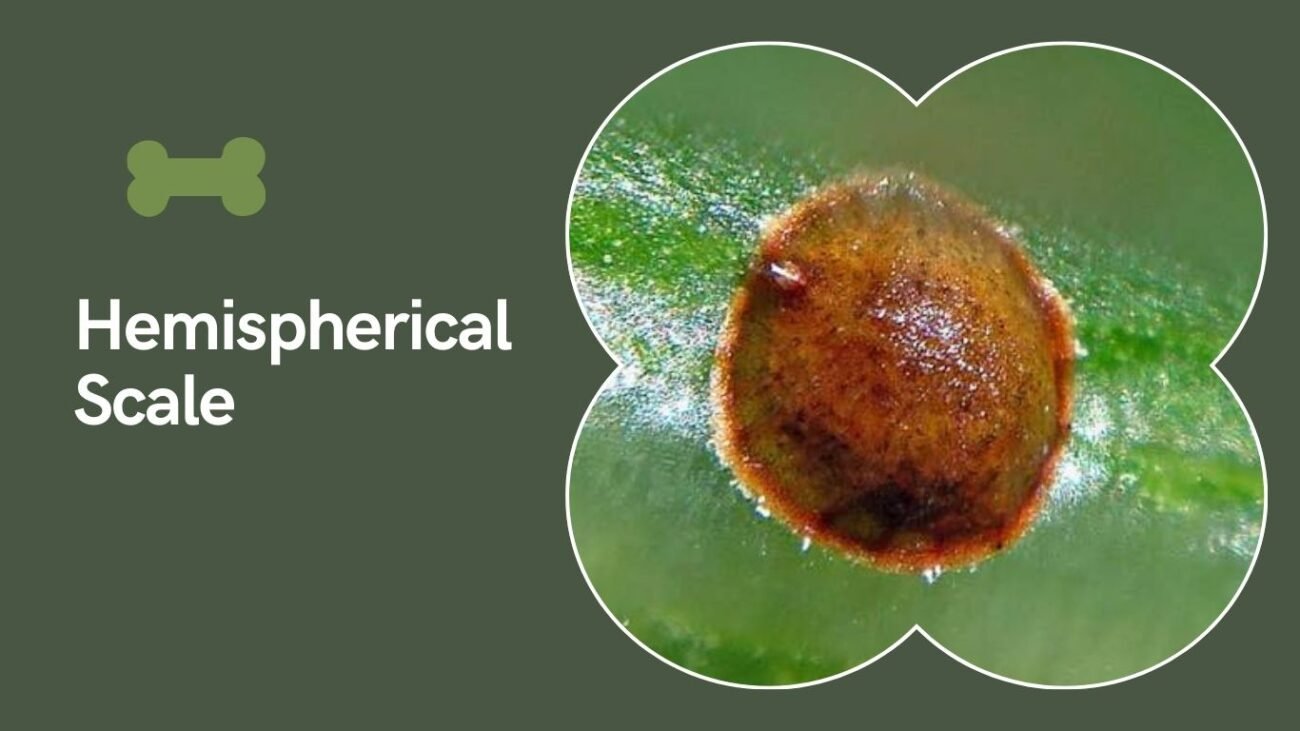
The hemispherical scale is a soft scale insect known for attacking coffee, citrus, and various ornamental plants. It is widely distributed across tropical and subtropical regions, where it can become a serious pest due to its honeydew production and rapid reproduction.
Identification
- Adult females are dome-shaped, glossy, and brown, resembling a tiny turtle shell
- Body smooth, without ridges, and more hemispherical than other scales
- Females are immobile once settled on plant surfaces
- Crawlers are pale yellow to light brown and mobile before settling
- No separate protective covering—body itself forms the “scale”
Habitat
Hemispherical scales are common on leaves, twigs, and stems of coffee plants, citrus, ornamentals, and greenhouse crops. They thrive in warm, moist conditions and are especially prevalent in shaded, humid environments.
Behaviors
These scales are sedentary after the crawler stage. Females reproduce parthenogenetically, producing many offspring without mating. They secrete copious honeydew, attracting ants and encouraging the growth of black sooty mold, which reduces photosynthesis in host plants.
Diet
They feed on plant phloem sap, tapping into leaves and young stems. Heavy infestations cause leaf yellowing, stunted growth, and reduced yield in crops like coffee and citrus.
6. Barnacle Scale (Ceroplastes cirripediformis)
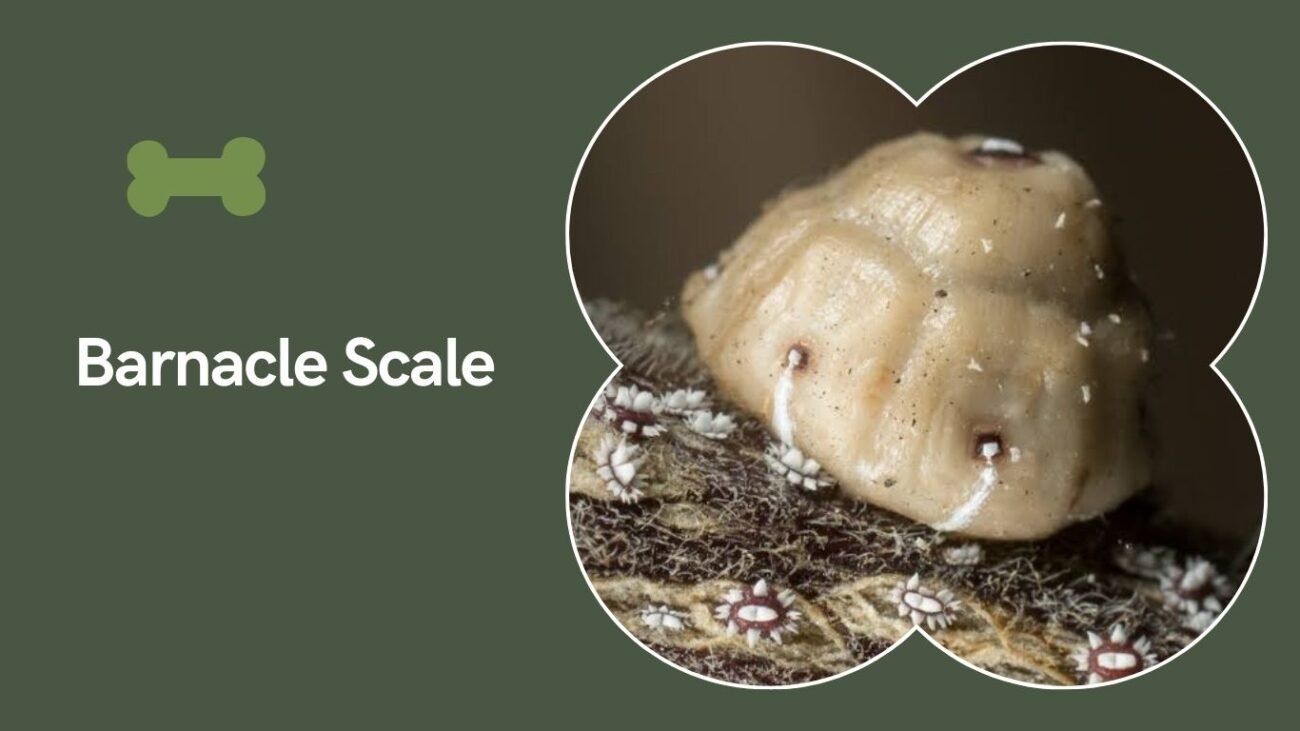
The barnacle scale is a distinctive soft scale insect that gets its name from its resemblance to marine barnacles. It is an important pest of citrus, guava, and many ornamental plants, and is widely distributed in tropical and subtropical regions.
Identification
- Adult females are dome-shaped with a waxy, whitish to pinkish covering that resembles barnacles
- Body irregularly ridged with wax plates or segments
- Females are wingless and sessile once settled
- Crawlers are small, yellowish, and mobile before attaching
- The wax covering often extends beyond the body, making them highly visible
Habitat
Barnacle scales are found on leaves, twigs, branches, and fruits of citrus, guava, avocado, and other ornamental plants. They prefer warm, humid environments and are especially problematic in orchards and gardens.
Behaviors
This species is sedentary after the crawler stage. Females reproduce parthenogenetically, producing many crawlers that disperse to new feeding sites. They secrete honeydew, which promotes sooty mold growth, reducing the plant’s ability to photosynthesize.
Diet
Barnacle scales feed exclusively on plant sap, withdrawing nutrients from leaves, stems, and fruits. Heavy infestations weaken plants, cause leaf yellowing, fruit blemishes, and sometimes premature leaf or fruit drop.
7. Gloomy Scale (Melanaspis tenebricosa)

The gloomy scale is a destructive armored scale insect that primarily affects shade trees, especially maples. It is native to North America and has become one of the most troublesome pests in urban landscapes due to its ability to form dense infestations.
Identification
- Adult females covered by a circular, dark gray to black armored shell
- Scale covering is flat, giving a “crusty” appearance on bark and twigs
- Males are much smaller, winged, and short-lived
- Crawlers are yellow and mobile before settling
- Infested bark often appears rough, darkened, or “gloomy” in patches
Habitat
This species colonizes the bark, branches, and occasionally leaves of hardwood trees, with a strong preference for maples (especially red maple). It thrives in urban settings with high stress levels on host trees, such as compacted soils and air pollution.
Behaviors
Gloomy scales remain fixed under their armored coverings after the crawler stage. Females reproduce by laying eggs beneath the scale covering, which hatch into crawlers that disperse. They produce no honeydew, unlike soft scales, since they are armored scales.
Diet
They feed by piercing bark tissues and sucking plant sap. Heavy infestations cause branch dieback, leaf yellowing, reduced growth, and in severe cases, tree mortality.
8. Pine Needle Scale (Chionaspis pinifoliae)
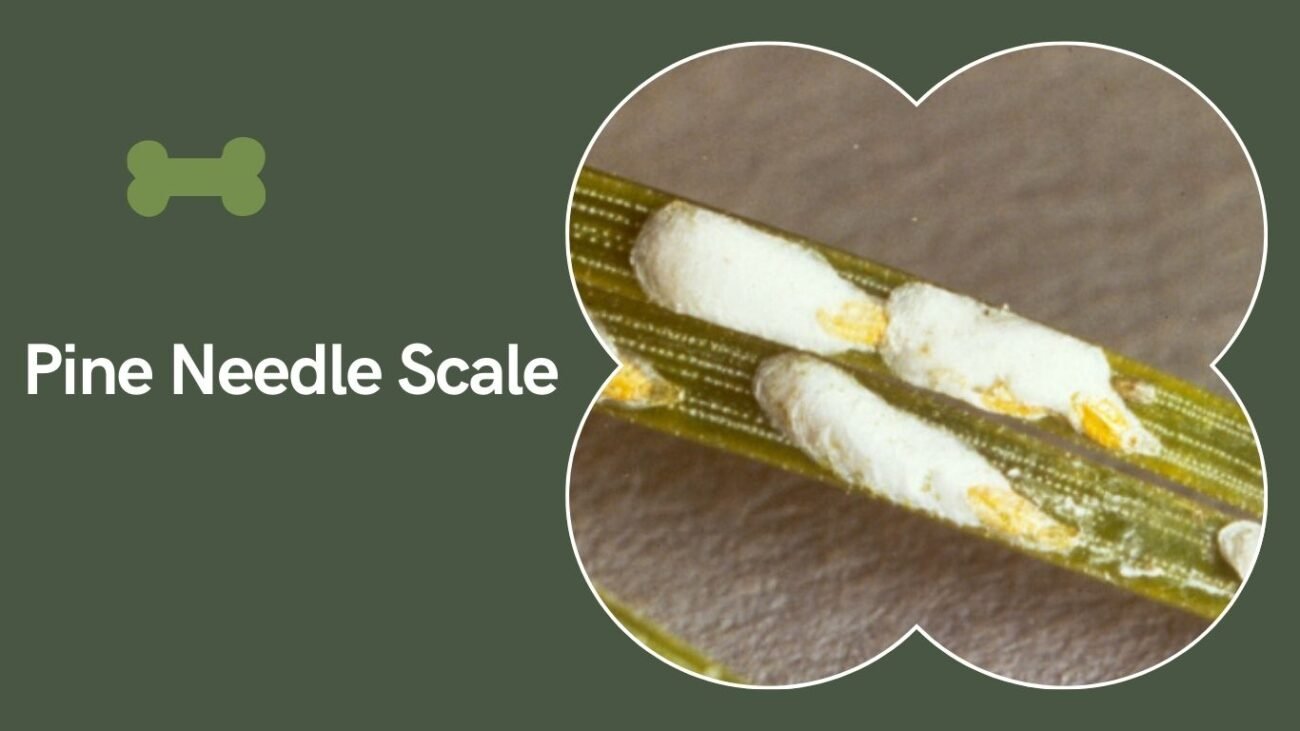
The pine needle scale is a common armored scale insect that infests conifers, particularly pines, spruces, and firs. It is widely distributed in North America and can cause significant damage to ornamental and forest trees when infestations are severe.
Identification
- Adult females covered by a white, elongated, oyster shell–like scale on needles
- Scale covering is about 2–3 mm long with a yellowish to brown tip
- Males are smaller, narrow, and occasionally winged
- Crawlers are yellow and highly mobile before settling
- Infested needles appear speckled with white scales, giving a “frosted” look
Habitat
This species is found on the needles of pine, spruce, fir, and other coniferous trees. It thrives in both natural forests and ornamental plantings, often becoming a serious pest in Christmas tree farms and urban landscapes.
Behaviors
Pine needle scales are sedentary after the crawler stage. Females lay eggs under their armored covering, which hatch into crawlers in spring. Heavy infestations can completely cover needles, leading to needle drop and reduced tree vigor.
Diet
They feed on plant sap extracted from needles. Prolonged infestations weaken trees, cause stunted growth, and may kill young or stressed conifers.
9. Euonymus Scale (Unaspis euonymi)
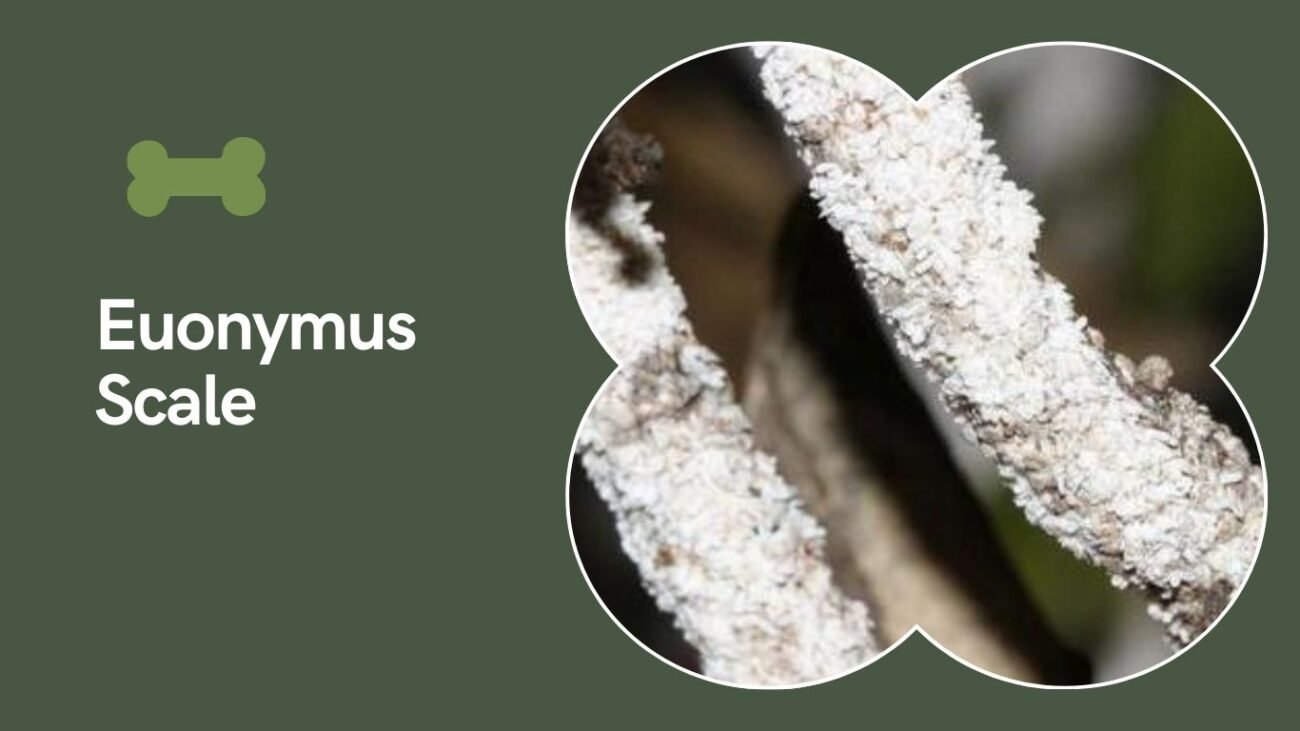
The euonymus scale is a damaging armored scale insect that primarily attacks ornamental shrubs, especially euonymus, but also affects hollies, boxwoods, and other landscape plants. It is one of the most destructive scales found in gardens and nurseries.
Identification
- Adult females covered by a dark brown to black, pear-shaped armored shell
- Males covered by narrow, elongated, white scales
- Females are wingless and remain fixed on stems or leaves
- Crawlers are yellowish and mobile before settling
- Infested branches often appear heavily dotted with white (male scales) and dark spots (female scales)
Habitat
Euonymus scales inhabit leaves, stems, and branches of euonymus shrubs and related ornamentals. They thrive in temperate regions, particularly in landscapes and nurseries where ornamental plants are densely grown.
Behaviors
This species is sedentary after the crawler stage. Females lay eggs beneath their armored coverings, which hatch into crawlers that disperse across the host. They can produce multiple generations per year, leading to rapid population buildup.
Diet
They feed on plant sap extracted from stems, leaves, and sometimes fruits. Heavy infestations cause yellowing, leaf drop, branch dieback, and in severe cases, plant death.
10. Mango Shield Scale (Milviscutulus mangiferae)
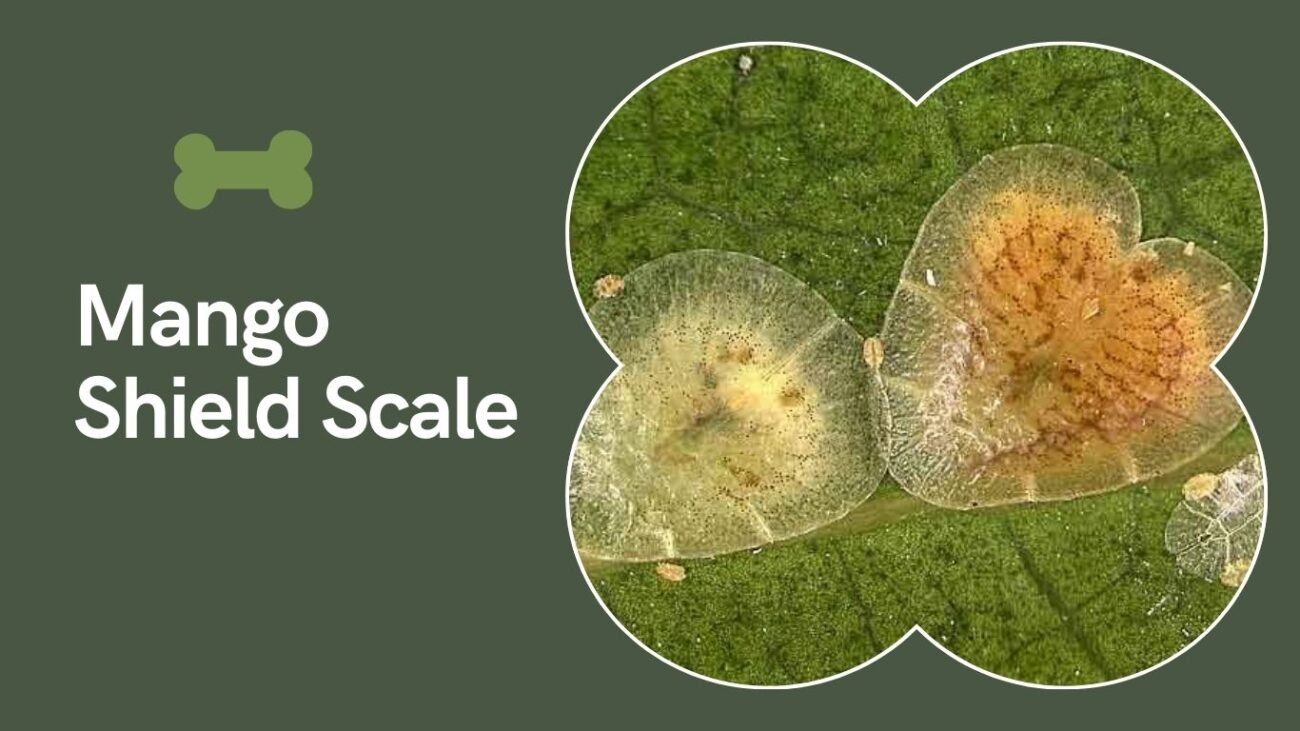
The mango shield scale is a widespread pest of mango and other fruit trees. It is a soft scale insect that can cause serious economic losses by reducing tree vigor and contaminating fruits with honeydew and sooty mold.
Identification
- Adult females are convex, oval, and brownish to black with a hard shield-like covering
- Body surface smooth, often blending with bark or fruit skin
- Females are immobile once settled
- Crawlers are tiny, yellowish, and mobile before attaching
- Male insects are rare and much smaller, with elongated white coverings
Habitat
Mango shield scales are most commonly found on mango trees but also infest citrus, guava, avocado, and ornamental plants. They colonize stems, twigs, leaves, and fruits. The insect is abundant in tropical and subtropical regions, especially in orchards.
Behaviors
These scales are sedentary after the crawler stage. Females reproduce prolifically, producing numerous crawlers that spread across host plants. They secrete large amounts of honeydew, attracting ants and fostering black sooty mold growth, which hampers photosynthesis.
Diet
They feed exclusively on plant sap, tapping into leaves, fruits, and stems. Heavy infestations cause premature leaf drop, fruit blemishes, reduced yield, and general decline in plant health.
11. Tea Scale (Fiorinia theae)

The tea scale is a destructive armored scale insect that infests tea, camellias, and related ornamental plants. It is considered one of the most important pests of tea crops and is also a major concern in nurseries and landscapes.
Identification
- Adult females are elongated, flat, and covered with a brownish protective scale
- Males are smaller and have narrow, whitish scale coverings
- Females are sessile once settled on leaves
- Crawlers are yellow and mobile before establishing feeding sites
- Infested leaves often show yellow blotches on the upper surface, while scales are found on the underside
Habitat
Tea scales are most commonly found on the undersides of leaves of tea plants, camellias, and related ornamentals. They prefer humid, shaded environments and are especially problematic in tea plantations and ornamental gardens.
Behaviors
This species is sedentary after the crawler stage. Females lay eggs beneath their protective coverings, and crawlers disperse to new feeding sites. Infestations often go unnoticed until leaf yellowing and decline become severe. Unlike soft scales, they do not excrete much honeydew.
Diet
Tea scales feed by sucking plant sap from the undersides of leaves. Heavy infestations cause chlorosis (yellowing), leaf drop, reduced photosynthesis, and overall plant decline.
12. Purple Scale (Lepidosaphes beckii)

The purple scale is a serious armored scale insect that infests citrus and other fruit trees. It is one of the most damaging pests in citrus orchards worldwide, causing significant yield losses when left unmanaged.
Identification
- Adult females are elongated, narrow, and covered with a purple to brown oyster shell–like scale
- Scale covering is about 2–3 mm long, tapering at one end
- Males are smaller, with white, slender coverings, and may develop into tiny winged insects
- Crawlers are yellowish and mobile before settling
- Infested leaves and twigs often appear dotted with purple or brown specks
Habitat
This species colonizes leaves, twigs, branches, and fruits of citrus trees, but it can also infest other fruit crops and ornamentals. It thrives in warm, humid environments, particularly in citrus-growing regions.
Behaviors
The purple scale is sessile after the crawler stage. Females reproduce under their protective coverings, laying eggs that hatch into crawlers. Multiple overlapping generations can occur yearly, leading to rapid population buildup. As an armored scale, it does not produce honeydew.
Diet
They feed on plant sap extracted from leaves, stems, and fruits. Heavy infestations cause yellowing, defoliation, twig dieback, blemished fruits, and overall decline in tree vigor.
13. Florida Red Scale (Chrysomphalus aonidum)
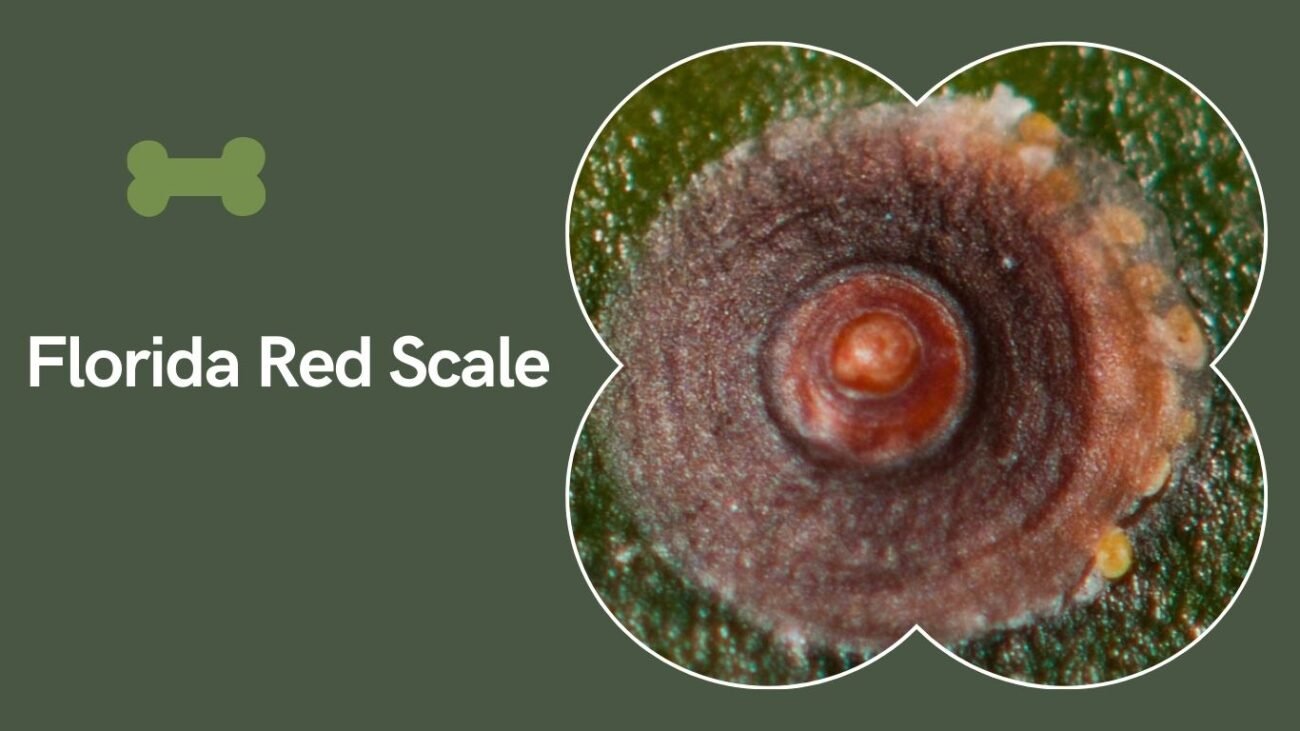
The Florida red scale is a highly destructive armored scale insect that primarily attacks citrus but also infests a wide range of other fruit trees and ornamentals. It is regarded as one of the most harmful scale pests in citrus-growing regions worldwide.
Identification
- Adult females are nearly circular, reddish-brown to coppery, with a central nipple-like spot
- Scale covering is about 1.5–2 mm in diameter, flat and hard
- Males are smaller, with elongated, lighter coverings, and may develop wings
- Crawlers are yellow to orange and highly mobile before settling
- Heavy infestations give twigs and leaves a reddish, crusted appearance
Habitat
Florida red scales colonize leaves, twigs, branches, and fruits of citrus trees, especially oranges, lemons, and mandarins. They are abundant in warm, humid climates and are common in commercial orchards and home gardens.
Behaviors
This species is sedentary after the crawler stage. Females produce eggs under their armored covering, which hatch into crawlers. They reproduce rapidly, and multiple overlapping generations occur each year. Unlike soft scales, they do not secrete honeydew.
Diet
Florida red scales feed by inserting their mouthparts into plant tissues to extract sap. Infestations cause leaf yellowing, twig dieback, reduced fruit size and quality, and in severe cases, tree decline or death.
14. White Peach Scale (Pseudaulacaspis pentagona)
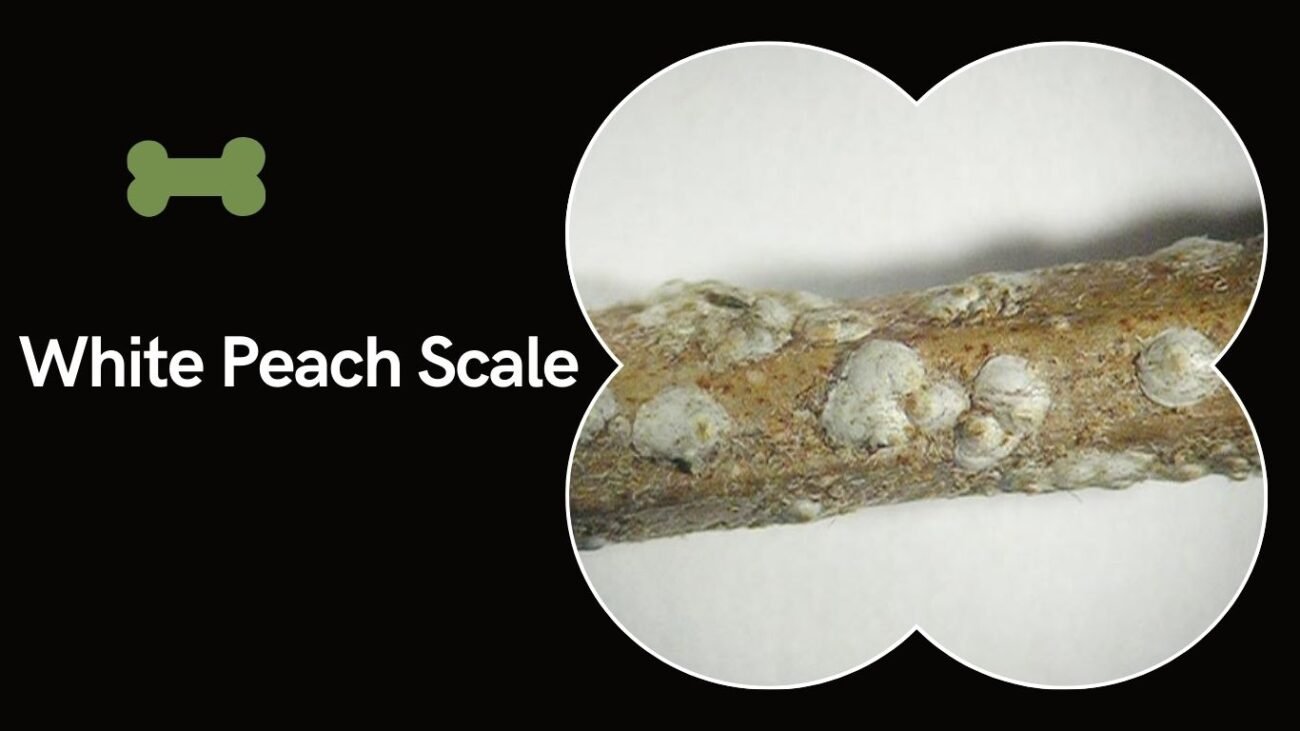
The white peach scale is a destructive armored scale insect that attacks peaches and many other fruit and ornamental plants. It is widely distributed worldwide and is considered one of the most dangerous scale pests due to its broad host range and rapid reproduction.
Identification
- Adult females are circular, white to pale yellow, with a central yellow spot
- Scale covering is flat, papery, and about 2–3 mm in diameter
- Males are elongated with narrow, whitish coverings and may develop into winged adults
- Crawlers are tiny, yellow, and mobile before settling
- Infested branches often appear heavily encrusted with white patches
Habitat
This pest infests the bark, branches, twigs, leaves, and fruits of peach trees, but also attacks mulberry, persimmon, citrus, and ornamental plants. It thrives in temperate and subtropical regions, particularly in orchards.
Behaviors
White peach scales remain sessile after the crawler stage. Females produce eggs beneath their coverings, which hatch into mobile crawlers. They reproduce quickly, with multiple generations per year, allowing populations to grow explosively. As armored scales, they do not excrete honeydew.
Diet
They feed by piercing host tissues and sucking sap. Heavy infestations weaken plants, cause twig dieback, reduced fruit quality, leaf drop, and in extreme cases, plant death.
15. Greedy Scale (Hemiberlesia rapax)
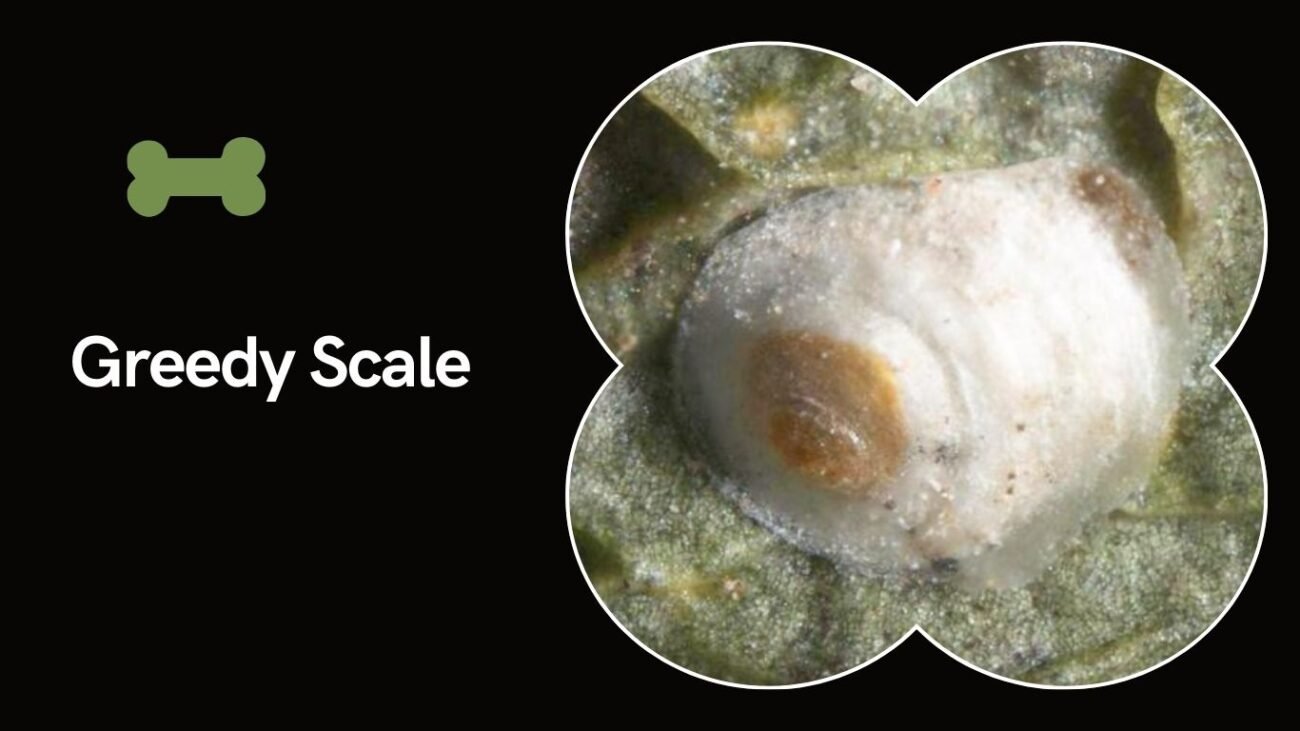
The greedy scale is a polyphagous armored scale insect that infests a wide variety of fruit trees, ornamentals, and forest plants. It is named for its “greedy” feeding habits, as it can attack nearly all parts of a plant and spread rapidly across host species.
Identification
- Adult females are circular to oval, with a grayish to brown scale covering, often with a darker central spot
- Males are elongated with whitish coverings, sometimes producing winged adults
- Females are sessile once established on the plant
- Crawlers are tiny, yellowish, and mobile before settling
- Infested plants often appear with scattered gray-brown crusts on bark, twigs, and fruit
Habitat
Greedy scales infest bark, leaves, twigs, and fruit of many hosts including apple, pear, plum, citrus, kiwifruit, and numerous ornamentals. They are cosmopolitan in distribution, present in temperate, subtropical, and tropical regions.
Behaviors
This species is sessile after the crawler stage. Females reproduce prolifically, laying eggs under their armored coverings. Crawlers disperse across the host or are carried by wind, animals, or human activity, making infestations difficult to control. They do not produce honeydew, as they are armored scales.
Diet
Greedy scales feed by piercing host plant tissues and sucking sap. Heavy infestations reduce plant vigor, cause twig dieback, blemish fruits, and may cause severe economic losses in orchards.
16. Green Shield Scale (Pulvinaria psidii)
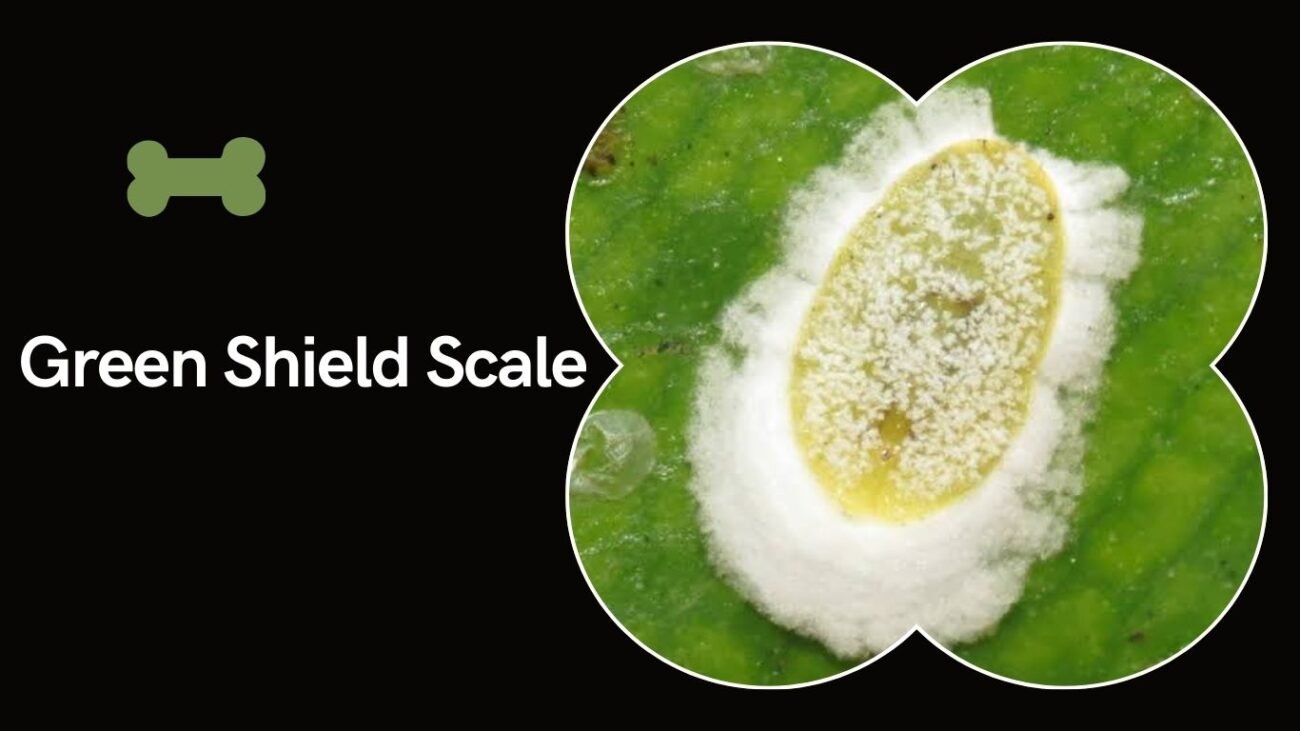
The green shield scale is a soft scale insect known for infesting guava, citrus, and many ornamental plants. It is recognized by its large size and the distinctive cottony egg masses produced by females. This pest is widespread in tropical and subtropical regions.
Identification
- Adult females are oval, green to brown, with a soft, shield-like body
- Body covered with a thin waxy coating, not hard like armored scales
- Females produce large, conspicuous, white cottony egg sacs that extend behind their bodies
- Crawlers are small, yellowish-green, and mobile before settling
- Infestations often appear as clusters of greenish scales along stems and leaves
Habitat
Green shield scales colonize stems, twigs, leaves, and sometimes fruits of guava, citrus, avocado, and various ornamentals. They are most common in warm, humid climates and thrive in orchards, gardens, and nurseries.
Behaviors
This species is sedentary after the crawler stage. Females reproduce prolifically, laying eggs in large cottony sacs. They secrete abundant honeydew, attracting ants and encouraging the growth of sooty mold, which interferes with photosynthesis.
Diet
Green shield scales feed on plant sap, drawing nutrients from leaves, stems, and fruits. Heavy infestations cause yellowing, leaf drop, twig dieback, and fruit blemishes, leading to reduced plant vigor and yield.
17. Boisduval Scale (Diaspis boisduvalii)
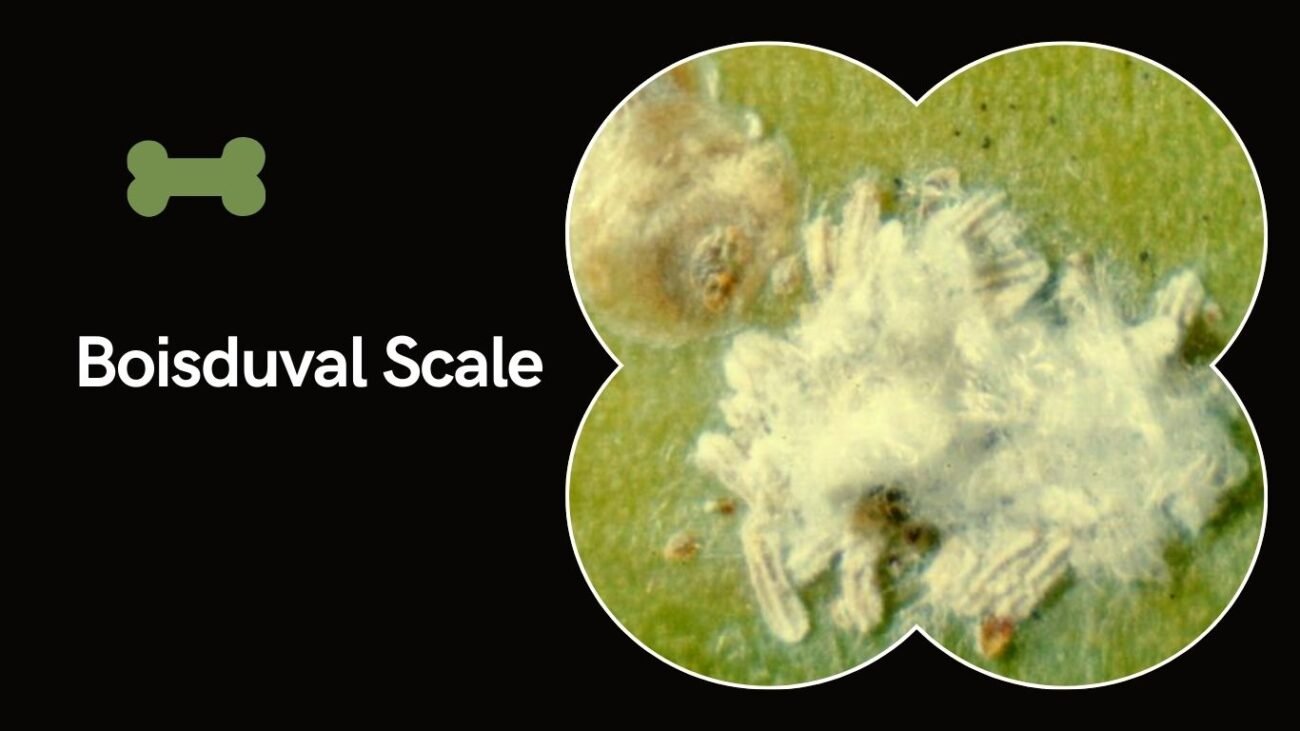
The Boisduval scale is an armored scale insect best known as a pest of orchids, though it also attacks palms, bananas, and other tropical ornamentals. It is a serious concern in greenhouses and tropical plant collections worldwide.
Identification
- Adult females are circular, flat, and covered by a translucent to whitish armored scale
- Scale covering often appears slightly yellowish or brownish with age
- Males are elongated, with narrow white scales, and may become winged
- Crawlers are tiny, yellowish, and mobile before settling
- Infestations often appear as small whitish crusts clustered on orchid leaves, pseudobulbs, and stems
Habitat
Boisduval scales inhabit the leaves, stems, and pseudobulbs of orchids, as well as other tropical ornamentals such as palms and bananas. They thrive in warm, humid environments, particularly in greenhouses and tropical gardens.
Behaviors
After the crawler stage, this species becomes sedentary. Females reproduce beneath their protective coverings, producing numerous crawlers that spread across host plants. As armored scales, they do not produce honeydew, but heavy infestations still weaken plants significantly.
Diet
They feed by sucking plant sap from leaves and stems. Infestations cause yellow spots, premature leaf drop, reduced vigor, and in orchids, loss of flowers and overall decline in plant health.