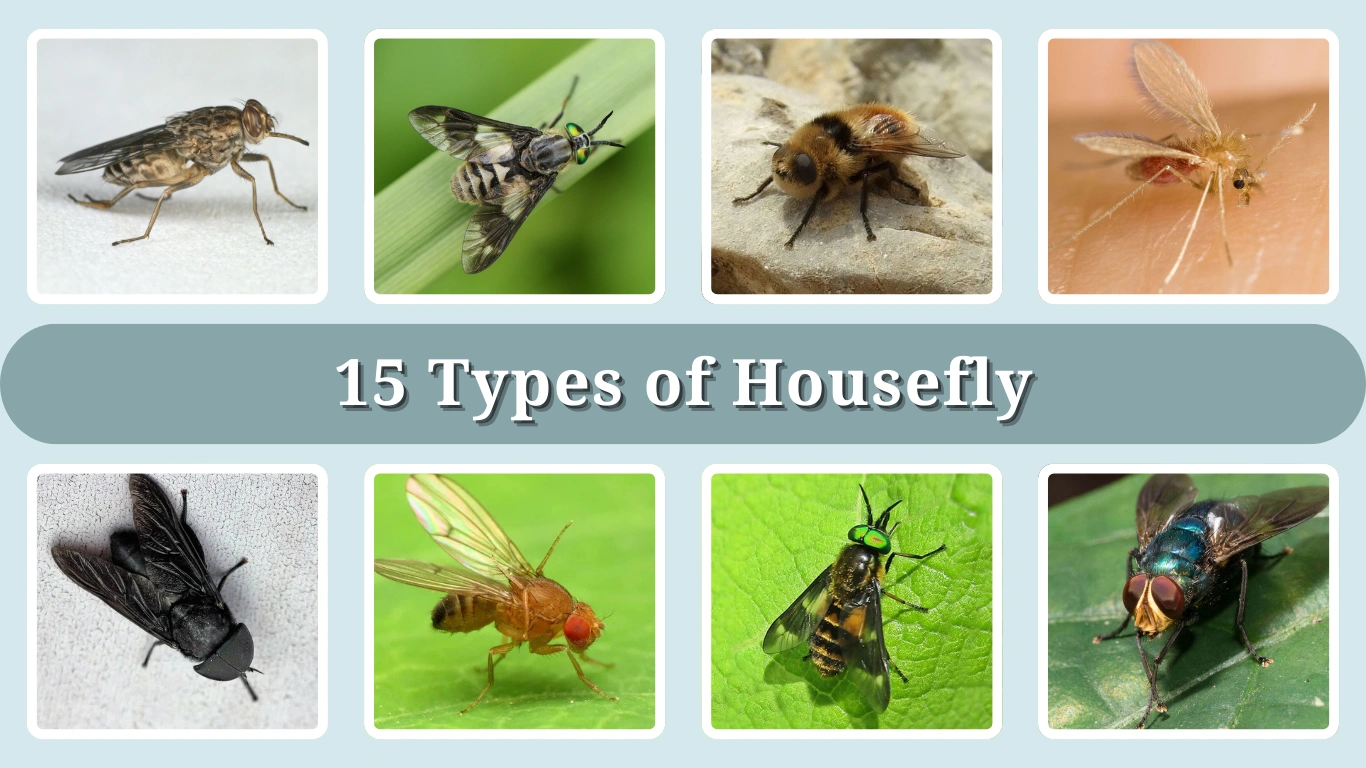
Houseflies and their relatives make up a diverse group of insects that thrive in human environments and natural habitats worldwide. While some are harmless nectar-feeders, others are notorious for spreading diseases or biting humans and animals. Understanding their identification, habitats, behavior, diets, and lifecycles is essential for pest control, health awareness, and ecological study. This guide outlines 15 distinct types of houseflies and related species.
1. House Fly (Musca domestica)
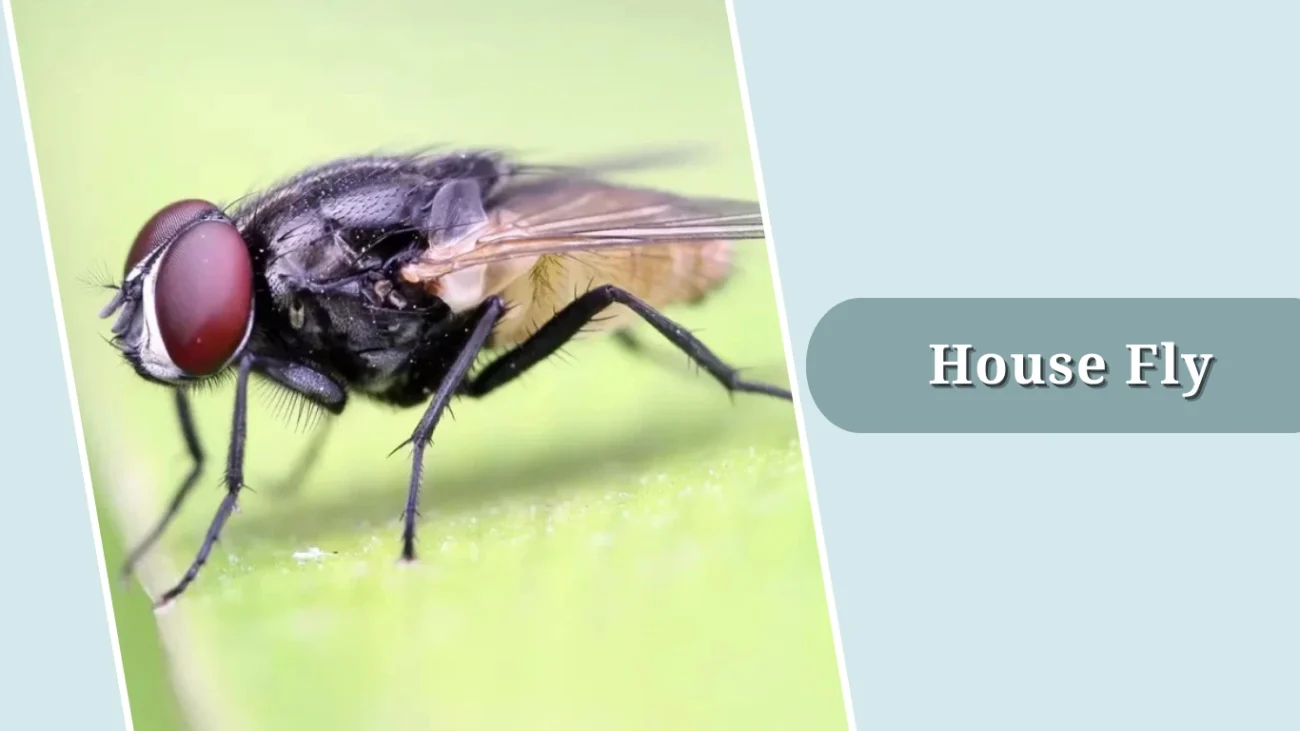
The common house fly is one of the most widespread insects found in close association with humans. It is known for its rapid reproduction, nuisance behavior, and ability to spread diseases.
Identification
- Medium-sized fly, about 6–7 mm in length
- Gray thorax with four dark longitudinal stripes
- Slightly hairy body
- Large reddish compound eyes
- Transparent wings held flat over the back when at rest
Habitat
House flies are found in and around human dwellings, farms, garbage sites, and areas with decaying organic matter. They thrive in warm climates and are particularly abundant during summer months.
Behavior
House flies are active during the day and rest at night. They are strong fliers but usually stay close to their breeding and feeding sites. They are highly attracted to food, waste, and moist organic matter.
Diet
They feed on a wide range of organic substances including food scraps, animal waste, and decaying matter. Since they lack chewing mouthparts, they liquefy solid food with saliva before consuming it.
Lifecycle
The lifecycle consists of four stages: egg, larva (maggot), pupa, and adult. Female flies lay eggs in decaying organic matter or animal waste. Under warm conditions, the cycle from egg to adult can be completed in just 7–10 days, allowing populations to grow rapidly.
2. Lesser House Fly (Fannia canicularis)

The lesser house fly is a smaller relative of the common house fly and is often seen hovering indoors. While not as notorious for spreading diseases as the common house fly, it can still be a nuisance in homes and livestock areas.
Identification
- Smaller than the common house fly, about 4–6 mm in length
- Slender body with narrow gray thorax
- Distinct wing veins that appear slightly curved
- Tends to fly in slow, circling patterns indoors
- Males are often seen hovering in the middle of rooms
Habitat
These flies are commonly found in homes, poultry houses, barns, and other animal housing areas. They breed in decaying organic material, especially manure and rotting vegetation.
Behavior
Males are known for their hovering flight patterns indoors, often circling lazily in one place. They are less aggressive than common house flies but can be persistent in human living spaces.
Diet
Adults feed on organic matter, nectar, and waste. They are particularly attracted to decaying plant material and animal excreta.
Lifecycle
The lifecycle includes egg, larva, pupa, and adult stages. Females lay eggs in organic material such as manure. The larvae, which are flattened and spiny, develop in moist organic waste. The full cycle takes about 2–3 weeks depending on environmental conditions.
3. Stable Fly (Stomoxys calcitrans)

The stable fly, often mistaken for the common house fly, is a biting fly that feeds on the blood of humans and animals. It is a serious pest in livestock areas and can cause discomfort, weight loss, and reduced milk production in cattle.
Identification
- Similar in size to the house fly, about 6–8 mm in length
- Gray body with distinct checkered pattern on the abdomen
- Prominent, forward-projecting proboscis used for biting and blood-feeding
- Clear wings with characteristic vein pattern
- Resembles the house fly but with biting mouthparts
Habitat
Stable flies are typically found around stables, barns, farms, and livestock facilities. They breed in decaying vegetation mixed with animal manure, wet straw, and spilled feed.
Behavior
These flies are aggressive biters, active during the day, and often attack the lower legs of livestock and humans. Unlike house flies, they spend much of their time resting on vertical surfaces when not feeding.
Diet
Adult stable flies feed on blood, primarily from livestock such as cattle and horses, but they will also bite humans and pets. Both males and females require blood meals for survival and reproduction.
Lifecycle
The lifecycle includes egg, larva, pupa, and adult stages. Females lay eggs in decaying organic matter mixed with manure. Larvae feed on this material, pupate in drier soil or litter, and emerge as adults. The full cycle typically takes 3–4 weeks, depending on temperature and conditions.
4. Blow Fly (Calliphoridae family)
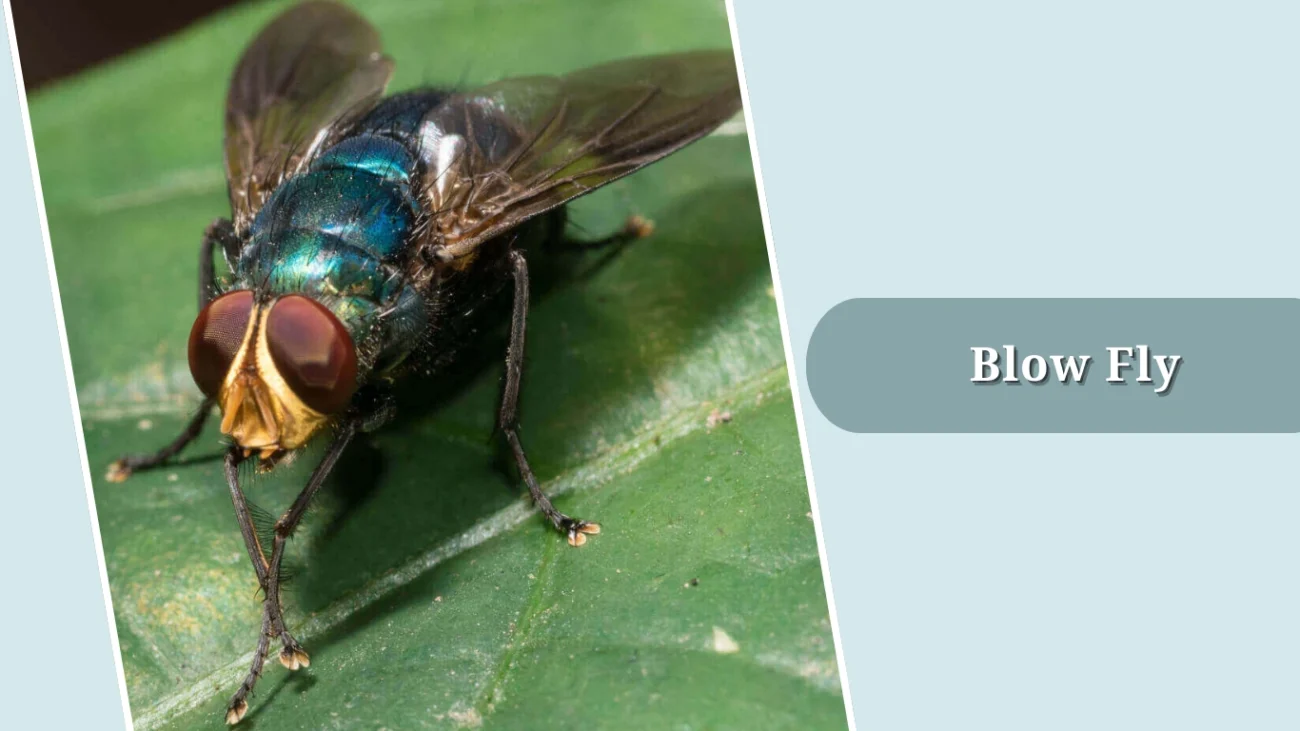
Blow flies are metallic-colored flies that are among the first insects to colonize dead animals. They play an important role in decomposition but are also associated with disease transmission and can infest wounds in animals and humans.
Identification
- Medium to large flies, 6–14 mm in length
- Metallic blue, green, bronze, or black shiny bodies
- Large red compound eyes
- Clear wings with prominent veins
- Buzz loudly while flying
Habitat
Blow flies are commonly found near decaying carcasses, garbage, compost piles, and animal waste. They are especially abundant in warm seasons and are often used in forensic investigations to estimate the time of death.
Behavior
Blow flies are among the first to arrive at animal remains, often within minutes of death. They are strong fliers and are attracted to carrion, wounds, and decaying matter. Some species may cause myiasis by laying eggs in open wounds of animals and humans.
Diet
Adults feed on nectar, decaying organic matter, and fluids from carcasses or wounds. The larvae (maggots) primarily consume dead animal tissue, though some species infest living tissue.
Lifecycle
The lifecycle includes egg, larva, pupa, and adult stages. Females lay eggs on carcasses or in wounds, where larvae hatch and feed. The maggots grow rapidly, pupate in soil, and emerge as adults. The cycle can be completed in as little as 10 days under favorable conditions.
5. Cluster Fly (Pollenia rudis)
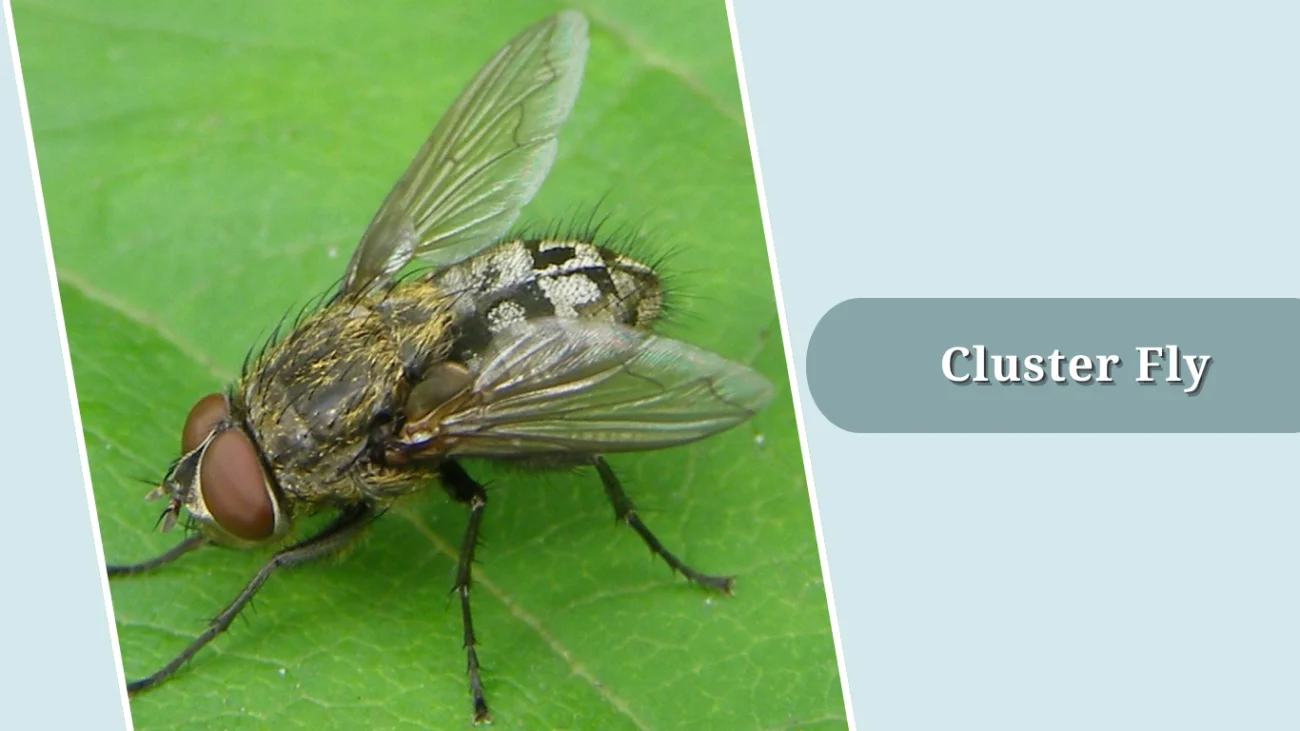
Cluster flies are often mistaken for house flies but are generally larger and slower-moving. They are known for invading homes and buildings in large numbers during cooler months to overwinter, often clustering near windows or in attics.
Identification
- Larger than house flies, about 7–10 mm in length
- Dark gray to black body with golden or yellowish hairs on the thorax
- Wings overlap when at rest
- Sluggish in flight compared to house flies
- Do not have the distinct thoracic stripes of the common house fly
Habitat
Cluster flies are usually found outdoors during warm months, where their larvae parasitize earthworms. In autumn, they move indoors seeking shelter in walls, attics, and unused spaces to overwinter, often becoming a nuisance in homes and offices.
Behavior
These flies are slow and less active compared to house flies. In cooler months, they gather in large numbers (“clusters”) inside buildings. Unlike house flies, they do not breed indoors or around garbage.
Diet
Adult cluster flies feed primarily on flower nectar and plant juices. Unlike house flies, they are not strongly attracted to waste or food scraps, making them less of a health threat.
Lifecycle
The lifecycle includes egg, larva, pupa, and adult stages. Females lay eggs in soil where larvae actively seek earthworms as hosts. The larvae develop inside the worms, eventually killing them. Adults emerge, live outdoors in summer, and seek shelter indoors in autumn.
6. Flesh Fly (Sarcophagidae family)

Flesh flies are large, robust flies that are commonly associated with decaying organic matter, carcasses, and animal waste. Some species can infest wounds or living tissue, making them important in both medical and forensic studies.
Identification
- Medium to large flies, about 10–14 mm in length
- Gray body with three distinct black longitudinal stripes on the thorax
- Abdomen often has a checkerboard pattern
- Red eyes and bristly body
- Wings are clear with well-defined veins
Habitat
Flesh flies are typically found near decaying flesh, garbage dumps, animal carcasses, and excrement. They are common in both urban and rural areas, especially during warm seasons.
Behavior
Unlike many other flies, flesh flies give birth to live larvae (larviparous) instead of laying eggs. They are quick fliers, strongly attracted to carrion, and are often among the first insects to colonize a corpse, making them useful in forensic investigations.
Diet
Adults feed on nectar, decaying organic matter, and fluids from carcasses or wounds. The larvae (maggots) feed on decaying flesh, dung, or sometimes live tissue in cases of parasitic infestation (myiasis).
Lifecycle
The lifecycle includes larva, pupa, and adult stages. Females deposit live larvae directly onto carrion, dung, or open wounds. Larvae develop rapidly, then pupate in soil or nearby debris. Under warm conditions, the full cycle can be completed in about 2–3 weeks.
7. Horse Fly (Tabanidae family)
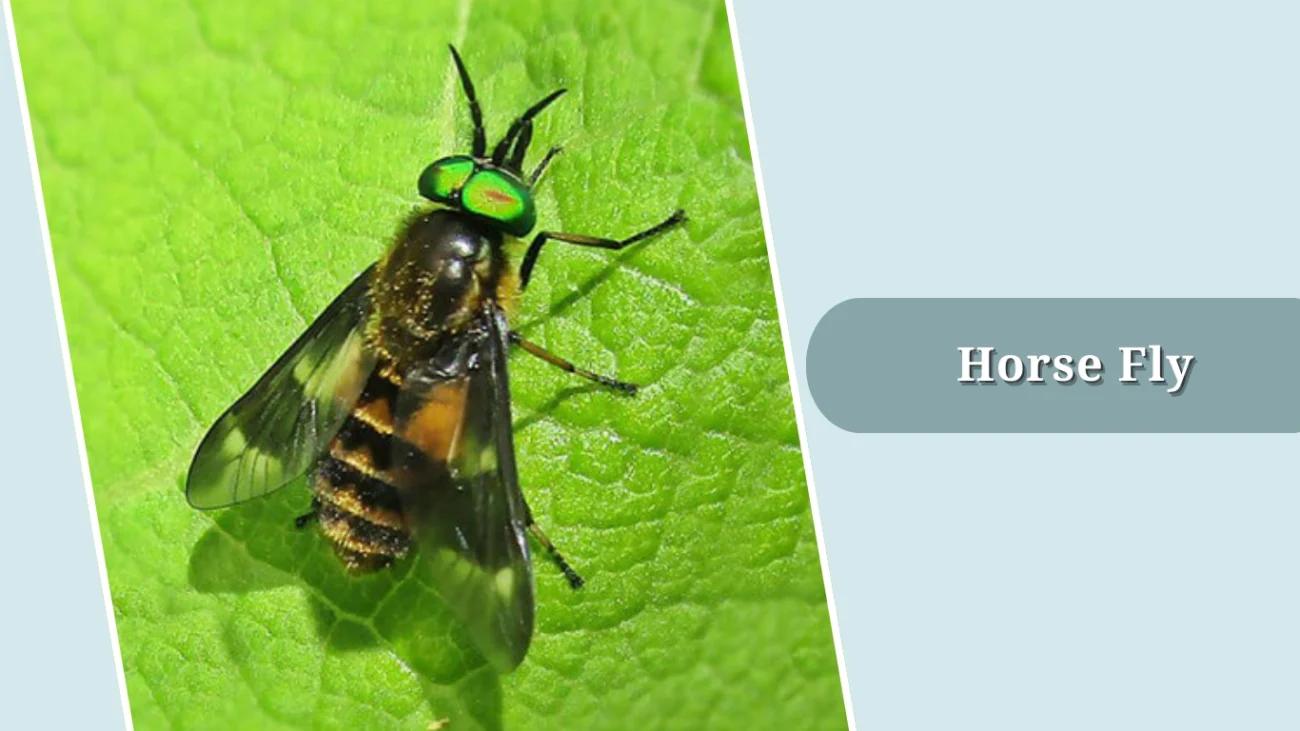
Horse flies are large, fast-flying insects best known for their painful bites. They are considered serious pests of livestock and humans, as their blood-feeding habits can cause stress, blood loss, and the spread of diseases.
Identification
- Large flies, typically 10–25 mm in length (some species even larger)
- Robust, stout bodies with clear or patterned wings
- Large, brightly colored or iridescent compound eyes
- Strong, blade-like mouthparts designed for cutting skin and sucking blood
- Females are blood-feeders, while males usually feed on nectar
Habitat
Horse flies are most common in rural and semi-rural areas near bodies of water such as rivers, ponds, and wetlands where they breed. They thrive in warm, humid environments and are particularly active during summer months.
Behavior
Horse flies are aggressive daytime biters. Females seek blood meals from livestock, horses, wildlife, and humans, while males typically hover around flowers. They are strong fliers and can pursue their hosts persistently, making them difficult to avoid.
Diet
- Females feed on blood, using their sharp mouthparts to cut the skin and lap up blood, often causing painful bites.
- Males feed mainly on nectar and plant juices.
Lifecycle
The lifecycle includes egg, larva, pupa, and adult stages. Females lay eggs in masses on vegetation near water. The larvae drop into moist soil or water where they feed on organic matter and small invertebrates. Pupation occurs in drier soil, and adults emerge in late spring or summer. The full cycle may take one year or longer depending on species and climate.
8. Black Fly (Simuliidae family)
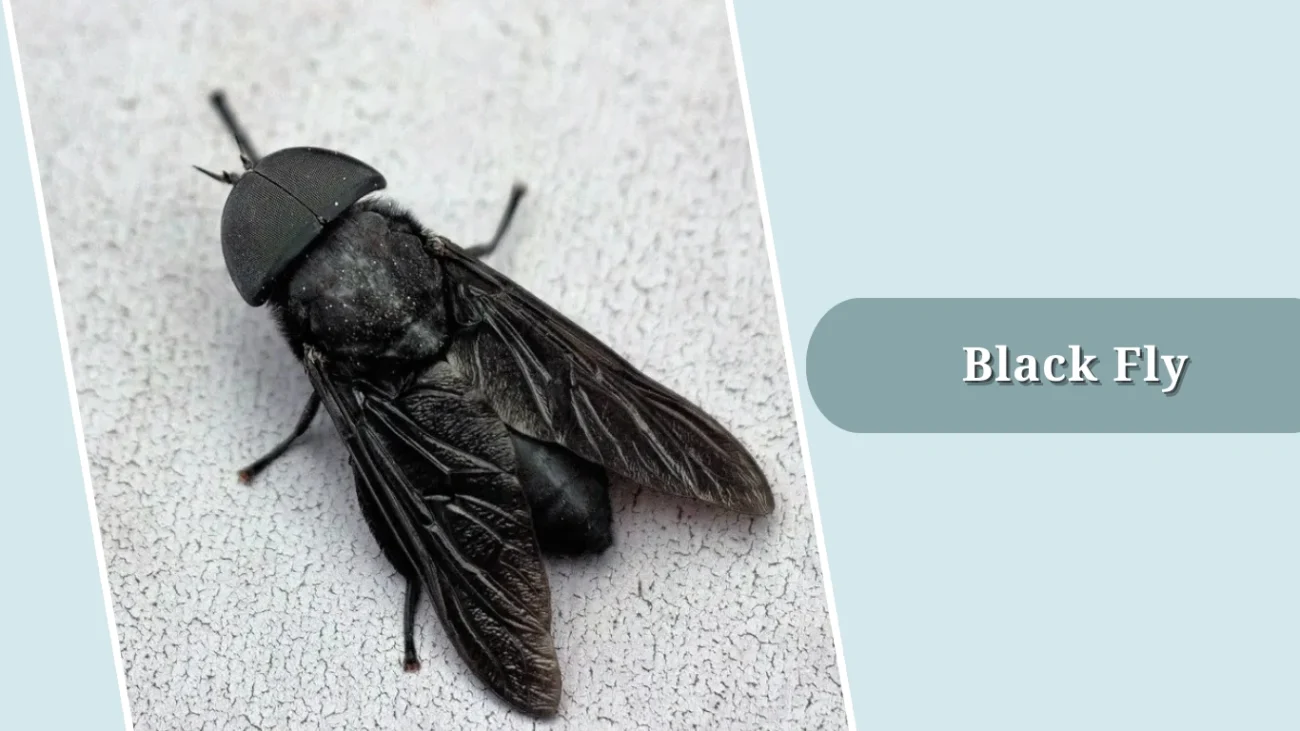
Black flies are small but notorious blood-feeding insects that can be serious pests to both humans and animals. Their bites are painful and itchy, and large swarms can cause stress, blood loss, and even transmit diseases such as river blindness in some regions.
Identification
- Small flies, usually 1–5 mm in length
- Humpbacked appearance with short, stout body
- Broad wings with thick veins
- Short legs and antennae
- Black or dark gray coloration (hence the name)
Habitat
Black flies breed in fast-flowing rivers and streams, where their larvae attach to submerged rocks and vegetation. They are most abundant in temperate and tropical regions with suitable freshwater habitats.
Behavior
Black flies are active during the day, especially in cool and humid conditions. Females swarm in large numbers around people and animals to obtain blood meals, often targeting exposed skin around the head, neck, and arms. Their swarming behavior makes them particularly annoying and harmful to outdoor activities and livestock.
Diet
- Females feed on blood, which is necessary for egg production. They prefer mammals, birds, and sometimes reptiles.
- Males feed primarily on nectar and plant juices.
Lifecycle
The lifecycle includes egg, larva, pupa, and adult stages. Females lay eggs on submerged vegetation or rocks in running water. Larvae develop while attached to substrates in flowing streams, filter-feeding on organic matter. Pupation also occurs underwater, with adults emerging at the surface. Development time varies but often takes several weeks.
9. Drain Fly (Psychodidae family)
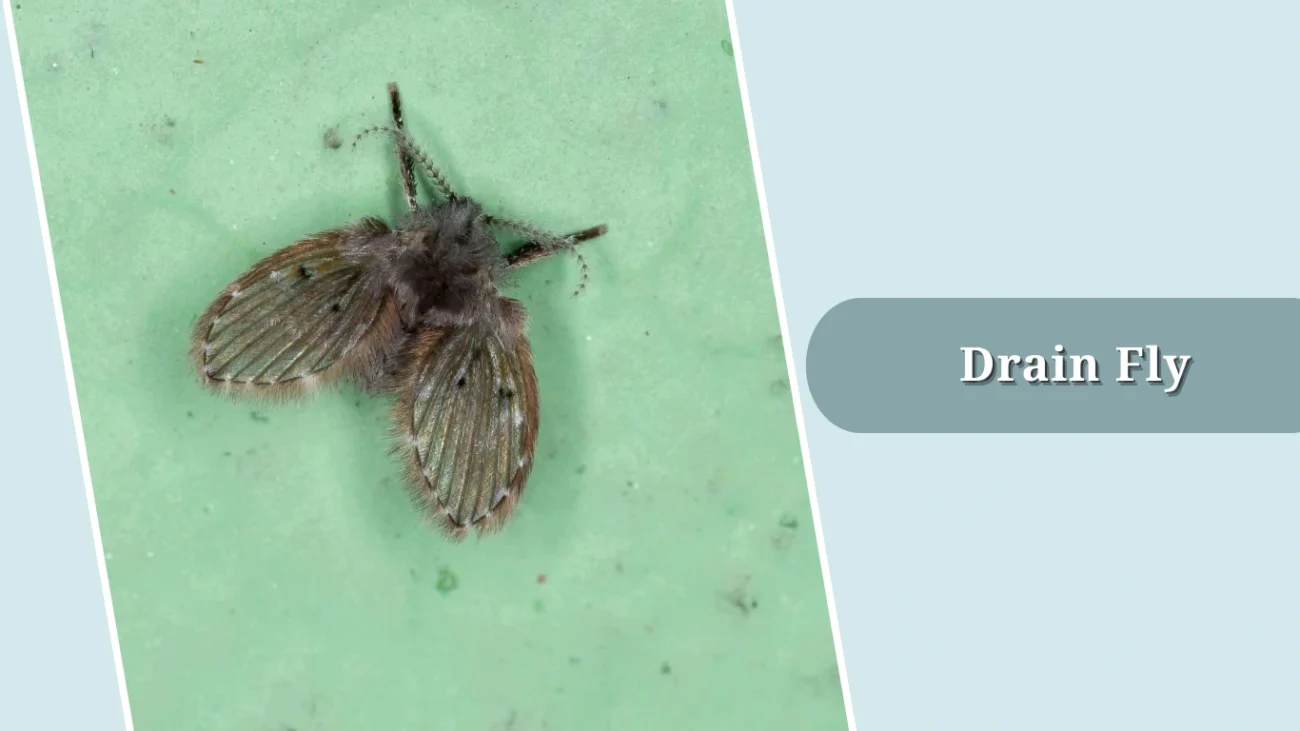
Drain flies, also called moth flies or sewer flies, are small, fuzzy insects often found in bathrooms and kitchens. While they are generally harmless, their presence indicates moisture problems and organic buildup in drains.
Identification
- Tiny flies, about 2–5 mm in length
- Moth-like appearance due to hairy wings and body
- Heart-shaped wings held roof-like over the body when at rest
- Slow, weak fliers that often hop or crawl rather than fly long distances
- Usually gray, brown, or tan in color
Habitat
Drain flies thrive in moist environments with decaying organic matter. They are commonly found in drains, sewage systems, septic tanks, and areas with stagnant water. Indoors, they are often seen around sinks, showers, and floor drains.
Behavior
These flies are nocturnal and most active during the evening. They are poor fliers, often seen resting on walls near drains. Although they do not bite, large infestations can be a nuisance in bathrooms and kitchens.
Diet
Adults feed on organic matter and microorganisms found in moist environments. The larvae consume decaying organic materials, algae, fungi, and bacteria present in drains or sewage systems.
Lifecycle
The lifecycle includes egg, larva, pupa, and adult stages. Females lay eggs in the gelatinous film inside drains or other damp places. Larvae develop in the organic sludge, taking about 1–2 weeks to mature. Pupation occurs in the same habitat, and adults emerge shortly after. The entire cycle may be completed in 2–3 weeks under warm, moist conditions.
10. Fruit Fly (Drosophila melanogaster)
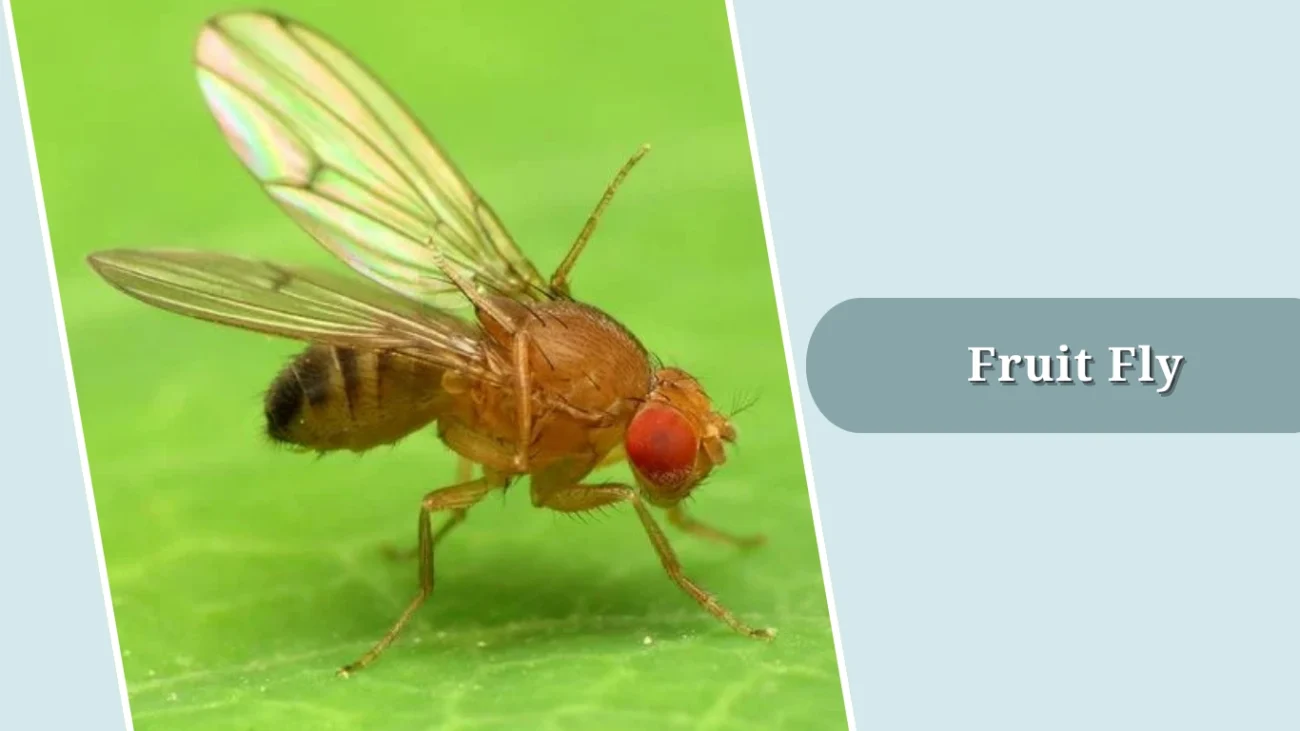
Fruit flies are among the most common household pests, frequently found around overripe or fermenting fruits and vegetables. They are small but multiply rapidly, making infestations difficult to control once established.
Identification
- Very small flies, about 2–4 mm in length
- Tan or yellowish-brown body with black markings on the abdomen
- Bright red compound eyes (in most species)
- Clear wings held flat over the body when at rest
- Slow, hovering flight near food sources
Habitat
Fruit flies thrive in places with fermenting or decaying organic material. They are commonly found in kitchens, grocery stores, restaurants, and anywhere overripe produce, spilled drinks, or garbage accumulates.
Behavior
Fruit flies are most active during the day and are strongly attracted to the smell of fermentation. They hover around fruit bowls, trash bins, drains, and compost piles. Their rapid reproduction makes them highly persistent indoor pests.
Diet
Adults feed on yeast, sugars, and microorganisms found on rotting or fermenting fruits, vegetables, and beverages. Larvae consume the same decaying matter, especially moist fruits and other organic residues.
Lifecycle
The lifecycle includes egg, larva, pupa, and adult stages. Females lay eggs on fermenting or rotting organic matter, where larvae hatch and feed. Development from egg to adult can occur in as little as 7–10 days, allowing populations to grow explosively in warm conditions.
11. Sand Fly (Phlebotominae subfamily)
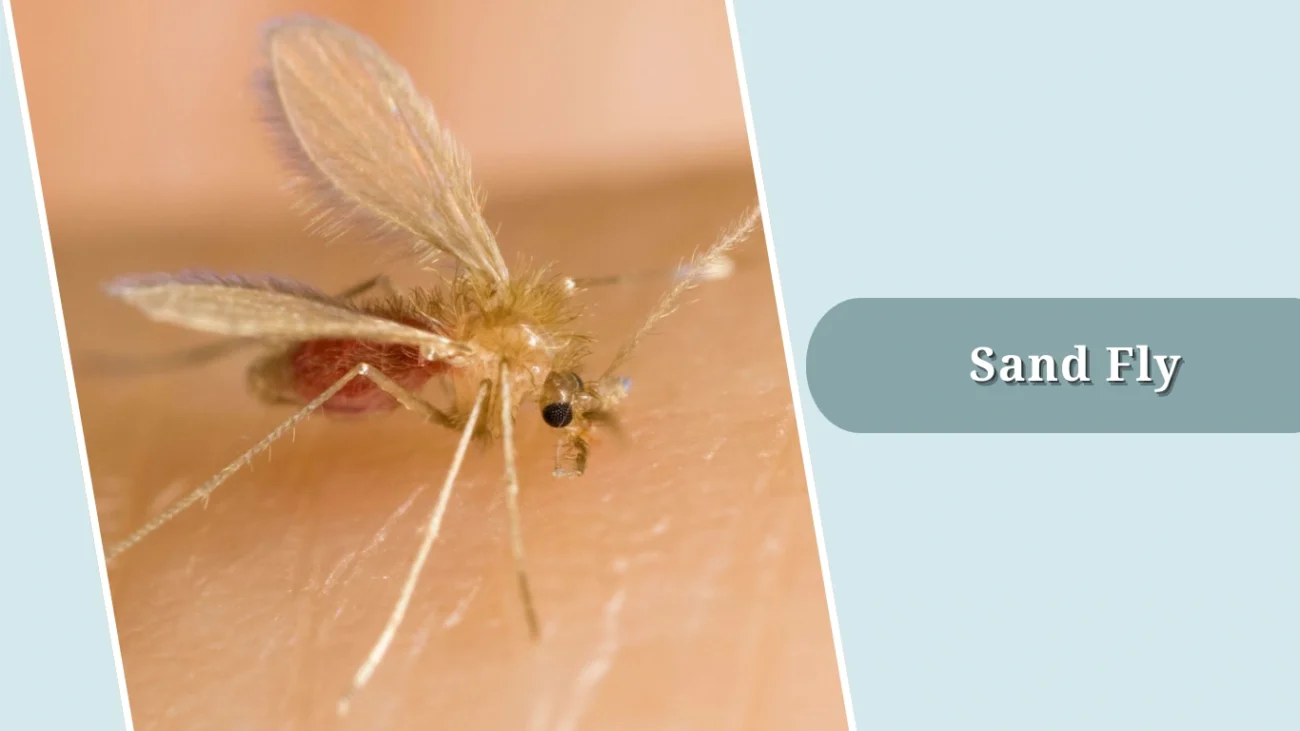
Sand flies are tiny, hairy flies best known for their painful bites and their role as vectors of diseases such as leishmaniasis. Despite their small size, they can cause significant irritation to both humans and animals.
Identification
- Very small flies, about 2–3 mm in length
- Covered with fine hairs, giving a fuzzy appearance
- Long legs and wings held in a V-shape when at rest
- Light brown, gray, or golden coloration
- Silent fliers, unlike mosquitoes or house flies
Habitat
Sand flies prefer warm, tropical, and subtropical regions. They are commonly found in forests, caves, rodent burrows, animal shelters, and rural areas with abundant organic material. They hide in dark, humid places during the day and emerge at dusk.
Behavior
Sand flies are nocturnal and crepuscular (most active at dusk and dawn). Females are aggressive biters, targeting humans and animals alike. Their bites are painful, cause itchy welts, and can transmit parasitic diseases in endemic regions.
Diet
- Females feed on blood to produce eggs.
- Males feed on nectar and plant juices.
Lifecycle
The lifecycle includes egg, larva, pupa, and adult stages. Females lay eggs in moist, organic-rich soil or decomposing plant material. Larvae feed on organic debris. The development period varies depending on temperature and humidity, typically lasting 1–3 months.
12. Bot Fly (Oestridae family)

Bot flies are parasitic insects best known for their unusual lifecycle, which involves their larvae developing inside the tissues of mammals. While they can infest humans, they primarily target animals such as horses, cattle, and rodents.
Identification
- Medium to large flies, about 12–18 mm in length
- Stout, hairy body resembling a bumblebee
- Brownish or yellowish coloration
- Reduced or non-functional mouthparts (adults do not feed)
- Strong fliers, often seen hovering near hosts
Habitat
Bot flies are found in rural, agricultural, and forested areas where their animal hosts live. Different species target specific animals, such as horses, cattle, rodents, or even humans in tropical regions.
Behavior
Bot flies are known for their unique parasitic reproductive behavior. Instead of laying eggs directly on the host, some species use other insects (like mosquitoes) to carry and deposit their eggs. When larvae hatch, they penetrate the skin or enter body openings of the host, where they continue their development.
Diet
- Adults: Do not feed due to reduced mouthparts.
- Larvae: Live parasitically inside the tissues of mammals, feeding on host fluids until they mature.
Lifecycle
The lifecycle includes egg, larva, pupa, and adult stages. Eggs are laid either directly on the host or transferred by other insects. Larvae burrow into the host’s skin or tissues, developing inside for several weeks to months. Once mature, they leave the host’s body to pupate in soil. Adults emerge after pupation, live briefly to reproduce, and repeat the cycle.
13. Deer Fly (Chrysops spp.)
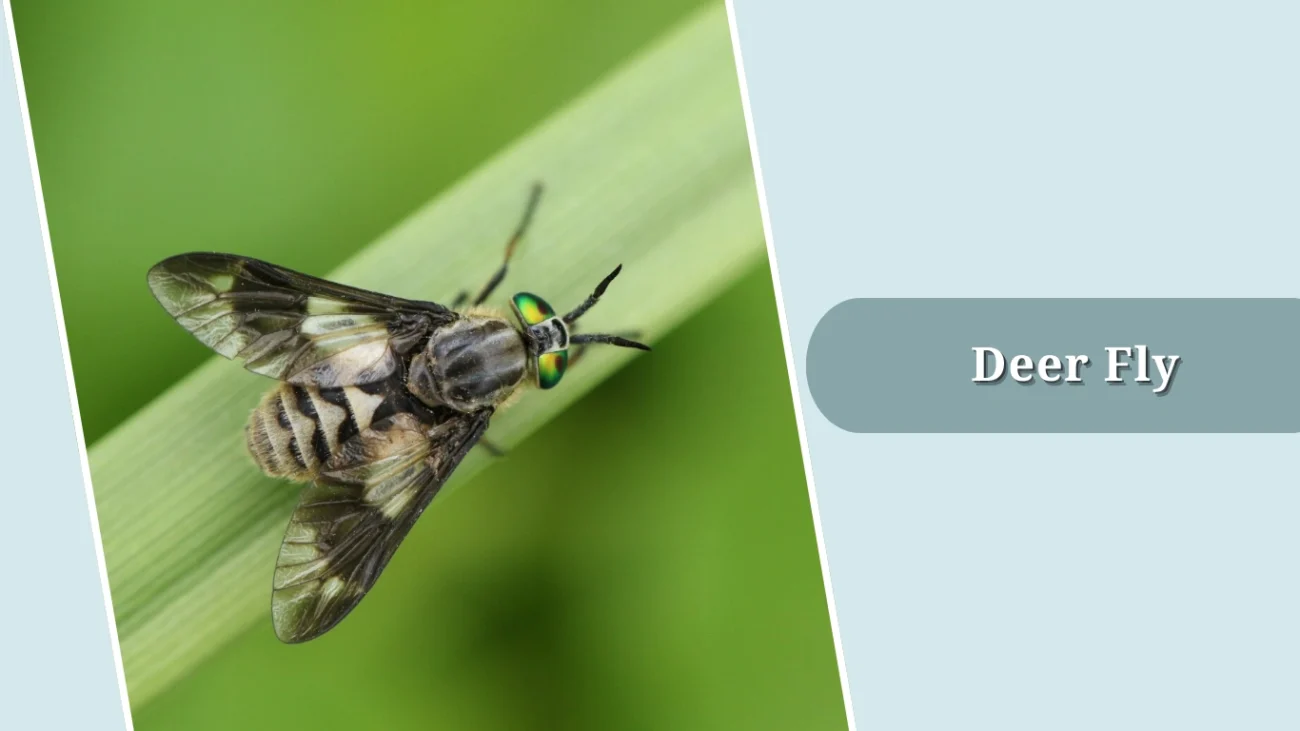
Deer flies are aggressive biting flies closely related to horse flies. They are strong fliers, capable of traveling long distances in search of hosts, and are notorious for their painful bites.
Identification
- Medium-sized flies, about 6–12 mm in length
- Stout body with clear or patterned wings, often featuring dark bands
- Large, brightly colored compound eyes with iridescent patterns
- Sharp, blade-like mouthparts for cutting skin
- Resemble horse flies but smaller and slimmer
Habitat
Deer flies are found in wetlands, forests, meadows, and areas near rivers, ponds, and marshes. They breed in damp soils and aquatic vegetation. Adults are especially common in warm, humid environments during summer.
Behavior
Deer flies are aggressive daytime biters. Females pursue mammals and humans relentlessly for blood meals, often circling around the head and neck. They are persistent pests for outdoor workers, hikers, and livestock. Males, in contrast, are non-biting and hover near flowers.
Diet
- Females: Feed on blood from humans, deer, livestock, and other animals.
- Males: Feed on nectar and plant juices.
Lifecycle
The lifecycle includes egg, larva, pupa, and adult stages. Females lay eggs in clusters on vegetation near water. Larvae drop into moist soil or water, feeding on organic matter or small invertebrates. After pupating in soil, adults emerge in late spring or summer. Development usually takes one year.
14. Eye Gnat (Hippelates spp.)

Eye gnats are tiny flies that are not blood-feeders but are strongly attracted to fluids around the eyes, nose, and mouth of humans and animals. While they do not bite, they are considered nuisance pests and can transmit eye diseases.
Identification
- Very small flies, about 1.5–2.5 mm in length
- Shiny black or dark gray body
- Clear wings held flat over the body
- Short antennae and legs
- Often mistaken for fruit flies due to their size
Habitat
Eye gnats thrive in warm climates and sandy soils. They are common in rural areas, fields, farms, and around livestock. They prefer areas with decaying organic matter, manure, and freshly disturbed soil where they lay their eggs.
Behavior
These gnats swarm around humans and animals, especially targeting the eyes, nose, and mouth to feed on secretions. They are most active during warm seasons and daylight hours. Though harmless by themselves, their constant swarming can be highly irritating.
Diet
- Adults: Feed on eye secretions, sweat, saliva, and other bodily fluids.
- Larvae: Develop in decaying organic matter, manure, and freshly turned soil.
Lifecycle
The lifecycle includes egg, larva, pupa, and adult stages. Females lay eggs in soil enriched with organic matter. Larvae feed on decomposing material before pupating in the soil. Adults emerge after a short pupation period. The full cycle is rapid, allowing populations to build up quickly in favorable conditions.
15. Tsetse Fly (Glossina spp.)

Tsetse flies are infamous for transmitting trypanosomiasis, also known as African sleeping sickness in humans and nagana in animals. Found primarily in sub-Saharan Africa, they are among the most medically important fly species.
Identification
- Medium-sized flies, about 6–14 mm in length
- Brown or yellowish body with a distinct long proboscis projecting forward
- Wings fold completely one over the other when at rest, forming a scissor-like pattern
- Large compound eyes
- Resemble house flies but more robust and with specialized mouthparts for blood-feeding
Habitat
Tsetse flies inhabit rural regions of Africa, especially near rivers, lakes, and woodland savannas where host animals are abundant. They prefer shaded, humid environments with vegetation that provides cover and breeding sites.
Behavior
Both male and female tsetse flies feed exclusively on blood. They are strong fliers and actively seek out hosts during daylight hours. Their bite is painful, and they are notorious vectors of protozoan parasites that cause African sleeping sickness.
Diet
- Adults (males and females): Feed solely on the blood of mammals, reptiles, or birds.
- They rely on vertebrate hosts for survival and reproduction.
Lifecycle
The lifecycle is unique compared to other flies. Females give birth to live larvae (viviparous reproduction) instead of laying eggs. The larva develops inside the female’s uterus, nourished by special “milk glands.” Once mature, the larva is deposited into soil, where it pupates. Adults emerge after several weeks, ready to feed and reproduce.