Blowflies are fascinating insects belonging to the family Calliphoridae. Known for their metallic colors and ecological importance, they play crucial roles in decomposition, nutrient recycling, and even forensic investigations. Some species are beneficial as decomposers, while others are harmful parasites affecting livestock. In this guide, we explore 15 different types of blowflies, highlighting their unique identification features, habitats, behaviors, diets, and lifecycles.
1. Common Green Bottle Fly (Lucilia sericata)
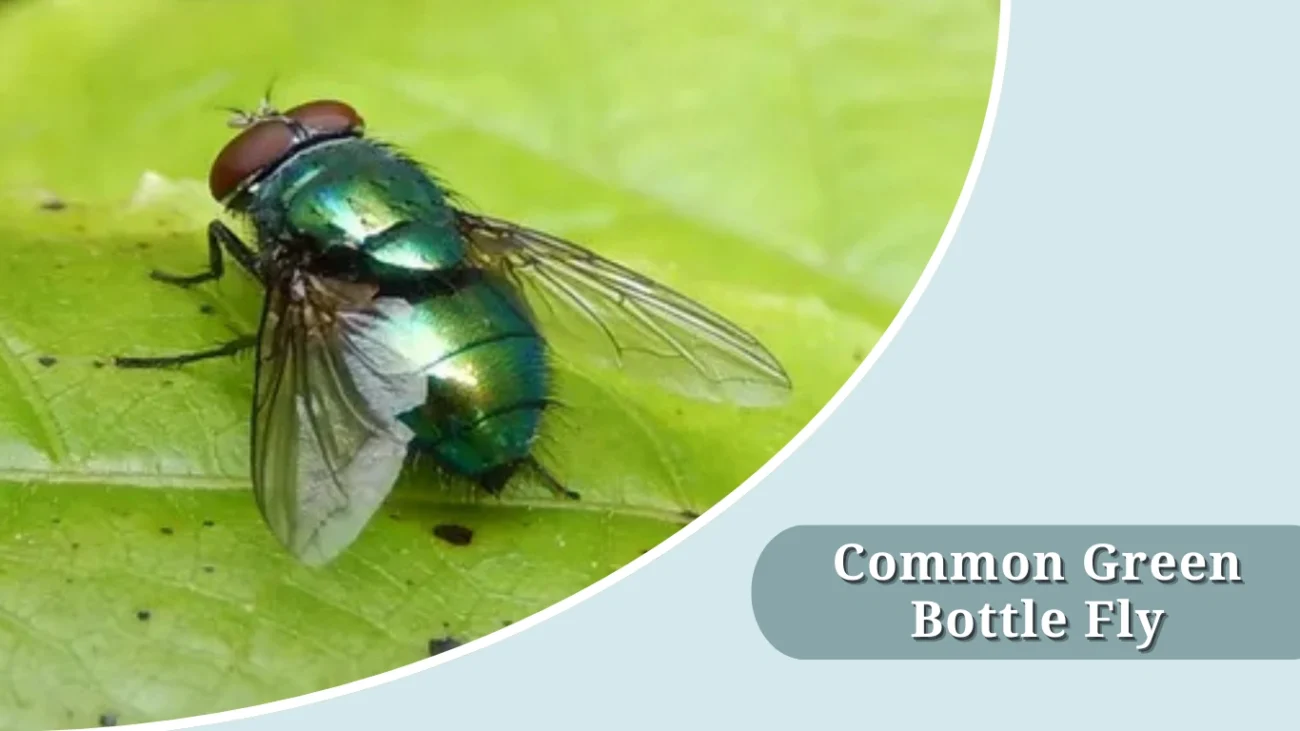
The Common Green Bottle Fly is one of the most recognizable blowflies, known for its metallic green body. It is widely distributed across the world and plays an important role in decomposition, forensic investigations, and even medical applications such as maggot therapy.
Identification
- Metallic green body with a shiny appearance
- Approximately 10–14 mm in length
- Large red compound eyes
- Transparent wings with distinct venation
- Bristly body with short black hairs
Habitat
This species is commonly found in urban, rural, and suburban areas. They thrive in warm climates and are frequently observed around garbage bins, carrion, animal waste, and decaying organic matter.
Behavior
Common Green Bottle Flies are strong fliers and are attracted to foul odors. They are active during the day and play a key role in recycling nutrients back into the ecosystem. Females often seek out carcasses or wounds to lay eggs.
Diet
Adults primarily feed on nectar, pollen, and other sugary substances, but they are strongly attracted to decomposing organic material. The larvae (maggots) feed on carrion, feces, or necrotic tissue, making them important decomposers.
Lifecycle
The lifecycle consists of four stages: egg, larva, pupa, and adult. Eggs hatch within 8–24 hours after being laid on decaying material. Larvae undergo three instars over 4–10 days before pupating in soil. Adults emerge within 2–3 weeks, depending on temperature.
2. Bronze Bottle Fly (Lucilia cuprina)

The Bronze Bottle Fly is a close relative of the Common Green Bottle Fly but is distinguished by its bronze-green coloration. It is notorious in livestock farming, particularly as a primary cause of flystrike in sheep, leading to significant economic losses.
Identification
- Metallic bronze to copper-green body
- Slightly smaller than the Common Green Bottle Fly, about 8–10 mm long
- Large reddish-brown compound eyes
- Clear wings with visible venation
- Body covered in short bristles
Habitat
This species is found mainly in warm, humid regions. It is widespread in Australia, Africa, Asia, and parts of the Americas. It commonly inhabits areas near livestock farms, garbage dumps, and carcasses.
Behavior
Bronze Bottle Flies are aggressive breeders and are strongly attracted to wounds, soiled wool, or decaying organic matter. They are diurnal and highly active in warm weather, often being among the first flies to reach animal carcasses.
Diet
Adult flies feed on nectar and other sugary substances, but they are strongly drawn to blood, excretions, and decaying tissue. The larvae are parasitic and feed on living or necrotic tissue, making them dangerous to livestock.
Lifecycle
The life cycle is rapid, often completed within 2–3 weeks under favorable conditions. Females lay eggs in soiled wool, wounds, or carrion. Eggs hatch within 12–24 hours, and larvae feed aggressively for 3–5 days before pupating in soil. Adults emerge in 7–10 days.
3. Blue Bottle Fly (Calliphora vomitoria)

The Blue Bottle Fly is one of the most familiar blowflies, easily recognized by its metallic blue coloration. It is common in both rural and urban environments and is often associated with carrion and waste, making it important in forensic entomology.
Identification
- Metallic blue body with a glossy sheen
- Size ranges from 10–14 mm
- Large reddish-brown eyes
- Clear wings with distinct venation
- Body covered with short, stiff bristles
Habitat
This species thrives in temperate regions and is widespread across Europe, North America, and Asia. It is commonly found near garbage dumps, carcasses, and decaying organic matter, as well as in urban settings around waste bins.
Behavior
Blue Bottle Flies are strong fliers and are among the first insects to colonize a dead body. They are diurnal and very active in warm weather. Their quick attraction to carrion makes them vital indicators in forensic studies.
Diet
Adults feed on nectar, honeydew, and other sugary substances, but they are also strongly drawn to decomposing tissue and feces. The larvae (maggots) feed on carrion and waste, aiding in decomposition and nutrient recycling.
Lifecycle
The lifecycle is completed in about 2–3 weeks under favorable conditions. Females lay eggs on carrion, feces, or decaying food. Eggs hatch in less than 24 hours, and larvae feed for 4–10 days before pupating in soil. Adults emerge within 1–2 weeks, depending on temperature.
4. Black Blowfly (Phormia regina)
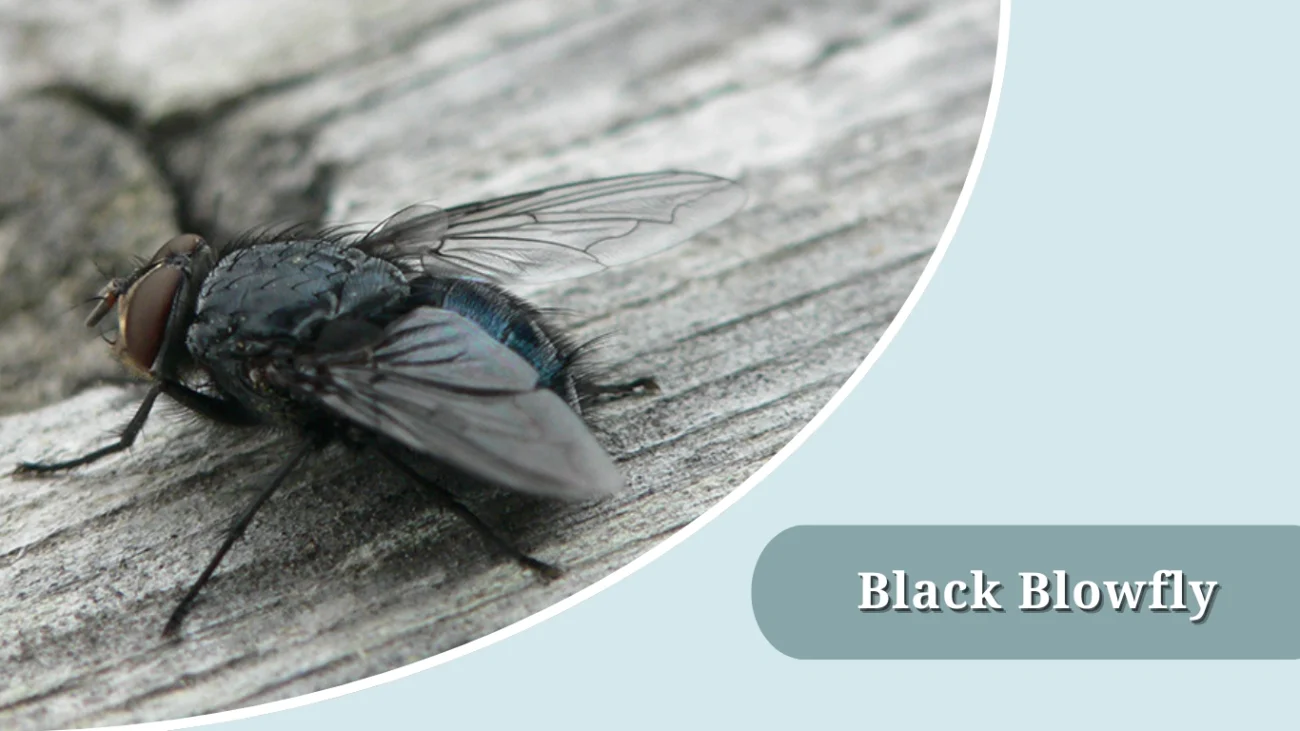
The Black Blowfly, also known as the regal blowfly, is one of the most widespread blowfly species in North America. Recognized for its dark metallic body, it is heavily studied in forensic entomology due to its rapid colonization of carcasses.
Identification
- Metallic black to blue-green body
- Medium-sized, around 7–12 mm in length
- Large reddish-brown compound eyes
- Clear wings with slightly darkened bases
- Bristly thorax and abdomen
Habitat
This species is abundant in temperate regions of North America and can also be found in Europe and Asia. It is often present near garbage, carrion, and feces. It prefers sunny, open areas and is commonly seen in rural as well as urban environments.
Behavior
Black Blowflies are among the earliest arrivals to decomposing remains. They are diurnal, highly active in warm temperatures, and play a major role in decomposition. Their presence on a corpse is often used to estimate the post-mortem interval in forensic cases.
Diet
Adult flies feed on nectar, plant sugars, and various decaying substances. The larvae are voracious feeders on carrion, feces, and occasionally decaying plant material. They are considered beneficial decomposers in the ecosystem.
Lifecycle
The lifecycle is completed within 2–3 weeks, depending on environmental conditions. Females deposit eggs on carcasses or other decaying matter, and eggs hatch within 12–24 hours. Larvae pass through three instars in 3–7 days, then pupate in soil. Adults emerge within 7–14 days.
5. Hairy Maggot Blowfly (Chrysomya rufifacies)
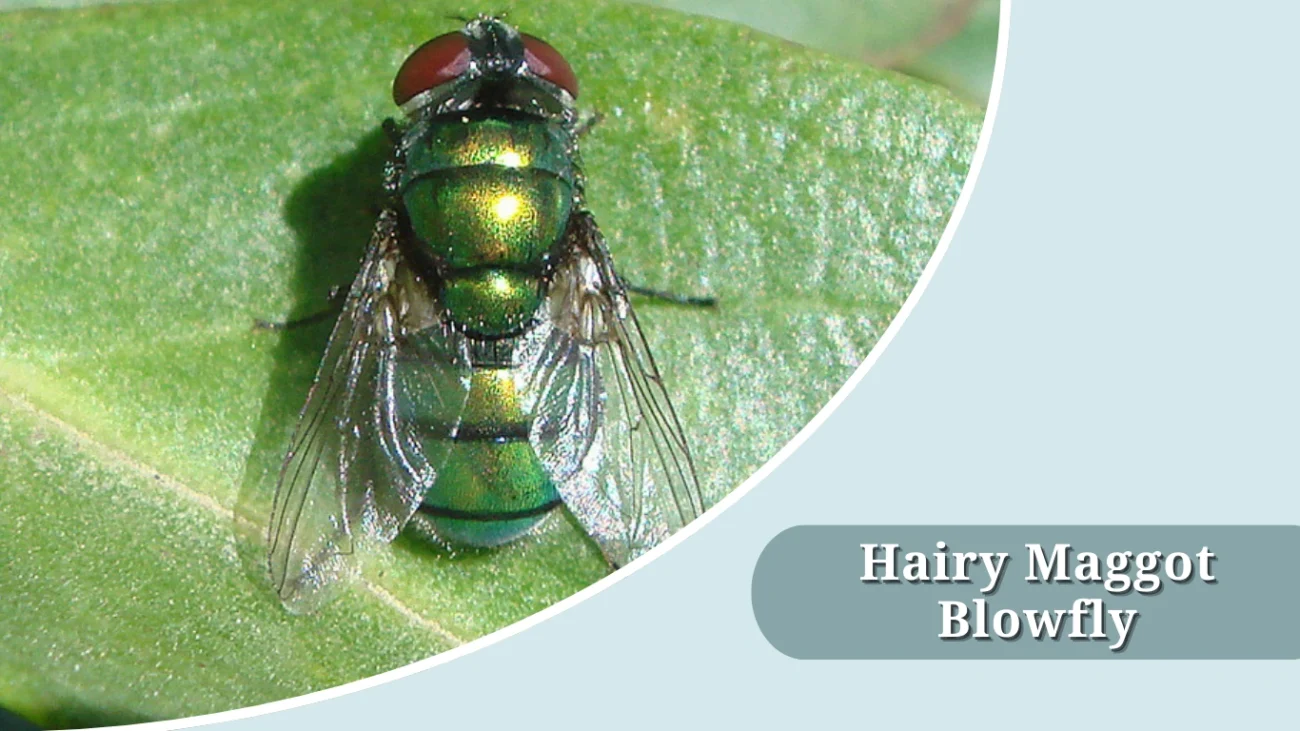
The Hairy Maggot Blowfly is notable for its predatory larvae, which feed not only on carrion but also on the maggots of other fly species. Native to Asia, it has spread widely to other tropical and subtropical regions.
Identification
- Metallic blue-green body with a shiny appearance
- Medium-sized, about 8–12 mm long
- Large reddish-brown eyes
- Clear wings with visible venation
- Distinctive larvae covered with spiny, hair-like projections (hence the name “hairy maggot”)
Habitat
This species thrives in warm and tropical climates. It is commonly found in Southeast Asia, Africa, Australia, and has expanded to the Americas. It is strongly associated with carrion but may also be found in garbage-rich areas and rural settings.
Behavior
Hairy Maggot Blowflies are aggressive colonizers of carrion, often arriving soon after death. The larvae are facultative predators, feeding on the maggots of other blowfly species as well as decomposing tissue. This makes them ecologically unique compared to other blowflies.
Diet
Adults feed on nectar, honeydew, and other sugary substances but are highly attracted to carcasses for egg-laying. The larvae feed primarily on carrion but will also attack and consume larvae of other fly species, giving them a competitive advantage.
Lifecycle
The life cycle takes around 2–3 weeks depending on environmental conditions. Females lay eggs on carrion or decomposing material, with hatching occurring within 24 hours. Larvae feed for about 4–7 days, then pupate in soil. Adults emerge within 1–2 weeks.
6. Oriental Latrine Fly (Chrysomya megacephala)
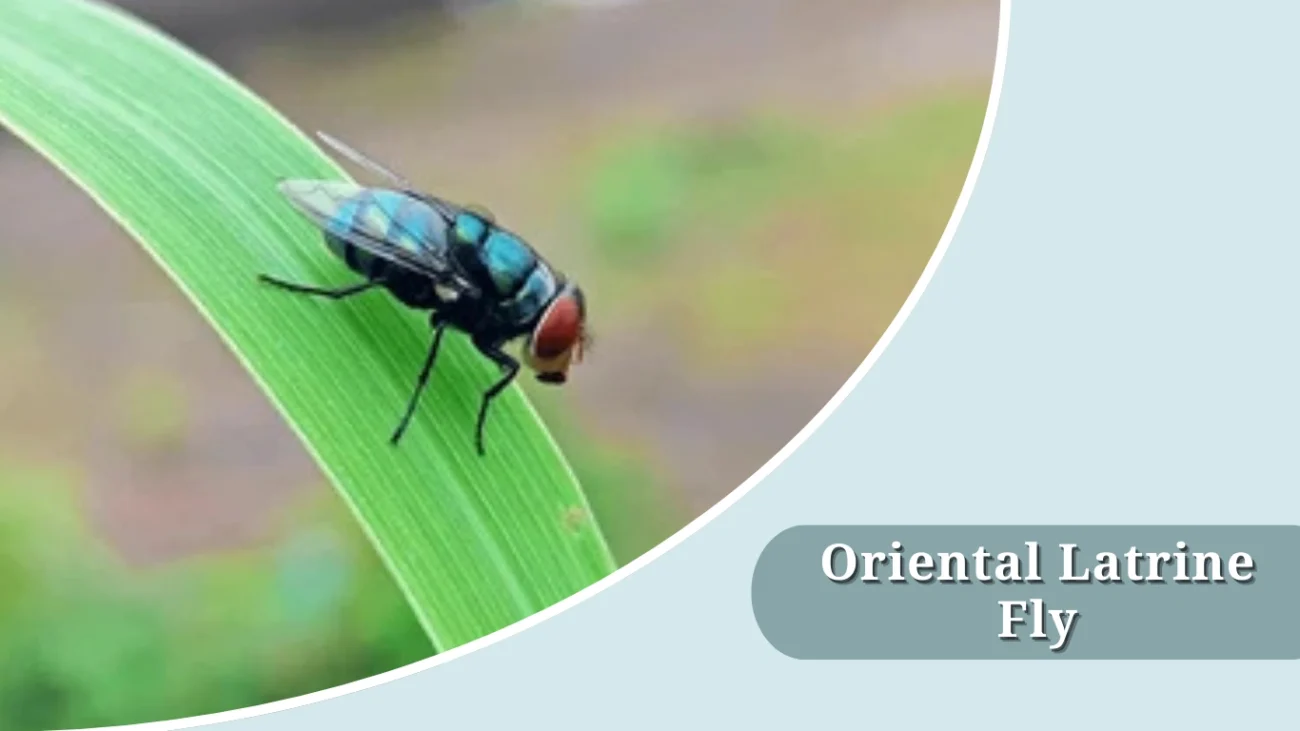
The Oriental Latrine Fly is a common blowfly species in tropical and subtropical regions. It is strongly associated with unsanitary conditions and is considered a major public health pest due to its role in transmitting diseases.
Identification
- Metallic green to blue body with a shiny surface
- Medium to large in size, about 9–13 mm long
- Large reddish-brown eyes
- Clear wings with noticeable venation
- Thorax and abdomen covered in fine short bristles
Habitat
This species thrives in warm, humid climates across Asia, Africa, and tropical parts of the Americas. It is often found near human settlements, latrines, garbage dumps, and animal waste. Its strong association with filth makes it a key indicator of poor sanitation.
Behavior
Oriental Latrine Flies are highly active during the day and are strong fliers. They are among the first blowflies to arrive at feces and decomposing organic material. They are also known to invade homes and food establishments, creating significant hygiene concerns.
Diet
Adults feed on nectar and other sugary substances but are strongly attracted to feces, carrion, and decaying food. Larvae feed primarily on animal waste and decomposing organic matter, playing a role in nutrient recycling but also spreading pathogens.
Lifecycle
The lifecycle is completed in about 2–3 weeks under favorable conditions. Females lay eggs on feces, garbage, or carrion. Eggs hatch within 12–24 hours, and larvae develop rapidly over 3–5 days before pupating in soil. Adults emerge within 7–10 days.
7. Australian Sheep Blowfly (Lucilia cuprina)
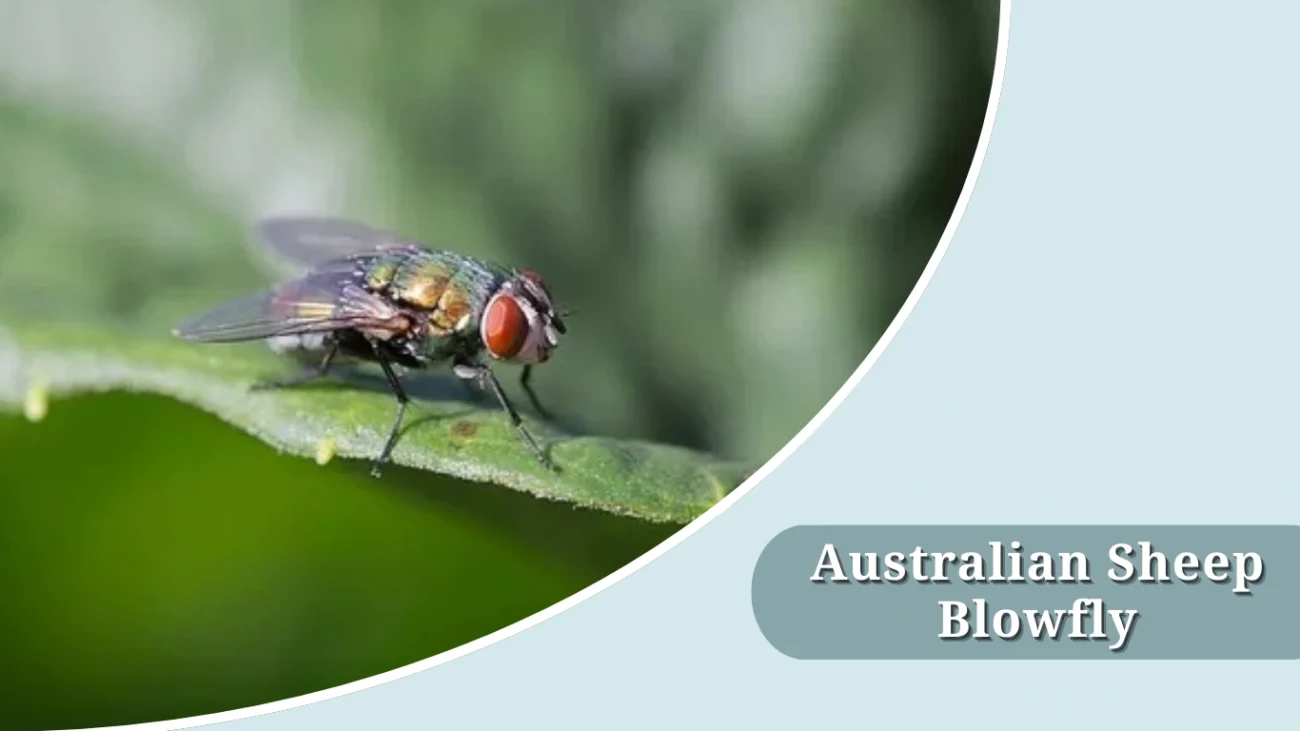
The Australian Sheep Blowfly is a notorious pest in livestock farming, especially in Australia and New Zealand. It is the primary cause of flystrike in sheep, a condition that leads to severe health issues and economic losses in the wool industry.
Identification
- Metallic bronze-green to copper coloration
- Medium-sized, about 8–10 mm long
- Prominent reddish-brown compound eyes
- Clear wings with distinct venation
- Short black bristles scattered over the thorax and abdomen
Habitat
This species is most abundant in warm, humid climates. It is widespread across Australia, New Zealand, Africa, and parts of Asia and South America. It thrives in areas with livestock farming, especially where sheep are kept.
Behavior
The Australian Sheep Blowfly is highly aggressive in locating sheep with soiled or wounded wool. Females lay eggs directly on sheep, particularly in moist, dirty wool areas. The larvae then burrow into the sheep’s skin, causing severe damage. This behavior makes the species a significant threat to animal welfare.
Diet
Adult flies feed on nectar, honeydew, and decomposing substances, but they are strongly attracted to wounds, blood, and soiled fleece. The larvae are parasitic, feeding on living sheep tissue and causing flystrike, a painful and potentially fatal condition.
Lifecycle
The life cycle can be completed in as little as 2–3 weeks under favorable warm conditions. Females lay hundreds of eggs on sheep fleece or wounds. Eggs hatch within 12–24 hours, and larvae feed for 3–5 days before dropping to the ground to pupate. Adults emerge in 7–10 days, continuing the cycle.
8. Brown Blowfly (Calliphora stygia)
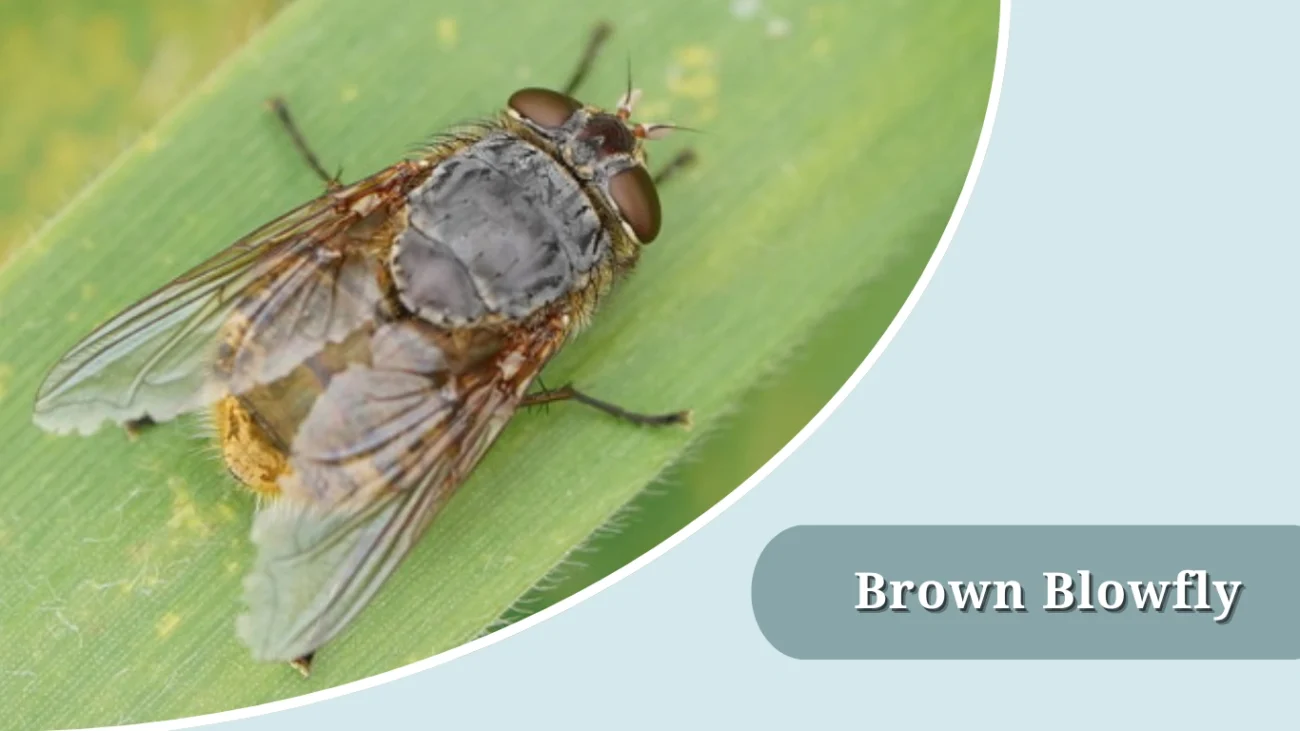
The Brown Blowfly is a large species of blowfly commonly found in Australia and New Zealand. It is an important decomposer and is also frequently used in forensic entomology due to its predictable colonization patterns on carrion.
Identification
- Large blowfly, about 10–14 mm long
- Dull metallic bronze to brownish-black body
- Distinctive checkered pattern on the abdomen
- Large reddish-brown eyes
- Clear wings with brownish veins
Habitat
This species is abundant in Australia and New Zealand, especially in rural and suburban areas. It is strongly associated with carrion, garbage, and decaying organic matter. It often inhabits grasslands, farmland, and forest edges where animal remains are found.
Behavior
Brown Blowflies are among the first insects to visit carcasses, making them valuable in forensic investigations. They are diurnal and strong fliers, often traveling considerable distances to locate carrion. They are less aggressive around humans compared to some other blowfly species.
Diet
Adults feed on nectar and sugary plant exudates but are strongly drawn to carcasses, feces, and decomposing material. Larvae feed extensively on carrion and waste, contributing to decomposition and nutrient cycling in ecosystems.
Lifecycle
The lifecycle is completed in about 2–3 weeks under favorable conditions. Females lay eggs on carcasses or decaying matter, and larvae hatch within 24 hours. The larval stage lasts about 4–7 days, after which they pupate in soil. Adults emerge within 1–2 weeks.
9. European Green Bottle Fly (Lucilia caesar)
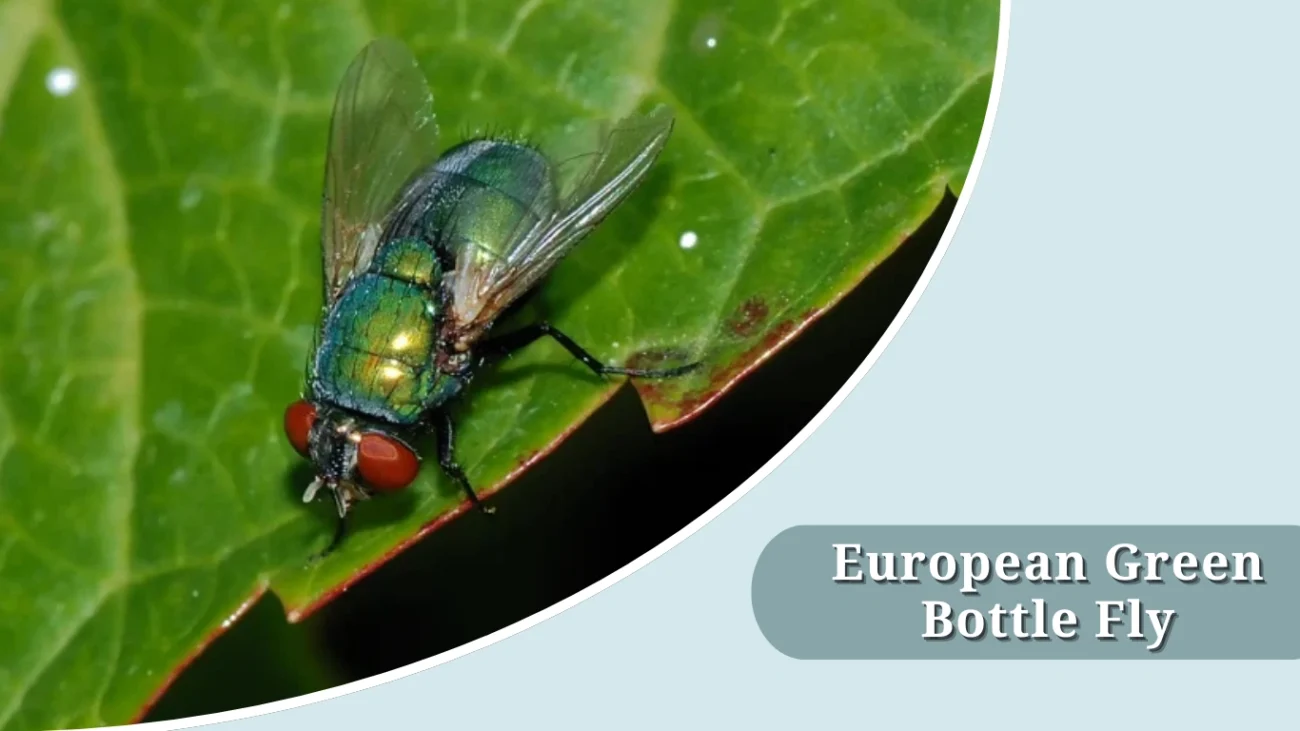
The European Green Bottle Fly is a close relative of the Common Green Bottle Fly and is widely distributed across Europe and parts of Asia. It is an important species in forensic entomology, agriculture, and ecological studies due to its role in decomposition.
Identification
- Metallic green body with a glossy sheen
- Medium-sized, about 10–14 mm long
- Large reddish-brown compound eyes
- Clear wings with visible venation
- Bristly thorax and abdomen
Habitat
This species is primarily found in temperate regions across Europe, Asia, and has also been introduced to other parts of the world. It is commonly associated with carrion, animal feces, and decaying organic matter. Rural areas with livestock provide especially suitable habitats.
Behavior
European Green Bottle Flies are strong fliers and among the first insects to arrive at dead animals. They are diurnal and highly active during warm daylight hours. Their predictable colonization patterns make them useful in estimating the post-mortem interval in forensic cases.
Diet
Adult flies feed on nectar, honeydew, and other sugary substances, but they are strongly attracted to carrion, feces, and decaying food sources. The larvae feed primarily on carrion and occasionally on fecal matter, aiding in nutrient recycling.
Lifecycle
The lifecycle takes about 2–3 weeks depending on temperature and environmental conditions. Females lay eggs on animal remains or other decomposing materials. Eggs hatch in 12–24 hours, larvae feed for 4–7 days, and pupation occurs in soil. Adults emerge within 1–2 weeks.
10. Northern Blowfly (Calliphora vicina)
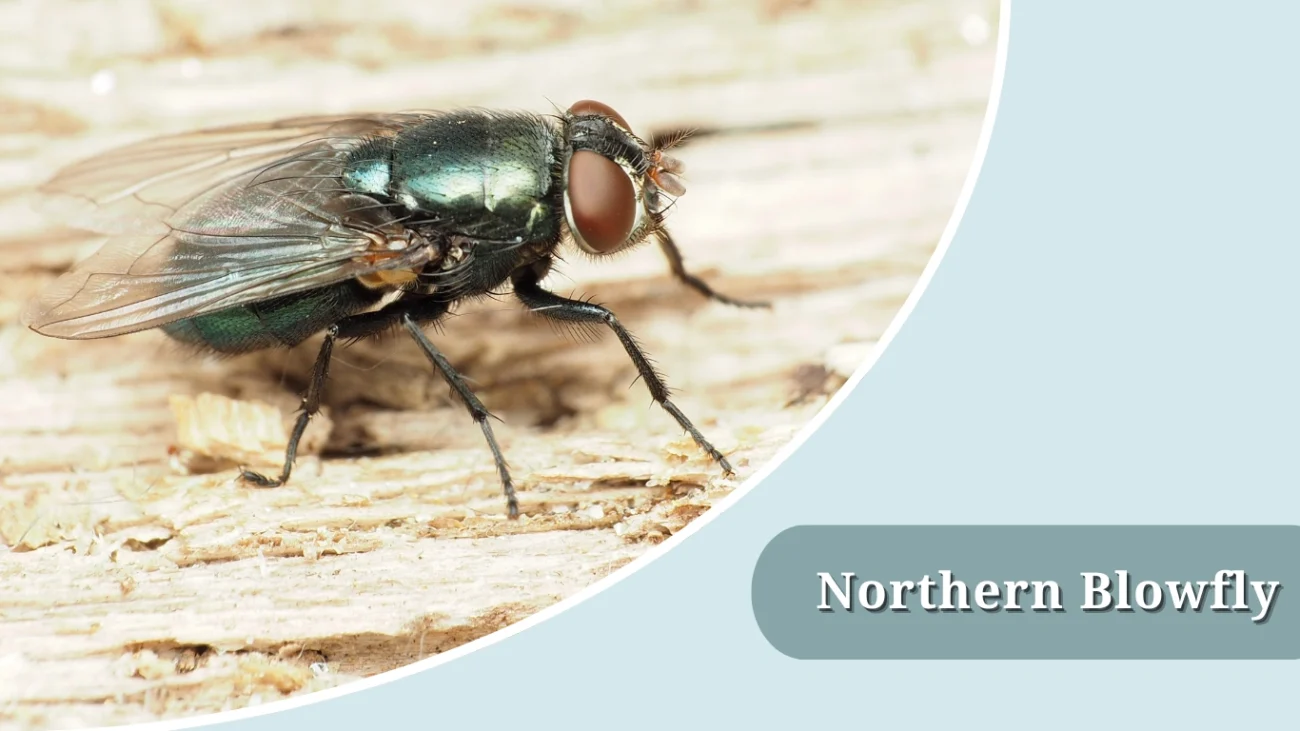
The Northern Blowfly is a widespread species across Europe and North America, often found in cooler climates. It is one of the most important species in forensic entomology because it frequently colonizes remains during the colder months when other blowflies are less active.
Identification
- Medium to large size, about 10–14 mm long
- Metallic bluish-black to dull blue body
- Large reddish-brown compound eyes
- Thorax and abdomen covered in fine bristles
- Clear wings with slightly darkened veins
Habitat
This species thrives in temperate and cooler regions, being especially common in northern Europe and North America. It is often found near carrion, garbage, and animal feces, as well as in both urban and rural areas. Its ability to survive colder temperatures makes it distinctive among blowflies.
Behavior
Northern Blowflies are diurnal and active at lower temperatures compared to many other blowfly species. They are often among the first insects to appear on carcasses in cooler months, which is why they are frequently studied in forensic cases.
Diet
Adults feed on nectar, plant exudates, and decaying organic fluids. They are strongly attracted to animal remains and feces for breeding. Larvae feed on carrion and decomposing matter, playing an important role in ecological recycling.
Lifecycle
The lifecycle usually takes 2–4 weeks, depending on environmental conditions. Females lay eggs on carcasses, feces, or decaying food. Eggs hatch within 24 hours, and larvae feed for 4–7 days before pupating in soil. Adult flies emerge within 1–2 weeks, with colder weather slowing development.
11. Tropical African Blowfly (Chrysomya albiceps)
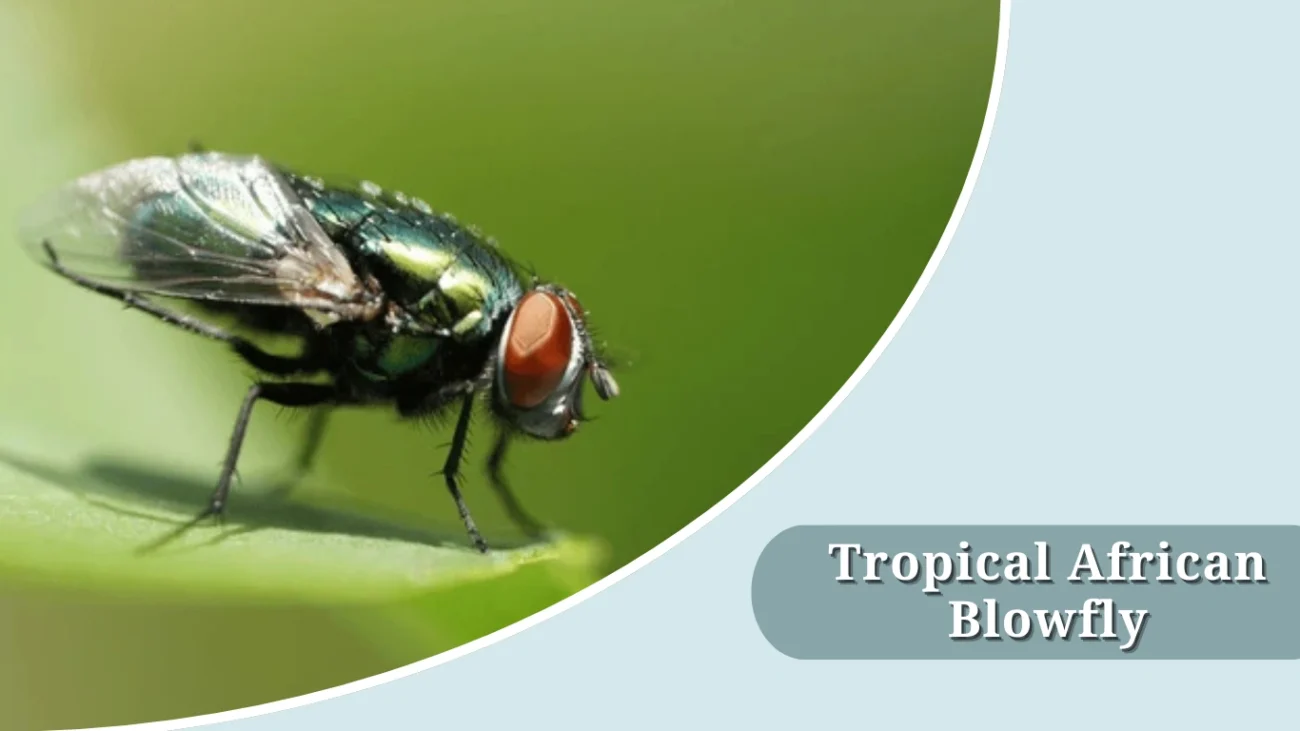
The Tropical African Blowfly is a widely distributed species across Africa, the Middle East, and parts of southern Europe. It is notable for its predatory larvae, which not only feed on carrion but also prey on other fly larvae.
Identification
- Metallic blue-green to bluish body
- Medium-sized, about 9–12 mm long
- Reddish compound eyes
- Clear wings with prominent venation
- Larvae with distinctive spiny bands on their bodies
Habitat
This species is abundant in warm, tropical, and subtropical regions, particularly in Africa and the Mediterranean basin. It is frequently found around carrion, garbage, feces, and animal remains, as well as in rural farming areas.
Behavior
Tropical African Blowflies are among the first insects to arrive at carcasses, making them important in forensic studies. The larvae are predatory, feeding on other maggots, which can influence succession patterns of insects on decomposing remains.
Diet
Adults feed on nectar, honeydew, and decomposing fluids but are strongly attracted to carrion and feces. The larvae primarily consume animal tissue but also prey on larvae of other blowflies, giving them an ecological role as both decomposers and predators.
Lifecycle
The lifecycle typically lasts 2–3 weeks. Females lay eggs on animal carcasses or decomposing material, and eggs hatch within 12–24 hours. Larvae feed actively for 3–6 days before pupating in the soil. Adults emerge in about 1–2 weeks, depending on temperature.
12. Eastern Blowfly (Calliphora augur)
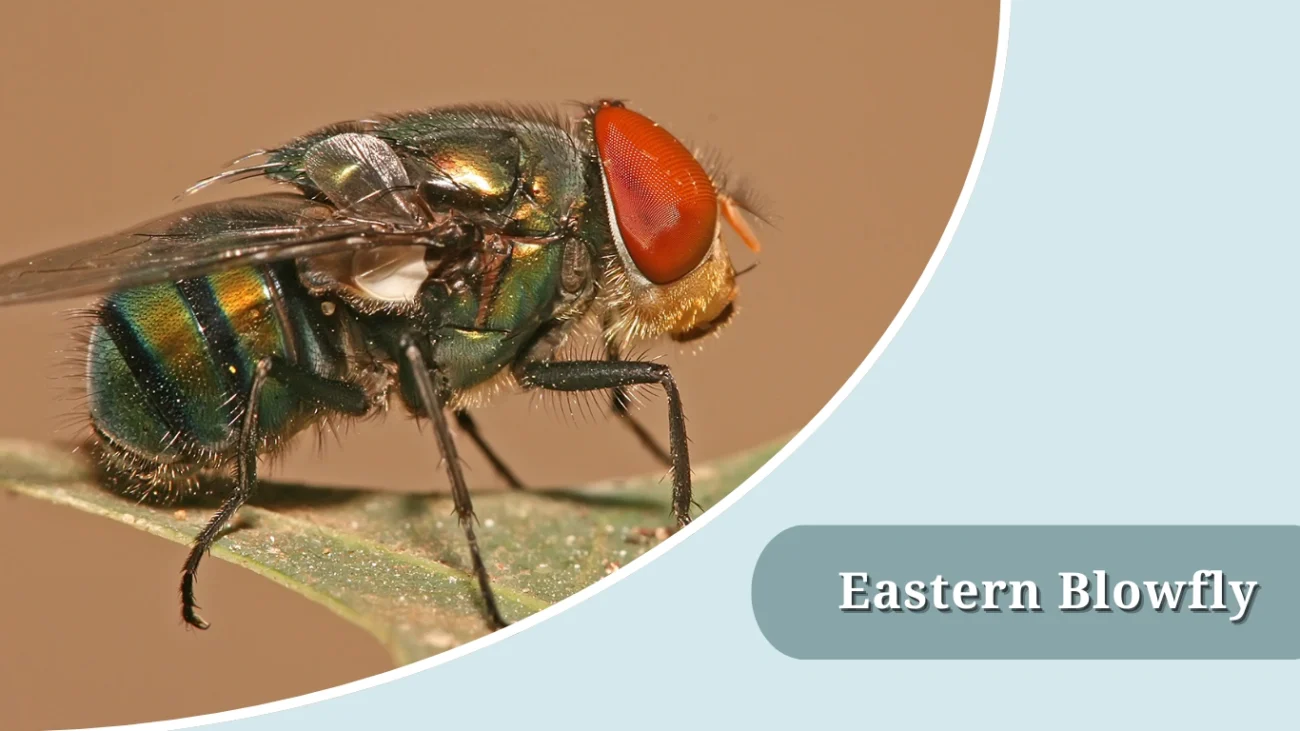
The Eastern Blowfly is a large, robust blowfly native to Australia. It is of particular interest because it does not lay eggs but instead gives birth to live larvae, making it unique among many blowfly species.
Identification
- Large fly, about 12–15 mm long
- Metallic blue-black body with a glossy sheen
- Distinct greyish stripes on the thorax
- Large reddish-brown compound eyes
- Clear wings with darkened veins
Habitat
This species is found primarily in eastern Australia but also occurs in surrounding regions. It thrives in temperate to warm climates and is commonly associated with rural farmland, carrion sites, and garbage areas.
Behavior
Unlike most blowflies, Eastern Blowflies are larviparous, meaning females deposit live larvae directly onto carrion, wounds, or decaying matter instead of laying eggs. This adaptation gives their offspring a survival advantage, as the larvae begin feeding immediately.
Diet
Adults feed on nectar, plant fluids, and decomposing organic matter. They are particularly drawn to carrion and animal waste for breeding. The larvae feed exclusively on carrion and decomposing tissues, contributing significantly to decomposition processes.
Lifecycle
The lifecycle can be completed in about 2–3 weeks. Since females deposit live larvae, the larval stage begins immediately. Larvae feed for 4–6 days before pupating in soil. Adults emerge within 1–2 weeks, influenced by environmental temperature and humidity.
13. Small Green Bottle Fly (Lucilia illustris)

The Small Green Bottle Fly is a widespread species found in the Northern Hemisphere, particularly in Europe, Asia, and North America. It is closely related to other green bottle flies and is often studied in forensic science due to its predictable presence on carcasses.
Identification
- Metallic green body with a shiny appearance
- Slightly smaller than Lucilia sericata, about 8–12 mm long
- Large reddish-brown compound eyes
- Clear wings with distinct venation
- Bristly thorax and abdomen
Habitat
This species inhabits temperate regions, thriving in rural and urban environments. It is commonly found near carrion, feces, and garbage. It is especially abundant in cooler climates compared to some other blowfly species.
Behavior
Small Green Bottle Flies are diurnal and strong fliers. They are among the early colonizers of animal carcasses, which makes them valuable in forensic investigations to estimate post-mortem intervals. Their activity peaks during spring and summer.
Diet
Adults feed on nectar, honeydew, and sugary substances but are strongly attracted to decomposing matter. The larvae feed primarily on carrion, feces, and decaying tissues, contributing to nutrient recycling in ecosystems.
Lifecycle
The lifecycle is completed in about 2–3 weeks, depending on temperature. Females lay eggs on animal remains or decomposing organic matter. Eggs hatch in less than 24 hours, larvae feed for 4–7 days, and pupation occurs in soil. Adults emerge after 1–2 weeks.
14. Screwworm Blowfly (Cochliomyia hominivorax)
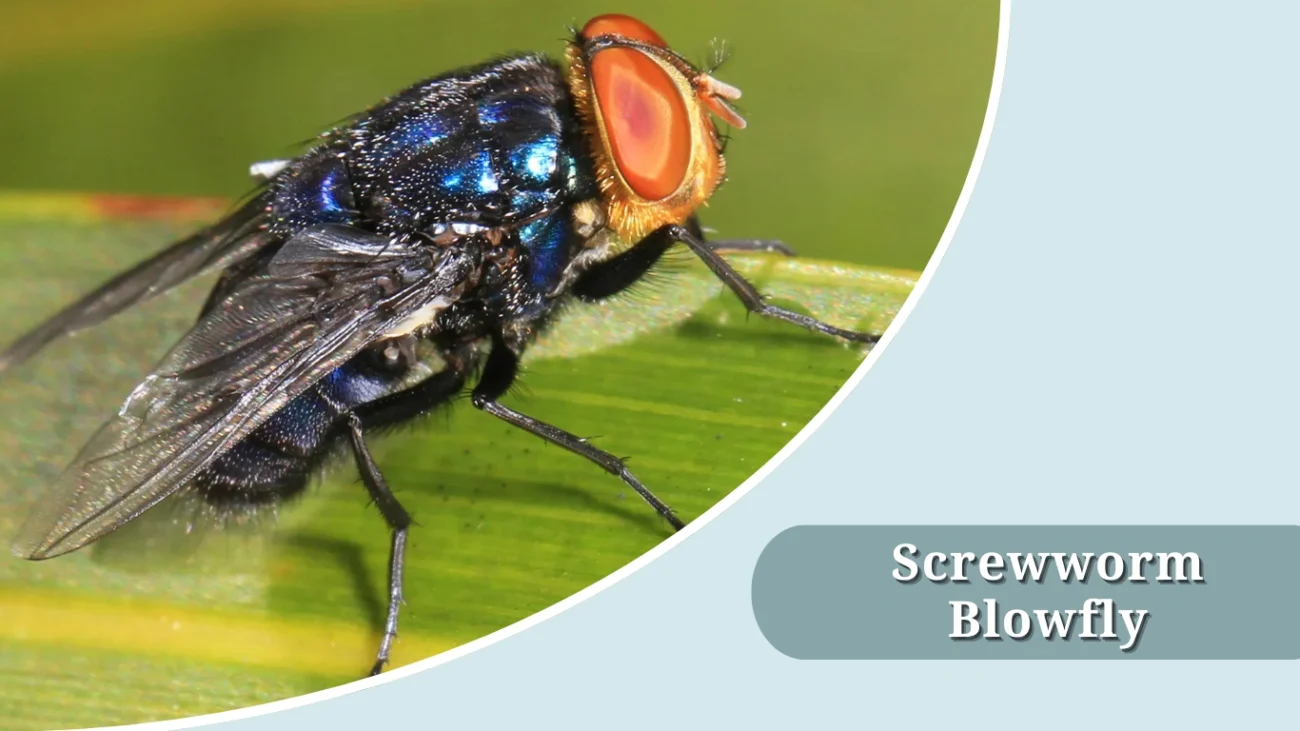
The Screwworm Blowfly is one of the most dangerous blowflies due to its parasitic larvae, which feed on the living tissue of warm-blooded animals. It has caused major economic and veterinary problems in the Americas, leading to large eradication programs.
Identification
- Medium-sized, about 8–10 mm long
- Metallic blue-green body with a shiny surface
- Distinctive orange-red eyes
- Three dark longitudinal stripes on the thorax
- Clear wings with slightly darkened veins
Habitat
Originally widespread in the tropical and subtropical regions of the Americas, it has been largely eradicated from North and Central America through sterile male release programs. However, it still occurs in parts of South America and the Caribbean. It prefers warm, humid environments with access to livestock or wildlife.
Behavior
Unlike most blowflies, Screwworm Blowflies are obligate parasites. Females lay eggs on wounds, mucous membranes, or natural body openings of animals. The larvae burrow into living tissue in a screw-like motion, causing severe lesions, infections, and even death if untreated.
Diet
Adult flies feed on nectar and plant juices but are strongly attracted to wounds on animals for breeding. The larvae are parasitic, feeding exclusively on living tissue of mammals, including livestock, pets, and occasionally humans.
Lifecycle
The lifecycle can be completed in about 3 weeks. Females deposit eggs on wounds or body openings, which hatch in less than 24 hours. Larvae burrow into tissue and feed for 4–7 days before dropping to the ground to pupate. Adults emerge in 7–10 days, ready to reproduce.
15. Secondary Screwworm Fly (Cochliomyia macellaria)

The Secondary Screwworm Fly is a common blowfly species in the Americas. Unlike the primary screwworm, its larvae typically feed on necrotic tissue rather than live tissue, making it less dangerous but still important in veterinary and forensic contexts.
Identification
- Medium-sized, about 8–10 mm long
- Metallic greenish-blue body with a shiny surface
- Large reddish compound eyes
- Three dark longitudinal stripes on the thorax
- Clear wings with strong venation
Habitat
This species is widely distributed throughout North, Central, and South America. It is often found in rural areas near livestock, garbage, and carrion. It thrives in warm, humid environments and is especially common during the summer months.
Behavior
Secondary Screwworm Flies are diurnal and are among the first blowflies to colonize carrion. They are not obligate parasites like the primary screwworm but can infest wounds containing dead or decaying tissue. Their activity makes them valuable in forensic entomology for estimating post-mortem intervals.
Diet
Adult flies feed on nectar, honeydew, and decomposing organic matter. The larvae feed primarily on necrotic tissue, carrion, and wounds containing dead tissue. They are less harmful to livestock than primary screwworm larvae but may worsen existing injuries.
Lifecycle
The lifecycle typically takes 2–3 weeks. Females lay eggs on carrion, feces, or necrotic wounds. Eggs hatch within 12–24 hours, and larvae feed for 3–5 days before dropping to the soil to pupate. Adults emerge in about 7–10 days, depending on environmental conditions.