










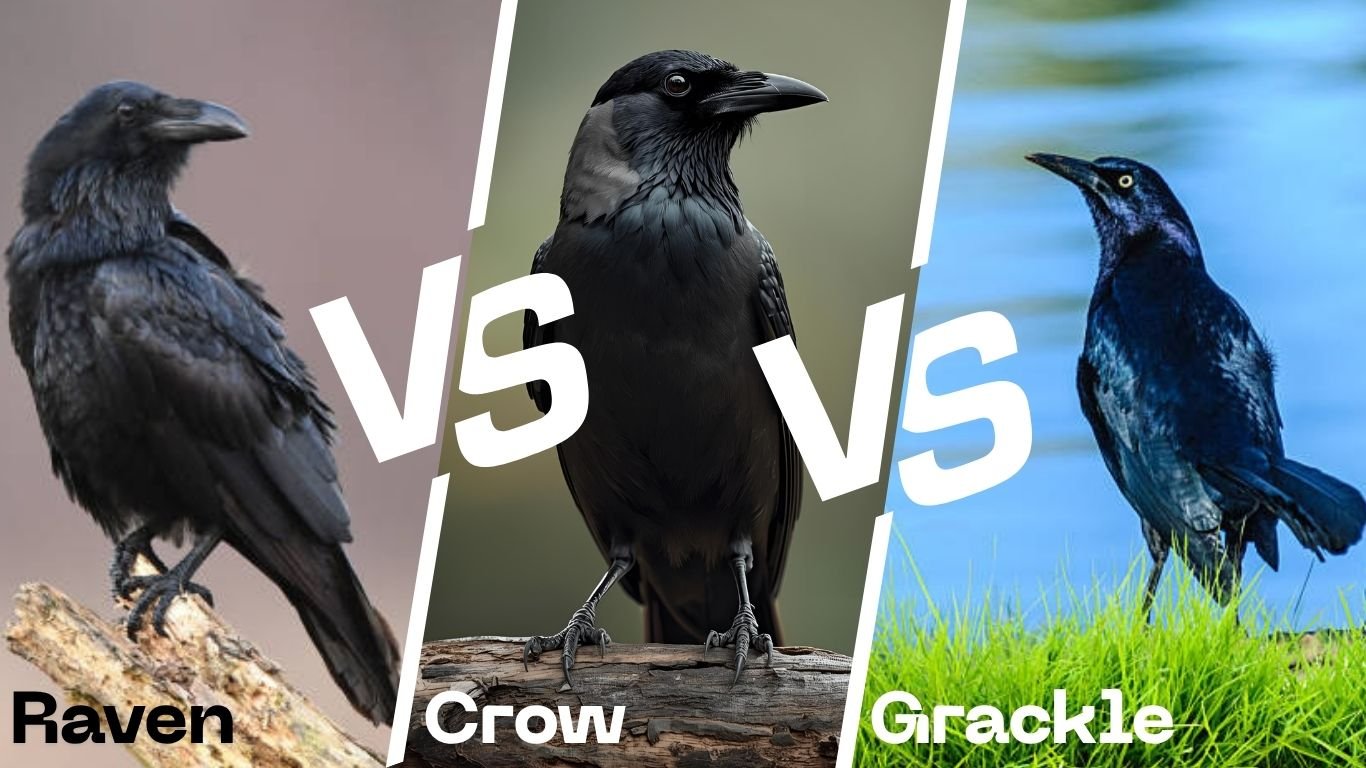
Grackles, crows, and ravens are among the most familiar black birds across North America. Their glossy plumage, dark silhouettes, and raucous calls often make them difficult to tell apart. However, each species has distinct traits in size, sound, intelligence, and behavior. This article explores the 10 key differences between grackles, crows, and ravens—helping you accurately identify them in your backyard or on your next birdwatching adventure.
Overview of Each Bird
The Grackle (Common and Great-Tailed)
Grackles are sleek, medium-sized birds with long, keel-shaped tails and striking iridescent plumage that reflects blue, purple, and bronze hues. The Common Grackle (Quiscalus quiscula) inhabits eastern North America, while the Great-tailed Grackle thrives in the South and Southwest, especially Texas. These birds are loud, social, and often gather in enormous flocks near cities, parking lots, and agricultural fields.
The Crow (American and Fish Crow)
Crows are intelligent, adaptable, and among the most recognized blackbirds. The American Crow (Corvus brachyrhynchos) is common across much of the continent, while the Fish Crow prefers coastal regions. They’re known for problem-solving, complex vocal communication, and close-knit family groups that cooperate to raise young and protect territory. Their matte black feathers and strong “caw-caw” calls make them easy to hear before they’re seen.
The Raven (Common Raven)
Ravens are the largest of the three and stand out with their thick necks, shaggy throat feathers, and wedge-shaped tails. The Common Raven (Corvus corax) is found in remote or mountainous regions. They often travel in pairs rather than flocks and communicate with deep, resonant croaks. Ravens are celebrated for their remarkable intelligence—capable of using tools, mimicking sounds, and even playing.
10 Key Differences Between Grackle, Crow, and Raven
Size and Weight
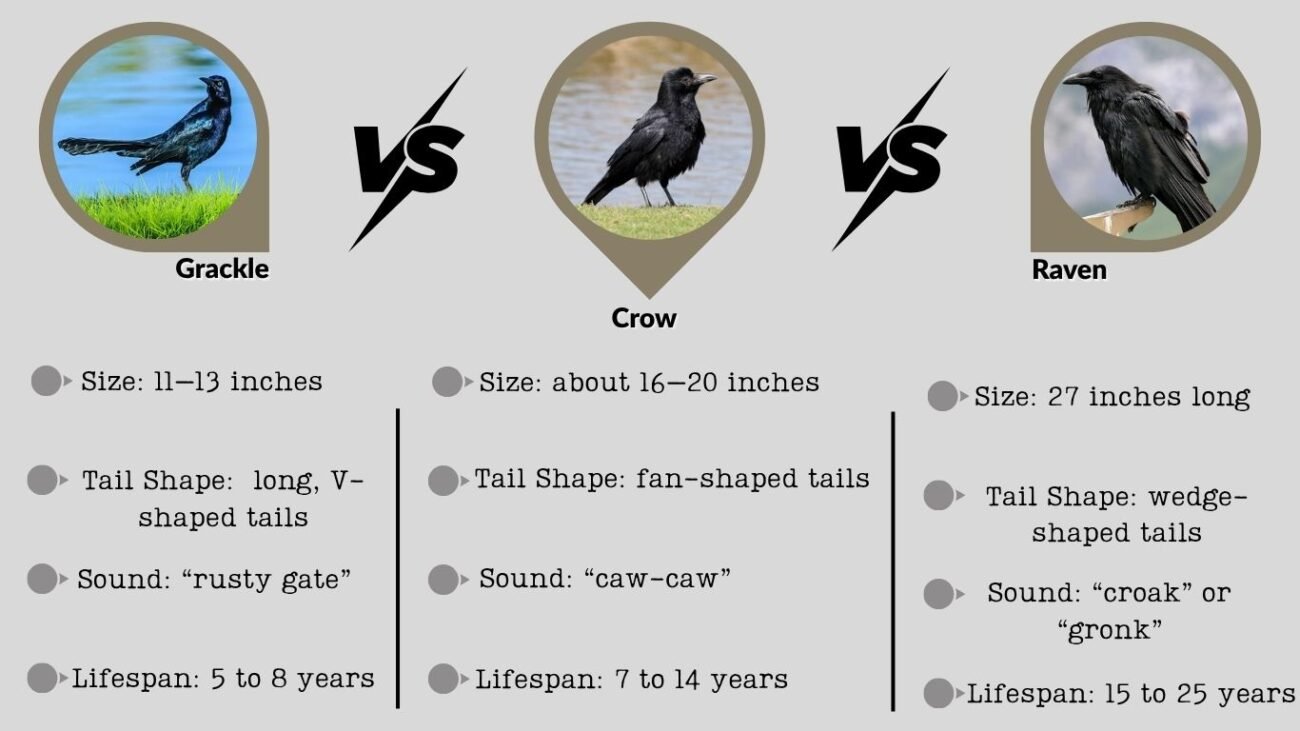
Ravens are the giants of the trio, measuring up to 27 inches long with a wingspan exceeding four feet. Crows are medium-sized, about 16–20 inches, while grackles are the smallest at 11–13 inches. In flight, a raven’s powerful wings beat slowly, while crows and grackles flap more rapidly. If you see a massive black bird soaring with ease, it’s likely a raven.
Beak Shape and Features
Beak structure is a reliable field marker. Ravens possess large, slightly curved beaks suited for tearing meat. Crows have shorter, thicker bills ideal for general scavenging and manipulating objects. Grackles, however, have long, slender, pointed beaks, helping them probe for insects, seeds, and grains. This shape difference often helps observers distinguish grackles from crows at a glance.
Tail Shape
Tail configuration can instantly reveal a bird’s identity in flight. Ravens display wedge-shaped tails, narrowing to a point. Crows have fan-shaped tails, evenly rounded at the end. Grackles, on the other hand, showcase long, V-shaped tails that appear almost keel-like. Watching their tail shape as they fly or perch is one of the easiest visual identifiers.
Feather Texture and Shine
Under sunlight, grackles shimmer with metallic blues, purples, and greens, giving them a jewel-like appearance. Crows have a matte black coat with only a faint sheen. Ravens are darker overall, with shaggy neck feathers and a subtler gloss. The iridescence of grackles, especially in males, makes them stand out vividly among the three.
Vocalization and Sounds
Sound is one of the most distinguishing features:
- Grackles produce harsh, metallic squeaks and clicks—often described as “rusty gate” noises.
- Crows emit a familiar, sharp “caw-caw”, which varies in tone for communication.
- Ravens give deep, throaty “croak” or “gronk” calls that echo across long distances.
While crows and ravens use calls for territory, alarm, and coordination, grackles’ vocalizations are more social and aggressive, particularly during breeding season.
Intelligence and Problem-Solving
Ravens and crows are renowned for their remarkable intelligence. They can use tools, recognize human faces, and plan actions—a level of cognition comparable to great apes. Ravens have even been observed caching food and returning later with precision. Grackles, though not as advanced, exhibit social intelligence, learning from peers and adapting to urban environments. They’re opportunists, mastering how to exploit new food sources, such as discarded snacks or crops.
Social Behavior
Social structure provides another key difference.
Grackles form huge flocks, sometimes numbering in the thousands, particularly at dusk. Their communal behavior helps with safety and food discovery but can make them noisy neighbors.
Crows are social too but live in family-based groups, cooperating to defend territory and raise offspring.
Ravens, by contrast, are largely solitary or in pairs, preferring vast, open spaces where they can roam without competition.
Diet and Feeding Habits
All three species are omnivores, yet their dietary preferences vary.
Grackles consume grains, seeds, insects, small vertebrates, and human scraps. Their narrow beaks let them pry open seeds or catch bugs easily.
Crows are versatile scavengers, feeding on carrion, fruits, garbage, and small animals. They’ve been observed dropping nuts on roads for cars to crack open.
Ravens, with stronger beaks, focus more on meat and carrion, often feeding on roadkill or leftovers from predators.
Habitat and Range
Though all three birds are found throughout North America, their preferred habitats differ significantly.
Grackles thrive in urban and suburban environments, frequently spotted in parking lots, parks, and farmlands. They are especially abundant in the southern United States and Texas, where large flocks dominate open spaces.
Crows are the most adaptable, inhabiting almost every environment—from dense forests to city centers. They’re comfortable living near people, scavenging in trash bins, and nesting in tall trees or power poles.
Ravens prefer remote, wilder areas such as mountain ranges, deserts, and northern forests. You’re more likely to see ravens soaring over cliffs or rural highways than in cities.
Lifespan and Adaptability
Ravens lead in longevity and resilience. In the wild, ravens can live 15 to 25 years, sometimes longer in captivity. Their intelligence and adaptability to harsh climates contribute to their survival.
Crows typically live 7 to 14 years, though many succumb to predators or human-related dangers earlier. They display impressive urban adaptability, learning traffic patterns and even timing their feeding to human schedules.
Grackles have shorter lifespans, usually 5 to 8 years, but reproduce in large numbers and adjust quickly to human-altered habitats. Their ability to live off scraps, grains, and insects makes them successful survivors in cities and agricultural regions alike.
Regional Variations
Grackle vs Crow in Texas
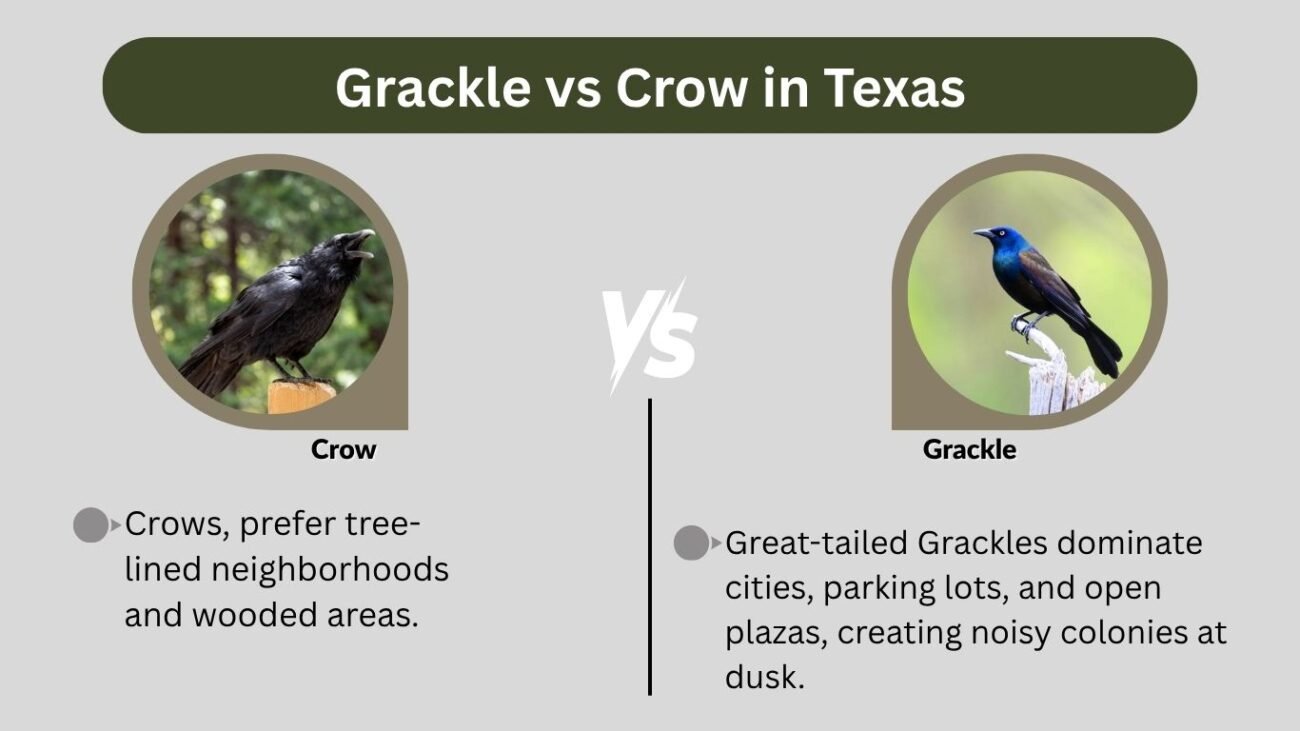
In Texas and the southern United States, grackles and crows often share the same spaces, but their behavior and sounds differ noticeably. Great-tailed Grackles dominate cities, parking lots, and open plazas, creating noisy colonies at dusk. They strut boldly, showing off iridescent plumage and long tails.
Crows, in contrast, prefer tree-lined neighborhoods and wooded areas. Their calls are deeper and less metallic. When seen together, crows appear larger but less colorful, while grackles seem slimmer with an exaggerated tail fan.
Boat-Tailed and Common Grackle Comparisons
The Boat-tailed Grackle, found mainly in coastal regions, is larger and darker than the Common Grackle. Its tail curves upward like a boat keel, making it easy to distinguish. These grackles often share territories with crows, especially near beaches and wetlands.
Common Grackles, however, dominate inland, feeding in cornfields, lawns, and gardens. Both species exhibit similar behaviors—bold, noisy, and highly social—but their range and size differences are useful for identification.
Behavior and Communication
Social Hierarchies
Each species maintains a distinct social structure.
Ravens form flexible hierarchies—dominant individuals often claim the best food sources but tolerate others nearby. They show complex social play, including aerial games and vocal mimicry.
Crows live in tight-knit family units, where parents, siblings, and even previous offspring cooperate in nest defense and feeding. This family cohesion is a cornerstone of crow intelligence and success.
Grackles, though social, follow a dominance-based system where males often lead groups. During mating season, males display puffed feathers and loud calls to attract females and establish territory.
Vocal Imitation and Calls
The vocal range of these birds offers another fascinating distinction.
Ravens produce a wide variety of croaks, knocks, and imitations. They can mimic other birds and even human voices.
Crows communicate with a mix of caws, rattles, and clicks, using specific tones for warnings or greetings.
Grackles, while not mimics, create an unmistakable metallic cacophony—especially at dusk when flocks gather noisily before roosting.
Their sounds reflect their personalities: ravens are mysterious and deep, crows expressive and calculated, and grackles loud and flamboyant.
Identification in the Wild
By Sight
When observing blackbirds in the field, tail shape, size, and feather shine are your best clues.
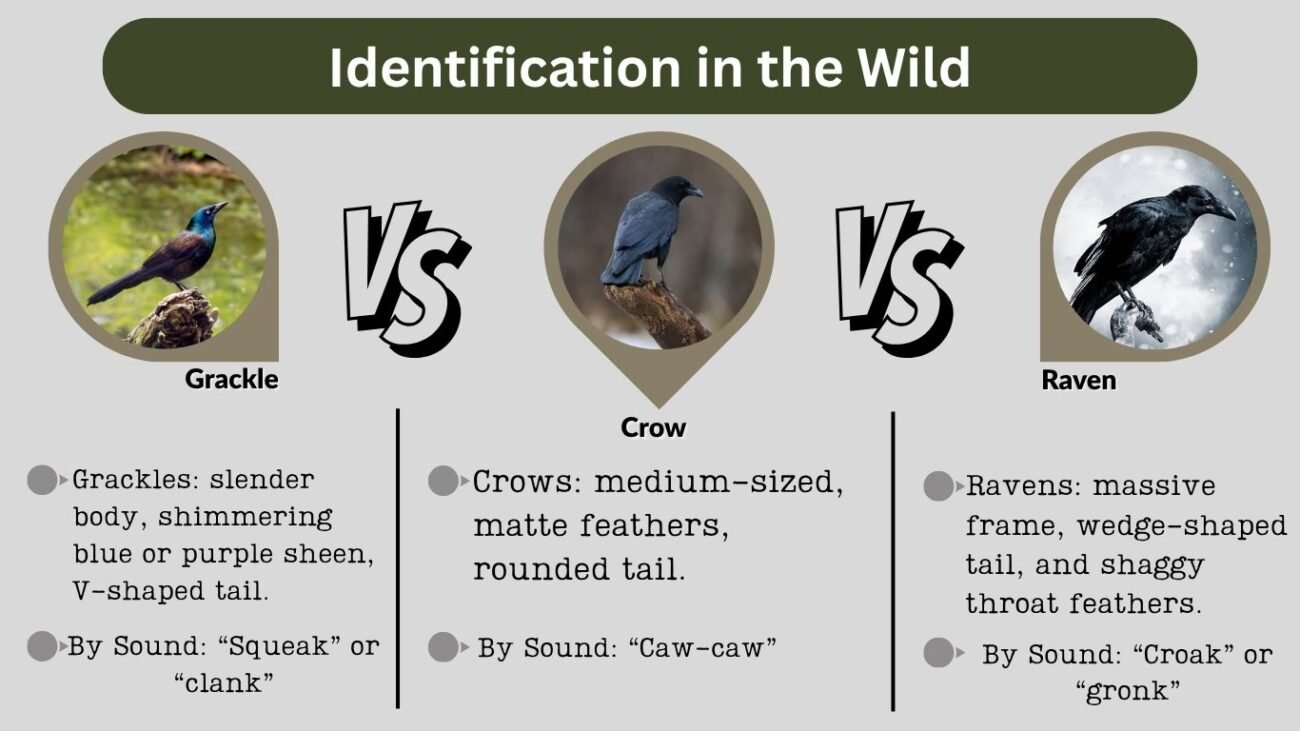
- Grackles: slender body, shimmering blue or purple sheen, V-shaped tail.
- Crows: medium-sized, matte feathers, rounded tail.
- Ravens: massive frame, wedge-shaped tail, and shaggy throat feathers.
Lighting can exaggerate these differences, making grackles sparkle vividly under the sun, while ravens appear more rugged and thick-feathered.
By Sound
If visibility is poor, rely on sound:
- “Caw-caw” = Crow
- “Croak” or “gronk” = Raven
- “Squeak” or “clank” = Grackle
Grackles often call in groups, creating noisy choruses, while ravens’ deep croaks travel far across valleys. Crows’ caws are clear and deliberate, ideal for urban communication.
By Behavior
Behavior offers subtle yet consistent hints.
Grackles strut confidently on the ground, scavenging near people and vehicles.
Crows exhibit deliberate, curious movements—watching humans closely and investigating shiny objects.
Ravens perform aerial acrobatics, soaring and gliding with impressive control.
If you see a black bird diving or rolling mid-air, it’s likely a raven showing off its flying skill.
Key Takeaways
- Grackles: Smallest, most iridescent, and highly social; thrive in cities.
- Crows: Medium-sized, clever, and widespread; excellent problem solvers.
- Ravens: Largest, deepest-voiced, and highly intelligent; prefer remote habitats.
- Identification tips: Tail shape (V = grackle, fan = crow, wedge = raven), call type, and size are the best indicators.
FAQs
How can you tell a crow from a grackle?
Crows are larger, with fan-shaped tails and matte black feathers. Grackles are smaller, with glossy purple-blue feathers and long, V-shaped tails. Their calls also differ—crows “caw,” while grackles produce metallic squeaks and clicks.
Are ravens smarter than crows or grackles?
Yes. Ravens are considered the most intelligent of the three, capable of using tools, solving puzzles, and recognizing individuals. Crows come close behind with advanced problem-solving skills, while grackles show moderate intelligence suited for social adaptation.
Do grackles and crows coexist peacefully?
They often share the same environments, but competition for food can lead to tension. Grackles’ large flocks sometimes intimidate smaller crow groups, yet both species usually avoid direct conflict, focusing on their own feeding territories.
Which bird has the loudest call?
Grackles tend to be loudest due to their sharp, metallic calls that carry across urban areas. However, ravens’ deep croaks travel farther over long distances, especially in open or mountainous regions.
Can grackles mimic human speech like crows or ravens?
No. Grackles cannot imitate speech. Ravens and crows, on the other hand, can mimic sounds—including words, whistles, and other bird calls. Ravens excel at this mimicry, often fooling observers with their voice range.


