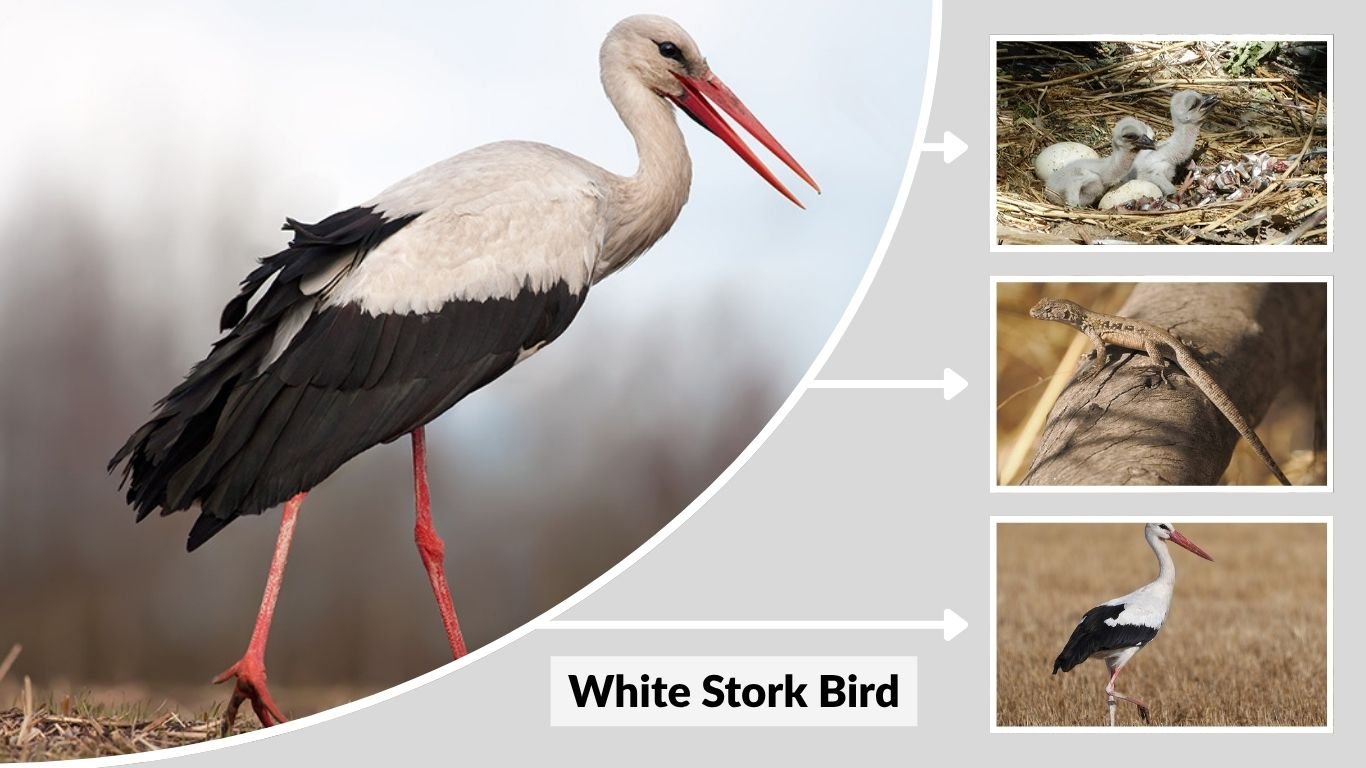
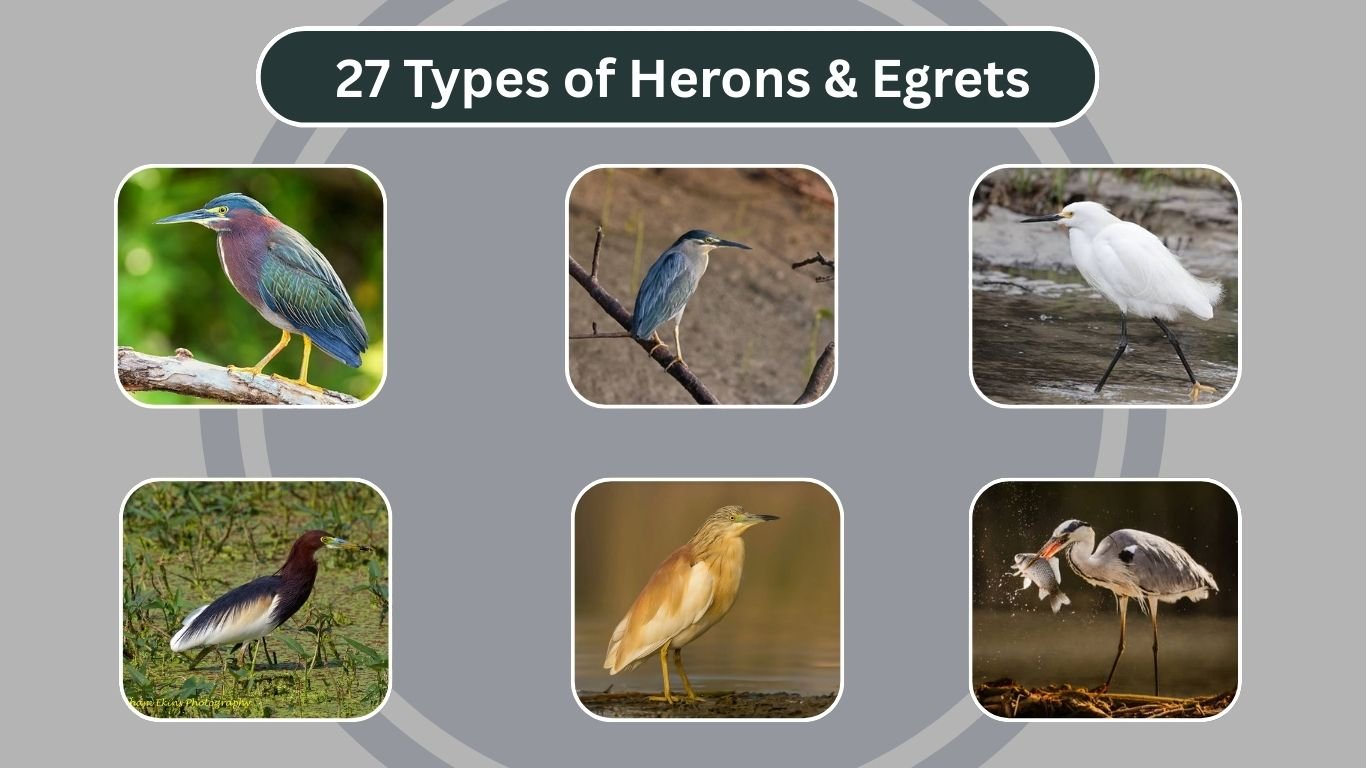
Florida’s wetlands are home to some of the most remarkable wading birds in North America, including the elegant stork birds. Known for their long legs, straight bills, and calm, deliberate movements, these birds are commonly seen near marshes, swamps, and coastal areas. The most prominent species, the Wood Stork, is the only stork native to North America and a key indicator of Florida’s wetland health.
Identification
Physical Appearance
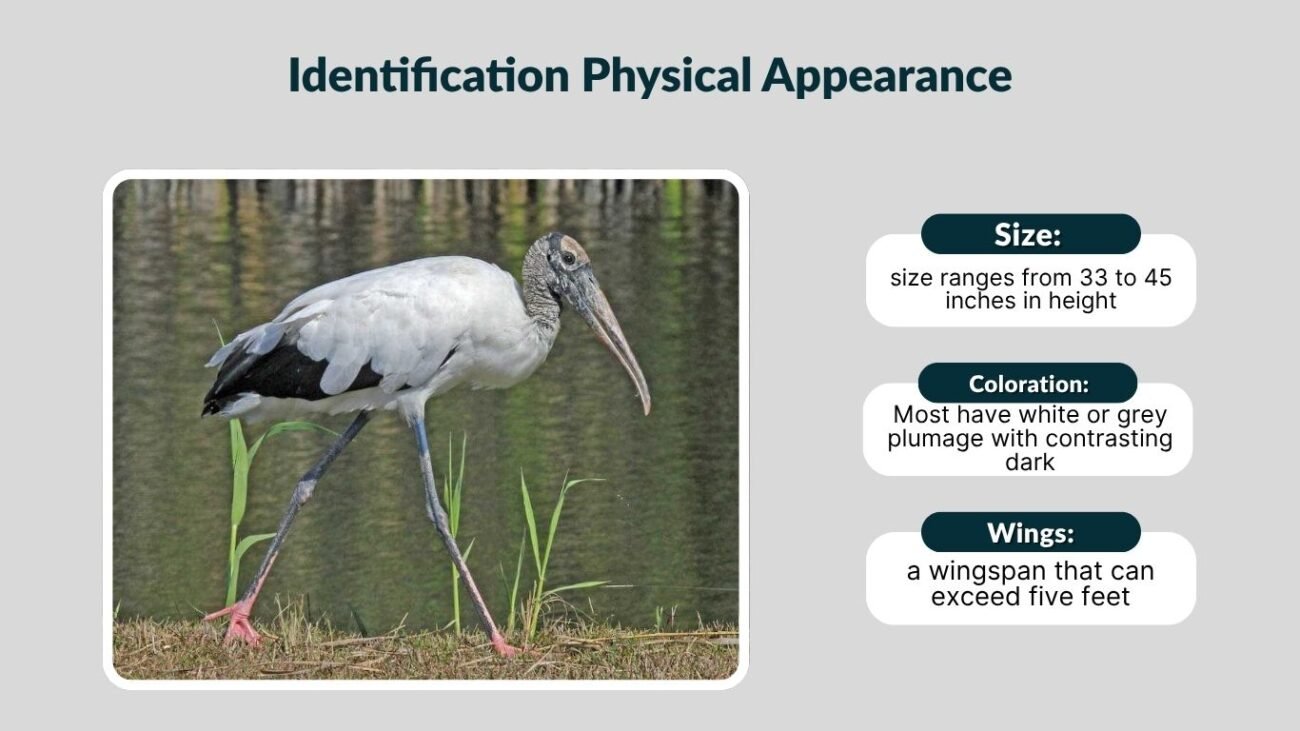
Stork birds are large, long-legged waders with straight, heavy bills and graceful wings. Their size ranges from 33 to 45 inches in height, with a wingspan that can exceed five feet. Most have white or grey plumage with contrasting dark flight feathers that are clearly visible when in flight.
The Wood Stork, Florida’s primary stork species, has a striking appearance — white feathers, glossy black wing tips, and a bald, dark-grey head. Its long, downward-curving bill and partially featherless neck give it a prehistoric look. When soaring, storks keep their necks stretched out, unlike herons that tuck theirs in. This difference is one of the easiest ways to identify them in the sky.
Distinguishing Features
Storks are easily recognized by their strong, thick bills adapted for tactile feeding — they snap shut the moment prey touches the inside of the beak. They also possess long pink or grey legs suited for wading through shallow water. Males and females look similar, though males are slightly larger.
Another notable trait is their silent nature. Storks do not sing or call like other birds; instead, they communicate through bill clattering and body gestures, especially during courtship or at the nest.
Common Misidentifications
In Florida, many people confuse storks with herons, ibises, or egrets. The Great Egret and American White Ibis, for example, share the same habitats and have similar coloring. However, storks can be identified by their larger size, heavier build, and distinctive bald head. Cranes, such as the Sandhill Crane, also resemble storks but have different feeding styles and red feathered caps rather than bare heads.
Species of Stork Birds in Florida

Wood Stork (Mycteria americana)
The Wood Stork is the only stork species that breeds in the United States, with Florida being its primary nesting ground. It has white plumage, black tail feathers, a bald grey head, and a long, thick bill. Adults stand over three feet tall and are often seen gliding gracefully with broad wings spread wide.
This species favors warm, humid regions and thrives in freshwater wetlands. It is a colonial nester, meaning it breeds in large groups known as rookeries. Wood Storks were once classified as Endangered due to habitat loss but have since improved to Threatened status thanks to conservation efforts in the Everglades and surrounding wetland ecosystems.
Migratory and Similar Species
While the Wood Stork is the only true stork in Florida, other wading birds are frequently mistaken for storks due to their similar appearance. The American White Ibis has a white body and pink face, the Great Egret is elegant with a long yellow bill, and the Roseate Spoonbill adds a splash of pink to Florida’s marshes. The Sandhill Crane, though not a stork, also shares habitats and can easily confuse observers with its grey plumage and towering height.
Habitat and Range
Stork birds in Florida are strongly tied to wetland habitats. They thrive in freshwater marshes, swamps, mangroves, and shallow lakes where food is abundant. The Everglades National Park is one of the most important nesting sites, offering vast feeding grounds and secluded nesting areas.
In Central and South Florida, storks are seen around rivers, cypress domes, and man-made reservoirs. During the dry season (December–April), their sightings become more frequent as shrinking water levels concentrate fish in smaller areas, creating ideal feeding conditions.
Behavior and Diet
Feeding Patterns
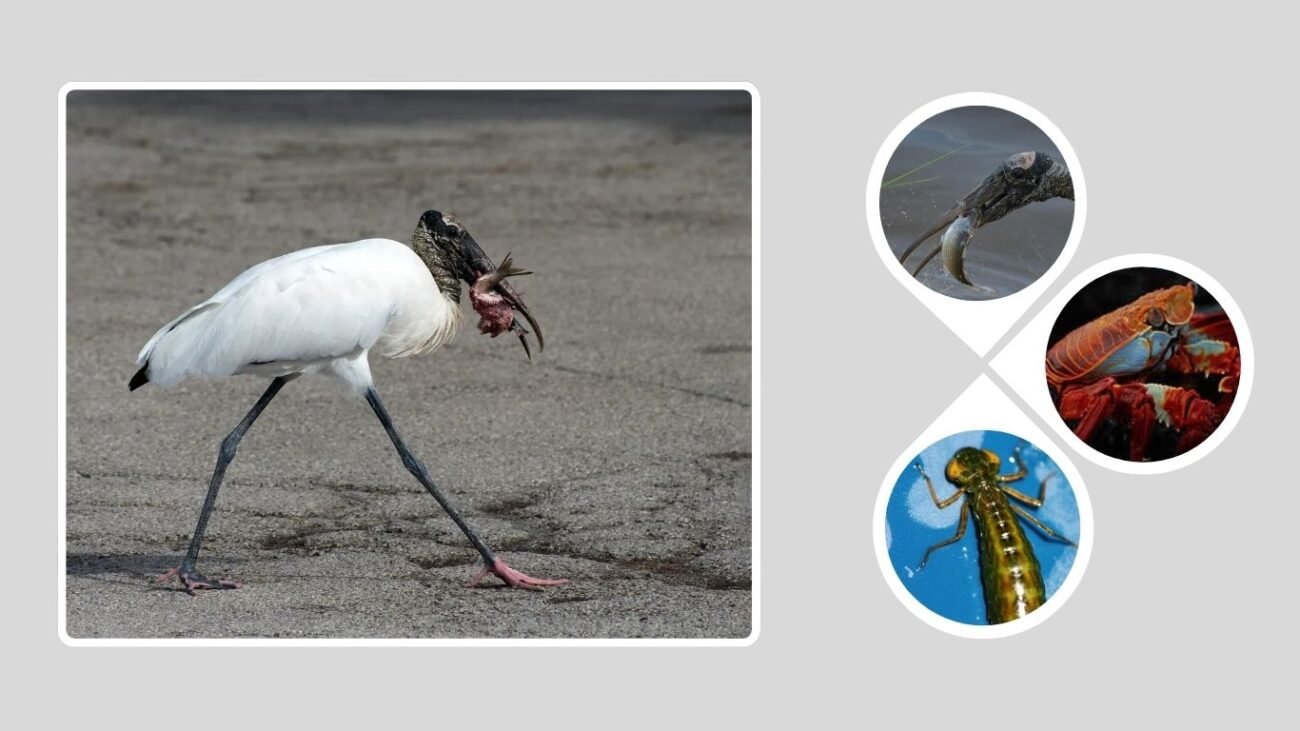
Stork birds are highly specialized feeders, relying on tactile feeding, a unique method that involves feeling for prey rather than seeing it. They wade slowly through shallow water with their bills partially open, snapping shut in less than a tenth of a second when a fish or frog touches it. This technique allows them to feed efficiently in murky water where visibility is low.
Their diet mainly consists of fish, frogs, crustaceans, and aquatic insects. During dry seasons, when water levels drop and prey becomes concentrated, storks take full advantage by gathering in groups to feed. They often forage alongside herons, egrets, and ibises, though competition remains minimal because each bird species targets different prey depths.
Breeding and Nesting Behavior
Wood Storks breed in large colonies known as rookeries, typically located in trees or mangroves above shallow water. This setting protects chicks from ground predators such as raccoons and snakes. Nest building begins in the early dry season, usually from December to April, aligning with the peak availability of fish for feeding chicks.
Both male and female storks participate in constructing the nest from sticks and twigs. Females lay two to five eggs, and both parents share incubation duties. After hatching, the parents take turns flying to nearby feeding sites, returning with fish and amphibians for their young. Chicks grow rapidly and can leave the nest after about eight to ten weeks.
Conservation and Threats
The Wood Stork has long been a symbol of Florida’s wetland health. However, habitat loss due to draining of marshes, water mismanagement, and urban development has severely impacted their nesting areas. When wetlands dry up too early, fish populations decline, leading to breeding failures.
For decades, Wood Storks were listed as Endangered, but thanks to habitat restoration projects — particularly within the Everglades and Big Cypress regions — their numbers have gradually rebounded. Today, they are classified as Threatened under the U.S. Endangered Species Act, signaling progress yet reminding conservationists of ongoing challenges.
Efforts by organizations like the Audubon Society and the U.S. Fish and Wildlife Service have played a major role in protecting nesting habitats, monitoring populations, and restoring natural water flow to preserve the species’ future.
Stork Watching in Florida

Best Locations for Sightings
- Everglades National Park – One of the most reliable spots for nesting colonies, especially during winter.
- Corkscrew Swamp Sanctuary – Managed by the Audubon Society, known for its elevated boardwalk trails and frequent Wood Stork sightings.
- Loxahatchee National Wildlife Refuge – Offers wetlands perfect for birdwatching and photography.
- Merritt Island National Wildlife Refuge – Near the Atlantic Coast, hosting migratory and resident wading birds.
Observation Tips
- Visit during the dry season (December–April) for the best viewing opportunities.
- Bring binoculars or telephoto lenses for safe, respectful observation.
- Maintain distance from rookeries to avoid disturbing nesting storks.
- Early morning or late afternoon hours provide the best lighting and activity levels.
FAQs
What types of stork birds live in Florida?
The Wood Stork is the only true stork species native to Florida. However, several other wading birds — such as ibises, herons, and spoonbills — are often mistaken for storks due to their size and similar appearance.
Where can I see stork birds in Florida?
Wood Storks are commonly spotted in Everglades National Park, Loxahatchee Wildlife Refuge, and Corkscrew Swamp Sanctuary. These wetlands provide ideal conditions for feeding and nesting, especially during the dry season.
Why do Wood Storks have bald heads?
Their bald, scaly heads help them stay clean while feeding in muddy water. Feathers would trap bacteria and debris, so the bare skin is a natural adaptation that aids hygiene during foraging.
When is the best time to see stork birds in Florida?
The best time for sightings is the dry season (December through April). As water levels drop, fish concentrate in smaller pools, drawing storks to easily accessible feeding grounds.
Are stork birds endangered in Florida?
Once listed as Endangered, the Wood Stork is now considered Threatened thanks to successful conservation and wetland restoration projects. Continued efforts to protect their habitats are vital to ensuring population stability.