The wood stork (Mycteria americana) is one of Florida’s most distinctive wading birds, easily recognized by its white plumage, long dark bill, and featherless, scaly-looking head. As the only stork species native to North America, it plays a vital ecological role in wetland health. Often found in the Everglades, Georgia, and South Carolina, the wood stork is a fascinating species known for its resilience, unique feeding habits, and symbolic presence in southern coastal ecosystems.
Identification and Physical Features
Distinctive Appearance
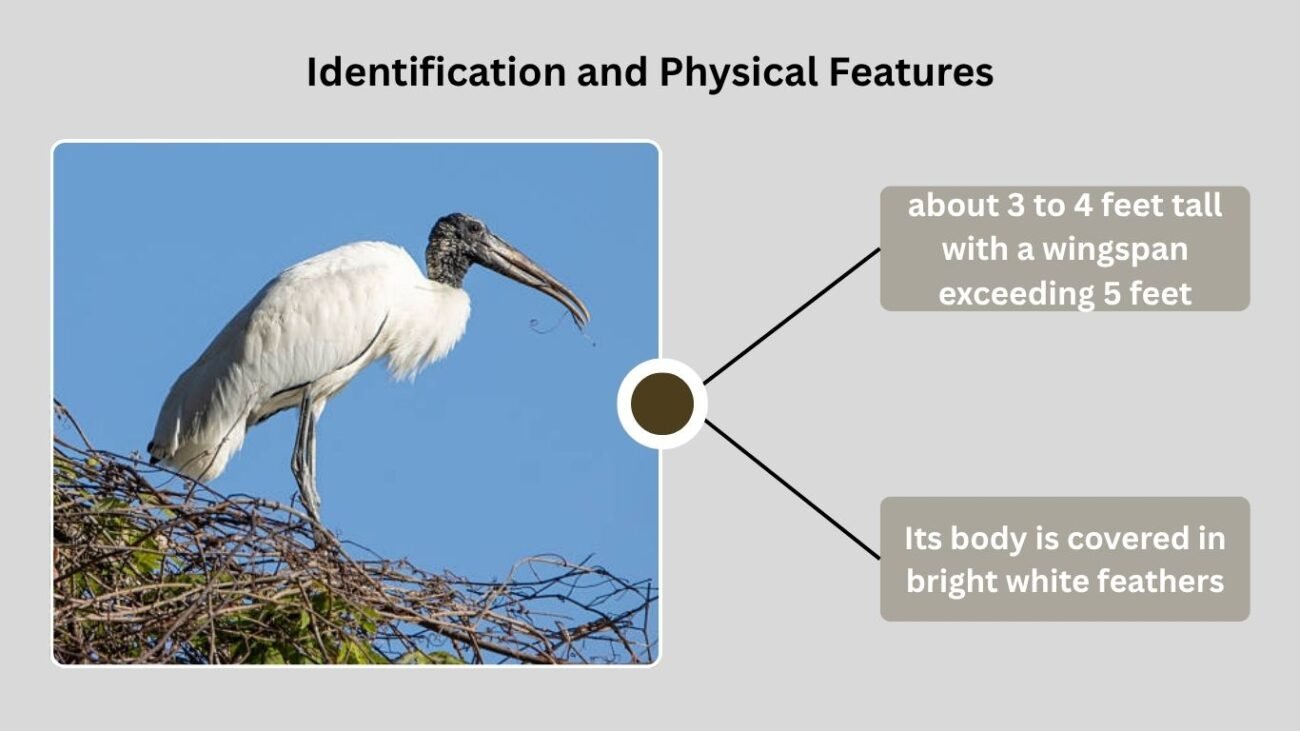
The wood stork is a large wading bird, standing about 3 to 4 feet tall with a wingspan exceeding 5 feet. Its body is covered in bright white feathers, while its flight feathers and tail are glossy black. The most recognizable feature is its dark, bald head, covered in rough, scaly skin — giving the bird a prehistoric look. Its long, thick, slightly down-curved bill is perfectly adapted for its tactile feeding method.
In flight, the wood stork is majestic. It soars with its neck and legs fully extended, gliding gracefully in circular patterns, much like vultures. Juvenile wood storks differ slightly, having a yellowish bill and paler head before maturing into the adult’s stark contrast of white and dark.
Similar-Looking Birds
Many Florida birdwatchers often confuse the wood stork with other large white birds such as great egrets, ibises, and pelicans. While these species share a similar environment, their features are distinct:
| Bird Species | Bill Shape | Head Color | Wing Color | Habitat |
| Wood Stork | Long, thick, curved | Bald, dark grey | White body, black tips | Swamps, wetlands |
| White Ibis | Thin, curved down | Feathered, red | All white | Marshes, coasts |
| Great Egret | Long, straight | Feathered, white | All white | Marsh edges |
| Pelican | Large, pouch-like | Feathered, white or brown | Mixed | Coastal waters |
The term “red crest wood stork” occasionally appears in field reports, but this usually refers to the roseate spoonbill, a pink wading bird with a red-tinted head crest often mistaken for a stork due to its size and feeding style.
Habitat and Range
Geographic Distribution
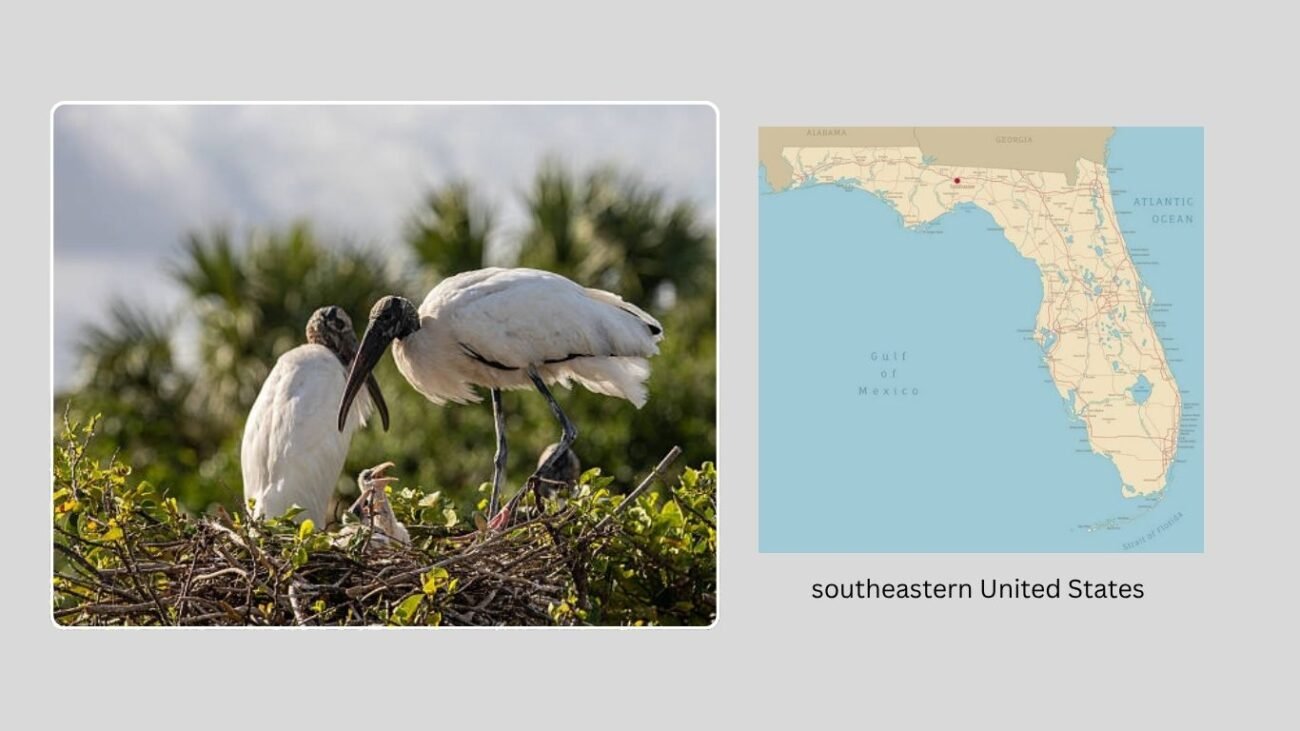
Wood storks are found across the southeastern United States, with the largest populations residing in Florida, Georgia, and South Carolina. They are also seen in Houston, Texas, and along the Gulf Coast. Florida’s Everglades National Park serves as one of the species’ most vital breeding grounds. Smaller colonies can be found throughout North Florida, the Georgia coast, and occasionally as far north as North Carolina during summer months.
Although primarily a North American species, wood storks also inhabit Central and South America, ranging as far south as Argentina. They prefer subtropical and tropical wetlands, where water levels fluctuate seasonally — an essential feature for their feeding and nesting success.
Preferred Ecosystems
Wood storks thrive in wetlands, marshes, swamps, and mangrove estuaries, relying on shallow water to locate food. They are typically seen wading through water bodies in search of fish, frogs, and small crustaceans. In Florida, they are part of the iconic wading bird community, sharing space with ibises, herons, and egrets.
Their habitat choice is deeply tied to the water cycle. During dry seasons, falling water levels trap fish in shrinking pools, providing easy feeding conditions for storks. In wetter seasons, they move to higher nesting grounds to breed. In the Everglades, water management projects directly affect their feeding success and nesting cycles, making them a key indicator species of wetland health.
Behavior and Ecology
Feeding and Hunting
The wood stork is a predatory wading bird known for its unique feeding technique called tactile foraging or “bill-snap.” It walks slowly through shallow water with its bill partially open. When it touches prey — such as a fish or frog — it snaps its bill shut in less than 25 milliseconds, one of the fastest reflex actions in the bird world.
Unlike purely visual hunters like herons, the wood stork’s feeding is based on touch, allowing it to feed effectively even in murky water. Its diet mainly includes small fish, amphibians, crayfish, and insects. Although adaptable, it’s not a complete generalist — it depends on specific water depths for hunting success, making it sensitive to environmental changes.
Are Wood Storks Generalist Birds?
While wood storks can consume a variety of prey, they are not full generalists. They prefer shallow, receding waters where prey density is high. Their survival depends on the timing of dry and wet seasons. When water levels drop too quickly or too slowly, storks may abandon nesting colonies due to insufficient food.
Breeding and Nesting
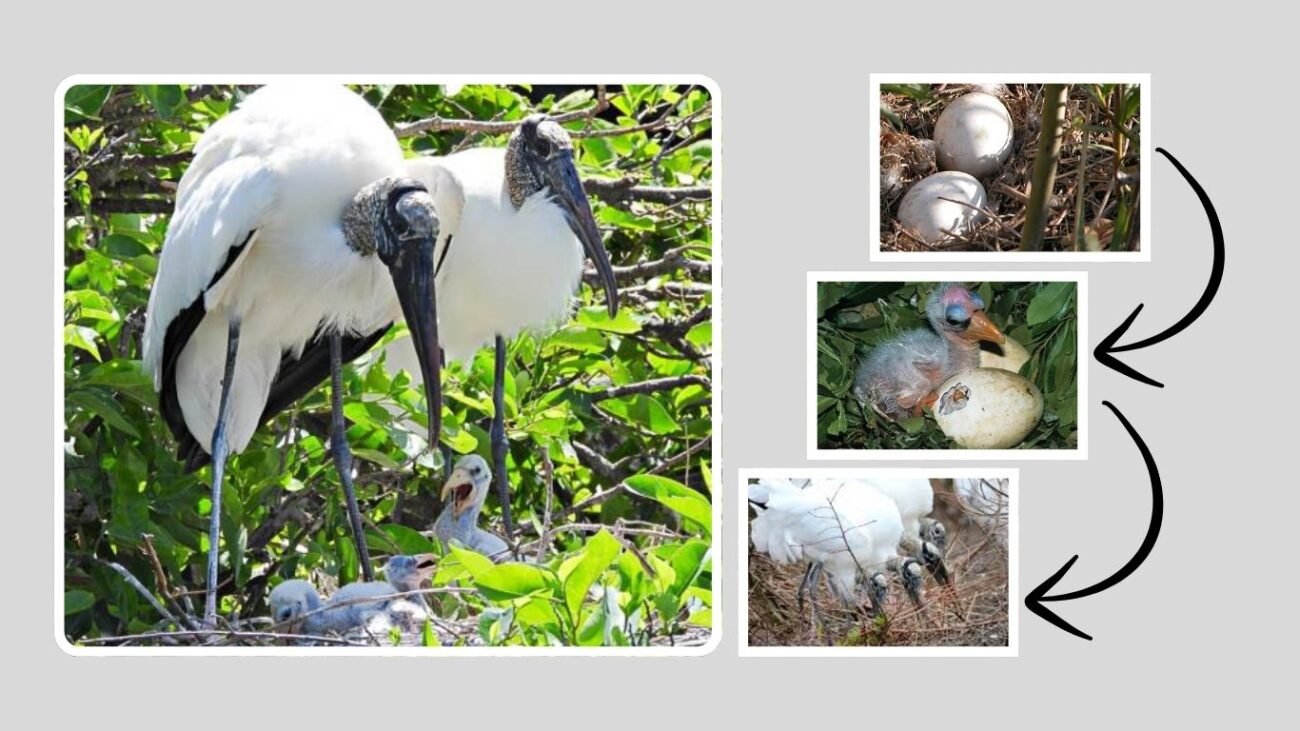
Wood storks are colonial nesters, often building large stick nests high in trees that grow above or near water. Nesting colonies can include hundreds of pairs, frequently shared with herons and ibises. Breeding typically begins in late winter or early spring, triggered by declining water levels and abundant food supply.
Each pair lays two to five eggs, incubated for about a month. Both parents take part in feeding and protecting the chicks. Young storks fledge after around 60 days. Successful breeding depends heavily on wetland conditions — if water levels rise and disperse prey, many chicks starve, leading parents to abandon the nest.
Personality and Interaction
Wood storks are often seen in groups, either feeding or roosting together. Despite their prehistoric appearance, they are gentle and cooperative birds. Observations from places like Sanibel Island describe the wood stork’s personality as calm and deliberate — contrasting with the energetic ibis or the social pelican. While the ibis probes quickly for food and the pelican dives dramatically, the stork maintains patience, moving steadily through the shallows in a quiet rhythm.
Cultural and Symbolic Significance
Cultural Presence
The wood stork has long been admired as a symbol of Florida’s wetlands and southern wildlife. Its prehistoric look and graceful movements make it a favorite among bird photographers and nature artists. The species is often featured in National Geographic documentaries and wildlife art, such as wooden wall plaques depicting storks, herons, and pelicans — popular in coastal décor. These artistic representations highlight the bird’s strong association with tranquility, nature, and the marshlands of the American South.
In Florida’s ocean bird photography, the wood stork often appears alongside the ibis, spoonbill, and egret, forming an elegant scene of coastal harmony. Tourists visiting the Everglades or Sanibel Island frequently spot them feeding in shallow pools, often unaware that they were once an endangered species. Their unique appearance — bald head, curved bill, and serene stance — has made them a recognizable icon of Florida’s ecological identity.
Wood Stork in Other Cultures
Internationally, the wood stork is known as one of the few New World storks, distinct from the white storks of Europe. In Korean, it’s referred to as “나무황새 (namuhwangsae),” translating roughly to “tree stork.” Although not native to Asia, it is admired in birdwatching communities for its unusual look and adaptive behavior. Across cultures, storks symbolize fertility, patience, and endurance, and the wood stork carries these same connotations through its steady presence in ever-changing wetlands.
Conservation Status
Endangered History and Recovery
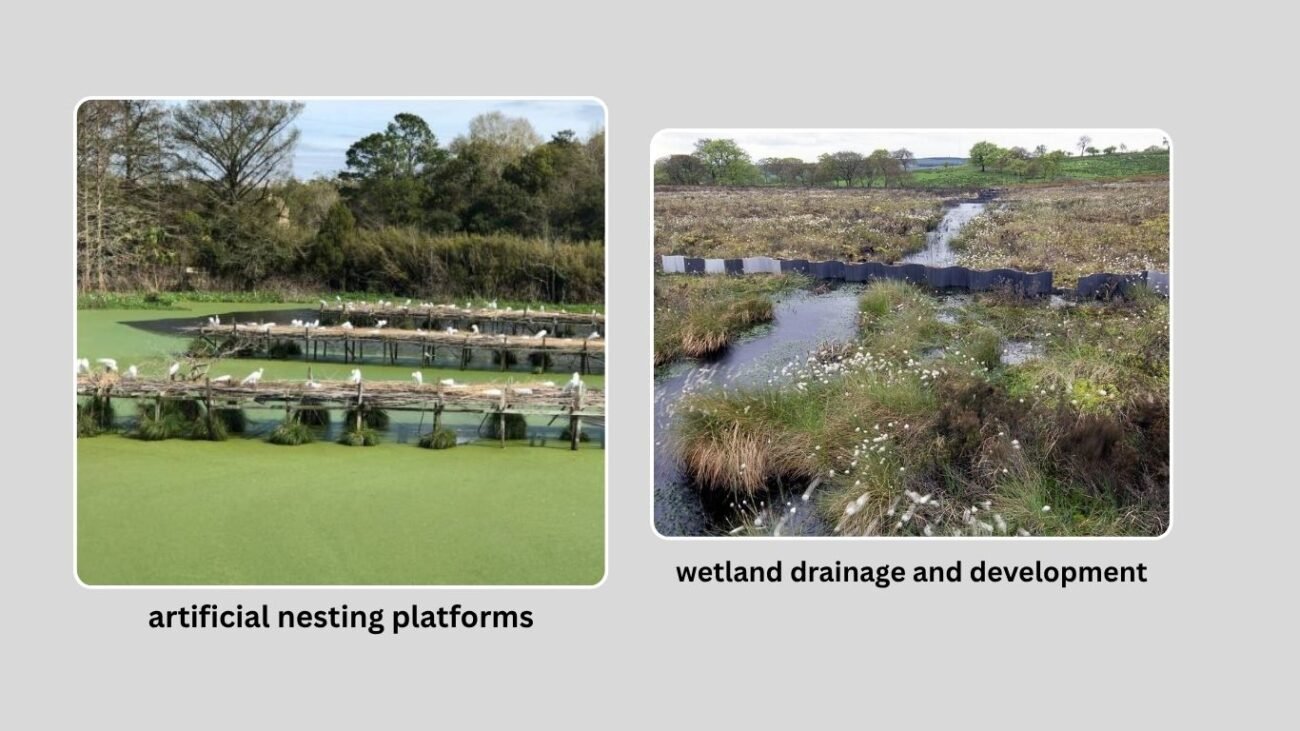
The wood stork’s story is one of remarkable recovery. In the mid-20th century, it suffered severe population declines due to wetland drainage and development across Florida. The destruction of breeding habitats in the Everglades and altered water flow patterns caused feeding grounds to dry up, leading to reproductive failure.
By the 1980s, the species was officially listed as Endangered under the U.S. Endangered Species Act. Conservationists, recognizing the bird’s dependence on stable wetlands, launched large-scale efforts to restore the Everglades’ natural water flow. Decades of collaborative projects between the U.S. Fish and Wildlife Service, Everglades National Park, and local organizations have significantly improved nesting success.
Thanks to these efforts, the wood stork was reclassified from Endangered to Threatened in 2014. Its population now shows steady growth, though challenges remain. The species continues to serve as a bioindicator, reflecting the overall health of wetland ecosystems in the southeastern United States.
Protection and Future Outlook
Current conservation initiatives focus on wetland preservation, habitat connectivity, and water management. Public education campaigns encourage residents to protect nesting trees and avoid disturbing colonies during breeding seasons.
Wood storks also benefit from artificial nesting platforms in restored habitats, which help offset the loss of tall cypress trees. The Everglades Restoration Project remains central to the bird’s future, as the region’s water levels directly determine the stork’s feeding and nesting success.
Today, the wood stork stands as a symbol of ecological resilience. Its recovery offers hope for other species that depend on similar environments, proving that balanced water management and public stewardship can reverse decades of decline.
FAQs
What does a wood stork look like?
A wood stork is a tall, white wading bird with a bald, scaly dark head and a long, thick, down-curved bill. Its black flight feathers contrast sharply with its white body. In flight, it extends its neck and legs straight out, giving it an elegant, gliding silhouette.
Where can you find wood storks in Florida?
Wood storks are commonly found in southern and central Florida, especially in the Everglades, Corkscrew Swamp Sanctuary, and Sanibel Island. They also appear along rivers, ponds, and coastal marshes throughout the state, particularly where water levels are shallow enough for feeding.
Are wood storks considered endangered?
Once classified as Endangered, wood storks were downlisted to Threatened in 2014 due to conservation successes. While their population has recovered, they remain vulnerable to habitat loss and water mismanagement, both of which affect their nesting and feeding cycles in Florida and the Southeast.
How do wood storks differ from ibises and herons?
Wood storks differ from ibises and herons in both size and feeding method. Storks are larger with a thick, down-curved bill and a bald head. Unlike herons that hunt by sight, storks feed by touch, snapping their bills shut the instant they feel prey — a method called tactile foraging.
What is the spiritual or cultural meaning of the wood stork?
Spiritually, the wood stork symbolizes patience, resilience, and adaptation. Its calm demeanor and reliance on nature’s cycles represent harmony and trust in life’s timing. In coastal cultures, it embodies the balance between land and water, reminding humans of the interconnectedness of all living things.