









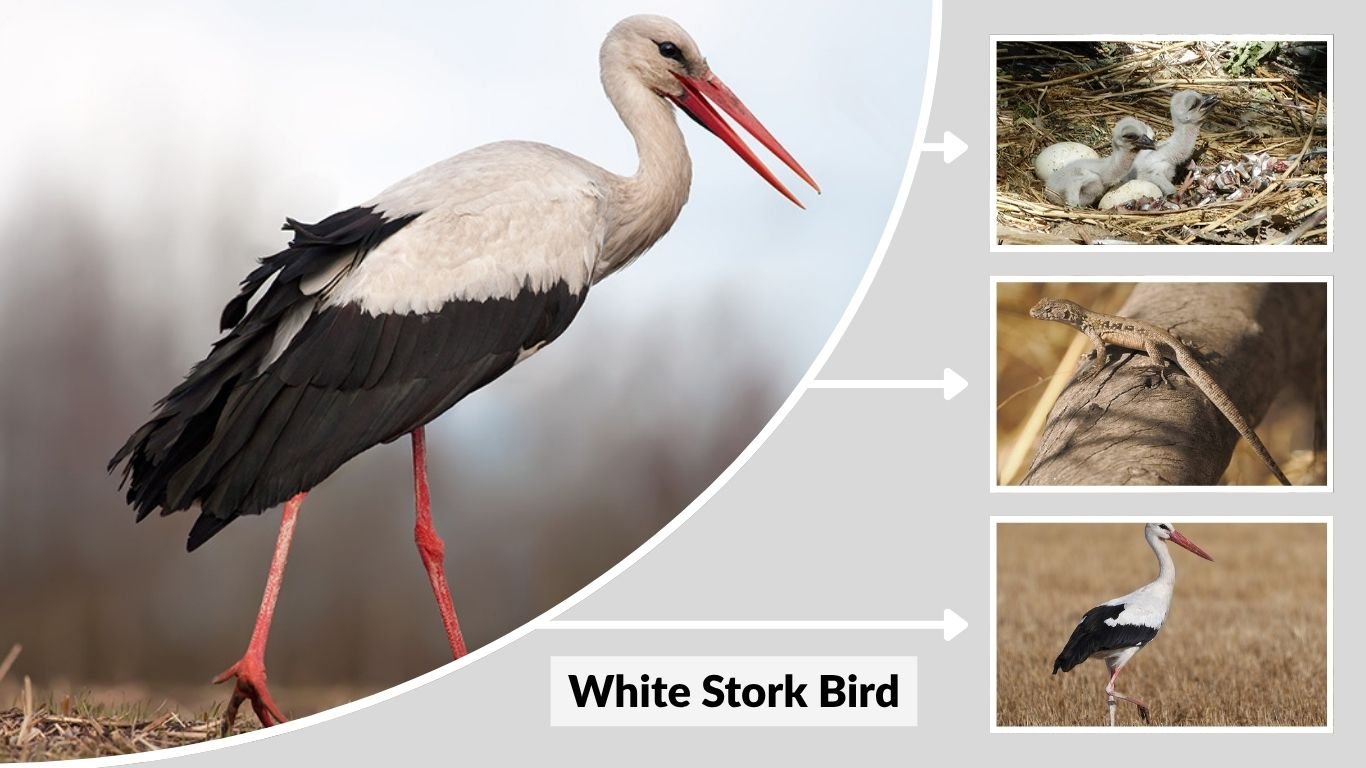
The white stork (Ciconia ciconia) is a large, graceful bird recognized worldwide for its striking black-and-white plumage and long red bill. Often associated with luck and new beginnings, this iconic bird has inspired myths, national pride, and conservation efforts. Commonly found across Europe, Asia, and Africa, the white stork’s elegance and remarkable migratory behavior make it one of the most admired species among bird enthusiasts and cultural historians alike.
Identification and Physical Features
Distinctive Appearance
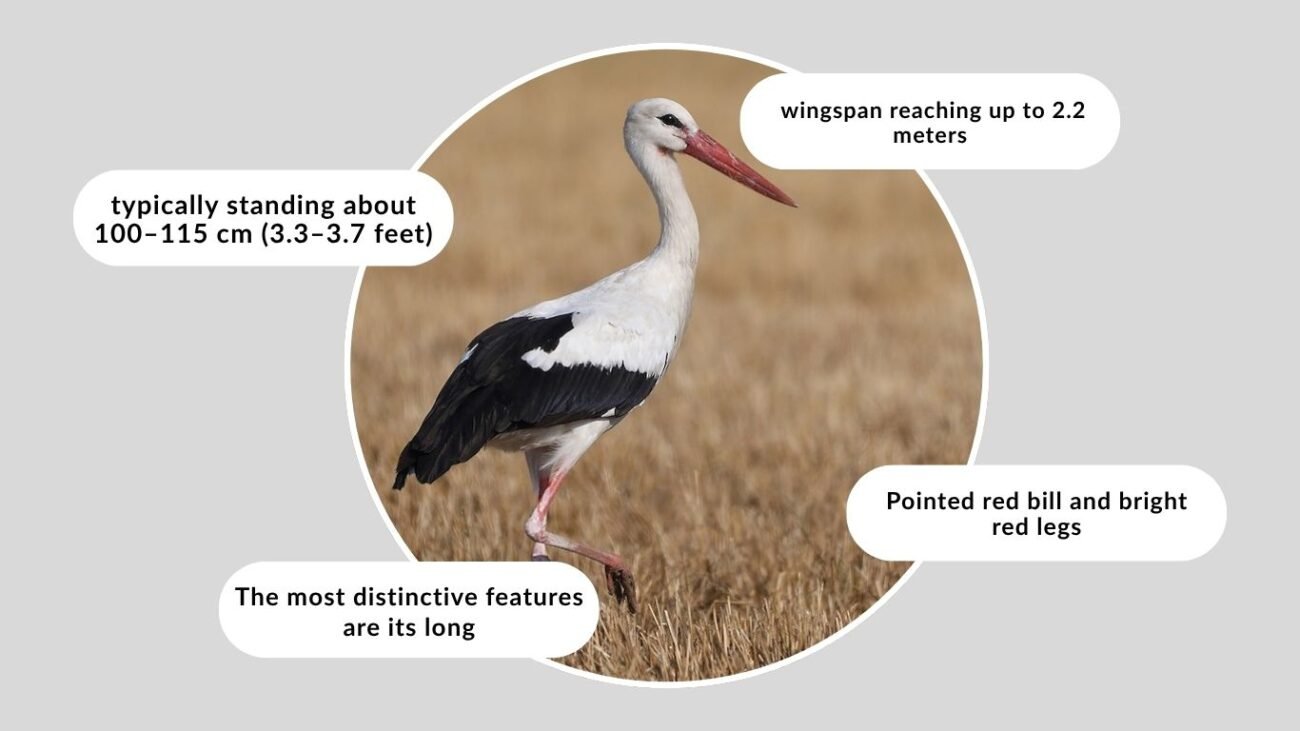
The white stork is a tall, slender bird, typically standing about 100–115 cm (3.3–3.7 feet) with a wingspan reaching up to 2.2 meters. Its plumage is predominantly white, contrasted sharply by black wing feathers visible during flight. The most distinctive features are its long, pointed red bill and bright red legs, both of which add to its striking silhouette. Males are usually slightly larger than females but share the same elegant posture and flight pattern.
In flight, white storks soar with outstretched wings, using thermal air currents to glide gracefully. Unlike herons, which fly with bent necks, storks extend their necks straight out, making them easier to identify in the sky.
Similar-Looking Birds
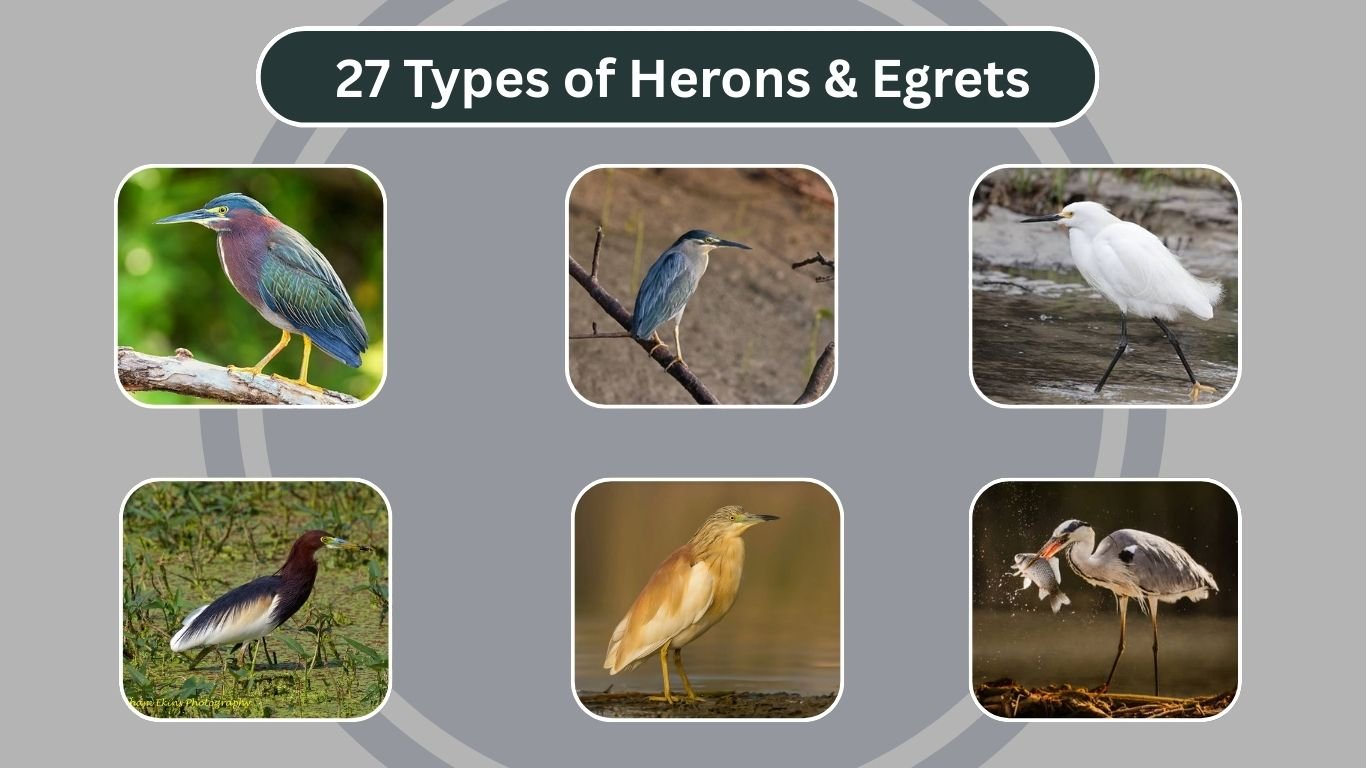
Many birdwatchers often confuse the white stork with similar species such as ibises, egrets, cranes, and herons. While these birds share similar habitats and white plumage, key features help tell them apart. For instance, egrets and herons have slimmer bills and darker legs, whereas cranes have a shorter neck-to-body ratio and tend to make loud trumpeting calls.
Below is a simple comparison table of similar birds:
| Bird Species | Bill Color | Leg Color | Size | Distinctive Trait |
| White Stork | Red | Red | Large | Black wingtips |
| Ibis | Curved, black | Black | Medium | Curved bill shape |
| Egret | Yellow | Black | Medium | Slender neck |
| Crane | Grey or black | Grey | Large | Trumpeting calls |
| Heron | Yellow | Brown | Medium | Flies with neck bent |
Smaller white stork-like birds, such as juvenile storks or little egrets, can resemble adult storks but are generally lighter, more compact, and have duller beak coloration.
Habitat and Distribution
Global Range
White storks inhabit a wide geographical range, spanning Europe, North Africa, and parts of Asia. During breeding seasons, they prefer open farmlands, grasslands, and wetlands. In the winter months, many migrate to warmer regions of sub-Saharan Africa or southern Asia to feed and rest.
Occasionally, sightings of white stork-like birds are reported in Florida, Hawaii, and the UK. These are often American wood storks or escaped captive white storks. In North Carolina, large white birds resembling storks are usually great egrets or wood storks — both sharing similar habitats but differing in bill color and body size.
Regional Focus
The white stork holds deep cultural and ecological significance in Poland, Germany, and Lithuania. It is the national bird of Poland and Lithuania, symbolizing fertility, renewal, and good fortune. In Poland alone, more than one-quarter of the world’s white stork population breeds during spring and summer.
In Germany, the white stork is affectionately known as der Klapperstorch, referring to its bill-clattering sound, which is used for communication during courtship. These birds often nest on rooftops or church steeples, a sight considered a sign of prosperity and harmony in local folklore.
In India, large black-and-white stork-like birds are likely to be the Asian openbill stork or the painted stork, both relatives of the white stork but differing in bill shape and coloration. Meanwhile, brown stork-like birds with white necks in Idaho are more likely herons or juvenile ibises, as true white storks are not native to the Americas.
Behavior and Feeding

Diet and Feeding Differences
White storks are omnivorous waders, feeding primarily on small animals such as frogs, lizards, grasshoppers, fish, and even small rodents. They forage in open fields and wetlands, walking slowly and striking prey with their long bills. Compared to the ibis, which probes mud for invertebrates with its curved bill, the stork hunts in drier, open areas, using vision rather than touch.
The white-bellied stork differs by having a slightly curved bill and feeding in deeper waters. This adaptation allows it to catch aquatic prey, whereas the white stork prefers terrestrial or shallow-water environments.
Breeding and Nesting
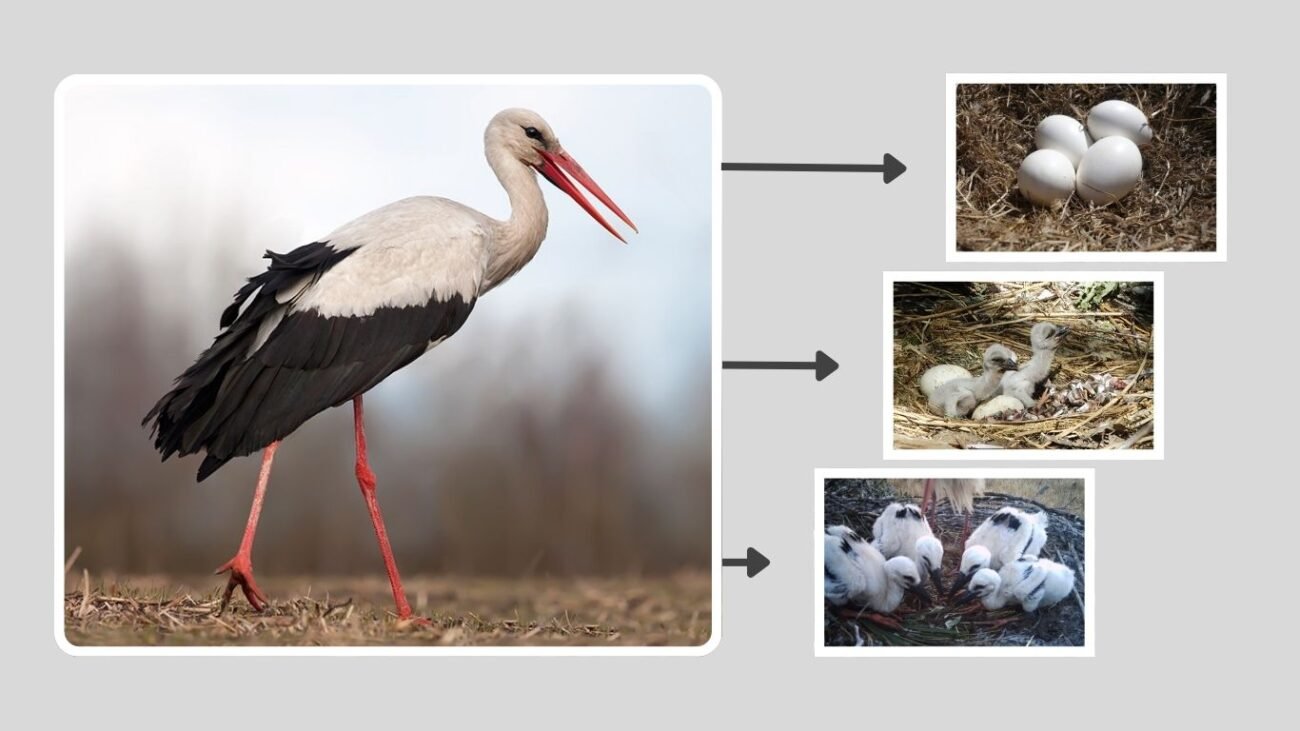
White storks are monogamous during the breeding season, returning to the same nest year after year. Their large stick nests, built on rooftops, trees, or poles, can weigh up to 500 kg and grow wider with each season’s repair. Both parents share incubation duties for about 33 days, and chicks fledge at around two months.
These birds are highly migratory, flying thousands of kilometers between Europe and Africa. They travel in flocks, soaring on thermal air currents to conserve energy. Their journey, often covering over 10,000 kilometers, is one of the most spectacular migrations in the avian world.
Cultural and National Significance
National Bird Symbolism
The white stork holds a special place in European folklore and national identity. It is the national bird of Poland and Lithuania, symbolizing fertility, purity, and renewal. Seeing a stork nesting on a rooftop is often considered a sign of prosperity and good fortune for the household. In Polish culture, the bird represents family harmony and the arrival of spring, while in Lithuanian tradition, harming a stork is thought to bring bad luck.
In Germany, the white stork is celebrated in folklore as the bearer of babies, a myth that spread across Europe and continues to this day. This charming story likely arose from the stork’s tendency to return to human homes each spring, coinciding with the season of birth and renewal. The association strengthened its reputation as a gentle, protective symbol in family life.
Spiritual Meaning
Spiritually, the white stork embodies purity, rebirth, and divine blessings. In ancient cultures, it was seen as a messenger between heaven and earth. The bird’s long migrations mirrored the soul’s journey toward enlightenment and renewal. In Chinese and Egyptian symbolism, storks represented filial piety and eternal life. Even today, spotting a white stork in flight is interpreted as a sign of hope, good luck, or positive transformation.
The stork’s calm nature and dedication to its offspring have also made it a symbol of parental devotion. Many spiritual interpretations highlight its protective and nurturing energy, often linked to family unity and maternal care.
Migration and Conservation
Migratory Patterns
The white stork is a long-distance migratory bird, traveling between breeding and wintering grounds each year. European storks migrate southwards in late August, flying in massive flocks over the Gibraltar Strait or the Middle East to reach Africa. These birds avoid flying over large water bodies because thermals—warm air currents they rely on for soaring—are absent there.
During migration, storks can cover up to 300–400 km per day, using minimal energy by gliding instead of flapping. They rest in regions rich in food and water before continuing their journey. Some storks overwinter in India or the Middle East, while others reach as far as South Africa. Their incredible navigation skills allow them to return to the same nesting sites year after year, an instinct scientists believe is influenced by the Earth’s magnetic field and solar positioning.
Conservation Status
According to the IUCN Red List, the white stork is classified as Least Concern, with stable global populations. However, the species has faced challenges due to habitat destruction, pesticide use, and climate change. Drainage of wetlands, urbanization, and collisions with power lines have reduced nesting and feeding areas in many parts of Europe.
Conservation programs in countries like Poland, Spain, and Germany have been instrumental in restoring stork populations. Artificial nesting platforms, wetland restoration, and community awareness campaigns have helped revive numbers dramatically since the 1980s. Today, the white stork stands as a conservation success story, illustrating how human cooperation can protect and preserve biodiversity.
FAQs
What bird looks similar to a white stork?
Several birds resemble the white stork, including ibises, egrets, herons, and cranes. The key differences lie in their bill shape and coloration. Storks have a straight red bill and red legs, while ibises feature curved bills and darker colors. Herons, on the other hand, fly with bent necks, unlike the straight-necked stork.
Is the white stork a migratory bird?
Yes. White storks migrate seasonally, traveling thousands of kilometers from Europe to Africa each year. They rely on thermal air currents for gliding and migrate in large flocks. Migration typically begins in late summer and ends in early spring, with birds returning to their original nesting grounds annually.
Why is the white stork the national bird of Poland and Lithuania?
The white stork symbolizes good fortune, family, and fertility, deeply embedded in Polish and Lithuanian folklore. Its presence near homes was believed to bring blessings and prosperity. Because these countries host some of the largest breeding populations, the bird naturally became a national emblem of renewal and hope.
Where can you find white stork-like birds in the USA?
In the United States, true white storks are rare. However, similar-looking species such as the American wood stork, great egret, and white ibis can be found in Florida, North Carolina, and Texas. These birds share similar white plumage and long legs but differ in bill color and shape.
What does the white stork symbolize spiritually?
Spiritually, the white stork represents rebirth, purity, and new beginnings. It is often associated with family bonds, protection, and divine blessings. In many cultures, the stork’s migratory return each spring signifies renewal and the cycle of life, making it a universal symbol of hope and continuity.