Sparrows are among the most familiar small birds in the world, yet their appearance varies more than many people realize. With dozens of species across North America, Europe, and Asia, identifying sparrows can become confusing—especially when trying to distinguish males from females, or young fledglings from adults. People often search for what sparrows, their eggs, and their nests look like so they can recognize them in their backyard or during birdwatching.
This guide offers clear identification details, covering common species, eggs, nests, and young sparrows.
General Sparrow Appearance
Key Identification Features
Sparrows are generally small, compact birds with rounded bodies and short tails. Their bills are thick and cone-shaped, adapted perfectly for cracking seeds. Most sparrows show a mix of browns, grays, tans, and subtle streaks that help them blend into natural environments. Their eyes are dark, round, and expressive, while their legs are thin but strong enough for hopping and quick movement.
Patterns vary by species, but sparrows often feature wingbars, streaked chests, and light or dark eyebrow markings. In many species, males display darker or brighter contrasts, while females remain more subdued.
What Sparrows Look Like in Flight
Sparrows fly with quick, fluttering wingbeats that appear slightly jerky, especially when traveling short distances. Their wings are short and rounded, giving them a rapid but somewhat dipping flight pattern. When in flocks, sparrows may take off together in swift, coordinated bursts. Different species show slight differences in tail spread, wing shape, and altitude preference, but overall their flight is fast and agile.
House Sparrow Appearance
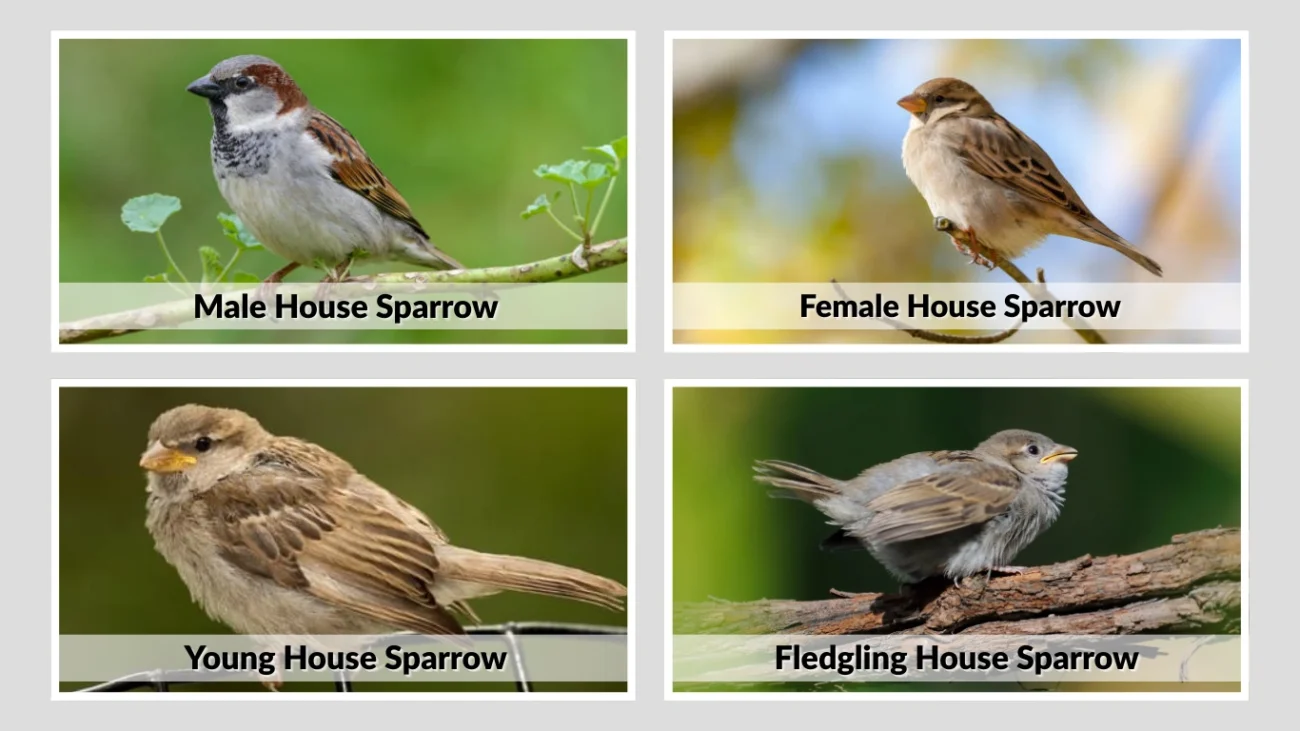
Male House Sparrow
Male house sparrows are distinctly patterned. They have a bold black bib on the throat and chest, a gray crown, and a rich chestnut stripe along the side of the head. Their wings and back show warm brown with black streaks. This strong contrast makes males easy to identify year-round. During winter, the bib may appear smaller due to feather wear, but the male’s sharp facial markings remain noticeable.
Female House Sparrow
Females are much more subdued in color. They lack the black bib and gray crown, instead wearing soft brown and tan feathers. Their most recognizable feature is a pale, creamy eyebrow stripe that gives their face a gentle, warm appearance. Their chest and underparts are a uniform buff color, helping them camouflage well in shrubs and urban settings.
Juvenile & Young House Sparrow
Young house sparrows resemble adult females but look softer overall, with fluffier plumage and less defined markings. Their coloring is pale brown and gray, and their bills may appear yellowish at the edges. As they mature, their feathers sharpen in detail and, for males, the beginnings of the black bib slowly appear.
Fledgling House Sparrow
Fledglings are often mistaken for baby birds when they are actually nearly ready to fly. These young sparrows have loose, fluffy feathers, especially on the head and chest. Their tails are short, giving them a rounded look. They beg frequently, holding their wings slightly open and showing large yellow gapes at the corners of their beaks. Despite their clumsy appearance, fledglings can hop, flutter, and explore nearby perches.
Other Sparrow Species Appearance
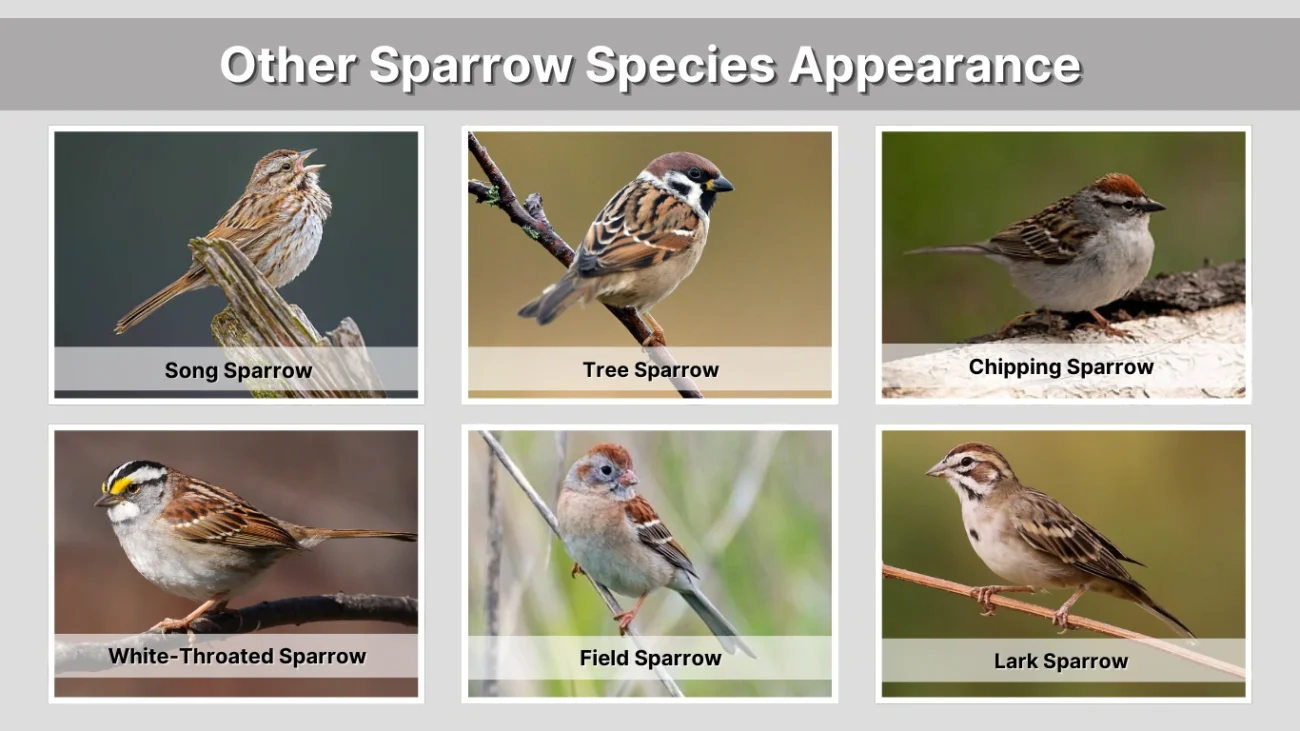
Song Sparrow
The single sparrow is one of the most heavily streaked sparrows, with brown stripes covering the chest, sides, and back. A key identifier is the dark central spot in the middle of its chest, formed by the convergence of streaks. Its tail is longer than that of many other sparrows, giving it a somewhat elongated silhouette. Song sparrows show rich brown tones across their bodies, though the exact shade varies by region.
Tree Sparrow
Tree sparrows are cleanly patterned birds with a rufous cap on the head and a small dark spot on the chest. Their bills are unique—half yellow, half dark—making them easy to distinguish. The overall body is grayish with soft brown wings and distinct wingbars. Their expression is gentle, and their plumage crisp, making them stand out among similar species.
Chipping Sparrow
Chipping sparrows have a striking breeding plumage: a bright rufous crown, clean gray breast, and a thin black eye line. In nonbreeding seasons, their colors soften, but the shape and behavior remain recognizable. These sparrows are sleek, light-bodied, and often found in open woods or suburban lawns.
White-Throated Sparrow
White-throated sparrows are instantly recognizable thanks to their crisp head markings. They display either white-striped or tan-striped morphs, but both forms have a bright white throat patch that gives the species its name. Yellow lores—small patches of yellow between the bill and the eyes—add another distinctive feature. Their bodies are brown with clean gray underparts, creating a bold contrast. These sparrows often appear slightly larger and more robust than other backyard species.
Field Sparrow
Field sparrows are subtle yet elegant birds. They have warm buff-brown tones across the body, a pale eye ring, and a distinctive pink bill that stands out against their gentle facial coloring. Their overall appearance is softer and less streaked than many other sparrows, giving them a clean and almost delicate look. Because their colors are muted, they are best identified by their facial pattern and bill color.
Lark Sparrow
Lark sparrows have one of the most striking patterns among North American sparrows. Their bold chestnut, black, and white facial markings form a unique mask-like appearance. Their chest shows a small central spot, and the tail has white outer corners that flash during flight. This species appears larger and longer-tailed than most sparrows, giving it a more elongated silhouette.
Hedge Sparrow (Dunnock)
Although called a sparrow, the hedge sparrow—or dunnock—is not a true sparrow. It has a thin, insect-eating bill rather than the thick seed-eating bill typical of sparrows. Its plumage includes a slate-gray chest and face paired with brown streaked wings and back. Dunnocks appear sleek and quiet, often moving alone through hedges and low vegetation.
Barn Sparrow (Common Misidentification)
Many people use the term “barn sparrow” when referring to the barn swallow. The barn swallow is not a sparrow; it has a deeply forked tail, glossy blue back, and rusty-orange underside. It is far more streamlined and acrobatic in flight. Including this clarification helps prevent confusion for new birdwatchers.
Red Sparrow Meaning
There is no official species known as a “red sparrow,” but some sparrows—especially males during breeding season—develop warmer, reddish-brown tones. Lighting, molt cycles, and regional variations can also make plumage appear redder than normal.
Sparrow Eggs
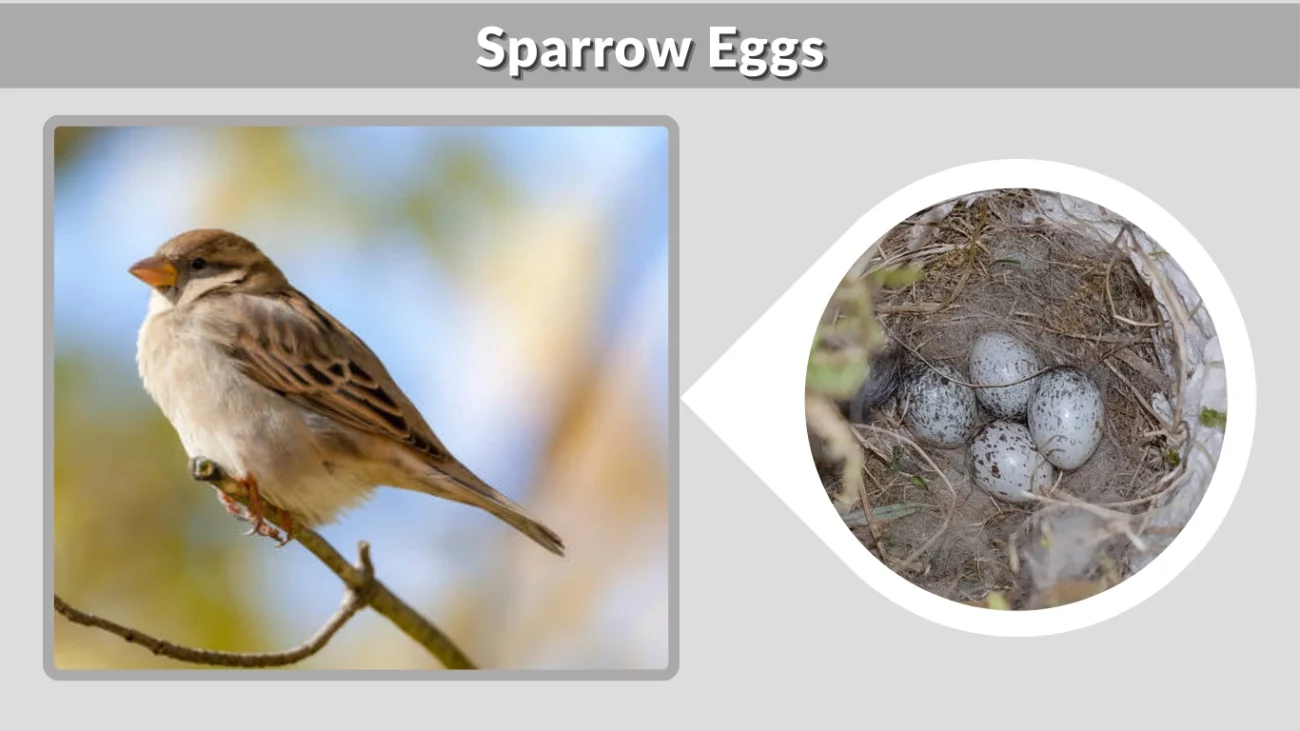
General Sparrow Egg Description
Sparrow eggs are small and oval, typically ranging from creamy white to pale blue-green depending on species. Many eggs show speckles or blotches in shades of brown, gray, or violet. The number of markings varies widely: some eggs are heavily spotted, while others have minimal patterning. Clutches usually contain three to five eggs, although this varies slightly by species.
House Sparrow Eggs
House sparrow eggs are usually off-white or grayish with heavy brown speckling. Their markings are dense and can appear smudged. Clutches generally contain four or five eggs, laid in intervals of about one day.
Song Sparrow Eggs
Song sparrow eggs often display greenish or bluish tones with dark brown spotting. Their patterns can sometimes be concentrated around the wider end of the egg. These eggs are slightly smaller and more colorful than house sparrow eggs.
Chipping Sparrow Eggs
Chipping sparrow eggs are pale blue with sparse brown or black marks. Their delicate coloration sets them apart from more heavily speckled species. They usually lay three to four eggs.
Tree Sparrow Eggs
Tree sparrow eggs range from pale cream to bluish gray, often with moderate speckling. These eggs are generally medium-sized compared to other sparrow species.
Sparrow Nests
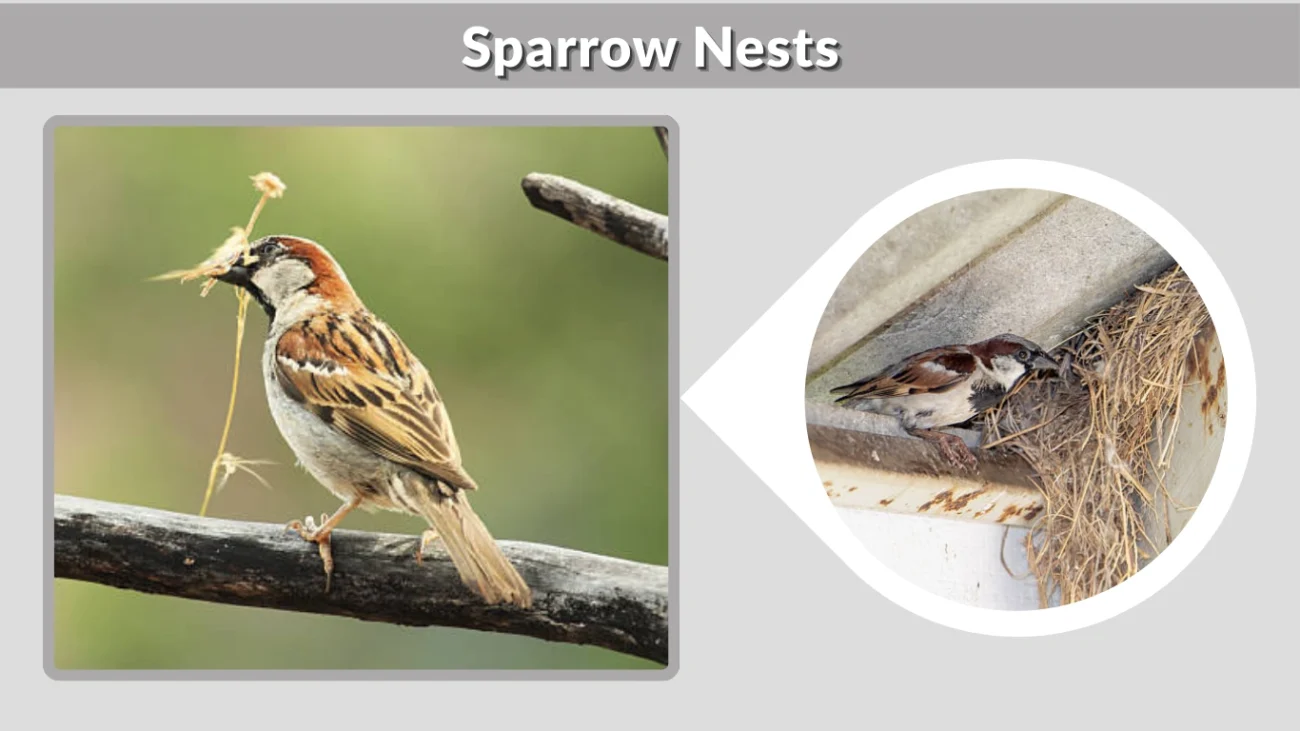
General Sparrow Nest Characteristics
Sparrow nests vary in style, but most are compact structures made from grasses, twigs, roots, feathers, and other soft materials. Many species build cup-shaped nests, while a few—including house sparrows and tree sparrows—construct dome-like nests when nesting in sheltered cavities. Nests are typically placed in shrubs, trees, grass clumps, or artificial structures such as gutters and building crevices.
House Sparrow Nest
House sparrow nests are bulky, messy, and dome-shaped, often crammed into cavities in buildings or birdhouses. They may contain feathers, pieces of string, paper scraps, and other debris. Inside, the nest is well padded with soft materials.
Song Sparrow Nest
Song sparrows build neat cup nests close to the ground or hidden low in shrubs. Their nests are carefully woven from grasses and lined with fine materials. They blend into vegetation extremely well, making them difficult to spot.
Chipping Sparrow Nest
Chipping sparrow nests are small, tight cups made from thin grasses. These nests are airy and light, often placed in shrubs or low branches. Because the walls are thin, eggs may be faintly visible through the nest.
Tree Sparrow Nest
Tree sparrows often choose holes or natural cavities for nesting, crafting dome-shaped structures with a rounded entrance. Moss, feathers, and soft grasses fill the interior.
What a Sparrow Nest Looks Like Inside
The inside of a sparrow nest is cleanly lined with feathers, fine grasses, or hair. Eggs rest together in the center, often arranged in a shallow bowl. After hatching, the interior becomes warm and crowded with young birds whose begging calls echo from the nest cavity.
Life Stages: Young, Baby & Fledgling Sparrows
Just-Hatched Baby Sparrows
Newly hatched sparrows are nearly featherless, with pink skin and tightly closed eyes. Their heads appear oversized, and they rely entirely on parents for warmth and feeding. Their wide yellow gapes make it easy for adults to deliver food.
Fledgling Sparrows
Fledglings have partial feathering and fluffy tufts. Their short tails and clumsy hopping make them easy to identify. Although they leave the nest early, they still depend on parents for several days.
Young Sparrows
As young sparrows develop, they gain more defined plumage and begin to resemble adult females. Their markings sharpen, and their behavior shifts from begging to foraging.
FAQs
What does a typical sparrow look like?
Most sparrows are small, brownish birds with short tails, rounded bodies, and conical seed-eating bills. Their plumage includes subtle streaks and earthy tones that help them blend into natural surroundings. While males of some species show bolder patterns, females and juveniles tend to appear softer and more muted.
What color are sparrow eggs usually?
Sparrow eggs are typically small and oval, ranging from white or gray to pale blue-green. Most have brown or gray speckles, though the amount varies by species. Some, like chipping sparrows, lay lightly marked blue eggs, while house sparrows produce more heavily speckled, off-white eggs.
How do I identify a house sparrow?
Male house sparrows have a gray crown, chestnut nape, and a distinctive black bib, while females are plain buff-brown with a subtle eyebrow stripe. Both sexes have stout bills and warm brown wings. Their confident behavior around buildings and people also helps distinguish them from other species.
What does a baby sparrow look like?
Just-hatched sparrows are nearly featherless with pink skin, closed eyes, and a wide yellow gape for feeding. As fledglings, they appear fluffy with short tails and partially developed feathers. Their constant begging calls and clumsy hopping behavior make them easy to identify during this early stage.
Are sparrow hawks actually sparrows?
Despite the name, sparrow hawks are not sparrows but small birds of prey. They earned the name because they frequently hunt sparrows and other small birds. Their sharp talons, hooked beaks, and barred plumage clearly separate them from the seed-eating, round-bodied true sparrows.