











Rats hold a unique position in the natural food chain. They are abundant, adaptable, and provide a critical food source for many wild predators across forests, deserts, cities, and farmlands. At the same time, rats themselves can act as predators or scavengers, feeding on insects, eggs, and even small animals when necessary. Understanding which animals eat rats—and how poisoned rats affect wildlife—is essential for ecology, pest control, and pet safety. This guide explores the full predator list, scavenger interactions, and surprising rat behaviors.
Understanding Rats in the Food Chain
Rats as Prey
Rats reproduce rapidly and survive in nearly every habitat, making them one of the most accessible prey animals worldwide. Their high numbers attract a wide variety of predators—mammals, birds, reptiles, and scavengers. Rats are especially vulnerable because they forage frequently, often in open or semi-exposed areas. Many predators rely on their predictable activity patterns, particularly at night, to hunt efficiently.
Rats as Predators
Although many people picture rats only as prey, they also play the role of small-scale predators. Rats commonly eat insects such as cockroaches, beetles, and worms. They may raid bird nests for eggs or hatchlings and will scavenge the carcasses of small animals. In extreme hunger or overcrowding, rats may become aggressive toward weaker animals. Their omnivorous diet is a key reason their populations thrive.
Animals That Commonly Eat Rats (Primary Predators)

Mammals
Many mammals depend on rats for nutrition, especially in regions where rodents are abundant.
- Foxes frequently hunt rats in urban and rural landscapes.
- Coyotes consume rats when other prey is scarce.
- Bobcats and wildcats actively stalk rodents in forests and grasslands.
- Weasels, stoats, and martens are expert rat hunters, known for pursuing rats into burrows.
- Domestic and feral cats often hunt mice more than rats but will kill smaller rats.
- Dogs occasionally catch rats, though they are not primary rat predators.
These mammals play a crucial role in controlling rodent populations without the risks associated with chemical poisons.
Birds of Prey
Birds of prey are among the most efficient rat predators.
- Owls—especially barn owls—regularly hunt rats during their nightly flights.
- Hawks and falcons capture rats with speed and precision during daylight hours.
- Eagles may consume larger rats or scavenge dead ones.
Because rats are most active from dusk to dawn, owls are particularly impactful in reducing rat numbers naturally.
Reptiles
Snakes form another important predator group.
- Rat snakes, black rat snakes, and eastern rat snakes earned their names from their frequent rodent-based diet.
- Pythons, cobras, and other large snakes also prey on rats where available.
Snakes help maintain ecological balance, especially in rural and agricultural areas where rat populations can damage crops and stored grain.
Other Predators
Several additional species consume rats occasionally or opportunistically.
- Possums sometimes eat rats, particularly dead ones.
- Mongooses are skilled hunters introduced historically to control rats in some regions.
- Monitor lizards catch rats in tropical areas.
- Crocodiles may consume rats near shorelines or riverbanks.
These predators broaden the range of species that naturally help reduce rodent populations.
Animals That Eat Rats at Night

Rats are primarily nocturnal, so most of their predators hunt after dark.
Common Night Hunters
- Owls dominate nighttime rodent hunting, using silent flight and sharp talons.
- Foxes patrol fields and neighborhoods for rats emerging to feed.
- Snakes ambush rats as they travel along walls, foundations, and vegetation.
- Raccoons forage for food at night and may catch or scavenge rats.
The overlap of predator and rodent activity makes nighttime the most dangerous period for rats.
Animals That Eat Rats and Mice
Rats and mice share many predators because they occupy similar habitats.
Shared Predators and Overlapping Diets
Owls, snakes, foxes, and wildcats hunt both species. While cats often prefer mice due to their smaller size, many larger predators show no distinction. Overlapping prey patterns help stabilize ecosystems because predators can switch between rats and mice depending on population availability.
Comparison Table: Mice vs Rats — Predator Preferences
A mice–rat dietary breakdown typically shows:
- Snakes prefer smaller prey like mice but will take juvenile rats.
- Owls and foxes hunt both consistently.
- Cats catch mice more frequently but will pursue young or weak rats.
Understanding this overlap helps identify which predators are active in an area based on rodent remains or sightings.
Animals That Eat Specific Rat Types
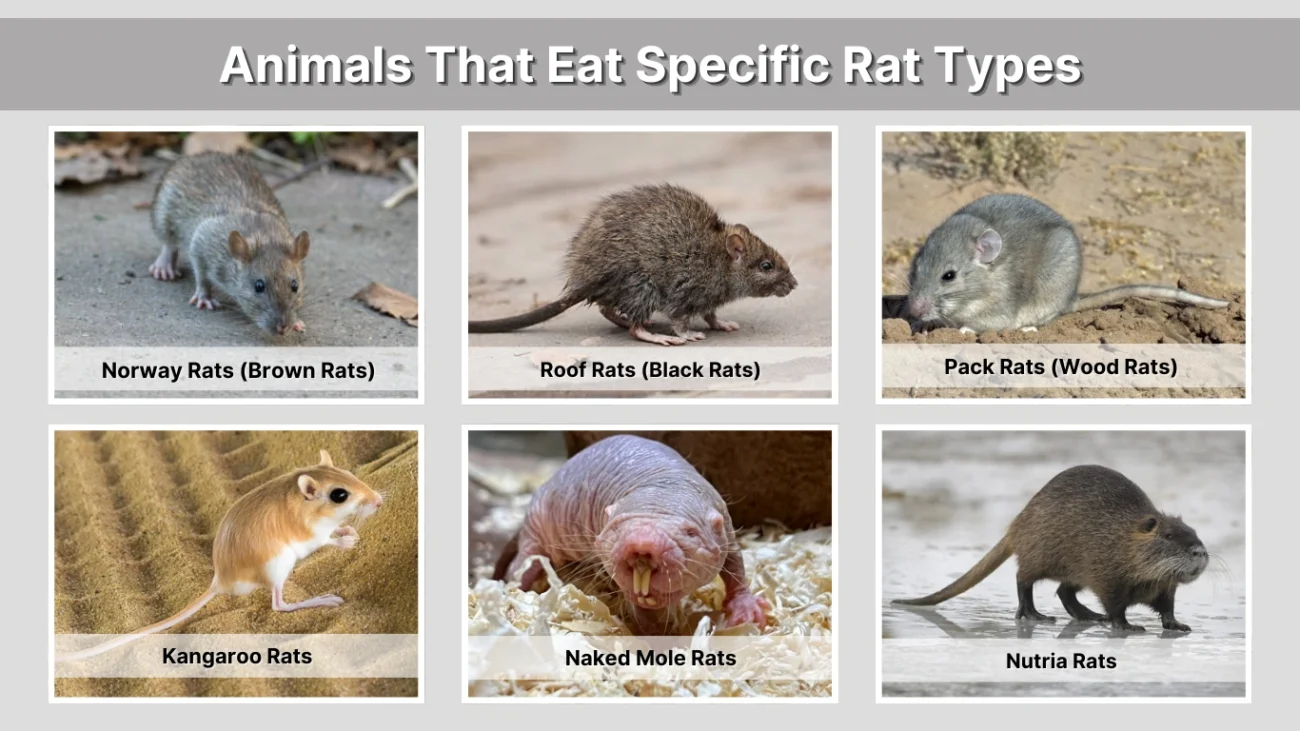
Norway Rats (Brown Rats)
These ground-dwelling rats are preyed on by cats, dogs, raccoons, foxes, snakes, and birds of prey. Their presence in urban environments exposes them to scavengers as well.
Roof Rats (Black Rats)
Because they climb trees, fences, and rooftops, roof rats often fall victim to owls, hawks, climbing snakes, and bobcats.
Pack Rats (Wood Rats)
Common predators include coyotes, bobcats, owls, and weasels.
Kangaroo Rats
Despite their name, kangaroo rats are not rats. They are prey for owls, foxes, snakes, and coyotes. They do not eat other animals.
Bamboo Rats & Regional Species
In Asia and Africa, predators include snakes, leopards, mongooses, and monitor lizards.
Animals That Eat Dead Rats (Scavengers)
Dead rats become food for many scavenger species. While scavengers do not usually hunt live rats, they play an important role in nature by cleaning up carcasses that would otherwise spread disease.
Scavenger Species
Common animals that eat dead rats include:
- Vultures – highly efficient carrion feeders
- Crows and ravens – intelligent birds that exploit urban environments
- Raccoons – opportunistic omnivores that scavenge frequently
- Possums – known to consume roadkill and dead rodents
- Dogs and cats – may investigate or consume carcasses out of curiosity
These animals help reduce the spread of decaying organic matter, but consuming rats—especially poisoned ones—carries serious risk.
Dangers of Eating Dead Rats
Scavengers may ingest harmful bacteria, parasites, or diseases such as leptospirosis and salmonella. They also face a major threat from secondary poisoning, which occurs when an animal eats a rat that previously consumed rodenticide.
Do Rats Eat Other Animals?
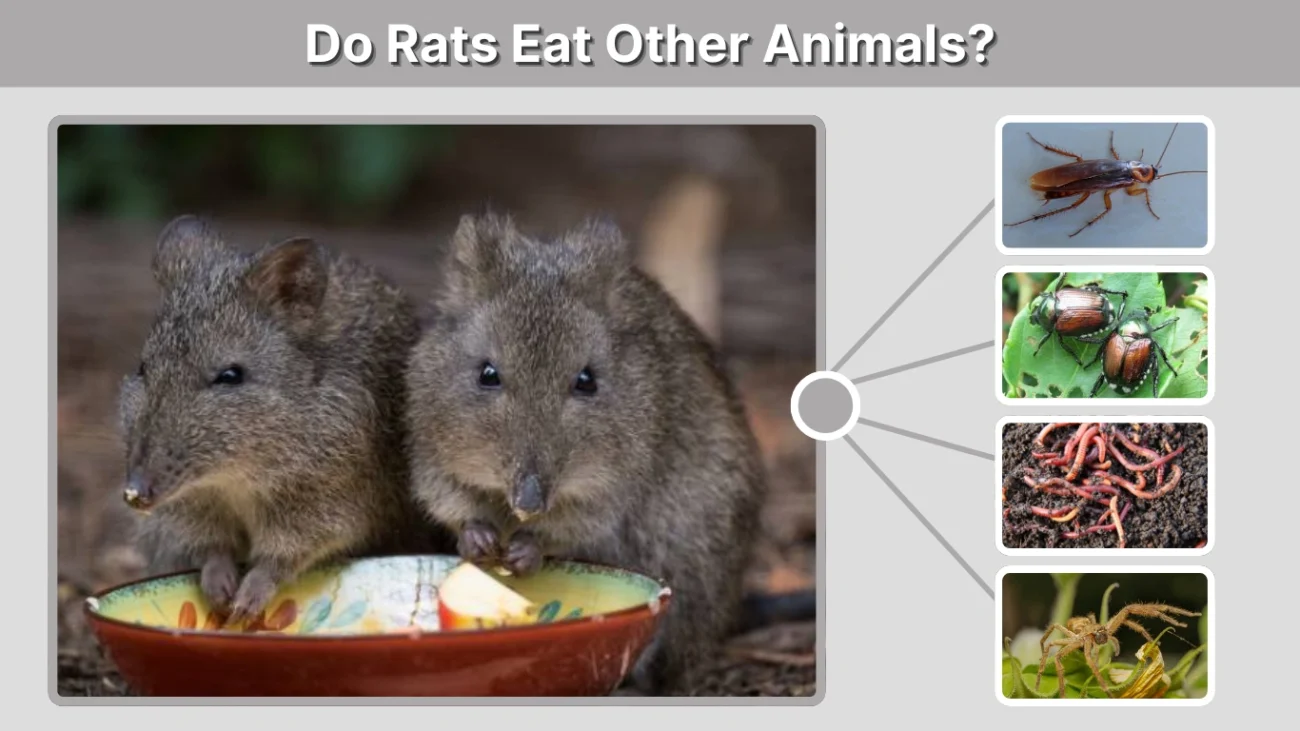
Although often viewed only as prey, rats also behave like predators or scavengers when needed.
Insects and Small Creatures
Rats frequently consume insects such as:
- Cockroaches
- Beetles
- Worms
- Spiders
These provide high protein and are readily found in urban areas.
Eggs and Baby Animals
Rats may raid nests for:
- Bird eggs
- Hatchlings
- Baby rodents
This usually occurs during hunger or when rats detect vulnerable prey.
Carrion and Dead Animals
Rats will scavenge:
- Dead birds
- Dead mice
- Dead small mammals
This scavenging behavior helps supplement their diet and is common in urban environments.
Do Rats Eat Live Animals?
Though uncommon, starving rats may attack live animals—mainly defenseless ones such as newborn kittens, baby rabbits, or caged birds. These incidents are rare and usually driven by severe food scarcity.
What Animals Do Kangaroo Rats Eat?
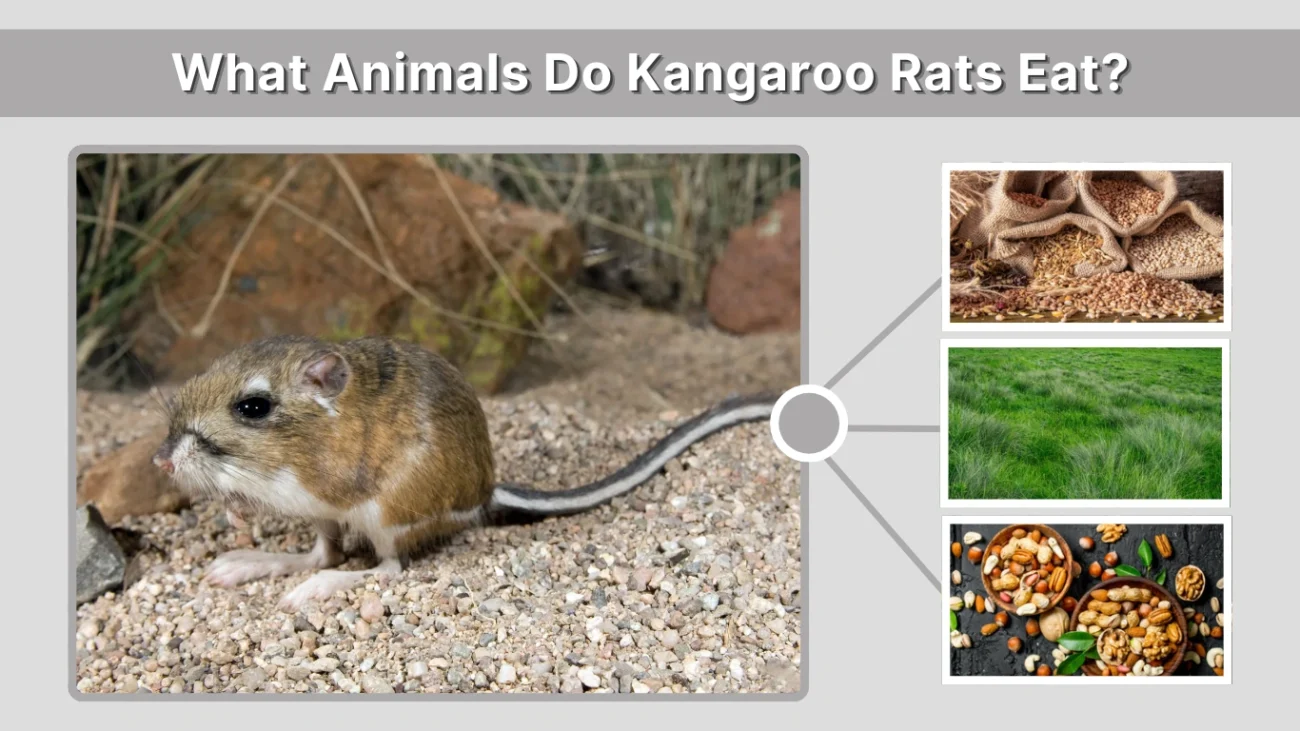
Kangaroo rats do not eat animals.
They are herbivores that consume:
- Seeds
- Grasses
- Plant materials
They derive moisture from seeds, which allows them to survive in dry desert regions. Their prey-like appearance often leads to confusion, but they never hunt animals.
Secondary Poisoning — What Happens When Animals Eat Poisoned Rats
Secondary poisoning is one of the most serious ecological dangers associated with rodenticides. Many animals that eat rats—either as hunters or scavengers—can become ill or die after ingesting a rat that contains poison.
Can Animals Die From Eating Poisoned Rats?
Yes. Many predators suffer poisoning after consuming a rat exposed to rodenticide. This can lead to widespread wildlife deaths, especially among owls and foxes.
What Happens Physiologically
Different rat poisons cause different effects:
- Anticoagulants:
Cause internal bleeding, pale gums, bruising, and organ failure. - Bromethalin:
Damages the nervous system, leading to tremors, paralysis, and seizures. - Cholecalciferol (Vitamin D3 poisons):
Causes kidney failure, dehydration, and abnormal calcium levels.
Animals may die hours or days after consuming a poisoned rat, even if they did not eat the poison directly.
Animals at Highest Risk of Secondary Poisoning
- Owls
- Hawks
- Eagles
- Foxes
- Snakes
- Cats
- Dogs
These species often eat multiple rats per week, making them extremely vulnerable.
Animals That Might Eat Rat Poison Directly
Pets, livestock, and wildlife may consume rat pellets due to their scent or taste. No species is immune; even animals with strong digestive systems can suffer fatal effects.
Historical & Cultural Notes
Animals Domesticated Historically to Hunt Rats
- Mongooses were introduced in parts of Africa and Asia to control rats in agricultural areas.
- Ferrets were used in Europe for rodent control due to their agility and hunting instincts.
These practices contributed to folklore and pest-control traditions.
Rats in Anime & Pop Culture
Frequently depicted in animation, rats appear in:
- Cute scenes such as animated rats eating cheese
- Dark or comedic stories featuring zombie characters eating rats
- Anime scenes where rats interact with humans or fight animals
These portrayals vary from humorous to dramatic.
Unusual or Rare Questions (Clarified)
Can Rats Eat Animal Crackers?
Yes. Rats are attracted to sweet, crunchy foods like animal crackers.
Do Rats Eat Animal Feces?
Rats practice coprophagy, meaning they sometimes consume fecal matter for nutrients.
Do Rats Attack Farm Animals or Pets?
Rats rarely attack healthy animals. Incidents usually involve scavenging dead or extremely weak livestock.
Complete Predator List (Summary Section)
Animals that eat rats include:
Owls, hawks, eagles, foxes, wolves, coyotes, cats, dogs, weasels, stoats, martens, ferrets, bobcats, raccoons, possums, snakes, mongooses, monitor lizards, crocodiles, wolverines, and carrion-eating birds such as crows and vultures.
FAQs
What animals eat rats at night?
Owls, foxes, raccoons, and snakes are the most active nighttime rat predators.
Do any animals rely heavily on rats as a food source?
Owls, snakes, foxes, and weasels depend heavily on rodents for survival.
Can a poisoned rat kill another animal that eats it?
Yes—secondary poisoning is a major risk for wildlife and pets.
Do rats eat other animals?
Rats eat insects, eggs, small animals, and carrion, especially when food is scarce.
What animal eats rats and birds?
Weasels, hawks, and foxes commonly eat both rats and birds.


