











Tigers are one of the world’s most iconic predators, with nine known subspecies, each adapted to unique habitats and climates. While six survive today, three have gone extinct due to human activities and environmental pressures. Understanding their differences—from size and behavior to habitat and survival challenges—helps highlight the importance of conservation. This guide explores each tiger type, offering clear identification and key ecological insights.
1. Bengal Tiger

The Bengal Tiger is one of the most well-known and widespread tiger subspecies, found mainly in India, Bangladesh, Nepal, and Bhutan. It is famous for its striking orange coat with bold black stripes and is considered a powerful symbol of strength and wildlife conservation.
Identification
- Bright orange coat with bold black stripes
- White belly, inner legs, and facial markings
- Males larger than females
- Round face with prominent cheek ruffs
Habitat
Bengal tigers live in a variety of environments, including tropical forests, grasslands, mangrove swamps, and deciduous woodlands. The Sundarbans mangrove region is one of their most iconic habitats, where they adapt to swampy terrain and tidal environments.
Behaviors
They are solitary predators, marking large territories and primarily active during dawn or night. Bengal tigers are excellent swimmers and often cool off in rivers. They use stealth-based hunting techniques, relying on bursts of strength and precision to capture prey.
Diet
Their diet mainly includes deer, wild boar, buffalo, and occasionally smaller mammals. In mangrove areas, they may hunt fish, birds, and even crustaceans. Bengal tigers are apex predators and play a crucial role in maintaining ecological balance.
2. Indochinese Tiger

The Indochinese Tiger is a smaller and more secretive tiger subspecies found in Southeast Asia. It inhabits remote forested regions and is known for its darker coat and narrow stripes. Due to habitat loss and poaching, its population has drastically declined.
Identification
- Darker orange coat compared to Bengal tigers
- Narrow and closely spaced black stripes
- Smaller and more slender body build
- Rounded ears with white spots (eye spots) on the back
Habitat
Indochinese tigers live in dense tropical forests, hilly jungles, and mountainous regions. They thrive in areas with thick vegetation, which provides excellent cover for stalking prey. These habitats are often remote and difficult for humans to access.
Behaviors
They are elusive and avoid human contact. Like other tigers, they are solitary and mark large territories. They rely heavily on stealth and ambush hunting techniques, moving quietly through dense vegetation to surprise prey.
Diet
Their diet includes wild pigs, deer, banteng, serow, and smaller mammals. In some areas, scarcity of large prey has forced them to adapt by hunting smaller animals more frequently.
3. Malayan Tiger

The Malayan Tiger is a critically endangered tiger subspecies found only in Peninsular Malaysia. It is one of the smallest tiger types and closely resembles the Indochinese tiger but has distinct genetic differences. Its population is extremely low due to habitat loss and poaching.
Identification
- Smaller in size compared to Bengal and Siberian tigers
- Narrow, closely spaced black stripes
- Darker orange coat
- Lean, agile body built for dense forest movement
Habitat
Malayan tigers inhabit tropical rainforests, mountain forests, and lowland jungles. These lush, dense environments provide excellent cover and abundant prey, though habitat fragmentation has forced tigers into smaller regions.
Behaviors
They are solitary and territorial, marking their areas using scent markings and scratch marks on trees. The Malayan tiger is highly secretive and prefers to avoid human presence. It hunts mainly at night, using stealth and ambush tactics.
Diet
Their diet includes sambar deer, barking deer, wild boar, and smaller mammals. When larger prey is scarce, they may hunt monkeys, birds, and reptiles.
4. Siberian (Amur) Tiger

The Siberian Tiger, also known as the Amur Tiger, is the largest of all tiger subspecies. Found in the Russian Far East and parts of northeast China, it is adapted to survive in extremely cold climates with its thick fur and powerful build.
Identification
- Largest tiger subspecies
- Thick, pale orange coat with fewer, lighter stripes
- Large paws and extra fat for insulation
- Long whiskers and dense fur around the neck
Habitat
Siberian tigers live in boreal forests, temperate woodlands, and snowy mountain regions. These harsh environments require great strength and endurance. Their wide-ranging territories help them locate prey across vast, rugged landscapes.
Behaviors
They are solitary, territorial, and highly mobile hunters. Siberian tigers travel long distances in search of food and are active throughout the day and night. They are strong swimmers and show remarkable adaptability to cold conditions, often resting in sheltered areas during severe winters.
Diet
Their diet includes red deer, elk, wild boar, and occasionally smaller animals such as hares and birds. In times of scarcity, they may scavenge or hunt rodents to survive.
5. South China Tiger

The South China Tiger is one of the most critically endangered tiger subspecies and is possibly extinct in the wild. Native to southern China, it is smaller than many other tiger types and has a distinct pattern of wide, spaced stripes.
Identification
- Small to medium-sized tiger
- Bright orange coat with broad, widely spaced stripes
- Slim body with a relatively long tail
- Rounded face with pronounced white facial markings
Habitat
Historically, this tiger inhabited subtropical forests, hilly regions, and dense shrublands of southern China. These environments provided thick cover and diverse prey, but heavy human expansion has greatly reduced suitable habitat.
Behaviors
South China tigers are solitary and territorial, similar to other tiger species. They rely on stealth and ambush hunting techniques. Due to their rarity, most behavioral insights now come from captive populations, which still show strong hunting instincts and territorial behavior.
Diet
Their diet traditionally included wild pigs, deer species, small mammals, and birds. In captivity, they are fed a controlled diet of meat to maintain their health while conservationists work on potential rewilding programs.
6. Sumatran Tiger
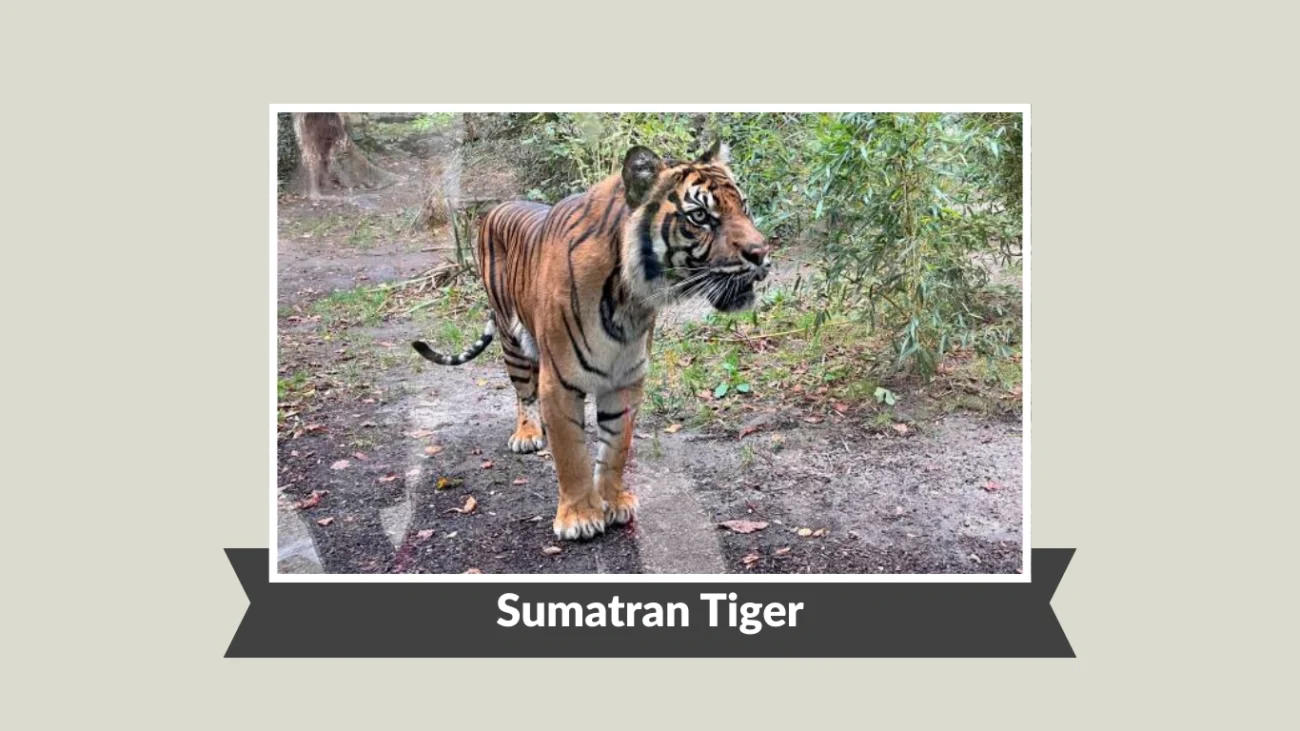
The Sumatran Tiger is the smallest living tiger subspecies, found only on the Indonesian island of Sumatra. Its compact size and dense stripe patterns help it navigate and camouflage within thick tropical forests. It is critically endangered due to deforestation and poaching.
Identification
- Smallest tiger subspecies
- Dense, dark stripes that are closer together
- Mane-like ruff around the neck of males
- Narrow face with distinct white markings
Habitat
Sumatran tigers live in tropical rainforests, peat swamps, and mountainous jungles. These lush and humid environments offer ideal cover for stalking prey, but rapid habitat loss has pushed them into fragmented and isolated regions.
Behaviors
They are solitary, territorial, and mostly nocturnal hunters. Sumatran tigers are excellent swimmers and often travel through rivers and wetlands. Their agility allows them to move swiftly through dense vegetation, making them highly effective ambush predators.
Diet
Their diet includes sambar deer, wild boar, tapirs, and smaller mammals. In some areas, they also hunt birds and monkeys. As apex predators, they help regulate prey populations and maintain ecological balance.
7. Bali Tiger (Extinct)
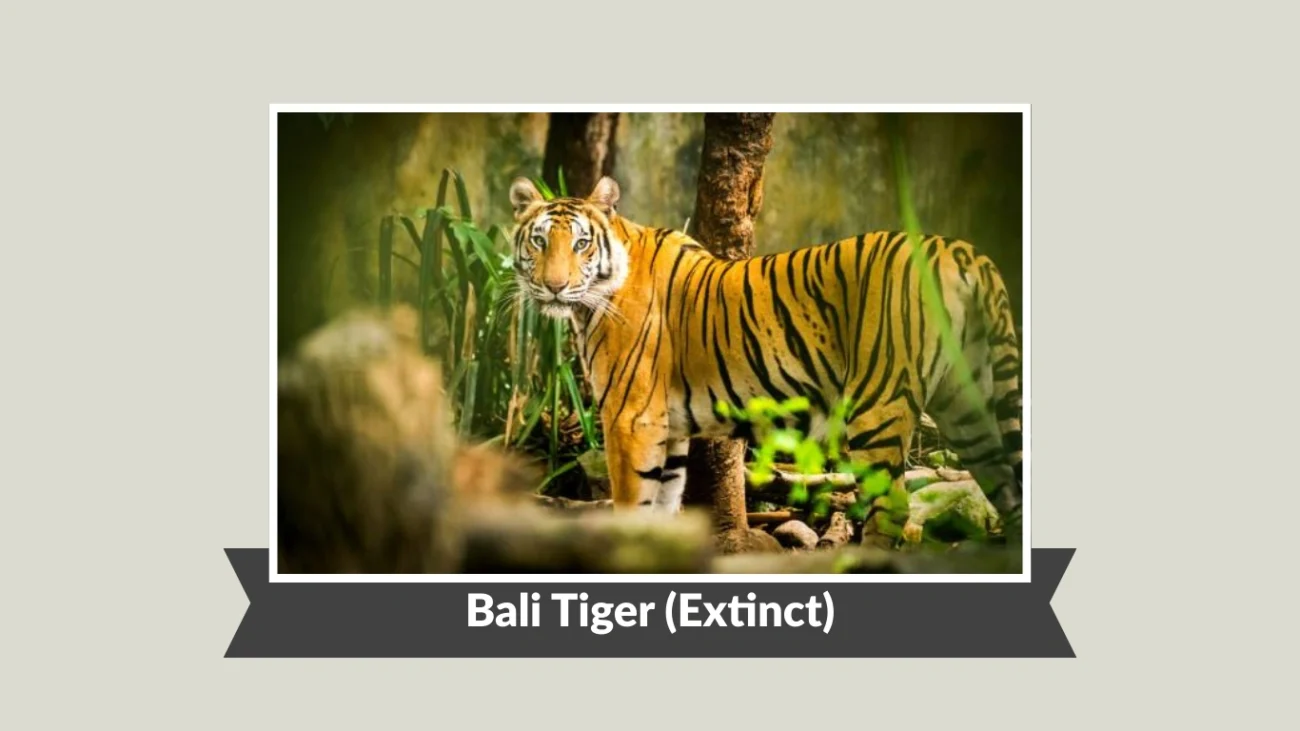
The Bali Tiger was the smallest tiger subspecies and lived exclusively on the Indonesian island of Bali. It went extinct in the 20th century due to hunting, habitat loss, and human conflict. Despite limited records, it remains culturally and historically significant.
Identification
- Smallest historic tiger subspecies
- Short orange coat with thick, dark stripes
- Slender body with a narrow skull
- Limited physical specimens exist today
Habitat
Bali tigers lived in Bali’s tropical forests, grasslands, and hilly regions. These habitats were rich in biodiversity but rapidly diminished due to agriculture and human settlement, reducing suitable living space for the species.
Behaviors
They were solitary and stealthy predators, similar to other tigers. Due to their small island habitat, their territories were likely smaller than those of mainland tigers. Historical accounts suggest they were agile hunters adapted to dense vegetation.
Diet
Their diet included wild boar, deer, birds, and smaller mammals. As resources on the island were limited, they adapted to whatever prey was available.
8. Caspian Tiger (Extinct)
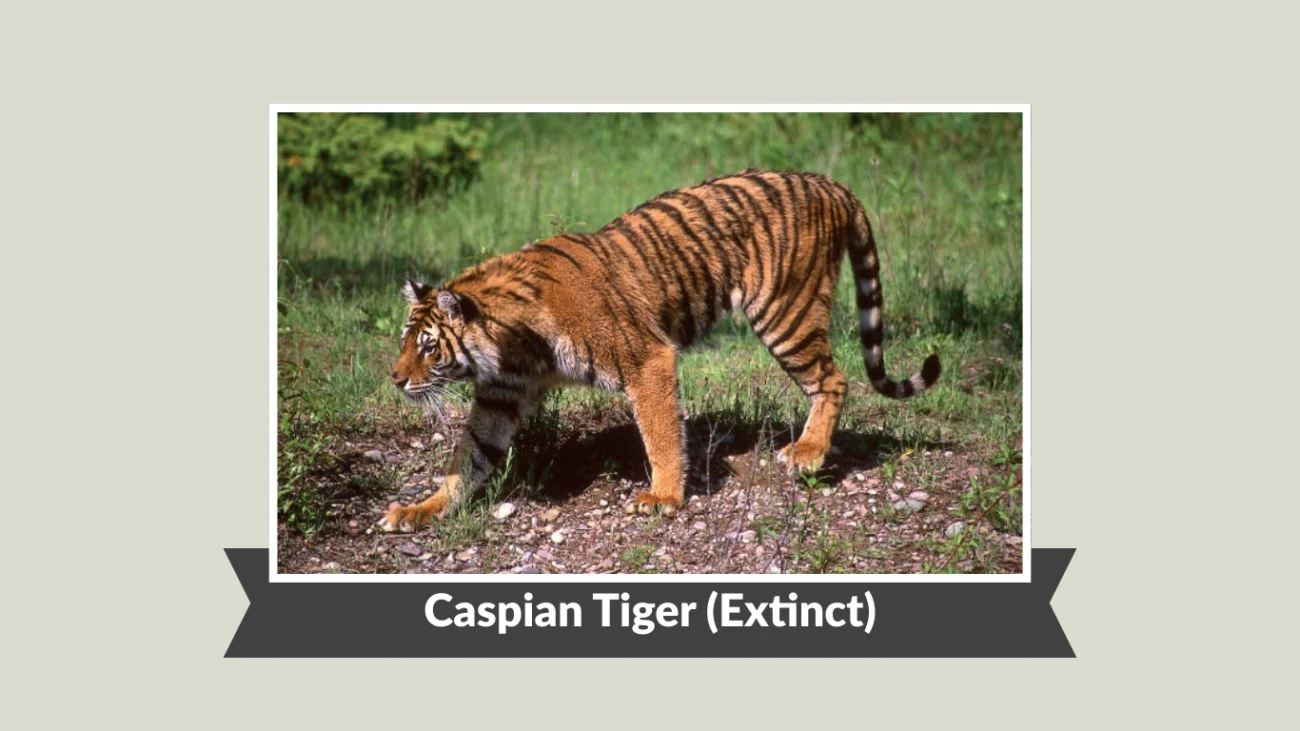
The Caspian Tiger, once found across Central Asia, Turkey, and Iran, was one of the largest tiger subspecies. It went extinct in the mid-20th century due to hunting, habitat destruction, and prey depletion. Genetic studies reveal it was closely related to the Siberian tiger.
Identification
- Large body size similar to the Siberian tiger
- Long, dense fur with pale yellow-orange coloring
- Narrow, closely spaced stripes
- Strong, muscular limbs for long-distance movement
Habitat
Caspian tigers lived in river valleys, wetlands, reed beds, and forested mountain areas. They thrived in regions near water sources, which supported large herbivore populations. Extensive habitat modification and agricultural expansion contributed greatly to their decline.
Behaviors
They were solitary and traveled long distances along river systems. Caspian tigers were strong swimmers and adapted to cold winters and hot summers. Historical records describe them as powerful, elusive hunters with wide-ranging territories.
Diet
Their diet included wild boar, deer, gazelles, and on occasion, livestock. Loss of natural prey played a major role in their extinction as human activity increasingly disrupted the ecosystem.
9. Javan Tiger (Extinct)

The Javan Tiger was a small tiger subspecies native to the Indonesian island of Java. It became extinct in the late 20th century due to rapid habitat loss, agricultural expansion, and overhunting. It was closely related to the Bali tiger but slightly larger.
Identification
- Small to medium-sized tiger
- Closely spaced, dark, and narrow stripes
- Long whiskers and a slender body
- Darker orange coat compared to other island tigers
Habitat
Javan tigers lived in dense tropical forests, volcanic hillsides, and mangrove regions. As human populations expanded, much of their habitat was converted into farmland, leaving them with extremely limited territory and fragmented environments.
Behaviors
They were solitary and relied on stealth and ambush techniques. Due to the island’s smaller size, their territories were more compact. They were known to avoid human contact and move quietly through thick vegetation.
Diet
Their diet included wild boar, deer species, birds, and smaller mammals. As prey populations declined due to human encroachment, the Javan tiger struggled to find sufficient food, contributing to its extinction.
FAQs
1. How many tiger subspecies exist today?
There are six living tiger subspecies today: Bengal, Indochinese, Malayan, Siberian (Amur), South China (functionally extinct in the wild), and Sumatran. Three subspecies—Bali, Caspian, and Javan—are extinct.
2. Why did some tiger subspecies go extinct?
Most extinct subspecies disappeared due to habitat loss, hunting, and reduced prey populations. Human expansion played a major role, creating fragmented habitats that made survival and reproduction nearly impossible.
3. Which tiger is the largest?
The Siberian (Amur) Tiger is the largest tiger subspecies. Its thick fur, large body, and strong limbs help it survive the extreme cold of the Russian Far East.
4. Which tiger is the smallest?
The Sumatran Tiger is the smallest living subspecies, adapted for life in dense rainforests. Historically, the Bali tiger was even smaller but is now extinct.
5. Why are tigers important to the ecosystem?
Tigers are apex predators that regulate prey populations, which helps maintain ecological balance. Their presence indicates a healthy ecosystem, making them a crucial species for biodiversity conservation.


