











Wolves are among the world’s most adaptable predators, with dozens of subspecies thriving across forests, tundra, deserts, and mountains. Though all belong to the same species, each type has unique traits shaped by its environment—from Arctic wolves built for icy extremes to desert wolves adapted for heat. This guide explores 21 notable wolf types, highlighting their identification, habitats, behaviors, and diets to better understand their remarkable diversity.
1. Gray Wolf

The gray wolf is the best-known wolf species and the most widely distributed. It has adapted to a vast range of climates, showing remarkable variation in size and coat color. As an apex predator, it plays a critical role in balancing ecosystems.
Identification
- Thick, dense fur ranging from gray to brown, black, or white
- Large triangular ears and a long bushy tail
- Broad snout with powerful jaws
- Long legs built for endurance running
Habitat
Gray wolves inhabit forests, tundra, grasslands, deserts, and mountainous regions. Their range extends across North America, Europe, Asia, and parts of the Middle East. They prefer areas with abundant prey and minimal human disturbance, though they can adapt to a variety of landscapes.
Behaviors
Gray wolves live in structured family groups called packs, typically led by an adult pair. They use cooperative hunting strategies and complex communication such as howls, body language, and scent marking. Wolves maintain large territories and travel long distances in search of food.
Diet
Their diet is primarily carnivorous, consisting of deer, elk, moose, and smaller mammals. Wolves are opportunistic feeders and will scavenge when necessary. They can take down prey much larger than themselves by hunting cooperatively, allowing the entire pack to share in the kill.
2. Arctic Wolf

The Arctic wolf is a subspecies of the gray wolf adapted to the extreme cold of the High Arctic. Its thick white coat, compact body, and specialized behaviors allow it to thrive where few other large predators can survive.
Identification
- Pure white or creamy-white fur for camouflage in snow
- Shorter ears and muzzle to reduce heat loss
- Dense insulating undercoat
- Stocky build compared to other wolves
Habitat
Arctic wolves live primarily in the far northern regions of Canada, Greenland, and parts of Alaska. They inhabit tundra landscapes, frozen plains, and mountainous Arctic areas with extremely low temperatures and long periods of darkness.
Behaviors
These wolves are highly adaptable to harsh conditions. They travel long distances following migrating prey and often form smaller packs than other wolf subspecies. Howling and scent marking remain vital communication tools, even across vast Arctic expanses.
Diet
Their diet consists mainly of muskoxen, Arctic hares, lemmings, and caribou. In times of scarcity, they scavenge or survive on smaller prey. Their cooperative hunting strategies are essential for taking down large, strong Arctic animals.
3. Timber Wolf

The timber wolf, often considered another name for certain gray wolf populations in forested regions, is known for its adaptability and strong pack structure. These wolves typically live in wooded habitats and display a wide range of coat colors.
Identification
- Coat colors vary from gray and brown to black
- Long legs and lean body built for covering large distances
- Yellow to amber eyes
- Bushy tail often carried low
Habitat
Timber wolves primarily inhabit dense forests, mixed woodlands, and areas with abundant cover. They are found in parts of North America and Eurasia, preferring territories with plentiful prey such as deer and elk. Forest ecosystems provide shelter, denning sites, and good hunting conditions.
Behaviors
These wolves live in well-organized packs with clear social hierarchies. They communicate through howls, scent marking, and body signals. Timber wolves travel widely within their territories and are known for their endurance and teamwork during hunts.
Diet
Their diet includes deer, elk, beavers, and smaller mammals. Timber wolves use cooperative hunting techniques, allowing them to bring down prey much larger than an individual wolf could handle alone. They may also scavenge when fresh prey is scarce.
4. Eurasian Wolf

The Eurasian wolf is one of the largest and most widespread subspecies of the gray wolf. Found across Europe and Asia, it displays significant regional variation in size, coat color, and behavior.
Identification
- Coat ranges from gray and brown to reddish hues
- Longer limbs and slimmer build compared to some North American wolves
- Distinct facial mask and sharp, angular features
- Thick winter coat that sheds seasonally
Habitat
Eurasian wolves occupy forests, grasslands, mountains, and steppe regions throughout Europe and northern Asia. They adapt well to diverse climates—from cold northern territories to more temperate southern regions. Their distribution has rebounded in several countries due to conservation efforts.
Behaviors
These wolves live in family-based packs, typically smaller than those of North American wolves. They communicate through vocalizations, body posture, and scent marking. Eurasian wolves are territorial and may travel long distances in search of food or to establish new territory.
Diet
Their diet includes wild ungulates such as deer, wild boar, and moose. They also consume smaller mammals, birds, and occasionally livestock where wild prey is limited. Their hunting strategy blends stealth, endurance, and cooperative teamwork.
5. Mexican Wolf
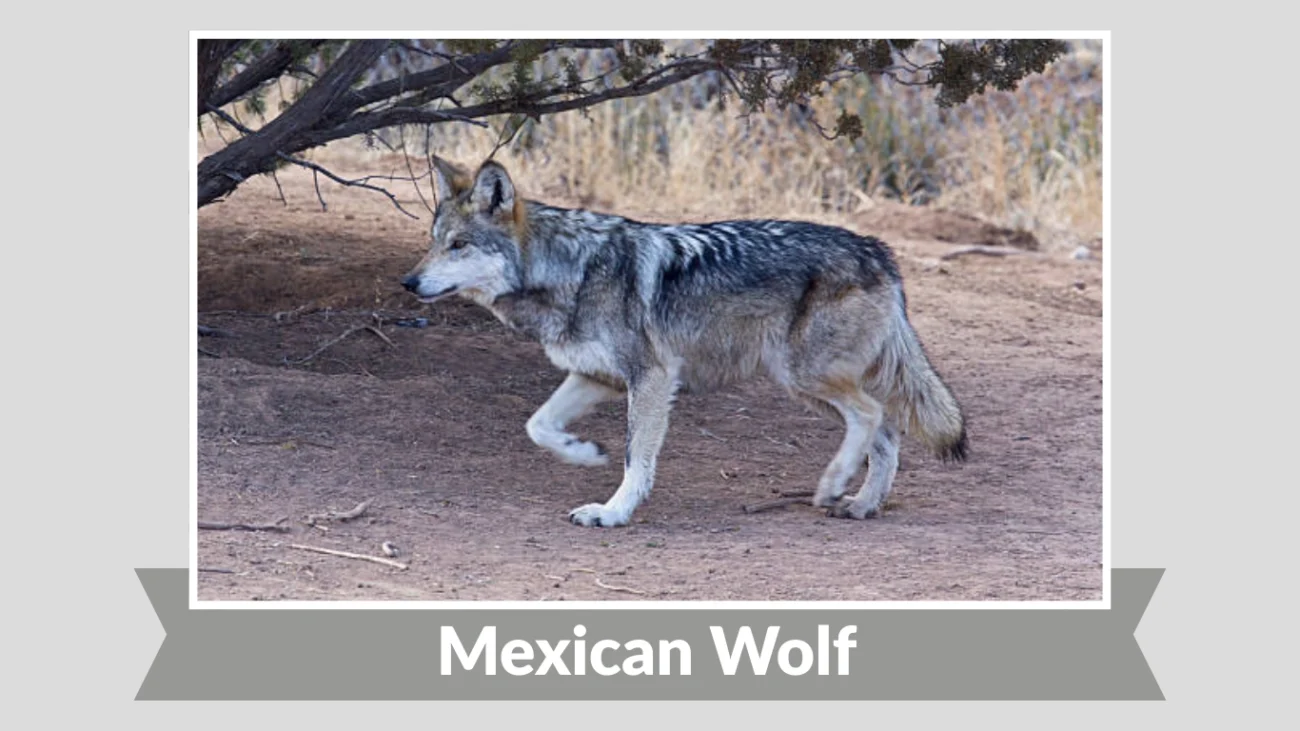
The Mexican wolf is one of the rarest and smallest subspecies of the gray wolf. Known for its striking markings and slender build, it is native to the southwestern United States and northern Mexico. Intensive recovery programs have helped increase its once critically low population.
Identification
- Distinct gray and light brown coat with black saddle marking
- Slender body and long legs
- Narrow, expressive face and large ears
- Smaller in size compared to most other gray wolf subspecies
Habitat
Mexican wolves inhabit montane forests, scrublands, and semi-arid regions of the Southwest. They prefer rugged terrain with dense vegetation, which provides cover for hunting and denning. Their historic range once included large portions of Mexico and the U.S.
Behaviors
These wolves are social animals that live in small family packs. They exhibit cooperative hunting, pup-rearing, and territory defense. Mexican wolves are shy around humans and generally avoid open conflict, relying on stealth and teamwork within their pack.
Diet
Their diet consists of elk, deer, javelina, and smaller mammals such as rabbits and rodents. They hunt using endurance and coordinated group strategies, and will also scavenge when necessary, especially during harsh seasons.
6. Indian Wolf
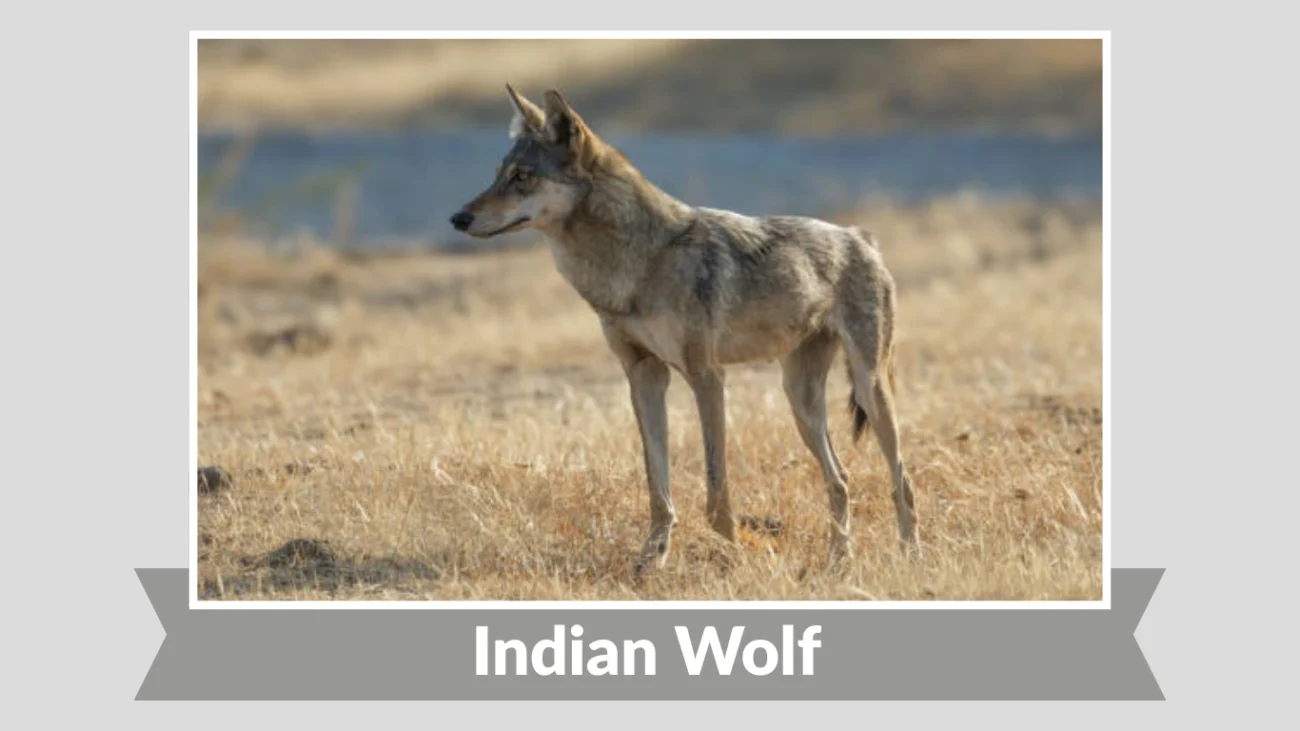
The Indian wolf is a lean and lightly built wolf species native to India, Pakistan, Nepal, and parts of the Middle East. Known for its adaptability to hot, dry climates, it is one of the smaller and more endangered wolf types in Asia.
Identification
- Short, thin coat often sandy, gray, or light brown
- Long legs and slender body
- Narrow muzzle and large, pointed ears
- Smaller and lighter than many northern wolf subspecies
Habitat
Indian wolves thrive in arid grasslands, scrublands, semi-deserts, and open plains. They prefer regions with sparse vegetation, where they rely on stealth and speed rather than dense cover. Human expansion and habitat loss remain major threats to their survival.
Behaviors
These wolves typically form smaller packs or pairs, unlike the larger pack structures seen in northern wolves. They are known for their quiet nature and rarely howl. Indian wolves rely heavily on stealth and endurance, often traveling long distances in search of prey.
Diet
Their diet consists mainly of antelope, gazelles, rodents, and ground-dwelling birds. They also prey on livestock when natural prey is scarce, increasing human–wolf conflict. Indian wolves use quick bursts of speed and persistent pursuit to capture agile prey.
7. Himalayan Wolf

The Himalayan wolf is a high-altitude adapted wolf found in the Himalayan regions of India, Nepal, China, and the Tibetan Plateau. It is genetically distinct from many other gray wolf lineages and thrives in some of the harshest environments on Earth.
Identification
- Pale or sandy-colored coat suited for rocky, snowy landscapes
- Long legs and a lean frame built for endurance
- Thick fur around the neck and body for insulation
- Distinct skull and genetic markers separating it from other wolves
Habitat
Himalayan wolves live in alpine meadows, cold deserts, and high mountain plateaus. They inhabit elevations often exceeding 4,000 meters (13,000 feet), where oxygen levels are low and vegetation is sparse. These remote habitats reduce human contact but limit prey availability.
Behaviors
They form small, flexible pack structures tailored to the scarce resources of high-altitude ecosystems. Himalayan wolves are quiet and less vocal than lowland wolves. They roam vast territories, often migrating seasonally in search of prey.
Diet
Their diet includes blue sheep, Himalayan marmots, pikas, and other small mountain mammals. Due to the limited prey base in high-altitude environments, they may also hunt livestock, leading to conflict with pastoral communities. Their hunting style emphasizes stealth, endurance, and persistence.
8. Arabian Wolf

The Arabian wolf is a small, desert-adapted wolf native to the Arabian Peninsula. Known for its unusually slender build and large ears, it survives in some of the hottest and driest environments occupied by any wolf species.
Identification
- Small size with a thin frame
- Light gray to sandy coat adapted to desert heat
- Very large ears that help dissipate heat
- Shortened muzzle and reduced body mass for arid survival
Habitat
Arabian wolves inhabit deserts, rocky plateaus, and arid valleys across Saudi Arabia, Oman, Yemen, and surrounding regions. They prefer remote areas with extreme temperatures and limited water sources. Their solitary lifestyle and elusive behavior help them avoid human disturbance.
Behaviors
Unlike many wolf subspecies, Arabian wolves often live in pairs or very small groups rather than large packs. They are mostly nocturnal, avoiding daytime heat. They use howls sparingly and rely on territory marking to navigate vast desert landscapes.
Diet
Their diet includes rodents, hares, birds, small ungulates, and carrion. Arabian wolves are opportunistic feeders, sometimes scavenging near human settlements. Their lean build and energy-efficient hunting strategies are key to surviving in food-scarce environments.
9. Iberian Wolf
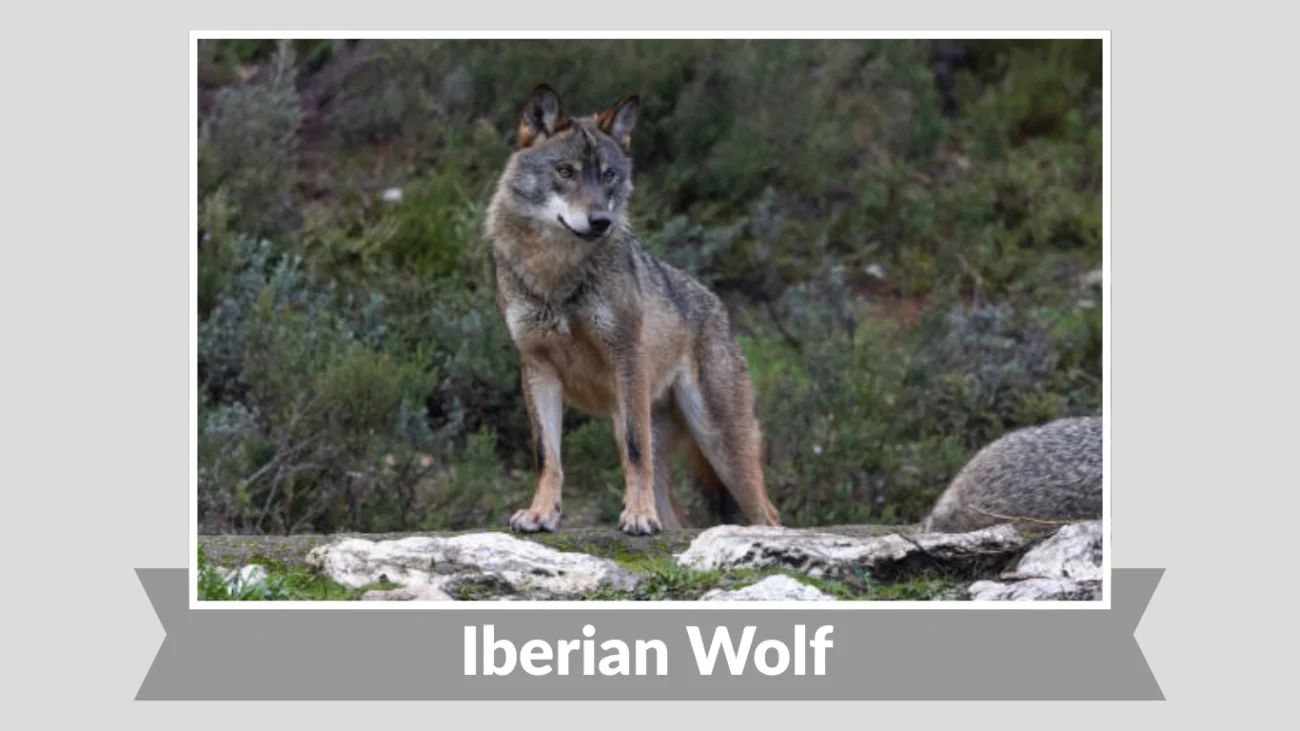
The Iberian wolf is a distinctive subspecies found in the Iberian Peninsula, primarily in northern Spain and parts of Portugal. It is known for its unique markings and strong adaptability to Mediterranean and mountainous habitats.
Identification
- Gray-brown coat with reddish tones
- Dark shoulder stripe and distinctive black-tipped tail
- White markings on the upper lips
- Medium-sized build with agile, long-legged form
Habitat
Iberian wolves inhabit mountainous regions, forests, scrublands, and rural agricultural areas. They prefer landscapes with varied terrain that support wild ungulates and provide cover from human disturbance. Their range has been reduced historically but is slowly expanding due to conservation efforts.
Behaviors
These wolves form structured packs and maintain well-defined territories. They are highly adaptive, often shifting hunting patterns based on seasonal prey availability. Vocal communication, scent marking, and coordinated movements are vital for navigating fragmented landscapes.
Diet
Their diet includes wild boar, deer, rabbits, and occasionally livestock. Iberian wolves are agile hunters capable of pursuing prey across rugged terrain. They may scavenge when needed, especially during winter or in areas with reduced prey populations.
10. Italian Wolf

The Italian wolf is a resilient subspecies native to the Apennine Mountains and parts of the Alps. Once nearly extinct, it has made a strong recovery thanks to strict protection and growing awareness of its ecological importance.
Identification
- Gray-brown coat with subtle reddish tones
- Dark stripe along the forelegs, a key identifying feature
- Slender build with long legs
- Narrow muzzle and expressive amber eyes
Habitat
Italian wolves inhabit mountainous forests, shrublands, and alpine regions. They prefer remote areas with dense vegetation that offer cover for hunting and denning. Their range has expanded northward into the Alps, where they continue to recolonize suitable territories.
Behaviors
They live in small, tight-knit packs with strong social structure. Italian wolves communicate through howls, scent marking, and body posture. They travel widely within rugged environments and often adjust pack size and movement patterns based on food availability.
Diet
Their diet consists mainly of wild boar, deer, chamois, and smaller mammals. In more agricultural areas, they may occasionally prey on livestock, especially when wild prey is limited. Italian wolves hunt cooperatively and adapt their strategies to mountainous terrain.
11. Northwestern Wolf

The northwestern wolf, also called the Mackenzie Valley wolf in some regions, is one of the largest wolf subspecies in the world. Native to northwestern North America, it is powerful, robust, and well adapted to cold climates and rugged landscapes.
Identification
- Large, muscular body—one of the biggest wolf types
- Thick coat ranging from gray and black to white
- Broad head with strong jaws
- Long legs built for stamina and traveling great distances
Habitat
Northwestern wolves inhabit forests, tundra, and mountainous regions across Alaska, western Canada, and parts of the northern United States. They prefer areas with abundant large prey and minimal human disturbance. Their wide range reflects exceptional environmental adaptability.
Behaviors
These wolves live in large packs with complex social hierarchies. They are highly territorial and travel extensively through vast wilderness zones. Their communication includes deep, resonant howls that can carry over long distances, as well as scent marking and body language.
Diet
Their diet consists mainly of elk, moose, bison, deer, and occasionally smaller mammals. Due to their size and strength, northwestern wolves excel at cooperative hunting and are capable of taking down the largest prey of any wolf subspecies. They may also scavenge during harsh winters.
12. Eastern Wolf

The eastern wolf, also known as the Algonquin wolf, is a medium-sized wolf native to eastern Canada. It is genetically distinct from both gray wolves and coyotes, often exhibiting characteristics of both due to historical hybridization.
Identification
- Tawny, gray, or reddish-brown coat
- Slim build with long legs
- Narrow muzzle and coyote-like facial features
- Smaller than gray wolves but larger than coyotes
Habitat
Eastern wolves inhabit mixed forests, lakeshore regions, and dense woodlands primarily in Ontario and Quebec. Algonquin Provincial Park is one of their strongholds. They prefer areas with abundant deer and minimal human disturbance.
Behaviors
These wolves form small packs and maintain clearly defined territories. They use howling extensively for communication and are known for their shy, elusive nature. Eastern wolves often travel long distances while tracking prey across forested landscapes.
Diet
Their diet consists mainly of white-tailed deer, beavers, and smaller mammals. Eastern wolves are adaptable hunters and may use stalking, ambushing, or cooperative pack strategies depending on the prey and environment. They may also scavenge when necessary.
13. Red Wolf
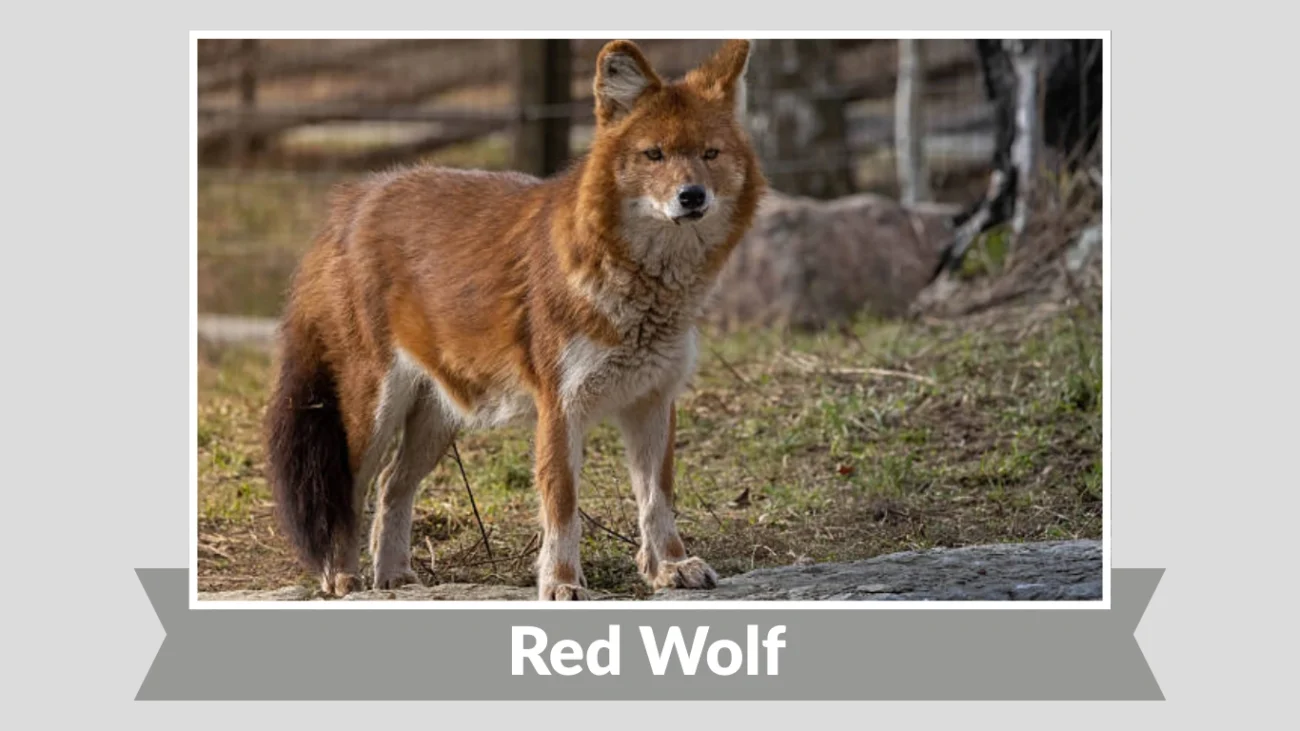
The red wolf is one of the world’s most endangered canids, native to the southeastern United States. It is known for its reddish coat and intermediate size between gray wolves and coyotes. Conservation programs continue to focus on restoring its fragile population.
Identification
- Reddish-brown fur with gray and black shading
- Slender body and long legs
- Large ears and narrow muzzle
- Slightly smaller than gray wolves but larger than coyotes
Habitat
Red wolves historically inhabited forests, swamps, and coastal prairies across the southeastern U.S. Today, their wild range is limited mainly to protected areas in North Carolina. They prefer mixed habitats with dense cover and access to small and medium-sized prey.
Behaviors
Red wolves typically form small family groups. They are shy, elusive, and primarily nocturnal, reducing contact with humans. Their communication includes howls, whines, and scent marking. They maintain territories through regular patrolling and cooperative pack structure.
Diet
Their diet includes rabbits, rodents, raccoons, and occasionally deer. Red wolves often use ambush tactics and quick chases, reflecting their lighter, more agile build. They also scavenge opportunistically, making use of available carrion when prey is scarce.
14. Tundra Wolf
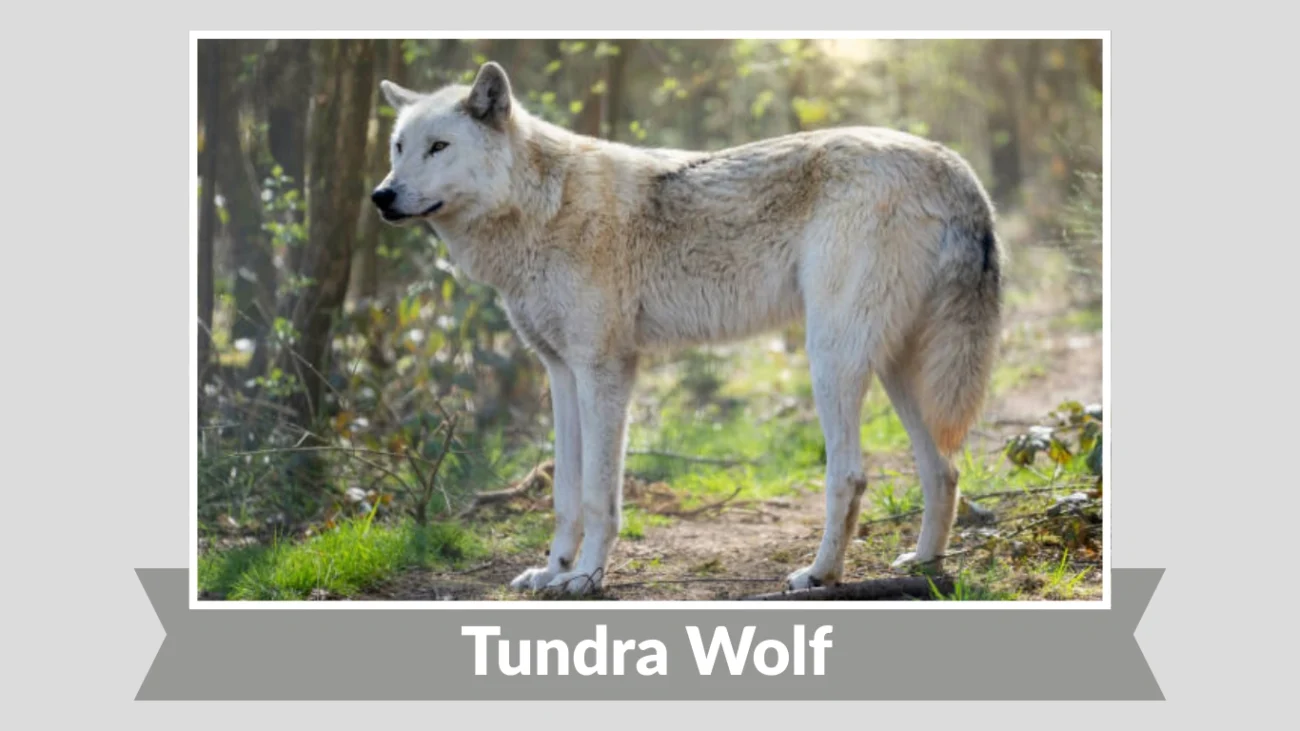
The tundra wolf is a large, cold-adapted subspecies found across northern Russia and parts of Siberia. It thrives in expansive, treeless landscapes where extreme weather and long winters shape its behavior and survival strategies.
Identification
- Thick, pale gray to white coat for cold climates
- Large, robust body with long legs
- Broad head and powerful jaws
- Dense undercoat for insulation in freezing temperatures
Habitat
Tundra wolves inhabit Arctic tundra, boreal edges, and vast open plains of Siberia and northeastern Russia. They survive in regions with harsh winters, minimal tree cover, and abundant migratory prey such as reindeer.
Behaviors
They often form large packs capable of traveling great distances while tracking migrating herds. Tundra wolves rely heavily on endurance, coordination, and strong social bonds. Their howls carry across open landscapes, helping maintain pack cohesion over large areas.
Diet
Their diet consists mainly of reindeer, Arctic hares, and small mammals. They may also scavenge carcasses left by natural die-offs or harsh weather. Cooperative hunting allows them to bring down large prey critical for surviving long, resource-scarce winters.
15. Steppe Wolf
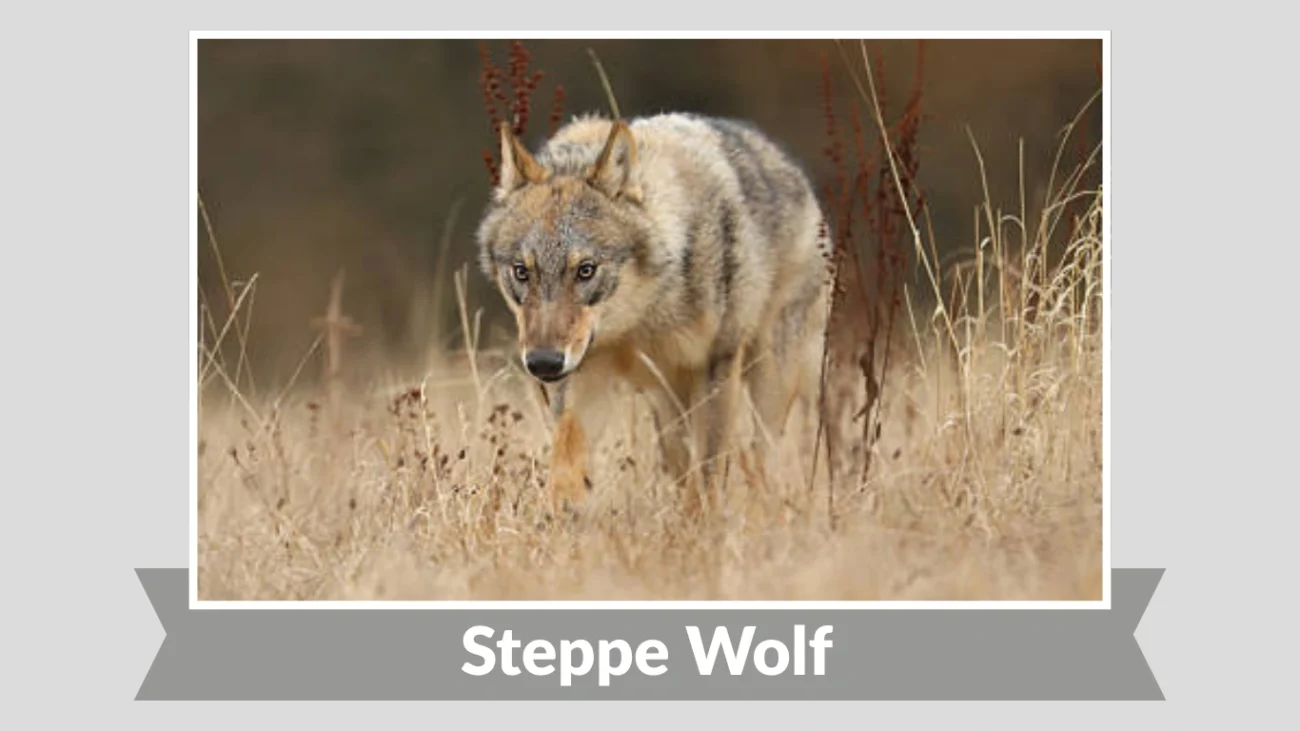
The steppe wolf is a medium-sized wolf subspecies native to the vast grasslands and open plains of Central Asia and Eastern Europe. Its adaptability to open terrain and variable climates has allowed it to persist despite habitat fragmentation.
Identification
- Light gray to sandy-colored coat
- Slender build suited for long-distance travel
- Narrow face with sharp features
- Shorter fur in summer, thicker coat in winter
Habitat
Steppe wolves inhabit grasslands, open plains, semi-deserts, and agricultural regions. They are found across Kazakhstan, Russia, Ukraine, and other parts of Central Asia. These wolves thrive in ecosystems with wide visibility and expansive hunting grounds.
Behaviors
They typically form small to medium-sized packs, adjusting their group size based on prey availability. Steppe wolves are highly mobile and may migrate seasonally. Their communication includes howling, scent marking, and coordinated patrols across open terrain.
Diet
Their diet includes saiga antelope, rodents, hares, and various small mammals. They may also prey on livestock in farming regions, leading to frequent human–wolf conflicts. Steppe wolves use speed and endurance to pursue fast-moving prey across open landscapes.
16. Mackenzie Valley Wolf
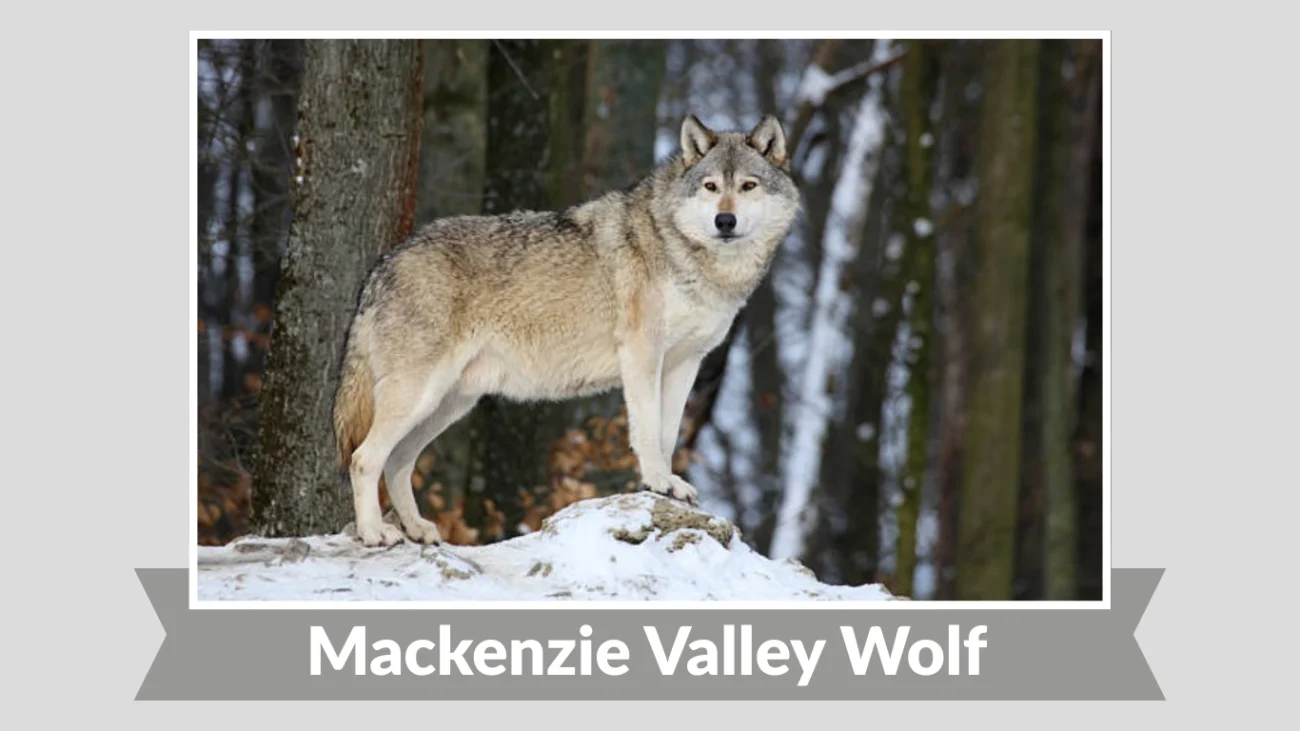
The Mackenzie Valley wolf, often considered one of the largest wolf subspecies, is native to the Mackenzie River region of Canada. Renowned for its strength and impressive size, it thrives in cold, rugged northern environments.
Identification
- Very large, muscular body
- Coat ranges from black and gray to nearly white
- Broad skull and powerful jaws
- Long legs built for traveling vast distances
Habitat
These wolves inhabit boreal forests, tundra regions, and mountainous terrain across the Northwest Territories, Yukon, and Alaska. They prefer remote landscapes with abundant large prey and minimal human interference.
Behaviors
Mackenzie Valley wolves form strong, cooperative packs with well-defined hierarchies. They are highly territorial and travel long distances when following migratory herds. Their communication includes deep howls, scent marking, and coordinated group behavior.
Diet
Their diet primarily consists of moose, caribou, bison, and deer. Due to their size and strength, these wolves are capable of taking down exceptionally large prey. They also scavenge when necessary, particularly during harsh winters.
17. Vancouver Island Wolf

The Vancouver Island wolf is a coastal-adapted wolf found primarily on Vancouver Island in British Columbia, Canada. Known for its unique marine-influenced lifestyle and elusive nature, it is smaller than many mainland wolves.
Identification
- Slender build with medium-sized frame
- Fur ranges from cream and gray to darker shades
- Narrow face with long legs and agile body
- Adaptations suited for coastal forests and shorelines
Habitat
These wolves inhabit temperate rainforests, remote coastal areas, and rugged shorelines. Their territory often includes beaches and marine environments where they search for food. Limited human presence on much of the island supports their survival.
Behaviors
Vancouver Island wolves often form small packs and are highly secretive. They are excellent swimmers, traveling between islands in search of food. Their communication includes howling and scent marking, but they are less vocal than many mainland wolves.
Diet
Their diet is distinctive compared to most wolf subspecies, including salmon, seals, marine carcasses, deer, and small mammals. Seasonal salmon runs are especially important. These wolves skillfully blend terrestrial and marine hunting strategies.
18. British Columbian Wolf

The British Columbian wolf is a robust, versatile subspecies native to the coastal and inland regions of British Columbia. It is known for its thick coat, adaptability, and strong pack structure, thriving in both forested and mountainous areas.
Identification
- Thick, dense fur in shades of gray, black, or brown
- Medium-to-large build with sturdy frame
- Broad head and expressive amber-to-yellow eyes
- Bushy tail and strong legs suited for rugged terrain
Habitat
British Columbian wolves inhabit coastal rainforests, mountain valleys, and inland forests. They prefer remote, densely wooded areas with abundant prey such as deer and elk. Their distribution often overlaps with rugged, wet environments typical of Canada’s Pacific Northwest.
Behaviors
These wolves live in well-organized packs and maintain strong territorial boundaries. They use howls, scent marking, and coordinated movement to navigate dense forests. Their pack dynamics emphasize cooperation, especially when hunting large prey.
Diet
Their diet includes deer, elk, mountain goats, and small mammals. British Columbian wolves may also scavenge and occasionally exploit marine resources along coastal edges. Cooperative hunting helps them secure food in challenging, forested landscapes.
19. Alexander Archipelago Wolf

The Alexander Archipelago wolf is a coastal, forest-dwelling wolf native to the islands of southeastern Alaska. It is genetically distinct and known for its reliance on marine resources, lush forests, and island ecosystems.
Identification
- Medium-sized wolf with slender, agile build
- Coat colors vary from black to gray and brown
- Often darker than many mainland wolves
- Long legs and narrow face adapted for forest movement
Habitat
These wolves inhabit temperate rainforests, islands, and rugged coastal landscapes throughout the Alexander Archipelago. Dense vegetation, steep terrain, and island isolation shape their behavior and lifestyle. Their range depends heavily on salmon-rich waterways and deer populations.
Behaviors
Alexander Archipelago wolves typically form small packs and are highly secretive. They rely on swimming to travel between islands and are excellent navigators of dense forests. Communication includes subtle howls, scent marking, and coordinated movement within limited island territories.
Diet
Their diet is unique, relying heavily on Sitka black-tailed deer and salmon. They also eat small mammals, birds, and marine carrion. Seasonal salmon runs are a major food source, making them one of the most marine-influenced wolf populations.
20. Labrador Wolf

The Labrador wolf is a subspecies native to Labrador and parts of northern Quebec in Canada. Known for its adaptability to cold climates and rugged terrain, it maintains a stable presence in remote boreal regions.
Identification
- Thick gray or white coat suited for harsh winters
- Medium-to-large build with long legs
- Broad face and strong muzzle
- Dense underfur providing excellent insulation
Habitat
Labrador wolves inhabit boreal forests, tundra edges, rocky plateaus, and remote wilderness areas with minimal human contact. Their terrain often includes long winters, deep snow, and vast territories that require endurance and mobility.
Behaviors
These wolves typically form small to medium-size packs with strong social bonds. They are territorial and travel great distances in search of prey, often following migratory herds. Their communication includes howling, scent marking, and close pack coordination.
Diet
Their diet consists of caribou, moose, Arctic hares, ptarmigan, and smaller mammals. Labrador wolves rely on endurance-based hunting strategies, often tracking prey across long distances and deep snow. They also scavenge when conditions become challenging.
21. Greenland Wolf

The Greenland wolf is a rare, remote-dwelling subspecies native to Greenland and the High Arctic. It is highly adapted to extreme cold, scarcity of prey, and long periods of darkness, making it one of the most resilient wolf types.
Identification
- Pale gray to nearly white coat for Arctic camouflage
- Medium-sized, lean but hardy build
- Long legs suited for travel across snow and ice
- Thick fur and insulating undercoat for survival in subzero temperatures
Habitat
Greenland wolves inhabit Arctic tundra, icy plains, and remote mountainous regions of northern Greenland and nearby Arctic islands. Their range is defined by minimal human presence, extreme cold, and vast, open landscapes where prey is scarce.
Behaviors
They usually form small packs due to limited food resources. Greenland wolves travel great distances, sometimes hundreds of miles, following migrating prey or searching for carrion. They communicate through howls, scent marking, and coordinated movement across frozen terrain.
Diet
Their diet consists mainly of muskoxen, Arctic hares, lemmings, and occasional seal or marine carrion. Greenland wolves rely heavily on scavenging, endurance, and careful conservation of energy to survive in one of the harshest environments on Earth.
FAQs
1. How many wolf species exist in the world?
There is only one true wolf species, the gray wolf (Canis lupus), but it has many subspecies—over 30 recognized variations. In addition, there is the red wolf (Canis rufus), which some classify as a separate species. Most “types” of wolves refer to regional subspecies rather than entirely different species.
2. What is the rarest type of wolf?
The red wolf is considered the rarest, with only a small number surviving in the wild, mostly in protected areas of North Carolina. Other extremely rare subspecies include the Mexican wolf and Greenland wolf, both of which have very small, fragile populations.
3. Why do wolf subspecies vary so much in size and color?
Wolves adapt to their environments over thousands of years. Cold climates favor large bodies and thick fur, while desert regions produce smaller wolves with thinner coats. Habitat, prey availability, and temperature all influence the size, color, and overall build of each subspecies.
4. Do all wolves live in packs?
Most wolves live in family-based packs, but not all subspecies form large groups. Wolves in deserts or high-altitude regions often travel in pairs or small packs because prey is scarce. Pack size depends heavily on habitat, food availability, and regional behavior patterns.
5. What do wolves eat in the wild?
Wolves are carnivores and primarily hunt large hoofed animals like deer, elk, and moose. Some coastal or Arctic subspecies eat salmon, seals, or carrion. When prey is scarce, wolves switch to smaller animals like rabbits or rodents, showcasing their opportunistic feeding behavior.


