










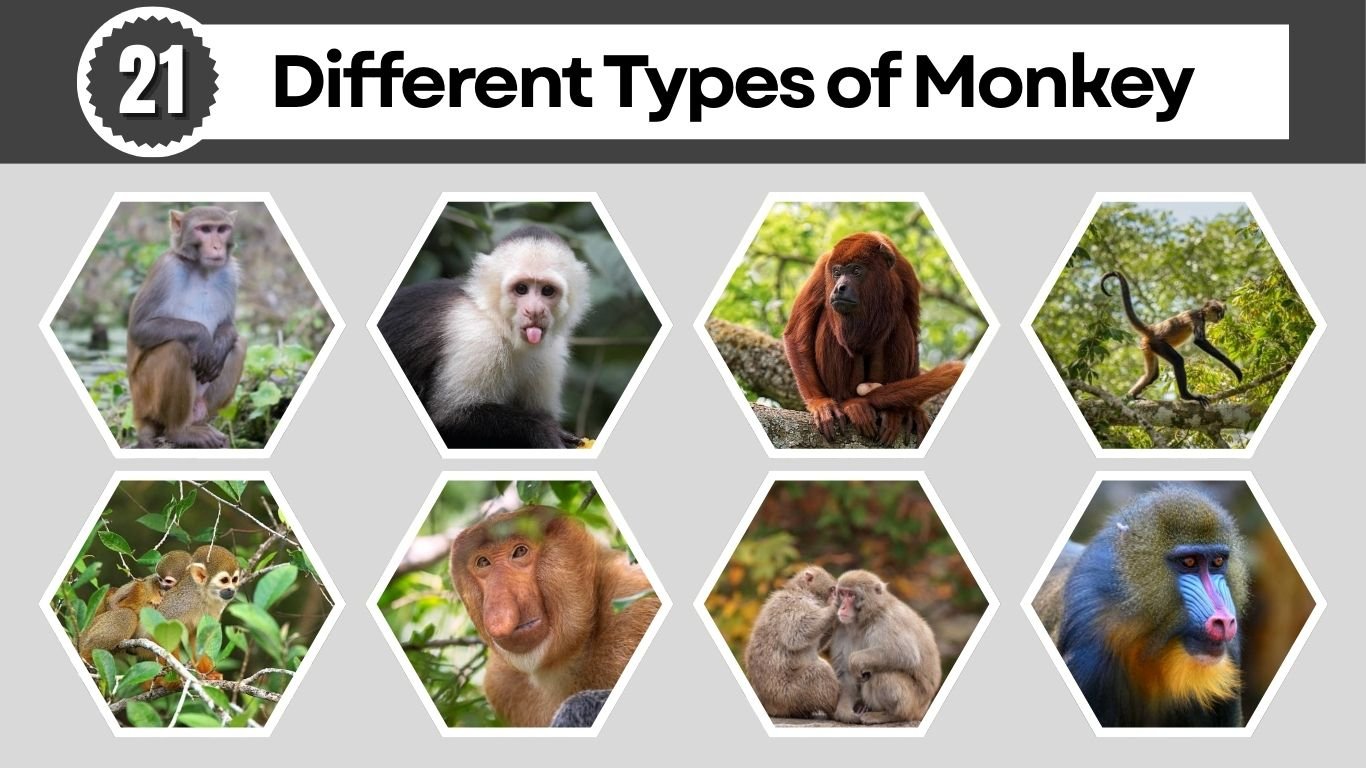
Monkeys are intelligent, social, and highly adaptable primates found across Africa, Asia, and the Americas. They range from tiny, fast-moving marmosets to large, powerful baboons, each showing unique behaviors, diets, and survival strategies. Some monkeys spend nearly all their lives in trees, while others thrive on open grasslands or near human settlements. Understanding the different types of monkeys helps reveal how diverse primates are and how they have evolved to live in many environments around the world.
1. Rhesus Monkey
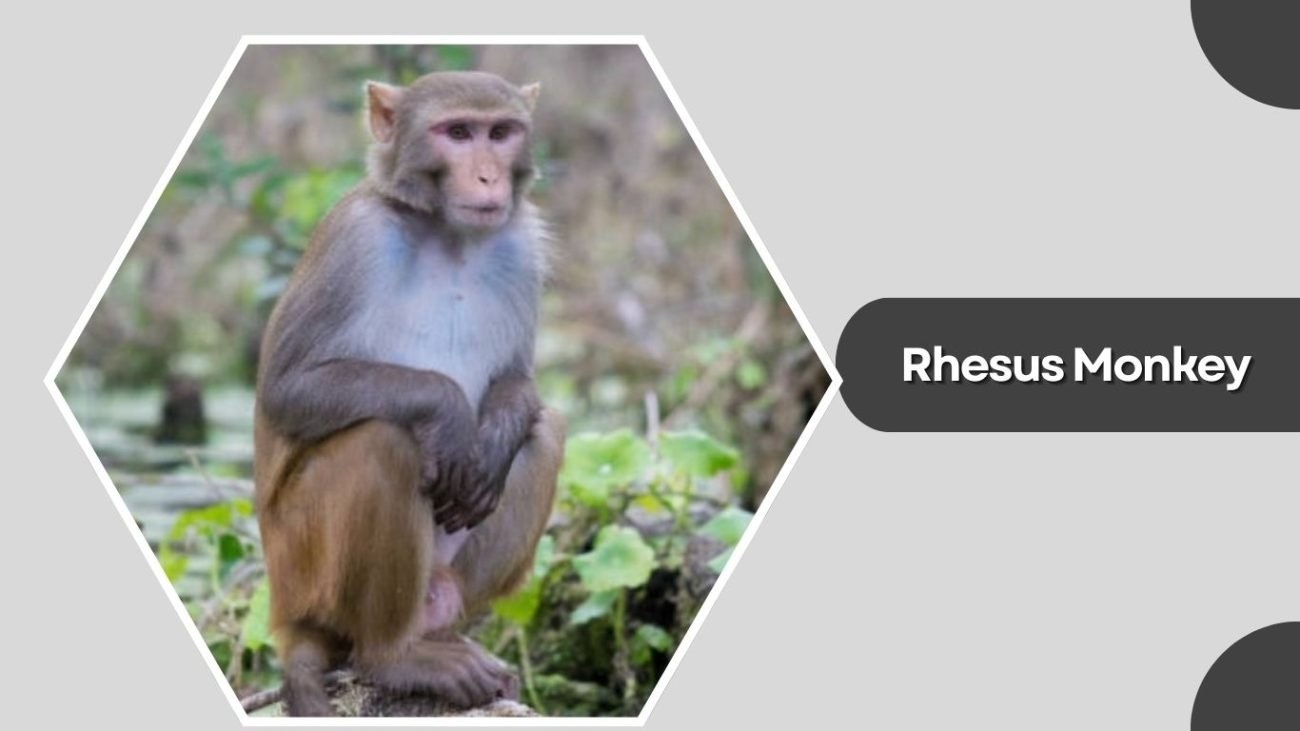
The rhesus monkey is one of the most widespread and well-known monkey species in the world. It is highly adaptable and can live in forests, grasslands, mountains, and even busy cities. Native to South and Southeast Asia, the rhesus monkey is famous for its intelligence, strong social structure, and close association with humans. Its ability to survive in many environments has made it one of the most successful primates on Earth.
Identification
- Scientific name: Macaca mulatta
- Common name: Rhesus monkey
- Fur color: Brown to grey
- Face: Pink, mostly hairless face
- Tail: Medium length
- Body type: Medium-sized, strong-limbed monkey
- Average length: 45–64 cm (body only)
- Native range: South and Southeast Asia
Habitat
Rhesus monkeys live in a wide variety of environments, including tropical forests, mangroves, grasslands, and mountainous regions. They are also commonly found near temples, towns, and agricultural areas, where they interact closely with humans. They can survive from sea level up to high elevations in the Himalayas, showing remarkable tolerance to both heat and cold.
Diet
Rhesus monkeys are omnivores and eat fruits, seeds, leaves, bark, insects, eggs, and small animals. In human-dominated areas, they often feed on crops, garbage, and handouts. Their flexible diet helps them survive seasonal food shortages and adapt easily to new environments.
Lifecycle & Lifespan
Female rhesus monkeys usually give birth to one infant after a gestation period of about 165 days. Babies cling to their mother’s belly and later ride on her back. Young monkeys grow quickly and become independent within a year. In the wild, rhesus monkeys typically live 20–25 years, while in captivity they may live over 30 years.
2. Capuchin Monkey
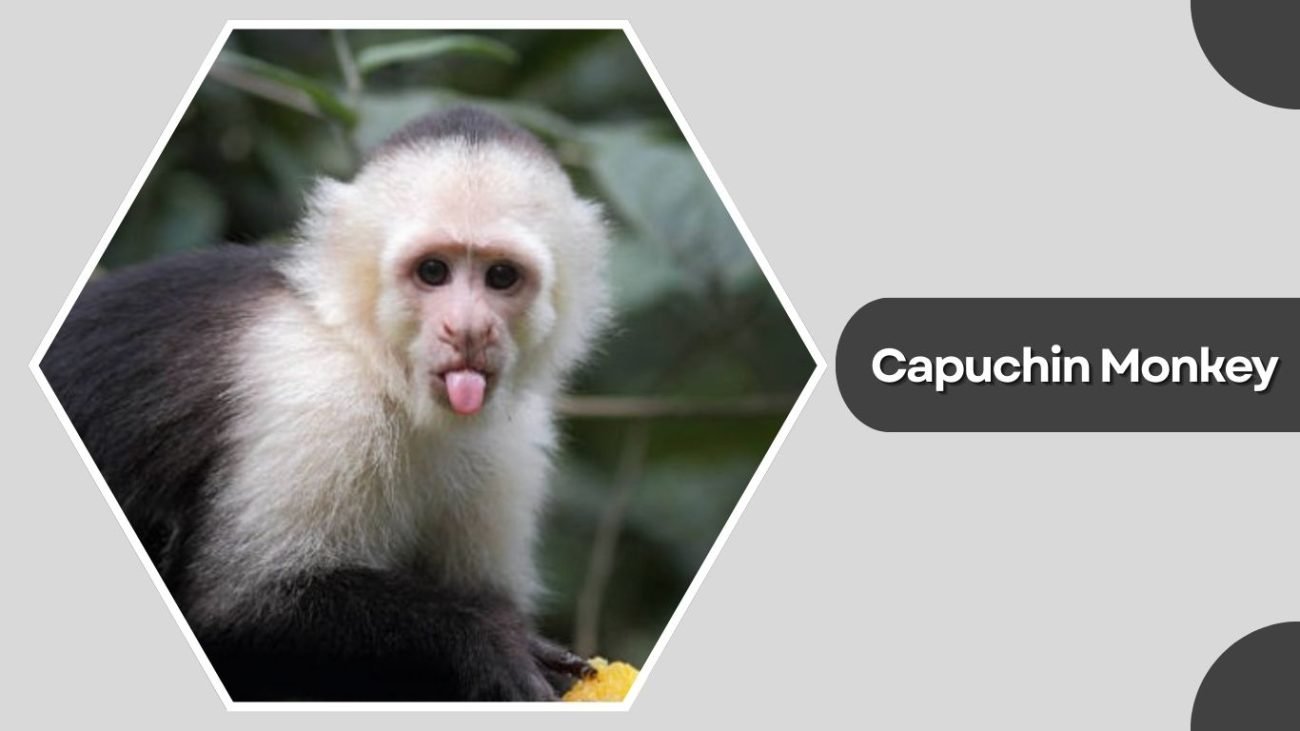
Capuchin monkeys are small, highly intelligent New World monkeys known for their curious nature and problem-solving skills. They are famous for using tools, such as stones to crack nuts and sticks to reach insects. Native to Central and South America, capuchins are active during the day and live in social groups. Their expressive faces and agile movements make them one of the most studied monkey species in the world.
Identification
- Scientific name: Cebus and Sapajus species
- Common name: Capuchin monkey
- Fur color: Black, brown, or cream with lighter face
- Face: Rounded with expressive eyes
- Tail: Long, often prehensile
- Body type: Small to medium, slender build
- Average length: 30–56 cm (body only)
- Native range: Central and South America
Habitat
Capuchin monkeys live in tropical rainforests, dry forests, mangroves, and sometimes mountainous regions. They spend most of their time in trees but frequently come down to the ground to search for food. Their wide habitat range allows them to live from sea level forests to higher elevation woodlands, as long as food and trees are available.
Diet
Capuchins are omnivores and eat a varied diet that includes fruits, nuts, seeds, leaves, insects, bird eggs, small reptiles, and amphibians. They are skilled foragers and often manipulate objects to uncover hidden food. Some species are known to rub plants or insects on their fur, possibly to repel parasites.
Lifecycle & Lifespan
Female capuchins usually give birth to a single infant after a gestation period of about 150–160 days. Babies cling tightly to their mother and are cared for by other group members as they grow. Young capuchins learn survival skills by watching adults. In the wild, capuchins typically live 15–25 years, while in captivity they can live over 40 years.
3. Howler Monkey
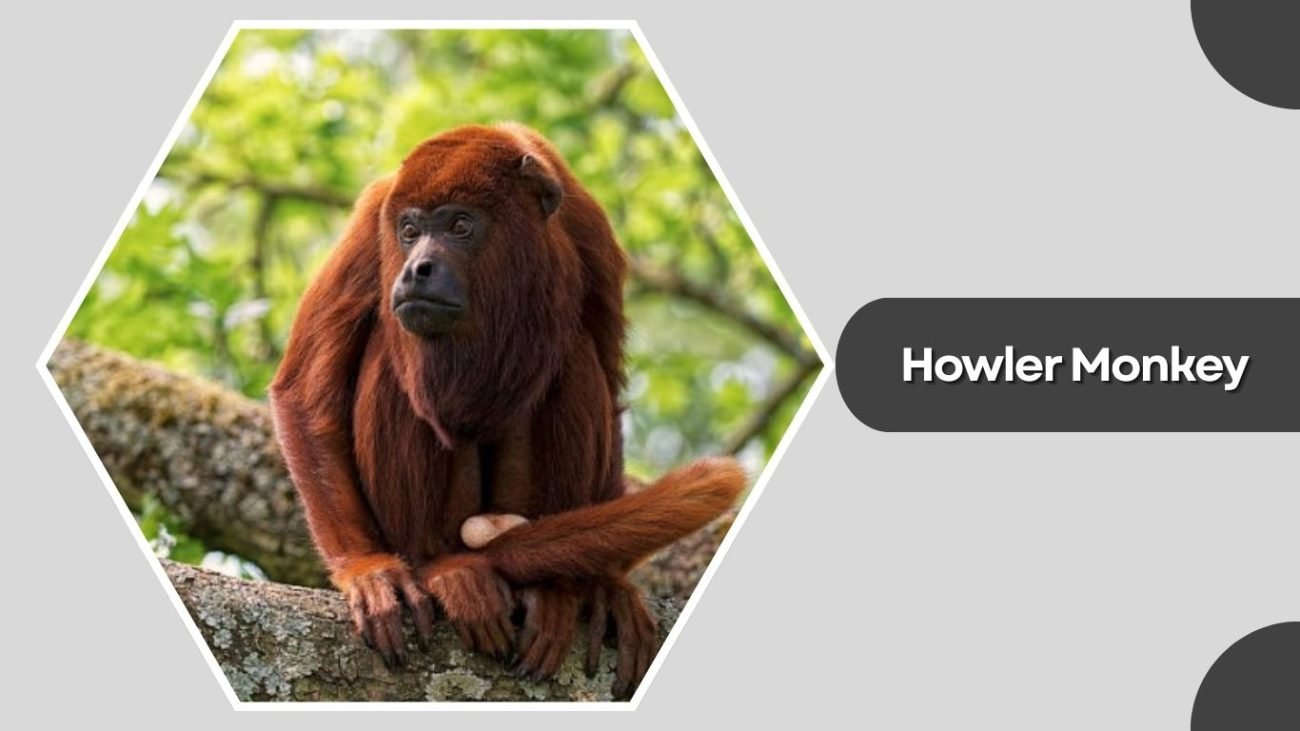
Howler monkeys are among the loudest land animals in the world, famous for their deep, roaring calls that can travel several kilometers through dense forest. These calls help groups communicate and defend territory. Native to Central and South America, howler monkeys spend most of their lives in the treetops, moving slowly and feeding mainly on leaves and fruit.
Identification
- Scientific name: Alouatta species
- Common name: Howler monkey
- Fur color: Black, brown, or reddish
- Body type: Large, heavy-bodied monkey
- Tail: Long, strong, prehensile tail
- Throat: Enlarged hyoid bone for loud calls
- Average length: 50–70 cm (body only)
- Native range: Central and South America
Habitat
Howler monkeys live in tropical rainforests, cloud forests, and river-edge woodlands. They are highly arboreal and rarely come to the ground. Their powerful tails act as a fifth limb, allowing them to hang, climb, and feed high in the canopy. Howlers prefer tall forests with abundant leaves and fruiting trees.
Diet
Howler monkeys mainly eat leaves, young shoots, flowers, and fruit. Because leaves are hard to digest, they have a specialized stomach and move slowly to conserve energy. Their diet changes seasonally, with more fruit eaten when available and more leaves during scarce periods.
Lifecycle & Lifespan
Female howler monkeys give birth to one infant after a gestation period of about six months. Babies cling to their mother’s belly before riding on her back. Young howlers learn to climb and feed over several months. In the wild, howler monkeys usually live 15–20 years, while in captivity they may live longer.
4. Spider Monkey
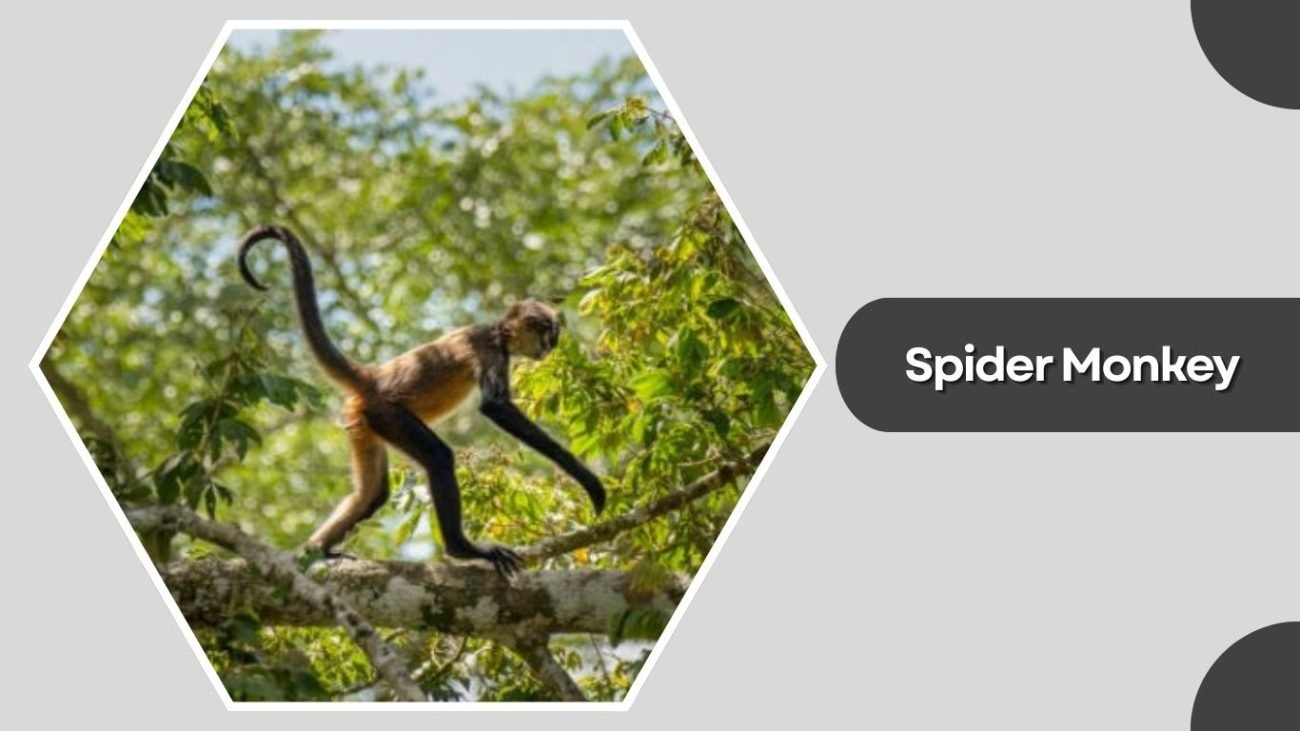
Spider monkeys are slender, long-limbed monkeys named for their spider-like appearance. They are excellent climbers and spend almost their entire lives in the forest canopy. Known for their intelligence and social nature, spider monkeys use their long prehensile tails like an extra arm. They are native to the tropical forests of Central and South America.
Identification
- Scientific name: Ateles species
- Common name: Spider monkey
- Fur color: Black, brown, or golden
- Body type: Slim body with very long arms and legs
- Tail: Extremely long, fully prehensile tail
- Face: Often dark, sometimes hairless
- Average length: 42–63 cm (body only)
- Native range: Central and South America
Habitat
Spider monkeys live in tropical rainforests, lowland forests, and sometimes mangrove forests. They prefer tall, dense canopies where they can swing easily between branches. These monkeys rarely come to the ground, relying on trees for travel, feeding, and sleeping. Large, continuous forests are essential for their survival.
Diet
Spider monkeys are mainly frugivores, meaning most of their diet consists of fruit. They also eat leaves, flowers, seeds, insects, and honey. Their long arms and gripping tails help them reach food on thin branches that other monkeys cannot access. They often travel long distances each day in search of ripe fruit.
Lifecycle & Lifespan
Female spider monkeys usually give birth to one infant after a gestation period of about 226–232 days. Babies cling to their mother for several months and are slowly introduced to solid food. Young spider monkeys depend on their mothers for up to two years. In the wild, they typically live 20–25 years, and longer in captivity.
5. Squirrel Monkey
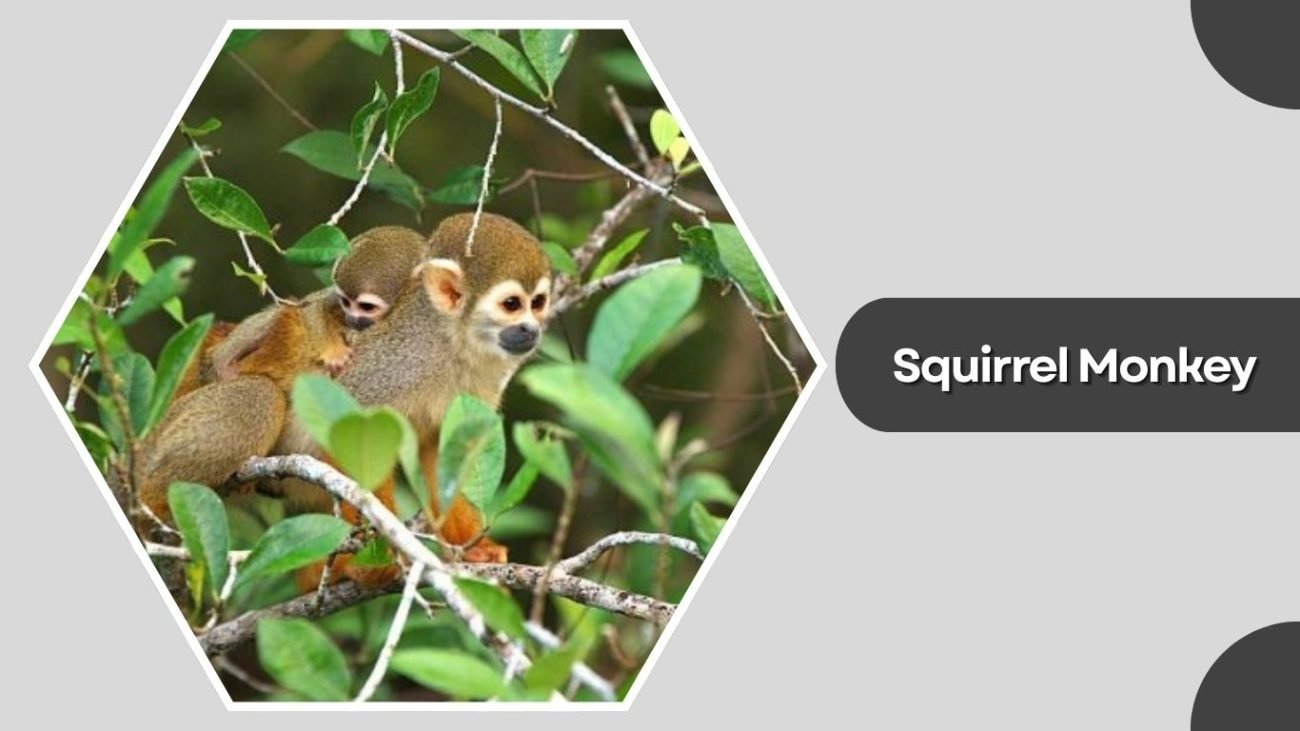
Squirrel monkeys are small, fast-moving monkeys known for their energetic behavior and large, expressive eyes. They get their name from their squirrel-like size and quick movements through the trees. Native to Central and South America, squirrel monkeys live in large social groups and are active during the day, constantly traveling through forest canopies in search of food.
Identification
- Scientific name: Saimiri species
- Common name: Squirrel monkey
- Fur color: Olive, yellow, and grey with white face
- Body type: Small, slender monkey
- Face: White mask-like markings around eyes and mouth
- Tail: Long, thin, not fully prehensile
- Average length: 25–35 cm (body only)
- Native range: Central and South America
Habitat
Squirrel monkeys live in tropical rainforests, mangroves, and river-edge forests. They prefer lower and middle forest levels, where insects are abundant. These monkeys are highly social and often form groups of 20 to over 100 individuals. Dense vegetation provides safety from predators and abundant feeding opportunities.
Diet
Squirrel monkeys are omnivores with a strong preference for insects. Their diet includes insects, spiders, fruits, flowers, nectar, bird eggs, and small vertebrates. Their sharp vision helps them locate tiny prey hidden among leaves and branches. Fruit becomes more important when insect numbers are low.
Lifecycle & Lifespan
Female squirrel monkeys usually give birth to one infant after a gestation period of about 150–170 days. Babies cling to their mother and are sometimes carried by other females in the group. Young monkeys grow quickly and become independent within a year. In the wild, squirrel monkeys typically live around 15–20 years, while in captivity they may live longer.
6. Proboscis Monkey
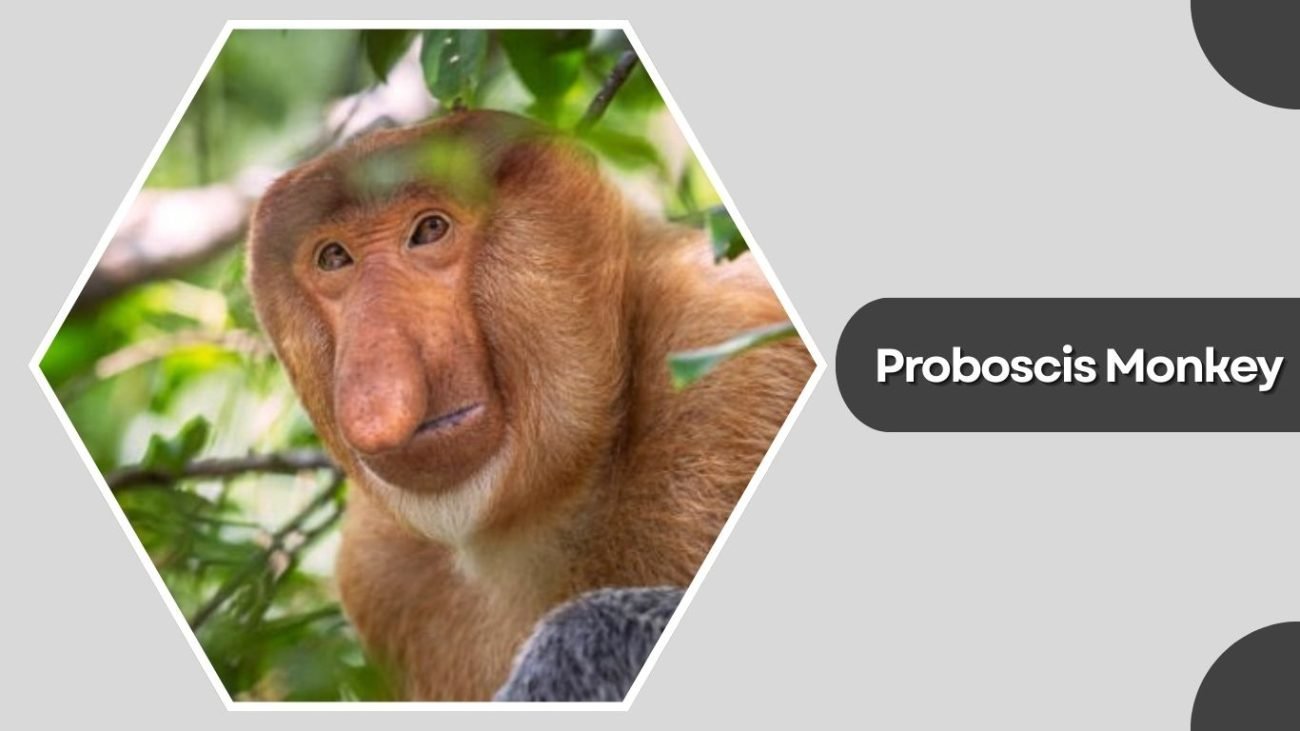
The proboscis monkey is one of the most distinctive monkeys in the world, easily recognized by the large, long nose of adult males. Native only to the island of Borneo, this monkey is an excellent swimmer and often lives near rivers, swamps, and mangrove forests. Proboscis monkeys are social animals that usually live in groups and are most active during the day.
Identification
- Scientific name: Nasalis larvatus
- Common name: Proboscis monkey
- Fur color: Reddish-brown body with grey limbs
- Nose: Very large, long nose in adult males
- Body type: Large, pot-bellied monkey
- Tail: Long, non-prehensile tail
- Average length: 53–76 cm (body only)
- Native range: Borneo
Habitat
Proboscis monkeys live in coastal mangroves, riverine forests, peat swamps, and lowland rainforests. They stay close to water and are strong swimmers, often crossing rivers to escape predators or find food. Tall trees near riverbanks are used for sleeping and resting. Their survival is closely linked to healthy wetland forests.
Diet
Proboscis monkeys are mainly leaf-eaters, feeding on young leaves, shoots, seeds, and unripe fruits. They also eat flowers and occasionally bark. Their large, multi-chambered stomach helps them digest tough plant material. They avoid sugary ripe fruits, which can upset their digestion.
Lifecycle & Lifespan
Female proboscis monkeys give birth to one infant after a gestation period of about 166 days. Babies are born with blue faces that darken as they grow. Mothers provide most of the care, though group members may interact with the young. In the wild, proboscis monkeys usually live around 13–15 years.
7. Japanese Macaque
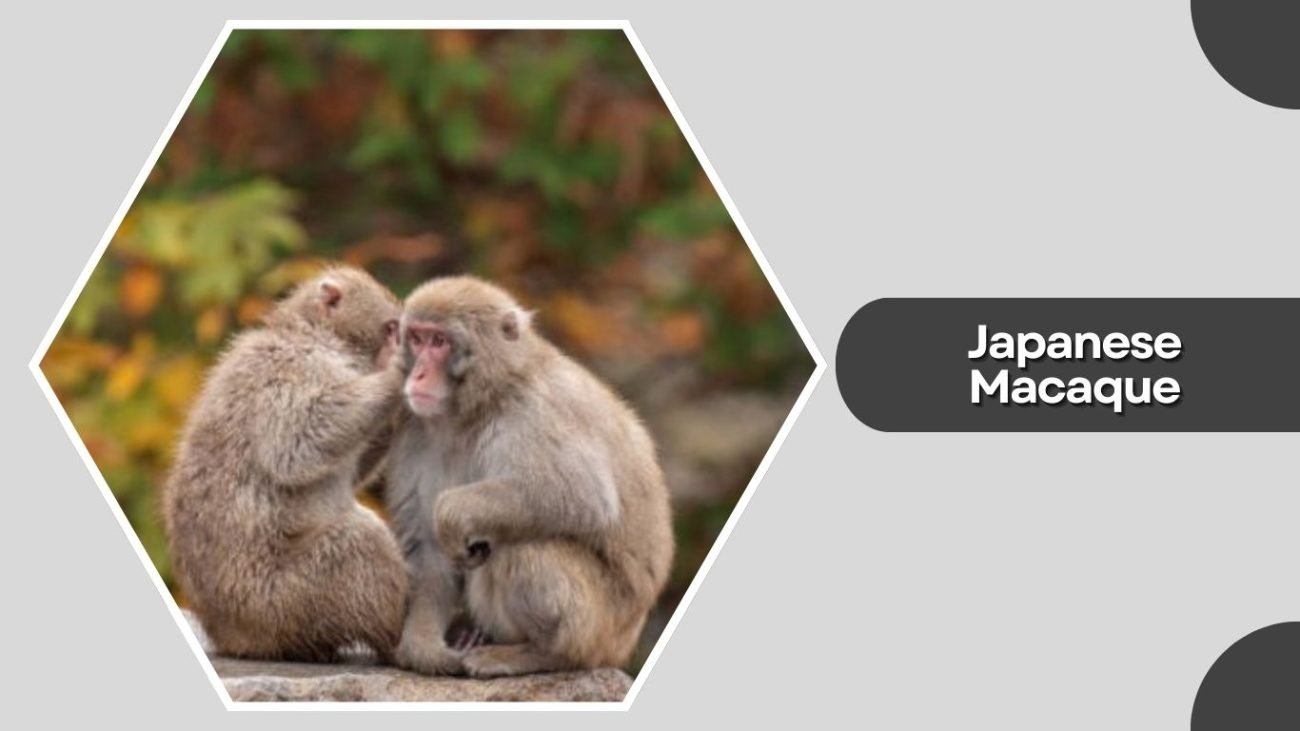
The Japanese macaque, often called the “snow monkey,” is famous for living in some of the coldest climates inhabited by any monkey. Native to Japan, it is well known for bathing in natural hot springs during winter. Japanese macaques are highly social, intelligent, and adaptable, forming complex group hierarchies.
Identification
- Scientific name: Macaca fuscata
- Common name: Japanese macaque
- Fur color: Thick grey-brown fur
- Face: Red, mostly hairless face
- Body type: Stocky, medium-sized monkey
- Tail: Short tail
- Average length: 47–60 cm (body only)
- Native range: Japan
Habitat
Japanese macaques live in a wide variety of habitats, including deciduous forests, evergreen forests, and mountainous regions. They can survive in snowy environments where winter temperatures drop well below freezing. Forests provide food, shelter, and sleeping sites, while hot springs in some areas offer warmth during harsh winters.
Diet
These macaques are omnivores and eat fruits, seeds, leaves, bark, flowers, insects, and small animals. They also forage for roots and coastal foods in some regions. Their diet changes with the seasons, allowing them to survive during winter when food is scarce.
Lifecycle & Lifespan
Female Japanese macaques give birth to one infant after a gestation period of about 170 days. Infants cling to their mother’s fur and are protected by the troop. Young macaques learn survival and social behaviors by observing adults. In the wild, Japanese macaques usually live around 20–25 years, and longer in captivity.
8. Mandrill
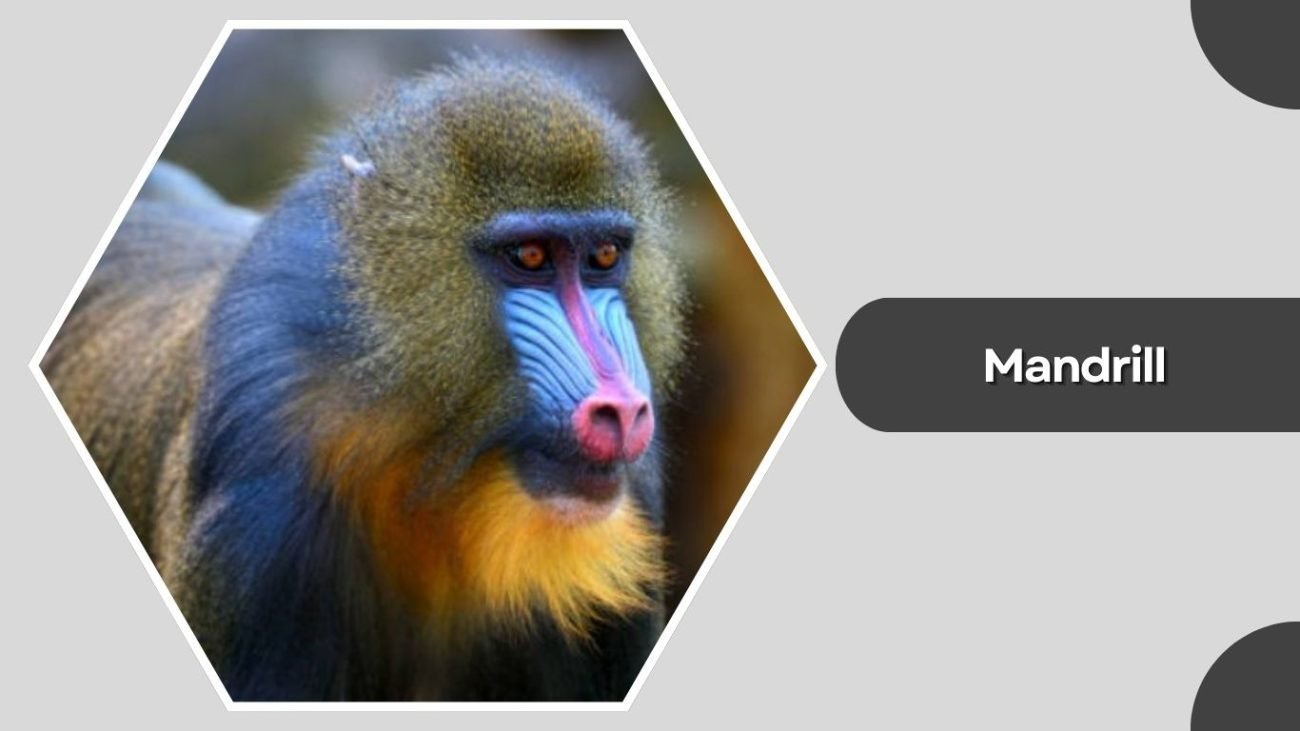
The mandrill is the largest and one of the most colorful monkey species in the world. It is famous for its bright blue and red facial ridges and vivid rear coloration. Native to Central Africa, mandrills are powerful, ground-dwelling monkeys that live in large social groups. Despite their bold appearance, they spend time both on the forest floor and in trees.
Identification
- Scientific name: Mandrillus sphinx
- Common name: Mandrill
- Fur color: Olive-brown with lighter underside
- Face: Bright blue and red ridges on the snout
- Body type: Large, muscular monkey
- Tail: Short tail
- Average length: 70–95 cm (body only)
- Native range: Central Africa
Habitat
Mandrills live mainly in tropical rainforests, but they are also found in secondary forests and bushy areas. They spend much of their time on the ground searching for food but sleep and take refuge in trees. Dense forests provide cover, fruiting trees, and protection from predators. Mandrills often form very large groups, sometimes numbering in the hundreds.
Diet
Mandrills are omnivores with a wide-ranging diet. They eat fruits, seeds, roots, leaves, fungi, insects, snails, and small vertebrates. Their strong jaws allow them to crack hard nuts and shells. They forage both on the forest floor and in trees, taking advantage of many different food sources.
Lifecycle & Lifespan
Female mandrills usually give birth to one infant after a gestation period of about 175 days. Babies cling to their mother and are carefully protected within the group. Young mandrills grow slowly and take several years to mature. In the wild, mandrills typically live around 20 years, with longer lifespans in captivity.
9. Baboon
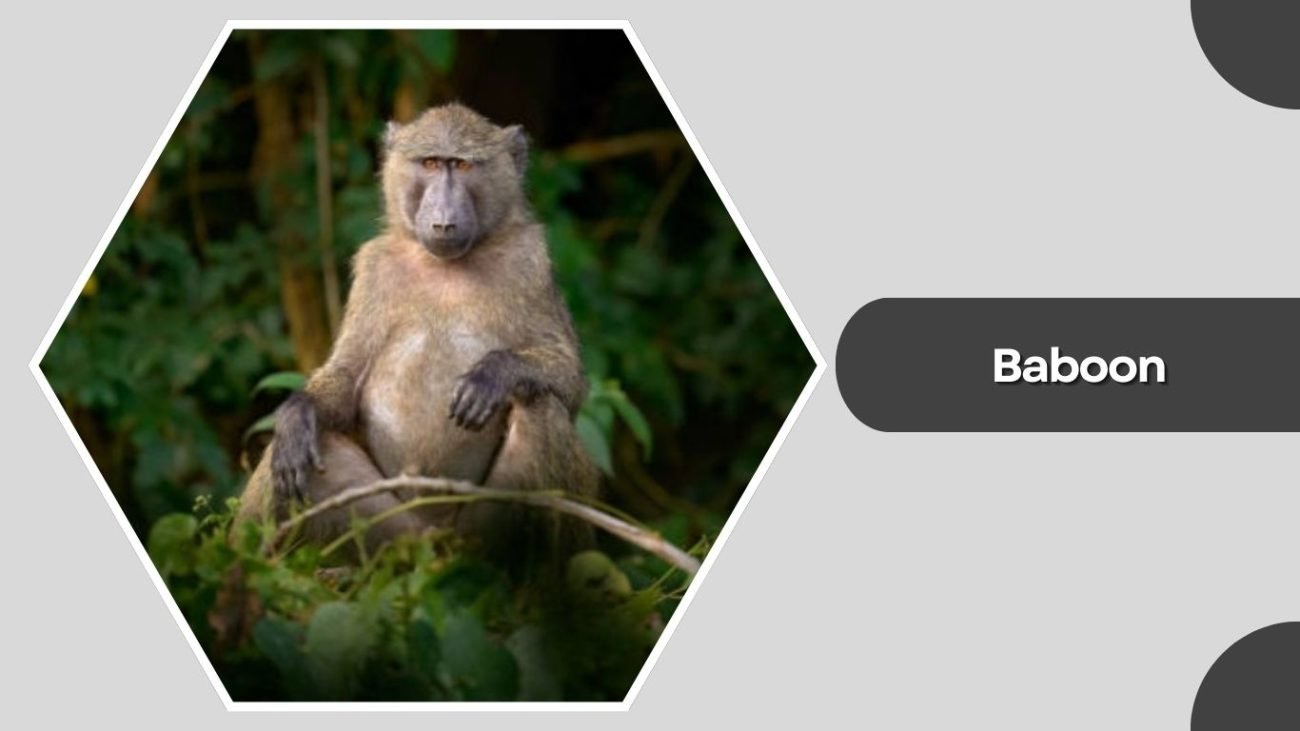
Baboons are large, powerful monkeys known for their long dog-like snouts, sharp teeth, and strong social structures. They are among the most widespread monkeys in Africa and are highly adaptable, living in many different environments. Baboons are intelligent, ground-dwelling primates that live in large troops and communicate using facial expressions, vocal sounds, and body language.
Identification
- Scientific name: Papio species
- Common name: Baboon
- Fur color: Brown, yellowish, or olive
- Face: Long, dog-like snout
- Body type: Large, muscular monkey
- Tail: Long, curved tail
- Average length: 50–86 cm (body only)
- Native range: Africa and parts of Arabia
Habitat
Baboons live in savannas, open woodlands, rocky hills, and forest edges. Unlike many monkeys, they spend much of their time on the ground, using trees mainly for sleeping and safety. Their ability to survive in dry, open environments makes them one of the most adaptable primates.
Diet
Baboons are omnivores and eat fruits, seeds, grasses, roots, insects, eggs, birds, and small mammals. They also scavenge and sometimes hunt cooperatively. Their flexible diet allows them to live in areas where food availability changes seasonally.
Lifecycle & Lifespan
Female baboons usually give birth to one infant after a gestation period of about six months. Infants cling to their mother’s belly and later ride on her back. Young baboons learn social rank and survival skills within the troop. In the wild, baboons typically live 20–30 years, and longer in captivity.
10. Vervet Monkey
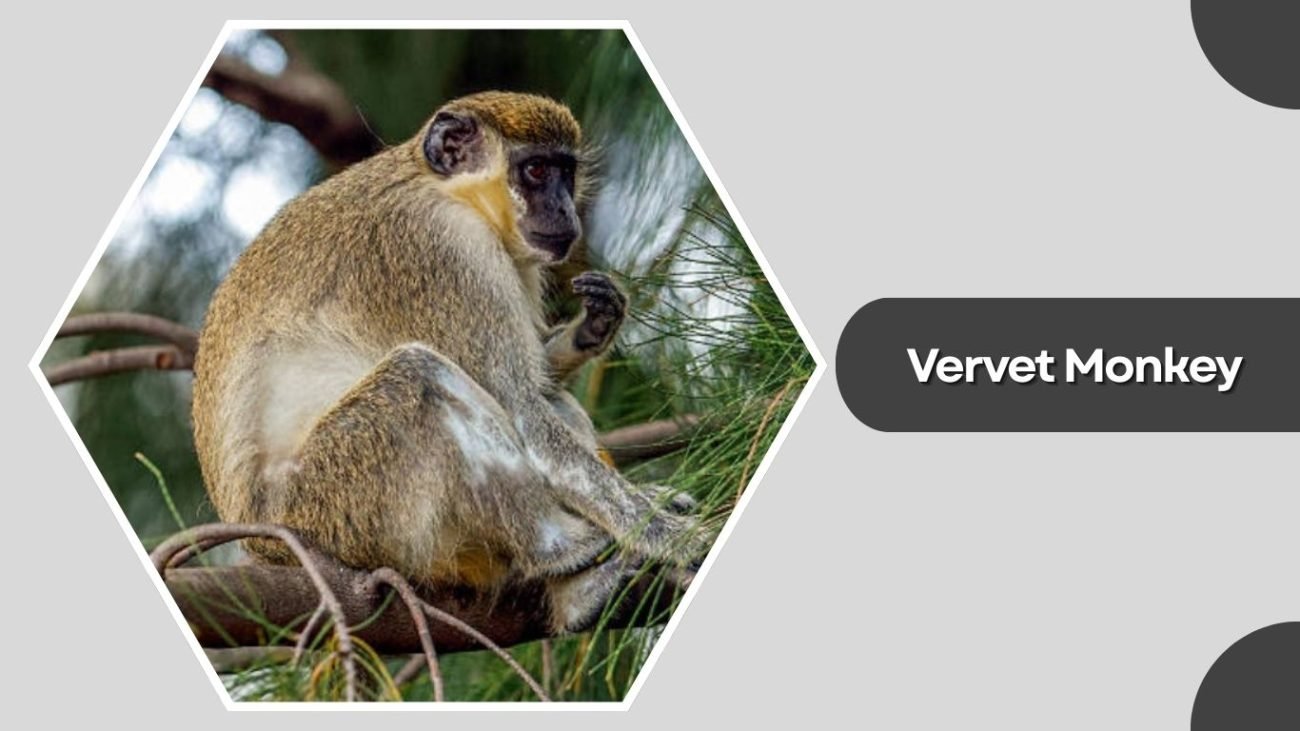
The vervet monkey is a small to medium-sized African monkey known for its grey fur, black face, and lively social behavior. It is highly adaptable and often lives close to humans, including in farms and urban areas. Vervet monkeys are intelligent, alert, and famous for their complex alarm calls used to warn group members about different predators.
Identification
- Scientific name: Chlorocebus pygerythrus
- Common name: Vervet monkey
- Fur color: Grey to olive
- Face: Black face with white fringe
- Body type: Slender, medium-sized monkey
- Tail: Long, non-prehensile tail
- Average length: 40–60 cm (body only)
- Native range: Eastern and southern Africa
Habitat
Vervet monkeys live in savannas, riverine forests, woodlands, and mountainous regions. They are often found near water sources and adapt easily to human-modified environments such as farms and villages. Trees are important for sleeping and escaping predators, while open ground is used for foraging.
Diet
Vervet monkeys are omnivores and eat fruits, flowers, leaves, seeds, insects, bird eggs, and small animals. In human areas, they may also feed on crops and scraps. Their varied diet supports their wide geographic distribution.
Lifecycle & Lifespan
Female vervet monkeys usually give birth to one infant after a gestation period of about 165 days. Infants cling closely to their mothers, and group members often help watch over them. Young vervets mature quickly and begin foraging on their own within a few months. In the wild, vervets generally live 12–20 years.
11. Golden Snub-nosed Monkey
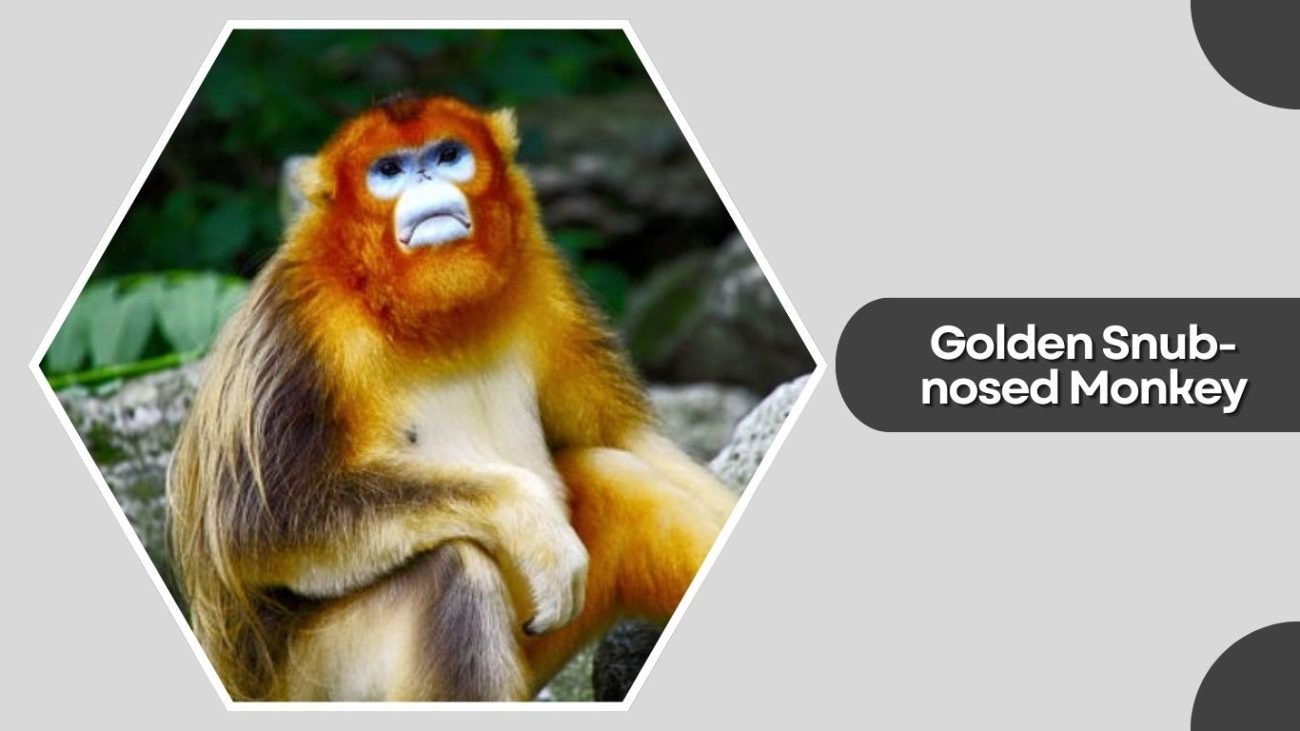
The golden snub-nosed monkey is a rare and striking primate known for its bright golden fur and upturned, almost noseless face. It lives in high-altitude mountain forests of central and southwestern China. These monkeys are well adapted to cold climates and often form large, complex social groups to survive harsh winters.
Identification
- Scientific name: Rhinopithecus roxellana
- Common name: Golden snub-nosed monkey
- Fur color: Golden-orange with darker limbs
- Face: Blue-white skin with upturned nose
- Body type: Medium-sized, thick-furred monkey
- Tail: Long, bushy tail
- Average length: 57–76 cm (body only)
- Native range: Central and southwestern China
Habitat
Golden snub-nosed monkeys inhabit temperate, mountainous forests at elevations between 1,500 and 3,400 meters. These forests include mixed coniferous and deciduous trees and experience cold, snowy winters. They rely heavily on forest canopies for movement, feeding, and protection from predators.
Diet
Their diet changes seasonally and includes leaves, bark, buds, fruit, seeds, and lichens. During winter, when food is scarce, they depend heavily on lichens and tree bark. Their complex digestive system allows them to process fibrous plant material efficiently.
Lifecycle & Lifespan
Females usually give birth to one infant after a gestation period of about 200 days. Infants cling to their mother’s chest and are carefully guarded by the group. Young monkeys develop slowly and depend on adults for several years. In the wild, golden snub-nosed monkeys are believed to live around 20–25 years.
12. Colobus Monkey
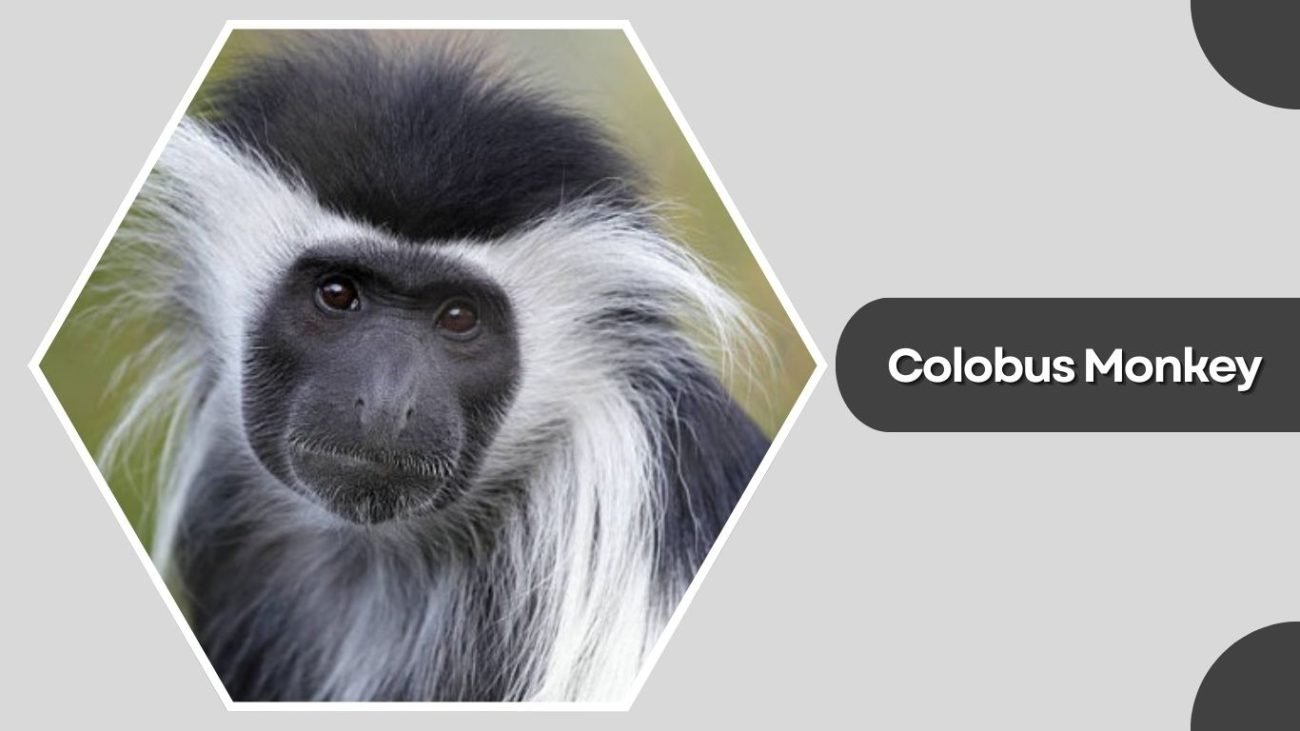
Colobus monkeys are graceful, long-tailed monkeys best known for their striking black-and-white fur and leaf-based diet. They lack thumbs, which helps them swing easily through trees. Native to Africa, colobus monkeys are highly arboreal and spend most of their lives in forest canopies, living in social groups.
Identification
- Scientific name: Colobus species
- Common name: Colobus monkey
- Fur color: Black with long white mantle and tail tuft
- Body type: Slender, long-limbed monkey
- Hands: Reduced or absent thumbs
- Tail: Very long, often with white tip
- Average length: 45–72 cm (body only)
- Native range: Africa
Habitat
Colobus monkeys inhabit tropical rainforests, montane forests, and riverine woodlands. They are rarely seen on the ground, preferring tall trees where they can leap and glide between branches. Dense forest canopies provide leaves, fruit, and safety from predators.
Diet
Colobus monkeys are primarily folivores, feeding mostly on young leaves, shoots, flowers, and unripe fruits. Their multi-chambered stomach helps them digest tough plant fibers. They can survive on diets that many other monkeys cannot tolerate, giving them access to less competitive food sources.
Lifecycle & Lifespan
Female colobus monkeys usually give birth to one infant after a gestation period of about 170 days. Newborns are often born with white fur that darkens as they age. Infants are cared for by their mothers and sometimes by other females. In the wild, colobus monkeys typically live around 20 years.
13. Tamarin Monkey
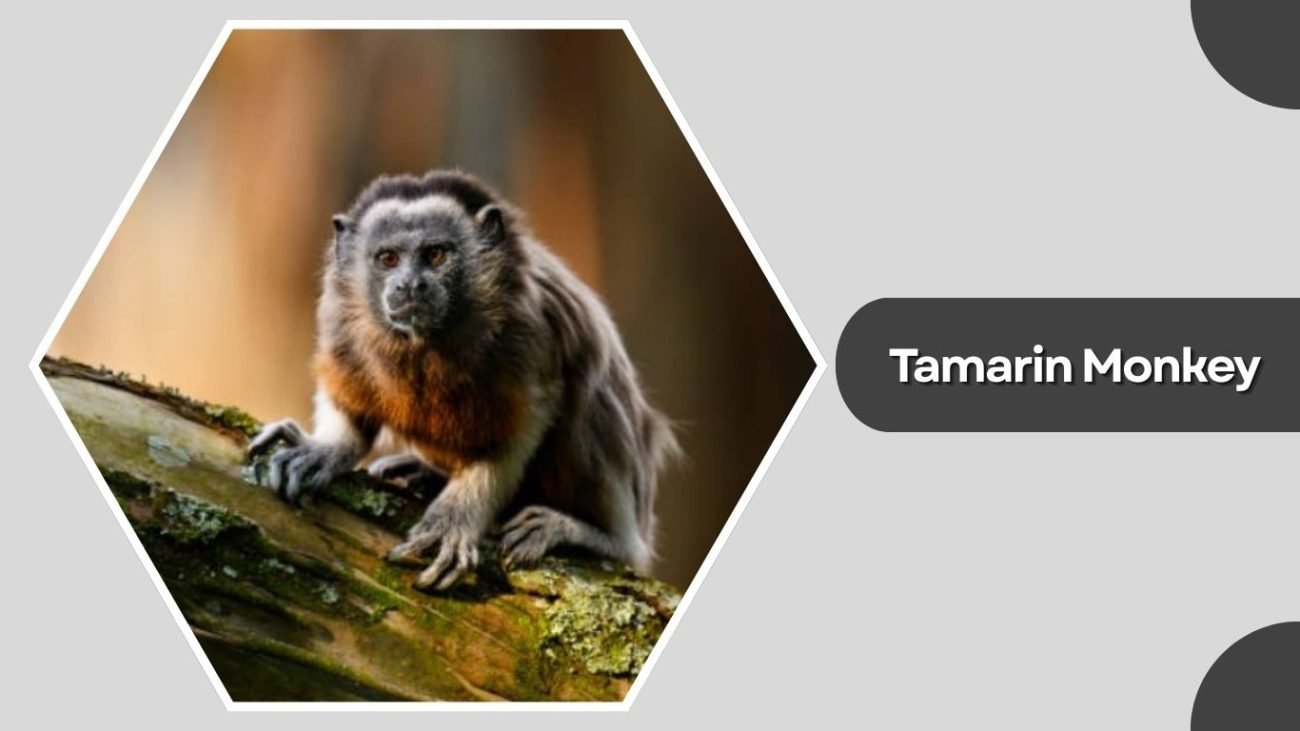
Tamarin monkeys are small, agile primates known for their expressive faces and distinctive facial hair, including mustaches and beards in some species. They are active, social, and fast-moving monkeys that live in family groups. Tamarins are native to the tropical forests of Central and South America and spend most of their lives in trees.
Identification
- Scientific name: Saguinus species
- Common name: Tamarin monkey
- Fur color: Black, brown, white, or golden
- Face: Often bare with mustache or beard-like hair
- Body type: Very small, slender monkey
- Tail: Long, non-prehensile tail
- Average length: 20–31 cm (body only)
- Native range: Central and South America
Habitat
Tamarins live in lowland rainforests, secondary forests, and river-edge woodlands. They prefer the lower and middle levels of the forest, where dense branches allow quick movement. Tree holes and thick foliage provide shelter and safe sleeping sites.
Diet
Tamarins are omnivores and eat fruits, insects, spiders, nectar, tree sap, bird eggs, and small vertebrates. Some species have specialized teeth that allow them to gnaw tree bark to release sap. Their fast metabolism requires frequent feeding.
Lifecycle & Lifespan
Tamarins usually give birth to twins after a gestation period of about 140 days. Fathers and other group members play a major role in carrying and caring for infants. Young tamarins grow quickly and begin foraging within a few months. In the wild, they generally live around 10–15 years.
14. Marmoset Monkey
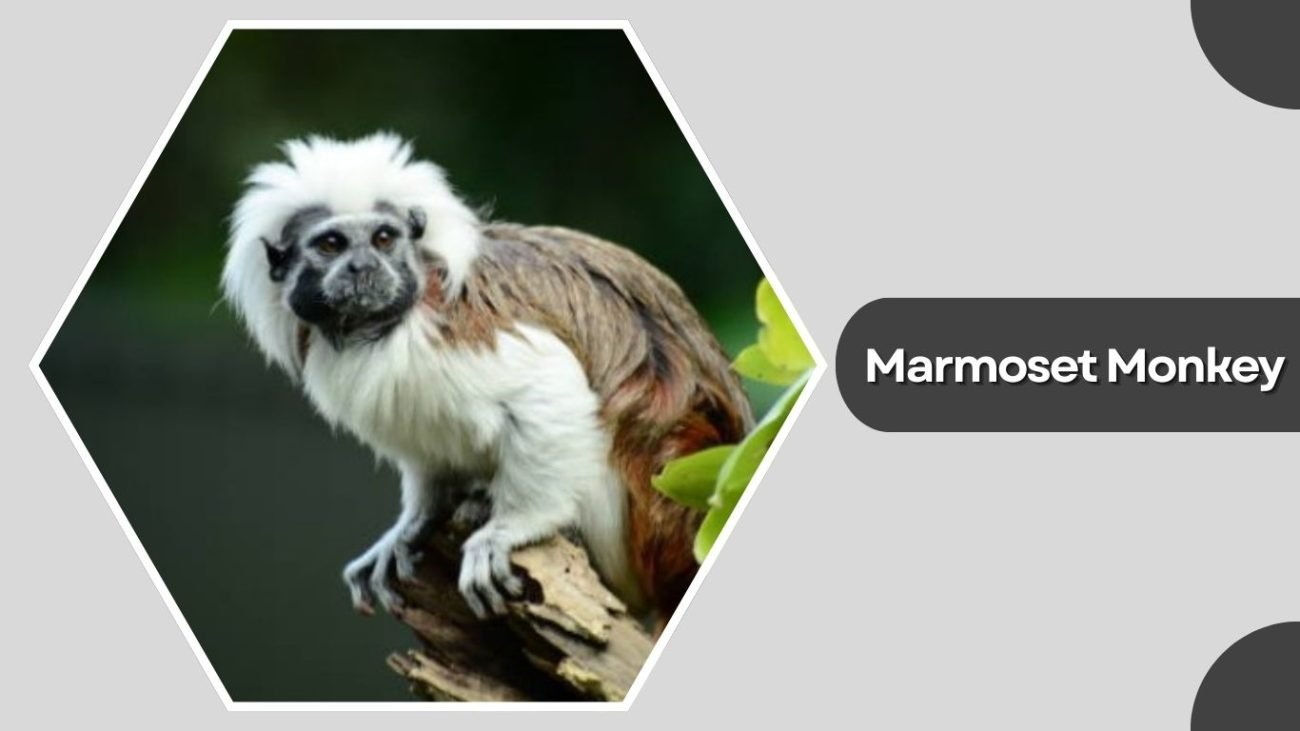
Marmosets are among the smallest monkeys in the world and are known for their soft fur, long tails, and sharp claw-like nails. They are highly active, social primates that move quickly through trees. Native to South America, marmosets are famous for feeding on tree sap and living in close family groups.
Identification
- Scientific name: Callithrix species
- Common name: Marmoset monkey
- Fur color: Grey, white, brown, or black
- Face: Often with ear tufts or facial markings
- Body type: Very small, lightweight monkey
- Hands: Claw-like nails instead of flat nails
- Tail: Long, non-prehensile tail
- Native range: South America
Habitat
Marmosets live in tropical rainforests, secondary forests, and woodland edges. They prefer areas with plenty of gum-producing trees. These monkeys spend most of their lives in trees, rarely descending to the ground. Tree cavities and dense branches are used for sleeping and raising young.
Diet
Marmosets feed mainly on tree sap and gum, which they obtain by gnawing holes in bark with their specialized teeth. They also eat fruits, insects, spiders, nectar, and bird eggs. Their digestive system is adapted to process large amounts of plant exudates.
Lifecycle & Lifespan
Female marmosets often give birth to twins after a gestation period of about 140–150 days. Fathers and older siblings help carry and care for the infants. Young marmosets grow rapidly and begin eating solid food within weeks. In the wild, marmosets usually live around 10–12 years.
15. Guenon Monkey
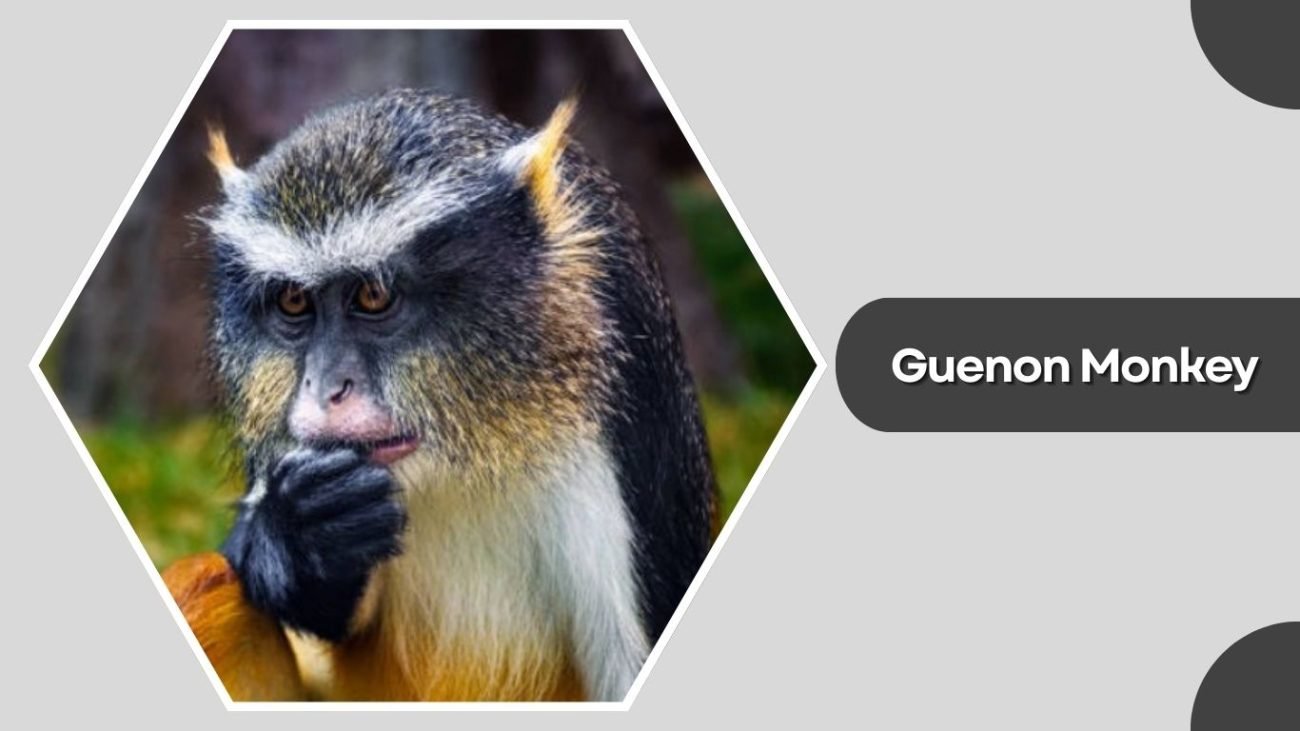
Guenons are a diverse group of African monkeys known for their bright facial patterns, expressive eyes, and long tails. Many species display striking colors such as blue, white, yellow, or red on their faces. Guenon monkeys are agile, tree-dwelling primates that live in social groups and communicate with a wide range of calls.
Identification
- Scientific name: Cercopithecus species
- Common name: Guenon monkey
- Fur color: Varies widely by species
- Face: Often brightly colored with unique patterns
- Body type: Slender, long-limbed monkey
- Tail: Long, non-prehensile tail
- Average length: 40–70 cm (body only)
- Native range: Africa
Habitat
Guenons live in tropical rainforests, swamp forests, and riverine woodlands across central and western Africa. They spend most of their time in trees, especially in the middle and upper canopy. Dense forests provide fruit, shelter, and protection from predators.
Diet
Guenon monkeys are mainly frugivores but also eat leaves, seeds, insects, flowers, and small animals. They forage both alone and in groups, moving quickly through branches to reach seasonal fruits. Their varied diet supports their wide distribution.
Lifecycle & Lifespan
Female guenons usually give birth to one infant after a gestation period of about 165 days. Infants cling to their mothers and are protected within the group. Young guenons mature within a few years and learn feeding and social skills by observing adults. In the wild, guenons typically live 20–25 years.
16. Patas Monkey
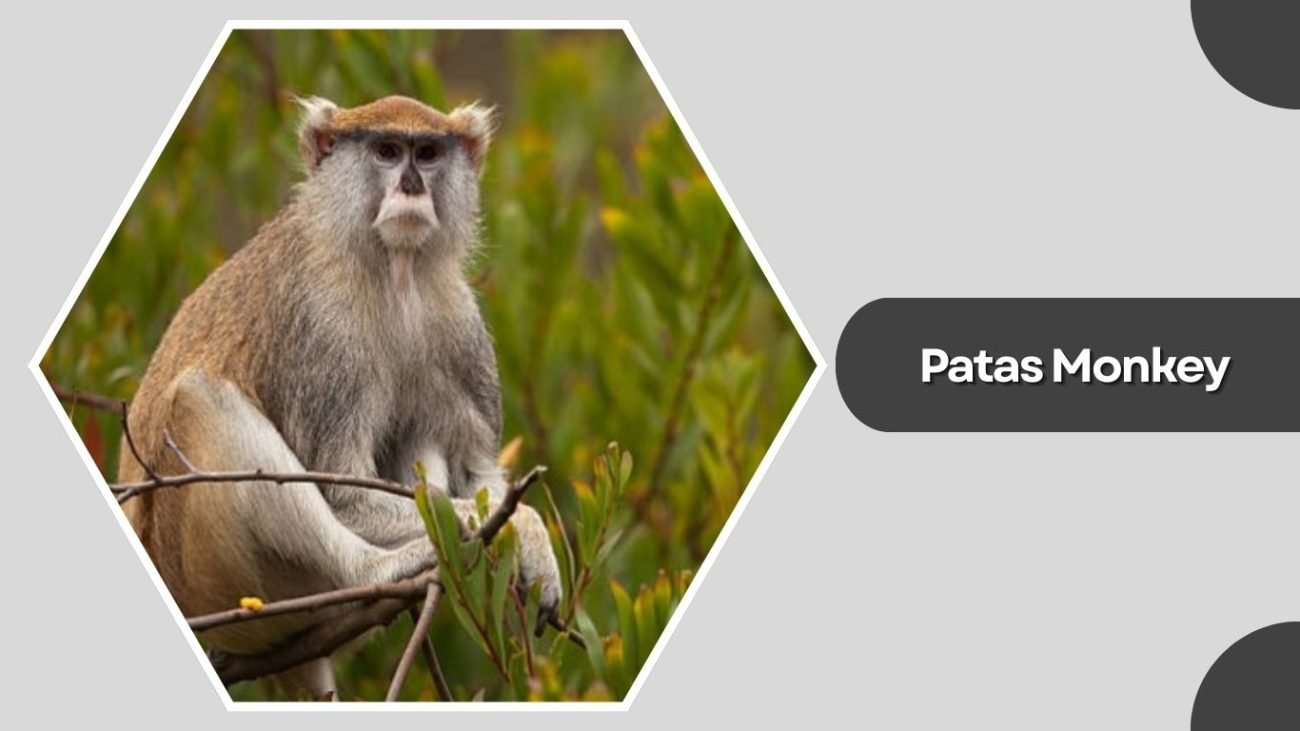
The patas monkey is the fastest-running primate in the world, built for life on the open African savanna. With long limbs and a slim body, it spends more time on the ground than most monkeys. Patas monkeys are alert, social, and highly adapted to hot, dry environments.
Identification
- Scientific name: Erythrocebus patas
- Common name: Patas monkey
- Fur color: Reddish-brown back with white underside
- Face: Dark face with white mustache
- Body type: Slim, long-legged monkey
- Tail: Long, non-prehensile tail
- Average length: 60–87 cm (body only)
- Native range: Sub-Saharan Africa
Habitat
Patas monkeys live in savannas, semi-deserts, grasslands, and open woodlands. They prefer wide, open areas where they can run quickly to escape predators. Trees are mainly used for sleeping and lookout points rather than daily movement.
Diet
Patas monkeys eat fruits, seeds, leaves, gum, insects, eggs, and small animals. They often forage on the ground, searching for fallen food and insects. Their diet varies seasonally and allows them to survive in dry regions with limited resources.
Lifecycle & Lifespan
Female patas monkeys usually give birth to one infant after a gestation period of about 170 days. Infants hide in vegetation while mothers forage nearby. Young monkeys develop quickly and begin running and feeding independently within months. In the wild, patas monkeys typically live around 15–20 years.
17. Dusky Leaf Monkey
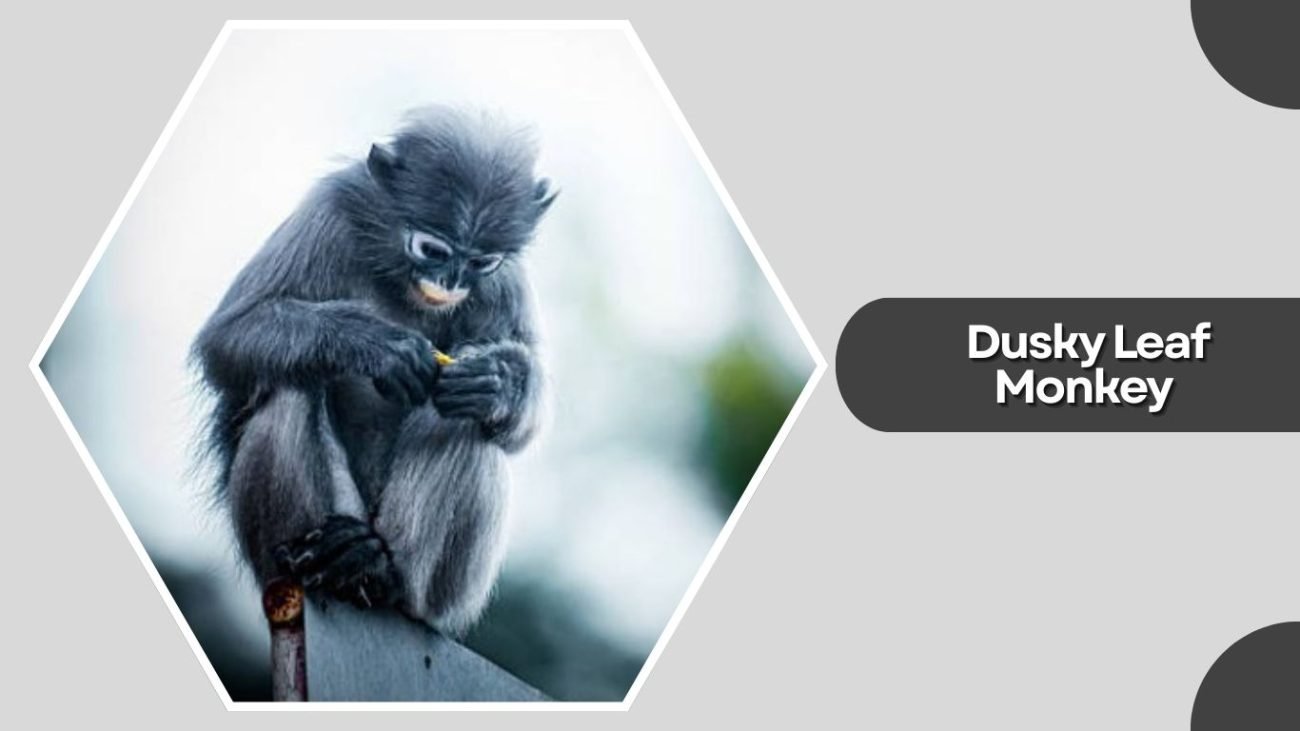
The dusky leaf monkey, also known as the spectacled langur, is a gentle, tree-dwelling monkey recognized by the white rings around its eyes. Native to Southeast Asia, it is mostly active during the day and lives in social groups. Its calm behavior and leaf-based diet make it an important species in forest ecosystems.
Identification
- Scientific name: Trachypithecus obscurus
- Common name: Dusky leaf monkey
- Fur color: Dark grey to black
- Face: Pale face with white eye rings
- Body type: Slender, long-limbed monkey
- Tail: Very long tail
- Average length: 42–61 cm (body only)
- Native range: Southeast Asia
Habitat
Dusky leaf monkeys live in tropical rainforests, mangroves, limestone forests, and secondary woodlands. They are highly arboreal and rarely come to the ground. Tall trees provide food, sleeping sites, and protection from predators.
Diet
They are mainly folivores, feeding on young leaves, shoots, fruits, flowers, and seeds. Their specialized multi-chambered stomach allows them to digest fibrous plant material efficiently. Occasionally, they may eat insects.
Lifecycle & Lifespan
Females usually give birth to one bright orange infant after a gestation period of about six months. The infant’s fur changes to dark grey as it grows. Young monkeys are cared for by their mothers and sometimes by other females. In the wild, dusky leaf monkeys typically live around 20 years.
18. Blue Monkey
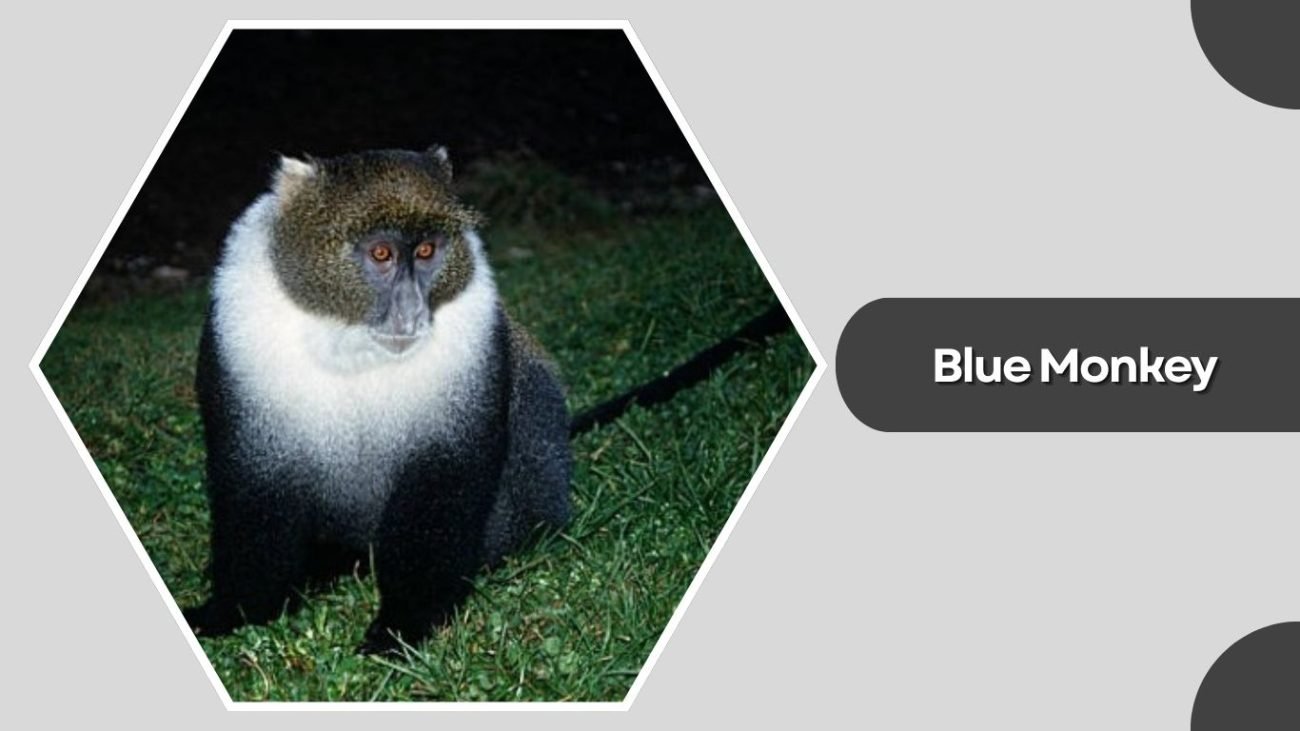
The blue monkey is a forest-dwelling African monkey named for the bluish tone of its face rather than its fur. It is shy, agile, and usually seen moving quietly through the middle and upper forest canopy. Blue monkeys are social animals that live in small groups and are active during the day.
Identification
- Scientific name: Cercopithecus mitis
- Common name: Blue monkey
- Fur color: Greyish-brown with lighter underside
- Face: Dark face with bluish skin tone
- Body type: Slender, medium-sized monkey
- Tail: Long, non-prehensile tail
- Average length: 50–65 cm (body only)
- Native range: Central and eastern Africa
Habitat
Blue monkeys inhabit tropical and montane forests, bamboo forests, and riverine woodlands. They prefer dense, well-watered forests and spend most of their time in trees. Tall canopies provide safety, sleeping areas, and rich food sources.
Diet
Blue monkeys are mainly frugivores but also eat leaves, flowers, seeds, insects, and other small invertebrates. Their flexible diet allows them to adjust to seasonal food changes. They often forage quietly, plucking fruit and insects from branches.
Lifecycle & Lifespan
Female blue monkeys usually give birth to one infant after a gestation period of about 170 days. Infants cling closely to their mothers and are gradually introduced to solid foods. Young monkeys become independent within their first year. In the wild, blue monkeys typically live around 20 years.
19. Red Howler Monkey
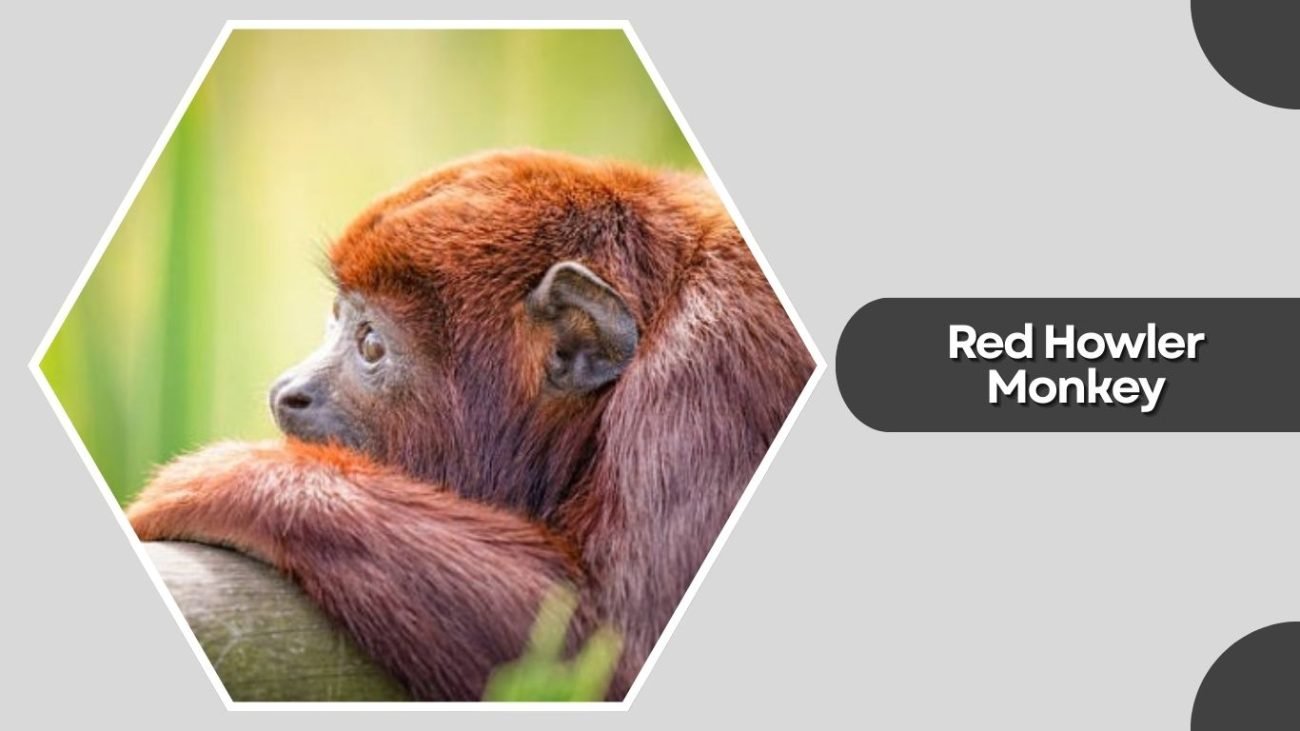
The red howler monkey is one of the largest New World monkeys and is famous for its deep, roaring calls that echo through rainforest canopies. Its reddish-brown fur makes it easy to distinguish from other howler species. Red howler monkeys are slow-moving, tree-dwelling primates that spend most of their lives high in the forest.
Identification
- Scientific name: Alouatta seniculus
- Common name: Red howler monkey
- Fur color: Reddish-brown to deep red
- Body type: Large, heavy-bodied monkey
- Tail: Long, strong, prehensile tail
- Throat: Enlarged hyoid bone for loud calls
- Average length: 49–72 cm (body only)
- Native range: Northern South America
Habitat
Red howler monkeys live in tropical rainforests, riverine forests, and swampy lowlands. They are highly arboreal and rarely descend to the ground. Tall, continuous forests are essential for their movement, feeding, and shelter. They often sleep high in trees to avoid predators.
Diet
Their diet consists mainly of leaves, young shoots, flowers, and fruit. Because leaves are difficult to digest, red howlers have specialized stomachs and conserve energy by resting for long periods. They feed mostly in the morning and late afternoon.
Lifecycle & Lifespan
Female red howler monkeys usually give birth to one infant after a gestation period of about six months. Infants cling to their mother and develop slowly. Young monkeys learn group behavior and feeding habits over many months. In the wild, red howler monkeys generally live 15–20 years.
20. Black Howler Monkey
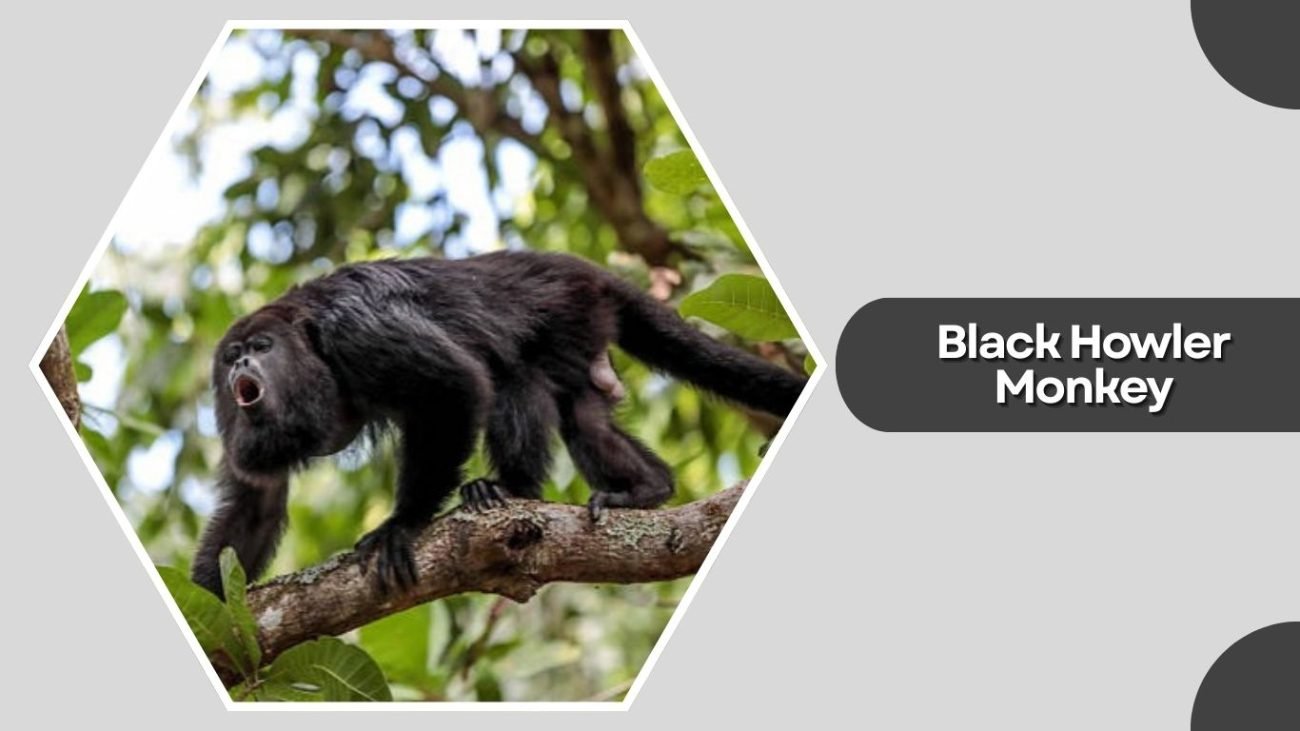
The black howler monkey is a powerful, forest-dwelling primate known for its deep, echoing roars that can travel several kilometers. Adult males are usually black, while females and juveniles are often lighter brown or golden. Like other howlers, this species spends most of its life in the canopy, moving slowly between trees.
Identification
- Scientific name: Alouatta caraya
- Common name: Black howler monkey
- Fur color: Black in adult males, brownish in females
- Body type: Large, robust monkey
- Tail: Long, prehensile tail
- Throat: Enlarged hyoid bone for loud calls
- Average length: 48–67 cm (body only)
- Native range: South America
Habitat
Black howler monkeys live in tropical and subtropical forests, gallery forests, and wooded savannas. They prefer areas with tall trees and dense canopies but can also survive in fragmented forests. Trees provide food, sleeping sites, and safety from predators.
Diet
They mainly eat leaves, flowers, fruits, and young shoots. Their slow lifestyle helps them digest fibrous food efficiently. Seasonal changes influence how much fruit versus leaves they consume.
Lifecycle & Lifespan
Female black howler monkeys usually give birth to one infant after a gestation period of about six months. Infants cling closely to their mothers and are protected by the group. Young monkeys mature over several years. In the wild, black howler monkeys typically live around 15–20 years.
21. Lion-tailed Macaque
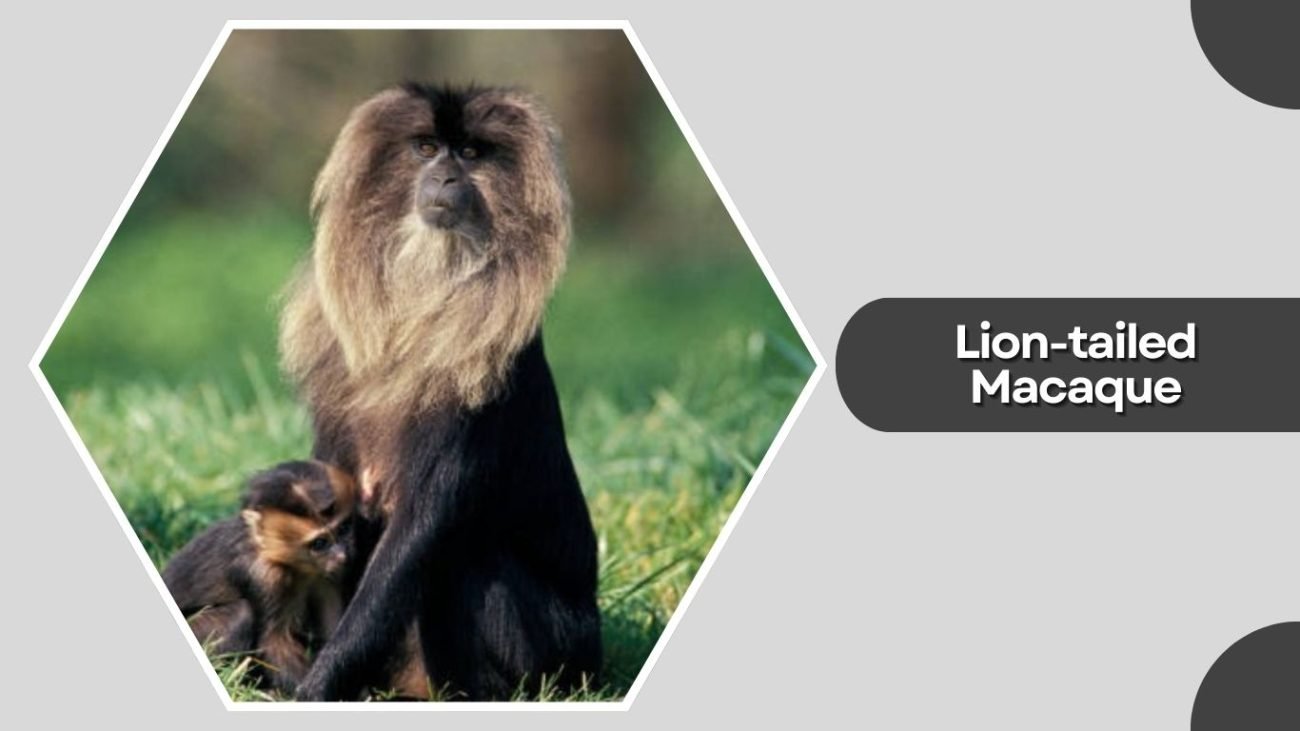
The lion-tailed macaque is a rare and striking monkey easily recognized by the thick silver-white mane surrounding its black face and its tail tuft that resembles a lion’s. Native to the Western Ghats of India, this shy and intelligent monkey lives high in rainforest canopies. It is one of the most endangered macaque species due to habitat loss.
Identification
- Scientific name: Macaca silenus
- Common name: Lion-tailed macaque
- Fur color: Black body with silver-white mane
- Face: Hairless black face
- Body type: Medium-sized, sturdy monkey
- Tail: Long tail with black tuft at the end
- Average length: 45–60 cm (body only)
- Native range: Western Ghats, India
Habitat
Lion-tailed macaques inhabit dense tropical evergreen rainforests. They prefer the upper canopy and rarely come down to the ground. Tall trees provide fruit, insects, and safe sleeping sites. These forests are humid, shaded, and rich in biodiversity, which suits their arboreal lifestyle.
Diet
They are omnivores and eat fruits, seeds, buds, leaves, insects, spiders, bird eggs, and small vertebrates. Insects make up a significant part of their diet compared to many other macaques. They forage quietly and skillfully among high branches.
Lifecycle & Lifespan
Female lion-tailed macaques usually give birth to one infant after a gestation period of about 170 days. Infants cling closely to their mothers and develop slowly. Young macaques stay with their mothers for several years, learning complex social behaviors. In the wild, lion-tailed macaques typically live around 20 years, and longer in captivity.
FAQs
How many different types of monkeys are there in the world?
There are over 260 recognized monkey species in the world. They are generally divided into two main groups: Old World monkeys from Africa and Asia, and New World monkeys from Central and South America. These groups differ in body structure, nose shape, and tail function.
What is the difference between monkeys and apes?
Monkeys usually have tails, while apes do not. Apes also have larger brains, broader chests, and more flexible shoulder joints. Monkeys typically move on all fours or leap between branches, whereas apes often swing with their arms or walk upright for short distances.
Which monkey is considered the most intelligent?
Capuchin monkeys are often considered among the most intelligent monkeys. They are known for using tools, solving complex problems, and learning by observation. Their brain size compared to body size is large, supporting advanced memory and social behaviors.
What do monkeys mostly eat?
Most monkeys are omnivores, meaning they eat both plant and animal matter. Their diet commonly includes fruits, leaves, seeds, flowers, insects, eggs, and sometimes small animals. The exact diet depends on the species and its habitat.
Where do monkeys mainly live?
Monkeys naturally live in tropical and subtropical regions of Africa, Asia, Central America, and South America. They inhabit rainforests, savannas, mountains, mangroves, and even urban areas, depending on the species and environmental conditions.


