The belted kingfisher is one of the most fascinating and easily recognizable birds in North America. Known for its loud rattling call, sharp diving skills, and striking blue-gray appearance, this bird captures the attention of birdwatchers and nature enthusiasts alike. Whether perched near a riverbank or hovering above water, the belted kingfisher is a master hunter with unique behaviors that set it apart from other bird species.
In this guide, you’ll discover everything about the belted kingfisher, including how to identify it, where it lives, what it eats, and the key differences between males and females.
What Is a Belted Kingfisher?
The belted kingfisher is a medium-sized bird best known for its fishing abilities and distinctive appearance. It belongs to the kingfisher family, a group of birds famous for hunting aquatic prey.
Scientific Classification and Basic Facts
The scientific name of the belted kingfisher is Megaceryle alcyon. It is native to North America and is commonly found near freshwater and coastal environments. This bird is well adapted to life around water, where it spends most of its time hunting and nesting.
Belted kingfishers are solitary birds, often seen alone rather than in flocks. They are highly territorial and will defend their feeding areas aggressively.
Why It’s Called “Belted” Kingfisher
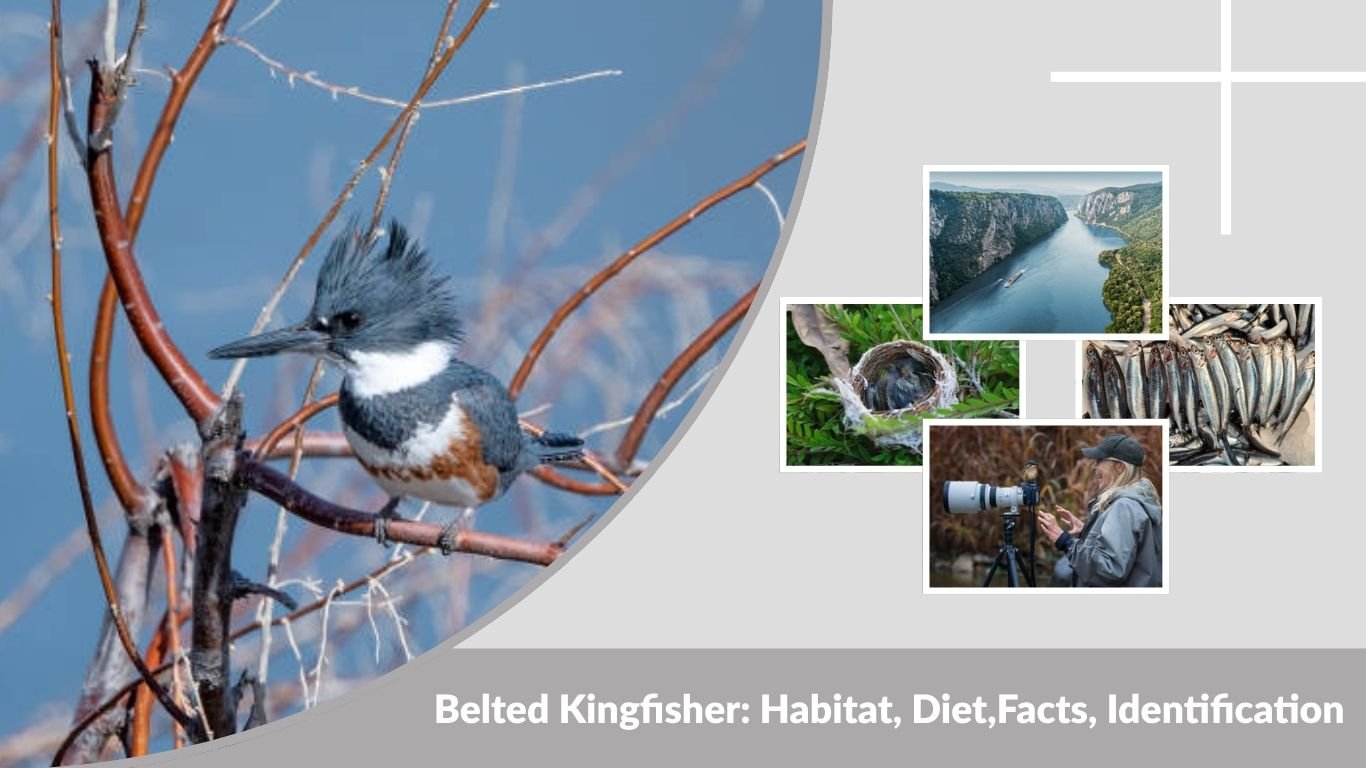
The name “belted” comes from the distinct band across its chest. This feature makes it easy to identify, especially when comparing males and females. The bold marking stands out against its blue-gray feathers, giving the bird a unique and recognizable look.
Belted Kingfisher Identification Features
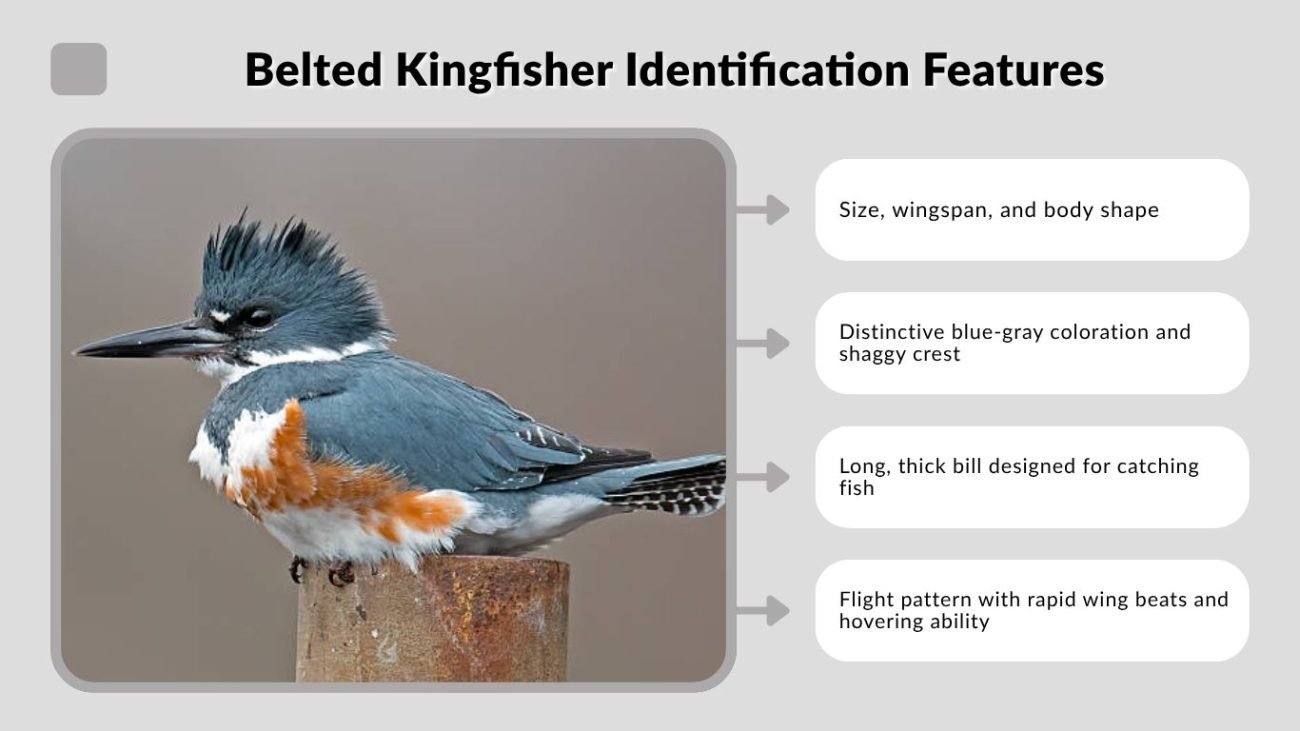
Recognizing a belted kingfisher in the wild becomes much easier once you understand its key physical traits. These birds have several distinctive features that make them stand out near water bodies.
- Size, wingspan, and body shape
- Distinctive blue-gray coloration and shaggy crest
- Long, thick bill designed for catching fish
- Flight pattern with rapid wing beats and hovering ability
- Upright posture when perched on branches or wires
One of the most noticeable features is its large head and prominent crest, which often appears slightly messy or spiky. Combined with its sturdy body and sharp beak, the bird looks perfectly built for hunting.
Male vs Female Belted Kingfisher
| Feature | Male Belted Kingfisher | Female Belted Kingfisher |
| Chest Marking | Single blue band | Blue band + rusty band |
| Coloration | Less colorful | More colorful |
| Rarity | Common | Slightly more noticeable |
| Identification Ease | Easier | More distinct |
Unlike many bird species where males are more colorful, the belted kingfisher breaks the pattern. The female has an extra rusty-colored band across her chest, making her more vibrant and easier to distinguish. This rare trait often surprises bird enthusiasts and adds to the bird’s uniqueness.
Habitat and Geographic Range
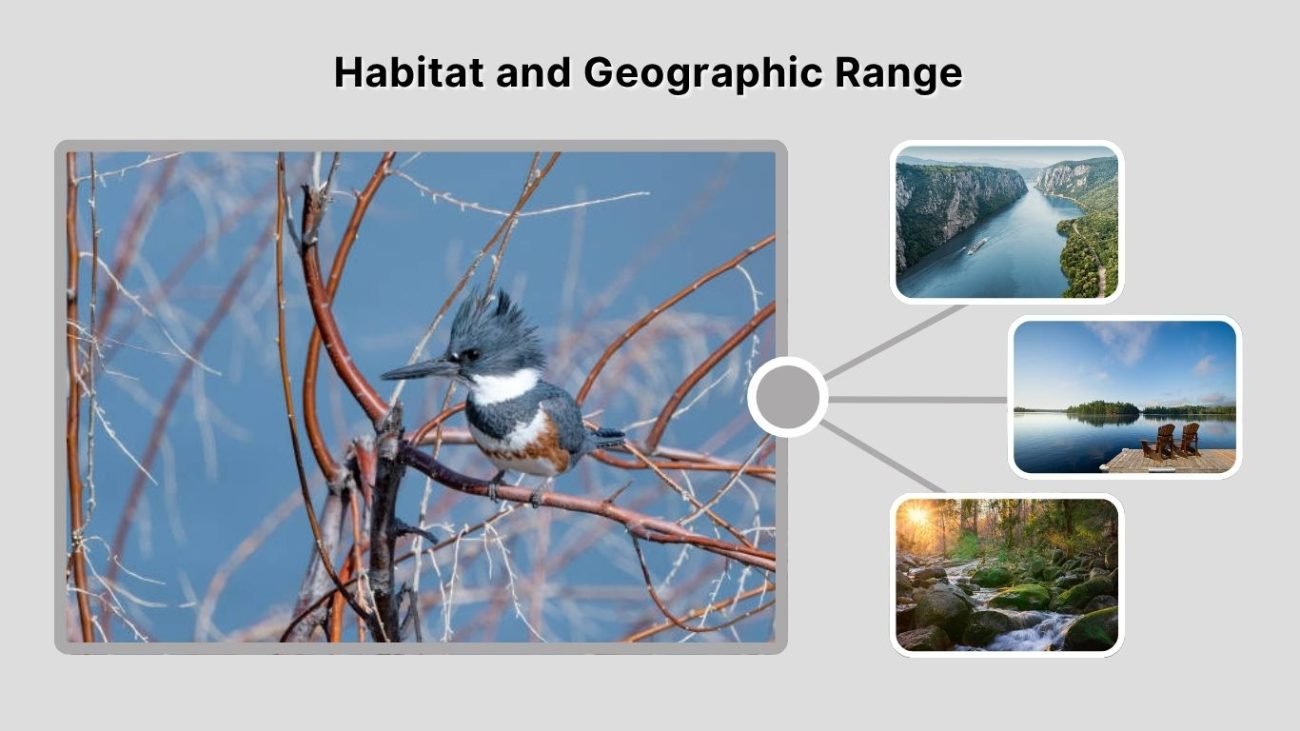
The belted kingfisher is closely tied to water and is rarely found far from it. Its habitat plays a crucial role in its survival, as it depends on aquatic environments for food and nesting.
Where Do Belted Kingfishers Live?
Belted kingfishers prefer habitats such as rivers, lakes, ponds, streams, and coastal shorelines. They are often seen perched on branches, docks, or wires overlooking the water, watching for prey.
They require clear water for effective hunting, as visibility is essential for spotting fish from above. Sandy or soft soil banks are also important, as these birds dig tunnels for nesting.
Geographic Distribution
This species is widely distributed across North America. It can be found throughout the United States, Canada, and parts of Mexico. In warmer regions like Florida, belted kingfishers may stay year-round, while in colder areas, they are more seasonal visitors.
Migration Patterns
Migration patterns depend largely on climate. Birds living in northern regions migrate south during winter when water bodies freeze, making hunting difficult. In contrast, populations in milder climates may remain in the same area throughout the year.
Diet and Feeding Behavior
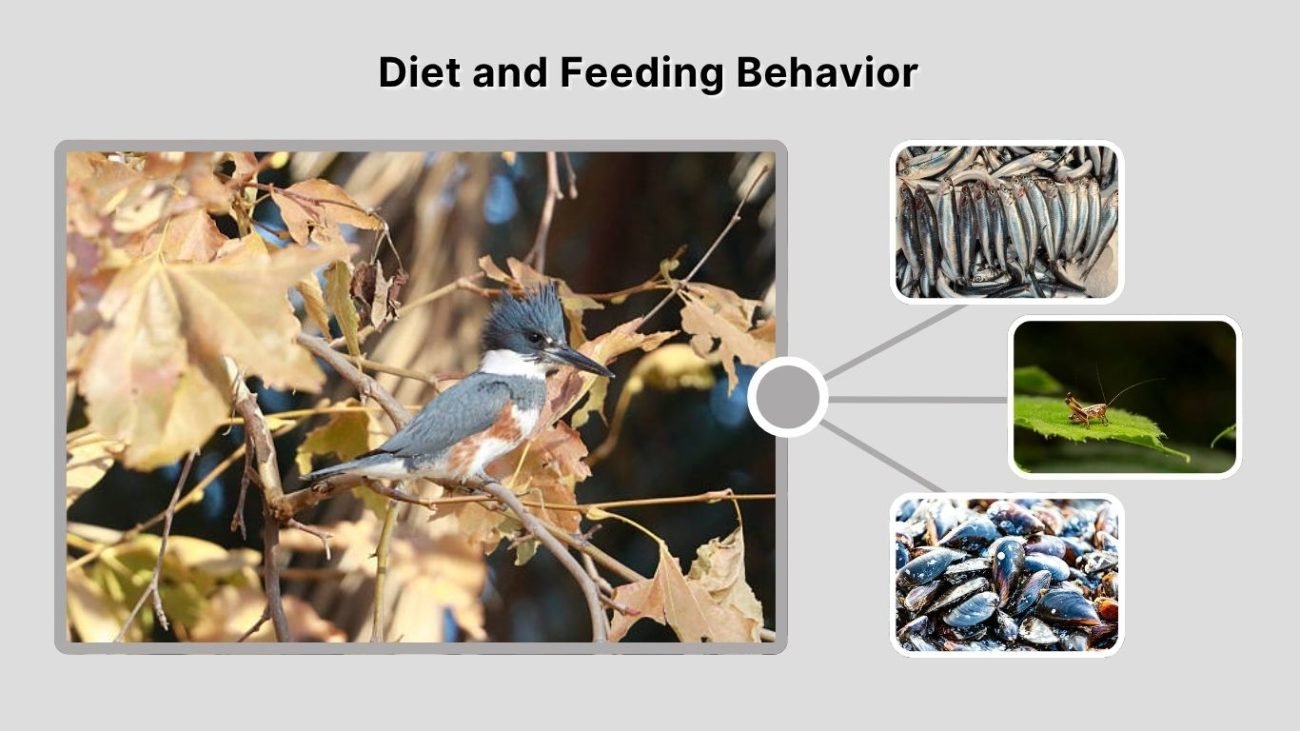
The belted kingfisher is a skilled hunter with a diet primarily based on aquatic prey. Its feeding habits are both fascinating and efficient.
- Primary diet consists of fish
- Uses hovering and diving to catch prey
- Also eats insects, crustaceans, and small amphibians
- Hunts from perches or mid-air positions
- Swallows prey whole after catching it
These birds often perch quietly while scanning the water. Once they spot movement, they dive headfirst with remarkable precision. Their strong beak helps them grab slippery fish, while their keen eyesight ensures accurate targeting.
Sometimes, they can be seen hovering briefly above water before diving, a behavior that adds to their hunting success.
Belted Kingfisher Behavior and Adaptations
The belted kingfisher is not just a skilled hunter—it also has unique behaviors and adaptations that help it survive in its environment.
Hunting and Diving Skills
One of the most impressive abilities of the belted kingfisher is its diving technique. It can plunge into the water from a height, using its streamlined body to reduce impact. Its eyes are specially adapted to maintain focus even underwater, allowing it to track prey accurately.
Territorial Nature
Belted kingfishers are highly territorial birds. They defend their hunting areas aggressively and often chase away intruders with loud calls and fast उड़ing movements. This behavior ensures they have enough food resources within their territory.
Adaptations for Survival
Several physical features help this bird thrive:
- Sharp, pointed beak for catching fish
- Strong wings for hovering and fast flight
- Excellent vision for spotting prey
- Compact body suited for diving
These adaptations make the belted kingfisher one of the most efficient fishing birds in its habitat.
Nesting and Reproduction
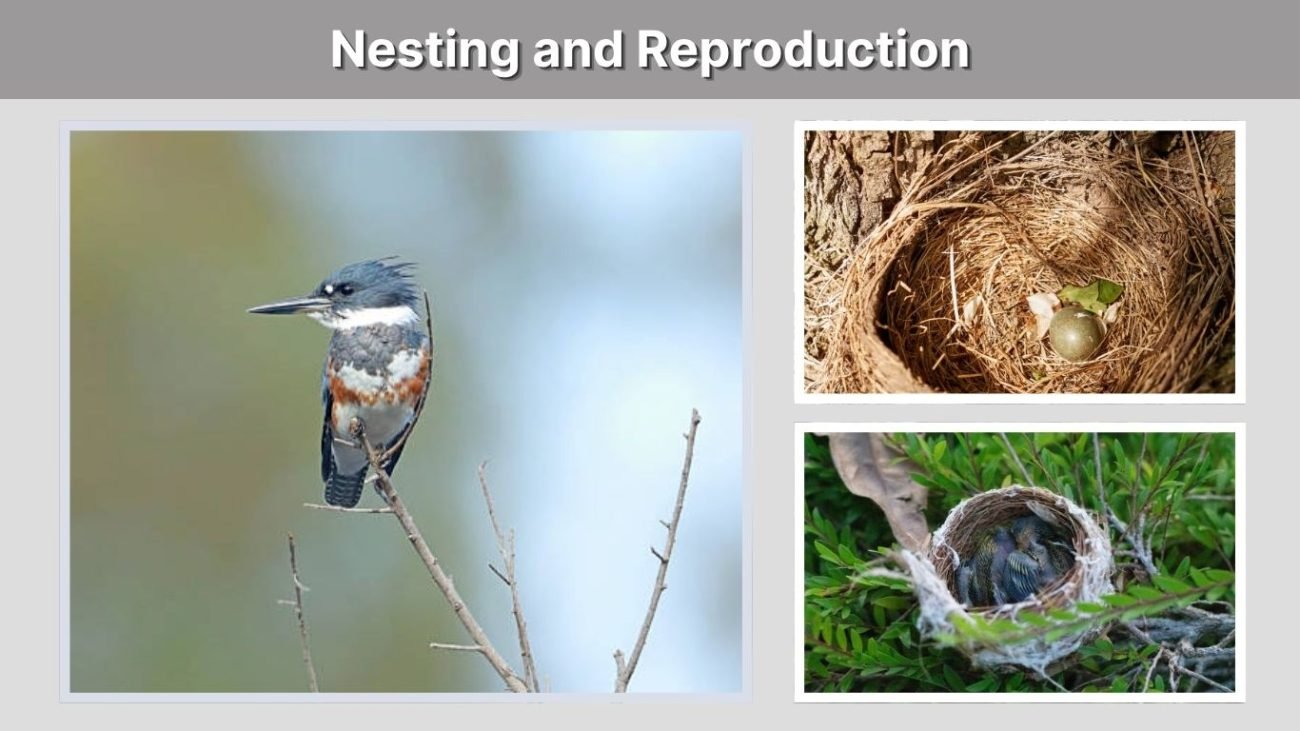
The nesting habits of the belted kingfisher are quite unique compared to many other bird species. Instead of building nests in trees, these birds create tunnels in the ground.
- Burrow nesting in sandy or soft riverbanks
- Breeding season typically begins in spring
- Females lay 5–8 eggs per clutch
- Both parents help incubate the eggs
- Chicks develop quickly inside the tunnel
Belted kingfishers dig long horizontal burrows that can extend several feet into the bank. At the end of the tunnel, a nesting chamber is created where eggs are laid. These burrows provide protection from predators and harsh weather.
Both male and female take turns incubating the eggs, which usually hatch after about three weeks. Once the chicks are born, both parents are actively involved in feeding them, often bringing small fish back to the nest.
Belted Kingfisher Call and Sounds
What Does a Belted Kingfisher Sound Like?
The belted kingfisher is known for its loud, rattling call that often echoes across waterways. This sound is sharp, rapid, and unmistakable, making it easier to detect the bird even when it’s not visible.
The call is commonly described as a harsh “rattle” or “chatter,” and it is frequently heard when the bird is flying or defending its territory.
Why They Make Noise
Belted kingfishers use vocalizations for several important reasons. Their calls help them communicate with potential mates, warn intruders, and establish territory boundaries.
In many cases, the sound serves as an early alert system, signaling the bird’s presence long before it comes into view. This is especially useful for birdwatchers trying to locate them in dense or wide habitats.
Interesting Facts About Belted Kingfishers
The belted kingfisher has several unusual traits that make it stand out among birds. These facts not only add to its appeal but also highlight its adaptability.
- Females are more colorful than males, which is rare in birds
- They dig nesting tunnels that can reach up to 8 feet long
- They can hover briefly before diving for prey
- Their loud call can be heard from a long distance
- They often slam fish against surfaces before eating
Another interesting behavior is how they handle prey. After catching a fish, the bird will often return to a perch and strike the fish against a hard surface to subdue it before swallowing.
Belted Kingfisher in Culture and Symbolism
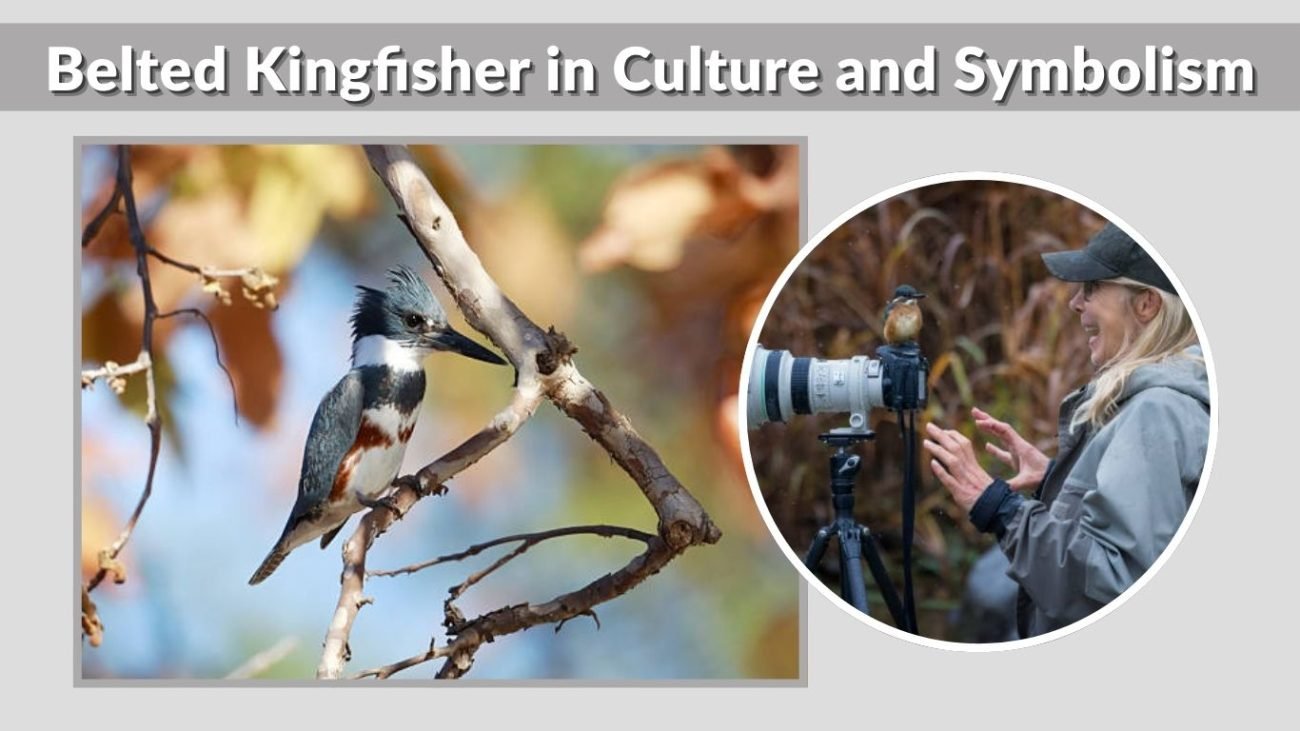
Beyond its physical traits, the belted kingfisher also holds symbolic meaning and appears in various forms of art and creative expression.
Spiritual Meaning
In many interpretations, the belted kingfisher symbolizes patience, focus, and precision. Its hunting style—waiting quietly before making a sudden move—represents timing and awareness.
Some also associate the bird with prosperity and resourcefulness due to its strong connection to water and food sources.
Use in Art and Photography
The striking appearance and dynamic movements of the belted kingfisher make it a popular subject in photography and artwork. Its vibrant colors, combined with dramatic diving action, create visually appealing scenes.
Artists and nature photographers often capture this bird in flight or mid-dive, highlighting its agility and elegance.
FAQs
What do belted kingfishers eat?
Belted kingfishers mainly feed on fish, which they catch by diving into water. They also eat insects, crustaceans, and small amphibians. Their hunting technique involves spotting prey from above and diving quickly to capture it with their sharp beak.
Are belted kingfishers rare?
Belted kingfishers are not considered rare. They are widely distributed across North America and are commonly found near water bodies. However, their solitary nature and preference for quiet habitats can make them seem less visible.
Do belted kingfishers migrate?
Yes, many belted kingfishers migrate depending on weather conditions. Birds living in colder regions move south during winter when water freezes. In warmer climates, they may remain in the same area throughout the year.
How can you identify a female belted kingfisher?
Female belted kingfishers are identified by their extra rusty-colored band across the chest, in addition to the blue band. This makes them more colorful than males, which is unusual among bird species.
Where can you see a belted kingfisher?
You can spot belted kingfishers near rivers, lakes, ponds, and coastal areas. Look for them perched above water on branches or wires, where they watch for fish before diving.