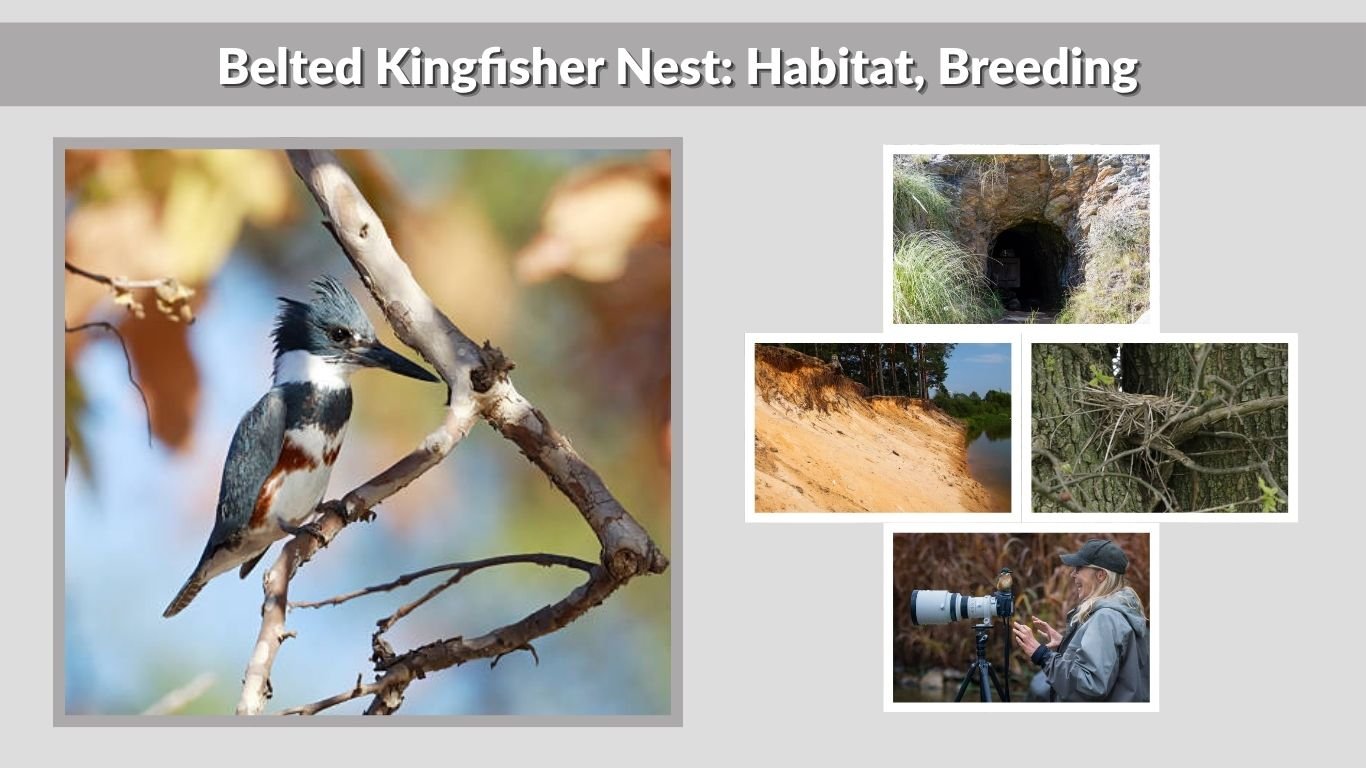
The belted kingfisher is not just known for its striking appearance and fishing skills—it also has one of the most unusual nesting styles among birds. Unlike most species that build nests in trees, belted kingfishers dig deep burrows into the ground. This unique behavior makes their nesting habits especially interesting for birdwatchers and nature enthusiasts.
If you’ve ever wondered where belted kingfishers nest, how they build their burrows, or what their breeding cycle looks like, this guide covers everything in detail.
What Is a Belted Kingfisher Nest?
A belted kingfisher nest is not a traditional nest made of twigs or leaves. Instead, it is a tunnel-like burrow dug into sandy or soft soil, usually along the banks of rivers, lakes, or coastal areas.
These burrows serve as a safe and protected environment for laying eggs and raising chicks. The tunnel leads to a small chamber at the end, where the eggs are kept. This design helps shield the nest from predators, harsh weather, and disturbances.
Why They Don’t Build Tree Nests
Unlike many birds, belted kingfishers rely heavily on water for survival. Nesting close to water sources is essential because it ensures easy access to food. Tree nests would expose their eggs and chicks to predators and reduce their ability to defend the area effectively.
By digging into the ground, they create a more secure and hidden nesting space that is difficult for predators to reach.
Where Do Belted Kingfishers Nest?
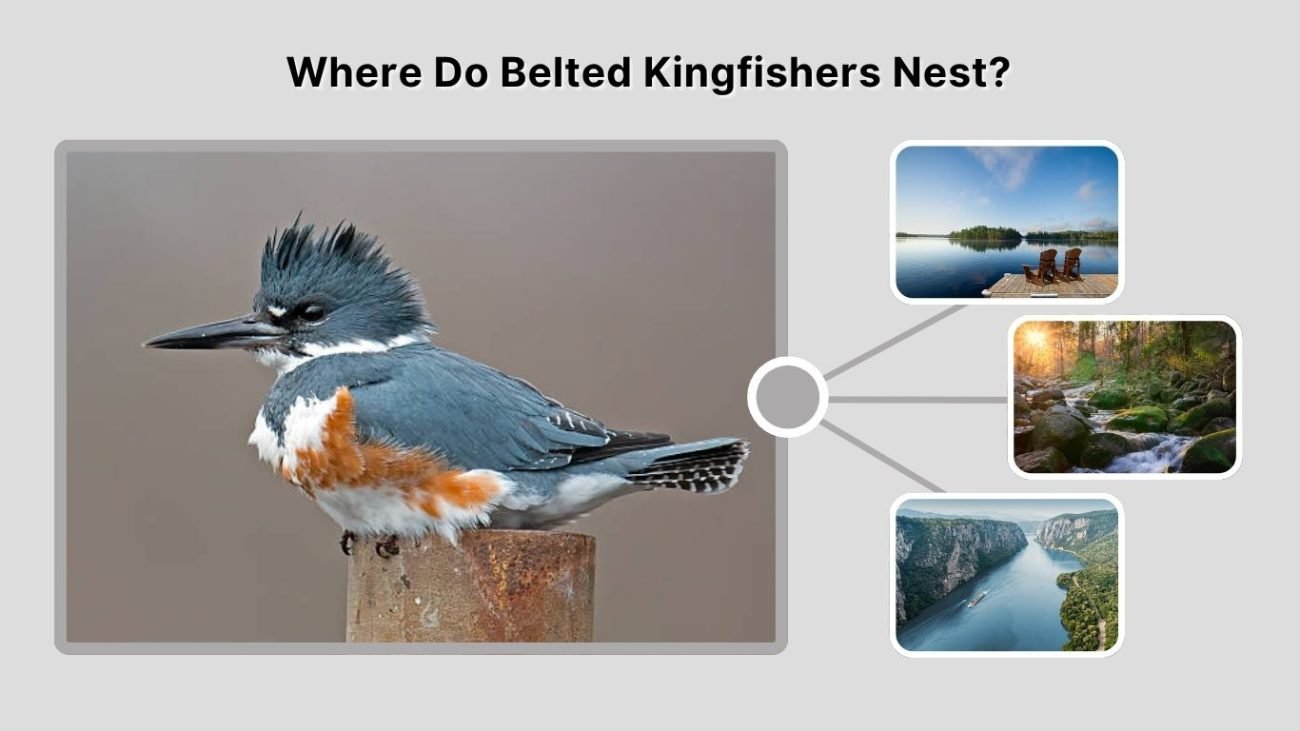
Belted kingfishers choose nesting locations very carefully. Their survival depends on finding the right combination of water access and suitable soil for digging.
Common Nesting Locations
They are typically found nesting near:
- Rivers and streams
- Lakes and ponds
- Coastal shorelines
- Reservoirs and wetlands
These areas provide both food and the right conditions for building burrows.
Habitat Requirements for Nesting
For a location to be suitable, it must meet a few key conditions. First, the soil should be soft enough to dig but stable enough to hold the tunnel structure. Sandy or loamy banks are ideal.
Second, the site must be close to water with a good supply of fish. Since belted kingfishers rely on fishing, nesting far from water would make feeding their chicks difficult.
Finally, the area should offer some level of isolation. These birds prefer quiet environments where they can avoid disturbances and protect their nesting territory.
Belted Kingfisher Nesting Habits
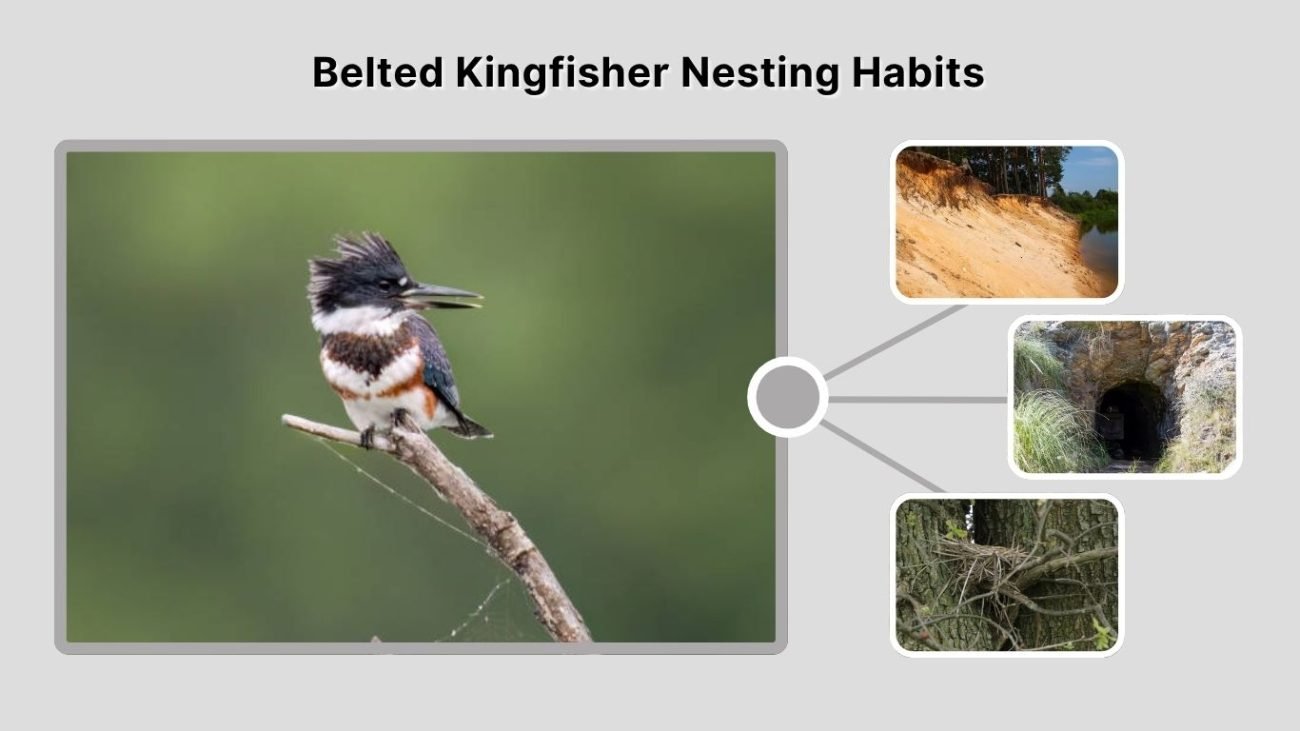
Belted kingfishers have distinct nesting behaviors that set them apart from other bird species. Their approach to nesting is both strategic and highly adapted to their environment.
- Prefer vertical or steep sandy banks
- Dig long horizontal tunnels into the soil
- Nest alone rather than in colonies
- May reuse or abandon burrows each season
- Strongly defend their nesting territory
These birds are highly territorial, especially during the breeding season. Once a nesting site is chosen, they will aggressively protect it from other birds and potential threats.
Another interesting habit is their flexibility in nesting. While some pairs reuse old burrows, others choose to dig new ones each year. This behavior may help reduce the risk of parasites and improve safety for their chicks.
Belted Kingfisher Nest Structure and Design
The structure of a belted kingfisher nest is simple yet highly effective. Every part of the design serves a specific purpose in protecting eggs and raising young birds.
Tunnel Length and Shape
The nesting tunnel is usually straight and slightly upward-sloping to prevent water from entering. These tunnels can range from 3 to 8 feet in length, depending on soil conditions and location.
The entrance is typically small and round, just large enough for the bird to enter and exit comfortably.
Nest Chamber Inside the Burrow
At the end of the tunnel lies a slightly wider chamber where the eggs are laid. Unlike traditional nests, this chamber is not lined with soft materials. Over time, fish remains and debris may accumulate, creating a natural bedding layer.
Despite its simplicity, this chamber provides excellent protection from predators and environmental changes.
How They Dig the Nest
Both male and female belted kingfishers participate in digging the burrow. They use their strong beaks to break apart soil and their feet to push it out of the tunnel.
The digging process can take several days to complete, depending on the hardness of the soil. During this time, the birds remain highly alert and cautious.
Belted Kingfisher Nesting Season and Breeding Cycle
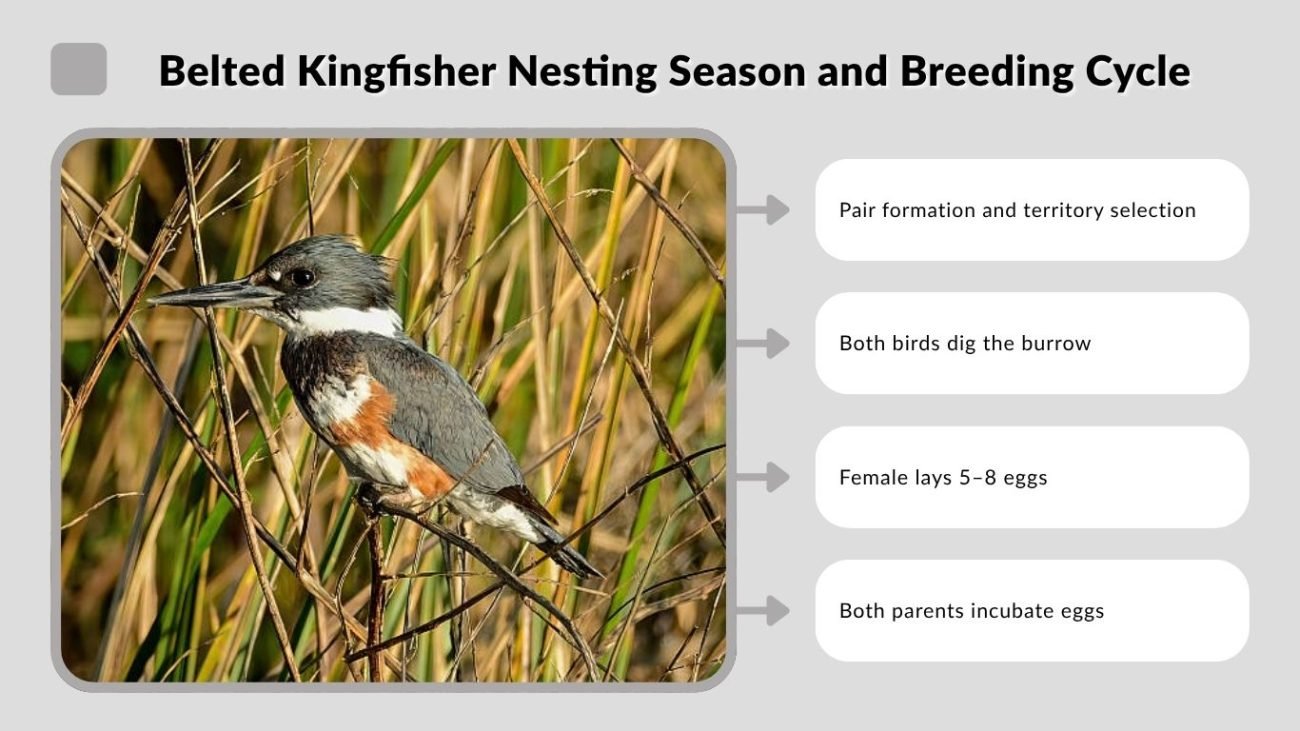
| Stage | Description |
| Courtship | Pair formation and territory selection |
| Nest Digging | Both birds dig the burrow |
| Egg Laying | Female lays 5–8 eggs |
| Incubation | Both parents incubate eggs |
| Chick Development | Parents feed and care for chicks |
The breeding cycle of the belted kingfisher typically begins in spring. During the courtship stage, males and females establish a bond and select a nesting site together.
Once the burrow is complete, the female lays a clutch of eggs, usually between five and eight. Both parents take turns incubating the eggs, ensuring they remain warm and protected.
After about three weeks, the eggs hatch, and the chicks begin their rapid growth phase. At this stage, both parents are actively involved in feeding and caring for the young.
Belted Kingfisher Breeding Behavior
The breeding behavior of belted kingfishers is both cooperative and highly organized. Unlike some bird species where one parent takes on most responsibilities, these birds share duties equally.
- Courtship involves calls and territorial displays
- Both parents participate in nest building
- Feeding duties are shared after hatching
- Adults protect the nest aggressively
- Young birds are trained before leaving
During the breeding period, the pair works closely together to ensure the survival of their offspring. They frequently bring fish back to the nest and feed the chicks multiple times a day.
As the chicks grow, they gradually become more active and begin preparing for life outside the nest.
Belted Kingfisher Habitat and Nesting Map
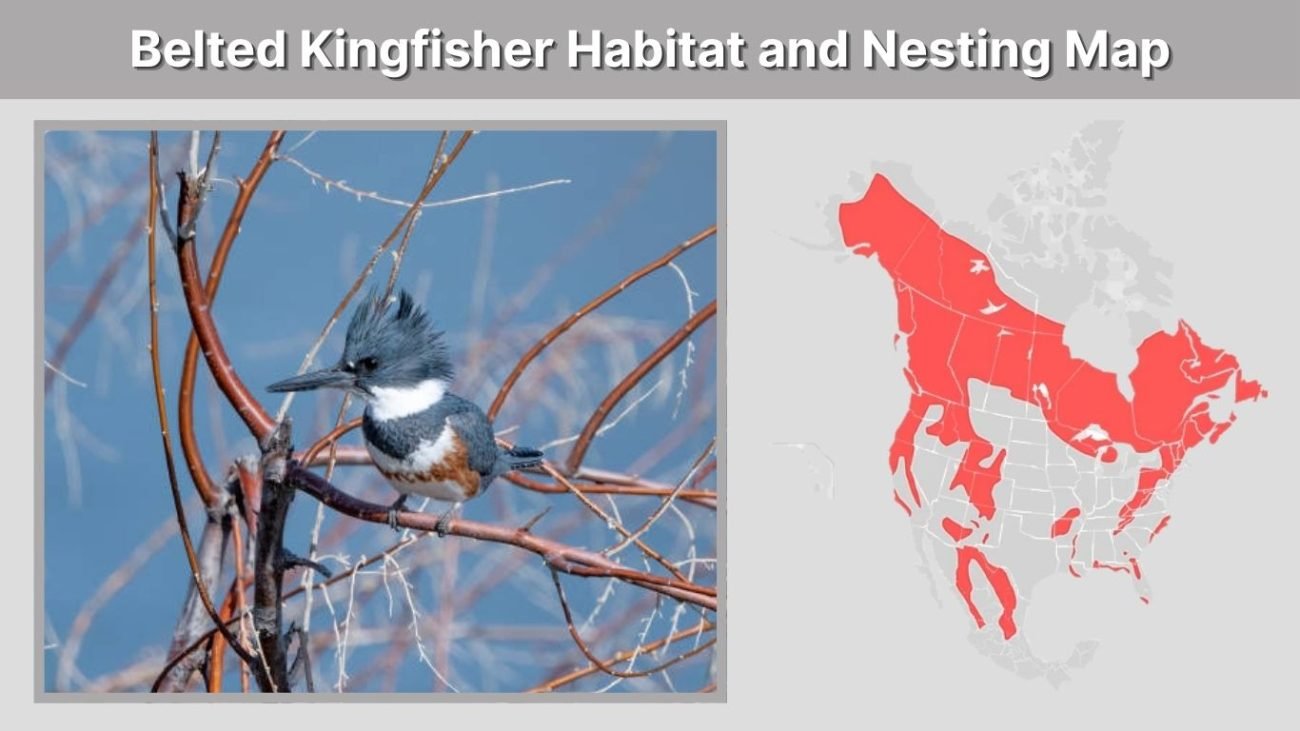
Understanding where belted kingfishers live and nest can make it much easier to spot them in the wild. Their distribution is closely tied to water availability and suitable nesting banks.
Habitat Distribution
Belted kingfishers are widely found across North America, including the United States, Canada, and parts of Mexico. They prefer freshwater habitats such as rivers, lakes, ponds, and streams, but they are also commonly seen along coastal shorelines.
In northern regions, they are more seasonal due to freezing water, while in southern areas, they may stay year-round. States like Florida, California, and regions along major river systems are particularly good places to observe them.
Nesting Habitat Map Insights
If you were to map their nesting locations, you would notice a strong pattern: belted kingfishers almost always nest in areas with steep, exposed banks near water. These can include riverbanks, cliffs, sand pits, and even roadside cuts.
The presence of soft, diggable soil combined with nearby fishing opportunities is the key factor that determines nesting success.
Can You Build a Belted Kingfisher Nest Box?
Many bird enthusiasts wonder if they can attract belted kingfishers using nest boxes. However, this approach is generally not effective.
Why Nest Boxes Are Not Effective
Belted kingfishers are natural burrow nesters, meaning they rely on digging tunnels into soil rather than using enclosed structures. Nest boxes do not replicate the depth, protection, or environmental conditions of a burrow.
Additionally, these birds are highly selective about their nesting sites. Even well-designed boxes are unlikely to meet their specific needs, especially their preference for vertical banks near water.
Alternative Ways to Support Nesting
Instead of using nest boxes, the best way to support belted kingfishers is by preserving and maintaining natural habitats.
- Protect riverbanks and natural shorelines
- Avoid disturbing nesting areas during breeding season
- Maintain clean water sources for fishing
- Encourage natural vegetation near water bodies
- Support conservation efforts in local habitats
By focusing on habitat preservation, you create conditions where belted kingfishers can thrive naturally.
Belted Kingfisher Nest Pictures and Observation Tips
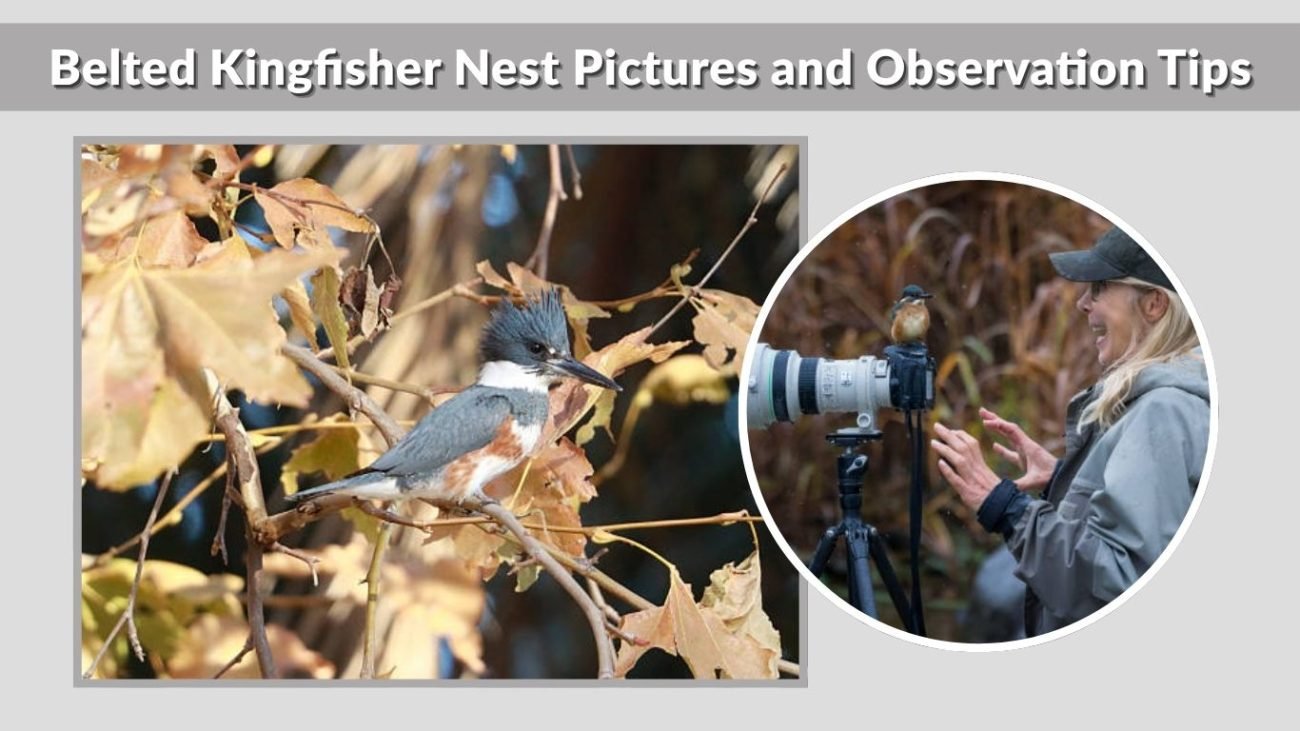
For birdwatchers and photographers, observing a belted kingfisher nest can be an exciting experience. However, it requires patience and respect for the bird’s space.
- Look for small round holes in sandy or earthen banks
- Observe from a distance to avoid disturbance
- Visit during early morning or late afternoon
- Watch for repeated flight patterns to locate nests
- Use binoculars or zoom lenses for safe viewing
The best time to observe nesting activity is during the breeding season, when adults frequently travel back and forth to feed their chicks. This movement can help you identify the exact location of a burrow.
It’s important to avoid getting too close, as disturbance can cause the birds to abandon their nest. Ethical birdwatching ensures both your safety and the well-being of the birds.
Common Problems and Threats to Nesting
Despite their adaptability, belted kingfishers face several challenges that can affect their nesting success.
Natural Threats
Natural factors such as flooding, erosion, and predators can damage or destroy nests. Heavy rains may collapse burrows, while predators like snakes, raccoons, and larger birds may attempt to reach the eggs or chicks.
Human Impact
Human activities pose a significant threat to belted kingfisher habitats. Construction, deforestation, and shoreline development can destroy suitable nesting sites.
Water pollution is another major issue. Contaminated water reduces fish populations, making it harder for kingfishers to find food. Additionally, frequent human disturbance near nesting areas can force birds to abandon their burrows.
Protecting natural waterways and minimizing habitat disruption are essential steps in ensuring the survival of this species.
FAQs
Where do belted kingfishers nest?
Belted kingfishers nest in burrows dug into sandy or soft soil banks near water bodies. These tunnels provide a safe and protected space for laying eggs and raising chicks away from predators.
How deep is a belted kingfisher nest?
Their nesting tunnels typically range from 3 to 8 feet deep. At the end of the tunnel, there is a chamber where eggs are laid and chicks develop in a secure environment.
Do belted kingfishers reuse nests?
They may reuse old burrows, but often they dig new ones each season. Creating a new nest helps reduce parasites and ensures better conditions for raising young birds.
When is the belted kingfisher nesting season?
The nesting season usually begins in spring and continues into early summer. Timing may vary depending on climate and location.
Can you build a nest box for belted kingfishers?
Nest boxes are generally ineffective because belted kingfishers prefer natural burrows. Protecting their habitat is a more effective way to support nesting.