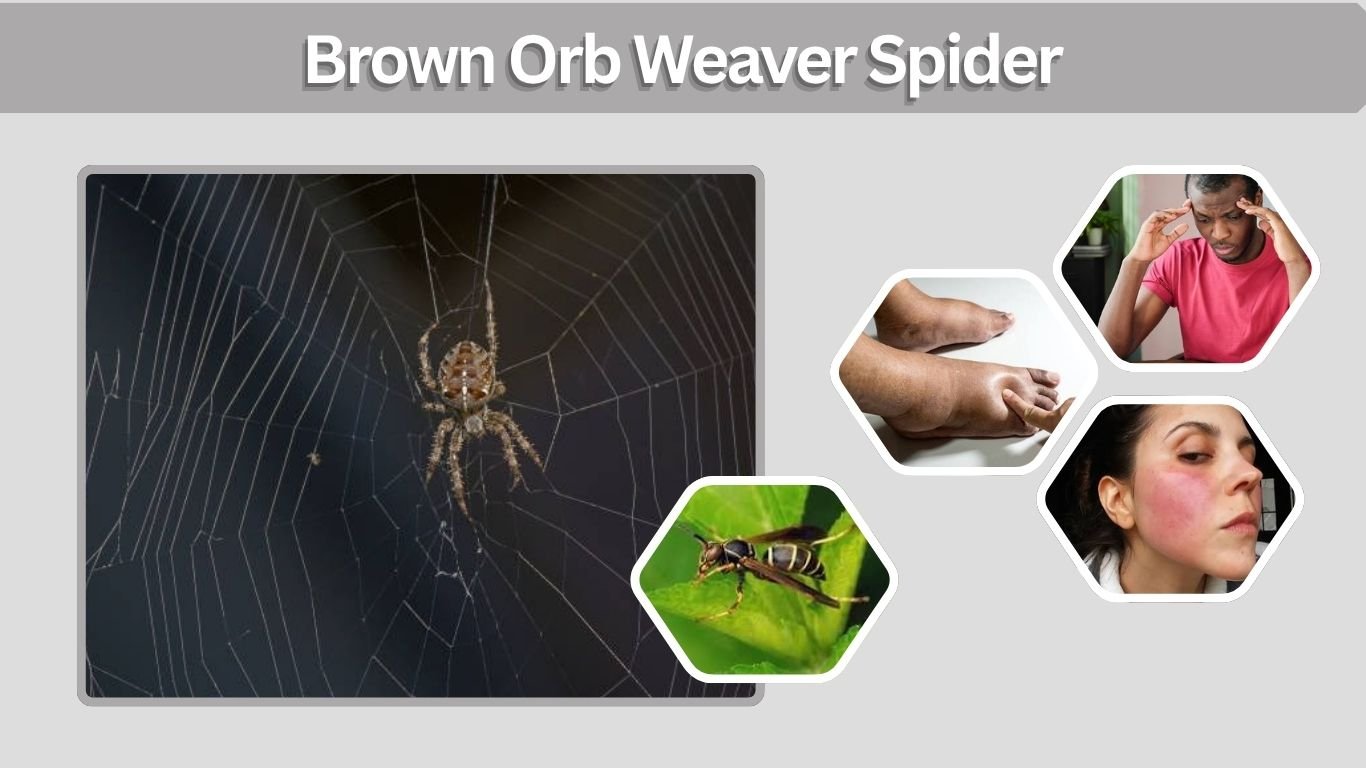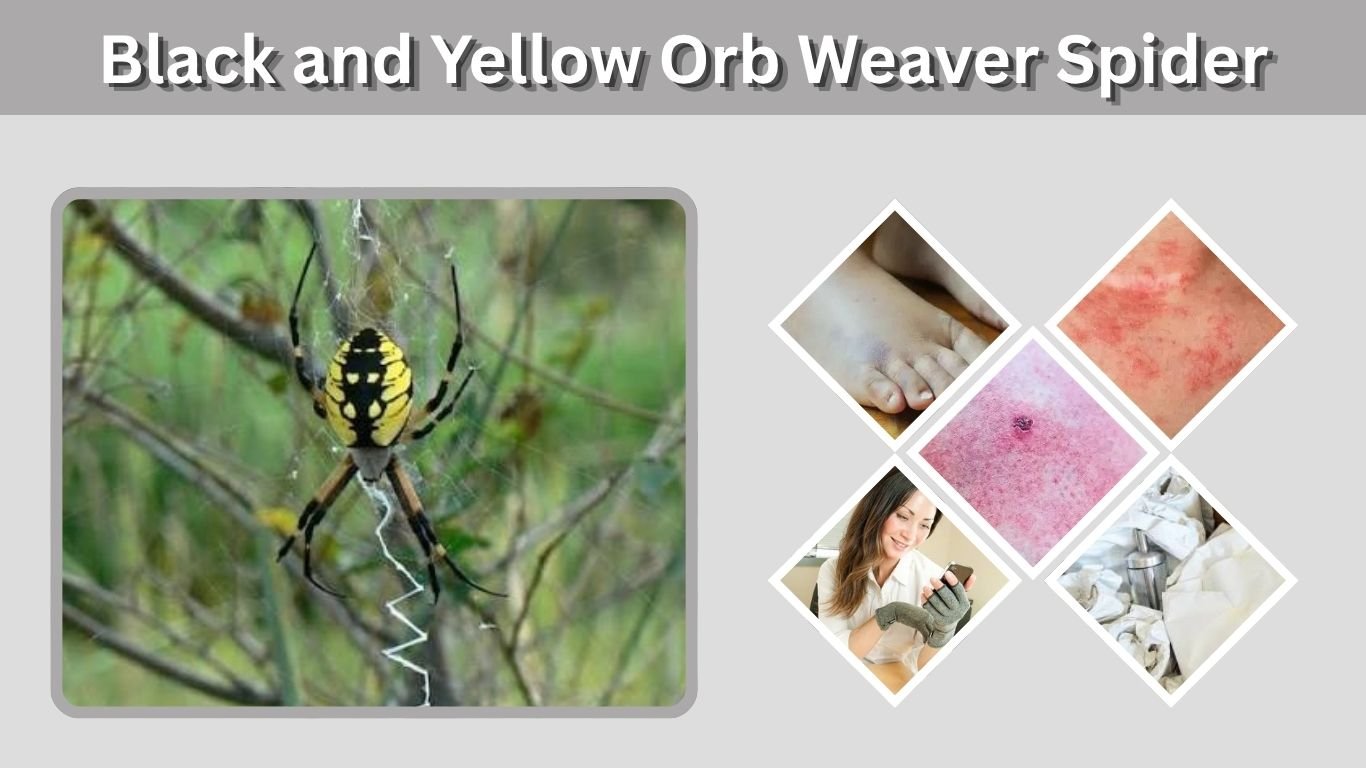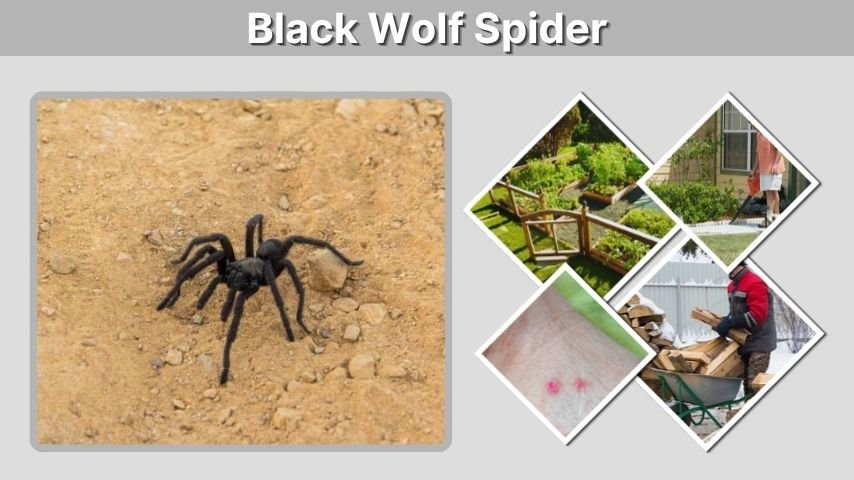
A black wolf spider can look alarming, especially when it appears inside your house or runs quickly across the floor. Many people confuse dark wolf spiders with black widows, black house spiders, or even brown recluses. While wolf spiders can bite if handled, they are not considered dangerous to most people. This guide explains how to identify black wolf spiders, where they live, and when to worry.
What Is a Black Wolf Spider?
A black wolf spider is not usually one single species. Instead, the term often describes any dark-colored wolf spider from the Lycosidae family. Wolf spiders are active hunters that chase prey instead of building webs to catch insects.
Are Wolf Spiders Actually Black?
Some wolf spiders can appear black, dark brown, gray-black, or patterned with black markings. Lighting, age, sex, and species can all change how they look. A spider may seem jet black from a distance but show brown, gray, tan, or white markings up close.
True wolf spiders usually have strong bodies, long legs, and excellent eyesight. Their eyes are one of the best ways to tell them apart from other house spiders.
Common Features of Black Wolf Spiders
Black wolf spiders often share these traits:
- Dark brown, gray, or black body color
- Stocky, hairy body and legs
- Fast movement on floors, walls, soil, or grass
- Large forward-facing eyes
- No messy web used for catching prey
- Females may carry egg sacs or spiderlings
These spiders are usually more interested in escaping than biting. They hunt insects, roaches, crickets, flies, and other small pests.
How to Identify a Black Wolf Spider
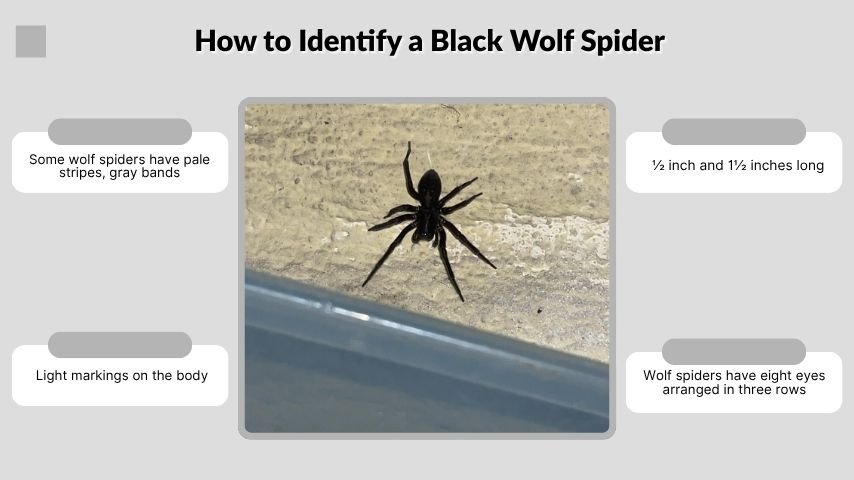
Identifying a black wolf spider is easier when you look at body shape, markings, eyes, and behavior together. Color alone is not enough because many spiders can appear black.
Body Shape and Size
Wolf spiders are usually medium to large spiders with a solid, athletic body. Many are between ½ inch and 1½ inches long, not including the legs. Large black wolf spiders can look much bigger because of their leg span.
Some people search for “big black wolf spider,” “huge black wolf spider,” or “giant black wolf spider” after seeing one indoors. In most cases, the spider only looks oversized because wolf spiders move quickly and have thick legs.
Eye Pattern
The eye arrangement is a major clue. Wolf spiders have eight eyes arranged in three rows. The two large middle eyes are especially noticeable and may reflect light at night.
This is why a flashlight can reveal wolf spiders outdoors. Their eyes may shine when light hits them, which makes them easier to spot in grass, gardens, or basements.
Markings and Stripes
Many searches mention a “black spider with white stripes” or a “wolf spider black spider with white stripe on back.” Some wolf spiders have pale stripes, gray bands, or light markings on the body.
However, white stripes do not always mean it is a wolf spider. Jumping spiders, fishing spiders, grass spiders, and other species may also have black-and-white patterns. Check movement, body shape, and eye pattern before deciding.
Black Wolf Spider vs Black House Spider
People often confuse a black wolf spider with a black house spider because both can be dark and found indoors. Still, they behave very differently.
| Feature | Black Wolf Spider | Black House Spider |
|---|---|---|
| Hunting style | Actively hunts prey | Uses a web to catch prey |
| Webs | Does not build prey-catching webs | Builds messy webs in corners |
| Body shape | Stocky, hairy, athletic | More compact with a rounded abdomen |
| Movement | Runs quickly on floors | Usually stays near its web |
| Common location | Floors, basements, garages, lawns | Windows, corners, sheds, wall gaps |
| Bite risk | Usually mild, bites when threatened | Usually mild, bites when disturbed |
Main Difference
The biggest difference is behavior. A wolf spider runs after prey, while a black house spider usually waits in a web. If you see a dark spider sprinting across the floor, it is more likely to be a wolf spider than a black house spider.
Which One Is More Dangerous?
Neither spider is usually considered highly dangerous to healthy adults. A bite from either may cause pain, redness, itching, or swelling. Serious reactions are uncommon, but anyone with severe symptoms should seek medical advice.
Black Wolf Spider vs Black Widow
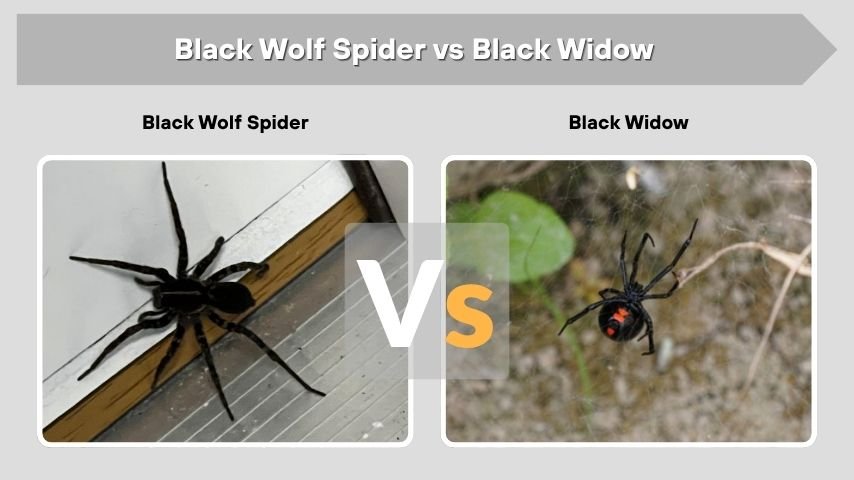
The black widow is one of the spiders people worry about most. Because some wolf spiders are dark, they are sometimes mistaken for black widows.
How to Tell Them Apart
Look for these differences:
- Body shape: Black widows have a shiny, rounded abdomen. Wolf spiders are hairy and more rugged.
- Markings: Female black widows often have a red hourglass mark under the abdomen. Wolf spiders do not.
- Webs: Black widows build irregular webs. Wolf spiders roam and hunt.
- Movement: Wolf spiders run quickly. Black widows usually stay near their webs.
- Color: Black widows are often glossy black. Wolf spiders are usually dull black, brown, or gray-black.
Wolf Spider Bite vs Black Widow Bite
A wolf spider bite is usually local and mild. A black widow bite can be more serious and may cause muscle cramps, severe pain, sweating, nausea, or weakness.
If you are unsure whether a bite came from a black widow, especially if symptoms spread beyond the bite area, get medical help. Do not rely on color alone to identify the spider.
Are Black Wolf Spiders Poisonous?
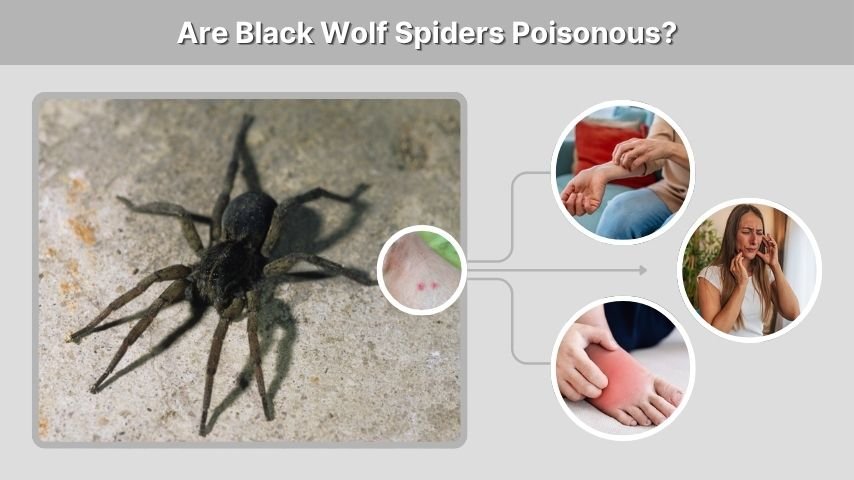
Many people ask, “Is a black wolf spider poisonous?” The better word is venomous, not poisonous. Wolf spiders have venom because they use it to subdue prey, but their venom is not considered dangerous to most people.
What Happens If a Black Wolf Spider Bites You?
A bite may cause:
- Sharp pain at the bite site
- Redness or swelling
- Mild itching
- Tenderness
- Small raised bump
- Irritation lasting a few days
Most wolf spider bites heal with basic care. Wash the area with soap and water, use a cold compress, and avoid scratching. Seek medical help if swelling spreads, pain becomes severe, infection develops, or the person bitten is a child, elderly adult, or someone with health concerns.
Do Wolf Spiders Bite People Often?
Wolf spiders do not usually bite unless they are trapped, pressed against skin, or handled. Many indoor bites blamed on spiders are never confirmed. If you find a wolf spider inside, avoid grabbing it with bare hands.
Why Black Wolf Spiders Come Inside the House
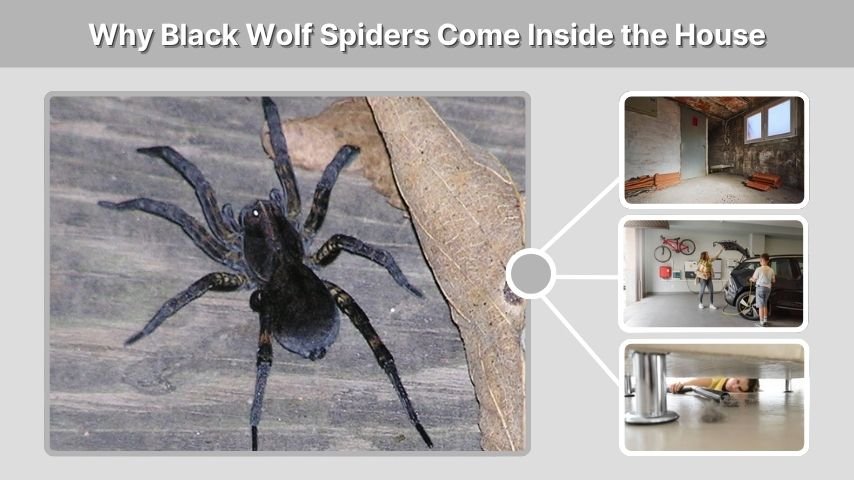
A black wolf spider in the house is usually looking for food, shelter, warmth, or moisture. They may enter through gaps under doors, cracks in foundations, vents, or damaged screens.
Common Indoor Hiding Places
Black wolf spiders may hide in:
- Basements
- Garages
- Crawl spaces
- Laundry rooms
- Storage boxes
- Closets
- Wall-floor edges
- Door thresholds
- Under furniture
They are more common indoors when outdoor conditions change, especially during colder months, heavy rain, or dry weather.
Are They a Sign of Infestation?
Seeing one wolf spider does not always mean you have an infestation. However, repeated sightings may mean there are insects inside your home. Wolf spiders follow food sources, so controlling indoor pests can also reduce spider activity.
Black Wolf Spider Size and Appearance
Black wolf spider size varies by species, age, and sex. Some are small and easy to overlook, while others look large enough to cause concern.
Small Black Wolf Spiders
A small black wolf spider may be a juvenile or a smaller species. Young wolf spiders can look darker and less patterned than adults. They may also be mistaken for jumping spiders, especially if they have pale spots or stripes.
Large Black Wolf Spiders
Large black wolf spiders are often females. Female wolf spiders may look bigger because of their broad body and egg sac. A mother wolf spider carrying spiderlings can look especially unusual because the babies ride on her back.
Male Black Wolf Spiders
Male wolf spiders are often slimmer and may have longer-looking legs. Some males have darker front legs, which leads to searches like “wolf spider with black front legs” or “wolf spider with two black legs.” Dark front legs alone are not enough for a certain ID, but they can be part of natural color variation.
Black and White Wolf Spider Markings
A black and white wolf spider may have light stripes, pale side markings, or gray-white bands. These markings can help with identification, but they can also cause confusion.
Black Spider With White Stripe on Back
If a spider is black with a white stripe on its back, it may be a wolf spider, but it could also be another type of hunting spider. Jumping spiders are often black with white markings and have a compact body. Grass spiders may have stripes and build funnel-like webs.
Black Wolf Spider With White Spots
White spots can appear because of natural markings, dust, injury, lighting, or reflection. Some spiders also look spotted when they are carrying young. A clear photo from above can help with identification, but do not handle the spider to get one.
Where Black Wolf Spiders Are Found
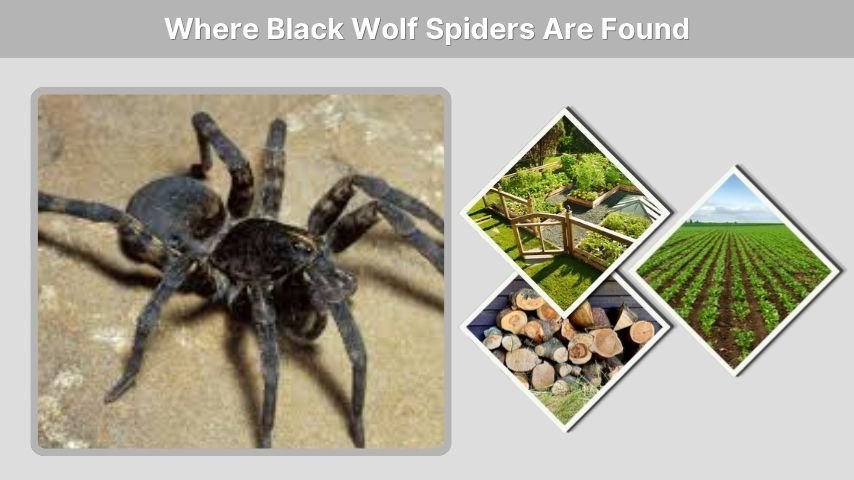
Searches for black wolf spiders often include states such as Ohio, Texas, Illinois, Indiana, Michigan, Missouri, New Jersey, California, Iowa, Pennsylvania, Wisconsin, Tennessee, Florida, New York, Arizona, Colorado, Oregon, Virginia, and Massachusetts.
Wolf spiders are widespread across North America and many other regions. The exact species will vary by location, but the general identification traits are similar.
Common Outdoor Areas
Black wolf spiders may live in:
- Lawns and gardens
- Leaf litter
- Mulch beds
- Wood piles
- Stone borders
- Fields
- Around foundations
- Under logs or debris
They help control insects outdoors and are generally beneficial in gardens.
Black Wolf Spiders in Texas, Ohio, and Other States
In warmer states like Texas, Arizona, Florida, and California, wolf spiders may be active for longer parts of the year. In colder states like Ohio, Michigan, Illinois, Wisconsin, and Pennsylvania, they may be noticed indoors more often when temperatures drop.
Regional searches are common, but most homeowners mainly need to know whether the spider is a wolf spider, black widow, brown recluse, or another medically important species.
Brown Recluse, Hobo Spider, and Other Lookalikes
Some keyword searches compare black wolf spiders with brown recluses, hobo spiders, and black house spiders. This is understandable because many spiders look similar at first glance.
Brown Recluse vs Black Wolf Spider
A brown recluse is usually tan to brown, not jet black. It has a smoother body, long thin legs, and a violin-shaped marking behind the eyes. Wolf spiders are hairier, stockier, and usually have more visible eye shine.
Brown recluse spiders also have six eyes, while wolf spiders have eight. Because eye counting is difficult without close inspection, avoid handling any spider you cannot identify.
Hobo Spider vs Wolf Spider
Hobo spiders and wolf spiders may both be brownish or dark. Hobo spiders build funnel-shaped webs, while wolf spiders actively hunt. If the spider is sitting in a funnel web, it is probably not a wolf spider.
What to Do If You Find a Black Wolf Spider
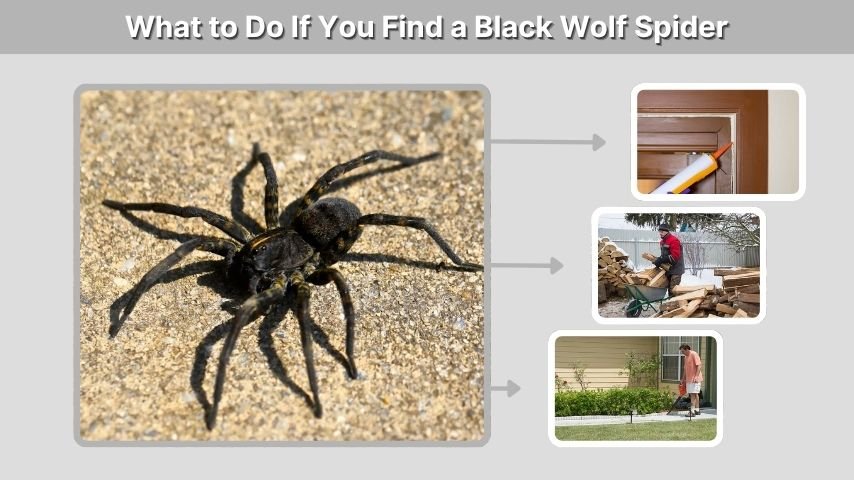
Finding a black wolf spider indoors does not always mean you need pest treatment. A single spider can usually be removed safely.
Safe Removal Steps
Use these simple steps:
- Place a cup or container over the spider.
- Slide stiff paper or cardboard underneath.
- Carry it outside away from the door.
- Release it in grass, mulch, or a garden area.
- Seal the entry point if you can find one.
Avoid crushing spiders with bare hands or trying to pick them up. Even harmless spiders may bite in defense if trapped.
Prevention Tips
To reduce black wolf spiders indoors:
- Seal gaps around doors and windows.
- Repair torn screens.
- Reduce clutter in garages and basements.
- Move firewood away from the house.
- Keep grass and vegetation trimmed near the foundation.
- Reduce insects inside the home.
- Use door sweeps and weather stripping.
Wolf spiders are often a symptom of insect activity or easy access points. Fixing those issues usually works better than simply killing individual spiders.
Do Wolf Spiders Eat Black Widows?
Some people search “wolf spider eats black widow” or “can a wolf spider kill a black widow.” Wolf spiders are predators and may eat other spiders if they can overpower them. However, that does not mean they should be used as pest control for black widows.
If you suspect black widows are living around your home, focus on proper identification, web removal, reducing clutter, and professional pest control if needed.
FAQs
Can a wolf spider be black?
Yes, a wolf spider can appear black, dark brown, gray-black, or almost jet black depending on the species, lighting, and age. Many wolf spiders also have stripes, bands, or pale markings. Color alone is not enough for identification, so look at body shape, eyes, movement, and web behavior.
Is a black wolf spider dangerous?
A black wolf spider is not usually dangerous to most people. It can bite if handled or trapped, but the bite is typically mild and causes local pain, redness, or swelling. Medical attention is recommended if symptoms are severe, spreading, infected, or if the spider may have been a black widow.
What is the difference between a black wolf spider and a black widow?
A black widow usually has a shiny black body, a round abdomen, and often a red hourglass marking underneath. A wolf spider is hairier, duller in color, stockier, and runs after prey instead of waiting in a web. Black widow bites are more medically concerning than wolf spider bites.
Why do I have black wolf spiders in my house?
Black wolf spiders enter homes while searching for insects, shelter, warmth, or moisture. They commonly appear in basements, garages, closets, and storage areas. Sealing cracks, reducing clutter, fixing door gaps, and controlling indoor insects can help reduce sightings.
Should I kill a black wolf spider?
You usually do not need to kill a black wolf spider. It helps control insects and is not aggressive toward people. The safest option is to trap it with a cup and paper, then release it outside. If you keep seeing many spiders, inspect your home for pest activity and entry points.