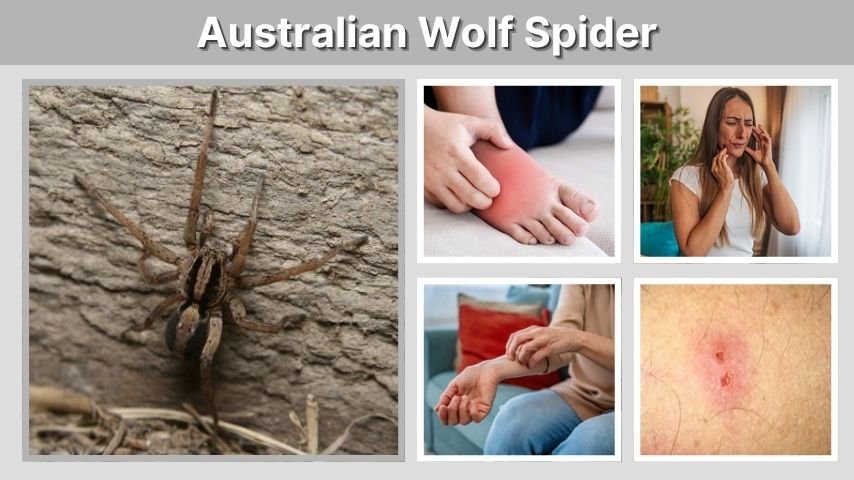
The Australian wolf spider is one of the most commonly searched spiders in Australia, mostly because of its speed, size, and hairy appearance. Many people spot one in the garden, near a burrow, or inside the house and immediately wonder if it is dangerous. This guide explains what wolf spiders look like, where they live, how big they get, and what to do if you find one.
What Is an Australian Wolf Spider?
Australian wolf spiders are ground-dwelling hunting spiders from the family Lycosidae. Unlike web-building spiders that wait for prey to fly into silk traps, wolf spiders actively chase insects and other small invertebrates. Their name comes from this hunting style, not because they live in packs or behave like wolves.
These spiders are found across many parts of Australia, including New South Wales, Victoria, Queensland, Western Australia, South Australia, suburban gardens, dry inland areas, coastal forests, grasslands, and bushland. Because they live close to the ground, people often notice them on lawns, paths, patios, sheds, garages, and sometimes inside homes.
Are Wolf Spiders Native to Australia?
Yes, many wolf spider species are native to Australia. There is not just one “Australian wolf spider.” The term usually refers to a group of related spiders that share similar features: strong legs, excellent eyesight, a hairy body, and active hunting behaviour.
Common Australian wolf spiders include garden wolf spiders and several ground-dwelling species that live in burrows. Some species are more often seen in suburban lawns, while others prefer forests, dry scrublands, or open soil.
Why People Search for Them
Most searches about wolf spiders in Australia come from concern. People want to know whether they are poisonous, venomous, dangerous, or likely to bite. Others are trying to tell the difference between a wolf spider and a huntsman spider, especially after seeing a large spider inside the house.
What Does an Australian Wolf Spider Look Like?
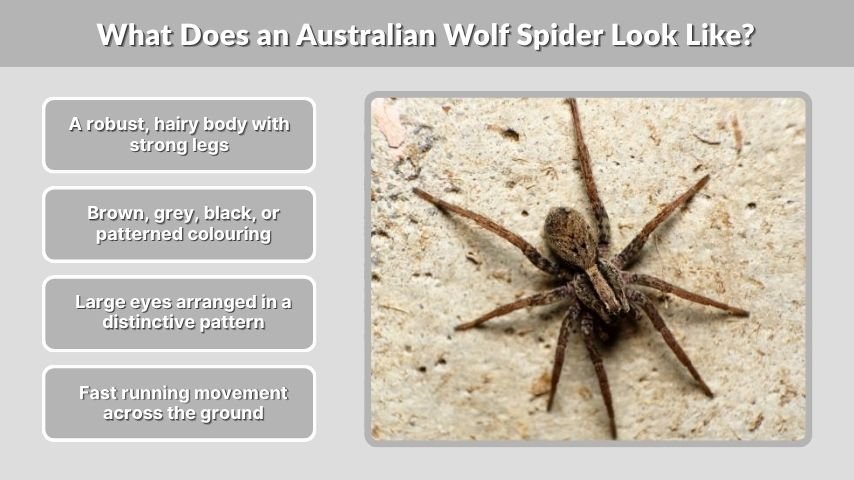
Australian wolf spiders are usually brown, grey, black, or mottled in colour. Their patterns help them blend into soil, bark, leaf litter, grass, and garden mulch. Some have stripes or markings on the body, while others look plain and dark.
The easiest clue is the spider’s body shape and movement. Wolf spiders are sturdy, fast-moving, and usually found on the ground rather than high on walls or ceilings.
Key Identification Features
Look for these features when identifying a wolf spider in Australia:
- A robust, hairy body with strong legs
- Brown, grey, black, or patterned colouring
- Large eyes arranged in a distinctive pattern
- Fast running movement across the ground
- No large web used for catching prey
- Possible burrow entrance in soil or lawn areas
Wolf spiders have excellent vision compared with many other spiders. At night, their eyes may reflect light if you shine a torch across grass or soil. This “eye shine” can make them easier to spot outdoors.
Australian Wolf Spider Size
Australian wolf spider size varies by species, age, and sex. Some are small and easy to overlook, while others are large enough to startle homeowners. Many common wolf spiders have a body length of around 10 to 35 mm, not including the legs, though exact size depends on the species.
People often search for “giant Australian wolf spider” or “biggest wolf spider Australia” after seeing a large specimen. While wolf spiders can look intimidating, much of their apparent size comes from their long legs and hairy appearance.
| Feature | Australian Wolf Spider |
|---|---|
| Common colours | Brown, grey, black, cream, or mottled |
| Body type | Sturdy, hairy, ground-dwelling |
| Web use | Does not build a prey-catching web |
| Main habitat | Gardens, lawns, burrows, leaf litter, bushland |
| Bite risk | Can bite if handled or trapped |
| Danger level | Usually not dangerous to healthy adults |
| Common confusion | Huntsman spiders and funnel-web spiders |
Where Do Wolf Spiders Live in Australia?
Wolf spiders live in many Australian environments. You can find them in gardens, grasslands, woodlands, forests, coastal regions, dry inland areas, and suburban yards. They are adaptable spiders that use ground cover, soil, rocks, bark, and leaf litter for shelter.
Some wolf spiders wander freely, while others live in burrows. Burrowing wolf spiders may dig vertical holes in the ground and wait near the entrance for prey. These burrows are often found in lawns, garden beds, bare soil, and bushland tracks.
Wolf Spider Holes in Australia
A wolf spider hole may look like a small, round opening in the soil. Some burrows are plain, while others may have a silk-lined entrance. In certain species, the spider stays close to the burrow and retreats quickly when disturbed.
Signs that a hole may belong to a wolf spider include:
- A neat, round opening in soil or lawn
- A burrow without a messy web around it
- Spider activity at night near the entrance
- A spider retreating quickly into the hole
- Several similar holes in suitable garden soil
Not every hole in the ground is made by a wolf spider. Ants, beetles, wasps, crickets, and other invertebrates also make small soil openings. If the hole is in a lawn or garden and you see a fast brown spider nearby, a wolf spider is one possibility.
Wolf Spider Season in Australia
People often search for “wolf spider season Australia” when spider sightings increase. Wolf spiders may be seen at different times of year depending on local climate, rainfall, and breeding activity. In many areas, they become more noticeable during warmer months because insects are active and spiders are hunting.
Heavy rain or flooding can also push ground-dwelling spiders out of burrows, which may explain sudden sightings around homes, patios, garages, and doorways.
Are Australian Wolf Spiders Dangerous?
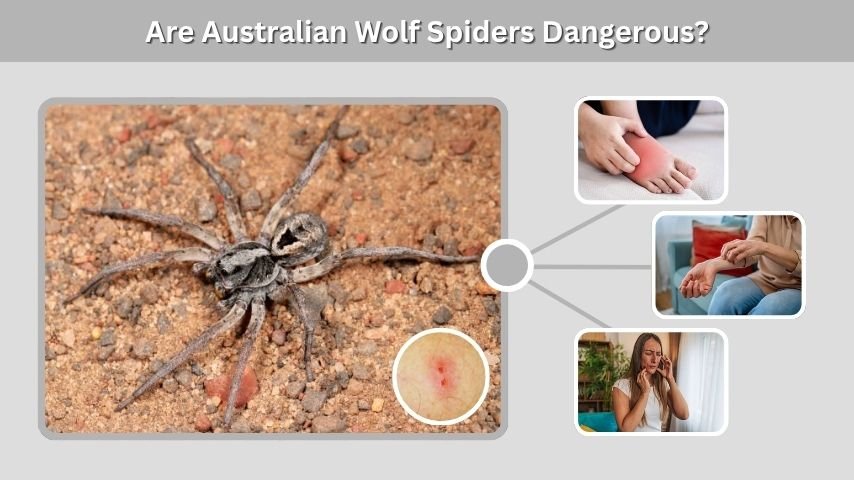
Australian wolf spiders are venomous, but they are not considered highly dangerous to most people. Like many spiders, they use venom to subdue prey. This does not mean they are “poisonous” in the way some people use the word.
The difference matters:
- Venomous means the spider can inject venom through a bite.
- Poisonous means something is harmful if touched, eaten, or absorbed.
- Wolf spiders are venomous, but their bites are usually not life-threatening.
- They are not aggressive toward people and usually try to escape.
- A bite is more likely if the spider is handled, pressed, or trapped.
For healthy adults, a wolf spider bite is usually a local injury. However, children, older adults, pets, and people with allergies or unusual symptoms should be treated more cautiously.
Australian Wolf Spider Bite Symptoms
A wolf spider bite may cause local pain, redness, swelling, itchiness, or tenderness. Some people compare the discomfort to a bee sting. In less common cases, symptoms may last longer or feel more intense.
Possible symptoms include:
- Sharp pain at the bite site
- Redness or mild swelling
- Itching or irritation
- Local tenderness
- Fang marks, though these are not always visible
- Nausea, dizziness, or a fast pulse in uncommon cases
It is difficult to identify a spider bite from the mark alone unless the spider was clearly seen biting. Many skin irritations, infections, insect bites, and allergic reactions can look similar.
What to Do After a Wolf Spider Bite
If you suspect a wolf spider bite, stay calm and clean the area. Most minor bites can be managed with basic first aid, but medical advice is important if symptoms are severe, unusual, or persistent.
Basic steps include:
- Wash the bite area with soap and water.
- Apply a cold pack wrapped in cloth to reduce pain and swelling.
- Avoid scratching the bite.
- Monitor symptoms over the next few hours.
- Seek medical help if pain, swelling, nausea, dizziness, or other symptoms continue.
Call emergency services if the person has trouble breathing, collapses, has severe swelling, or shows signs of a serious allergic reaction. If you are unsure what spider caused the bite, it is safer to get professional advice.
Wolf Spider in House Australia: Should You Worry?
Finding a wolf spider in the house can be unsettling, especially because they move quickly. However, a wolf spider indoors usually means it has wandered in by accident or followed prey such as insects.
They may enter houses through gaps under doors, cracks, open windows, garages, laundry areas, or sliding doors. They are more likely to be seen near floor level than high on walls.
Why Wolf Spiders Come Indoors
Common reasons include:
- Looking for insects to eat
- Escaping rain, heat, or flooding
- Wandering during mating season
- Entering through gaps near doors or windows
- Hiding in shoes, boxes, laundry, or stored items
If you find one inside, avoid picking it up with your hands. Use a container and stiff card to move it outside, or contact a pest control professional if there are frequent sightings.
How to Reduce Wolf Spiders Around the Home
Wolf spiders are useful predators, but most people do not want them indoors. Prevention is mainly about reducing hiding places and entry points.
Try these steps:
- Seal gaps under doors and around windows.
- Install or repair flyscreens.
- Keep garages, sheds, and storage areas tidy.
- Move firewood, bricks, and debris away from the house.
- Reduce outdoor lighting that attracts insects.
- Shake out shoes, gloves, and garden clothing before use.
- Keep lawns trimmed and remove excess leaf litter near entrances.
You do not need to remove every spider from your yard. Outdoors, wolf spiders help control insects and form part of the local ecosystem.
Australian Wolf Spider vs Huntsman Spider
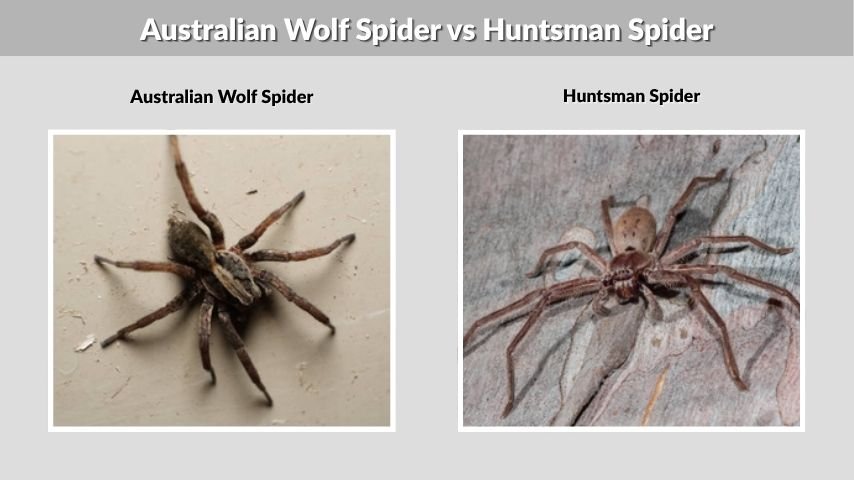
The search term “Australian wolf spider vs huntsman” is common because both spiders can be large, brown, fast, and alarming indoors. However, they are different in appearance and behaviour.
Wolf spiders are usually ground hunters with compact, sturdy bodies. Huntsman spiders often have flatter bodies and long legs that spread sideways. Huntsman spiders are also more likely to appear on walls, ceilings, tree trunks, and behind bark.
How to Tell the Difference
A wolf spider usually:
- Runs along the ground
- Has a sturdy, compact body
- May live in a burrow
- Has large forward-facing eyes
- Is often found in lawns, soil, or garden beds
A huntsman spider usually:
- Has a flatter body
- Has long, sideways-spreading legs
- Often rests on walls or ceilings
- Hides under bark, behind furniture, or in cars
- Does not live in a ground burrow
Both spiders can bite if handled, but neither should be automatically treated as a deadly threat. The safest approach is to avoid touching any unknown spider.
Australian Wolf Spider Facts
Wolf spiders are more interesting than their scary reputation suggests. They have behaviours that make them stand out from many other Australian spiders.
Notable Facts
Female wolf spiders carry their egg sacs attached to their bodies. After the spiderlings hatch, they climb onto the mother’s back and stay there until they are ready to survive on their own. This is one of the most recognisable wolf spider behaviours.
Other useful facts include:
- They hunt prey instead of using a capture web.
- They rely heavily on eyesight and speed.
- Some species dig burrows in soil.
- They eat insects and other small invertebrates.
- They are found across many Australian habitats.
- They usually avoid people when left alone.
- They may be more visible after rain or during warm weather.
Do Wolf Spiders Jump?
Wolf spiders can move suddenly and may lunge at prey, but they are not the same as jumping spiders. They mainly run, chase, and pounce over short distances. Their quick movement is one reason people often overestimate the danger.
FAQs
Are Australian wolf spiders poisonous?
Australian wolf spiders are venomous, not poisonous. They can inject venom through a bite, but they are not considered highly dangerous to most people. A bite may cause local pain, redness, swelling, or itching. Serious reactions are uncommon, but medical help is recommended if symptoms are severe or persistent.
How big is an Australian wolf spider?
Australian wolf spider size depends on the species. Many have a body length of roughly 10 to 35 mm, not including the legs. Larger individuals can look much bigger because of their hairy body and long legs. Females are often larger and more noticeable than males.
What should I do if I find a wolf spider in my house?
Do not handle it with bare hands. Place a container over the spider, slide stiff paper or cardboard underneath, and release it outside away from doors. If you see wolf spiders indoors often, seal entry gaps, reduce clutter, repair screens, and remove insects that may attract them.
Are wolf spiders dangerous to dogs or cats?
A wolf spider bite may irritate a pet, especially if the animal paws at or mouths the spider. Most encounters are not serious, but pets can react differently from humans. Contact a vet if your dog or cat shows swelling, pain, vomiting, weakness, or unusual behaviour after a suspected bite.
What is the difference between a wolf spider and a huntsman?
Wolf spiders are ground-dwelling hunters with sturdy bodies and may live in burrows. Huntsman spiders are flatter, with long sideways legs, and are often found on walls, ceilings, bark, or inside cars. Both can look large and move fast, but they belong to different spider families.