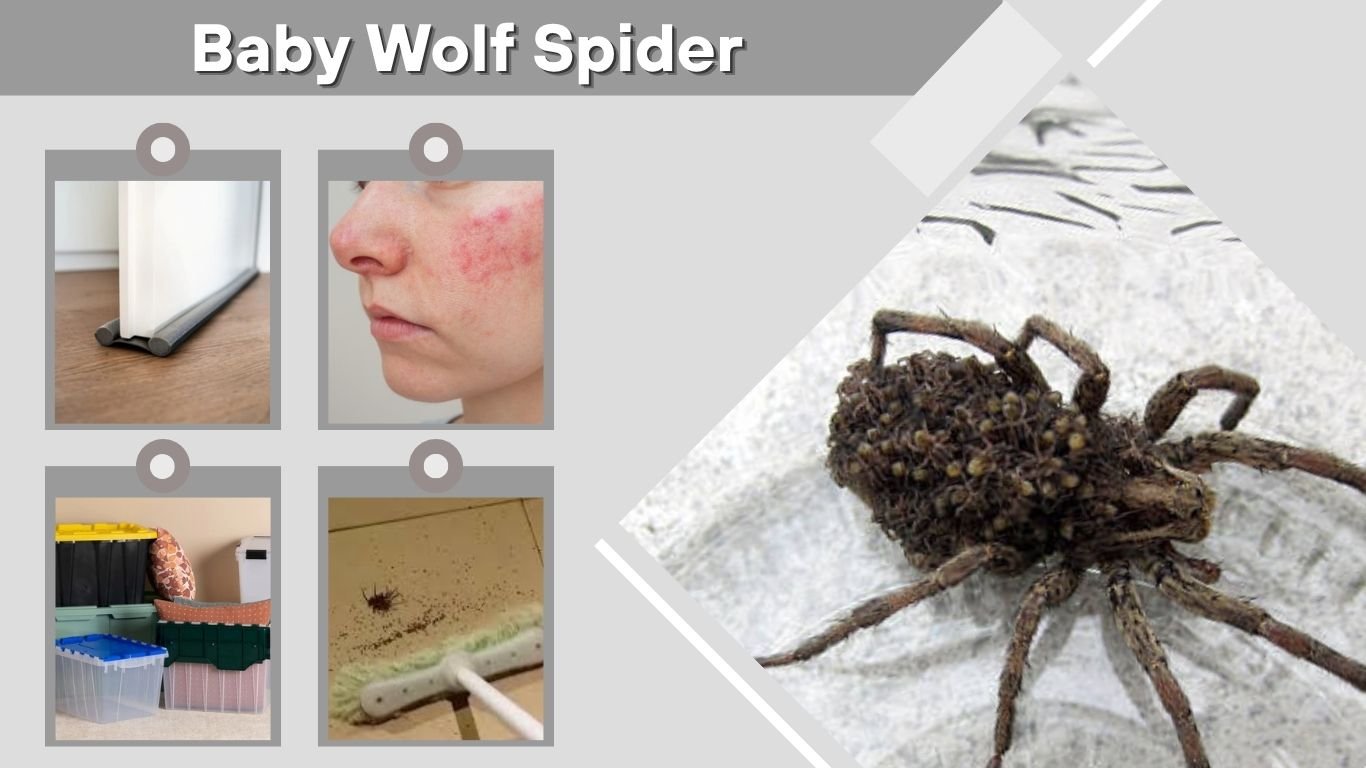
A baby wolf spider is a young spiderling that has recently hatched from a female wolf spider’s egg sac. These tiny spiders often attract attention because wolf spider mothers famously carry their babies on their backs. Seeing a large wolf spider covered in moving spiderlings can look alarming, especially indoors, but this behavior is normal and part of the wolf spider life cycle.
What Is a Baby Wolf Spider?
A baby wolf spider is the immature stage of a wolf spider. After hatching, these spiderlings are very small, soft-bodied, and usually lighter in color than adults. They look like tiny versions of adult wolf spiders, although their markings may not be as clear yet.
Wolf spiders belong to a group of hunting spiders. They do not build sticky webs to catch prey. Instead, they move quickly across the ground, hunting insects and other small arthropods. Baby wolf spiders begin life with the same basic body shape and instincts as adults, but they must grow through several molts before becoming mature.
Are Baby Wolf Spiders Common?
Yes, baby wolf spiders are common in many yards, gardens, lawns, fields, sheds, basements, and garages. People often notice them in spring, summer, or early fall, depending on the local climate and species.
They may appear in large numbers after hatching because one female can produce many spiderlings at once. However, seeing baby wolf spiders does not always mean there is a dangerous infestation. It often means a female wolf spider recently hatched an egg sac nearby.
Are Baby Wolf Spiders Dangerous?
Baby wolf spiders are not considered dangerous to humans. Like adult wolf spiders, they may be capable of biting if crushed or handled, but they are not aggressive. Because they are tiny, their bites are usually less concerning than adult bites.
Most people are more startled by baby wolf spiders than harmed by them. The bigger issue is usually fear, surprise, or the possibility that many spiderlings may scatter if the mother is disturbed.
What Does a Baby Wolf Spider Look Like?
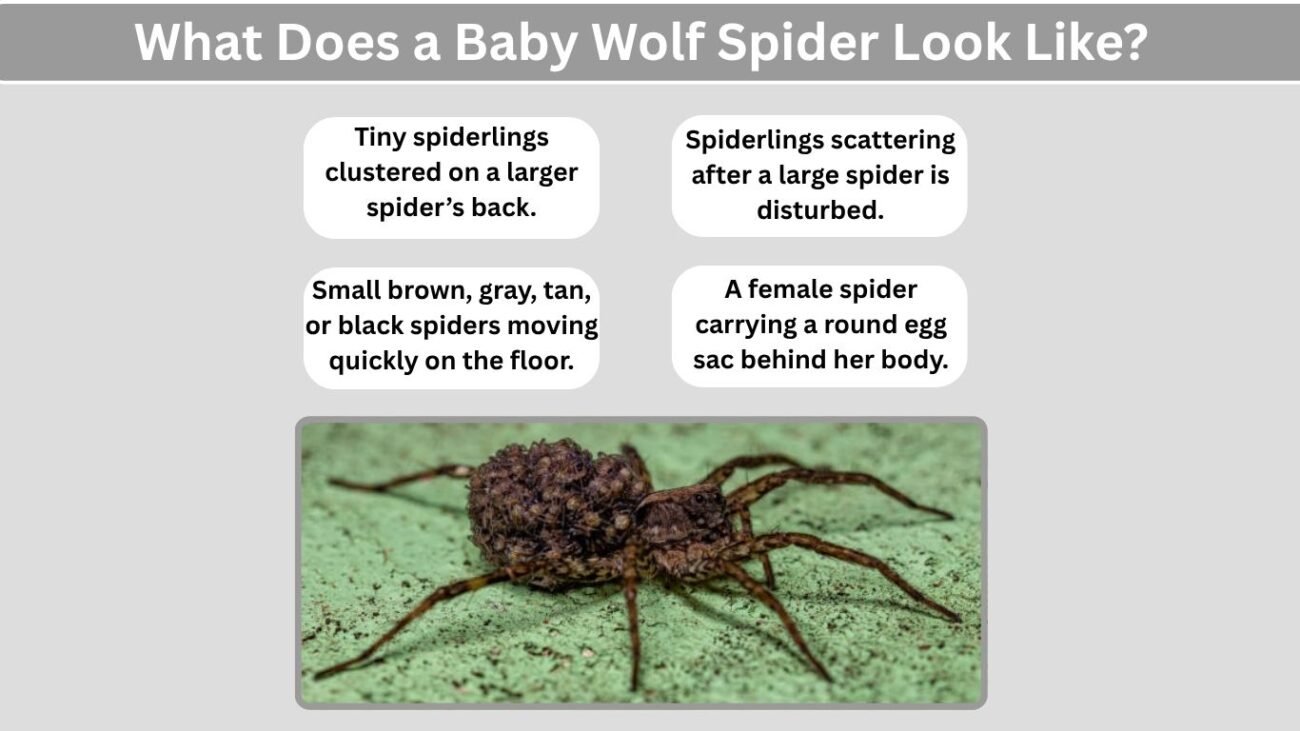
A baby wolf spider looks like a very small version of an adult wolf spider. It has eight legs, a compact body, and a fast-moving hunting style. Baby wolf spiders may appear tan, brown, gray, black, or slightly translucent when newly hatched.
Their colors can change as they grow. Some may look pale at first and become darker after molting. Others may show faint stripes or mottled markings that help them blend into soil, grass, leaves, and mulch.
Baby Wolf Spider Size
Baby wolf spiders are very small when they first hatch. Many are only a few millimeters long. As they grow, they shed their outer skin several times. Each molt allows them to become larger and more developed.
Adult wolf spiders vary widely in size depending on the species. Some remain relatively small, while others become large, hairy spiders that are easy to notice indoors or outdoors.
Baby Wolf Spider Identification
You may be looking at baby wolf spiders if you notice:
- Tiny spiderlings clustered on a larger spider’s back
- Small brown, gray, tan, or black spiders moving quickly on the floor
- Spiderlings scattering after a large spider is disturbed
- A female spider carrying a round egg sac behind her body
- Small spiders in garages, basements, lawns, sheds, or garden beds
The strongest clue is the mother carrying young on her back. This is one of the most recognizable wolf spider behaviors.
Why Do Wolf Spiders Carry Babies on Their Back?
Female wolf spiders are known for unusual maternal care. First, the female makes an egg sac and attaches it to the spinnerets at the rear of her abdomen. She carries this egg sac as she moves around. After the eggs hatch, the tiny spiderlings climb onto the mother’s back and stay there for a short period.
This behavior helps protect the young during their most vulnerable stage. Instead of leaving the spiderlings alone after hatching, the mother carries them until they are ready to disperse.
Wolf Spider With Babies on Back
A wolf spider with babies on her back may look like she is covered in dirt, bumps, or moving fuzz. When light shines on her, the tiny eyes of the spiderlings may reflect, making the mass of babies easier to see.
This sight can be frightening, but it is normal. The babies are not parasites, and they are not attacking the mother. They are simply riding on her back until they are developed enough to leave.
Why the Babies Stay With the Mother
Baby wolf spiders stay on the mother’s back because it gives them:
- Protection from predators
- A safe place after hatching
- Time to develop before dispersing
- Better survival chances during early life
- Moisture and shelter while they are still vulnerable
This is one reason wolf spiders are often described as more attentive mothers than many other spiders.
How Many Babies Does a Wolf Spider Have?
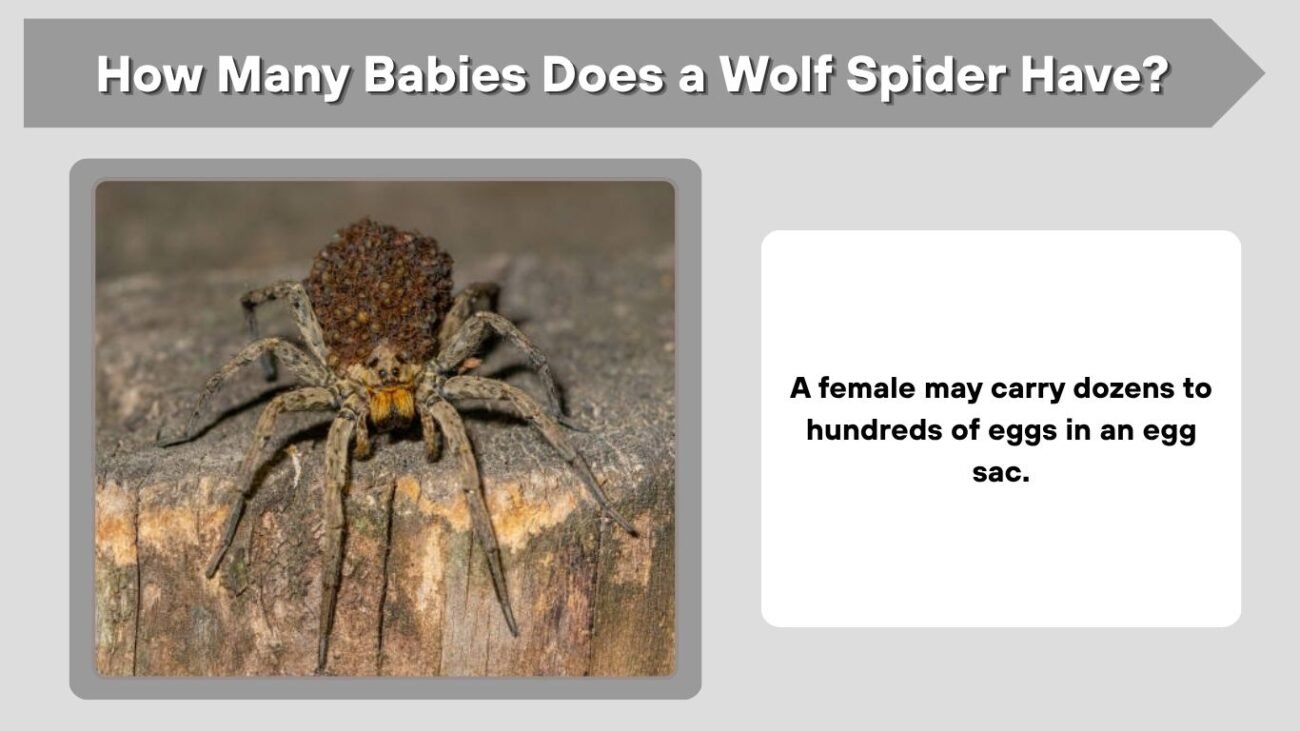
The number of babies a wolf spider can have depends on the species, the size of the female, and environmental conditions. A female may carry dozens to hundreds of eggs in an egg sac. In some cases, larger species may produce very large numbers of spiderlings.
Not all baby wolf spiders survive. Many are eaten by predators, die from dry conditions, or fail to find enough food. Producing many young helps increase the chance that at least some survive to adulthood.
| Topic | Common Answer | What It Means |
| How many babies? | Dozens to hundreds | Larger females may produce more eggs |
| Where are the babies? | On the mother’s back | Spiderlings ride after hatching |
| How long do they stay? | Several days to around two weeks | Timing varies by species and conditions |
| Do they need the mother? | At first, yes | They rely on her for protection early on |
| Do they all survive? | No | Many die before adulthood |
How Many Babies Can a Wolf Spider Carry?
A female wolf spider can carry a large number of spiderlings on her back. The exact number can vary widely. A smaller wolf spider may carry fewer young, while a larger female may carry many more.
When people see a mother wolf spider indoors, the number of babies can look overwhelming. However, most spiderlings will eventually disperse, and many will not survive long indoors if food, moisture, and shelter are limited.
Do Wolf Spider Babies Scatter?
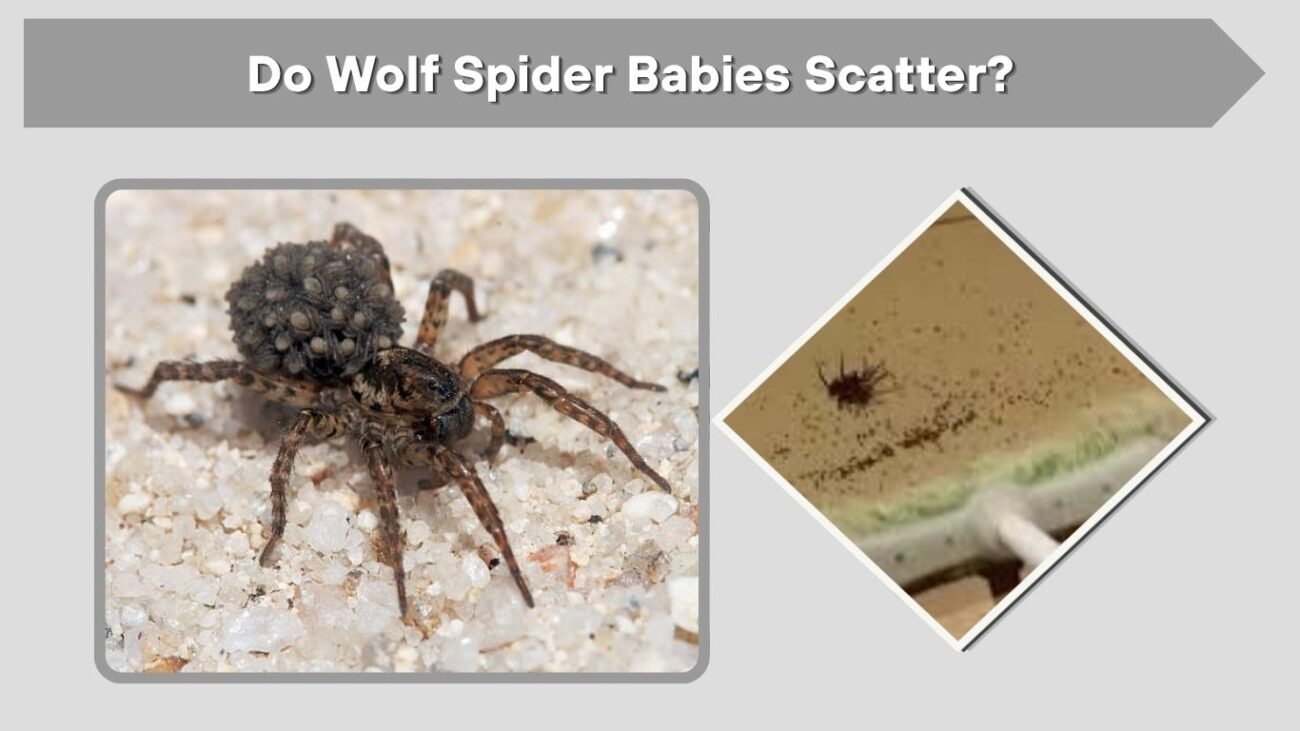
Yes, wolf spider babies may scatter if the mother is disturbed, crushed, sprayed, or handled. This is one reason people panic when they try to kill a wolf spider with babies on her back. The sudden movement of many tiny spiderlings can make it look like the spider has “exploded.”
The babies are not coming out of the mother’s body. They were already riding on her back and simply ran away when disturbed.
Why Baby Wolf Spiders Scatter
Baby wolf spiders scatter as a survival response. When danger appears, spreading out gives some of them a better chance of escaping. This can happen if:
- The mother is stepped on
- The spider is hit with an object
- A vacuum or broom disturbs her
- Pesticide spray makes the spiderlings move
- Someone tries to catch or remove the spider
If you see babies scatter indoors, stay calm. They are tiny and vulnerable, and many will not survive inside a dry home.
Can Wolf Spider Babies Survive Without Mom?
Baby wolf spiders can survive without their mother once they are ready to leave her back and disperse. However, very young spiderlings are more vulnerable if separated too early. While riding on the mother, they are still in a protected stage.
After they leave, they begin living independently. They must find tiny prey, avoid predators, and locate suitable hiding places. They do not continue receiving care after dispersal.
What Happens After They Leave the Mother?
Once baby wolf spiders leave the mother, they spread out into the surrounding area. Outdoors, they may hide in grass, soil, leaf litter, mulch, or under objects. Indoors, they may move into cracks, corners, basements, garages, or cluttered storage areas.
At this stage, each spiderling must survive alone. They grow by molting and gradually become larger hunters.
Do Wolf Spider Babies Eat Their Mother?
Wolf spider babies do not normally eat their mother. This is a common myth, likely caused by confusion with other spider behaviors or the frightening appearance of many babies crawling over the female’s body.
The spiderlings ride on the mother’s back for protection. They are not feeding on her. When they are ready, they disperse and begin hunting tiny prey on their own.
Do Wolf Spider Mothers Eat Their Babies?
A female wolf spider’s main role is to protect her egg sac and carry the spiderlings after hatching. Cannibalism can happen among spiders in some situations, especially under stress or food shortage, but it is not the normal purpose of the mother-baby relationship in wolf spiders.
The typical pattern is simple: egg sac, hatching, babies on back, then dispersal.
Baby Wolf Spider in the House
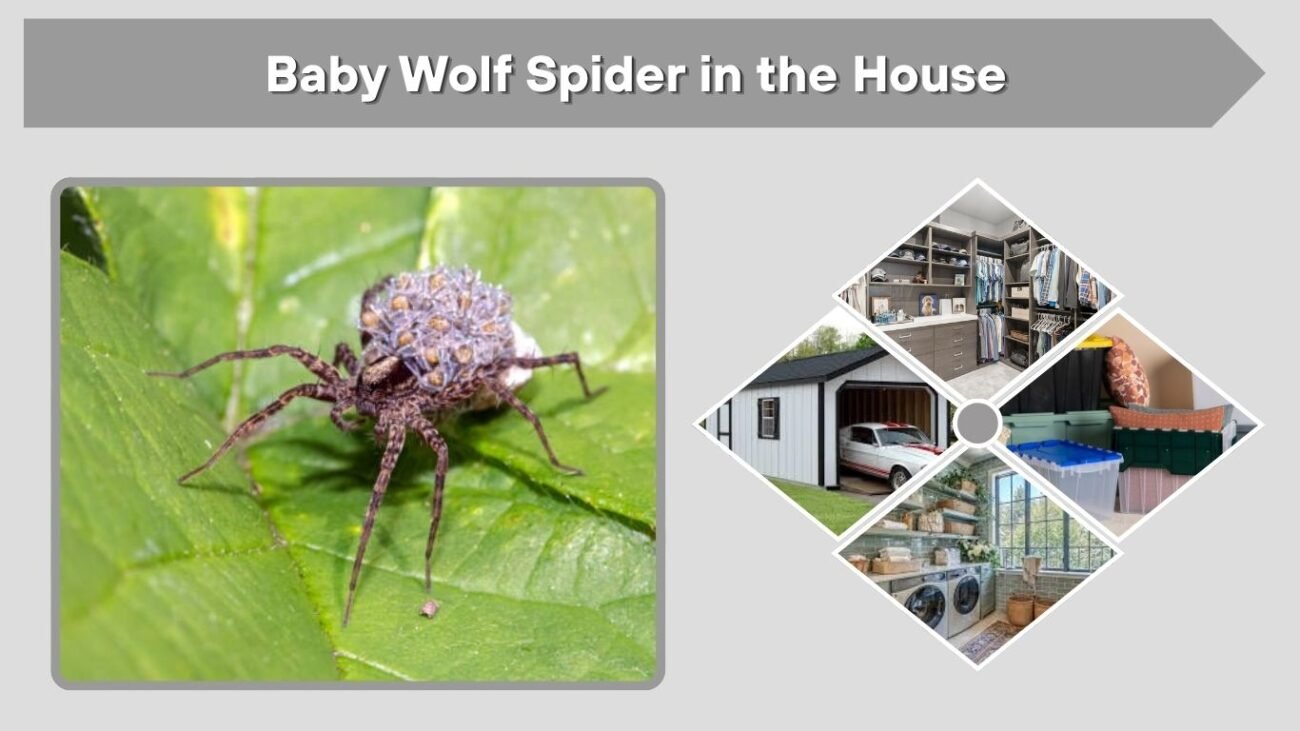
Finding a baby wolf spider in the house usually means one wandered inside or a female with an egg sac or babies entered earlier. Wolf spiders may come indoors through gaps under doors, cracks in foundations, torn screens, garage openings, or around utility lines.
A single baby wolf spider is usually not a major concern. Multiple babies may mean a female recently carried spiderlings indoors or hatched nearby.
Where Baby Wolf Spiders Hide Indoors
Baby wolf spiders may hide in:
- Basements
- Garages
- Closets
- Storage boxes
- Laundry rooms
- Under furniture
- Around doorways
- Near windows
- Cracks and wall edges
- Cluttered corners
They prefer places where they can stay hidden and find tiny insects.
Does a Baby Wolf Spider Mean Infestation?
Not always. Wolf spiders are solitary hunters, not social insects. They do not form colonies like ants or termites. However, if you are seeing many spiderlings indoors, it may mean there are good hiding spots, entry points, or insect prey attracting them.
The best approach is to remove the spiders you see, reduce clutter, seal entry points, and control the insects they eat.
What to Do If You Find a Wolf Spider With Babies
If you find a wolf spider carrying babies, avoid crushing it if possible. Crushing the spider can cause the babies to scatter. Instead, use a careful removal method.
Safer Removal Options
You can try:
- Placing a clear container over the spider
- Sliding stiff paper or cardboard underneath
- Carrying it outside and releasing it away from the home
- Using a vacuum with a hose attachment if you cannot safely capture it
- Emptying the vacuum outside afterward if needed
If you are uncomfortable handling spiders, use a long-handled tool, call a pest control professional, or focus on prevention.
How to Kill a Wolf Spider With Babies
Many people search for how to kill a wolf spider with babies because they panic when they see one indoors. The cleaner option is usually removal rather than crushing. If you do use a vacuum, it can reduce the chance of spiderlings scattering across the floor.
Avoid smashing the spider with a shoe or object if babies are visible on her back. That is the situation most likely to cause spiderlings to spread out.
Baby Wolf Spider Bite
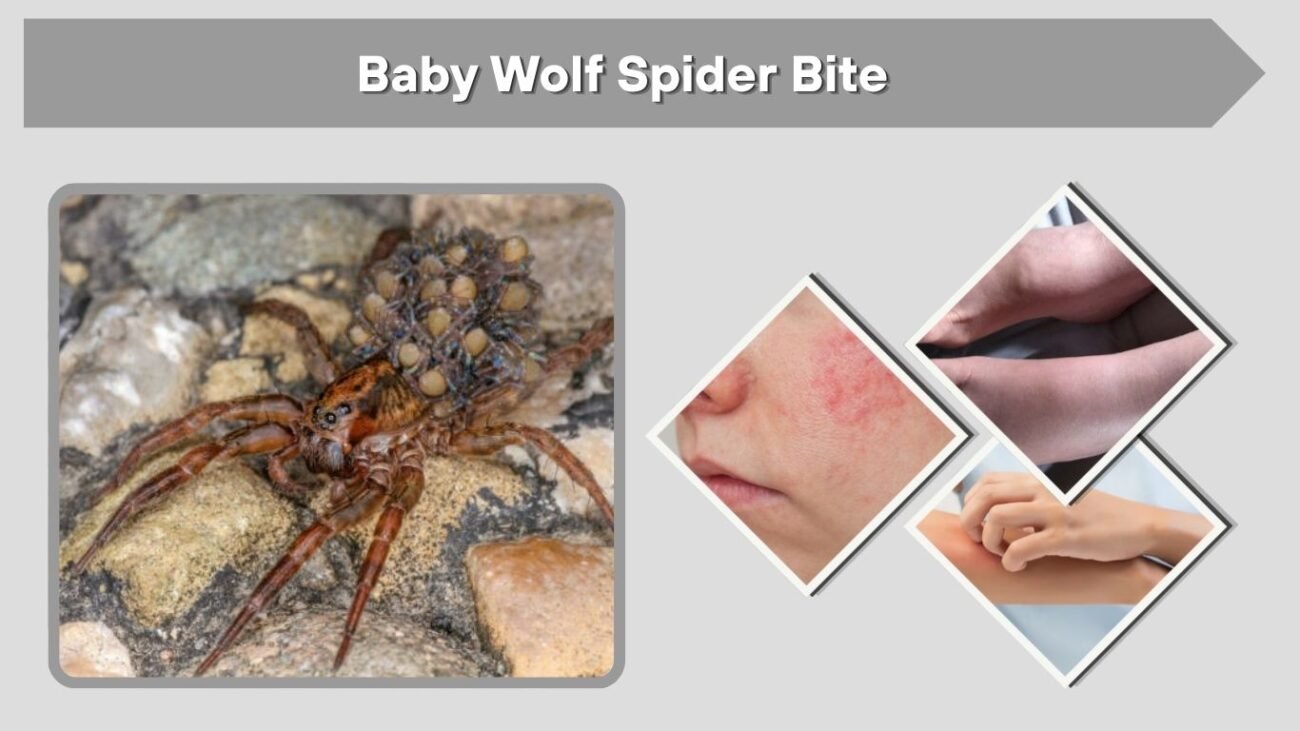
A baby wolf spider bite is unlikely but possible if the spider is trapped against the skin. Because baby wolf spiders are tiny, they are usually less able to cause noticeable symptoms than adults.
Still, any small bite-like mark can become irritated if scratched. It is also easy to mistake other insect bites, skin irritation, or minor infections for spider bites.
Baby Wolf Spider Bite Symptoms
Possible symptoms may include:
- Mild redness
- Slight swelling
- Itching
- Minor soreness
- A small raised bump
- Brief stinging or irritation
Seek medical advice if a bite-like mark becomes very painful, spreads, drains pus, causes fever, or triggers symptoms such as trouble breathing or swelling of the face or throat.
Baby Wolf Spider vs Brown Recluse
Baby wolf spiders are sometimes confused with brown recluse spiders because both can be brown. However, they are different spiders with different behaviors.
Wolf spiders are active hunters and often look hairy or patterned. Brown recluse spiders are usually more uniform in color and are known for a violin-shaped marking on the body, though that marking can be hard to see.
Basic Differences
Baby wolf spiders often:
- Move quickly across open floors or ground
- Have a more robust, hunting-spider body
- May appear with a mother carrying babies
- Can have stripes or mottled markings
- Are commonly found in grass, garages, and basements
Brown recluse spiders often:
- Prefer hidden, undisturbed indoor areas
- Have a more delicate body shape
- Are not known for carrying babies on the back
- May have a violin-like marking on the cephalothorax
- Are more medically significant in areas where they live
Do not rely only on color for identification. Many spiders are brown.
How to Prevent Baby Wolf Spiders Indoors
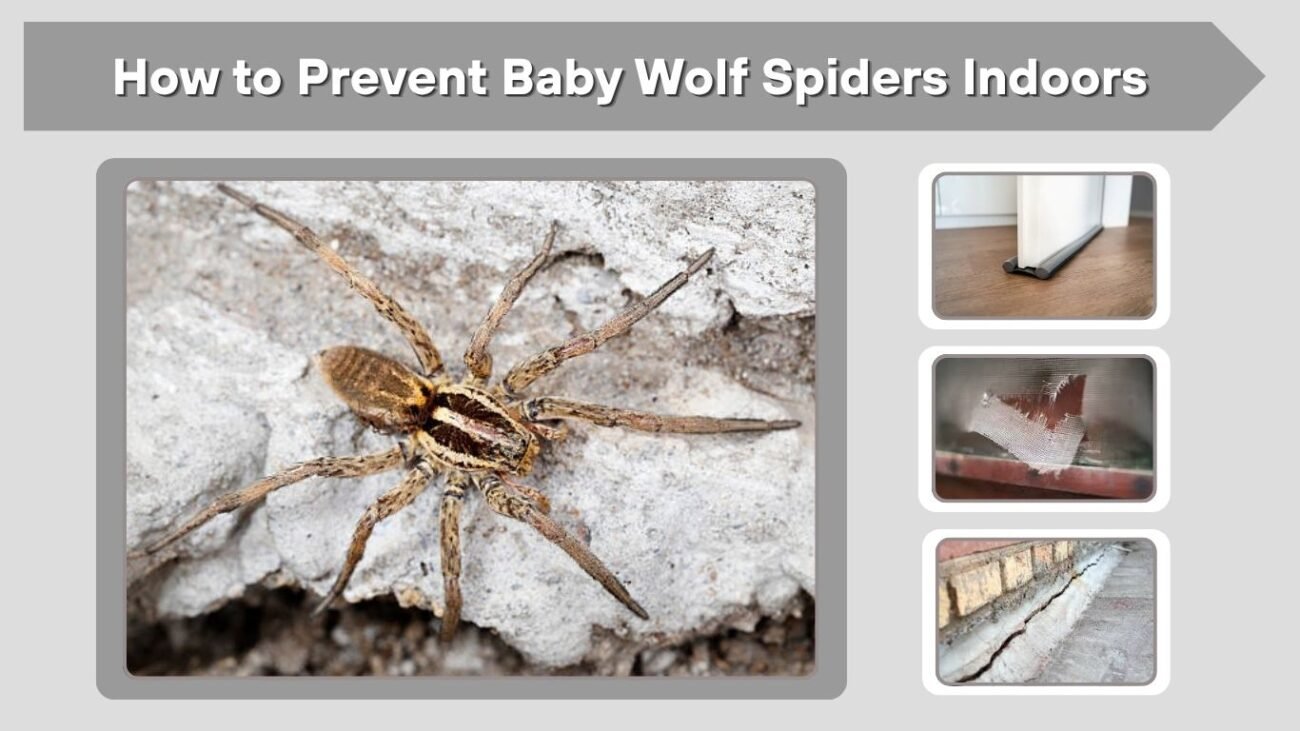
The best way to prevent baby wolf spiders is to make your home less attractive to adult wolf spiders. Since wolf spiders hunt insects, reducing insect activity can also reduce spider activity.
Prevention Tips
To keep wolf spiders and spiderlings out:
- Seal gaps under doors
- Repair torn window screens
- Close cracks around foundations
- Reduce clutter in garages and basements
- Store boxes off the floor
- Shake out shoes, gloves, and stored clothing
- Vacuum corners and edges regularly
- Move firewood and debris away from the house
- Keep grass and vegetation trimmed near the foundation
These steps help reduce hiding places and entry points.
Outdoor Yard Tips
Wolf spiders are helpful predators outdoors because they eat insects. You do not need to remove every wolf spider from your yard. Instead, focus on keeping them out of living spaces.
Keep leaf piles, mulch, stones, and woodpiles away from doors and foundation walls. Use outdoor lighting carefully, since lights can attract insects, which may attract spiders.
FAQs
What does a baby wolf spider look like?
A baby wolf spider looks like a tiny version of an adult wolf spider. It has eight legs, a small body, and may be tan, brown, gray, black, or slightly pale after hatching. Young spiderlings often appear clustered on the mother’s back.
Why do wolf spiders carry babies on their back?
Female wolf spiders carry babies on their backs to protect them after hatching. Before that, the mother carries her egg sac attached to her spinnerets. Once the spiderlings hatch, they climb onto her back until they are ready to disperse.
How many babies does a wolf spider have?
A wolf spider can have dozens to hundreds of babies, depending on the species and size of the female. Not all spiderlings survive. Many die from predators, lack of food, dry conditions, or other natural challenges.
Can wolf spider babies survive without mom?
Wolf spider babies can survive without their mother once they are ready to disperse. Very young spiderlings are more vulnerable if separated too early, but after leaving the mother’s back, they live independently and begin hunting tiny prey.
What should I do if I find a wolf spider with babies?
Avoid crushing it if possible because the babies may scatter. Use a container and cardboard to move it outside, or use a vacuum if capture is not practical. Then seal entry points, reduce clutter, and remove insects that may attract spiders.