








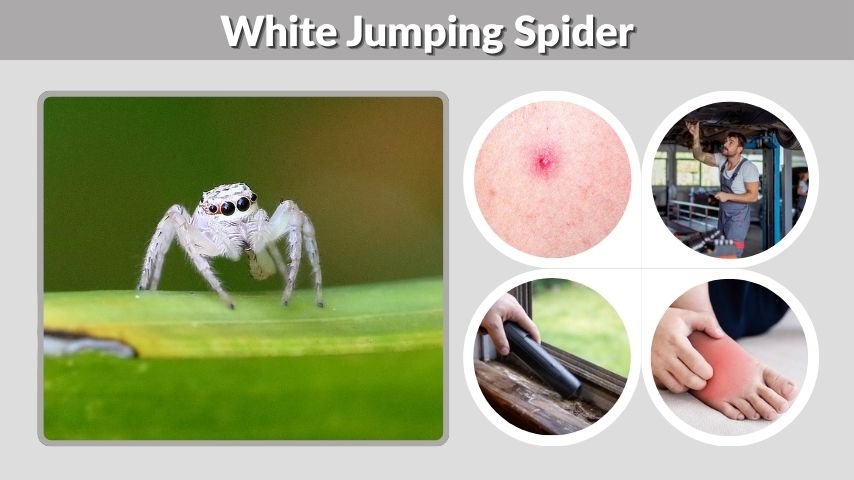
A white jumping spider can look unusual because most people expect jumping spiders to be black, brown, or brightly marked. Searches for terms like “white jumping spider,” “jumping spider white,” “tiny white jumping spider,” and “small white jumping spider” usually come from people trying to identify a pale spider they found indoors, in the garden, or online. In most cases, these spiders are not dangerous and are known more for their curious behavior than for causing harm.
What Is a White Jumping Spider?
A white jumping spider is not always one single species. The phrase usually describes any jumping spider that appears white, pale gray, cream, or has strong white markings. Some may be naturally pale, while others only look white because of lighting, age, sex, or pattern variation.
Jumping spiders belong to the family Salticidae, a large group of spiders known for excellent eyesight, compact bodies, and short jumping movements. Unlike web-building spiders, they actively hunt insects. They stalk prey, leap toward it, and use silk mainly as a safety line or resting retreat.
Why People Search for White Jumping Spiders
Most people search for white jumping spiders because they notice one of these features:
- A pale or white body
- A white dot on the back
- White spots on a darker body
- White stripes on the legs or abdomen
- A fuzzy or fluffy appearance
- A small spider that jumps instead of crawling slowly
- A spider sold online as a pet
Because jumping spiders come in many colors and patterns, a “white jumping spider” may be a white-jawed jumping spider, a pale regal jumping spider, a white-spotted jumper, or another light-colored species.
White Jumping Spider Keyword Analysis
The keyword data shows that searchers mostly want help with identification. The main keyword, “white jumping spider,” has the strongest search volume, while related terms such as “jumping spider white,” “white jawed jumping spider,” and “white regal jumping spider” show interest in specific species or color forms.
| Keyword Group | Example Keywords | Search Intent |
|---|---|---|
| Main identification | white jumping spider, jumping spider white | Identify a pale jumping spider |
| Species names | white jawed jumping spider, white regal jumping spider, white cheeked jumping spider | Learn about specific spiders |
| Markings | jumping spider with white dot, white spotted jumping spider, white stripe | Match visible body patterns |
| Size and appearance | tiny white jumping spider, small white jumping spider, fluffy white jumping spider | Confirm if the spider is normal or dangerous |
| Pet/buying terms | white jumping spider for sale, white Bahamas jumping spider for sale | Find pet jumping spiders |
This means the article should answer both homeowner questions and beginner pet-keeper questions.
How to Identify a White Jumping Spider
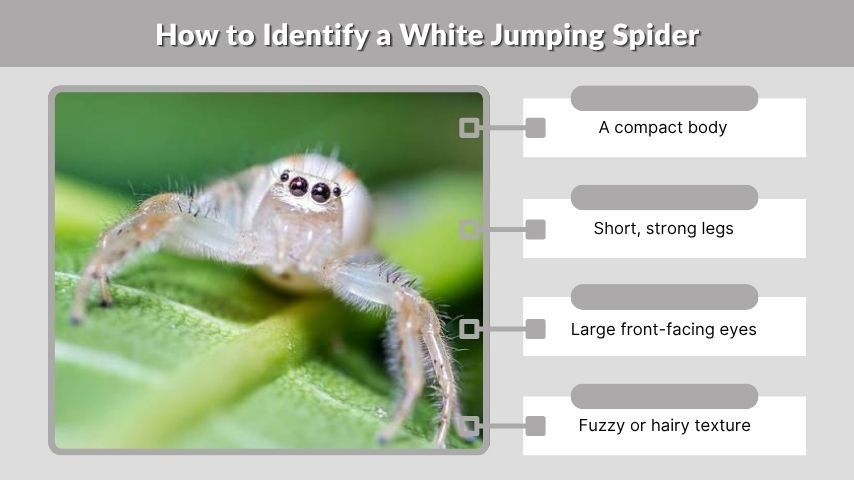
The easiest way to identify a white jumping spider is to look at its eyes, body shape, movement, and markings. Jumping spiders have a very recognizable face, with large front-facing eyes that make them look alert or curious.
Common Identification Features
A white jumping spider may have:
- A compact body
- Short, strong legs
- Large front-facing eyes
- Fuzzy or hairy texture
- Quick stop-and-go movement
- Sudden short jumps
- White, cream, gray, tan, brown, or black markings
- A habit of turning toward movement
If the spider jumps, looks directly at movement, and has a compact body, it is more likely to be a jumping spider than a web-building house spider.
White Dot or White Spots on the Back
Many people search for “jumping spider with white dot,” “jumping spider white dot,” or “jumping spider with white dot on back.” A white dot or white spot is common in several jumping spiders. In some species, young spiders may have orange or reddish markings that turn white as they mature.
A white dot alone is not enough to identify the exact species. You should also look at body color, leg markings, size, and location.
White Stripe or White Striped Jumping Spider
A spider with a white stripe may be a jumping spider if it also has the typical eye pattern and jumping behavior. White stripes can appear on the abdomen, legs, or sides of the body. Some brown and white jumping spiders have striped patterns that help them blend into bark, leaves, or walls.
Common Types of White Jumping Spiders
Several searched terms point to specific spiders or common names. These names are useful, but they can also be confusing because online sellers, hobbyists, and homeowners may use slightly different labels.
White-Jawed Jumping Spider
The white-jawed jumping spider is one of the most searched species-related keywords. It often refers to Hentzia mitrata, a small jumping spider found in parts of North America and the Bahamas. The name comes from the pale or white-looking mouthpart area, which can make the spider’s face stand out.
This spider is usually small and active, and like other jumping spiders, it hunts tiny insects rather than relying on a large web. It is not considered dangerous to humans.
White Regal Jumping Spider
The white regal jumping spider is usually linked with pale or white color forms of the regal jumping spider. Regal jumping spiders are popular in the pet trade because they are large for jumping spiders, visually striking, and relatively calm when kept properly.
Female regal jumping spiders can appear gray, orange, white, or patterned depending on locality and individual variation. A “white regal jumping spider” is often a color variation rather than a completely separate type.
White Bahamas Jumping Spider
Searches like “white Bahamas jumping spider,” “white Bahamas jumping spider for sale,” and “Bahama white jumping spider” suggest pet-related interest. These spiders are often marketed for their pale appearance and attractive markings.
Before buying any jumping spider, it is important to check whether it is captive-bred, legally sold, and suitable for beginners. Wild-caught spiders may be stressed, older, or harder to care for.
White Cheeked Jumping Spider
The white cheeked jumping spider and common white cheeked jumping spider are usually searched by people trying to identify a spider with pale side markings near the face. The “cheeked” name describes appearance, but exact identification may still require clear photos and regional information.
Are White Jumping Spiders Dangerous?
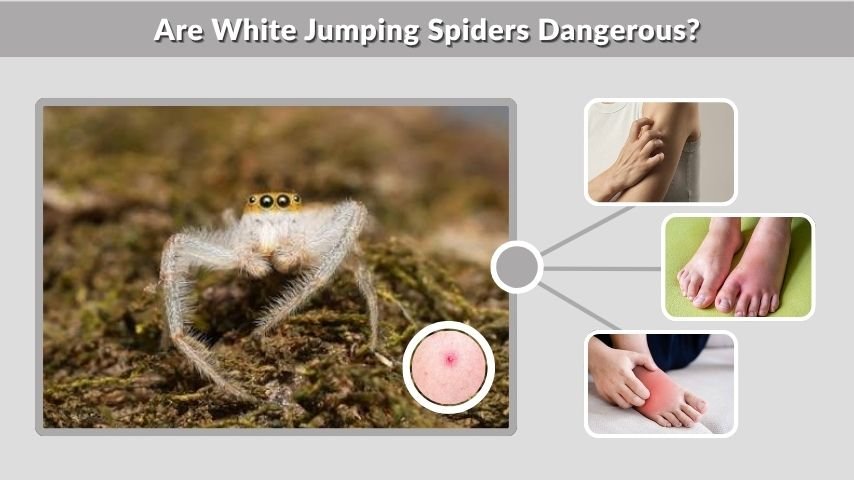
White jumping spiders are generally not dangerous to humans. They have venom for catching small prey, but they are not aggressive toward people. Most jumping spiders prefer to escape, hide, or jump away when disturbed.
A bite can happen if the spider is trapped against skin, pinched, or handled roughly. Even then, most jumping spider bites are mild. Medical sources commonly describe jumping spiders as usually harmless to humans, with bites more likely when they feel threatened.
Possible Bite Symptoms
A white jumping spider bite may cause:
- Mild pain
- Redness
- Slight swelling
- Itching
- Tenderness
- A small bump at the bite area
These symptoms are usually similar to a minor insect bite. However, any bite can become irritated if scratched, and some people may react more strongly than others.
When to Get Medical Help
Seek medical advice if symptoms get worse, spread, or do not improve. Get urgent help if you experience trouble breathing, dizziness, facial swelling, severe pain, fever, vomiting, muscle cramps, or a body-wide reaction. Many skin problems are also mistaken for spider bites, so worsening wounds should be checked by a healthcare provider.
Why Is the Spider White?
A jumping spider may look white for several reasons. It might be naturally pale, recently molted, covered in light hairs, or marked with white scales. Some spiders look much lighter under bright light or camera flash.
Natural Color Variation
Jumping spiders have many natural color forms. Some are black with white spots, while others are tan, gray, cream, or nearly white. Males and females of the same species may look different. Young spiders may also change color as they mature.
Molting and Pale Color
After molting, a spider may appear lighter or softer for a short time. During this period, it may hide more often and avoid eating until its body hardens. If you keep jumping spiders as pets, do not disturb a molting spider.
Where White Jumping Spiders Live
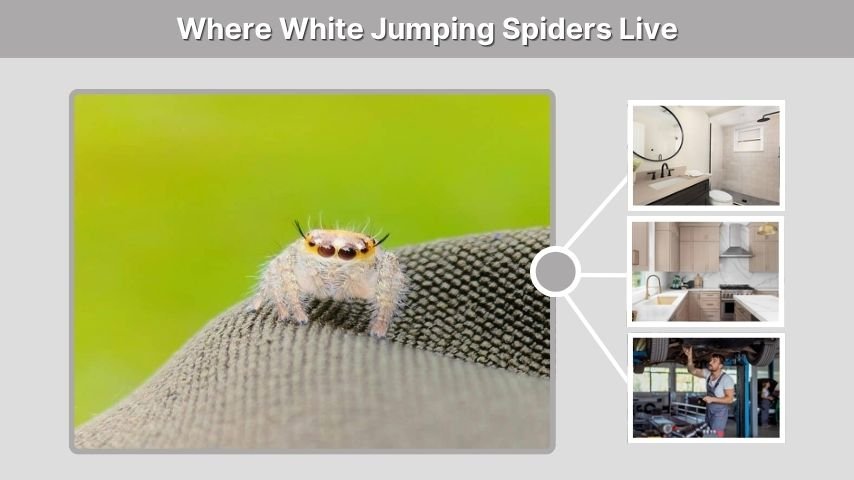
White jumping spiders can be found in many habitats, depending on the species. Some live on plants, tree bark, walls, fences, or outdoor furniture. Others may wander indoors while hunting insects.
Common Indoor Locations
You may see a white jumping spider in:
- Windowsills
- Walls
- Ceilings
- Bathrooms
- Kitchens
- Garages
- Basements
- Indoor plant areas
They are often found near windows because light attracts small insects, and spiders follow the food source.
Common Outdoor Locations
Outdoors, they may live on:
- Garden plants
- Shrubs
- Tree trunks
- Porch railings
- Siding
- Fences
- Patio furniture
- Leaf litter
They are usually active during the day, especially in warm, bright areas.
Are White Jumping Spiders Good Pets?
Some white jumping spiders are kept as pets, especially pale regal jumping spiders and other attractive color forms. Their curious behavior, small size, and expressive eyes make them popular among beginner spider keepers.
However, not every white jumping spider is a good pet. Tiny wild spiders may be difficult to feed, and some species have shorter lifespans or specific care needs.
Before Buying a White Jumping Spider
If you are searching for a white jumping spider for sale, consider these points:
- Buy from a responsible captive breeder
- Confirm the species, age, and sex when possible
- Avoid wild-caught spiders if you are a beginner
- Use a secure, ventilated enclosure
- Provide proper humidity and temperature
- Feed suitable live prey
- Avoid handling during premolt or molting
A spider sold as “white,” “Bahamas,” or “regal” should still be identified clearly before purchase.
What to Do If You Find One in Your Home
If you find a white jumping spider indoors, you usually do not need to panic. A single jumping spider is not a sign of infestation. It may have wandered inside while hunting.
Safe Removal Method
To move it outside:
- Place a cup gently over the spider
- Slide a piece of paper underneath
- Carry it outside
- Release it near plants or a sheltered area
- Avoid grabbing it with bare hands
This method protects both you and the spider.
How to Prevent Jumping Spiders Indoors
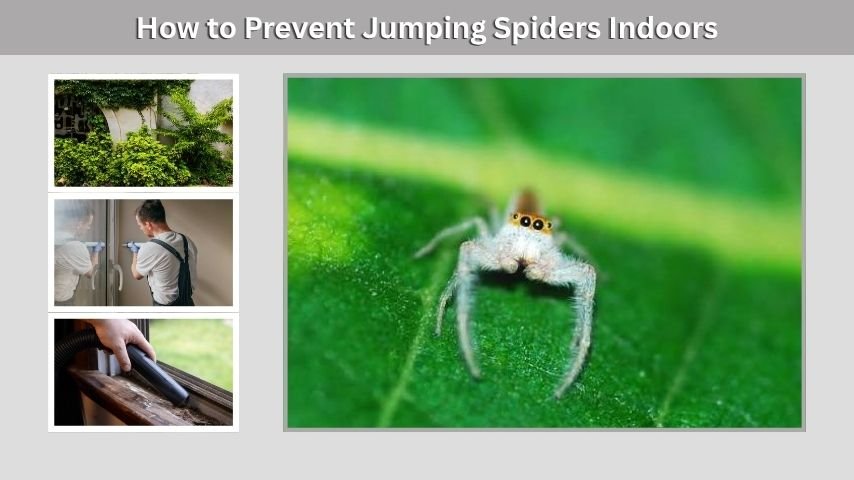
Jumping spiders are beneficial predators, but you may still want to keep them outside. Prevention is mostly about sealing entry points and reducing insects.
Prevention Tips
You can reduce indoor sightings by:
- Repairing window screens
- Sealing cracks around doors and windows
- Reducing insects near lights
- Vacuuming corners and windowsills
- Keeping clutter low in garages and storage areas
- Moving thick vegetation away from exterior walls
- Checking plants before bringing them indoors
If you see many jumping spiders, the bigger issue may be a steady supply of small insects.
White Jumping Spider vs Dangerous Spiders
A white jumping spider is usually much less concerning than medically significant spiders. It has a compact body, large eyes, and active jumping behavior. Dangerous spiders, such as black widows or brown recluses, have different body shapes and behaviors.
Still, avoid handling any spider you cannot identify. Photos from the top and front can help with identification, especially when markings are unclear.
FAQs
Are white jumping spiders poisonous?
White jumping spiders have venom for catching small insects, but they are not considered dangerous to humans. They usually avoid people and bite only when trapped or handled roughly. Most bites are mild, causing minor redness, itching, or swelling.
What kind of jumping spider is white?
A white jumping spider may be a white-jawed jumping spider, a pale regal jumping spider, a white-spotted jumper, or another light-colored species. The exact type depends on body shape, markings, size, and location. A clear photo is usually needed for accurate identification.
What does a white dot on a jumping spider mean?
A white dot may be a normal marking on the abdomen or back. Many jumping spiders have white spots, dots, or stripes. A white dot alone does not prove the species, so you should also check the spider’s body color, eye pattern, and movement.
Can I keep a white jumping spider as a pet?
Some white jumping spiders can be kept as pets, especially captive-bred regal jumping spiders. However, beginners should avoid keeping unknown wild spiders. Always confirm the species, provide a secure enclosure, and learn the correct temperature, humidity, and feeding needs first.
What should I do if I find a tiny white jumping spider?
If you find a tiny white jumping spider, leave it alone or gently relocate it outdoors with a cup and paper. It is likely hunting small insects and is not a serious threat. Avoid handling it directly, especially if you are unsure of the species.