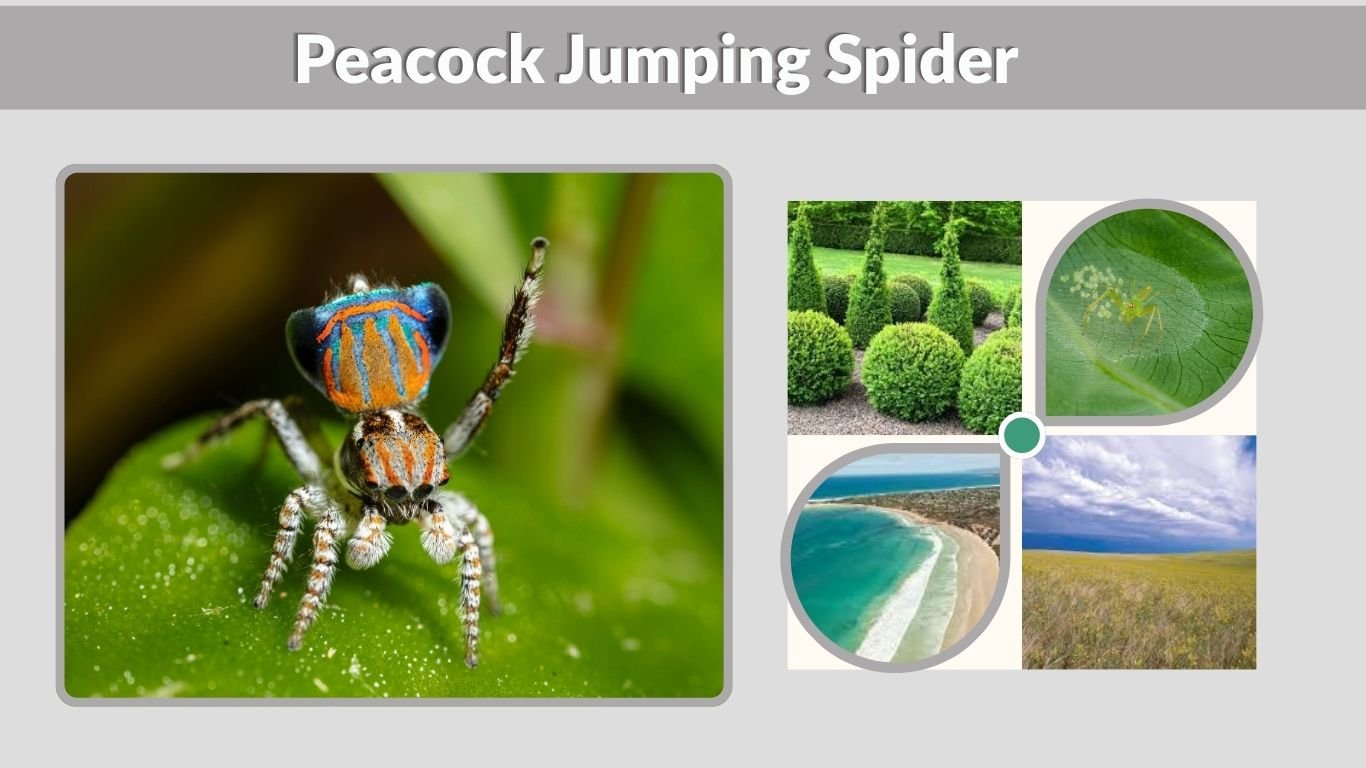
The peacock jumping spider is one of the most colorful and fascinating spiders in the world. Famous for its tiny size, bright male display, and courtship dance, this Australian jumping spider has become popular in videos, photos, and exotic pet searches. Although people often ask if they can buy one, peacock spiders are not as common as pet regal or bold jumping spiders and may be difficult to find legally outside Australia.
What Is a Peacock Jumping Spider?
A peacock jumping spider is a small spider from the genus Maratus. These spiders belong to the jumping spider family, also known as Salticidae. They are called peacock spiders because many males have colorful abdominal patterns that they raise and display during courtship, almost like a peacock showing its tail.
The name “peacock jumping spider” is commonly used by people searching online, but “peacock spider” is the more common name. Since they are jumping spiders, both phrases usually refer to the same type of spider.
Is a Peacock Spider a Jumping Spider?
Yes, a peacock spider is a jumping spider. It does not spin a large web to catch prey. Instead, it uses sharp vision, stealth, and quick jumps to hunt small insects and other tiny arthropods.
Like other jumping spiders, peacock spiders have large front-facing eyes. Their eyesight helps them stalk prey, recognize mates, and perform visual courtship displays.
Peacock Spider vs Jumping Spider
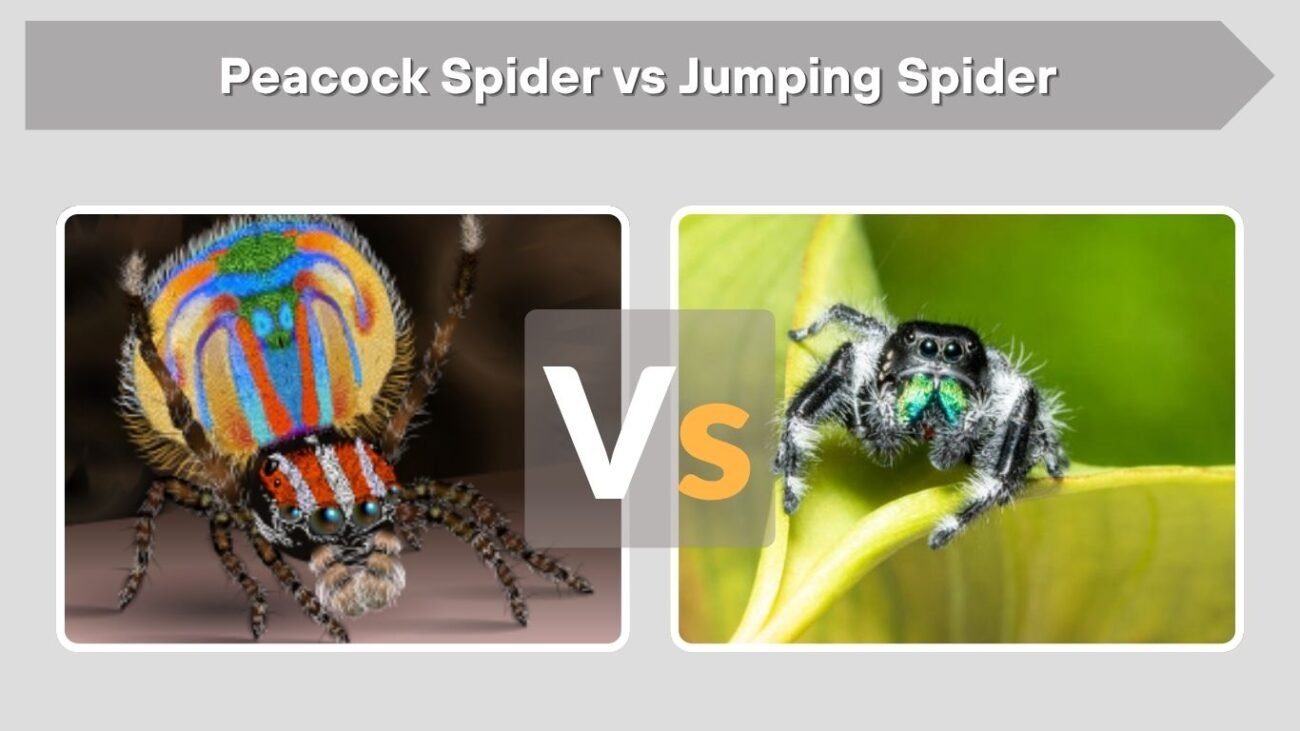
All peacock spiders are jumping spiders, but not all jumping spiders are peacock spiders. “Jumping spider” is the larger family group, while “peacock spider” refers to Maratus spiders, which are mostly known for colorful males and courtship displays.
A bold jumping spider or regal jumping spider may be larger and more common in the pet trade. A peacock spider is usually much smaller and more specialized, especially when it comes to its mating dance.
| Feature | Peacock Spider | Other Jumping Spiders |
| Family | Jumping spider family | Jumping spider family |
| Genus | Usually Maratus | Many different genera |
| Size | Very small, often only a few millimeters | Small to medium, depending on species |
| Famous trait | Colorful male courtship dance | Jumping, hunting, large eyes |
| Pet availability | Limited, especially outside Australia | More common |
| Habitat | Mostly Australia | Found worldwide |
What Do Peacock Jumping Spiders Look Like?
Peacock jumping spiders are tiny, compact spiders with large eyes and short, active bodies. Males are usually much more colorful than females. They may have bright blue, red, orange, yellow, white, black, or rainbow-like patterns on the abdomen.
Females are usually more muted. They are often brown, gray, tan, or patterned in ways that help them blend into their habitat. This difference between males and females is called sexual dimorphism.
Male Peacock Jumping Spider
The male peacock jumping spider is the one most people recognize from photos and videos. He may have a colorful abdominal fan, decorated side flaps, and patterned legs. During courtship, he raises his abdomen and waves his legs to attract a female.
Male peacock spiders are famous because their colors and movements look almost unreal under macro photography. Some species have bold blue faces, orange markings, or dramatic rainbow patterns.
Female Peacock Jumping Spider
The female peacock jumping spider is usually less colorful than the male. She may be brown, gray, or lightly patterned. Her appearance helps her stay hidden from predators while hunting or guarding eggs.
Females are important in the courtship process because they decide whether the male’s display is successful. If the male’s dance is not accepted, he may be ignored or chased away.
Peacock Jumping Spider Size
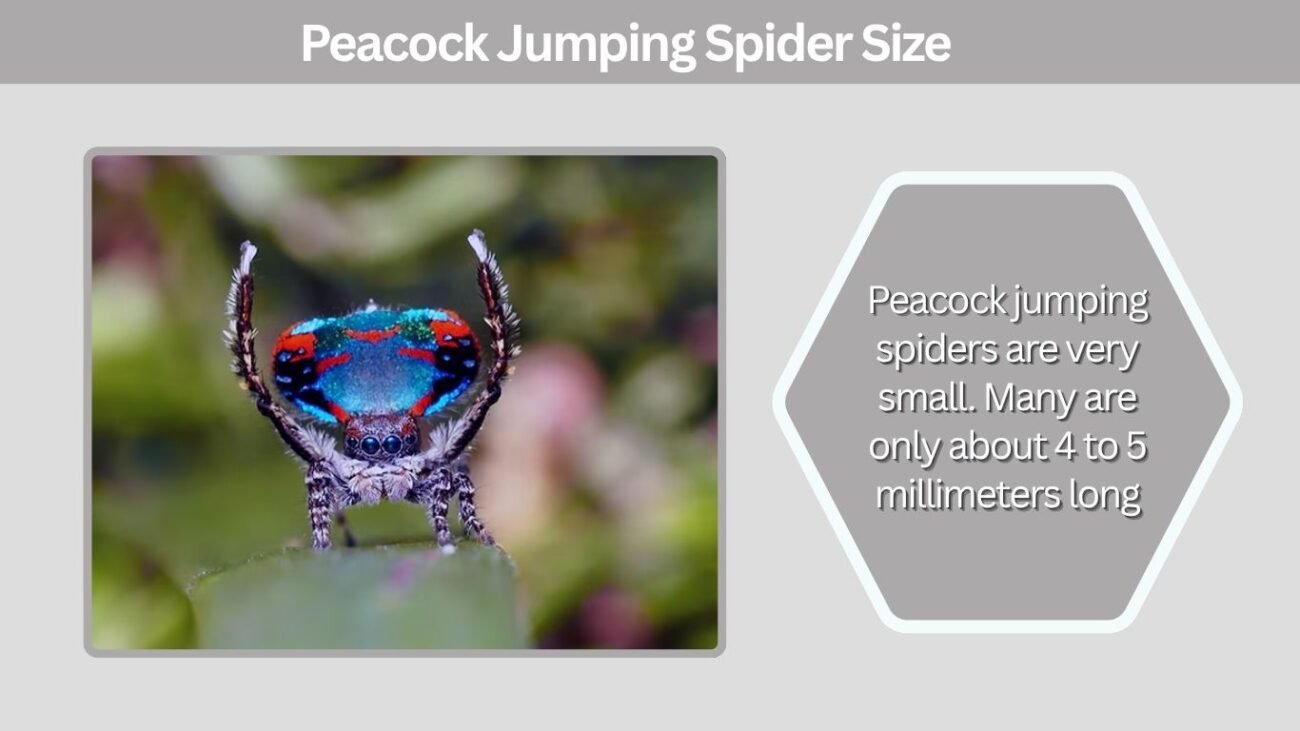
Peacock jumping spiders are very small. Many are only about 4 to 5 millimeters long, although size can vary by species. Because they are so tiny, their colors are often hard to appreciate without a macro lens or close-up video.
Their small size is one reason they are not as easy to keep as some larger pet jumping spiders. Feeding, housing, and observing them can be more challenging than caring for a larger species such as a regal jumping spider.
Peacock Jumping Spider Dance
The peacock jumping spider dance is the main reason these spiders are famous. Male peacock spiders perform a courtship display to attract females. The dance may include leg waving, abdomen raising, side-to-side movements, vibrations, and fan displays.
The male’s bright abdominal pattern acts like a visual signal. In many species, he lifts and spreads his abdomen so the female can see the colors and design. He may also vibrate the ground or surface to send signals the female can sense.
Peacock Spider Mating Dance
The mating dance is not just for show. It helps the female judge whether the male is a suitable mate. The display can be species-specific, meaning each species may have its own pattern of movements, colors, and timing.
A successful male must approach carefully. If he gets too close too quickly or performs poorly, the female may reject him. In some cases, she may even attack. This makes the dance both beautiful and risky.
Peacock Jumping Spider Habitat
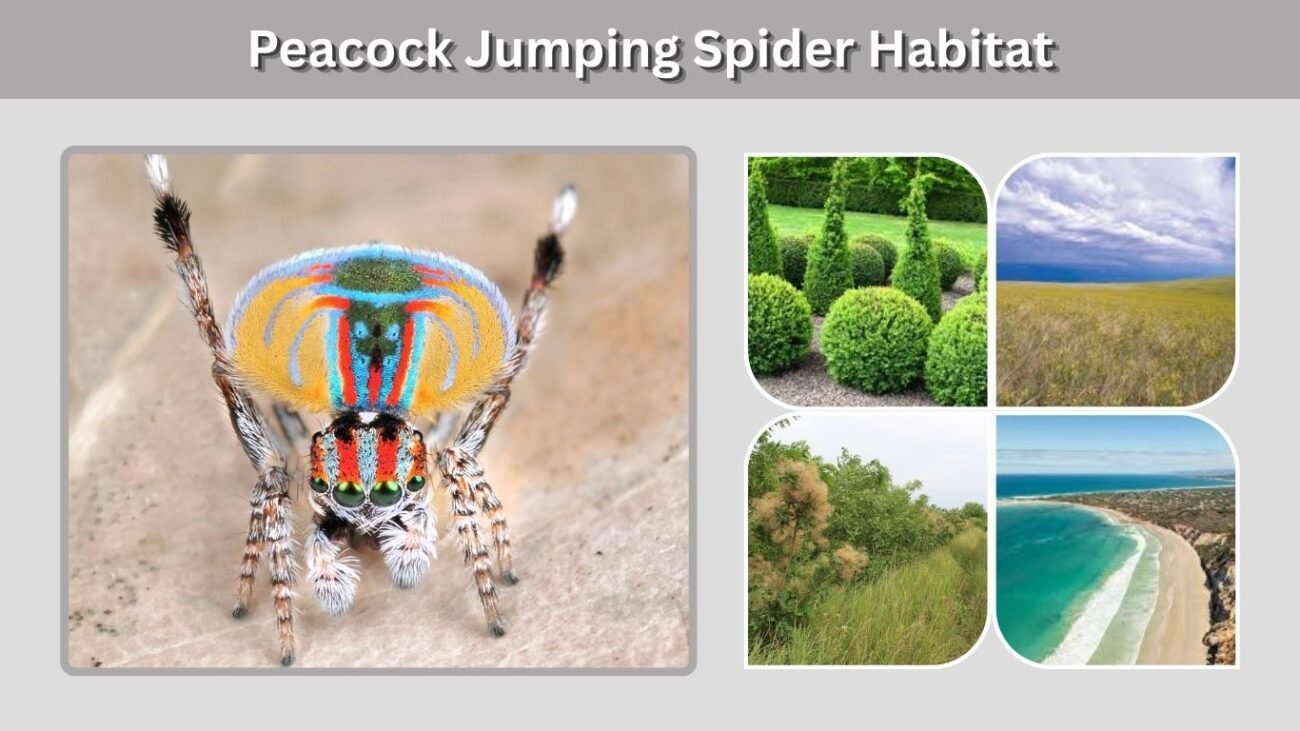
Peacock jumping spiders are native to Australia. They are often found in leaf litter, low vegetation, shrubs, grasslands, coastal areas, heathlands, and open woodland habitats. Different species may prefer different microhabitats.
Because they are small and often live close to the ground, they can be difficult to spot in the wild. Many species have been discovered or documented through careful field observation and macro photography.
Where to Find Peacock Jumping Spiders
Peacock spiders are most associated with Australia, especially regions with suitable dry leaf litter, low plants, and sunny hunting areas. They are not usually spiders you find casually indoors like house spiders.
People who search “where to find the peacock jumping spider” are often hoping to see them in nature. The best answer depends on the species and location. Some species are very localized, while others are more widespread.
Peacock Jumping Spider Diet
Peacock jumping spiders are active hunters. They eat small insects and other tiny arthropods. Instead of building a web to trap prey, they stalk, aim, and leap onto prey using their excellent vision.
In the wild, their diet may include tiny flies, small insects, and other very small invertebrates. Their prey must be small enough for them to overpower safely.
What They Eat
A peacock jumping spider may eat:
- Tiny flies
- Small insects
- Small arthropods
- Fruit-fly-sized prey
- Other tiny soft-bodied invertebrates
Because they are so small, feeding them in captivity can be more difficult than feeding larger jumping spider pets.
Are Peacock Jumping Spiders Poisonous?
Peacock jumping spiders are venomous in the same basic way most spiders are venomous: they use venom to subdue prey. However, they are not considered dangerous to humans. Their tiny size makes them unlikely to cause serious harm.
The better word is “venomous,” not “poisonous.” Poisonous means harmful when eaten or touched. Venomous means the animal injects venom through a bite or sting. Peacock spiders are venomous to their prey, but they are not a medical concern for most people.
Do Peacock Spiders Bite?
A peacock spider may bite if handled roughly or trapped, but bites are unlikely because they are tiny and generally avoid people. If a bite did occur, it would usually be expected to cause minor local irritation at most.
People with allergies or unusual reactions should always take symptoms seriously. But overall, peacock jumping spiders are not considered dangerous household pests.
Peacock Jumping Spider Lifespan
The lifespan of a peacock jumping spider can vary by species, sex, and conditions. Like many small jumping spiders, they do not live as long as larger pets. Many jumping spiders live around one year, sometimes longer depending on species and care.
Males may have shorter adult lives than females, especially after reaching maturity. Females may live longer and spend more time producing or guarding eggs.
Peacock Jumping Spider Eggs and Babies
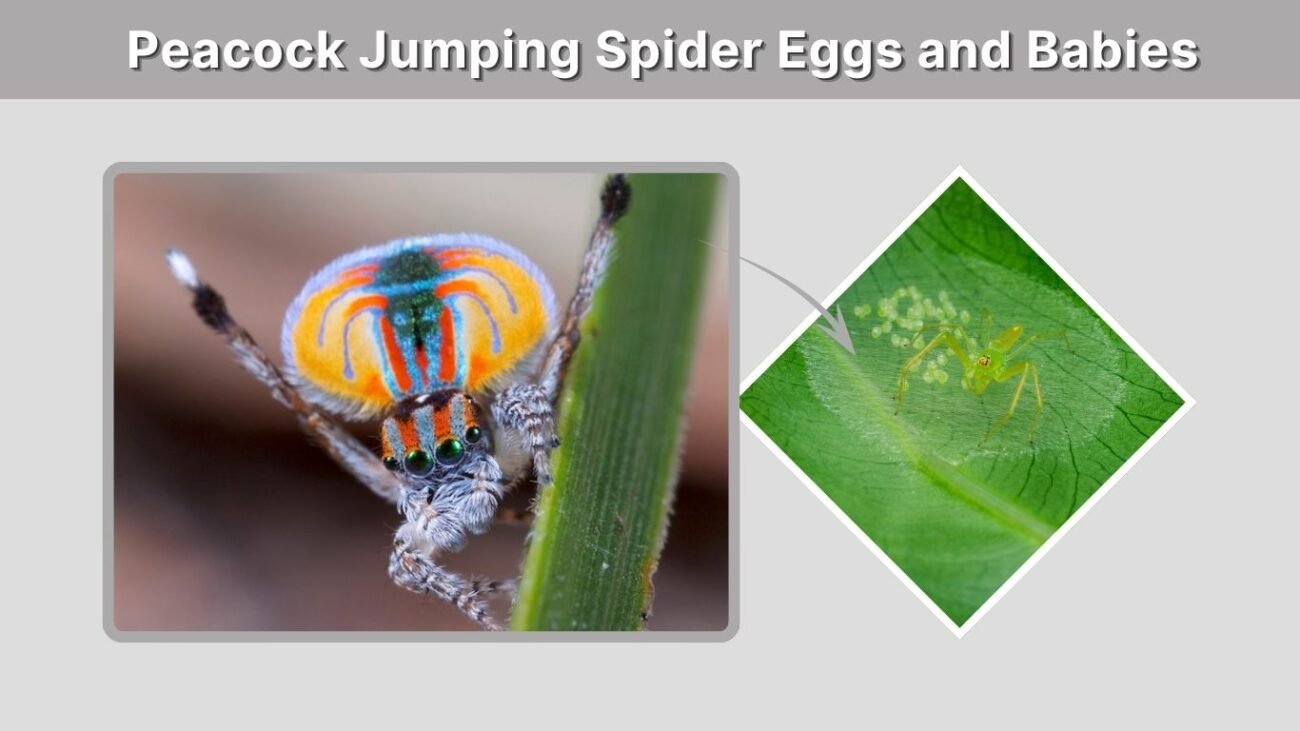
Female peacock spiders produce egg sacs, usually protected with silk. After the eggs hatch, baby spiders are very small and must survive by hunting tiny prey. Because of their size, young spiderlings are delicate and vulnerable.
In captivity, raising tiny jumping spider babies can be challenging. They need extremely small food, safe humidity, secure ventilation, and escape-proof housing.
Peacock Jumping Spider for Sale
Many people search for peacock jumping spiders for sale because they see colorful videos online. However, live peacock spiders are not commonly sold in the same way as regal jumping spiders, bold jumping spiders, tarantulas, or other popular invertebrate pets.
Since peacock spiders are native to Australia, buying them outside Australia can be difficult. Export rules, wildlife laws, shipping restrictions, and availability all matter. You should never buy illegally collected wildlife or release captive spiders outdoors.
Before Buying One
Before trying to buy a peacock jumping spider, consider:
- Whether it is legal in your country or state
- Whether the seller is reputable
- Whether the spider is captive-bred or wild-caught
- Whether you can provide very tiny feeder insects
- Whether you understand its small size and delicate care
- Whether import or export permits are required
- Whether a larger beginner jumping spider would be better
For most beginners, a regal jumping spider or bold jumping spider is usually a more practical pet.
Peacock Jumping Spider Pet Care
A peacock jumping spider can be kept by experienced keepers in the right conditions, but it is not always the best beginner pet. Its tiny size makes feeding and enclosure setup more difficult. A small mistake, such as using ventilation holes that are too large, could allow it to escape.
A pet peacock jumping spider would need a tiny, secure, well-ventilated enclosure with climbing surfaces, safe humidity, and very small live prey. It should not be overhandled.
Basic Care Needs
A peacock jumping spider pet may need:
- A very small escape-proof enclosure
- Fine ventilation
- Climbing surfaces and anchor points
- Light misting for drinking droplets
- Tiny live prey such as fruit flies
- Stable room temperature
- No direct sunlight
- Minimal handling
- Careful observation during molting
Because they are so small, these spiders are often better for observation than handling.
Peacock Jumping Spider Videos and GIFs
Peacock jumping spider videos are popular because the males appear to dance. Many videos show the male lifting his abdomen, waving his legs, and vibrating during courtship. These clips are often shared as GIFs, short videos, and educational clips.
When watching videos, remember that the bright colors are usually male courtship displays. A female or resting male may look much less dramatic than the viral clips suggest.
Popular Types of Peacock Jumping Spiders
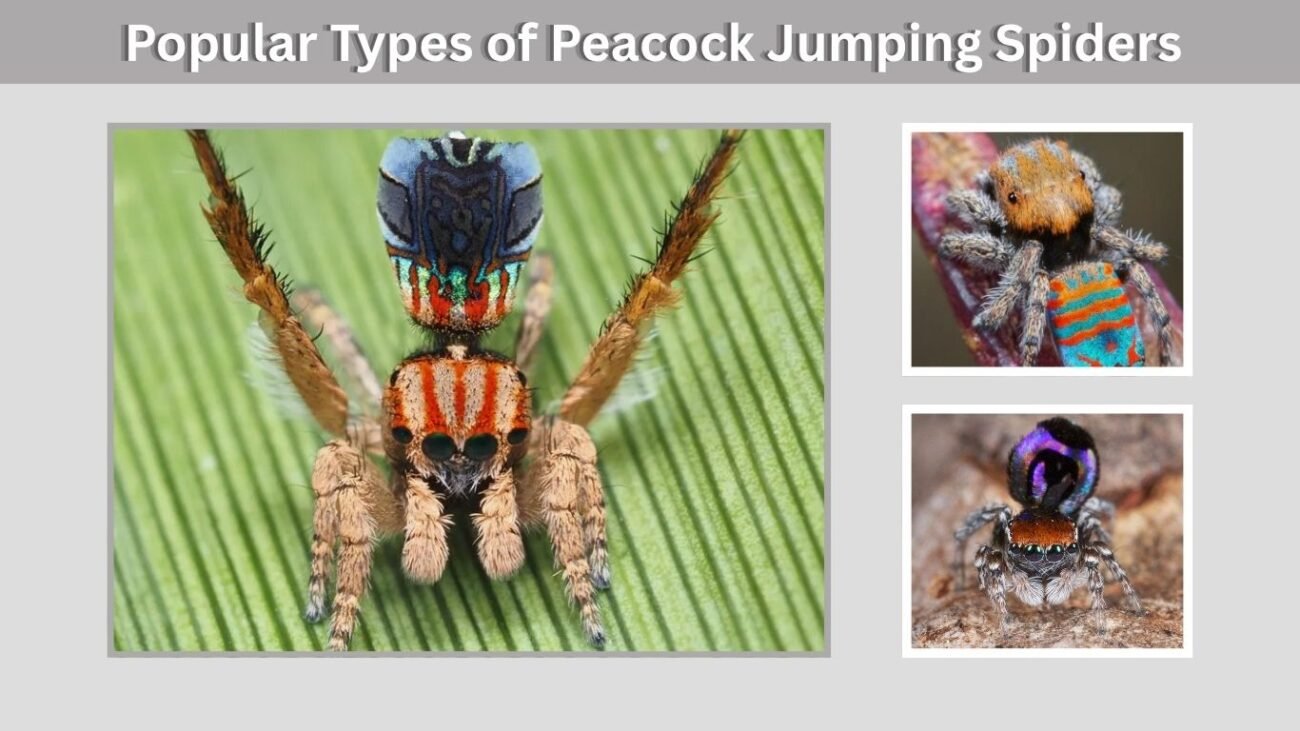
There are many species of Maratus, and new species have been described over time. Some are famous for their colors, patterns, or nicknames.
Well-Known Peacock Spider Types
Some commonly searched names include:
- Sparklemuffin peacock spider
- Rainbow peacock spider
- Blue-faced peacock spider
- Australian peacock spider
- Maratus volans
- Maratus speciosus
- Maratus splendens
Not all of these are available as pets. Many are better known from scientific documentation, photography, and courtship videos.
Are Peacock Jumping Spiders Good Pets?
Peacock jumping spiders are fascinating, but they are not the easiest pet jumping spiders. Their tiny size, limited availability, and specialized feeding needs make them better suited for experienced keepers or serious hobbyists.
If you want a pet jumping spider, a regal jumping spider or bold jumping spider is usually a better starting point. If you mainly love peacock spiders for their colors and dances, videos, photography, and educational resources may be the best way to enjoy them without risking poor care or illegal collection.
FAQs
Is a peacock spider a jumping spider?
Yes. A peacock spider is a type of jumping spider from the genus Maratus. It belongs to the Salticidae family, the same family as other jumping spiders. The name “peacock” comes from the colorful male display during courtship.
How big is a peacock jumping spider?
Peacock jumping spiders are very small, often around 4 to 5 millimeters long. Their tiny size makes their colors hard to see without close-up photography. This is also why they can be harder to keep than larger pet jumping spiders.
Why do peacock jumping spiders dance?
Male peacock spiders dance to attract females during courtship. They raise their colorful abdomen, wave their legs, move side to side, and may create vibrations. The female uses the display to decide whether the male is a suitable mate.
Are peacock jumping spiders poisonous?
Peacock jumping spiders are venomous to tiny prey, but they are not considered dangerous to humans. They are very small and unlikely to cause serious harm. As with any spider, avoid rough handling and monitor any unusual reaction to a bite.
Can you buy a peacock jumping spider as a pet?
It may be possible in limited situations, especially where legal and available from responsible sellers, but peacock spiders are not common beginner pets. Outside Australia, legal and export restrictions can make them difficult to obtain. Most beginners should consider a captive-bred regal or bold jumping spider instead.