Wolf spiders and tarantulas are often confused because both can be large, hairy, and intimidating. However, they are not the same spider. A wolf spider is an active hunting spider from the family Lycosidae, while a tarantula is a heavier-bodied spider from the tarantula family. Understanding the difference helps you identify them, compare their size, and know what to do if you find one.
Is a Wolf Spider a Tarantula?
A wolf spider is not a tarantula. The confusion usually happens because both spiders can look hairy, brown, and strong-legged. Some large wolf spiders may even look like small tarantulas at first glance, especially when they run across a floor, patio, garage, or garden.
The main difference is classification. Wolf spiders belong to the family Lycosidae. Tarantulas belong to the family Theraphosidae. They are both spiders, but they are from different spider families and have different body structures, habits, and lifestyles.
Wolf spiders are usually faster and more athletic. Tarantulas are usually bulkier and slower. Wolf spiders often chase prey across the ground, while many tarantulas sit near a burrow or retreat and ambush prey when it comes close.
Wolf Spider vs Tarantula at a Glance
Both spiders can scare people because of their size, but their differences become clearer when you compare them side by side.
| Feature | Wolf Spider | Tarantula |
|---|---|---|
| Spider family | Lycosidae | Theraphosidae |
| Body shape | Slimmer, athletic | Heavier, bulkier |
| Movement | Fast runner | Usually slower |
| Hunting style | Chases and pounces | Ambushes prey |
| Web use | Does not use webs to trap prey | Uses silk for burrows, shelter, and egg sacs |
| Common size | Usually smaller | Usually larger |
| Eye pattern | Large forward-facing eyes | Smaller eyes grouped on top of head area |
| Defense | Runs, hides, may bite if handled | Threat posture, bite, or irritating hairs in some species |
| Pet trade | Less common | Common in exotic pet keeping |
Wolf Spider vs Tarantula Size
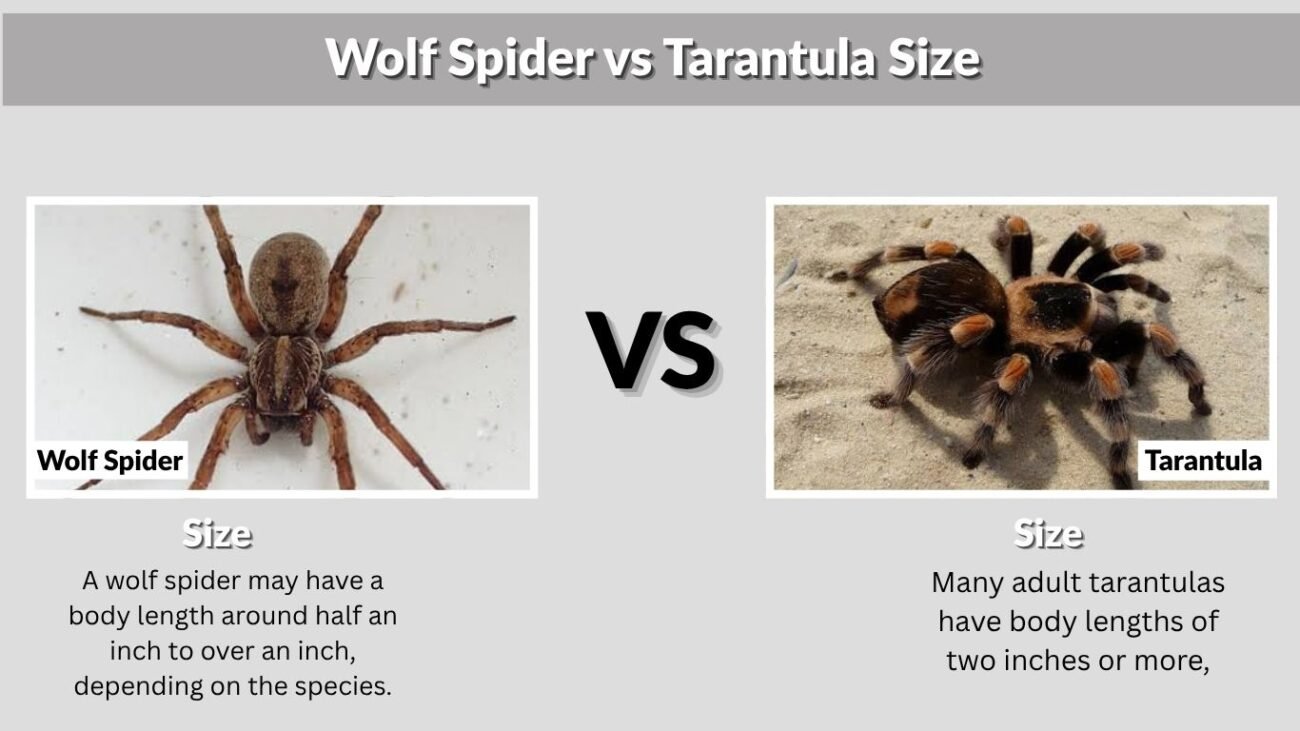
Size is one of the most searched differences between these spiders. In general, tarantulas are bigger than wolf spiders. However, some large wolf spiders can look surprisingly big, especially when their legs are spread out.
A wolf spider may have a body length around half an inch to over an inch, depending on the species. Some of the largest wolf spiders can appear several inches across when leg span is included. The Carolina wolf spider, for example, is one of the largest wolf spiders in North America and can look very tarantula-like to someone who is not familiar with spiders.
Tarantulas are usually much larger and heavier. Many adult tarantulas have body lengths of two inches or more, with leg spans that can reach several inches. Giant tarantula species can be much larger than any wolf spider.
How Big Is a Tarantula Compared to a Wolf Spider?
A typical tarantula is larger, thicker, and heavier than a typical wolf spider. A wolf spider may look long-legged and fast, while a tarantula often looks more solid and shaggy.
If the spider looks huge, slow, and very hairy, it may be a tarantula. If it looks large but runs quickly and has a flatter, more athletic body, it may be a wolf spider.
Difference Between Wolf Spider and Tarantula Appearance
Wolf spiders usually have camouflage colors such as brown, gray, tan, black, or striped patterns. Their bodies often blend with soil, leaves, grass, bark, or rocks. They may have markings on the back and legs, which help them disappear into outdoor environments.
Tarantulas are also often brown or black, but many species are thicker, fuzzier, and more uniform in appearance. Some pet tarantulas are colorful, with orange, red, blue, or metallic tones, but wild tarantulas in many areas are usually earth-colored.
Eye Pattern
The eye pattern is one of the best ways to identify a wolf spider. Wolf spiders have eight eyes arranged in a distinctive pattern, including two large eyes that reflect light strongly at night. If you shine a flashlight across grass or leaf litter, wolf spider eyes may reflect back like tiny lights.
Tarantulas also have eight eyes, but they are smaller and grouped more closely on a raised area at the front of the body. They do not have the same large, forward-facing eye look that wolf spiders have.
Wolf Spider and Tarantula Behavior
Behavior is often the easiest way to tell them apart. Wolf spiders are active hunters. They run, chase, and pounce on prey. They do not build sticky webs to catch food. Instead, they rely on speed, eyesight, and quick movements.
Tarantulas are usually more patient hunters. Many stay near a burrow, hide, or webbed retreat. They sense vibrations in the ground and strike when prey moves close enough. Some tarantulas can move quickly when startled, but many are slower and more deliberate than wolf spiders.
Female Wolf Spiders Carry Babies
One unique wolf spider behavior is baby-carrying. Female wolf spiders carry egg sacs attached to their spinnerets. After the spiderlings hatch, they ride on the mother’s back for a short period. This can make the spider look larger or strange if you see it up close.
Tarantulas also protect egg sacs, but they do not carry spiderlings on their back in the same way. A female tarantula usually guards an egg sac inside a burrow or enclosure.
Wolf Spider vs Tarantula Habitat
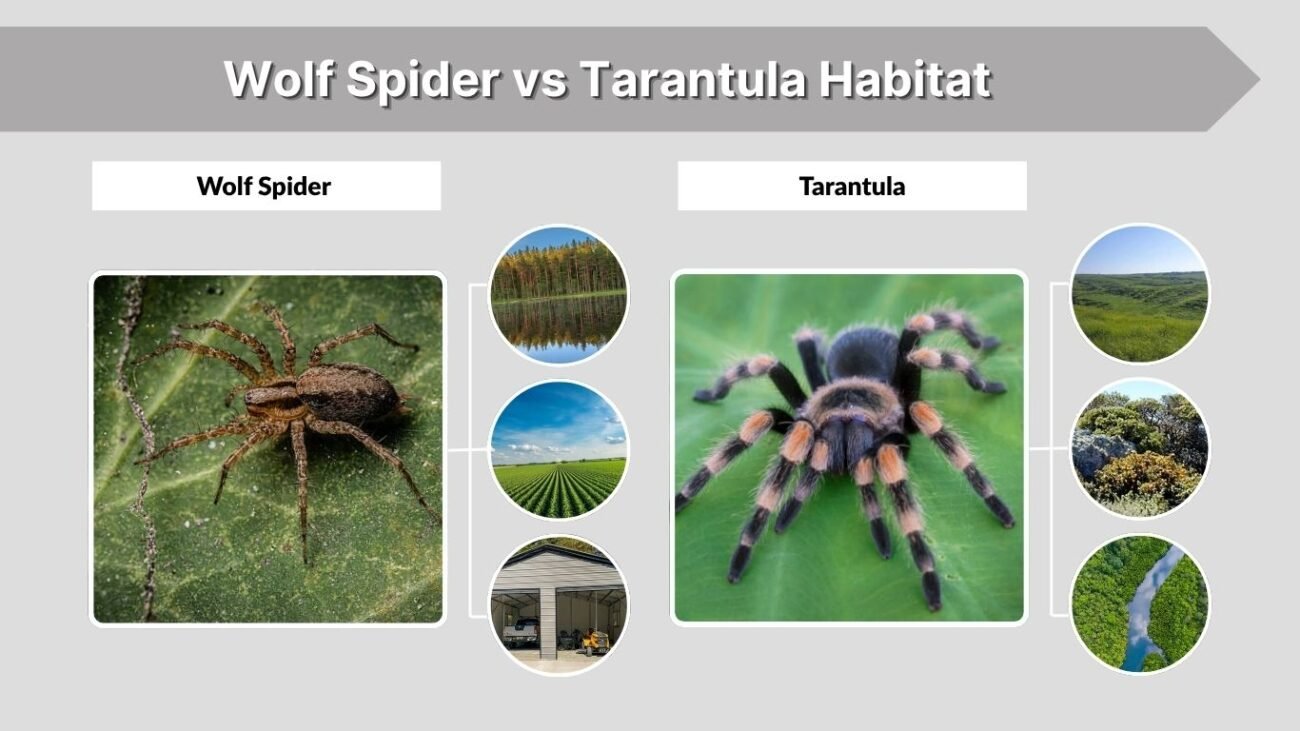
Wolf spiders live in many habitats, including gardens, lawns, forests, fields, shorelines, basements, garages, and sheds. They are ground hunters and often hide under rocks, leaves, boards, mulch, or clutter. Some species dig burrows, while others use natural hiding spaces.
Tarantulas are also ground-dwelling or burrowing spiders, depending on the species. Some live in deserts, grasslands, scrublands, forests, or tropical areas. Many tarantulas use burrows or retreats to stay hidden during the day.
Why You May See One Indoors
Wolf spiders are more likely than tarantulas to enter homes. They may come inside while chasing prey or looking for shelter. They are often found in basements, garages, laundry rooms, or ground-level spaces.
Tarantulas are less commonly found indoors unless they wander in from nearby habitat or escape from captivity. In places where wild tarantulas live, males may be seen walking outdoors during mating season.
Tarantula Wolf Spider Bite: Which Is Worse?
Both wolf spiders and tarantulas have venom, but neither is usually considered highly dangerous to healthy adults. A bite from either spider can hurt, especially because both have fangs. Pain, redness, swelling, itching, or mild irritation may occur.
A wolf spider bite is usually similar to many common spider bites. It may cause localized pain and swelling, but serious reactions are uncommon. Most wolf spiders would rather run than bite.
A tarantula bite can be painful because of the size of the fangs. However, the venom of many tarantulas is not considered medically serious for most people. The irritating hairs of some tarantulas can sometimes be more of a problem than the bite, especially if hairs get into the eyes or airways.
When to Seek Medical Help
Most spider bites are mild, but medical care may be needed if symptoms are severe or unusual.
Get help if you notice:
- Trouble breathing
- Severe swelling
- Spreading redness
- Intense pain
- Dizziness or nausea
- Signs of infection
- Bite near the eye
- Allergic reaction symptoms
Do not try to identify a bite by appearance alone. Many skin infections and insect bites are mistaken for spider bites.
Wolf Spider vs Tarantula: Who Would Win?
This keyword is popular, but in nature, “who would win” depends on size, species, health, environment, and surprise. A large tarantula would usually have the advantage over a smaller wolf spider because of its heavier body and larger fangs. However, a fast wolf spider could escape or avoid contact.
In real life, these spiders are not looking for dramatic fights. They usually avoid unnecessary danger. A tarantula might eat a wolf spider if it could catch one, and a large wolf spider might prey on smaller spiders. But most encounters would likely end with one spider retreating.
Missouri Tarantula vs Wolf Spider
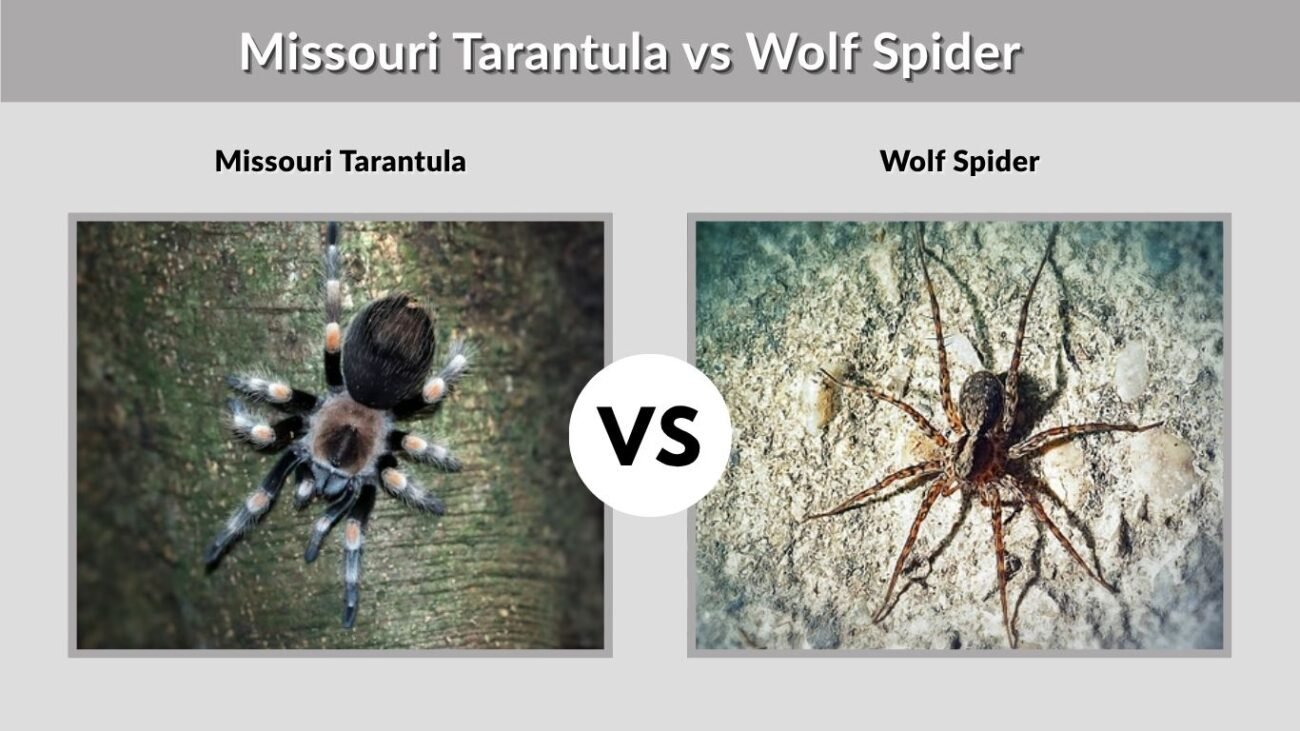
In Missouri and nearby regions, people may confuse wolf spiders with tarantulas because both can be large and brown. Missouri is known for having tarantulas in some areas, especially the Missouri tarantula, which is also commonly called the Texas brown tarantula in broader regional discussions.
A wolf spider in Missouri is more likely to be seen running across a basement, garage, driveway, or garden. A tarantula is more likely to be seen outdoors in suitable habitat, especially when mature males are wandering.
If the spider is fast, slimmer, and has strong eye shine at night, it is more likely a wolf spider. If it is heavier, slower, and very shaggy, it may be a tarantula.
Baby Tarantula vs Wolf Spider
A baby tarantula can be difficult to tell apart from other small hairy spiders. Young tarantulas are smaller, more delicate, and may not yet have the heavy appearance of adults. A wolf spider may look similar in size.
Movement can help. Baby tarantulas often move more slowly and stay close to shelter. Wolf spiders are usually faster and more active hunters. Eye arrangement is also useful, especially if you can take a close, clear photo.
Never handle an unknown spider to identify it. Use a photo, local extension resource, or pest professional if you are unsure.
Are Wolf Spiders and Tarantulas Good or Bad?
Both spiders are beneficial predators. Wolf spiders eat insects and other small arthropods around homes and gardens. Tarantulas also help control insects and small pests in their natural habitat.
Neither spider wants to attack people. Most bites happen when spiders are trapped, squeezed, stepped on, or handled. If you find one indoors, use a cup and cardboard to move it outside.
How to Reduce Indoor Encounters
You can reduce spider sightings without harming beneficial wildlife.
Helpful steps include:
- Seal gaps under doors
- Repair window screens
- Reduce clutter in garages and basements
- Move firewood away from the house
- Use gloves when moving stored items
- Reduce insects that attract spiders
- Keep outdoor lights from attracting too many bugs
FAQs
Is a wolf spider a tarantula?
No, a wolf spider is not a tarantula. Wolf spiders belong to the family Lycosidae, while tarantulas belong to the family Theraphosidae. They may both look hairy and intimidating, but they are different types of spiders with different habits, body shapes, and hunting styles.
Which is bigger, wolf spider or tarantula?
A tarantula is usually bigger than a wolf spider. Some large wolf spiders can look impressive, but tarantulas are generally heavier, hairier, and larger overall. Giant tarantula species are much larger than even the biggest wolf spiders.
What is the main difference between a wolf spider and a tarantula?
The main difference is body type and behavior. Wolf spiders are faster hunters that chase prey, while tarantulas are usually heavier ambush predators. Wolf spiders also have a distinctive eye pattern and females carry spiderlings on their backs.
Are wolf spider and tarantula bites dangerous?
Most wolf spider and tarantula bites are not dangerous to healthy adults, but they can be painful. Redness, swelling, and irritation may occur. Seek medical care if symptoms are severe, spreading, or suggest an allergic reaction or infection.
Can a wolf spider look like a tarantula?
Yes, a large wolf spider can look like a small tarantula, especially because both can be brown and hairy. Movement is a useful clue. Wolf spiders usually run quickly, while tarantulas are often slower, bulkier, and more deliberate.