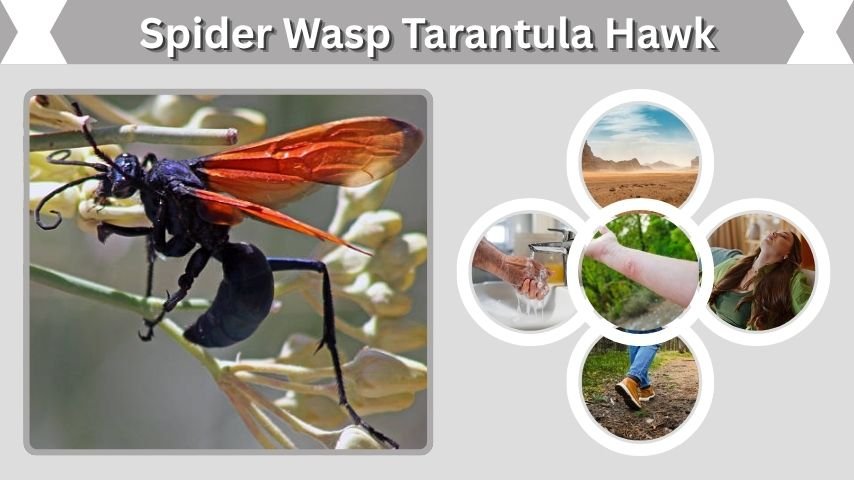
The spider wasp tarantula hawk is one of nature’s most dramatic insects. It looks intimidating, hunts large spiders, and has a sting famous for extreme pain. However, it is not a spider, and it does not usually attack people. This guide explains what a tarantula hawk is, how it hunts tarantulas, what its sting does, and why this wasp is so fascinating.
What Is a Spider Wasp Tarantula Hawk?
A spider wasp tarantula hawk is a large solitary wasp that belongs to the spider wasp family. It is best known for hunting tarantulas and using them as living food for its young. The name sounds confusing because it includes “spider,” “tarantula,” and “hawk,” but the animal itself is a wasp.
Tarantula hawks are usually associated with the genera Pepsis and Hemipepsis. Many species have dark blue-black bodies, long legs, and bright orange or reddish wings. Their bold color is a warning signal to predators.
Is a Tarantula Hawk a Spider?
No, a tarantula hawk is not a spider. It is a wasp. The word “spider” appears in the name because tarantula hawks belong to a group called spider wasps. These wasps hunt spiders, especially tarantulas.
Spiders have eight legs and no wings. Tarantula hawks have six legs, wings, antennae, and a narrow wasp-like body. So, when people search for “tarantula hawk spider,” they are usually looking for the wasp that hunts tarantulas, not an actual spider species.
Why Is It Called a Tarantula Hawk?
It is called a tarantula hawk because it hunts tarantulas with impressive speed and precision. The “hawk” part of the name suggests a predator that targets specific prey. The wasp does not eat tarantulas as an adult, but it captures them for its larvae.
Adult tarantula hawks mostly feed on nectar from flowers. The spider-hunting behavior is mainly for reproduction.
Tarantula Hawk Identification
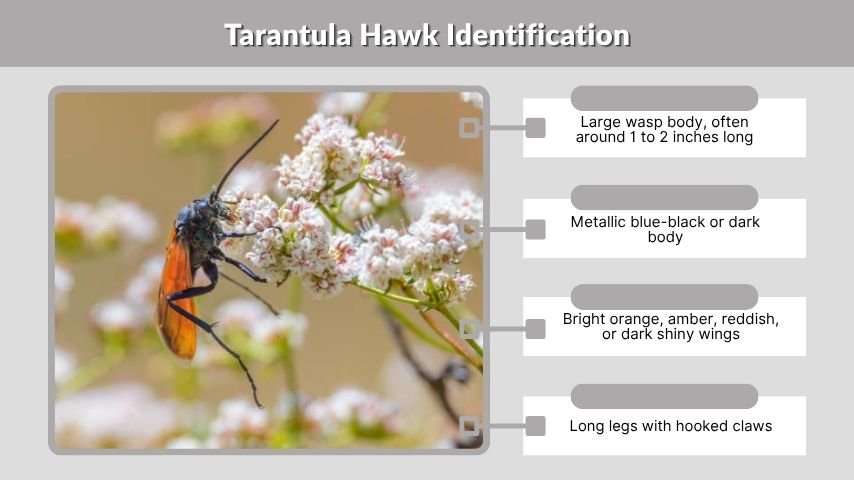
Tarantula hawks are among the easiest wasps to recognize because of their size, color, and movement. They are usually seen walking on the ground, flying low, or visiting flowers.
Here are common identification features:
- Large wasp body, often around 1 to 2 inches long
- Metallic blue-black or dark body
- Bright orange, amber, reddish, or dark shiny wings
- Long legs with hooked claws
- Solitary behavior, not swarming like social wasps
- Often found in dry, warm regions where tarantulas live
Spider Wasp Tarantula Hawk Quick Facts
| Feature | Details |
|---|---|
| Animal type | Solitary spider wasp |
| Common name | Tarantula hawk wasp |
| Main prey | Tarantulas and other large spiders |
| Adult diet | Nectar and plant juices |
| Human danger | Painful sting, but usually not aggressive |
| Famous for | Paralyzing tarantulas for its larvae |
| Common habitat | Deserts, grasslands, scrublands, and warm regions |
How Does a Tarantula Hawk Hunt a Spider?
The tarantula hawk’s hunting process is one of the most unusual behaviors in the insect world. Female tarantula hawks search for tarantulas on the ground or inside burrows. Once the wasp finds a spider, it approaches carefully and tries to sting it in a vulnerable area.
The sting does not usually kill the spider right away. Instead, it paralyzes the spider. This allows the wasp to move the tarantula without the spider escaping or fighting back.
What Happens During the Attack?
A typical tarantula hawk attack may happen like this:
- The female wasp locates a tarantula.
- She provokes or positions the spider for a strike.
- She stings the tarantula and paralyzes it.
- She drags the spider into a burrow or sheltered nest.
- She lays one egg on the spider.
- She seals the burrow and leaves.
- The larva later hatches and feeds on the paralyzed spider.
This is why searches like “tarantula hawk laying eggs in spider” and “tarantula hawk dragging spider” are common. The behavior sounds like something from a horror movie, but it is a natural survival strategy.
Does the Tarantula Hawk Eat the Spider?
The adult tarantula hawk does not usually eat the spider. Adults mostly drink nectar. The spider is food for the wasp’s larva.
After the egg hatches, the larva feeds on the still-living but paralyzed spider. It avoids vital organs at first, which keeps the spider alive longer. This gives the larva fresh food as it grows.
Tarantula Hawk vs Spider: Who Wins?
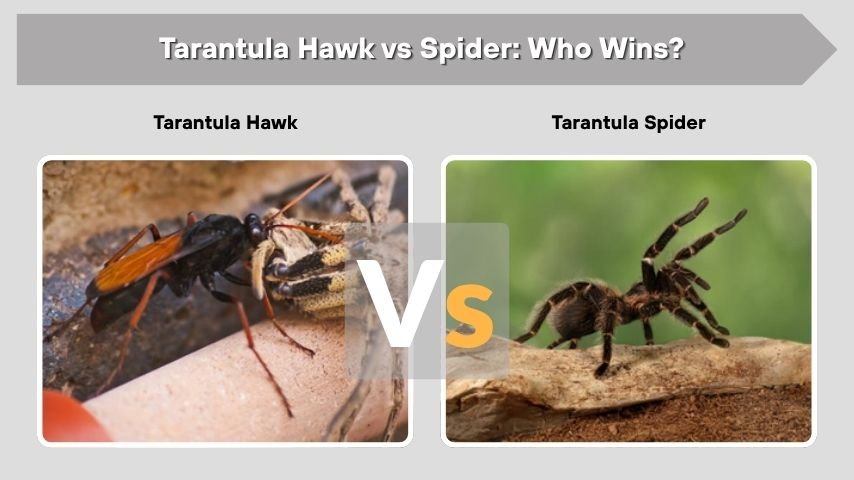
In most natural encounters, the tarantula hawk has the advantage over the spider it is adapted to hunt. A tarantula is powerful, venomous, and much heavier than the wasp, but the tarantula hawk is specialized for this exact battle.
The wasp is fast, tough, and accurate with its sting. If the female wasp lands the right sting, the spider is usually paralyzed.
Can a Spider Kill a Tarantula Hawk?
Yes, a spider can sometimes kill or injure a tarantula hawk. A large tarantula may bite, grab, or crush the wasp during a struggle. However, tarantula hawks have strong bodies, quick reflexes, and a hunting strategy built around avoiding a direct bite.
That is why searches like “spider kills tarantula hawk” and “tarantula hawk killed by spider” exist. It can happen, but the wasp is still one of the most successful spider hunters.
Huntsman Spider vs Tarantula Hawk
A huntsman spider is fast and has long legs, but it is not the tarantula hawk’s most famous prey. Tarantula hawks are most closely linked with tarantulas. If a tarantula hawk attacked a huntsman spider, the result would depend on size, position, and whether the wasp could deliver a clean sting.
Camel Spider vs Tarantula Hawk
A camel spider is not a true spider; it is a solifuge. It has strong jaws and can move quickly. A camel spider vs tarantula hawk encounter would be risky for both animals. The wasp has flight and a paralyzing sting, while the camel spider has speed and powerful jaws.
Wolf Spider vs Tarantula Hawk
A wolf spider is smaller than many tarantulas, but it is fast and active. A tarantula hawk may be able to overpower one, but wolf spiders are not the main reason these wasps are famous. Their reputation comes from hunting large tarantulas.
Tarantula Hawk Spider Wasp Sting
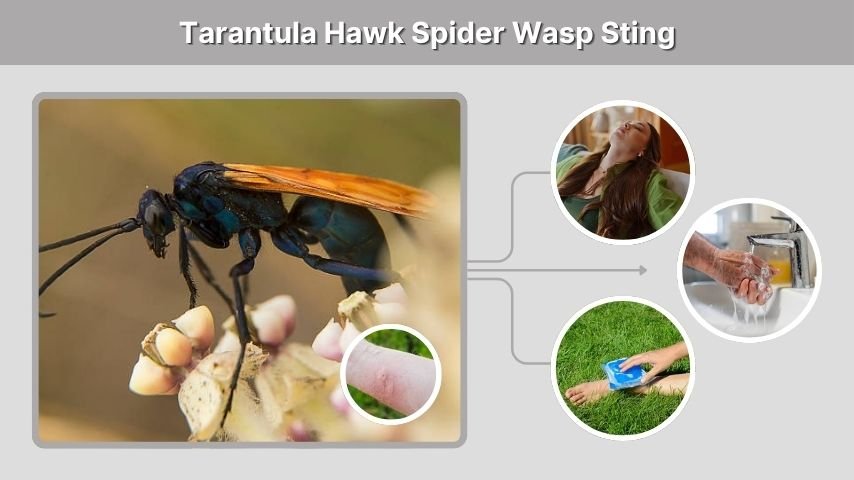
The tarantula hawk spider wasp sting is one of the main reasons people fear this insect. The sting is widely known as one of the most painful insect stings in the world. However, pain does not always mean high danger.
For most people, the sting causes intense short-term pain rather than lasting harm. The biggest risks are allergic reactions, panic, falling, or injuring yourself while reacting to the pain.
What Does the Sting Do to a Tarantula?
To a tarantula, the sting causes paralysis. The spider remains alive but unable to move normally. This allows the wasp to drag it away and use it as a food source for the developing larva.
The sting is highly effective because it targets the spider’s nervous system. It does not need to kill the spider immediately. In fact, keeping the spider alive helps preserve fresh food for the larva.
What Happens If It Stings a Human?
If a tarantula hawk stings a human, the person may feel sudden, severe pain. The pain is often described as overwhelming but usually short-lived. Swelling, redness, and soreness may follow.
If someone is stung:
- Move away from the wasp calmly if possible.
- Sit or lie down to avoid falling from the pain.
- Wash the sting area with soap and water.
- Use a cold compress to reduce swelling.
- Seek medical help if there are signs of allergy, breathing trouble, dizziness, or spreading swelling.
Tarantula hawks are not usually aggressive toward humans. Most stings happen when someone handles, steps on, traps, or threatens the wasp.
Where Do Tarantula Hawks Live?
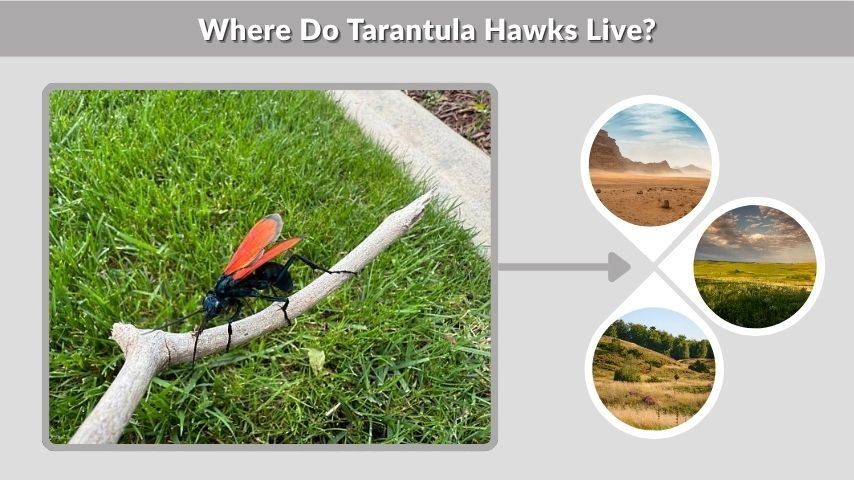
Tarantula hawks live in warm areas where large spiders are available. They are especially associated with deserts and dry regions, but different species can be found in many parts of the world.
They are often seen in:
- Desert landscapes
- Grasslands
- Scrublands
- Open sandy areas
- Areas with tarantula burrows
- Flowering plants where adults feed on nectar
In the United States, they are most often associated with the Southwest. They may be seen in places such as Arizona, New Mexico, Texas, Nevada, and parts of California.
Are Tarantula Hawks Dangerous?
Tarantula hawks can be dangerous if handled carelessly, but they are not usually a serious threat to people. They are solitary wasps, not colony defenders like yellowjackets or hornets. They do not normally chase people or attack in groups.
The main danger is the sting. It is extremely painful, but the wasp usually uses it defensively against humans. If you leave the insect alone, it will usually leave you alone.
When Should You Be Careful?
Be extra careful if you see a tarantula hawk:
- Walking near bare feet or sandals
- Trapped indoors
- Caught in clothing
- Near a pool, patio, or outdoor seating area
- On flowers you are handling
- Dragging a spider across the ground
Do not swat it with your hand. Do not pick it up. Give it space and let it move away.
Tarantula Hawk Bite vs Sting
Many people search for “tarantula hawk spider bite,” but tarantula hawks are wasps, so the main concern is a sting, not a bite. They may have mouthparts, but their famous defense is the female’s stinger.
Male tarantula hawks do not sting. Female tarantula hawks use their stinger to paralyze spiders and defend themselves.
Bite or Sting: Which Is Correct?
The correct term is “sting.” If someone says “tarantula hawk bite,” they are usually referring to the painful sting of the wasp. A tarantula, on the other hand, can bite because it is a spider with fangs.
Why Do Tarantula Hawks Bury Spiders?
Tarantula hawks bury or seal spiders in a burrow to protect the developing egg and larva. The paralyzed spider becomes a living food supply. By hiding it underground, the wasp reduces the chance that other animals or insects will steal it.
This behavior is not random cruelty. It is part of the wasp’s reproductive cycle. The female wasp invests a lot of effort into finding, paralyzing, dragging, and sealing away one spider for one egg.
Spider Wasp vs Tarantula Hawk
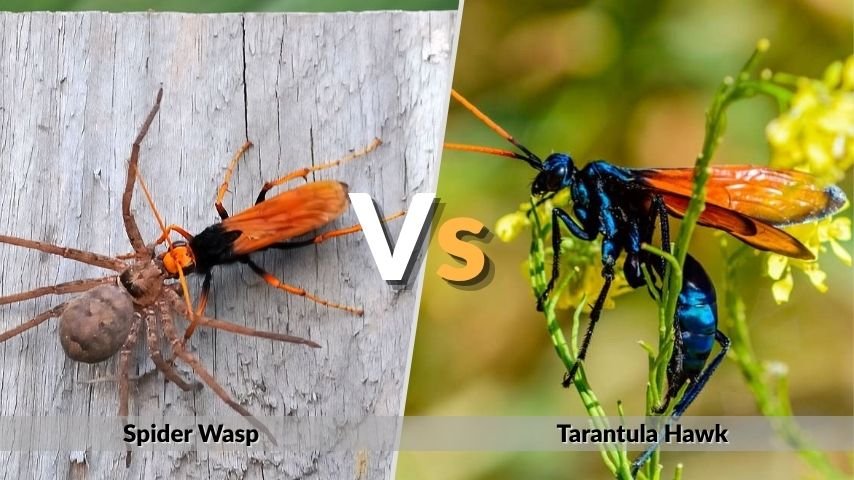
A tarantula hawk is a type of spider wasp. So “spider wasp vs tarantula hawk” is not really a battle between two different animals. It is more like comparing a category with one famous member of that category.
Spider wasps are wasps that hunt spiders. Tarantula hawks are large spider wasps that specialize in hunting tarantulas or other large spiders.
Simple Difference
All tarantula hawks are spider wasps, but not all spider wasps are tarantula hawks. Some spider wasps hunt smaller spiders, while tarantula hawks are famous for targeting large tarantulas.
Do Tarantula Hawks Help the Environment?
Yes, tarantula hawks have an important role in the environment. They help control spider populations and also act as pollinators when they visit flowers for nectar.
Although their life cycle seems harsh, they are part of a balanced ecosystem. They are predators, pollinators, and prey for a few bold animals.
Why They Matter
Tarantula hawks are useful because they:
- Pollinate flowers while feeding on nectar
- Control populations of large spiders
- Support biodiversity in desert ecosystems
- Provide food for some birds and other predators
- Show how specialized insect life cycles can be
Because they are not usually aggressive, killing them is rarely necessary. In most cases, simple avoidance is the best approach.
How to Stay Safe Around Tarantula Hawks
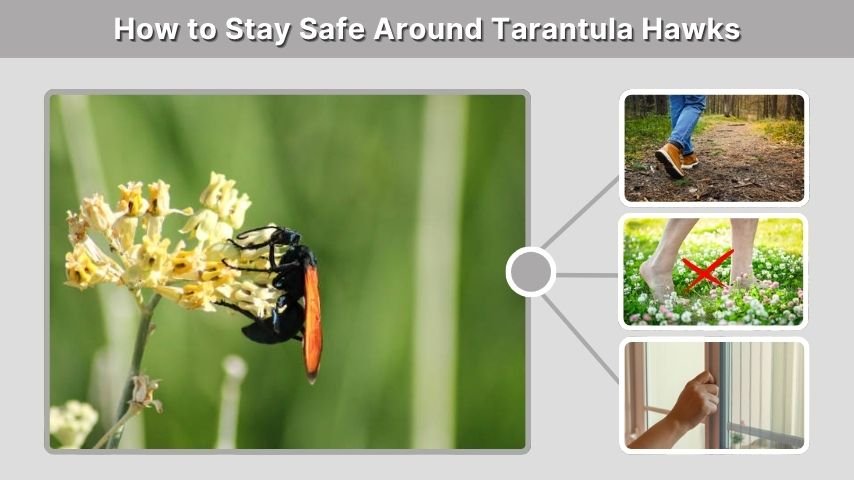
The best way to stay safe is to avoid direct contact. Tarantula hawks are usually calm if left alone. They are not looking for humans, and they do not want to waste energy stinging people.
Use these safety tips:
- Wear shoes outdoors in areas where tarantula hawks are common.
- Avoid walking barefoot near flowers, patios, or desert trails.
- Do not touch or trap a tarantula hawk.
- Check outdoor furniture before sitting.
- Keep children and pets away from large wasps.
- Use screens and sealed doors to prevent insects from entering the home.
If one enters your house, open a door or window if it is safe to do so. You can also contact pest control if you are unsure how to remove it safely.
FAQs
Is a tarantula hawk a spider or a wasp?
A tarantula hawk is a wasp, not a spider. It is called a spider wasp because it hunts spiders, especially tarantulas. It has wings, antennae, six legs, and a stinger, which are all wasp features.
Does a tarantula hawk kill tarantulas?
A tarantula hawk usually paralyzes a tarantula rather than killing it immediately. The female wasp drags the paralyzed spider into a burrow, lays an egg on it, and seals the burrow. The larva later feeds on the spider.
How painful is a tarantula hawk sting?
A tarantula hawk sting is considered one of the most painful insect stings. The pain can be intense, but it is usually short-lived for most people. Medical help is needed if there are signs of an allergic reaction.
Can a tarantula hawk sting a human?
Yes, a female tarantula hawk can sting a human. However, these wasps are not usually aggressive. Most stings happen when the wasp is handled, stepped on, trapped, or threatened.
Who wins: tarantula hawk vs spider?
In most encounters with tarantulas, the tarantula hawk has the advantage because it is specialized for hunting them. However, a large spider can sometimes injure or kill the wasp if it bites or grabs it first.