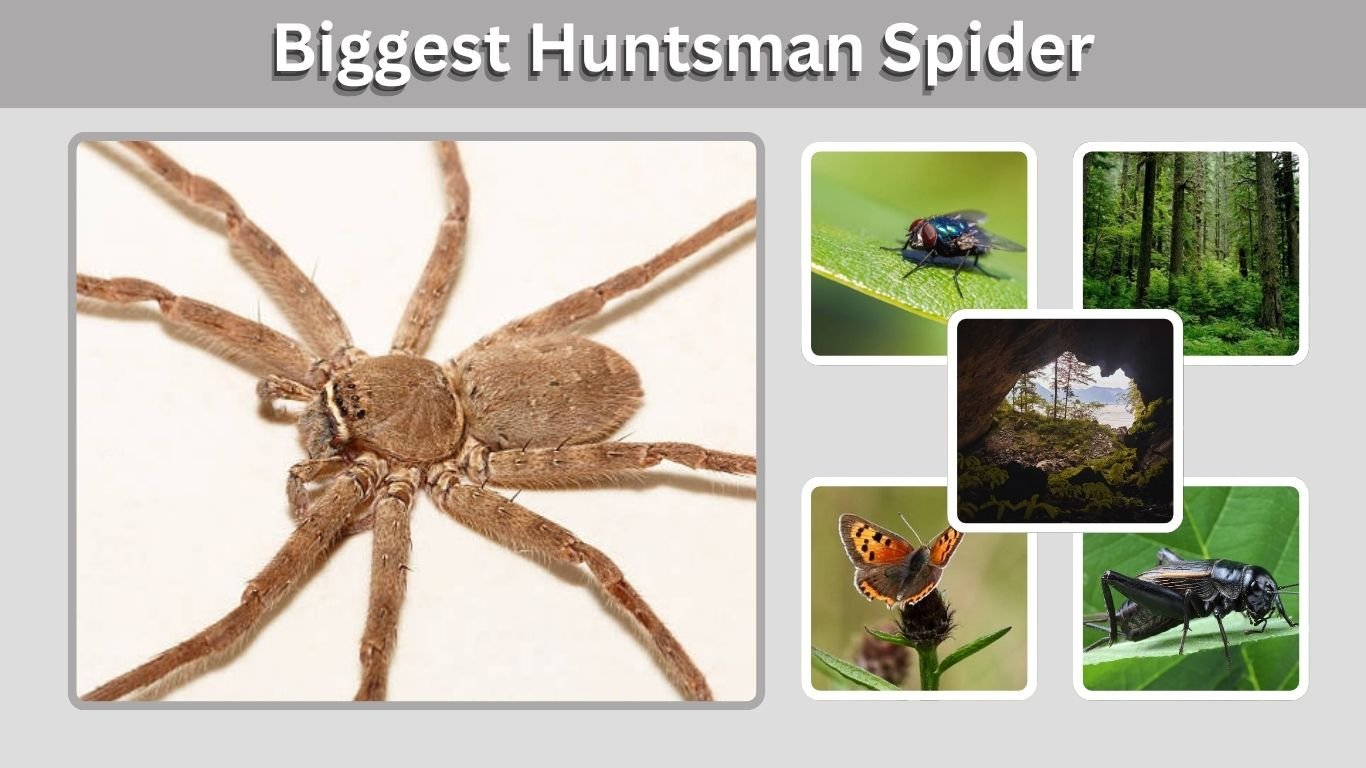
The biggest huntsman spider in the world is the giant huntsman spider, scientifically known as Heteropoda maxima. It is famous for having one of the largest leg spans of any living spider, reaching about 30 cm across. Although many people connect huge huntsman spiders with Australia, the largest known species was discovered in Laos. Australian huntsman spiders can also grow large, but they are usually smaller than the giant huntsman.
What Is the Biggest Huntsman Spider?
The biggest huntsman spider is the giant huntsman spider, Heteropoda maxima. It belongs to the huntsman spider family, Sparassidae. This spider is widely known as the largest spider by leg span, with a leg span that can reach around 30 cm, or about 11.8 inches. The species was described by Peter Jäger in 2001 from Laos, and the World Spider Catalog lists Heteropoda maxima under the huntsman family Sparassidae.
Giant Huntsman Spider
The giant huntsman spider is not the heaviest spider in the world, but it is famous for its extremely long legs. Its body is much smaller than its full leg span suggests. Like other huntsman spiders, it has a flattened body and long legs that spread outward in a crab-like posture.
This spider is often mentioned in “biggest spider” discussions because spider size can be measured in different ways. If measured by leg span, the giant huntsman is one of the largest spiders known. If measured by weight or body mass, large tarantulas such as the Goliath birdeater are heavier.
Scientific Name and Discovery
The scientific name of the biggest huntsman spider is Heteropoda maxima. It was described from Laos, not Australia. This is important because many online searches use phrases like “biggest huntsman spider Australia,” but the world’s largest huntsman species is connected with Laos.
The species name “maxima” reflects its exceptional size. It was originally described in a scientific paper titled “A new species of Heteropoda from Laos, the largest huntsman spider?” according to the World Spider Catalog reference listing.
Biggest Size Recorded
The giant huntsman spider can reach a leg span of about 30 cm. This is around the size of a large dinner plate. Its body length is much smaller than its leg span, but the long legs make it look enormous.
A spider this size can look terrifying when seen on a wall, tree, or cave surface. However, its size does not mean it is deadly to humans. Like most huntsman spiders, it is a predator of insects and other small animals, not people.
Biggest Huntsman Spider Size Comparison
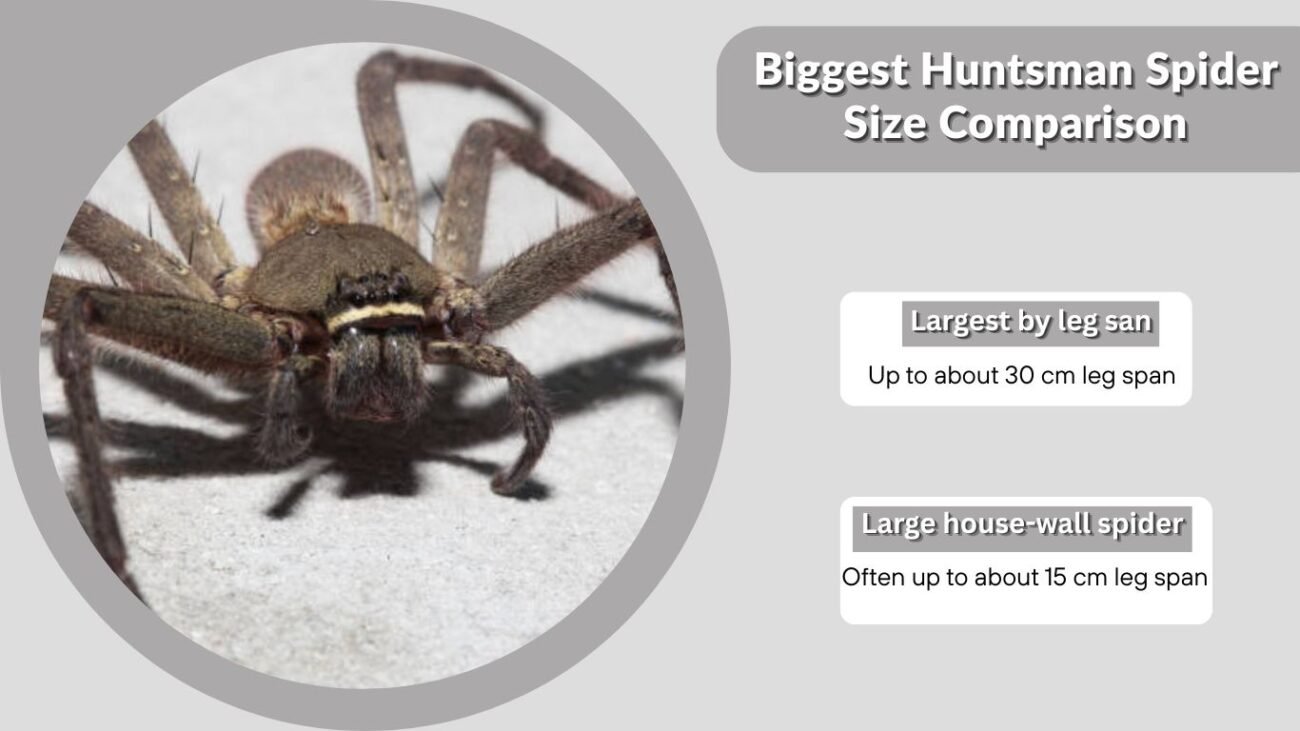
Size is the main reason people search for the biggest huntsman spider. However, there is often confusion between leg span, body length, and body weight. A huntsman spider may look larger than a tarantula because of its long legs, even if the tarantula is heavier.
| Spider | Main Size Feature | Approximate Size Note |
| Giant huntsman spider | Largest by leg span | Up to about 30 cm leg span |
| Australian huntsman spider | Large house-wall spider | Often up to about 15 cm leg span |
| Goliath birdeater | Heaviest spider | Much heavier body than huntsman |
| Large tarantulas | Heavy body and thick legs | Usually bulkier than huntsman |
| Wolf spider | Stocky ground hunter | Smaller leg span than giant huntsman |
Leg Span vs Body Size
The giant huntsman spider is famous because of its leg span. Leg span means the distance from the tip of one extended leg to the tip of the opposite leg. This measurement can make huntsman spiders look massive because their legs are long and spread widely.
Body length is different. It measures only the main body, not the legs. A giant huntsman’s body is much smaller than its full leg span. This is why it may look huge from a distance but not as heavy as a tarantula.
Is It the Biggest Spider in the World?
The giant huntsman spider is often called the biggest spider in the world by leg span. However, it is not the biggest by weight. The Goliath birdeater, a tarantula from South America, is usually considered the heaviest spider.
So the answer depends on how you measure “biggest.” By leg span, the giant huntsman spider is a top record holder. By body mass, the Goliath birdeater is larger.
How Big Is an Australian Huntsman Spider?
Australian huntsman spiders can be large, but they are not usually as large as the giant huntsman from Laos. The Australian Museum lists Australian huntsman spiders with body lengths around 2 cm for females and 1.6 cm for males, with leg spans up to about 15 cm.
This still makes them look very large inside homes, especially when they suddenly run across walls, ceilings, or curtains. Many people who find a large spider in Australia assume it is the biggest huntsman ever, but most are ordinary large huntsman spiders.
Biggest Huntsman Spider in Australia
Australia is famous for huntsman spiders, and many people believe the biggest huntsman spider must come from Australia. That is understandable because huntsman spiders are commonly seen in Australian homes, sheds, garages, and forests. However, the world’s largest known huntsman spider species is from Laos, not Australia.
Why Australia Is Linked With Giant Huntsman Spiders
Australia has many large and familiar huntsman spiders. They often appear inside houses and can shock people because of their speed and leg span. Australian huntsman spiders are also common in media, viral photos, and pest-control stories.
They are often found:
- Behind curtains
- On walls and ceilings
- Under loose bark
- In sheds and garages
- Around tree trunks
- Inside cars
- Behind outdoor furniture
- Near insects and cockroaches
Because these spiders often live close to people, they are photographed more often than many other large spiders.
Are Australian Huntsman Spiders the Biggest?
Australian huntsman spiders can be among the largest spiders people commonly see around homes, but they are not the world’s largest huntsman species. The giant huntsman spider from Laos has a much larger recorded leg span.
Still, a large Australian huntsman can look enormous because it may spread its legs across a wall or ceiling. Its flat body and sideways legs make it appear wider than many other spiders.
“Charlotte” the Huge Huntsman Spider
Many searches about the “biggest huntsman spider ever photographed” refer to viral images of a huge huntsman spider in Australia, often called “Charlotte.” These photos made people wonder whether it was the largest huntsman spider ever found.
Viral photos can be difficult to judge because camera angle, distance, and perspective can make spiders look bigger. A large Australian huntsman can be impressive, but it should not be confused with the scientifically recognized giant huntsman species, Heteropoda maxima.
Where Does the Biggest Huntsman Spider Live?
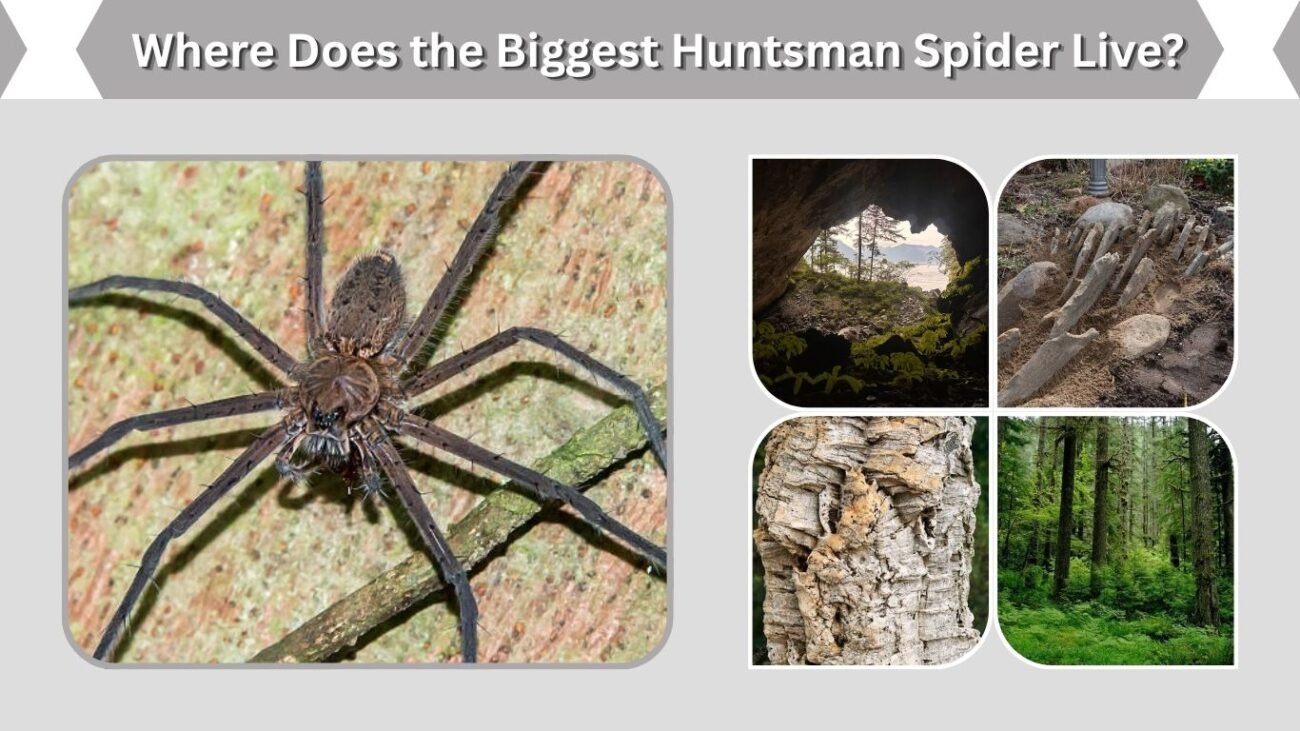
The giant huntsman spider was discovered in Laos, especially associated with cave environments. Huntsman spiders in general live in warm regions and often hide in narrow spaces during the day. Their flat bodies help them shelter under bark, in cracks, and around rock surfaces.
Natural Habitat
The biggest huntsman spider is linked with caves and rocky habitats in Laos. Many huntsman spiders prefer hidden places where they can rest safely during the day and hunt at night.
Common huntsman habitats include:
- Caves
- Tree bark
- Rock crevices
- Forests
- Logs
- Tree holes
- Houses
- Sheds
- Garages
- Wall cracks
The Australian Museum notes that huntsman spiders are commonly associated with habitats such as peridomestic areas, tree holes, and under bark.
Why They Have Long Legs
Long legs help huntsman spiders move quickly across flat surfaces. Their sideways leg arrangement gives them a crab-like walking style. This helps them run over bark, walls, rocks, and ceilings.
For the giant huntsman spider, extremely long legs may help it move through cave walls and uneven surfaces. Long legs also make the spider appear much larger than its body alone.
Do They Live in Houses?
The biggest species, Heteropoda maxima, is not a common house spider for most people. However, other huntsman spiders often enter homes, especially in warm regions. They may come inside while chasing insects or looking for shelter.
In Australia and other tropical or subtropical areas, huntsman spiders may appear in bedrooms, bathrooms, kitchens, garages, or cars. They are usually not trying to attack people; they are searching for hiding places or food.
What Does the Biggest Huntsman Spider Eat?
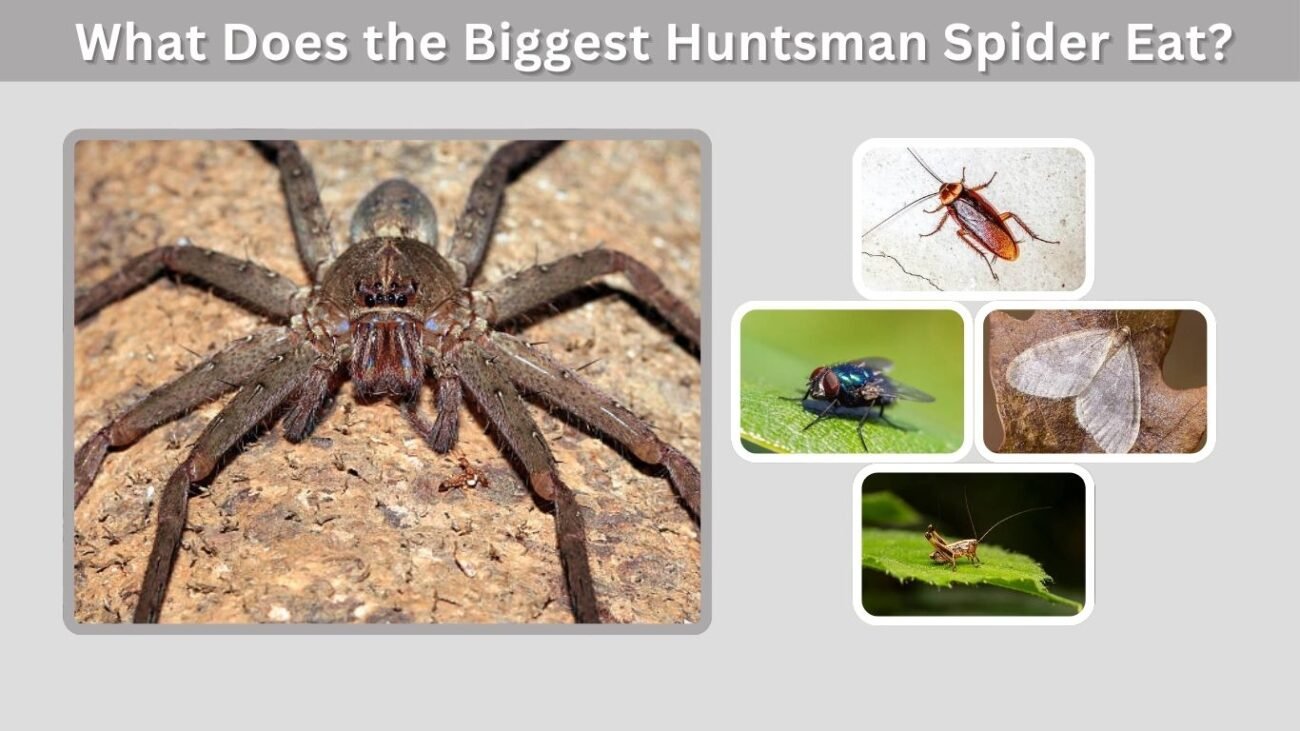
The biggest huntsman spider is a carnivorous predator. Like other huntsman spiders, it mainly eats insects and other arthropods. Larger huntsman spiders may occasionally catch small vertebrates, but insects remain their normal food.
Common Food
The diet of large huntsman spiders may include:
- Cockroaches
- Crickets
- Moths
- Beetles
- Grasshoppers
- Flies
- Other spiders
- Small lizards
- Geckos
- Small frogs
Huntsman spiders are active hunters. They do not build sticky webs to catch prey. Instead, they chase or ambush prey using speed and strong legs.
Can the Biggest Huntsman Eat a Mouse?
A very large huntsman spider might rarely overpower a tiny mouse or small vertebrate, but this is not a normal part of its diet. Most huntsman spiders focus on insects because insects are easier and safer to catch.
Searches like “biggest huntsman spider eating mouse” or “huntsman spider eating possum” usually come from unusual photos and rare wildlife moments. They are not everyday feeding behaviours.
Does Size Make It Dangerous?
Large size helps a huntsman catch bigger prey, but it does not make it a serious threat to humans. Huntsman spiders may bite defensively if grabbed or trapped, but they do not hunt people.
Most bites cause local pain, redness, or swelling. Serious reactions are uncommon, but medical help is recommended if symptoms become severe or if the person has an allergic reaction.
Is the Biggest Huntsman Spider Dangerous?
The biggest huntsman spider looks intimidating, but huntsman spiders are not usually considered dangerous to humans. Their size, speed, and long legs create fear, but they are more likely to run away than attack.
Venom and Bite
Huntsman spiders use venom to subdue prey. Their venom is useful for catching insects, but it is not designed to kill humans. A bite can still be painful because the spider has fangs and may inject venom.
Common bite symptoms may include:
- Local pain
- Redness
- Mild swelling
- Itching
- Tenderness
- Short-term discomfort
If a bite causes severe swelling, spreading redness, breathing trouble, dizziness, fever, or worsening pain, medical attention is important.
Why People Fear Them
People fear huntsman spiders because they are large and fast. They may suddenly appear from behind curtains, furniture, car visors, or wall corners. Their movement can be startling, especially indoors.
However, fear does not equal danger. In many cases, the spider is helpful because it eats cockroaches and other pests.
What to Do If You Find One
If you find a large huntsman spider indoors, avoid touching it with your bare hands. Use a container and a piece of cardboard to move it outside. If you are uncomfortable, ask someone experienced to remove it safely.
Do not try to crush it with your hand. This increases the chance of a defensive bite and can also create unnecessary fear or mess.
Biggest Huntsman Spider vs Goliath Birdeater
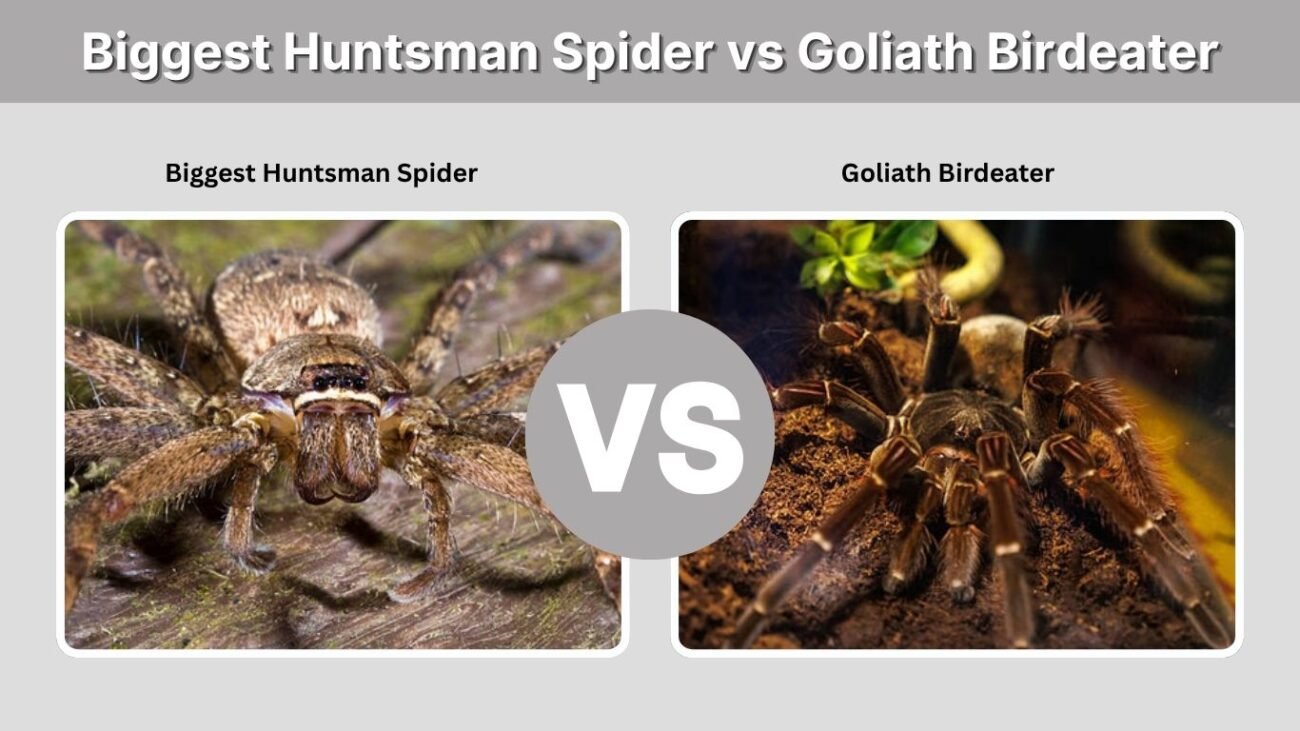
The biggest huntsman spider and the Goliath birdeater are often compared because both are record-breaking spiders. However, they are “biggest” in different ways.
Giant Huntsman Spider
The giant huntsman spider is famous for its leg span. Its long, sideways legs can stretch about 30 cm across. This gives it the title of one of the largest spiders by leg span.
It has a flatter body and is built for speed. It does not have the same heavy, bulky body as a large tarantula.
Goliath Birdeater
The Goliath birdeater is a tarantula known for body mass and weight. It has a heavy body, thick legs, and a powerful appearance. It may not always beat the giant huntsman in leg span, but it is much heavier.
This means the giant huntsman may look wider, while the Goliath birdeater is more massive.
Which One Is Bigger?
By leg span, the giant huntsman spider is often considered bigger. By weight and body mass, the Goliath birdeater is bigger. Both spiders are impressive, but they belong to different spider groups and have different body designs.
Myths About the Biggest Huntsman Spider
Large huntsman spiders often become the subject of myths, exaggerated photos, and scary stories. Some stories are based on real size, while others are enlarged by camera angle or internet sharing.
Common Myths
- The biggest huntsman spider can kill humans easily
- Every huge huntsman spider is from Australia
- Huntsman spiders chase people to attack them
- They eat pets like cats and dogs
- Viral photos always show record-breaking spiders
- A large leg span means a heavy body
- All huntsman spiders are the same species
- The biggest huntsman lives in every home
Most of these ideas are not accurate. Huntsman spiders can be large, but they are not human-hunting monsters. They are fast predators that mainly eat insects.
FAQs
What is the biggest huntsman spider in the world?
The biggest huntsman spider in the world is the giant huntsman spider, Heteropoda maxima. It is known for having an extremely large leg span of around 30 cm. This makes it one of the largest living spiders by leg span, although it is not the heaviest spider.
Is the biggest huntsman spider from Australia?
No, the biggest known huntsman spider species is from Laos, not Australia. Australia has many large huntsman spiders, and they are commonly seen in homes, but the giant huntsman spider, Heteropoda maxima, was described from Laos and is famous for its record leg span.
How big is the biggest huntsman spider ever recorded?
The biggest huntsman spider can reach a leg span of about 30 cm, or roughly 11.8 inches. This measurement is based on leg span, not body length. Its body is much smaller, but the long sideways legs make it look extremely large.
Is the giant huntsman spider the biggest spider in the world?
The giant huntsman spider is often called the biggest spider in the world by leg span. However, it is not the biggest by weight. The Goliath birdeater is usually considered heavier and bulkier, while the giant huntsman is wider because of its long legs.
Are giant huntsman spiders dangerous to humans?
Giant huntsman spiders look scary, but they are not usually dangerous to humans. They may bite if handled or trapped, but they do not hunt people. A bite may cause local pain, redness, or swelling. Serious reactions are uncommon, though severe symptoms should be checked by a doctor.