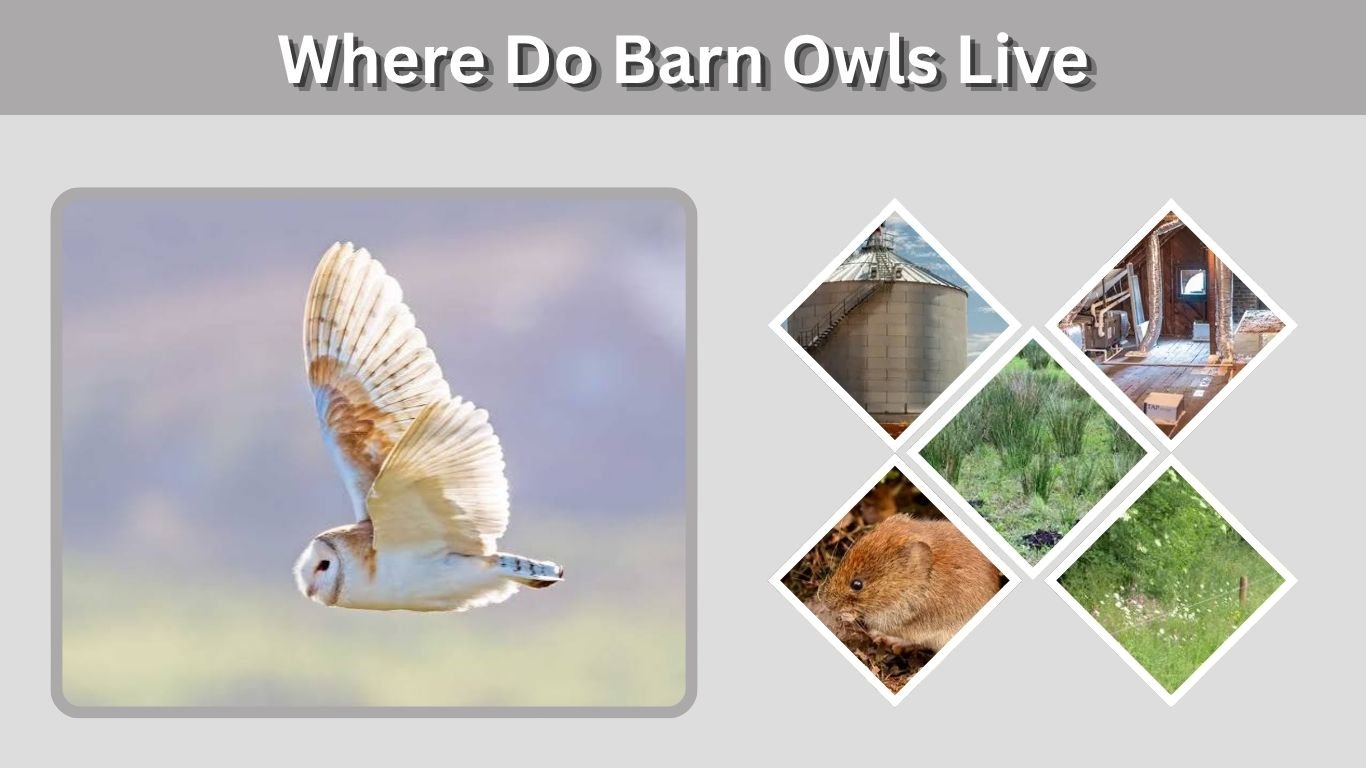
Barn owls live in open countryside where they can hunt small mammals and find quiet, sheltered places for daytime roosting and nesting. They are strongly associated with farms and old barns, but they also use hollow trees, cliffs, caves, church towers, silos, nest boxes, and abandoned buildings. In the broad traditional sense, barn owls and their closely related regional forms occur across much of the world, including the Americas, Europe, Africa, Asia, and Australia. This guide explains where barn owls live, what habitats they prefer, where they nest, and how long they survive.
Where Do Barn Owls Live?
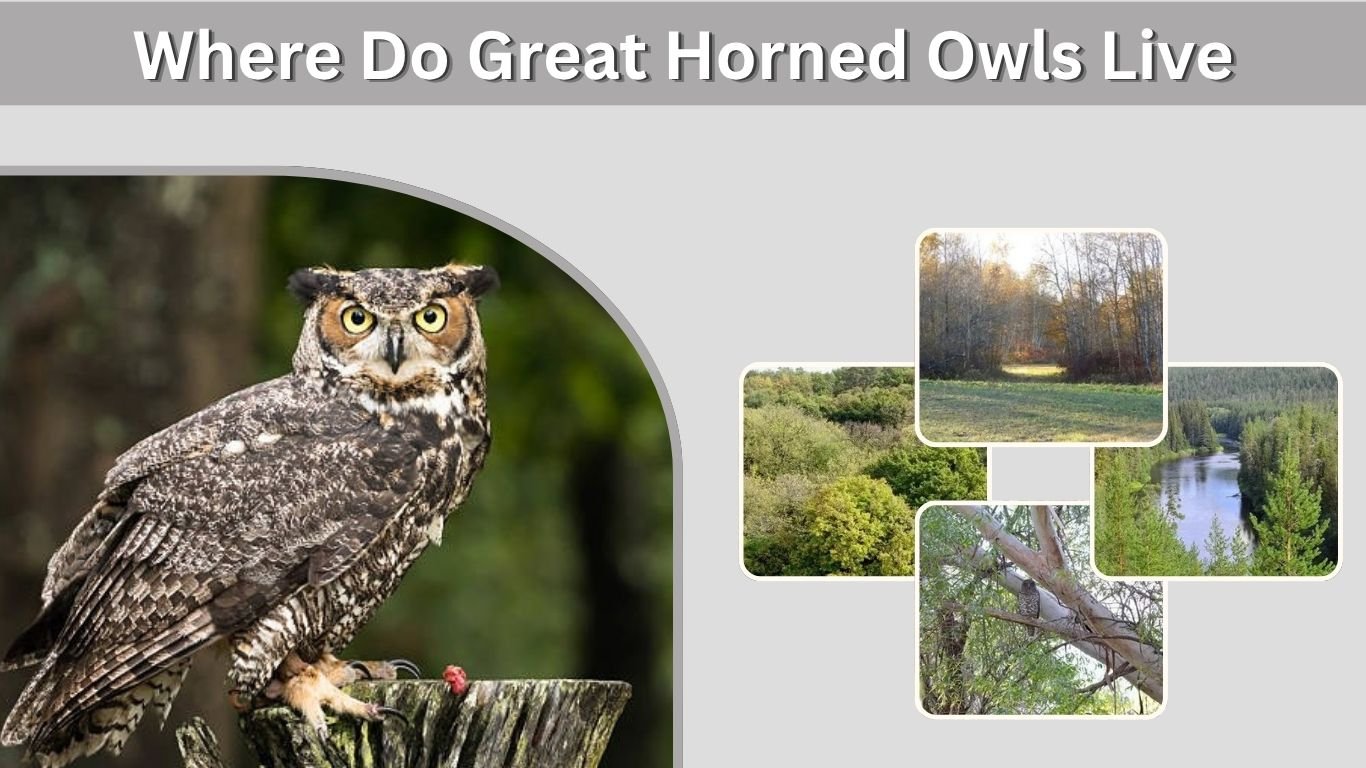
Barn owls generally live in open or partly open landscapes rather than deep, continuous forests. The best habitat combines rough grassland rich in rodents with a secure cavity or sheltered ledge for roosting and breeding.
Common barn owl habitats include:
- Grasslands and meadows
- Farmland and pastures
- Marshes and wetland edges
- Open heathland
- Coastal grasslands
- Orchards and vineyards
- Agricultural fields
- Desert edges and dry scrub
- Rural settlements
- Open woodland edges
American Barn Owls require large open areas for hunting, including marshes, grasslands, and mixed agricultural fields. During daylight, they rest in quiet cavities, dense trees, barns, silos, and other protected locations.
Where Do Barn Owls Live Around the World?
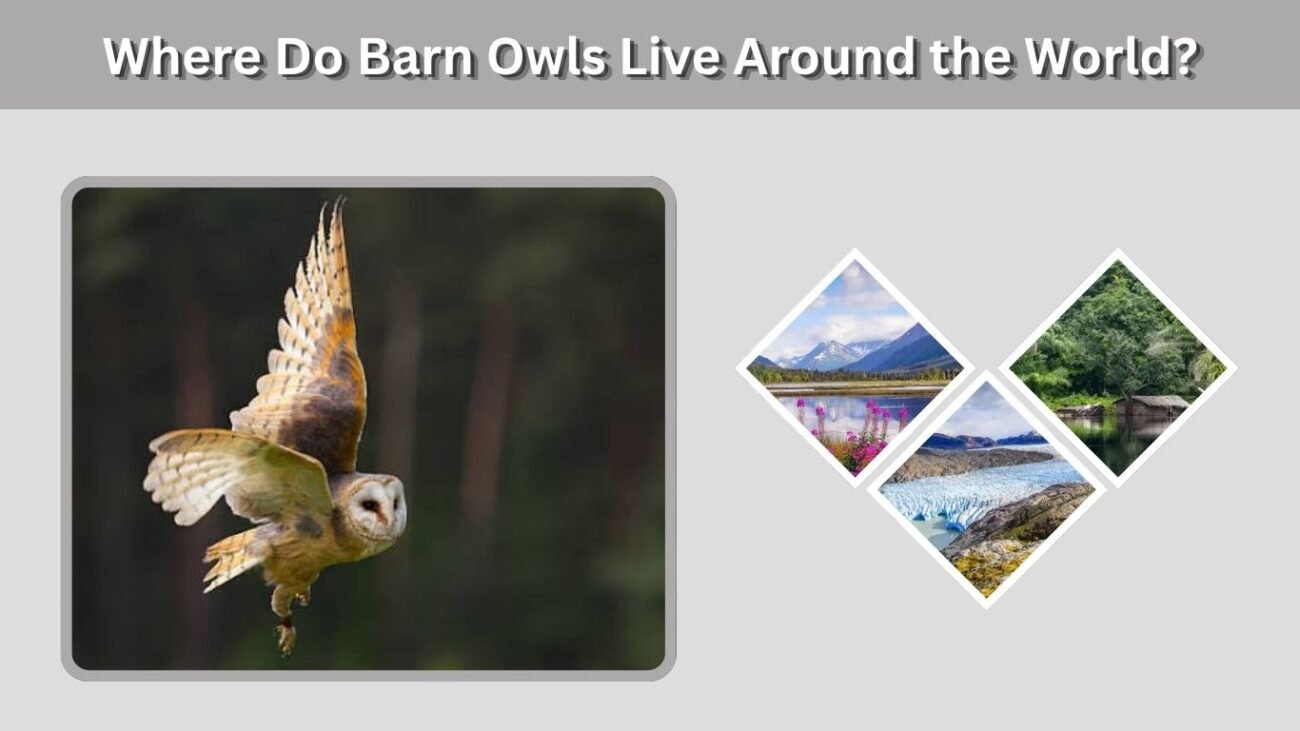
The name “Barn Owl” has traditionally covered a widely distributed group. Modern classifications may divide these birds into American, Eastern, and Western regional species, but they share similar habitat requirements and appearances.
| Region | Typical places barn owls live |
| North America | Farms, grasslands, marshes, deserts and open countryside |
| Central and South America | Agricultural land, savannas, open forests and wetlands |
| United Kingdom and Europe | Farmland, rough grassland, marshes and coastal fields |
| Africa | Savannas, farmland, grasslands and semi-arid countryside |
| Asia | Agricultural areas, grasslands, wetlands and open scrub |
| Australia | Open woodland, grassland, farmland and rural landscapes |
They are largely absent from Antarctica, extremely cold polar areas, and environments where deep forests or barren landscapes provide too little accessible prey.
Barn Owls in the United States
American Barn Owls occur across much of the United States, although their abundance varies considerably. They are most likely to be found in regions with open fields, marshes, ranchland, farms, and undisturbed nesting cavities.
Their broader range extends from southern Canada through the United States, Mexico, Central America, and much of South America. They also occur on several Caribbean islands and the Galápagos, with different regional forms recognized across the range.
Barn owls can live in states such as California, Texas, Florida, Ohio, Pennsylvania, New Mexico, Michigan, and North Carolina when suitable hunting and nesting habitat is available. They may be scarce in heavily forested, highly urbanized, or extremely cold areas.
Where Do Barn Owls Live in the UK?
Barn owls are widely distributed across Britain but tend to avoid high elevations, highly developed urban environments, and some remote islands. They are most strongly associated with lowland farmland, grassland, field edges, marshes, and coastal countryside.
Their distribution in Ireland is more scattered, with some of the strongest populations occurring in the southwest. Suitable rough grassland and safe nesting sites are essential for supporting local breeding pairs.
Where Do Barn Owls Live in Australia?
Barn owls and closely related regional forms occur across much of Australia. They commonly occupy open woodland, grassland, farmland, wetlands, and semi-arid areas where mice and other small animals are plentiful.
They may roost in tree hollows, caves, sheds, abandoned buildings, and other dark shelters. Their local movements can change when rodent populations rise or fall.
Do Barn Owls Actually Live in Barns?
Yes, barn owls regularly live, roost, and nest in barns, especially older buildings containing quiet lofts, beams, ledges, or enclosed cavities. However, not every barn is suitable.
The owl needs safe access, protection from severe weather, limited disturbance, and a flat or slightly hollow surface for its eggs. It does not construct a traditional nest from sticks. Instead, eggs may be laid on old owl pellets and other accumulated nest debris.
Modern sealed barns are often less useful because they lack permanent openings and secluded nesting areas. Carefully designed nest boxes can replace lost natural or traditional sites.
Where Did Barn Owls Live Before Barns?
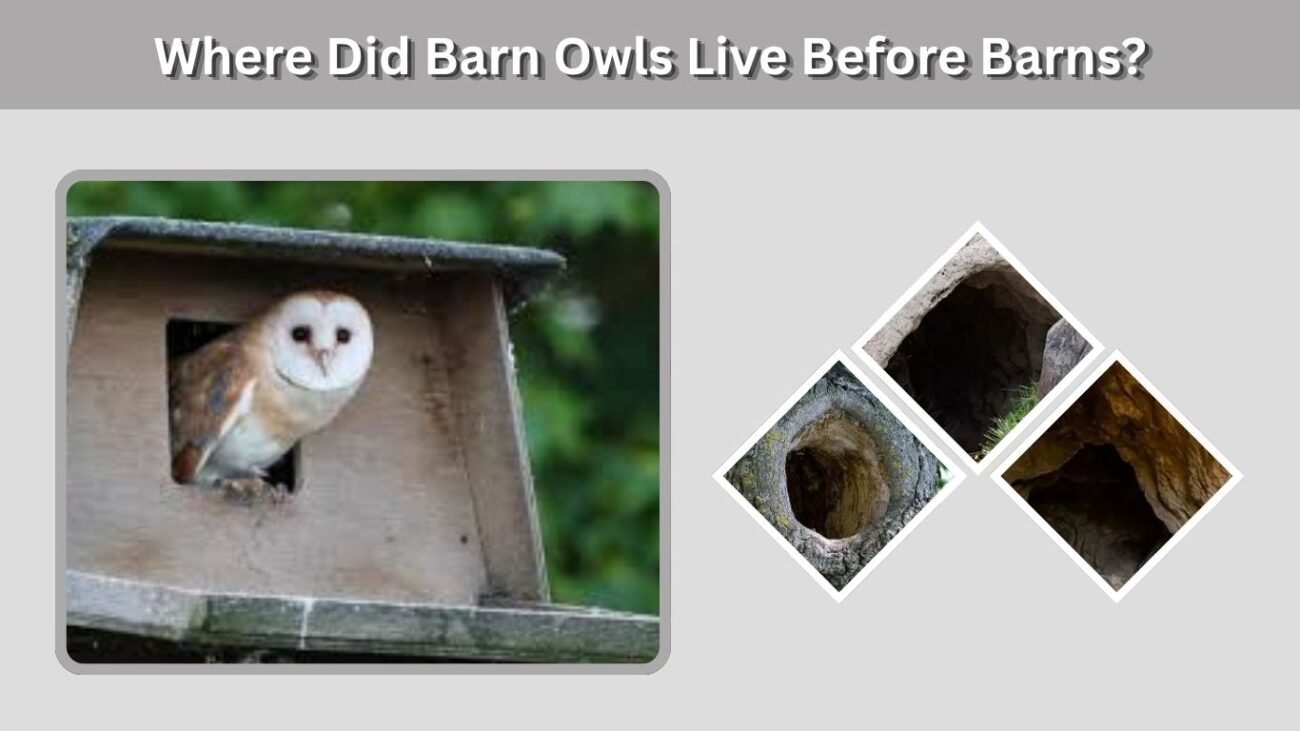
Barn owls existed long before people constructed farms and barns. Their original nesting and roosting places included:
- Hollow trees
- Rock crevices
- Small caves
- Sheltered cliff ledges
- Riverbank cavities
- Protected rocky openings
As people began creating houses, shelters, haystacks, and farm buildings, barn owls discovered that these structures provided dry, protected cavities similar to natural sites. They also benefited from the rodents attracted to stored grain and animal feed.
Do Barn Owls Live in Trees?
Barn owls can live in trees, but they usually require a large hollow or another sheltered space. They do not normally construct an exposed stick nest among the branches.
A suitable tree may provide:
- A deep trunk cavity for nesting
- A hidden hollow for daytime roosting
- Dense foliage for temporary shelter
- A perch overlooking hunting habitat
They may also roost in dense trees when no cavity is available. However, open grassland near the tree remains important because that is where most hunting occurs.
Where Do Barn Owls Nest?
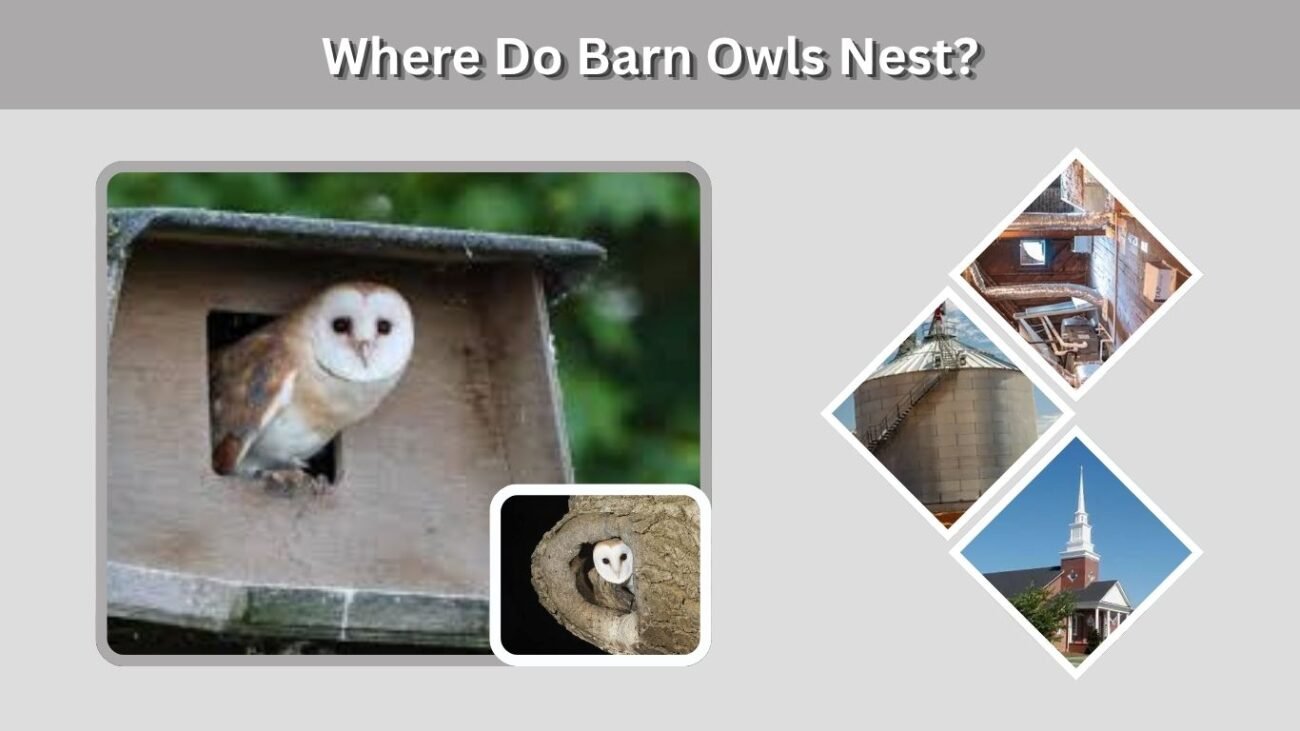
Barn owls are cavity nesters that use natural and human-made structures. Their nesting location is usually elevated, concealed, dry, and reasonably protected from predators.
Common Nesting Places
Barn owls may nest in:
- Hollow trees
- Barn lofts
- Church steeples
- Silos
- Attics
- Caves and rock crevices
- Cliff ledges
- Haystacks
- Riverbank cavities
- Purpose-built nest boxes
American Barn Owls have even used unusual structures when they provide shelter and enough internal space. The availability of a safe cavity may determine whether a pair can breed successfully in otherwise suitable habitat.
Do Barn Owls Build Nests?
Barn owls do not build organized nests from twigs and leaves. The female lays her eggs on a sheltered floor, ledge, or layer of compressed pellets and nest debris.
A pair may reuse the same location in future years when it remains safe and productive. Established adults tend to be faithful to familiar roosting sites, nesting places, and home ranges.
Do Barn Owls Live Alone or in Groups?
Barn owls are not usually group-living birds. An adult may roost alone outside the breeding season, while a bonded pair often shares a nesting area when raising young.
They do not strongly defend an entire hunting territory. The home ranges of several individuals or pairs may overlap, and multiple owls can hunt over the same productive fields. A pair mainly defends the immediate area surrounding its nest rather than all of its feeding habitat.
Do Barn Owls Migrate?
Most established adult barn owls remain within the same general home range instead of completing predictable long-distance seasonal migrations. Once an adult has settled, it may use that area for hunting, roosting, and breeding for the rest of its life.
Young owls disperse after becoming independent and may travel considerable distances while searching for an available home range. Severe weather and food shortages can also cause local movement.
How Long Do Barn Owls Live?
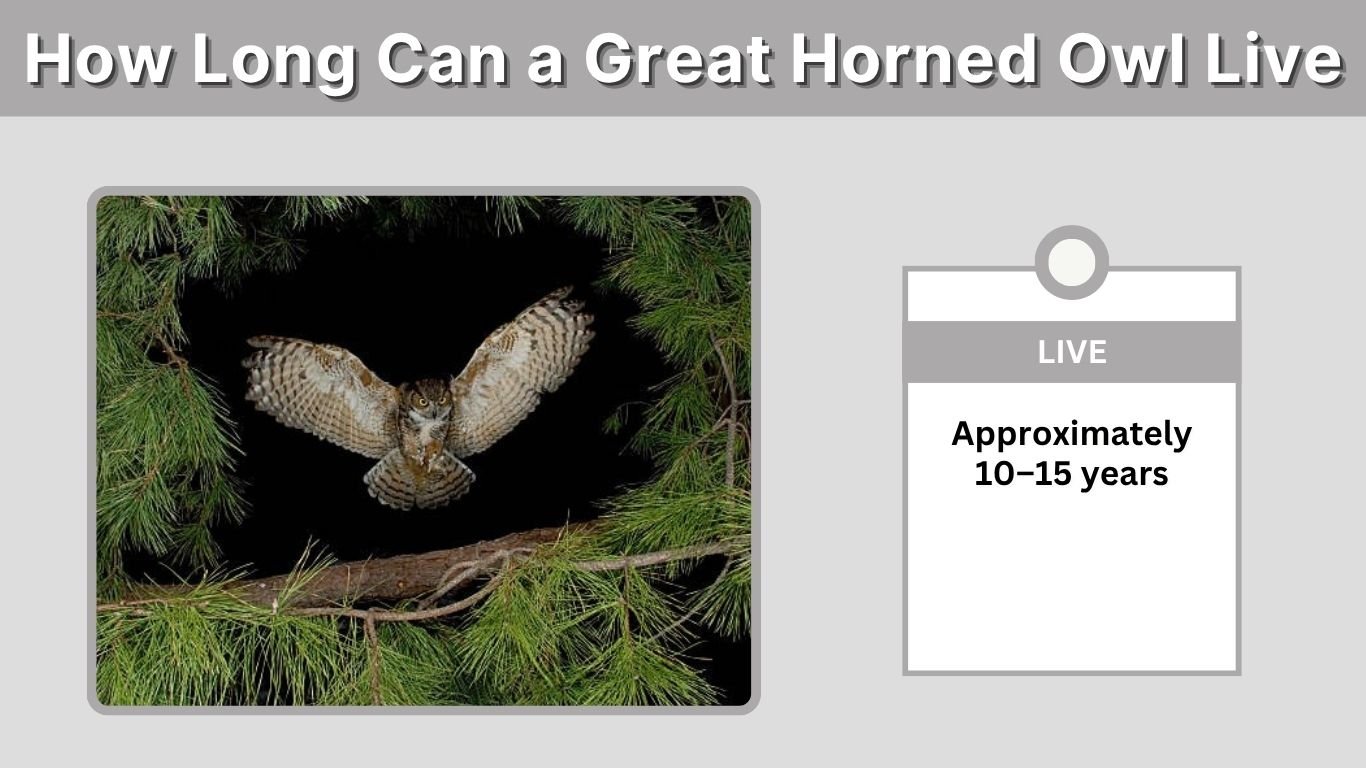
Barn owl lifespan varies greatly because many young birds die during their first year. In Britain, the average life expectancy calculated from birds ringed as nestlings is only around 18 months. However, birds that survive the dangerous first year commonly live for approximately four years.
| Living condition | Expected lifespan |
| Average wild life expectancy | About 18 months when early deaths are included |
| Wild owl surviving its first year | Commonly around 4 years |
| Exceptional wild individual | More than 18 years |
| Captivity with professional care | Around 20 years |
Exceptional individuals can live far longer than average. Britain has recorded an 18-year-old Barn Owl, while the European longevity record is approximately 30 years. Captive Barn Owls may have a life expectancy of about 20 years when provided with appropriate housing, nutrition, veterinary attention, and specialist care.
What Makes a Good Barn Owl Habitat?
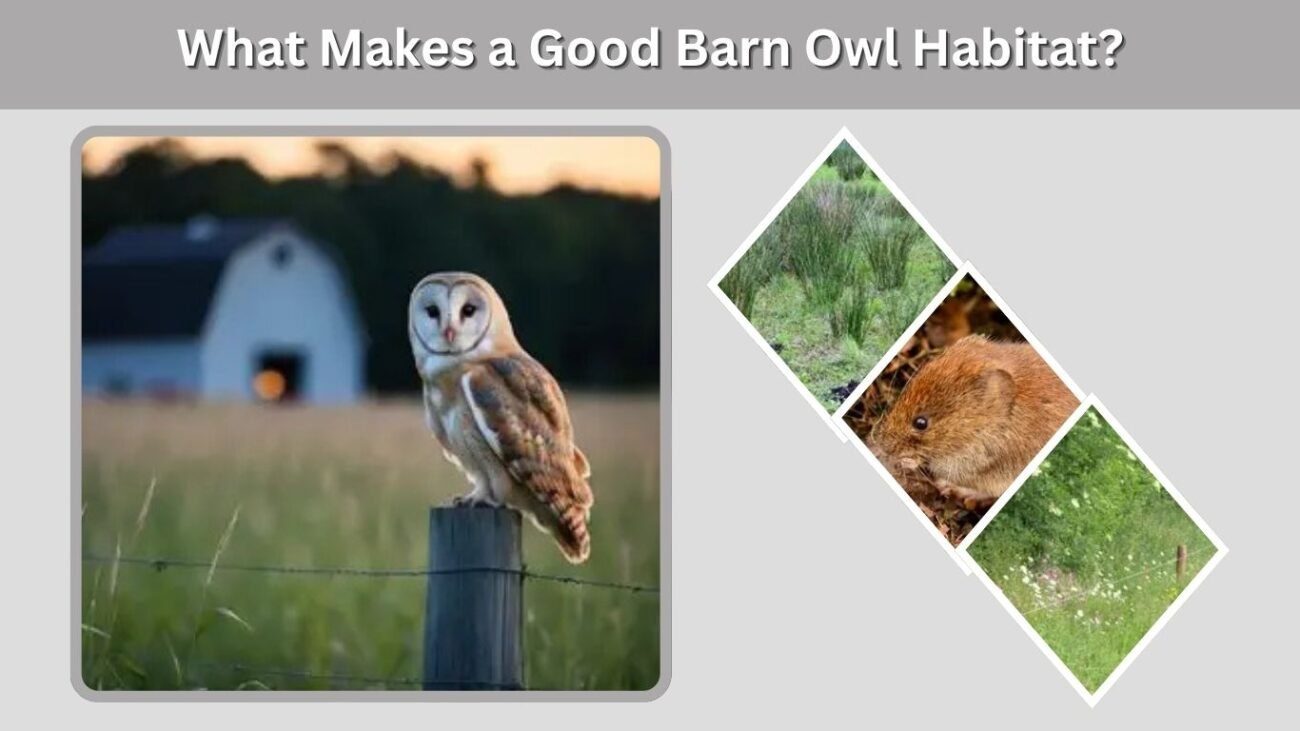
A nesting box alone will not support barn owls when the surrounding landscape lacks food. A suitable home range must provide both secure shelter and enough hunting habitat.
The most valuable features include:
- Rough, tussocky grassland containing voles and mice
- Undisturbed barns, trees or nest boxes
- Hedgerows and field margins
- Marshy grassland
- Low pesticide and rodenticide use
- Limited traffic near hunting routes
- Several safe daytime roosts
- Connected open landscapes
Barn owls hunt by flying low over fields and using highly sensitive hearing to detect rodents hidden in vegetation. Habitat loss, disappearing nesting cavities, road traffic, severe weather, and poisoned rodents can reduce survival.
FAQs
Do barn owls live in forests?
Barn owls may roost along woodland edges or in hollow forest trees, but they generally avoid extensive, dense forests. They hunt most successfully over open grassland, farmland, marshes, heathland, and similar habitats where low vegetation allows them to detect and capture rodents.
Can barn owls live in cities?
Barn owls occasionally occur near towns and cities when large parks, undeveloped fields, wetlands, or agricultural areas remain nearby. Dense urban centers usually provide insufficient hunting habitat, excessive disturbance, and few safe nesting cavities, making rural and suburban edges more suitable.
Do barn owls return to the same nest?
Established adults often show strong loyalty to successful nesting and roosting places. A pair may reuse the same barn, hollow tree, or nest box over several breeding seasons, provided the site remains accessible, dry, safe, and surrounded by productive hunting habitat.
Where do barn owls sleep during the day?
During daylight, barn owls sleep in quiet, dark, hidden locations. Typical daytime roosts include barns, hollow trees, church towers, caves, nest boxes, silos, dense trees, and sheltered building ledges. They usually become active around dusk and continue hunting through the night.
How large is a barn owl’s home range?
The area used depends on season and food availability. British tracking studies found that frequently used summer areas may cover roughly 350 hectares, while winter ranges can expand considerably when prey becomes harder to find. Home ranges may overlap with those of neighboring owls.