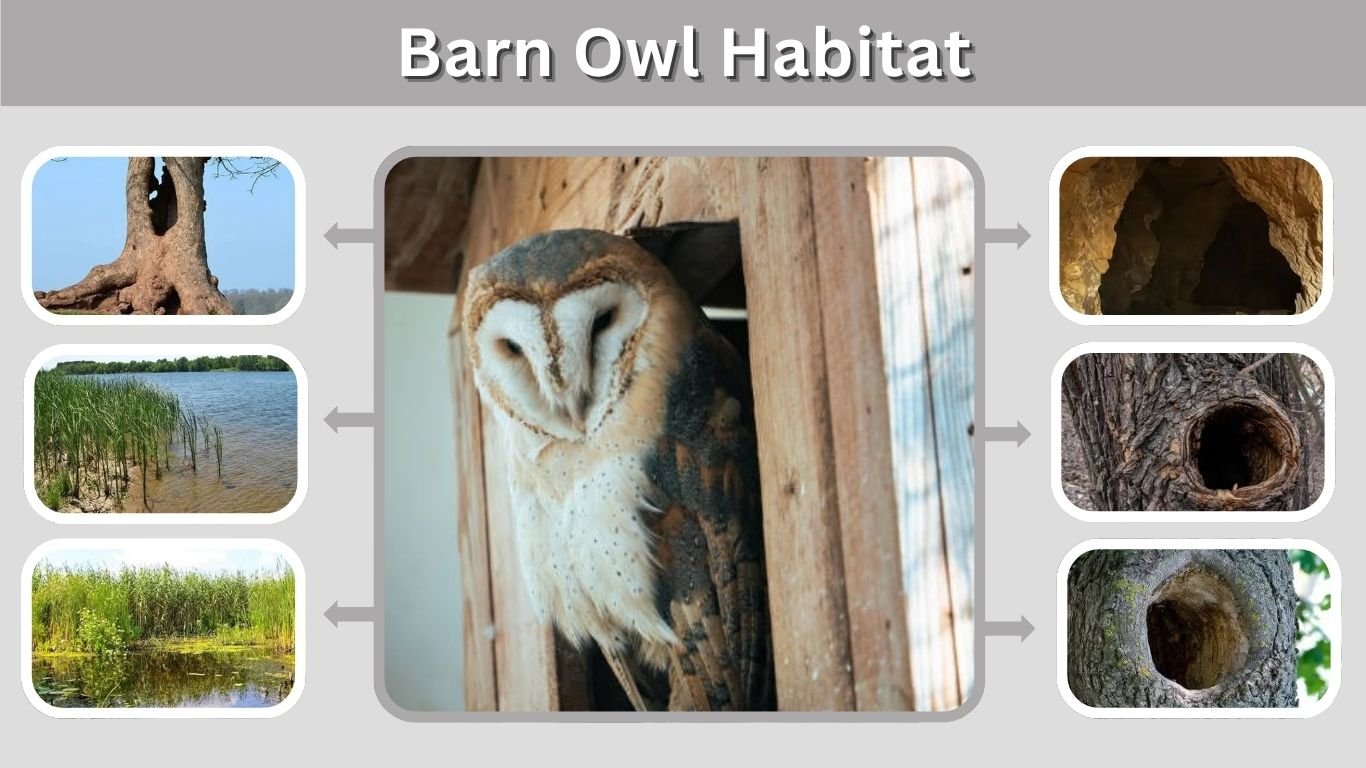
The typical Barn Owl habitat combines open hunting land with a safe, dry place for nesting and daytime roosting. Barn Owls commonly live around farms, grasslands, marshes, pastures, deserts, and other open landscapes where mice, voles, shrews, and rats are abundant. They avoid depending on dense forests because their long wings and low hunting style are better suited to open ground. Old barns may provide nest sites, but suitable feeding habitat is usually more important than the presence of a barn itself.
Barn Owl Habitat Overview
Barn Owls need three basic resources: productive hunting grounds, a secure nesting cavity, and a sheltered roost. A landscape may contain suitable buildings but support no owls if intensive land management leaves too little grassland for small mammals.
| Habitat requirement | What Barn Owls need |
| Hunting ground | Rough grassland, field margins, marshes and open farmland |
| Main prey | Voles, mice, shrews and small rats |
| Nesting place | Tree cavity, barn, tower, cliff hole or nest box |
| Roosting place | Quiet, sheltered and relatively dark cavity |
| Landscape structure | Mostly open ground with scattered trees or buildings |
| Main threats | Habitat loss, unsafe roads, pesticides and loss of nest sites |
What Is the Typical Habitat of a Barn Owl?
Barn Owls are birds of open country. Instead of moving through dense woodland, they usually fly low over vegetation while listening and watching for small mammals.
Grasslands and Meadows
Rough grassland is one of the best habitats for Barn Owls. Long, tussocky grass develops a layer of dead vegetation close to the soil, creating food and shelter for voles, mice and shrews.
The owls often patrol these areas at dusk, dawn or during the night. They fly slowly several feet above the vegetation and drop quickly when they detect prey. Rough grass along field edges, drainage ditches, roadsides and riverbanks can be especially valuable.
Agricultural Land
Barn Owls frequently inhabit farmland, but not every farm provides good habitat. The best agricultural landscapes contain a mixture of crop fields, rough margins, hedgerows, ditches, uncultivated corners and old structures.
Closely mown grass and heavily grazed pasture usually support fewer small mammals than rough vegetation. Barn Owl Trust research in the United Kingdom estimates that a breeding pair may need roughly 14–47 hectares of rough grassland within two kilometres of suitable nesting and roosting places, depending on the surrounding landscape.
Marshes and Wetlands
Freshwater marshes, wet meadows, coastal plains and grassy wetland edges may support large populations of small rodents. These environments can therefore provide productive Barn Owl hunting grounds.
The owls generally hunt above the grassy margins rather than over open water. They may nest in nearby trees, barns, towers or specially installed boxes.
Deserts and Scrublands
Barn Owls can live in relatively dry environments when enough prey and nesting shelter are available. They may hunt over desert grassland, scrub, ranches and irrigated agricultural land.
However, extremely barren areas provide little cover or food for rodents. A dry region needs patches of vegetation, farmland, watercourses or other productive ground to support a stable owl population.
Woodland Edges
Barn Owls may use woodland borders, clearings and scattered trees, but they are not primarily forest specialists. Open edges give them access to grassland prey while nearby mature trees may contain nesting or roosting cavities.
Large areas of dense forest are generally less suitable because they restrict the owl’s low, sweeping hunting flight and may support a different prey community.
Barn Owl Nesting Habitat
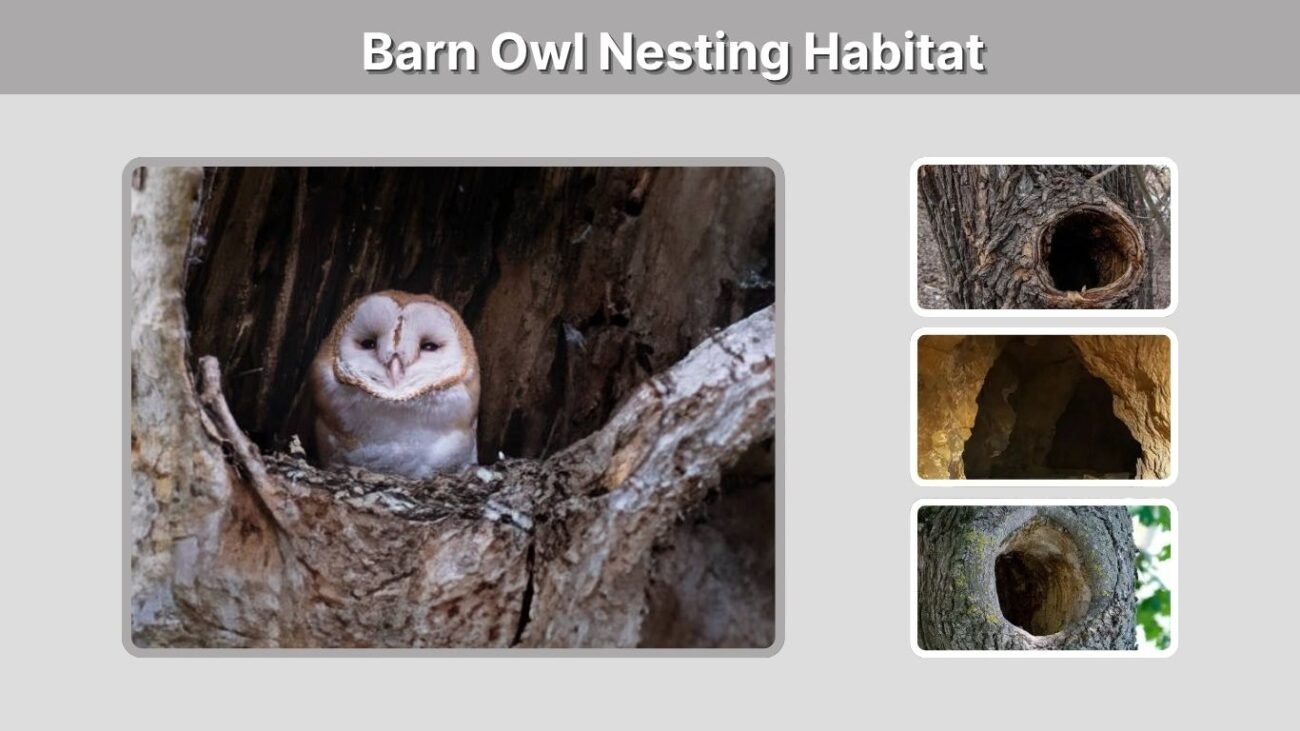
A suitable hunting area must be close enough to a protected cavity where the owls can breed. Barn Owls do not construct a traditional stick nest. Instead, they use a ready-made space and lay their eggs on accumulated pellets, debris or a shallow layer of material.
Natural Nesting Sites
Natural Barn Owl nest sites include:
- Hollow trees
- Large tree cavities
- Cliff holes and rock crevices
- Caves
- Eroded banks
- Cavities in palm trees
A good cavity must be large enough for the adults and growing owlets. It also needs protection from heavy rain, extreme sunlight and predators.
Nesting in Buildings
Barns, silos, church towers, abandoned buildings, sheds and other quiet structures can imitate natural cavities. This relationship with agricultural buildings led to the familiar name “Barn Owl.”
Modern barns may be sealed tightly or lack safe ledges, so they are not automatically suitable. Renovating or demolishing old rural structures can remove long-used nest and roost sites.
Barn Owl Nest Boxes
A properly designed nest box can replace a missing natural cavity, but it will not attract a breeding pair when the surrounding hunting habitat is poor. Boxes are most useful when placed near rough grassland, farmland margins or similar prey-rich areas.
They may be installed inside suitable farm buildings or mounted securely in large trees. The entrance, internal dimensions, height and position must reduce exposure to weather and predators. BTO guidance recommends placing boxes within suitable farmland habitat, such as in an appropriate hedgerow tree or farm building.
Barn Owl Roosting Habitat
Barn Owls require protected daytime roosts where they can sleep, digest food and avoid bad weather. A nesting cavity may also serve as a roost, although individuals can maintain several roosting places within their home range.
Common roosts include tree cavities, barns, lofts, towers, caves and dense sheltered structures. Signs of regular use may include pellets, white droppings and feathers beneath a ledge. Roosting sites should remain quiet and free from frequent human disturbance.
Barn Owl Hunting Habitat
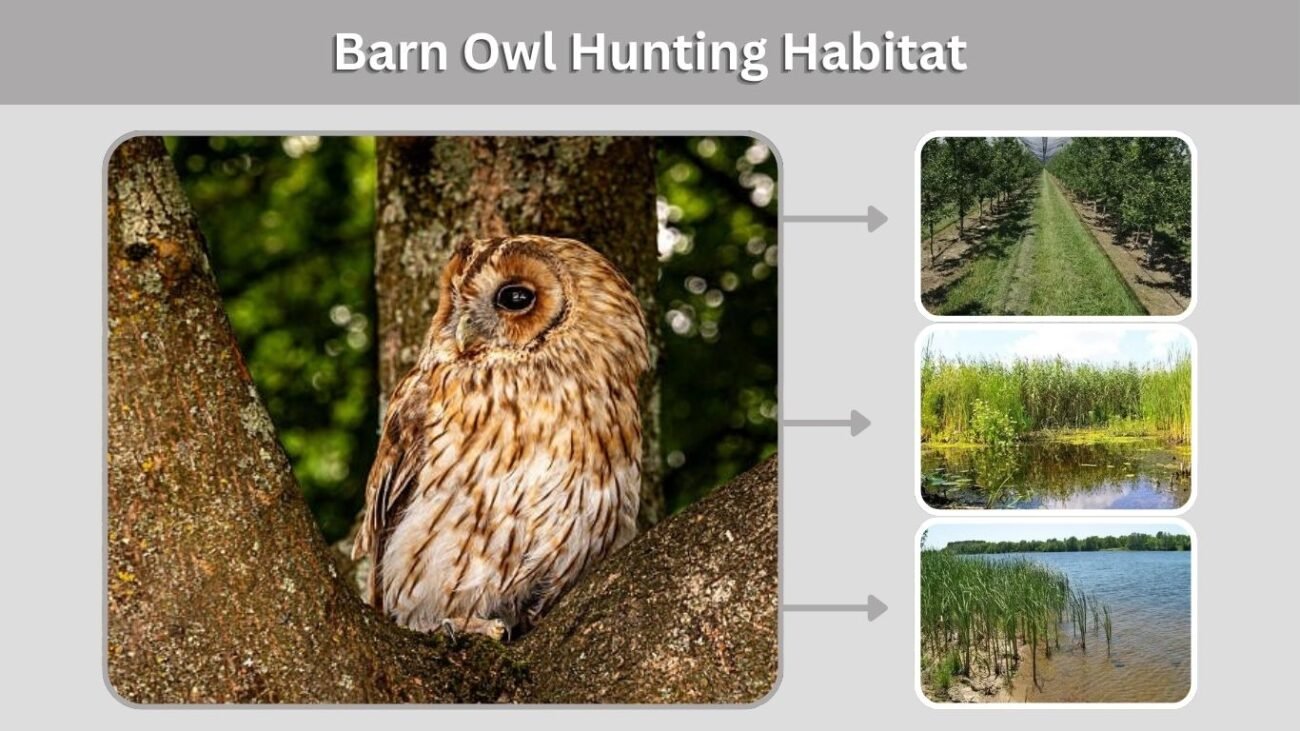
The quality of hunting habitat depends largely on the number of available small mammals. Rough grass is valuable because it supports the runways, nests and food sources used by voles and mice.
Important Hunting Areas
Barn Owls commonly search:
- Rough pasture
- Meadow edges
- Grassy ditches
- Field margins
- Marsh vegetation
- Orchard floors
- Riverbanks
- Road verges
- Fallow agricultural ground
They can hunt over crop fields, especially after harvesting, but large areas of bare soil or short grass may offer fewer prey animals. A network of rough margins can connect productive feeding areas across an intensively managed landscape.
Habitat of Barn Owl Prey
Voles, shrews and field mice need dense ground cover, seeds, insects and protected nesting places. When vegetation is cut too frequently or grazed extremely short, these animals lose both shelter and food.
Maintaining rough grass does not merely give an owl somewhere to fly. It creates the lower part of the food web on which the owl depends.
Barn Owl Habitat and Climate
Barn Owls occupy warm, temperate and some cool regions, but severe winters can be challenging. Their feathers provide insulation, although they store relatively little body fat compared with some other birds.
Deep snow can hide prey, while prolonged rain and strong wind can interfere with hunting. Exposed high-altitude landscapes and regions with consistently severe winter conditions are therefore often less suitable than lower, milder areas. Local altitude, habitat quality and winter climate together influence whether an area can support Barn Owls.
American and Western Barn Owl Habitats
The American Barn Owl is commonly found in open landscapes, including agricultural fields, grasslands, deserts, marshes and lightly wooded country. It may nest in trees, barns, abandoned structures and nest boxes.
Western Barn Owls occupy similar open habitats across parts of Europe, western Asia and Africa. In Britain and Ireland, they are strongly associated with lowland farmland containing rough grass, field margins, ditches and suitable farm buildings.
Regional names and scientific classifications may differ, but the essential habitat requirements remain similar: abundant small mammals, open hunting ground and a secure cavity.
Barn Owl Habitat Loss
Barn Owl habitat can decline when rough grassland is converted to development, plowed completely, heavily grazed or cut so frequently that rodent populations fall. The removal of hollow trees and renovation of traditional buildings can also reduce nesting opportunities.
Other habitat-related dangers include:
- Roads crossing productive hunting areas
- Secondary poisoning from rodenticides
- Loss of hedgerows and field margins
- Removal of old trees
- Disturbance around occupied nests
- Unsafe water tanks and open containers
- Poorly positioned nest boxes
Creating a nest site without addressing these risks may attract an owl to an unsafe landscape.
How to Create Habitat for Barn Owls
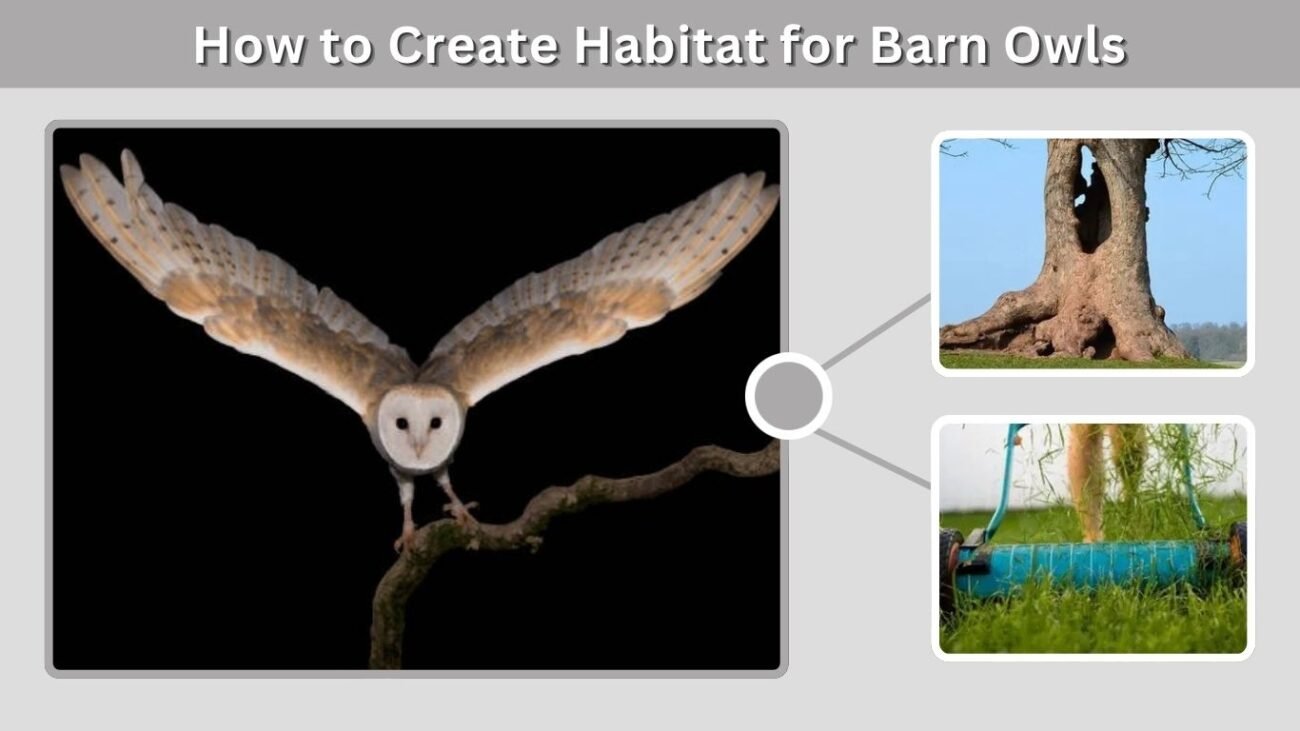
Improving Barn Owl habitat means supporting both the predator and its prey.
Practical Habitat Improvements
Property owners and land managers can:
- Maintain strips of long, rough grass
- Leave wide, uncultivated field margins
- Protect grassy ditch banks
- Retain safe hollow trees
- Avoid unnecessary mowing
- Preserve quiet access to suitable barns
- Use rodent control methods that reduce poisoning risks
- Install a correctly designed nest box
- Keep nest boxes away from major roads
- Protect known roosting and nesting places
A small isolated patch may provide occasional hunting, but connected habitat is more useful. Field margins, waterways and hedgerows can form routes between larger feeding areas.
FAQs
Do Barn Owls live only in barns?
No. They can nest and roost in hollow trees, cliffs, caves, towers, silos and nest boxes. Barns are only one type of cavity. Productive grassland and an adequate supply of small mammals are essential regardless of where the owl nests.
Do Barn Owls live in forests?
They may use forest edges and clearings, but they generally avoid extensive dense woodland. Their long wings and low hunting style are better suited to open grassland, marshes, farmland and other landscapes where prey can be detected from the air.
What is the best habitat for a Barn Owl?
The best habitat contains extensive rough grassland with a deep litter layer, abundant mice and voles, a secure nesting cavity and protected daytime roosts. It should also have limited disturbance and few hazards such as busy roads and widespread rodenticide use.
Can Barn Owls live near people?
Yes. They may live around farms, villages and the edges of towns when open hunting ground remains nearby. They often use human-made structures but generally need quiet nesting areas where people will not repeatedly disturb them.
How far do Barn Owls travel from their nest?
The distance varies according to prey density, season and landscape quality. Much of their hunting may occur within a few kilometres of the nest, although individuals can travel farther when food is scarce. This is why productive habitat should be located close to nesting and roosting sites.