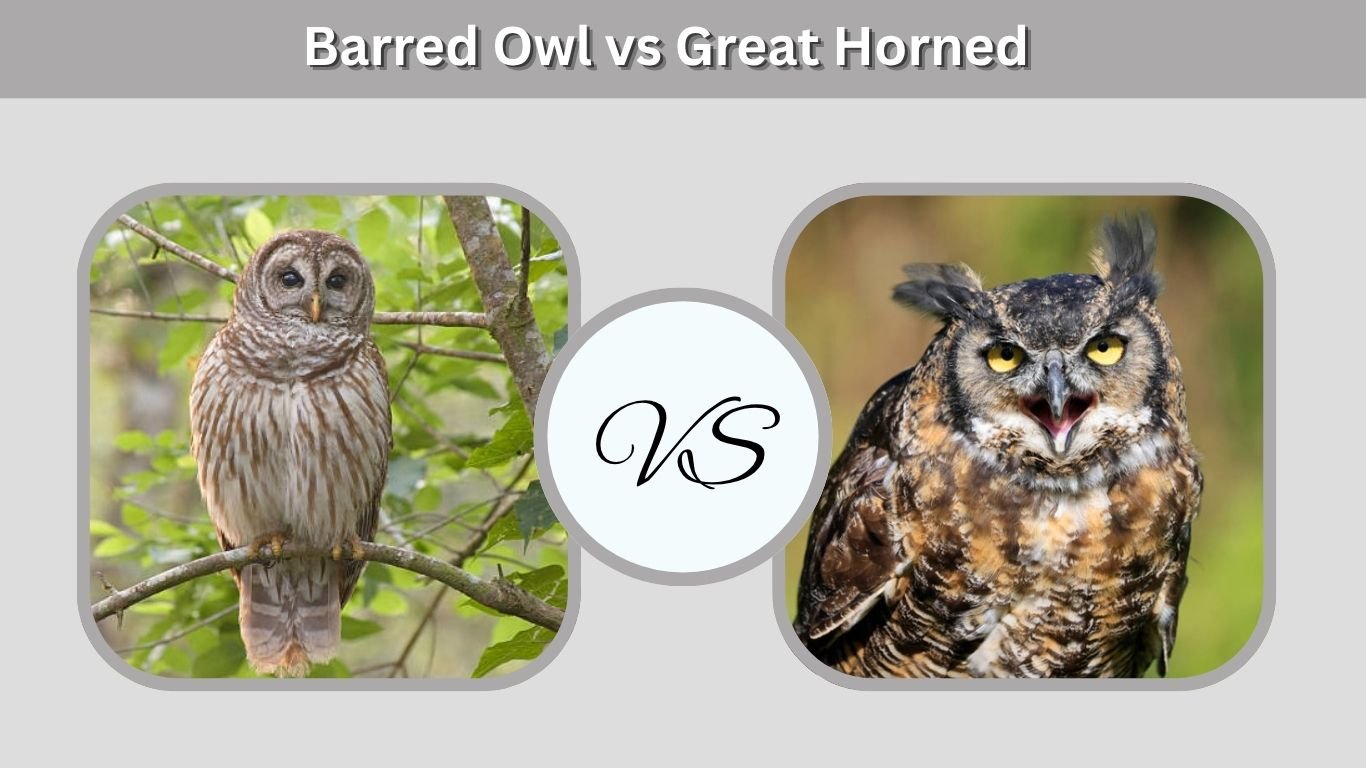
Barred owls and great horned owls are two large North American owls that may occupy the same general region. However, they differ noticeably in head shape, eye color, calls, body weight, habitat, diet, and aggression. A barred owl has a rounded, tuftless head and dark eyes, while a great horned owl has prominent feather tufts and bright yellow eyes. Although their wingspans can overlap, the great horned owl is generally heavier, stronger, and capable of capturing larger prey. Learning these differences makes identifying either species much easier, even when the bird is heard rather than seen.
Barred Owl vs Great Horned Owl: Quick Comparison
Both species are stocky woodland predators with broad, rounded wings and quiet flight. The barred owl is more closely associated with mature forests and water, while the adaptable great horned owl occupies forests, deserts, wetlands, farmland, parks, and suburban areas.
| Feature | Barred Owl | Great Horned Owl |
| Scientific name | Strix varia | Bubo virginianus |
| Head | Rounded, without tufts | Large, with prominent tufts |
| Eyes | Dark brown or black | Bright yellow |
| Length | 16.9–19.7 inches | 18.1–24.8 inches |
| Weight | 16.6–37 ounces | 32.1–88.2 ounces |
| Wingspan | 39–43.3 inches | 39.8–57.1 inches |
| Main call | Eight- or nine-note hoot | Deep series of four or five hoots |
| Typical habitat | Mature forests near water | Woodlands mixed with open areas |
| Main food | Small mammals and forest prey | Mammals, birds, and larger prey |
| Aggression | Less aggressive | More powerful and aggressive |
Measurements vary by sex and region, and females are generally larger than males in both species.
1. Size and Weight
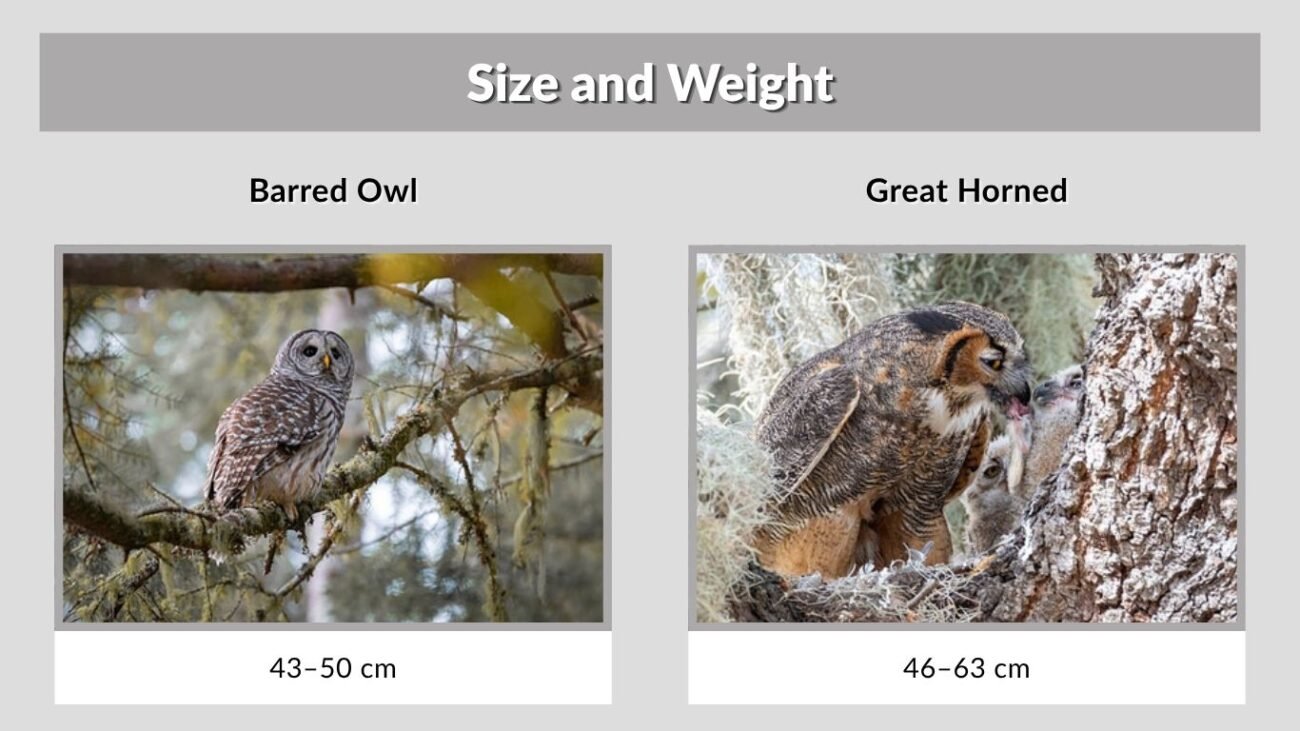
The great horned owl is the larger and substantially heavier species. Its length ranges from about 18 to 25 inches, and the heaviest individuals can reach approximately 88 ounces. Barred owls usually measure 17 to 20 inches and weigh no more than about 37 ounces.
| Measurement | Barred Owl | Great Horned Owl |
| Length | 43–50 cm | 46–63 cm |
| Weight | 470–1,050 g | 910–2,500 g |
| Wingspan | 99–110 cm | 101–145 cm |
Their wingspans can appear surprisingly similar at the lower end. However, the great horned owl has a heavier body, larger feet, and greater capacity for overpowering substantial prey.
2. Head, Eyes, and Ear Tufts
A barred owl has a smooth, rounded head without visible feather tufts. Its large, dark-brown eyes give its face a gentle appearance. The facial disc is pale, while brown rings and markings surround the eyes.
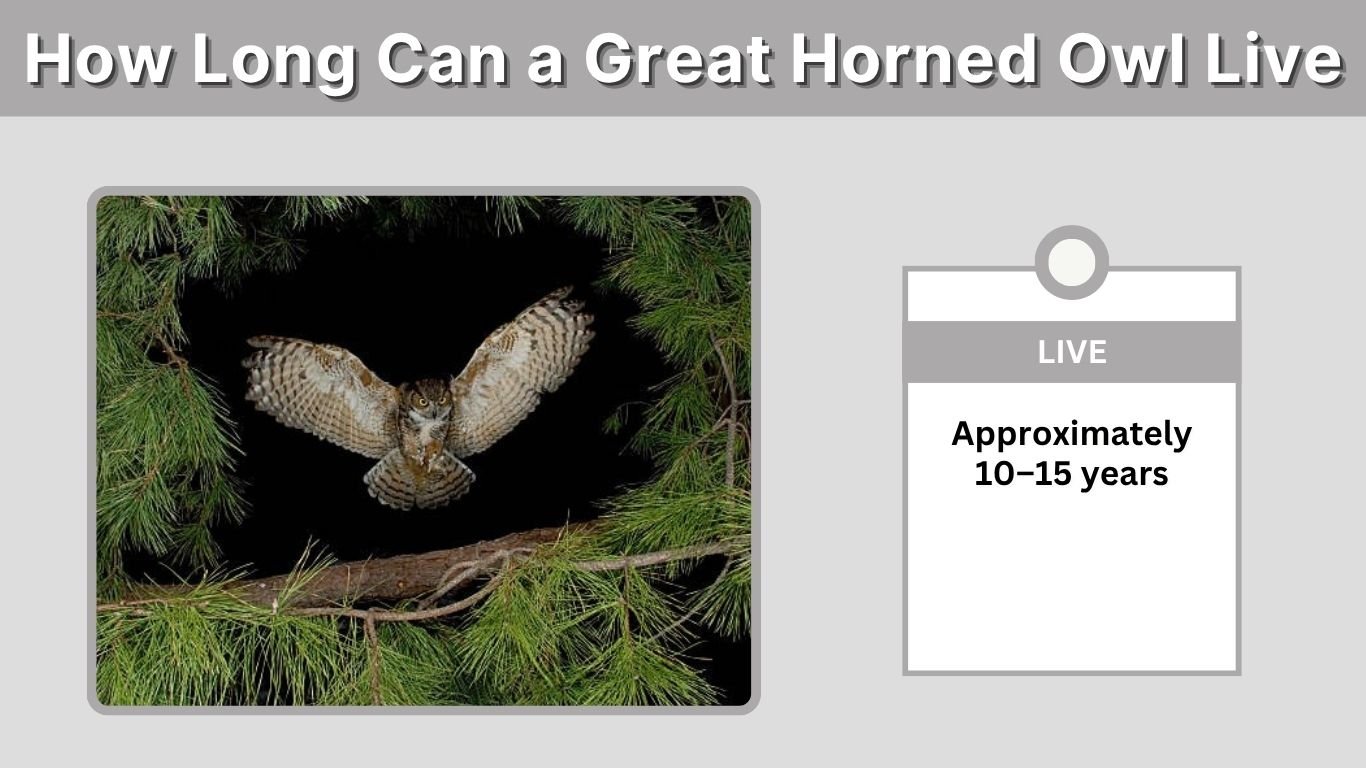
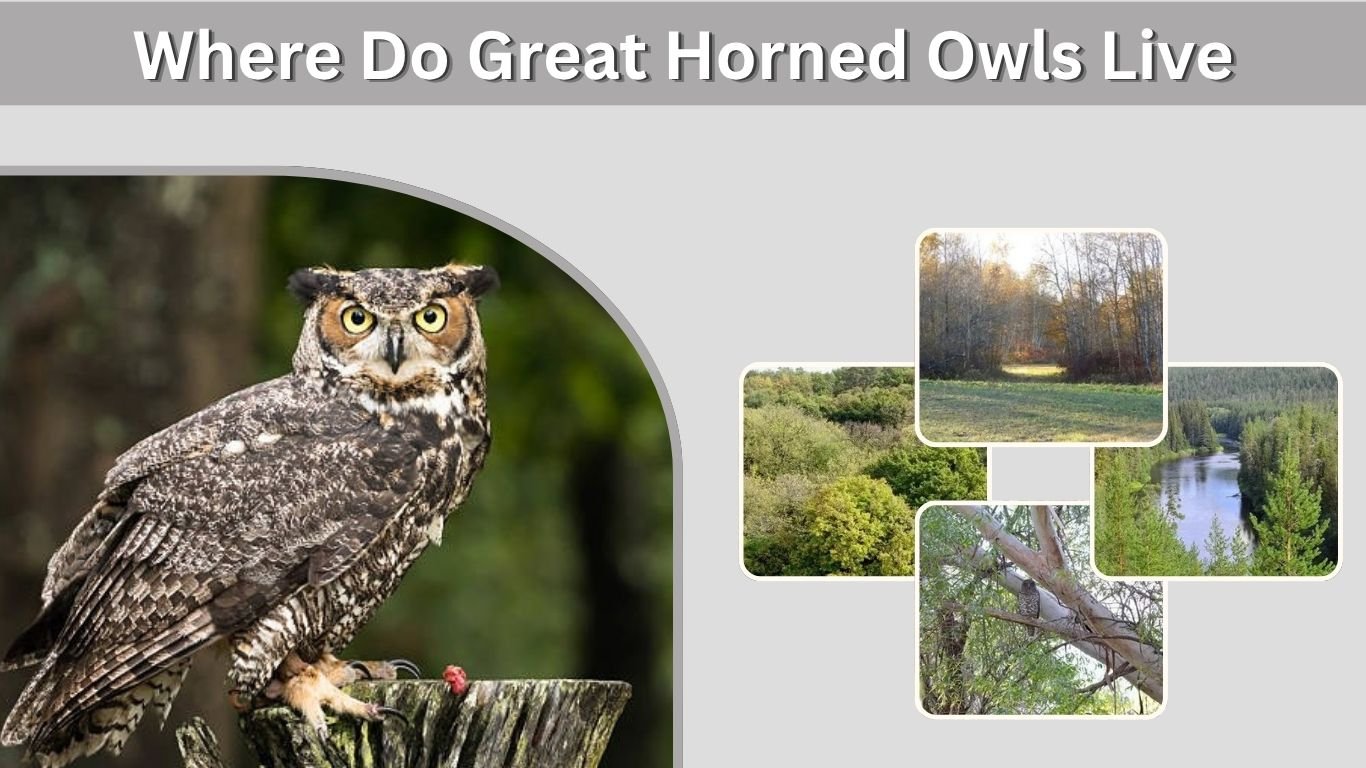
A great horned owl has two prominent feather tufts resembling horns or ears. These tufts are feathers rather than actual ears. It also has bright yellow eyes, a darker facial outline, and a noticeable white throat patch.
3. Feather Patterns
The barred owl’s name comes from its strongly barred plumage. Horizontal brown bars cross the upper chest, while long vertical brown streaks cover the lower breast and belly. Its back, wings, and tail are mottled brown and white.
Great horned owls have more heavily mottled gray-brown plumage. Their underparts show fine horizontal barring rather than the barred owl’s distinctive vertical belly streaks. Color varies geographically, with some individuals appearing pale gray and others dark brown or reddish.
4. Calls and Sounds
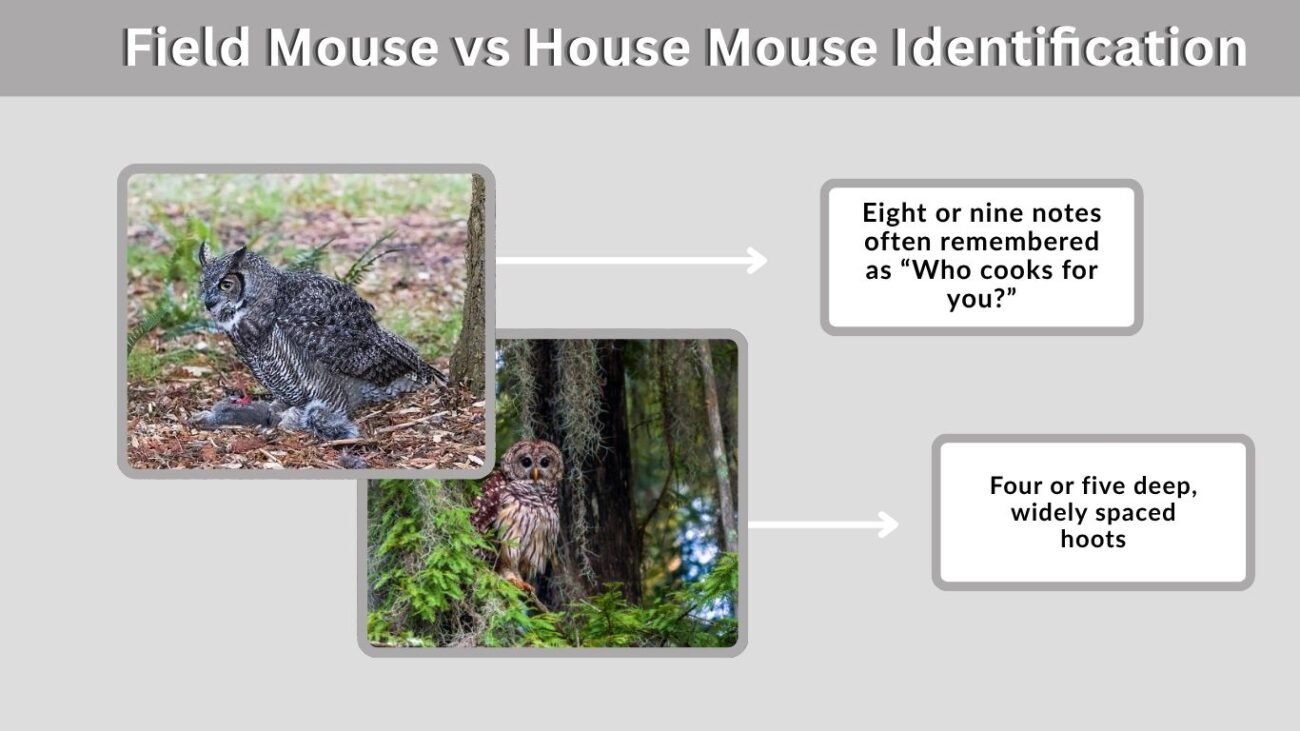
The easiest way to separate these owls at night is by listening to their calls. Barred owls produce a longer and more rhythmic sequence, whereas great horned owls give slower, deeper hoots.
| Owl | Typical Call |
| Barred owl | Eight or nine notes often remembered as “Who cooks for you?” |
| Great horned owl | Four or five deep, widely spaced hoots |
Barred owl pairs may produce noisy duets containing hoots, cackles, caws, and gurgling sounds. Great horned owl pairs also call together, but their exchanges usually sound deeper and less complicated. The smaller male great horned owl normally has the deeper voice.
5. Habitat and Distribution
Barred owls favor extensive mature forests, wooded swamps, river bottoms, and other densely wooded areas near water. They require large trees that provide cavities for nesting and sheltered branches for daytime roosting.
Great horned owls are far more flexible. They occupy coniferous and deciduous forests, deserts, swamps, agricultural areas, grassland edges, cities, orchards, and suburban parks. They generally need some trees, cliffs, brush, or structures for nesting and cover, but they often hunt over open ground.
6. Diet and Hunting
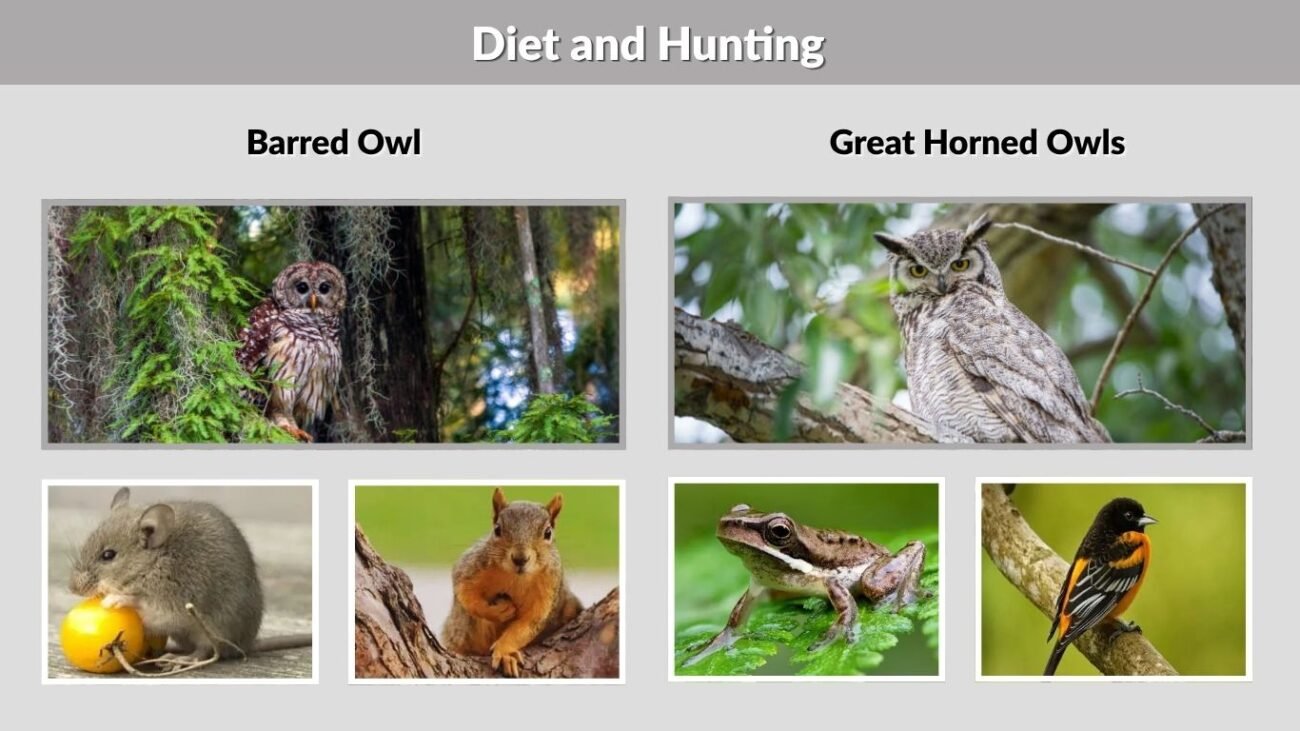
Both species eat rodents, rabbits, birds, reptiles, amphibians, and large invertebrates. Barred owls primarily capture mice, voles, squirrels, chipmunks, rabbits, frogs, salamanders, snakes, crayfish, and occasionally fish. They hunt from low perches and sometimes fly through forests or approach prey near shallow water.
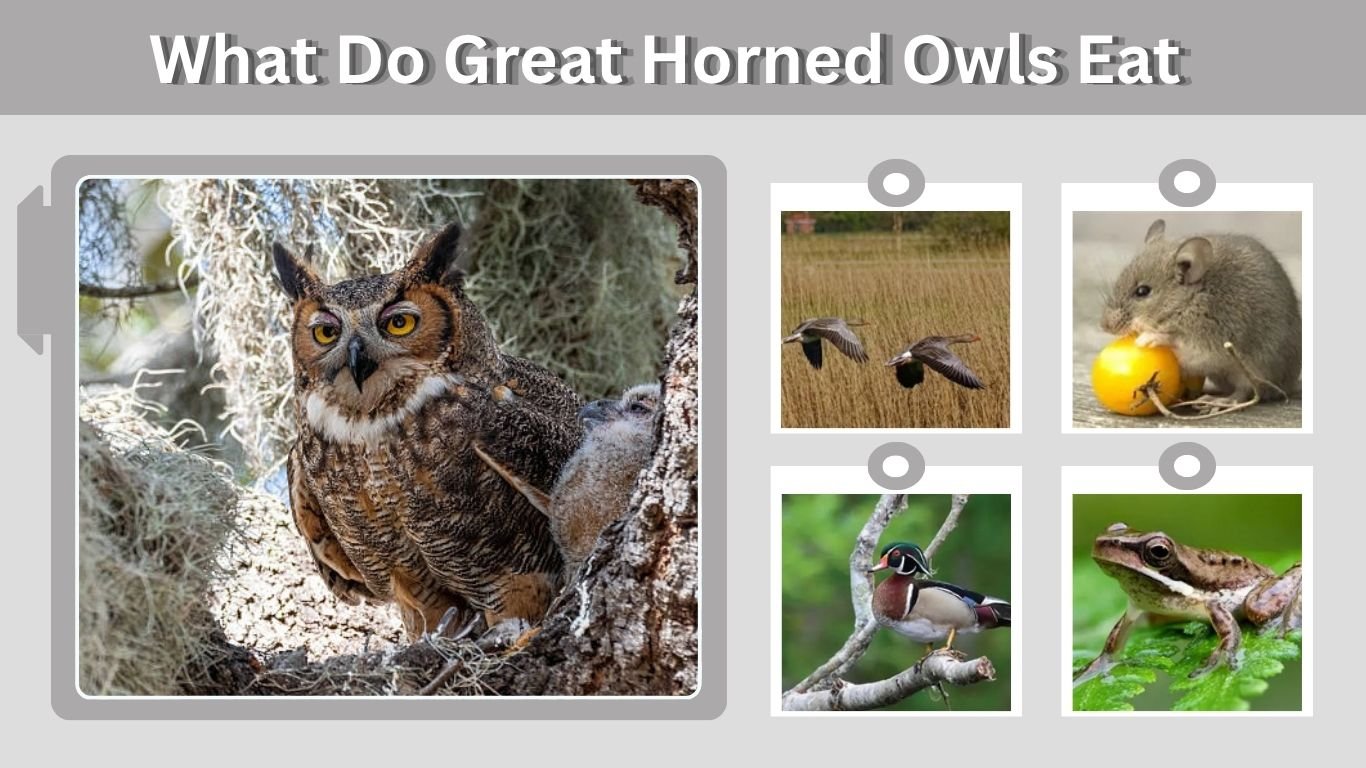
Great horned owls have a more varied diet and can overpower much larger animals. Their prey includes rats, rabbits, hares, squirrels, skunks, ducks, geese, snakes, hawks, crows, and smaller owls. They generally watch from an elevated perch before silently swooping onto prey.
7. Nesting Habits
Barred owls usually nest inside natural tree cavities or broken snags. They may occasionally use an abandoned hawk, crow, or squirrel nest. Females generally lay two or three eggs and perform most or all of the incubation.
Great horned owls do not normally build their own nests. They frequently take over old nests made by hawks, crows, ravens, herons, or squirrels. They may also use tree cavities, cliffs, buildings, stumps, or nesting platforms. They begin breeding particularly early, sometimes while winter conditions remain.
8. Temperament and Aggression
The barred owl is territorial and capable of defending its nest, but it is generally less aggressive than the great horned owl. Great horned owls are formidable predators with heavier bodies, powerful feet, and the ability to kill other birds of prey. Competition with great horned owls may discourage barred owls from using more open or fragmented woodland.
Barred Owl vs Great Horned Owl: Who Would Win?
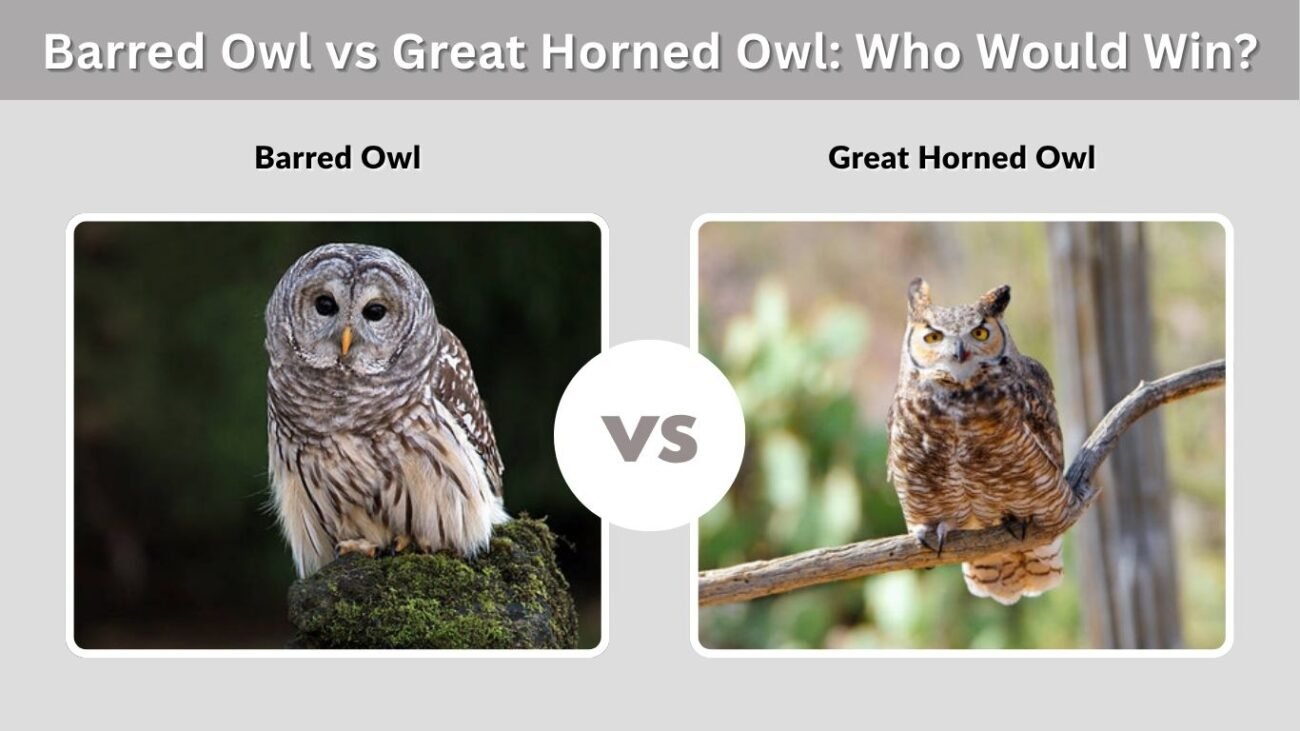
In a direct confrontation, the great horned owl would have the clear physical advantage. It can weigh more than twice as much as a barred owl and has larger feet, stronger talons, and more aggressive predatory behavior. Great horned owls are capable of killing other owls, so barred owls usually benefit from avoiding close encounters.
Wild owls do not normally engage in prolonged, evenly matched fights. Encounters are more likely to involve territorial calls, avoidance, displacement, or a quick predatory attack. Habitat separation helps the two coexist: barred owls favor dense, wet forests, while great horned owls are more comfortable around woodland edges and open hunting areas.
How to Identify Them Quickly
Look at the head and eyes when the owl is visible. A round head with no tufts and dark eyes indicates a barred owl. Prominent “horns,” yellow eyes, and a white throat identify a great horned owl.
When only the sound is available, listen to the pattern. A long, conversational series of eight or nine notes belongs to the barred owl. A slow series of deep, booming hoots is more likely to come from a great horned owl.
FAQs
1. Which is bigger, a barred owl or a great horned owl?
The great horned owl is generally larger and much heavier than the barred owl. Although their wingspans can overlap, great horned owls have more muscular bodies, larger feet, and stronger talons. Females are usually larger than males in both species.
2. How can you tell a barred owl from a great horned owl?
A barred owl has dark eyes, a rounded head, and no visible ear tufts. A great horned owl has bright yellow eyes and prominent feather tufts that resemble horns. Their plumage and calls also provide useful identification clues.
3. Do barred owls and great horned owls live together?
Their ranges and habitats often overlap, especially in wooded areas of North America. However, barred owls usually prefer mature, dense forests near water, while great horned owls are more common around forest edges, open landscapes, farmland, and suburban areas.
4. Do great horned owls attack barred owls?
Great horned owls can attack and kill barred owls because they are larger and stronger predators. Barred owls may avoid areas frequently occupied by great horned owls. However, direct confrontations are not constantly occurring, and habitat differences can reduce encounters.
5. Which owl has the louder call?
Both species produce powerful calls, but they sound different. Great horned owls give deep, slow, booming hoots, while barred owls produce a longer, more rhythmic sequence. Barred owls may sound noisier during territorial duets involving hoots, cackles, and other calls.