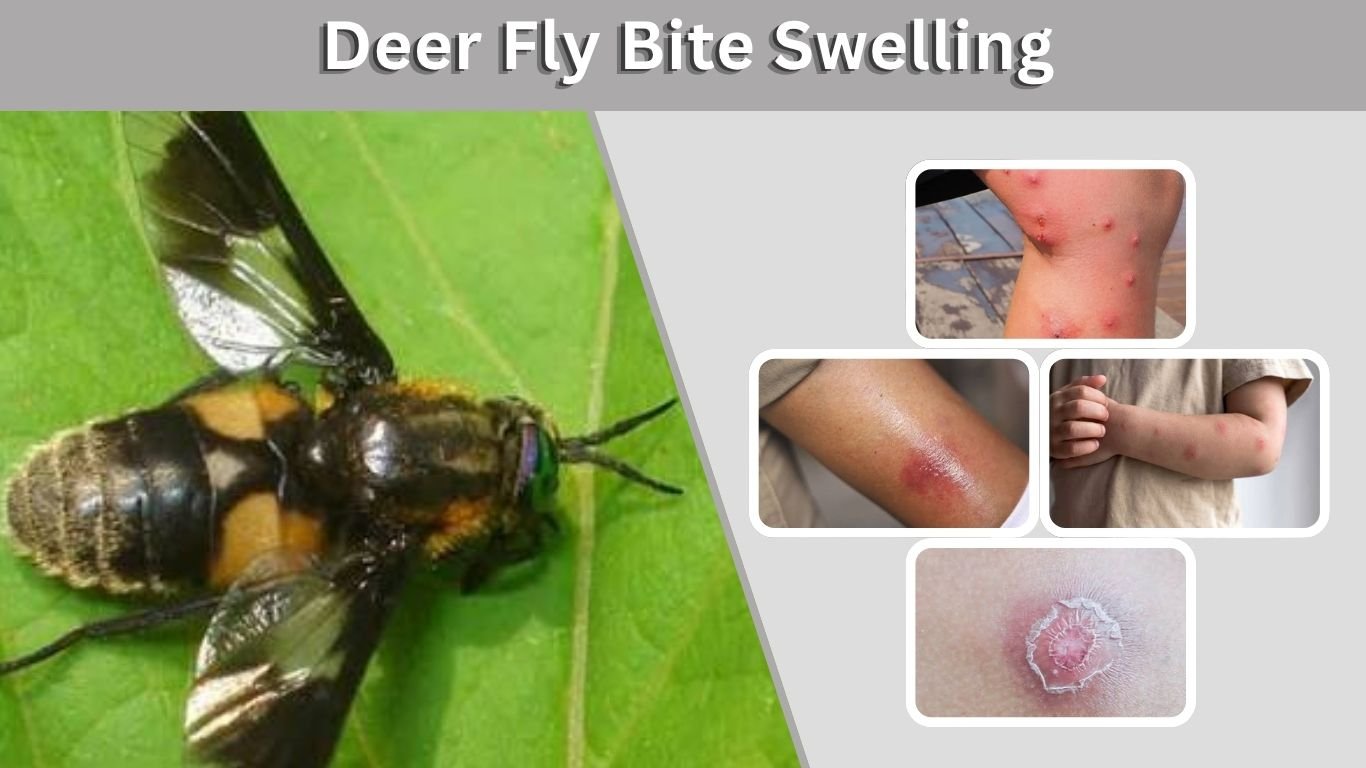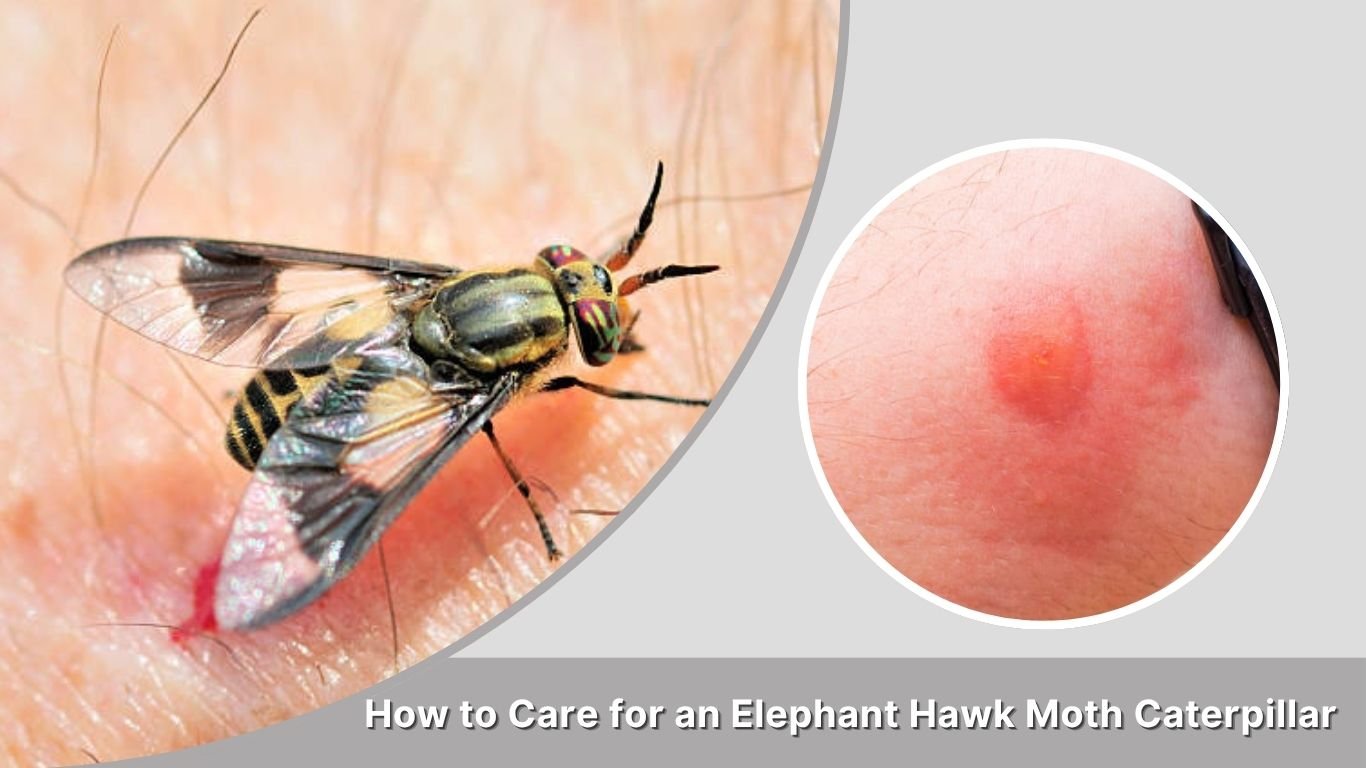
A deer fly bite usually causes immediate sharp pain followed by a red, raised and itchy welt. Female deer flies cut the skin with blade-like mouthparts and feed on the blood that collects in the wound. Most bites heal with cleaning, cold compresses and basic symptom relief. However, severe swelling, breathing difficulty, spreading redness, pus or fever requires medical attention. Deer flies can also transmit tularemia in some parts of the United States, although this complication is uncommon.
Do Deer Flies Bite Humans?
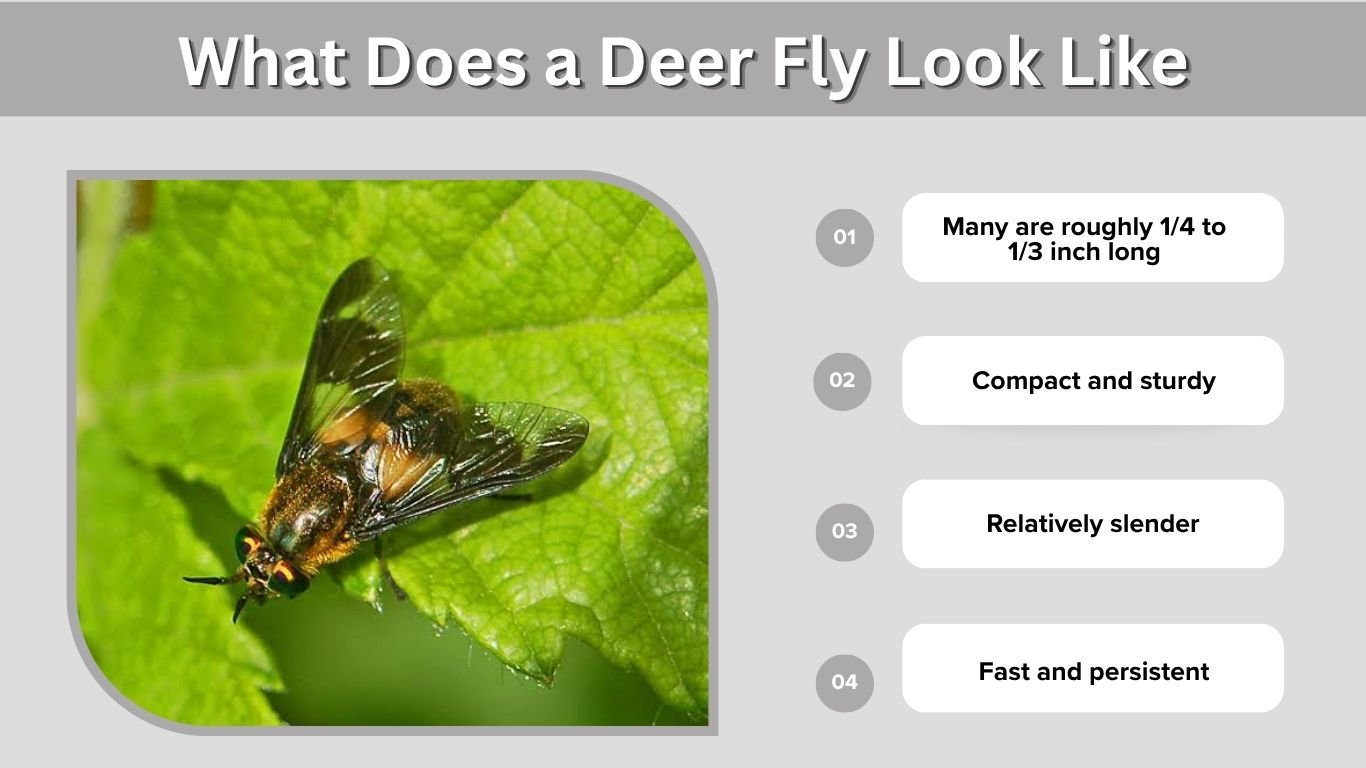
Deer flies are small to medium-sized biting flies belonging mainly to the genus Chrysops. They commonly feed on deer, livestock and other mammals, but humans and pets can also become targets.
Why Do Deer Flies Bite?
Only female deer flies take blood meals. The protein and other nutrients obtained from blood help them produce eggs. Males do not bite and survive primarily on nectar and plant sugars.
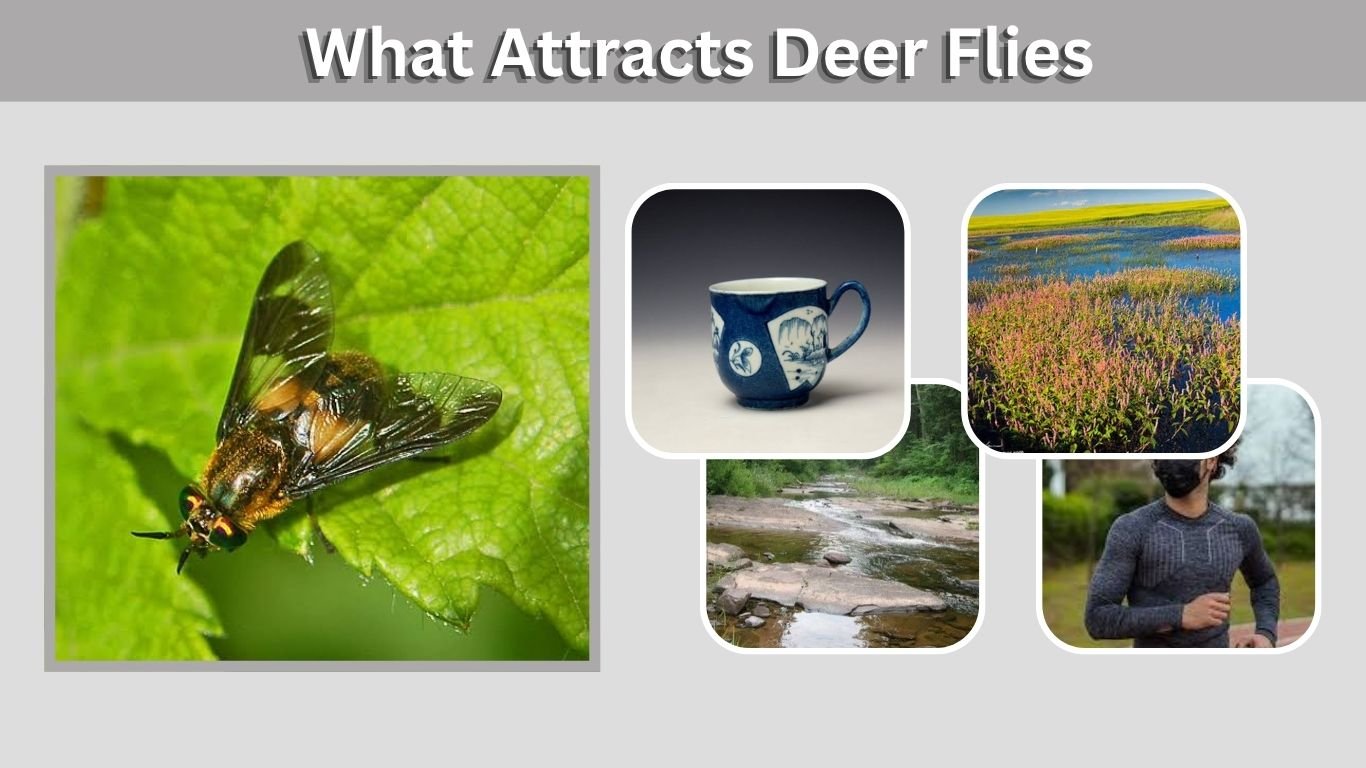
Female deer flies detect movement, body heat, carbon dioxide and large dark shapes. They are most active during warm daylight hours and often circle a person’s head before landing.
Do Deer Flies Bite or Sting?
Deer flies bite rather than sting. They do not have a stinger and leave nothing embedded in the skin.
Their mouthparts cut or slash the skin instead of piercing it like a mosquito. Saliva introduced during feeding reduces blood clotting, allowing the fly to drink from the wound. This cutting action explains the immediate pain and occasional bleeding.
What Does a Deer Fly Bite Look Like?
A deer fly bite may resemble several other insect bites. Its appearance alone cannot confirm the cause, so consider whether a small patterned-wing fly was seen circling or landing on the body.
Common Identification Signs
A deer fly bite may produce:
- A raised red, pink, purple or darkened welt
- A visible central cut or tiny bleeding spot
- Immediate sharp or burning pain
- Localized swelling and warmth
- Itching that develops as the wound heals
- A small blister or scab
- Tenderness when the skin is touched
- Bruising around the affected area
Bites commonly occur on the head, neck, shoulders, arms and other exposed areas. A deer fly interrupted during feeding may return several times, creating multiple nearby wounds.
Why Does the Bite Hurt So Much?
A deer fly physically cuts the skin with broad, blade-like mouthparts. The wound is larger than the puncture made by a mosquito, and the fly’s saliva triggers additional inflammation.
The pain may feel like a sharp pinch, cut or sting. Itching and tenderness can continue after the initial pain has subsided.
Deer Fly Bite Healing Stages
There are no officially defined stages for every deer fly bite. Skin reactions vary among individuals, but an uncomplicated bite commonly follows this pattern.
| Time after the bite | Typical signs |
| Immediately | Sharp pain, small cut, bleeding or redness |
| First 24 hours | Raised welt, swelling, itching and tenderness |
| Days 2–3 | Pain decreases, but itching or swelling may remain |
| Days 3–7 | The welt flattens and the wound begins fading |
| After one week | Most bites have healed or leave minor discoloration |
A large local reaction can last longer than a week. Symptoms that become progressively worse are not part of normal healing and should be medically assessed.
Deer Fly Bite Symptoms
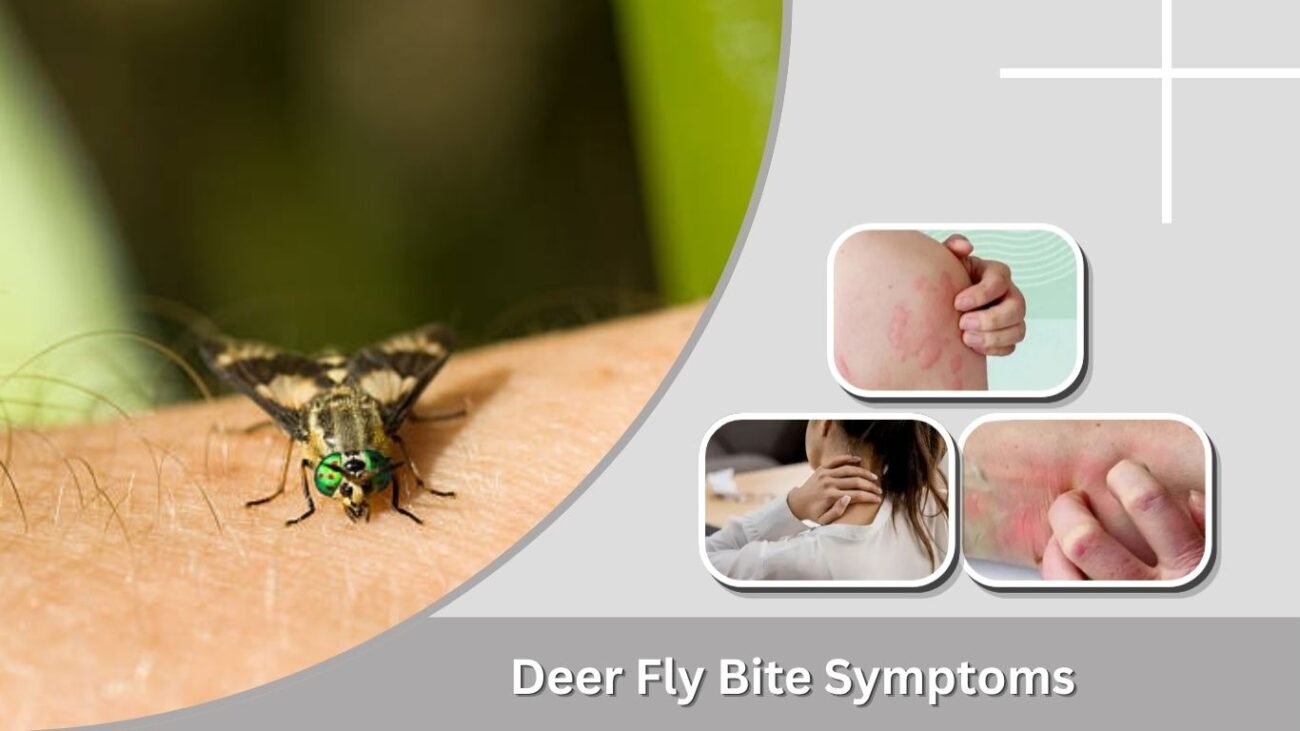
Most people experience a localized skin reaction. The severity depends on bite location, individual sensitivity and whether the wound is scratched or contaminated.
Normal Local Reaction
A normal reaction includes immediate pain, a raised welt, itching, redness and mild-to-moderate swelling. A small amount of blood may be visible because the fly has cut the skin.
The wound may feel warm and tender for several days. Mild symptoms should gradually improve rather than continue spreading.
Swelling and Blisters
Some people develop significant swelling or a fluid-filled blister. Swelling may look more pronounced around the eyes, hands, knees, ankles or other areas where fluid collects easily.
Do not pop a blister. Its unbroken surface protects the damaged skin from bacteria. Keep it clean and cover it loosely if clothing rubs against it.
How to Treat a Deer Fly Bite
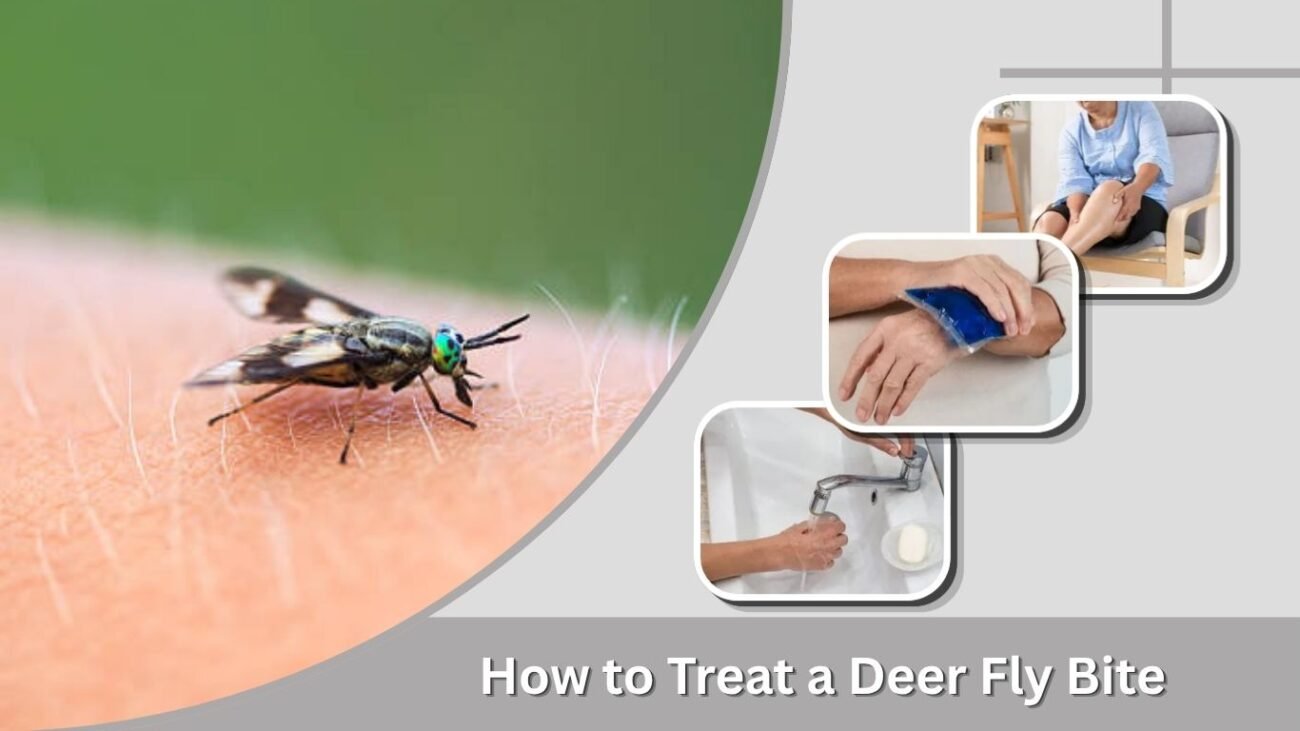
Prompt cleaning is important because a deer fly creates an open wound. Most uncomplicated bites can be managed safely at home.
Immediate Treatment
Follow these first-aid steps:
- Move indoors or away from the fly to prevent more bites.
- Wash the area gently with soap and clean water.
- Pat it dry with a clean towel.
- Apply a cold pack wrapped in cloth for 10–20 minutes.
- Elevate the affected limb if swelling develops.
- Avoid scratching, squeezing or picking the wound.
- Cover it lightly when exposure to dirt is likely.
The NHS insect-bite guidance recommends using a wrapped ice pack or cold wet cloth and keeping a swollen limb raised where possible.
Medication and Itch Relief
A pharmacist may recommend an oral antihistamine for itching or hydrocortisone cream for inflammation. An appropriate over-the-counter pain reliever may help with discomfort.
Always follow the product label. Ask a healthcare professional before treating a young child, using medicine during pregnancy, combining medications or treating someone with an existing health condition.
Remedies to Avoid
Do not cut, squeeze or attempt to drain the bite. Avoid applying bleach, undiluted essential oils or irritating household substances.
Antibiotics do not treat an ordinary inflammatory reaction and should only be used when prescribed for a diagnosed bacterial infection.
Allergic Reaction to a Deer Fly Bite
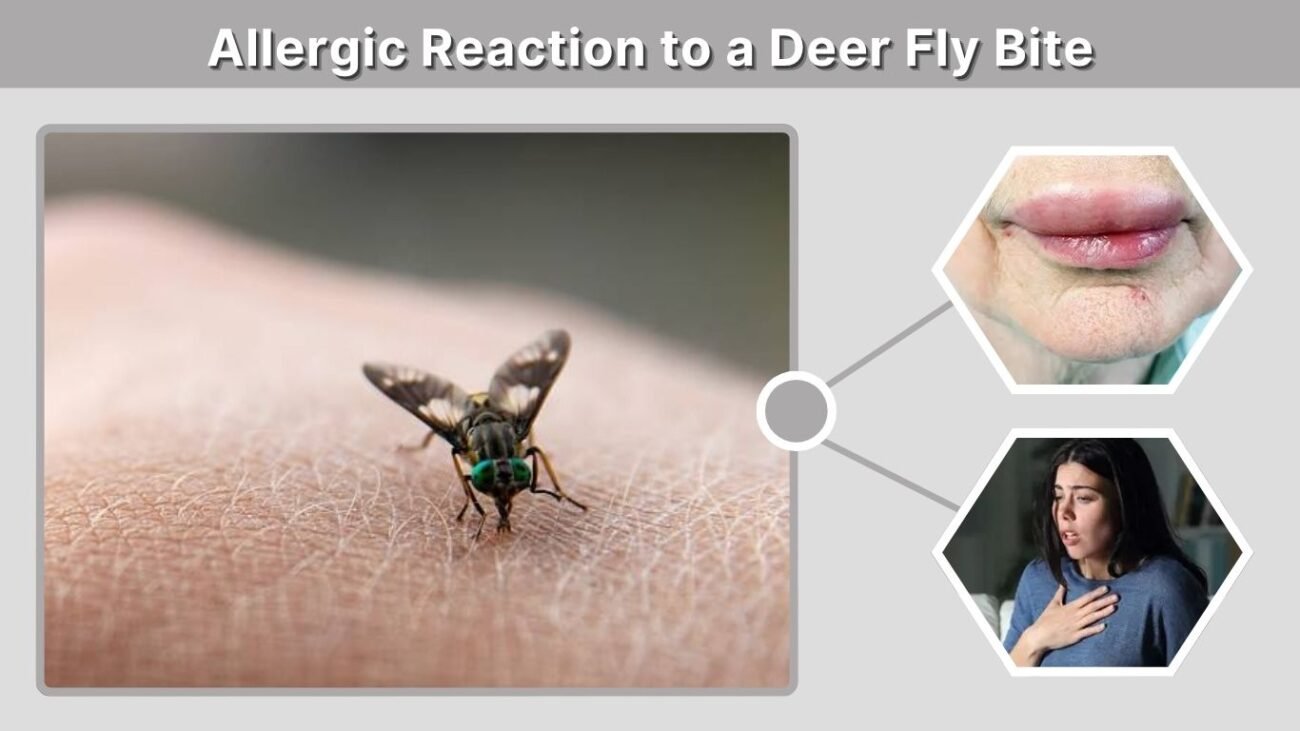
Proteins in deer fly saliva can trigger an allergic response. Most reactions remain around the wound, but a serious whole-body reaction is possible.
Large Local Allergy
A large local reaction can cause swelling extending several inches from the bite. It may remain itchy, firm and warm for multiple days.
Seek medical advice if swelling continues expanding, affects an entire limb, restricts movement or occurs near the eye, mouth or throat.
Emergency Allergy Symptoms
Call emergency services immediately for:
- Difficulty breathing or wheezing
- Tightness in the throat or chest
- Swelling of the face, lips, tongue or neck
- Widespread hives away from the bite
- Difficulty swallowing or speaking
- Dizziness, confusion or fainting
- Rapid heartbeat, vomiting or collapse
Use an epinephrine auto-injector immediately if one has been prescribed, then obtain emergency assistance.
Infected Deer Fly Bite
Scratching can transfer bacteria from the fingers into the wound. Infection may also occur when a bite is exposed to dirty water, soil or contaminated equipment.
Signs of Infection or Cellulitis
Contact a healthcare professional if you notice:
- Redness that continues spreading
- Increasing pain, heat or tenderness
- Yellow or green discharge
- Red streaks extending from the wound
- Swollen lymph nodes
- Fever, chills or weakness
- A wound that fails to improve
A clinician may mark the edge of the redness to monitor whether it expands. Cellulitis is a bacterial infection that may require antibiotics.
Can a Deer Fly Bite Make You Sick?
Most deer fly bites do not cause systemic illness. Nevertheless, deer flies can transmit tularemia in certain geographic regions.
Tularemia From Deer Fly Bites
Tularemia, sometimes called rabbit fever or deer-fly fever, is caused by Francisella tularensis. The bacterium can spread through infected deer flies, ticks, contaminated water or contact with infected animals.
The CDC reports that deer flies have transmitted tularemia in the western United States. The overall likelihood after a natural exposure remains low, but the illness requires antibiotic treatment.
Warning Signs of Tularemia
Symptoms may begin several days after exposure and include:
- Sudden fever or chills
- Headache and muscle aches
- Severe tiredness
- A persistent ulcer at the bite site
- Painful swollen lymph nodes
- Sore throat or respiratory symptoms
Seek medical care if these symptoms appear after a suspected deer fly bite. Tell the clinician when and where the exposure occurred.
Deer Fly Bite vs Horse Fly Bite
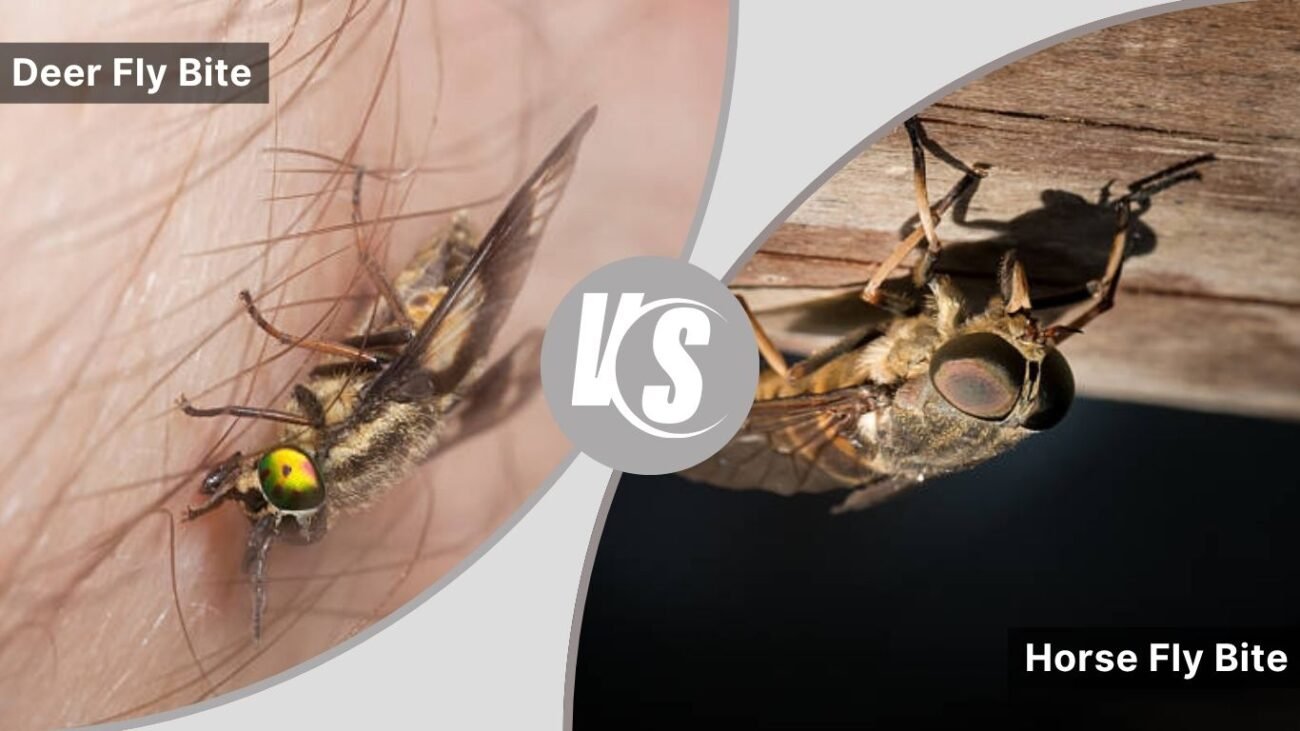
Both insects belong to the same family and use similar cutting mouthparts. Their bites may look nearly identical, but the flies have noticeable physical differences.
| Feature | Deer fly | Horse fly |
| Typical size | 1/4–1/2 inch | 1/2–1 1/4 inches |
| Body | Slender, often yellow and black | Broad, dark and heavy |
| Wings | Dark bands or patches | Usually clear or uniformly dark |
| Common target | Head, neck and shoulders | Legs and lower body |
| Bite | Painful welt or small cut | Often a larger painful wound |
Deer flies are typically smaller and have patterned wings. Horse flies are larger, darker and more robust. Bite appearance alone is not a dependable way to distinguish them.
Deer Fly Bites on Dogs and Horses
Deer flies may repeatedly target animals that cannot easily escape. Multiple bites can cause distress, skin irritation and secondary infections.
Deer Fly Bites on Dogs
Common bite locations include the ears, nose, belly and areas with thin fur. Gently clean the wound and prevent licking or scratching.
Contact a veterinarian if the dog develops severe swelling, discharge, unusual weakness, facial swelling or breathing changes. Never give human pain medication to a dog without veterinary instructions.
Bites on Horses
Biting flies may cause horses to shake their heads, stamp, kick, bunch together or run. Persistent feeding can interrupt grazing and produce multiple open wounds.
Fly sheets, masks, leg coverings, fans and veterinarian-approved repellents can reduce exposure. Examine wounds regularly and request veterinary care when infection or a serious allergic response is suspected.
How to Prevent Deer Fly Bites
Deer flies are difficult to eliminate because their larvae develop across wetlands, streams, ponds and saturated soil. Personal protection is usually more practical than treating natural breeding areas.
Personal Protection
Wear long sleeves, trousers, closed shoes and a hat. A head net can be useful because deer flies often circle the head and neck. Apply insect repellent according to its label, although standard repellents may provide only limited protection against persistent deer flies.
Avoid marshes, damp woodland edges and heavily affected trails during warm daylight hours. Light-colored clothing may be less attractive than large dark garments.
Deer Fly Traps
Deer flies are attracted to moving dark objects. Sticky patches designed for the back of a hat may catch flies that repeatedly circle the head.
Outdoor traps using a dark moving object beneath a collecting cone can reduce local activity. However, one trap will not eliminate flies arriving from extensive surrounding wetlands.
FAQs
How long does a deer fly bite last?
Pain may decline within several hours, while itching, redness and swelling can continue for several days. A large local reaction may last longer than one week. Seek medical advice if the wound becomes progressively worse or develops signs of infection.
Are deer fly bites dangerous to humans?
Most deer fly bites are painful but not dangerous. Possible complications include severe allergy, secondary bacterial infection and, rarely, tularemia. Breathing difficulty, facial swelling, spreading redness, pus, fever or a persistent ulcer requires prompt medical attention.
Do deer fly bites itch?
Yes. The skin’s inflammatory response to the wound and the fly’s saliva can cause considerable itching. Avoid scratching because it can damage the skin and introduce bacteria. A cold compress and pharmacist-recommended antihistamine or anti-itch treatment may help.
Can deer flies bite through clothing?
Deer flies normally target exposed skin and are unlikely to cut through thick, tightly woven clothing. However, they may reach skin through thin or loose fabric and openings around collars, sleeves and trouser legs. Long, tightly woven clothing offers better protection.
What is the best remedy for a deer fly bite?
Wash the wound with soap and water, apply a wrapped cold pack, elevate the area and avoid scratching. A pharmacist may suggest treatment for itching or pain. No home remedy should replace medical care for severe allergy, infection or illness.