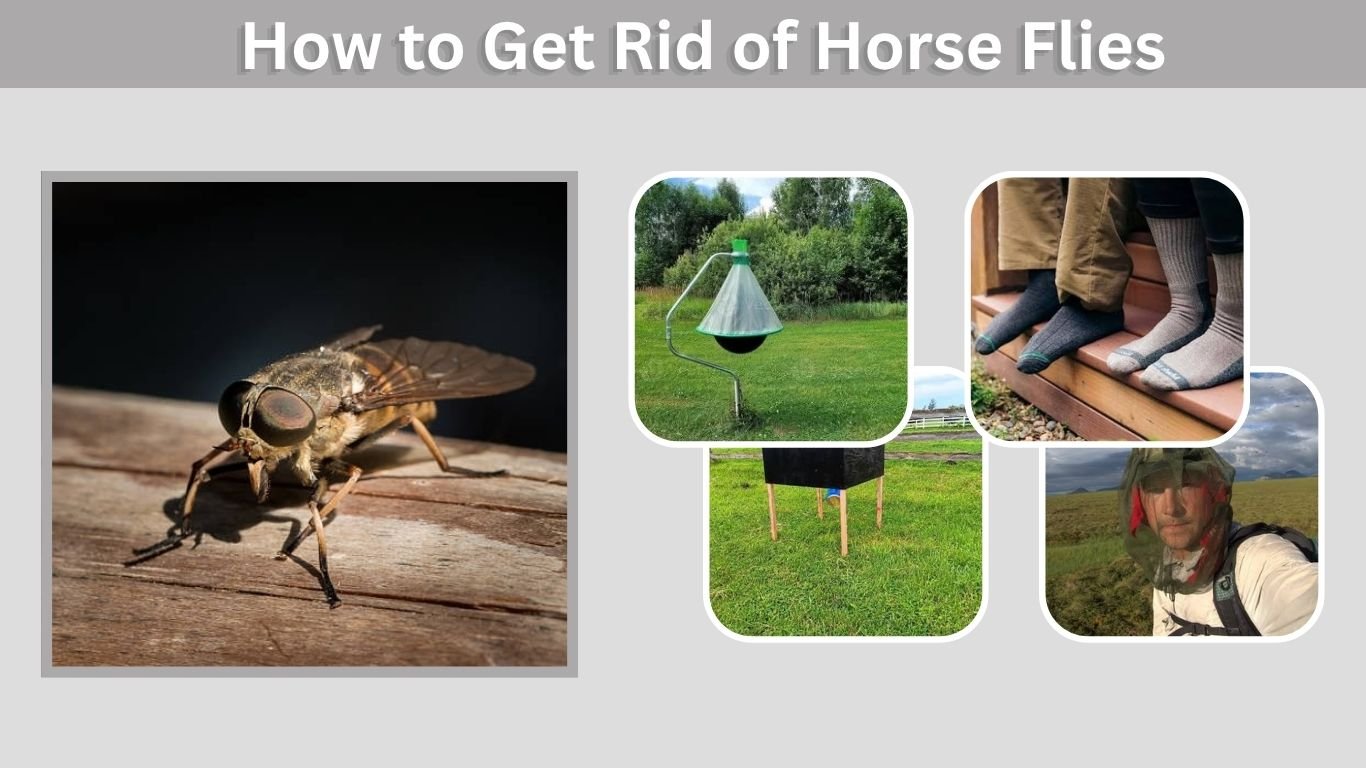
The most effective way to get rid of horse flies is to combine traps, physical barriers, vegetation management and personal or animal protection. Horse flies breed in wet soil and aquatic environments, so eliminating them completely may be impossible when nearby marshes, ponds or streams continually produce new adults. Indoor horse flies can usually be removed individually because they rarely reproduce inside houses. Around barns and pastures, correctly placed traps and fly-resistant coverings provide the best practical control.
Why Are Horse Flies Around Your Property?
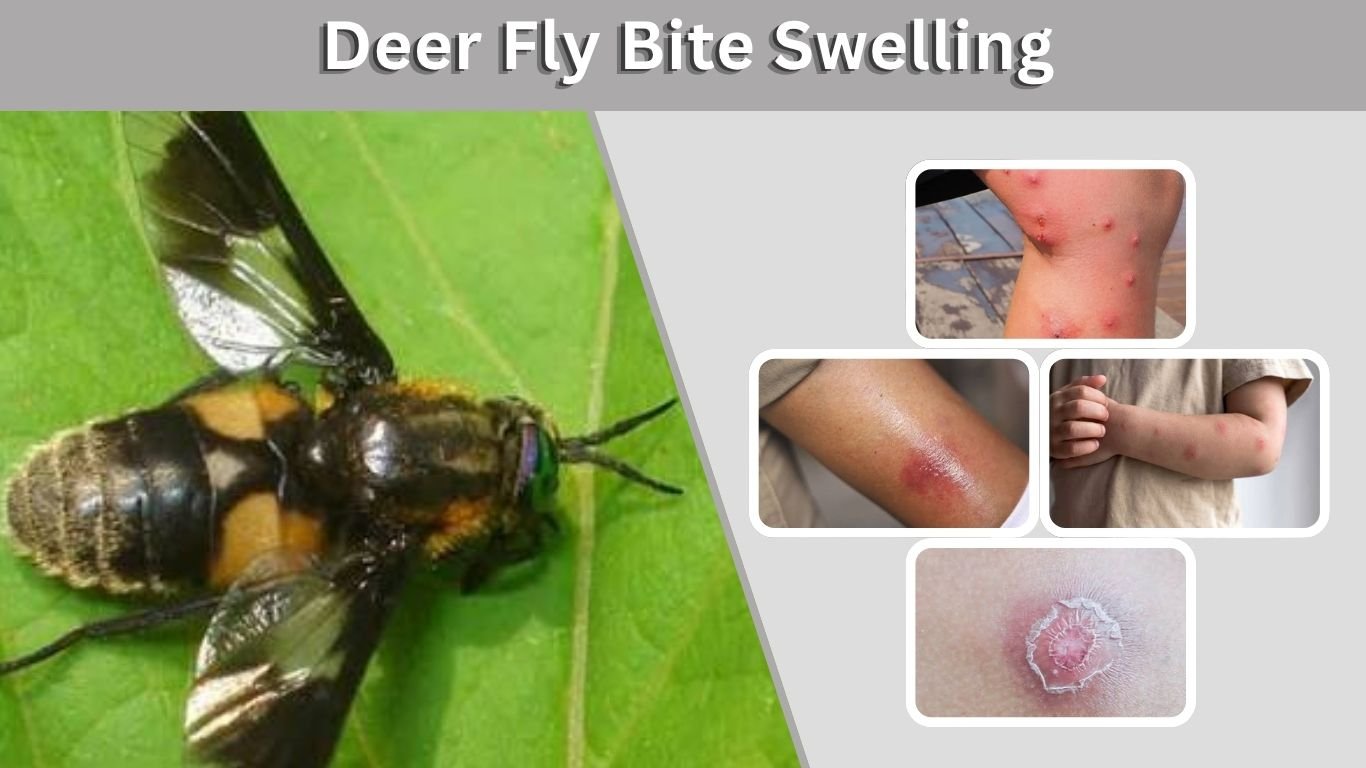
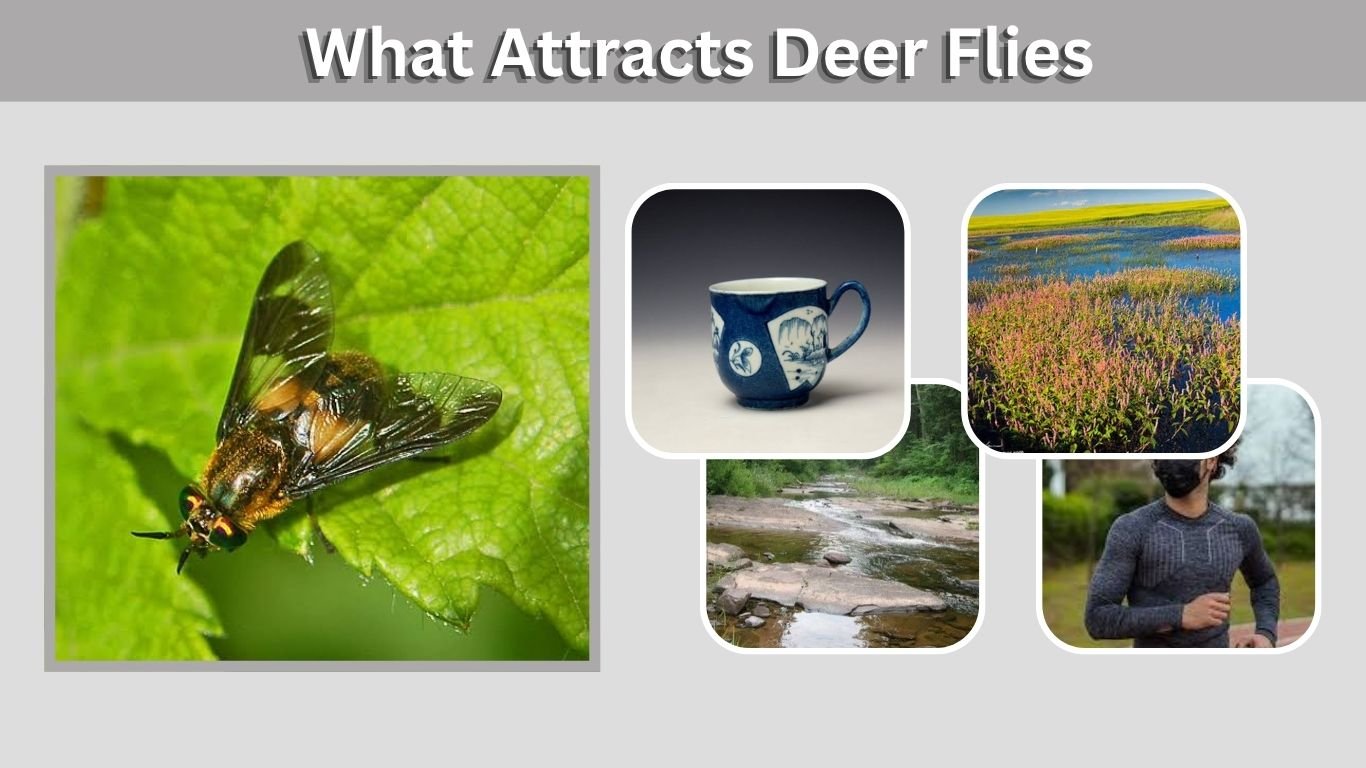
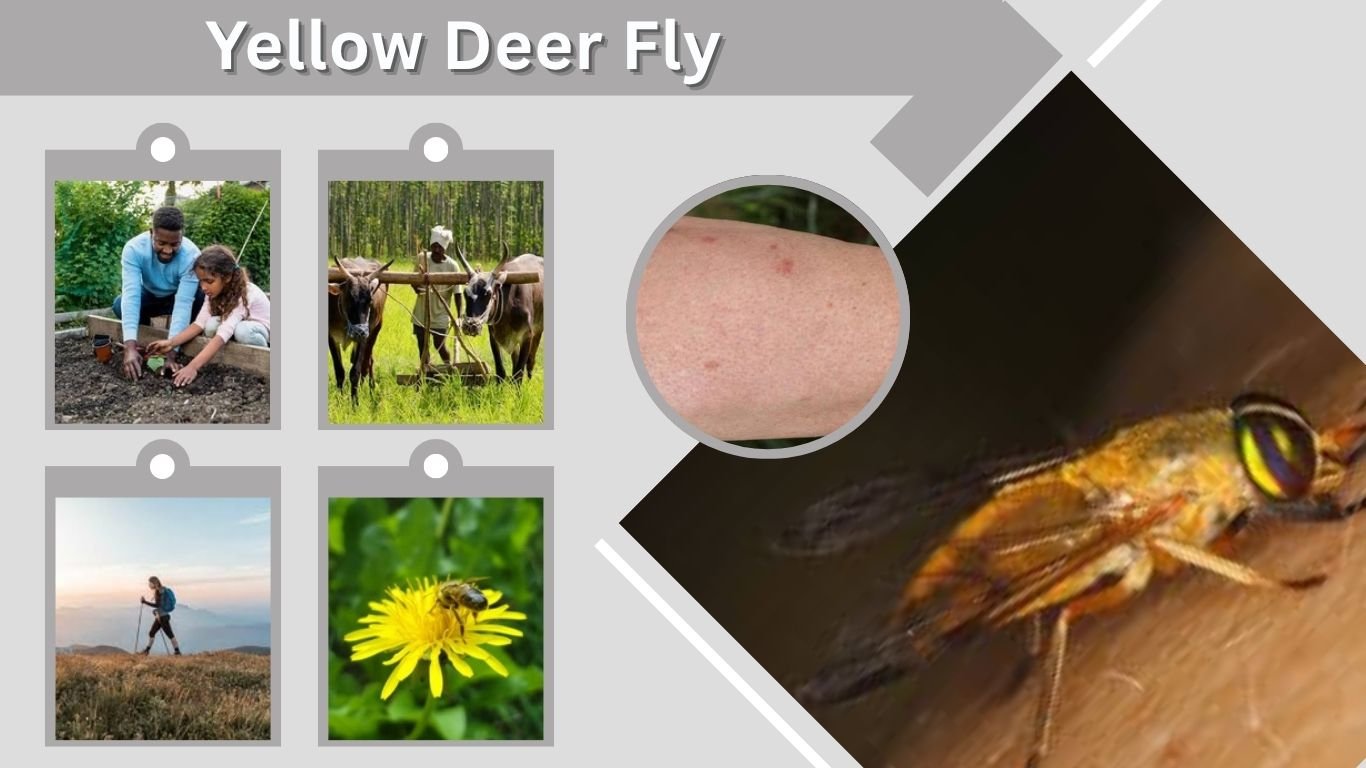
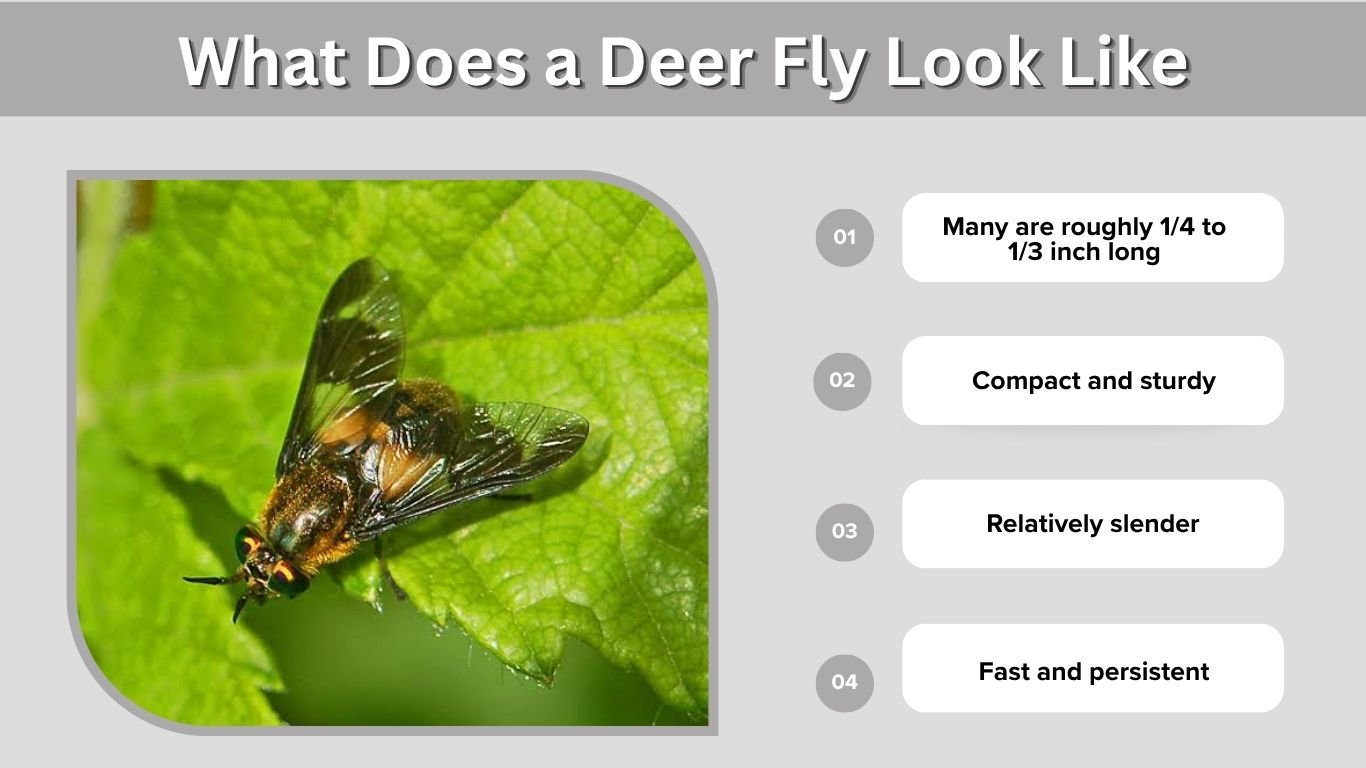
Horse flies are large, strong-flying insects that feed on nectar, while females also take blood meals to produce eggs. They are particularly attracted to large moving animals, dark objects, carbon dioxide and warmth.
Common Horse Fly Habitats
Adults are frequently found around:
- Ponds, streams and marshes
- Wet woodland and floodplains
- Damp pastures and livestock areas
- Swimming pools and beaches
- Shaded vegetation near water
- Horse barns and cattle facilities
Females deposit egg masses on vegetation or other surfaces above wet soil or water. The larvae develop in mud, saturated ground or aquatic habitats, where they generally prey on smaller organisms.
Is It a Horse Fly Infestation?
Several horse flies outside do not necessarily indicate that they are breeding on your property. Adults can travel considerable distances from natural wetlands.
Finding one inside the house is normally an accidental entry rather than an indoor infestation. Numerous smaller flies developing in drains, rubbish or manure are more likely to be drain flies, house flies or stable flies.
1. Install Horse Fly Traps
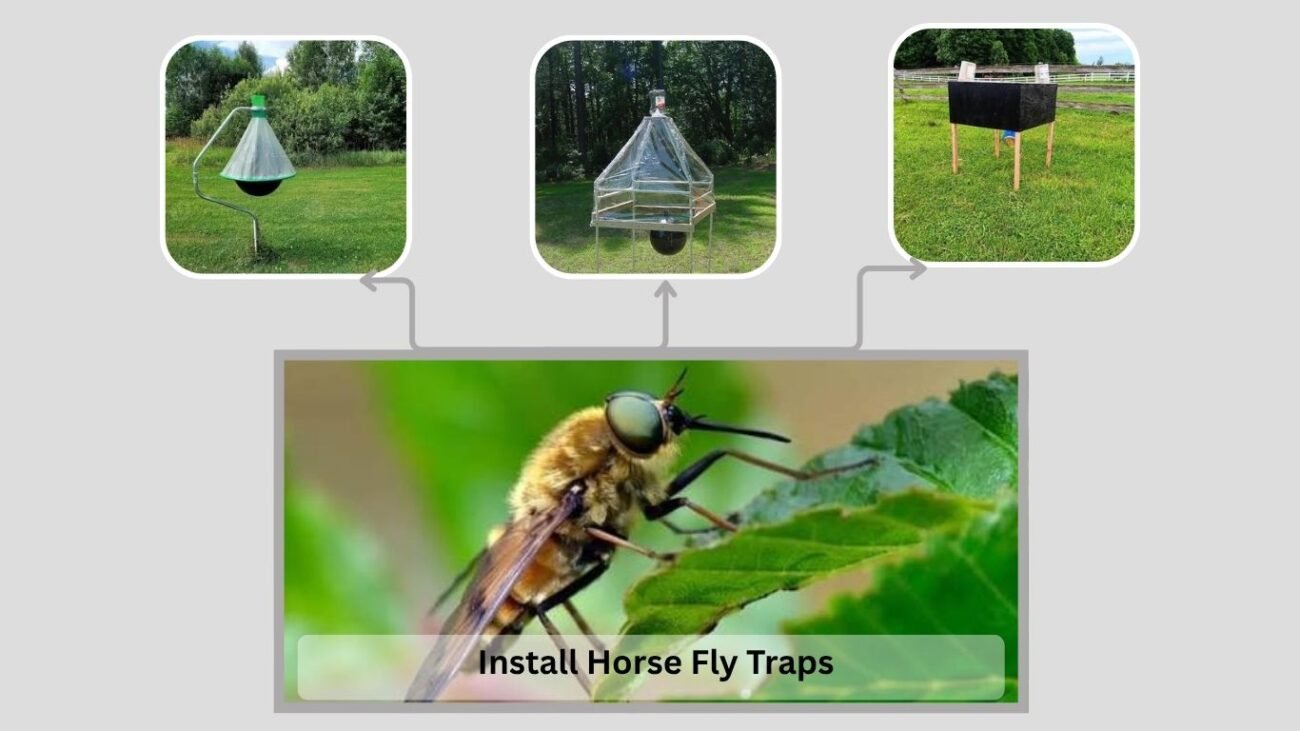
Horse flies rely heavily on vision when locating hosts. Traps imitate a large, dark animal and guide approaching flies into a container from which they cannot escape.
Use a Black-Ball or Manitoba Trap
A Manitoba-style trap uses a dark hanging ball beneath a cone-shaped canopy. Sunlight heats the ball, while its movement makes it resemble an animal. Flies land, move upward and enter a collection chamber.
Place the trap in a sunny, open location between the suspected breeding habitat and the area requiring protection. Keep it away from doors, seating areas, pools and animals so it draws flies away from people rather than toward them.
Maintain the Trap
Empty the collection chamber regularly and repair torn netting. One trap may help protect a small yard or animal enclosure, but several may be required around a pasture. The University of Missouri Extension notes that multiple traps are generally needed to produce measurable reductions around livestock.
2. Reduce Wet Breeding Areas
Horse fly larvae need wet or saturated habitats. Natural marshes and streams should not be treated with pesticides, but unnecessary artificial moisture can be corrected.
Improve Drainage
Repair leaking outdoor taps, irrigation lines and animal water systems. Empty neglected containers, unclog gutters and improve drainage in persistently muddy areas near buildings.
Do not drain or chemically treat protected wetlands. Such actions may harm fish, amphibians, dragonflies and other wildlife without preventing adult flies from arriving elsewhere.
3. Manage Vegetation Around Activity Areas
Dense vegetation provides resting cover and keeps soil moist. Creating a dry, open buffer can make patios, pools and animal shelters less attractive.
Trim Overgrown Areas
Mow excessively tall grass around regularly used spaces, trim shrubs away from doors and remove piles of decaying vegetation. Maintain a clear strip between wet woodland and outdoor seating.
Avoid removing all natural vegetation across the property. Focus management around the house, pool, barn, animal enclosures and walking paths.
4. Use Outdoor Fans
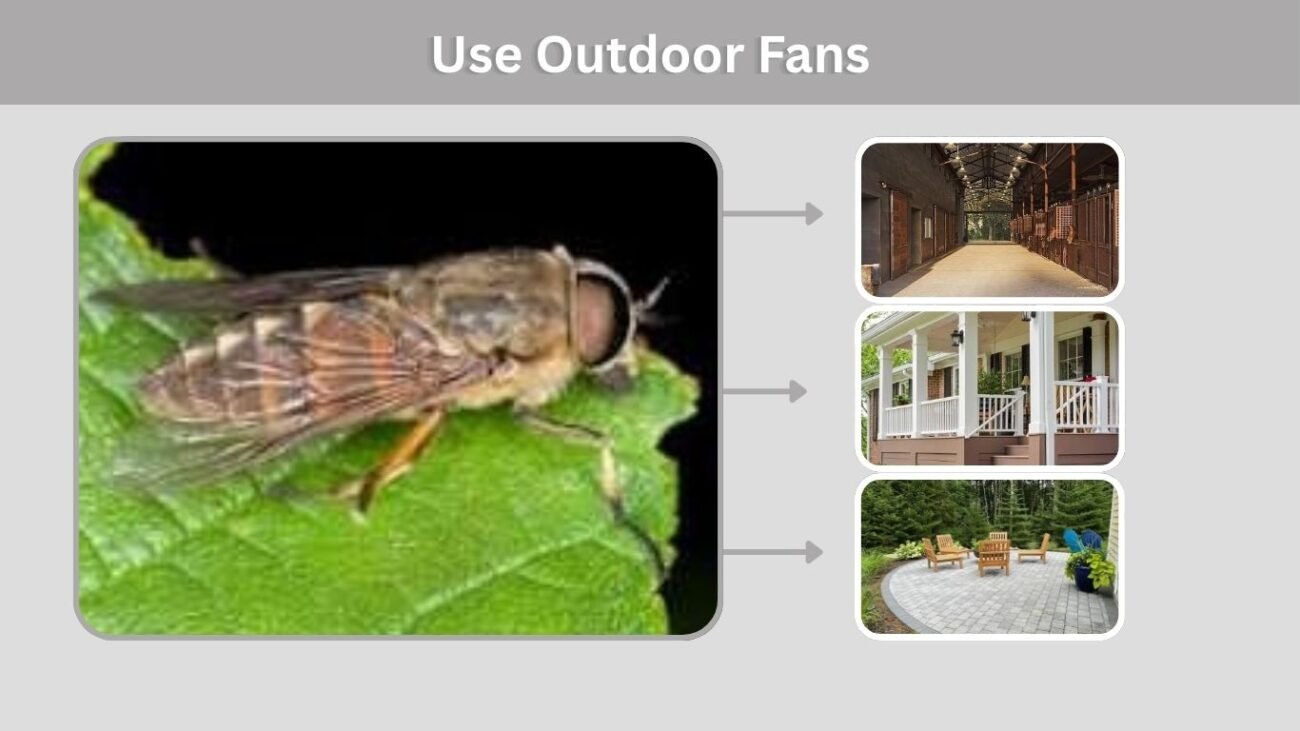
Horse flies are powerful fliers, but steady airflow makes it harder for them to approach and land accurately.
Position Fans Safely
Use outdoor-rated fans around covered patios, porches, barn aisles and sheltered pool seating. Direct airflow across the area where people or animals spend time.
Secure cords away from water, livestock and walking routes. Fans are most helpful in small protected zones and cannot control flies across an entire yard or pasture.
5. Get Rid of Horse Flies in the House
Horse flies do not normally complete their life cycle inside a dry home. Indoor control should therefore focus on removing the insect and blocking entry.
Remove Individual Flies
Close interior doors to confine the fly to one room. Open one exterior window or door and darken the remaining room so the fly moves toward the light.
A vacuum or fly swatter can remove a persistent individual. Dispose of the vacuum contents outdoors if the fly remains alive.
Block Entry Points
Repair window screens, install door sweeps and seal gaps around utility openings. Avoid leaving unscreened doors open during warm daylight hours.
If large flies continue appearing, confirm their identity. Cluster flies, blow flies and black soldier flies are more likely than horse flies to occur repeatedly inside buildings.
6. Control Horse Flies Around a Pool
Pools attract many flying insects because of their reflective surface, surrounding movement and nearby moisture. A properly chlorinated, filtered swimming pool is unlikely to be the main breeding habitat.
Protect the Pool Area
Use a fitted cover when the pool is not in use. Repair leaks, remove standing water from covers and toys, and keep deck drains open.
Place visual horse fly traps near the perimeter of the property rather than beside the pool. Fans can protect a covered seating area, while towels and light-colored clothing reduce exposed skin.
Do not spray insecticide over pool water or use unapproved chemicals around the deck. Follow every pesticide label regarding water, people, pets and re-entry time.
7. Protect Horses and Livestock
Removing every horse fly from a pasture is rarely realistic. Protecting animals from landing flies can provide faster relief.
Use Physical Barriers
Fly sheets, masks, leggings and ear covers reduce accessible skin. Choose lightweight, breathable equipment that fits correctly and does not create pressure points.
Provide a shaded shelter away from marshy pasture edges. When activity is severe, bring animals into a screened barn during peak daylight hours.
Apply Labeled Repellents
Use only products labeled for the animal and target pest. Apply them according to the stated dosage and reapplication schedule. Avoid the eyes, nostrils, mouth, genital area and open wounds unless the label specifically allows treatment.
Repellent sprays often provide limited or short-lived protection against horse flies. Barriers, shelter and traps should remain part of the control plan.
Keep Barns Screened and Ventilated
Install screens over doors and windows where airflow permits. Downward and outward airflow from properly installed barn fans can discourage fly entry, according to the University of Kentucky Entomology Department.
Remove manure, wet bedding and spilled feed regularly. This sanitation is essential for controlling house flies and stable flies, although it has less direct effect on horse flies breeding in wetlands.
8. Protect Yourself From Bites
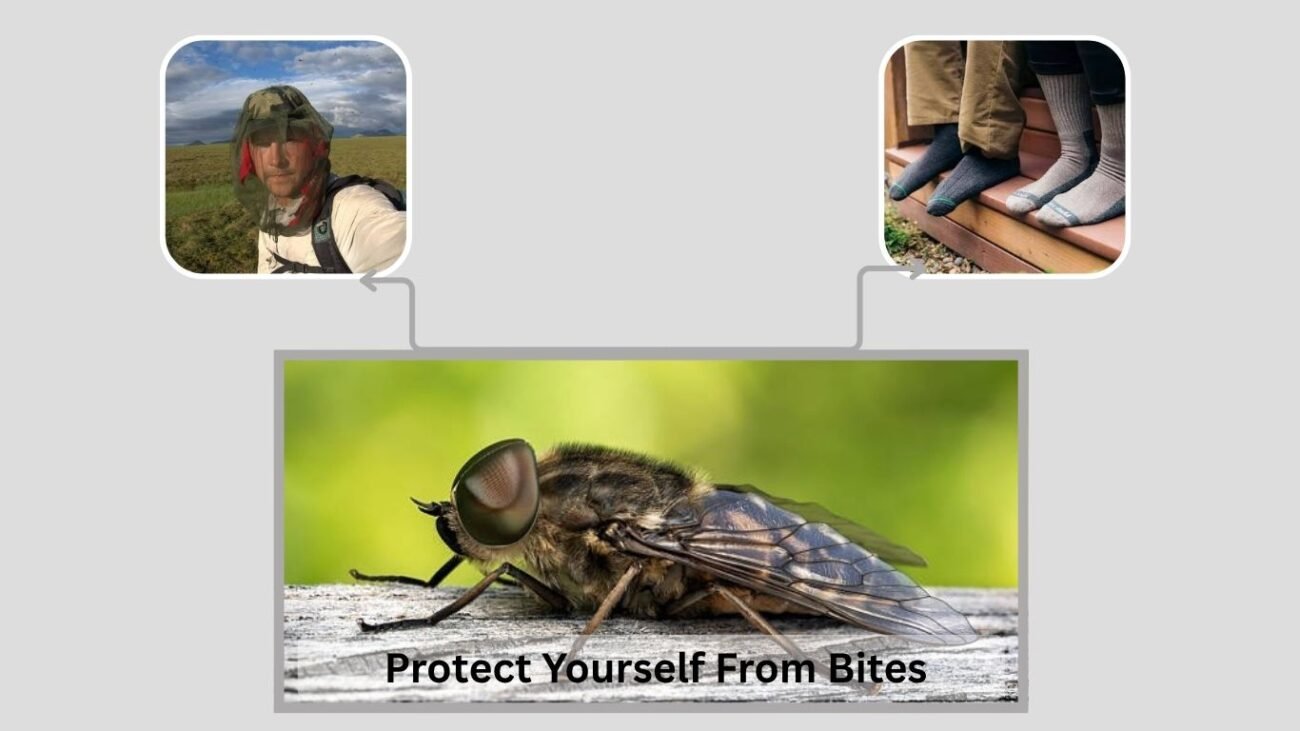
Personal protection becomes important when outdoor horse fly numbers cannot be reduced quickly.
Wear Protective Clothing
Wear long sleeves, trousers, socks and closed shoes. Light-colored clothing may attract fewer horse flies than large dark garments.
Apply a registered insect repellent according to its label. Repellents can provide temporary help, but horse flies may be less responsive than mosquitoes or ticks. Do not apply products beneath clothing unless permitted by the instructions.
Change Your Location or Timing
Horse flies are primarily active during warm daylight hours. Move into a screened building or vehicle when several flies begin circling.
Avoid standing between a trap and the suspected breeding area. The approaching flies may encounter you before reaching the trap.
9. Use Insecticides Only When Necessary
Spraying an entire yard rarely provides lasting horse fly control. Adults are strong fliers and can quickly replace those killed by a temporary treatment.
Choose Targeted Products
If chemical control is necessary, select a product labeled for horse flies and the intended site. Premise products, animal treatments and residential sprays are not interchangeable.
Never apply agricultural or livestock insecticides to people, dogs, swimming pools or household surfaces unless those uses appear explicitly on the label.
When to Hire a Professional
Contact a licensed pest-control professional when biting-fly numbers remain unusually high, species identification is uncertain or treatment is required around sensitive locations.
A professional should identify nearby breeding conditions and distinguish horse flies from stable flies, deer flies, black flies, bot flies and ordinary house flies before recommending treatment.
Natural Horse Fly Control: What Works?
Natural control should emphasize traps, airflow, barriers and habitat management. These methods reduce contact without unnecessary pesticide exposure.
Are Essential Oils Effective?
Citronella and certain plant-derived repellents may provide short-term relief, but they are unlikely to control a heavy outdoor population. Their concentration, duration and safety vary among products.
Never apply concentrated essential oils directly to people or animals. Some oils can irritate skin or be toxic to pets. Use only properly formulated and labeled products.
Do Homemade Bottle Traps Work?
Fermented bait traps are more effective for house flies and fruit flies than for horse flies. Horse flies locate hosts primarily through visual movement, shape, warmth and carbon dioxide.
A dark-ball trap is usually a better design for these insects than a bottle containing sugar, vinegar or rotting meat.
Horse Flies vs Bot Flies
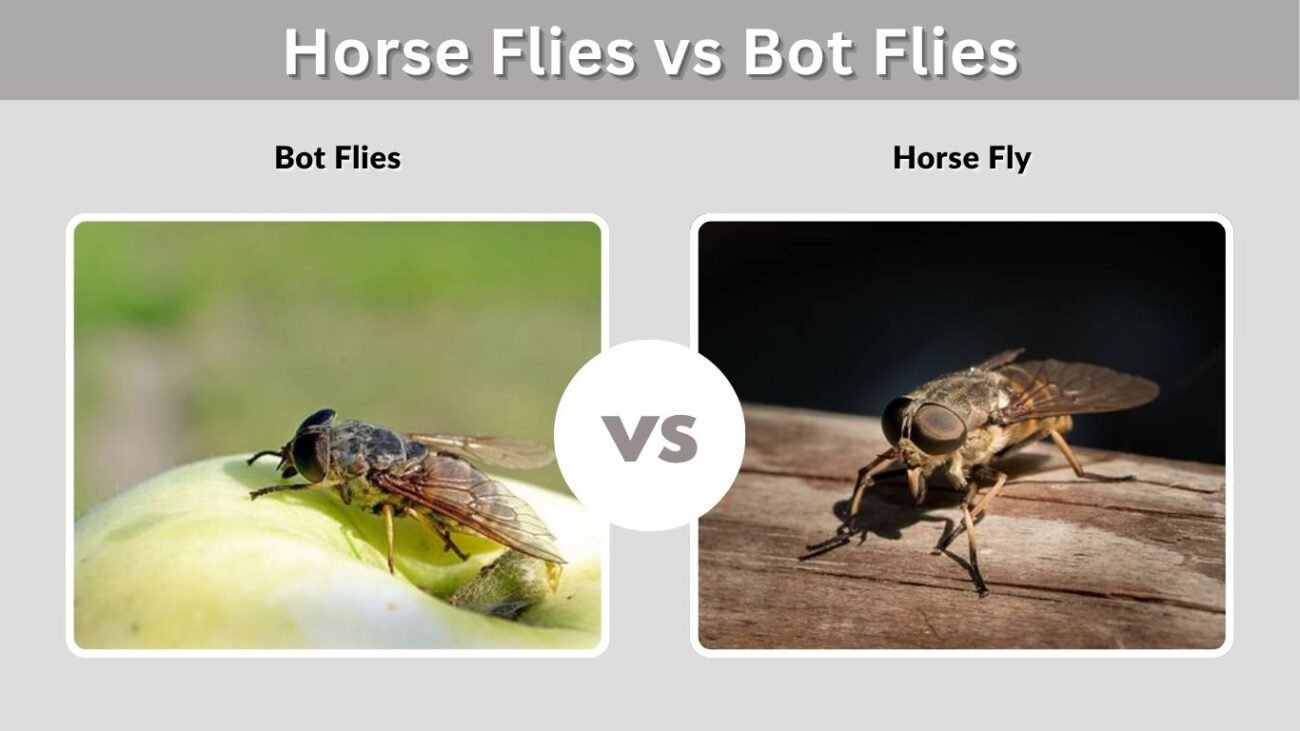
Horse flies and horse bot flies are different insects requiring different management. Confusing them can lead to ineffective treatment.
| Feature | Horse fly | Horse bot fly |
| Adult feeding | Females bite and consume blood | Adults do not bite |
| Main problem | Painful skin wounds | Larvae develop inside the horse |
| Eggs | Near wet breeding habitat | Attached to the horse’s hair |
| Control | Traps, barriers and repellents | Egg removal and veterinary parasite control |
Bot fly eggs commonly appear as small yellow dots attached to hairs on the legs, shoulders or face. Use a bot knife or other veterinarian-recommended removal method and follow an appropriate deworming plan. Do not treat bot fly eggs as a horse fly infestation.
FAQs
What is the fastest way to get rid of a horse fly?
Confine an indoor fly to one room and remove it with a vacuum or swatter. Outdoors, install a black-ball trap away from people and animals. One trap will reduce local activity, but it cannot immediately eliminate flies arriving from wetlands.
How do I keep horse flies away from my yard?
Correct artificial drainage problems, trim vegetation around activity areas, use visual traps and protect seating with outdoor fans. Wear covering clothing when flies are active. Complete elimination may be impossible when ponds, marshes or livestock habitats are nearby.
Why are horse flies around my swimming pool?
Horse flies may investigate a pool because water reflects light and people provide movement, warmth and carbon dioxide. The maintained pool itself is rarely the main breeding site. Cover it when unused, fix leaks and place traps away from swimmers.
What smell keeps horse flies away?
No single smell reliably eliminates horse flies. Registered repellents may provide temporary protection, while citronella and other plant-based products have inconsistent or short-lived results. Traps, clothing, screens, fans and physical barriers generally provide more dependable control.
Can vinegar get rid of horse flies?
Vinegar is not a dependable horse fly control. A vinegar bottle trap may catch small fruit flies but does not effectively imitate the large, dark moving hosts that attract horse flies. A properly constructed black-ball or Manitoba trap is more suitable.