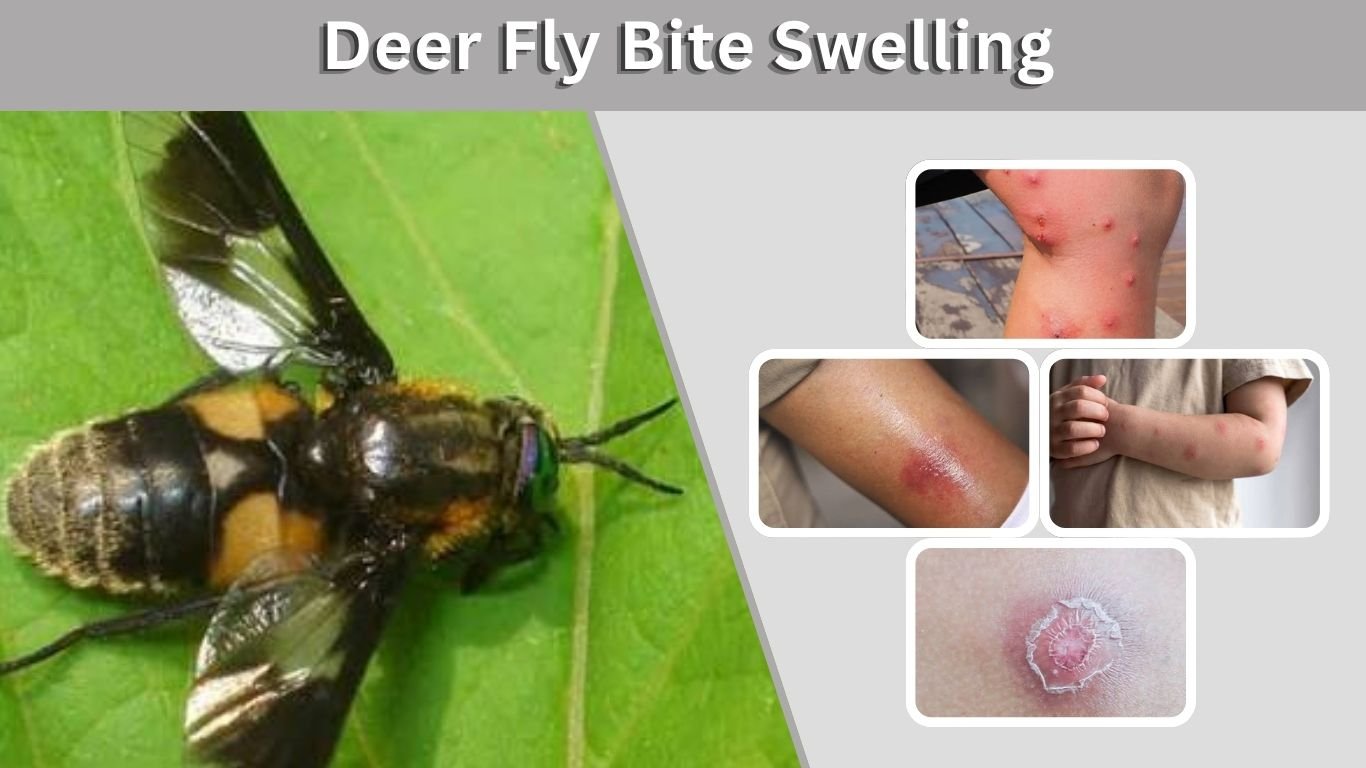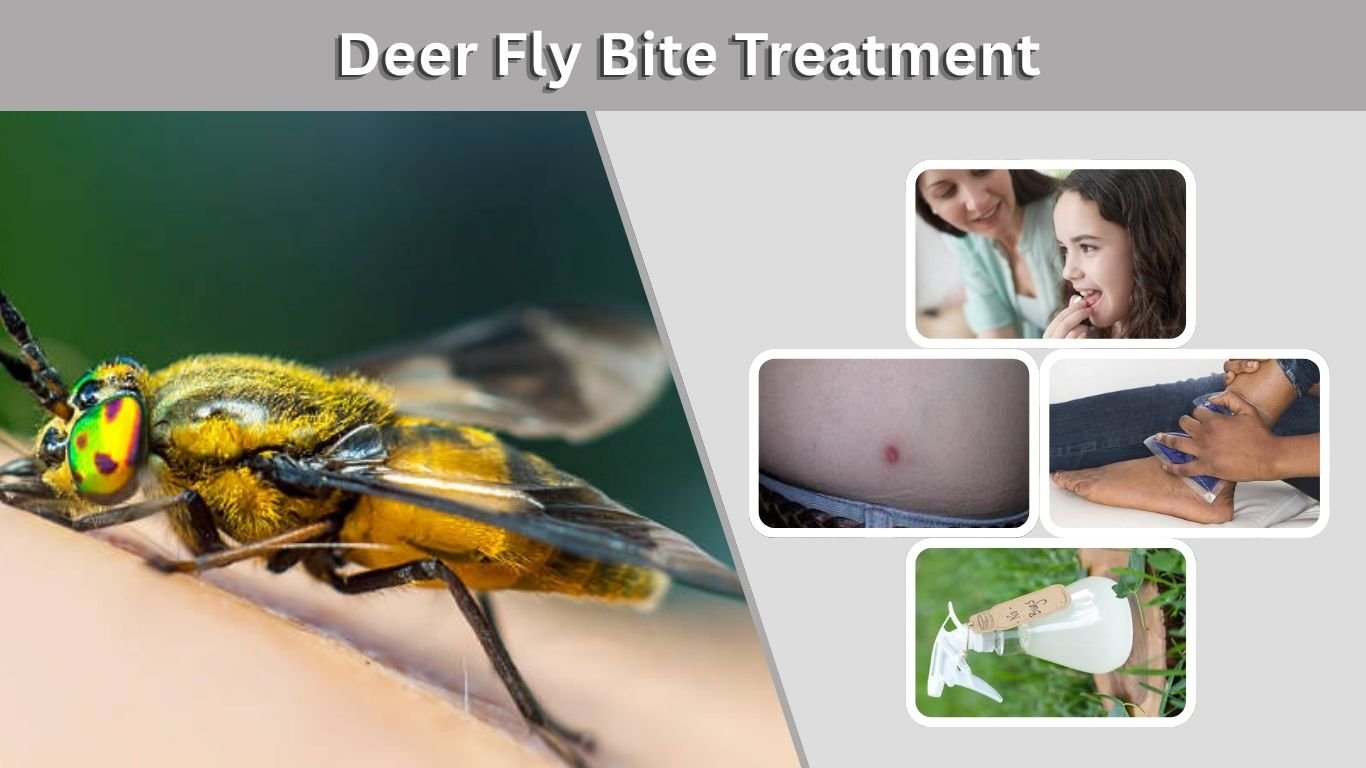
A deer fly bite can cause immediate sharp pain, bleeding, redness, itching, and significant swelling. Unlike mosquitoes, female deer flies use cutting mouthparts to open the skin before feeding, leaving a small wound that may remain sore for several days. Most bites respond well to washing, cold compresses, elevation, and over-the-counter itch or pain relief. However, rapidly worsening swelling, infection, breathing difficulty, or fever with swollen lymph nodes requires medical attention.
What Does a Deer Fly Bite Look and Feel Like?
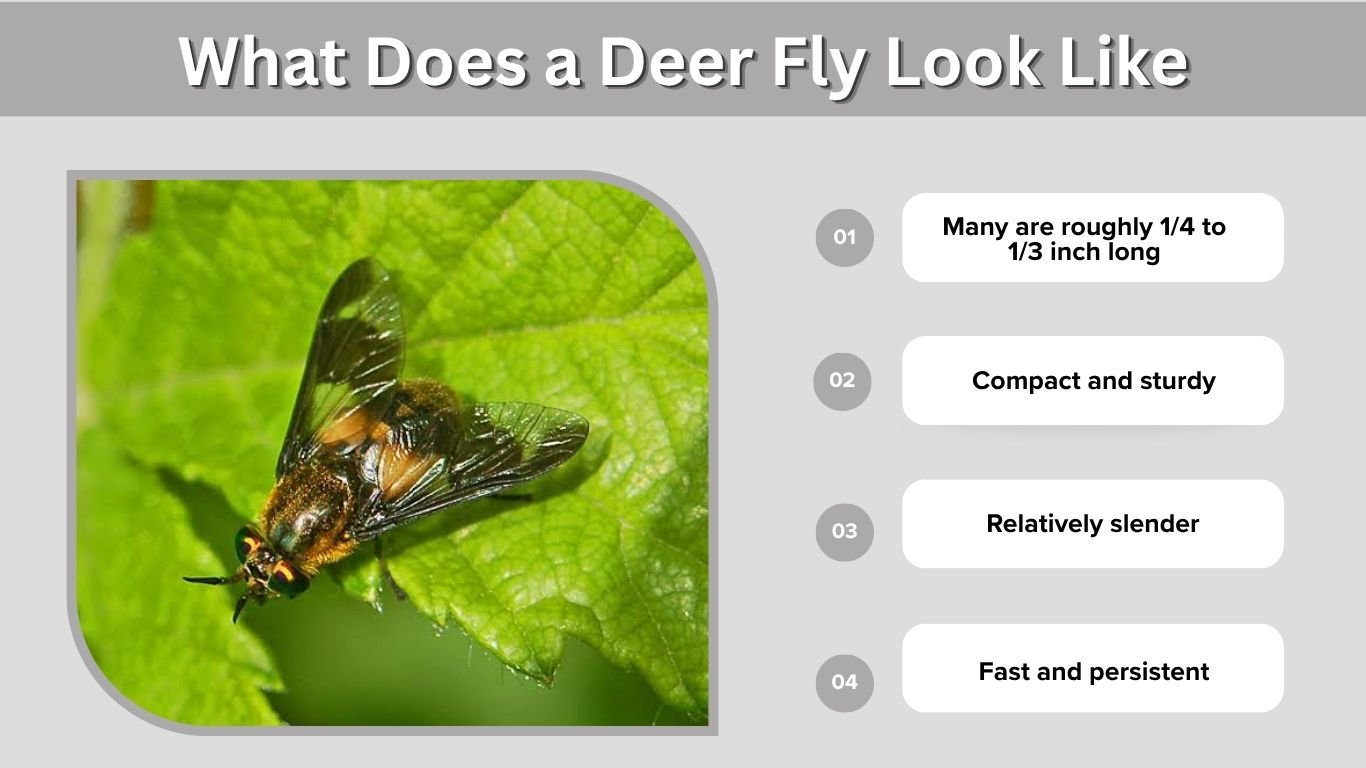
Deer flies belong mainly to the genus Chrysops. Females bite humans and animals because they require blood to produce eggs. Their mouthparts cut the skin and create a small pool of blood rather than piercing it like a mosquito.
Common deer fly bite symptoms include:
- Sudden burning or stabbing pain
- A small bleeding wound
- Redness around the bite
- A raised, itchy welt
- Warmth and tenderness
- Localized swelling
- A small scab after bleeding stops
The amount of swelling differs from person to person. Some people develop only a small bump, while others experience a large local reaction extending several inches beyond the bite.
Immediate Deer Fly Bite Treatment
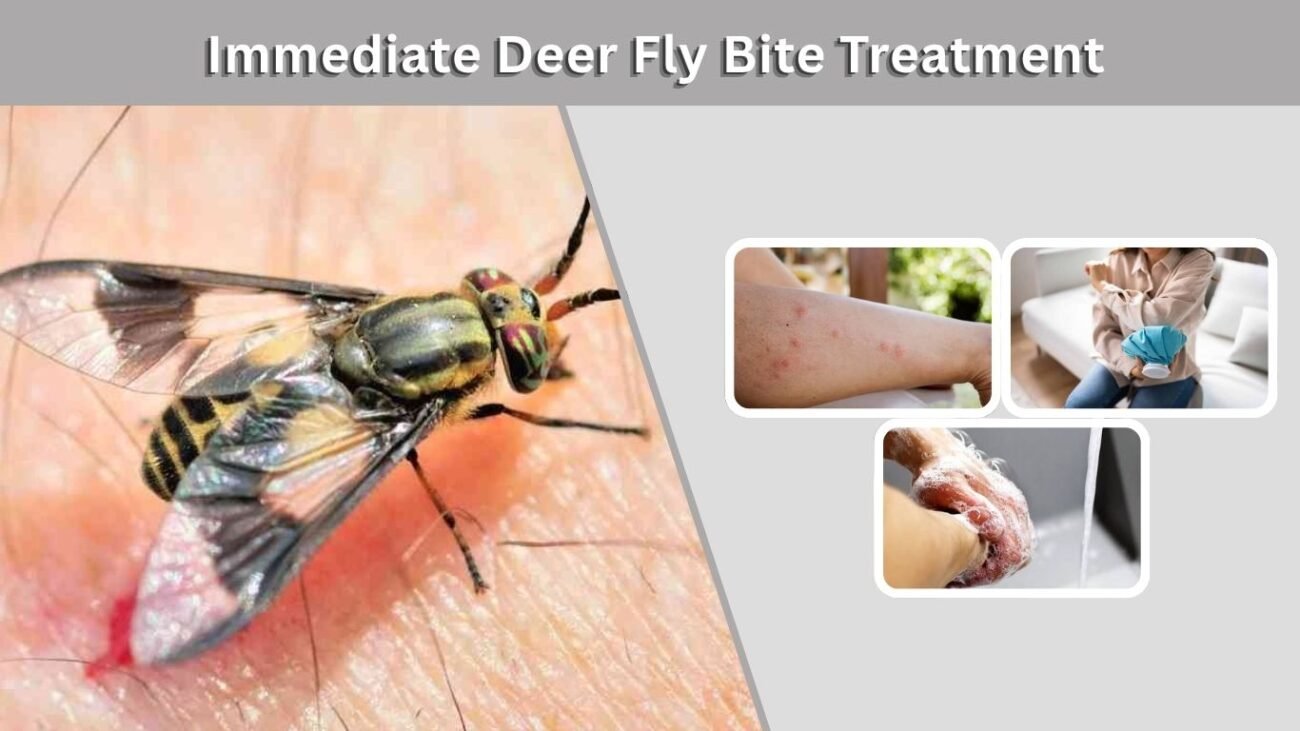
Most uncomplicated bites can be treated at home. Begin treatment promptly because cleaning the broken skin lowers the risk of infection.
1. Move Away From the Area
Deer flies can continue circling and may attempt to bite repeatedly. Move indoors, into a vehicle, or to a shaded, protected area before treating the wound.
2. Wash the Bite
Clean the bite gently with soap and running water. Remove visible dirt and dried blood without aggressively scrubbing the damaged skin. Washing helps reduce the chance that bacteria will enter the open wound.
3. Control Bleeding
Apply gentle pressure with clean gauze or a clean cloth if the bite continues bleeding. Most small wounds stop within a few minutes.
Seek medical care when bleeding remains heavy, does not stop after steady pressure, or the person takes blood-thinning medication.
4. Apply a Cold Compress
Wrap an ice pack in a thin cloth and place it over the bite for approximately 10–20 minutes. Remove it before reapplying so the skin does not become damaged.
Cold treatment can reduce pain, redness, and swelling. Never put ice directly on the skin.
5. Elevate the Area
When the bite is on an arm, hand, leg, or foot, keep the affected area raised above heart level when practical. Elevation may help reduce fluid accumulation and swelling.
Treatment for Itching, Pain, and Swelling
| Symptom | Helpful treatment |
| Pain or burning | Cold compress and an appropriate OTC pain reliever |
| Mild swelling | Cold compress and elevation |
| Itching | Calamine lotion or low-strength hydrocortisone cream |
| Larger local reaction | Oral antihistamine after checking that it is safe for you |
| Broken skin | Gentle washing and a clean, dry covering |
| Increasing redness or pus | Medical evaluation for possible infection |
A low-strength hydrocortisone cream or calamine lotion may reduce itching and inflammation when applied to intact surrounding skin. An oral antihistamine may help with more extensive itching or swelling. Follow the product label, and ask a pharmacist or clinician before using medication for a young child, during pregnancy, or when taking other medicines.
Avoid scratching. Scratching can reopen the wound and introduce bacteria beneath the skin.
Deer Fly Bite Swelling Treatment
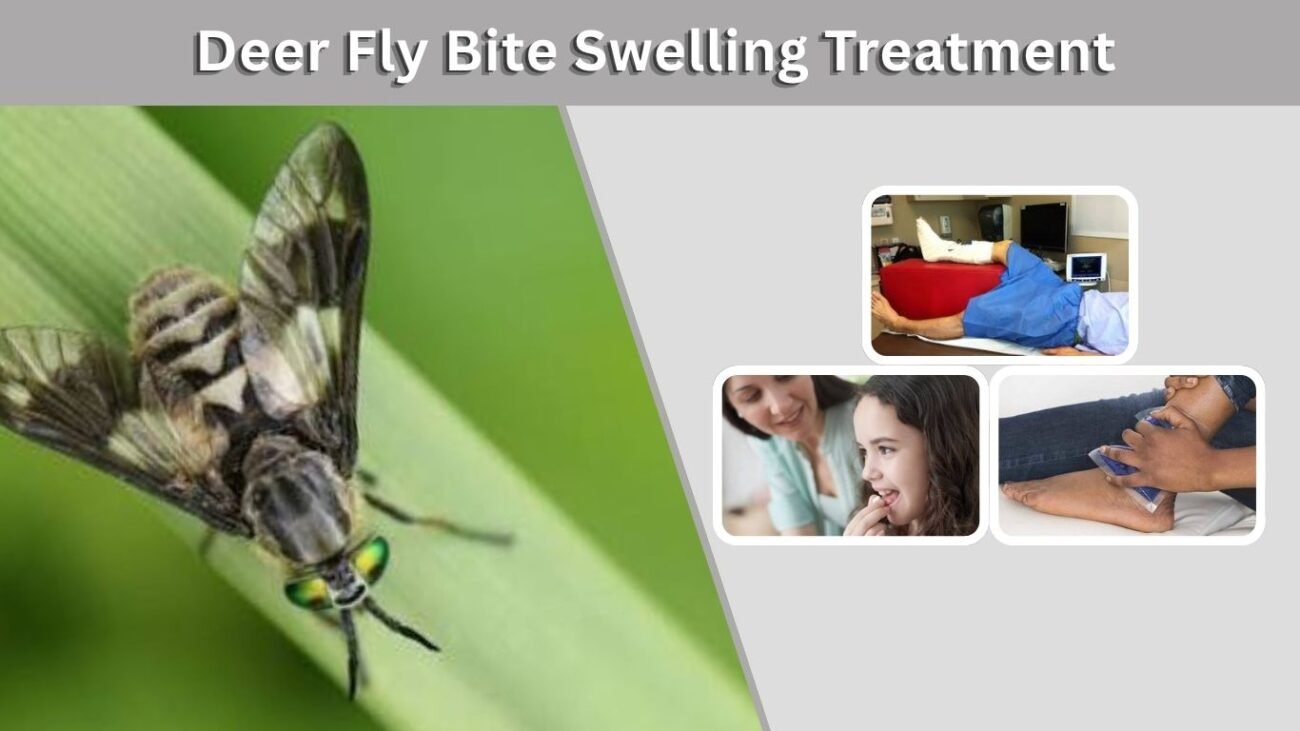
Swelling may increase during the first day or two before gradually improving. This can still represent a large local reaction rather than an infection, especially when the area is itchy but the person otherwise feels well.
To manage swelling:
- Apply a wrapped cold pack several times daily.
- Elevate the affected limb.
- Avoid tight clothing or jewelry around the swollen area.
- Consider an oral antihistamine when appropriate.
- Mark the outer edge of redness with a pen to monitor whether it spreads.
Contact a healthcare professional when the swelling continues expanding, becomes increasingly painful or hot, limits movement, or does not begin improving after several days.
Signs of an Allergic Reaction
A large welt near the bite does not always mean anaphylaxis. Severe allergic reactions involve symptoms beyond the immediate bite area.
Call emergency services immediately for:
- Difficulty breathing or wheezing
- Swelling of the lips, tongue, mouth, or throat
- Trouble swallowing
- Widespread hives
- Sudden dizziness, confusion, or fainting
- Pale, blue, or gray lips or skin
- Repeated vomiting with other allergy symptoms
These can indicate anaphylaxis, which requires immediate treatment. Use prescribed epinephrine promptly when the person has an autoinjector and has been instructed to use it.
How to Recognize an Infected Deer Fly Bite
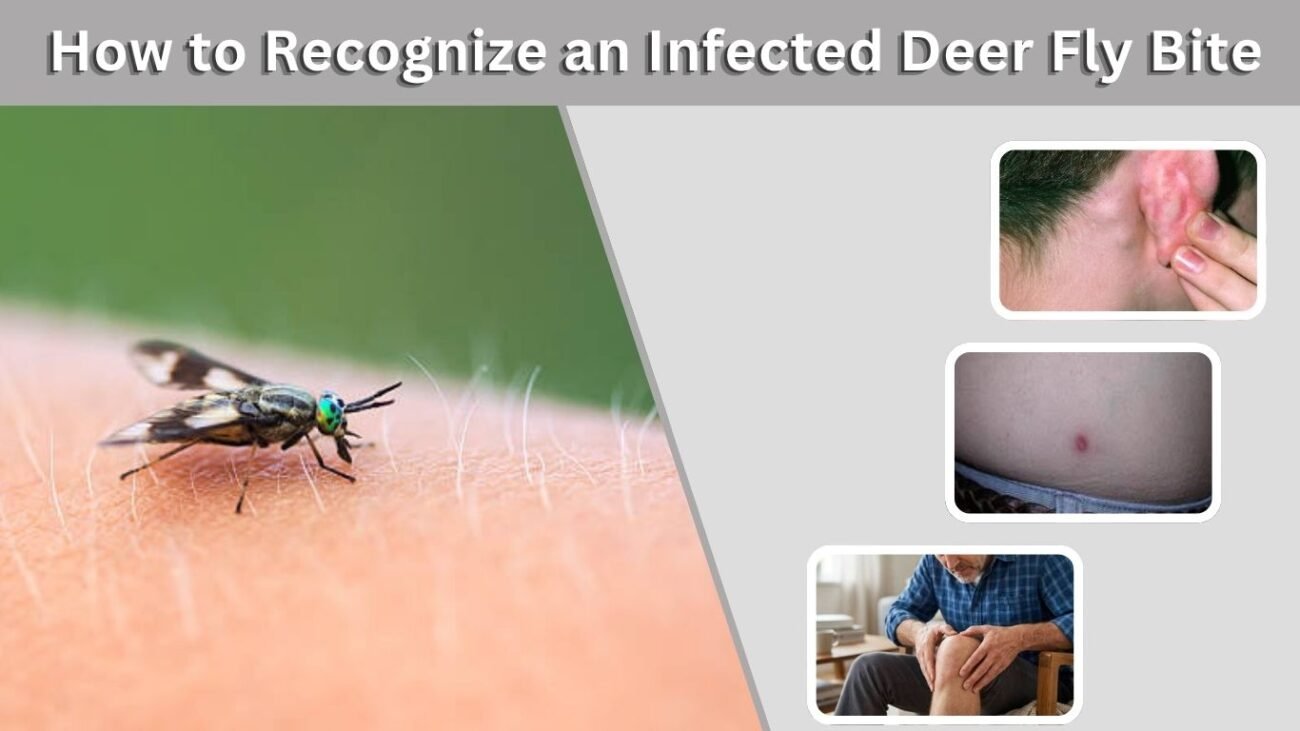
The skin is broken during a deer fly bite, so secondary bacterial infection is possible, particularly after scratching.
Warning signs include:
- Redness that steadily expands
- Increasing warmth and pain
- Pus or cloudy drainage
- Red streaks extending from the wound
- Fever or chills
- Swollen lymph nodes
- A wound that is worsening rather than healing
Increasing redness, swelling, or pain over the following days should be evaluated for infection. Antibiotics should only be used when prescribed for a diagnosed bacterial infection.
Deer Fly Bites and Tularemia
Deer flies can transmit tularemia in some regions, particularly in the western United States, although most deer fly bites do not cause the disease. Tularemia acquired through a deer fly bite may produce a skin ulcer accompanied by swollen lymph nodes near the affected area.
Contact a healthcare professional promptly if, within days after a bite, you develop:
- Fever or chills
- Severe fatigue
- Headache or body aches
- A persistent ulcer at the bite
- Painful or enlarged lymph nodes
Tularemia can be serious but is treatable with appropriate antibiotics. Routine preventive antibiotics are not recommended for every ordinary deer fly bite; medical evaluation is based on symptoms and exposure circumstances.
Deer Fly Bite Near the Eye
A bite on the eyelid or near the eye may cause dramatic swelling because the surrounding tissue is loose and sensitive.
Use a clean, cool compress without pressing directly on the eyeball. Do not place hydrocortisone, calamine, insect repellent, or household remedies inside or very close to the eye.
Seek urgent medical advice when:
- The eye itself is painful
- Vision becomes blurred or reduced
- The eyelid swells shut
- Redness spreads around the eye
- There is discharge, fever, or pain with eye movement
Medical guidance recommends urgent assessment for insect bites or stings near the eyes, especially when symptoms are worsening.
Home Remedies to Avoid
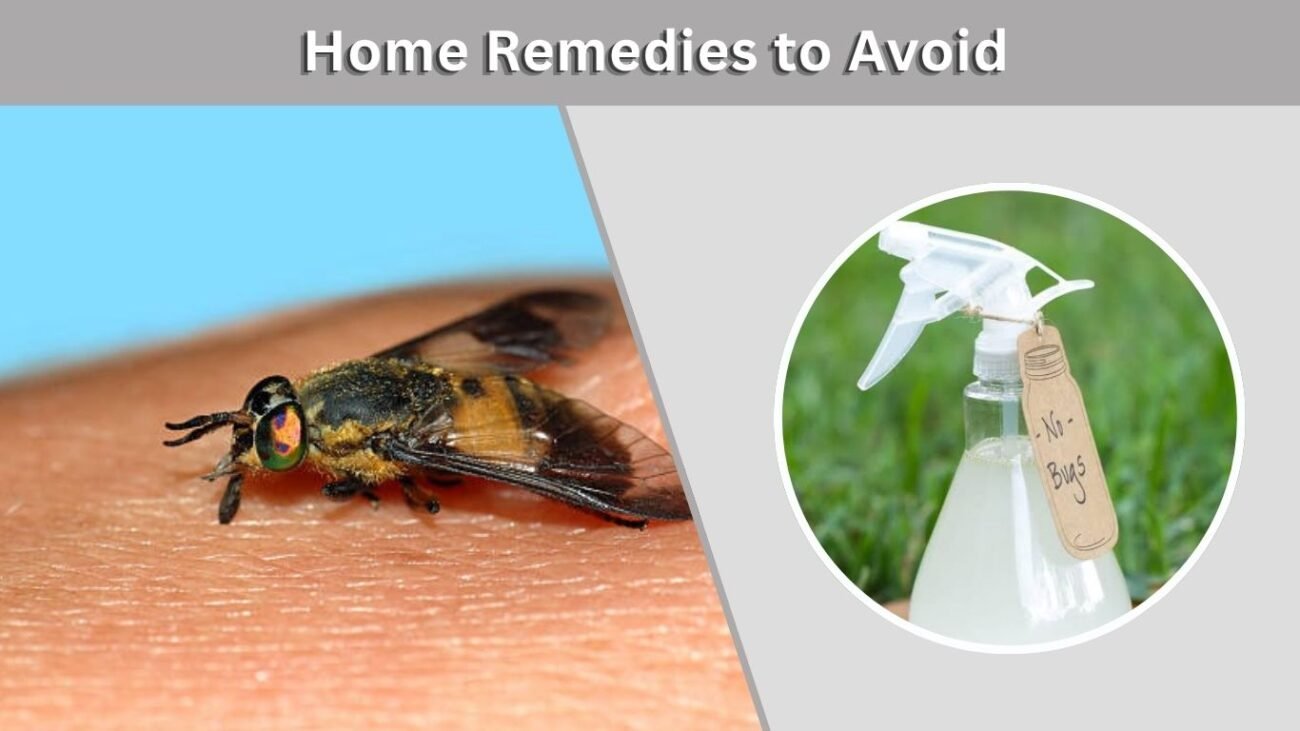
Some home remedies may irritate the open wound or delay appropriate treatment.
Avoid applying:
- Undiluted bleach or disinfectant
- Toothpaste
- Strong vinegar
- Essential oils directly on broken skin
- Meat tenderizer
- Mud or plant material
- Heat intense enough to burn the skin
Baking soda and vinegar are not proven to treat the underlying wound. Standard care—washing, cold treatment, elevation, and appropriate medication—is safer.
Deer Fly Bite Treatment for Dogs
Deer fly bites may cause small bleeding spots, welts, itching, or localized swelling on a dog, particularly around the ears, face, belly, and other areas with less fur.
Gently clean the area with water, apply a wrapped cool compress briefly, and discourage licking or scratching. Contact a veterinarian for facial swelling, breathing difficulty, vomiting, weakness, widespread hives, severe itching, infection, or numerous bites. Dogs can develop allergic reactions to deer flies and other biting insects.
Do not give a dog human pain relievers, antihistamines, or skin creams unless a veterinarian has confirmed the specific product and dose.
How to Prevent Additional Deer Fly Bites
Wear long sleeves, long pants, socks, and a hat when visiting wooded or wet areas during deer fly season. EPA-registered repellents containing ingredients such as DEET or picaridin may provide protection when used according to the label.
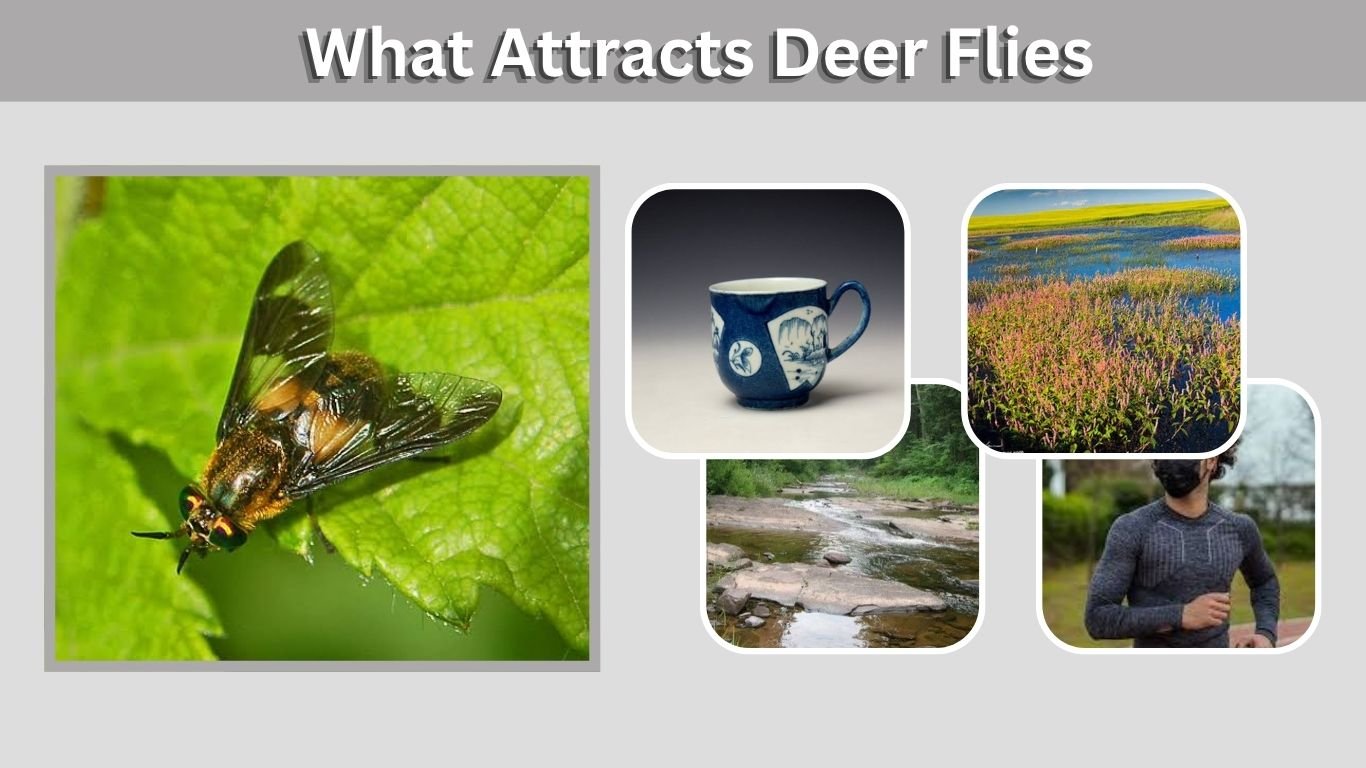
Deer flies are strong daytime fliers attracted to movement and contrasting shapes. Moving into a screened shelter or vehicle is often more effective than trying to swat multiple flies outdoors.
FAQs
How long does a deer fly bite take to heal?
Mild pain and itching often improve within several days, although a larger welt or swelling may last longer. Healing can be delayed by scratching. Seek medical advice when symptoms continue worsening, the wound drains pus, or redness keeps expanding.
What is the best treatment for a deer fly bite?
Wash the wound with soap and water, stop any bleeding, apply a wrapped cold pack, and elevate the area. Hydrocortisone, calamine, an antihistamine, or an appropriate pain reliever may help depending on the symptoms and personal medical circumstances.
Why is my deer fly bite so swollen?
Deer fly saliva and the physical skin injury can trigger a strong local inflammatory response. Swelling alone may not indicate infection, but rapidly expanding redness, increasing heat, severe pain, pus, fever, or swollen lymph nodes requires medical evaluation.
Should I cover a deer fly bite?
A small, clean bite can remain uncovered after bleeding stops. Use a clean, nonstick bandage when the wound is still oozing, likely to become dirty, or being rubbed by clothing. Change the covering whenever it becomes damp or dirty.
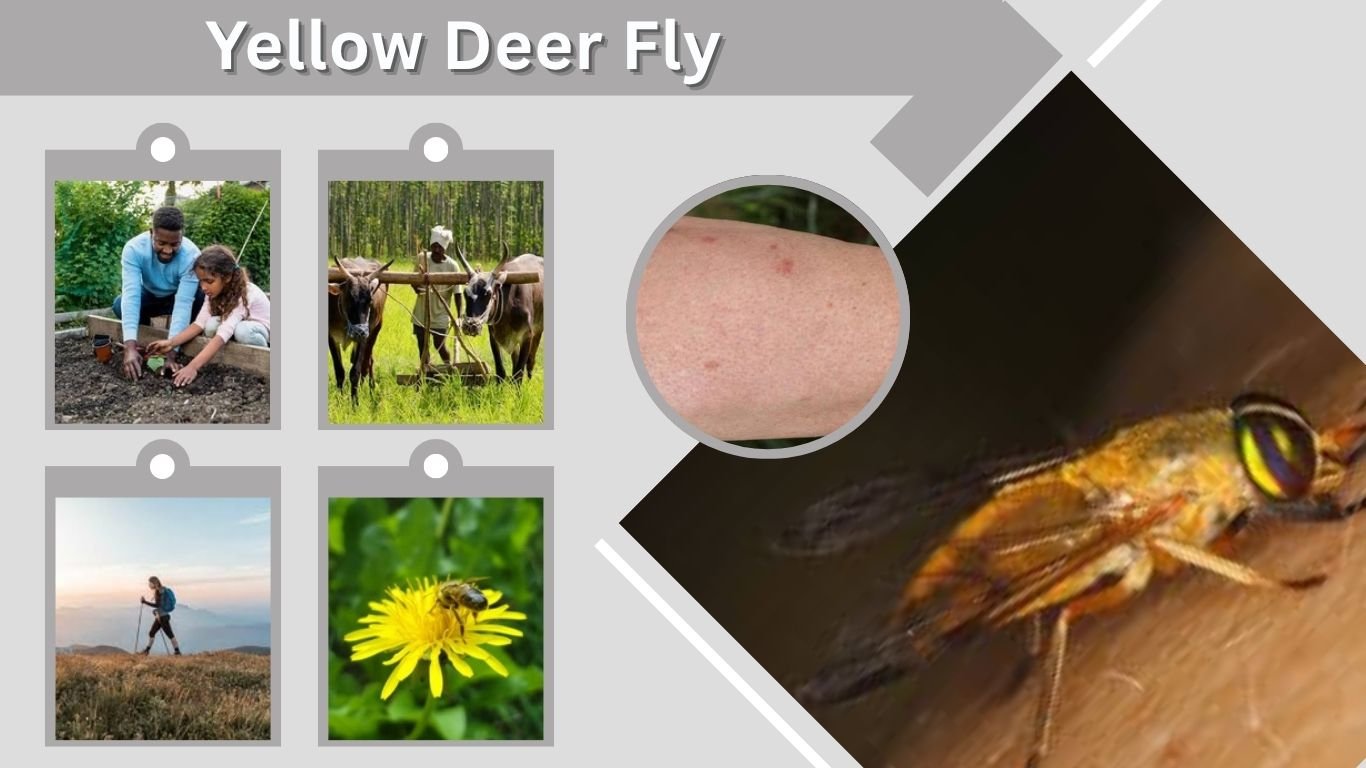
Is treatment different for a yellow deer fly bite?
No major difference exists. “Yellow fly” is a regional name applied to certain deer flies and related tabanid flies. Clean the wound, apply cold treatment, manage itching and swelling, and watch for allergic reactions, infection, or systemic illness.