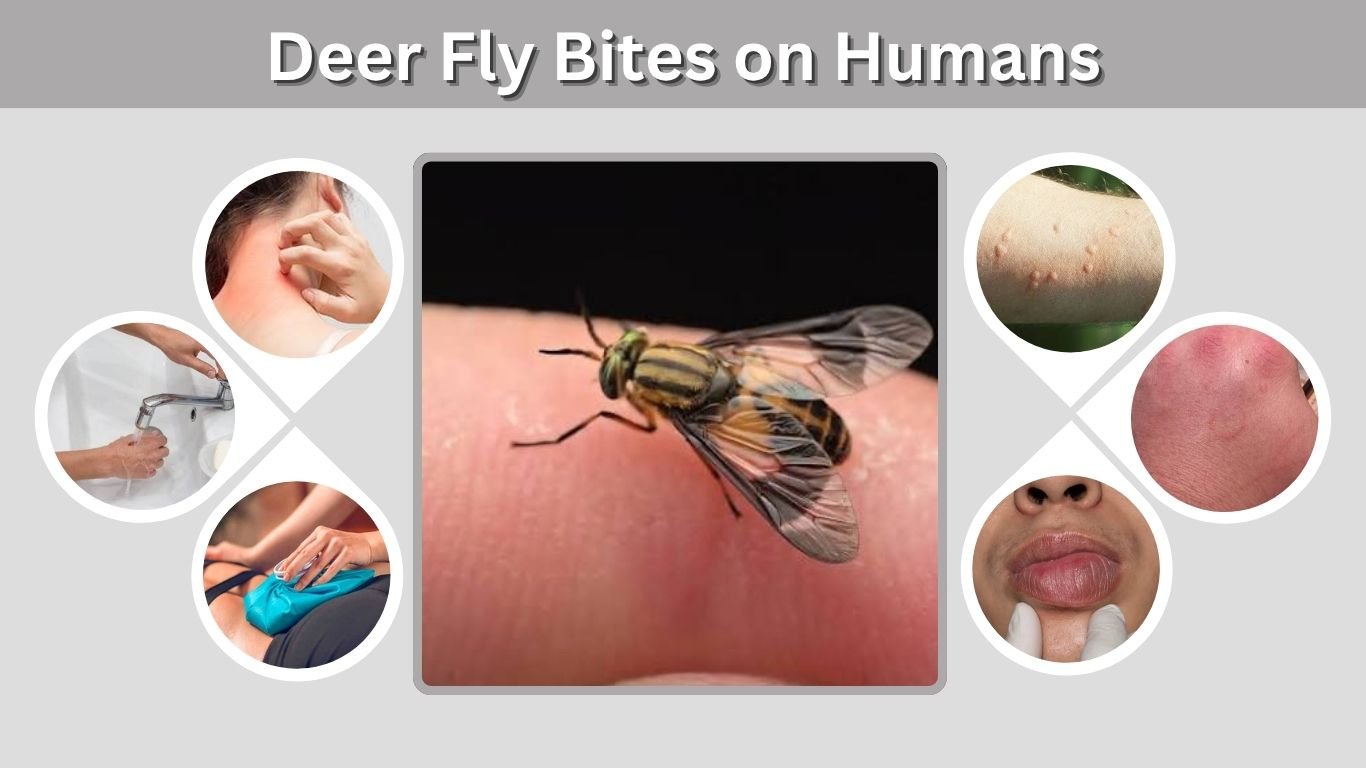
Deer fly bites on humans can be surprisingly painful. Unlike mosquitoes, deer flies are aggressive blood-feeding insects, and their bites often leave a swollen, red, itchy, or tender welt. Female deer flies feed on the blood of humans and other warm-blooded animals, and their bites can be painful because they damage the skin while feeding. Most bites improve with basic home care, but significant swelling, infection, an allergic reaction, or unusual illness after a bite may require medical attention. This guide explains what deer fly bites look like, how long they last, and how to treat them safely.
What Do Deer Fly Bites Look Like on Humans?
A deer fly bite often causes an immediate painful sensation rather than the subtle irritation associated with some other biting insects. Deer flies are large biting flies that commonly attack humans, livestock, and wildlife.
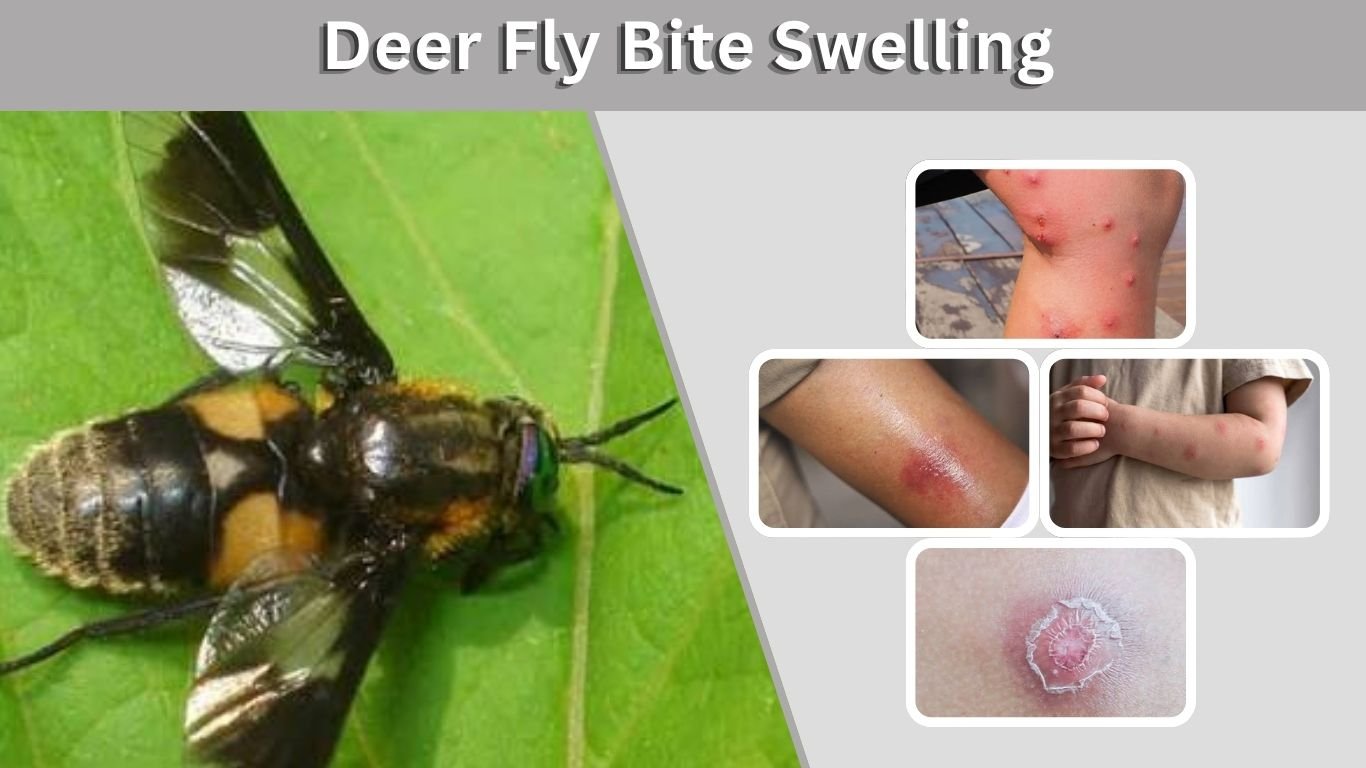
The exact appearance varies depending on the person’s skin, immune response, location of the bite, and how much the area has been scratched.
Common Signs of a Deer Fly Bite
A deer fly bite on human skin may show:
- A red or discolored swollen bump
- A small wound or spot in the center
- Localized bleeding immediately after the bite
- Itching
- Burning or stinging
- Tenderness
- Warmth around the bite
- A larger swollen welt in sensitive individuals
Redness can be less obvious on darker skin tones, so swelling, warmth, tenderness, or changes in skin texture may sometimes be easier to notice. Insect bites commonly produce pain and a swollen lump at the affected area.
Deer Fly Bite Pictures on Humans: What to Look For
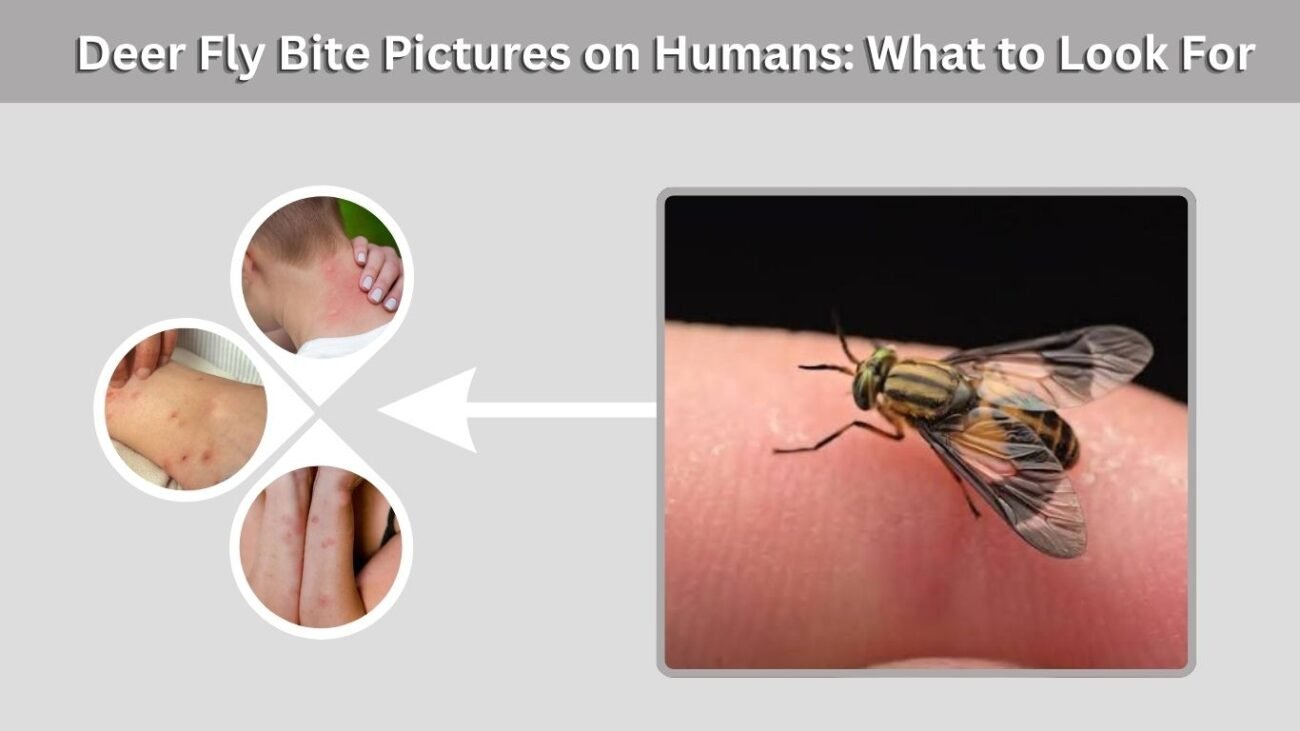
When looking at pictures of deer fly bites on humans, you will usually see a raised welt surrounded by an area of inflammation. Some bites have a visible central wound because deer flies damage the skin as they feed.
Bites can appear on exposed areas such as:
- Arms
- Legs
- Neck
- Shoulders
- Hands
- Face
A deer fly bite does not have one unique appearance that can reliably identify it from a photograph alone. Mosquitoes, horse flies, stable flies, black flies, and other insects can cause similar-looking skin reactions.
If you did not see the insect bite you, appearance alone may not be enough to determine what caused the wound.
Why Are Deer Fly Bites So Painful?
Deer flies are blood feeders rather than insects that simply land on the skin. Their feeding behavior damages the skin, which explains why people frequently notice the bite immediately.
This differs from the ordinary house fly, which cannot bite humans because it has sponging rather than blood-feeding mouthparts.
The damaged skin and the body’s inflammatory response can result in immediate pain followed by swelling and itching.
Symptoms of Deer Fly Bites on Humans
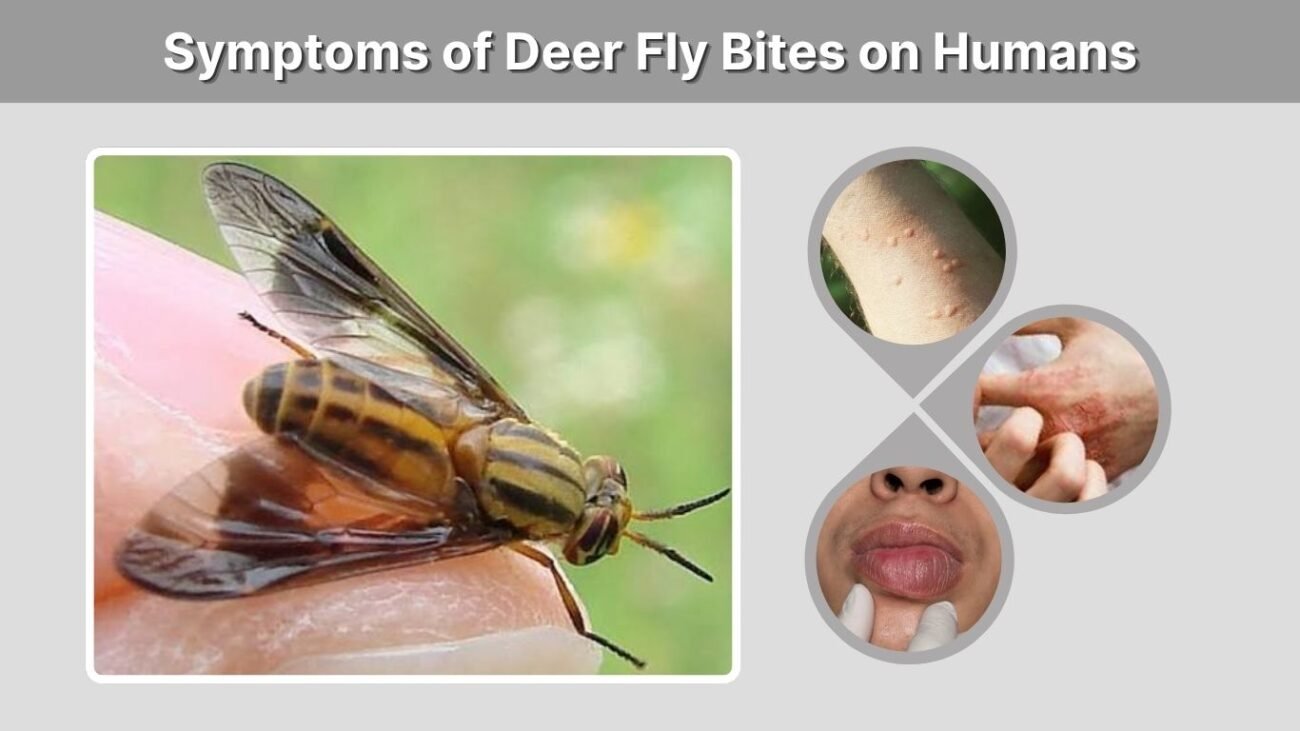
Most deer fly bites cause a localized reaction. The bite may initially hurt and then become increasingly itchy or swollen.
Normal Local Reaction
Typical symptoms include:
- Sharp pain during the bite
- Local redness or discoloration
- Mild to moderate swelling
- Itching
- Tenderness
- A small scab as the wound heals
These symptoms should gradually improve rather than continually worsening.
Large Local Reaction
Some people develop much more significant swelling around an insect bite. The affected area may become very itchy, warm, and noticeably enlarged.
Large swelling does not necessarily mean the bite is infected. However, worsening pain, expanding redness, or other new symptoms should be monitored carefully because insect bites can become secondarily infected, particularly after scratching damages the skin.
How to Treat Deer Fly Bites on Humans
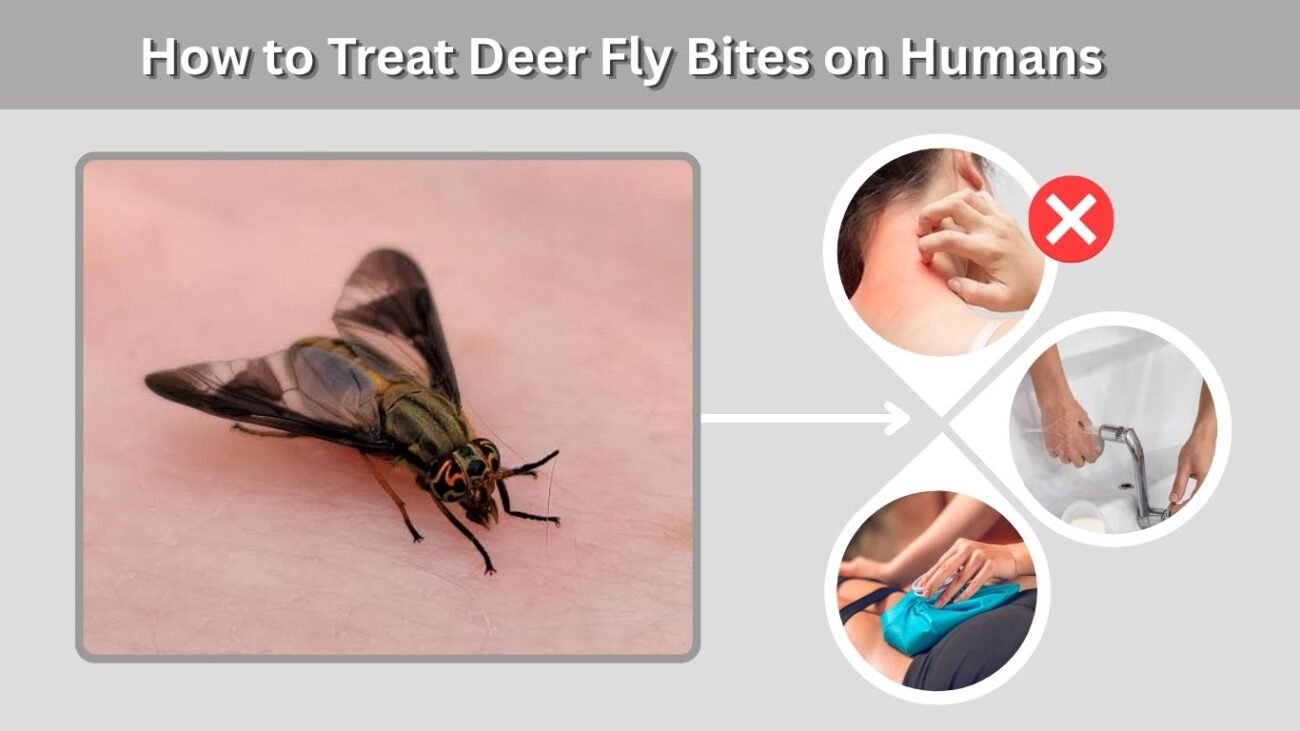
Most uncomplicated deer fly bites can be managed with basic first aid.
The priorities are cleaning the wound, controlling swelling and itching, preventing scratching, and monitoring the area for signs of infection or a serious reaction.
1. Wash the Bite
Wash the affected skin gently with soap and water.
Cleaning an insect bite helps remove contamination from the skin and can reduce the chance of bacteria entering damaged tissue.
Pat the area dry rather than rubbing it aggressively.
2. Apply a Cold Compress
Place a cold pack or ice wrapped in a clean cloth over the bite.
Cold treatment can reduce:
- Swelling
- Pain
- Burning
- Itching
Never place ice directly against the skin. MedlinePlus recommends using wrapped ice intermittently for insect bites and monitoring the area afterward.
3. Avoid Scratching
Although deer fly bites can become intensely itchy, scratching may break the skin and introduce bacteria.
Keep fingernails clean and avoid picking at any scab that forms.
4. Treat Itching
For troublesome itching, an over-the-counter antihistamine or anti-itch treatment may be appropriate for some people. Hydrocortisone and antihistamines are commonly used to relieve symptoms from uncomplicated insect bites.
Follow the product instructions and ask a pharmacist or healthcare professional about suitability for children, pregnancy, underlying medical conditions, or interactions with other medications.
5. Treat Pain
If the bite is painful, an appropriate nonprescription pain reliever may help when used according to its label and when medically suitable for the person taking it.
How Long Do Deer Fly Bites Last on Humans?
There is no exact healing time that applies to every deer fly bite.
For an uncomplicated bite, pain usually settles before the swelling and itching completely disappear. Mild skin reactions often improve over several days. Larger local reactions may remain noticeable longer.
Rather than focusing only on the number of days, pay attention to the direction in which symptoms are moving.
Improving: swelling, redness, itching, and pain gradually decrease.
Concerning: swelling continues spreading, pain becomes stronger, the skin becomes increasingly hot, or new symptoms appear.
Can a Deer Fly Bite Become Infected?
Yes. Because a bite damages the skin, bacteria can potentially enter the wound, particularly if the person repeatedly scratches it.
Possible signs of infection include:
- Increasing redness
- Increasing warmth
- Worsening pain
- Increasing swelling
- Pus or drainage
- Red streaking
- Fever
MedlinePlus recommends watching insect bites over the following days for increasing redness, swelling, or pain, which can signal infection.
Seek medical advice if these symptoms develop rather than continuing to treat the bite as simple irritation.
Allergic Reaction to Deer Fly Bites
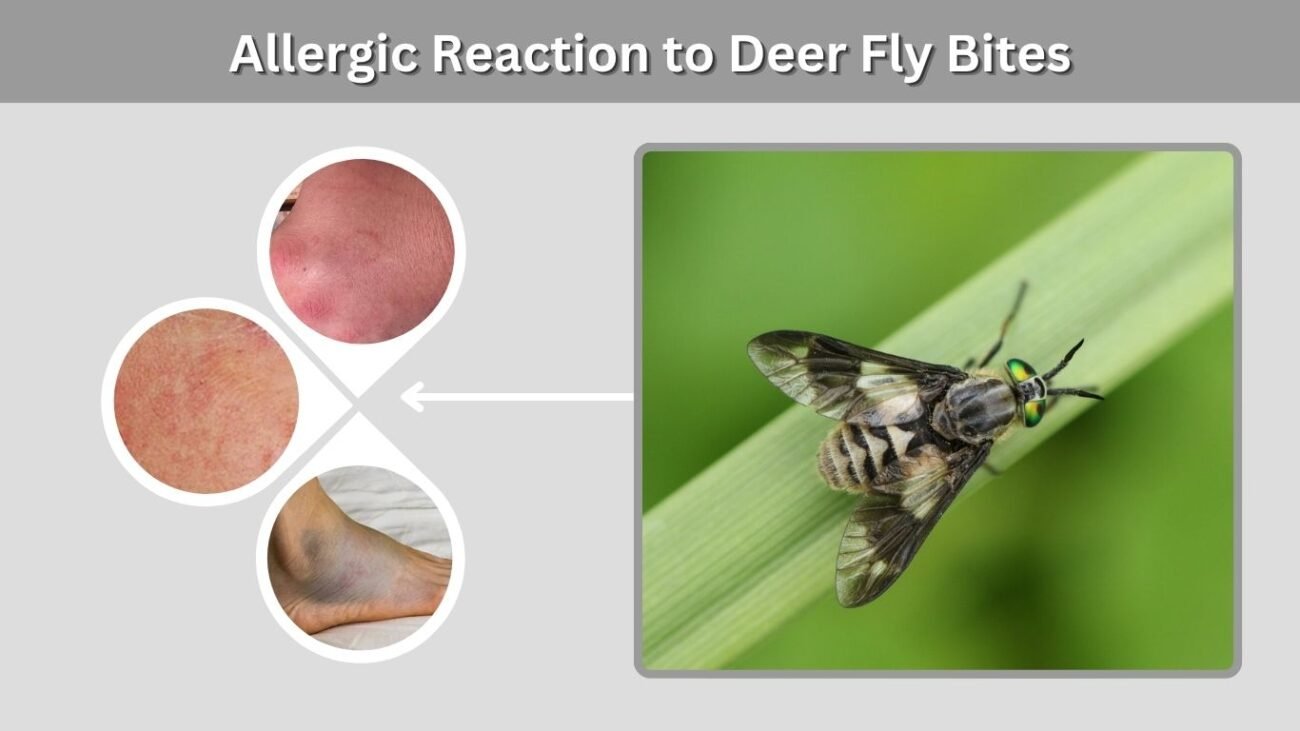
A more pronounced immune reaction may cause extensive swelling or hives.
Emergency symptoms after an insect bite can include difficulty breathing, swelling involving the face or throat, dizziness, or other rapidly developing systemic symptoms. Severe allergic reactions require emergency medical attention.
Call emergency medical services immediately if someone develops:
- Difficulty breathing
- Swelling of the tongue or throat
- Severe facial swelling
- Fainting
- Severe dizziness
- Rapidly spreading hives
- Rapid worsening of symptoms
If the person has a prescribed epinephrine auto-injector for severe allergy, it should be used according to their medical emergency plan.
Can Deer Fly Bites Transmit Disease?
Most deer fly bites simply cause localized skin symptoms. However, deer flies can transmit certain infections in particular geographic settings.
One example is tularemia, a relatively uncommon bacterial disease. The CDC recognizes deer fly bites as one possible route of tularemia transmission.
Tularemia associated with a deer fly or tick bite can cause an ulcer at the bite location along with swollen lymph nodes and systemic illness.
Contact a healthcare professional if you develop unexplained fever, a persistent ulcer, significantly swollen lymph nodes, or systemic illness after a deer fly bite. Mention the insect exposure to the clinician.
How to Prevent Deer Fly Bites
Preventing bites is especially useful for people who experience large reactions.
When deer flies are active:
- Wear long sleeves and long pants when practical.
- Use an appropriate insect repellent.
- Limit exposed skin.
- Be particularly aware around areas where deer flies are abundant.
- Follow repellent label instructions carefully.
The CDC recommends insect repellent as one strategy for preventing deer fly bites and reducing exposure to diseases such as tularemia.
FAQs
Are deer fly bites dangerous to humans?
Most deer fly bites cause temporary pain, itching, redness, and swelling rather than serious illness. However, complications can include infection, a severe allergic reaction, or, in certain regions, transmission of diseases such as tularemia. Seek medical attention for severe or unusual symptoms.
How do you treat deer fly bites on humans?
Wash the bite with soap and water, apply a wrapped cold pack to reduce swelling, and avoid scratching. An appropriate antihistamine or anti-itch treatment may help with itching, while a nonprescription pain reliever may help with discomfort when medically suitable.
How long do deer fly bites last on humans?
Mild bites generally improve over several days, although swelling or itching may persist longer when a person has a stronger local reaction. A bite that becomes progressively more painful, swollen, warm, or red rather than improving should be evaluated for possible infection.
Why does my deer fly bite have a large swollen area?
The body’s inflammatory response can cause substantial localized swelling after an insect bite. A large reaction is not automatically an infection. However, rapidly worsening swelling, increasing pain, drainage, fever, breathing difficulty, or facial and throat swelling requires medical evaluation.
When should I see a doctor for a deer fly bite?
Seek medical advice for increasing pain or swelling, pus, fever, a persistent ulcer, swollen lymph nodes, or symptoms that continue worsening. Difficulty breathing, throat or tongue swelling, fainting, or another severe allergic reaction requires immediate emergency medical care.