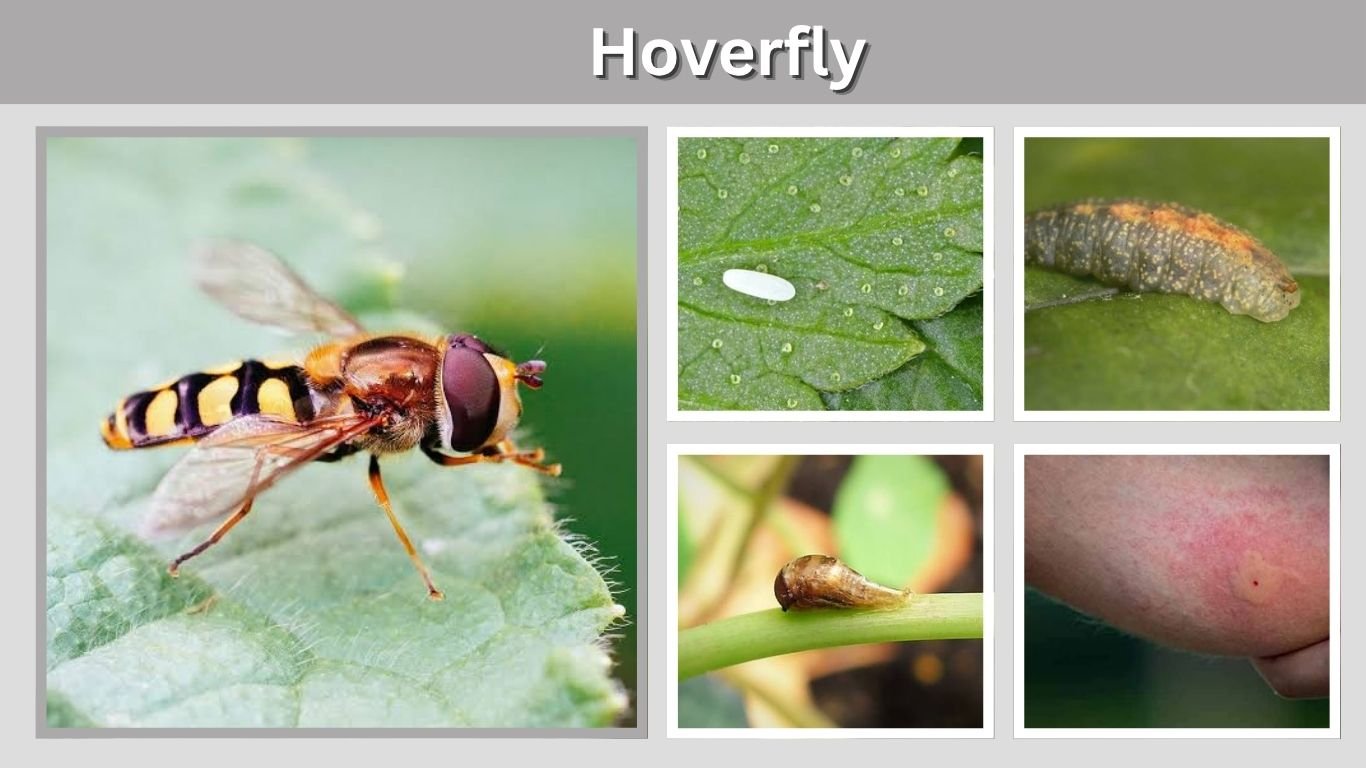
Hoverflies are common flying insects often mistaken for bees, yellow jackets, or wasps because many species have yellow-and-black markings. Despite their intimidating appearance, hoverflies are generally harmless to people and play an important role in gardens and natural ecosystems. Adults frequently visit flowers for nectar and pollen, while the larvae of many species feed on aphids and other small pests. Understanding hoverfly identification, behavior, diet, life cycle, and sting risk makes these beneficial insects much easier to recognize.
What Is a Hoverfly?
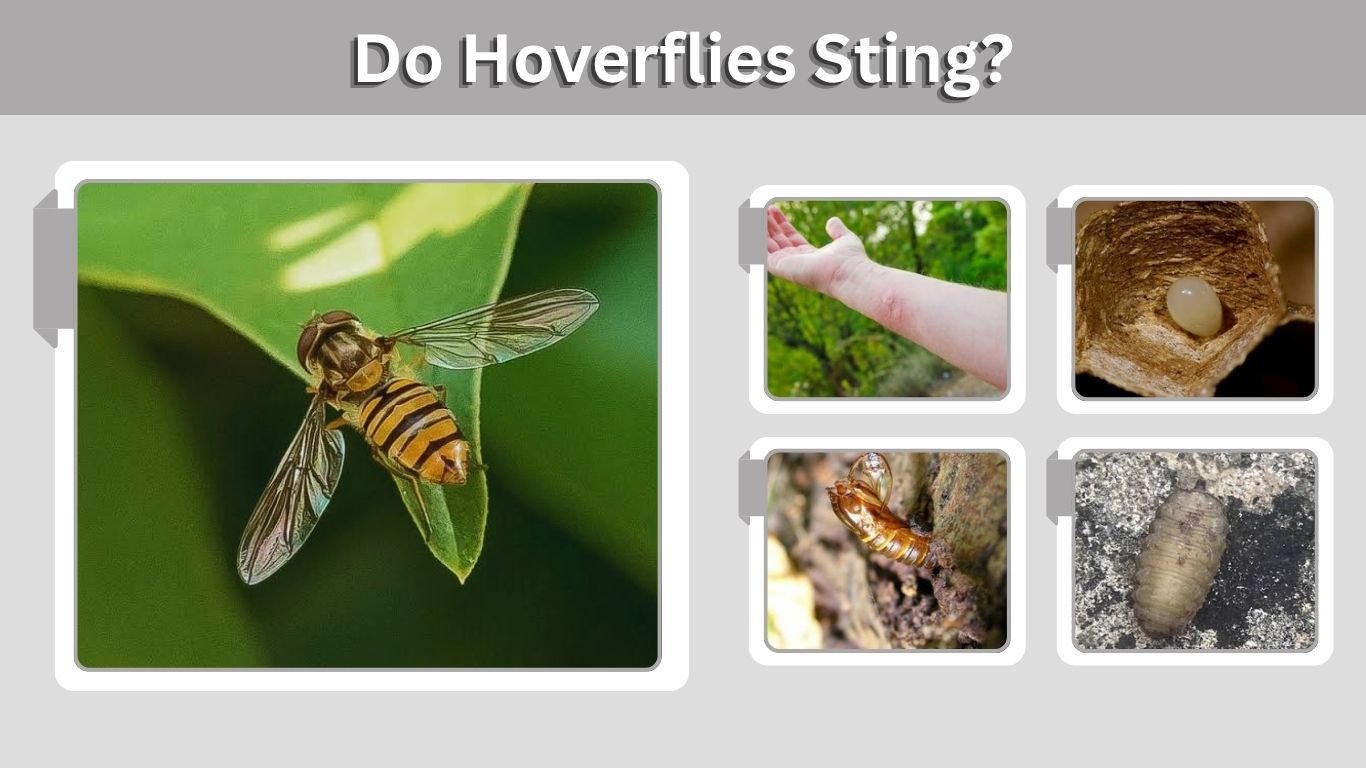
A hoverfly is a true fly belonging to the family Syrphidae, a large and diverse group found in many parts of the world. Their name comes from their remarkable ability to remain almost motionless in the air before quickly moving in another direction. Many species resemble bees or wasps, which can help discourage predators.
Hoverfly Identification
Common features that can help you identify a hoverfly include:
- One pair of wings: Hoverflies have two functional wings, while bees and wasps have four.
- Large eyes: Their prominent compound eyes often cover much of the head.
- Yellow or orange markings: Many species have bee-like bands or patches.
- Short antennae: Their antennae are generally shorter than those of bees.
- Hovering flight: They frequently stop and hover over flowers or vegetation.
- No narrow wasp waist: Their bodies usually lack the strongly pinched waist seen in many wasps.
Where Are Hoverflies Found?
Hoverflies can occur in gardens, meadows, forests, farms, wetlands, and urban landscapes. They are particularly noticeable around flowering plants where adults search for food. Different species prefer different environments, so hoverflies may appear anywhere from backyard gardens to woodland edges and areas surrounding ponds or streams.
Hoverfly Life Cycle
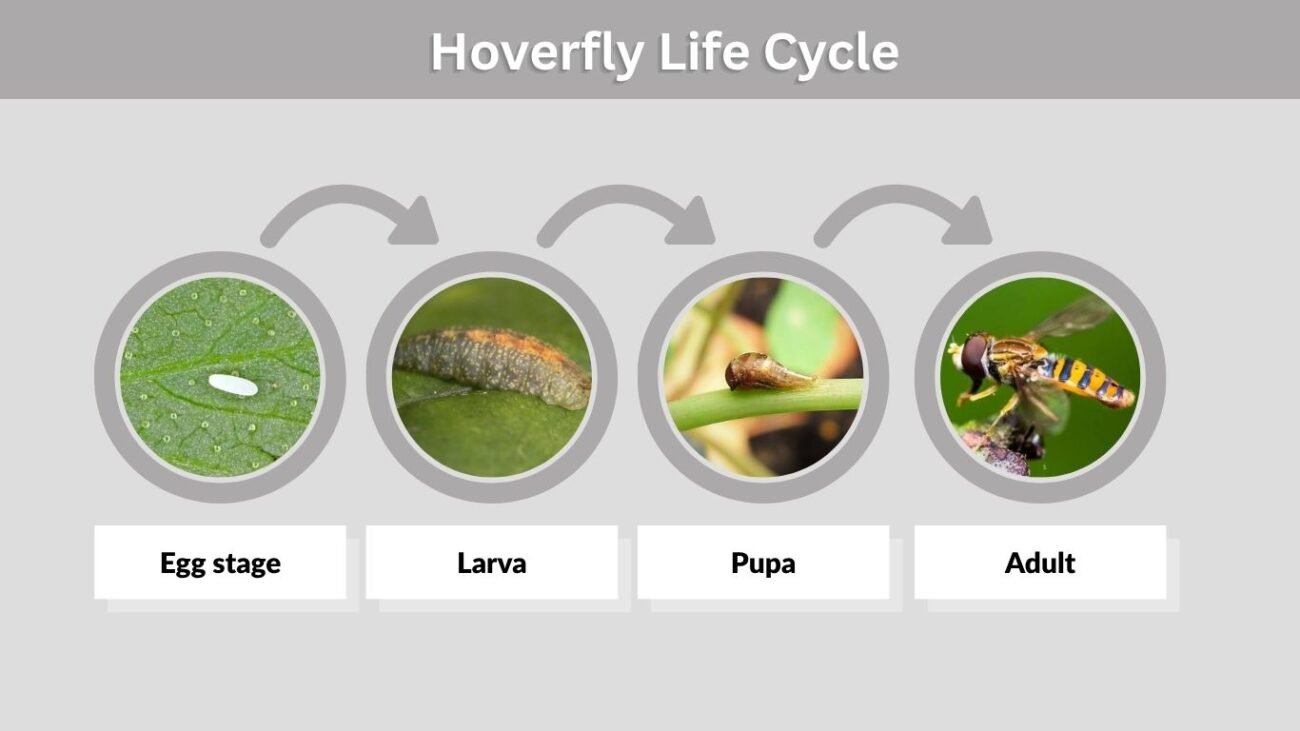
Hoverflies undergo complete metamorphosis, meaning their bodies change dramatically as they develop. The exact length of the life cycle depends on species, temperature, climate, and food availability. Females generally select egg-laying sites where their developing larvae will have access to suitable food, making the larval stage particularly important to their survival.
Four Stages of the Hoverfly Life Cycle
The main developmental stages are:
- Egg: Females place small eggs near appropriate larval food sources.
- Larva: The egg hatches into a soft-bodied, maggot-like larva.
- Pupa: After completing its growth, the larva enters the pupal stage.
- Adult: A fully developed hoverfly emerges and eventually begins feeding and reproducing.
What Do Hoverfly Larvae Look Like?
Hoverfly larvae vary considerably among species. Many are legless and resemble small maggots. Predatory species are often found on plant leaves where aphids are abundant. Other hoverfly larvae develop in decaying organic material, wet environments, tree cavities, or other specialized habitats.
What Do Hoverflies Eat?
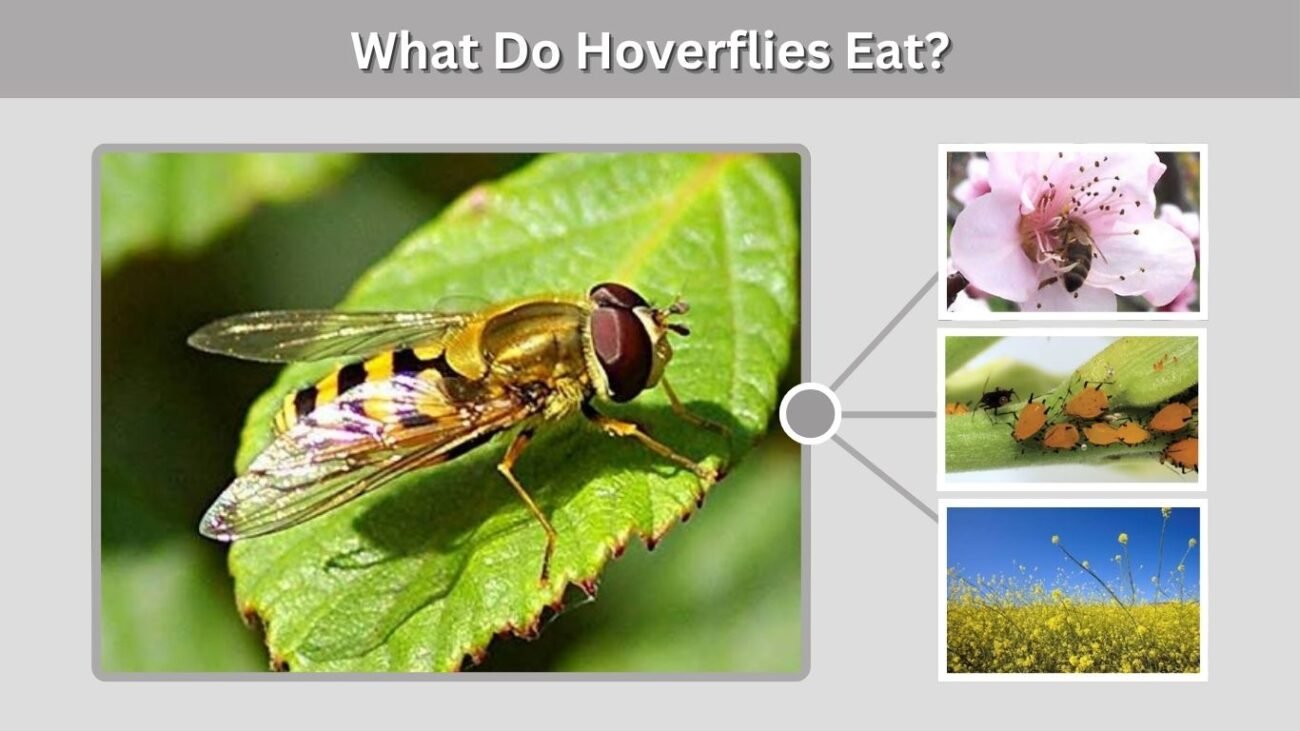
A hoverfly’s diet changes according to its species and developmental stage. Adults primarily obtain energy from flowers, while larvae have much more diverse feeding habits. Some larvae are valuable natural predators in gardens, whereas others consume decomposing organic matter. These different diets allow hoverflies to fill several useful ecological roles.
Common Hoverfly Foods
Adult hoverflies and their larvae may feed on:
- Flower nectar
- Pollen
- Aphids
- Other tiny soft-bodied insects
- Decaying plant material
- Microorganisms in wet organic matter
Nectar provides adult hoverflies with energy for flight, while pollen supplies nutrients. Predatory larvae can consume substantial numbers of aphids while developing.
Are Hoverflies Pollinators?
Yes. Adult hoverflies regularly move from flower to flower as they search for nectar and pollen. During these visits, pollen can stick to their bodies and be carried to other flowers. Although bees receive more attention as pollinators, hoverflies can also contribute significantly to pollination in gardens, farms, and wild plant communities.
Do Hoverflies Sting or Bite?
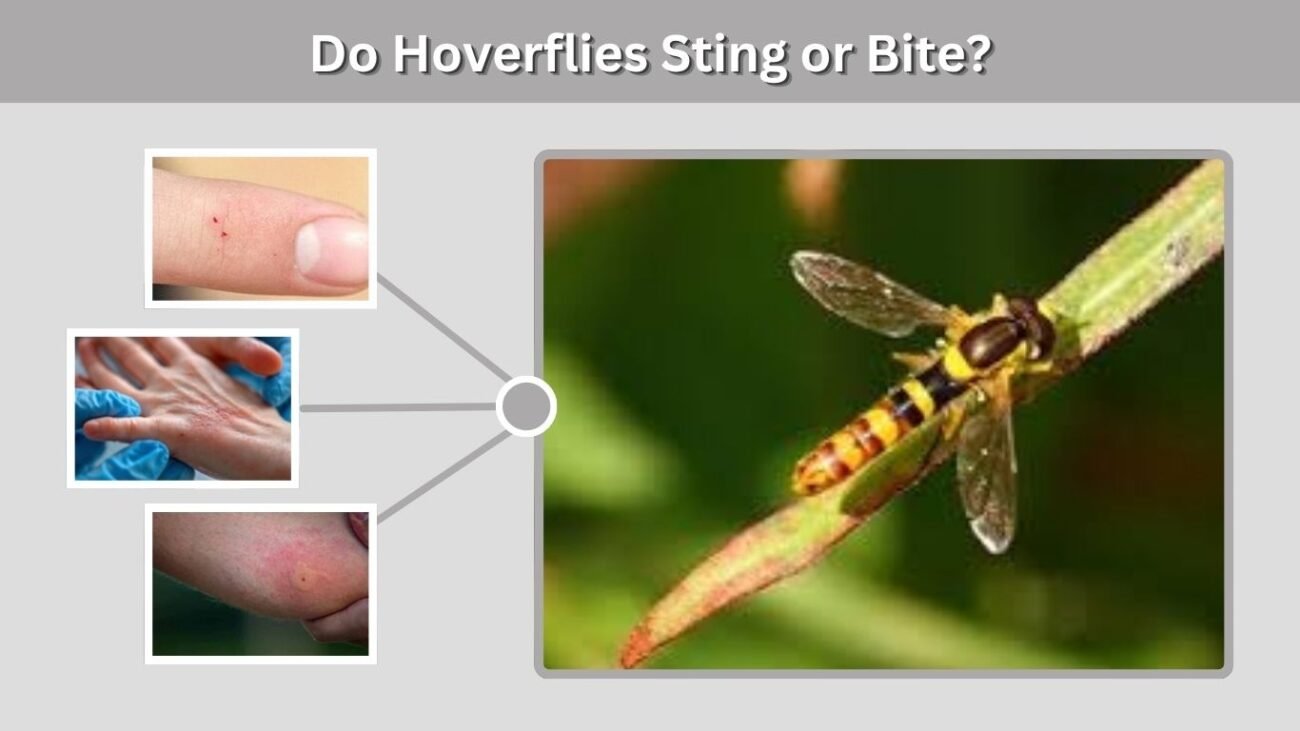
Hoverflies are frequently feared because their markings resemble those of stinging insects. This resemblance is a form of defensive mimicry rather than evidence that they are dangerous. A hoverfly may confidently approach flowers near people, but its physical appearance should not be confused with the defensive abilities of bees, hornets, or yellow jackets.
Do Hoverflies Sting?
Hoverflies do not have a stinger and cannot sting people. The yellow-and-black patterns of some species imitate insects that can defend themselves with stings. This resemblance may convince predators to avoid them even though the hoverflies themselves lack such weapons.
Do Hoverflies Bite Humans?
Hoverflies are not considered biting insects. They lack the mouthparts needed to deliver the type of painful bite associated with mosquitoes, horse flies, or some other flies. Adults are adapted mainly for feeding on nectar and pollen and normally have no reason to attack humans.
Are Hoverflies Dangerous?
For most people, hoverflies are harmless. They do not build aggressive colonies around nests like some social wasps, and they are not interested in defending territory against humans. Seeing several hoverflies around flowers usually indicates good feeding conditions rather than the presence of a dangerous insect infestation.
Hoverfly vs Bee, Sweat Bee, Wasp, and Yellow Jacket
Hoverflies can imitate several stinging insects surprisingly well. Sweat bees, honey bees, wasps, and yellow jackets may all share yellow, brown, orange, or black coloration with particular hoverfly species. Looking beyond color and examining wings, antennae, body shape, and flight behavior provides a more reliable way to tell them apart.
Key Differences
Look for these characteristics:
- Hoverfly vs bee: Hoverflies have one pair of wings; bees have two pairs.
- Hoverfly vs sweat bee: Sweat bees have longer antennae and a more typical bee body.
- Hoverfly vs wasp: Wasps often have a narrow waist and longer antennae.
- Hoverfly vs yellow jacket: Yellow jackets are social wasps capable of stinging, while hoverflies cannot sting.
- Flight: Hoverflies can remain almost stationary in midair before suddenly darting away.
Why Do Hoverflies Look Like Bees and Wasps?
Their bee-like appearance can discourage predators. Birds and other animals that have learned to avoid stinging insects may also avoid harmless insects with similar colors and patterns. This type of mimicry gives hoverflies protection without requiring them to possess a venomous sting.
How to Get Rid of Hoverflies
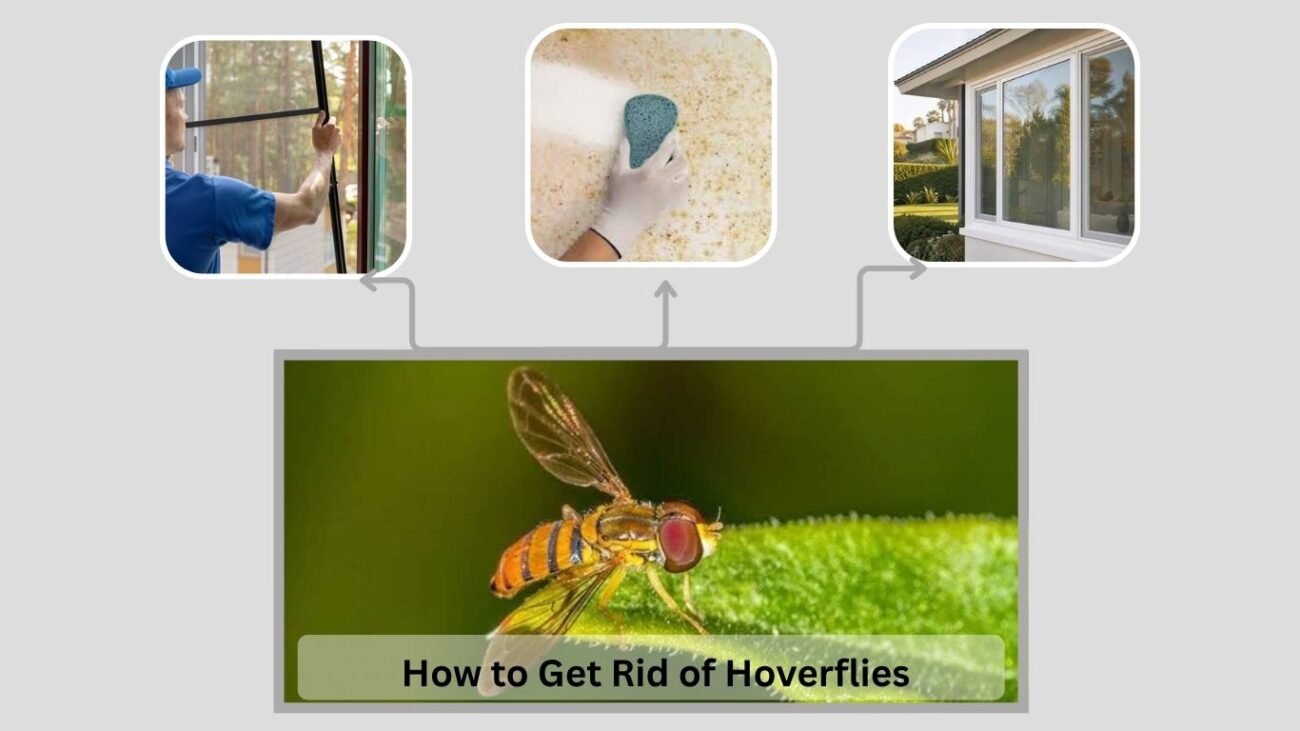
Hoverflies rarely need to be eliminated because they are beneficial and harmless. Large numbers may temporarily gather where flowers, aphids, moisture, or suitable breeding material are plentiful. Instead of using insecticides, reducing whatever is attracting them is usually enough. Garden hoverflies should generally be left alone because their pollination and pest-control benefits can outweigh minor inconvenience.
Ways to Reduce Hoverflies Around the Home
If hoverflies become troublesome:
- Keep doors and window screens in good condition.
- Remove decaying organic material near entrances.
- Clean damp areas where some species may develop.
- Avoid leaving sugary food or drinks uncovered outdoors.
- Move heavily flowering container plants away from frequently used doors.
- Use gentle airflow from a fan around patios or seating areas.
- Avoid unnecessary insecticide treatments that could kill pollinators.
Hoverflies usually disappear when the temporary food or breeding source is removed.
FAQs
1. What is a hoverfly?
A hoverfly is a true fly belonging to the family Syrphidae. Many species resemble bees or wasps but have only one pair of functional wings. Adults commonly visit flowers and are known for their ability to hover almost motionless in midair.
2. Can a hoverfly sting you?
No. Hoverflies do not possess stingers and cannot sting humans. Their yellow-and-black coloring can make them look dangerous, but this appearance mainly serves as protection by imitating bees and wasps that predators may already know to avoid.
3. Do hoverflies bite?
Hoverflies are not considered biting insects. Adult mouthparts are primarily suited to feeding on nectar and pollen. They do not feed on human blood and normally show no aggressive behavior toward people, even when they fly closely around gardens or outdoor seating areas.
4. What do hoverfly larvae eat?
Diet depends on the species. Many hoverfly larvae prey on aphids and other tiny soft-bodied insects, making them useful biological pest controllers. Other species develop in decaying vegetation, wet organic material, or specialized habitats where they consume microorganisms and decomposing matter.
5. Are hoverflies good for the garden?
Yes. Adult hoverflies help pollinate flowers while the larvae of many species consume aphids and other plant pests. Their combination of pollination and natural pest control makes hoverflies valuable garden insects, so they generally should not be killed or removed unnecessarily.