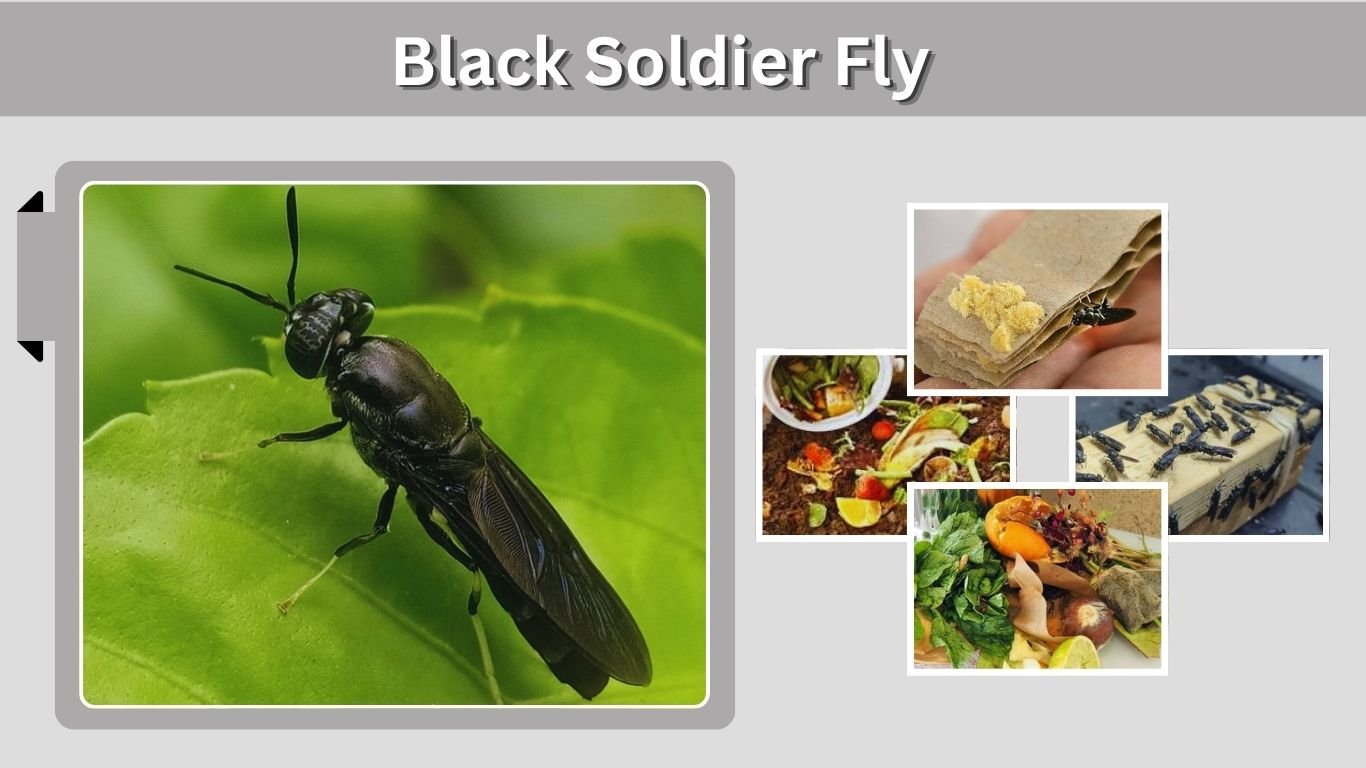
The black soldier fly (Hermetia illucens) is a beneficial insect best known for its larvae, which rapidly consume food scraps and other decomposing organic materials. Black soldier fly larvae are widely used for composting, waste management, poultry feed, reptile food, and commercial insect farming. Unlike common houseflies, adult black soldier flies are not considered significant household pests and do not normally bite or sting people. From their unusual life cycle to their value as animal feed, these insects have become increasingly important in sustainable agriculture and organic waste recycling.
What Is a Black Soldier Fly?
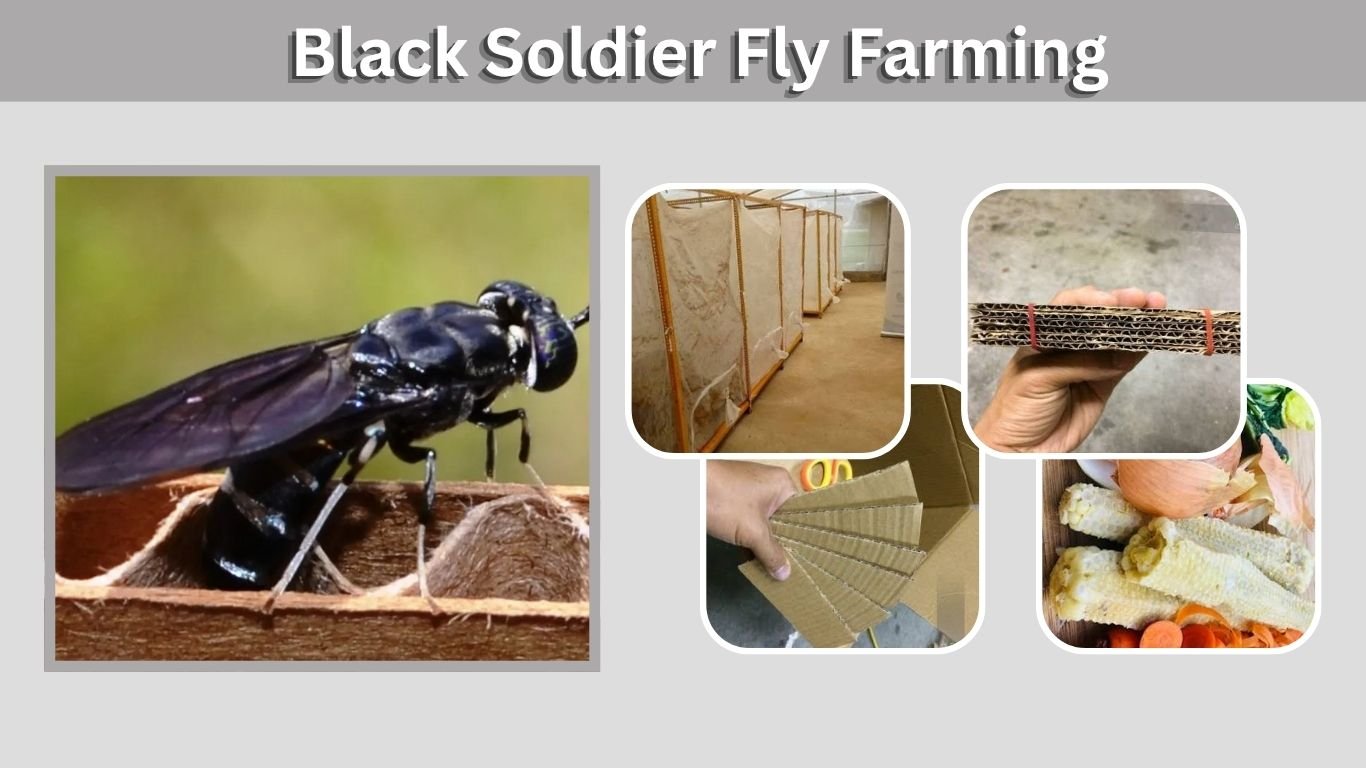
The black soldier fly is a dark-colored fly belonging to the family Stratiomyidae. Adults have elongated bodies, long legs, smoky wings, and pale translucent areas near the abdomen that can make them resemble small wasps.
Their scientific name is Hermetia illucens. The species occurs widely in warm and temperate regions and is particularly successful around locations containing decomposing organic material.
Black Soldier Fly Classification
- Scientific name: Hermetia illucens
- Kingdom: Animalia
- Phylum: Arthropoda
- Class: Insecta
- Order: Diptera
- Family: Stratiomyidae
- Genus: Hermetia
- Species: H. illucens
- Adult size: Roughly 15–20 mm
- Larval food: Decomposing organic matter
- Human threat: Generally harmless
Adult black soldier flies primarily focus on reproduction and are far less interested in human food than common houseflies.
Black Soldier Fly Larvae
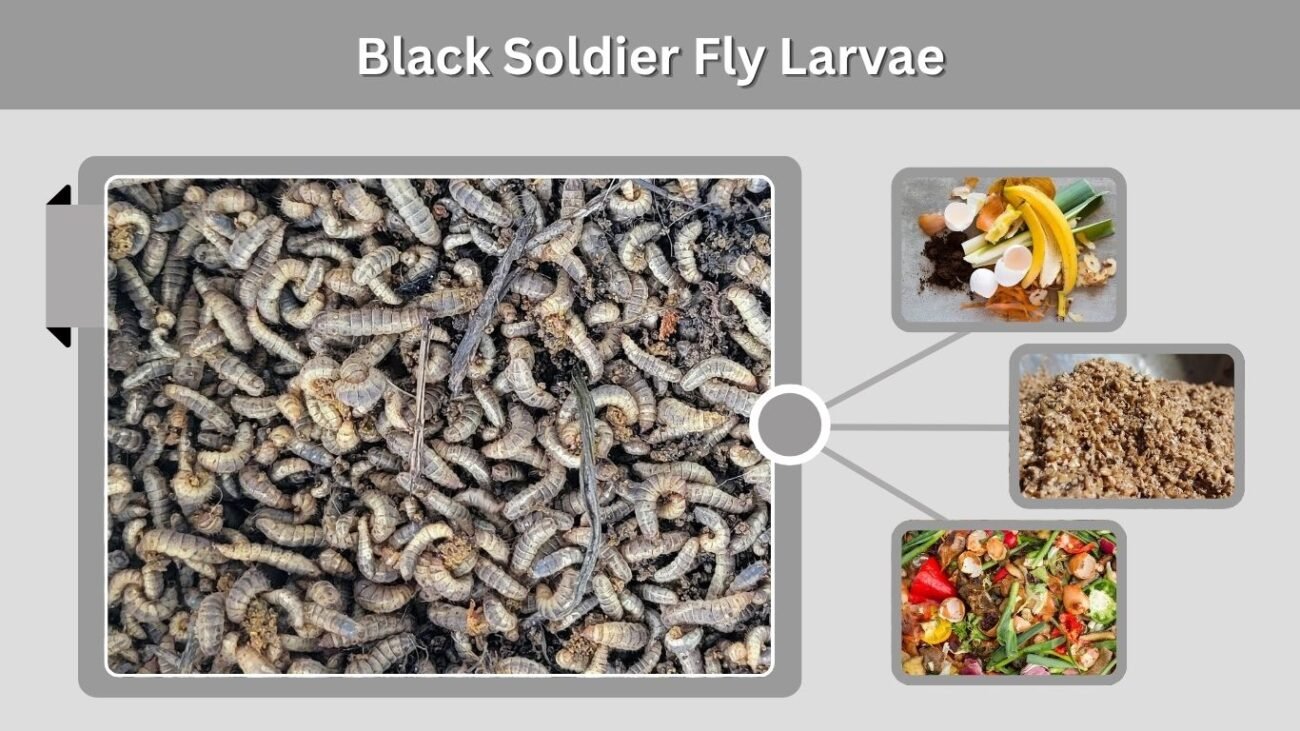
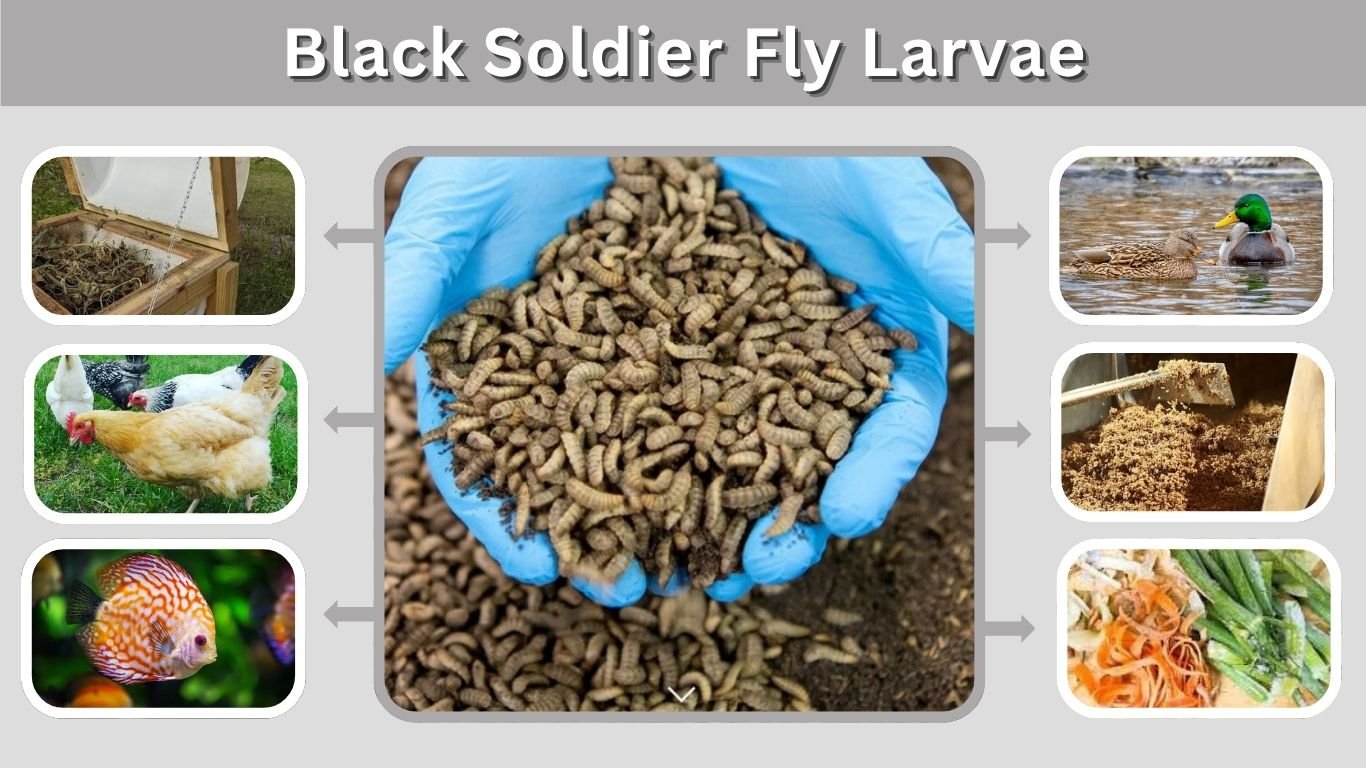
Black soldier fly larvae, commonly abbreviated as BSFL, are the most useful stage of the insect’s life cycle. They are cream-colored when young and gradually become darker as they mature. Their segmented bodies resemble thick maggots, which is why they are sometimes called black soldier fly maggots or grubs.
The larvae are extremely active feeders and can process many forms of organic waste.
What Do Black Soldier Fly Larvae Eat?
Common foods include:
- Fruit scraps
- Vegetable waste
- Leftover grains
- Food-processing waste
- Animal manure
- Some agricultural by-products
- Decaying plant material
- Certain household food scraps
The exact feed used in a black soldier fly farm affects larval growth and nutritional quality.
Black Soldier Fly Life Cycle
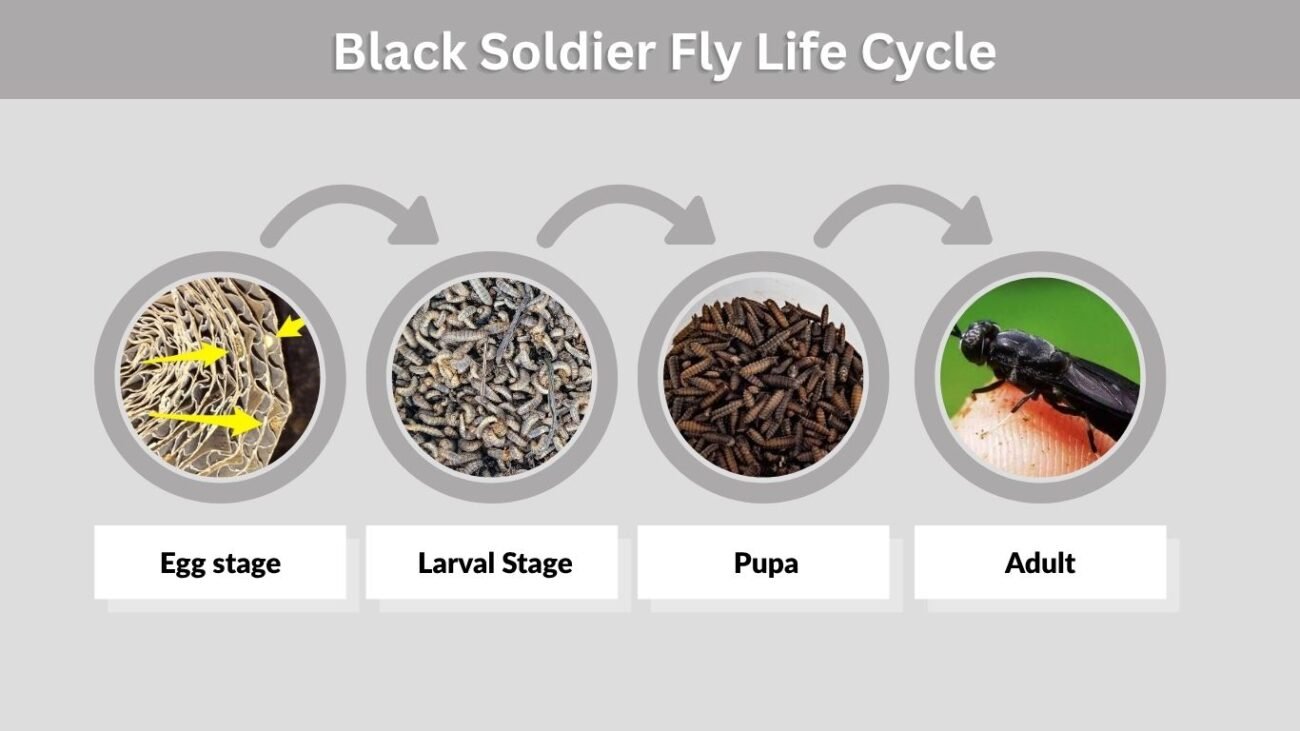
The black soldier fly life cycle includes four major stages: egg, larva, pupa, and adult. Unlike stink bugs or leaf-footed bugs, which develop through incomplete metamorphosis, black soldier flies undergo complete metamorphosis.
Environmental temperature, moisture, nutrition, and other conditions influence how quickly development occurs.
1. Black Soldier Fly Eggs
Adult females lay clusters of small eggs near suitable decomposing material rather than directly in wet food.
The eggs hatch into tiny larvae that immediately begin searching for food.
2. Larval Stage
This is the main feeding stage. Larvae consume large quantities of organic material and grow rapidly through several developmental stages.
3. Black Soldier Fly Pupa
Before becoming adults, mature larvae stop feeding and seek a dry, protected place. Their bodies darken significantly during the prepupal and pupal stages.
4. Adult Fly
The adult emerges from the pupa, mates, and continues the reproductive cycle.
Adult black soldier flies live relatively short lives compared with the extended feeding period of their larvae.
Black Soldier Fly Composting
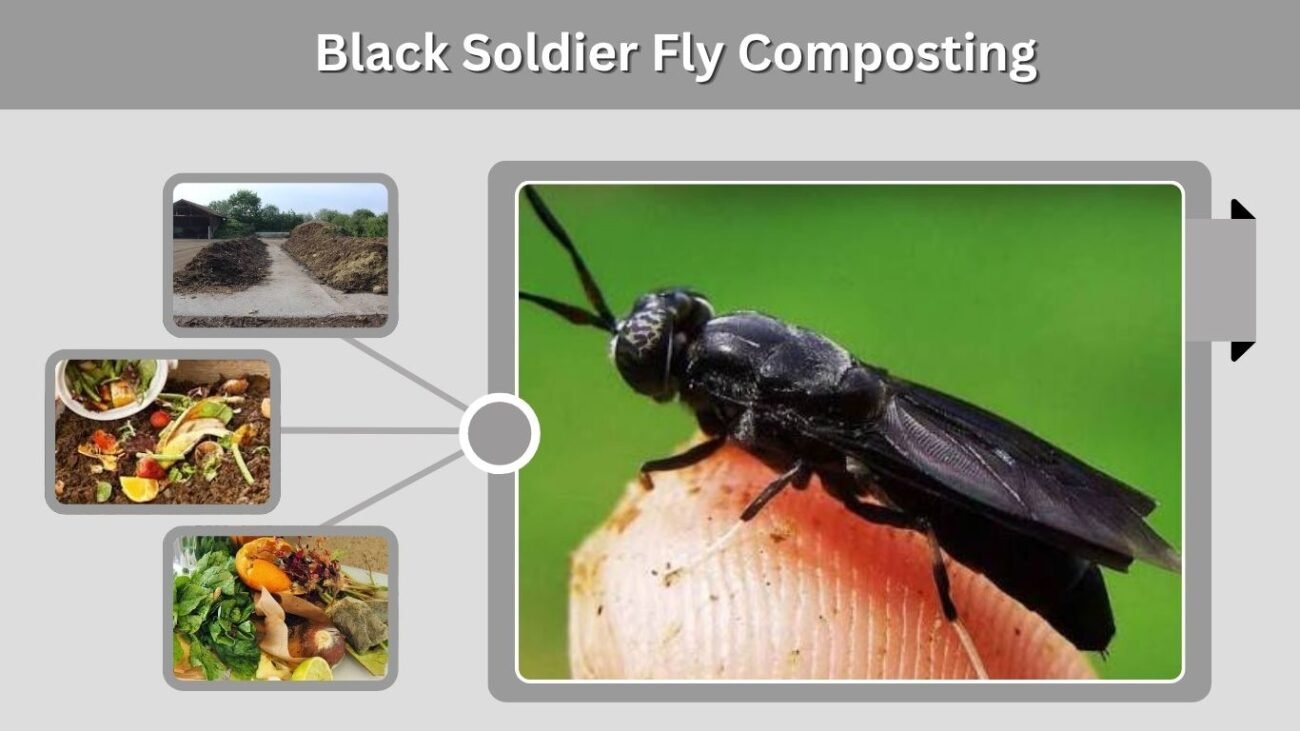
One of the most popular uses of black soldier fly larvae is composting organic waste. Unlike traditional composting, where microorganisms perform most decomposition, a black soldier fly compost system uses thousands of hungry larvae to physically consume organic materials.
Their feeding can dramatically reduce the volume of suitable food waste.
Benefits of Black Soldier Fly Composting
- Reduces organic waste
- Converts scraps into insect biomass
- Produces residue that can be further composted
- Works quickly under suitable conditions
- Can help process food scraps
- Produces larvae useful as animal feed
- Supports recycling of nutrients
The remaining material, often called frass or residue, generally benefits from proper handling or further composting before garden use.
Black Soldier Fly Compost Bin
A black soldier fly bin provides a controlled environment where larvae can feed while excess moisture drains away.
Good bin design is important because overly wet, dry, hot, or poorly ventilated conditions can reduce larval performance.
What a Black Soldier Fly Bin Needs
A practical setup should provide:
- Adequate ventilation
- Drainage
- Protection from heavy rain
- Organic food
- Moderate moisture
- Shade from extreme heat
- A dry area for mature larvae
- Protection from rodents and other pests
Some bins include ramps that allow mature prepupae to crawl out naturally into a collection container.
Black Soldier Fly Farming
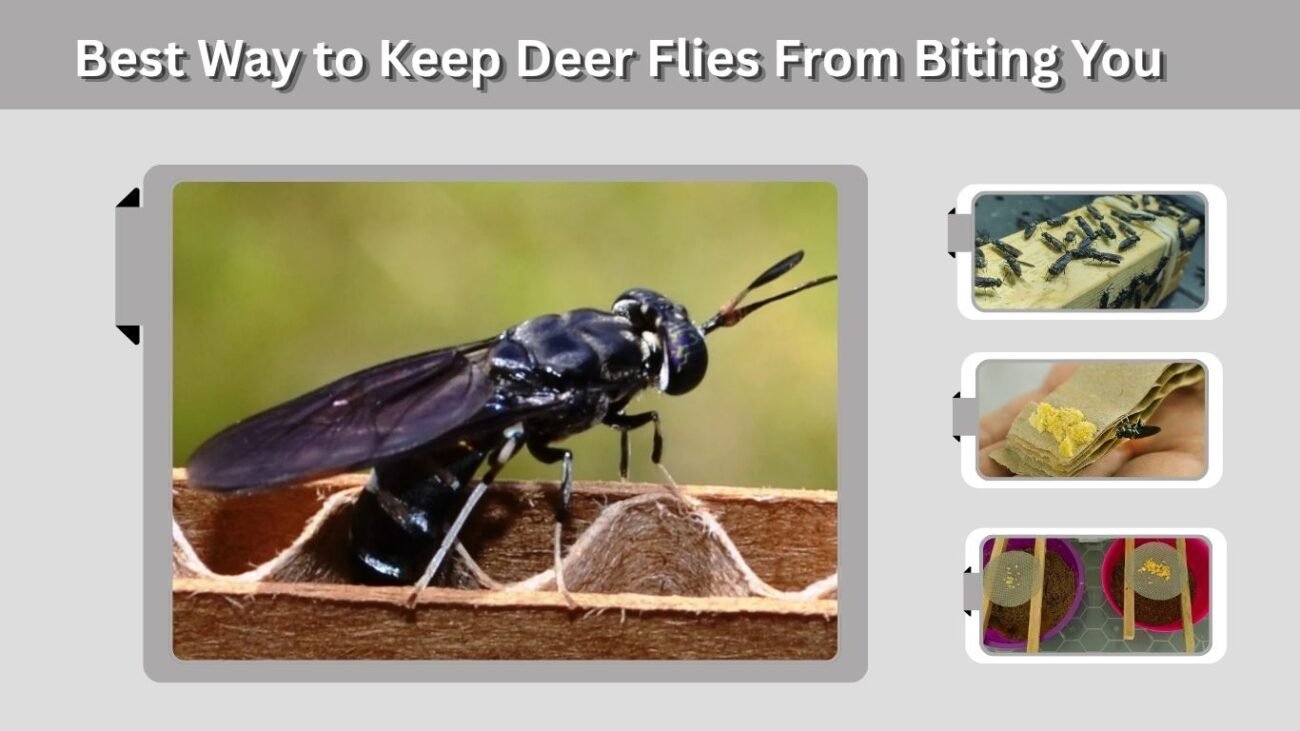
Black soldier fly farming involves raising BSFL in controlled conditions to produce animal feed, process organic waste, or both.
Small farms may operate from simple bins, while commercial facilities use specialized breeding rooms, trays, climate controls, harvesting equipment, and automated feeding systems.
Basic Farming Process
- Maintain a breeding population of adult flies.
- Provide suitable locations for females to lay eggs.
- Collect or hatch the eggs.
- Place young larvae on suitable feed.
- Maintain appropriate moisture and temperature.
- Harvest mature larvae.
- Allow some larvae to pupate and become breeding adults.
Successful production depends heavily on maintaining a reliable breeding cycle rather than harvesting every larva.
Black Soldier Fly Larvae for Chickens
Black soldier fly larvae for chickens have become popular because chickens naturally enjoy eating insects.
BSFL provide protein and fat and can also contain useful minerals. They are available commercially as live or dried larvae.
Benefits for Chickens
Black soldier fly larvae can:
- Encourage natural foraging
- Provide supplemental protein
- Add variety to the diet
- Be offered live or dried
- Serve as a useful treat or feed ingredient
However, they should be incorporated into a nutritionally balanced feeding program rather than automatically replacing a complete poultry diet.
Black Soldier Fly Larvae for Reptiles
BSFL are also widely used as feeder insects for reptiles. Bearded dragons, leopard geckos, and some other insect-eating reptiles may accept them readily.
A notable characteristic of black soldier fly larvae is their naturally favorable calcium content compared with many conventional feeder insects.
Black Soldier Fly Larvae for Bearded Dragons
BSFL can be offered to many bearded dragons as part of a varied diet.
Appropriate feeding depends on the dragon’s age, size, overall diet, and veterinary guidance. Larvae should be appropriately sized so the reptile can consume them safely.
Black Soldier Fly Larvae for Leopard Geckos
Leopard geckos may also eat black soldier fly larvae. They can be rotated with other suitable feeder insects to provide dietary variety.
Live larvae may encourage natural hunting behavior.
Live vs Dried Black Soldier Fly Larvae
Both live black soldier fly larvae and dried larvae are commonly used for animal feeding.
Live larvae retain moisture and move actively, making them attractive to animals such as chickens and reptiles.
Dried larvae are easier to store and transport and generally last much longer when kept properly.
Main Differences
Live larvae:
- Contain substantial moisture
- Encourage natural hunting behavior
- Require appropriate storage
- Have a shorter usable life
Dried larvae:
- Convenient to store
- Easy to measure and feed
- Have much lower moisture
- Commonly used as poultry treats
The better option depends on the animal and how the larvae will be used.
Do Black Soldier Flies Bite or Sting?
A black soldier fly bite is not a normal concern. Adult black soldier flies do not have the type of mouthparts used by biting flies such as horseflies or mosquitoes.
They also do not possess a stinger.
Despite their wasp-like appearance, black soldier flies are generally harmless around humans.
Why Do They Look Dangerous?
Their dark bodies, long legs, narrow waists, and smoky wings can make them resemble wasps at first glance.
However, they do not defend themselves with a sting.
Adult black soldier flies usually spend their limited adult period seeking mates and suitable places to reproduce.
Black Soldier Fly Larvae in the House
Finding black soldier fly larvae in a house usually indicates that decomposing organic material is available somewhere nearby.
Possible sources include:
- Garbage
- Rotting food
- Compost
- Pet waste
- Organic debris
- Forgotten food containers
The larvae themselves are not generally dangerous, but their presence indoors should prompt you to locate and remove the organic material supporting them.
Cleaning the source and preventing access usually solves the problem.
Black Soldier Fly Disadvantages
Black soldier flies provide many benefits, but raising them also presents challenges.
A poorly managed system can develop excessive moisture, unpleasant odors, pest problems, or escaped larvae.
Potential Disadvantages
- Requires temperature management
- Needs proper moisture control
- Poor feed can create odors
- Other flies may invade badly maintained bins
- Commercial farming requires reliable breeding
- Feed quality affects larval quality
- Large operations need specialized equipment
- Larvae may escape poorly designed containers
Good management is therefore essential for successful farming or composting.
Interesting Black Soldier Fly Facts
Black soldier fly larvae can turn materials considered waste into valuable insect biomass. Mature larvae naturally crawl away from their feeding area before pupating, which makes self-harvesting systems possible. Adults look somewhat like wasps but do not sting. Their larvae are used in poultry, fish, reptile, and other animal-feed applications, while commercial farms increasingly investigate BSFL as part of sustainable waste-management and protein-production systems.
FAQs
What Is a Black Soldier Fly?
A black soldier fly is a fly species called Hermetia illucens. Its larvae feed heavily on decomposing organic material and are widely used for composting and animal feed.
Are Black Soldier Fly Larvae Good for Chickens?
Black soldier fly larvae can be a nutritious supplemental food for chickens and are commonly offered live or dried. They should still be used as part of an appropriately balanced poultry diet.
Do Black Soldier Flies Bite or Sting Humans?
No. Adult black soldier flies do not normally bite humans and do not have a stinger. They are generally considered harmless.
Why Are Black Soldier Fly Larvae in My Compost?
Compost provides warmth, moisture, and decomposing organic food, making it an excellent habitat for BSFL. Their presence can help break down suitable food waste quickly.
What Are Black Soldier Fly Larvae Used For?
They are commonly used for organic waste processing, composting, poultry feed, reptile food, fish feed, farming, and other animal-feed applications.