The American Tree Sparrow (Spizelloides arborea) is a small yet resilient bird that thrives in the cold northern regions of North America. Despite its name, this sparrow doesn’t actually nest in trees but prefers tundra grasslands and open shrubby areas. Known for its soft, musical song and distinctive chest spot, the American Tree Sparrow is a familiar winter visitor across much of the United States. Often confused with the Chipping Sparrow or Song Sparrow, it is a fascinating species that perfectly embodies endurance and adaptability in harsh climates.
Identification and Physical Description
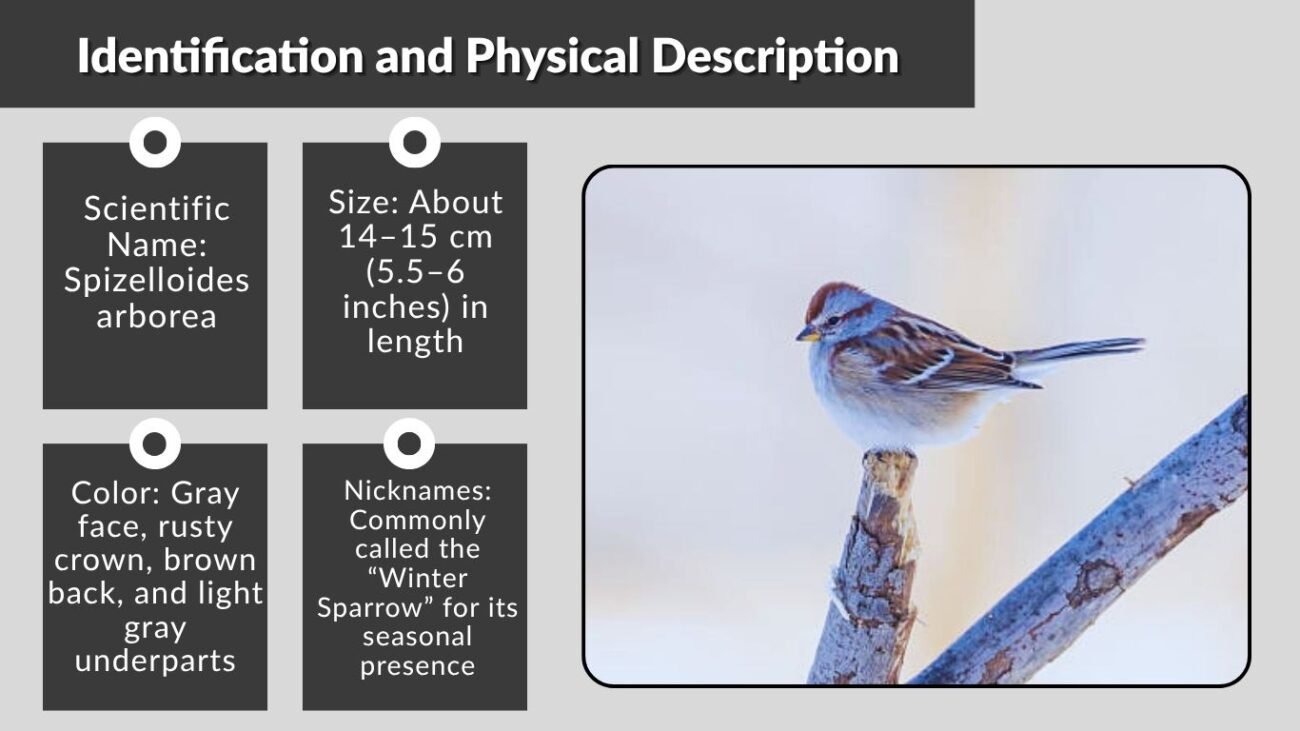
- Scientific Name: Spizelloides arborea
- Family: Passerellidae (New World Sparrows)
- Size: About 14–15 cm (5.5–6 inches) in length
- Weight: Roughly 18–22 grams
- Shape: Small, plump body with a rounded head and long tail
- Color: Gray face, rusty crown, brown back, and light gray underparts
- Markings: Distinct dark central breast spot and two white wing bars
- Bill: Bicolored — dark upper mandible, yellow lower mandible
- Eyes: Dark brown, giving an alert, gentle expression
- Legs and Feet: Pale pinkish-brown
- Male vs Female: Males slightly brighter; females paler but similar markings
- Flight: Short, quick, undulating pattern close to the ground
- Nicknames: Commonly called the “Winter Sparrow” for its seasonal presence
Comparison with Other Sparrows
| Feature | American Tree Sparrow | Chipping Sparrow | House Sparrow | Song Sparrow | Field Sparrow |
| Scientific Name | Spizelloides arborea | Spizella passerina | Passer domesticus | Melospiza melodia | Spizella pusilla |
| Size | 14–15 cm | 13–14 cm | 16 cm | 14–17 cm | 12–13 cm |
| Crown Color | Rusty-brown | Chestnut-red | Gray (males) | Brown streaked | Rusty-red |
| Face Pattern | Gray face with rusty eye line | Gray face, black eye line | Gray cheek patch, black bib (male) | Heavily streaked | Plain gray face |
| Breast | Gray with dark central spot | Clean gray, no spot | Pale gray, no spot | Heavily streaked breast | Plain, no spot |
| Bill | Bicolored – dark above, yellow below | Entirely dark | Thick, yellowish | Dark brown | Pink |
| Upperparts | Brown with fine streaks | Warm brown | Gray and brown, bold contrast | Heavily streaked | Warm brown |
| Season | Winter visitor (Oct–Apr) | Summer breeder | Year-round | Year-round | Summer breeder |
| Nesting | On ground or low shrubs | In trees or shrubs | Buildings, holes | Ground or low shrubs | Low shrubs |
Habitat and Geographic Range
Habitat Preferences
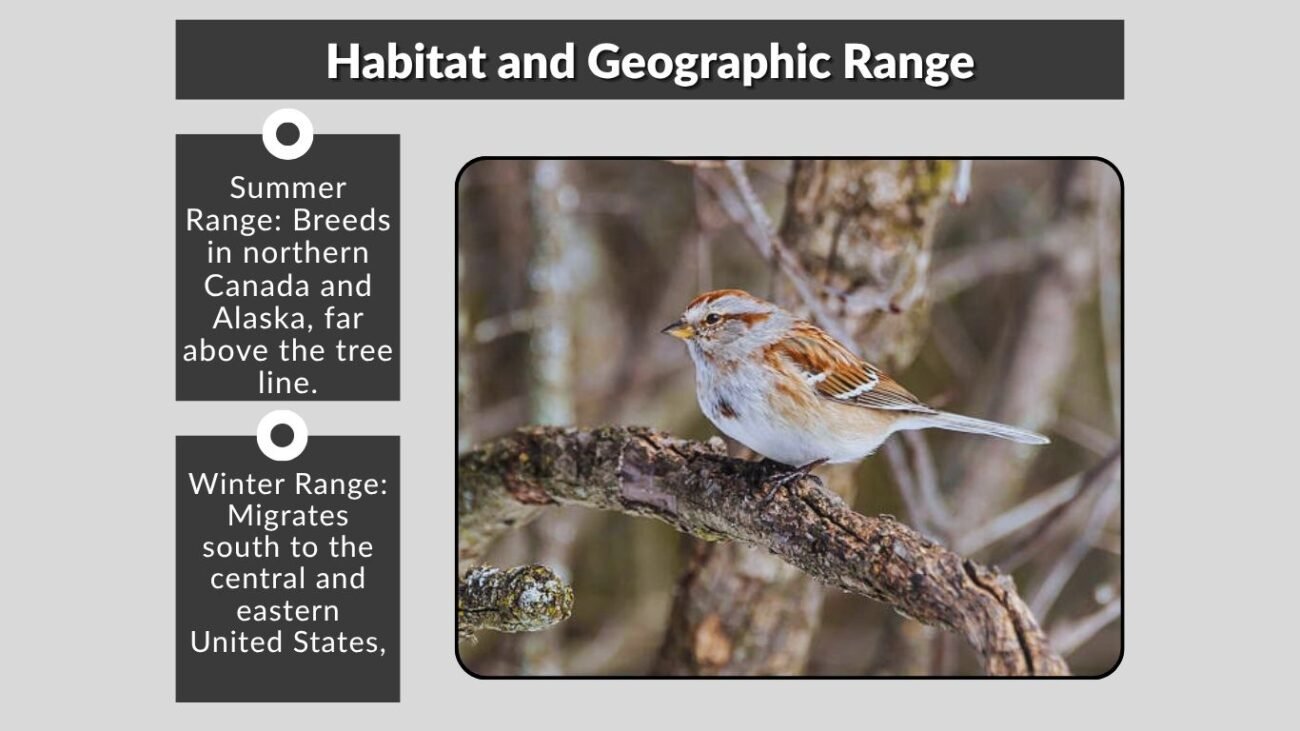
The American Tree Sparrow thrives in open landscapes rather than dense forests. Its breeding grounds are located across the Arctic tundra and northern boreal regions of Canada and Alaska. During migration, they are found in open fields, weedy farmlands, and brushy areas throughout the United States.
In winter, they often appear near backyard feeders, especially in snowy environments where natural food is scarce. They adapt well to cold, windy areas and can even be seen perching on shrubs or fences in rural farmlands.
Range and Distribution Map
- Summer Range: Breeds in northern Canada and Alaska, far above the tree line.
- Winter Range: Migrates south to the central and eastern United States, including states like Michigan, Indiana, Maine, Missouri, and New York.
- Occasionally sighted in Texas and California, particularly in open plains or along migration routes.
Their wide range makes them one of the most recognized winter sparrows across North America.
Climate Adaptations
To survive freezing temperatures, the American Tree Sparrow has several natural adaptations:
- Dense Plumage: Extra feather layers trap heat and insulate the body.
- Fat Storage: Builds fat reserves to provide energy overnight.
- Social Foraging: Feeds in small flocks to conserve warmth and improve safety.
These features allow them to remain active even when temperatures drop well below zero — a true testament to their resilience.
Behavior and Adaptations
Feeding and Diet
The American Tree Sparrow is primarily granivorous, meaning its diet consists mainly of seeds and grains. During the harsh winter months, it feeds on weed seeds, grasses, and fallen grains in fields and along roadsides. When available, it also consumes insects and small invertebrates, particularly in the breeding season, to gain extra protein for energy and feeding chicks.
These sparrows often forage in small flocks, hopping along the snow or ground and scratching for food with both feet. In rural areas, they frequently visit backyard feeders, where they enjoy millet, cracked corn, and sunflower seeds. Their constant feeding throughout the day helps them maintain enough body heat to survive freezing nights.
Flight Pattern and Movement
In flight, the American Tree Sparrow exhibits a swift, undulating pattern—short bursts of wingbeats followed by brief glides. They fly low to the ground and often travel in flocks, moving from one patch of open land to another. This behavior helps them conserve energy during migration and allows for quick takeoffs when threatened by predators.
Their overall movement is seasonal and purposeful. They breed in Arctic regions during the summer and migrate southward in autumn, returning north again by late spring. Migration flocks are usually small but steady, covering thousands of miles every year.
Cold-Weather Adaptations
These sparrows are exceptionally well adapted to the cold. Their dense plumage provides natural insulation, while fat storage helps them endure nights when food is scarce.
They also exhibit a fascinating behavior called “fluffing”—puffing up their feathers to trap air and create a layer of warmth. By roosting together in bushes or sheltered areas, they share body heat and reduce energy loss. Such adaptations have earned them the nickname “Winter Sparrow” among birdwatchers.
Breeding and Nesting
Nesting Behavior
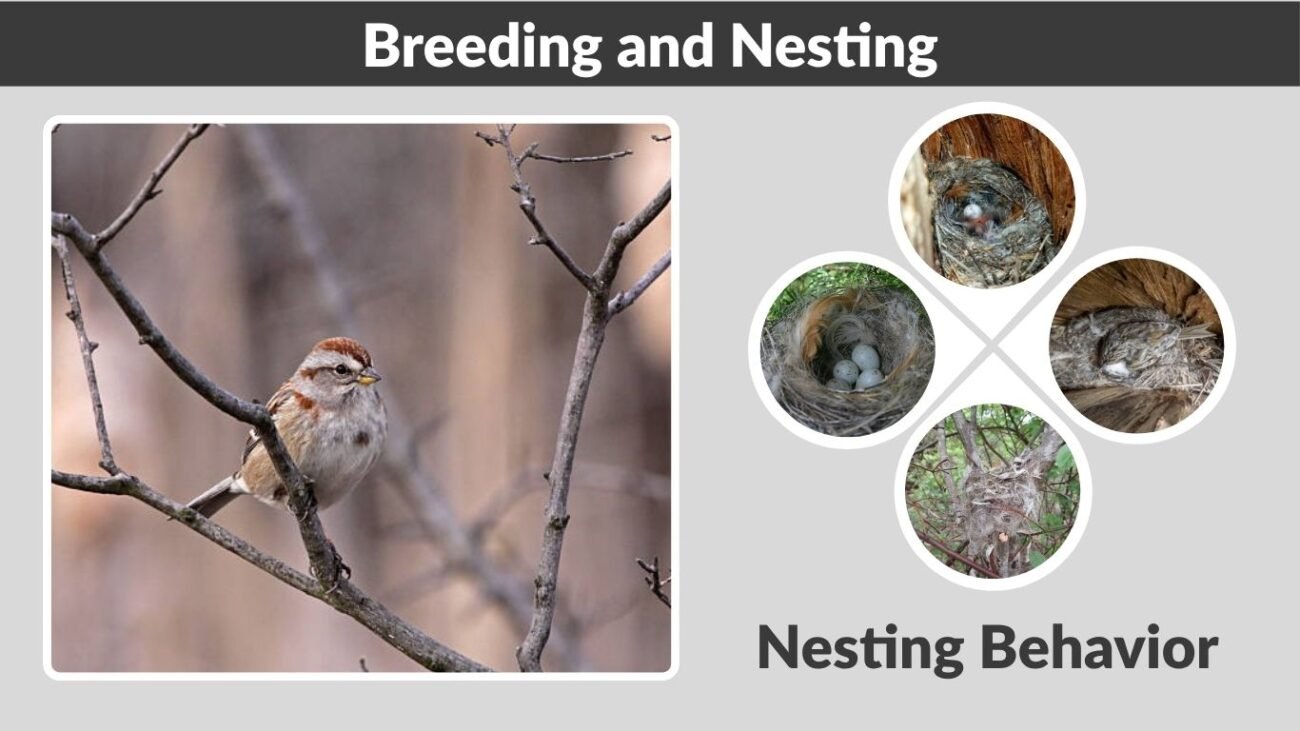
Despite their name, American Tree Sparrows do not nest in trees. Instead, they build their nests on the ground, usually in tundra vegetation or low shrubs. The nests are cup-shaped and woven from dry grasses, moss, feathers, and animal hair, providing excellent insulation against Arctic winds.
Females are primarily responsible for building the nest, while males guard the surrounding area and help gather materials.
Eggs and Fledglings
Each clutch typically contains 4–6 eggs, pale blue or greenish with brown speckles. The female incubates the eggs for about 12–13 days, during which the male brings her food. Once hatched, the chicks are altricial—born blind, featherless, and completely dependent on their parents.
Both parents feed the young a mix of seeds and insects. The fledglings leave the nest after about 10 days, quickly learning to forage before migration season begins.
Seasonal Cycle
The species’ life revolves around migration. They breed in summer across the far northern tundra and migrate south in early autumn as temperatures drop. By late October, they arrive in the United States, where they remain until March or early April, then begin their long journey north again. Their precise timing ensures they follow favorable feeding and weather conditions year-round.
Calls, Songs, and Vocalizations
Song and Call Description
The American Tree Sparrow’s song is melodic and sweet, often described as a soft series of “sweet-sweet-sweet-seeew” notes. This musical tune is most often heard during early morning and late afternoon hours in their breeding territories.
Their call note is a distinctive metallic “tseet”, while their alarm call is a sharper, higher-pitched variation used to warn flockmates of danger. The song is less energetic than that of the Song Sparrow but more musical than the Chipping Sparrow’s trill, making it a favorite among birdwatchers and ornithologists.
Audio and Recognition Tips
Recordings of the American Tree Sparrow’s calls can be found on Audubon, Cornell’s Macaulay Library, and eBird. To identify the species by ear:
- Listen for clear, descending notes ending in a soft whistle.
- The tone is mellow, never harsh or chipping.
- Calls are most frequent at dawn and during feeding times.
By learning these patterns, birders can easily identify Tree Sparrows even when visibility is low.
Interesting Facts About the American Tree Sparrow
- Despite its name, this bird rarely perches in trees and builds ground nests instead.
- It’s sometimes called the “Winter Chippy” due to its resemblance to the Chipping Sparrow.
- Tree Sparrows can survive subzero temperatures for several days thanks to their high metabolic rate.
- They consume up to 30% of their body weight in food daily during cold months.
- Their presence in winter often indicates healthy grassland ecosystems, as they rely on natural seed sources.
Behavior by Region
Eastern and Northern States
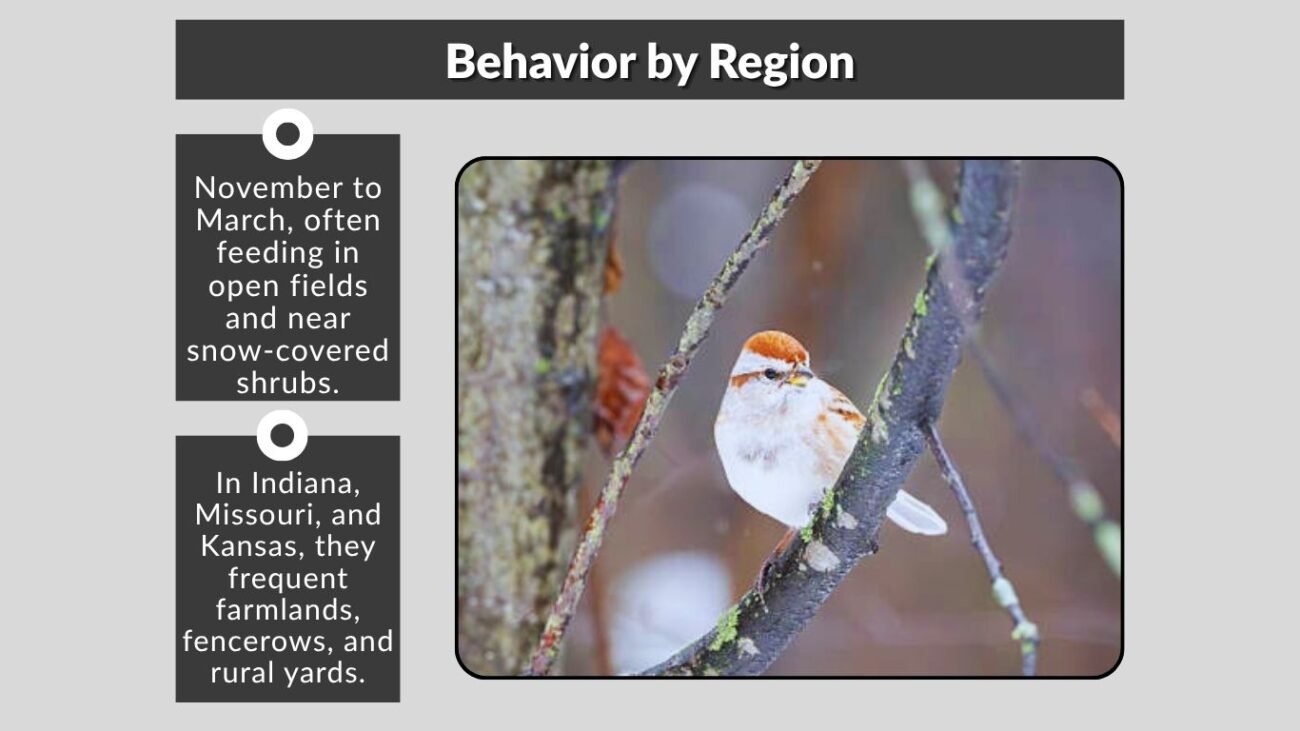
In regions like Maine, New York, and Michigan, the American Tree Sparrow appears from November to March, often feeding in open fields and near snow-covered shrubs.
Midwest and Central U.S.
In Indiana, Missouri, and Kansas, they frequent farmlands, fencerows, and rural yards. Birdwatchers often spot them in mixed flocks with juncos and finches.
Western and Southern Range
Occasional winter sightings occur in Colorado, California, and Texas, where small flocks forage along open plains or agricultural fields.
Conservation and Population
Conservation Status
The American Tree Sparrow is classified as Least Concern by the IUCN, meaning it currently faces no major threat of extinction. Populations remain stable, though slight declines have been noted in some regions due to habitat loss and climate changes affecting migration routes.
Threats and Protection
Main threats include:
- Habitat conversion of open fields and farmlands
- Pesticide use, reducing available food sources
- Climate change, altering migration and breeding timing
Supporting local bird conservation efforts, planting native shrubs, and offering winter feeders all contribute to their survival.
Observation and Birdwatching Tips
When and Where to Spot Them
- Best time: Late fall through early spring
- Preferred locations: Open fields, weedy lots, brushy roadsides, and backyard feeders
- Look for small flocks hopping on snow-covered ground, often mixing with juncos.
Field Identification Checklist
✅ Rufous crown and rusty eye line
✅ Gray face and breast with a dark central spot
✅ Bicolored bill (dark upper, yellow lower)
✅ Two white wing bars
✅ Sweet, descending song
Key Takeaways
- The American Tree Sparrow is a hardy winter visitor found across North America.
- It’s easily identified by its rusty cap, gray face, and distinct breast spot.
- Despite its name, it nests on the ground, not in trees.
- These birds play an important ecological role by dispersing seeds and controlling weed growth.
- Protecting their habitat ensures that this symbol of winter endurance continues to thrive.
FAQs
Do American Tree Sparrows migrate?
Yes. They breed in the far north during summer and migrate to the U.S. for winter, returning north each spring.
What does the American Tree Sparrow eat?
Its diet includes grass and weed seeds, grains, and small insects during the breeding season.
Where can I see American Tree Sparrows in winter?
They are commonly found across the central and northern U.S., especially in open fields and farmlands.
How can I tell a Tree Sparrow from a Chipping Sparrow?
Look for the Tree Sparrow’s dark breast spot and bicolored bill, unlike the Chipping Sparrow’s plain breast and dark bill.
Are American Tree Sparrows rare?
No. They are widespread and common in winter, often forming small, active flocks in open habitats.