










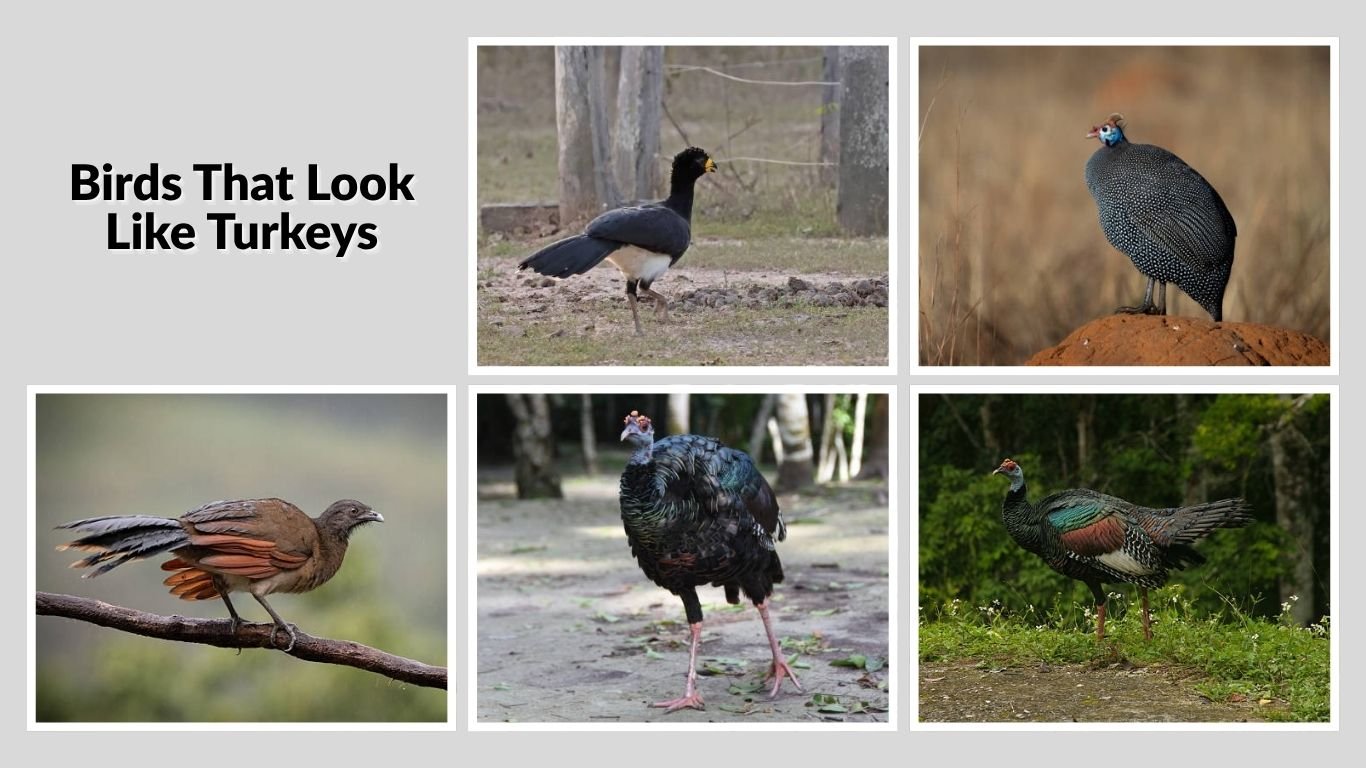
Many birds share surprising similarities with turkeys — from feather texture to their distinctive gobbling calls. Some species have fan-shaped tails, wattled necks, and powerful legs that make them easily mistaken for wild turkeys. Others mimic turkey behavior through ground foraging or group movement. This guide explores birds around the world that resemble turkeys in size, shape, and sound, revealing how nature repeats its designs across continents.
Birds Commonly Mistaken for Turkeys
Guineafowl
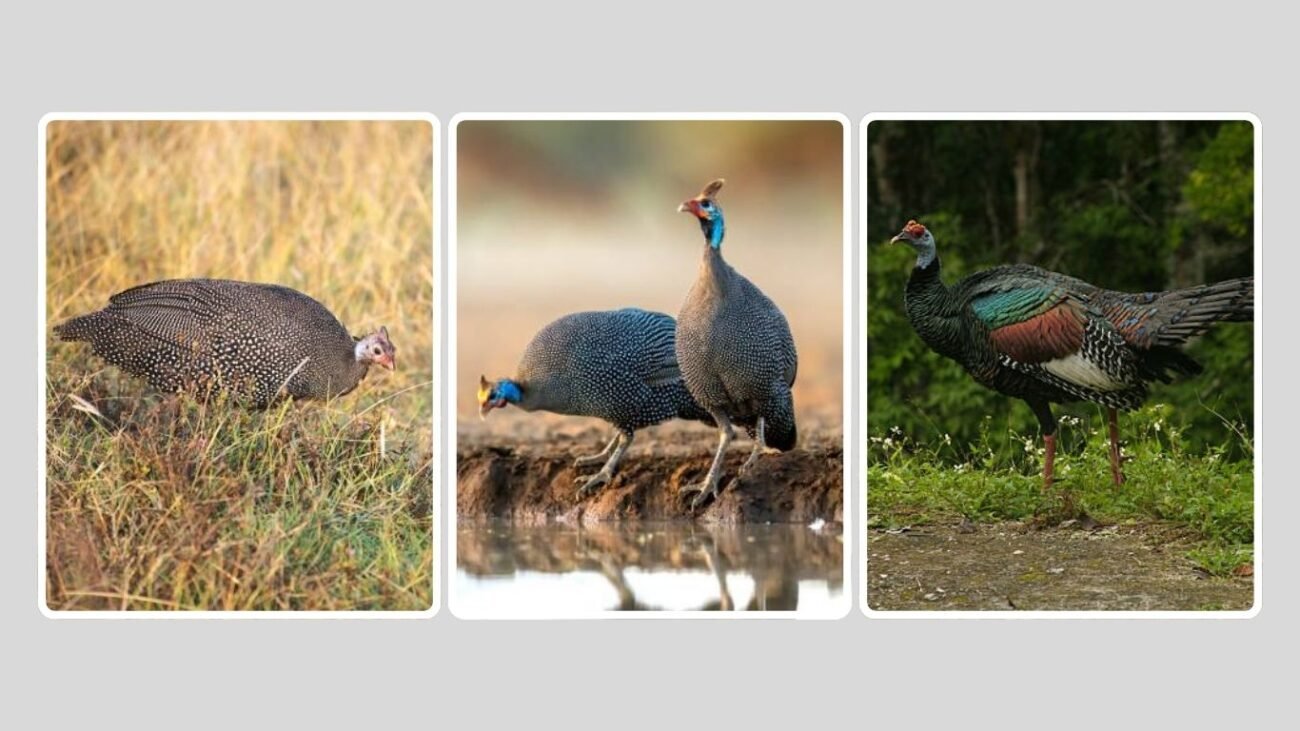
Guineafowl are among the most frequent lookalikes of wild turkeys. They have round, plump bodies, dark plumage covered with tiny white dots, and bald heads. These African natives often travel in flocks, scratching the ground for insects and seeds much like turkeys. Domestic guineafowl are raised worldwide for pest control and meat, often confusing people unfamiliar with their smaller size.
Helmeted Guineafowl
A close relative of the common guineafowl, this bird is slightly smaller but equally turkey-like in body shape. Its most recognizable feature is the bony casque — a helmet-like bump on its head. Despite its smaller stature, the Helmeted Guineafowl’s behavior and gait mirror that of a turkey, walking proudly and foraging in groups.
Meleagris Relatives
Within the same genus as wild turkeys, some subspecies such as the Eastern and Rio Grande turkey vary mainly by feather hue and pattern. These differences can make them appear like distinct species when spotted from afar. Their displays, gobbles, and territorial behavior closely align, reinforcing their iconic resemblance.
Large Birds That Resemble Turkeys
Southern Cassowary
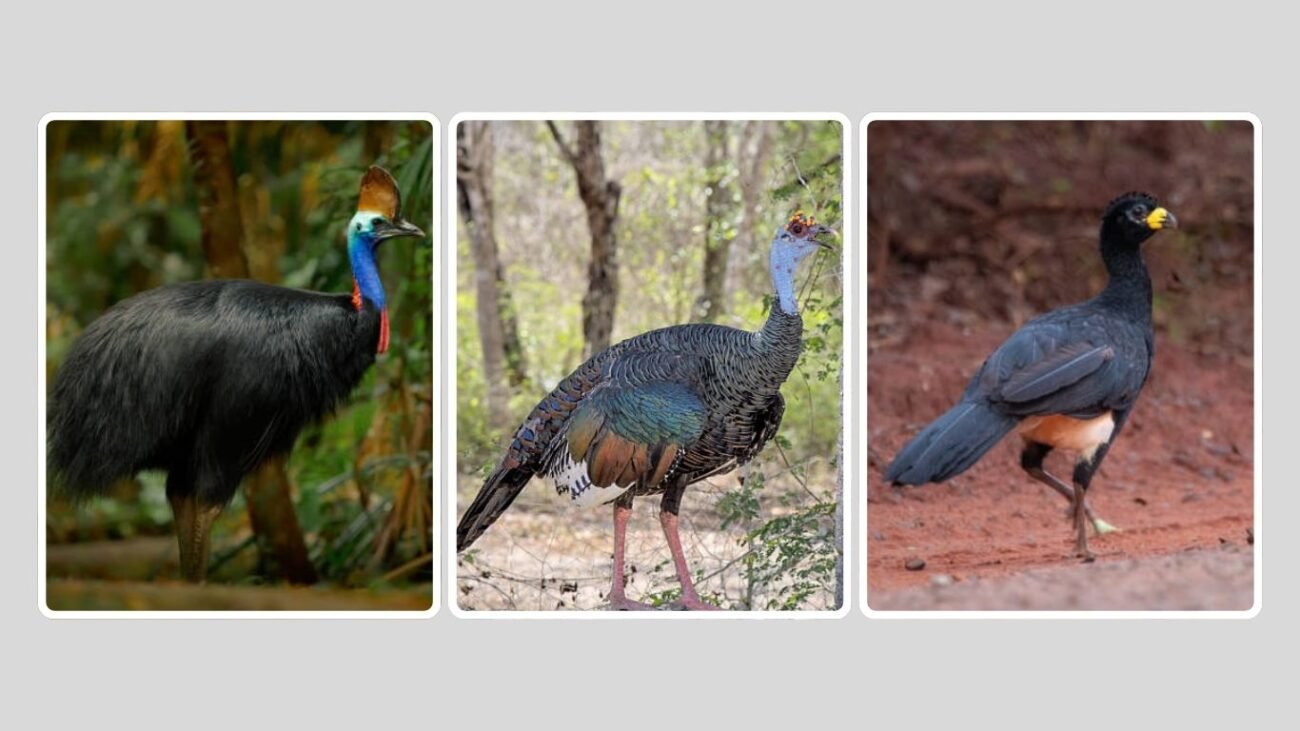
This enormous, flightless bird from northern Australia and New Guinea shares many features with turkeys — thick legs, muscular builds, and coarse feathers. Its glossy black plumage and brightly colored neck skin evoke a prehistoric appearance. Though cassowaries are much taller, both birds favor dense vegetation and possess impressive strength.
Ocellated Turkey
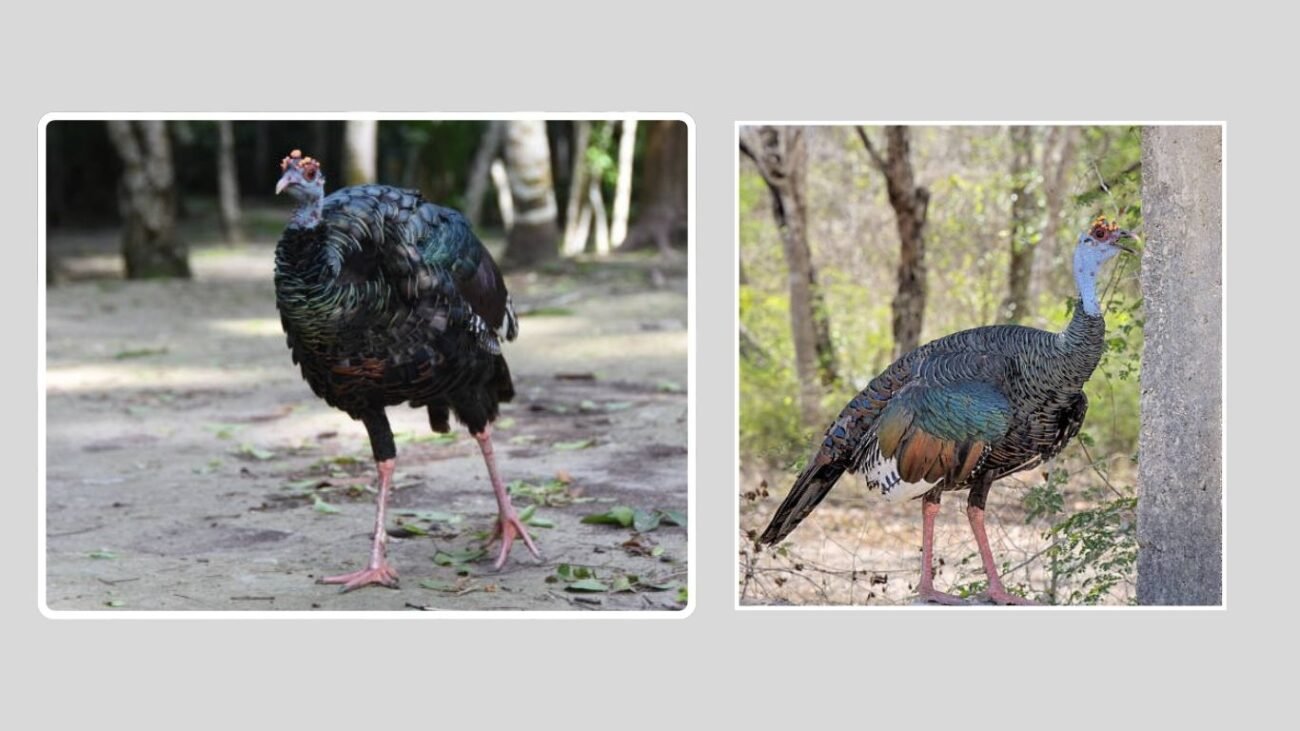
Found in Central America, the Ocellated Turkey looks like a wild turkey draped in iridescent color. Its blue and green metallic feathers glisten in sunlight, accented by orange nodules on its bare head. Despite its vivid palette, its size, shape, and tail fan are unmistakably turkey-like. This species demonstrates nature’s artistry while maintaining close structural resemblance.
Greater Curassow
The Greater Curassow is another large, ground-dwelling bird that echoes turkey features. It has a rounded body, dark glossy feathers, and a curly crest on its head. Found in Central and South America, it struts confidently across forest floors in pairs or small groups. Its courtship behavior — puffing feathers and bowing — mirrors the wild turkey’s display.
Small Birds That Look Like Turkeys
Chachalaca
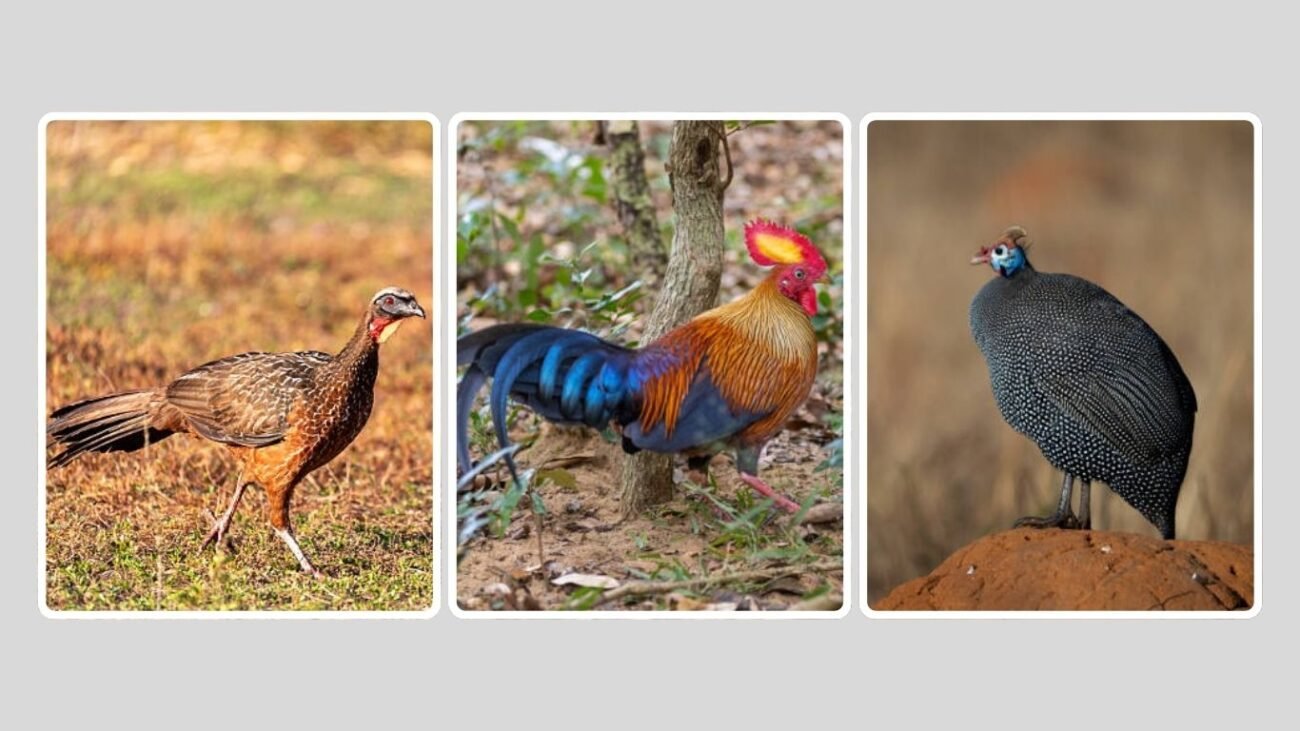
The Chachalaca, native to Central and South America, might not match a turkey’s size but certainly imitates its attitude. This slender, long-tailed bird produces loud, rhythmic calls that sound like gobbles echoing through tropical canopies. Its brown feathers and social nature enhance the resemblance, especially when seen in flocks.
Junglefowl
Wild junglefowl — the ancestors of domestic chickens — exhibit metallic plumage and ground-foraging behavior similar to turkeys. Found across India and Southeast Asia, they often scratch at soil in groups, searching for food. Their combination of iridescent feathers, small wattles, and bold struts make them look like miniature turkeys.
Guineafowl Revisited
Smaller guineafowl species, including the Crested and Vulturine varieties, also mimic turkey appearance. Their feather patterns, group living, and vocal nature strengthen the visual connection, especially to observers who spot them from a distance.
Birds of Prey That Look Like Turkey Vultures
Turkey Vulture Overview
Turkey vultures are large scavenging birds recognized by their bald red heads and wide, dark wings. When gliding overhead, their long wings and wobbly flight can make them appear like other large raptors. This resemblance has led many birdwatchers to confuse them with similar species.
Black Vulture
The Black Vulture shares the turkey vulture’s general outline but sports a dark gray head instead of red. It’s slightly smaller and flaps its wings more frequently in flight. These vultures often gather in large groups around carrion, much like turkeys flock together while feeding.
Zone-Tailed Hawk
One of nature’s cleverest mimics, the Zone-Tailed Hawk deliberately imitates the turkey vulture’s flight to hunt unsuspecting prey. By blending into flocks of vultures, it swoops down unseen. This hawk’s resemblance lies in its dark feathers and circling flight pattern — proof that even predators borrow disguise strategies from the turkey family.
Birds That Sound Like Turkeys
Sandhill Crane
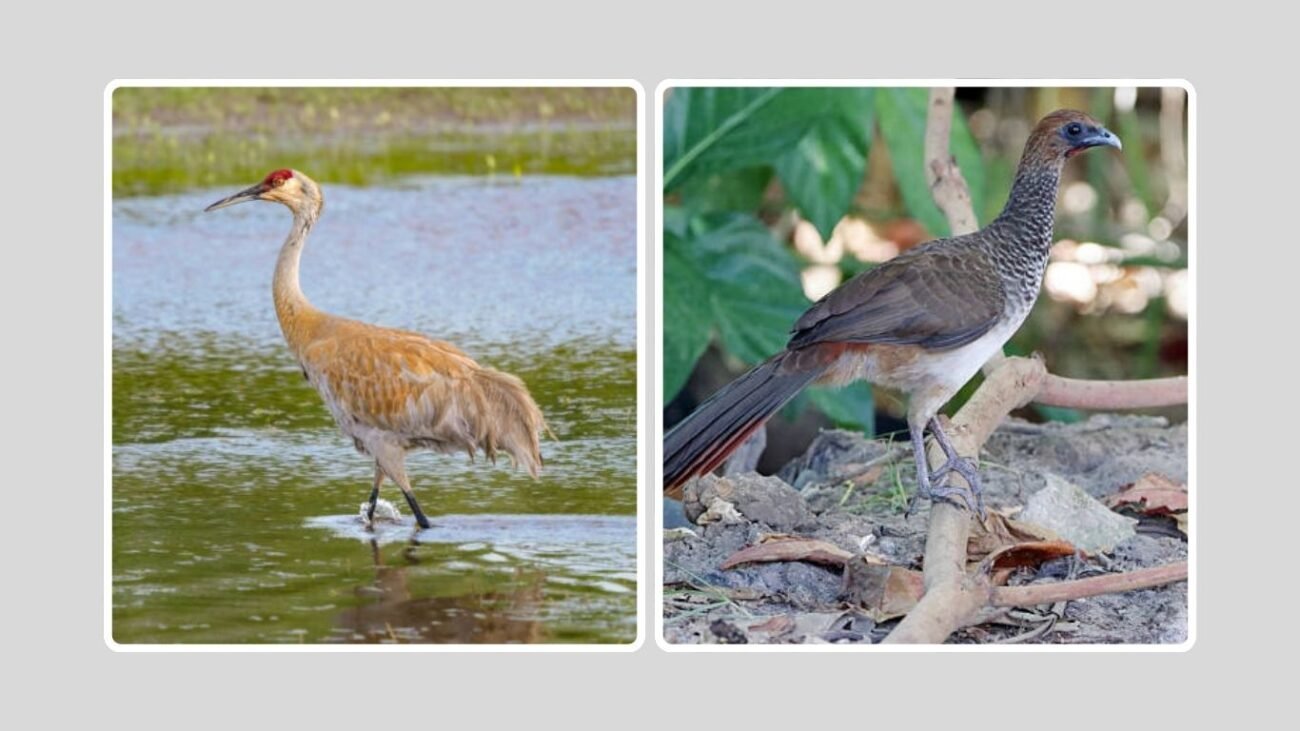
The Sandhill Crane is a tall, gray bird whose loud, trumpeting call often echoes across wetlands and fields. Its deep, resonant tone can easily be mistaken for a turkey’s gobble, especially from a distance. These cranes travel in flocks and perform elegant dances during courtship, adding to their charismatic, turkey-like behavior.
Chachalaca
Native to Central and South America, the Chachalaca produces a loud, repetitive “cha-cha-la-la” cry that closely mimics a turkey’s cluck. It often calls in groups during the morning and evening, filling tropical forests with its vibrant chatter. Although slimmer, its brownish feathers and vocal habits make it one of the most convincing sound-alikes.
Guans
Guans are large, forest-dwelling birds from tropical America. Their guttural calls and low whoops resemble a turkey’s gobble during breeding seasons. Many guans also display throat wattles and feather patterns that intensify the resemblance. Hunters and birders sometimes confuse them with young wild turkeys when glimpsed through foliage.
Peacocks and Pheasants
Peacocks and pheasants are colorful relatives that share some of the same vocal and behavioral traits. A peacock’s piercing cry carries across long distances like a turkey’s call. Male pheasants, meanwhile, cluck and drum their wings during mating displays, producing rhythms similar to wild turkeys announcing their presence.
Birds With Turkey-Like Features
Birds With White Heads
Several birds possess pale or white heads that make them appear like turkeys from afar. The King Vulture, for example, has a bald, cream-colored head and a hefty frame similar to a turkey’s. Some guineafowl also feature bluish-white facial skin that enhances their resemblance to domestic or wild turkeys, especially in open country.
Birds With Feathers Like Turkeys
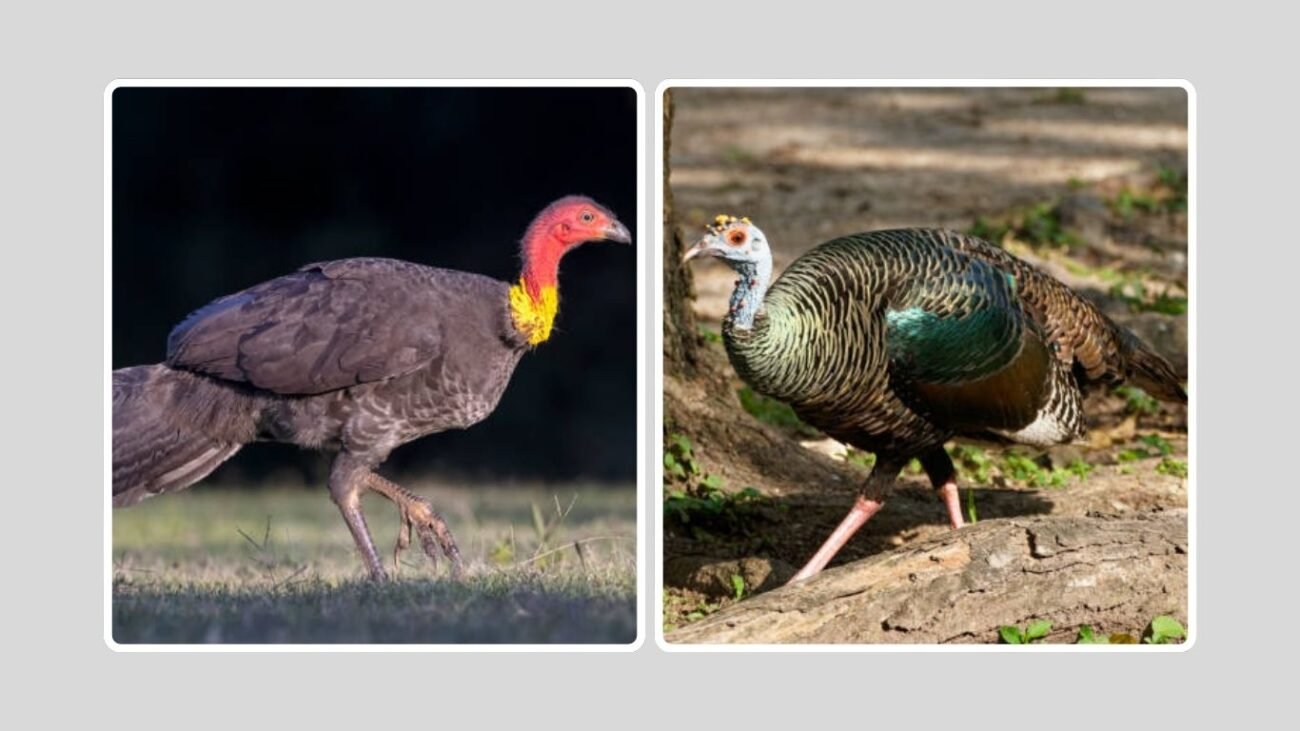
The Australian Brush-Turkey is the best known of these. Covered in dark plumage and equipped with a bright red neck, it struts through forests and suburban gardens across eastern Australia. Like wild turkeys, it builds large nesting mounds from leaves and soil to incubate eggs. The Greater Curassow also shares this turkey-style feather display, complete with a fanned tail and puffed chest posture.
Birds With Long Legs or Plump Bodies
Species such as bustards and cranes walk upright with long legs and heavy torsos, imitating the stance of a turkey. Their slow, deliberate gait and earthy coloring strengthen the illusion. Likewise, domestic guineafowl exhibit rounded bodies and proud movements that make them look like miniature turkeys on the run.
Turkey-Like Birds Around the World
Australia
Australia is home to the Australian Brush-Turkey, one of the most famous turkey mimics. These large, ground-dwelling birds are native to rainforests but have adapted to parks and urban areas. Males build massive nesting mounds over a meter high, regulating temperature by turning composting vegetation—just as turkeys fluff and guard their nests.
Central and South America
In the tropical forests of Central America lives the Ocellated Turkey, a breathtaking relative of the North American turkey. Its iridescent plumage shines in shades of green and blue, and its spotted tail feathers mirror the wild turkey’s iconic fan. Nearby forests host Curassows and Guans, both of which share similar diets, courtship displays, and heavy builds.
Africa
Africa offers several species that could easily fool an untrained eye. The Helmeted Guineafowl and Crested Guineafowl are common in open savannas, often moving in noisy flocks. Their spotted feathers, bald heads, and social feeding habits make them classic “mini-turkeys.” They even produce alarm calls that echo turkey clucks when startled.
Europe and Asia
In Europe’s boreal forests lives the Capercaillie, a massive grouse that resembles a turkey in both size and stance. Males fan their tails and make deep clicking sounds to attract mates. In Asia, the Red Junglefowl—ancestor of domestic chickens—has a metallic sheen and wattled face that parallel a turkey’s profile.
Color-Based Lookalikes
Black Turkey-Like Birds
Black vultures, brush-turkeys, and guineafowl share dark, matte plumage that catches the eye. From afar, their silhouettes—rounded bodies, hunched necks, and wide tails—closely match turkeys foraging at dusk. These species rely on their coloration for camouflage while scavenging or nesting on the ground.
Gray and White Variants
Birds such as Sandhill Cranes or Herons feature gray feathers that gleam silver in sunlight. When standing tall in grasslands, they mimic the outline of a wild turkey. Their slow, rhythmic walking style adds to the illusion. Even some pigeons and doves with pale necks can momentarily appear turkey-like in poor lighting.
Colorful Species
While turkeys are typically brown, several relatives add vibrant flair. The Ocellated Turkey’s blue head nodules and the Peacock’s dazzling tail both echo the flamboyant courtship displays of male turkeys. Curassows, though darker, have subtle green or bronze tints that glimmer just like the iridescent patches on a turkey’s wings.
Behavior and Habitat Similarities
Foraging and Ground Feeding
Most turkey-like birds share the same feeding strategy—scratching the earth for seeds, insects, and roots. Guineafowl, curassows, and junglefowl all prefer open areas near forests, mirroring wild turkey habitats. Their steady walking and sudden bursts of flight also resemble the turkey’s cautious yet capable nature.
Social Structure
Turkeys are known for their flocking behavior, and many of their lookalikes live similarly. Guineafowl and cranes move in groups led by experienced individuals, alerting each other to predators. This communal vigilance and vocal coordination contribute to their turkey-like charm.
Courtship Displays
From puffing feathers to fanning tails, the mating rituals of turkeys are echoed across species. Male Curassows, Peacocks, and Capercaillies all perform elaborate dances and calls to impress females. Their dramatic postures and sounds often confuse onlookers who assume they’re watching a turkey strut in foreign lands.
FAQs
What bird looks most like a wild turkey?
The Ocellated Turkey from Central America is nearly identical to the wild turkey, sharing body shape and size. The key difference lies in its dazzling colors—metallic blues, greens, and bronze shades that shimmer under sunlight.
Which small bird is often mistaken for a turkey?
The Guineafowl and Chachalaca are the most common small lookalikes. They have plump bodies, bald heads, and a ground-foraging lifestyle, making them appear like juvenile or dwarf turkeys in rural areas and farmlands.
Is there a bird in Australia that looks like a turkey?
Yes. The Australian Brush-Turkey is a large, dark bird with a red neck and yellow wattle. It inhabits rainforests and suburban gardens, constructing massive compost-like nesting mounds similar to turkey nests.
Do any birds sound like turkeys?
Several birds, including Sandhill Cranes, Chachalacas, and Guans, produce loud, gobble-like calls. Their deep, resonant tones echo turkey sounds, especially during the breeding season or early morning hours.
What bird looks like a turkey but smaller?
The Helmeted Guineafowl looks like a miniature turkey. It has a rounded body, dark plumage with white specks, and a bald, bony head. Despite its smaller size, its movement and behavior closely mimic those of a wild turkey.


