The black stork (Ciconia nigra) is one of the most fascinating yet lesser-known birds in the stork family. Unlike its more familiar white relative, this species prefers solitude, remote forests, and undisturbed wetlands. Found across Europe, Asia, and parts of Africa, the black stork is admired for its glossy dark plumage and graceful flight. Its elusive nature makes it a rare sight for birdwatchers, adding to its mystique. Understanding its habitat, behavior, and characteristics helps reveal why this bird plays an important role in natural ecosystems.
What Is a Black Stork?
The black stork is a large wading bird belonging to the family Ciconiidae. It is widely distributed but not commonly seen due to its preference for quiet, isolated environments. This species is known for its cautious behavior and strong migratory patterns.
Unlike white storks, which often live near human settlements, black storks stay deep within forests or near untouched river systems. Their ability to adapt to different climates while maintaining a preference for seclusion makes them unique among large birds.
Black Storks Physical Characteristics
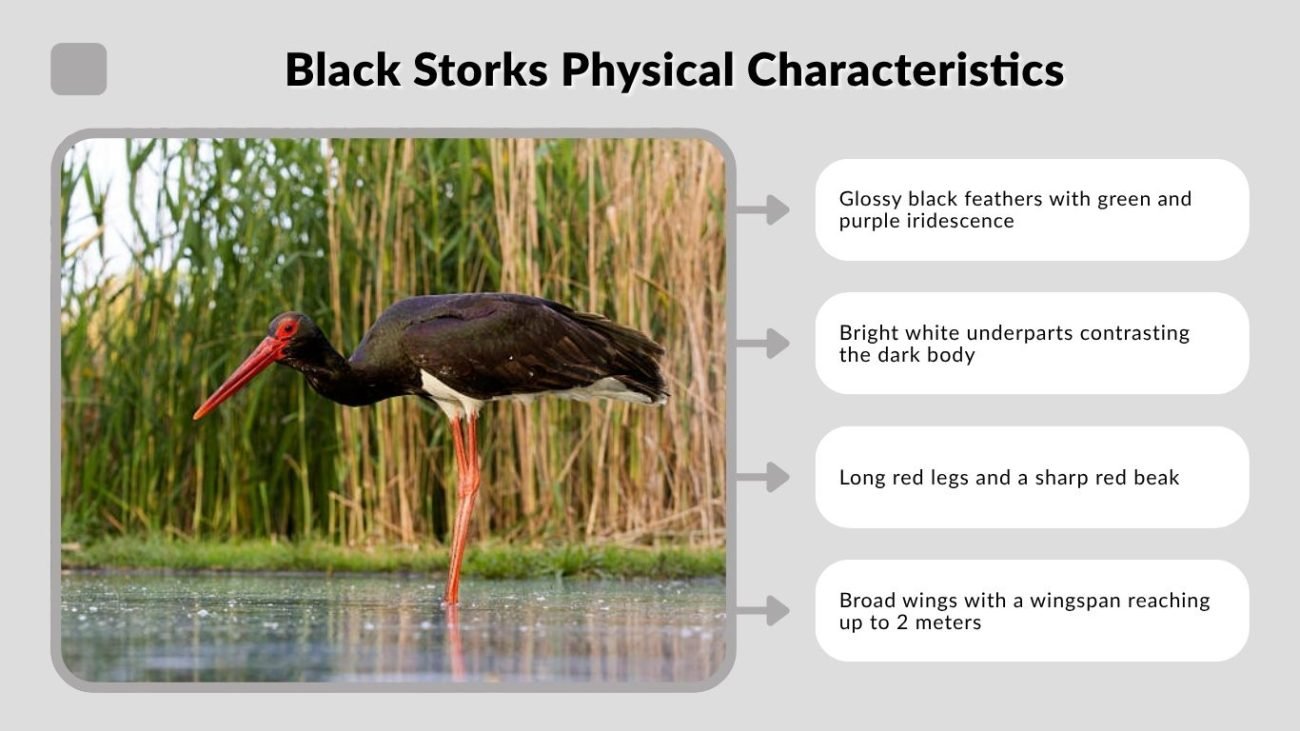
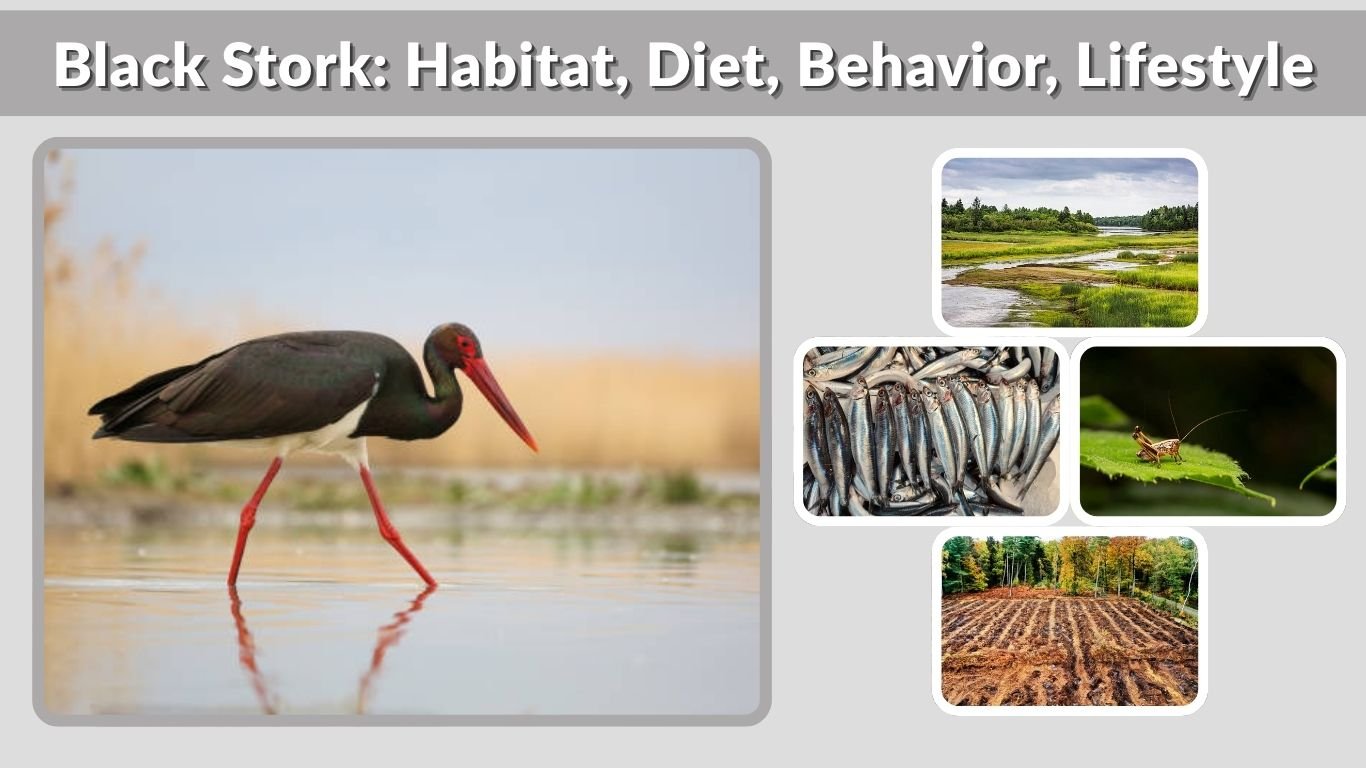
The black stork has a striking appearance that makes it easy to identify when spotted in the wild. Its coloration and body structure are both elegant and functional for survival.
Key Identification Features
- Glossy black feathers with green and purple iridescence
- Bright white underparts contrasting the dark body
- Long red legs and a sharp red beak
- Broad wings with a wingspan reaching up to 2 meters
These features not only give the bird a distinctive look but also help it glide efficiently during long flights. The contrast between black and white plumage is especially visible when the bird is in flight.
Black Storks Behavior and Lifestyle
The black stork is known for its quiet and cautious behavior. It is usually seen alone or in pairs rather than in large groups. This solitary nature helps reduce competition for food and lowers the risk of predators.
Unlike many other birds, black storks avoid human activity and prefer to remain hidden in dense habitats. They are active during the day, spending much of their time searching for food near shallow water sources. Their slow and deliberate movements make them efficient hunters.
Black Storks Habitat and Distribution
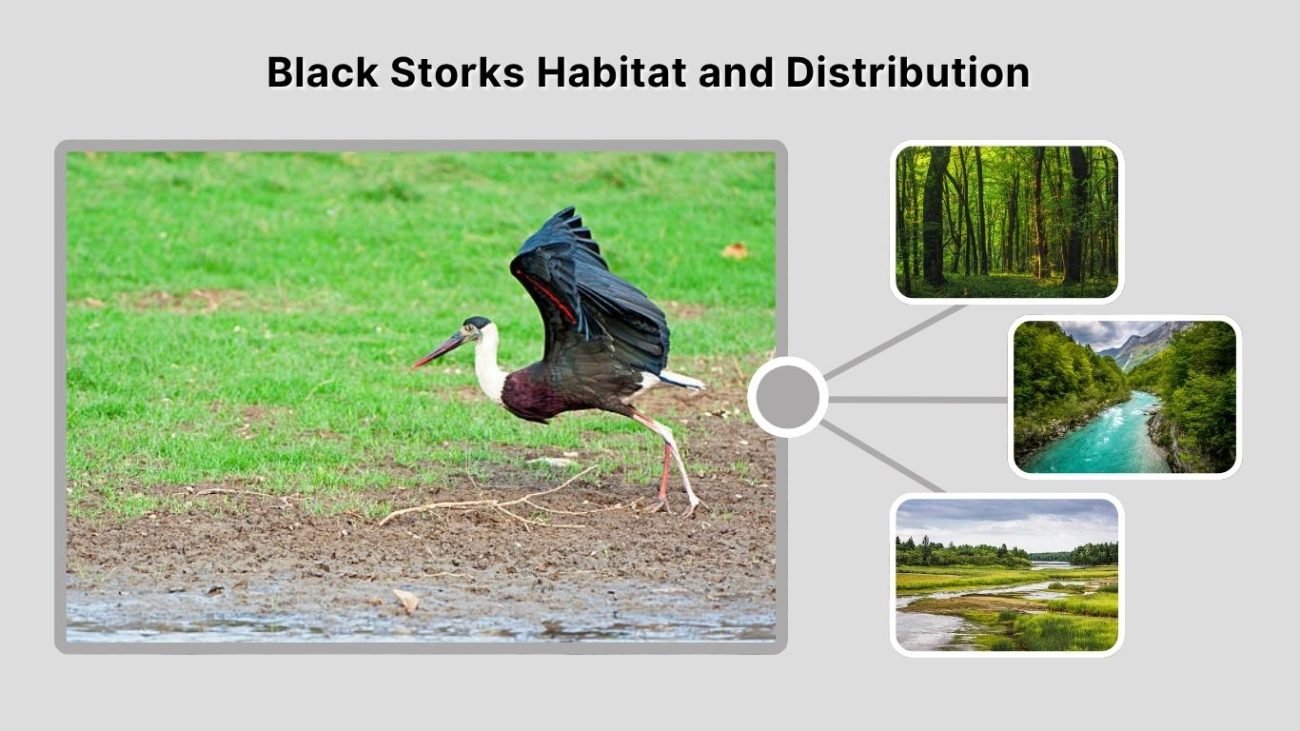
Black storks are typically found in areas that offer both water and seclusion. Their habitats include dense forests, river valleys, wetlands, and marshy regions where human disturbance is minimal.
Regional Presence
- Europe: Breeding populations in central and eastern regions
- Asia: Found in parts of Central, South, and East Asia
- Africa: Common wintering grounds during migration
This wide distribution shows the adaptability of the species, although they still rely heavily on undisturbed natural environments to thrive.
Black Storks Feeding Habits
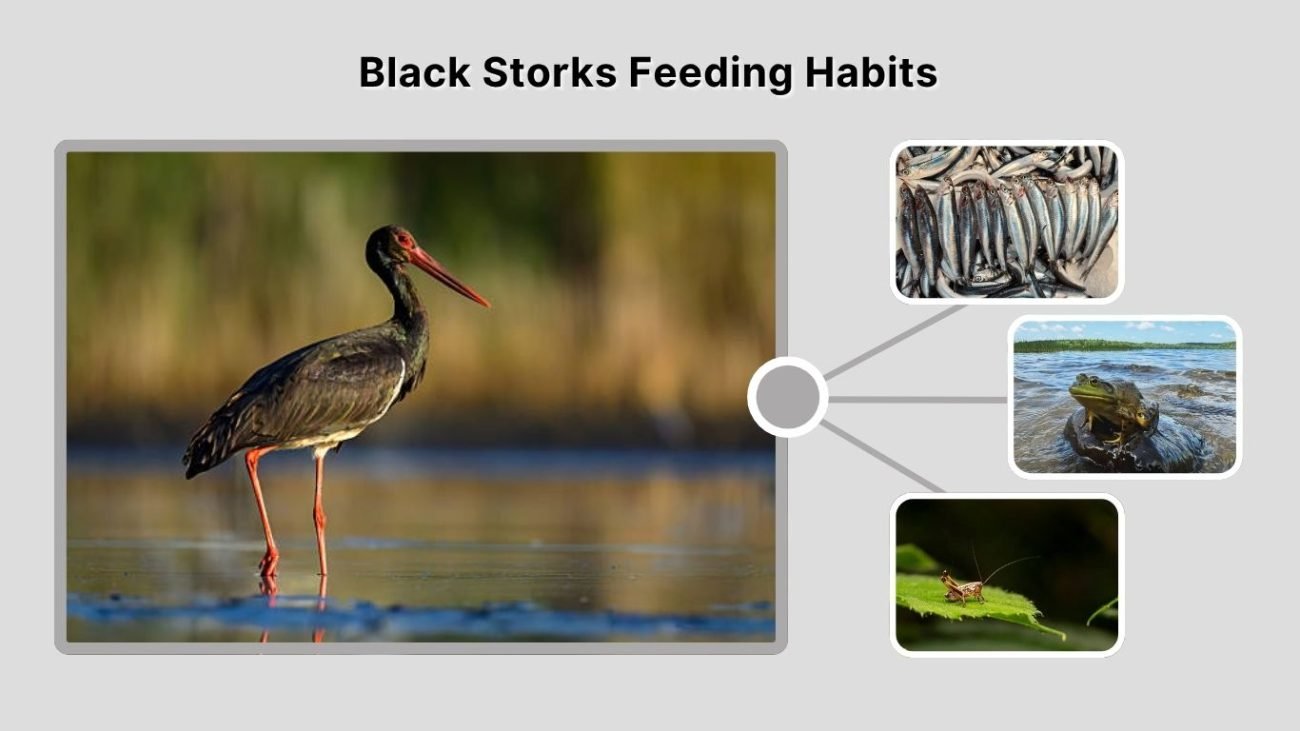
The diet of the black stork is varied and depends largely on its habitat. It feeds mainly in shallow waters where prey is easier to catch.
- Fish are the primary food source
- Amphibians such as frogs are commonly eaten
- Insects and small reptiles are also included
- Occasionally feeds on small mammals
The bird uses its long beak to catch prey quickly, often standing still for long periods before striking with precision.
Black Storks Migration Patterns
Black storks are strong migratory birds, traveling long distances between breeding and wintering grounds. They rely on warm air currents to glide efficiently, conserving energy during their journeys.
Migration Routes
- Western route passing through Spain into Africa
- Eastern route through the Middle East into South Asia
These migration patterns ensure access to food and suitable climates throughout the year.
Black Storks Breeding and Nesting
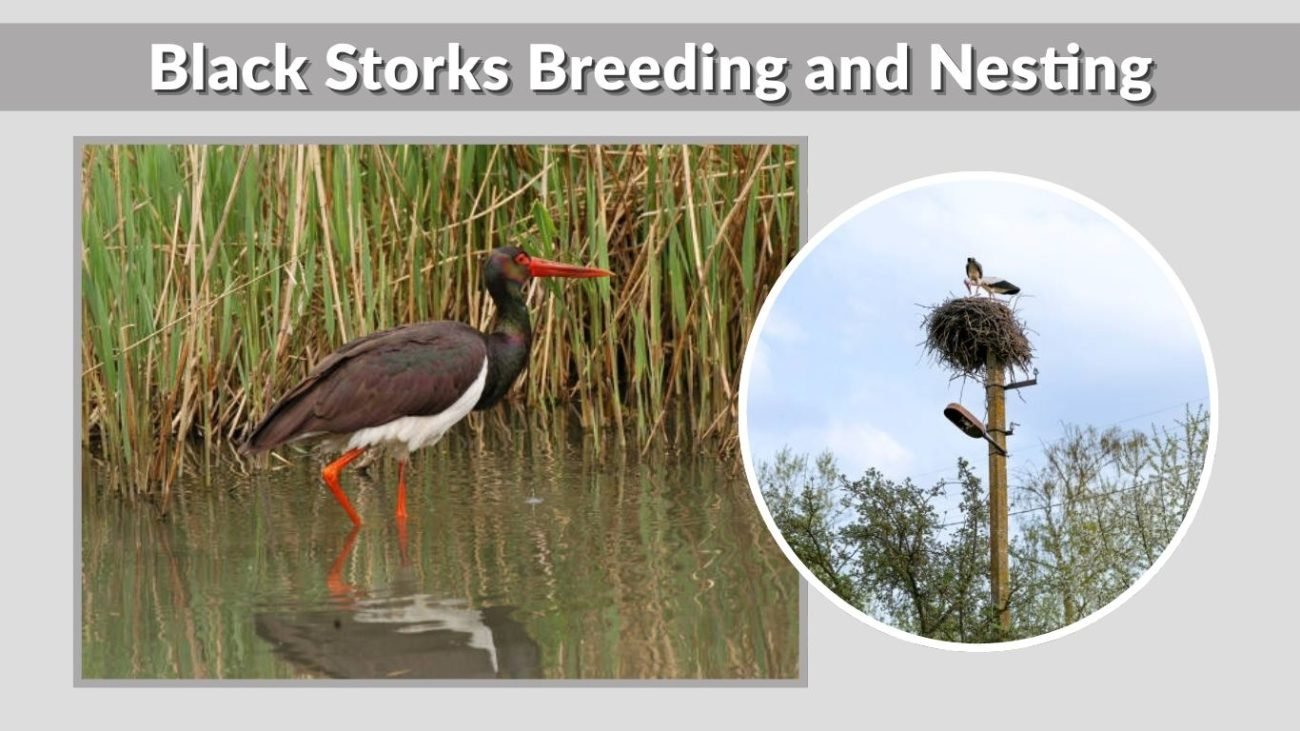
Black storks follow a seasonal breeding cycle that is closely linked to climate and food availability. They typically return to their breeding grounds in spring, where pairs form strong bonds and reuse nesting sites year after year. Nests are often built high in tall trees or on cliffs, far from human disturbance.
Nesting Behavior
- Large nests made of sticks and lined with softer materials
- Located in remote forests or rocky areas
- Usually reused and expanded each breeding season
Egg and Chick Development
- Females lay 3 to 5 eggs per breeding cycle
- Incubation lasts about one month
- Both parents share feeding and protection duties
Young black storks grow quickly and remain dependent on their parents for several weeks before learning to fly and hunt independently.
Black Stork vs Black-Necked Stork
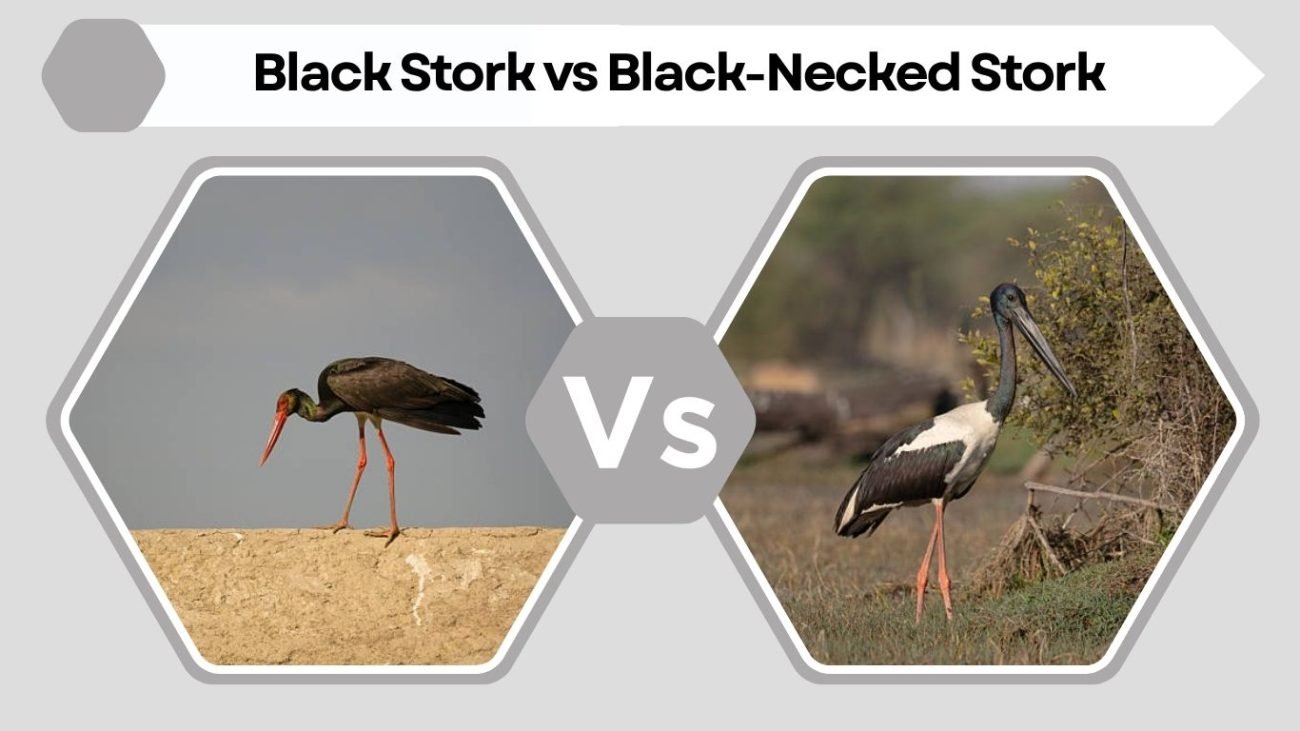
Although they share similar names, the black stork and black-necked stork are quite different species with distinct characteristics. Understanding these differences helps avoid confusion, especially for birdwatchers.
Key Differences
- Black storks are smaller and more slender
- Black-necked storks are taller and more robust
- Black storks prefer forests, while black-necked storks favor open wetlands
- Geographic ranges differ significantly
Scientific Classification
- Black stork: Ciconia nigra
- Black-necked stork: Ephippiorhynchus asiaticus
Symbolism and Cultural Meaning
The black stork carries symbolic meaning in various cultures, often linked to its rare appearance and solitary nature. It is commonly associated with mystery, independence, and transformation.
Because it is rarely seen, spotting a black stork is sometimes considered a special or meaningful event. In some traditions, it represents change or personal growth, while in others it symbolizes resilience and quiet strength. Its preference for remote habitats further reinforces its image as a bird of solitude and reflection.
Conservation Status
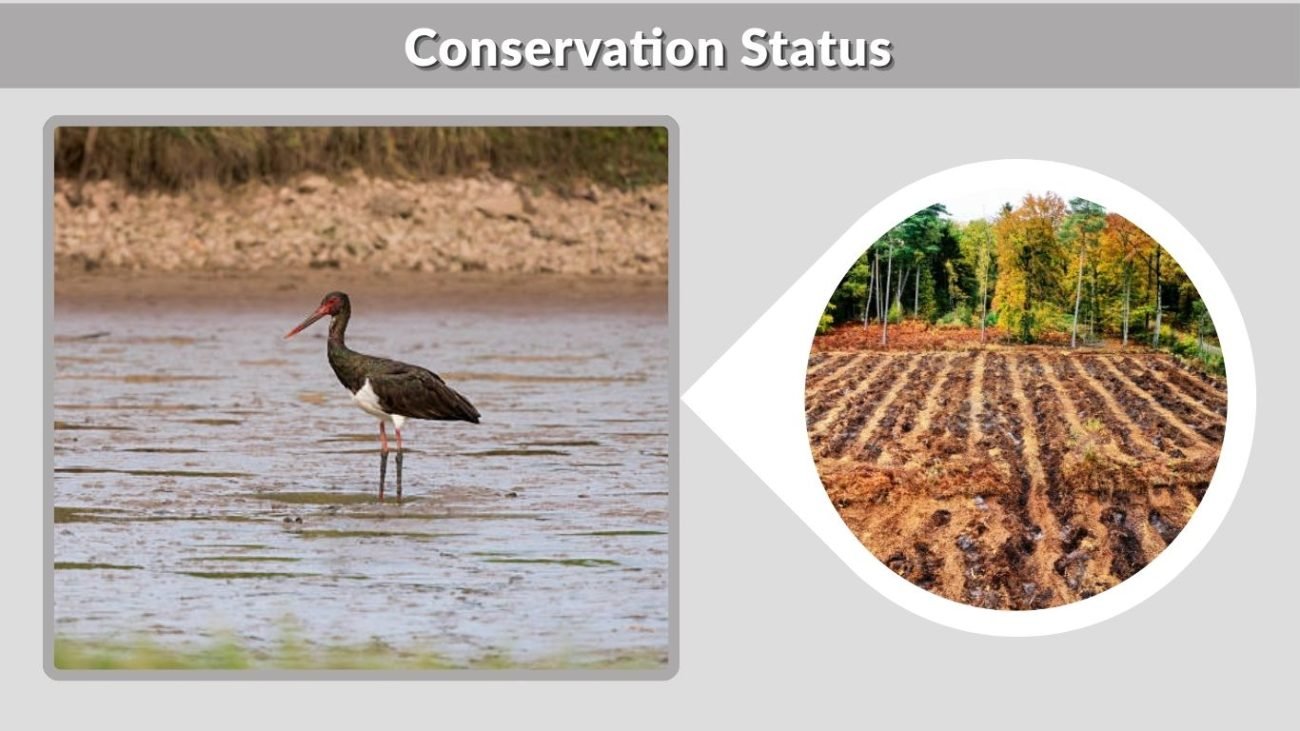
Although not globally endangered, black storks face several threats that impact their population in certain regions. Habitat destruction and human interference are among the main concerns affecting their survival.
Major Threats
- Loss of wetlands and forest habitats
- Disturbance from human activity
- Pollution affecting food sources
Conservation Efforts
- Protection of nesting and breeding sites
- Monitoring migration patterns
- Environmental awareness programs
Protecting the black stork is important not only for preserving biodiversity but also for maintaining the health of wetland ecosystems where they play a vital role.
Interesting Facts About Black Storks
Black storks are full of fascinating traits that make them unique among large birds.
- They are more secretive than white storks
- They can travel thousands of kilometers during migration
- They prefer nesting far from human settlements
- Their flight is smooth and energy-efficient
These characteristics highlight their adaptability and the importance of preserving their natural habitats.
FAQs
What is the scientific name of the black stork?
The scientific name of the black stork is Ciconia nigra. It belongs to the stork family and is known for its wide distribution across Europe, Asia, and Africa, though it is less commonly seen due to its preference for remote habitats.
Where do black storks build their nests?
Black storks usually build their nests in tall trees or on cliffs in isolated areas. They prefer locations far from human activity, which helps protect their eggs and chicks from disturbance and potential threats.
How far do black storks migrate?
Black storks can migrate thousands of kilometers between their breeding and wintering grounds. They travel from Europe to Africa or South Asia, using warm air currents to glide and conserve energy during long journeys.
What do black storks eat?
Their diet mainly consists of fish, amphibians, and insects. They hunt in shallow waters, using patience and precision to catch prey. Occasionally, they may also feed on small reptiles or mammals depending on availability.
Are black storks rare to see?
Yes, black storks are considered rare sightings because they avoid human-populated areas and prefer dense forests and wetlands. Their secretive behavior makes them difficult to observe compared to other stork species.