Snowy owls, with their iconic white feathers and hauntingly silent flight, are among the most fascinating birds of prey. Found in the harsh environments of the Arctic and sub-Arctic, these owls are skilled hunters, relying on a diverse diet to survive the long, cold winters. Their food sources primarily consist of small mammals, birds, and occasionally fish, which they skillfully hunt in their cold habitats. Understanding what snowy owls eat reveals how these magnificent predators thrive in some of the most extreme climates on Earth.
What Do Snowy Owls Eat in the Tundra?
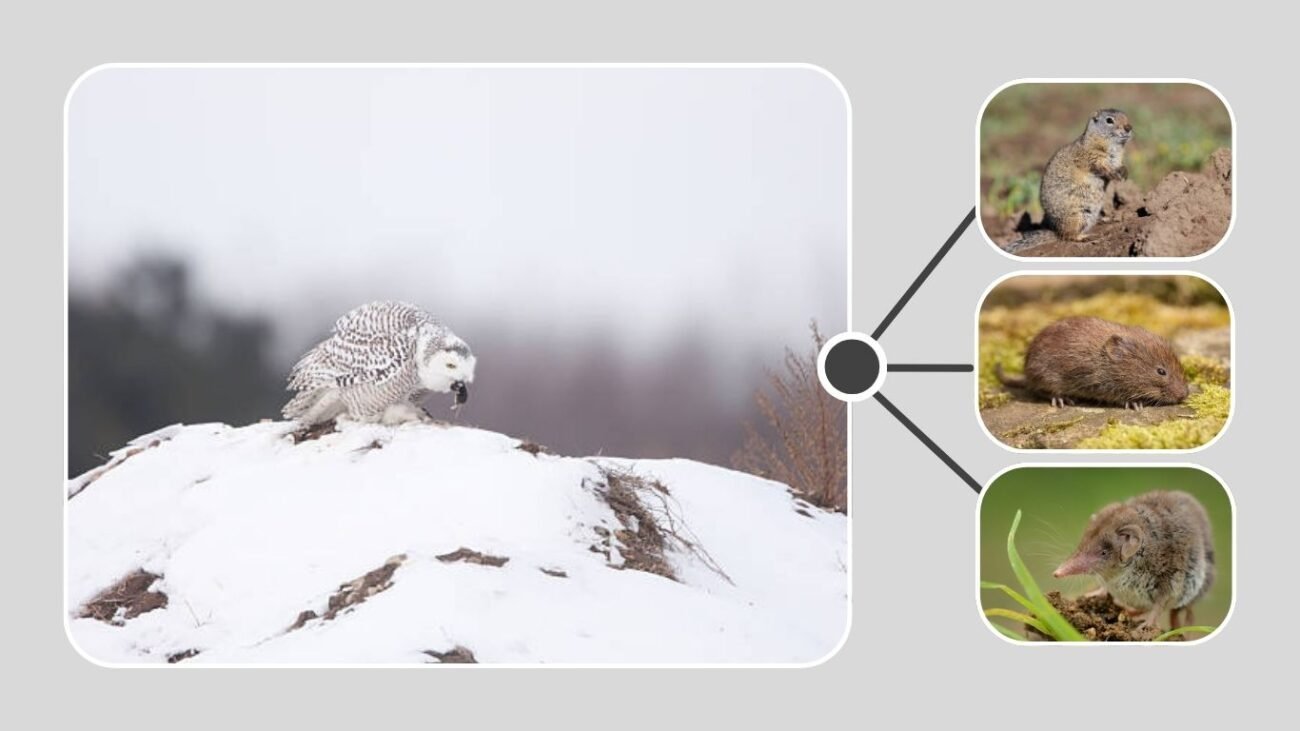
Primary Diet: Small Mammals
In the tundra, the primary food source for snowy owls is small mammals, particularly lemmings. These tiny, burrowing rodents are incredibly abundant in the Arctic tundra, making them a perfect prey for snowy owls. Lemmings are a crucial part of the snowy owl’s diet because of their availability and high nutritional value.
Other small mammals consumed by snowy owls in the tundra include:
- Voles – Another small rodent that provides an essential food source.
- Mice and shrews – These also make up a significant portion of the owl’s diet, especially during the colder months when other food sources are scarcer.
Snowy owls are known for their keen hearing and excellent night vision, which allow them to detect small movements beneath the snow. They can easily hunt prey even in the most challenging environments, such as beneath layers of snow or ice.
Occasional Bird Prey
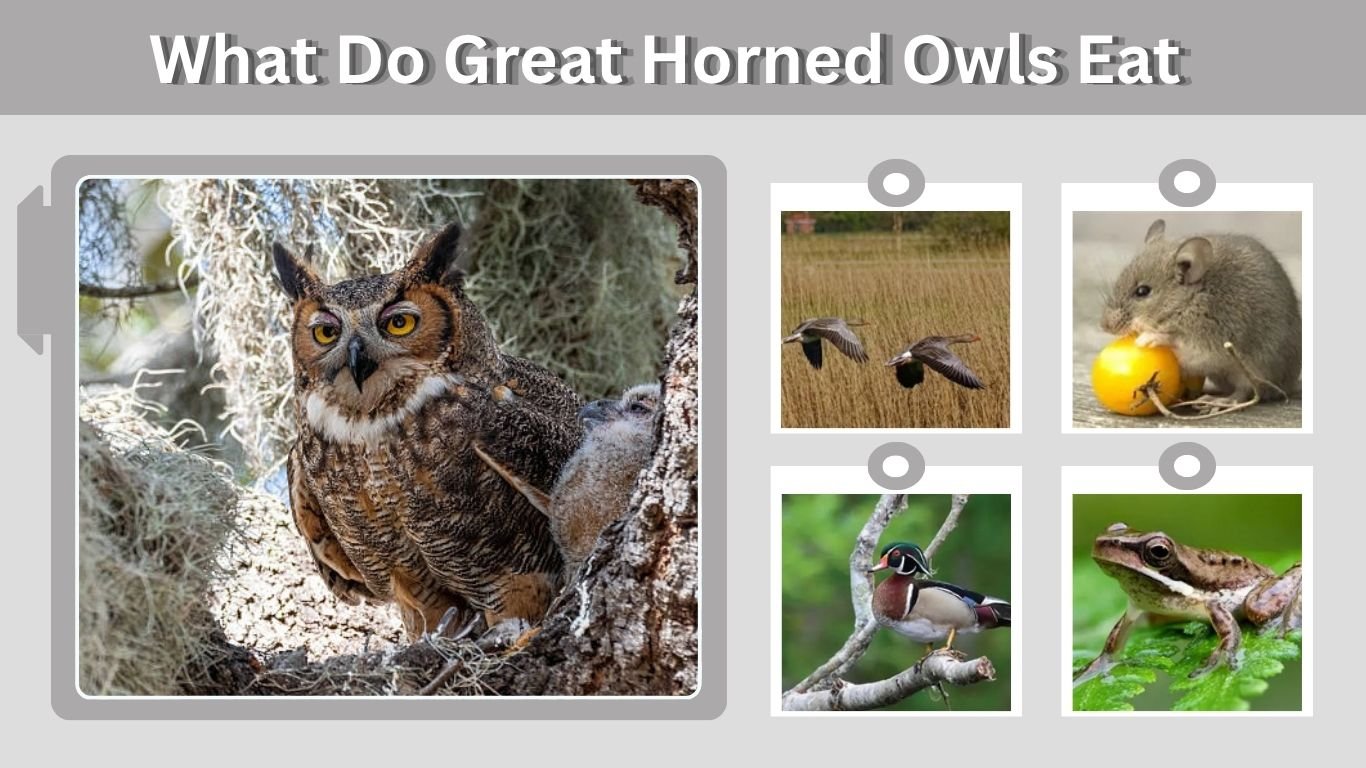
Though small mammals dominate the snowy owl’s diet, these owls will also hunt birds when the opportunity arises. Snowy owls are capable of taking on birds as large as:
- Waterfowl – Ducks and geese, which they can catch both in flight or on the ground.
- Ptarmigans – A grouse species commonly found in the Arctic and sub-Arctic regions.
Snowy owls have adapted to be able to hunt both on the ground and in the air, making them versatile hunters in their snowy habitats.
What Do Snowy Owls Eat in the Arctic?
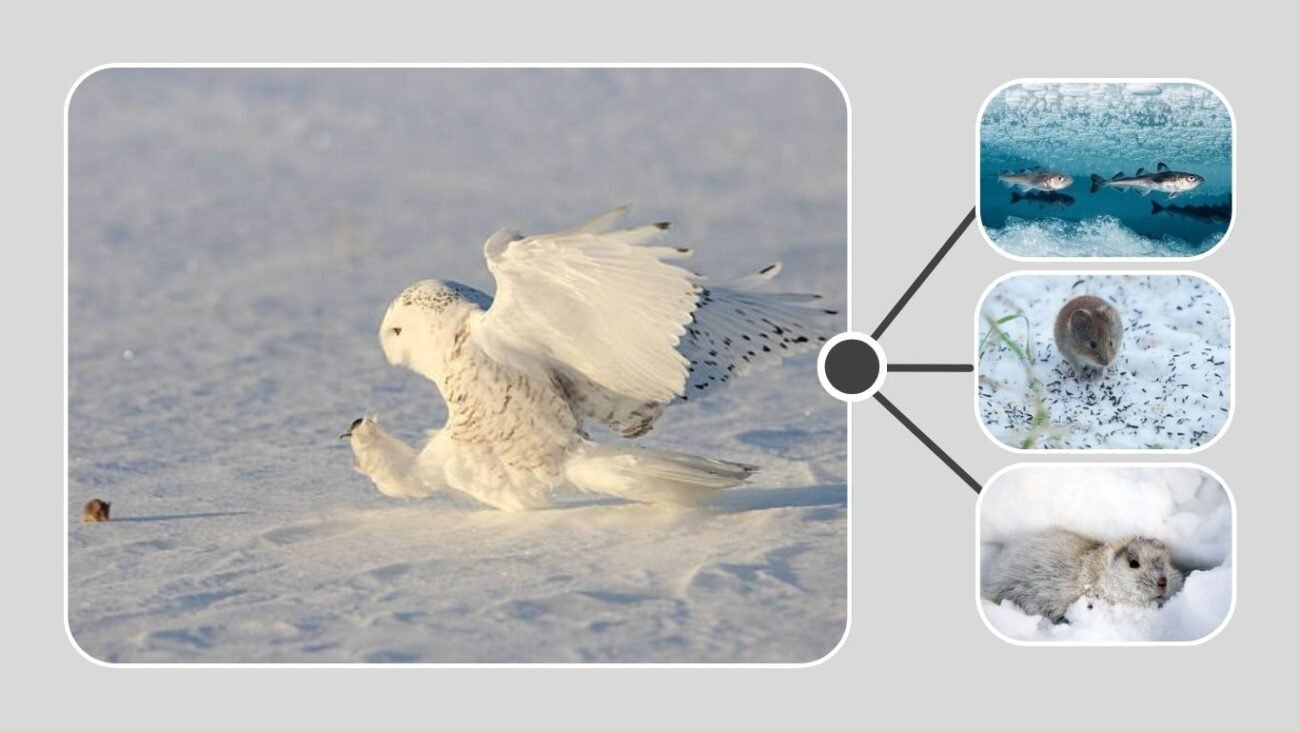
In the Arctic, where the environment is even harsher, snowy owls rely heavily on the same food sources, with an increased emphasis on small mammals. The seasonal availability of food plays a large role in their diet, with lemmings being the primary prey during the warmer months.
Lemmings and Voles
Lemmings are particularly abundant in the Arctic, and during the summer, they reproduce at a rapid rate, providing snowy owls with an easy and reliable food source. Owls will spend hours hunting these small rodents, especially in areas where lemming populations are high. In some years, snowy owls can experience a “lemming boom”, where the prey is so abundant that the owls can feed on them in large quantities, ensuring their survival.
Winter Adaptations
In the winter, when lemmings and other small mammals are harder to find, snowy owls may switch to other food sources like:
- Fish – If accessible near coastal areas, snowy owls will hunt fish when mammal prey is scarce.
- Invertebrates – Though a smaller part of their diet, some snowy owls will also consume large insects or worms, particularly if other food sources are not readily available.
This adaptability ensures that the snowy owl can survive the coldest months of the year, even when their primary food sources are less abundant.
What Do Baby Snowy Owls Eat?
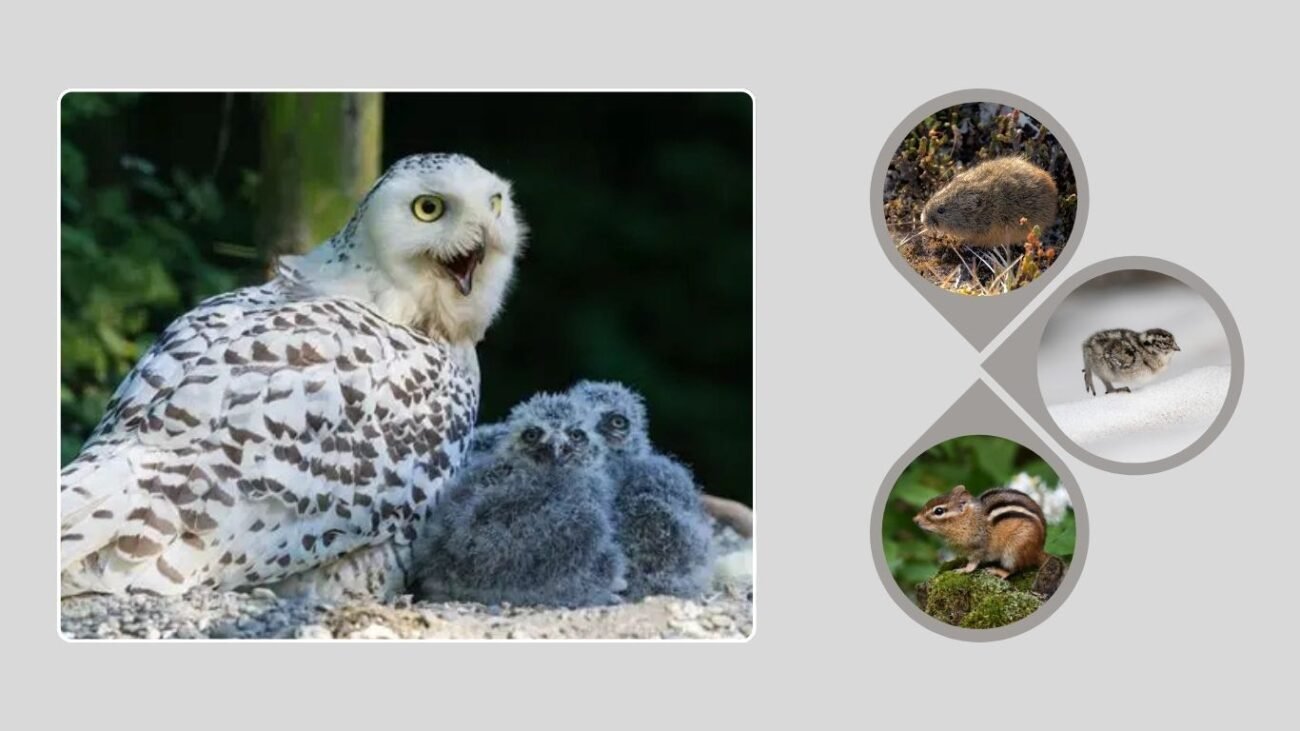
During the first few weeks of their lives, baby snowy owls (owlets) are dependent on their parents for food. The parents bring food to the owlets in the form of small mammals and birds. The diet of baby snowy owls consists primarily of:
- Small mammals like lemmings and voles.
- Birds, especially if available, such as ptarmigans.
As the owlets grow, they begin to learn how to hunt on their own. By the time they are fully fledged, they will be hunting the same variety of prey as their parents.
How Do Snowy Owls Hunt?
Snowy owls are silent hunters, making them effective predators in the Arctic’s quiet, still environment. Their sharp vision and acute hearing allow them to detect prey from a long distance.
- Hearing: Their ability to hear the faintest noises under the snow is vital for locating small mammals like lemmings.
- Vision: With excellent night vision, snowy owls are able to hunt at night, which is crucial in the Arctic, where darkness can last for months.
Once they’ve located their prey, they swoop down silently with powerful talons and a lethal bite to the neck, immobilizing the prey quickly.
Diet in Other Habitats:
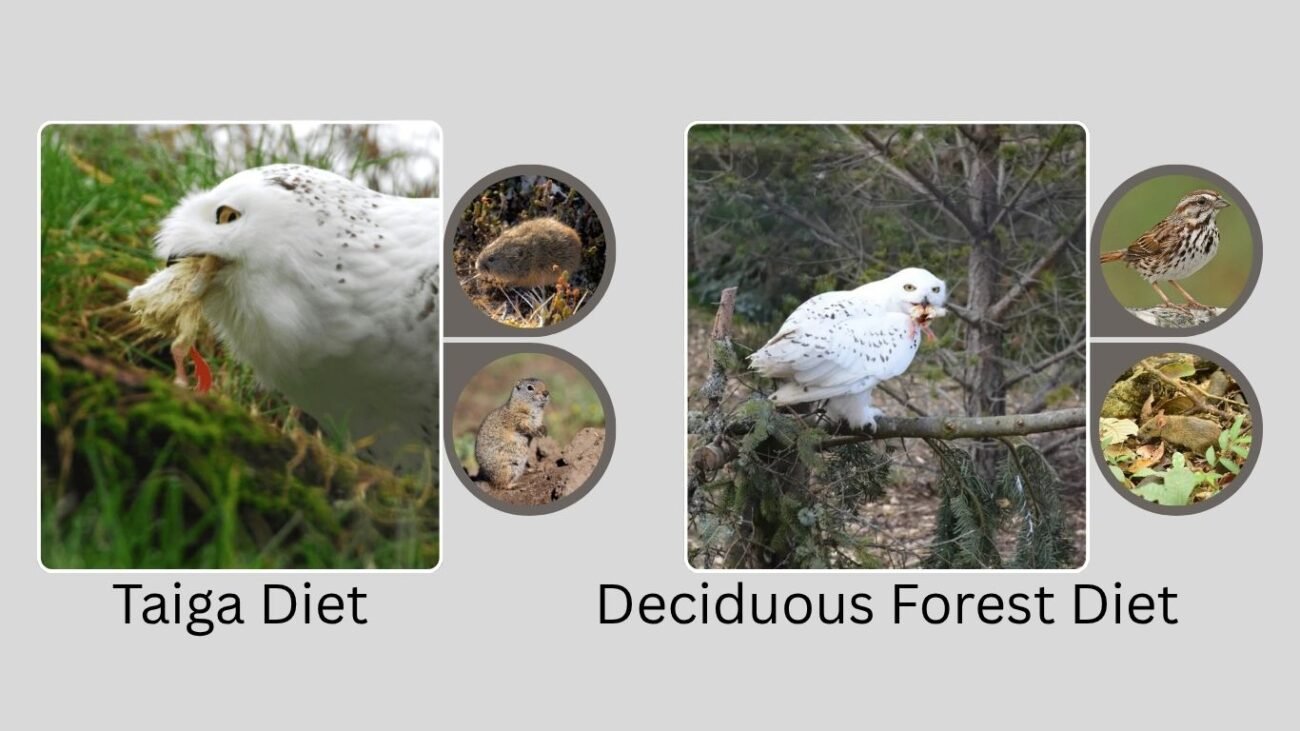
While snowy owls are primarily associated with the Arctic and tundra, they can also be found in other cold habitats like the taiga (boreal forests) and deciduous forests. In these regions, their diet is quite similar, but the types of prey they hunt may differ slightly due to the variation in available species.
Taiga Diet
In the taiga, which is a forested region just below the Arctic tundra, snowy owls hunt:
- Small mammals like voles, mice, and even squirrels.
- Birds, including grouse and woodpeckers, which are more common in these forested environments.
Though the snowy owl’s diet in the taiga still focuses heavily on small mammals, the denser forest environment means that prey may be harder to locate, and the owls have to adjust their hunting techniques accordingly. They rely more on their stealthy, silent flight to hunt in areas with more cover.
Deciduous Forest Diet
In deciduous forests, where the trees shed leaves during the fall, snowy owls can be found preying on a variety of small animals, including:
- Small mammals, such as mice and rats, which are abundant in forest undergrowth.
- Birds, especially sparrows and songbirds, that inhabit these areas during the warmer months.
In these habitats, snowy owls often target ground-dwelling creatures, taking advantage of the open spaces created by cleared ground or fallen leaves.
Snowy Owl Hunting Techniques
Snowy owls are masterful hunters with adaptations that allow them to thrive in even the harshest conditions. Their silent flight is one of their most remarkable traits. Unlike most birds, snowy owls’ feathers are specially adapted to reduce flight noise, making them almost undetectable to both prey and predators.
They hunt primarily by using their sharp vision and excellent hearing to locate prey. Once prey is located, they swoop down silently, using their powerful talons to snatch their quarry. They have a strong grip, ensuring they can hold onto their prey securely and kill it swiftly.
What Do Snowy Owls Eat in Winter?
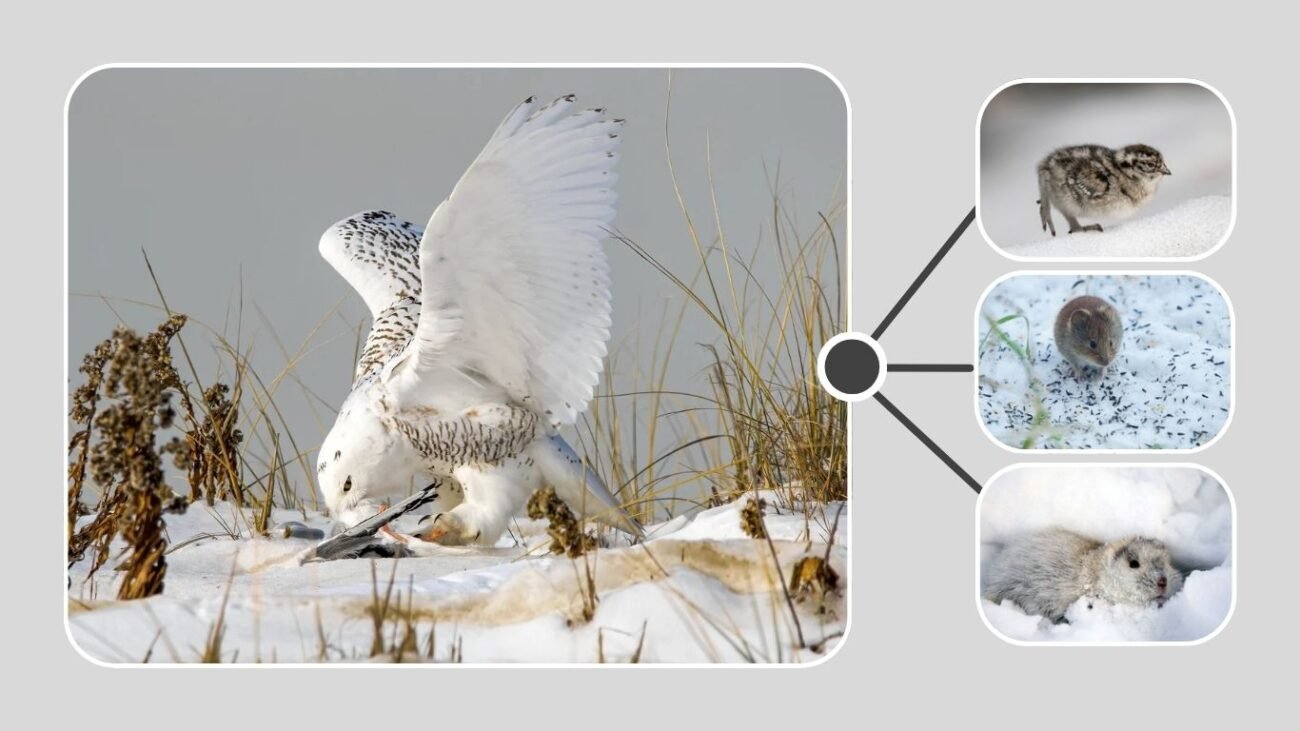
Winter is a particularly challenging time for many animals in the Arctic, but snowy owls are well adapted to the cold. During winter, snowy owls continue to rely on their primary food sources:
- Lemmings and voles remain active under the snow and are still readily available for snowy owls to hunt.
- Birds, such as ptarmigans, are still active in the winter months, providing an additional food source.
However, the availability of prey decreases somewhat in the colder months, and snowy owls may need to hunt more aggressively or travel further to find food. Snowy owls are opportunistic hunters, meaning they will adapt to whatever food sources are available during the winter.
What Animals Do Snowy Owls Eat?
Snowy owls have a varied diet and will prey on any suitable animal they can find. The most common animals they eat include:
- Lemmings – A primary food source in the Arctic tundra.
- Voles – Another favorite prey item, abundant in the northern regions.
- Mice and shrews – Small mammals that make up a significant part of their diet.
- Birds – Snowy owls are capable of hunting and eating waterfowl, ptarmigans, and other small birds.
- Fish – Occasionally, snowy owls will eat fish, particularly if they are near coastal areas or during the winter when other food sources are scarce.
Snowy Owls and Their Role in the Ecosystem
As predators, snowy owls play a vital role in maintaining the health of their ecosystems. They help control populations of small mammals and birds, particularly rodents, which can otherwise overpopulate and damage plant life. Snowy owls’ presence in an environment is often an indicator of a balanced, healthy ecosystem with abundant prey.
Their hunting behaviors also help keep the populations of other predators, such as smaller birds of prey, in check. Snowy owls maintain a natural balance by keeping prey populations within sustainable limits.
FAQs
What do snowy owls eat in the wild?
In the wild, snowy owls primarily feed on small mammals like lemmings, voles, and mice, along with some birds like ptarmigans and waterfowl. They are opportunistic hunters and will adjust their diet based on the availability of food.
What animals do snowy owls hunt?
Snowy owls primarily hunt small mammals, including lemmings, voles, and shrews, as well as birds such as ptarmigans, waterfowl, and even songbirds. They are also known to hunt fish when available in coastal areas.
Do snowy owls only eat mammals?
No, while small mammals like lemmings and voles make up the majority of their diet, snowy owls will also eat birds and fish when available, making them opportunistic feeders.
What do snowy owls eat in winter?
During the winter, snowy owls continue to hunt lemmings, voles, and ptarmigans. Although food can be harder to find, snowy owls are well adapted to survive the colder months by relying on their sharp senses and ability to travel long distances.
Do snowy owls eat fish?
Yes, although it is not a primary food source, snowy owls will occasionally eat fish, especially if they are found near coastal regions or in winter when other prey is scarcer.