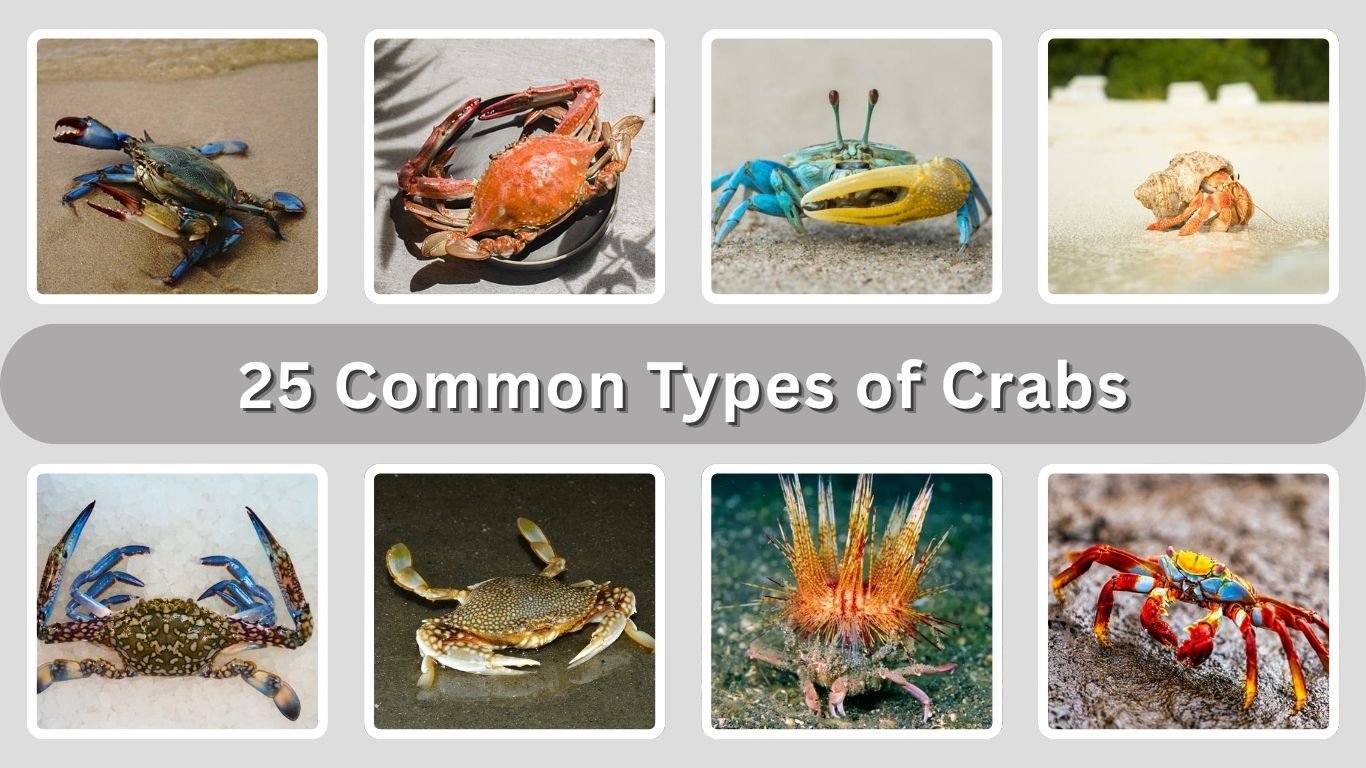
Crabs are fascinating crustaceans found in oceans, rivers, and even on land across the world. With their diverse shapes, colors, and behaviors, they play important roles in marine ecosystems and human cuisine. From the giant Japanese spider crab to the tiny fiddler crab, each species has unique characteristics. In this guide, you’ll explore 25 common types of crabs, their features, habitats, diets, and behaviors in a simple, easy-to-understand way.
1. Blue Crab
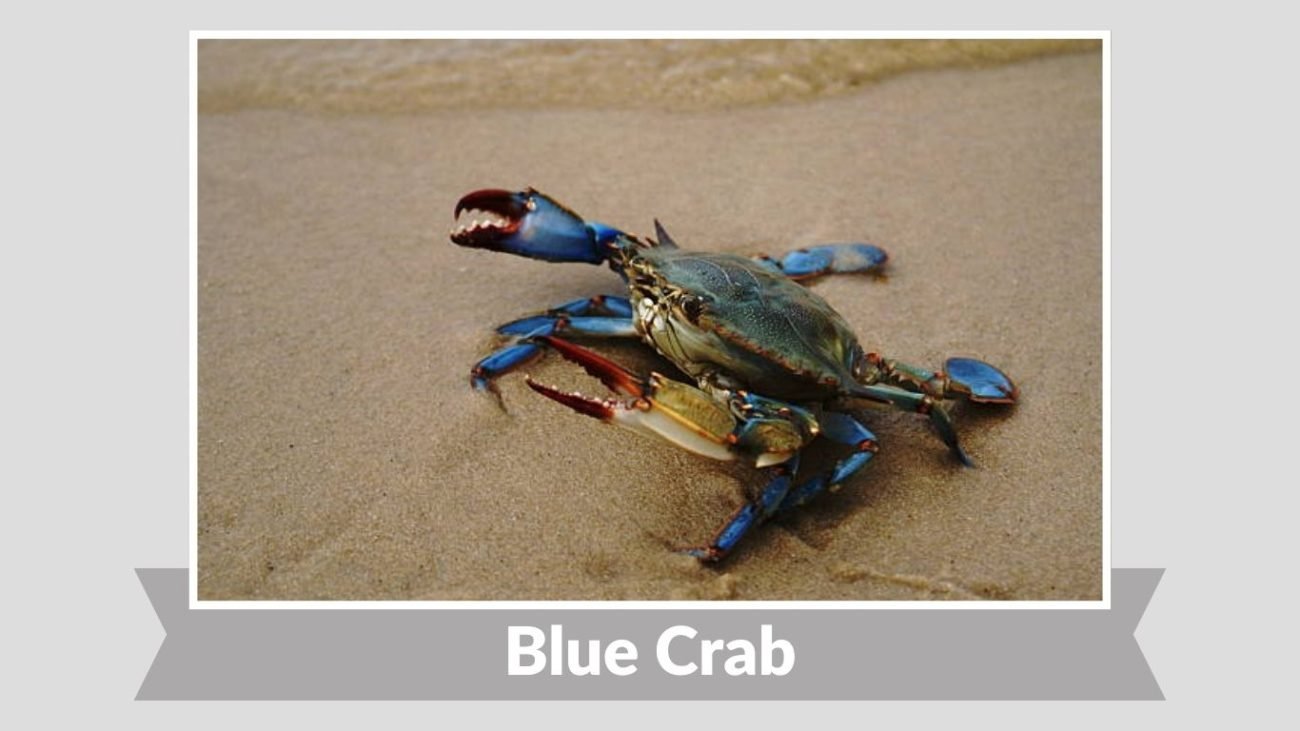
The blue crab is a widely known species found in coastal waters, especially valued for its sweet, tender meat. It is popular in seafood cuisine and plays an important role in both ecology and fisheries.
Identification
- Bright blue claws (males) and red-tipped claws (females)
- Olive to bluish-green shell
- Broad, flattened body with sharp side spines
- Paddle-shaped back legs for swimming
Habitat
Blue crabs are commonly found in estuaries, bays, and coastal waters. They prefer brackish environments where freshwater and saltwater mix, often hiding in mud or seagrass beds.
Diet
They are opportunistic feeders, eating small fish, clams, plants, and even other crabs. Blue crabs are known for scavenging and play a key role in maintaining ecosystem balance.
Behavior
Blue crabs are aggressive and highly active. They are strong swimmers and often migrate based on seasons, especially during breeding periods.
2. Dungeness Crab
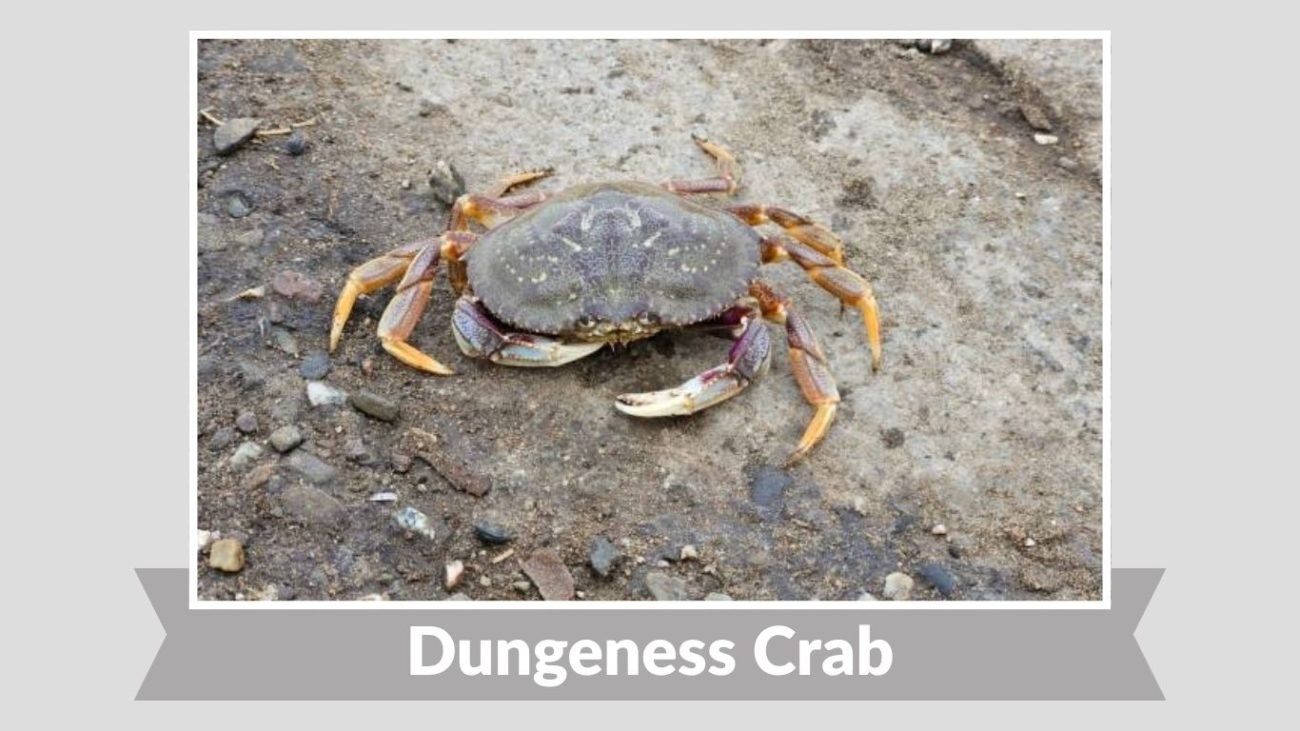
The Dungeness crab is a popular seafood species native to the west coast of North America. Known for its delicate, slightly sweet flavor, it is highly prized in commercial and recreational fisheries.
Identification
- Reddish-brown shell with a smooth texture
- Broad, oval-shaped carapace
- Long legs with light-colored tips
- No prominent spines compared to other crabs
Habitat
Dungeness crabs are typically found along sandy or muddy ocean floors, from shallow coastal areas to deeper offshore waters. They often burrow into the substrate for protection.
Diet
They feed on small fish, worms, clams, and other crustaceans. As scavengers, they also consume dead organic material found on the ocean floor.
Behavior
These crabs are mostly bottom dwellers and are known to migrate seasonally. They molt regularly as they grow and are more vulnerable during these periods.
3. Snow Crab
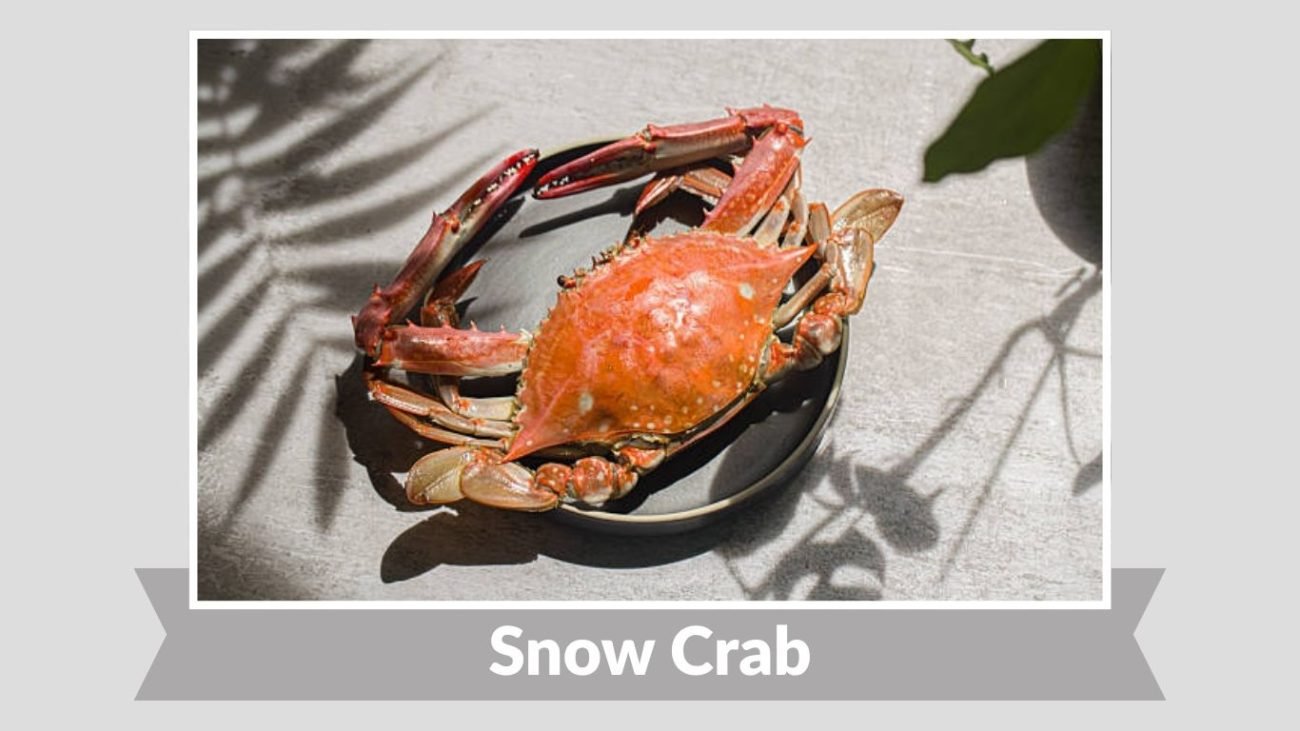
Snow crabs are cold-water species widely harvested for their long, tender legs. They are commonly found in northern oceans and are a major part of the seafood industry.
Identification
- Light brown to reddish shell
- Long, slender legs compared to body size
- Hard outer shell with a slightly rough surface
- Smaller body with extended limb span
Habitat
Snow crabs live in cold, deep ocean waters, often on sandy or muddy bottoms. They prefer temperatures near freezing and are commonly found in the North Atlantic and North Pacific.
Diet
Their diet includes small invertebrates, mollusks, worms, and organic debris. They use their claws to break apart food on the seabed.
Behavior
Snow crabs are slow-moving and adapted to cold environments. They often gather in groups and migrate to different depths depending on life stage and season.
4. King Crab
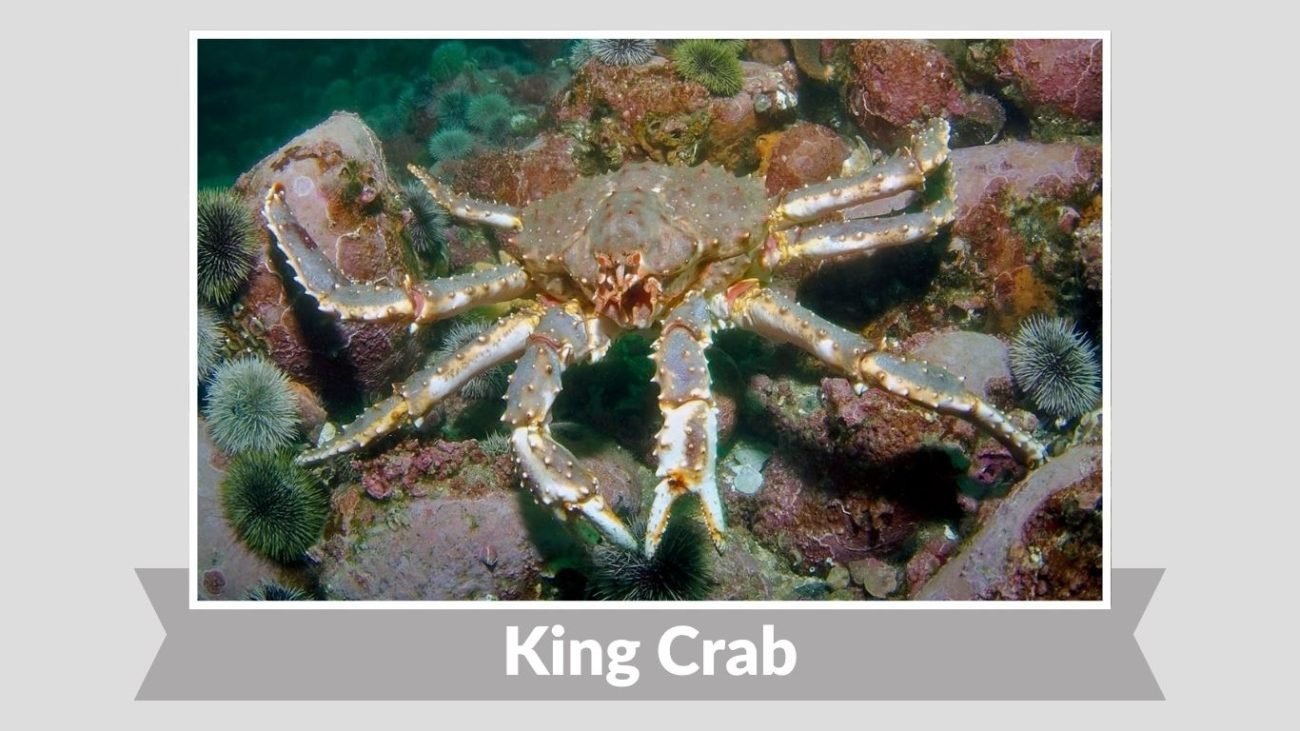
King crabs are among the largest and most impressive crab species, widely recognized for their massive size and highly valued meat. They are especially popular in global seafood markets due to their rich, succulent flavor and firm texture. Found mainly in cold northern waters, king crabs are often considered a luxury seafood item and are heavily regulated to ensure sustainable harvesting.
Identification
- Large, spiny shell with a reddish or golden color
- Extremely long legs with thick, meaty segments
- Two large front claws (one usually larger than the other)
- Body appears smaller compared to its leg span
Habitat
King crabs inhabit cold ocean waters, particularly in the North Pacific and Arctic regions. They are commonly found on sandy or muddy sea floors at depths ranging from shallow coastal zones to deep waters. During different life stages, they may migrate between depths, often moving closer to shore for breeding and then returning to deeper environments. Their preference for cold temperatures makes them well adapted to harsh marine conditions.
Diet
King crabs are opportunistic feeders with a varied diet. They consume mollusks, small fish, worms, and other crustaceans. Using their powerful claws, they can crush hard shells to access food. They also scavenge for dead organisms on the ocean floor, playing an important role in the marine ecosystem by recycling nutrients.
Behavior
King crabs are generally slow-moving but can travel long distances during seasonal migrations. They often move in large groups, especially during breeding seasons. Molting is a crucial part of their life cycle, allowing them to grow, but it also leaves them vulnerable to predators. Despite their size, they rely on both their tough shells and group behavior for protection.
5. Stone Crab
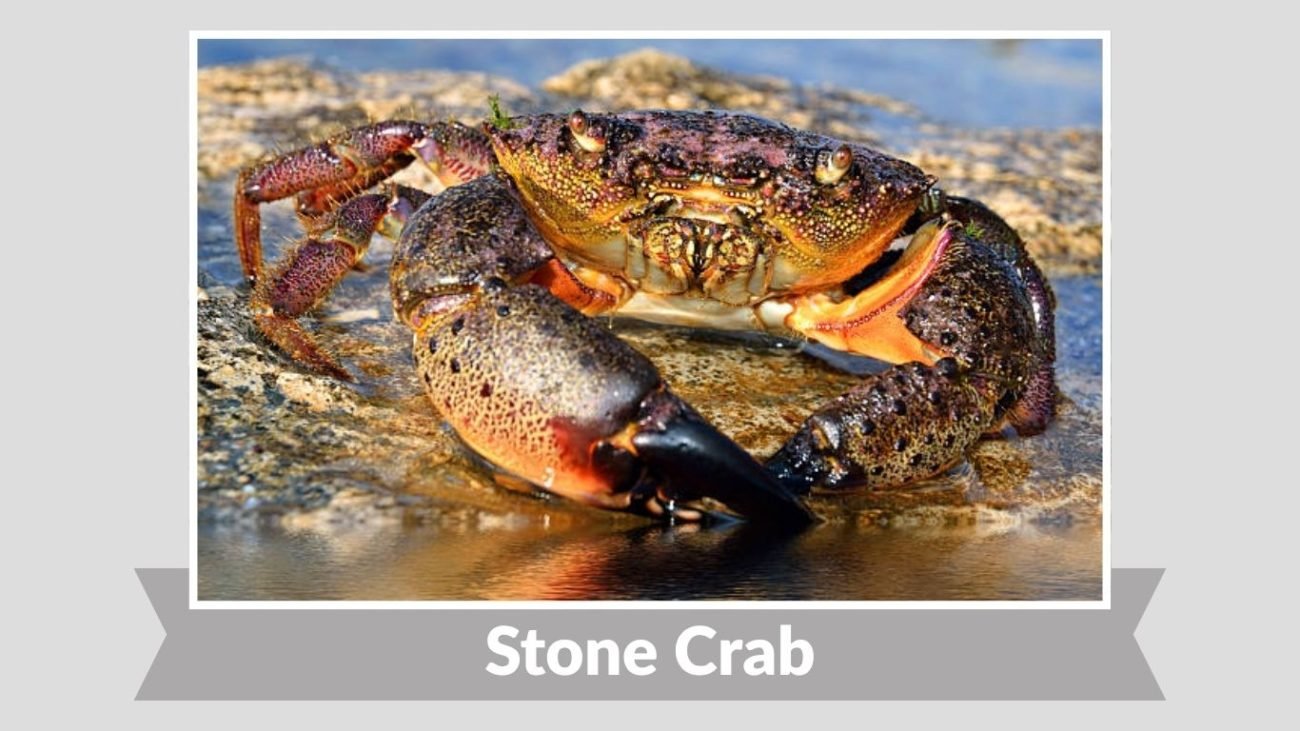
Stone crabs are well known for their strong claws, which are considered a delicacy, particularly in regions like Florida. Unlike many other crab species, stone crabs are harvested sustainably by removing one claw and returning the crab to the water, allowing it to regenerate over time. This unique practice has made them an important example of sustainable seafood management.
Identification
- Dark brown to blackish shell with a rough texture
- Large, powerful claws with black tips
- Thick, heavy body built for strength rather than speed
- One claw often larger and more dominant
Habitat
Stone crabs are typically found in warm coastal waters, including the Gulf of Mexico and the western Atlantic Ocean. They prefer rocky bottoms, seagrass beds, and shallow marine environments where they can hide in crevices or burrow into the substrate. Their habitat choice provides both protection from predators and easy access to food sources.
Diet
They primarily feed on mollusks such as clams, oysters, and other shellfish. Their strong claws are capable of crushing hard shells with ease. Stone crabs may also consume small fish and organic matter, making them both predators and scavengers within their ecosystem.
Behavior
Stone crabs are mostly nocturnal and spend much of their time hidden during the day. They are territorial and will defend their space aggressively using their powerful claws. One of their most notable behaviors is claw regeneration, which allows them to recover from predation or harvesting. This ability contributes significantly to their survival and sustainability as a species.
6. Mud Crab
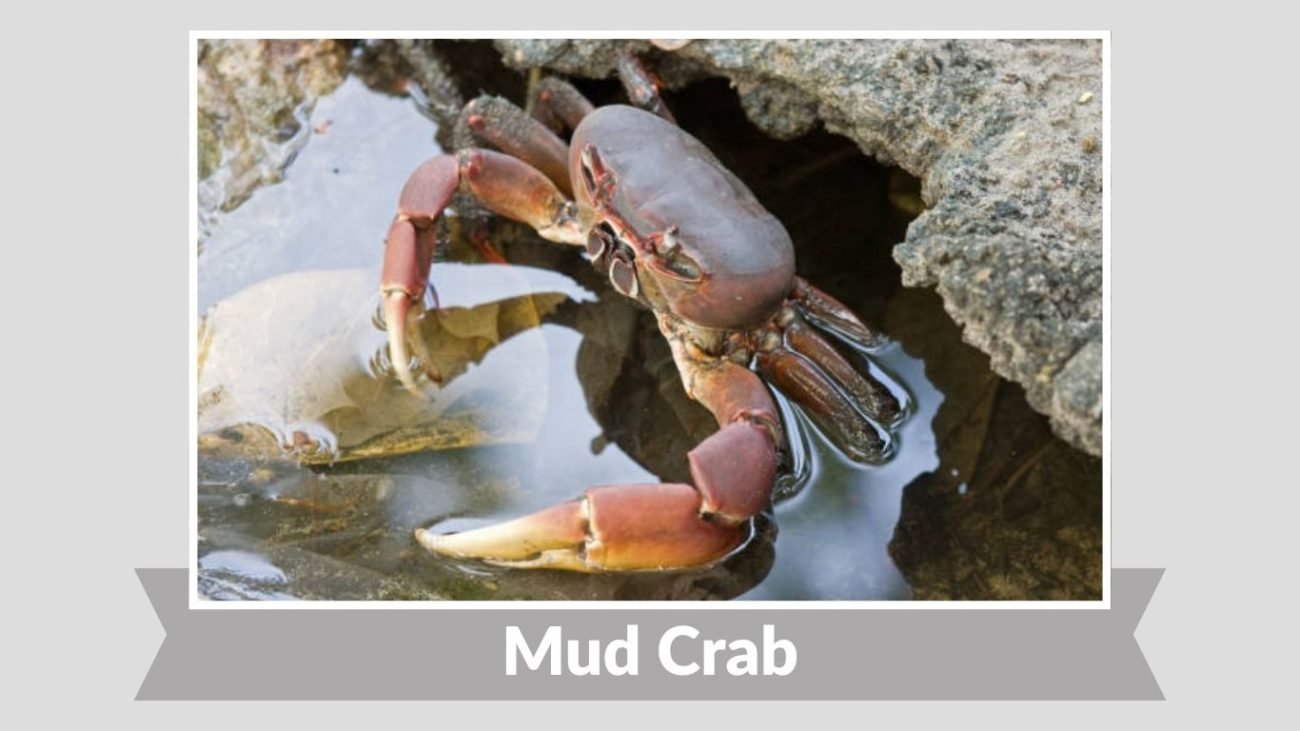
Mud crabs are large, aggressive crabs commonly found in tropical and subtropical regions. They are highly valued for their rich, flavorful meat and are widely farmed in aquaculture. Known for their strength and adaptability, mud crabs thrive in muddy coastal environments and play an important role in local fisheries.
Identification
- Dark green to brown shell with a smooth surface
- Large, heavy claws with strong grip
- Broad and thick body structure
- Legs adapted for walking rather than swimming
Habitat
Mud crabs are typically found in mangroves, estuaries, and muddy coastal areas. They prefer environments where they can burrow into soft mud for protection. These crabs are well adapted to brackish water and can tolerate changes in salinity, which allows them to survive in dynamic coastal ecosystems.
Diet
They are carnivorous and feed on small fish, mollusks, worms, and other crustaceans. Mud crabs use their powerful claws to crush shells and capture prey. They are also scavengers, consuming dead organic matter when available.
Behavior
Mud crabs are highly territorial and aggressive, especially when competing for food or shelter. They are mostly active at night and tend to hide during the day. Their burrowing behavior helps them avoid predators and extreme environmental conditions.
7. Fiddler Crab
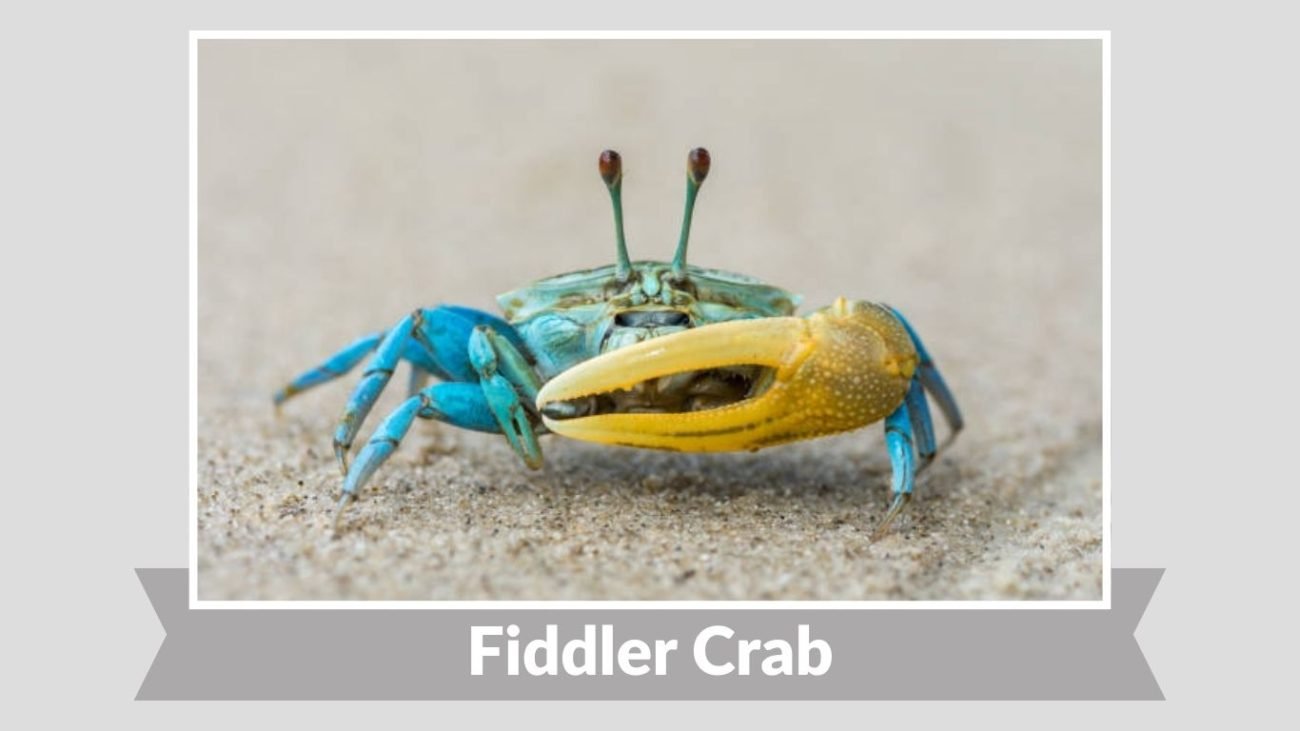
Fiddler crabs are small, distinctive crabs best known for the male’s oversized claw, which resembles a violin or “fiddle.” These crabs are commonly seen in coastal mudflats and are an important part of shoreline ecosystems.
Identification
- Males have one extremely large claw and one small claw
- Small body size with a square-shaped carapace
- Colors range from yellow and orange to brown
- Eyes located on stalks for better visibility
Habitat
Fiddler crabs live in intertidal zones such as mudflats, mangroves, and sandy shores. They dig burrows in soft sediment, which they use for shelter and protection from predators and tides. These habitats are often exposed during low tide, allowing the crabs to move freely and feed.
Diet
They are detritivores, feeding mainly on organic material found in mud and sand. Fiddler crabs scoop up sediment, extract nutrients like algae and microorganisms, and discard the remaining particles. This feeding behavior helps recycle nutrients in coastal ecosystems.
Behavior
Fiddler crabs are known for their unique communication and mating displays. Males wave their large claw to attract females and to signal to rivals. They are social creatures often found in large groups, and their constant burrowing activity helps aerate the soil in their habitat.
8. Hermit Crab
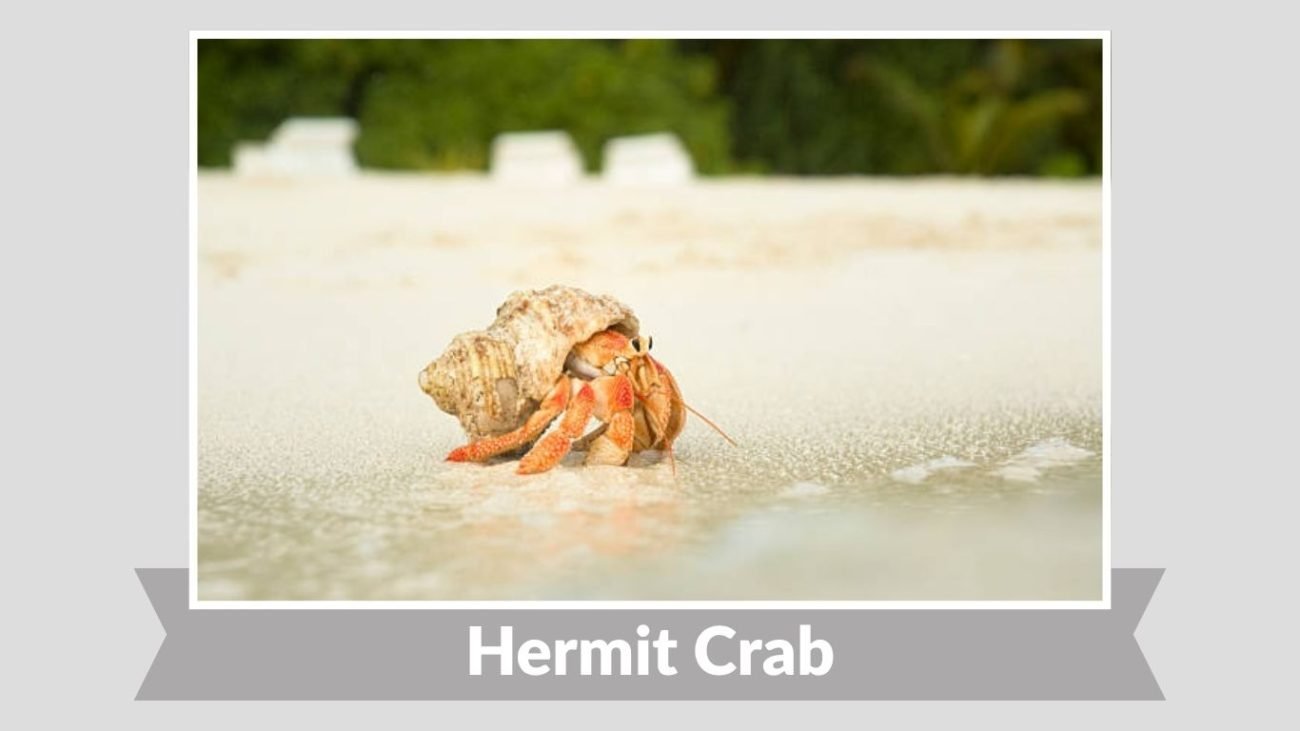
Hermit crabs are unique among crabs because they do not have a fully hard shell covering their entire body. Instead, they protect their soft abdomen by living inside discarded shells, usually from snails. They are popular in both marine environments and as pets due to their interesting behavior and adaptability.
Identification
- Soft, curved abdomen hidden inside a borrowed shell
- Small, uneven claws (one often larger)
- Varying colors depending on species
- Long antennae and slender walking legs
Habitat
Hermit crabs are found in both marine and terrestrial environments, especially in tropical and subtropical regions. Marine species live in shallow coastal waters, while land hermit crabs stay near shorelines and require access to moisture. They depend heavily on available shells for survival, often changing shells as they grow.
Diet
They are omnivores and scavengers, feeding on algae, decaying plants, small insects, and leftover organic matter. Hermit crabs play an important ecological role by cleaning up debris in their environment.
Behavior
Hermit crabs are social and often live in groups. One of their most notable behaviors is “shell swapping,” where multiple crabs line up to exchange shells when a larger one becomes available. They are generally peaceful but may compete for better shells.
9. Ghost Crab
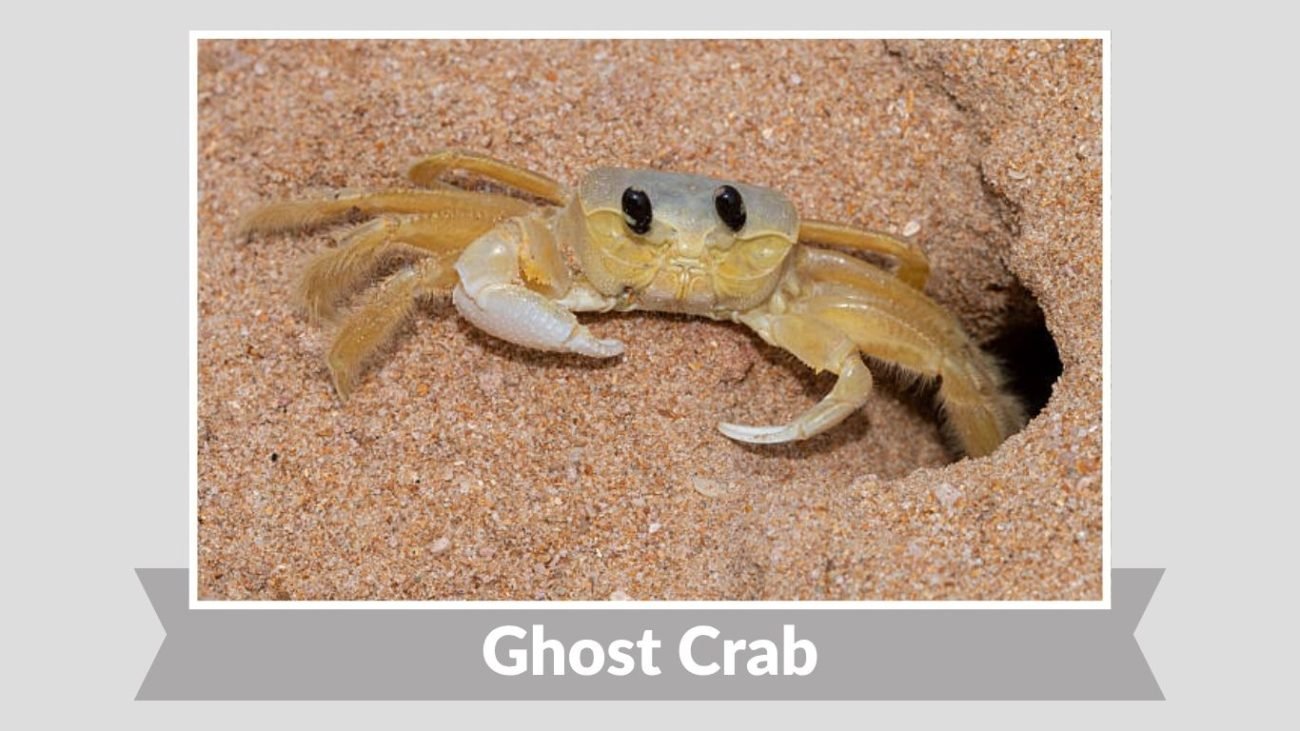
Ghost crabs are fast-moving, pale-colored crabs commonly found along sandy beaches. Their name comes from their light coloration, which helps them blend into their surroundings, making them appear almost invisible.
Identification
- Pale, sandy-colored body for camouflage
- Long legs built for speed
- Square-shaped carapace
- Eyes on tall stalks with excellent vision
Habitat
Ghost crabs live on sandy beaches in tropical and subtropical coastal areas. They dig deep burrows above the high-tide line, which provide protection from predators and harsh environmental conditions. These burrows also help them regulate temperature and moisture.
Diet
They are omnivores, feeding on small insects, marine organisms, plant material, and organic debris. Ghost crabs are also known to scavenge for food along the shoreline, especially at night.
Behavior
Ghost crabs are primarily nocturnal and are rarely seen during the day. They are extremely fast runners, using speed to escape predators. Their burrowing behavior is a key part of their lifestyle, and they often retreat quickly into their holes when threatened.
10. Spider Crab
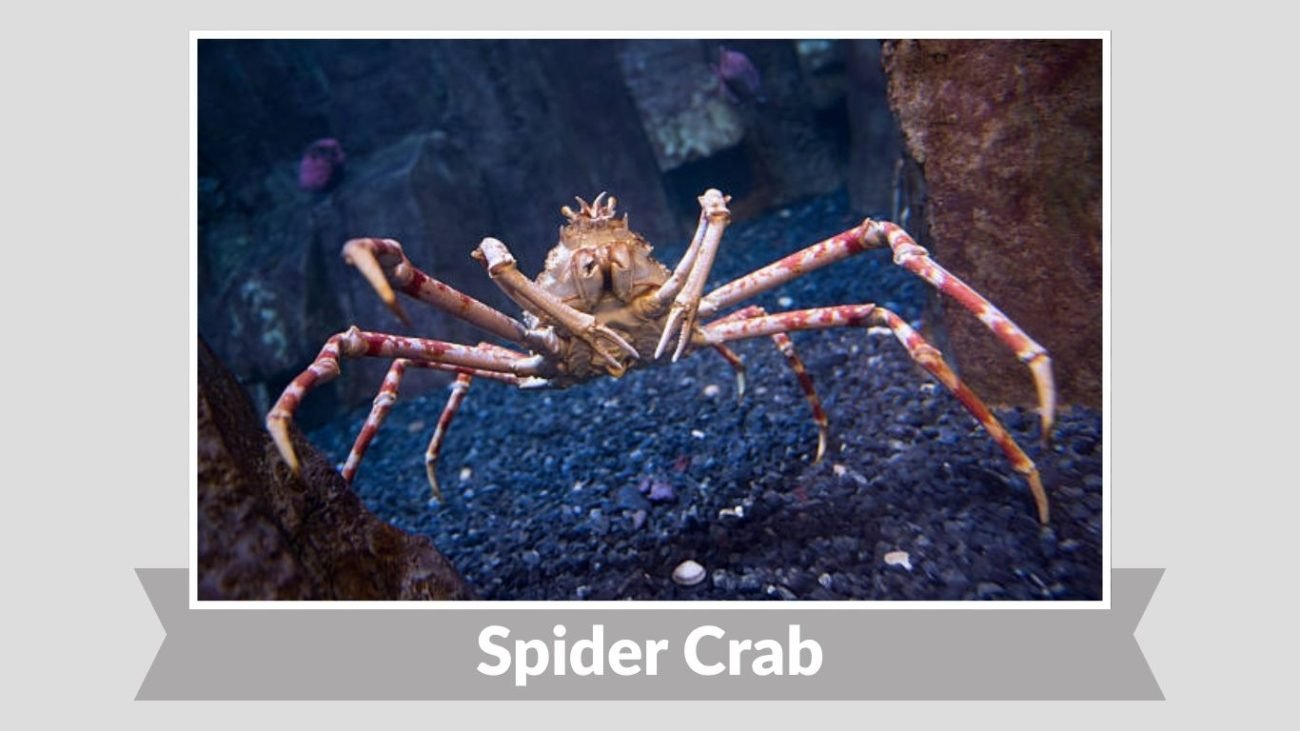
Spider crabs are known for their long, thin legs and somewhat spider-like appearance. Some species, like the Japanese spider crab, can grow to enormous sizes, making them one of the largest arthropods in the world. Despite their intimidating look, they are generally slow-moving and harmless.
Identification
- Very long, slender legs compared to body size
- Small, rounded body
- Often covered with algae or debris for camouflage
- Colors range from orange to brown
Habitat
Spider crabs are typically found in deep ocean waters, although some species live in shallower coastal areas. They prefer rocky or sandy sea floors where they can blend into their surroundings. Many species inhabit cold waters and remain at significant depths for most of their lives.
Diet
They are scavengers and feed on dead animals, plant material, and small invertebrates. Spider crabs play an important ecological role by cleaning up organic debris on the ocean floor.
Behavior
Spider crabs are slow and deliberate in movement. Many species use a behavior called “decorating,” where they attach algae, sponges, or debris to their shells for camouflage. They are mostly solitary and rely on disguise rather than speed or aggression for protection.
11. Horseshoe Crab
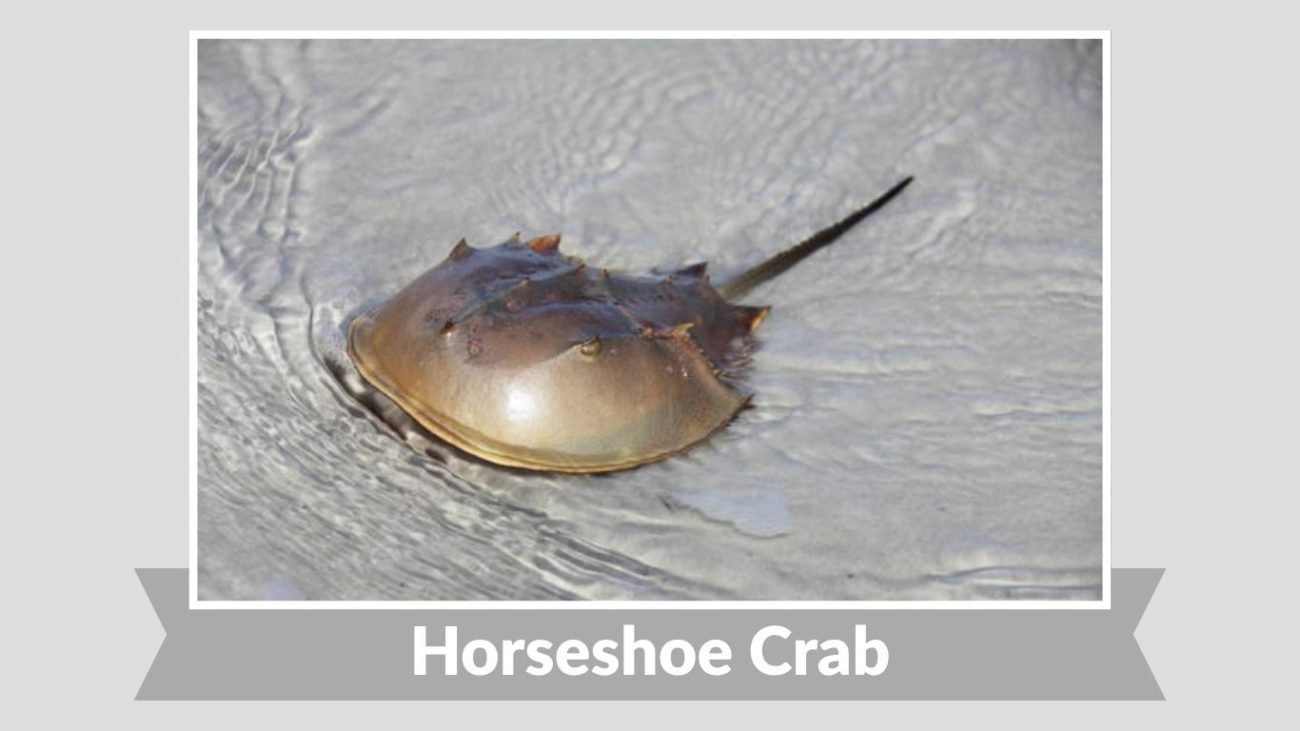
Horseshoe crabs are ancient marine creatures that have existed for hundreds of millions of years. Despite their name, they are not true crabs but are more closely related to spiders and scorpions. They are well known for their hard, horseshoe-shaped shell and unique blue blood.
Identification
- Hard, dome-shaped shell resembling a horseshoe
- Long, pointed tail spine (telson)
- Brown or gray coloration
- Multiple legs hidden beneath the shell
Habitat
Horseshoe crabs are found in shallow coastal waters, especially along sandy or muddy shores. They often come onto beaches during high tides for spawning. These environments provide ideal conditions for laying eggs and developing young.
Diet
They feed on worms, small mollusks, and other bottom-dwelling organisms. Using their legs, they grind food before consuming it. Horseshoe crabs help maintain the balance of marine ecosystems by controlling populations of small invertebrates.
Behavior
Horseshoe crabs are mostly active at night and are known for their seasonal spawning behavior, where large numbers gather on beaches. Their blue blood is scientifically important and used in medical testing. Despite their prehistoric appearance, they are gentle and non-aggressive creatures.
12. Coconut Crab
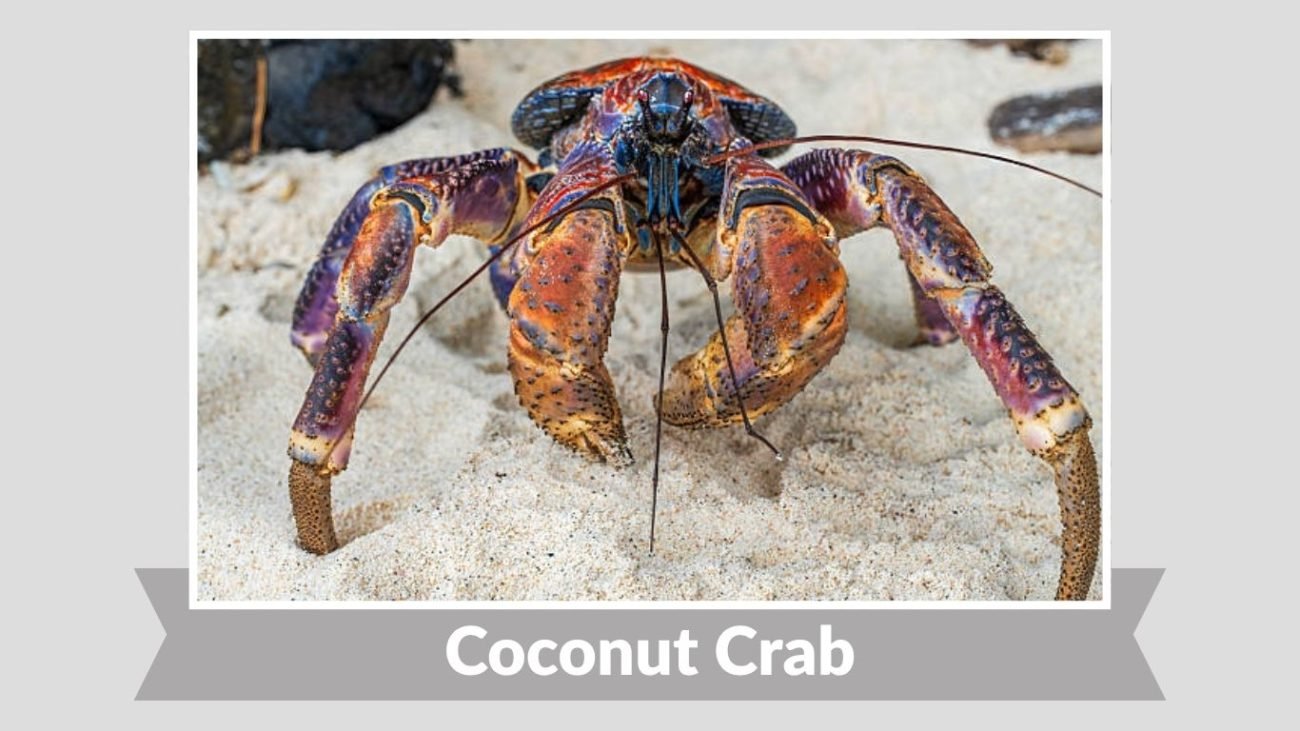
The coconut crab is the largest land-living arthropod in the world, famous for its incredible strength and ability to crack open coconuts. Despite being called a crab, it spends most of its adult life on land and only returns to the sea to reproduce. Its size, power, and unusual lifestyle make it one of the most fascinating crab species.
Identification
- Large, heavy body with strong, thick legs
- Powerful front claws capable of breaking hard objects
- Color varies from blue to purple or brown
- Hard outer shell with a robust appearance
Habitat
Coconut crabs are found on tropical islands across the Indian and Pacific Oceans. They live in coastal forests, rocky areas, and burrows in the ground. Although they are land dwellers, they require humid environments to survive and are usually found not far from the shoreline.
Diet
They are omnivores, feeding on fruits, seeds, nuts, and decaying organic matter. Coconut crabs can climb trees to access food and are known for cracking open coconuts using their powerful claws. They may also eat small animals and carrion when available.
Behavior
Coconut crabs are mostly nocturnal and spend the daytime hidden in burrows or crevices. They are solitary and highly territorial. Their climbing ability and strong sense of smell help them locate food over long distances, making them efficient foragers.
13. Red Rock Crab
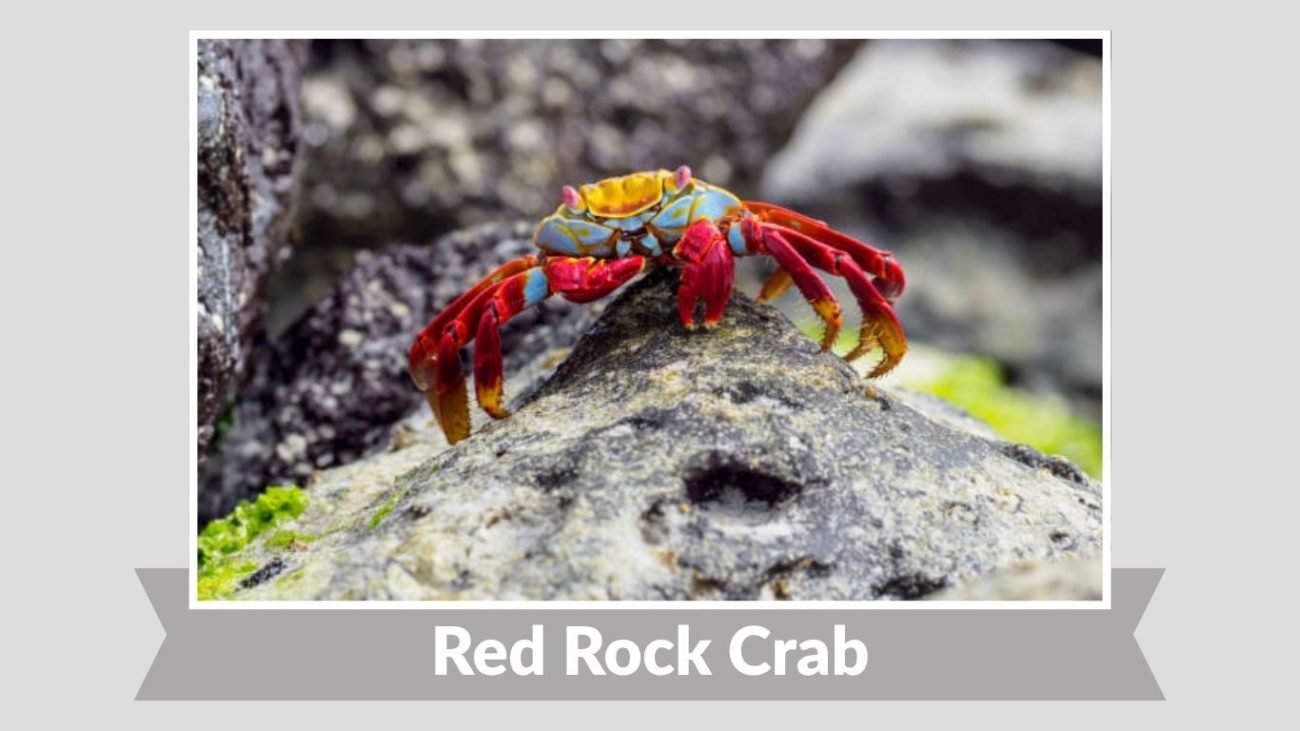
The red rock crab is a sturdy coastal species commonly found along the Pacific coast of North America. It is recognized for its hard shell and reddish coloration. Although not as commercially popular as some other crabs, it is still valued for its meat and ecological role.
Identification
- Dark red or brown shell with a rough texture
- Strong claws with black tips
- Wide, oval-shaped carapace
- Legs adapted for gripping rocky surfaces
Habitat
Red rock crabs inhabit rocky shorelines, tide pools, and coastal waters. They prefer areas with plenty of crevices and hiding spots, which provide protection from predators and strong waves. These crabs are well adapted to both submerged and intertidal environments.
Diet
They are opportunistic feeders, consuming small shellfish, barnacles, algae, and organic debris. Their strong claws allow them to break open hard shells and access a wide range of food sources.
Behavior
Red rock crabs are relatively aggressive and will defend themselves when threatened. They are often found hiding under rocks during the day and become more active at night. Their ability to cling tightly to rocky surfaces helps them survive in wave-exposed environments.
14. Peekytoe Crab
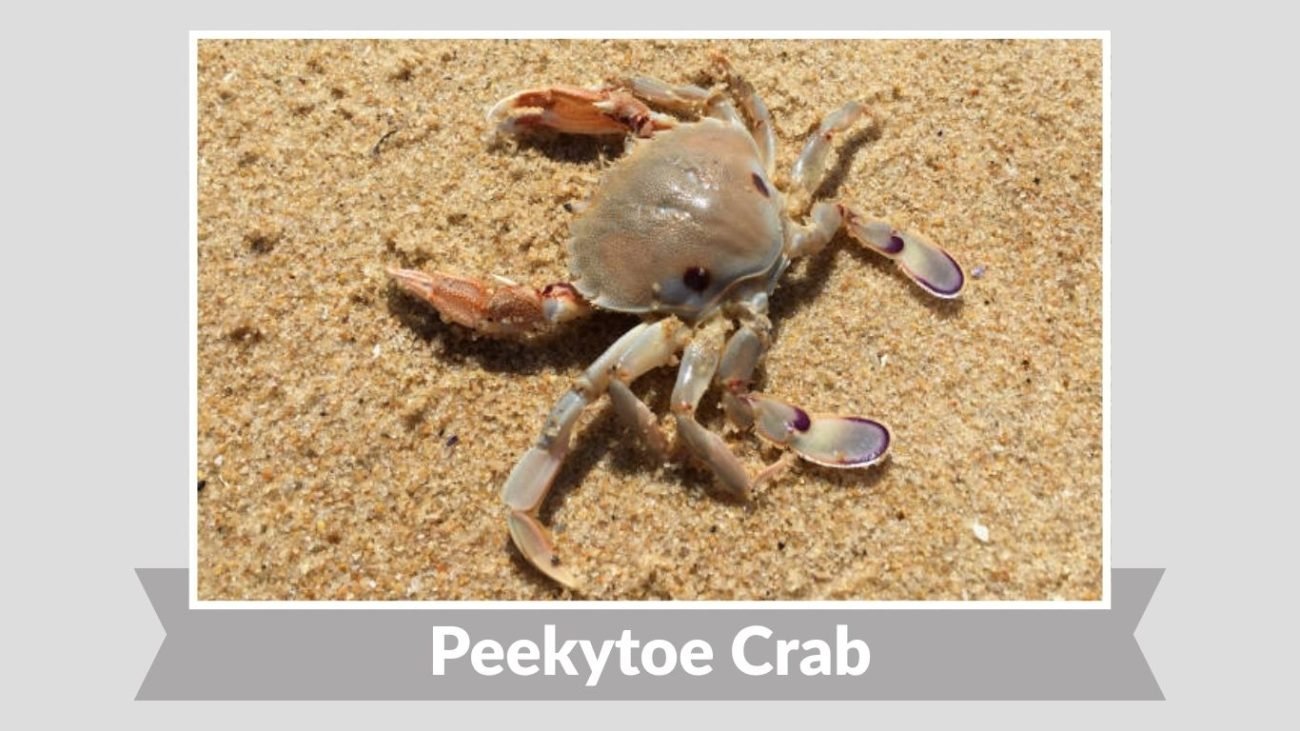
The peekytoe crab is a small but highly valued crab species, especially known for its sweet and delicate meat. It is commonly found along the northeastern coast of North America and has gained popularity in gourmet cuisine. Despite its odd name, it is considered a delicacy in many seafood dishes.
Identification
- Small size with a rounded, compact body
- Brownish shell with lighter legs
- Slender claws compared to body size
- Smooth carapace without large spines
Habitat
Peekytoe crabs live in cold coastal waters, particularly along rocky seabeds and gravelly areas. They prefer environments where they can hide among rocks and crevices. These habitats offer both protection from predators and access to abundant food sources.
Diet
They feed on small marine organisms such as worms, mollusks, and organic debris. As scavengers, they help clean up the ocean floor by consuming leftover materials and dead organisms.
Behavior
Peekytoe crabs are relatively shy and tend to stay hidden during the day. They are more active at night, searching for food among rocks and sediment. Their small size makes them vulnerable, so they rely heavily on camouflage and shelter.
15. Jonah Crab
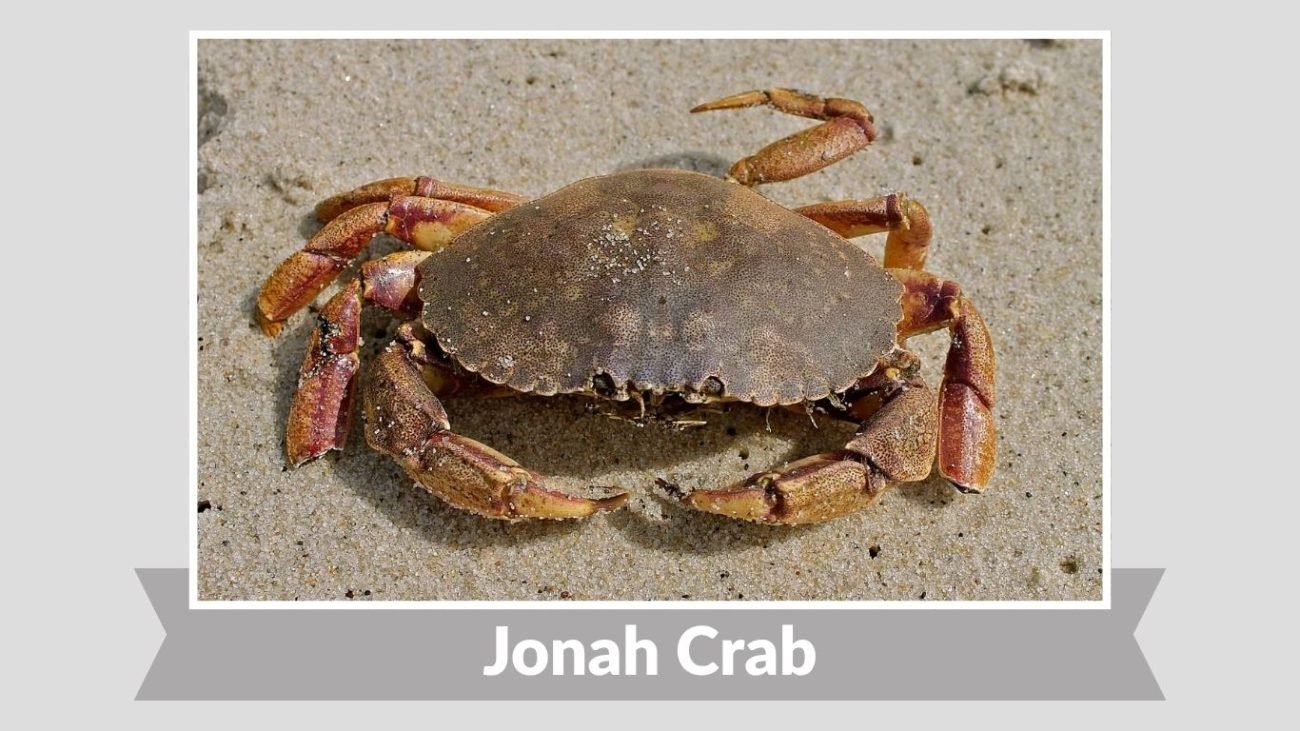
The Jonah crab is a robust species found along the Atlantic coast of North America. It is often harvested as a seafood alternative to more expensive crab varieties. Known for its firm and flavorful meat, it has become increasingly popular in commercial fisheries.
Identification
- Thick, rounded shell with a reddish-brown color
- Large, powerful claws with dark tips
- Smooth but sturdy carapace
- Heavier and more compact body compared to similar species
Habitat
Jonah crabs are commonly found in cold, offshore waters, often on rocky or sandy ocean floors. They prefer deeper environments but may also inhabit shallower coastal areas. These crabs use crevices and seabed structures for shelter.
Diet
They are carnivorous and feed on mollusks, small crustaceans, and other bottom-dwelling organisms. Their strong claws allow them to crush shells and access a variety of prey.
Behavior
Jonah crabs are generally solitary and spend much of their time on the ocean floor. They are slow-moving but strong and capable of defending themselves. Like many crabs, they molt as they grow and are more vulnerable during this stage.
16. Hairy Crab
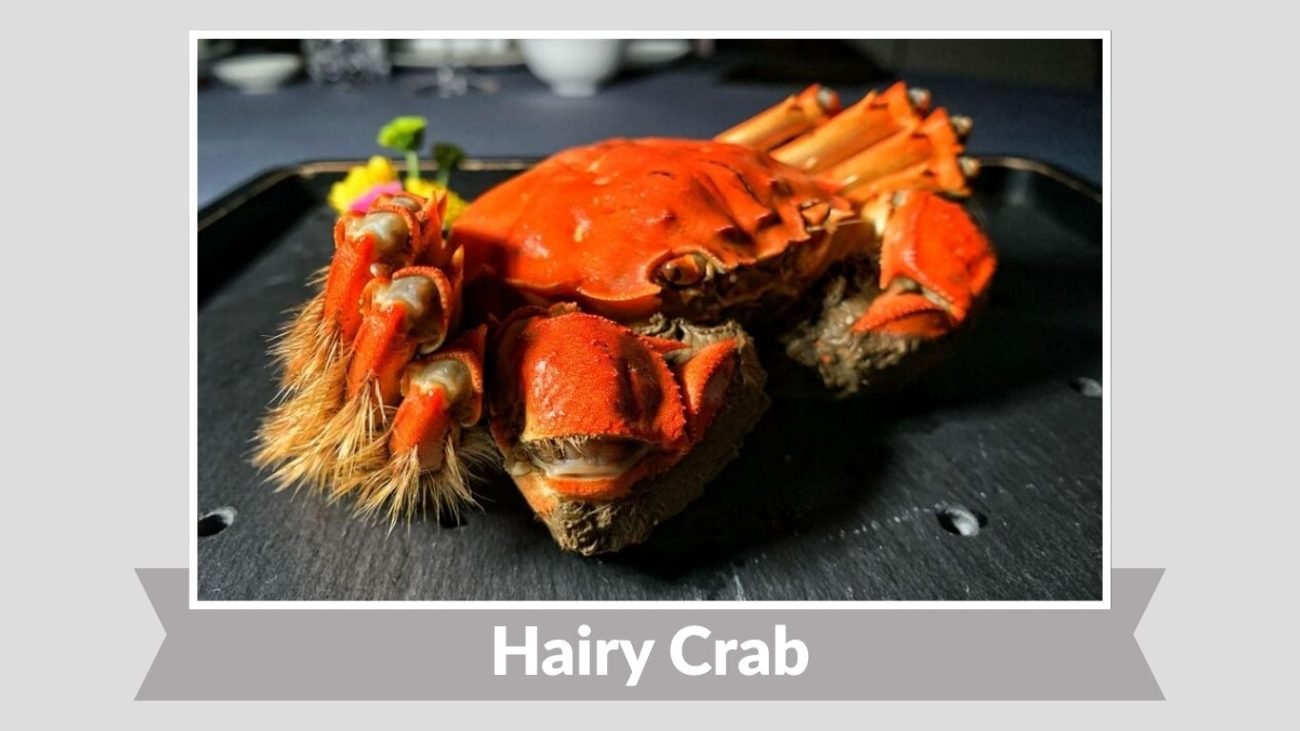
The hairy crab, also known as the Chinese mitten crab, is famous for its distinctive hairy claws and rich, creamy roe. It is especially popular in East Asian cuisine and is often considered a seasonal delicacy. This crab is also known for its ability to live in both freshwater and saltwater during different stages of its life.
Identification
- Brownish-green shell with a rounded shape
- Dense hair-like covering on claws
- Medium-sized body with relatively short legs
- Smooth carapace with subtle texture
Habitat
Hairy crabs are commonly found in rivers, lakes, and coastal estuaries, particularly in East Asia. They migrate between freshwater and marine environments during their life cycle, moving to saltwater to reproduce and returning to freshwater to grow.
Diet
They are omnivores, feeding on plants, algae, small fish, and invertebrates. Hairy crabs also scavenge for organic matter, contributing to nutrient recycling in their ecosystems.
Behavior
Hairy crabs are known for their migratory behavior, especially during breeding seasons. They are mostly nocturnal and tend to hide during the day. Their ability to adapt to different water conditions makes them highly resilient.
17. Flower Crab
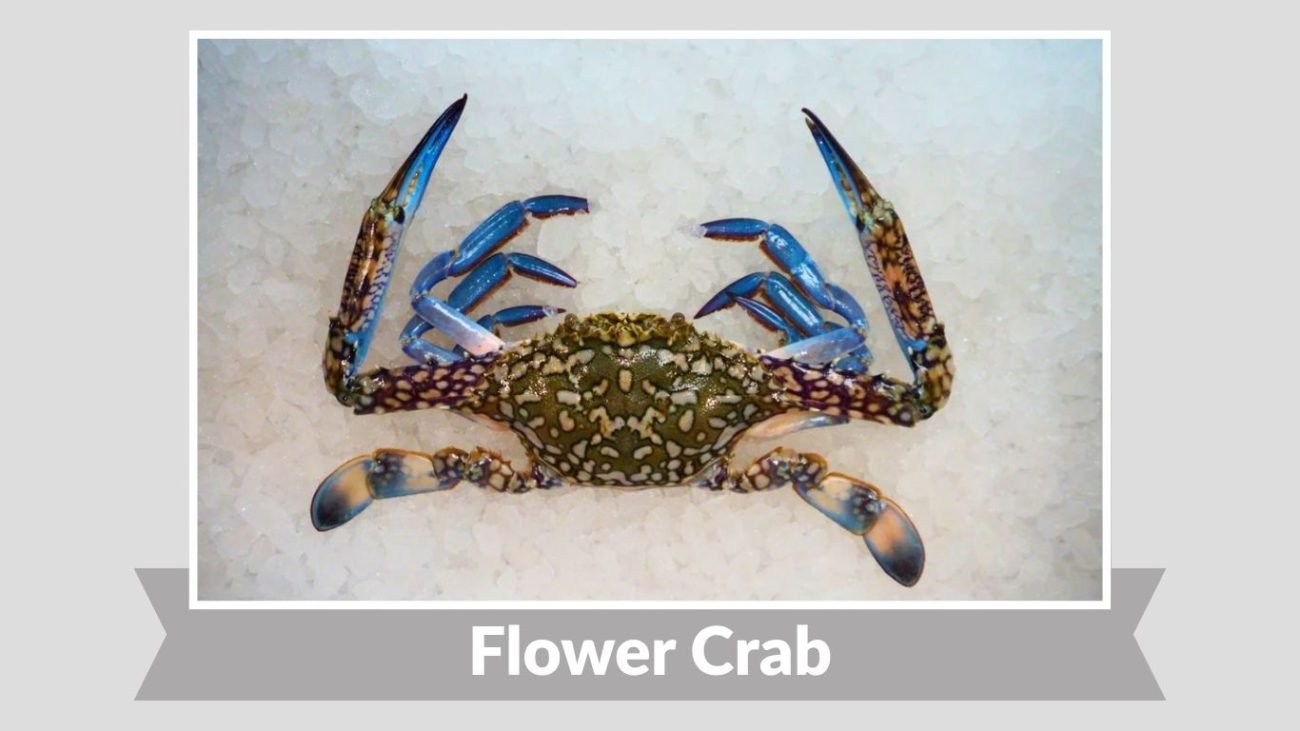
The flower crab, also called the blue swimmer crab in some regions, is known for its beautiful patterned shell and excellent swimming ability. It is widely distributed in Indo-Pacific waters and is an important species for commercial fishing.
Identification
- Bright blue or green shell with white flower-like patterns
- Long, flat swimming legs at the rear
- Slender body compared to other crabs
- Sharp spines along the edges of the shell
Habitat
Flower crabs are typically found in shallow coastal waters, including sandy bottoms, seagrass beds, and estuaries. They prefer warm tropical and subtropical environments and are often seen in areas with calm waters.
Diet
They are carnivorous, feeding on small fish, shellfish, worms, and other crustaceans. Their agility and speed make them effective hunters in their environment.
Behavior
Flower crabs are active swimmers and can move quickly through the water using their paddle-shaped legs. They are generally more mobile than many other crab species and may migrate short distances in search of food or suitable habitats.
18. Swimming Crab
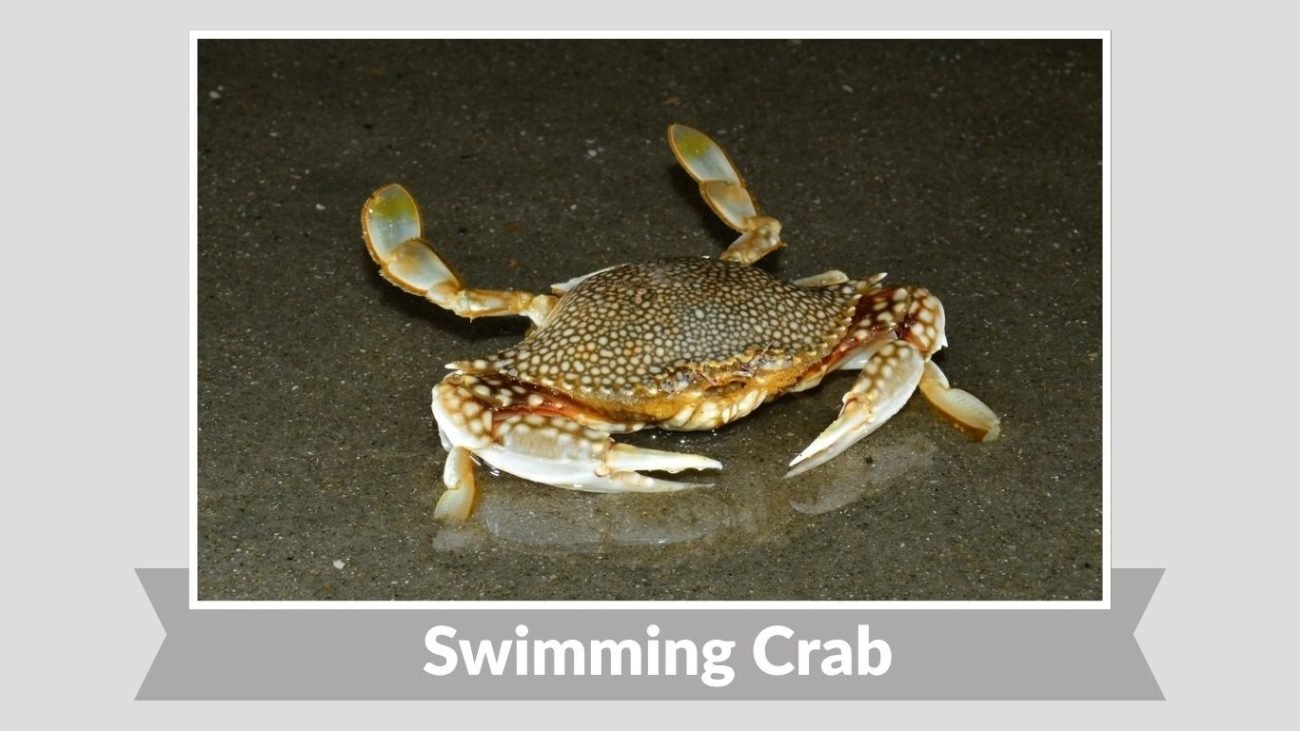
Swimming crabs are a group of crabs known for their strong swimming ability, thanks to their specially adapted hind legs. They are widely distributed in warm and temperate oceans and are important both ecologically and commercially.
Identification
- Flattened, paddle-shaped rear legs for swimming
- Smooth, often colorful shell (blue, green, or brown)
- Streamlined body for movement in water
- Sharp edges or spines along the shell
Habitat
Swimming crabs are commonly found in shallow coastal waters, estuaries, and sandy or muddy sea floors. They prefer areas where they can easily swim and bury themselves in sediment for protection. These crabs thrive in both marine and brackish environments.
Diet
They are active predators and scavengers, feeding on small fish, mollusks, worms, and other crustaceans. Their speed and agility allow them to chase prey effectively.
Behavior
Swimming crabs are highly mobile and spend much of their time moving through the water rather than walking on the seabed. They can quickly bury themselves in sand to hide from predators. Many species are also known to migrate seasonally.
19. Mangrove Crab
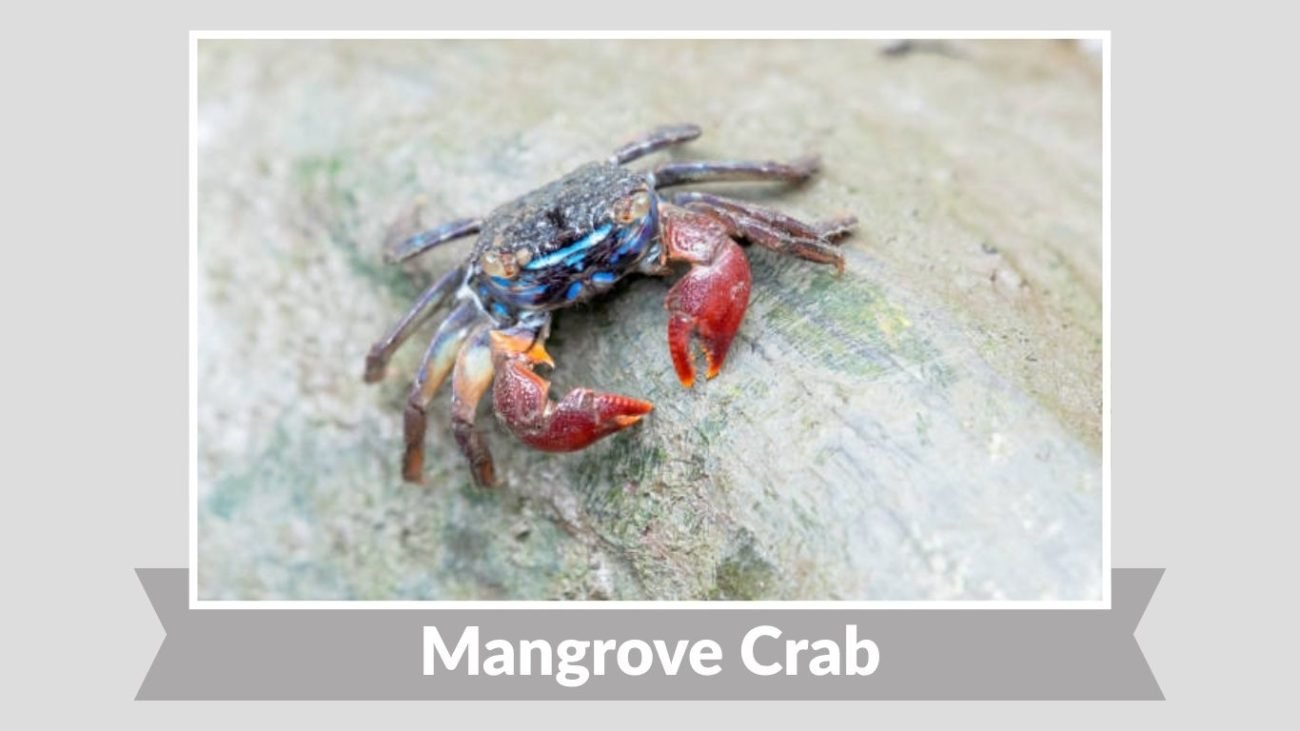
Mangrove crabs are commonly found in mangrove forests and play a vital role in maintaining the health of these ecosystems. They are known for their burrowing habits and ability to live in challenging, muddy environments.
Identification
- Dark brown, green, or black shell
- Strong claws adapted for digging and feeding
- Thick, sturdy body
- Legs suited for walking on soft mud
Habitat
Mangrove crabs live in mangrove swamps, estuaries, and coastal wetlands. They dig burrows in muddy soil, which help them stay protected from predators and extreme environmental conditions. These habitats are rich in organic matter, providing abundant food sources.
Diet
They are mostly omnivores, feeding on leaves, detritus, algae, and small animals. Mangrove crabs are important decomposers, breaking down organic material and recycling nutrients within the ecosystem.
Behavior
Mangrove crabs are often territorial and spend much of their time in burrows. They are more active during low tide when they come out to feed. Their burrowing activity improves soil aeration and contributes to the overall health of mangrove environments.
20. Decorator Crab
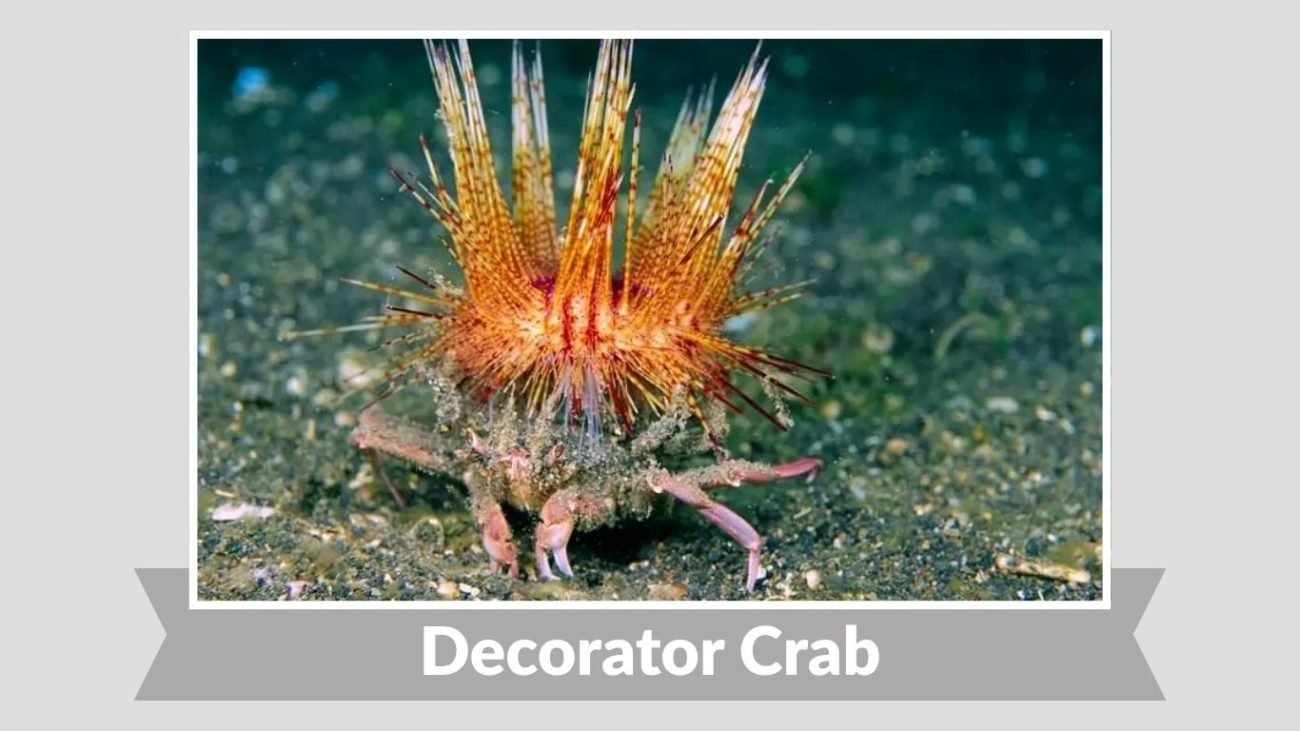
Decorator crabs are unique for their habit of attaching materials like algae, sponges, and debris to their bodies for camouflage. This behavior helps them blend into their surroundings and avoid predators, making them one of the most fascinating crab types.
Identification
- Small to medium-sized body
- Rough shell surface designed to hold attached materials
- Long legs with hook-like structures
- Often covered with algae, sponges, or debris
Habitat
Decorator crabs are found in coastal waters, coral reefs, and rocky seabeds. They prefer environments where materials for camouflage are abundant. These habitats provide both food and resources for their unique decorating behavior.
Diet
They feed on algae, small invertebrates, and organic matter. While gathering materials for camouflage, they may also consume edible items they encounter.
Behavior
Decorator crabs actively collect and attach materials to their shells using specialized hooks and sticky secretions. This camouflage helps them avoid predators. They are generally slow-moving and rely more on disguise than speed for survival.
21. Box Crab
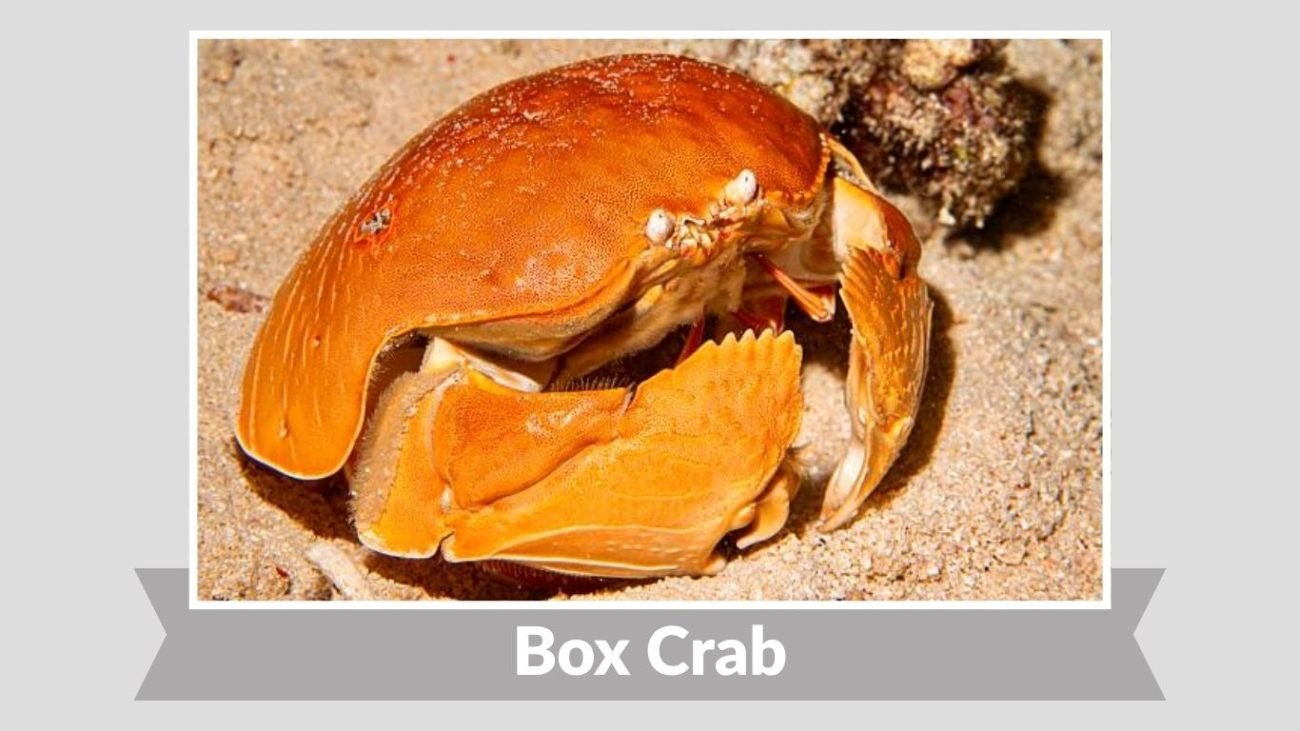
Box crabs are known for their rounded, box-like shape and their ability to tuck their legs and claws tightly against their body for protection. This unique defense mechanism makes them stand out among crab species.
Identification
- Rounded, box-shaped shell
- Legs and claws can fold tightly under the body
- Smooth, often pale-colored carapace
- Compact and sturdy body structure
Habitat
Box crabs are typically found in sandy or muddy seabeds in tropical and subtropical oceans. They often bury themselves partially in the sand to stay hidden from predators and to ambush prey.
Diet
They feed on small invertebrates, mollusks, and organic debris. Their claws are used to dig and capture prey hidden in the sand.
Behavior
Box crabs are slow-moving and rely heavily on their defensive posture for protection. When threatened, they tuck in their limbs, forming a compact shape that is difficult for predators to attack. They are mostly solitary and spend much of their time buried or hidden.
22. Porcelain Crab
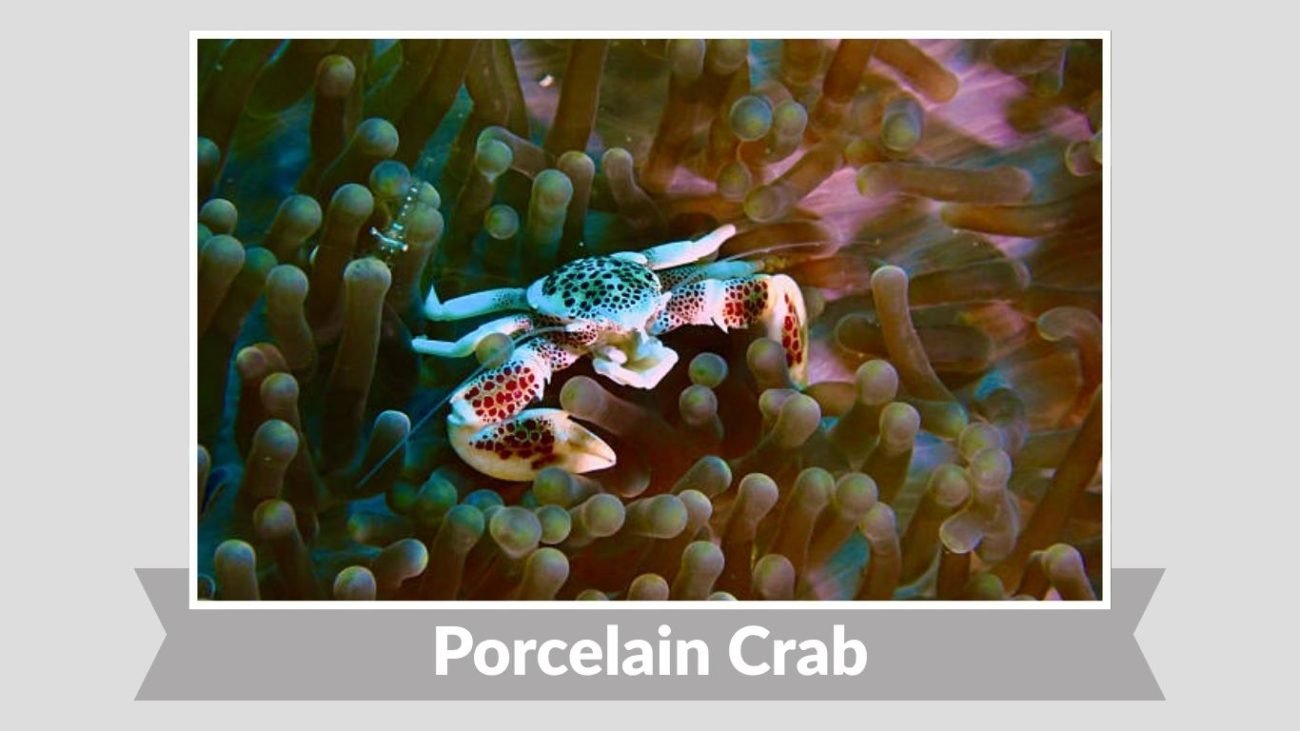
Porcelain crabs are small, delicate-looking crabs that resemble true crabs but are more closely related to squat lobsters. They are known for their flat bodies and large front claws, as well as their ability to quickly shed limbs to escape predators.
Identification
- Flat, broad body with a smooth surface
- Large front claws compared to body size
- Fragile legs that can break off easily
- Often pale or patterned in color
Habitat
Porcelain crabs are commonly found in intertidal zones, under rocks, and within coral reefs. They prefer sheltered environments where they can hide from predators and strong currents. Many species live in close association with sea anemones or other marine organisms.
Diet
They are filter feeders, using specialized mouthparts to capture tiny plankton and organic particles from the water. This feeding method sets them apart from many other crab species.
Behavior
Porcelain crabs are generally non-aggressive and rely on hiding for protection. When threatened, they may shed a limb to escape, which can later regenerate. They often remain stationary, focusing on filter feeding.
23. Arrow Crab
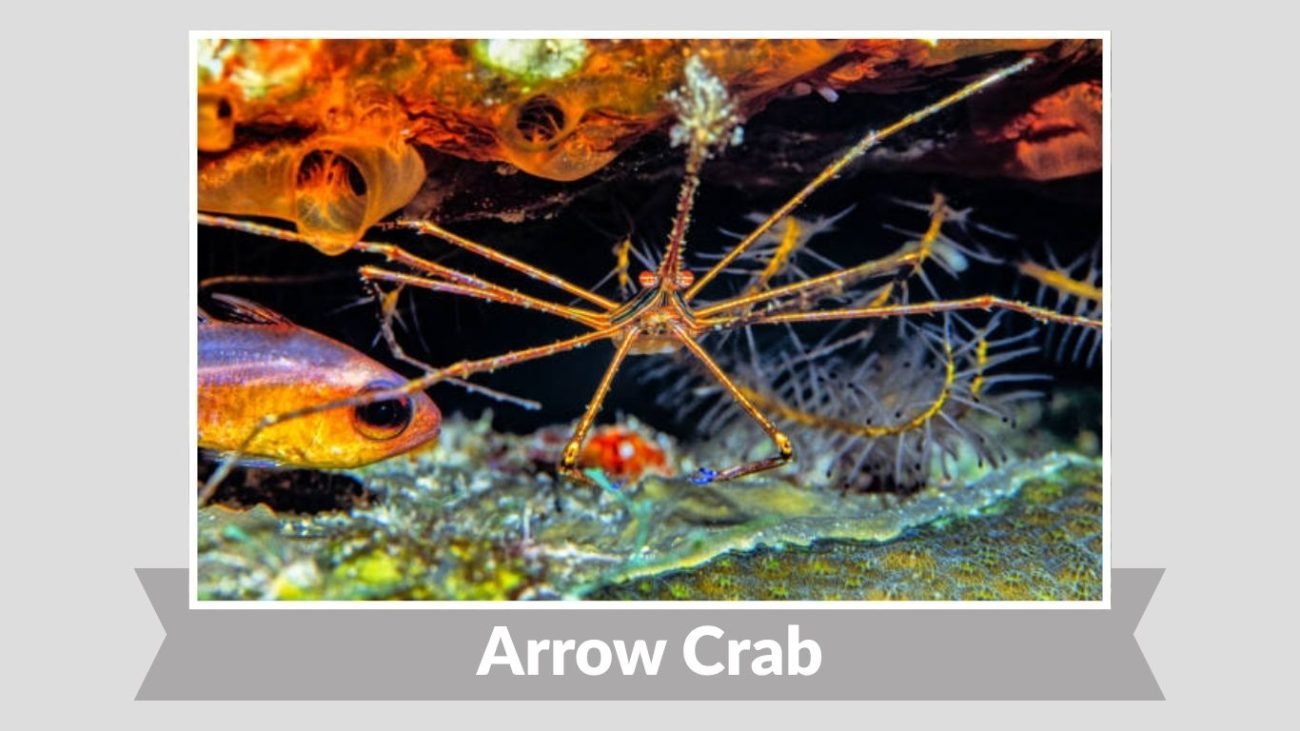
Arrow crabs are easily recognized by their triangular, arrow-shaped bodies and extremely long, thin legs. They are commonly found in coral reef environments and are popular in aquariums due to their unusual appearance.
Identification
- Triangular, pointed body resembling an arrowhead
- Very long, slender legs
- Small claws relative to body size
- Light brown or yellowish coloration
Habitat
Arrow crabs inhabit coral reefs, rocky crevices, and coastal marine environments. They prefer areas with plenty of hiding spaces, such as cracks and holes in reefs, where they can stay protected during the day.
Diet
They are carnivorous, feeding on small invertebrates, worms, and sometimes even small fish. In reef environments, they may also consume bristle worms, helping control their population.
Behavior
Arrow crabs are mostly nocturnal and spend daylight hours hiding in crevices. They are shy but can become aggressive toward smaller tank mates in confined spaces. Their long legs help them move carefully across reef surfaces without disturbing their surroundings.
24. Sally Lightfoot Crab
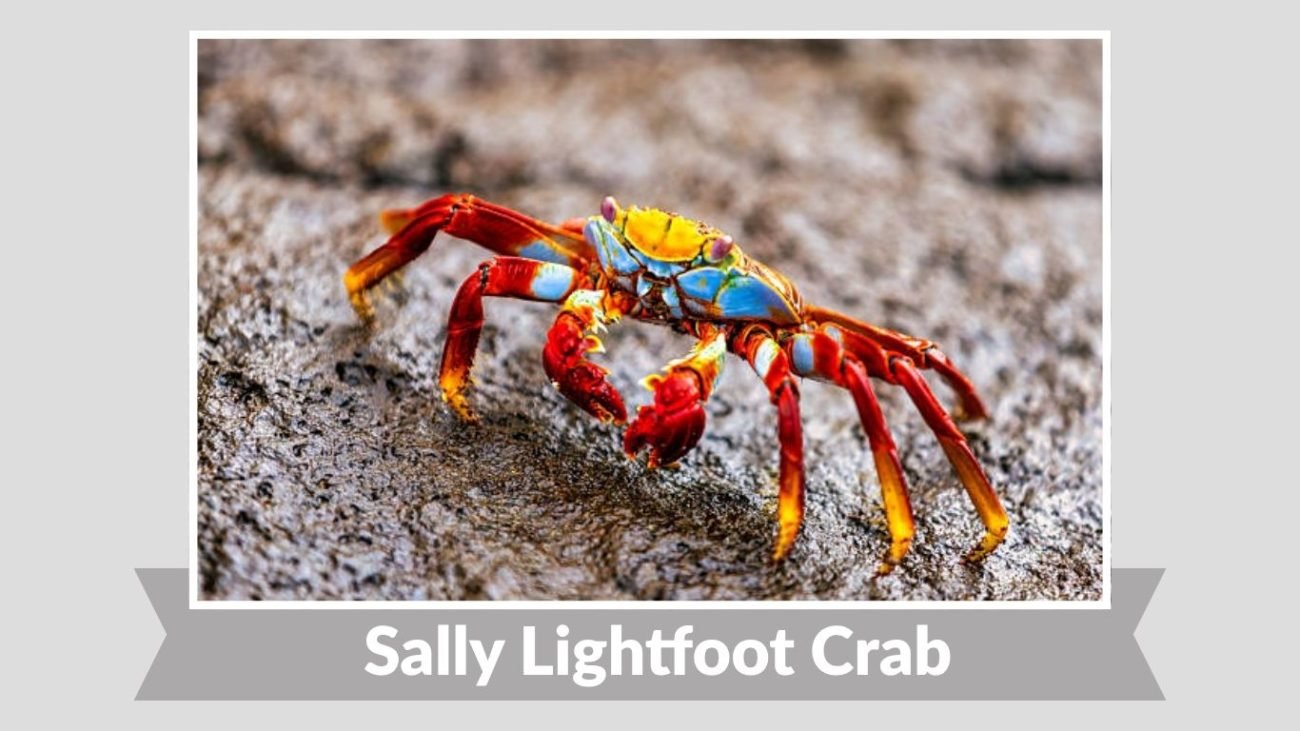
The Sally Lightfoot crab is a brightly colored and agile crab commonly found along rocky shorelines. It is well known for its speed and ability to quickly move across wet rocks, making it one of the most active coastal crab species.
Identification
- Bright red, orange, yellow, or mottled shell
- Flat body adapted for clinging to rocks
- Long legs designed for speed and agility
- Small but strong claws
Habitat
Sally Lightfoot crabs are typically found on rocky shores, tide pools, and coastal cliffs in tropical and subtropical regions. They prefer areas exposed to waves where they can easily escape predators by moving quickly across slippery surfaces.
Diet
They are omnivores, feeding on algae, small invertebrates, and organic debris. They often graze on algae growing on rocks and may scavenge for dead material along the shoreline.
Behavior
These crabs are extremely fast and alert, quickly darting away when threatened. They are mostly active during the day and rely on speed and agility rather than hiding. Younger individuals are more colorful, while adults may appear darker.
25. Japanese Spider Crab
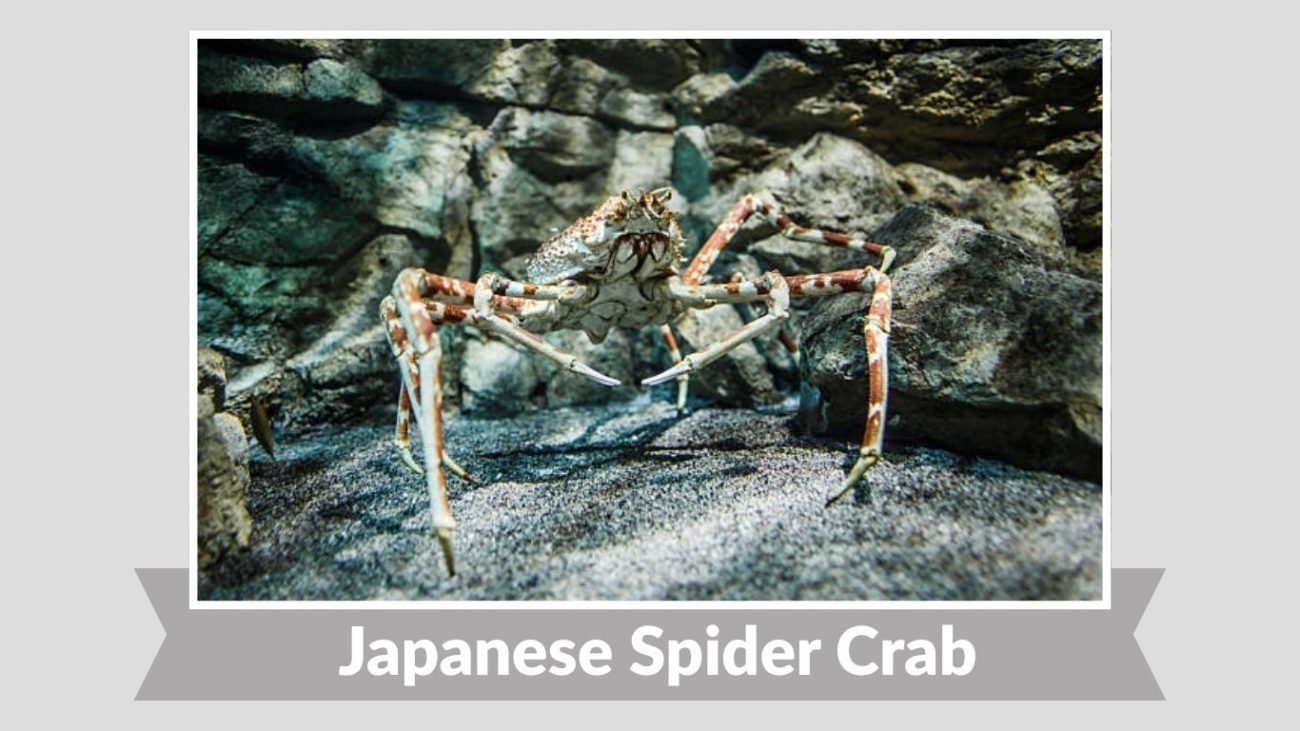
The Japanese spider crab is the largest crab species in the world, famous for its enormous leg span. Found in deep ocean waters around Japan, it is a remarkable example of marine gigantism.
Identification
- Extremely long legs, spanning several meters
- Orange shell with white spots
- Small central body compared to leg length
- Long, thin claws
Habitat
Japanese spider crabs live in deep ocean waters, typically at depths of 150 to 300 meters or more. They prefer cold, deep-sea environments with rocky or sandy bottoms, where they can move slowly and remain hidden.
Diet
They are scavengers, feeding on dead animals, plants, and small marine organisms. Their long legs help them reach and gather food from the ocean floor.
Behavior
Japanese spider crabs are slow-moving and non-aggressive. They rely on camouflage and their size to avoid predators. Like other crabs, they molt as they grow, shedding their exoskeleton to increase in size over time.