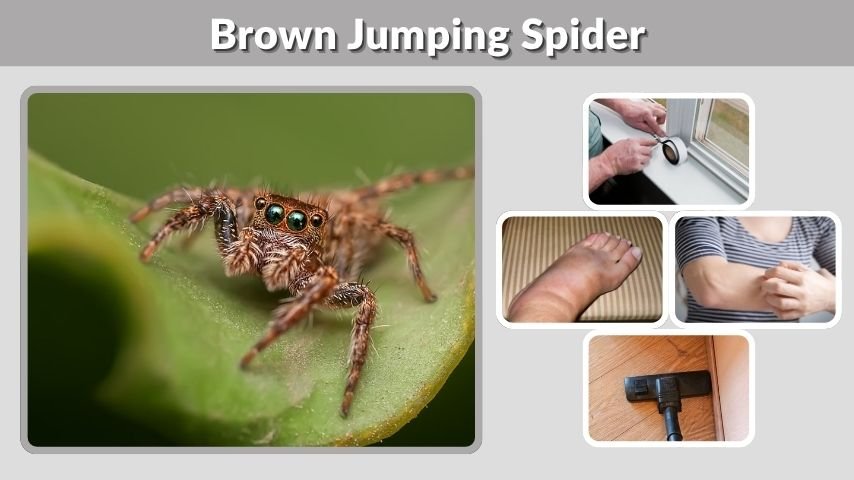
A brown jumping spider can look alarming when it suddenly hops across a wall, window, porch, or floor. The good news is that most brown jumping spiders are harmless, curious hunters that help control small insects. This guide explains how to identify them, why they jump, whether they bite, and how to tell them apart from dangerous look-alikes like the brown recluse.
What Is a Brown Jumping Spider?
A brown jumping spider is usually any brown-colored spider from the jumping spider family, Salticidae. These spiders are known for their compact bodies, large front-facing eyes, quick movements, and short, accurate jumps. They do not build sticky webs to trap prey. Instead, they stalk insects and pounce when they are close enough.
The phrase “brown jumping spider” is not always one exact species. It can refer to several small brown, tan, bronze, gray-brown, or brown-and-white jumping spiders found in homes, gardens, wood piles, sheds, and around windows.
Common Features
Most brown jumping spiders share a few easy-to-spot traits:
- Compact, sturdy body shape
- Large front eyes that make the spider look alert
- Short, sudden jumps rather than long running
- Hairy or fuzzy-looking body
- Brown, tan, black, white, orange, or bronze markings
- Active movement during the day
Their body language is also distinctive. A jumping spider may stop, turn toward you, raise its front legs, or move in short bursts. This behavior can seem bold, but it is usually curiosity or defense, not aggression.
Why They Jump
Jumping spiders jump to catch prey, escape danger, and move across gaps. Before jumping, they often attach a silk safety line to the surface. This helps them recover if they miss the landing.
They do not jump at people to attack. If one lands near you, it is usually trying to escape or move to another surface.
How to Identify a Brown Jumping Spider
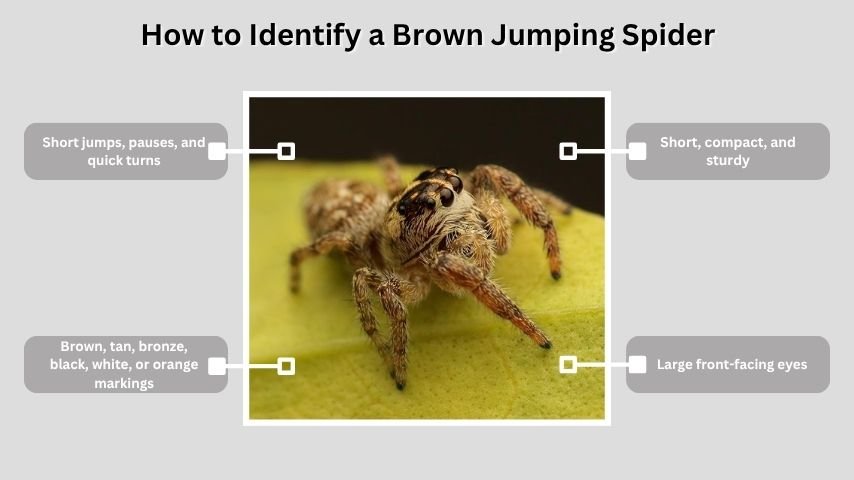
Correct identification starts with shape, eyes, movement, and markings. Color alone is not enough because many unrelated spiders can be brown.
Brown jumping spiders are usually small to medium-sized. Many are only a few millimeters long, though some larger species can look bigger because of their hairy legs and bold movement.
Brown Jumping Spider Identification Table
| Feature | Brown Jumping Spider | What It Means |
|---|---|---|
| Body shape | Short, compact, and sturdy | Different from long-legged cellar or recluse spiders |
| Eyes | Large front-facing eyes | One of the easiest jumping spider clues |
| Movement | Short jumps, pauses, and quick turns | Active hunter, not a web trapper |
| Color | Brown, tan, bronze, black, white, or orange markings | Color varies by species and age |
| Web use | Small silk retreat, not a prey-catching web | May hide in corners, cracks, or window frames |
| Risk level | Usually low | Bites are uncommon and typically mild |
Brown and White Jumping Spiders
Many searchers notice a brown jumping spider with white spots, stripes, or bands. White markings are common in several jumping spider species. These markings may appear on the abdomen, sides, face, or legs.
A brown and white jumping spider is often mistaken for something more dangerous, but white spots alone do not suggest a brown recluse. Brown recluses are usually plain brown and lack the bold, high-contrast markings many jumping spiders have.
Brown and Black Jumping Spiders
A black and brown jumping spider may be a darker species or a color variation of a common jumping spider. Some have dark bodies with brown legs, brown abdomens, or pale markings. Others may look black indoors but show brown, bronze, or gray tones in sunlight.
Look for the large front eyes and jumping movement. Those traits are more useful than color.
Small Brown Jumping Spider in the House
A small brown jumping spider in the house is usually hunting tiny insects around windows, lights, baseboards, or plants. They often enter by accident or follow prey indoors.
Common indoor places include:
- Window sills and curtains
- Bathroom or kitchen walls
- Basements and garages
- Houseplants
- Door frames
- Ceiling corners
- Storage boxes
Seeing one does not mean you have an infestation. Jumping spiders are solitary hunters, so a single spider is often just passing through.
Does a Brown Recluse Spider Jump?
No, a brown recluse spider is not a jumping spider. Brown recluses can move quickly when disturbed, but they do not make the controlled, athletic jumps that true jumping spiders make.
This question appears often because people see a brown spider move suddenly and worry it may be a recluse. In many cases, a “brown spider that jumps” is more likely to be a jumping spider than a brown recluse.
Brown Recluse vs Jumping Spider
Brown recluse spiders and brown jumping spiders have different body shapes, eye patterns, and behavior. A jumping spider usually looks compact and alert, while a brown recluse has a flatter, more delicate body with long, slender legs.
Important differences include:
- Jumping spiders have large front-facing eyes; brown recluses do not.
- Jumping spiders move in short hops; brown recluses usually crawl or run.
- Jumping spiders may be active in daylight; brown recluses prefer dark, undisturbed places.
- Jumping spiders often have bold markings; brown recluses are usually more plain.
- Brown recluses may have a violin-shaped mark, but that mark can be hard to confirm.
Do not rely only on the “violin” marking. Many harmless brown spiders have marks that people mistake for a violin. Eye arrangement is more reliable, but it is hard to see without close magnification.
Jumping Spider That Looks Like a Brown Recluse
Some brown or tan jumping spiders may look recluse-like at first glance, especially if they are small, plain, or seen quickly. However, a spider that clearly jumps, turns to look at you, and has a compact body is usually not a brown recluse.
If you are unsure, take a clear photo from a safe distance. Avoid handling the spider with bare hands.
Are Brown Jumping Spiders Dangerous?
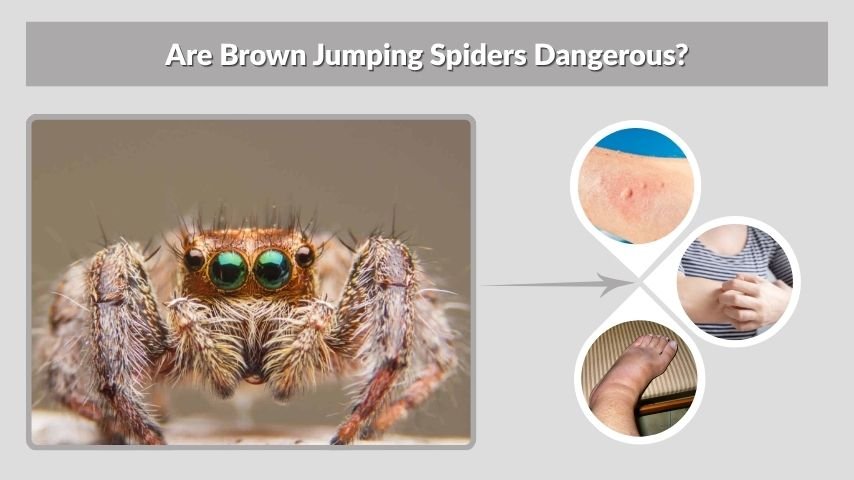
Brown jumping spiders are not considered dangerous to people. Like almost all spiders, they have venom for subduing prey, but they are not aggressive toward humans. Most would rather escape than bite.
A bite can happen if the spider is trapped against skin, squeezed in clothing, or handled roughly.
Brown Jumping Spider Bite Symptoms
A brown jumping spider bite is usually mild. Possible symptoms include:
- Small red bump
- Mild swelling
- Brief pain or stinging
- Itching
- Tenderness around the bite area
Most minor spider bites can be cleaned with soap and water, followed by a cold compress. Avoid scratching the area, because irritation or secondary infection can make the bite look worse.
Seek medical advice if you develop severe pain, spreading redness, fever, nausea, dizziness, trouble breathing, or a wound that worsens over time. Also get help if you suspect a brown recluse bite or if the bite involves a child, older adult, or someone with a serious allergy risk.
Do Brown Jumping Spiders Bite Pets?
A jumping spider is unlikely to harm a cat or dog. Pets may paw at them, sniff them, or try to eat them. A defensive bite is possible but uncommon. If your pet shows swelling, drooling, vomiting, weakness, or unusual behavior after contact with any spider, call a veterinarian.
Why Brown Jumping Spiders Come Indoors
Brown jumping spiders usually enter homes while searching for food, shelter, warmth, or a safe place to lay eggs. They may also come in through open doors, torn screens, plants, firewood, outdoor furniture, or boxes.
They are often found indoors during seasonal changes, especially when outdoor conditions become too hot, cold, dry, or wet.
What Attracts Them?
Jumping spiders follow prey. If your home has small insects, spiders may appear too. They may be attracted by:
- Flies, gnats, moths, and small insects
- Outdoor lights near doors and windows
- Houseplants with tiny pests
- Gaps around windows or doors
- Cluttered storage areas
- Wood piles or vegetation close to the house
A brown jumping spider in the basement or garage may simply be hunting insects in a quiet area.
Are They Beneficial?
Yes. Jumping spiders eat many small insects and other arthropods. Outdoors, they are part of natural pest control. Indoors, they may help reduce tiny pests, although most people still prefer to relocate them.
If you do not want them inside, use a cup and paper to move them outdoors instead of crushing them.
Brown Jumping Spider Species and Locations
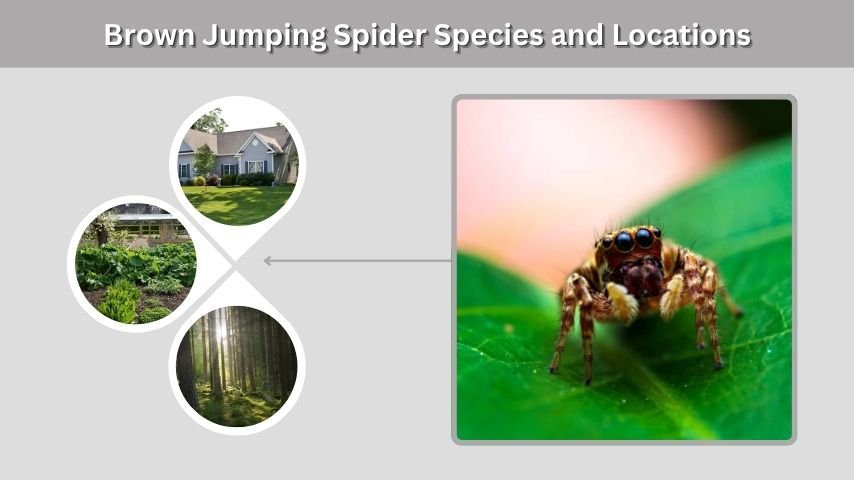
Because “brown jumping spider” is a general description, the exact species depends on your region. Search terms like brown jumping spider California, Texas, Florida, Arizona, Georgia, Ohio, Michigan, Missouri, Colorado, Illinois, UK, Australia, and Canada show that people are trying to identify local spiders.
United States
In the U.S., jumping spiders are widespread. Brown or brown-marked species may appear in yards, gardens, forests, fields, homes, barns, sheds, and garages. Some regions also have recluse spiders, which makes identification more important.
In states where brown recluse spiders are established or commonly discussed, such as Texas, Missouri, Illinois, Ohio, Georgia, and nearby areas, people often compare any brown spider to a recluse. However, jumping behavior is a strong clue that the spider is probably not a brown recluse.
UK, Canada, and Australia
Brown jumping spiders can also be found outside the United States, but local species vary. In the UK and Canada, most small jumping spiders are not medically significant. In Australia, spider identification should be more cautious because the country has many diverse spider groups. Still, jumping spiders themselves are generally recognized by their large front eyes and active hunting style.
For accurate species identification, use a local extension service, museum, university entomology resource, or spider identification group.
What to Do If You Find One in Your House
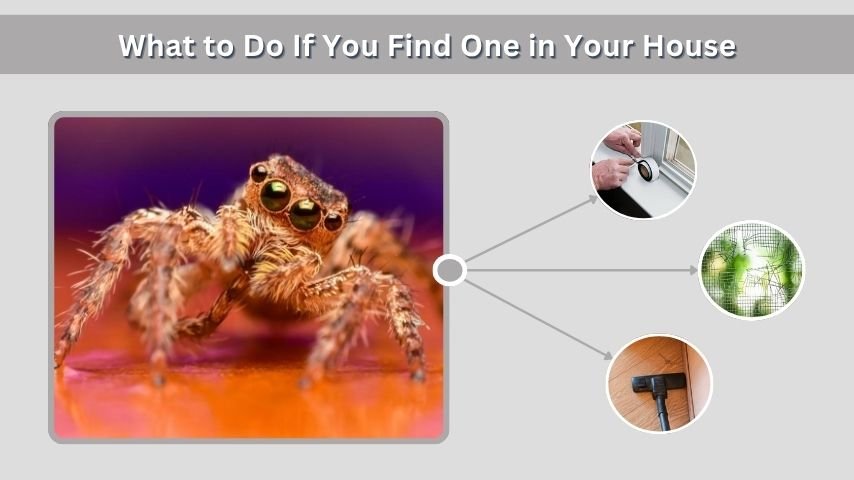
If you find a brown jumping spider indoors, stay calm. It is probably not there to harm you.
You can:
- Trap it gently with a cup and paper
- Release it outside near plants or sheltered areas
- Seal gaps around windows and doors
- Repair torn screens
- Reduce indoor insects
- Vacuum webs, egg sacs, and cluttered corners
- Shake out stored clothing, shoes, and boxes
Avoid spraying pesticides for one or two jumping spiders. Chemical sprays are usually unnecessary for occasional sightings and may not solve the insect conditions attracting spiders.
When to Call Pest Control
Call a pest control professional if you see many spiders, suspect brown recluse activity, find spiders in beds or clothing, or have repeated bites that need investigation. Professional identification matters because many harmless spiders are misidentified as dangerous species.
If possible, save the spider in a sealed container or take a clear photo for identification.
FAQs
Are brown jumping spiders poisonous?
Brown jumping spiders are venomous in the way most spiders are, but they are not considered dangerous to people. Their venom is used to catch small prey. Bites are uncommon and usually cause mild, local symptoms such as redness, itching, or slight swelling.
Can a brown recluse spider jump?
A brown recluse does not jump like a true jumping spider. It may run quickly when disturbed, which can make people think it jumped. A brown spider that clearly hops or pounces is more likely to be a jumping spider than a brown recluse.
What is a tiny brown jumping spider in my house?
A tiny brown jumping spider in your house is usually a harmless hunting spider looking for insects. It may be found near windows, walls, plants, or lights. You can relocate it outside with a cup and paper if you do not want it indoors.
Do brown jumping spiders bite?
Brown jumping spiders can bite, but they rarely do unless trapped, squeezed, or handled. A bite is usually mild and may feel like a small sting. Clean the area, use a cold compress, and seek medical care if symptoms become severe or unusual.
How do I tell a brown jumping spider from a brown recluse?
Look at the body shape, eyes, and movement. Jumping spiders are compact, alert-looking, and have large front-facing eyes. Brown recluses have longer, thinner legs, a plainer body, and do not make controlled jumps. When unsure, avoid handling the spider and get expert identification.