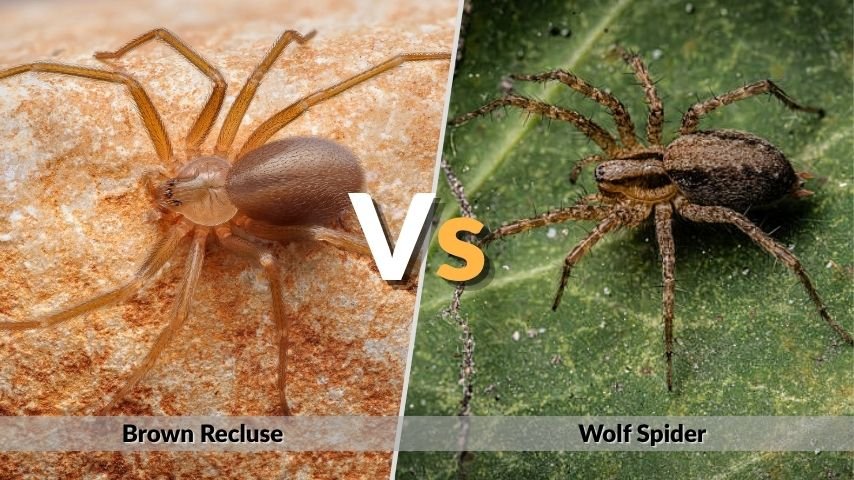
Brown recluse and wolf spiders are often confused because both can be brown and may appear indoors. However, they are very different in appearance, behavior, habitat, and bite risk. A wolf spider is usually larger, hairier, and faster, while a brown recluse is smoother, more secretive, and more medically concerning. This guide explains how to tell them apart safely.
Brown Recluse vs Wolf Spider: Quick Overview
Both spiders can look similar at first glance, especially if you only see a fast-moving brown spider in a basement, garage, or closet. The easiest way to compare them is by looking at body shape, markings, eyes, behavior, and where they are found.
Main Difference
The main difference between a brown recluse and a wolf spider is that wolf spiders are active hunters with hairy bodies and large eyes, while brown recluse spiders are shy, smoother-looking spiders that hide in dark, undisturbed places.
Wolf spiders usually run across open floors, lawns, or garages. Brown recluse spiders prefer quiet storage areas, boxes, closets, attics, and hidden corners.
Are They Both Dangerous?
Wolf spiders can bite, but their bites are usually mild. Brown recluse bites can be more serious and may sometimes cause skin damage. Not every brown recluse bite becomes severe, but it should be taken more seriously than a typical wolf spider bite.
If you are unsure which spider bit you, or if symptoms worsen, it is best to seek medical advice.
Brown Recluse vs Wolf Spider Identification
Correct identification is important because many harmless brown spiders are mistaken for brown recluse spiders. Do not rely on color alone. Many spiders are brown.
Brown Recluse Appearance
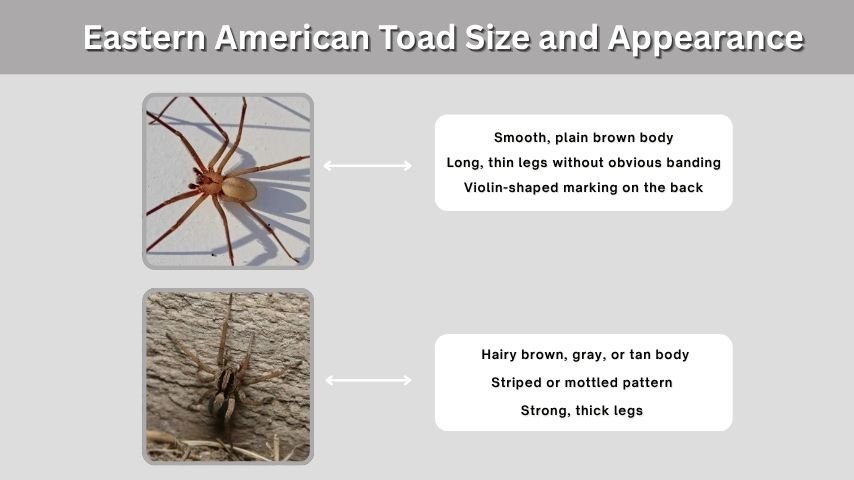
A brown recluse spider is usually light brown to dark brown with a smooth-looking body and long, thin legs. It often has a darker violin-shaped marking on the top of the body, with the “neck” of the violin pointing toward the abdomen.
However, the violin mark can be hard to see, especially on young spiders or in poor lighting. It should not be the only identification feature.
Common brown recluse traits include:
- Smooth, plain brown body
- Long, thin legs without obvious banding
- Violin-shaped marking on the back
- Six eyes arranged in pairs
- Secretive behavior
- Irregular webs in hidden areas
Wolf Spider Appearance
A wolf spider is usually larger, hairier, and more robust than a brown recluse. Wolf spiders often have striped or mottled markings, strong legs, and a stocky body.
They do not have the smooth, plain look of a brown recluse. Their hairy body and bold markings make them look more rugged.
Common wolf spider traits include:
- Hairy brown, gray, or tan body
- Striped or mottled pattern
- Strong, thick legs
- Large forward-facing eyes
- Fast running movement
- No trapping web for catching prey
Eye Pattern Difference
Eye pattern is one of the best ways to tell them apart, but you should never handle a spider to check it.
Brown recluse spiders have six eyes arranged in three pairs. Most spiders have eight eyes, so this is an important clue.
Wolf spiders have eight eyes. Two large eyes face forward, with smaller eyes arranged around them. Their eyes can reflect light at night when a flashlight shines on them.
Brown Recluse vs Wolf Spider Comparison Table
The table below shows the clearest differences between a brown recluse spider and a wolf spider.
| Feature | Brown Recluse | Wolf Spider |
|---|---|---|
| Body texture | Smooth-looking | Hairy and rugged |
| Color | Light to dark brown | Brown, gray, tan, or mottled |
| Markings | Often violin-shaped mark | Stripes or mottled patterns |
| Eyes | Six eyes in pairs | Eight eyes, two large front eyes |
| Legs | Long, thin, plain | Strong, hairy, thicker |
| Behavior | Hides in dark areas | Runs and hunts openly |
| Web use | Irregular hiding webs | Does not use webs to trap prey |
| Bite concern | More medically serious | Usually mild |
| Common location | Closets, boxes, attics | Lawns, basements, garages |
Wolf Spider vs Brown Recluse Size
Size can help, but it is not always enough for identification. Both spiders vary depending on age, species, and sex.
Brown Recluse Size
Brown recluse spiders are usually medium-sized. Their body is not extremely large, but their legs can make them appear bigger. They often look delicate compared with wolf spiders.
A brown recluse usually has a flatter, smoother appearance. It does not look thick, fuzzy, or bulky.
Wolf Spider Size
Wolf spiders are often larger and heavier-looking than brown recluse spiders. Some wolf spiders can look intimidating because of their size and speed.
Their legs are usually thicker and hairier. Their body may have dark stripes or strong patterns, which makes them easier to separate from the smoother brown recluse.
Can Baby Wolf Spiders Look Like Brown Recluse Spiders?
Young wolf spiders can be small and brown, which may cause confusion. However, even baby wolf spiders usually have a more patterned, hairy appearance than brown recluse spiders.
If you cannot identify a spider safely, avoid touching it. Use a clear container to capture it for identification if necessary.
Brown Recluse Bite vs Wolf Spider Bite
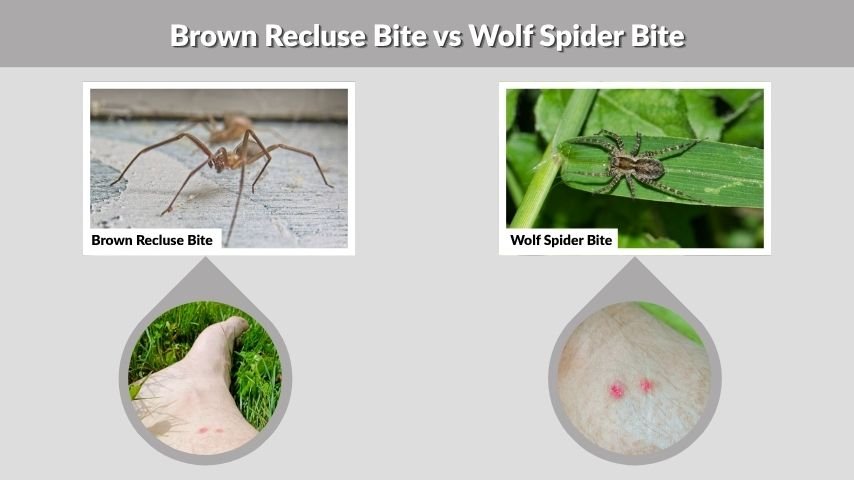
Spider bites can be hard to identify from symptoms alone. Many skin problems are blamed on spiders even when no spider was seen. Still, there are general differences between brown recluse bites and wolf spider bites.
Wolf Spider Bite
A wolf spider bite is usually not serious for most people. It may feel like a sharp pinch or mild sting. The area may become red, swollen, itchy, or sore.
Typical wolf spider bite symptoms may include:
- Mild pain
- Redness
- Swelling
- Itching
- Tenderness
- Small puncture marks
Most mild bites improve with basic first aid. Wash the area, apply a cold compress, and avoid scratching.
Brown Recluse Bite
A brown recluse bite can be more concerning. Some bites cause only mild symptoms, but others may develop worsening pain, blistering, or damaged skin.
Possible brown recluse bite symptoms may include:
- Redness around the bite
- Increasing pain
- Blistering
- Purple or dark center
- Skin breakdown
- Fever or body aches in some cases
- Worsening wound over time
A suspected brown recluse bite should be monitored carefully. If symptoms spread, become painful, or show signs of infection, medical care is important.
When to Get Medical Help
Get medical help if a bite becomes severe, painful, infected, or continues to worsen. You should also seek help if you develop fever, chills, spreading redness, nausea, or a dark wound.
If possible, take a clear photo of the spider from a safe distance. Do not try to handle or crush it with your hands.
Brown Recluse vs Wolf Spider Behavior
Behavior is one of the easiest ways to tell these spiders apart. Brown recluse spiders are secretive, while wolf spiders are active hunters.
Brown Recluse Behavior
Brown recluse spiders prefer to stay hidden. They are called “recluse” because they avoid activity and disturbance. They often hide during the day and may move at night.
Common hiding places include:
- Storage boxes
- Closets
- Attics
- Basements
- Garages
- Shoes
- Clothing piles
- Behind furniture
- Under clutter
Bites often happen when a spider is accidentally pressed against skin.
Wolf Spider Behavior
Wolf spiders do not sit in webs waiting for prey. They hunt by running, chasing, and pouncing on insects.
You may see them crossing floors, patios, lawns, or garage spaces. They often enter homes by accident while searching for food, warmth, or shelter.
Wolf spiders are not aggressive toward people and usually try to escape.
Brown Recluse vs Wolf Spider Habitat
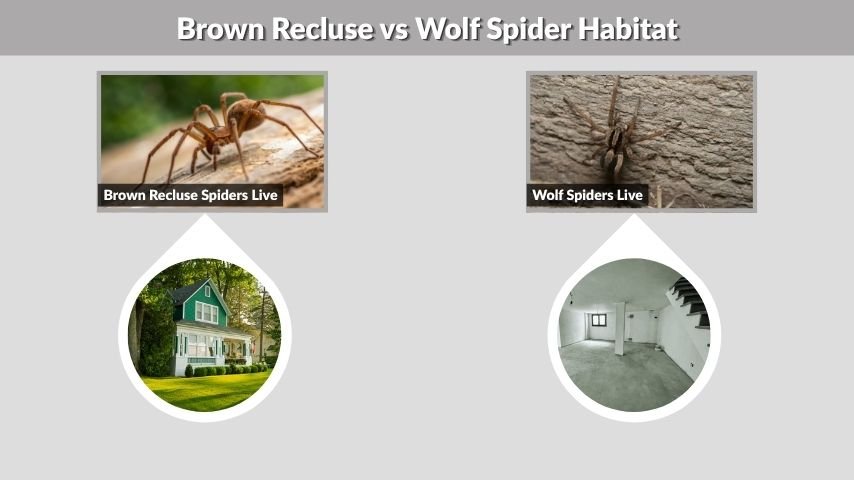
Knowing where the spider was found can help with identification. Habitat is especially useful because brown recluse spiders are not found everywhere.
Where Brown Recluse Spiders Live
Brown recluse spiders are more common in certain regions, especially parts of the central and southern United States. In homes, they prefer dry, quiet, undisturbed areas.
They are less likely to be found running across open lawns or bright rooms. They prefer hidden spaces where they are not disturbed.
Where Wolf Spiders Live
Wolf spiders are widespread and can be found in many regions. They live outdoors in grass, leaf litter, gardens, fields, mulch, and around rocks.
Indoors, wolf spiders are often found in:
- Basements
- Garages
- Sheds
- Crawl spaces
- Laundry rooms
- Near doors
- Along walls
They usually do not create indoor infestations like some household pests.
Hobo Spider vs Wolf Spider vs Brown Recluse
Some people also confuse hobo spiders with wolf spiders and brown recluse spiders. These spiders can all appear brown, but they are not the same.
Hobo Spider
Hobo spiders are funnel-web spiders. They are often found near funnel-shaped webs in corners, cracks, or outdoor structures. They are usually not as hairy or robust as wolf spiders.
Grass Spider
Grass spiders also make funnel-shaped webs and are often mistaken for wolf spiders. Unlike wolf spiders, grass spiders rely on webs to catch prey.
House Spider
Common house spiders are usually smaller and build webs indoors. They are often harmless and should not be confused with brown recluse spiders based only on brown color.
What to Do If You Find One Indoors
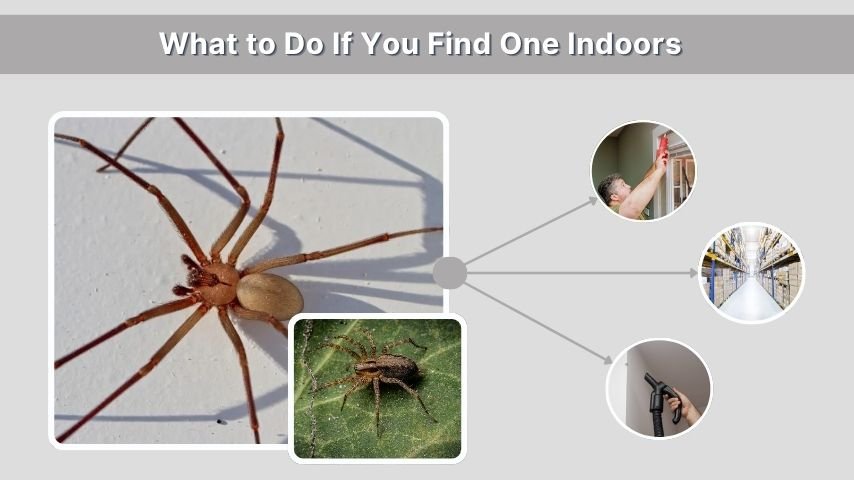
If you find a brown spider indoors, stay calm and avoid handling it. Most spiders are not dangerous, but safe removal is the best approach.
Safe Removal Tips
Use these steps to handle the situation safely:
- Do not pick up the spider with bare hands.
- Place a cup or container over it.
- Slide paper underneath.
- Release it outside if it appears harmless.
- Take a photo if you need identification.
- Vacuum webs and cluttered corners.
- Shake out shoes or clothing stored on the floor.
If you suspect a brown recluse, avoid releasing it into another indoor area. Contact a pest professional if you keep finding them.
Prevention Tips
To reduce both wolf spiders and brown recluse spiders indoors:
- Seal cracks and gaps.
- Install door sweeps.
- Repair window screens.
- Reduce clutter in storage areas.
- Keep boxes off the floor.
- Shake out shoes and clothing.
- Vacuum corners regularly.
- Move firewood away from the house.
- Reduce insects that attract spiders.
Spider prevention is usually about reducing hiding places, entry points, and insect prey.
Brown Recluse vs Wolf Spider: Who Would Win?
This is a common curiosity question, but it is not useful for home safety. In nature, the outcome would depend on size, species, and circumstances.
A large wolf spider may overpower smaller spiders because it is fast and strong. A brown recluse has venom but is not built like an aggressive hunter. In real life, they usually try to avoid threats rather than fight.
For homeowners, the more important question is identification and bite risk, not which spider would win.
FAQs
How can you tell a wolf spider from a brown recluse?
A wolf spider is usually hairy, patterned, fast, and has eight eyes with two large front-facing eyes. A brown recluse is smoother, plainer brown, has six eyes, and may have a violin-shaped marking on its back. Wolf spiders hunt openly, while brown recluse spiders hide.
Which is more dangerous, a brown recluse or wolf spider?
A brown recluse is more medically concerning than a wolf spider. Wolf spider bites are usually mild, while brown recluse bites can sometimes cause skin damage or worsening wounds. Any severe or worsening bite should be checked by a medical professional.
Is a wolf spider bigger than a brown recluse?
Wolf spiders are often larger, thicker, and hairier than brown recluse spiders. Brown recluse spiders are usually smoother, slimmer, and less bulky. Size alone is not enough for identification because young wolf spiders and adult recluse spiders can overlap.
Do wolf spiders look like brown recluse spiders?
Wolf spiders can look like brown recluse spiders because both may be brown. However, wolf spiders usually have hairy bodies, striped patterns, larger eyes, and stronger legs. Brown recluse spiders are smoother, plainer, and more secretive.
What should I do if I cannot identify the spider?
Do not touch it with bare hands. Take a clear photo from a safe distance or trap it under a container if possible. If you suspect a brown recluse or have a worsening bite, contact a pest professional or medical provider for help.